Brdo Park: the castle, the lakes and the Lipizzaner horses
From Brdo Park entrance, in Predoslje, near Kranj Drive or cycle to the park entrance and walk through the park 2 to 3 hours morning or afternoon easy
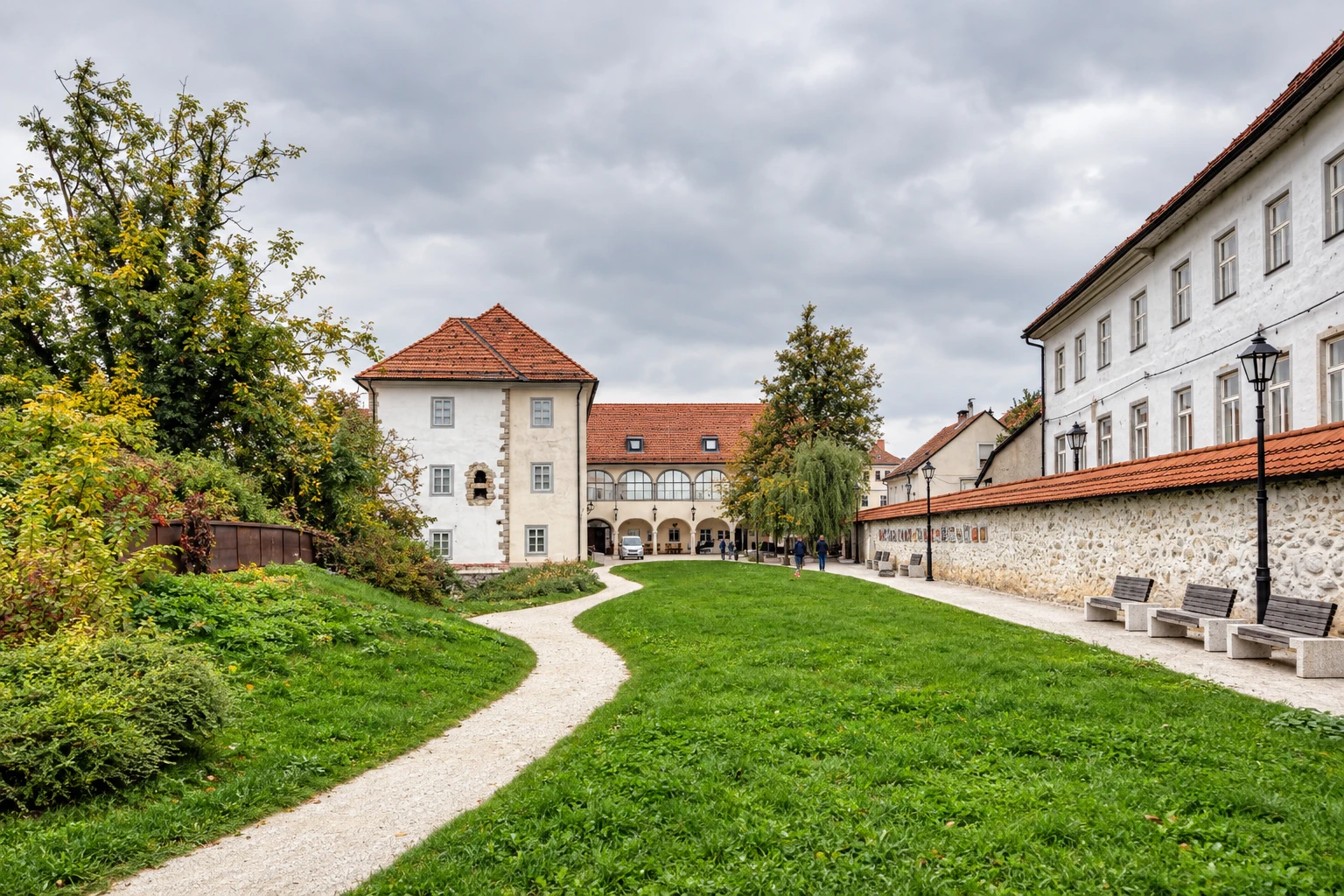
The Brdo estate is in Predoslje, about a 10-minute drive from Kranj: 478 hectares of woods, avenues, meadows and lakes surrounding a Renaissance castle from the early 16th century. The Zois family, the Yugoslav royal house of Karađorđević and President Josip Broz Tito have all passed through; today the castle is used by the Slovenian state for meetings of heads of state and houses sculptures and paintings by Slovenian artists, furniture from various periods, crystal chandeliers and a large library. The park is visited as a miniature Slovenia: in the pastures there are white Lipizzaner horses, and along the way you see painted-board beehives and the toplarji, the double hay dryers with thatch roofs. The walk along the avenues passes the old manor house and the orange greenhouse. A jogging path skirts the park’s edge, and the bike path that leaves Kranj along the Kokra river educational trail continues from there to Preddvor and Lake Črnava.
Stops: Kokra Canyon.
Includes: Park entrance paid separately; tickets are sold at the gate; there is a family ticket. Check the current price list.
Tip: The park is open every day from sunrise to dusk, but it closes to visitors when there are official state events: call the reception before you leave.
Best time: From April to October.
Šmarjetna gora and Saint Jošt: the viewpoint hills above Kranj
From Stražišče, a Kranj neighborhood, beside the Schrottenturn manor Ascent hike along a forest trail 30 to 40 minutes to climb to Šmarjetna gora; 45 to 60 minutes to Saint Jošt morning or afternoon easy to moderate
Two hills serve as viewpoints for Kranj. Šmarjetna gora, at 646 meters, is just above the town: on a clear day, local tourism says you can see a fifth of Slovenia from there. The forest trail starts in Stražišče, by the Schrottenturn manor, passes the Church of Saint Peter and overcomes 249 meters of elevation in 30 to 40 minutes; you can also drive or cycle up on the paved road. On the summit are the Church of Saint Margaret and a hotel with a restaurant and terrace. Further on, the hill of Saint Jošt, at about 845 meters, has a Baroque pilgrimage church with two towers, mentioned in 1600. In the 18th-century Baroque renovation it gained the Holy Stairway leading to the Chapel of the Mother of God, and pilgrimages peaked between 1730 and 1770. In the tower there is a bell with verses by France Prešeren, cast in 1834 from bronze of cannons recovered from the sea after the Battle of Navarino. Waymarked trails climb from the parking area at the foot of the hill; on the summit there is a mountain hut serving home-style food and a playground. Storžič, the 2,132-meter pyramid, is the mountain that appears on all Kranj postcards.
Stops: Church of Saint Cancian.
Includes: Trails free of charge; meals paid separately.
Tip: In rain, prefer the paved road over the forest trail. The ascent to Storžič is another matter: a full-day mountain route with sections of steel cable, for experienced hikers.
Best time: All year, on clear days; in autumn the view is often clearer.
By bike from Kranj to Škofja Loka across the Sora fields
From Delavski most bridge over the Sava in Kranj Bicycle on low-traffic roads and cycle path about 2 hours pedaling, round trip morning or afternoon easy
The two destination towns are about 12 km apart, separated by wide countryside between the Sava and Sora rivers, and a flat bike route links them. From Kranj you cross the Sava on the Delavski most bridge, pass the village of Orehek and cross the regional road to Ljubljana using the lane with a cycle path. From there the route follows the railway tracks on an asphalt road closed to most traffic, between pastures, with trains passing alongside. In Trata the route reaches Škofja Loka railway station, crosses the tracks and follows the Kidričeva Street cycle path to the old town. In summer it’s worth extending to Puštal on the other side of the Sora from Poljane, where there is a riverside swimming spot with a bar. Kranj’s tourist board gives the route the lowest difficulty rating, suitable for families, and suggests returning the same way.
Stops: Mestni trg of Škofja Loka, Kapucinski most.
Includes: Route free of charge; bike rental paid separately.
Tip: Watch out at the two level crossings on the route. In Škofja Loka there are public system bicycles by the train station; registration is done via the app or at the information center.
Best time: From April to October, on dry days.
Škofja Loka medieval on foot: Mestni trg, Spodnji trg and the Kapucinski Bridge
From Kapucinski Bridge, next to the Škofja Loka bus station Walk through the medieval center 2 to 3 hours morning or afternoon easy
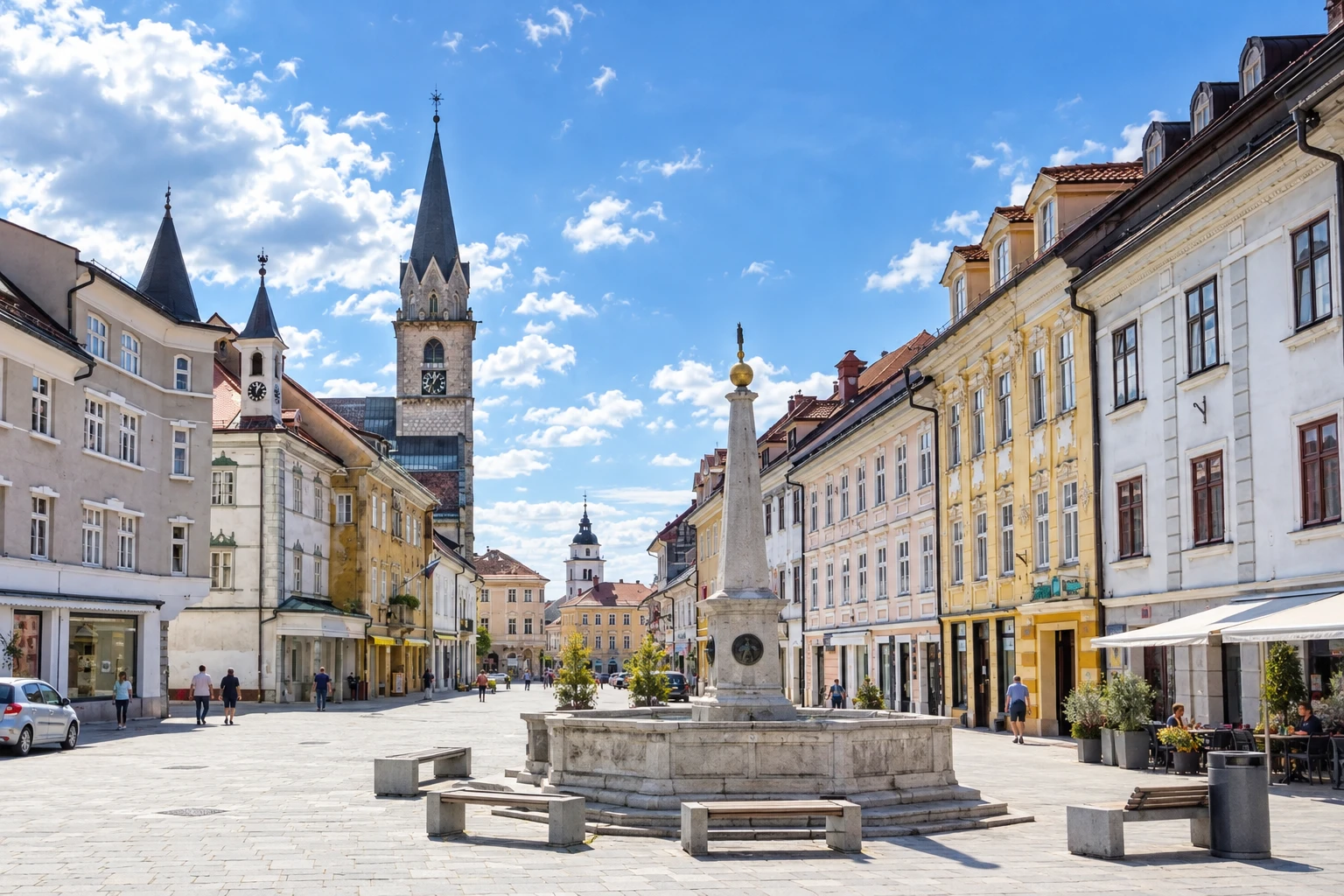
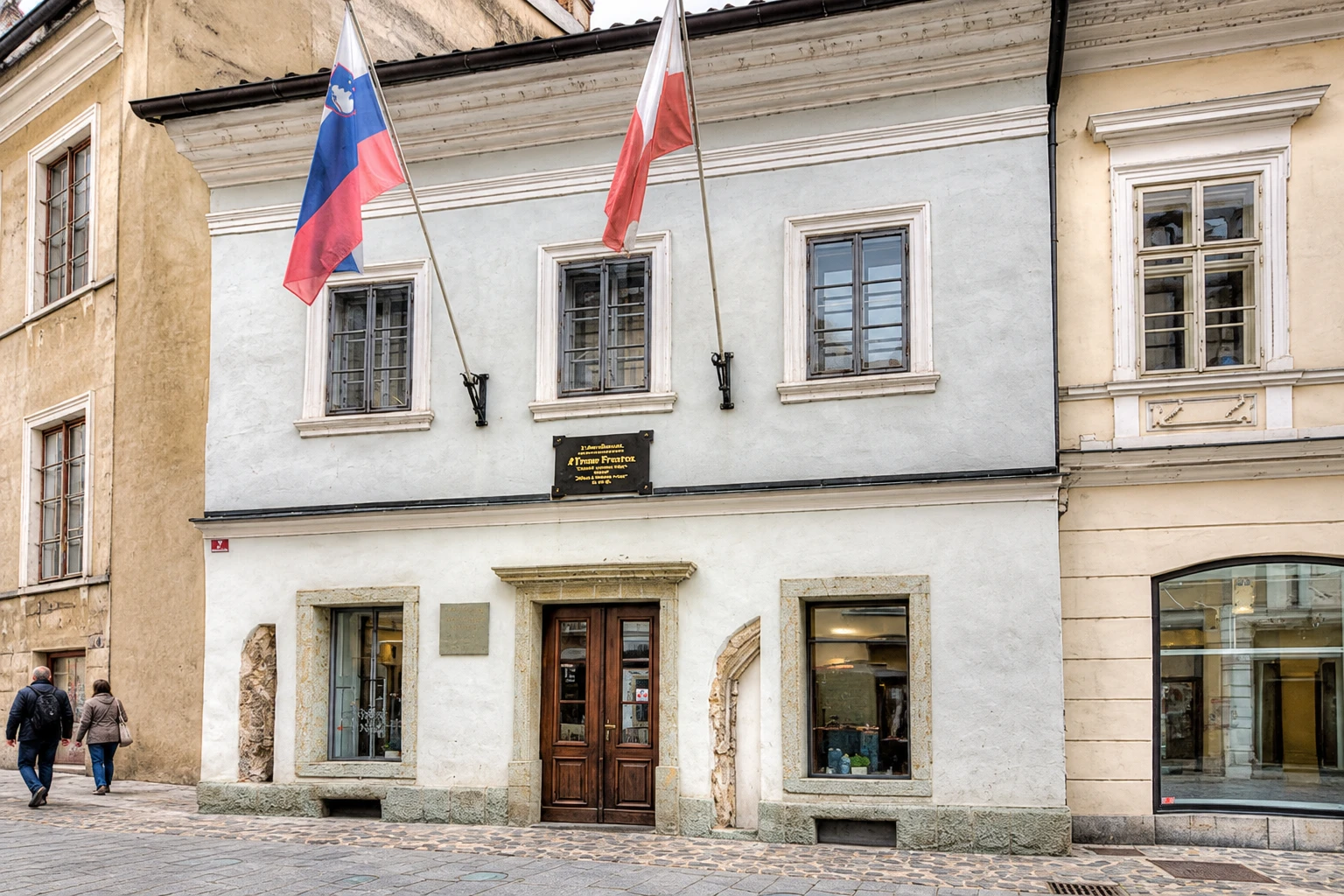
Škofja Loka, the town of the bishops of Freising, stands at the confluence of the Selca Sora and the Poljane Sora and has a medieval center shaped by the rebuilding after the major 1511 earthquake. The classic entrance is via the Kapucinski Bridge, the 14th-century stone arch bridge over the Selca Sora, renovated in 1888 when it received iron railings; in the middle stands a statue of Saint John of Nepomuk with the town’s coat of arms on the pedestal. Beside it, the Capuchin monastery houses one of the country’s most valuable libraries, with incunabula and a copy of Dalmatin’s Bible. On Mestni trg, the square locals call Plac, the Homan House, Gothic with Renaissance elements, reveals frescoes of Saint Christopher and medieval soldiers uncovered during restoration; the old town hall from the 16th century has a facade covered in Baroque frescoes. The Martin House, the last of a type once common, leans against the wall ordered built in the 14th century by Bishop Konrad III. The Church of Saint James, from 1471, has a ceiling painted in the 16th century by Jernej of Loka, a black marble altar from 1694 and chandeliers designed by Jože Plečnik. Lower down is Spodnji trg, the lower square, also called Lontrg.
Stops: Kapucinski Bridge, Mestni trg of Škofja Loka, Škofja Loka Castle.
Includes: Walk without charge; guided tours and the culinary walk through the center, about 4 hours, are paid separately and require booking.
Tip: The information center combines guided tours and a visit to the Capuchin library. The Homan House has a café and pastry shop. Škofja Loka rolls (loški kruhek) are the town’s traditional souvenir.
Best time: All year. In June the Historial, the history festival at Mestni trg, usually takes place.
Škofja Loka Castle and the Loka Museum
From Mestni trg of Škofja Loka, via the climb by the Homan House Short uphill walk and museum visit 1 h 30 to 2 h 30 morning or afternoon easy
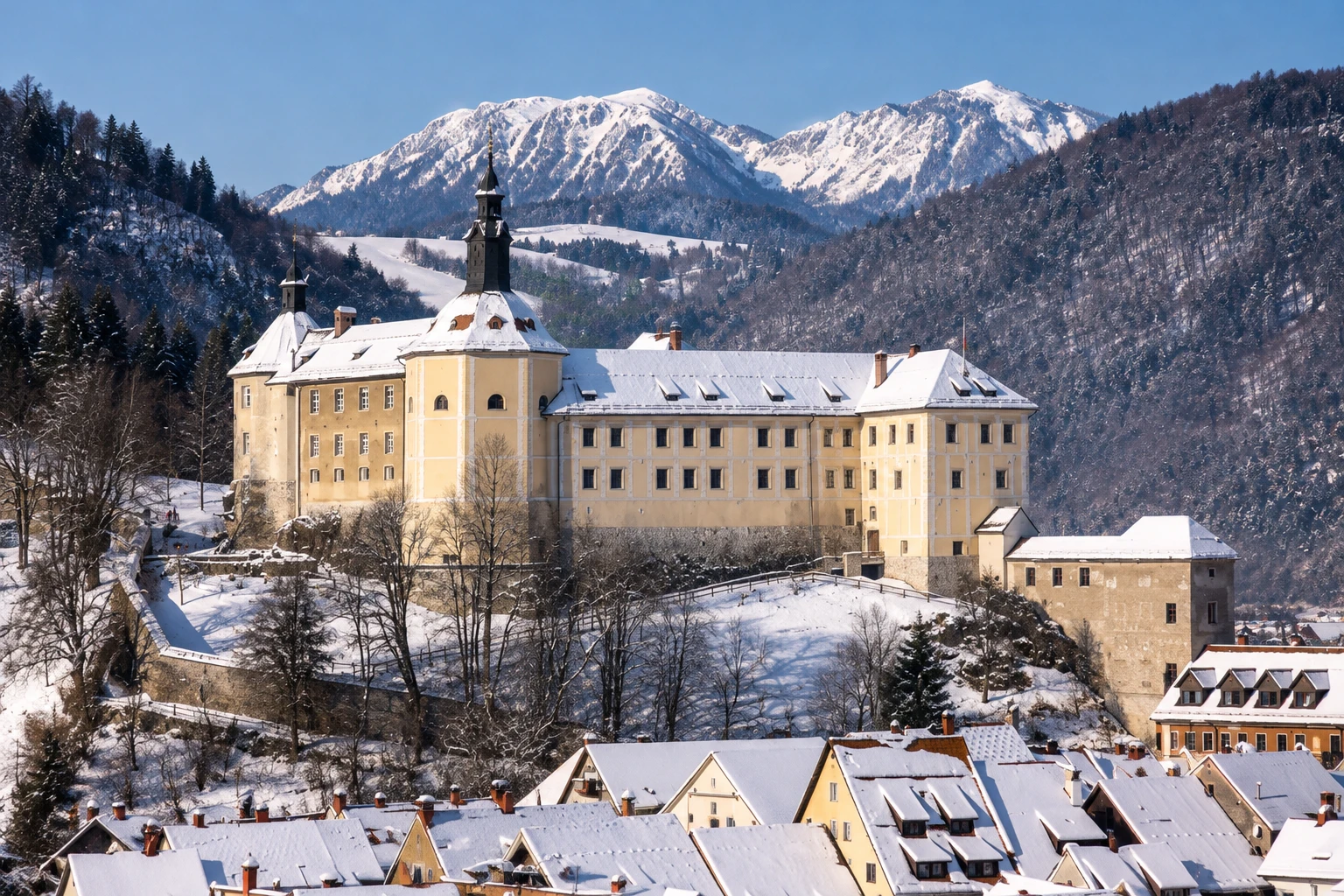
Škofja Loka Castle, above the old town, was the seat of the lords of Freising. The 1511 earthquake destroyed it almost completely, and the reconstruction was overseen by Bishop Filip; in the courtyard, the footprint of the former square tower is marked on the ground. Inside is the Loka Museum, one of Slovenia’s most visited, with collections of archaeology, history, cultural history, art, ethnology and natural sciences of the Sora valleys, a room about sport and the permanent Passion of Škofja Loka exhibition. In the castle garden stands the Škopar House, a 16th‑century peasant dwelling with a black kitchen (open hearth), showing how small farmers in the region lived from the 16th century until the late 19th; it was one of the country’s first open‑air museums. The museum also manages the Ivan Grohar Gallery and the Visoko Manor collection in the Poljane valley. On selected nights there is a theatrical tour of the castle that begins at sunset and moves through the rooms in the dark with the caretaker in a black cloak.
Stops: Škofja Loka Castle, Mestni trg of Škofja Loka.
Includes: Museum admission is paid separately; Škopar House is visited by prior arrangement during museum opening hours.
Tip: The museum is usually closed on Mondays, except from June to September, and has shorter hours from November to April; the last admission is half an hour before closing. Check before you go up.
Best time: All year round; from May to October, with longer hours and the garden in bloom.
Romuald’s Way: The Passion of Škofja Loka through the town streets
From Passion Hall, Mestni trg 42 Guided circular walk via mobile app about 1 h 30 morning or afternoon easy
The Passion of Škofja Loka (Škofjeloški pasijon) is the oldest dramatic text in the Slovene language. It was written in 1721 by the Capuchin friar Romuald Marušič, and the manuscript, with stage directions, remains in the town’s Capuchin monastery; it is considered the oldest preserved theatre director’s book in Europe. The staging is a baroque procession of 13 Passion scenes through the medieval town center, with up to a thousand actors and volunteers from the town and surroundings and over 20,000 spectators. It takes place every six years during Lent and Easter, and in 2016 it was inscribed on UNESCO’s Representative List of the Intangible Cultural Heritage of Humanity. In non-staging years, Romuald’s Way covers the same setting: an interactive mobile guide, voiced by the friar, leads you to 13 stations marked on the ground with the Passion symbol, partly the same as those in the procession, and tells the town’s legends. The circuit starts and ends at the Passion Hall; those who complete the thirteen challenges can mint a gold coin there. The permanent exhibition about the Passion is in the Loka Museum, in the castle.
Stops: Mestni trg of Škofja Loka, Kapucinski most, Škofja Loka Castle.
Includes: The route through the streets is free; you need to install the app recommended by the information center. The museum has a separate admission fee.
Tip: Download the app and the route before you set out, with a stable internet connection. In years when the play is staged, check dates and tickets well in advance.
Best time: The route is open year-round; the staging takes place every six years, during Lent and Easter.
Three Castles Trail and the ascent to Lubnik
From Entrance to Škofja Loka Castle Marked forest trail, looped route half a day, including the ascent to Lubnik morning easy on the loop; moderate up to Lubnik
The Three Castles Trail recalls the year 1511, when the strongest earthquake in Škofja Loka’s history ruined the town’s fortresses; of the three on the route, only the main castle was rebuilt. The trail starts at the panel by the entrance to Škofja Loka Castle and follows the figure of a medieval page, the trail’s symbol. Soon you come to the ruins of Krancelj Tower, the former defensive castle. The route continues through Štajgrof, where an orientation table points to the surrounding peaks, descends past the Pri Grebenarju farm, near two natural chasms, and passes the monument to Slavko Flis, who in 1895 began opening walking trails in the area. Through the forest you reach the Kobila saddle and, about 15 minutes further, the ruins of Old Castle, or Divja Loka, built on the steep slope of Lubnik. The return descends along the Vincarška grapa ravine to Vincarje, 10 minutes from the starting point. From the Kobila saddle, those with energy can climb in about an hour, via the čez Luža path, to the summit of Lubnik, 1,025 meters, with views of the Julian Alps, the Karawanks, the Kamnik–Savinja Alps and the Sora plain towards Ljubljana. At the top there are places to eat and drink.
Stops: Škofja Loka Castle.
Includes: Trails are free; meals are paid separately.
Tip: Bring water and trail footwear; after rain the ravine becomes slippery. Below the castle there is a cave with a large bat colony, closed to the public: it can only be visited with speleologists and prior notice.
Best time: From April to October; in winter watch for ice in shaded sections.
Puštal: the Devil’s Bridge, the Nace House and bathing in the Sora
From Mestni trg in Škofja Loka, in front of the Martin House Themed circular walk 1 hour 30 minutes to 2 hours morning or afternoon easy
Puštal is the village on the right bank of the Poljane Sora, a few steps from Škofja Loka and still its rival since the Middle Ages: in the 13th century the land left the bishops of Freising and passed to another lordship. Residents lived in barns and cottages and earned their living outside farming, making combs and, most curiously, hunting and selling frogs, which drew ridicule from neighbours. The Puštal Path tells these stories. It starts at Mestni trg, crosses the Karlovec suburb, passes the Firbar House, an old dye works that still has the drying line for dyed cloths at the top, the birthplace of botanist Fran Jesenko, one of the founders of Triglav National Park, and an 1826 oratory. From there you reach the Devil’s Bridge (Hudičeva brv), the wooden footbridge with an oratory above the river, from which you can see the Church of the Holy Cross, from the 18th century, on Hribec hill, reached by a path with the Stations of the Cross. At the edge of the village, the Nace House, extensively rebuilt in 1755, has scarcely changed inside or out since then and is regarded as the best-preserved rural house in the region. In summer, Puštal’s bathing spot, with a wooden pier on the river, attracts people from town and beyond.
Stops: Mestni trg de Škofja Loka.
Includes: Hiking and river bathing are free; visits to the Nace House are by appointment.
Tip: Arrange a visit to the Nace House a few days in advance with the information centre. There is an inn by the bathing spot.
Best time: From May to September; river bathing in July and August.
Crngrob route: on foot to the pilgrims’ church
From Information panel in front of Škofja Loka bus station Themed walk along country road and forest half day, round trip morning easy
The Church of the Annunciation in Crngrob lies about 4 km from Škofja Loka on the forest edge and was built from the start for pilgrims: it is too large for the village and was expanded several times between the late 13th century and the mid-19th. The themed route leaves from the panel in front of the bus station, passes a Pietà oratory with an 1896 painting by Ivan Grohar, the impressionist painter, and enters the woods. At a junction of dirt roads stands the Red Oratory, erected in the early 16th century in memory of the plague, one of Slovenia’s oldest, with saint images now very faded. Further on, two stones mark the spot where, according to legend, Mary rested on her way to her sanctuary. Emerging from the forest you see the church tower. On the façade, a large Saint Christopher carrying the Child on his shoulder; under the neo‑Gothic porch, the mid‑15th-century fresco of Saint Dominic shows tasks that were then forbidden on Sundays and has become a source for the history of trades, clothing and medieval customs. On the walls are signatures left by pilgrims of other centuries.
Stops: Church of the Annunciation in Crngrob, Kapucinski most.
Includes: Route with no fee.
Tip: The fresco of Saint Dominic is on the exterior and can be seen at any time; to see the church interior, ask first at the information centre. By car, the village is a few minutes from the town.
Best time: April to October, when the trail is dry.
Poljane Valley: the Visoko Manor and the Rupnik Line fortress
From Škofja Loka, along the Poljane Valley road Car or regional bus; walking tours half a day to a full day morning or full day easy
The Sora of Poljane Valley runs from Škofja Loka to Žiri, at the foot of Blegoš. About 12 km from the town is the Visoko Manor, a 17th-century country house surrounded by hills and forests, beside the river. It belonged to the Kalan family and, in the early 20th century, to the writer and politician Ivan Tavčar, who used the house and its former owners as inspiration for the historical novel Visoška kronika. The main building houses a permanent exhibition and a café; next to it is the large annex with double hay dryers and, on the forest edge, the chapel with Tavčar’s tomb and a bronze statue of the writer, facing Poljane, where he was born. In Poljane, the Šubic House, from a family of painters and woodcarvers, is a cultural center with a collection and workshops. Above the valley runs the Rupnik Line, the system of fortifications the Kingdom of Yugoslavia began building in 1938 on the border with Italy, fixed by the 1920 Treaty of Rapallo: hundreds of bunkers and three underground forts that never saw combat. The best preserved is Goli vrh, with an exhibition about the construction period. In the valley there are river bathing spots, one in Visoko, and covered wooden bridges; the Stari vrh ski resort has 12 km of slopes between 580 and 1,217 meters.
Stops: Škofja Loka Castle.
Includes: Entry to the Visoko exhibition and guided fortress tour are paid separately.
Tip: You can only enter the Goli vrh fortress with a guide, at a time arranged by the Poljane Valley tourism authority. The Visoko manor exhibition follows the manor café’s opening hours.
Best time: May to October for excursions; December to March for skiing on Stari vrh, when there is snow.
Selca Valley: Železniki, the village of blacksmiths and lace-makers
From Škofja Loka, along the Selca Valley road Car or regular bus; walk around the village half day morning or afternoon easy
The Sora of Selca Valley was iron country. Železniki, about 15 km from Škofja Loka, grew as the valley’s ironworks center from 1340, thanks to ore from the hills, wood fuel and the river’s power, and depended on it until 1902, when the industry closed for lack of competitiveness. The large one- and two-story houses, with barred windows, wrought-iron shutters and slate roofs, recall the blacksmiths’ life, who could forge up to a thousand nails a day. The walk through the old part goes through the Racovnik, Trnje and Na Plavžu districts, past Plnada, the oldest house from the 13th century, and ends at the ore smelting blast furnace, the first technical monument protected in Slovenia. Next to it, the Plavec House, from the first half of the 17th century, houses the Železniki Museum, with collections on iron, wood and bobbin lace, the village’s other craft, which is part of the Slovenian tradition inscribed on UNESCO’s list of intangible heritage. In the valley are also Dražgoše, known for its honey cakes, and higher up, Sorica, the village of the painter Ivan Grohar, at the foot of Soriška planina and Ratitovec.
Stops: Kapucinski Bridge.
Includes: Stroll around the village free of charge; museum entry is paid separately.
Tip: The Železniki information point operates inside the museum and sells the village’s bobbin lace and that of Dražgoše. In July the Lace Days are usually held.
Best time: From May to October.


 Brazil
 Antarctica
 Argentina
 Bolivia
 Chile
 Colombia
 Ecuador
 Falkland Islands (Malvinas)
 French Guiana
 Guyana
 Paraguay
 Peru
 Suriname
 Uruguay
 Venezuela
 Austria
 Belgium
 Croatia
 Denmark
 Finland
 France
 Germany
 Greece
 Hungary
 Iceland
 Ireland
 Italy
 Luxembourg
 Norway
 Poland
 Portugal
 Slovakia
 Spain
 Sweden
 Switzerland
 the Czech Republic
 the Netherlands
 the United Kingdom
 Turkey
 Bermuda
 Canada
 Greenland
 Mexico
 Saint Pierre and Miquelon
 the United States
 the Dominican Republic
 Japan
 Egypt
 South Africa
 Australia
 Fiji
 New Zealand
 Papua New Guinea