Postojna Cave: the underground train and the great chambers
From Entrance to the Postojna Cave park Electric train and guided walk about 1 h 30 morning or afternoon easy
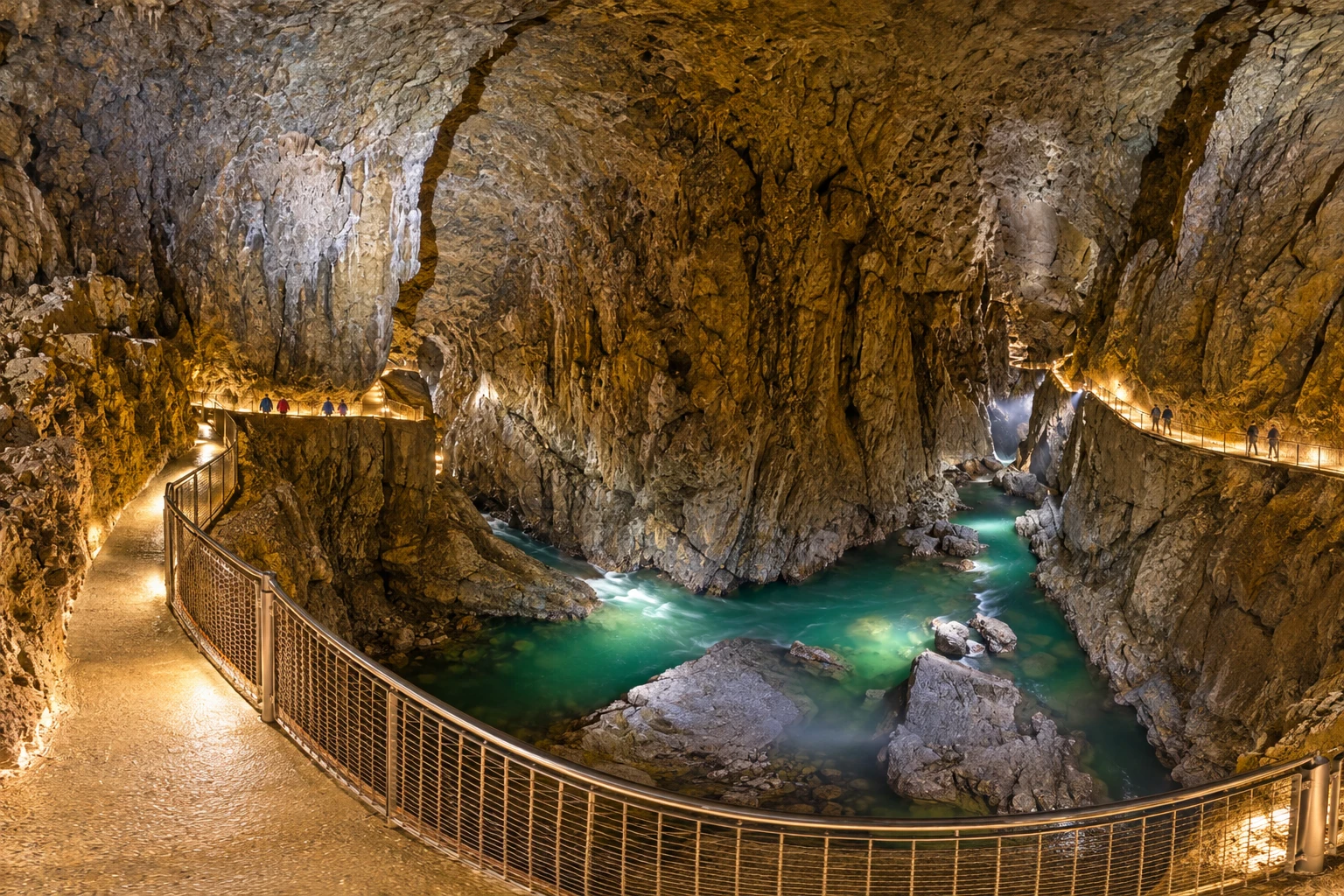
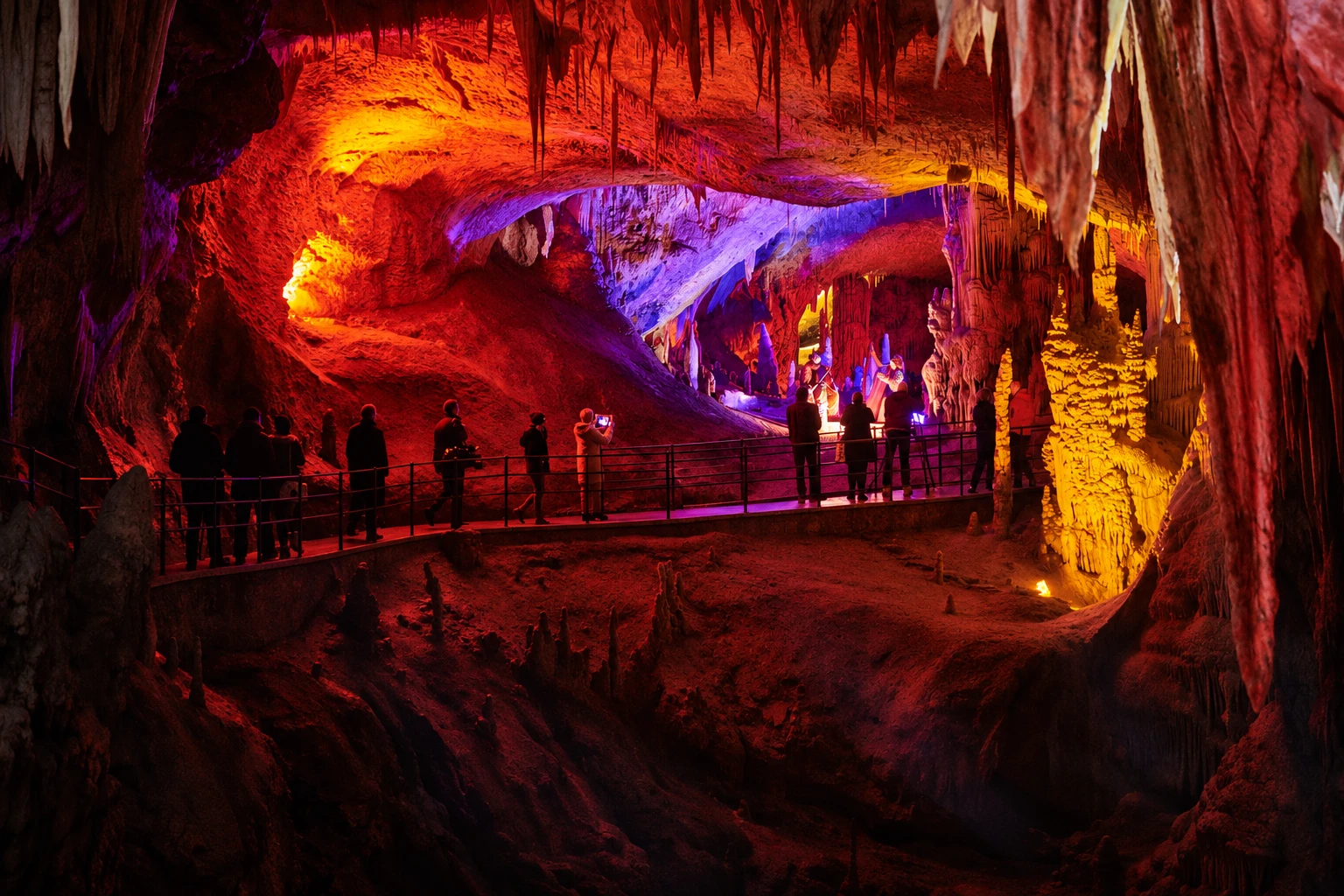
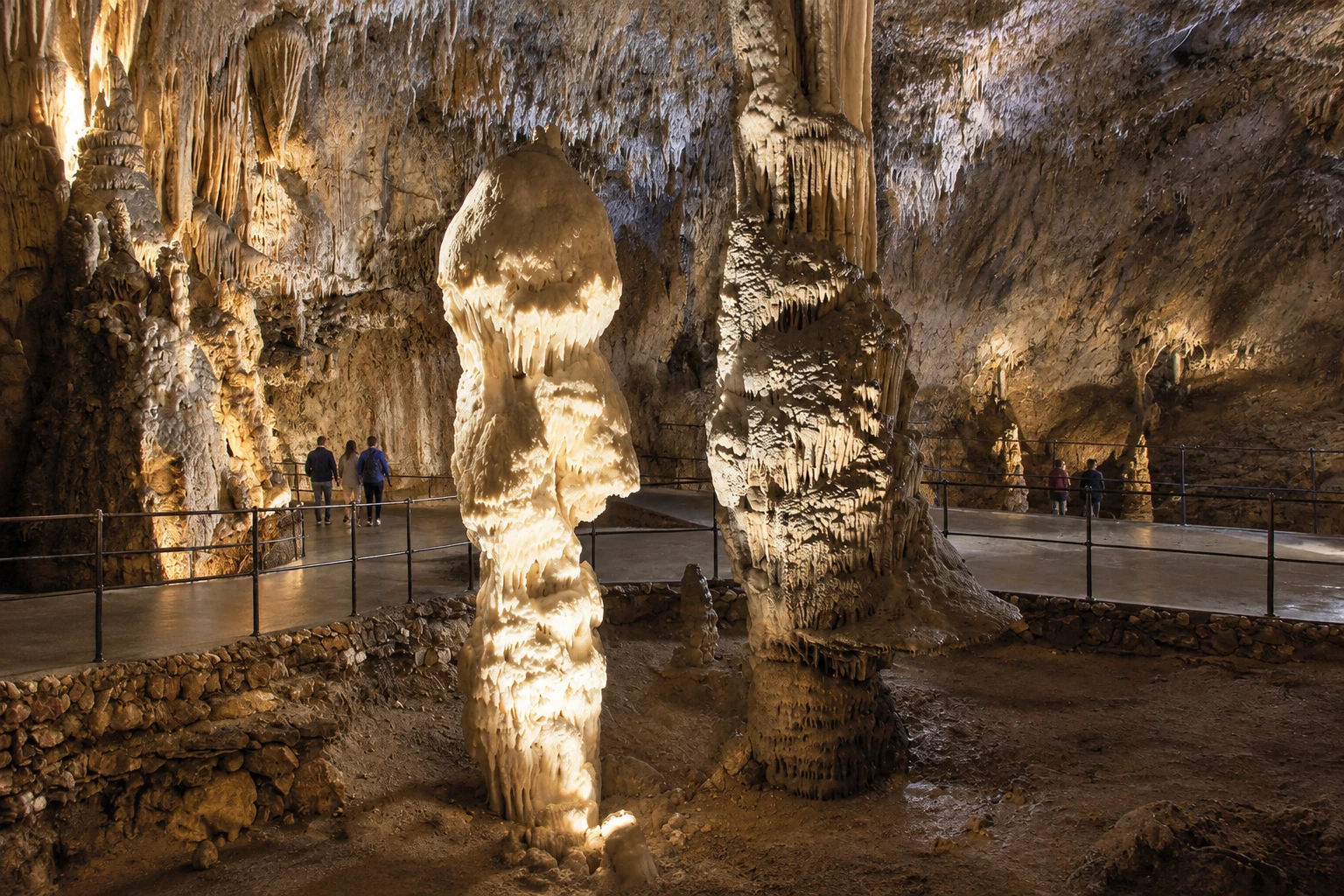
Postojna Cave (Postojnska jama) is a 24 km system of galleries, passages and chambers carved by the Pivka River, and it is the most visited cave in Europe. The inner parts were discovered in 1818 by Luka Čeč, a local guide. The guided visit covers 5 km: 3.7 km aboard the electric train, on the only dual-track cave railway in the world, and the remainder on foot along an easy path. The first railway inside a cave was opened here in 1872. Along the route, the train crosses the Concert Hall, lit by Murano glass chandeliers, and the walk passes through large chambers to the Brilliant, the five-meter white stalagmite that became a symbol of the cave and the Slovenian karst, beside a heavily ornamented column. The visit also shows the olm (Proteus anguinus), the blind amphibian of the underground waters that local tradition called a dragon’s offspring. Guides speak Slovenian, Italian, English or German, and there are audioguides in several other languages.
Stops: Postojna Cave.
Includes: Separate ticket required, with a timed entry; there are combination packages that include the cave, Predjama Castle, the Vivarium, and the EXPO exhibition. Visit suitable for families with small children and for people with reduced mobility.
Tip: The temperature inside the cave stays around 10 °C year‑round: bring a jacket and closed shoes, even in summer. Arrive at the park half an hour early, because boarding the train starts 15 minutes before the scheduled time. The park itself suggests seeing the castle in the morning and the cave in the afternoon.
Best time: All year round; the cave is open every day, including holidays. In July and August, buy your ticket in advance.
Vivarium and EXPO Cave Karst: the olm and cave science
From Postojna Cave Park On foot, on your own 1 hour 30 minutes to 2 hours morning or afternoon easy
The two visits complete the cave experience and are in the same park. The Vivarium occupies the New Signatures Passage, fifty meters from the entrance of Postojna Cave, and has two parts: a laboratory used by researchers and a speleobiology exhibit that presents the animals most typical of the region’s caves. The star is the olm, which measures 25 to 30 centimeters, is the largest cave-dwelling animal and the only vertebrate in Europe tied exclusively to the underground environment; it lives in the dark, eats small crustaceans, worms and snails, and can go years without feeding. In 2016, a female from the cave laid eggs, and the hatching of the young was followed in several countries. Another resident is the thin-necked beetle (Leptodirus hochenwartii), found by Luka Čeč in 1831: the discovery overturned the idea that there was no life in caves and gave rise to biospeleology. The EXPO Cave Karst is an interactive exhibition about karst formation and the cave’s history as an attraction; children can play at driving a cave train. In the same space there are two displays, one about Earth’s geological eras and another of butterflies from around the world.
Stops: Vivarium, EXPO Cave Karst.
Includes: Tickets paid separately or included in park packages.
Tip: Good option to fill the wait between the castle and the cave time.
Best time: All year round.
Predjama Castle: the castle in the cave mouth
From Postojna Cave, 9 km away Car, taxi or shuttle bus in high season about 2 hours, including transit morning easy, with stairs
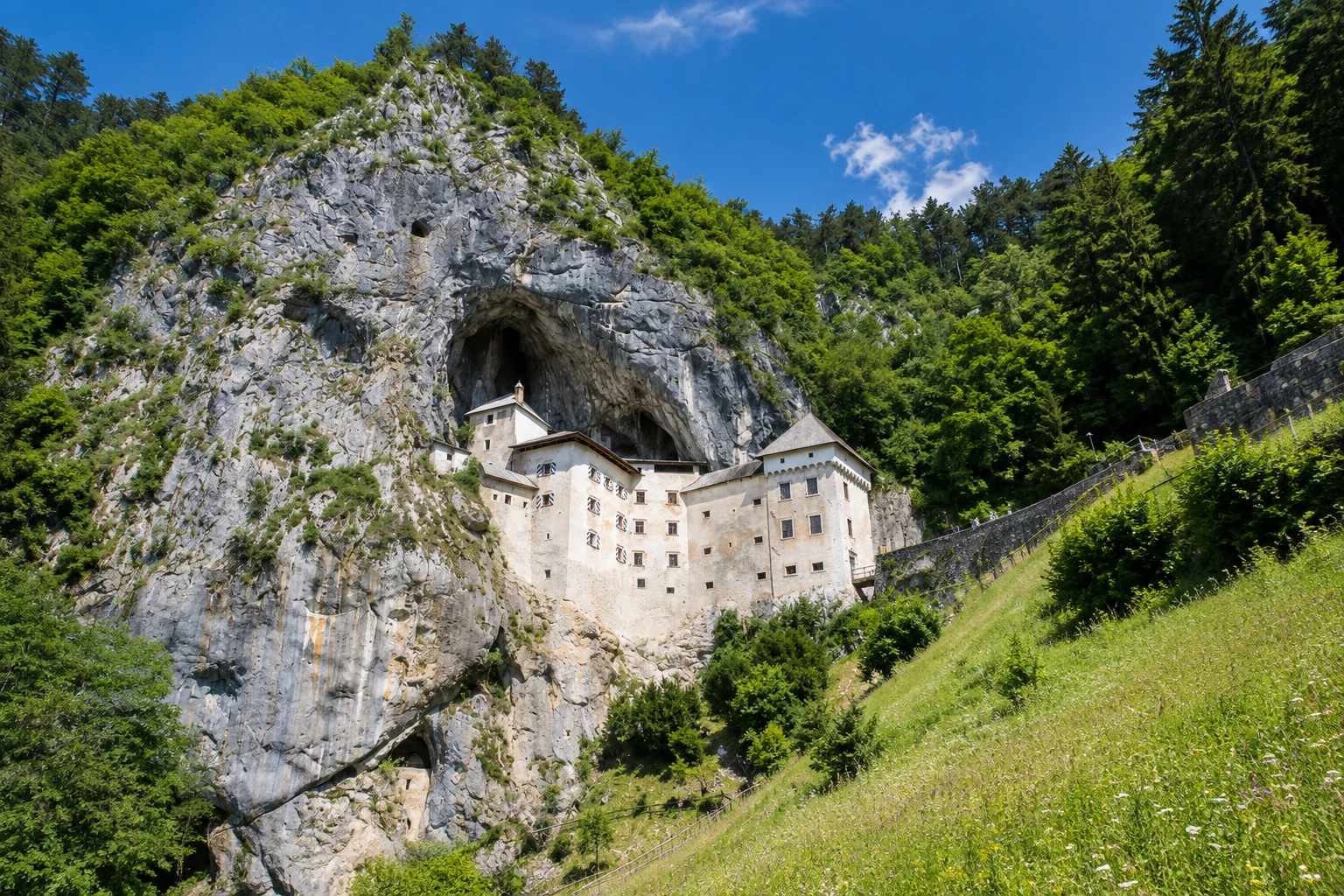
Predjama Castle (Predjamski grad) has sat built into a cave mouth for over 800 years, in the middle of a 123‑meter‑high cliff, about 9 km from the entrance to Postojna Cave. It is the world’s largest cave castle, listed in the Guinness Book. Behind the building there is a network of secret tunnels. The most told story is of the rebellious knight Erazem of Predjama, who resisted an imperial army siege for more than a year thanks to one of those tunnels; legend says he was eventually killed by the betrayal of a servant while on the latrine. The visit includes the armory, the chapel, the kitchen and the torture chamber; in the attic, with valley views, there is a collection of medieval armor and weapons, including spears, halberds, swords, bows and crossbows. The castle route is done with an app included in the ticket or with an audio guide rented at the ticket office.
Stops: Predjama Castle.
Includes: Separate paid ticket or as a package with Postojna Cave. In high season, visitors holding tickets for both the cave and the castle can use the shuttle bus between them; the trip takes up to 20 minutes.
Tip: Parking at Predjama is small and fills up in summer. Without a car and outside high season, the cave ticket office will call a taxi. The last entry is half an hour before closing.
Best time: All year; the castle is open every day.
Cave under Predjama Castle: the lantern tour
From Predjama Castle Guided walk by lantern light about 1 hour afternoon moderate; not recommended for children under 6
Under the castle, the karst formed the Jama pod Predjamskim gradom, a cave of four levels with 14 km of known passages, and it is the second-longest show cave in the country. Finds at the back of the castle show the site was occupied in the Stone Age; at the entrance, called the Stable, Roman-era remains were found, and the Cave of Names preserves signatures left since the 16th century. The tourist section is 700 meters and passes the Stable, the Main Passage, the Cave of Names and the Great Hall to the Fiženca, where it exits to the surface. There is no electric lighting: each visitor receives a lantern before entering, and comfortable clothing and footwear are enough. In cold months a colony of bats hibernates there, so the cave is open only in the warm season. For those who want more, there are adventure exits with caving equipment through Erazem Passage and the East Passage, by prior arrangement.
Stops: Cave under Predjama Castle.
Includes: Separate ticket required, with a lantern. Strollers and wheelchairs are not allowed inside.
Tip: There are few time slots and, during part of the season, tours run only on weekends or by arrangement: confirm on the day you buy the castle ticket.
Best time: From May to September; closed the rest of the year because bats hibernate.
Pivka jama and Črna jama: the caves of the Pivka river
From Pivka jama campsite, 5 km from Postojna Cave Guided walk about 1 h 30 morning or afternoon moderate, with 317 steps
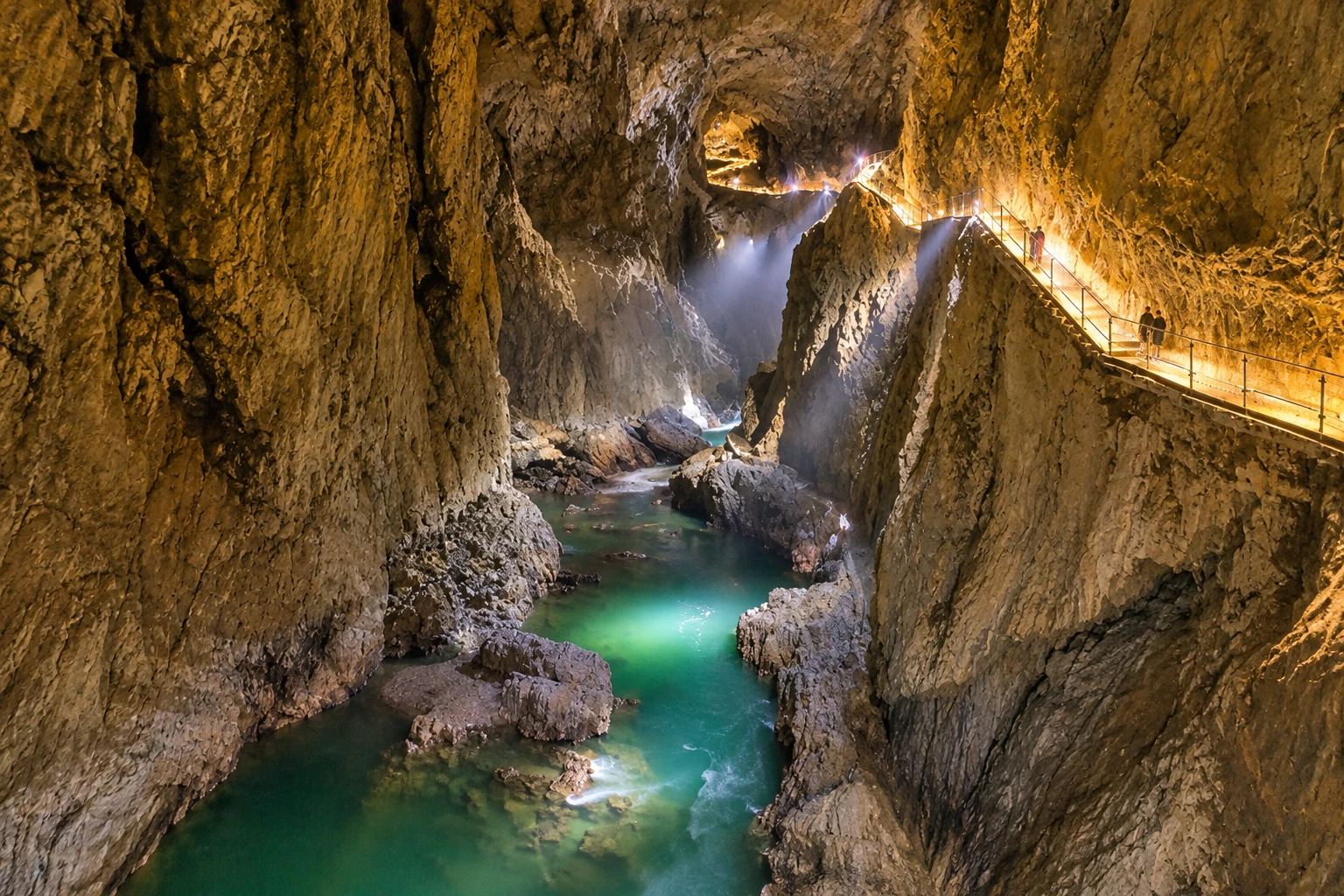
Pivka jama and Črna jama (Black Cave) are the last two caves along the Pivka underground river before it disappears from view and reappears in Planina Cave. They are part of the same system as Postojna Cave, but the visit is different: no train, and the river runs alongside the route. You enter through a collapse doline, a large hole formed when the cave roof gave way: in Pivka jama the walls are vertical, and you descend 317 steps to 65 meters deep. The cave is just over 5 km long, of which 2 km are open to visitors, with electric lighting; the path follows the river, which is more impressive when the water is high, and continues toward Črna jama. This one is 3.3 km long, with large chambers, horizontal passages and dark formations that gave it its name. The exit is through Črna jama, and the return to the starting point is along a trail through the forest. No special equipment is required. Both caves are also included in the park’s adventure outings, with sections closed to regular visits.
Stops: Pivka jama, Črna jama.
Includes: Admission paid separately. Visits from May to September, at a few set times or by arrangement.
Tip: Confirm times with the park before heading to the campsite. Bring warm clothing and shoes with a good sole: the steps are often wet.
Best time: From May to September.
Otoška jama and Modrijan Mill: the cave without lights and the Pivka’s mill
From Veliki Otok, 1.5 km from Postojna Cave Guided walk, by arrangement 45 minutes in the cave morning or afternoon easy
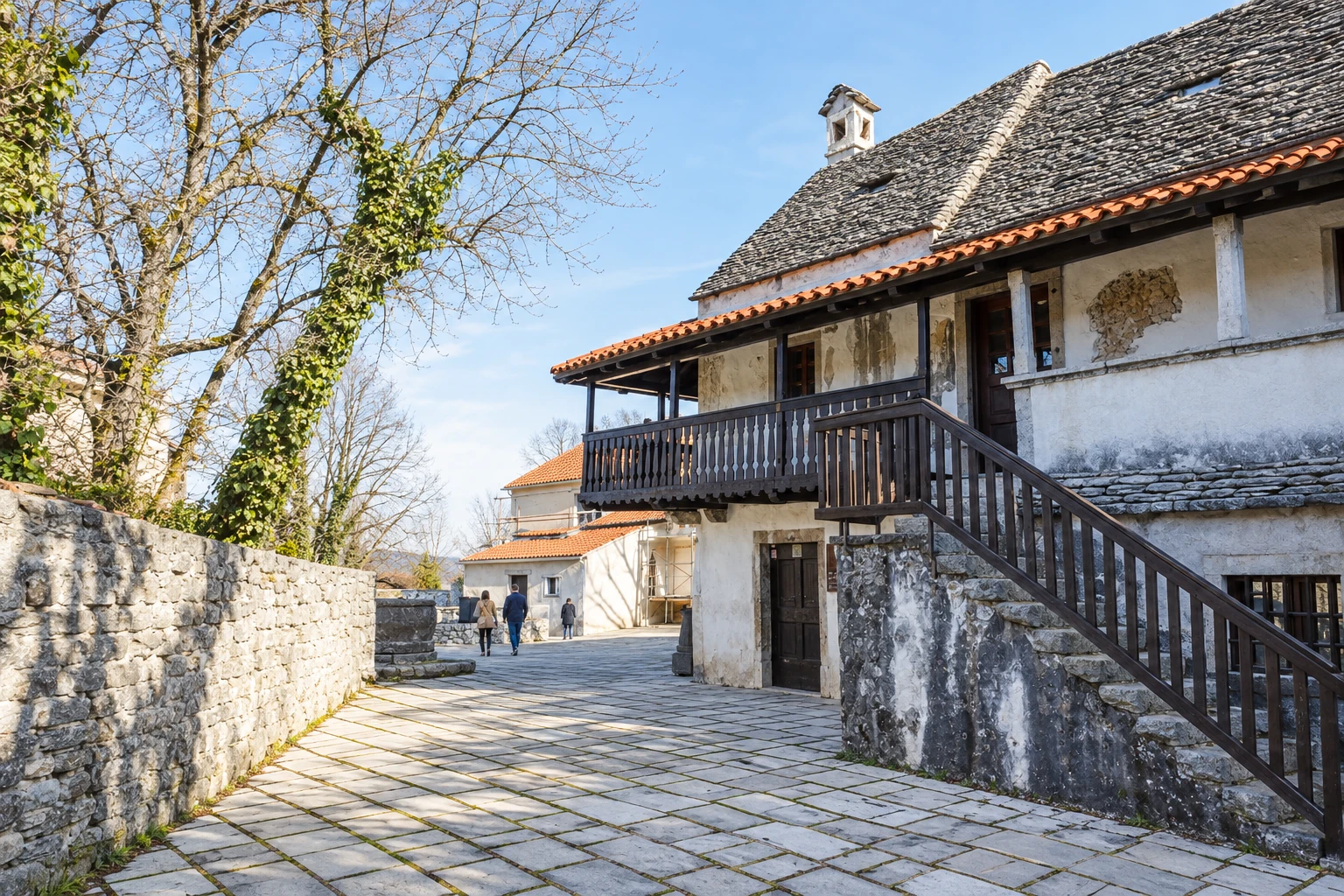
Otoška jama is in the village of Veliki Otok, 1.5 km from Postojna Cave, in the direction of Predjama. It is a dry, horizontal cave full of formations, connected to other parts of the system by passages of the Pivka river. It has no electric lighting: the route is well marked and you only need a flashlight. The tourist section is 600 metres long, and the visit, via an easy path, takes 45 minutes. The cave has been used as a film location, including for one of the productions about the native chief Winnetou, a character from Karl May’s novels. Visits are arranged in advance and require at least three participants. At the park centre, just before the sinkhole where the Pivka disappears underground, the Modrijan Mill (Modrijanov mlin) comprises the lower mill, a house and a water-powered saw of the Venetian type. The mill wheels have been turning in the same place for five centuries; the stone frame of the door bears the year 1593 and the initials of the former owner. An exhibition tells the story of the Pivka millers’ lives.
Stops: Otoška jama, Modrijan Mill.
Includes: Cave visit paid separately, with a notice of a few days. The cave receives visits from May to October; the mill, by arrangement, from April to September.
Tip: Suitable for those who already know the main cave and want a short visit without crowds. Write to the park in advance to book.
Best time: From May to September.


 Brazil
 Antarctica
 Argentina
 Bolivia
 Chile
 Colombia
 Ecuador
 Falkland Islands (Malvinas)
 French Guiana
 Guyana
 Paraguay
 Peru
 Suriname
 Uruguay
 Venezuela
 Austria
 Belgium
 Croatia
 Denmark
 Finland
 France
 Germany
 Greece
 Hungary
 Iceland
 Ireland
 Italy
 Luxembourg
 Norway
 Poland
 Portugal
 Slovakia
 Spain
 Sweden
 Switzerland
 the Czech Republic
 the Netherlands
 the United Kingdom
 Turkey
 Bermuda
 Canada
 Greenland
 Mexico
 Saint Pierre and Miquelon
 the United States
 the Dominican Republic
 Japan
 Egypt
 South Africa
 Australia
 Fiji
 New Zealand
 Papua New Guinea