

 Brazil
 Argentina
 Bolivia
 Chile
Chile Colombia
 Ecuador
 Guyana
 French Guiana
 Falkland Islands (Malvinas)
 Paraguay
 Peru
Peru Suriname
 Uruguay
 Germany
 Belgium
 Denmark
 Spain
Spain France
 Greece
 the Netherlands
 Ireland
 Italy
Italy Luxembourg
 Norway
 Portugal
 the United Kingdom
 Sweden
 Switzerland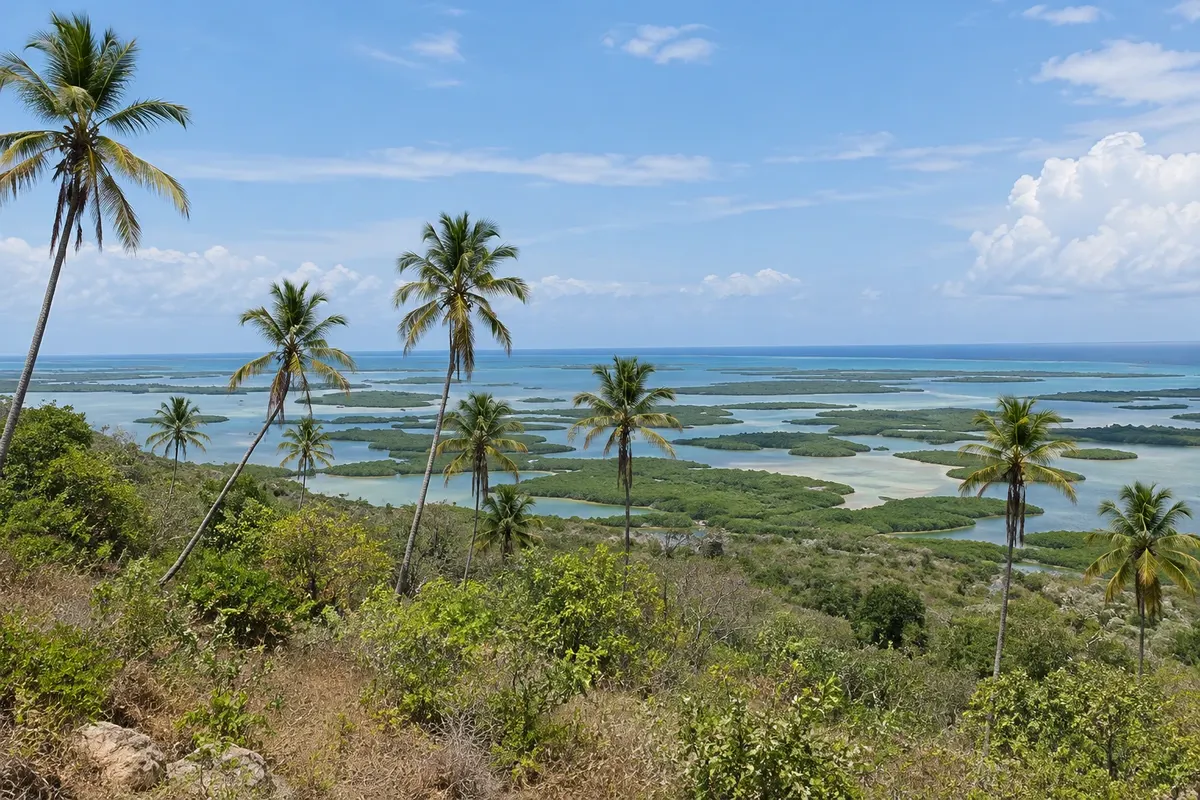
National park · Tucacas, Falcón
Parque Nacional Morrocoy
Park of about 32,000 hectares of mangroves, channels, reefs and white-sand cays, created in 1974 between Tucacas and Chichiriviche.
Illustrative images. The pictures in this guide are illustrations based on the real place, not photographs, and may differ from it.

Discover
About Parque Nacional Morrocoy
Parque Nacional Morrocoy was established in 1974 and covers about 32,000 hectares of land and sea between Tucacas and Chichiriviche, facing the golfo Triste. The land portion includes Cerro Chichiriviche and areas of dry forest; the marine portion is a maze of mangrove channels, coral reefs and dozens of cays.
Boat trips through the mangrove channels reveal another side of the park: trunks and roots in the water, bird nests and islets covered with vegetation. It is common to see herons, pelicans, frigatebirds, socós and other waterbirds nesting in the mangroves.
The park has protection rules: boats follow set routes and speed limits, do not anchor on the corals, and visitors must not remove shells, corals or animals.
The most sought-after cays, such as Sombrero, Boca Seca, Paiclá, Sal and Muerto, have their own pages in this destination.
Before you go
Practical information
Cidade Turismo reviews its information regularly, but something may have changed. Check with the place before planning your trip.
How much time to set aside
From half a day to several days, depending on the cays chosen.
Best time
From December to April, with less rain and clearer water. In the morning the sea is usually calmer. Avoid holidays.
How to get there
Boats depart from the piers of Tucacas and Chichiriviche. Mangrove tours are usually booked at the piers.
Tip
Agree the route and return time with the boatman before leaving. Bring water, a hat and sunscreen, and take all your trash back with you.
Get your questions answered
Frequently asked questions about Parque Nacional Morrocoy
When was Parque Nacional Morrocoy created?
In 1974.
What animals can be seen in the mangroves?
Herons, pelicans, frigatebirds, socós and other waterbirds, as well as fish and crabs.
Are there rules for visiting the park?
Yes: boats follow routes and speed limits, anchoring on the corals is not allowed, and nothing may be removed from the park.