Square
Plaza de Armas de Arequipa
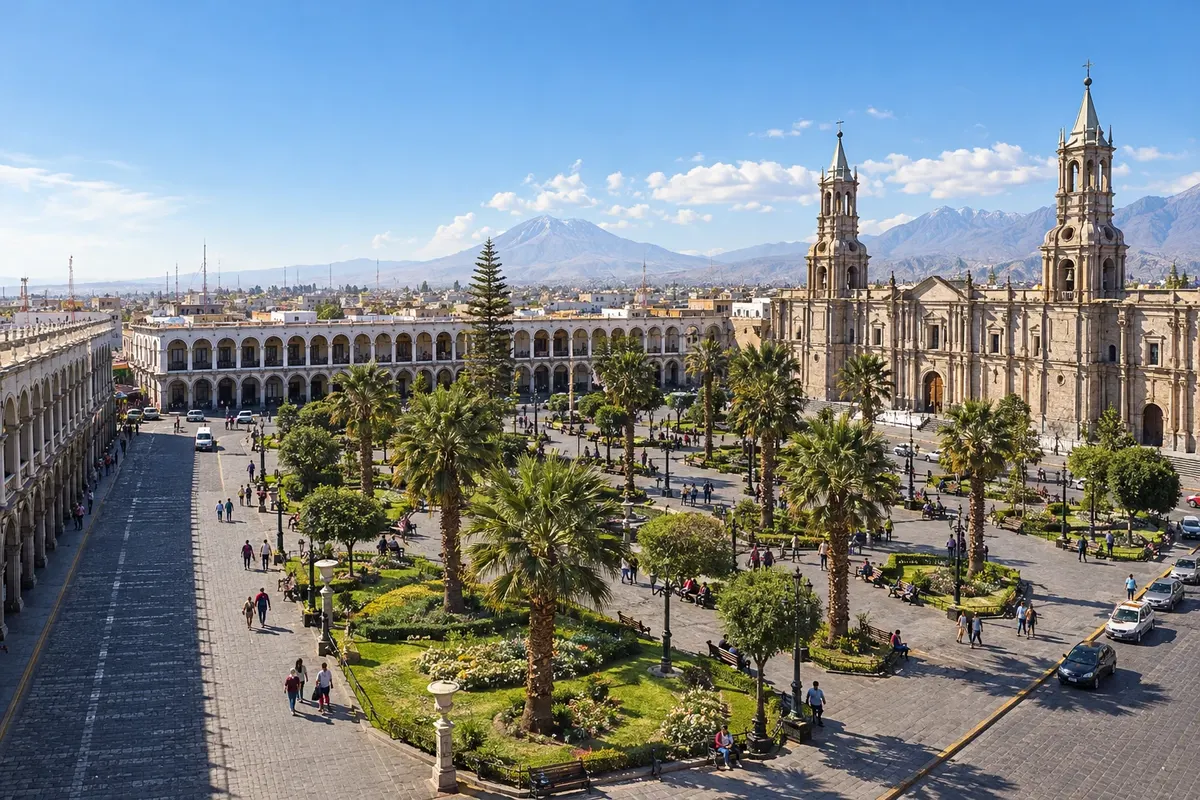
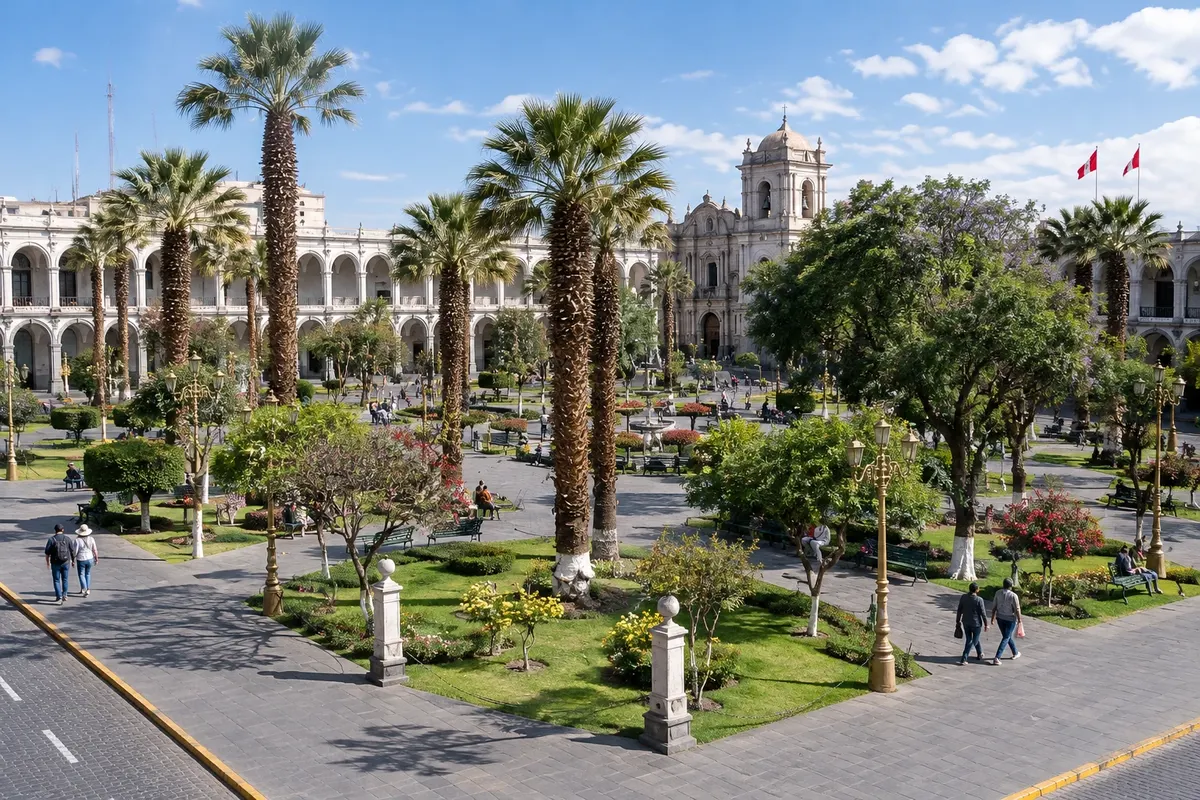
Arequipa's central square, with sillar arcades on three sides, the Catedral occupying the fourth, a bronze fountain in the middle and the Misti and Chachani volcanoes appearing behind the rooftops.
Church
Basílica Catedral de Arequipa
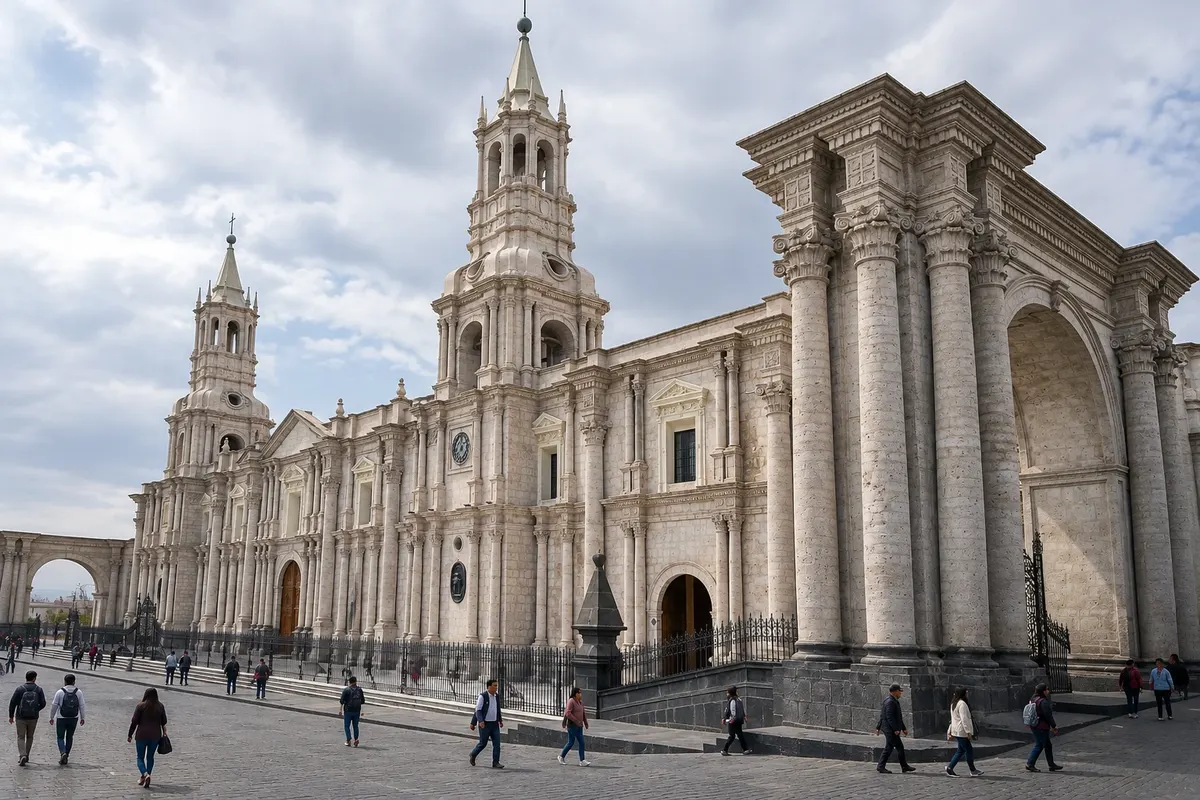
Neoclassical sillar Catedral that occupies an entire side of the Plaza de Armas, rebuilt after fires and earthquakes, with a Belgian organ, a pulpit with a carved devil and a guided tour up to the roof.
Convent
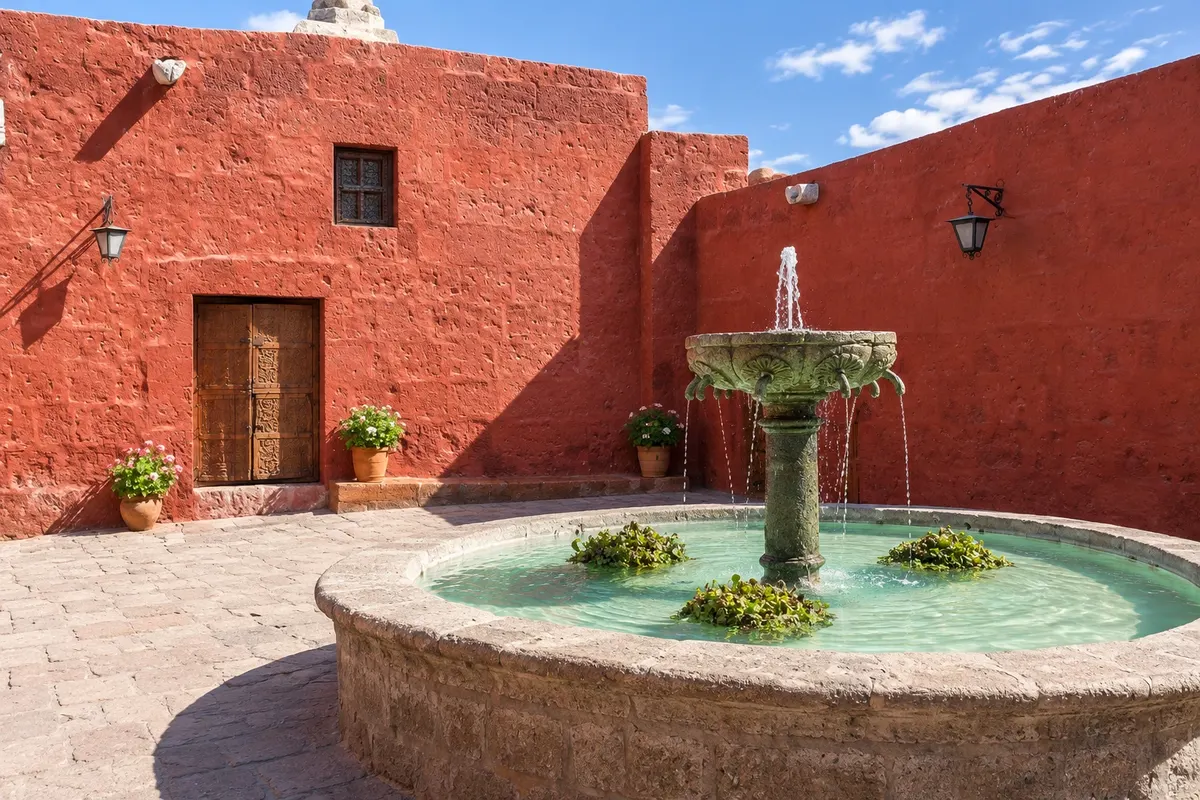
Monasterio de Santa Catalina
Cloistered monastery founded in 1579, covering 20,000 m² of streets, plazas, cloisters and cells painted blue and red — a walled city in the center of Arequipa open to visitors since 1970.
Museum
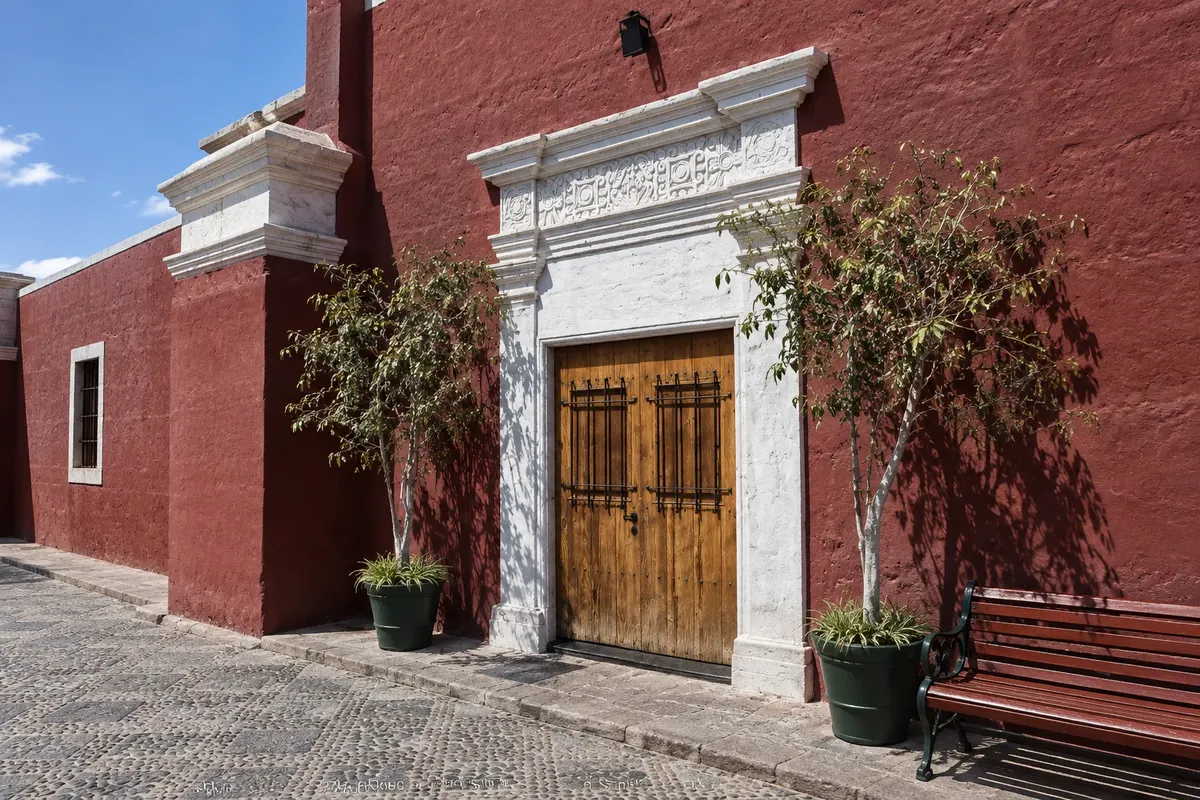
Museo Santuarios Andinos
Museum of the Universidad Católica de Santa María that houses Juanita, the Inca girl offered in sacrifice on the Ampato volcano and found frozen in 1995, and the offerings discovered in the high-altitude sanctuaries.


 Brazil
 Argentina
 Bolivia
 Chile
 Colombia
 Ecuador
 Guyana
 French Guiana
 Falkland Islands (Malvinas)
 Paraguay
 Suriname
 Uruguay
 Venezuela
 Germany
 Belgium
 Denmark
 Spain
 France
 Greece
 the Netherlands
 Ireland
 Italy
 Luxembourg
 Norway
 Portugal
 the United Kingdom
 Sweden
 Switzerland