Fjord
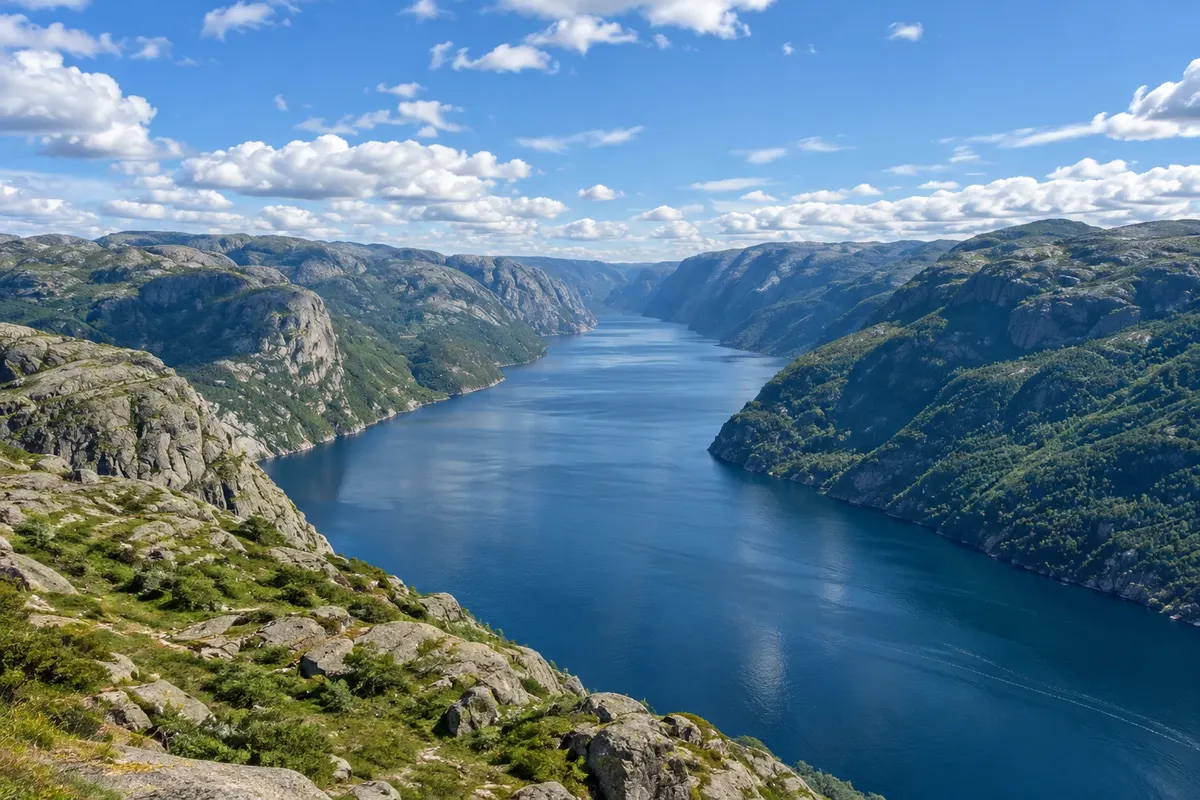
Lysefjorden
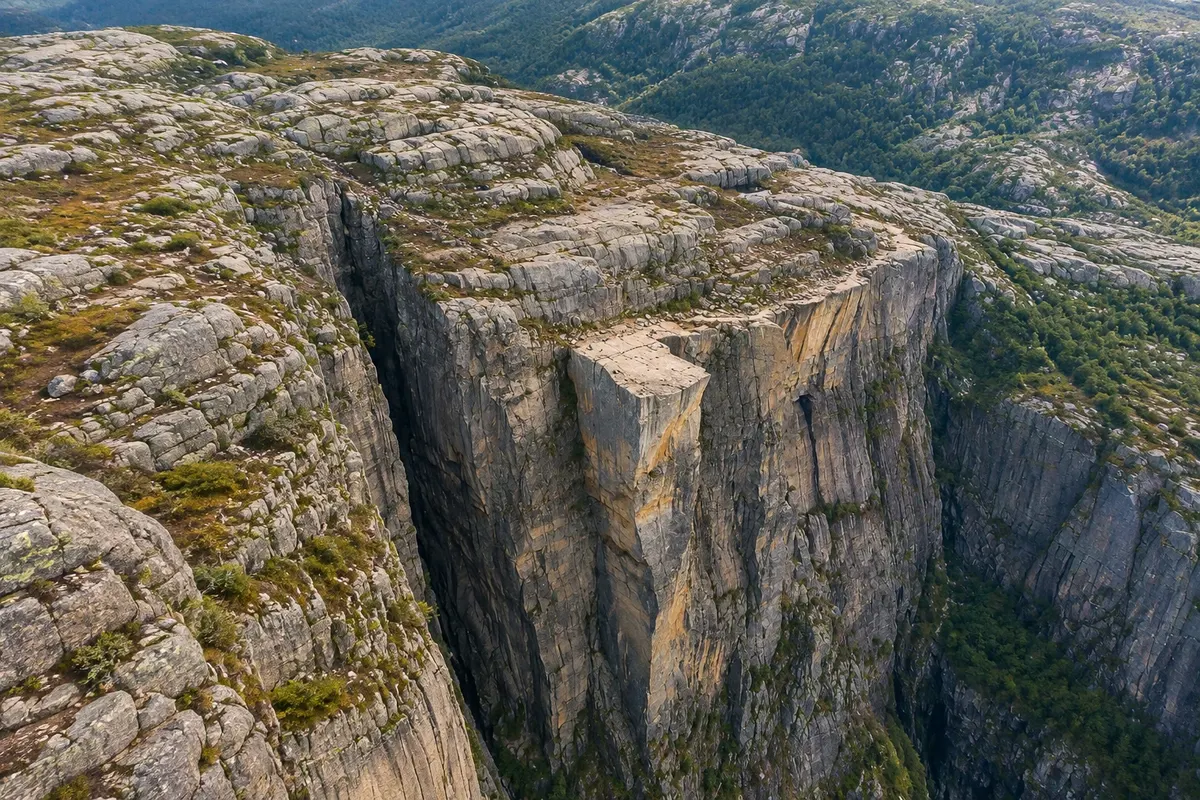
The 42-km fjord between granite walls east of Stavanger, with Preikestolen and Kjerag above, waterfalls such as Hengjanefossen and the village of Lysebotn at the end; explored on boat tours.
Trail and rock formation
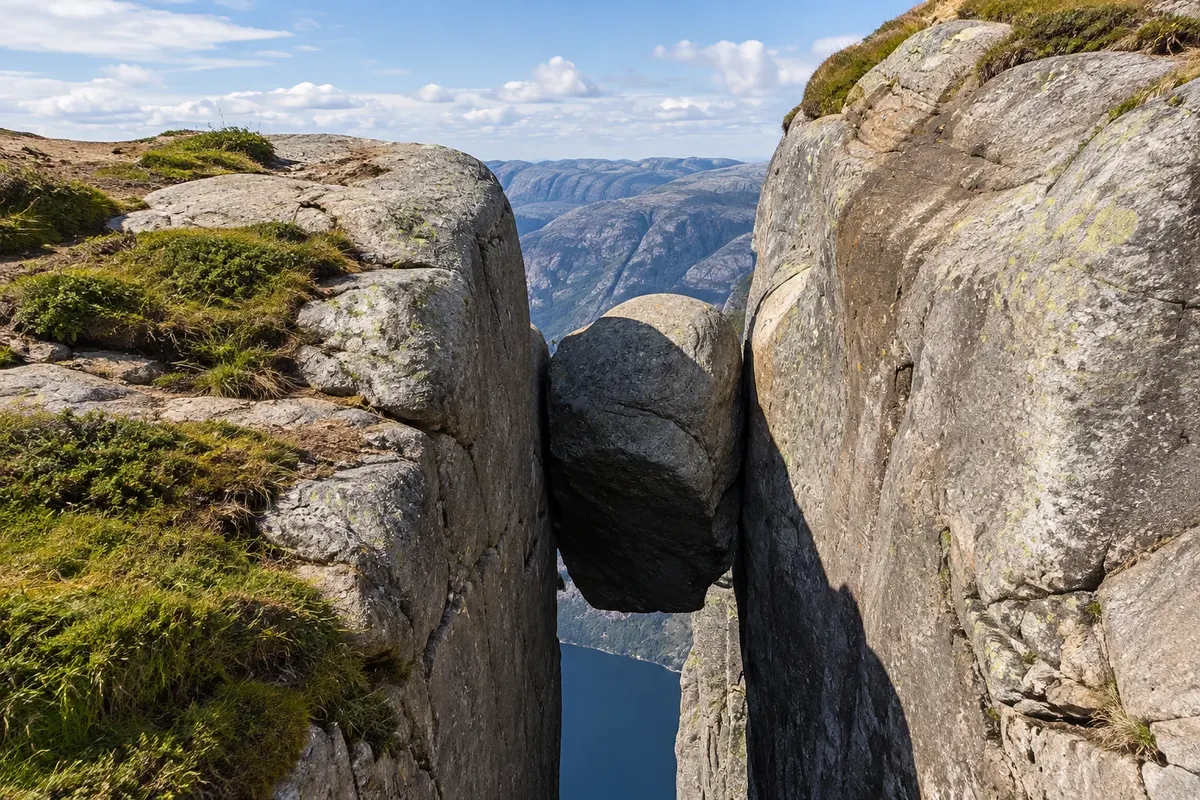
Kjeragbolten
A rock wedged in a crevice between two cliff faces about 1,000 meters above the Lysefjord, on the summit plateau of Kjerag; the trail starts at Øygardstøl above Lysebotn and is usually done in summer.
Monument
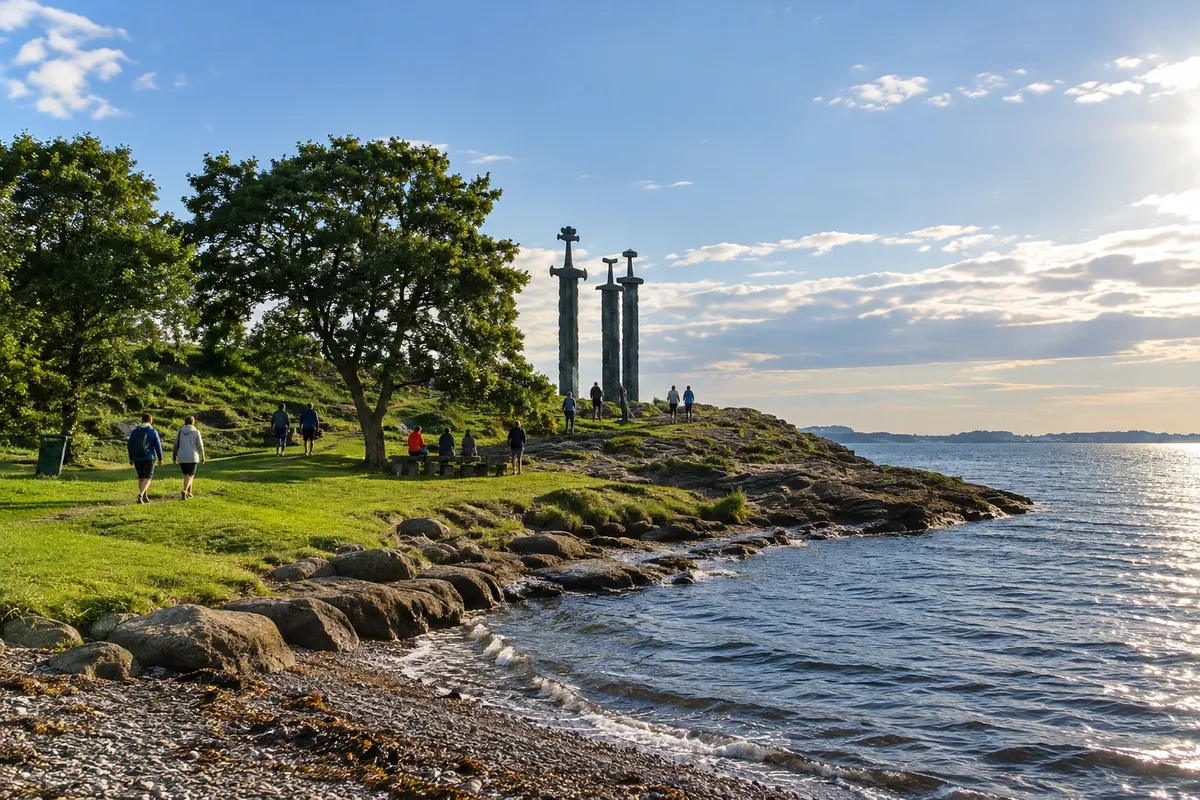
Sverd i fjell
Three 10-metre bronze swords planted in the rock at the edge of Hafrsfjord, south of Stavanger, in memory of the battle in which, according to tradition, Haroldo Cabelos Belos united Norway.


 Brazil
 Argentina
 Bolivia
 Chile
Chile Colombia
 Ecuador
 Guyana
 French Guiana
 Falkland Islands (Malvinas)
 Paraguay
 Peru
Peru Suriname
 Uruguay
 Venezuela
 Germany
 Belgium
 Denmark
 Spain
Spain France
 Greece
 the Netherlands
 Ireland
 Italy
Italy Luxembourg
 Portugal
 the United Kingdom
 Sweden
 Switzerland