Flåm and the Sognefjord

Vestland · Norway

Flåm and the Sognefjord

The village at the end of the Aurlandsfjord where the Flåm railway arrives; a base for the boat on the Nærøyfjord, the Stegastein viewpoint, and the medieval wooden churches of Borgund and Urnes.

Fiordes do Oeste

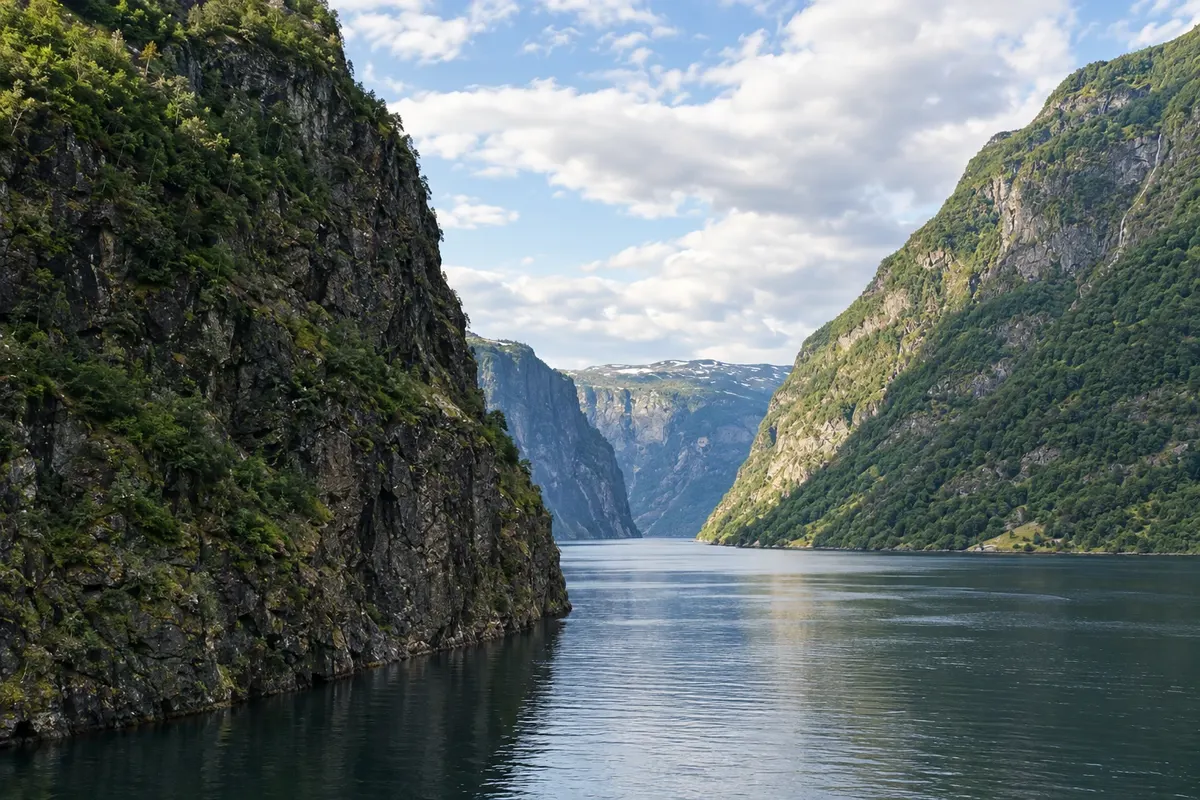
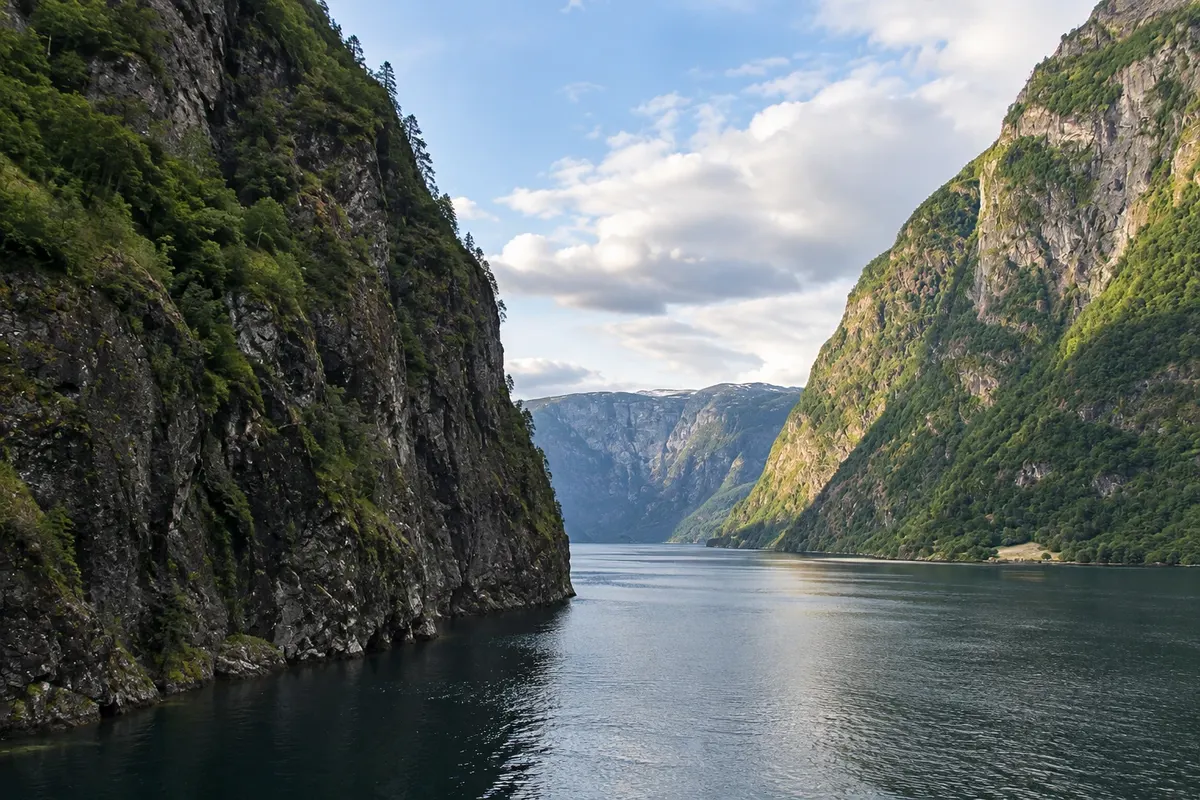
In the photo: Nærøyfjord

Illustrative images. The pictures in this guide are illustrations based on the real place, not photographs, and may differ from it.

Get it on Google Play Send your photos

Get to know the place

A region to enjoy
at your own pace.

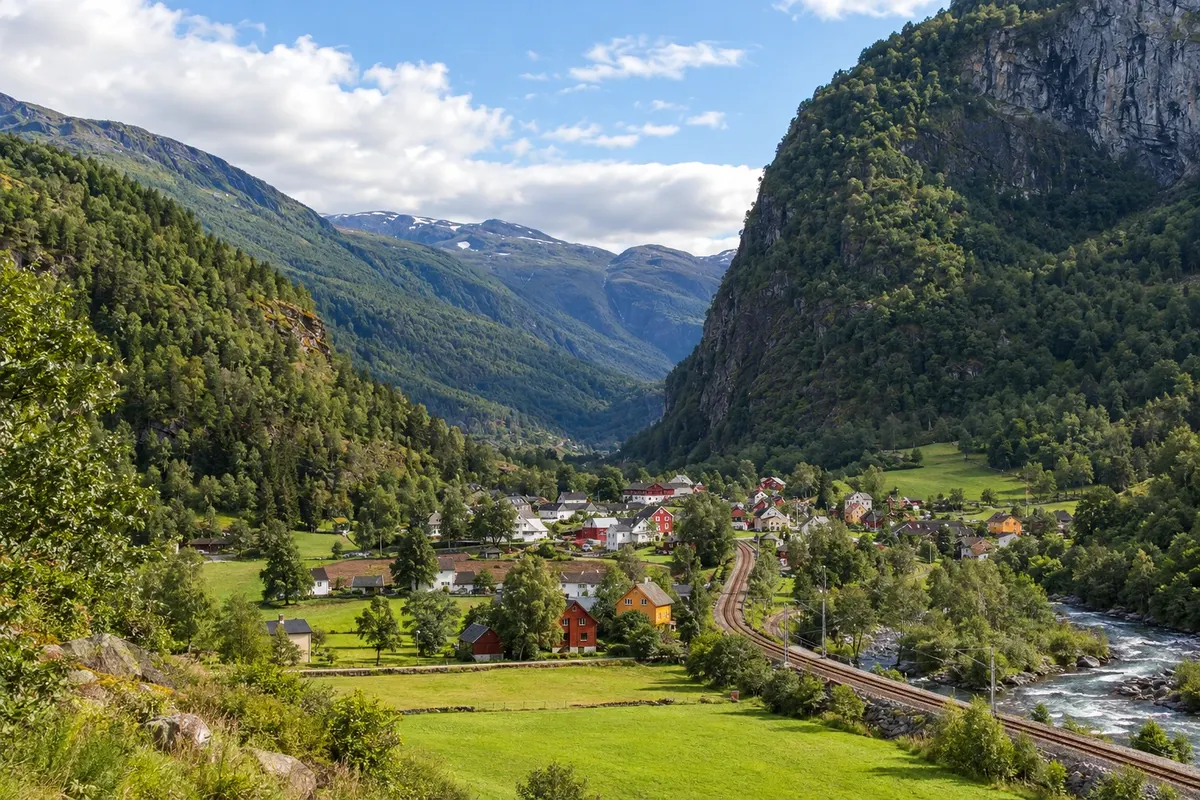
The Sognefjord is Norway’s longest and deepest fjord: it cuts about 200 km inland from the coast north of Bergen and splits into narrow arms between mountains over a thousand meters high. Flåm lies at the end of one of those arms, the Aurlandsfjord, in a small village of wooden houses, hotels and the quay where boats—and in summer, cruise ships—dock.

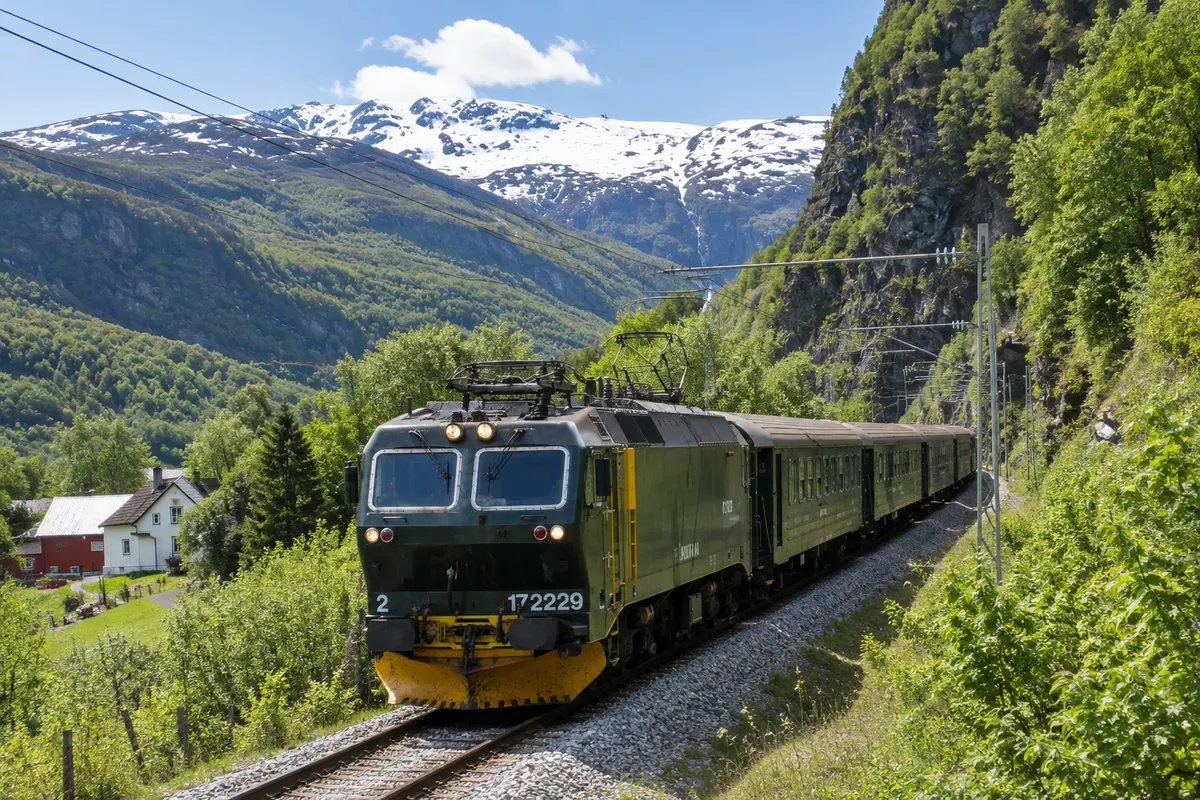
Flåm is known for the railway that reaches it. The Flåmsbana departs from Myrdal on the Oslo–Bergen line and drops roughly 860 meters over 20 km, passing tunnels, waterfalls and the Flåmselvi valley. From the quay boats depart for the Nærøyfjord, a narrow arm of the Sognefjord that is a UNESCO World Heritage site, with rock walls up to 1,700 meters and villages like Undredal and Gudvangen.

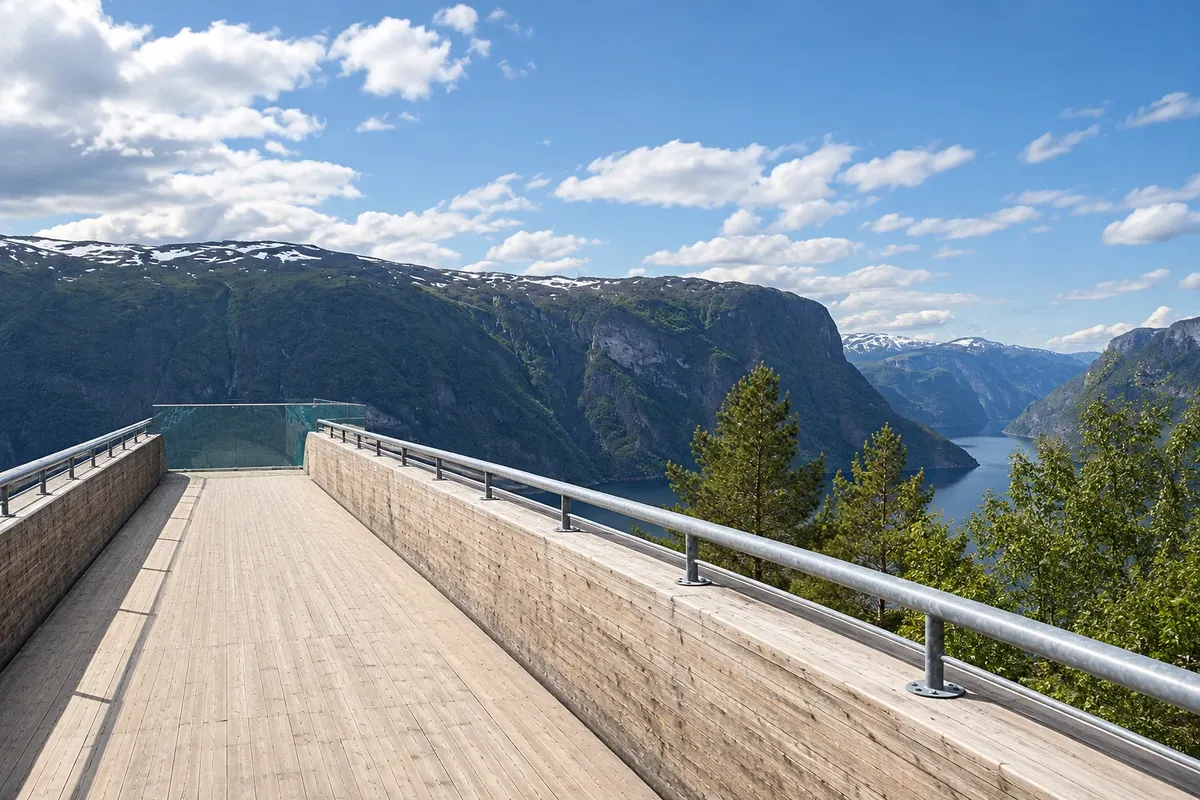
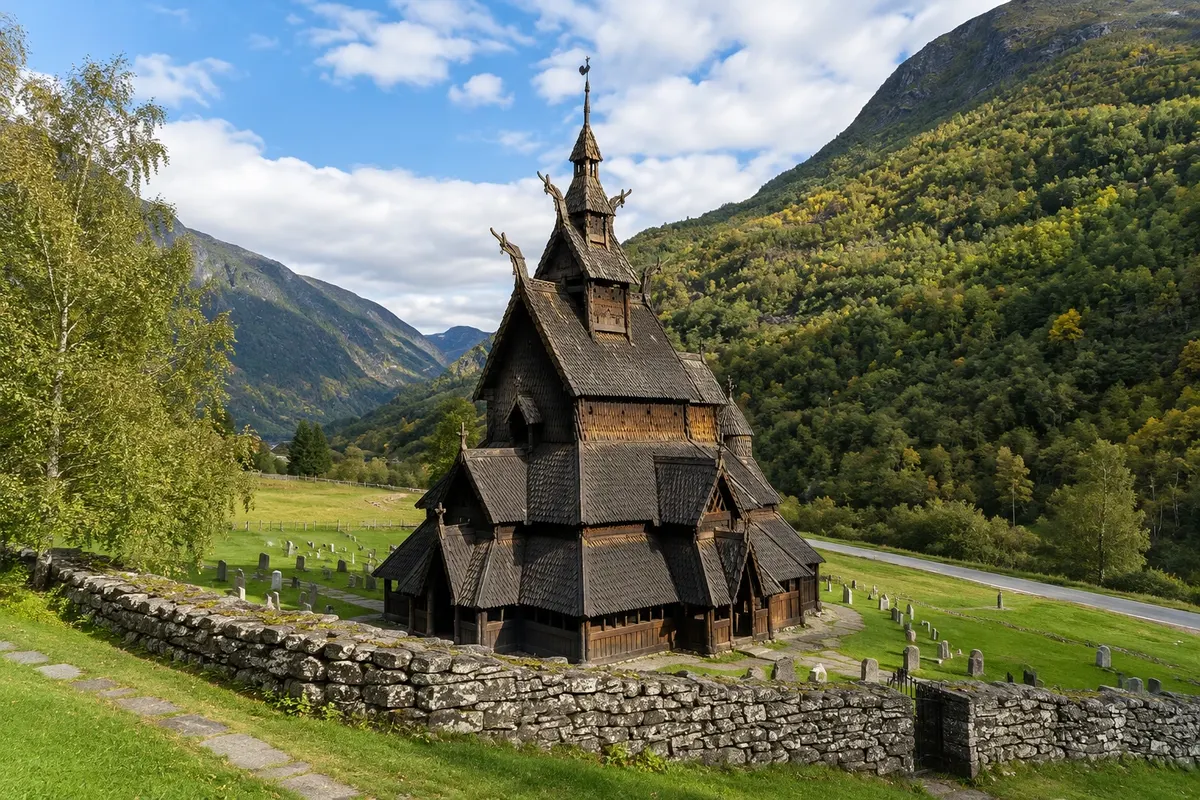
Around the village the road climbs from Aurland to the Stegastein viewpoint, a wooden platform over the fjord, and continues along the Aurlandsfjellet mountain road, which is often closed in winter. To the east, in the Lærdal valley, Borgund stave church is the best-preserved medieval stavkirke in the country; to the north, on the other side of the fjord, Urnes is a World Heritage site.

Spending a night in the village lets you see the fjord without the groups and add Stegastein and the churches.

This destination brings together 1 city: Flåm.

Share: WhatsApp
Traveler, share your experiences through photos Up to 5 photos of each place you visited.

One destination, many paths

The cities on this trip

Start with one city or combine several in your itinerary.

Where Flåm and the Sognefjord is
Flåm

Contornos: © Kartverket (CC BY 4.0), divisas de 2024; costa via geoBoundaries. Adaptação do Cidade Turismo.

How to get there: Flåm and the Sognefjord

✈ Bergen lufthavn, Flesland (BGO), in Bergen · 175 km to Flåm

Confirm before booking. From Oslo or Bergen, take the Bergen line train to Myrdal and change to the Flåmsbana, which descends in about an hour. From Bergen, the fast boat to Flåm typically operates in summer. By car, the E16 links Bergen to Flåm via the Gudvangen tunnel.

The local experience

Things to do in Flåm and the Sognefjord

Flåmsbana
Flåm · Vestland · Railway

Flåmsbana

The railway that descends from Myrdal, at 866 meters, down to Flåm at fjord level in about an hour: 20 km of tunnels, curves and waterfalls, with a stop at Kjosfossen waterfall.

Nærøyfjorden
Flåm · Vestland · Fjord

Nærøyfjorden

The narrow arm of the Sognefjord between the Aurlandsfjord and Gudvangen: 17 km of water between rock walls up to 1,700 meters high, waterfalls and small villages. UNESCO World Heritage Site.

Stegastein
Flåm · Vestland · Viewpoint

Stegastein

A wooden-and-steel platform that extends 30 meters over the Aurlandsfjord, at 650 meters altitude, on the mountain road rising from Aurland, with views of the fjord as far as Flåm.

Borgund stavkyrkje
Flåm · Vestland · Wooden church

Borgund stavkyrkje

The medieval wooden church in the Lærdal valley, built around 1180 and preserved almost as it was: layered roofs, dragon heads and the outer gallery. There is a visitor centre next to it.

See 1 more place in Flåm and the Sognefjord
Urnes stavkyrkje
Flåm · Vestland · Wooden church

Urnes stavkyrkje

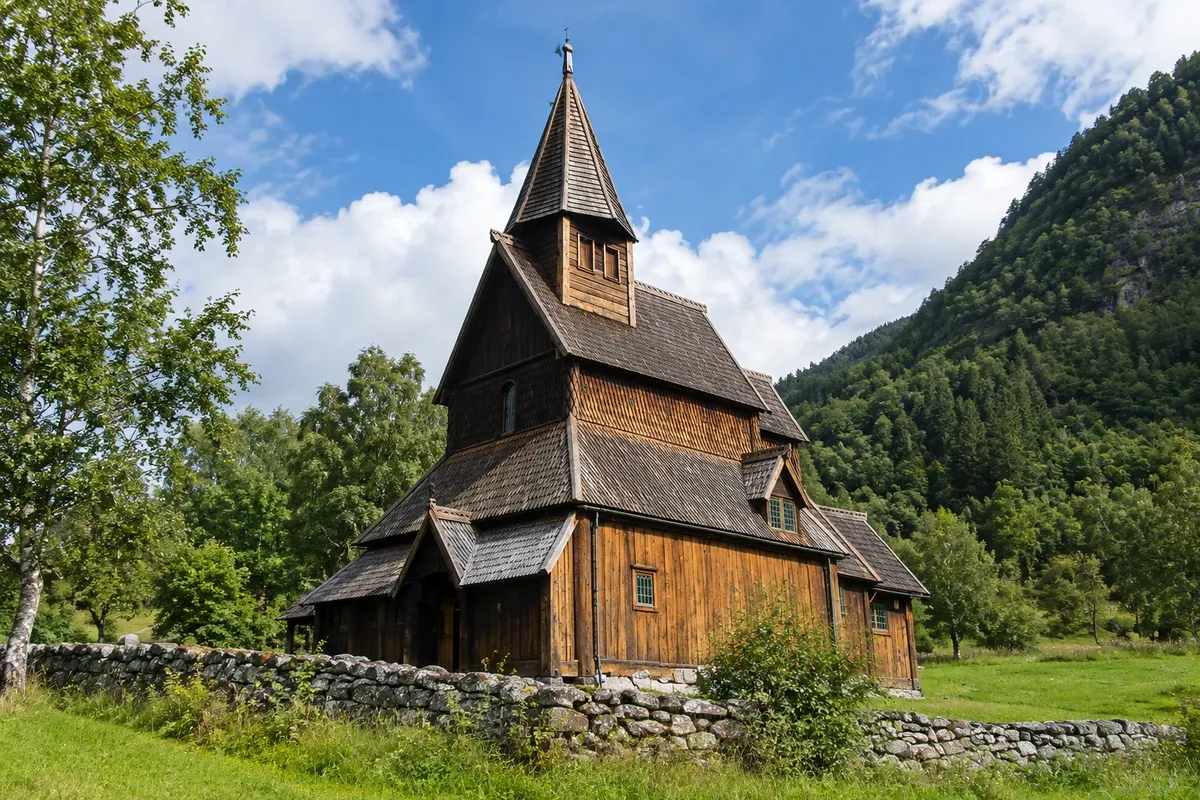
Norway's oldest wooden church, from the 12th century, on a promontory above the Lustrafjord, with a portal carved with interlaced animals in Viking style. A UNESCO World Heritage Site.

Before you go

Practical information

A little planning leaves more time to enjoy the journey.

When to go

From May to September the boats and the railway usually run more frequently, and the Aurlandsfjellet road generally opens from June to October; check in advance. June and July have very long days. In winter, from November to March, the fjord is often calm and the slopes snowy, with fewer boats and short daylight hours.

The seasons shown are the most usual ones; nature doesn't always follow the calendar.

How many days to stay

One day on the train-and-boat itinerary is enough for the Flåmsbana and the Nærøyfjord. With one night you can include the Stegastein viewpoint and a kayak trip or a valley hike. With two days and a car, add the churches of Borgund and Urnes and the Aurlandsfjellet road.

Which city to stay in

Flåm has few hotels located by the quay and the station, and they fill up in summer. Aurland, 10 km away, has guesthouses and rental homes with fjord views. Gudvangen, at the end of the Nærøyfjord, has a hotel and cabins. Lærdal and Sogndal, about an hour's drive away, serve those continuing to Borgund and Urnes.

Respect the place

Take your trash with you, follow the signs and support local businesses. In natural areas, follow the visiting guidelines.

Get your questions answered

Frequently asked questions about Flåm and the Sognefjord

Can you visit Flåm as a day trip?

Yes. The "Norway in a Nutshell" itinerary departs from Bergen or Oslo and combines train, the Flåmsbana, a boat on the Nærøyfjord, and bus in a single day. From Oslo the day is long; from Bergen it's more relaxed.

Do I need a car in Flåm?

Not for the Flåmsbana, the boat or getting around the village. A car is helpful for Stegastein, the Aurlandsfjellet road and the churches of Borgund and Urnes; in summer there are excursion buses to Stegastein.

What is the best time to go?

From May to September, when trains and boats run more often. The Aurlandsfjellet mountain road usually opens from June to October. In winter the fjord often has snow and fewer visitors.

What is the Nærøyfjord?

A narrow arm of the Sognefjord, between Flåm and Gudvangen, with very high rock walls. It is a UNESCO World Heritage site and is traversed by boat in about two hours.

How many days to stay?

One day for the Flåmsbana and the boat; one night to see the fjord without the groups and visit Stegastein; two days with a car to include the wooden churches.

Explore other destinations Search by state and city
Back