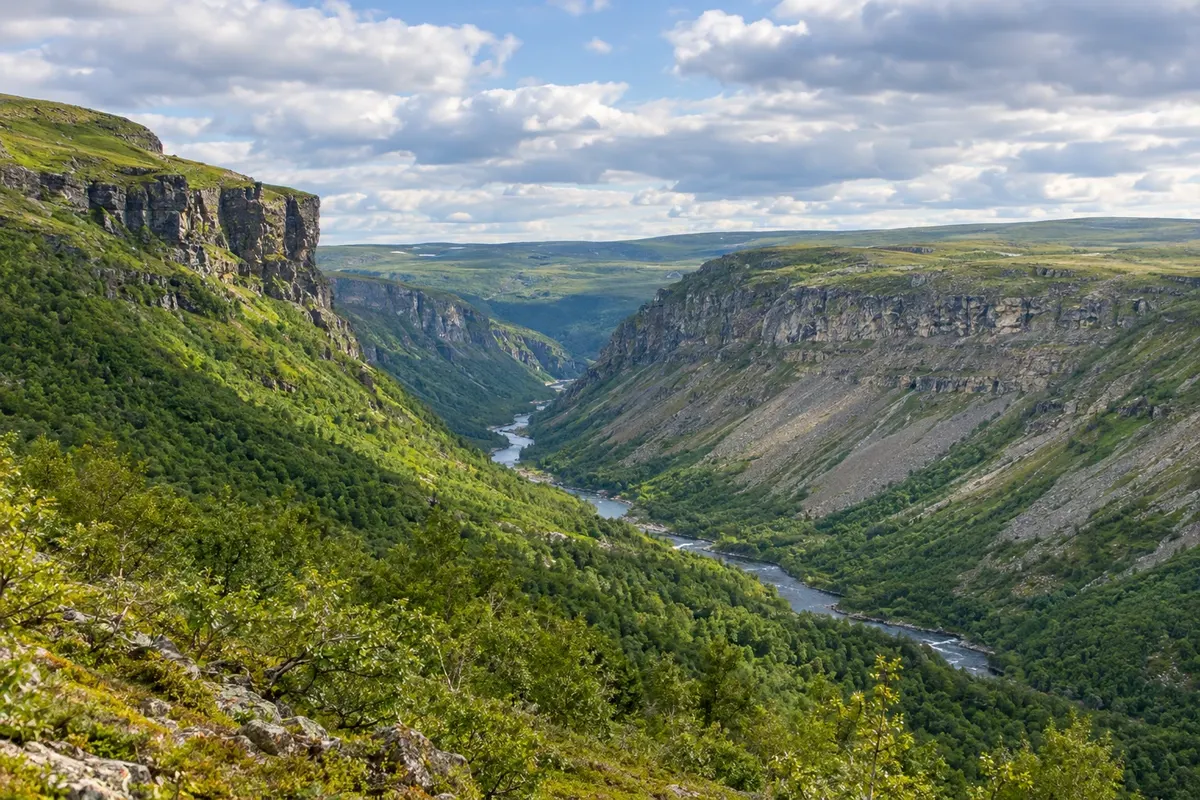
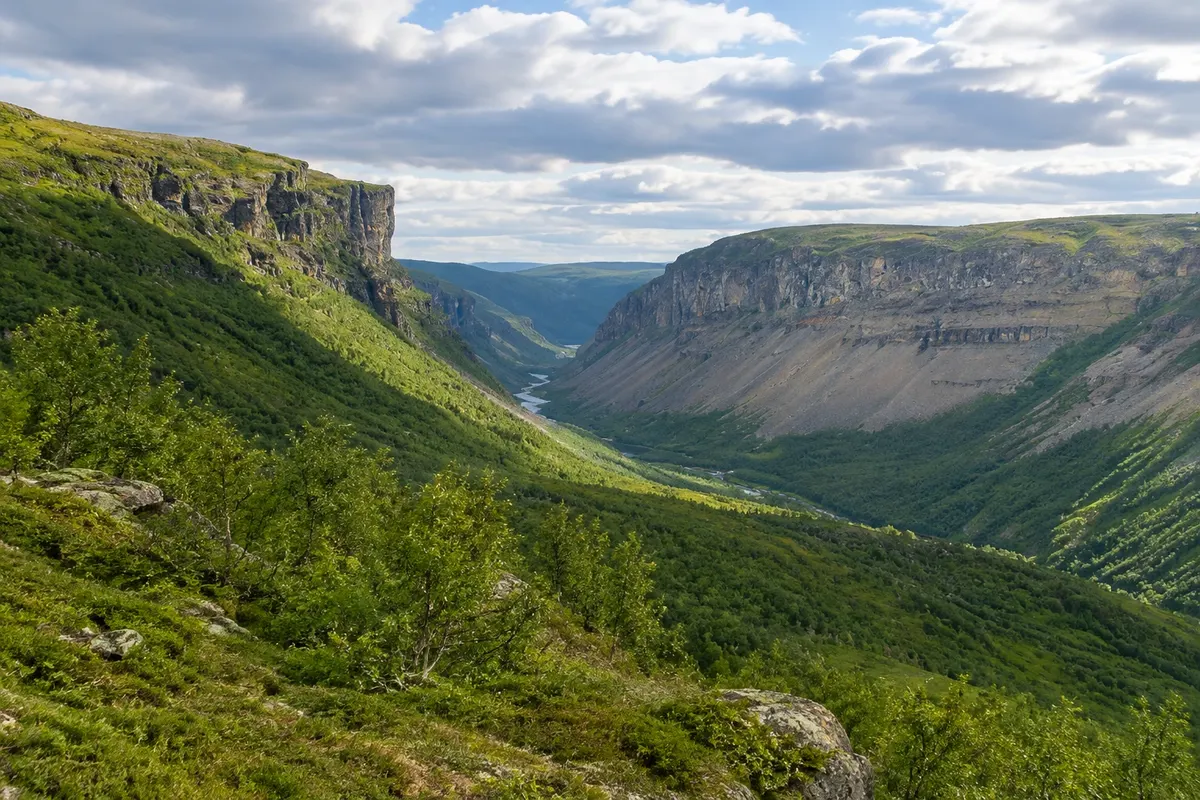
Alta lies at the end of the Altafjord, in western Finnmark, at about 70 degrees north latitude. It is the largest town in the county and one of the gateways to the far north, with an airport and the E6 road, which continues toward Cabo Norte, about 240 km away. Despite the latitude, the Alta river valley has pine and birch forests and a drier climate than the coast, which favors clear skies.
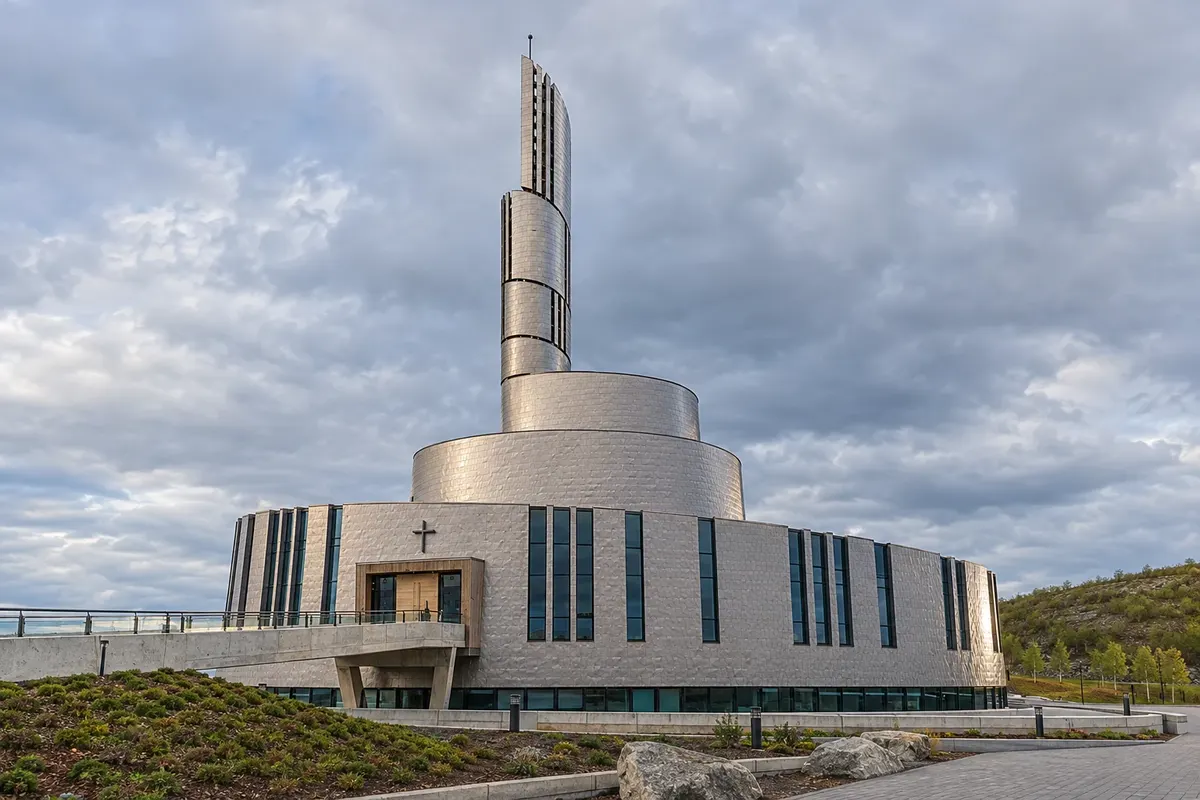
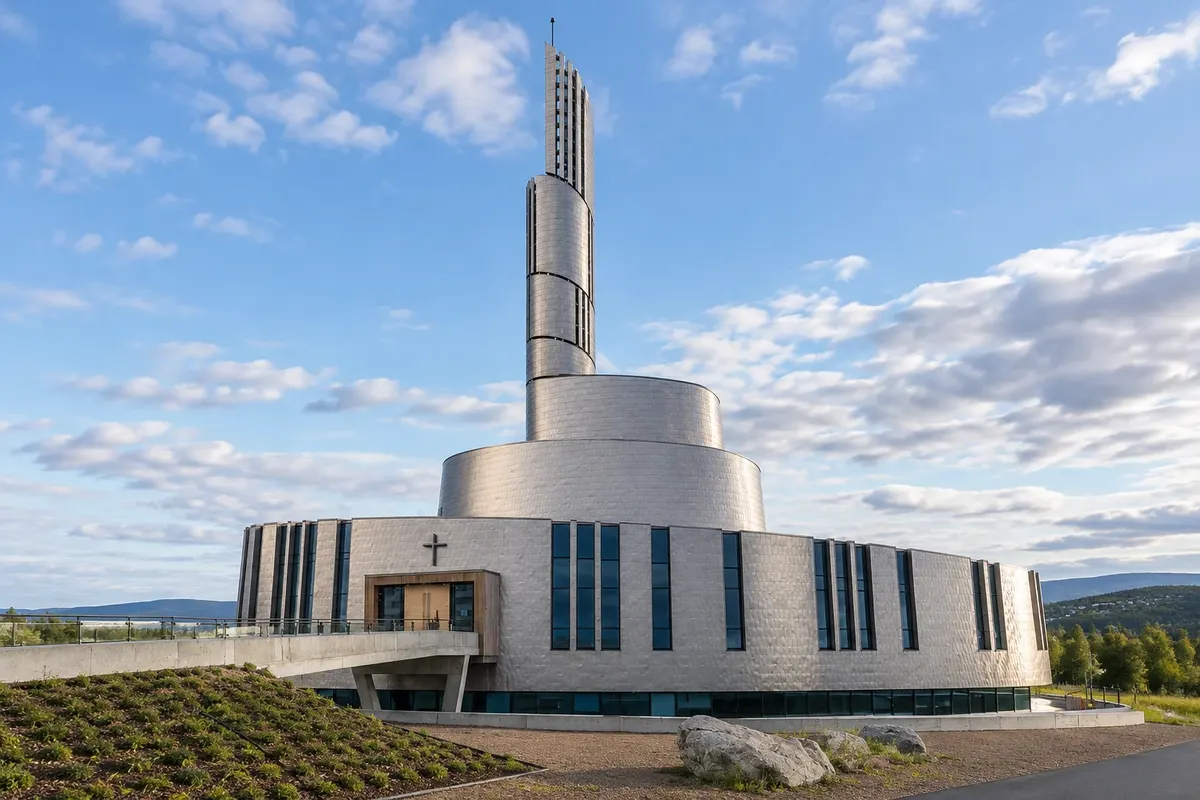
Alta is known as the aurora borealis city. At the end of the 19th century the world’s first auroral observatory operated on Mount Haldde near the town, and today the aurora is often seen from September to March on clear nights in the dark surroundings. In the center, the Catedral da Aurora Boreal, a spiral church clad in titanium, evokes the movement of the lights in the sky.
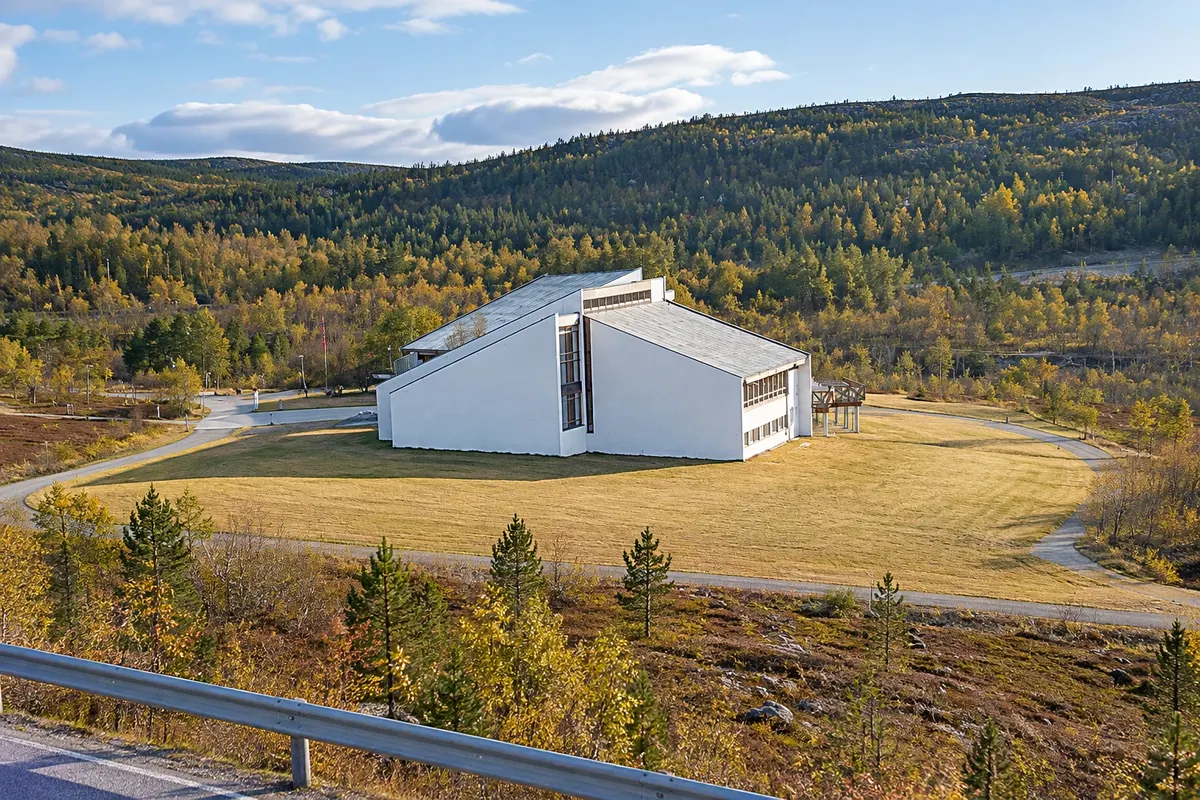
On the fjord shore, at Hjemmeluft, there are thousands of rock carvings made roughly between 7,000 and 2,000 years ago, depicting reindeer, moose, boats, hunters and fishing scenes; they are a UNESCO World Heritage Site next to the museu de Alta. Inland, the Alta River runs through the Sautso canyon, one of the largest in northern Europe. In winter the region offers dog-sled tours, snowmobiling and visits with Sámi families who herd reindeer on the Finnmarksvidda plateau; near the town an ice hotel is built each winter.
Winter is usually very cold, with snow from October to April and the polar night from late November to mid-January; the midnight sun typically lasts from mid-May to the end of July.
This destination brings together 1 city: Alta.


 Brazil
 Argentina
 Bolivia
 Chile
Chile Colombia
 Ecuador
 Guyana
 French Guiana
 Falkland Islands (Malvinas)
 Paraguay
 Peru
Peru Suriname
 Uruguay
 Venezuela
 Germany
 Belgium
 Denmark
 Spain
Spain France
 Greece
 the Netherlands
 Ireland
 Italy
Italy Luxembourg
 Portugal
 the United Kingdom
 Sweden
 Switzerland