

 Brazil
 Argentina
 Bolivia
 Chile
Chile Colombia
 Ecuador
 Guyana
 French Guiana
 Falkland Islands (Malvinas)
 Paraguay
 Peru
Peru Suriname
 Uruguay
 Venezuela
 Germany
 Belgium
 Spain
Spain France
 Greece
 the Netherlands
 Ireland
 Italy
Italy Luxembourg
 Norway
 Portugal
 the United Kingdom
 Sweden
 Switzerland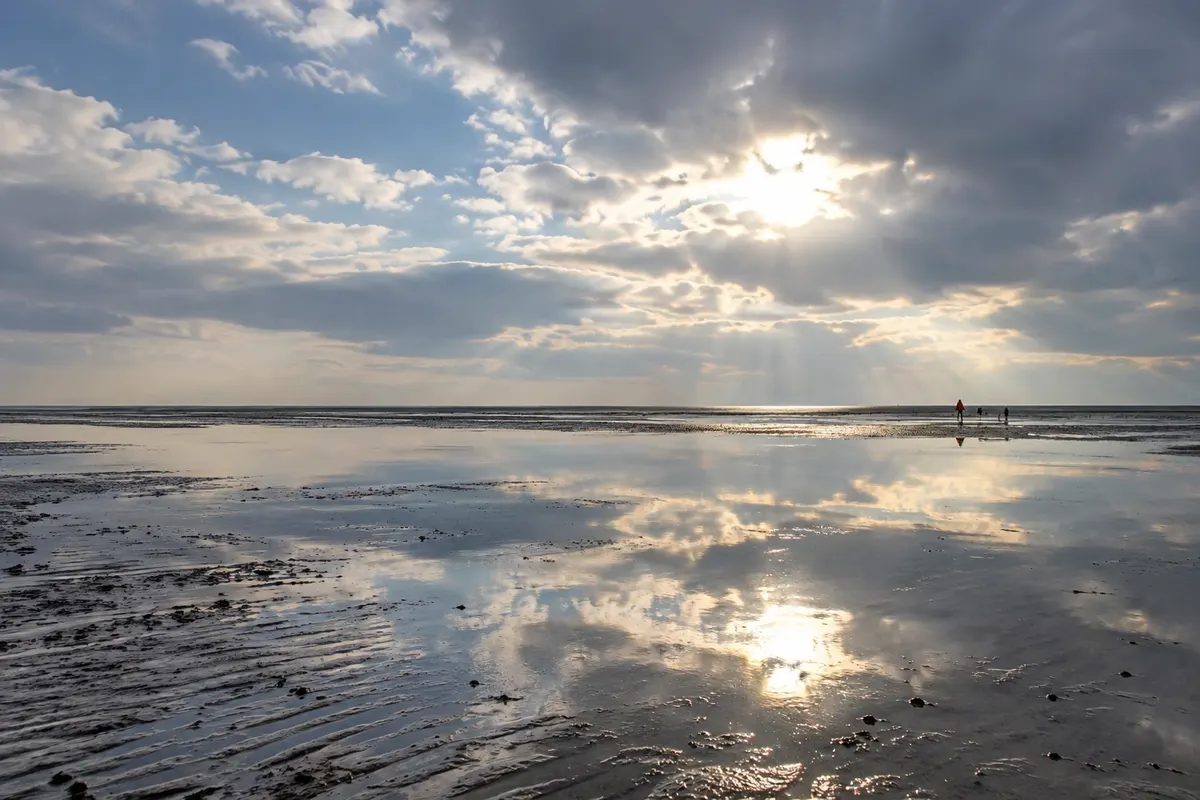
National park · Ribe, Dinamarca do Sul
Parque Nacional do Mar de Wadden e Vadehavscentret
The tidal plains, marshes and dykes west of Ribe, part of the Mar de Wadden, a UNESCO World Heritage site. The visitor centre in Vester Vedsted explains the birds and the tides and organises outings for the black sun and for oyster gathering.
Illustrative images. The pictures in this guide are illustrations based on the real place, not photographs, and may differ from it.

Discover
About Parque Nacional do Mar de Wadden e Vadehavscentret
The Mar de Wadden is the stretch of shallow sea, sandbanks, islands and salt marshes that runs along the coasts of the Netherlands, Germany and Denmark. Twice a day, low tide exposes kilometres of sand and mudflat where millions of migratory birds feed. The Danish part became a national park in 2010 and was added to the UNESCO World Heritage list in 2014, together with the German and Dutch sections.
The Vadehavscentret, the park's visitor centre, is in Vester Vedsted, about 8 km southwest of Ribe, in a thatched‑roof building designed by Dorte Mandrup. The exhibition explains the tides, the migratory birds and the life of coastal residents, and the centre runs guided outings: the black sun, when hundreds of thousands of starlings form clouds over the marshes at dusk; oyster gathering on the seabed at low tide; and walks on the mudflats.
From Vester Vedsted the tidal road to the island of Mandø also departs, which can only be crossed at low tide. The tractor‑bus Mandøbussen makes the crossing over the seabed in season; by car, only with the tide and conditions checked. Tides change throughout the day: to walk on the seabed, opt for guided outings and check the tide table.
Before you go
Practical information
Cidade Turismo reviews its information regularly, but something may have changed. Check with the place before planning your trip.
How much time to set aside
1 to 2 hours in the visitor centre; half a day with a guided outing or a trip to Mandø.
Best time
The black sun usually occurs between March and April and between September and October, at dusk; it does not happen every day. Oyster gathering is usually from October to April, at low tide. The Mandøbussen runs in season, according to the tide. Check dates and times before you go.
How to get there
The Vadehavscentret is in Vester Vedsted, about 8 km southwest of Ribe, by car or bicycle. Guided outings usually meet at the centre or in Ribe; check.
Tip
Book guided outings in advance, especially the black sun. Bring waterproof clothing, boots and warm layers: the coastal wind is strong even in summer.
Official website
Get your questions answered
Frequently asked questions about Parque Nacional do Mar de Wadden e Vadehavscentret
Is the Mar de Wadden a UNESCO World Heritage site?
Yes, since 2014 for the Danish part, together with the German and Dutch sections.
When can you see the black sun?
It usually happens between March and April and between September and October, at dusk. Guided outings help to find the flocks.
How to go to the island of Mandø?
At low tide, via the tidal road that leaves from Vester Vedsted, with the tractor‑bus Mandøbussen in season. Check the tides beforehand.
Can you collect oysters?
On guided outings at low tide, generally from October to April.