17 places to visit Copenhagen (Denmark), chosen by the Cidade Turismo guide.
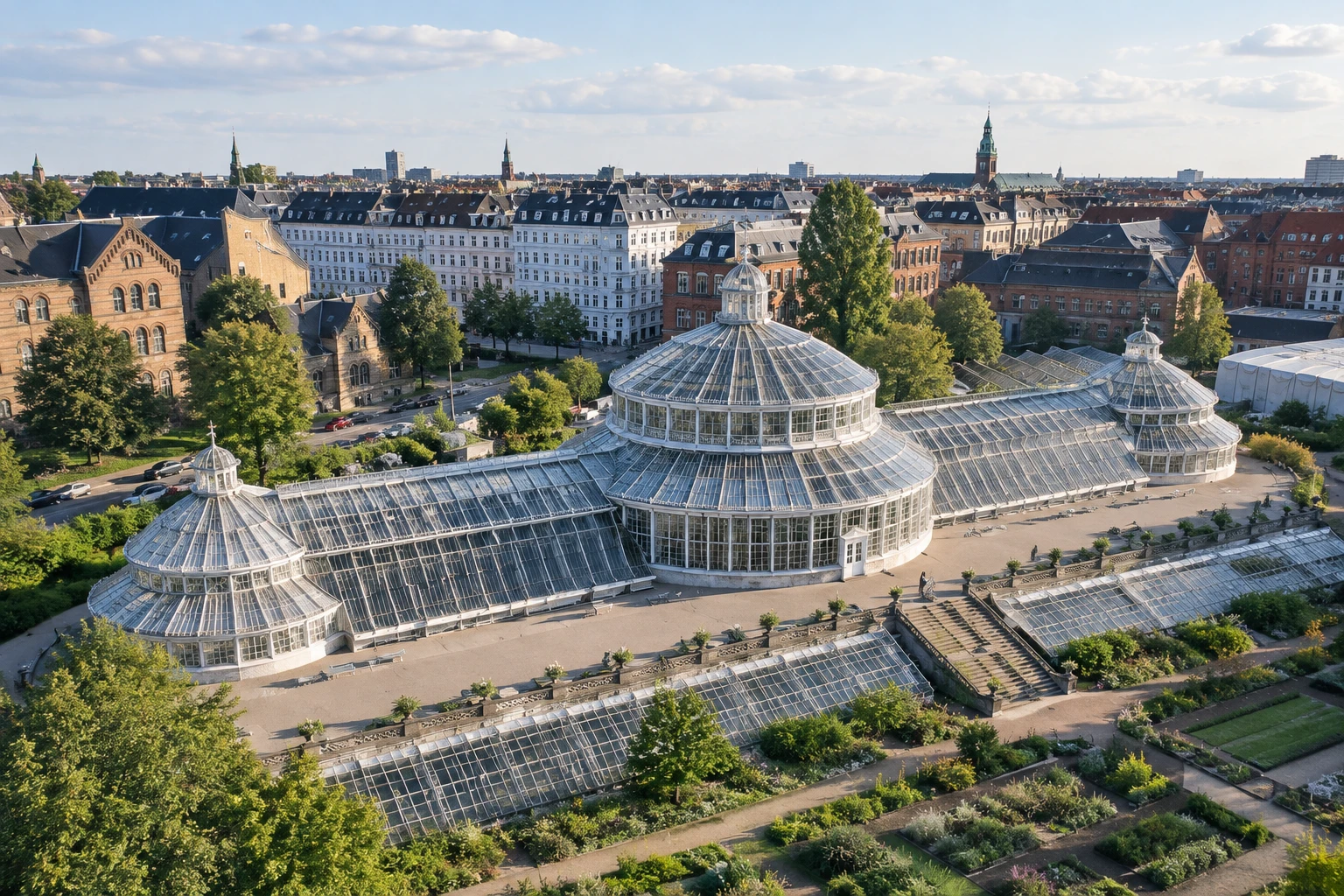
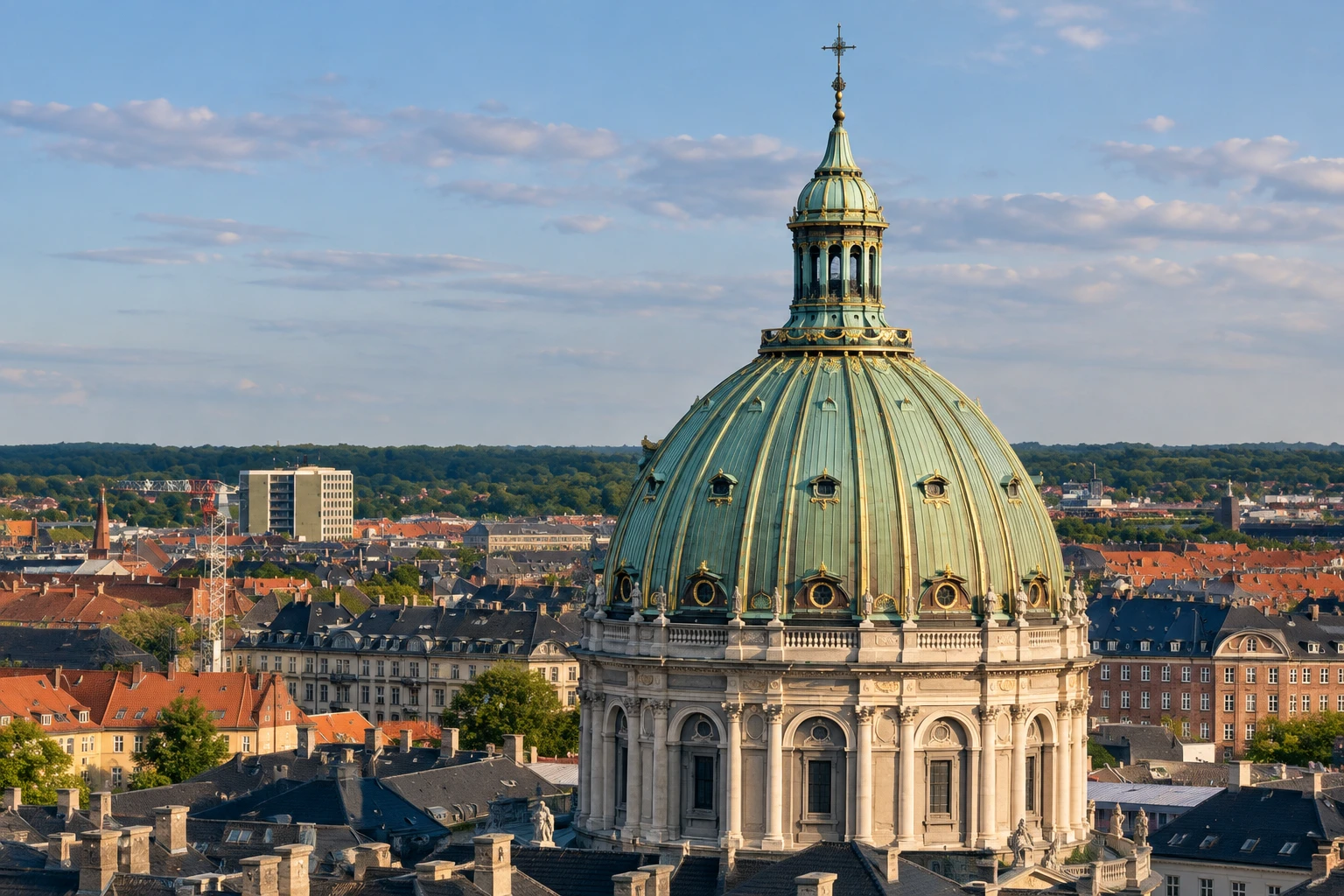
Illustrative images. The pictures in this guide are illustrations based on the real place, not photographs, and may differ from it.
To start
The 10 main places Copenhagen
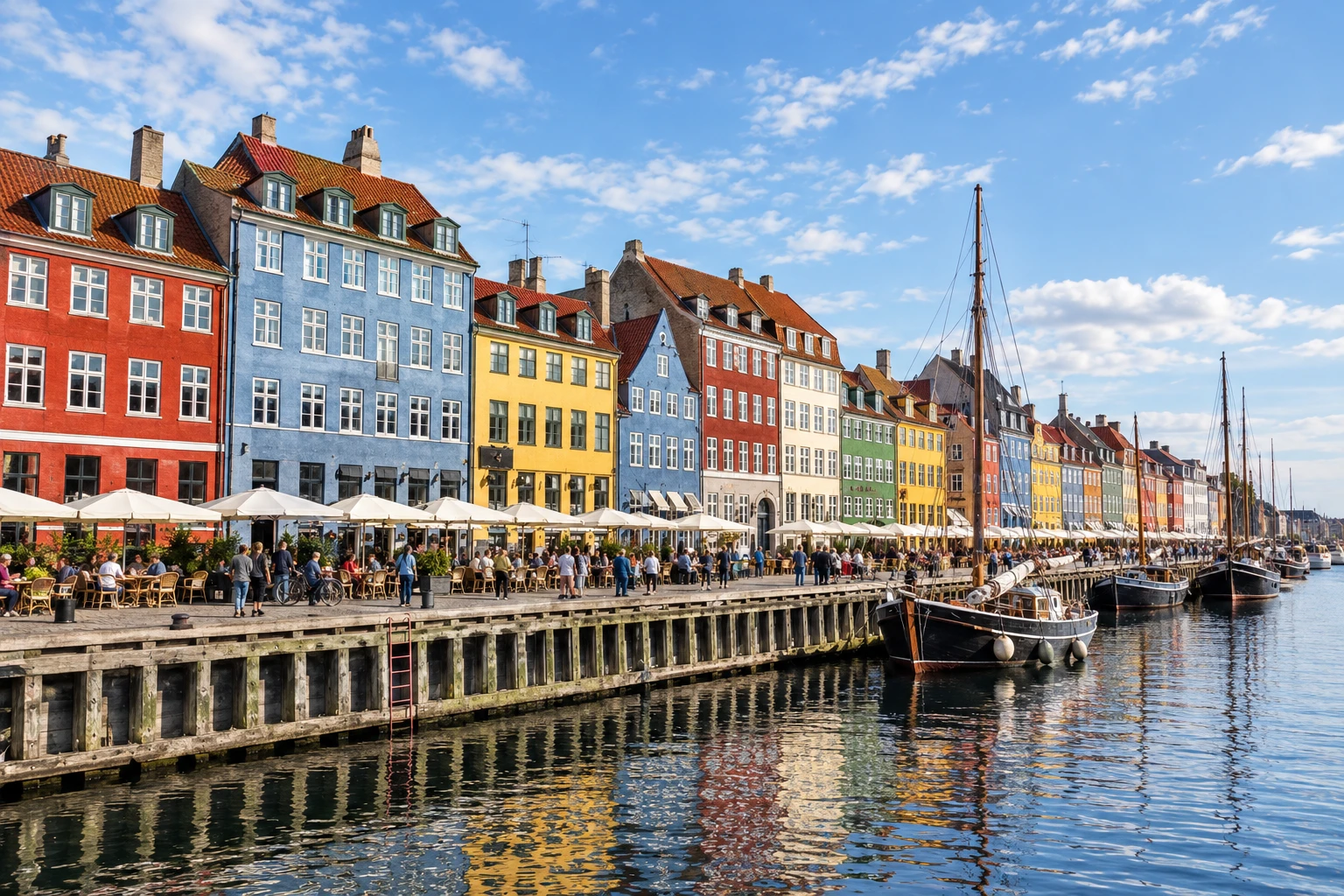
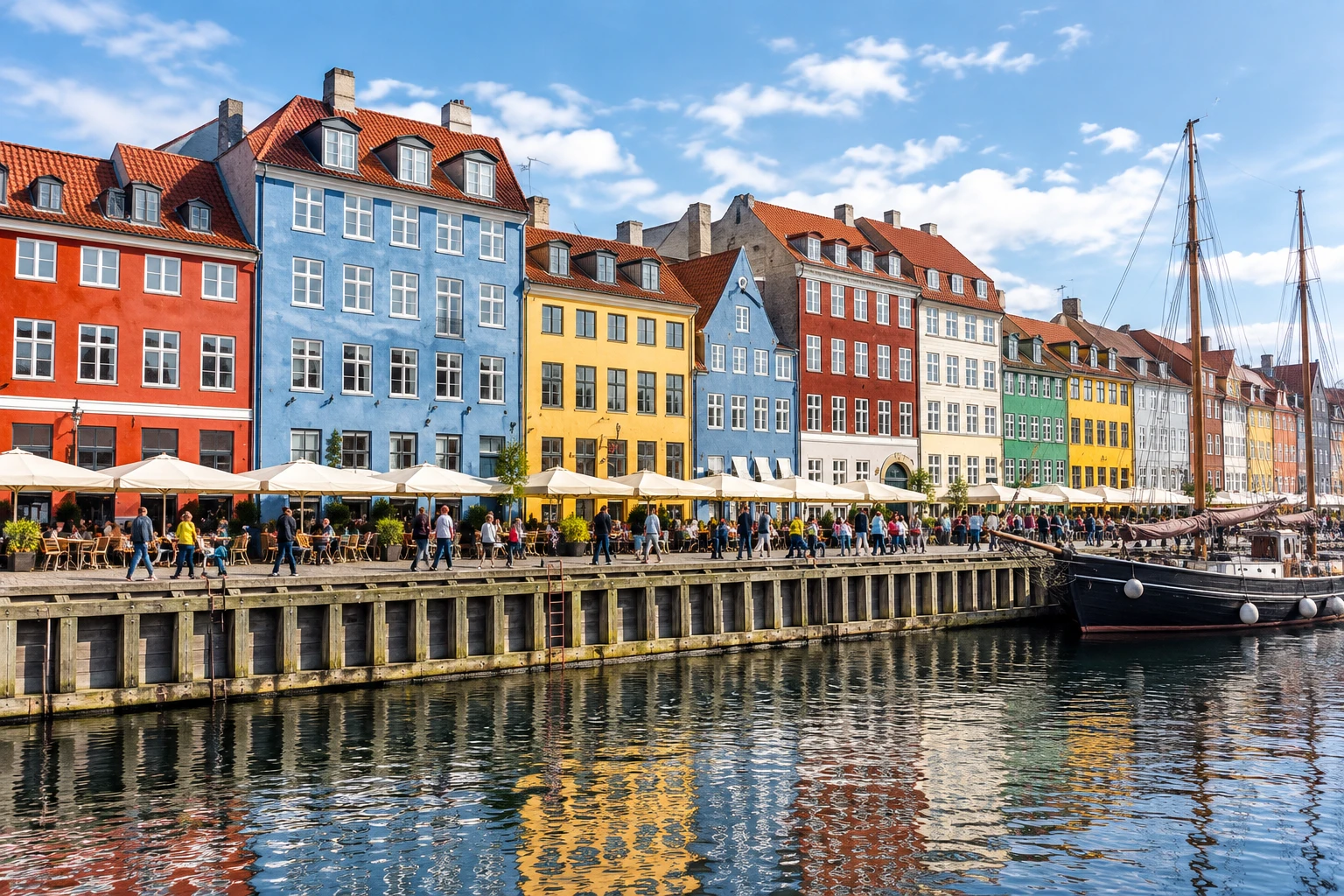
NyhavnThe canal dug in the 17th century between Kongens Nytorv and the harbour, with colourful houses, wooden boats and the street of restaurants on the sunny side.
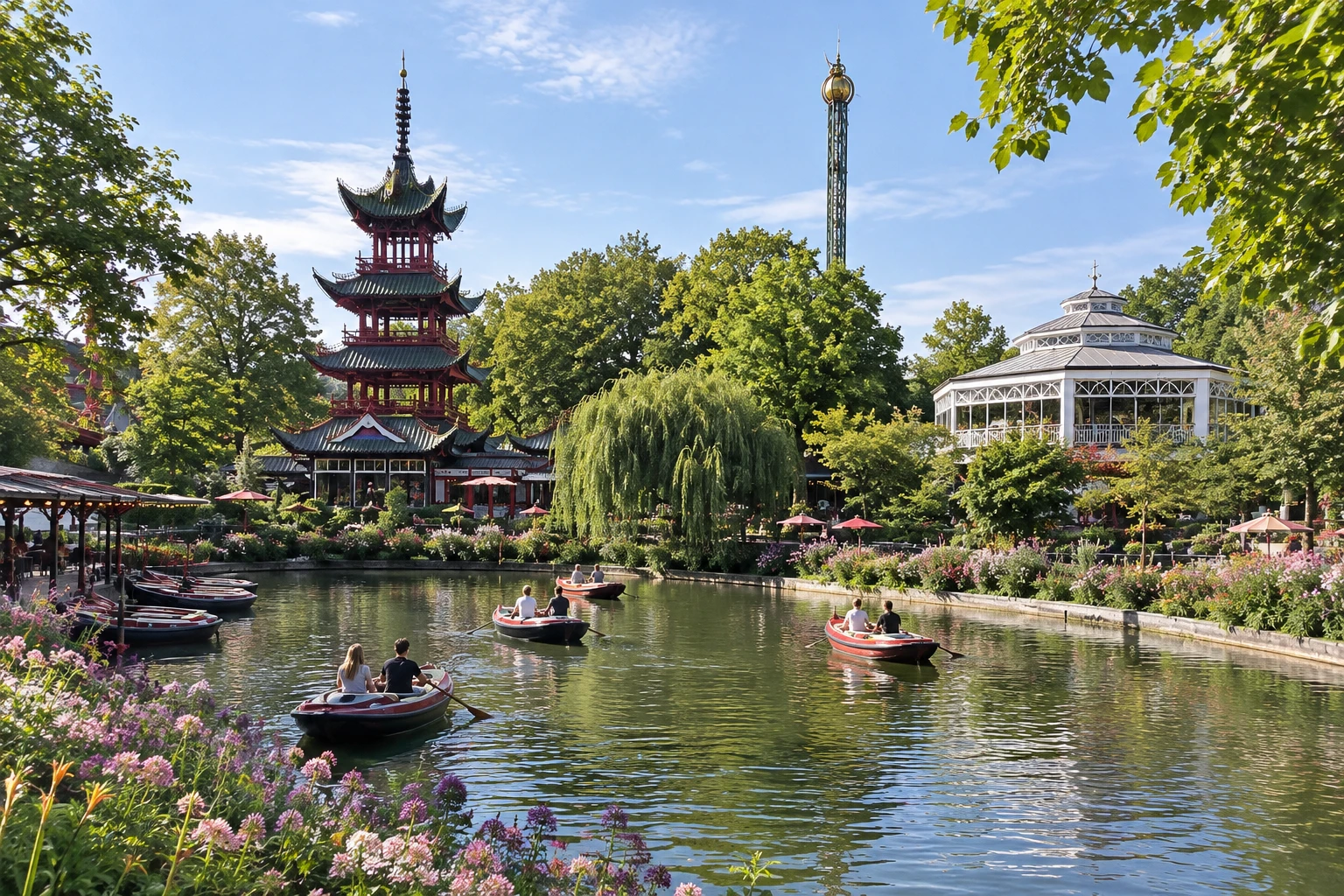
Tivoli GardensThe amusement park and garden opened in 1843 in the city centre, next to the central station: 1914 wooden roller coaster, pavilions, lakes, restaurants and shows.
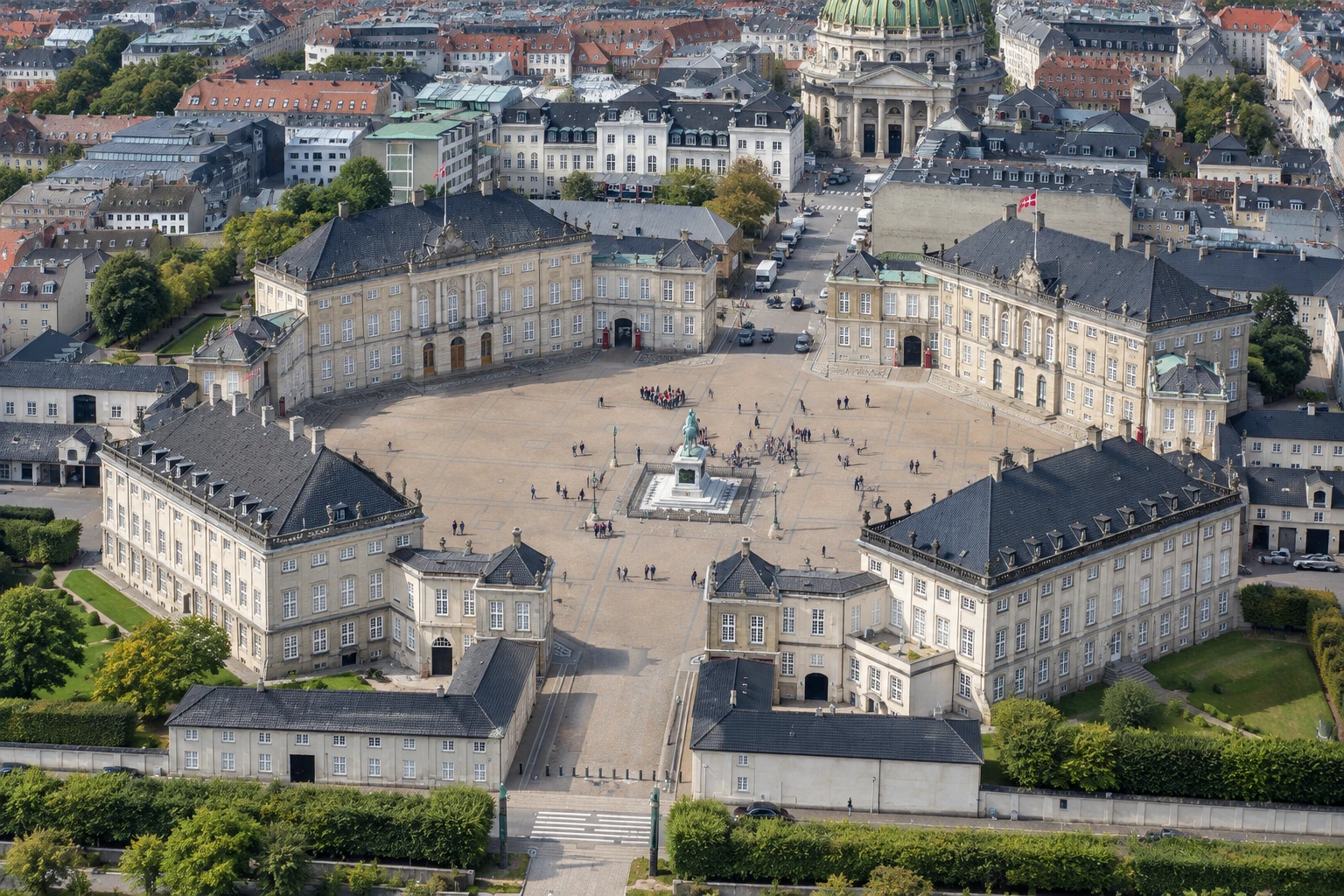
Amalienborg PalaceThe residence of the Danish royal family: four rococo palaces around an octagonal square, with the equestrian statue of Frederico V and the changing of the guard at noon.
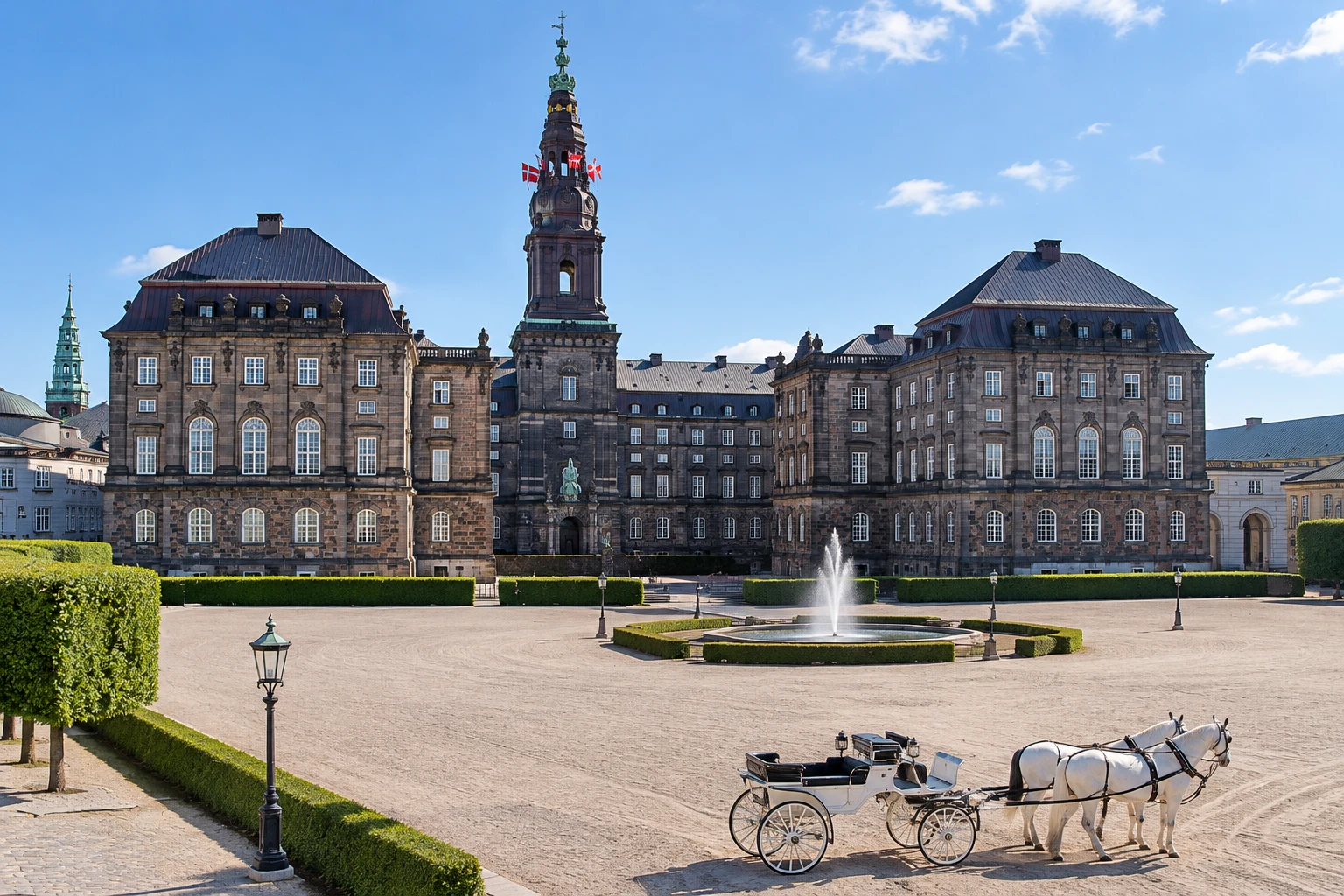
Christiansborg Palace (Christiansborg Slot)On the islet of Slotsholmen, the palace that houses Parliament, the Supreme Court and the prime minister's office, with the royal reception halls, the ruins of Absalon's castle,...
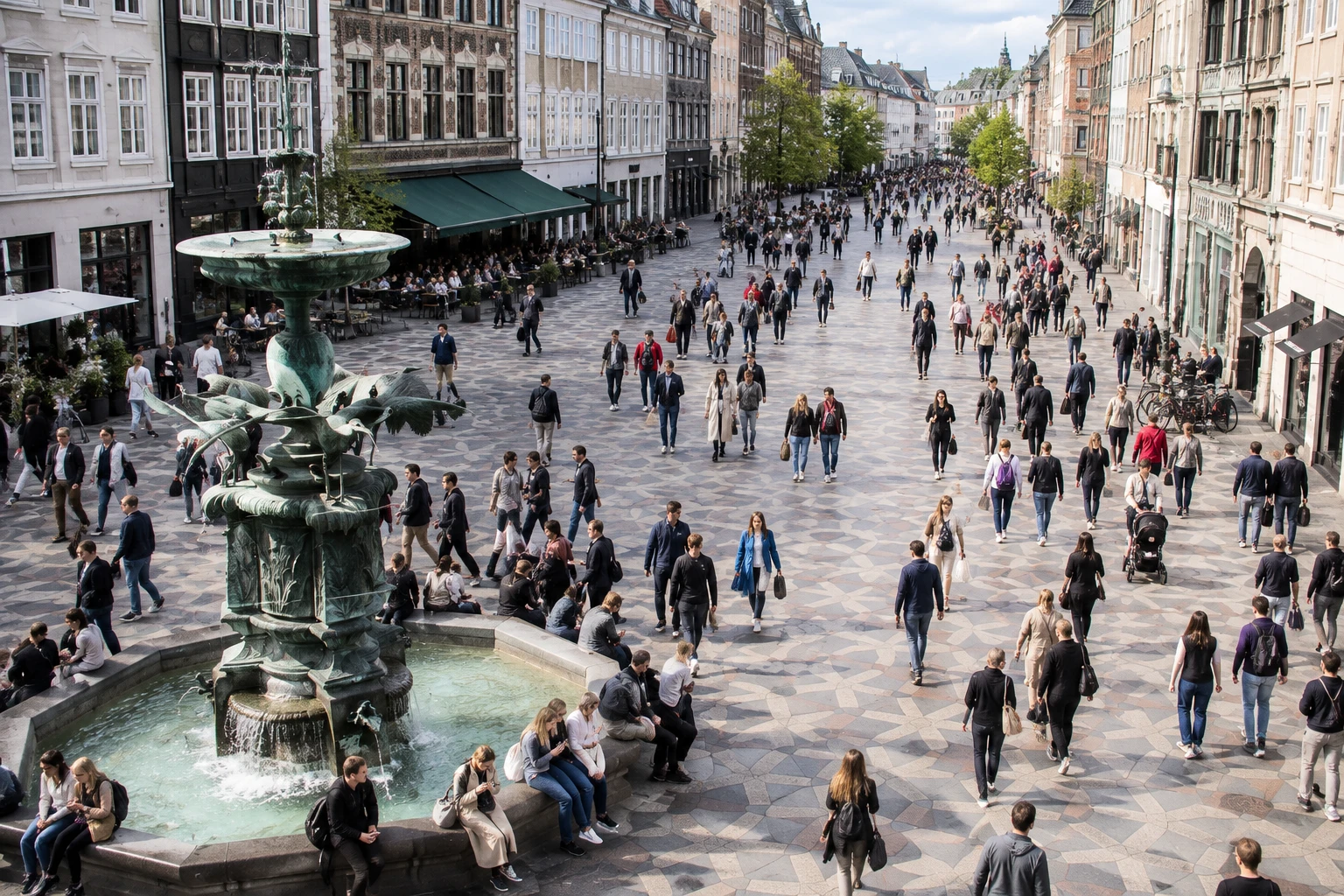
StrøgetThe pedestrian street that cuts through the old centre from City Hall Square to Kongens Nytorv, about 1.1 km of shops, squares and churches, closed to cars since 1962.
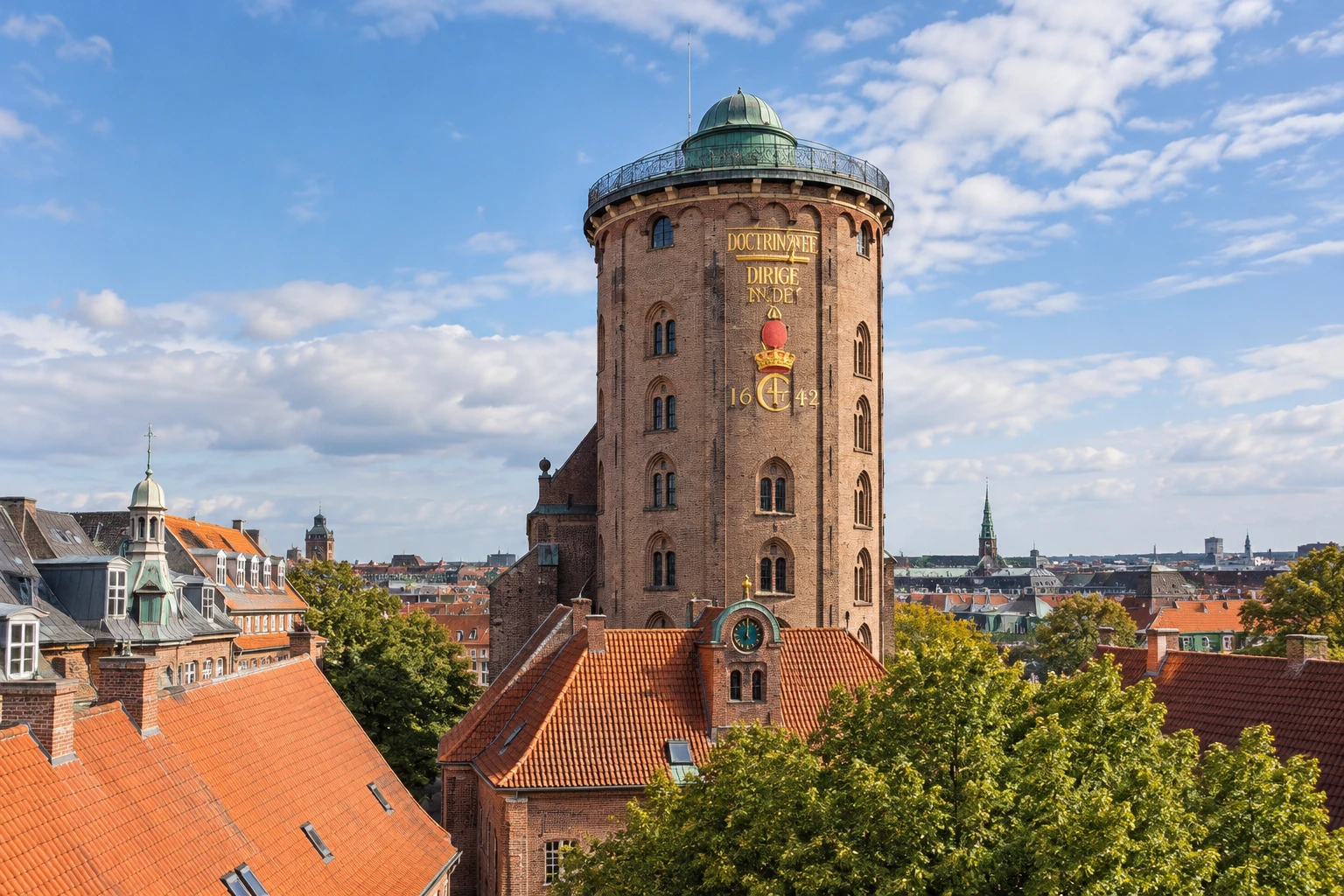
Round Tower (Rundetaarn)The 1642 tower-observatory of Cristiano IV, with a spiral ramp of seven and a half turns, without steps, up to the viewpoint 34.8 metres above the roofs of the centre.
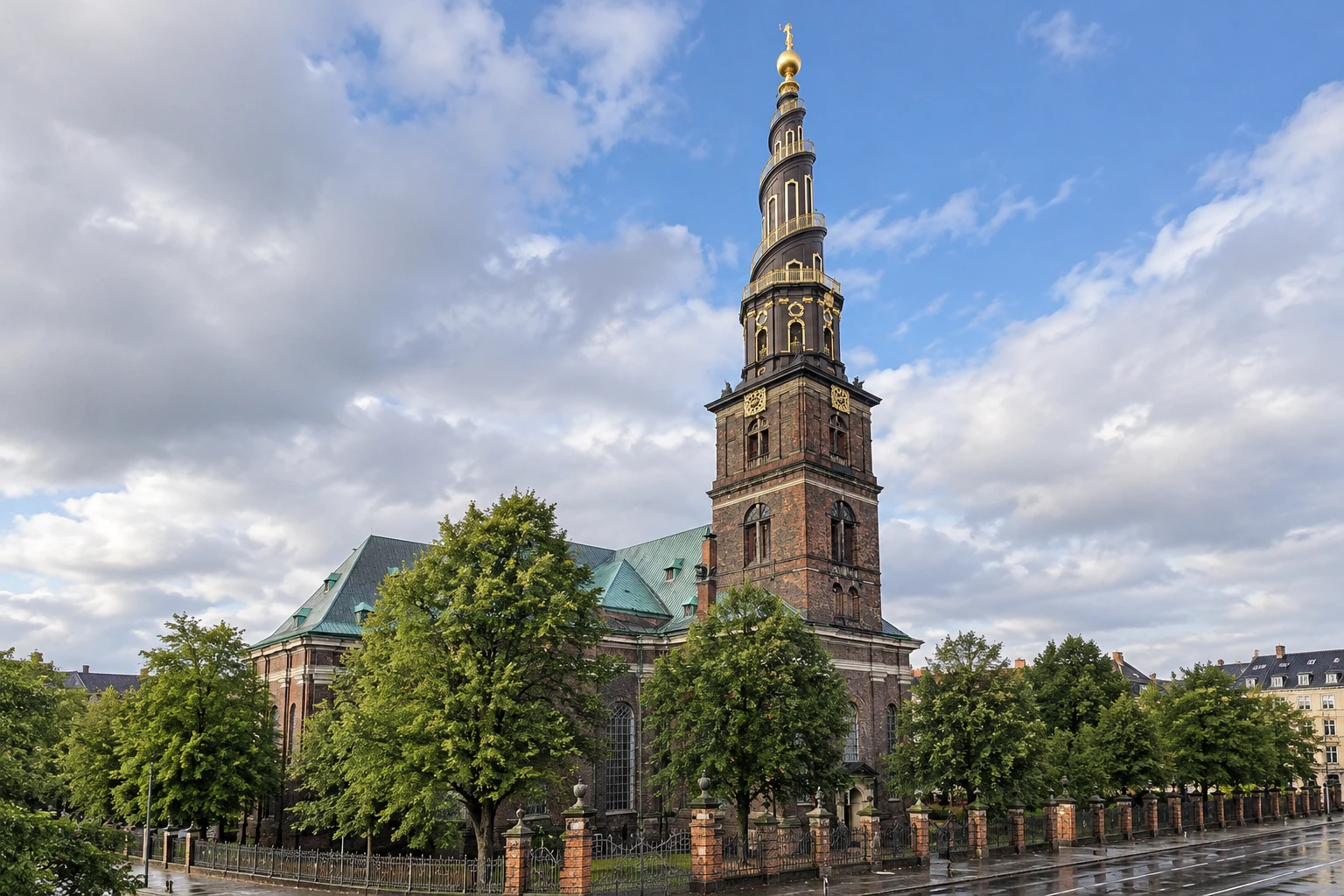
Church of Our Saviour (Vor Frelsers Kirke)Baroque church in Christianshavn with the spiral tower of 1752: the final 150 of the 400 steps climb outside, up to the gilded sphere at 90 metres.
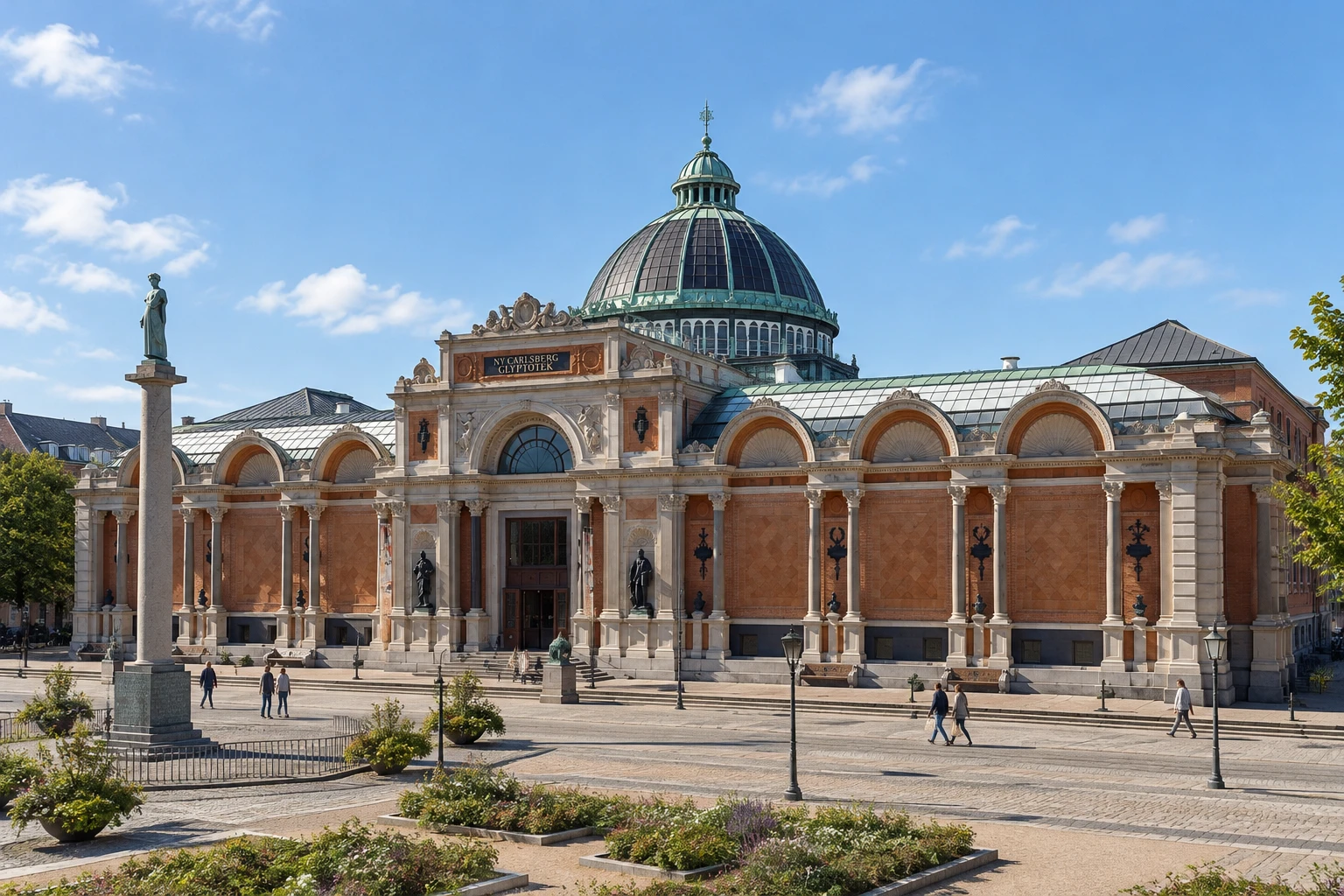
Ny Carlsberg GlyptotekMuseum of sculpture and painting founded by Carl Jacobsen of Carlsberg: ancient art from Egypt to Rome, one of the largest Rodin collections outside France, Impressionists and t...
The canal dug in the 17th century between Kongens Nytorv and the harbour, with colourful houses, wooden boats and the street of restaurants on the sunny side. H. C. Andersen lived in three of those houses.
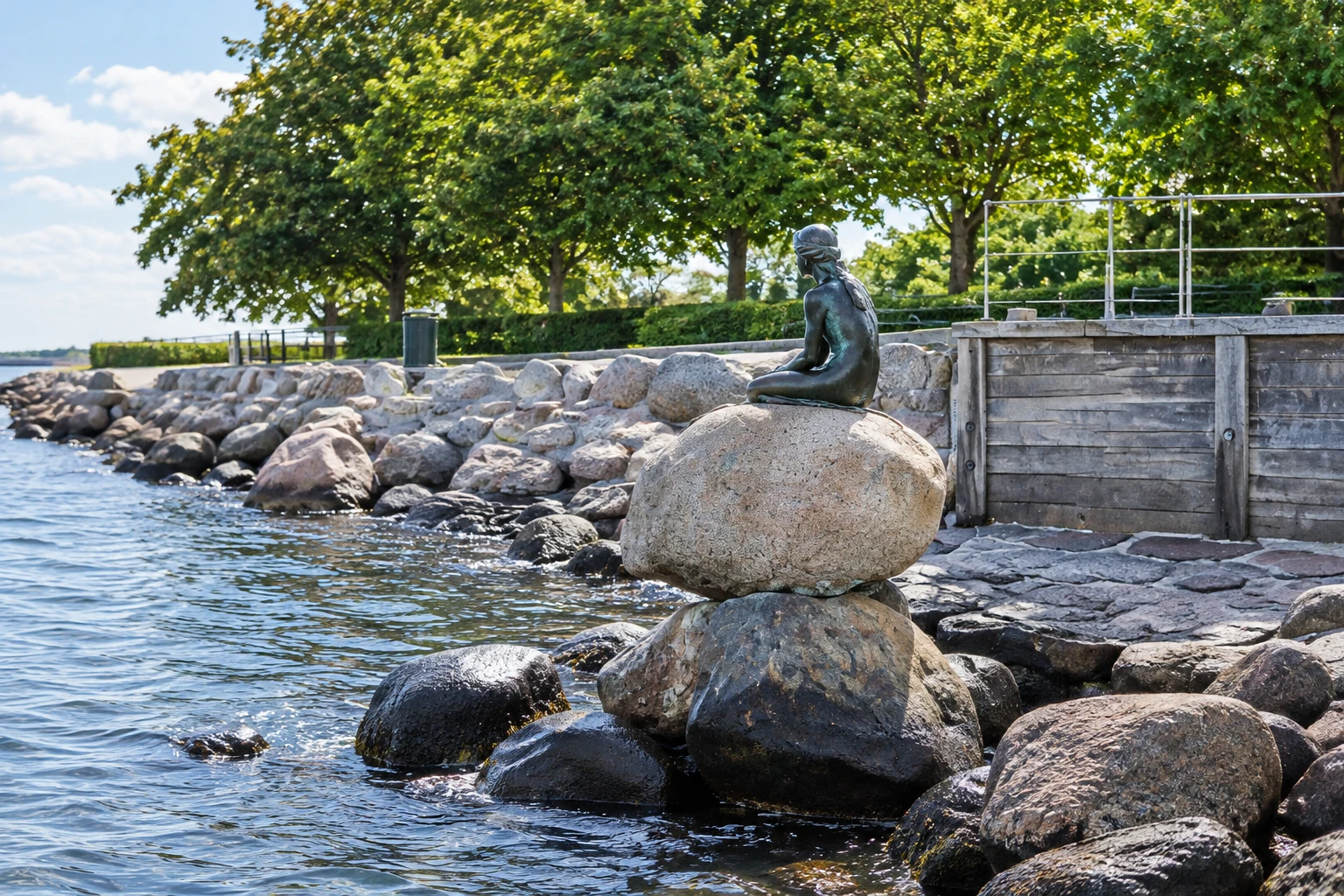
The 1913 bronze statue seated on a rock on the Langelinie promenade, inspired by the tale of H. C. Andersen. It measures about 1.25 meters and is located near Kastellet.
The amusement park and garden opened in 1843 in the city centre, next to the central station: 1914 wooden roller coaster, pavilions, lakes, restaurants and shows. It operates seasonally.
The residence of the Danish royal family: four rococo palaces around an octagonal square, with the equestrian statue of Frederico V and the changing of the guard at noon. One of the palaces is a museum.
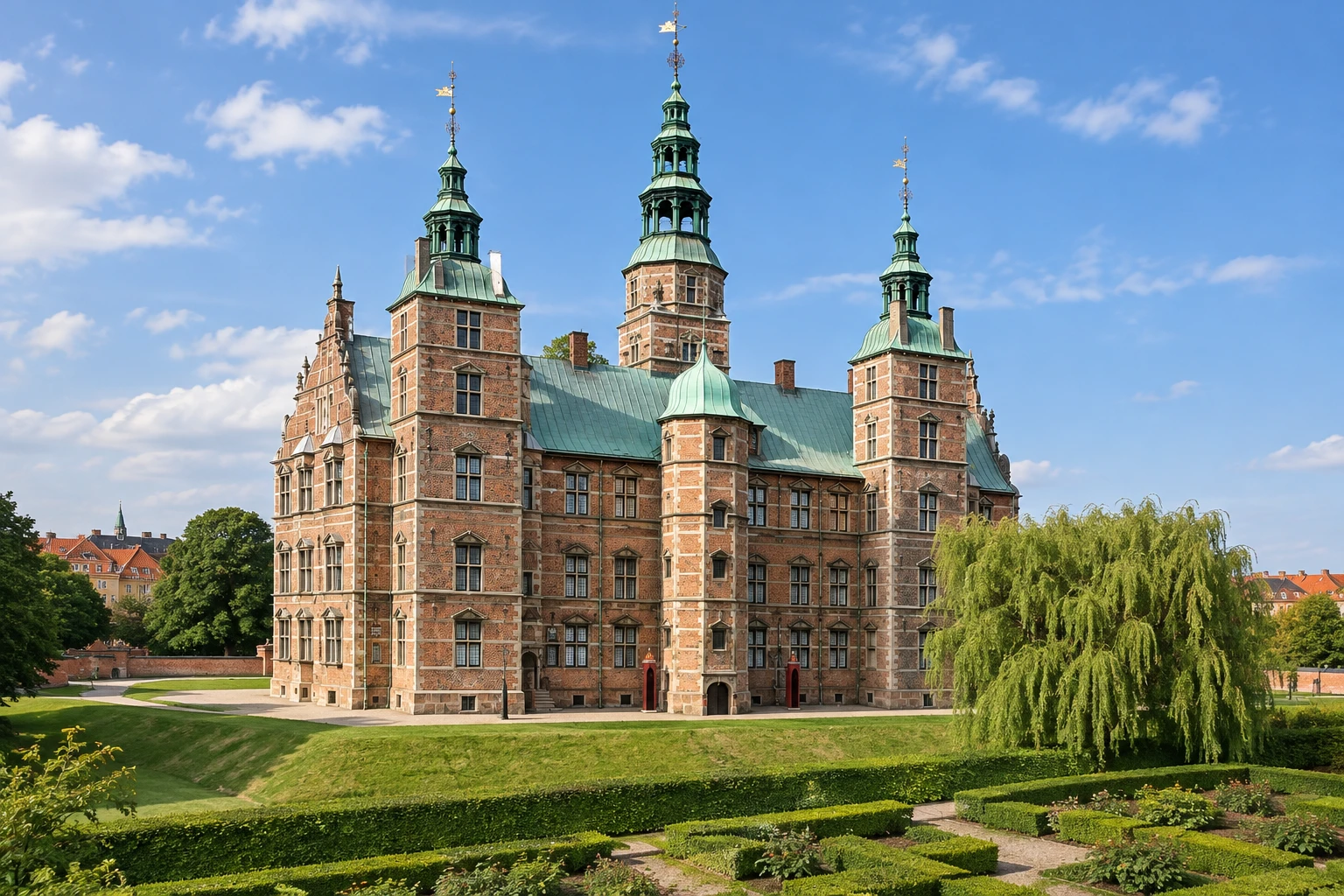
The Renaissance castle of Cristiano IV, from 1606 to 1624, in the garden of Kongens Have. It houses the crown jewels, the coronation thrones and halls with objects spanning four centuries of kings.
On the islet of Slotsholmen, the palace that houses Parliament, the Supreme Court and the prime minister's office, with the royal reception halls, the ruins of Absalon's castle, the stables and the tower with an observation deck.
The pedestrian street that cuts through the old centre from City Hall Square to Kongens Nytorv, about 1.1 km of shops, squares and churches, closed to cars since 1962.
The 1642 tower-observatory of Cristiano IV, with a spiral ramp of seven and a half turns, without steps, up to the viewpoint 34.8 metres above the roofs of the centre.
Baroque church in Christianshavn with the spiral tower of 1752: the final 150 of the 400 steps climb outside, up to the gilded sphere at 90 metres. Inside, the organ is supported by elephants.
Museum of sculpture and painting founded by Carl Jacobsen of Carlsberg: ancient art from Egypt to Rome, one of the largest Rodin collections outside France, Impressionists and the Winter Garden with palm trees.
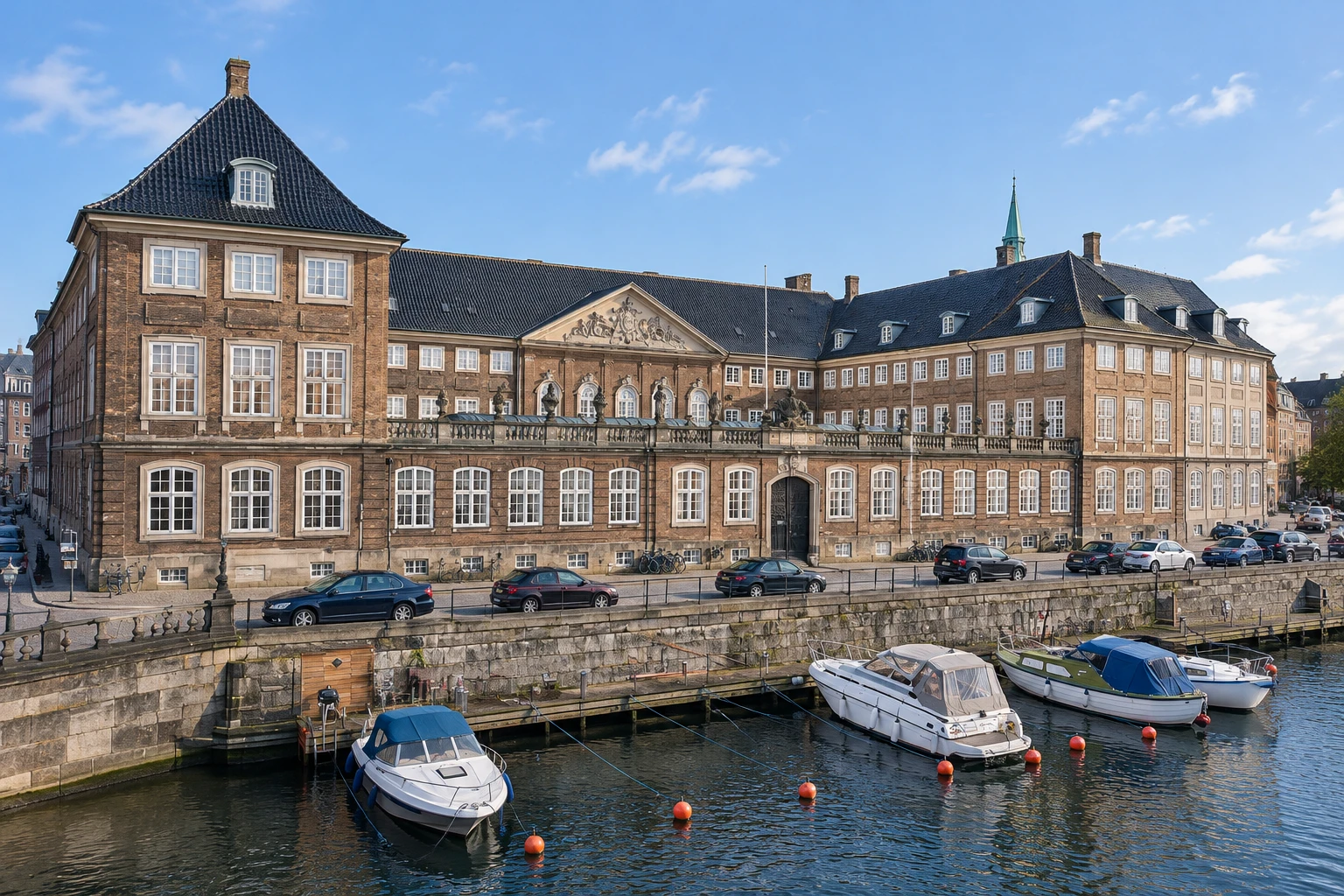
The national history museum housed in Prinsens Palæ: from prehistory to the Vikings and the Middle Ages, featuring the Carruagem do Sol de Trundholm, the Egtved Girl and the Gundestrup cauldron.
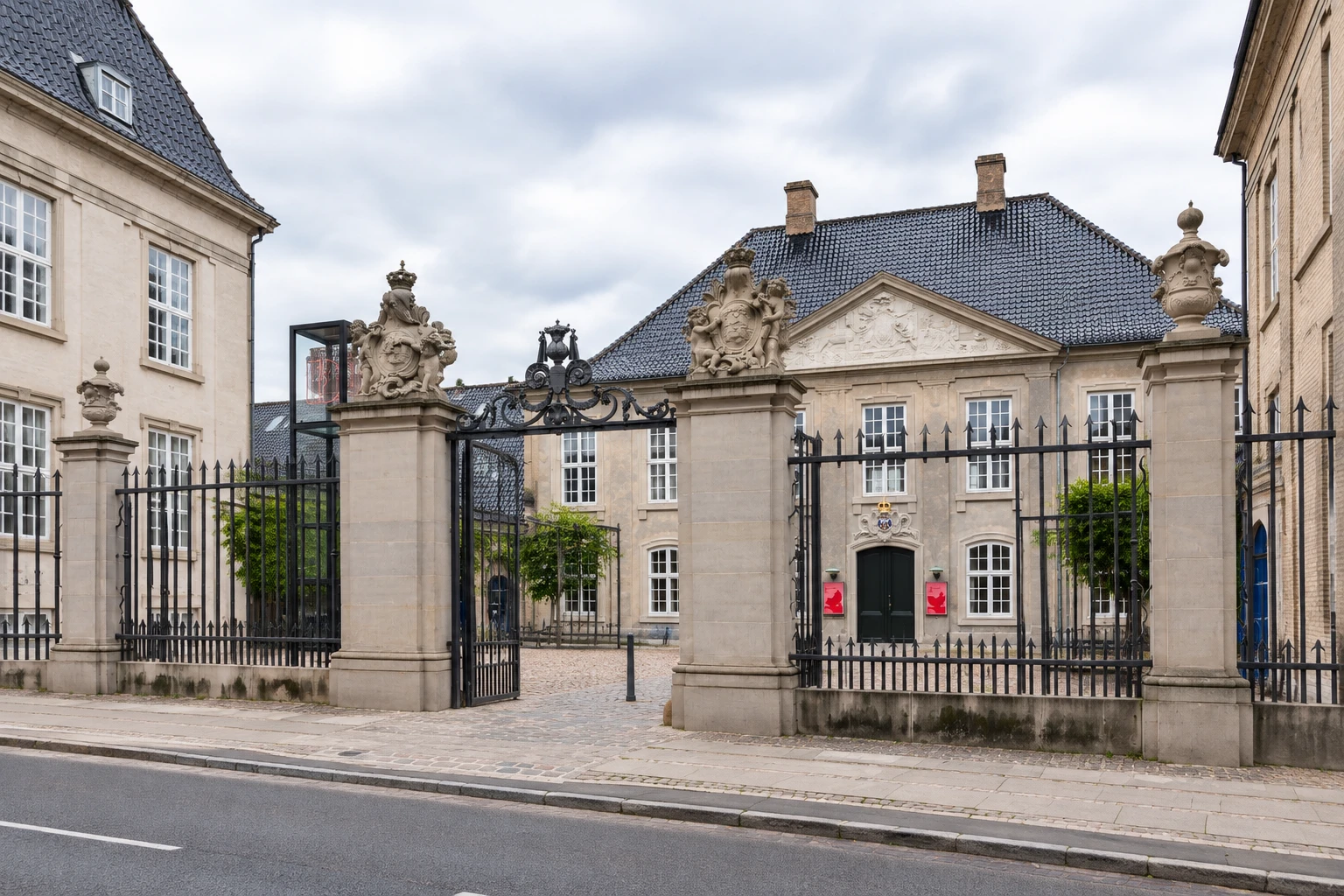
The museum of Danish design in an 18th-century hospital on Bredgade: chairs by Arne Jacobsen, Hans J. Wegner and Kaare Klint, everyday objects, porcelain and fashion, with an inner garden.
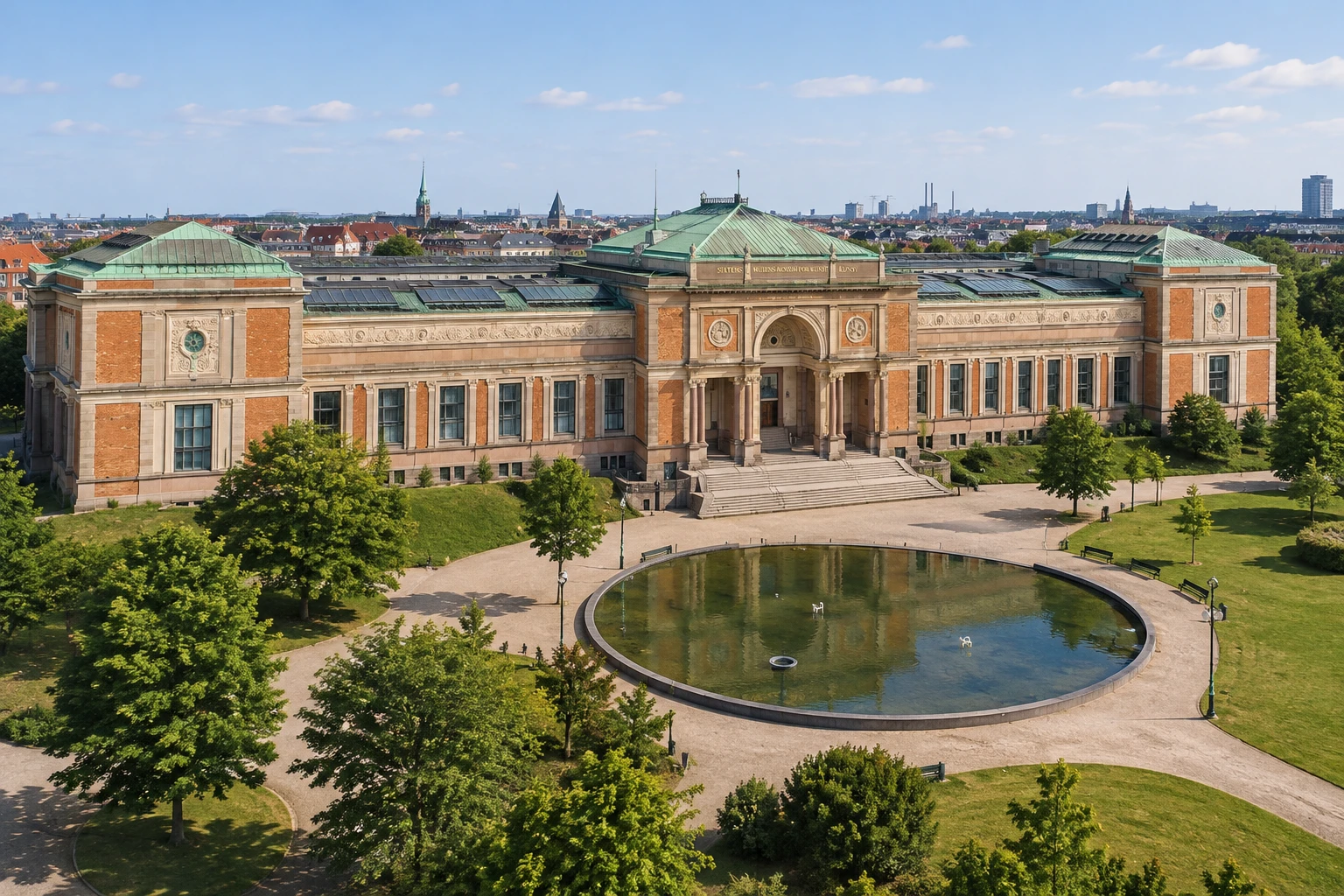
The country's largest art museum, on the edge of Østre Anlæg park: Danish Golden Age painting, European masters and the French collection with Matisse.
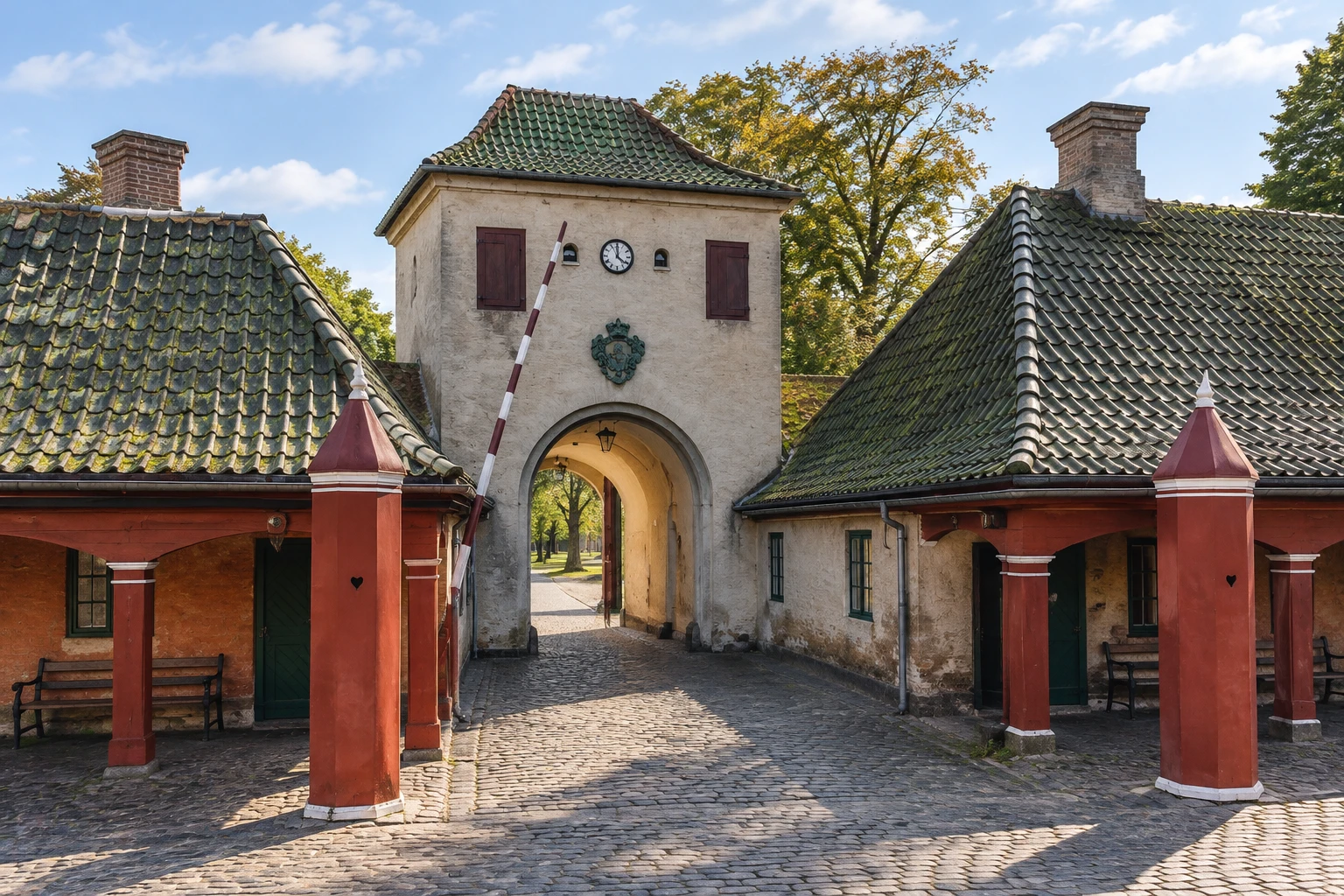
The 17th-century star-shaped fortress, still in military use, with grass-covered bastions, moats, an 1847 windmill and red barracks. It's on the route between Amalienborg and the Pequena Sereia.
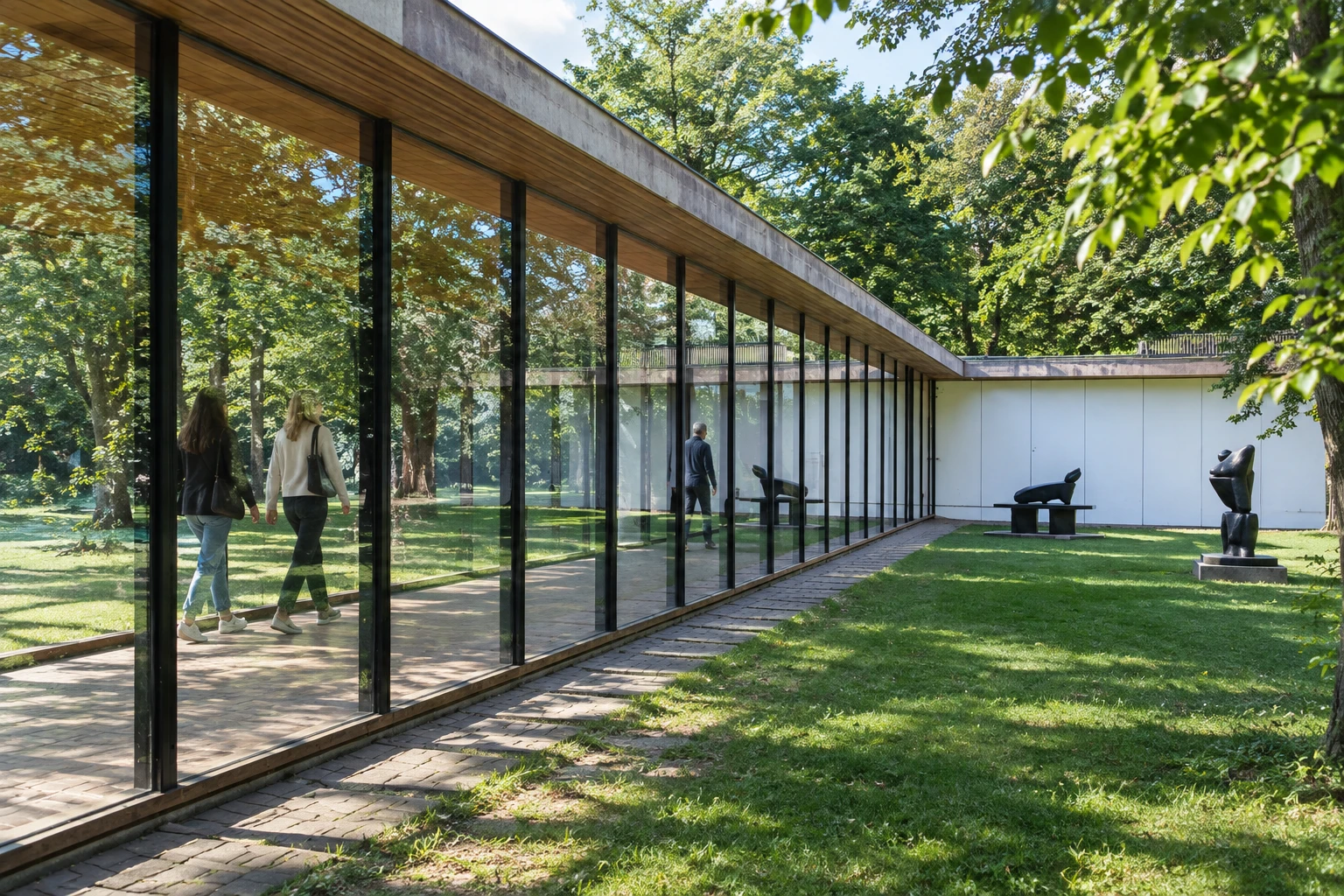
Museum of modern and contemporary art in Humlebæk, 35 km north of Copenhagen, with low wings set in a sculpture park that slopes down to the Øresund. Giacometti, Henry Moore and the Yayoi Kusama room.


 Brazil
 Antarctica
 Argentina
 Bolivia
 Chile
 Colombia
 Ecuador
 Falkland Islands (Malvinas)
 French Guiana
 Guyana
 Paraguay
 Peru
 Suriname
 Uruguay
 Venezuela
 Austria
 Belgium
 Croatia
 Finland
 France
 Germany
 Greece
 Hungary
 Iceland
 Ireland
 Italy
 Luxembourg
 Norway
 Poland
 Portugal
 Slovakia
 Slovenia
 Spain
 Sweden
 Switzerland
 the Czech Republic
 the Netherlands
 the United Kingdom
 Turkey
 Bermuda
 Canada
 Greenland
 Mexico
 Saint Pierre and Miquelon
 the United States
 the Dominican Republic
 Japan
 Egypt
 South Africa
 Australia
 Fiji
 New Zealand
 Papua New Guinea