

 Brazil
 Antarctica
 Argentina
 Bolivia
 Chile
 Colombia
 Ecuador
 Falkland Islands (Malvinas)
 French Guiana
 Guyana
 Paraguay
 Peru
 Suriname
 Uruguay
 Venezuela
 Austria
 Belgium
 Croatia
 Finland
 France
 Germany
 Greece
 Hungary
 Iceland
 Ireland
 Italy
 Luxembourg
 Norway
 Poland
 Portugal
 Slovakia
 Slovenia
 Spain
 Sweden
 Switzerland
 the Czech Republic
 the Netherlands
 the United Kingdom
 Turkey
 Bermuda
 Canada
 Greenland
 Mexico
 Saint Pierre and Miquelon
 the United States
 the Dominican Republic
 Japan
 Egypt
 South Africa
 Australia
 Fiji
 New Zealand
 Papua New Guinea
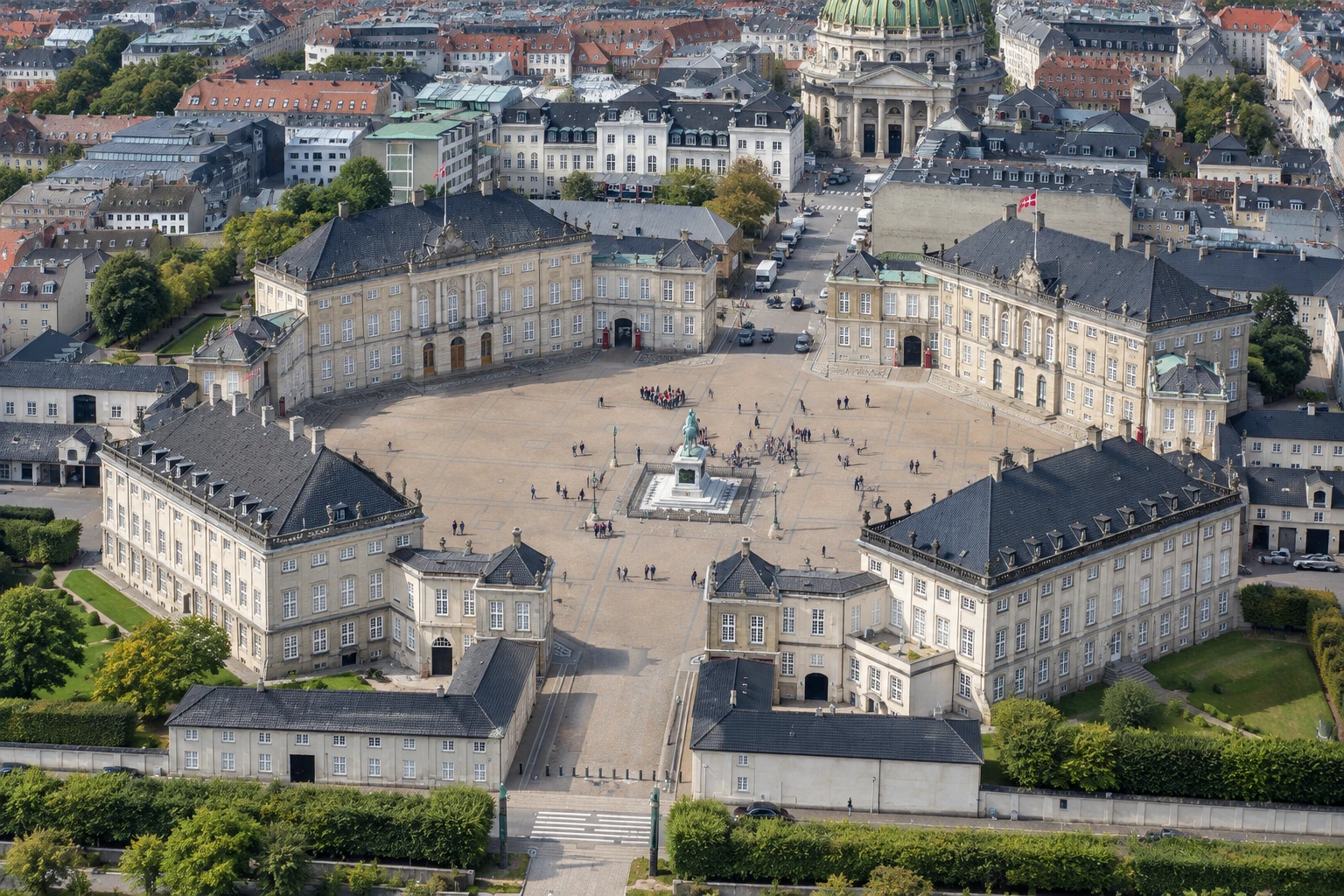
Palace · Copenhagen, Denmark
Amalienborg Palace
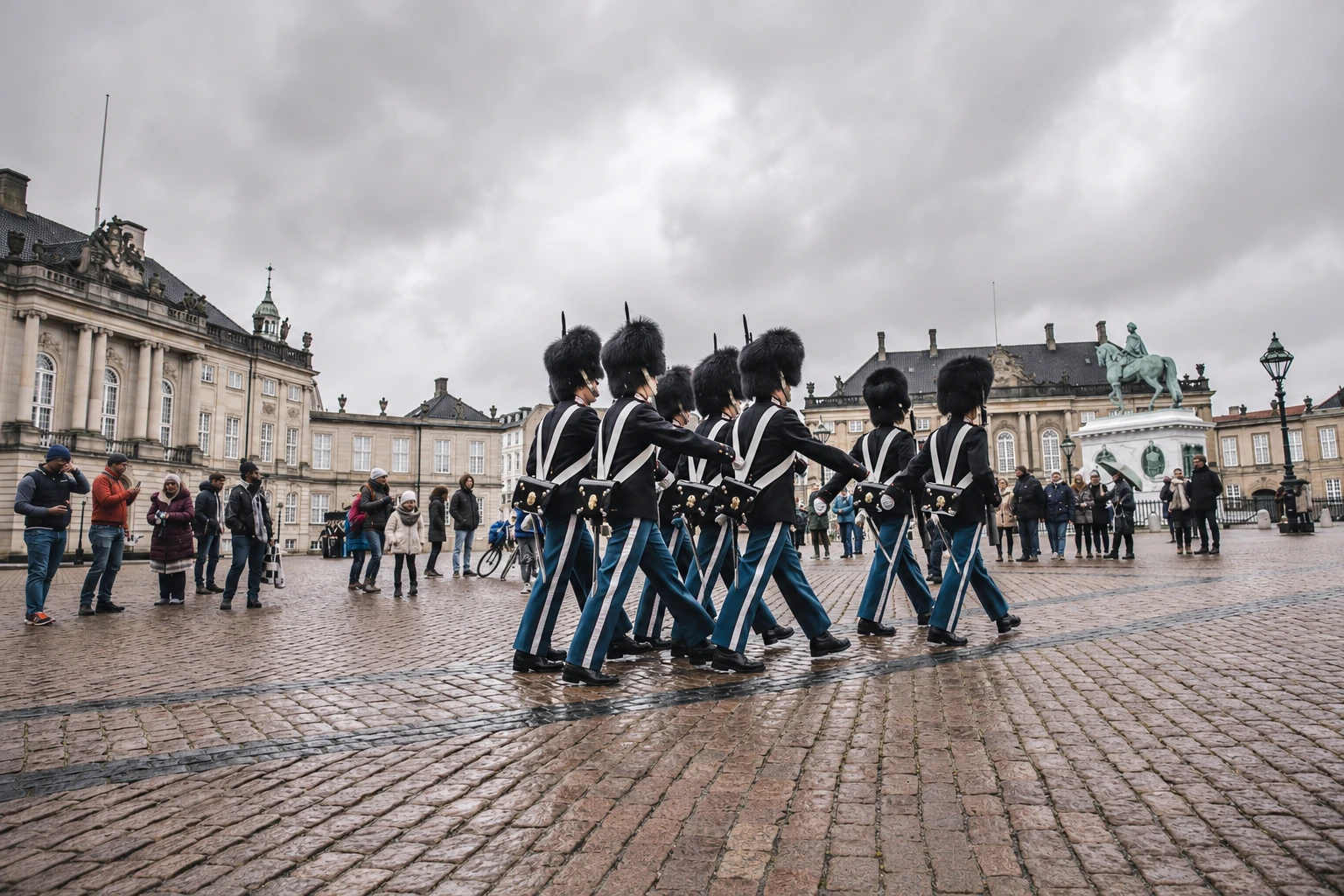
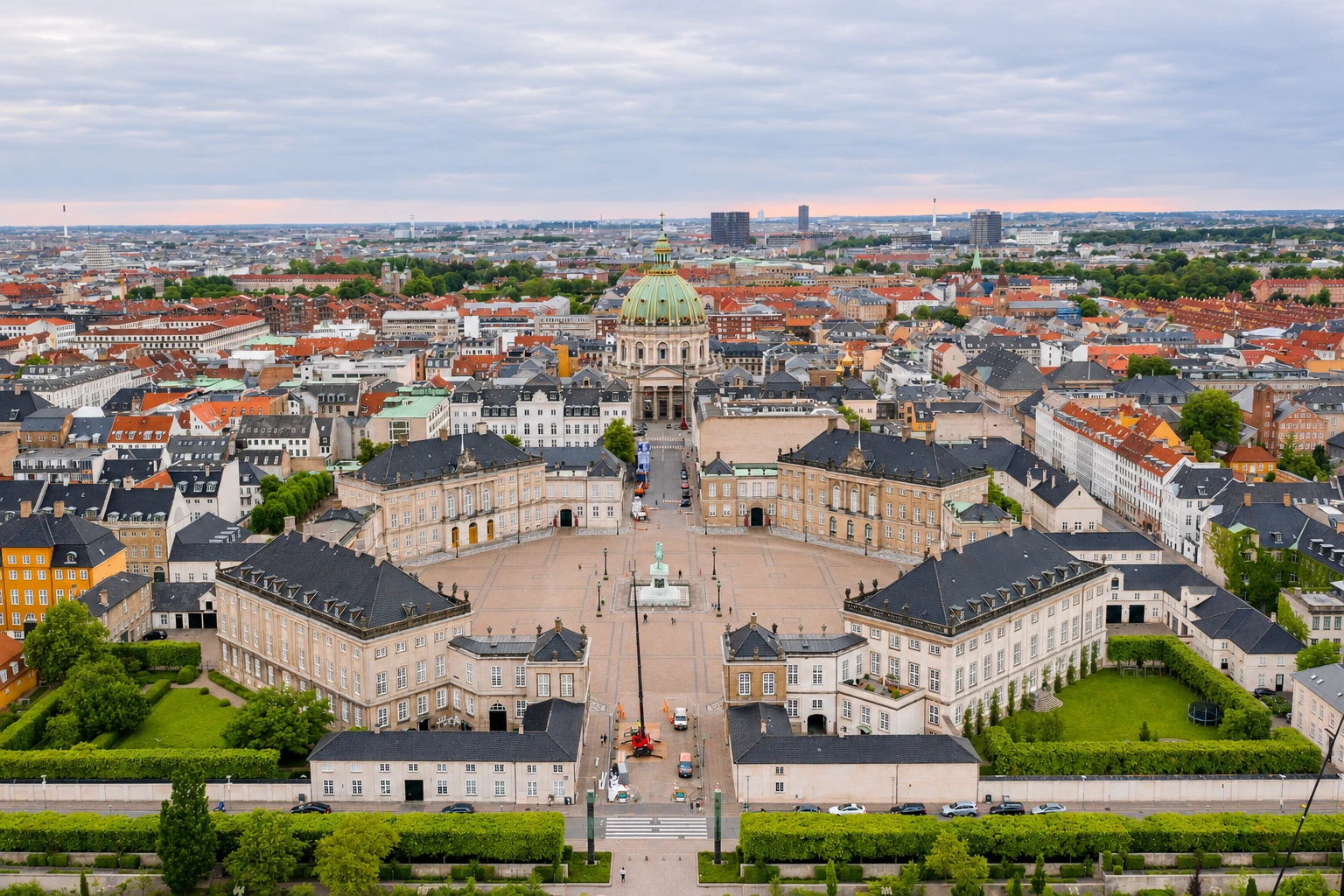
The residence of the Danish royal family: four rococo palaces around an octagonal square, with the equestrian statue of Frederico V and the changing of the guard at noon. One of the palaces is a museum.
Illustrative images. The pictures in this guide are illustrations based on the real place, not photographs, and may differ from it.

A look at the place
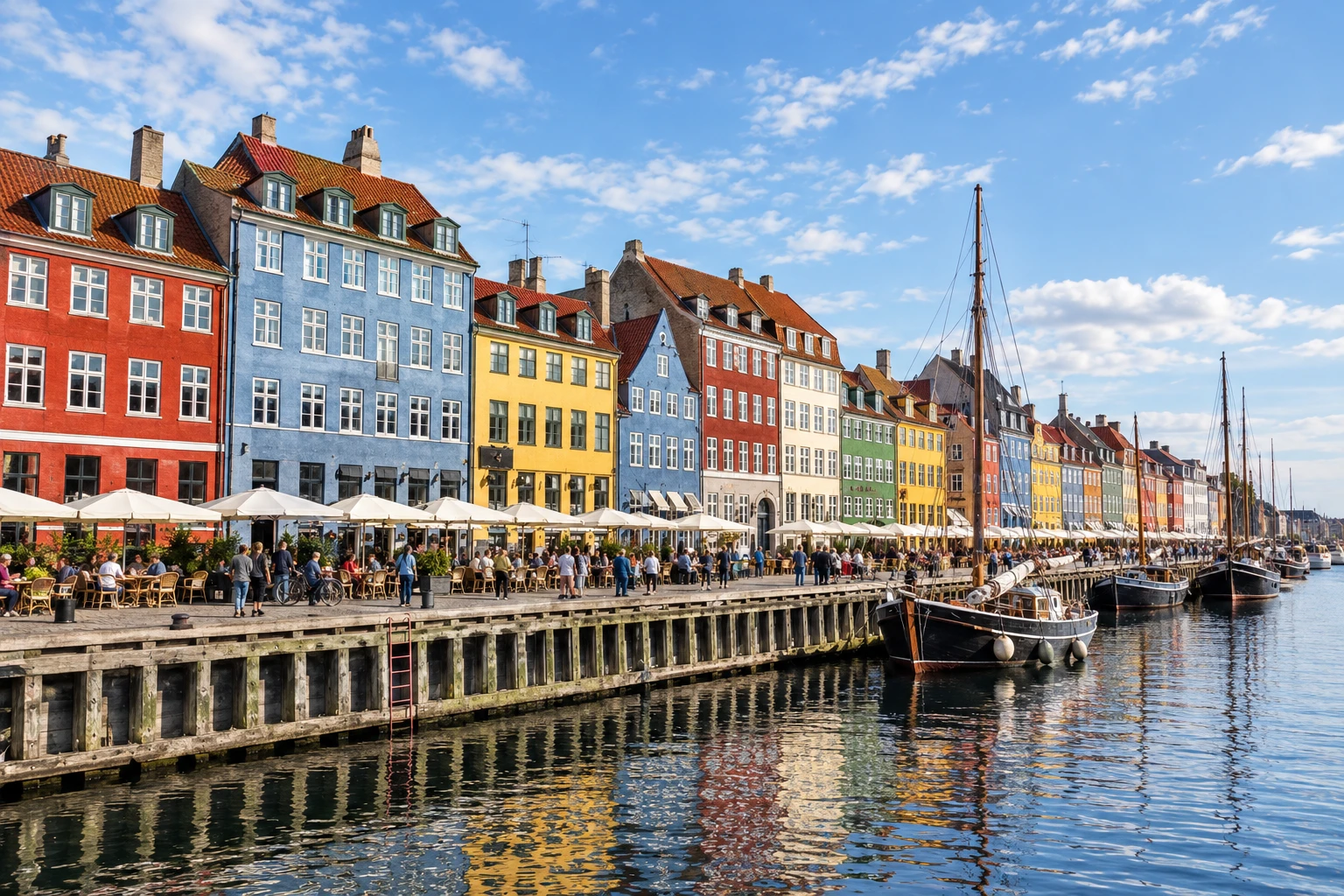
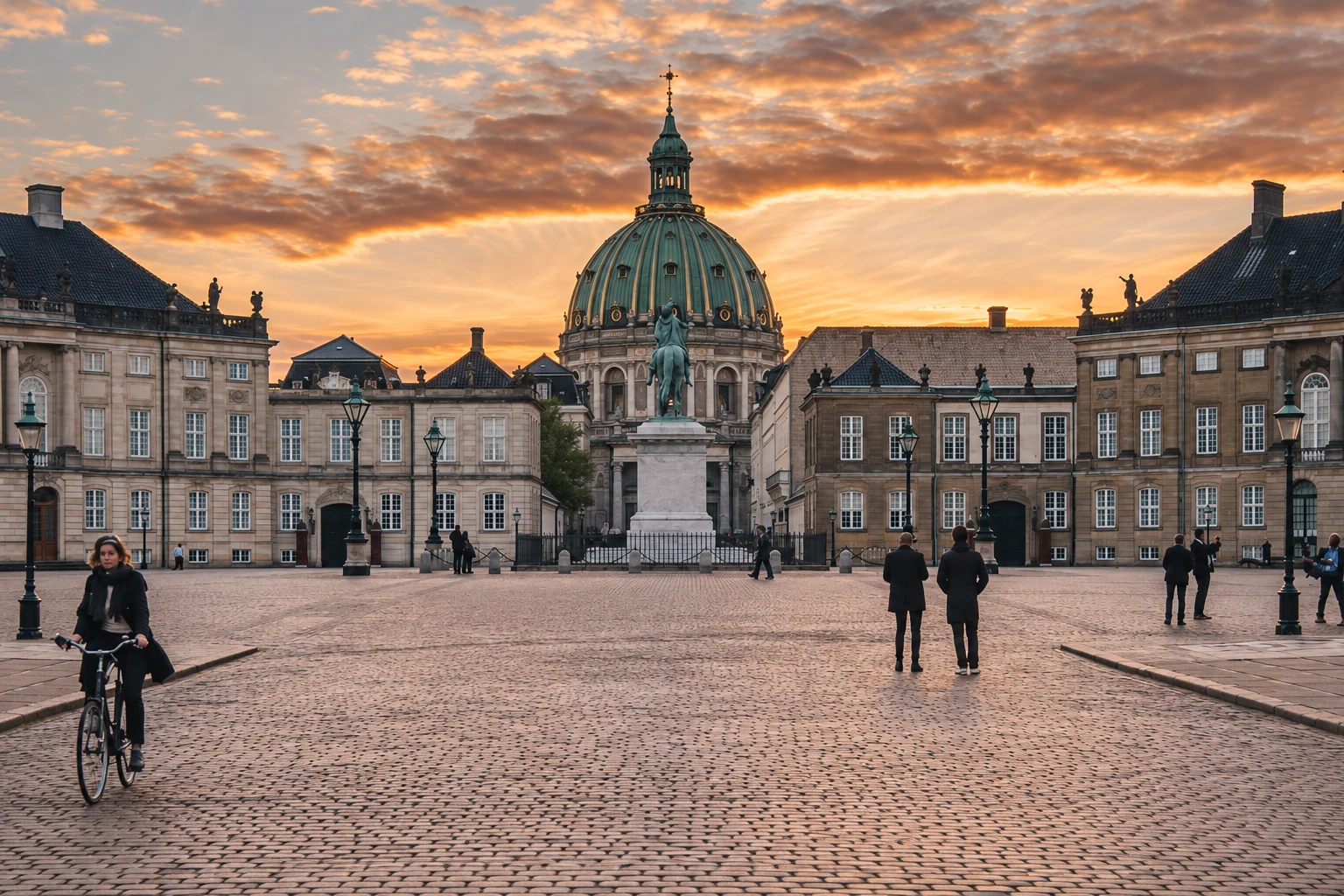
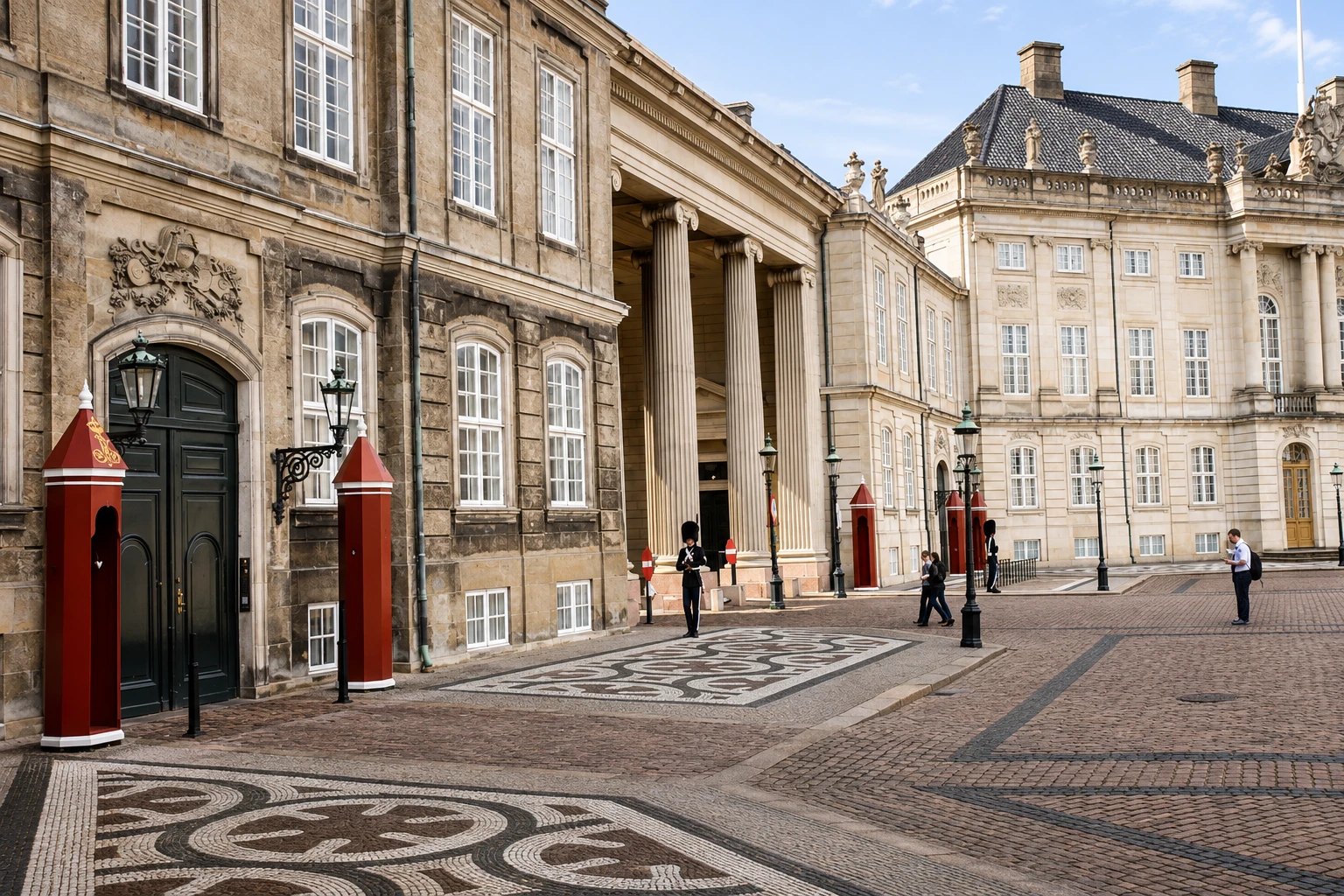
Amalienborg Palace in pictures
These pictures are illustrations based on the real place, not photographs. They may differ from the place.
Click the picture to enlarge it.
Discover
About Amalienborg Palace
Amalienborg is the winter residence of the Danish royal family. There are four identical palaces, built between 1750 and 1760 by the architect Nicolai Eigtved for four noble families, arranged around an octagonal square. After the fire at the Castle of Christiansborg in 1794, the royal family purchased the palaces and moved in. In the centre of the square stands the equestrian statue of Frederico V, the king who founded the Frederiksstaden district.
Every day at noon the Royal Guard changes the watch in front of the palaces, after marching from the barracks beside Rosenborg. When the king is in residence the ceremony is longer and includes a band. The guards wear the tall bearskin cap and blue uniform.
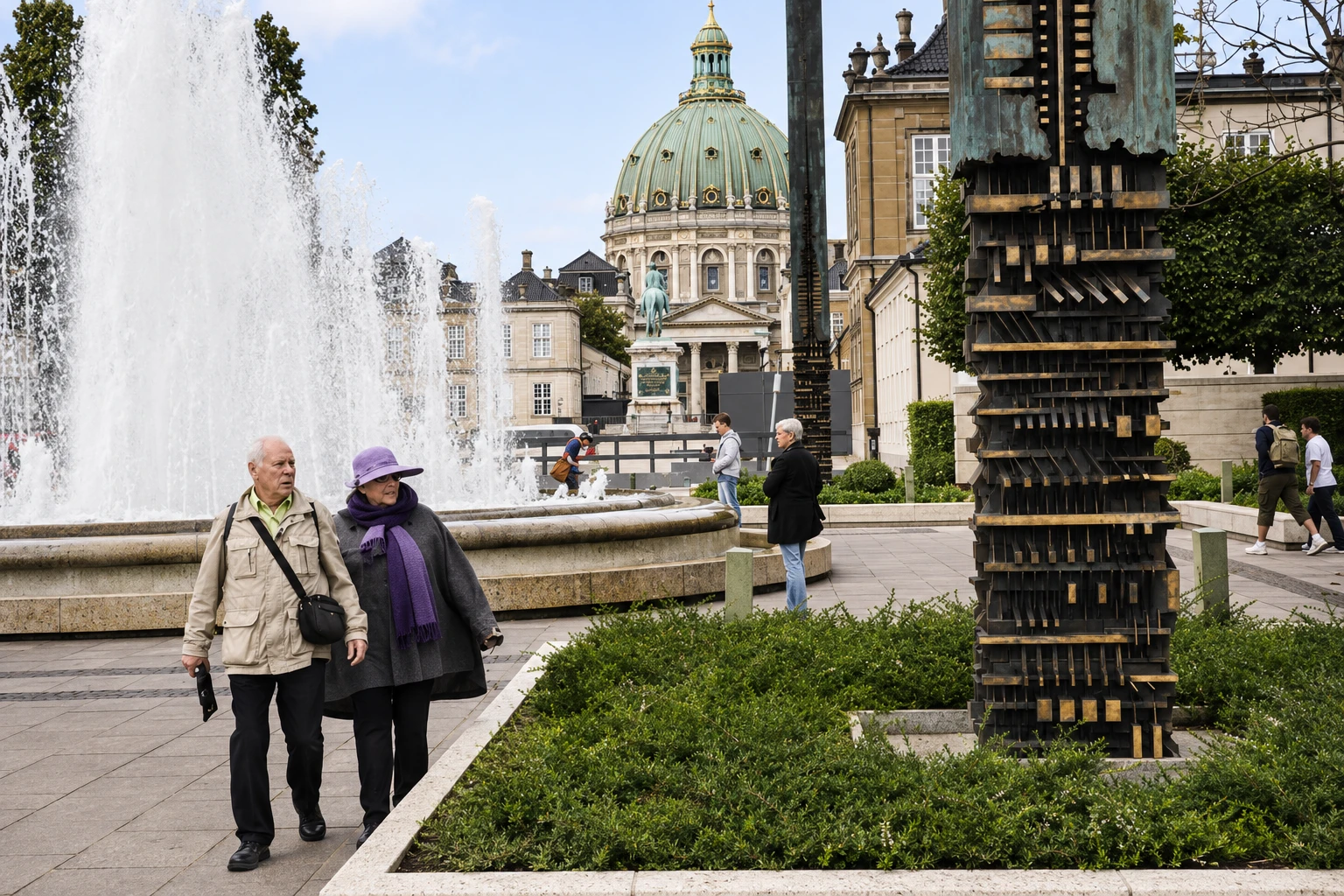
The Palace of Christian VIII houses the Museu de Amalienborg, with rooms and cabinets of the Glücksburg kings, furnished as they were used. On the square's axis, on one side is Frederiks Kirke, the Marble Church with one of the largest domes in Scandinavia; on the other is the Amaliehaven garden by the harbour, and across the water, the Opera.
Before you go
Practical information
Cidade Turismo reviews its information regularly, but something may have changed. Check with the place before planning your trip.
How much time to set aside
30 minutes for the square and the changing of the guard; another hour for the museum and 20 minutes for the Marble Church.
Best time
Arrive a little before noon to see the changing of the guard up close. The museum usually has reduced hours in winter; check before you go. The dome of the Marble Church opens only on guided visits at certain times.
How to get there
A 10-minute walk from Nyhavn and Kongens Nytorv (metro). The Marmorkirken metro station is next to the Marble Church, 2 minutes from the square.
Tip
Stand near the statue of Frederico V to watch the guard arrive along Amaliegade. Afterwards, enter Frederiks Kirke and follow Bredgade to the Designmuseum, or go down to Amaliehaven to see the Opera across the harbour.
Your questions
Frequently asked questions about Amalienborg Palace
What time is the changing of the guard?
Every day at noon in front of the palaces. When the king is in residence the ceremony includes a band and is longer.
Can you enter the palace?
Only in the Palácio de Cristiano VIII, which is the Museu de Amalienborg, with furnished royal rooms. The others are residences and offices of the royal family.
What is the green‑domed church next to it?
It is Frederiks Kirke, called the Igreja de Mármore. The dome is about 31 metres in diameter and can be visited inside.
How can you tell if the king is at home?
When the king is at Amalienborg, the royal flag is flown above the Palácio de Cristiano IX.