

 Brazil
 Antarctica
 Argentina
 Bolivia
 Chile
 Colombia
 Ecuador
 Falkland Islands (Malvinas)
 French Guiana
 Guyana
 Paraguay
 Peru
 Suriname
 Uruguay
 Venezuela
 Albania
 Austria
 Belgium
 Denmark
 Finland
 France
 Germany
 Greece
 Hungary
 Iceland
 Ireland
 Italy
 Luxembourg
 Norway
 Poland
 Portugal
 Slovakia
 Slovenia
 Spain
 Sweden
 Switzerland
 the Czech Republic
 the Netherlands
 the United Kingdom
 Turkey
 Bermuda
 Canada
 Greenland
 Mexico
 Saint Pierre and Miquelon
 the United States
 the Dominican Republic
 Japan
 Egypt
 South Africa
 Australia
 Fiji
 New Zealand
 Papua New Guinea
Food travel
Oysters and mariculture in Mali Ston
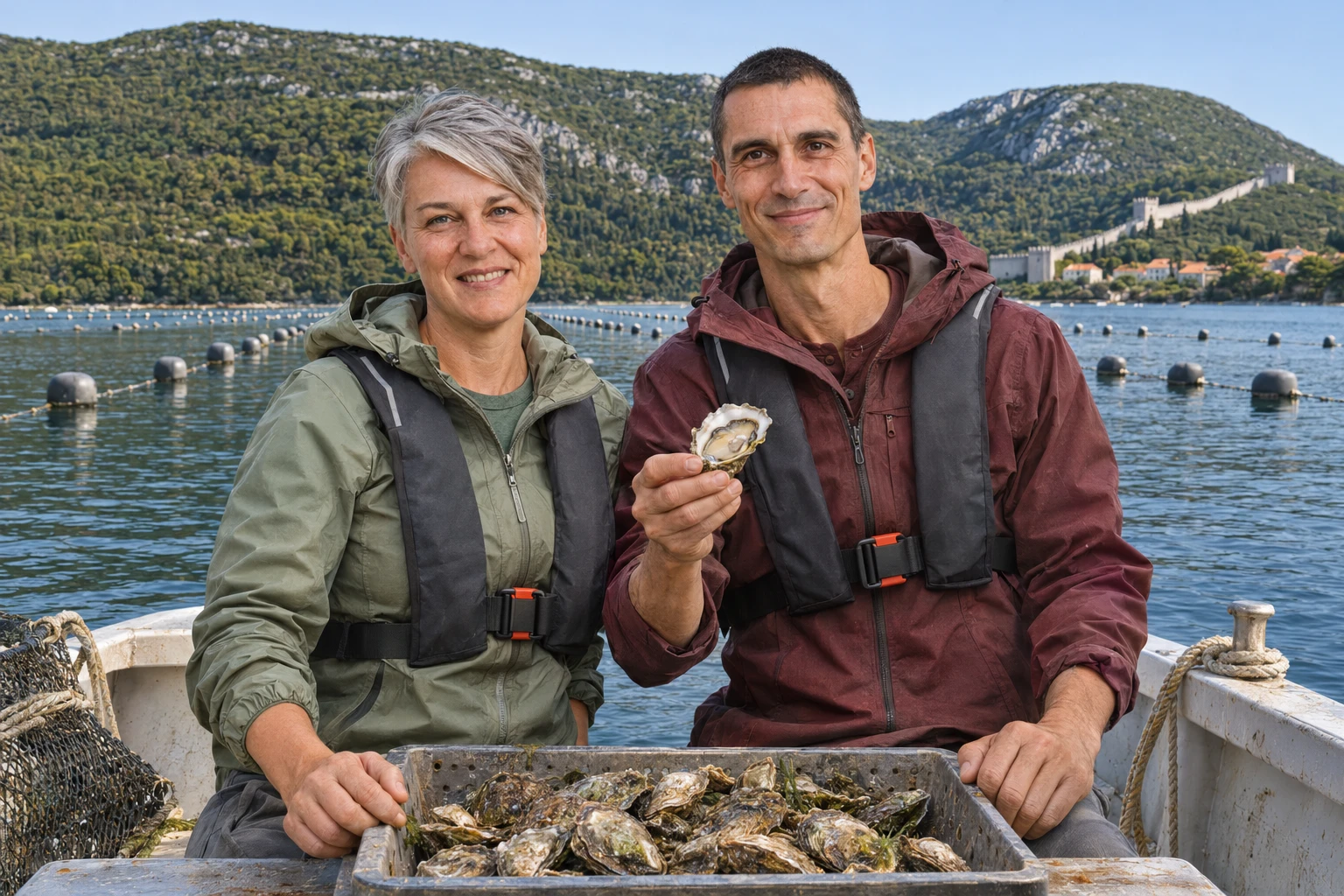
In Mali Ston, in the municipality of Ston, the oysters come from the bay you can see from the village. At first glance, it’s the expanse of water that catches your eye. Oyster farmers look in a different direction: at what grows beneath the surface. A visit focused on mariculture gives you a glimpse of their work before you see an oyster on your plate.
Your trip can center on a meal by the bay or a conversation with someone who tends the oysters as they grow. To choose, think about what you’d like to take away from the experience. If you’re curious about the shells and the flavor, you can stay on shore. If you want to see where the oysters grow, look for a tour that passes through the farming area.
Oyster farming in Mali Ston Bay
Mariculture is the farming of organisms in the sea. Oysters get their food from the water itself. As an oyster grows, it filters food particles from the water passing over its gills. A good way to start a conversation with an oyster farmer is to ask where the youngest oysters are kept and how to tell when it’s time to start tracking a new batch.
Seen from a distance, a row of buoys reveals little about how the oysters are grown. Ask what hangs beneath the buoys and how the oysters attach themselves to it. One shell can grow right up against another and take on an irregular shape. Comparing oysters of different sizes gives you a sense of how much space each one takes up as it grows.
Visiting with the people who work on the water
What you see on a trip depends on the work underway that day. The farmers might be tending a batch of oysters, cleaning a structure, or preparing oysters to serve. Rather than expecting to see the entire cycle in a few hours, watch one of these tasks. Ask what else needs to happen before that batch reaches the table to keep the conversation going.
If the visit includes a boat trip, find out where the boat leaves from, what route it takes, and where the tasting takes place. The description may mention Ston even though the meeting point is in Mali Ston. If you need help boarding, it’s important to know whether you’ll have to step up or down between the dock and the boat. Wind and water conditions can also change the planned route.
How to taste oysters in Mali Ston
At the table, start by asking which part of the bay the oyster comes from. Look at the outside of the shell, then at the smoother inner surface you can see once the oyster is open. If you want to taste the oyster’s own flavor, try it before adding the seasoning served with it. You’ll notice the saltiness right away, but the texture is part of the experience too.
Check how the oysters will be served, especially if someone in your group prefers them cooked. A tasting included in the visit may be enough to give you a feel for the oysters without taking the place of lunch. If the meal is the main focus of your outing, you can allow more time to talk about how the oysters are grown and try what the kitchen recommends.
Choosing between a visit on shore and a boat trip
For a short stop in Mali Ston, look for a place that serves local oysters and has a view of the bay. To see the oyster farm up close, check whether the tour description mentions an explanation of how the oysters are grown. How much time you have to observe the farm will depend on whether you view it in passing or take a trip that stops alongside the growing structures.
If not everyone wants to board the boat or try oysters, agree on where the group will meet up again. Ask what you can see from shore and whether you can join just the part of the visit devoted to oyster farming. That way, even those who skip the tasting can discover where the shells they see on tables in Mali Ston come from.
Frequently asked questions
Where can you eat oysters in Ston?
In Mali Ston, a village in the municipality of Ston. The oysters are grown in the bay and served locally.
Do you need to take a boat to try oysters in Mali Ston?
You can have a meal in the village. A boat trip is mainly for those who want a closer look at the structures used to grow oysters in the water.
What should you ask before booking a visit to an oyster farm?
Confirm where to meet, how you’ll board the boat, whether you’ll hear about the farming process at the growing sites, and what the tasting includes.
Can you learn about mariculture if you skip the tasting?
Ask the organizer whether you can join just the farm visit. Hearing how the oysters are tended and looking at their shells will give you a glimpse of the work that goes on in the bay.
Where to go: Conhecer o cultivo de ostras e frutos do mar
Pick a region or type what you are looking for to see the cities and who offers it in each.
More activities in Food travel
Beyond the guide


