

 Brazil
 Antarctica
 Argentina
 Bolivia
 Chile
 Colombia
 Ecuador
 Falkland Islands (Malvinas)
 French Guiana
 Guyana
 Paraguay
 Peru
 Suriname
 Uruguay
 Venezuela
 Albania
 Austria
 Belgium
 Denmark
 Finland
 France
 Germany
 Greece
 Hungary
 Iceland
 Ireland
 Italy
 Luxembourg
 Norway
 Poland
 Portugal
 Slovakia
 Slovenia
 Spain
 Sweden
 Switzerland
 the Czech Republic
 the Netherlands
 the United Kingdom
 Turkey
 Bermuda
 Canada
 Greenland
 Mexico
 Saint Pierre and Miquelon
 the United States
 the Dominican Republic
 Japan
 Egypt
 South Africa
 Australia
 Fiji
 New Zealand
 Papua New Guinea
Food travel
Olive mills and olive oil tasting in Istria
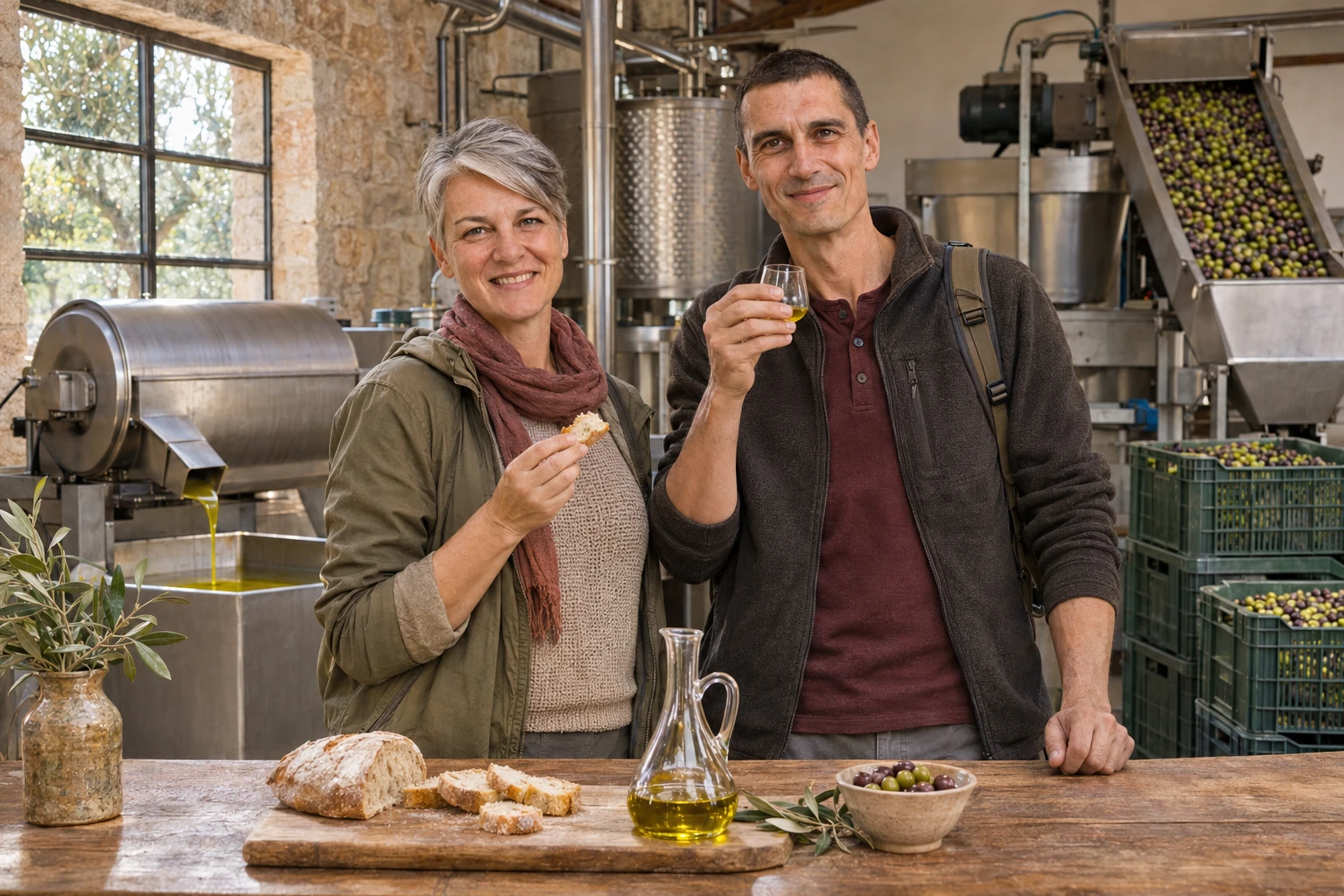
When tasting Istrian olive oil, you may notice the first difference between two batches before you even bring the glass to your lips. One aroma may remind you of green leaves, another of ripe fruit. The visit becomes more interesting when someone explains which olives went into each sample and what happened to them between harvest and tasting.
In Croatia, Pula and Poreč offer two starting points for that conversation. In Pula, the House of Istrian Olive Oil explains how olives are grown and oil is produced. Dračevac, in the municipality of Poreč, is home to Stojnić, a producer on the region’s official olive oil route. The choice depends on what you’d like to see and when you’re traveling.
Olive oil explained in Pula
The House of Istrian Olive Oil offers tastings and explains how olive trees grow and how olive oil is made. It’s a way to learn about olive oil while exploring Pula. Start with a simple question about the fruit: how does the oil change depending on whether the olives are harvested green or left to ripen longer? Keep the answer in mind as you compare the aromas during the tasting.
Another step worth following is how whole olives are crushed into a paste. Even if you’ve seen an olive tree, you may never have thought about where the oil is in the fruit or how it’s separated from the water and solids. Understanding these steps helps explain what the equipment in an olive mill does and why the producer pays close attention to the time between harvest and milling.
A stop in Dračevac, in the municipality of Poreč
Look for the name Stojnić in Dračevac on Istria’s olive oil route. Use the farm’s address when planning your route from Poreč. Before you go, ask the producer whether you can visit on your preferred date. Mention whether you’d like to taste the oils, see the trees, or learn how the oil is extracted. Each activity takes place in a different setting and has its own timing.
Even on the same tree, some olives may be riper than others. During harvest, ask how the producer decides when to pick each batch and how the olives get to the mill. Outside the harvest season, a bottle of finished oil can be a starting point for the conversation. The variety name and harvest information help you connect what you taste with the work done on that farm.
What happens at the olive mill
After cleaning, the olives are crushed. The resulting paste is mixed to help small droplets of oil come together. The oil is then separated out, usually by centrifuge in modern mills. Finally, storing the oil away from light and heat helps preserve the characteristics you’ll look for during a tasting.
Milling takes place as the harvested olives arrive. To see the machines running, check the mill’s work schedule and ask where visitors can watch. If the machines aren’t running, ask someone to show you where the olives go in and where the oil comes out. Following that path helps you tell the machine that crushes the olives from the one that separates the oil.
How to compare two Istrian olive oils
Smell the first sample, then take a small sip. Notice the bitterness and any peppery sensation you feel in your throat. Both can be part of the oil’s character. When you try the second oil, look for something that sets it apart from the first, such as a grassy note or a milder finish.
If there’s bread on the table, save a piece until after you’ve tasted the oil on its own. That makes it easier to notice how the bread changes your first impression. If you’d like to take a bottle home, write down the name of the batch you liked. A single producer may offer several oils, each made with different olive varieties or a different balance of varieties.
Frequently asked questions
Where can I taste olive oil in Pula?
The House of Istrian Olive Oil offers tastings and traces the history of olive growing and oil production in the region.
Which olive oil producer should I look for near Poreč?
Stojnić, in Dračevac, is part of Istria’s olive oil route. Contact the producer to find out what kinds of visits are available on your travel date.
Do I need to visit during the harvest to taste Croatian olive oil?
Tastings can feature oils from batches that have already been produced. The harvest season matters most if you want to watch the olives being picked or see a mill processing them.
Where to go: Visitar lagares de azeite
Pick a region or type what you are looking for to see the cities and who offers it in each.
More activities in Food travel
Beyond the guide


