Istarska supa
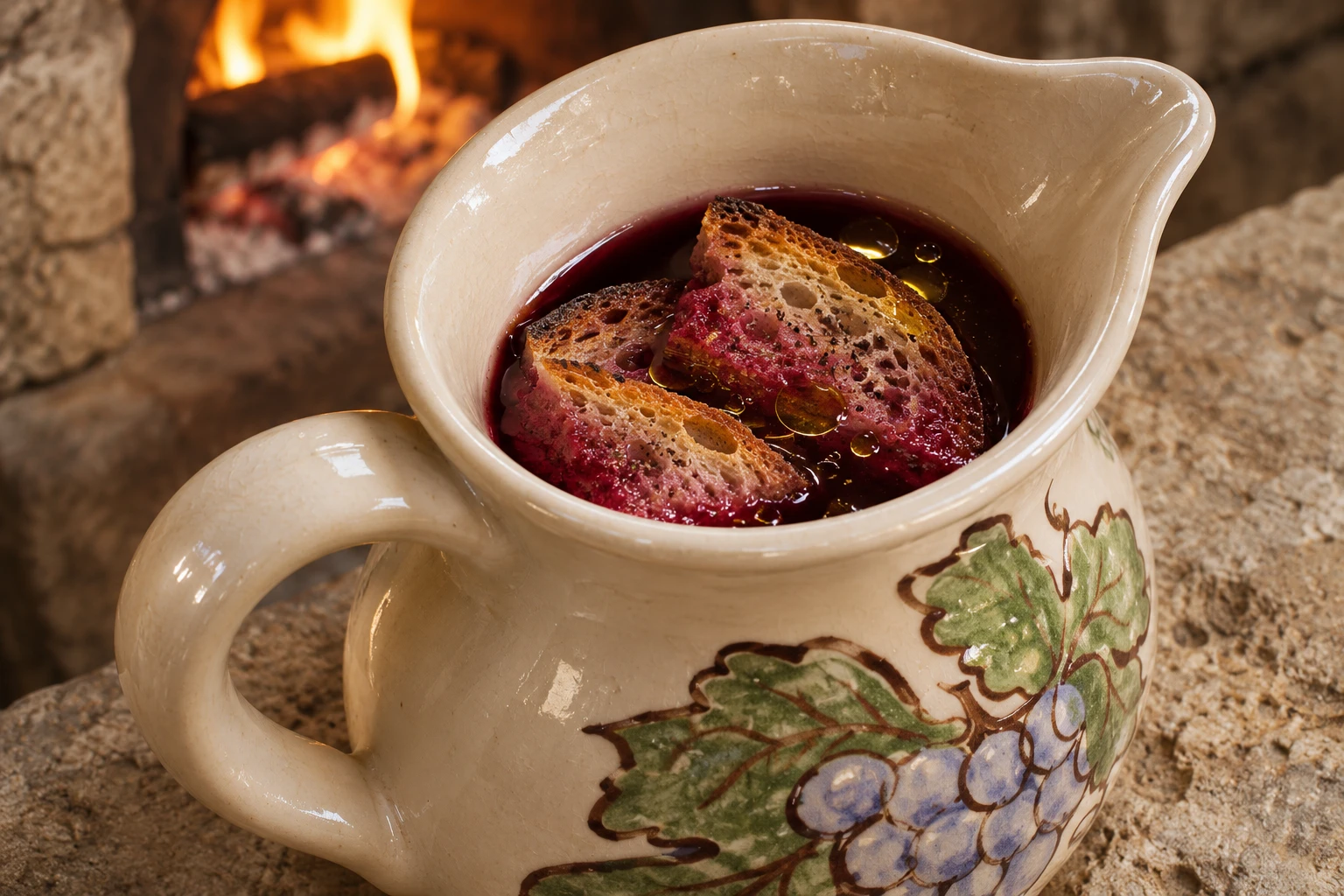
Red wine, usually teran, warmed with olive oil, sugar and pepper and served with toasted bread in a ceramic pitcher, the bukaleta, passed from hand to hand. It is a social ritual of Istria and a cultural heritage protected by Croatia.
AntarcticaCounty · Istria and Kvarner
Illustrative images. The pictures in this guide are illustrations based on the real place, not photographs, and may differ from it.
Flavors of Croatia
Destinations
Cities

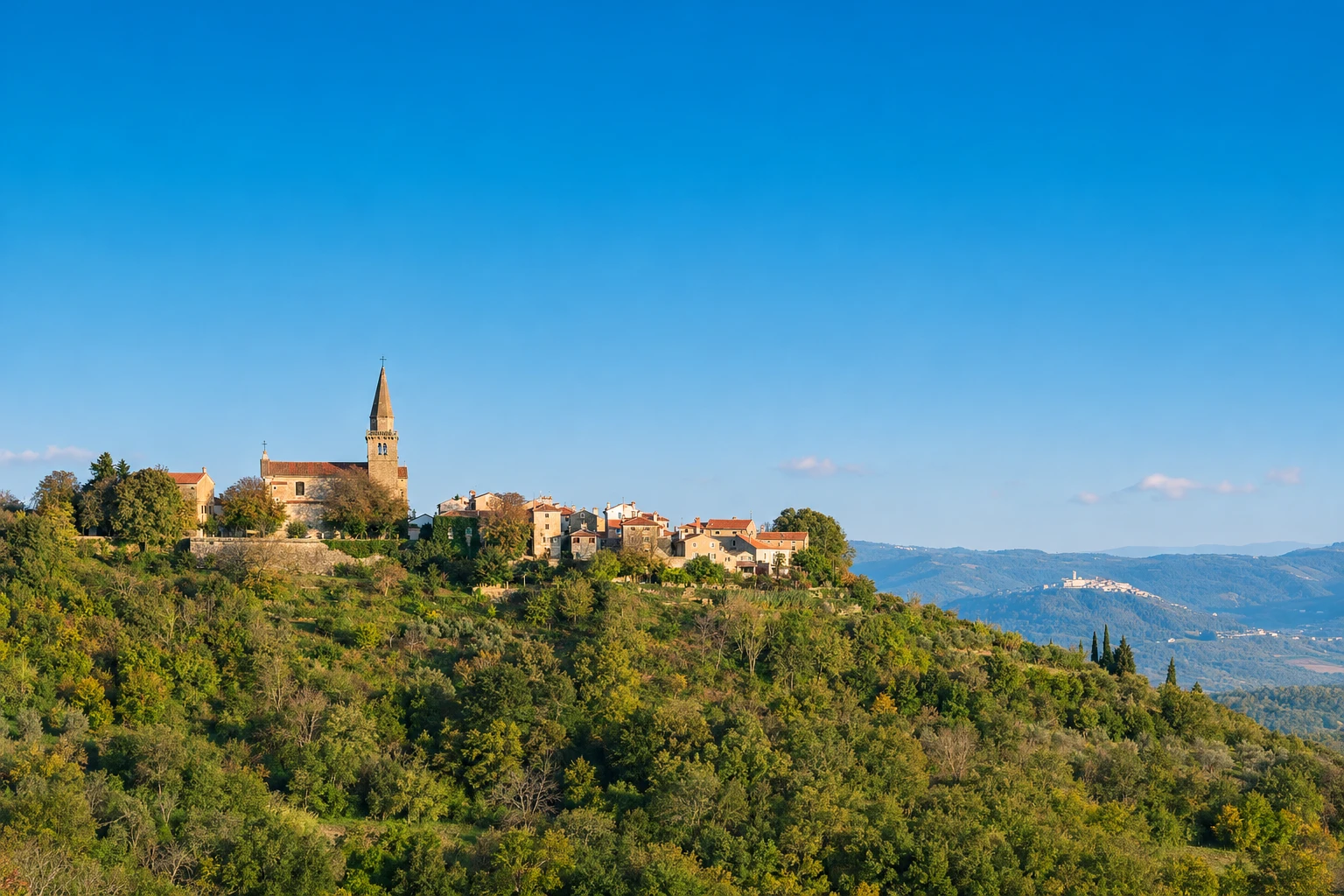
Grožnjan sits on a hill in inland Istria. The stone core preserves parts of the wall and the eastern gate. The village has housed an artists’ colony since the 1960s. The Fonticus Municipal Gallery occupies the old public granary, above a loggia beside the entrance to the center.

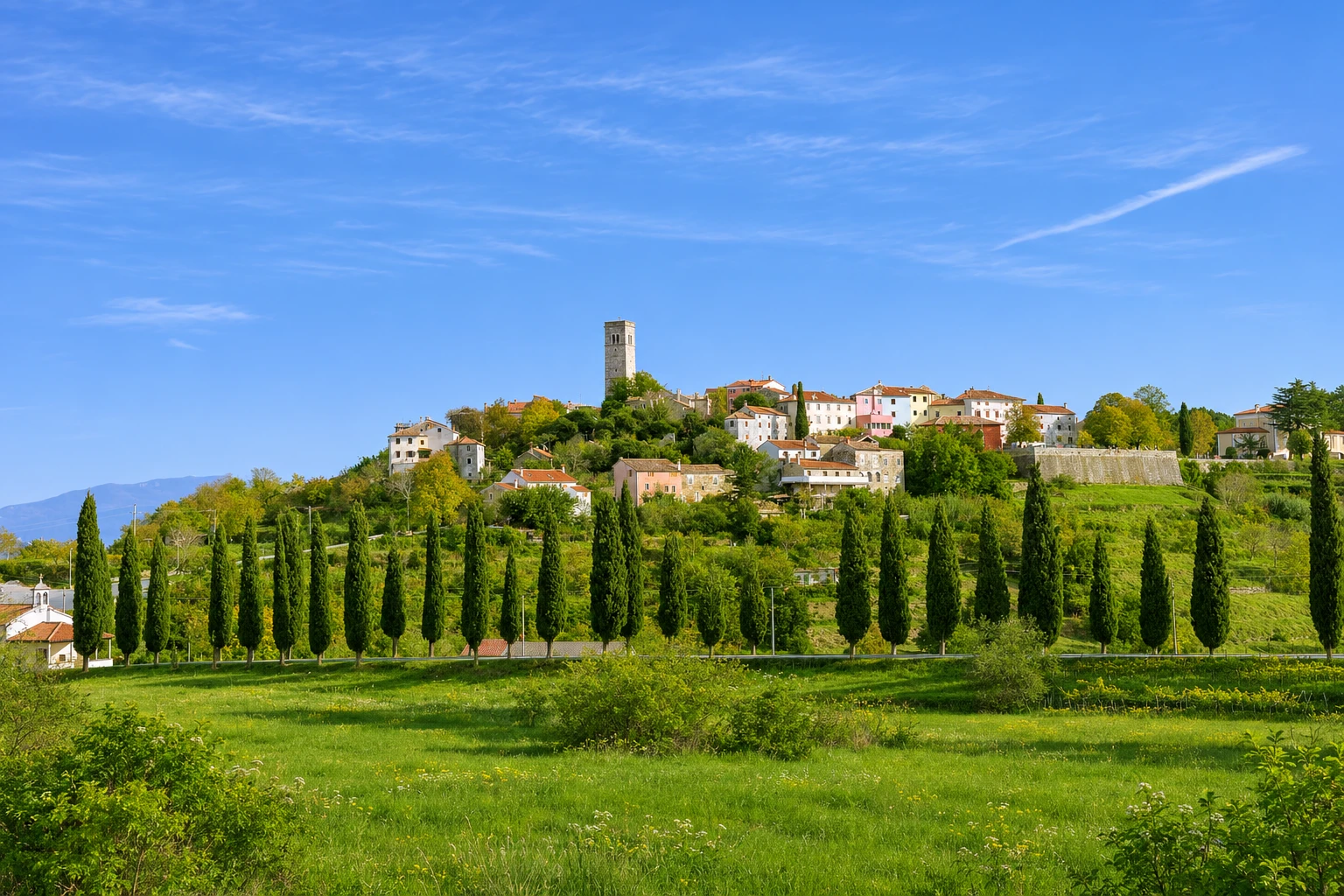
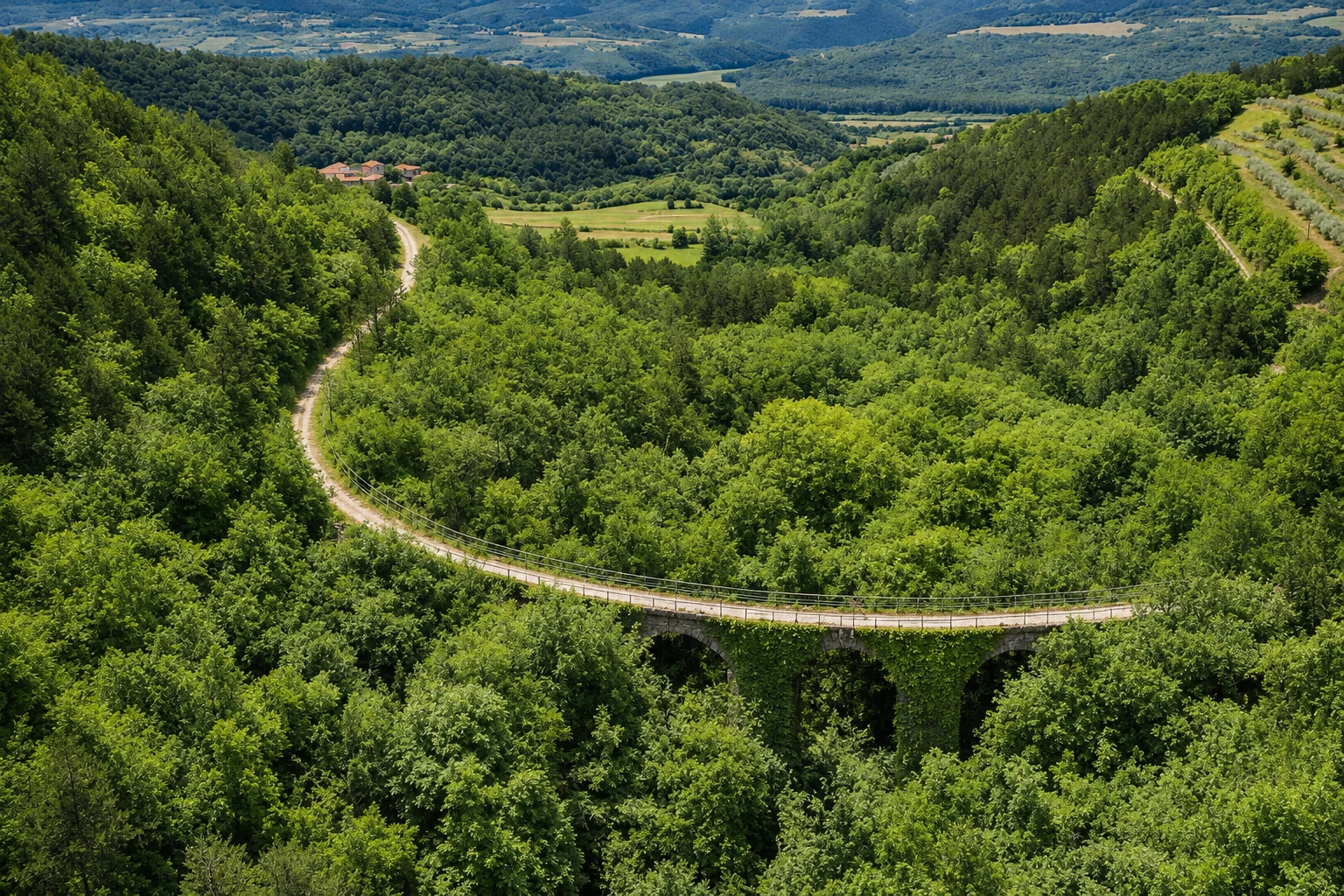
Oprtalj sits atop a hill overlooking the Mirna valley in inland Istria. The civic loggia, in front of the old gate, preserves stone fragments and opens views over the slopes. Livade belongs to the same municipality and lies at the bottom of the valley, beside the old Parenzana railway.

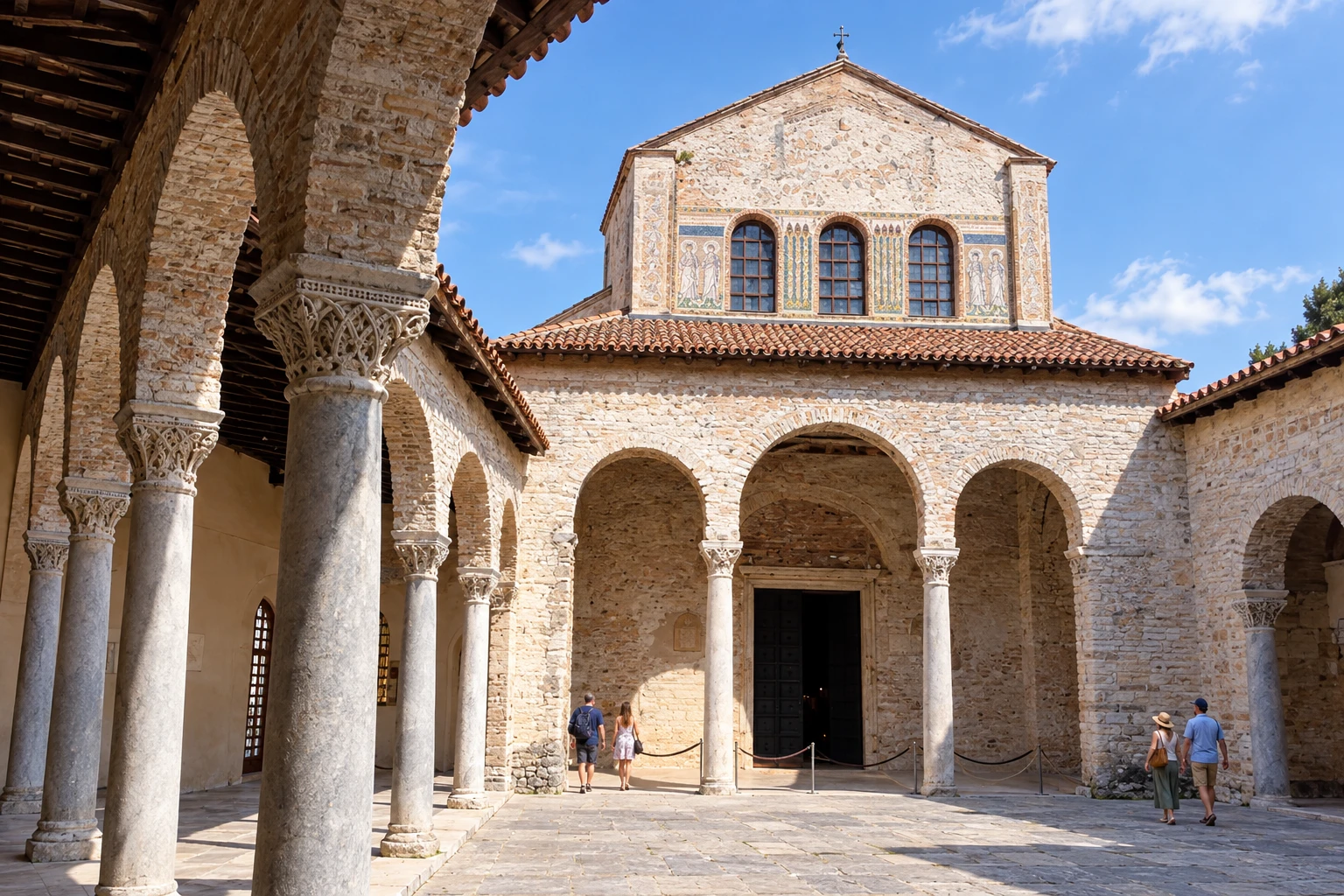
Poreč occupies a peninsula on Istria’s west coast. The episcopal complex of the Euphrasian Basilica is the focal point of the visit, with mosaics and spaces that record different phases of local Christianity. The old town streets and the waterfront complete the route between the mainland and the tip of the peninsula.

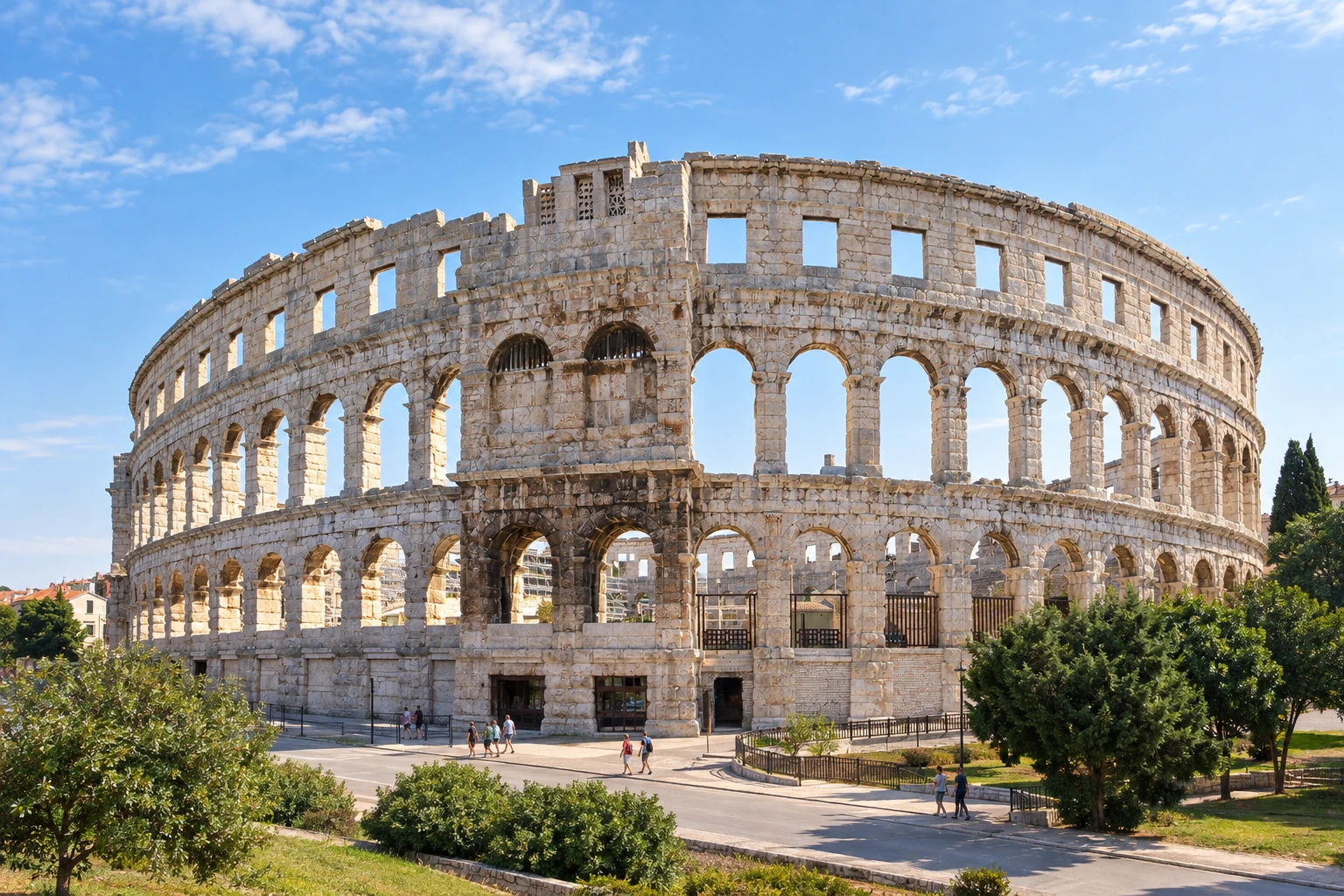
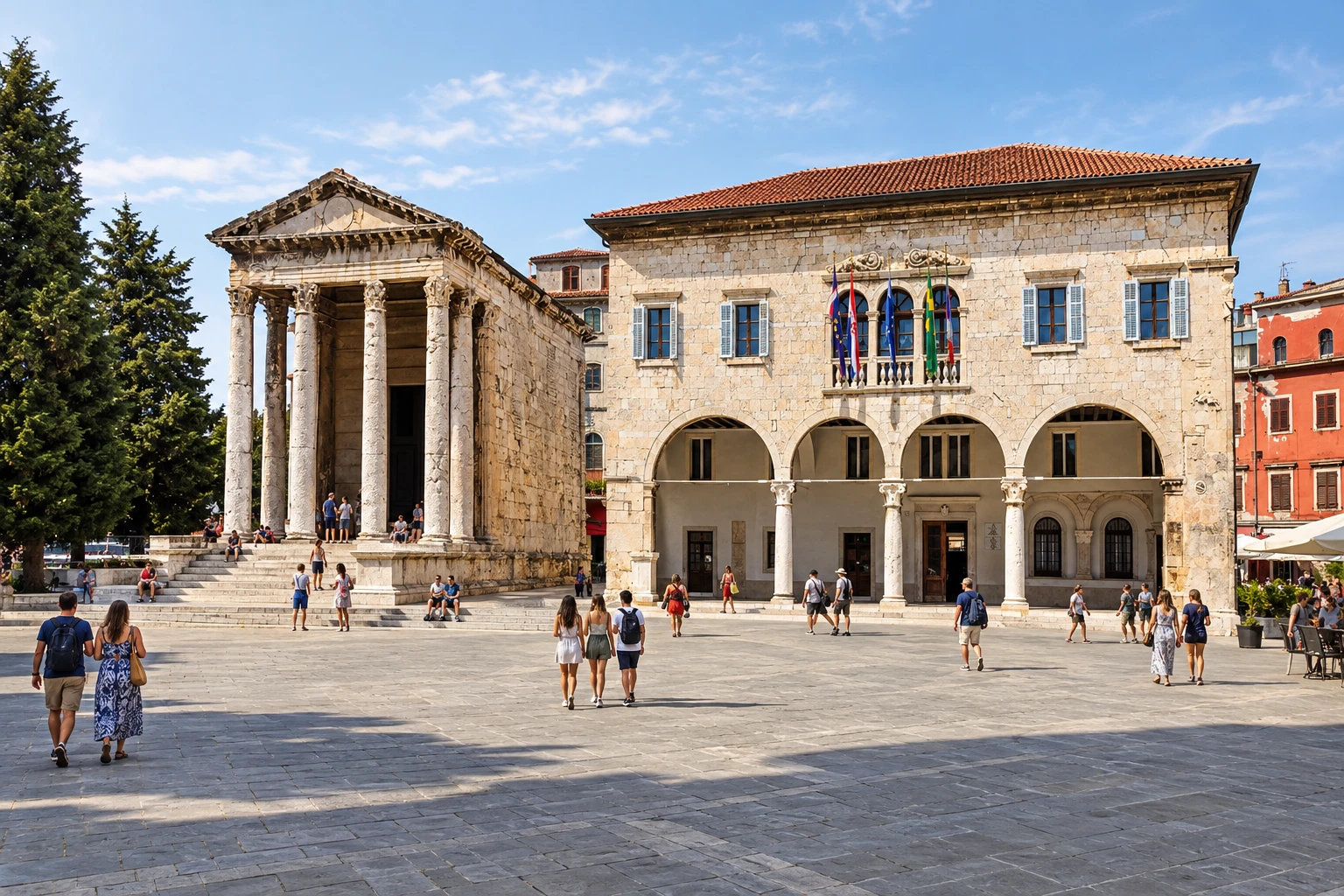
Pula arranges visits to Istria around Roman monuments: the Arena, the Temple of Augustus and the Arch of the Sergii. The amphitheatre is near the waterfront, while the other remains appear in the streets of the old town. The city has an airport and serves as an arrival point for onward travel to the other bases on the peninsula.

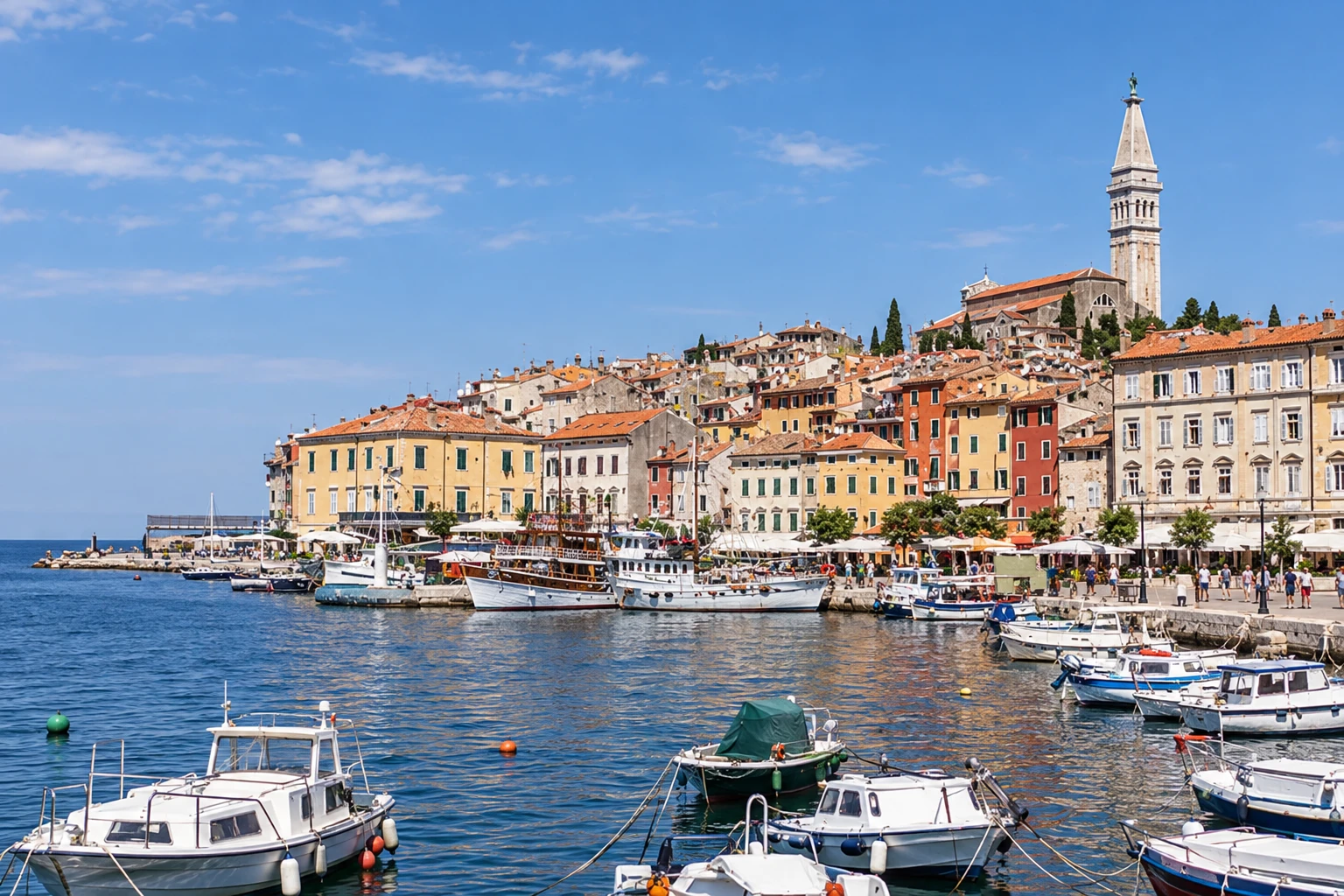
Rovinj has a historic center on a peninsula, with houses by the water and streets that climb up to Santa Eufemia. The old quarter is a complete urban attraction. To the south, the Zlatni rt forest park offers tree-lined paths and stretches of coastline, making for a different day than the walk among façades and stairways.
Routes
Beyond the guide