Tamandaré

Pernambuco

Tamandaré

In the destination Costa dos Corais.

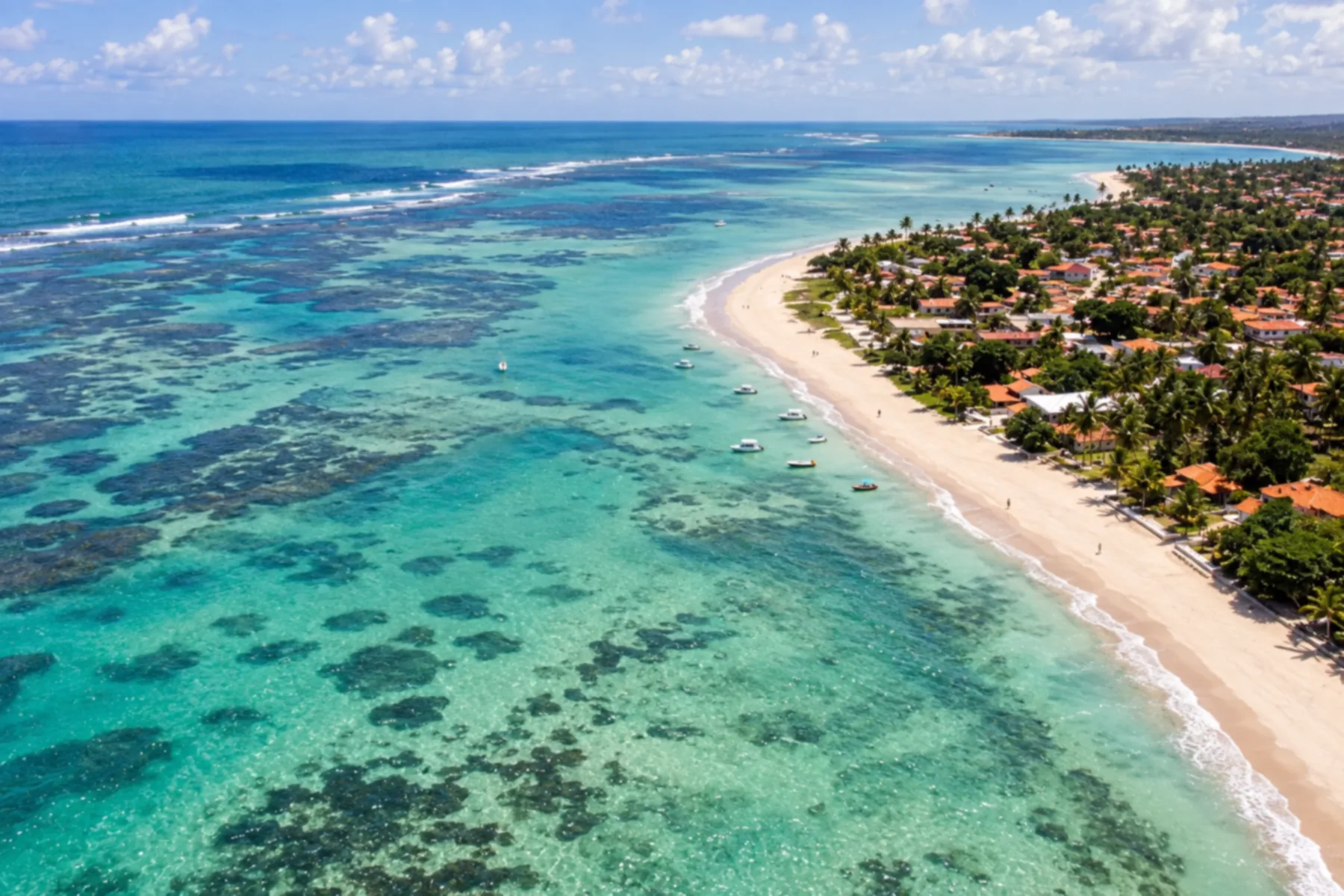
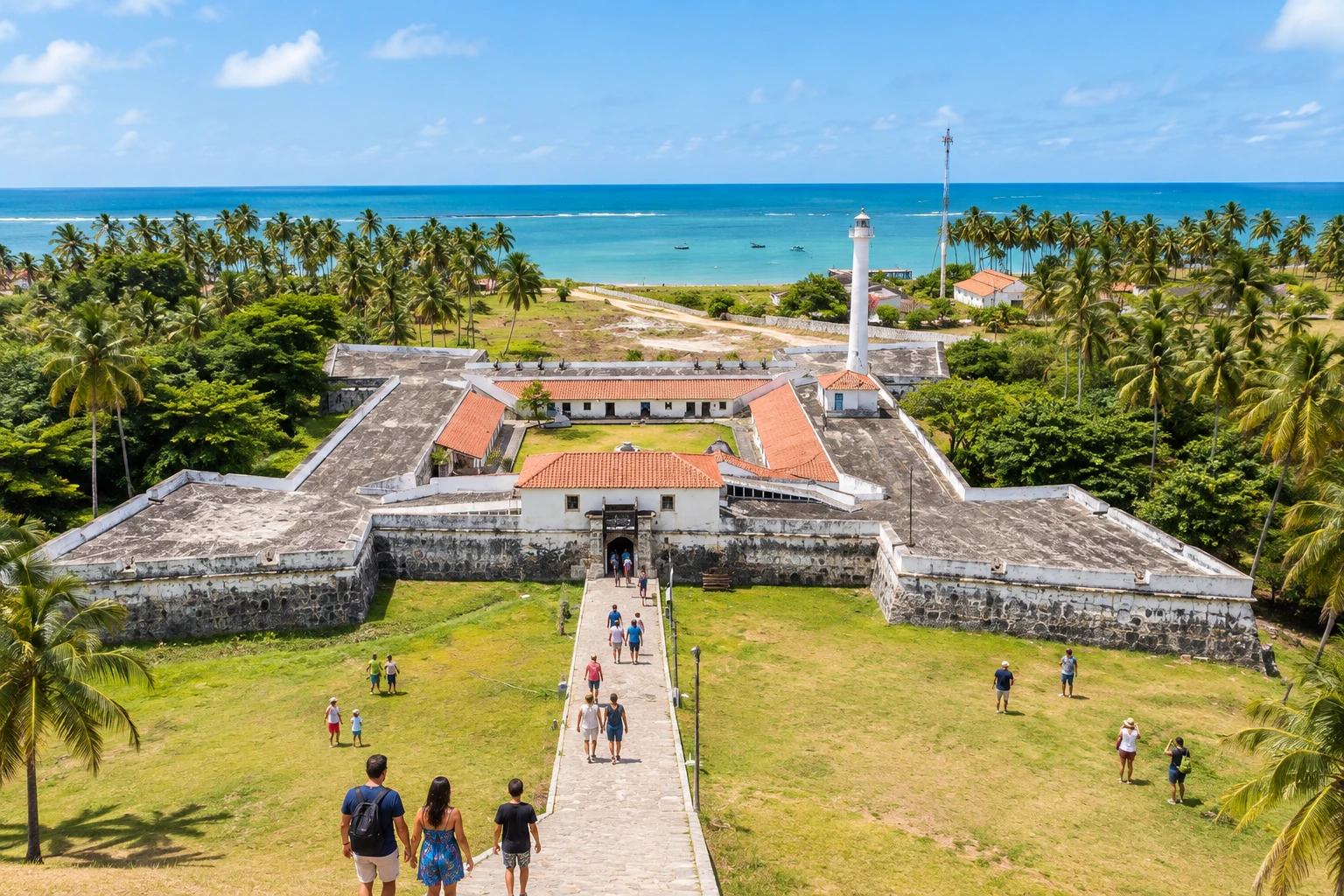
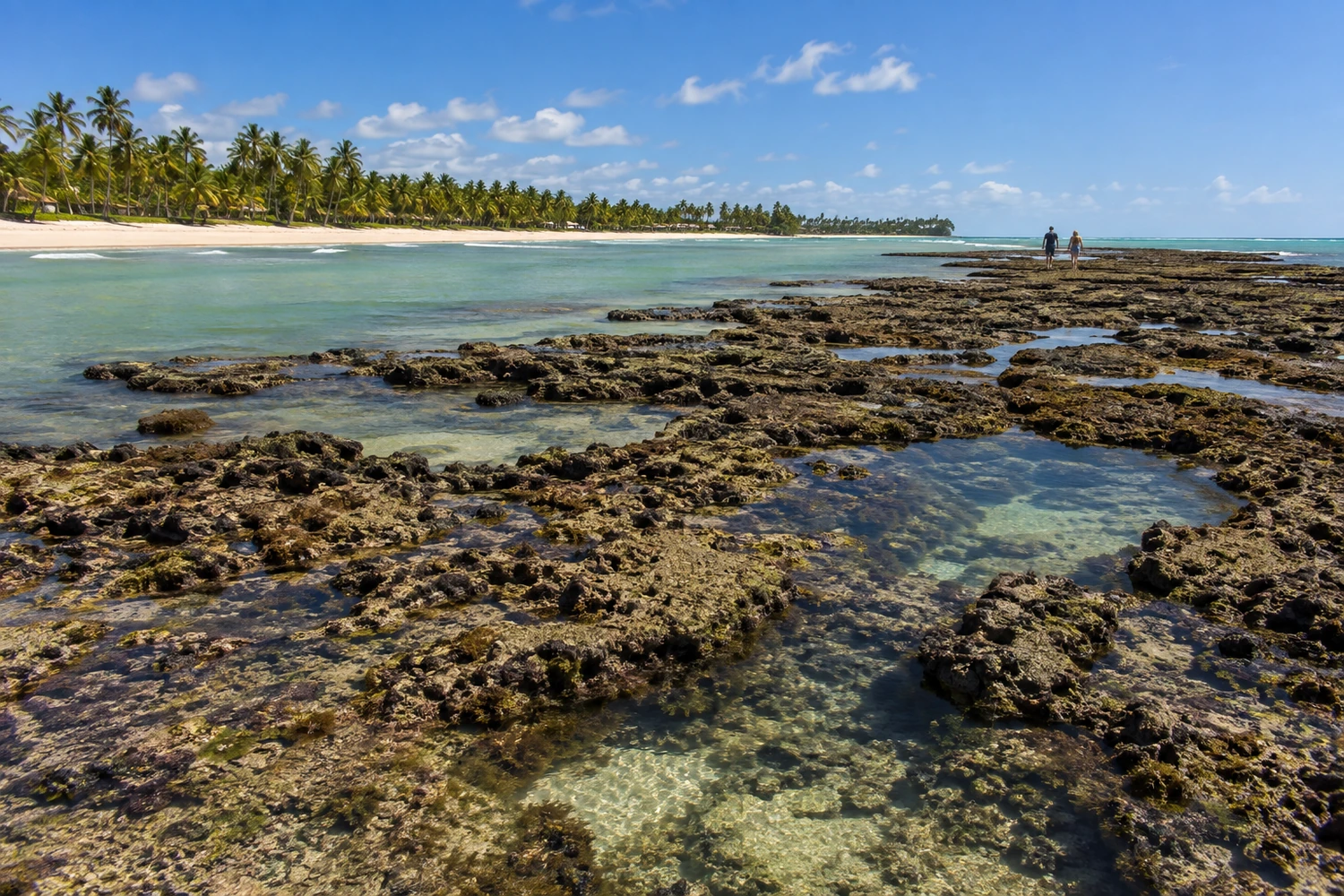
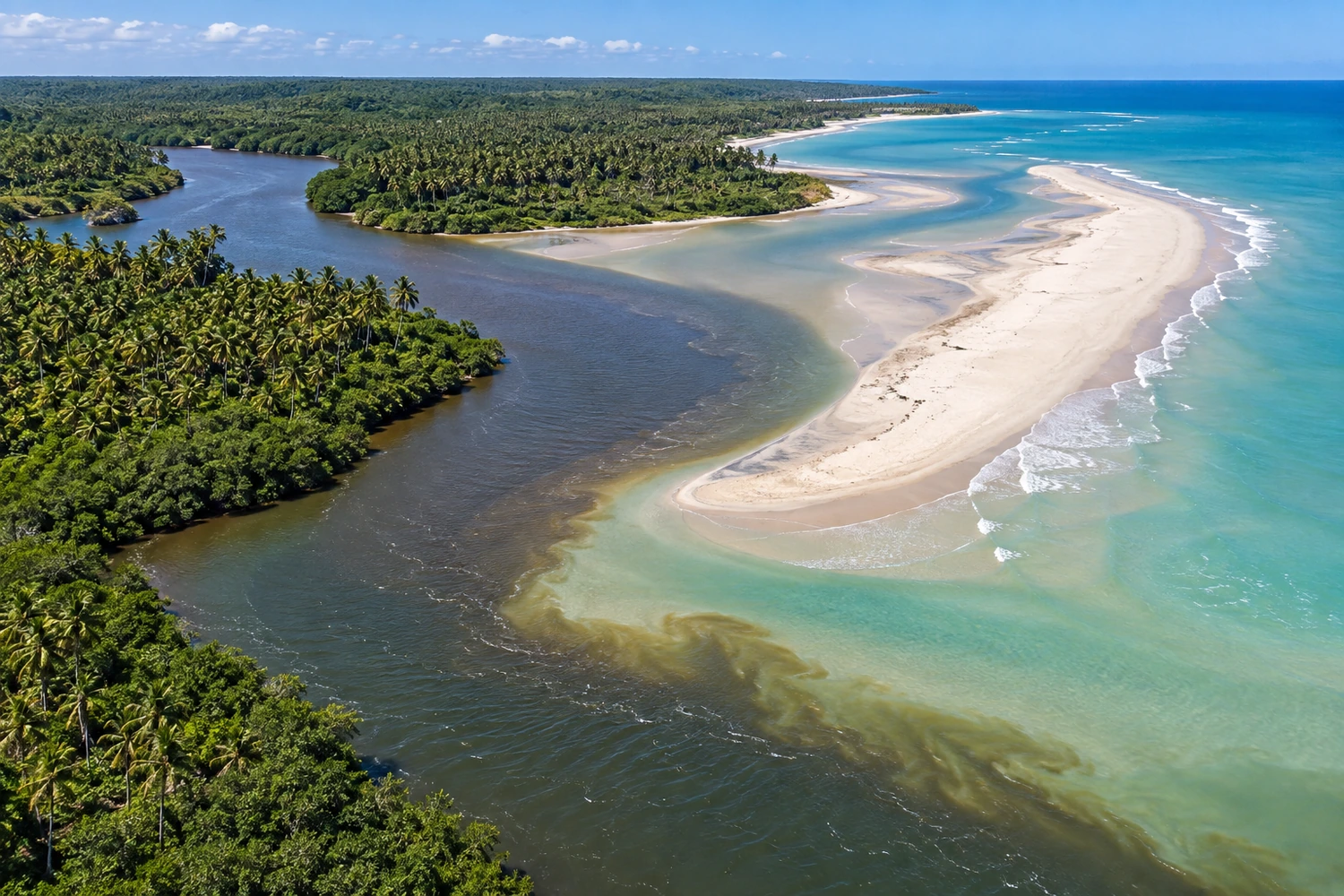
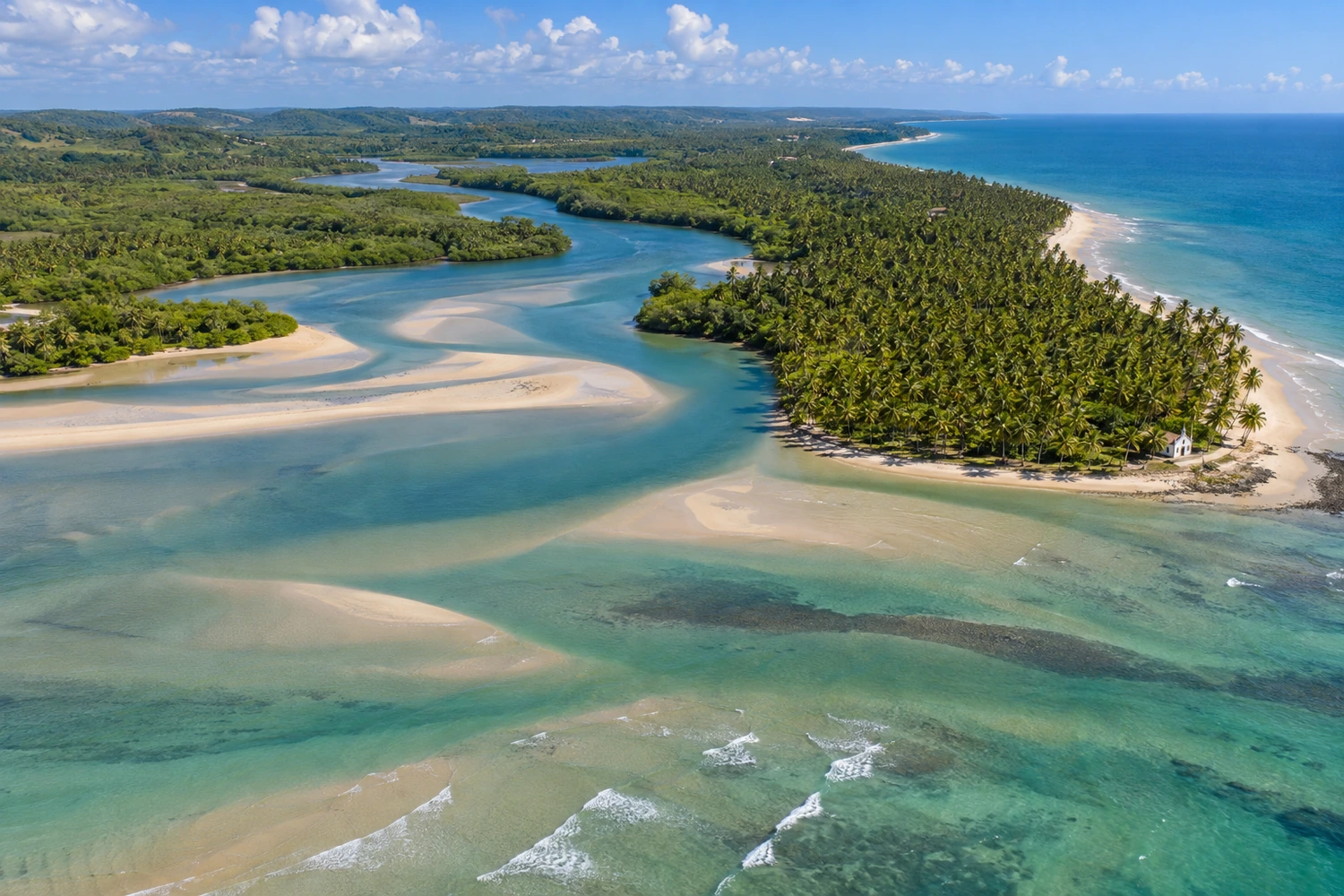
Illustrative images. The pictures in this guide are illustrations based on the real place, not photographs, and may differ from it.

The city

What to expect from Tamandaré.

Tamandaré combines reef-protected beaches and historic heritage on the south coast of Pernambuco. The natural pools and Praia dos Carneiros invite you to explore the sea and the region's coconut groves.

Tamandaré is on the southern coast of Pernambuco, about 110 km from Recife and 57 km from Porto de Galinhas. It is the northern tip of the Costa dos Corais: from here southward to Alagoas, the reefs run parallel to the beach and hold the sea back. The municipality has around 24,000 inhabitants, about 16 km of beaches and became independent in 1995, although the port and the fort date from the colonial period.

The beach that draws most visitors is Carneiros, which belongs to Tamandaré. It lies 5 to 10 km north of the center depending on the section, and ends at the estuary of the Formoso River, where the water is still, the coconut grove is continuous and a small white chapel, São Benedito, sits almost in the sea. The beach is public but bordered by farms, pousadas and restaurants: almost all land access passes through an establishment that charges for parking or day use. For that reason many people visit by catamaran along the river.

The rest of the municipality has a different vibe. Campas Beach, just south of Carneiros, has wide sand, pools among the reefs and the old São Pedro church facing the sea. Tamandaré Beach is the town center beach, with shops, stalls, rafts and natural pools off the shore. Then comes Pontal do Lira, a sand point with a pier and coconut trees, also called Praia do Forte because of the Forte de Santo Inácio de Loyola from the late 17th century. At the border with Barreiros, after the Mamucabas River mouth, Boca da Barra is the municipality’s nearly deserted beach.

The center waterfront fills on weekends, holidays and during vacations; on weekdays outside peak season it is quiet. Those seeking calm and the postcard scenery stay at Carneiros; those wanting shops, restaurants and more price options stay in the center or Campas.

The climate is warm year-round, with average temperatures between 24 °C and 27 °C. From September to February it rains little; from April to July it rains frequently, peaking in June. As along the whole coast, the tide dictates the outings: the natural pools and the Formoso River sandbank only appear at low tide.

Two days are enough for Carneiros and the center with the fort; three allow a relaxed visit to the natural pools and the quieter beaches. Maragogi, already in Alagoas, is about 50 km away and is often the next stop for those traveling the coast.

Share: WhatsApp

Where to stay

88 places to stay in Tamandaré.

Where to eat

9 places to eat in Tamandaré.

Mapa de Tamandaré

9 lugares no mapa: onde ficar e onde comer, por bairro.

Tamandaré highlights and titles

Natural pools

Brazilian routes

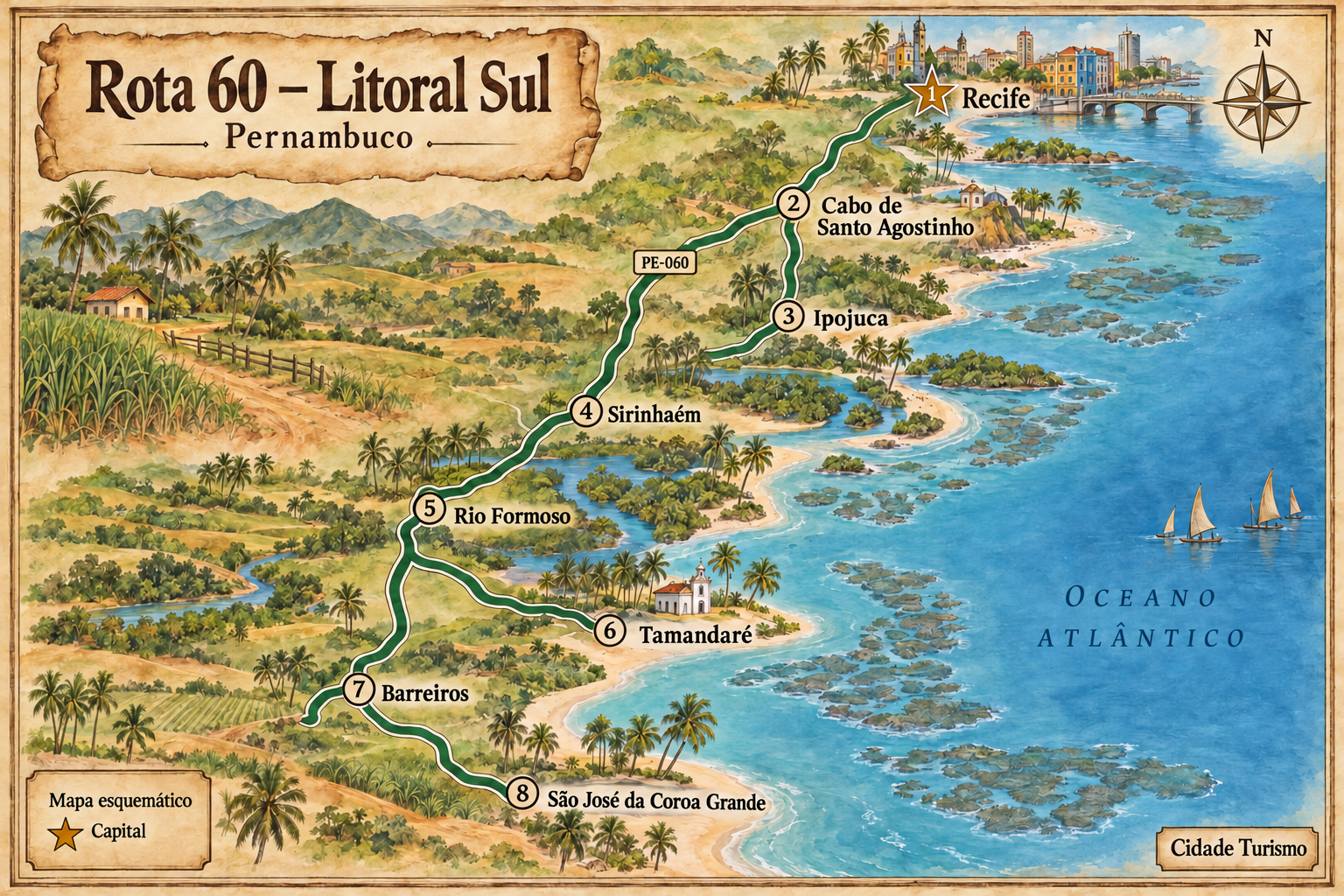
Tamandaré is part of the Route 60 – Southern Coast

Beaches, reefs and estuaries between Recife and the far south of Pernambuco’s coast.

Illustrative map, not to scale. Tap a city to open its page.
Illustrated map of Route 60 – Southern Coast
Explore the Route 60 – Southern Coast

The local experience

Things to do in Tamandaré

Tamandaré · PE · beach

Praia dos Campas

With calm water, it has white sand, coconut palms and natural pools formed among the coral reefs. On the waterfront stands the old Igreja de São Pedro (church), one of the landmarks of the landscape.

Explore Praia dos Campas

Tamandaré · PE · beach

Praia da Boca da Barra

It sits at the mouth of the Mamucabas River, near the border with Barreiros, and has very few buildings. The almost deserted stretch combines the meeting of river and sea, coconut groves and a long expanse of sand.

Explore Praia da Boca da Barra

See 1 more place in Tamandaré

To choose before you go

Tours in Tamandaré

Where each tour starts, how long it takes, how it is done, what is included and the price range.

Catamaran along the Formoso River and to Praia dos Carneiros

From Praia dos Carneiros; some departures from the Ariquindá River in town catamaran or boat, in a group 2 to 4 hours, depending on the operator morning or afternoon, depending on the tide easy

This is the most popular tour in Tamandaré and the simplest way to see all of Praia dos Carneiros without relying on land access. Catamarans board from the beach itself at the restaurants’ support points and sail the estuary where the Formoso and Ariquindá rivers meet the sea, always in calm water. Stops vary with the tide and the operator. The most common are the natural pools by the reefs, where you snorkel with a mask; the sandbank that appears on the low tide by Guadalupe on the opposite riverbank; a clay bath spot; and the front of the Chapel of São Benedito, the little church by the sea. Not every boat lands at the chapel: some only pass in front. There are also boats and catamarans that leave from the Ariquindá River inside town and do the full loop, stopping at the natural pools in front of the town waterfront, by the little church, and returning to the departure point. Agencies in Recife and Porto de Galinhas sell the same tour with transport.

Stops: Praia dos Carneiros, Chapel of São Benedito, Carneiros’ natural pools, Guadalupe sandbank, Formoso River, Ariquindá River.

Includes: Catamaran ride with crew. Paid separately: parking or day-use at the boarding point, food, drinks, kayak and stand-up paddle. Small children usually have reduced fares. Check each operator’s current price list.

Tip: Choose the departure according to the low-tide time and ask beforehand whether the boat stops in front of the chapel and for how long. Confirm the schedule on the day, because it changes with the tide.

Best time: September to March, on low-tide days when the pools and sandbank appear.

Praia dos Carneiros by land: day use and walk to the Chapel of São Benedito

From Parking lots of restaurants and pousadas at Praia dos Carneiros car, taxi or motorcycle taxi to the access point; on foot along the sand half a day to a day full day easy

Those who prefer to spend the day on the sand enter through the restaurants, sites and pousadas that occupy the beachfront. They charge parking or day use, sometimes converted into a minimum consumption, and offer tables, showers and restrooms. There are signs for the establishments along the road that leaves Tamandaré. The Chapel of São Benedito is at the far end of the beach, already by the estuary of the Rio Formoso. It is a private chapel, inside a site, built at the end of the 18th century according to most sources. The most direct access is through the site itself; the other way is to park at one of the nearby establishments and follow the sand, a walk that takes ten to twenty minutes depending on the starting point. From downtown Tamandaré it’s about 5 km along the beach to there, an hour or more on foot. Around midday, when tours arrive, the front of the chapel fills up. The interior opens at restricted times and for masses and weddings. The part of the beach facing the river has calm water, good for children, kayaking and stand-up paddle; the stretch facing the open sea has reefs and fewer people.

Stops: Praia dos Carneiros, Chapel of São Benedito, Estuary of the Rio Formoso.

Includes: There is no fee to stay on the sand, but parking, day use, tables and purchases at establishments are paid separately. Check the price and the consumption rules before entering.

Tip: Arrive early or stay until late afternoon to see the chapel with fewer people. Ask at the access point whether the fee paid counts as a purchase. Bring footwear that can get wet to walk along the riverbank.

Best time: All year; from September to March there is more sun. Avoid Sundays and holidays if you want a quieter beach.

Raft to Tamandaré’s natural pools

From Tamandaré beach, on the town waterfront raft, including the sail, or boat 1 to 2 hours morning or afternoon, depending on the tide easy

The reefs lie right in front of the town waterfront and Campas, and at low tide they form clear, warm pools just minutes from the sand. Raft operators wait on the beach and take small groups; some rafts still use a sail. The crossing is short, and most of the time is spent swimming with a mask among small fish. It’s a simpler, quicker outing than the Carneiros catamaran, good to fit into a beach morning in town. Those who want only the pools go by raft; those who want pools, river and the little church choose the boat that leaves from the Ariquindá River. Marine tourism is monitored, with rules that limit the number of visitors and the time spent in the pools. Do not step on the corals, do not bring food into the water and do not feed the fish.

Stops: Tamandaré natural pools, Tamandaré Beach, Campas Beach.

Includes: Raft and skipper. On some trips, mask and snorkel. Photos, food and drinks are paid separately. Check the current price with the operator.

Tip: Check the tide table and choose low tide. On weekdays, outside holidays, there are fewer people. Ask the route before paying, because options range from a one-way trip to the pools to a full round-trip by boat.

Best time: September to March, at low tide and calm sea.

Fort of Saint Ignatius of Loyola and Praia do Forte

From Tamandaré town center on foot or by car; visit independently or with the park’s guide 1 to 2 hours morning or afternoon easy

The fort is in the center, facing Pontal do Lira, the stretch of waterfront that because of it is also called Praia do Forte. It was built at the end of the 17th century to defend Tamandaré’s port from Dutch invasions and to shelter Portuguese vessels; it also appears in documents as Fortaleza da Barra Grande. The layout is quadrangular, with pentagonal bastions at the four corners. The site has been restored and functions as the Tamandaré Municipal Natural Park of the Fort, open to visitors every day, in the morning and afternoon. You ascend the earthwork by ramps, from where you can see the beach and the coconut grove, and the complex includes a lighthouse, chapel and craft area. When guides are present, they tell the history of the fort and the port. Outside, Praia do Forte has a pier, coconut trees and few buildings along the shoreline. It’s a good stretch for walking from the town center, especially at late afternoon.

Stops: Fort of Saint Ignatius of Loyola, Praia do Forte, Pontal do Lira.

Includes: Park entrance; reports mention a symbolic fee, with half-price tickets. Check the current price and opening hours with the park before you go.

Tip: Go early in the morning or late in the afternoon because of the heat, and bring water. Opening times vary between weekdays, weekends and holidays: confirm before you go.

Best time: All year round, on days without rain.

Walk along the center shore to Campas and the old São Pedro church

From Center shore of Tamandaré on foot, along the sand or the shore 1 to 2 hours morning or late afternoon easy

Tamandaré Beach, in the town center, has the most services: stalls, restaurants, hotels and shops a few steps from the sand. The water is green, calm and warm, protected by reefs. On weekends and holidays the shore fills up and gets loud music; on weekdays it stays quiet. Heading north, the beach changes name and rhythm. Campas has a wide, white sand strip, coconut trees and shallow pools that appear among the reefs at low tide. This is where the old São Pedro church stands, an old building facing the sea, sought after for photos and weddings. The town also has the new São Pedro church in the center. At the point where Campas meets Carneiros, a stretch known as Divisa, there are bars with beach infrastructure. From there begins the long Carneiros Beach.

Stops: Tamandaré Beach, Campas Beach, Old São Pedro Church.

Includes: Self-guided; there is no charge to walk on the beach. Chairs, umbrellas and purchases at the stalls are paid separately.

Tip: Go at low tide to see the Campas tide pools and bring footwear that can get wet. The church may be closed outside masses and ceremonies.

Best time: All year; from September to February it rains less.

Boca da Barra: mouth of the Mamucabas River

From Tamandaré town center, heading south car or taxi; walk along the sand for the final stretch 2 to 3 hours morning or afternoon, at low tide easy

Boca da Barra is the southern tip of Tamandaré, on the border with Barreiros, just after the mouth of the Mamucabas River. There is almost no development: coconut groves, wide sands and the river meeting the sea. Sandbanks form to the south of the mouth; to the north, the sea is more open. It’s the beach for those who want to walk without encountering many people. There are no long lines of shacks or services like in the center, so you need to bring what you will consume. The calmest bathing is where the river meets the sea at low tide, when the sandbanks appear.

Stops: Boca da Barra Beach, Mouth of the Mamucabas River.

Includes: Self-guided visit, no entrance fee. Don’t count on beach shacks or services.

Tip: Bring water, snacks, a hat and sunscreen, and carry your trash back. Arrange the return with the taxi in advance, because there is little activity there.

Best time: September to February, with less rain.

Day by day

1, 2 and 3-day itinerary in Tamandaré

Suggestions to plan the trip. Change the order of the days according to the weather and tour availability.

1 day · Tamandaré in 1 day: Praia dos Carneiros and fort

For people spending the day coming from Recife, Porto de Galinhas, or Maragogi · Based in Tamandaré
  1. Day 1 · Carneiros at low tide

    Check the tide table before you leave and arrive early at Praia dos Carneiros. Enter through one of the restaurants or pousadas that have parking and take the catamaran along the Formoso River at the low-tide time, with the natural pools, the sandbank and the passage by the Capela de São Benedito. After the trip, have lunch on the beach and walk along the sand to the chapel if the boat didn’t stop there. The water on the river side is calm and good for a long swim. In the mid-afternoon, head to Tamandaré’s town center and visit Forte de Santo Inácio de Loyola, which is open in the morning and afternoon; confirm closing time. Finish with a stroll along Praia do Forte before hitting the road.

2 days · Tamandaré in 2 days: Carneiros, natural pools and town center
For weekend and first visit · Based in Tamandaré (town center, Campas or Carneiros)
  1. Day 1 · Praia dos Carneiros

    Devote the day to Carneiros. In the morning or afternoon, depending on the tide, take the catamaran along the Formoso River. The rest of the time, stay at a beach support point and walk to the Capela de São Benedito, preferably early or late in the afternoon, when there are fewer tours. Those staying in town go by car, taxi or motorcycle taxi and should arrange the return in advance, because ride-hailing apps have little or no coverage.

  2. Day 2 · Central pools, Campas and the fort

    At low tide, depart by jangada from the downtown waterfront to the natural pools of Tamandaré. Then walk along the beach to Campas and the old São Pedro church, and have lunch at a beach stall or a downtown restaurant. In the afternoon, visit Forte de Santo Inácio de Loyola and stay for the end of the day at Praia do Forte, by the pier.

3 days · Tamandaré in 3 days, with Boca da Barra
For for those who want to get to know the whole municipality before heading to Maragogi or returning to Recife · Based in Tamandaré (town center, Campas or Carneiros)
  1. Day 1 · Arrival, town center and the fort

    Arrive via PE-060, get settled and use the afternoon for the town center: waterfront, Forte de Santo Inácio de Loyola and Praia do Forte. Take the chance to check the tide tables and book the catamaran for the next day.

  2. Day 2 · Carneiros by boat and on foot

    A full day at Praia dos Carneiros: catamaran on the Formoso River at low tide, lunch on the beach and a walk to the Chapel of São Benedito. If you like paddling, rent a kayak or stand-up paddle on the river side, where the water is calm.

  3. Day 3 · Natural pools, Campas and Boca da Barra

    In the morning, raft to the natural pools in front of the beachfront downtown and swim at Campas, with a stop at the old São Pedro church. In the afternoon, drive to Boca da Barra at the mouth of the Mamucabas River, the municipality’s quietest beach. From there, travelers continue south on the PE-060, which becomes AL-101 Norte at the state border, to Maragogi.

Best time to go

When to go: Tamandaré month by month

The seasons shown are the most usual ones; nature doesn't always follow the calendar.

January Low rain

Dry summer · High season

Sunny month, with around 70 mm of rain and highs near 29 °C. It’s the busiest month: the downtown waterfront fills up, Carneiros parking lots fill early and the catamaran requires booking. Go to the beaches early and prefer weekdays for the chapel.

February Low rain

Little rain · Carnival

Still the dry season, with about 75 mm in short showers. Calm sea and clear water in the central pools and Campas. If Carnival falls in the month, the town fills during the holiday; in the other weeks activity decreases after the holidays.

March Some rain

Rain returns gradually

Rain rises to about 100 mm, more frequent in the second half of the month. There are still many sunny days, and activity falls. It’s a good month to see Carneiros with fewer people, always keeping an eye on the tide.

April High rain

Start of the rains

The rainy season begins, with 120 to 130 mm and several days of rain. Water near the reefs can become turbid, and catamarans and rafts sail when weather permits. During the month’s holidays demand rises for a few days.

May High rain

Heavy rain · Low activity

One of the rainiest months, averaging around 155 mm with temperatures between 24 and 27 °C. Pools lose clarity. It’s a month of an empty town; the fort and walks along the waterfront are the options for overcast days.

June High rain

Rainiest month · Low activity

It's the peak of the rains, with about 170 mm, and nights get cooler, with lows of 23 °C. Boat trips become irregular. There are few people on the beaches; confirm tours the day before.

July High rain

Rain still high · School holidays

Rain drops to about 150 mm, but remains frequent, with highs around 26 °C. School holidays increase activity, especially on weekends. Reserve the catamaran and have a plan for rainy days.

August Some rain

Rain decreases · Transition

About 100 mm and more sunny days, with water still less clear at the start of the month. Activity is moderate. The tide becomes the main factor for planning pools and the sandbank.

September Low rain

Start of the dry season · Clearer water

Rain falls to 60–70 mm and the sun becomes steady. Calmer sea and clearer water at Carneiros and the tide pools near the center. Outside holiday periods, it’s a slow month with empty beaches on weekdays.

October Low rain

Little rain · Calm sea

One of the driest months, with about 50 mm of rain and highs around 27 °C. Good conditions for catamaran, raft and walks. Activity grows gradually and rises on holidays.

November Low rain

Driest month

Less than 45 mm of rain and few cloudy days. Strong sun and calm sea: the natural pools and the Rio Formoso sandbank appear well at low tides. Holidays fill the town.

December Low rain

Dry and hot · Year-end

Rain around 45 mm and highs near 29 °C. From Christmas onward activity rises, with crowded beaches through the end of the holidays. Book accommodation and tours in advance.

Plan the journey

How to get there: Tamandaré

By plane: Recife airport

Tamandaré has no airport. The nearest is Recife/Guararapes International Airport (REC), about 95 to 110 km away depending on source and arrival point in town; the drive takes around 2 hours. Praia dos Carneiros is a bit before the town center for those coming from Recife, about 90 km from the airport.

Maceió/Zumbi dos Palmares International Airport (MCZ) is about 186 km away and only makes sense if you plan to travel the Costa dos Corais from south to north, entering through one capital and leaving through the other.

From the airport you proceed by rental car, transfer or bus. Buses to Tamandaré do not depart from the airport.

By car: BR-101 South, PE-060 and PE-076

From Recife, take BR-101 South and then PE-060, the coastal highway of southern Pernambuco. Final access to Tamandaré is via PE-076. It’s about 110 km and 2 hours of travel. The entrance to Praia dos Carneiros is via a local road from Tamandaré, follow the signs.

From Porto de Galinhas it’s 57 km: take the Serrambi road to PE-060 and head south.

From Maragogi, in Alagoas, it’s about 50 km: AL-101 North becomes PE-060 at the state border and passes São José da Coroa Grande and Barreiros before the Tamandaré turnoff. There is no ferry on this stretch.

Parking at the beaches is limited and usually paid, especially at Carneiros. Confirm whether your accommodation has a parking space.

By bus from Recife

Viação Progresso connects Recife to Tamandaré. Buses leave from the Dantas Barreto Intermunicipal Terminal in downtown Recife, not from the main bus station or the airport. The trip takes about 2h30. There are few departures per day, and fewer on Sundays; ticketing websites show different schedules depending on the date, so confirm the time and buy your ticket in advance.

The bus drops off in downtown Tamandaré. For Praia dos Carneiros, the final stretch is by taxi, motorcycle taxi or shared van.

Those who land at Recife airport must first go to the city center to board.

Transfer and day trip

A private or shared transfer from Recife airport is the most used option by those who don’t rent a car; accommodations recommend drivers. Ask for a quote and check the current price list.

Many people visit Tamandaré without staying overnight: agencies in Recife and Porto de Galinhas sell the day trip to Praia dos Carneiros, by land, by boat or combining both, with about two hours of travel from Porto de Galinhas. Before booking, confirm whether the tour stops in front of the Capela de São Benedito or only passes by it.

Staying in Tamandaré lets you see the beach early and in the late afternoon, before and after the excursions.

How to get around in Tamandaré and the environmental fee

The center is walkable: the waterfront, the fort, shops and restaurants are close. Praia dos Carneiros is outside the center, and Boca da Barra is at the other end of the municipality.

Ride-hailing apps have limited coverage or don’t work. To go from one beach to another you use taxis, motorcycle taxis and shared vans; arrange your return before getting off at the beach. In Carneiros, horse-drawn carts run along the sand for an agreed price.

A car helps if you want to see several beaches in one day, but parking by the sea is paid in many spots.

The city government charges the Preservation and Environmental Protection Fee (TPAT) for leisure vehicle drivers, established by municipal law and linked to the management plan of the Municipal Natural Park of Forte de Tamandaré. Fee rates, exemptions and payment methods change: check with the city hall before traveling.

Your questions

Frequently asked questions about Tamandaré

How do I get to Praia dos Carneiros?

By car, through the entrance of restaurants and hotels, which have parking; by catamaran, from the Rio Formoso estuary; or on foot along the sand, about 7 km from Tamandaré beach.

When should I go to the natural pools?

At low tide, which changes time every day. The jangadas leave according to the tide table.

Is there a bus from Recife?

Yes, with daily departures from downtown Recife. On Sundays there are fewer departures.

Is Praia dos Carneiros in Pernambuco or Alagoas?

Pernambuco, in the municipality of Tamandaré. On the Alagoas side, the nearest large town is Maragogi.

Can you enter the Chapel of Saint Benedict at Praia dos Carneiros?

Sometimes. The chapel is private and located inside an estate. The interior is open at restricted times during the day, for weddings and for public masses, which sources place on the last Sunday of the month. From the outside, it can be seen and photographed from the sand at any time. To avoid crowds of tour groups, go early or late in the afternoon. Confirm on site whether interior visits are open that day.

Where to stay in Tamandaré: downtown, Campas, or Carneiros?

Downtown has more shops, restaurants, food stalls and price options, and is close to the fort and the traditional rafts. Campas, next door, is quieter with a wide stretch of sand. Praia dos Carneiros has pousadas and beachfront hotels in a coconut-tree and river setting, with fewer services nearby and a need for transport to get to town. The southern beaches, like Boca da Barra, are mostly holiday homes.

How many days to stay in Tamandaré?

One day is enough to visit Praia dos Carneiros on a day trip. With two days you can visit the natural pools near downtown, Campas and the fort. Three days allow you to repeat Carneiros at a different tide and go to Boca da Barra. Because boat tours depend on low tide, it’s worth leaving some flexibility.

Is there Uber in Tamandaré?

Don’t count on it. Sources consulted say ride‑hailing apps have limited coverage or don’t work in the town. Travel between downtown and the beaches is done by taxi, motorcycle taxi or shared van. Arrange your return ahead of time, especially at night and from Carneiros.

What is the distance from Tamandaré to Porto de Galinhas and to Maragogi?

Porto de Galinhas is 57 km to the north via PE-060. Maragogi, in Alagoas, is about 50 km to the south on the same road, which changes its name to AL-101 Norte at the state border; there is no ferry on the route. Recife is about 110 km away.

What is Tamandaré’s environmental fee?

It is the Environmental Preservation and Protection Fee (TPAT), charged by the city to drivers of recreational vehicles entering town. It is provided for in municipal law, and the revenue is intended for environmental conservation services. Rates, exemptions and payment methods can change: check with city hall before you travel and ask the tour operator whether the fee is already included in the tour.

What are the beaches of Tamandaré?

From north to south: Carneiros, which ends at the Formoso River estuary; Campas, with the old church of Saint Peter; Tamandaré Beach, in the town center; Pontal do Lira, also called Praia do Forte; and Boca da Barra, at the mouth of the Mamucabas River, already on the border with Barreiros. It’s about 16 km of coastline, almost all protected by reefs, with calm seas and warm water.

At what tide should you visit Praia dos Carneiros?

Low tide. That’s when the natural pools near the reefs and the sandbank on Guadalupe’s side appear, and when the catamarans make all the stops. At high tide the beach narrows, but swimming on the river side remains calm. Times change daily: consult the tide table and schedule the boat tour for low tide.

Is it better to see Praia dos Carneiros by boat or by land?

By boat you see more in less time: natural pools, the sandbank, the river and the chapel, without relying on land access. By land you pay for parking or a day‑use at an establishment, but you can stay all day, choose when to go to the chapel and enjoy the beach at your own pace. People with a full day often do both: arrive through a restaurant and leave by catamaran from there.

Traveler, share your experiences through photos Up to 5 photos of each place you visited.
See the destination Costa dos Corais Find another city