

 Brazil
 Antarctica
 Argentina
 Bolivia
 Chile
 Colombia
 Ecuador
 Falkland Islands (Malvinas)
 French Guiana
 Guyana
 Paraguay
 Peru
 Suriname
 Uruguay
 Venezuela
 Austria
 Croatia
 Denmark
 Finland
 France
 Germany
 Greece
 Hungary
 Iceland
 Ireland
 Italy
 Luxembourg
 Norway
 Poland
 Portugal
 Slovakia
 Slovenia
 Spain
 Sweden
 Switzerland
 the Czech Republic
 the Netherlands
 the United Kingdom
 Turkey
 Bermuda
 Canada
 Greenland
 Mexico
 Saint Pierre and Miquelon
 the United States
 the Dominican Republic
 Japan
 Egypt
 South Africa
 Australia
 Fiji
 New Zealand
 Papua New Guinea
Travel for your moment in life · Food and countryside
Types of travel
Food and countryside
In Brussels, a good question to start the visit is where the sour flavor of a lambic comes from. The explanation involves spontaneous fermentation and the time spent maturing. Gueuze opens another conversation, about the work of blending lambics of different ages. If the visit ends with a tasting, look for in the aroma and flavor what you just heard about the production.
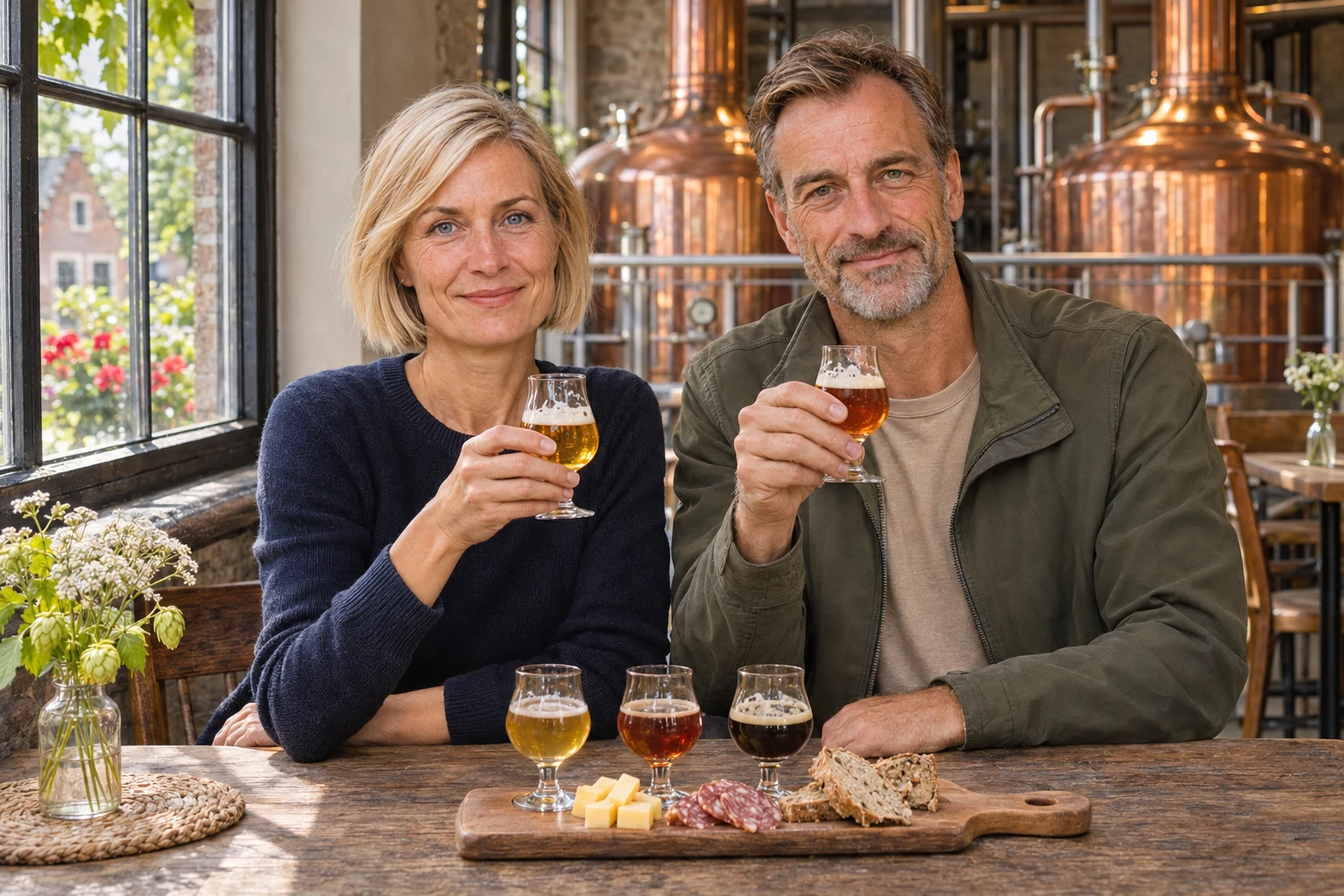
A visit to the breweries of Brussels and Mechelen
In Mechelen and Bruges there are breweries that welcome visitors to show the production. Before booking, read which spaces are part of the tour, the language of the talk and whether the tasting happens at the end. A factory visit makes sense for those who want to see the facilities and discuss the process. If you only have a lunch break you may prefer to try the local beer at the table.
How to look at a praline in Bruges
In a chocolate demonstration in Bruges, watch the thickness of the shell that stays in the mould before the filling goes in. It needs to hold when the bonbon is unmoulded and give on the first bite. The glossy finish and the snap of the chocolate gain another meaning after watching the work. In Brussels there are also workshops for those who want to try making them with their own hands.
Choose the experience for what you want to do. A museum such as the chocolate museum in Antwerp places the ingredient and production stages in context. A workshop requires more time in one place. Check whether the participant molds and fills the praline or watches a demonstration. To take chocolates on your trip, ask how to preserve the fillings and leave the purchase until the end of the visit.
What to order at the table in Ghent, Liège and Dinant
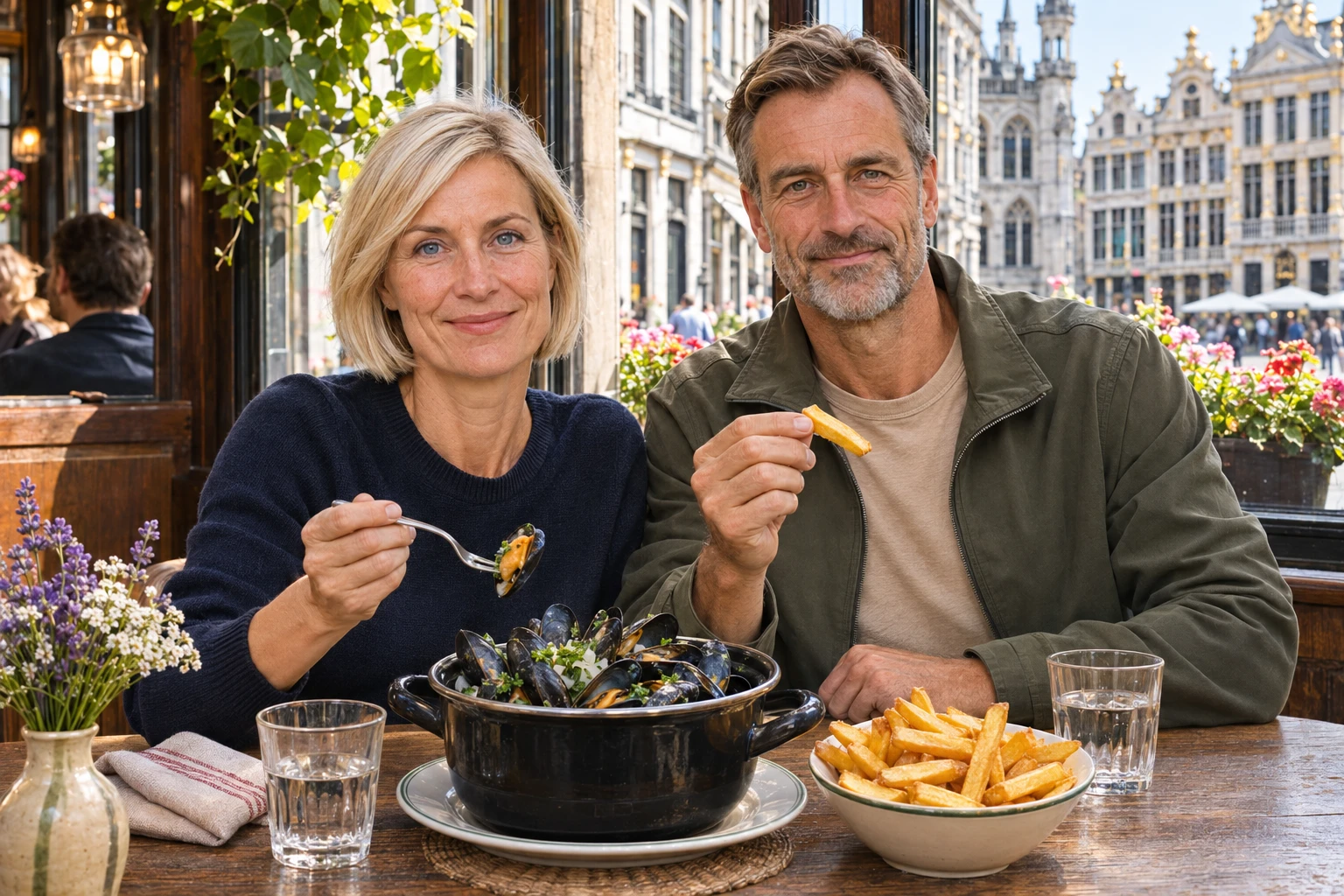
In Ghent, look for waterzooi when you have time for a sit‑down meal. The creamy stew changes the pace of the visit after a walk along the quays. In Liège, the gaufre has pearl sugar in the dough, which leaves small caramelized spots on the surface. Notice the pattern of the iron and the texture differences between the edge and the centre.
In Dinant, the couque catches the eye even in the shop window. It’s a firm biscuit made in moulds that leave embossed designs. Ask to see the motifs up close and ask how the family that makes it usually serves it. On a short itinerary, it’s worth trying a specialty where it’s made and saving another town for the next meal.
Beyond the guide


