Oudenaards bruin
A brown beer from Oudenaarde in eastern Flanders. The traditional version undergoes mixed fermentation and has a sweet-and-sour flavor. Oudenaards bruin is recognized as a Flemish regional product.
Antarctica
Sports · Oudenaarde
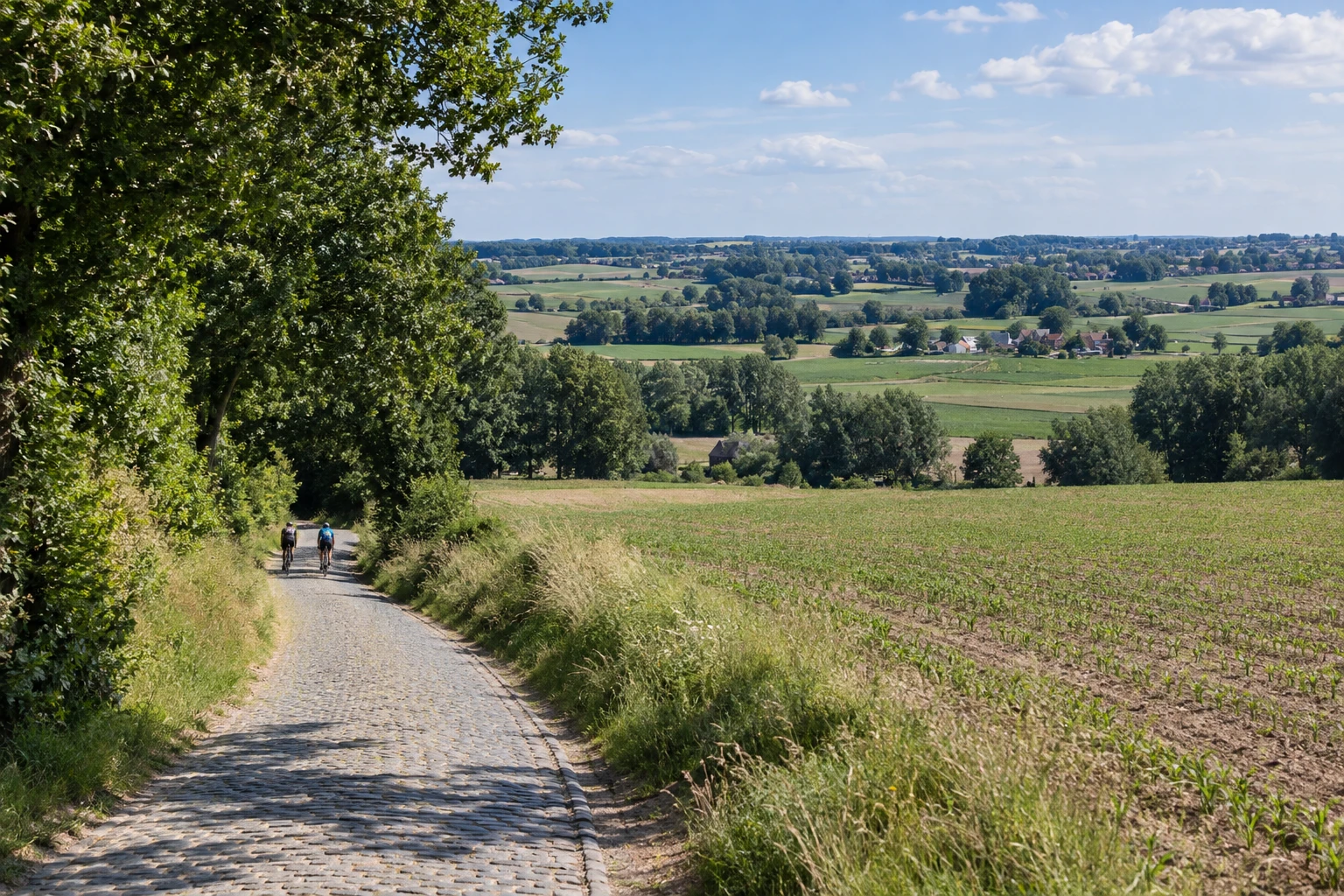
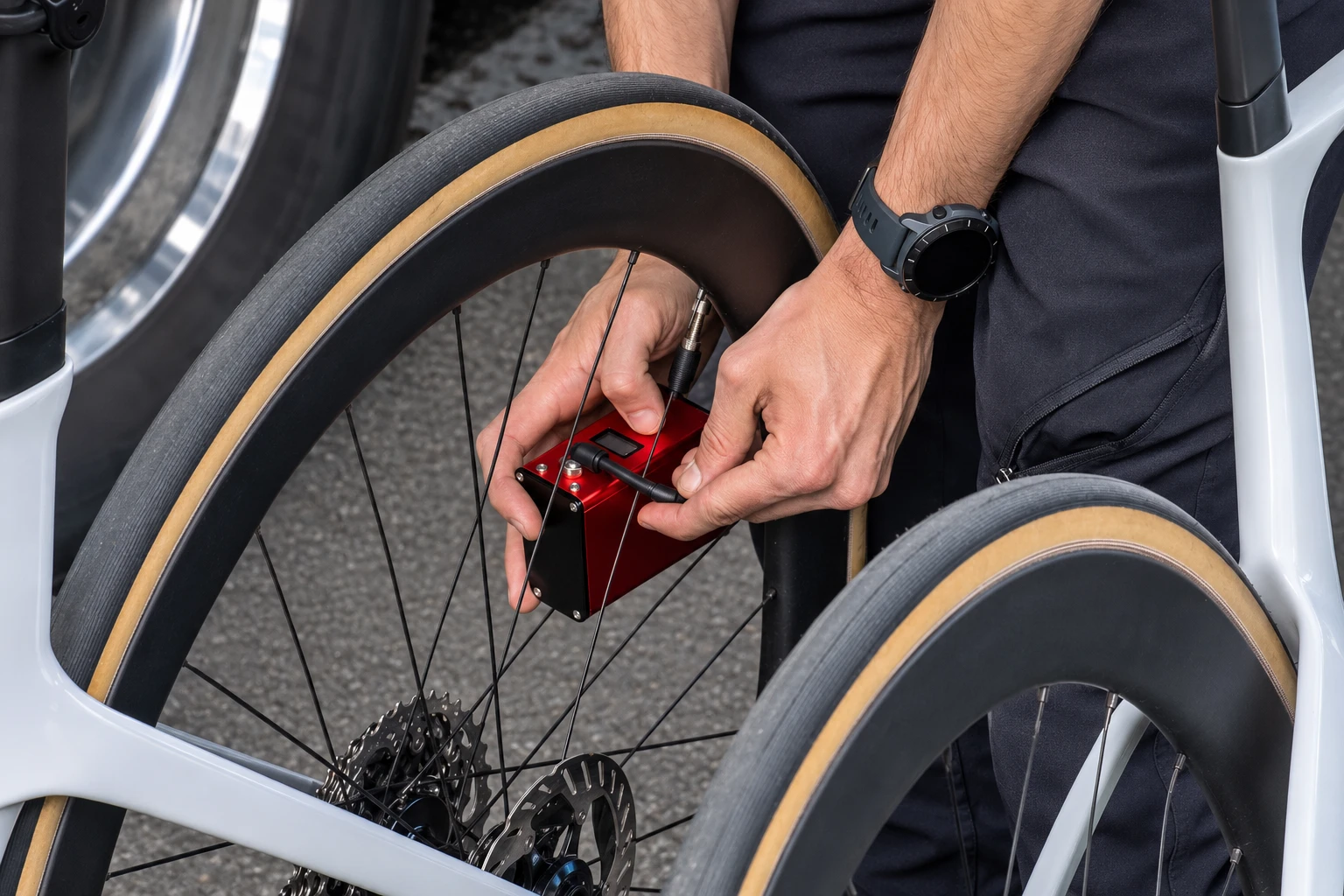
The Tour of Flanders, one of Belgium’s cycling classics, finishes in Oudenaarde, in the heart of the Flemish Ardennes, after taking on cobbled climbs such as the Oude Kwaremont and the Paterberg. On race weekend, the whole city celebrates cycling.
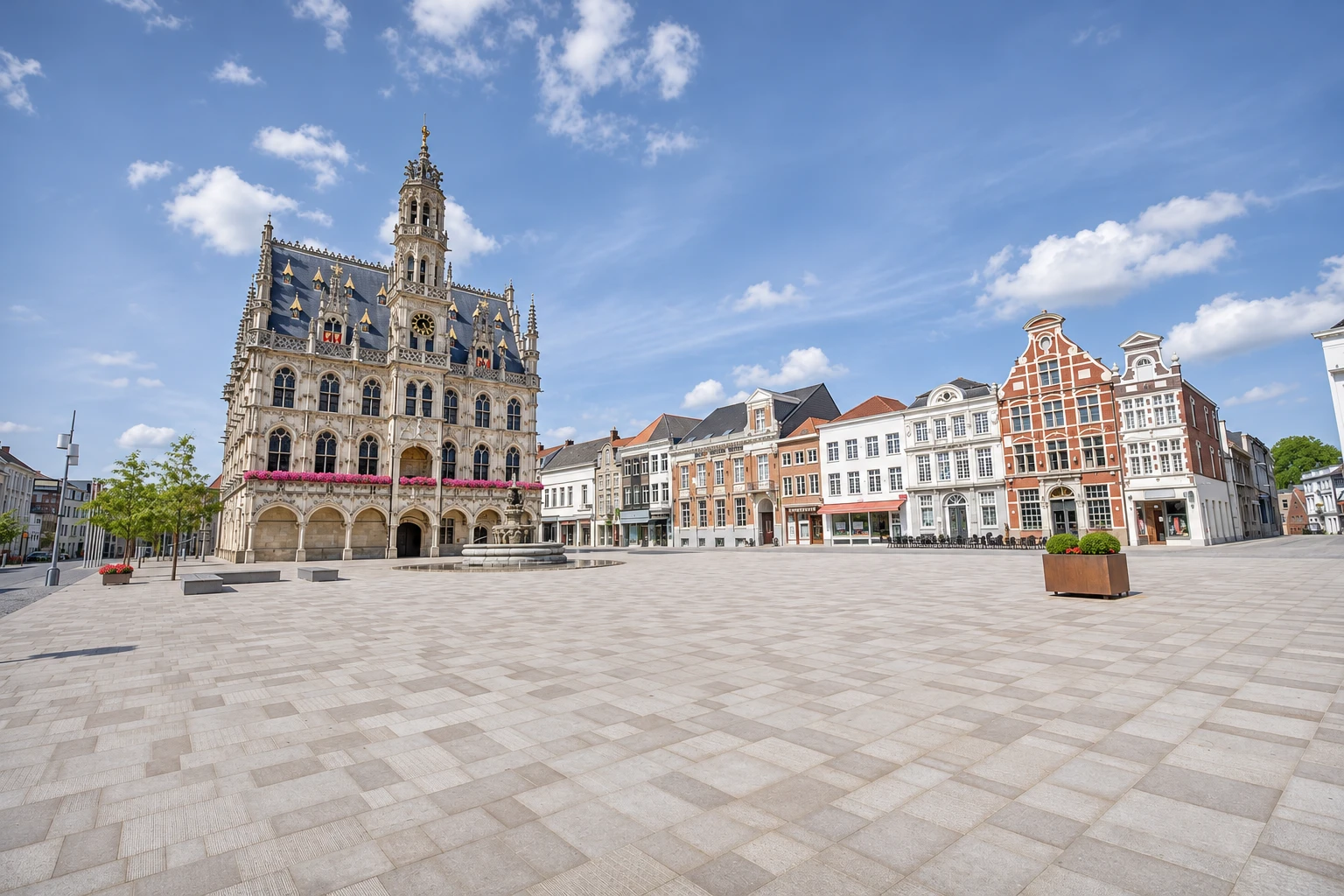
In the photo: Oudenaarde
Illustrative images. The pictures in this guide are illustrations based on the real place, not photographs, and may differ from it.
Click the picture to enlarge it.
Tour of Flanders — Oudenaarde
On a Sunday in early April or late March, with events in Oudenaarde starting on Saturday.
March/April
Dates change every year: check this year's date before you travel.
The festival
First held in 1913, the Ronde van Vlaanderen is one of the world’s great cycling classics. This one-day race crosses Flanders and is decided in the hills of the Flemish Ardennes, on short, steep cobbled climbs.
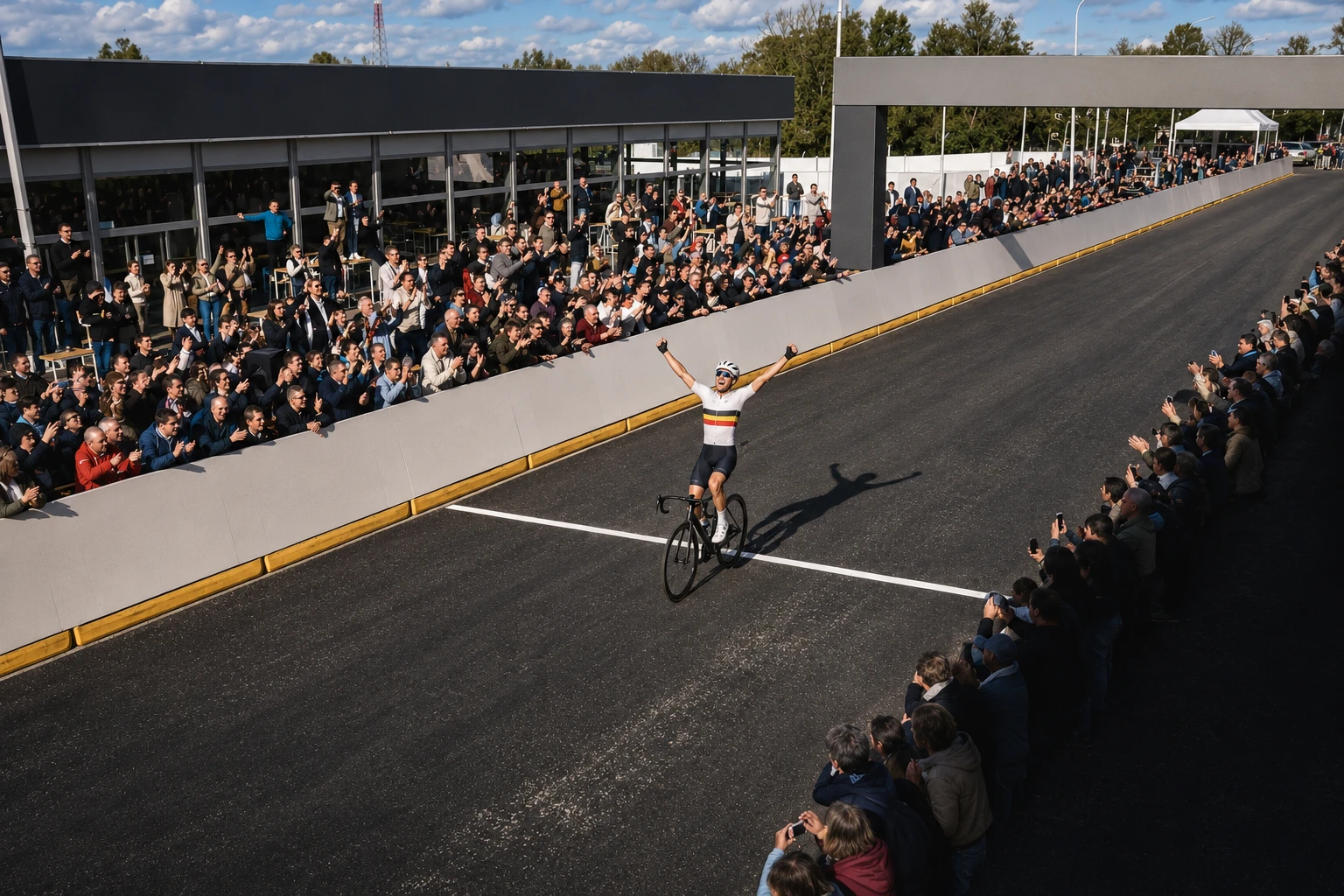
Since 2012, the race has finished in Oudenaarde, a historic tapestry-making town on the banks of the Scheldt, amid these hills. It is also home to the Tour of Flanders Centre, a museum next to the market square dedicated to the race and to Flemish cycling culture.
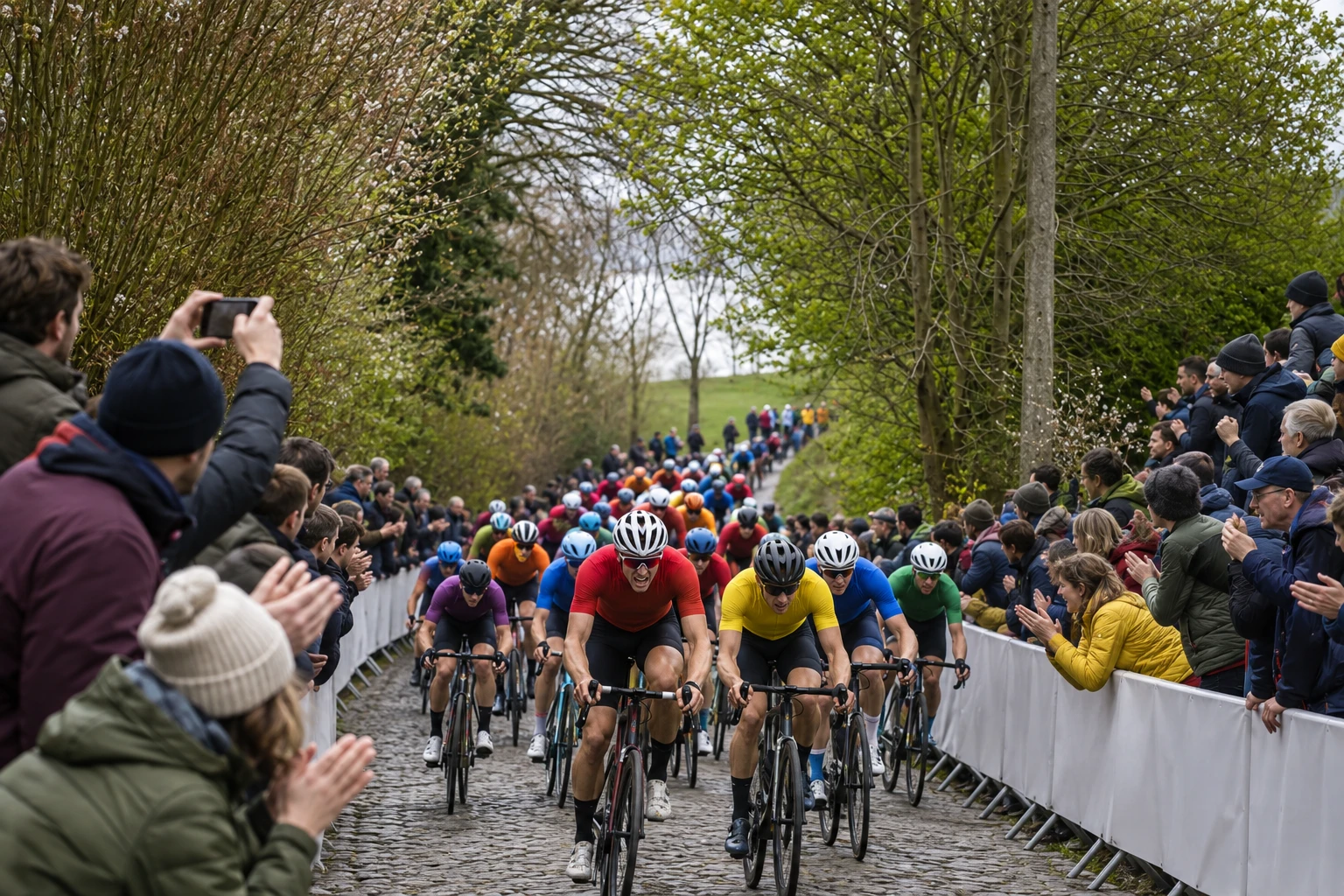
The weekend begins on Saturday, when amateur cyclists ride sections of the course as part of We Ride Flanders. On Sunday, the women’s race starts in Oudenaarde’s market square, and the men’s race reaches town in the afternoon after hours on the road. Spectators gather along climbs such as the Oude Kwaremont, the Paterberg and the Koppenberg to watch the riders pass.
For the Flemish, watching the Ronde from the roadside with friends and a beer is a family tradition, and many people choose the same climb every year.
It’s worth the trip to experience Belgian cycling’s big day, ride the famous climbs and explore Oudenaarde and the Flemish Ardennes.
The riders passing on a cobbled climb such as the Oude Kwaremont or the Paterberg. The finish on Minderbroedersstraat in Oudenaarde. The Tour of Flanders Centre, the museum dedicated to the race. The We Ride Flanders ride on Saturday, if you’d like to cycle.
Choose a climb where you can watch the riders pass and get there early, or watch the race from the finish area. Check the race guide for special bus services and directions to the spectator areas. Bring a waterproof jacket for the April weather in Flanders.
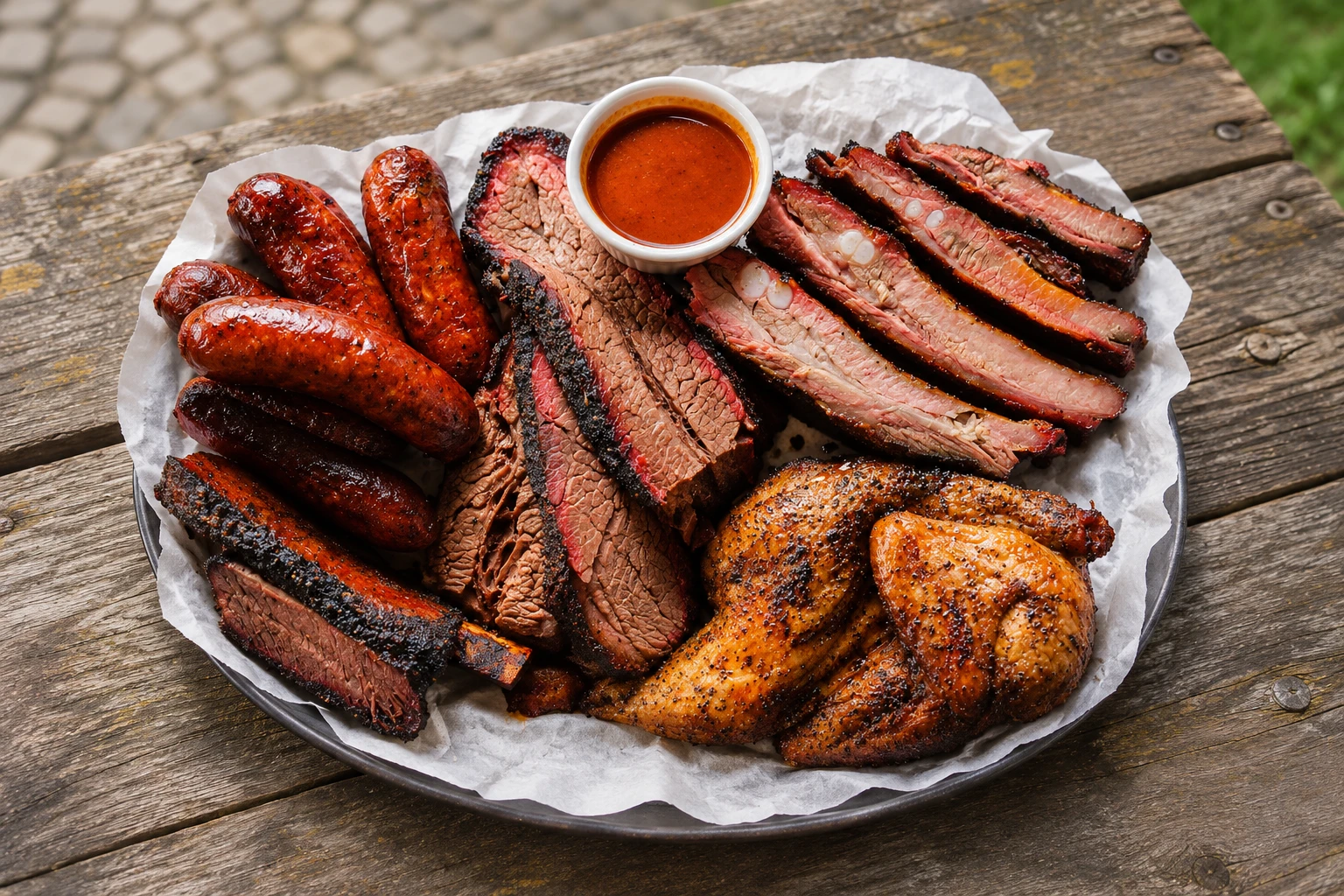
Fries, sausages and barbecued meat at the food stands along the climbs, and Oudenaarde’s brown beer, Oudenaards bruin.
Check the race website for the date and route. Book accommodations in or around Oudenaarde well in advance. There is train service between Ghent and Oudenaarde.
In the city
Flavors of Belgium
March/April
February/MarchFrom Carnival Sunday to Shrove Tuesday, the three days before Ash Wednesday, in February or March depending on the date of Easter.
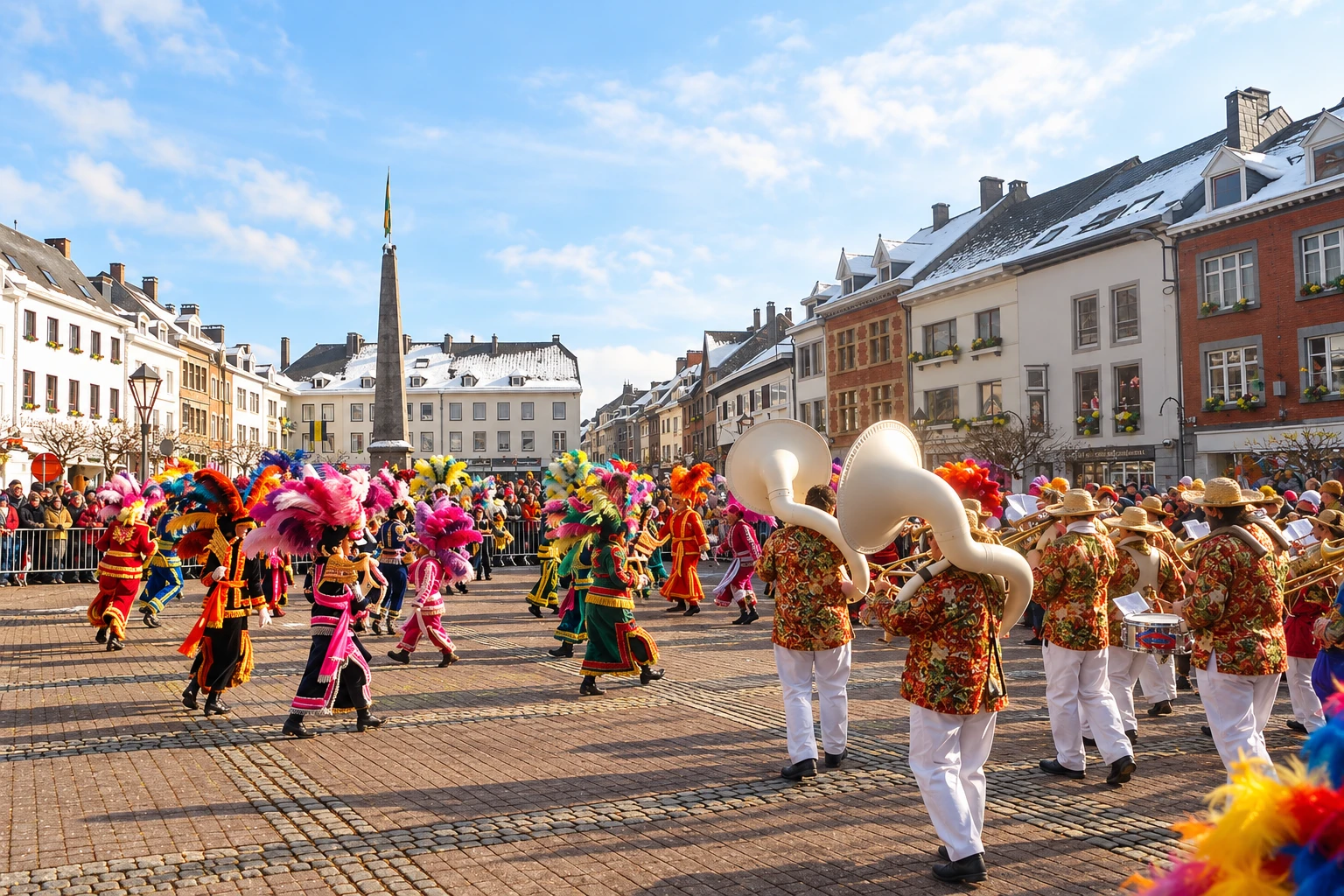
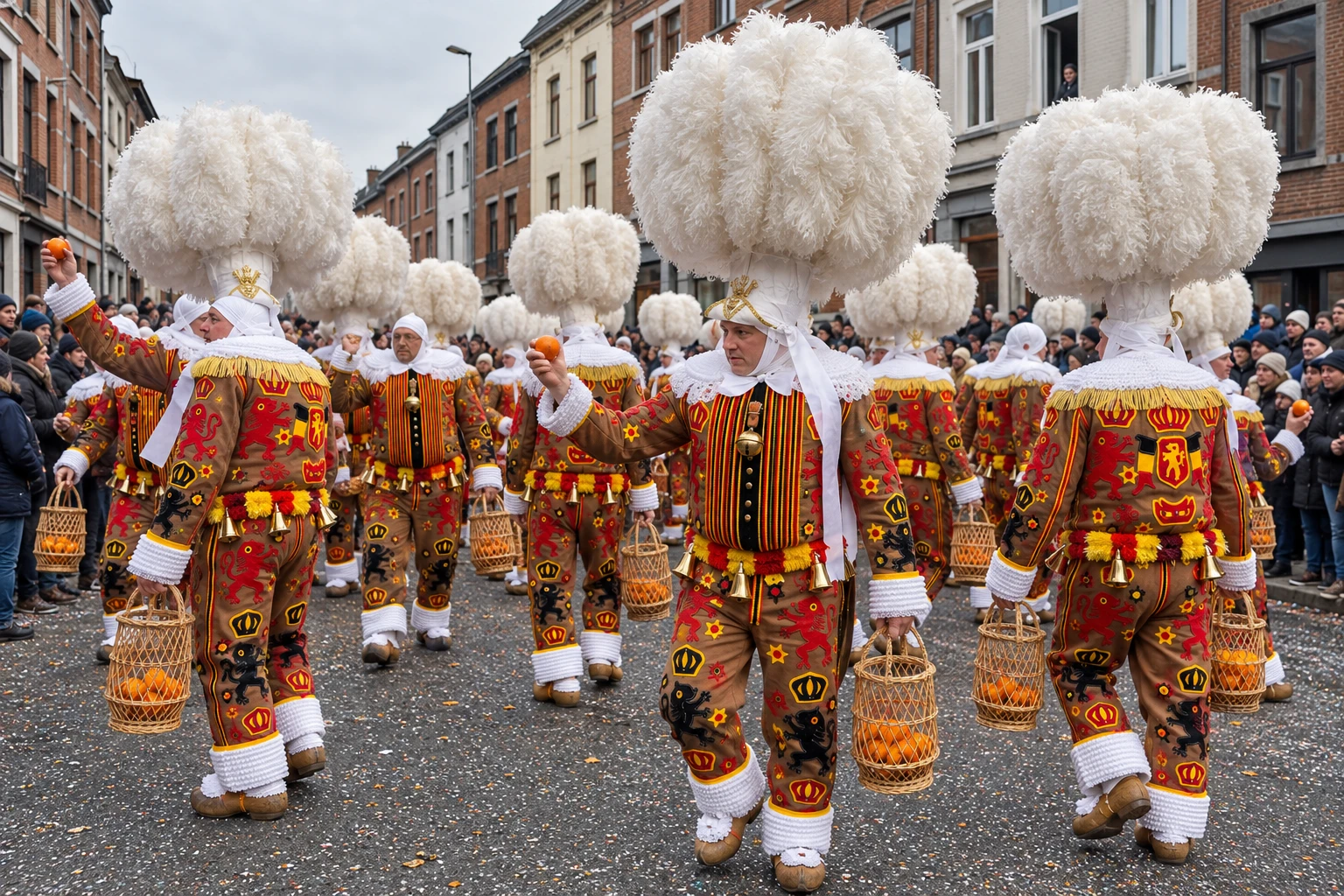
The Binche carnival, in the province of Hainaut, culminates on Shrove Tuesday with the Gilles, figures wearing wax masks and ostrich-feather hats who dance through the streets to the sound of drums and throw oranges to the crowd.
February/MarchFrom Saturday to midnight on Fat Tuesday, before the start of Lent, in February or March, depending on the date of Easter.
The Cwarmê is Malmedy’s carnival, in the Ardennes: four days when masked figures such as the Haguètes take to the streets, everything is spoken and sung in Walloon, up to the burning of the Haguète on the final night.
February/MarchIn the days leading up to Ash Wednesday, with the main parade on Carnival Monday.
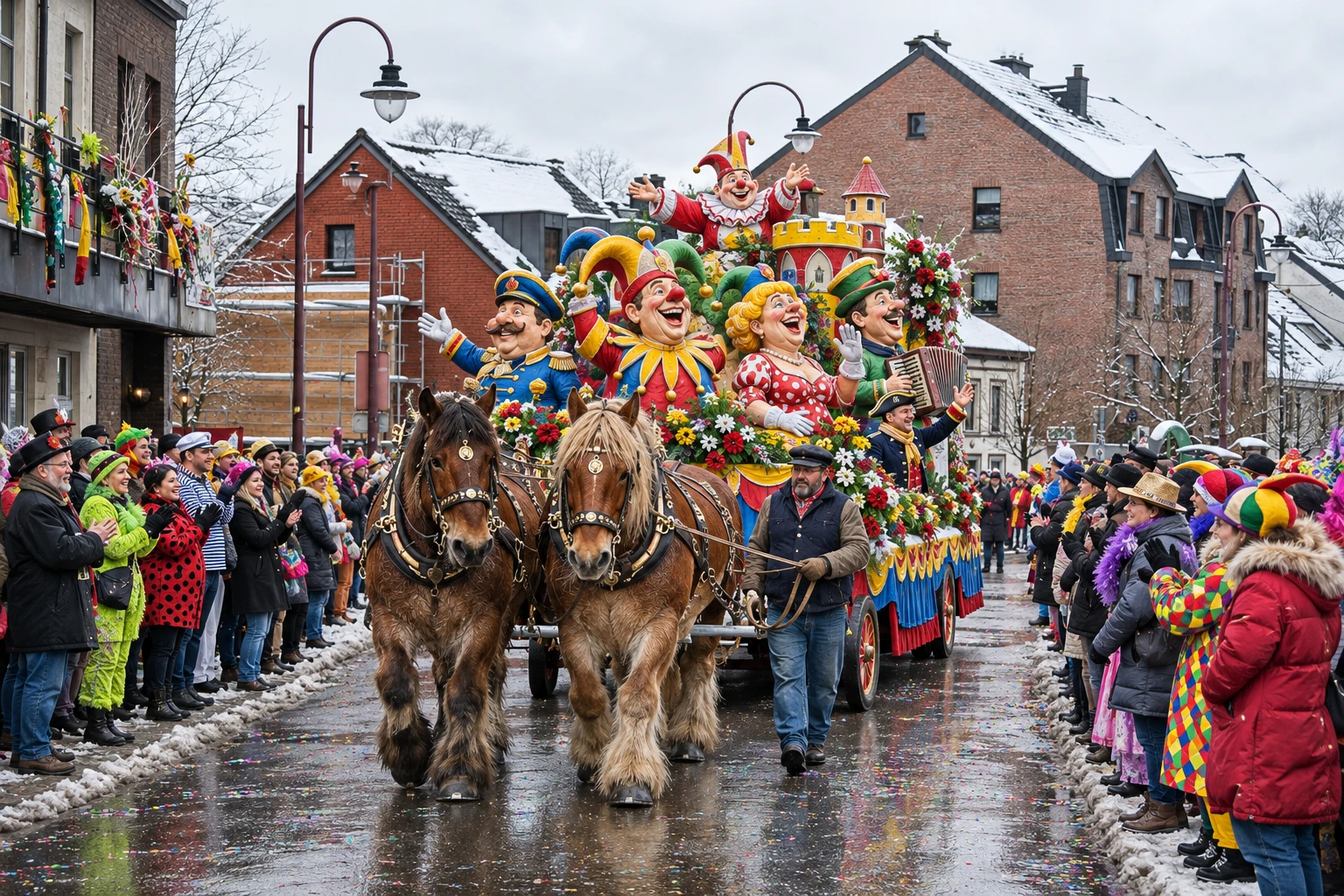
Eupen, the capital of Belgium’s German-speaking Community, celebrates Carnival in the Rhineland tradition, with a prince, guards and the cry of “Alaaf!” On Carnival Monday, the city hosts one of the largest parades in eastern Belgium, with floats, bands and groups in costume.
Your questions
The race has finished in Oudenaarde, in the Flemish Ardennes, since 2012. The finish line is near the town center, and the women’s race starts in the market square.
On a Sunday in early April or late March. On the Saturday before the race, amateur cyclists ride sections of the course as part of We Ride Flanders.
On cobbled climbs such as the Oude Kwaremont and the Paterberg, or in the finish area in Oudenaarde. Before you head out, check the race guide for access routes and special bus services.
Festivals and events in Belgium
March/AprilOn Laetare Sunday, the fourth Sunday of Lent, three weeks before Easter, in March or early April; from Saturday to Monday.
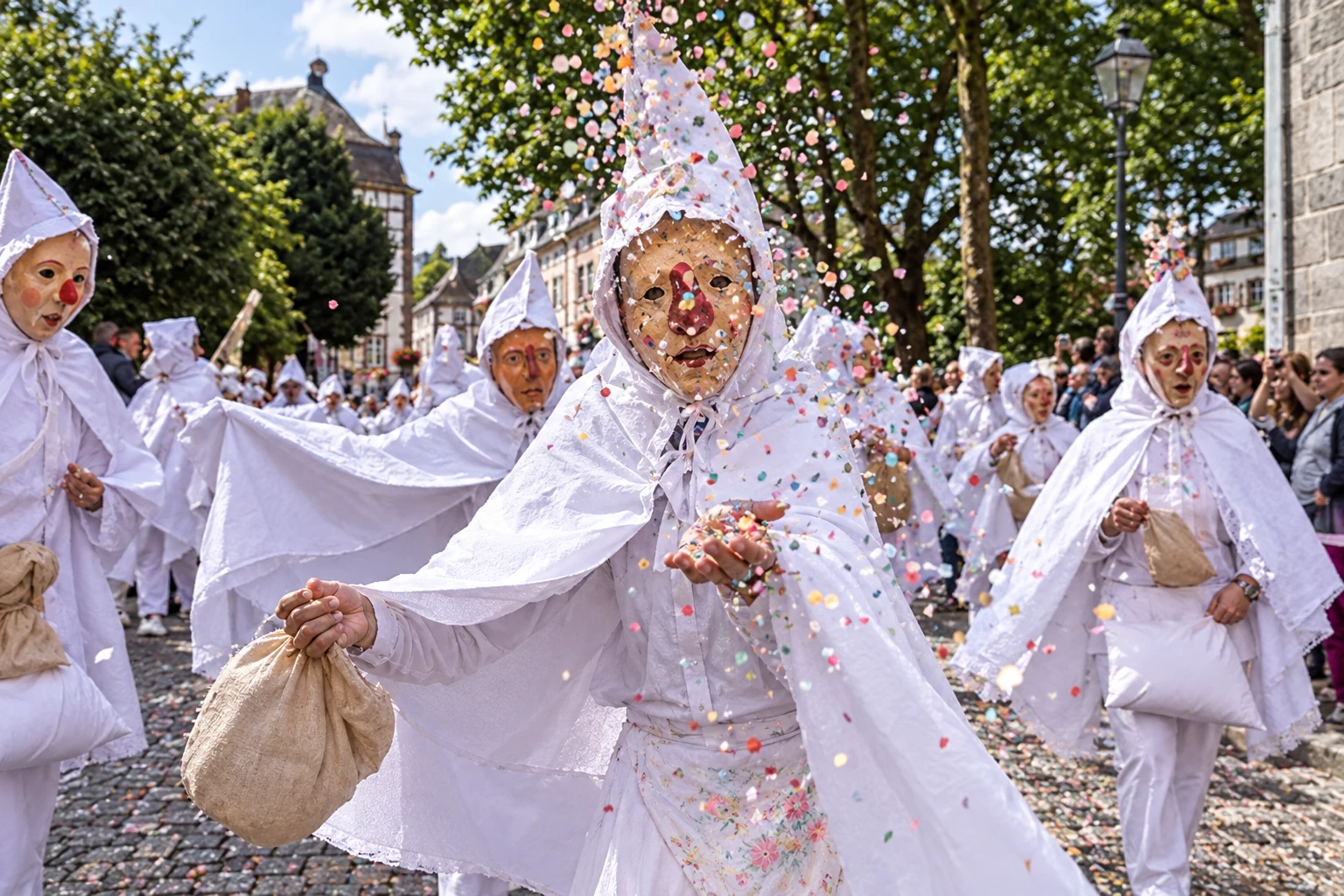
Three weeks before Easter, Stavelot celebrates Laetare with the Blancs Moussis, figures dressed in white with long red-nosed masks who go through the town throwing confetti at the crowd.
May/JuneOn the weekend of the Holy Trinity, the Sunday after Pentecost, between May and June, depending on the date of Easter.
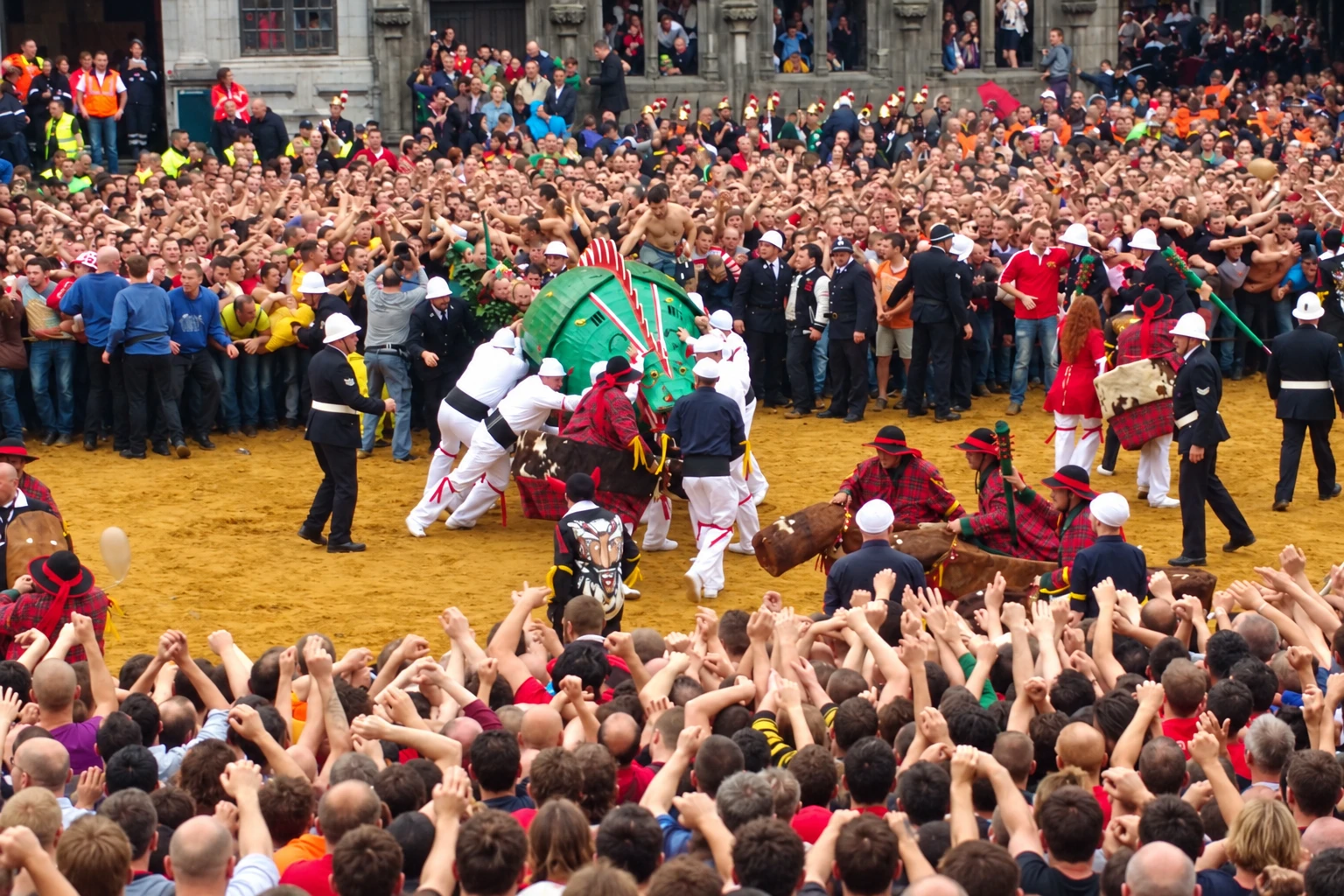
On Trinity weekend, Mons carries the relic of Saint Waltrude on a gilded carriage through the streets and stages the Lumeçon, Saint George’s fight with the dragon, on the Grand-Place.
MayEvery three years, on the second Sunday in May. · Every three years
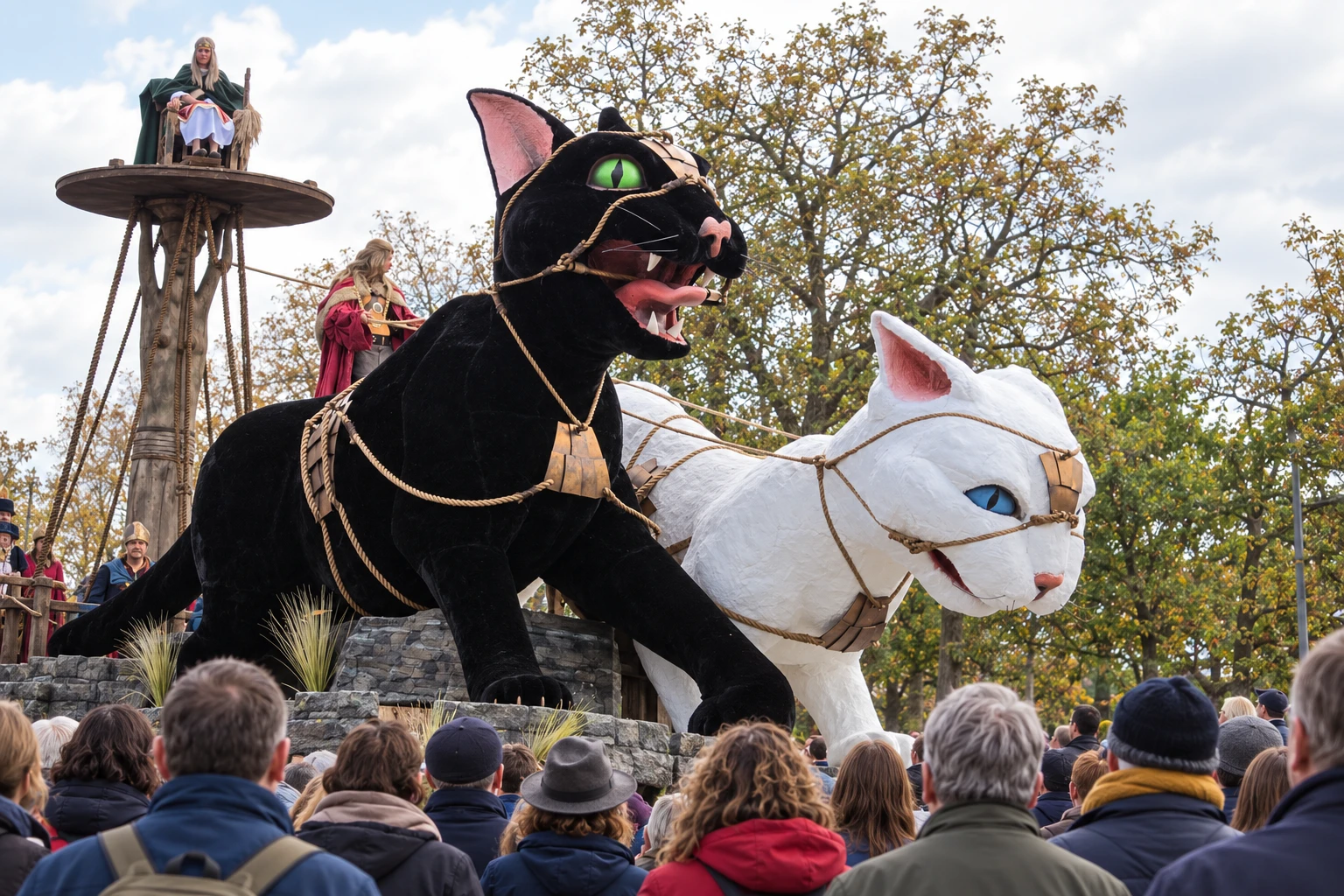
Every three years, on the second Sunday in May, Ypres celebrates cats with the Kattenstoet, a parade of floats, giants and costumes that culminates with the town jester throwing stuffed cats from the Lakenhalle bell tower.
May/June/July/August/September/OctoberFrom May to October, on weekends and public holidays, depending on the schedule for each march.
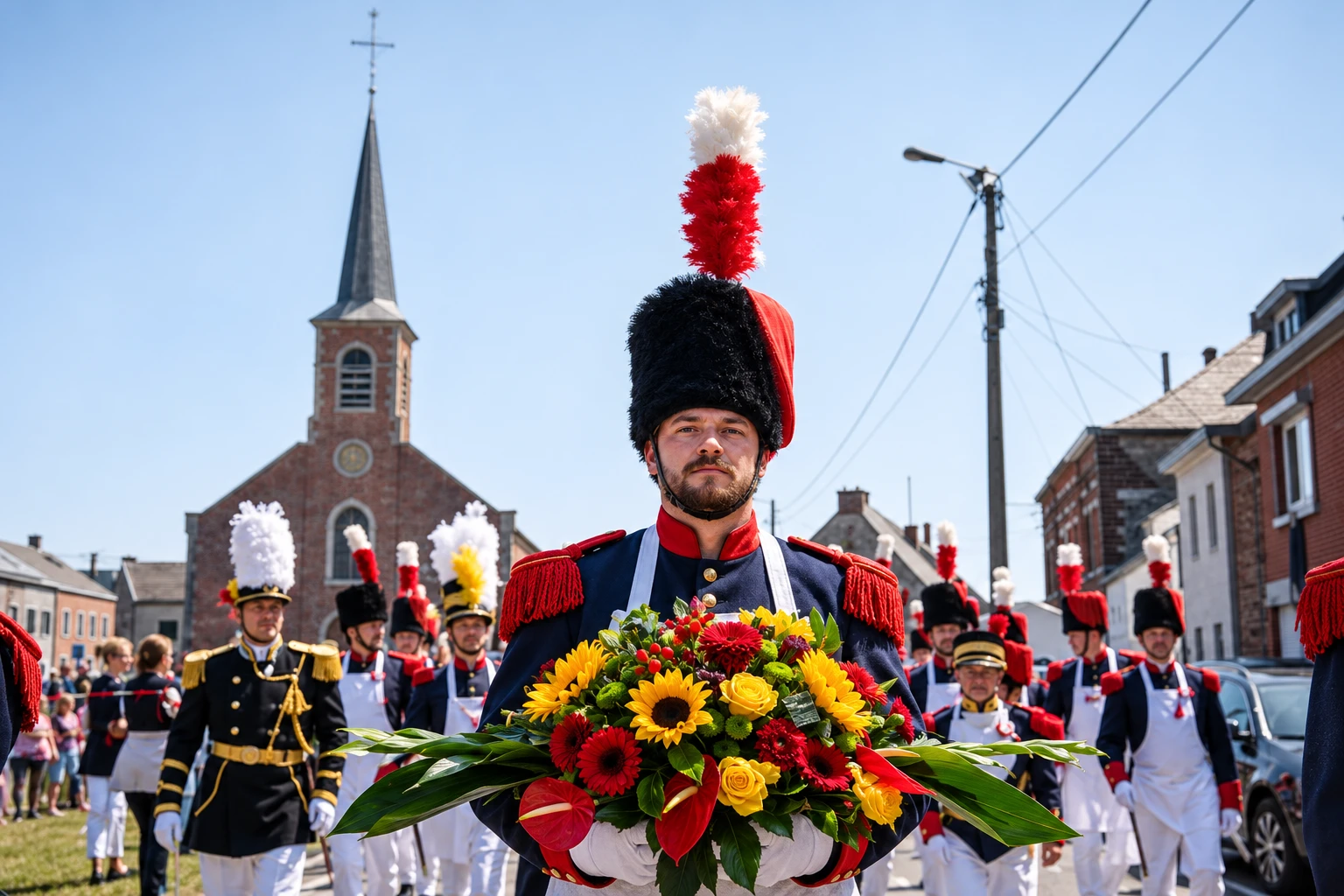
From May to October, villagers between the Sambre and Meuse rivers in southern Wallonia take part in processions to the sound of drums, fifes, and blank gunfire. Companies of marchers escort them in uniforms inspired by those of the First and Second French Empires. Fifteen of these marches are on UNESCO’s Intangible Cultural Heritage list.
May/JuneOn Ascension Day, a Thursday forty days after Easter, in May or early June.
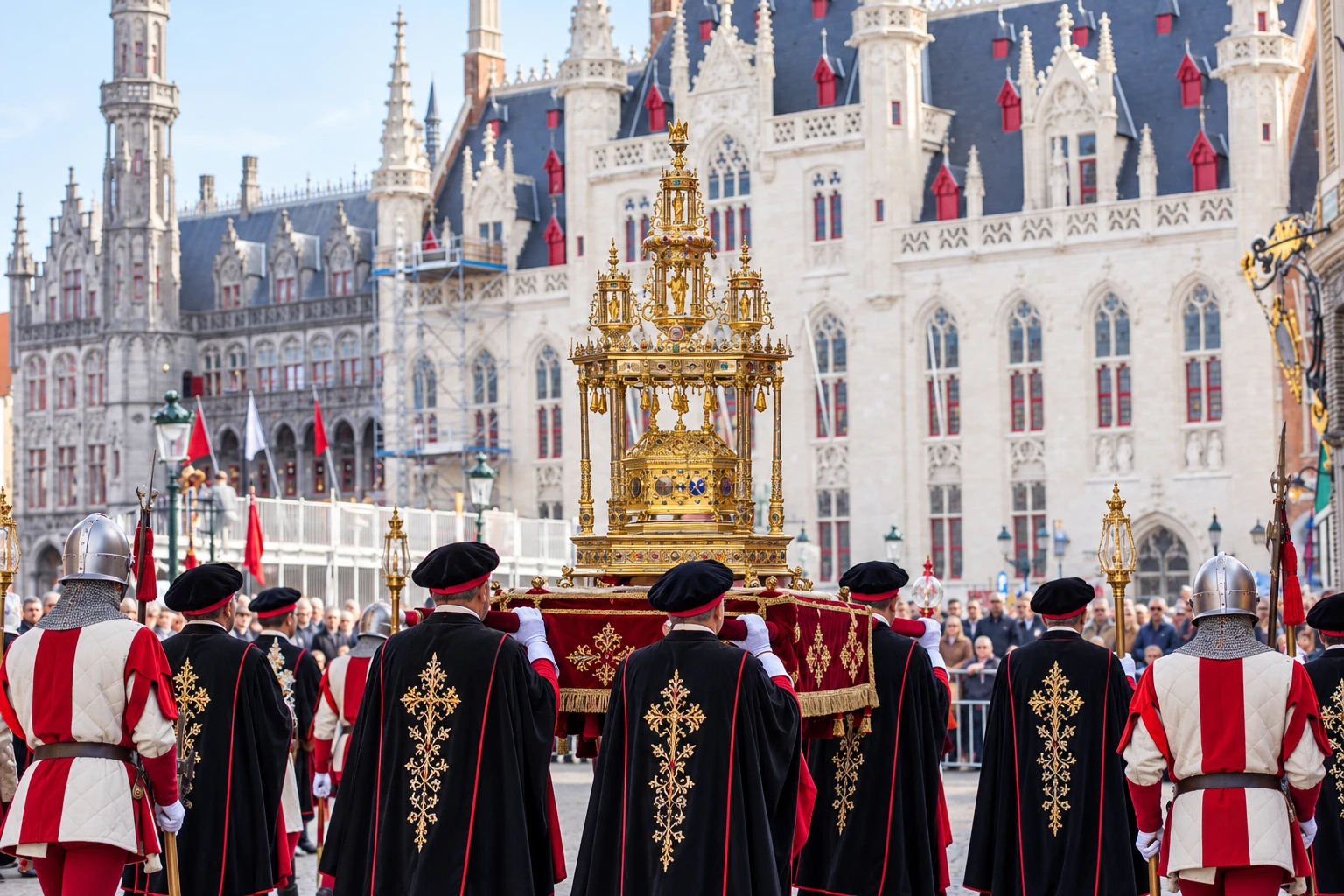
On Ascension Day, the relic of the Holy Blood is carried out of the basilica on Burg Square and processes through Bruges’ medieval centre in a parade with biblical scenes, singing, music and horses, an intangible UNESCO heritage event.
June/JulyOver two nights between late June and early July.
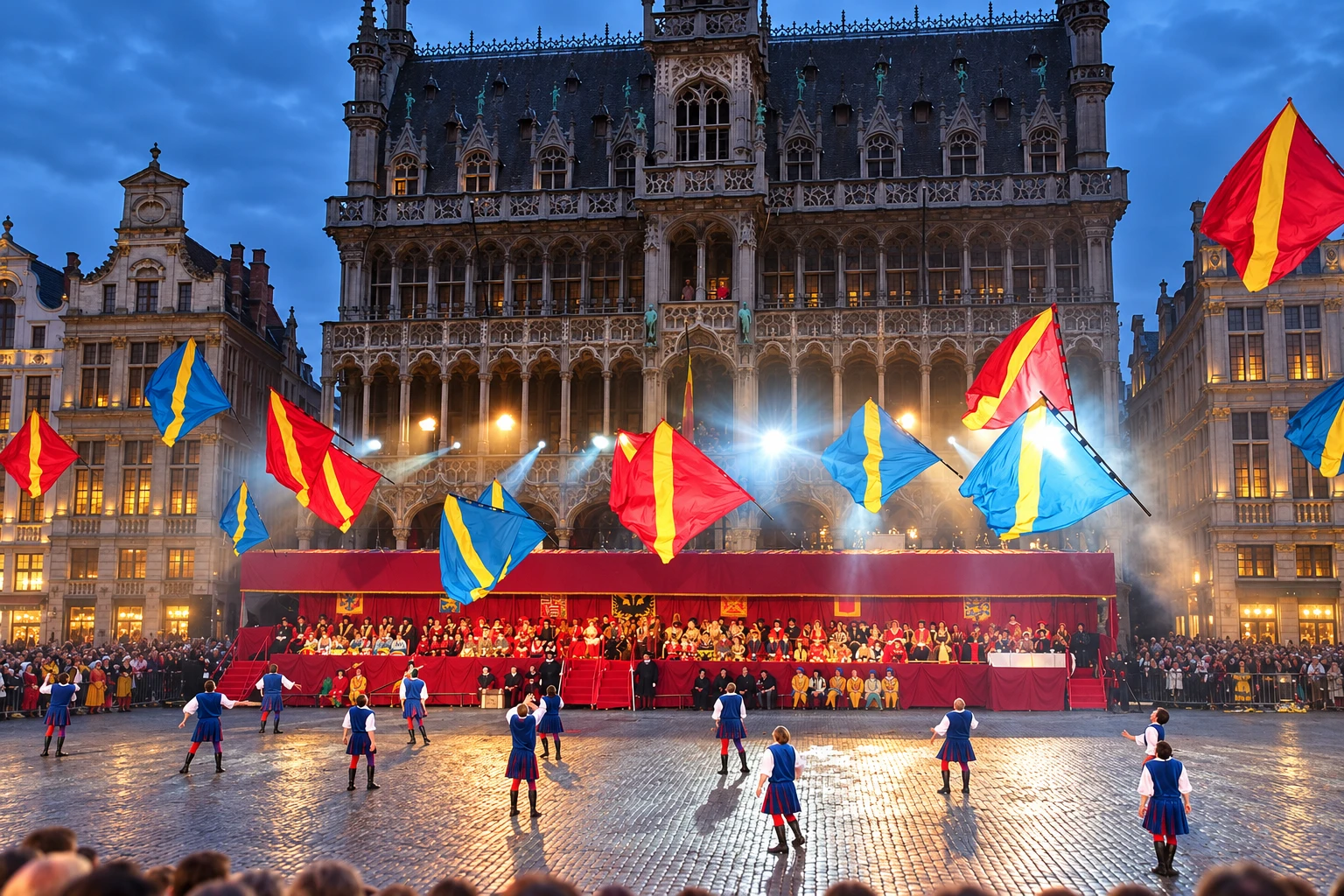
On two early-summer nights, the Ommegang brings hundreds of participants in 16th-century costumes from the Sablon to Brussels’ Grand-Place, recreating the celebration held for Emperor Charles V in 1549.