Brussels · Brussels · Square
Grand-Place
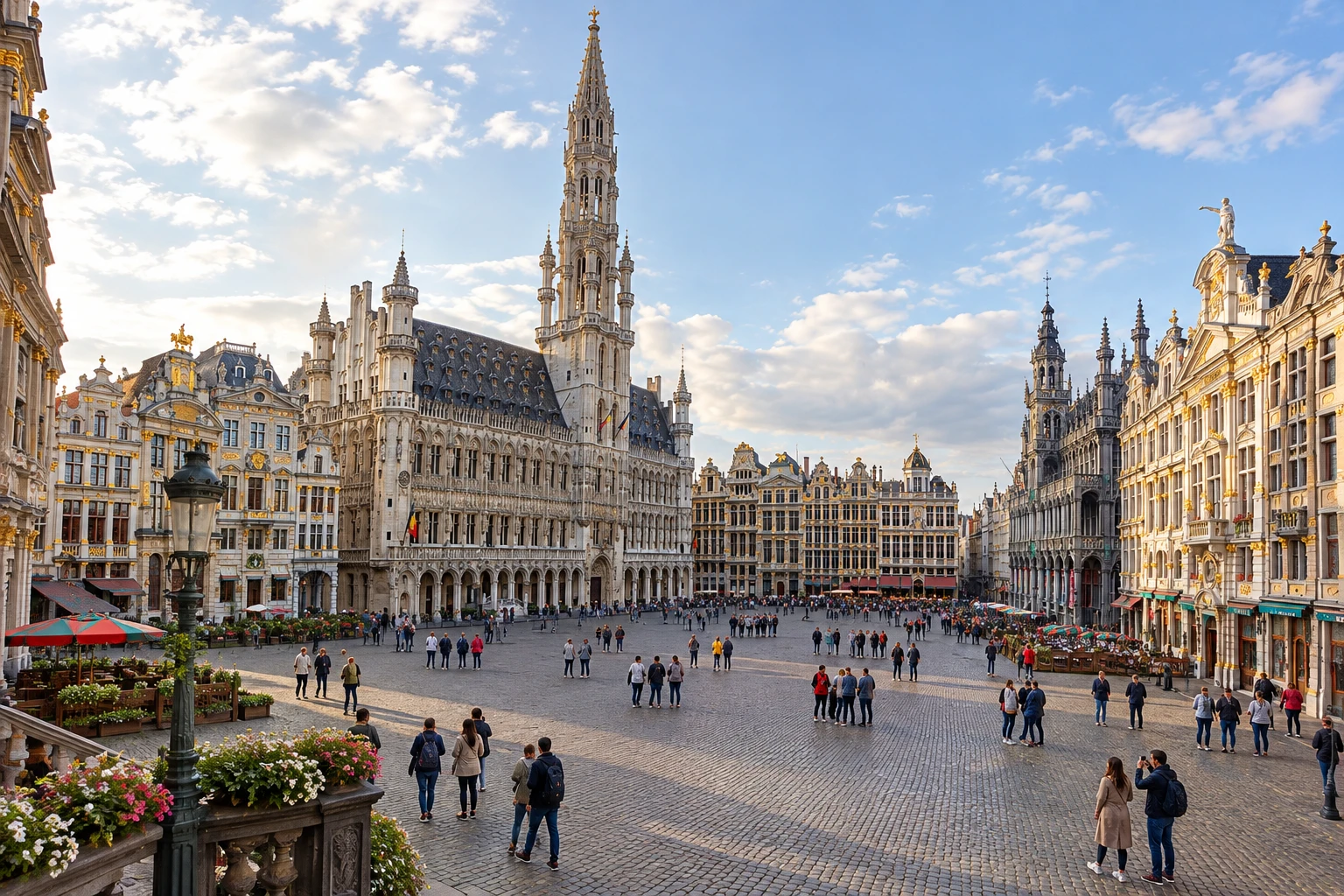
Bruxelas's central square, a UNESCO World Heritage site, with the Gothic town hall, the Maison du Roi and the gilded façades of the guild houses.

 Search
 Brazil
 Antarctica
 Argentina
 Bolivia
 Chile
 Colombia
 Ecuador
 Falkland Islands (Malvinas)
 French Guiana
 Guyana
 Paraguay
 Peru
 Suriname
 Uruguay
 Venezuela
 AustriaBelgium
 Croatia
 Denmark
 Finland
 France
 Germany
 Greece
 Hungary
 Iceland
 Ireland
 Italy
 Luxembourg
 Norway
 Poland
 Portugal
 Slovakia
 Slovenia
 Spain
 Sweden
 Switzerland
 the Czech Republic
 the Netherlands
 the United Kingdom
 Turkey
 Bermuda
 Canada
 Greenland
 Mexico
 Saint Pierre and Miquelon
 the United States
 the Dominican Republic
 JapanTurkey
 Egypt
 South Africa
 Australia
 Fiji
 New Zealand
 Papua New Guinea
Brussels · Walloon Brabant
22 places to visit and 16 tours, chosen by the Cidade Turismo guide.
Updated
Illustrative images. The pictures in this guide are illustrations based on the real place, not photographs, and may differ from it.
To start
One by one
Bruxelas's central square, a UNESCO World Heritage site, with the Gothic town hall, the Maison du Roi and the gilded façades of the guild houses.
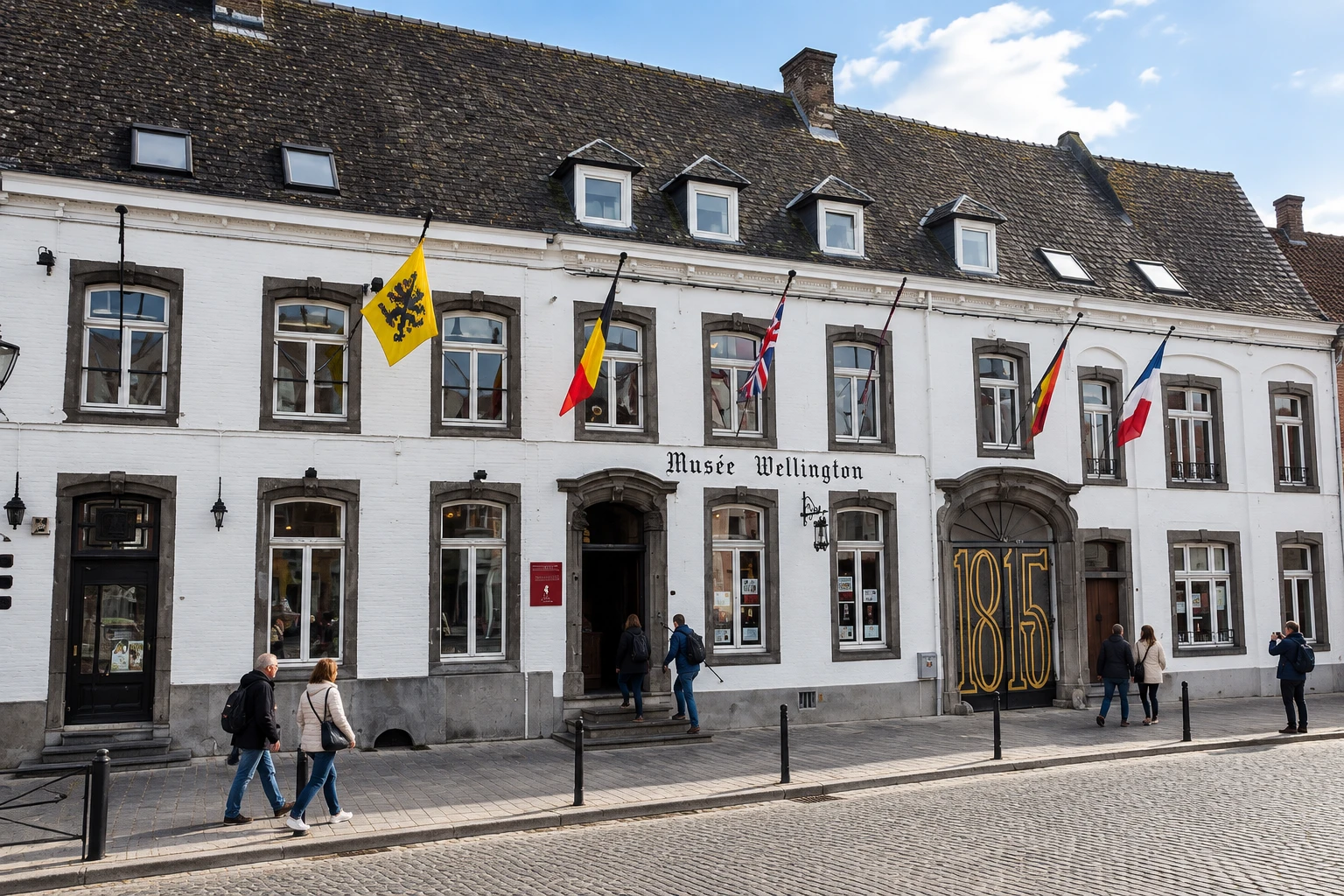
Museum in the former inn where the Duke of Wellington set up his headquarters and wrote the victory communiqué in June 1815, in the centre of Waterloo.
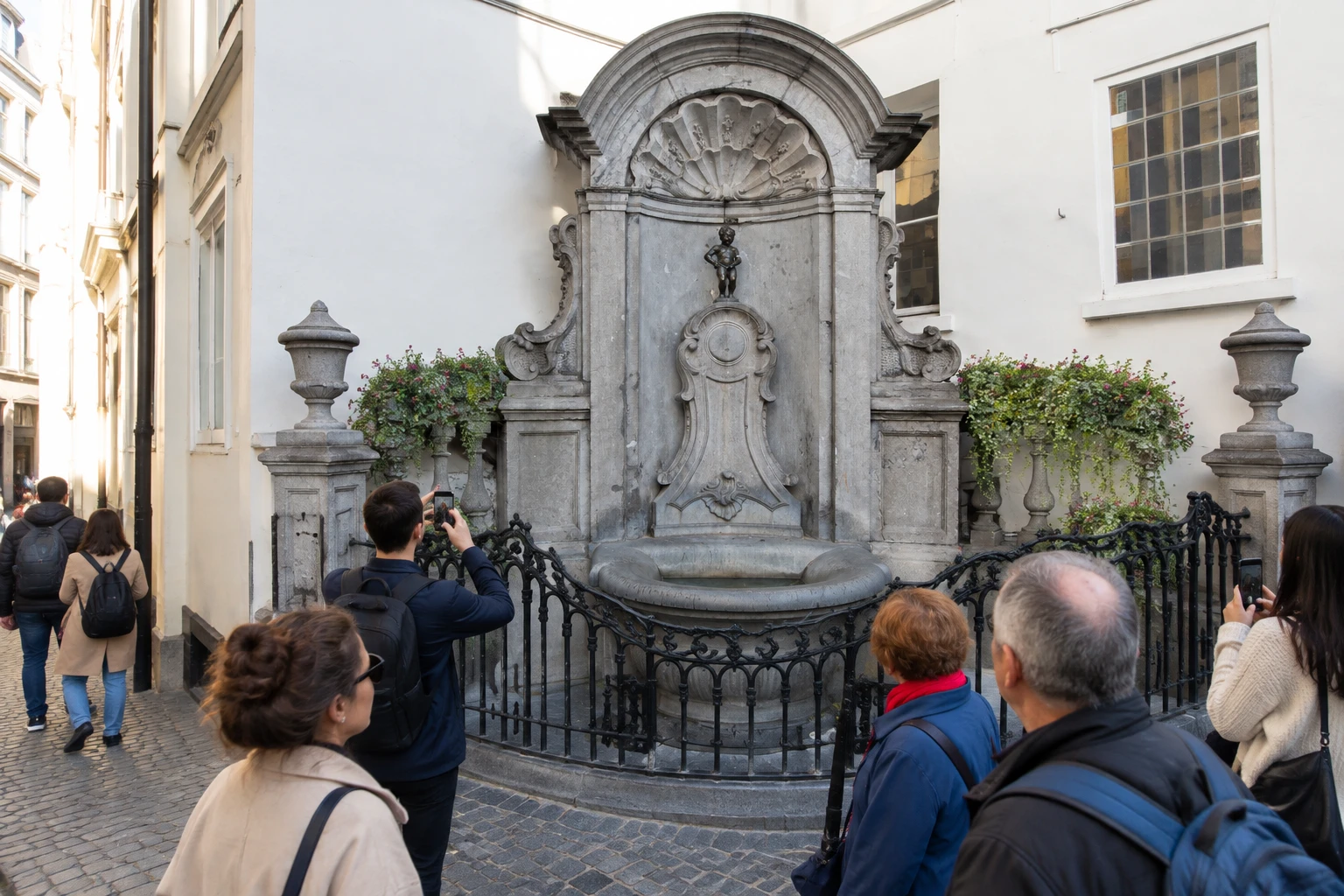
A small bronze statue of a boy urinating into a fountain, at a corner in the centre. It has a wardrobe of around a thousand costumes, displayed in a nearby museum.
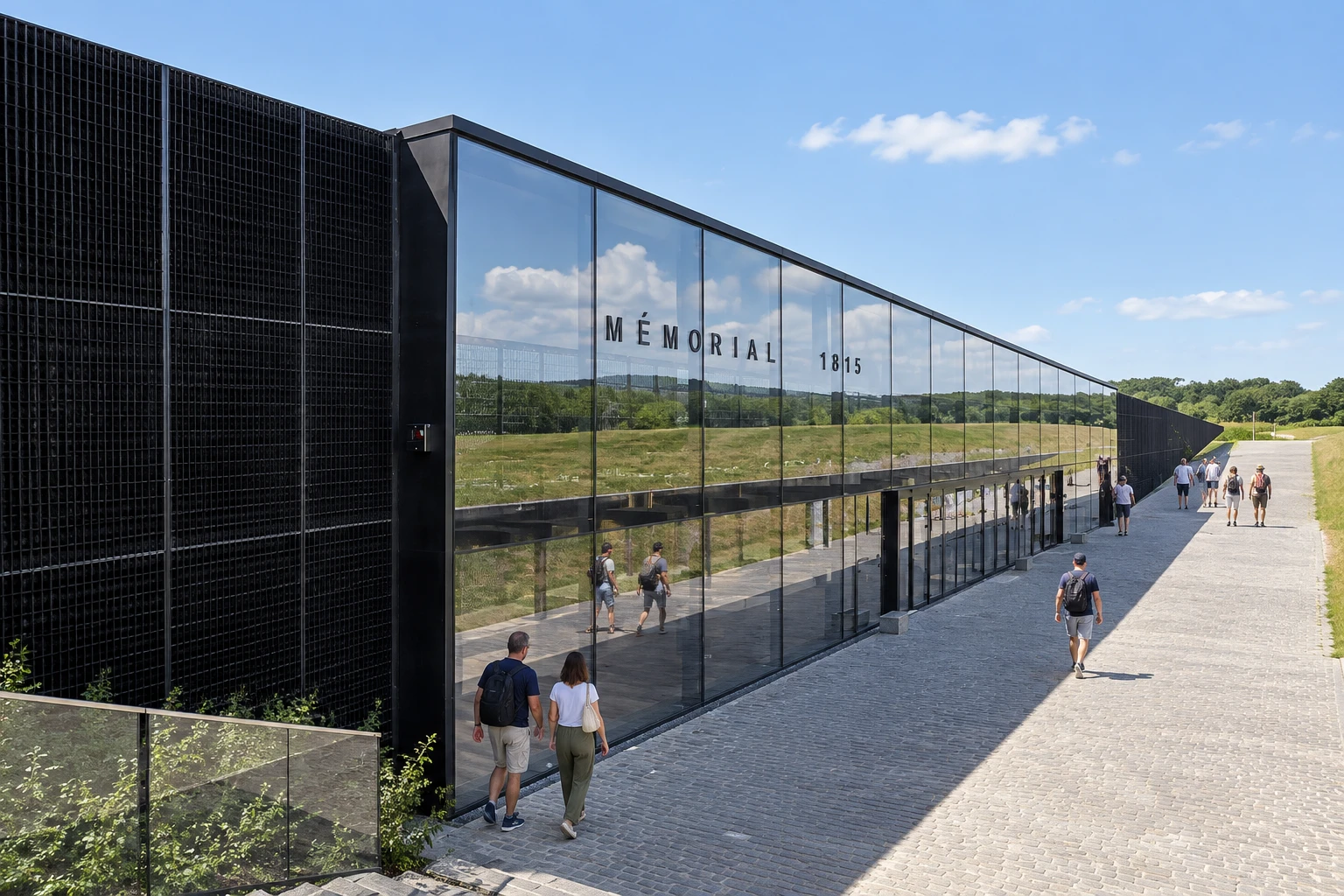
Museum on the Waterloo battlefield, at the foot of the Butte du Lion. It tells the story of the 1815 campaign with a 3D film, uniforms and animated maps, and provides access to the Panorama painted in 1912.
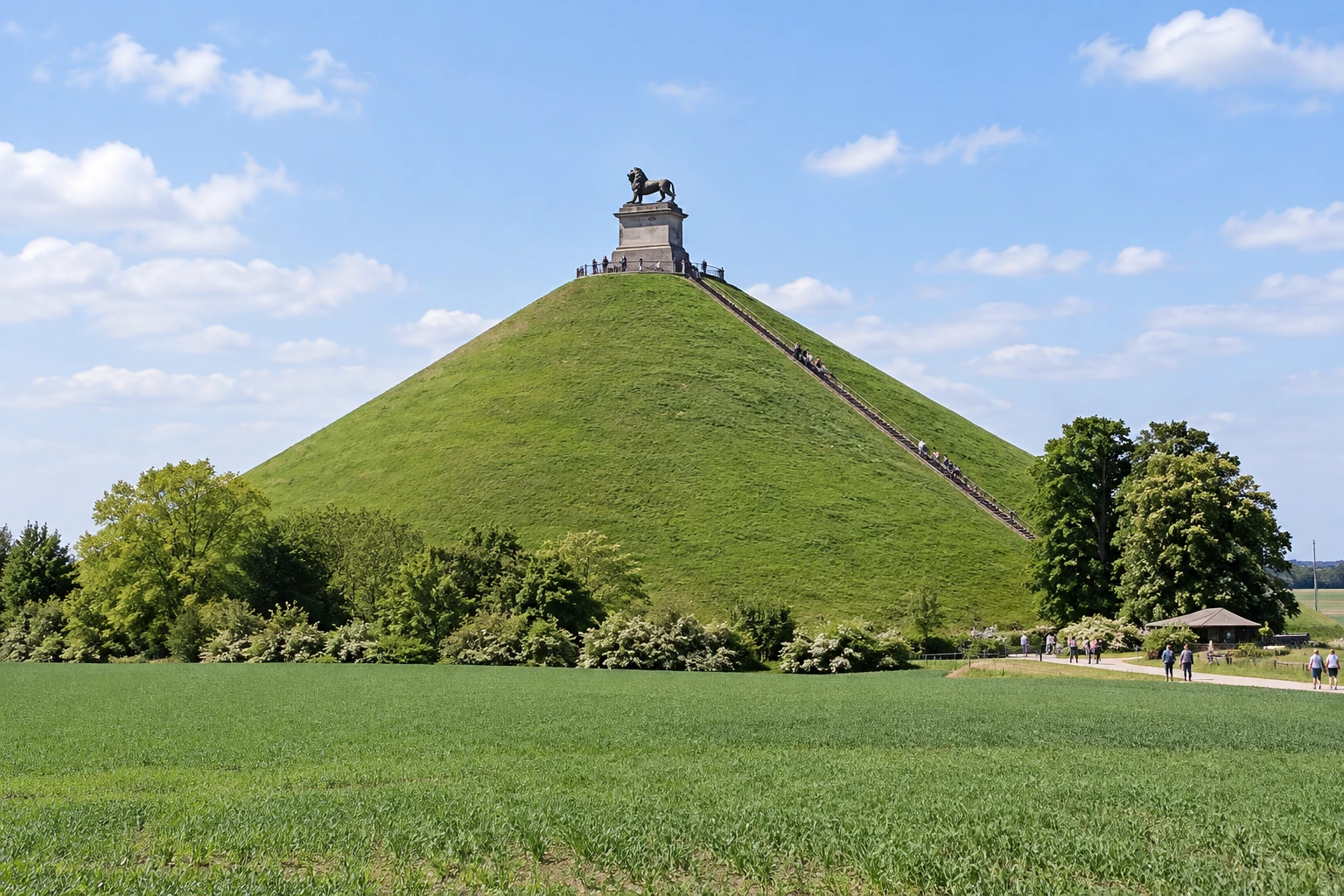
Artificial hill 43 metres high, with 226 steps, erected between 1823 and 1826 on the Waterloo battlefield. At the top, a cast-iron lion and a view over the whole battlefield.
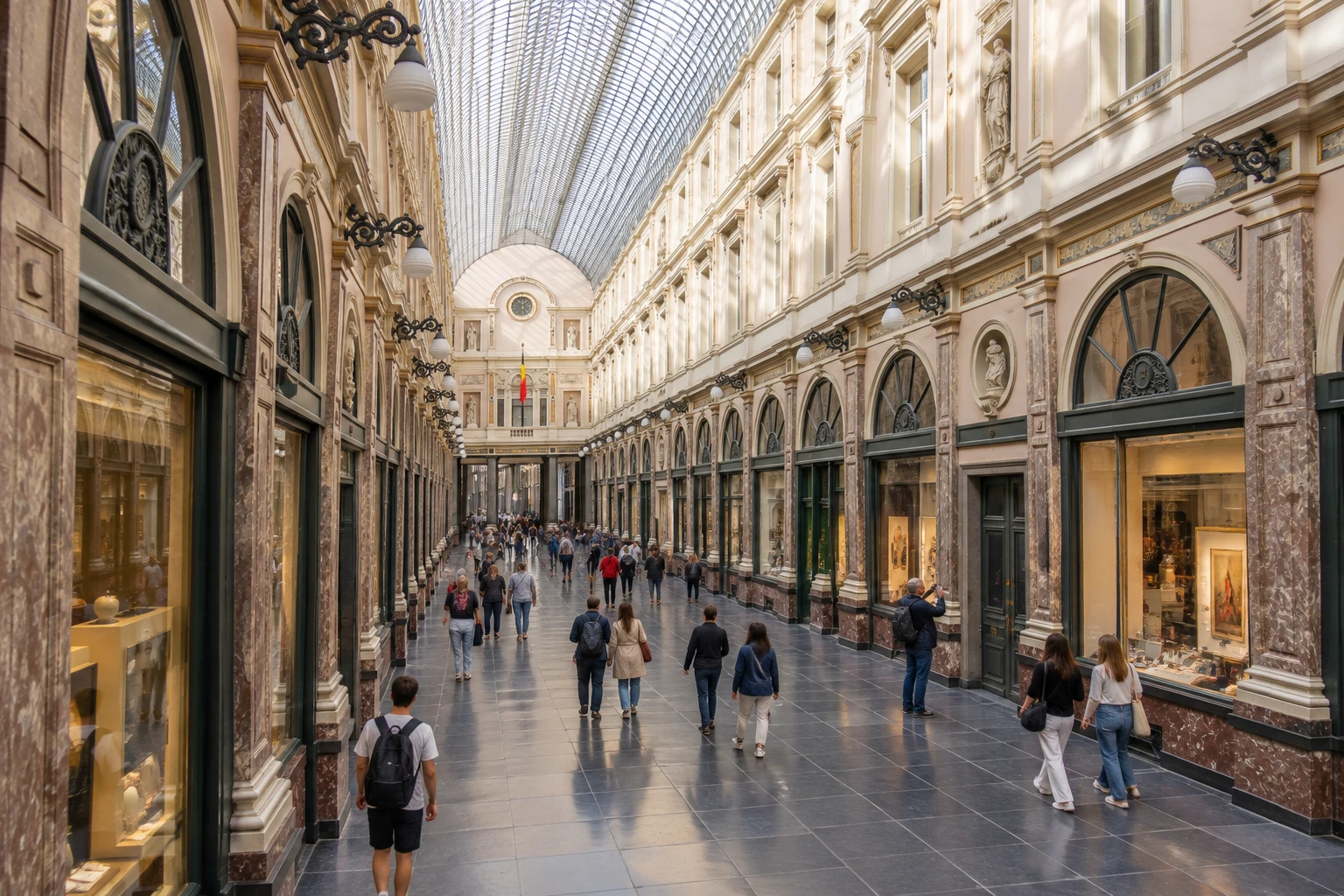
Passages covered by a glass roof, opened in 1847 next to the Grand-Place, with chocolatiers, bookstores, cafés, a theatre and a cinema.
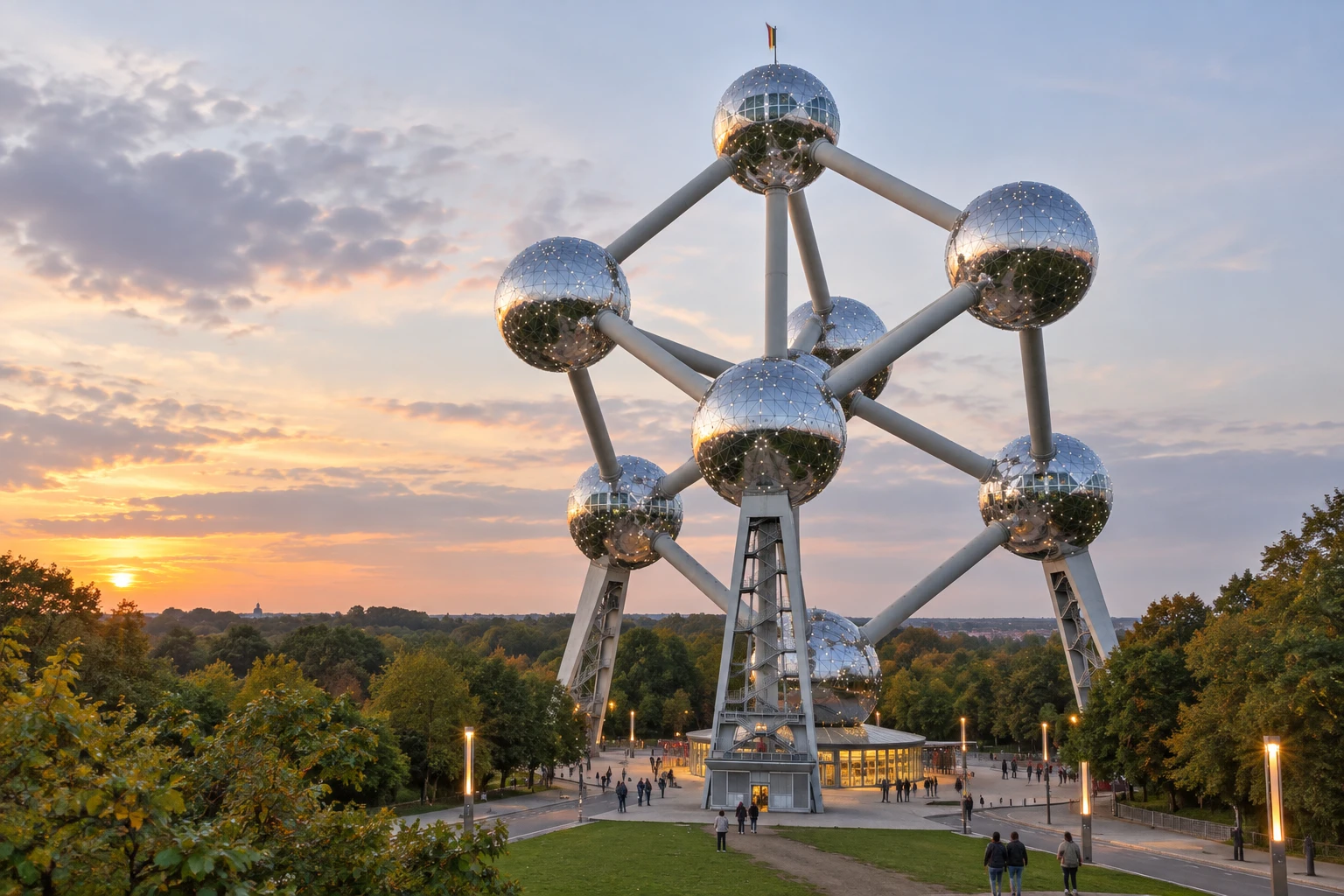
A 102-metre structure built for the 1958 World's Fair, representing an iron crystal enlarged 165 billion times. It has exhibitions and a city view from the highest sphere.
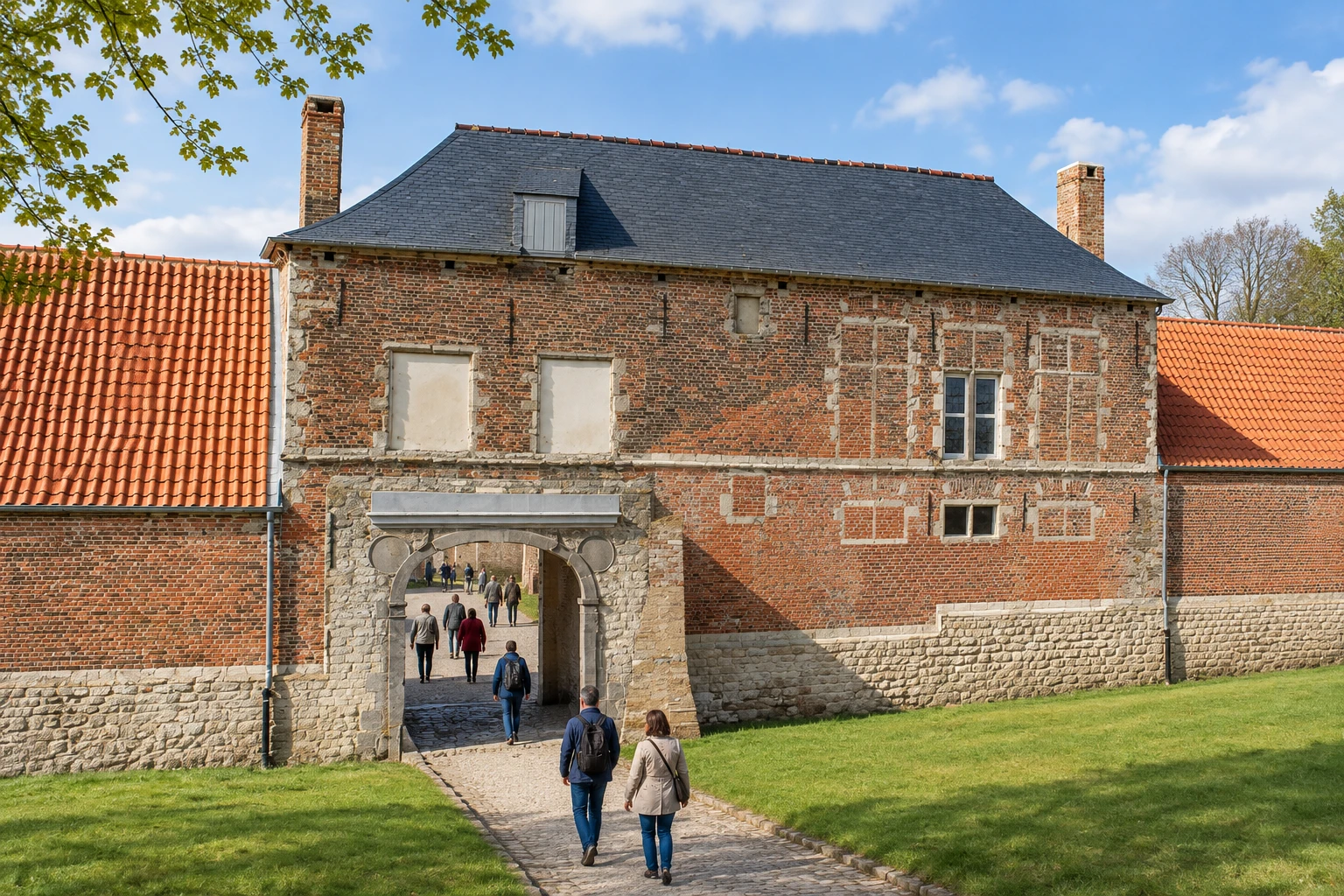
Fortified farm that the allies defended throughout the day of the Battle of Waterloo. Restored, it houses a museum with a multimedia show and a chapel that survived the fire.
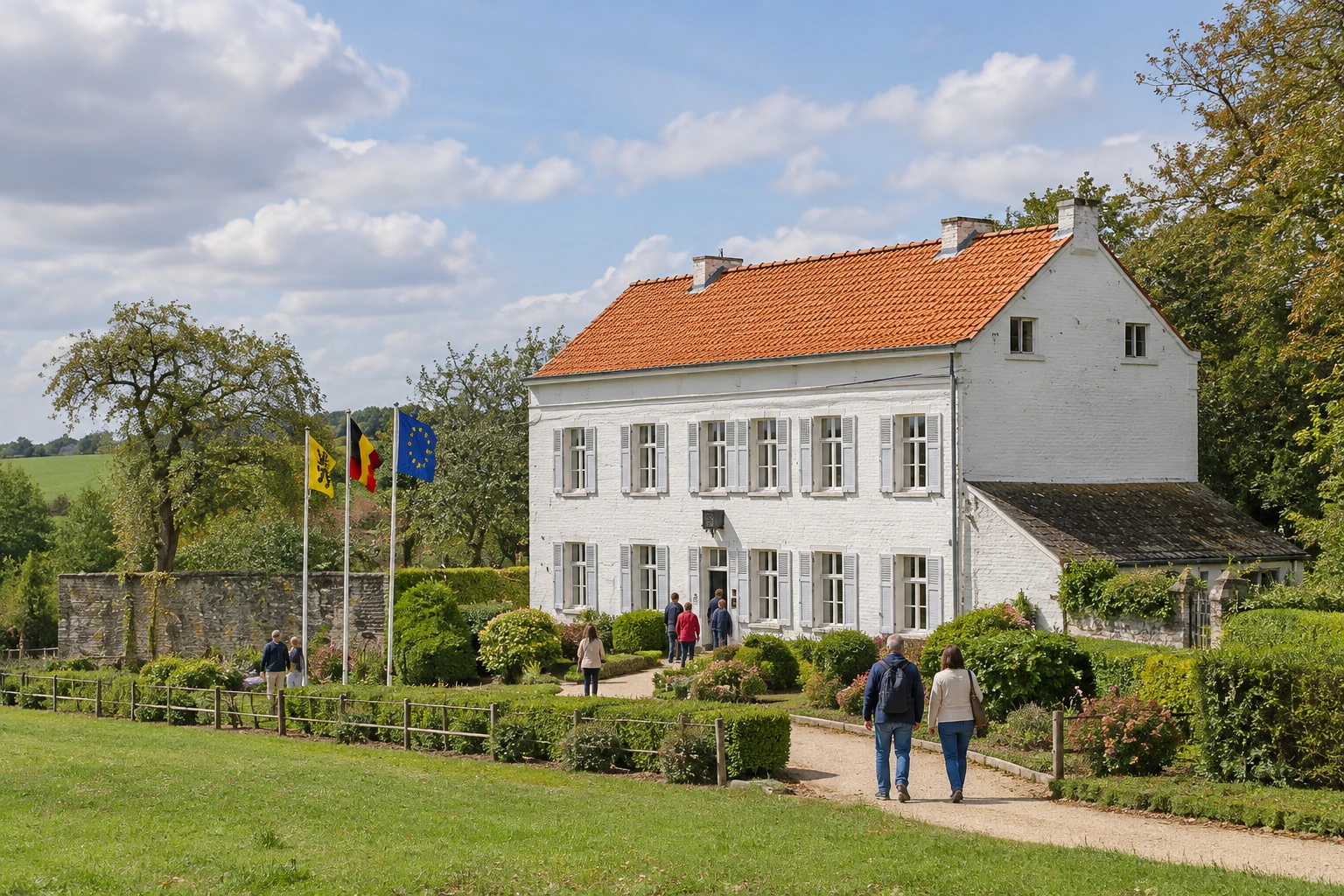
Museum at the Ferme du Caillou in Vieux-Genappe, where Napoleon spent the night of 17–18 June 1815 and planned the Battle of Waterloo. It houses the emperor's campaign bed.
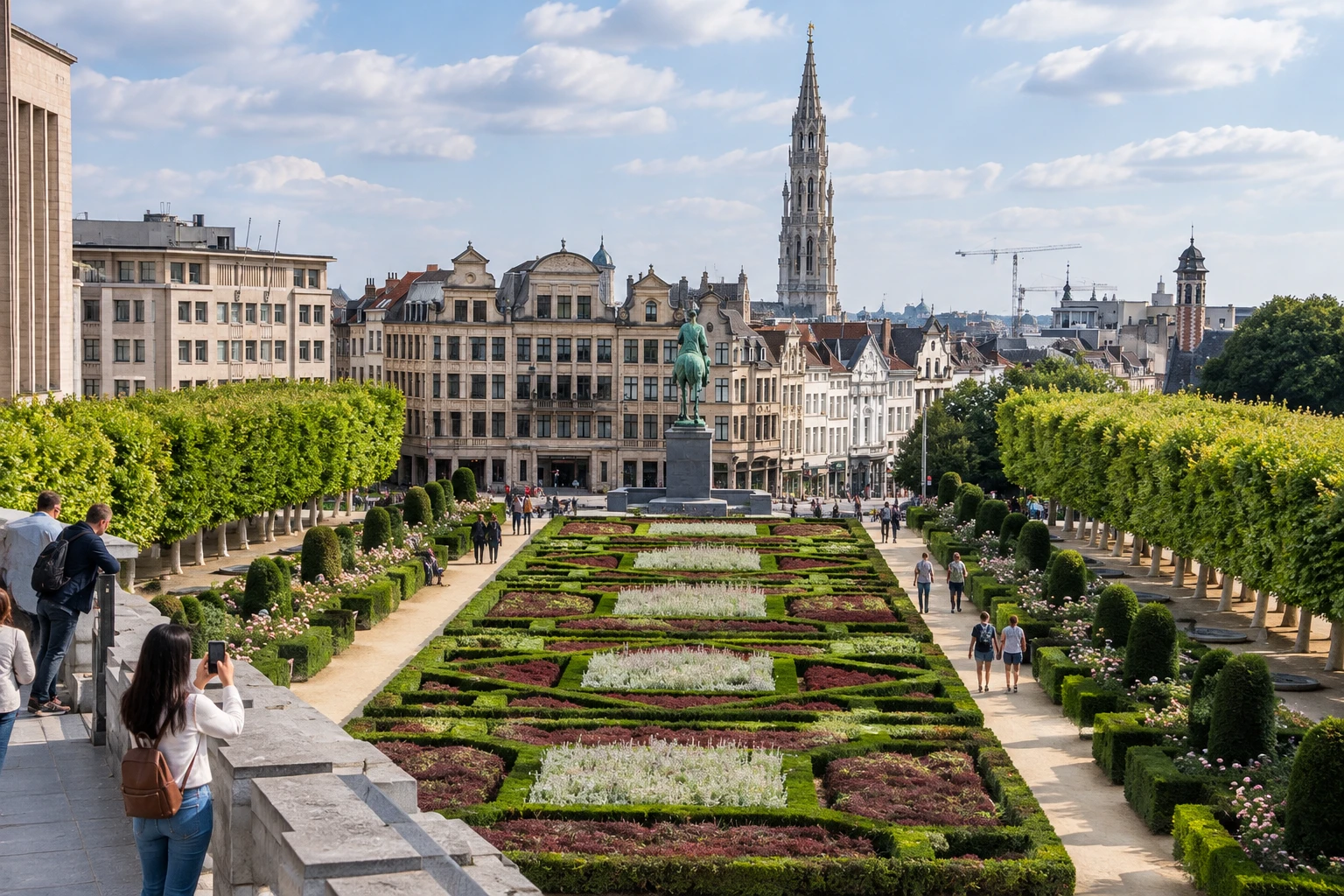
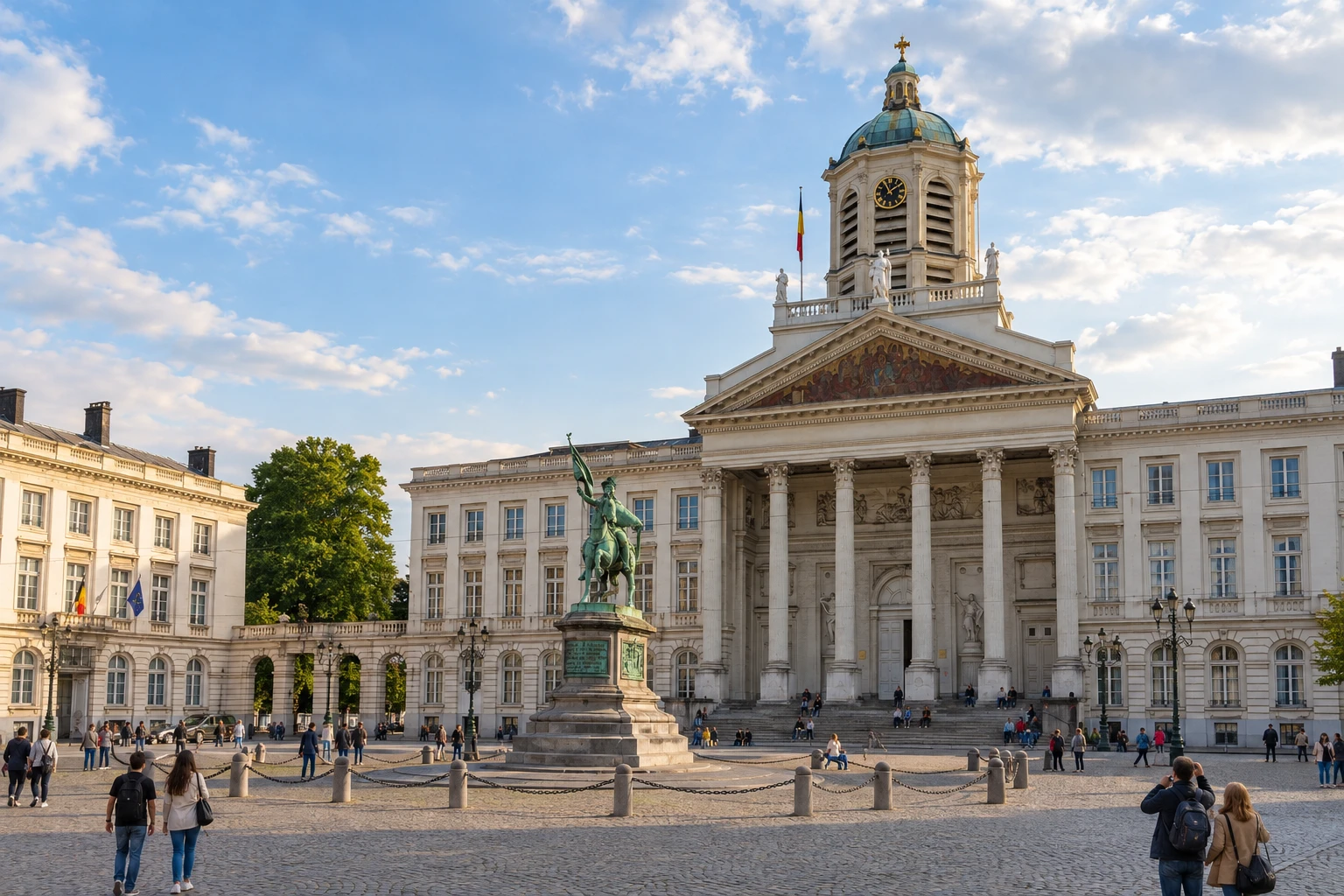
Terraced garden between the lower town and the Place Royale, with a view of the town hall tower. It houses the Biblioteca Real and is next to the fine arts museums.
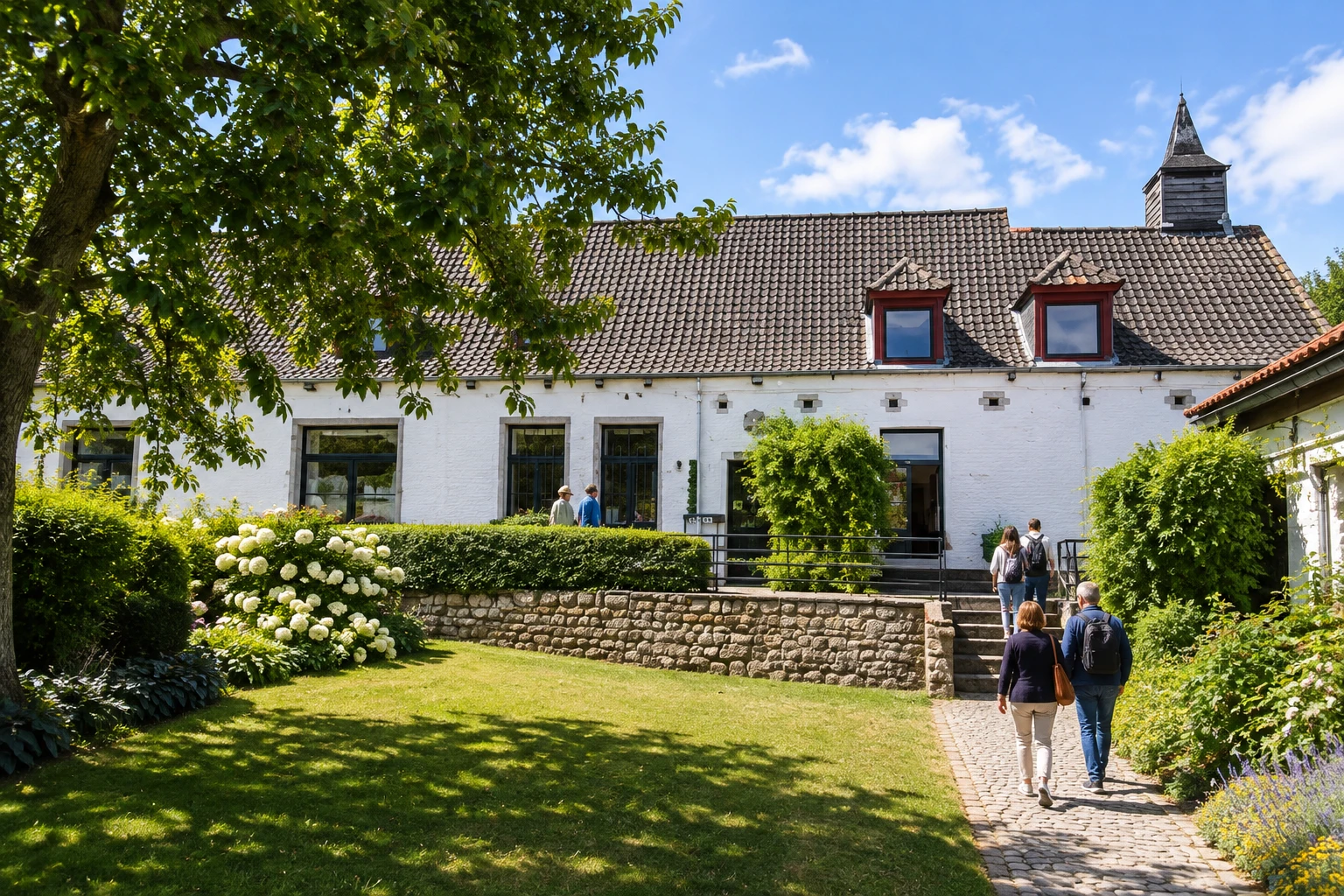
Farm that served as a British field hospital during the Battle of Waterloo, treating around 6,000 wounded. It features a museum on wartime surgery, a microbrewery and a distillery.
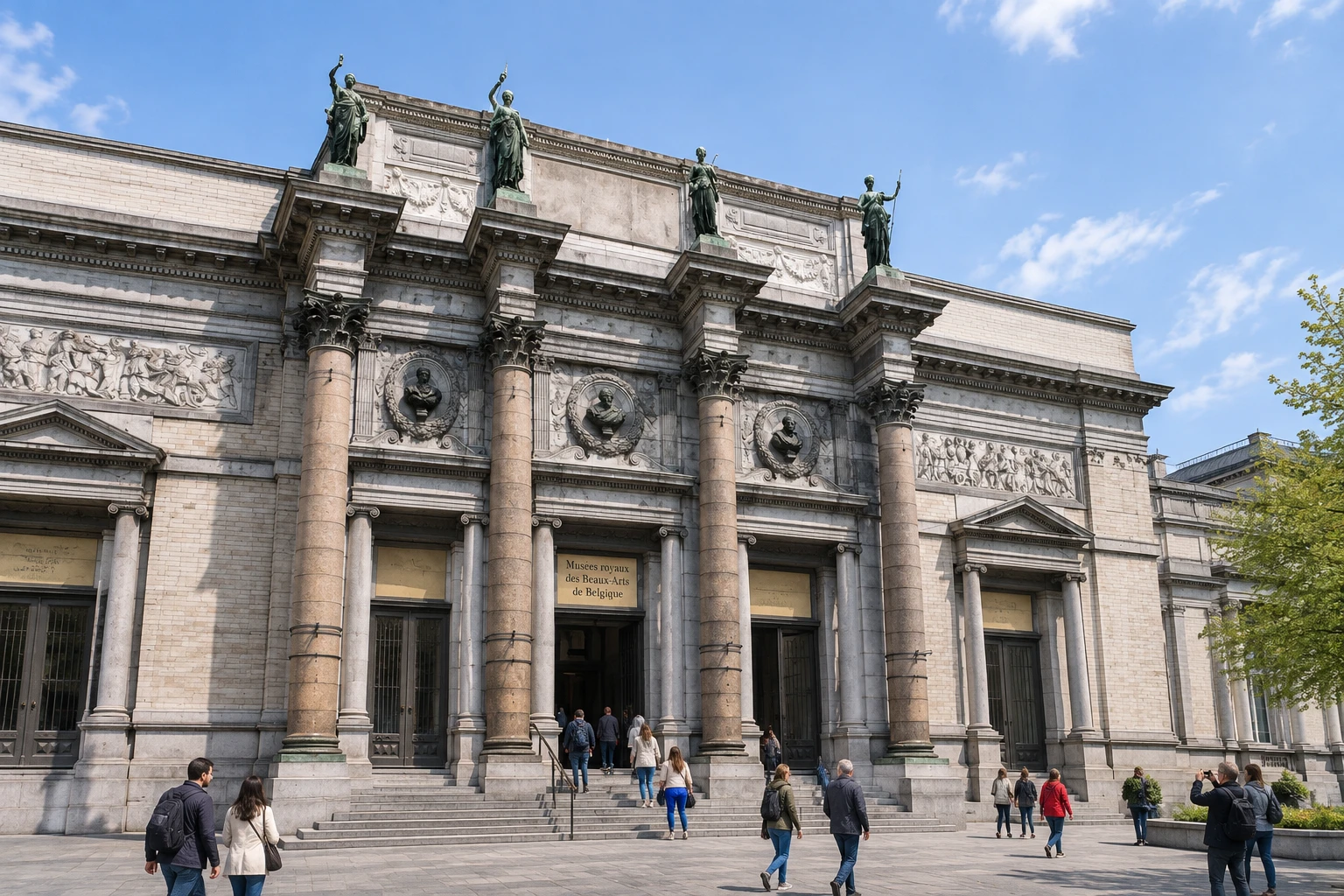
A group of art museums near the Place Royale. It brings together the Museu Magritte, with about 200 works by the surrealist painter, and the Museu dos Mestres Antigos, featuring Bruegel, Rubens and Bosch.
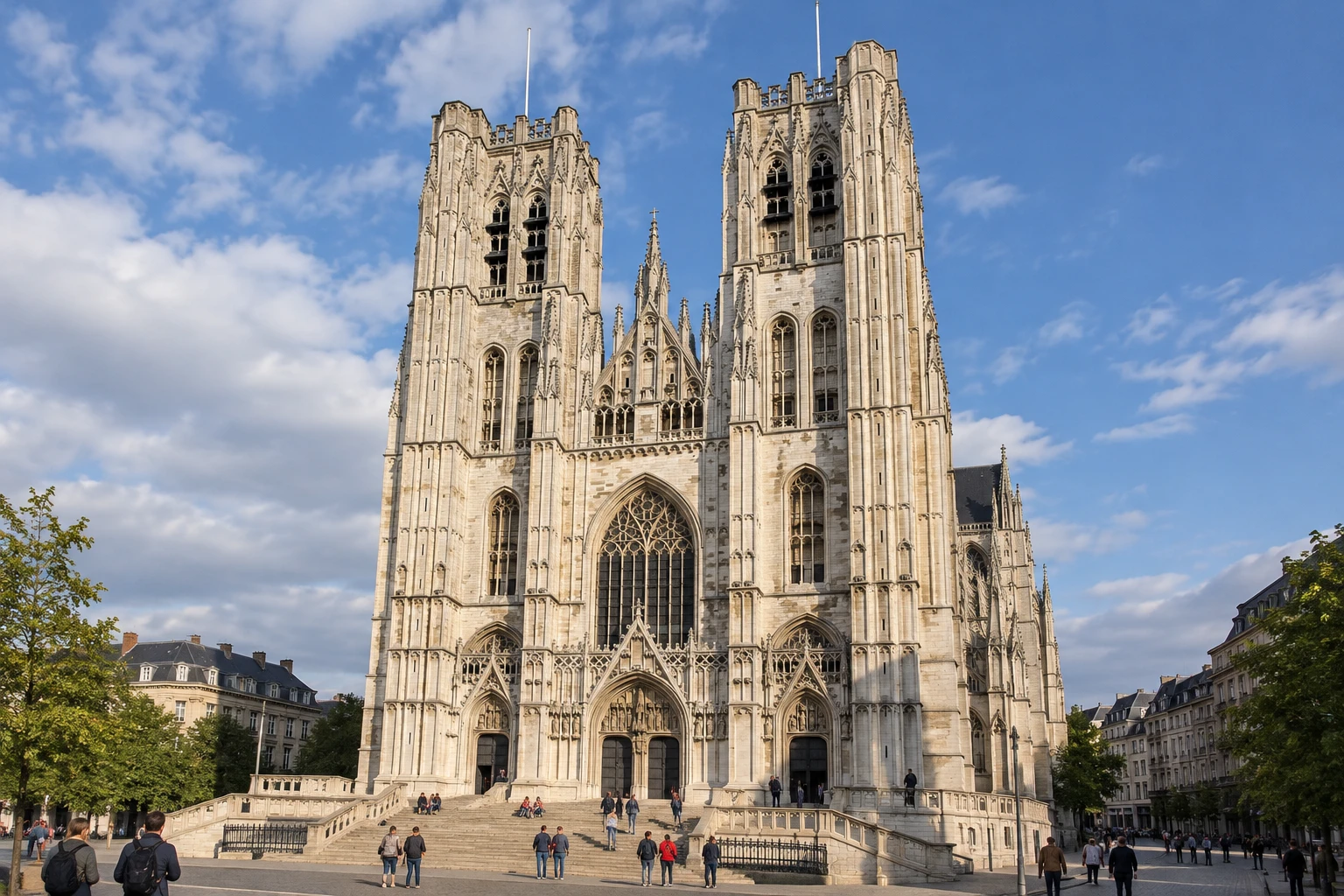
Gothic cathedral of Brussels, built between the 13th and 16th centuries, with two towers of about 64 metres and Renaissance stained glass. It hosts royal weddings and state ceremonies.
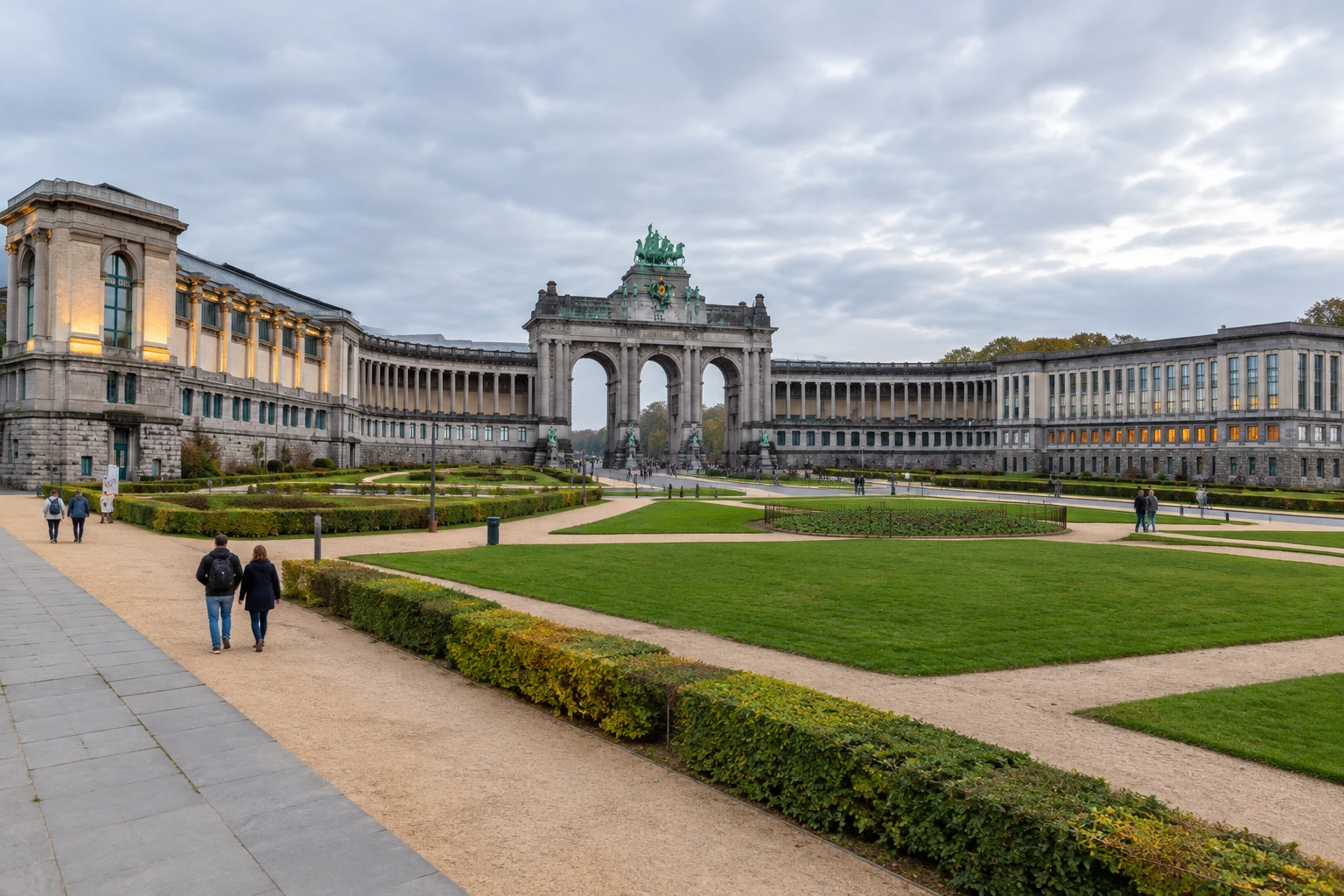
European Quarter park with a 45-metre triumphal arch, built to commemorate the 50th anniversary of Belgian independence. It houses the Museu de Arte e História and Autoworld.
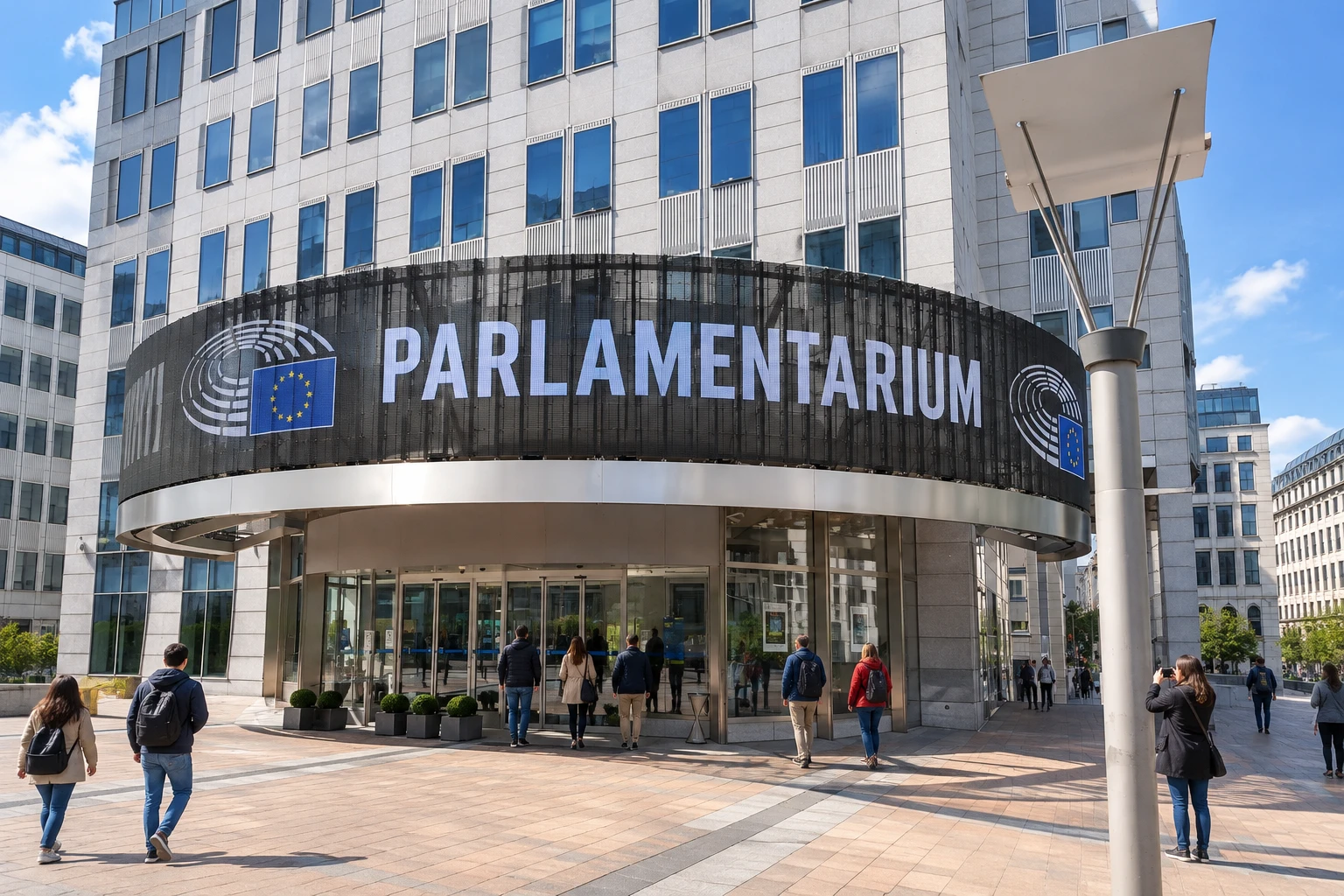
Visitors' centre of the European Parliament, in the European Quarter. It explains with displays, films and a multimedia guide in 24 languages how the Parliament and the European Union work.
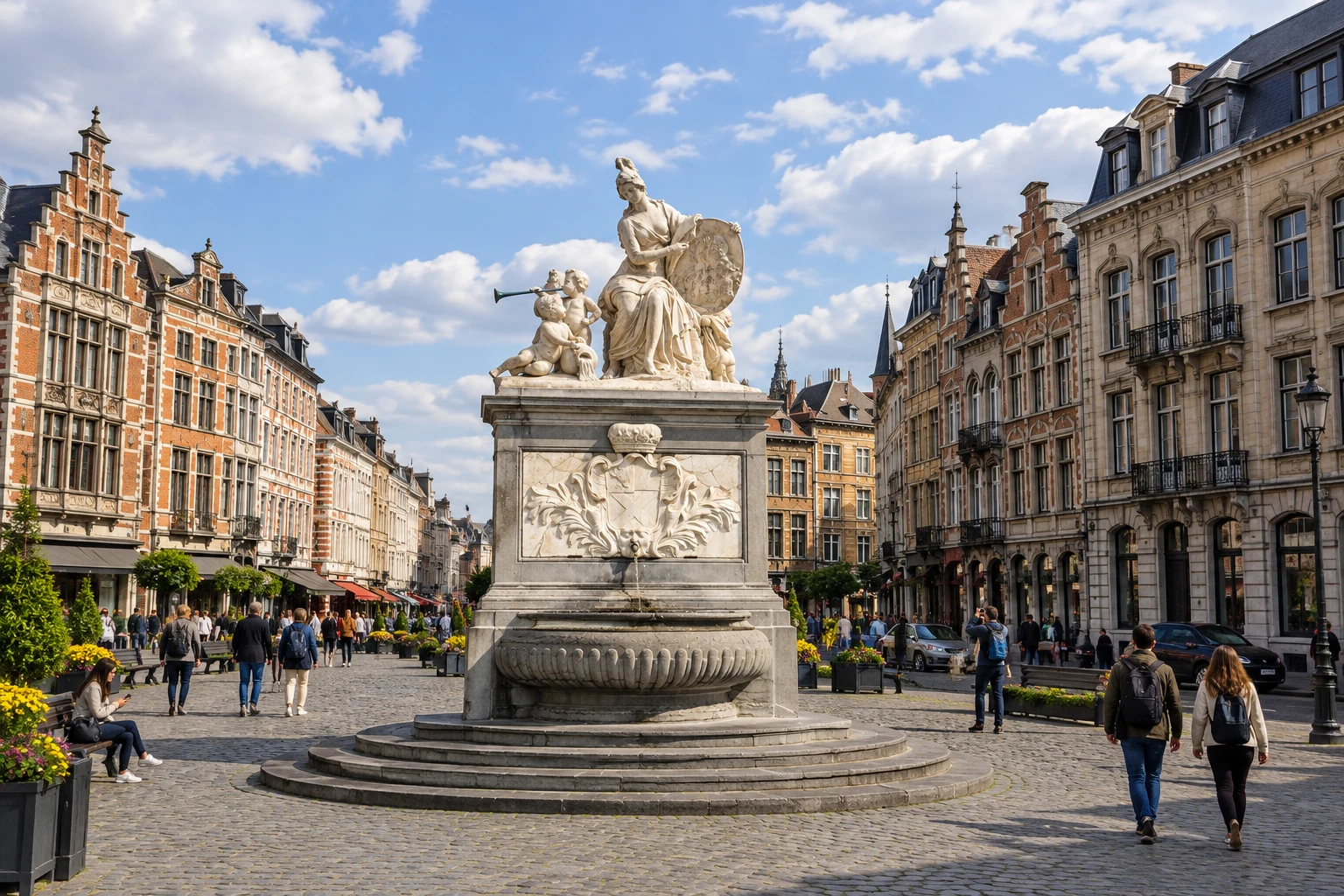
Square in the Sablon neighborhood, on the upper part, with antique shops, chocolatiers and cafés. At the top stands the Gothic church of Notre-Dame du Sablon and, behind it, the garden of Petit Sablon.
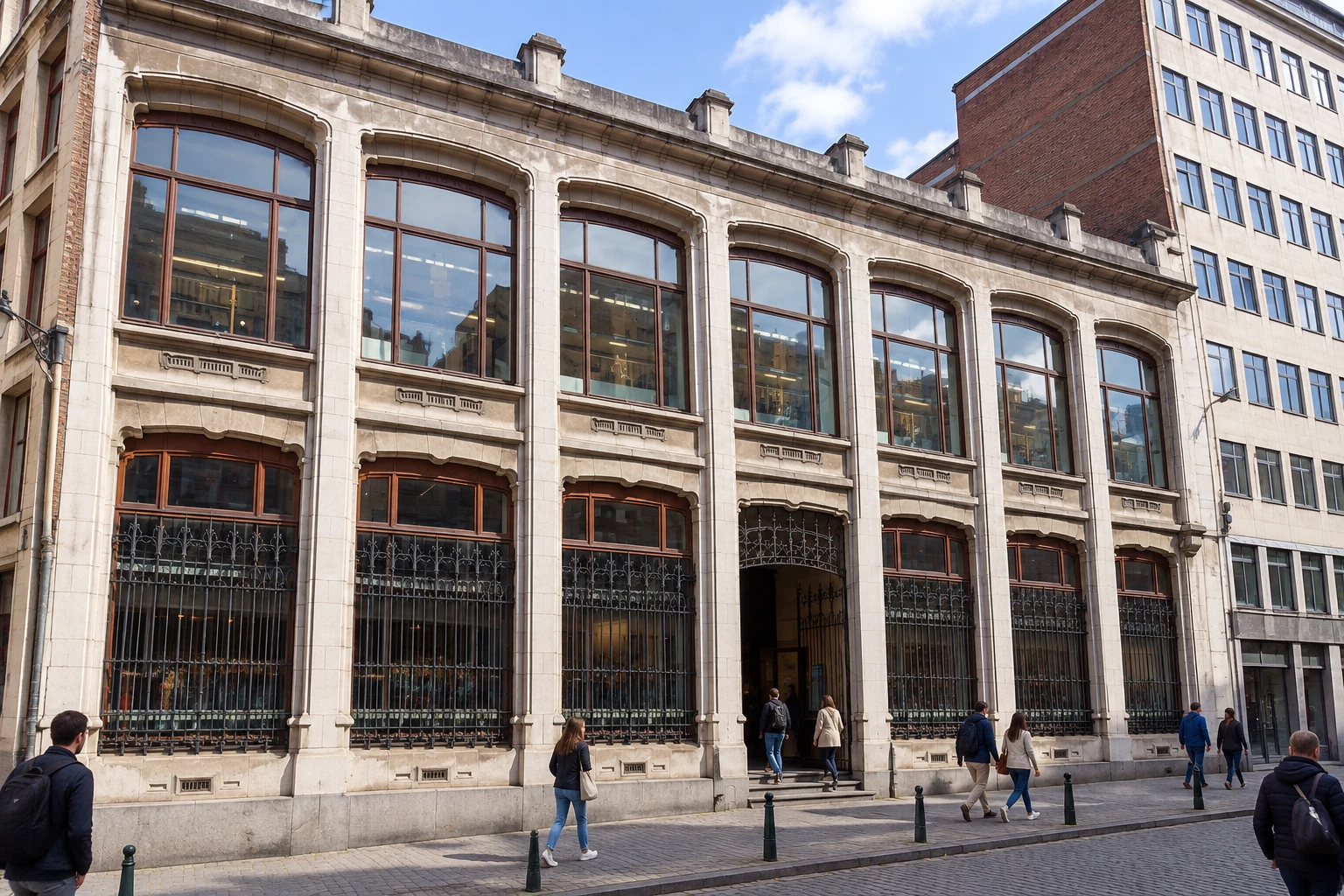
Museum of Belgian comics, in a former Art Nouveau fabric shop designed by Victor Horta. It tells the story of the ninth art, from Tintin to the Smurfs, with original comic pages.
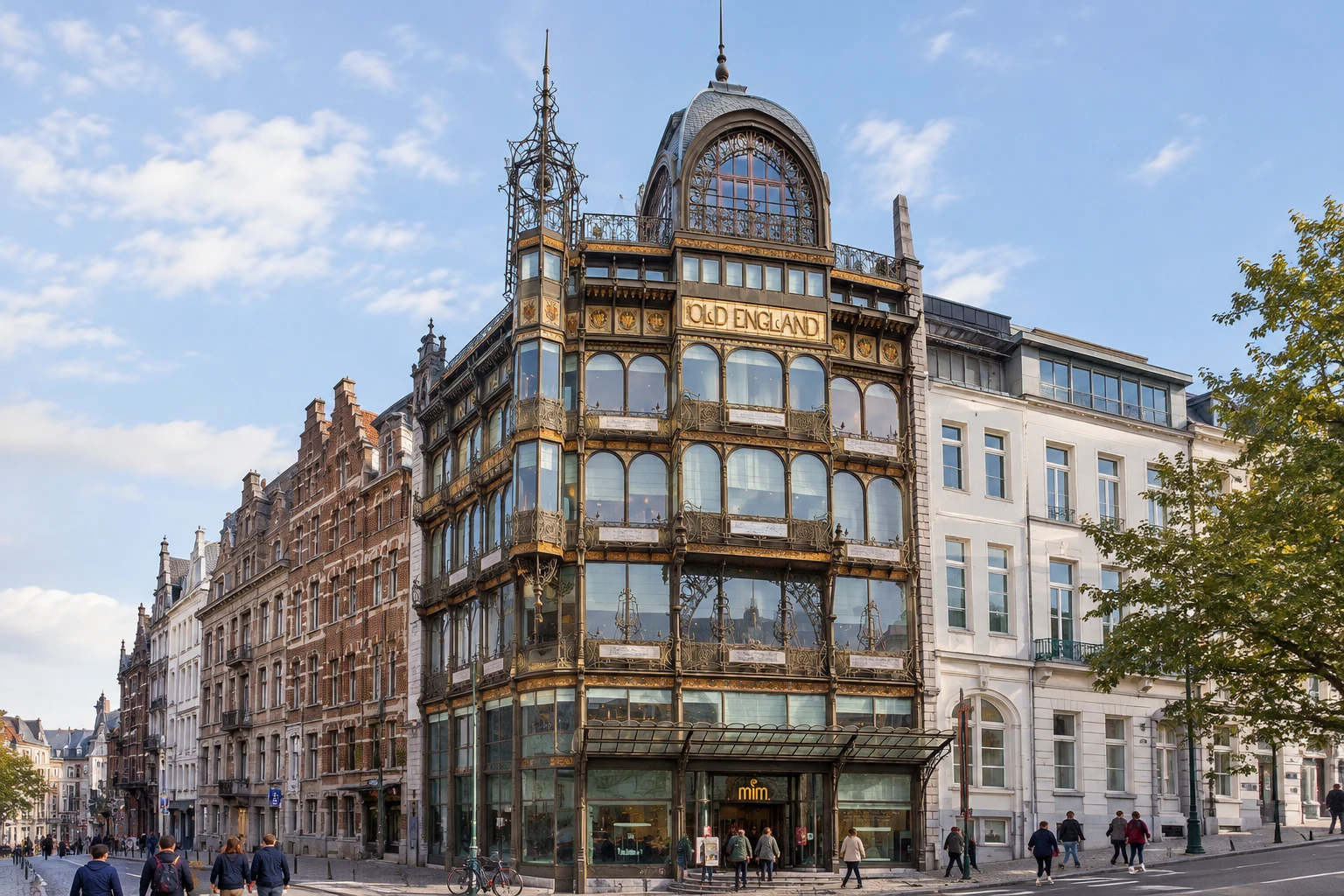
Museum of musical instruments, housed in the Art Nouveau building of the former Old England department store, near Place Royale. It displays about 1,200 instruments, which visitors listen to with headphones in front of the display cases.
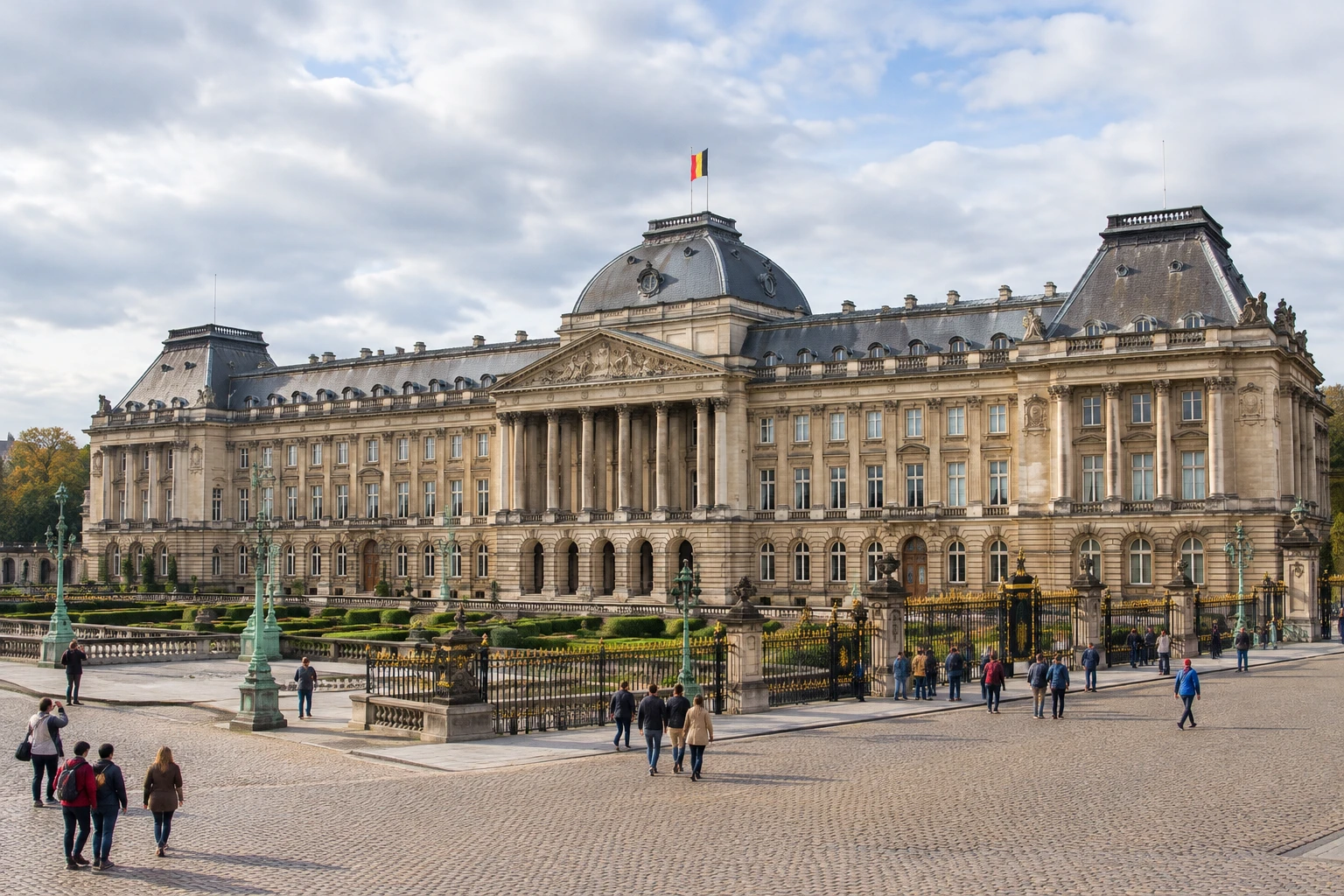
Official palace of the King of the Belgians, facing Parc de Bruxelles. It is open to the public only in summer, featuring the reception rooms and the ceiling of the Hall of Mirrors covered in beetle elytra.
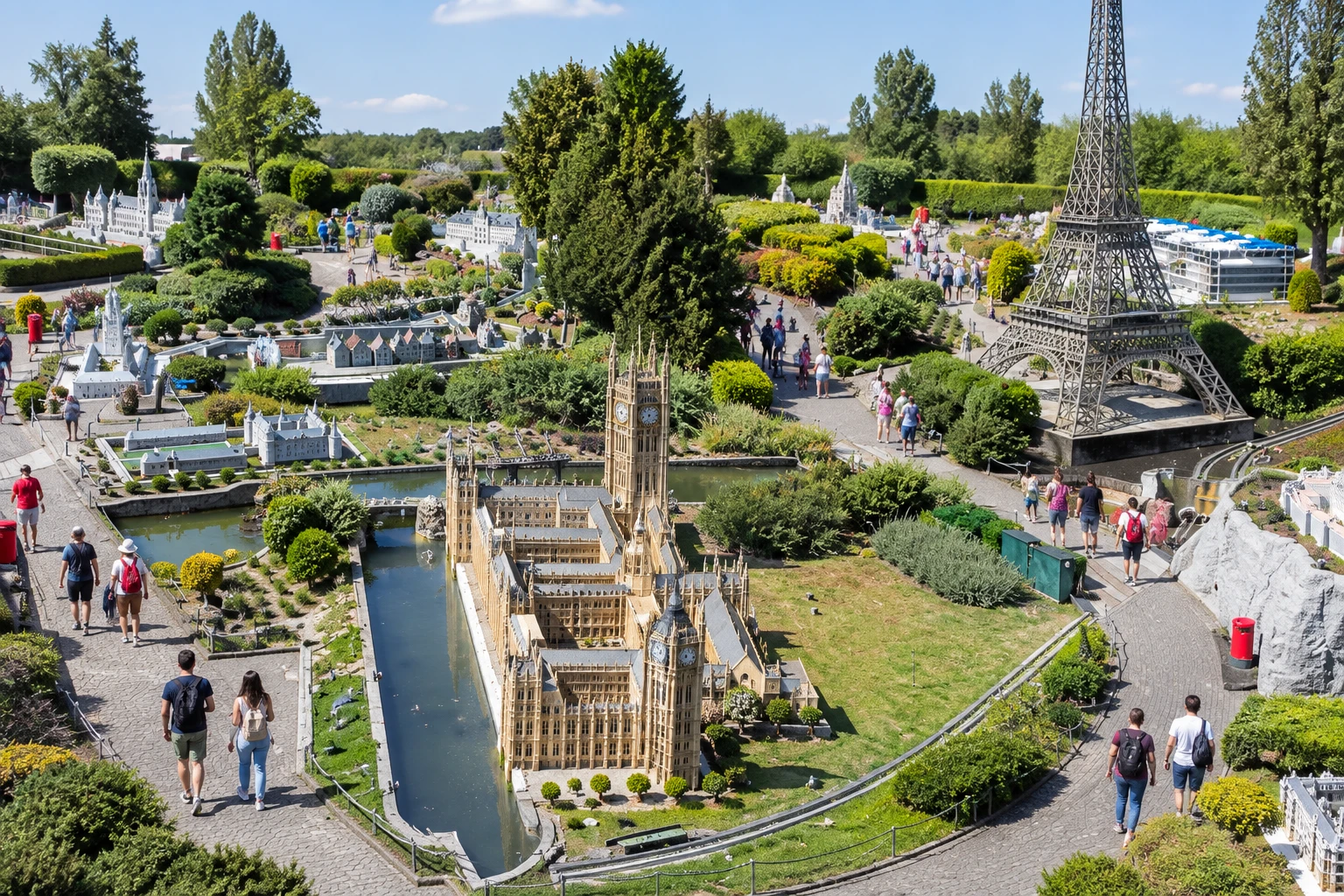
A miniature park at the foot of the Atomium, featuring monuments from European countries at a 1:25 scale, such as the Eiffel Tower, Big Ben and the Grand-Place itself, plus animated scenes.
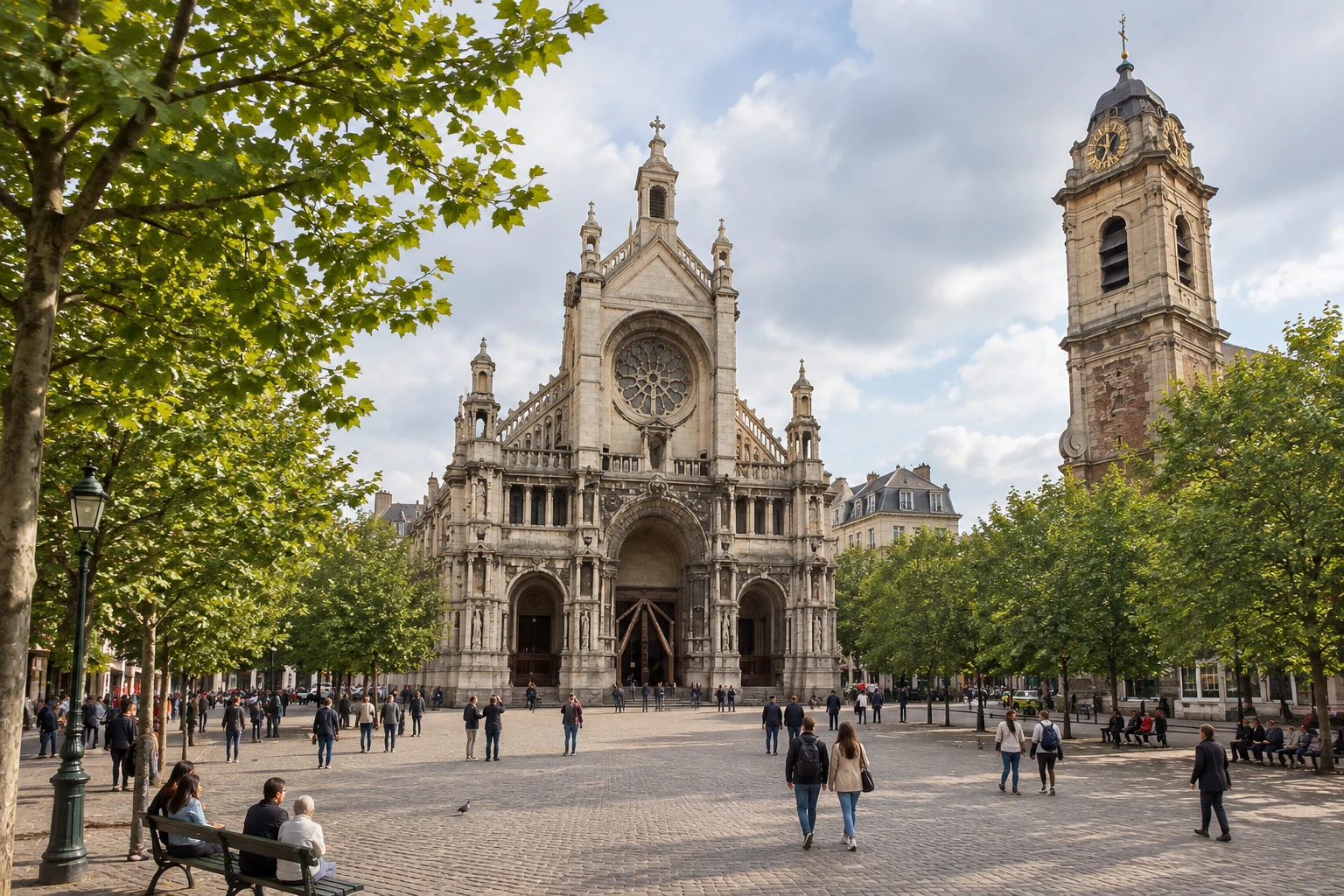
Square and neighborhood of Brussels' old port, a few minutes from the Grand-Place. It includes the church of Sainte-Catherine, the Tour Noire and the fish and seafood restaurants of the former quays.
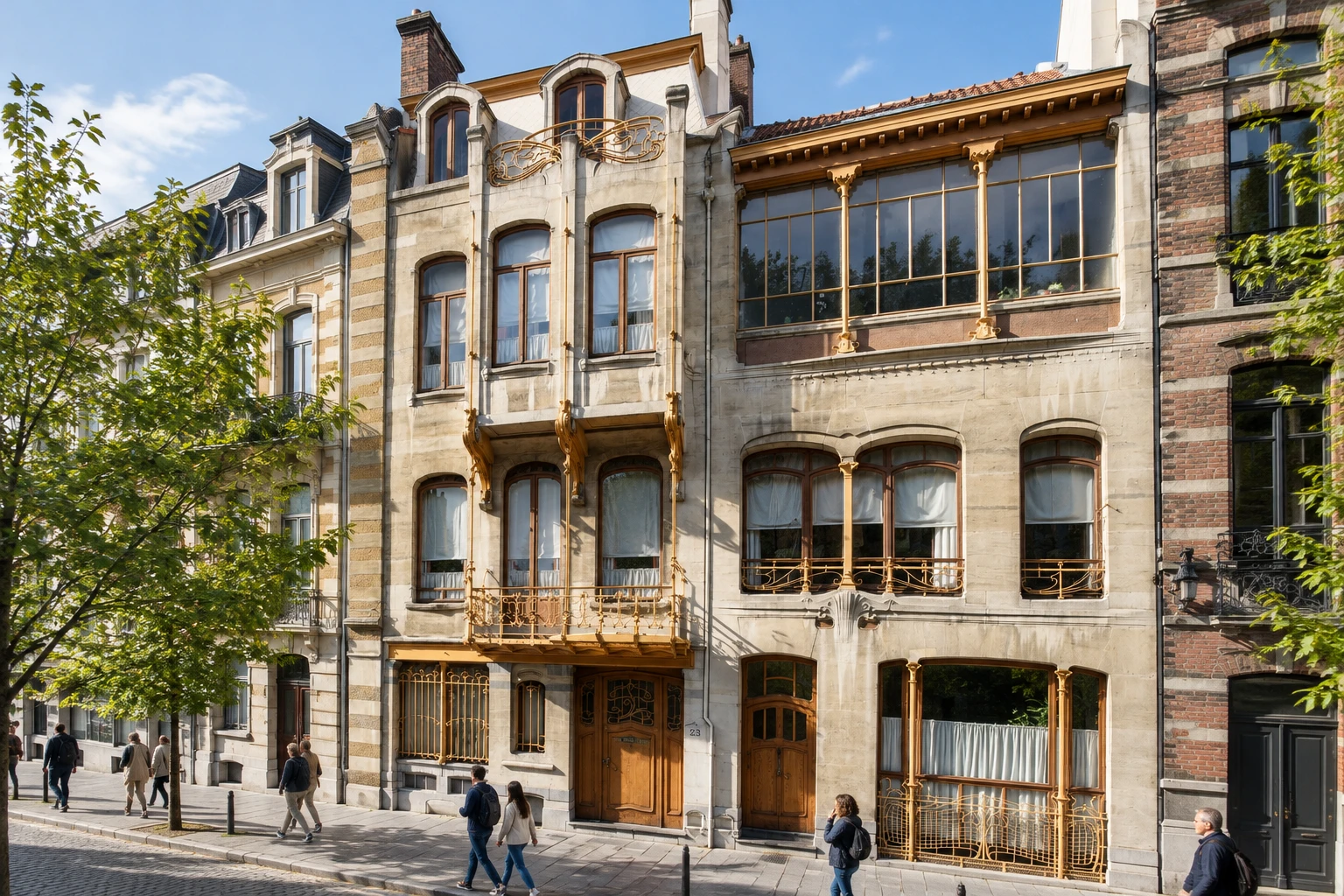
House and studio of architect Victor Horta, in Saint-Gilles, built between 1898 and 1901. A UNESCO World Heritage Site, it shows Art Nouveau inside: iron staircase, stained glass, and the architect's furniture.
To choose before you go
The details of each tour (where it leaves from, what it includes, the best time) are in the complete guide.
Get your questions answered
The guide's itineraries cover 3, 5 and 7 days: in 3 days, historic center, museums and Atomium; in 5 days, city, comics, European Quarter and Brugge; in 7 days, full city, Art Nouveau, Waterloo and Brugge.
Arrival, Grand-Place and Manneken-Pis. The flight from Brazil arrives after an entire night of travel and a connection in Europe. From Brussels Airport, the train takes about 20 minutes to Bruxelles-Central. Drop your bags and do just a light walk: Grand-Place (Grote Markt) and Hôtel de Ville, Manneken-Pis, Jeanneke-Pis and Galeries Royales Saint-Hubert. At night, return to the illuminated Grand-Place and go to bed early to adjust to the time difference.
It generally rains less in April. The rainiest months are usually from November to January and August. The guide covers each month, with the weather and what changes on the tours.
To plan