

 Brazil
 Antarctica
 Argentina
 Bolivia
 Chile
 Colombia
 Ecuador
 Falkland Islands (Malvinas)
 French Guiana
 Guyana
 Paraguay
 Peru
 Suriname
 Uruguay
 Venezuela
 Austria
 Croatia
 Denmark
 Finland
 France
 Germany
 Greece
 Hungary
 Iceland
 Ireland
 Italy
 Luxembourg
 Norway
 Poland
 Portugal
 Slovakia
 Slovenia
 Spain
 Sweden
 Switzerland
 the Czech Republic
 the Netherlands
 the United Kingdom
 Turkey
 Bermuda
 Canada
 Greenland
 Mexico
 Saint Pierre and Miquelon
 the United States
 the Dominican Republic
 Japan
 Egypt
 South Africa
 Australia
 Fiji
 New Zealand
 Papua New Guinea
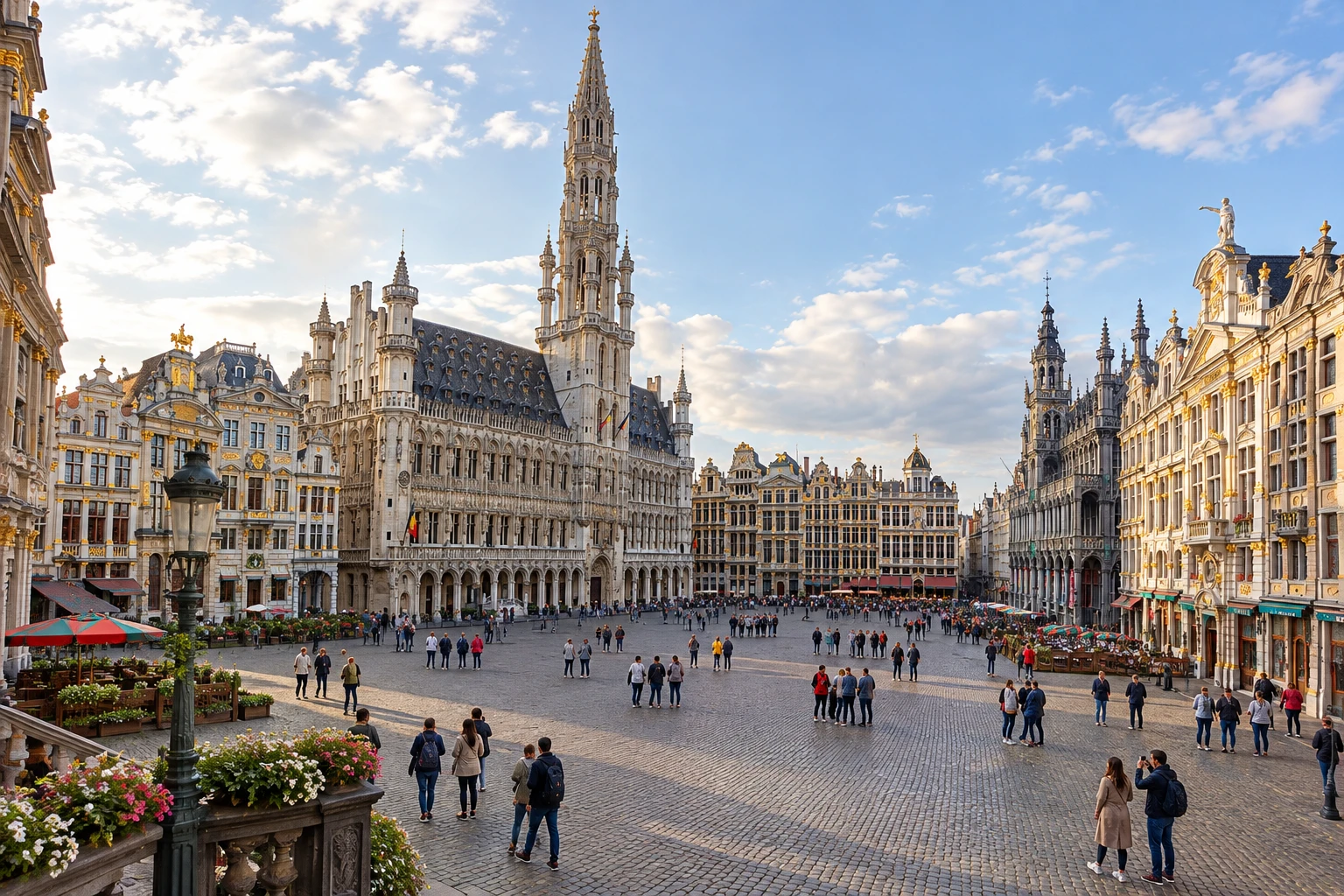
Square · Brussels, Belgium
Grand-Place
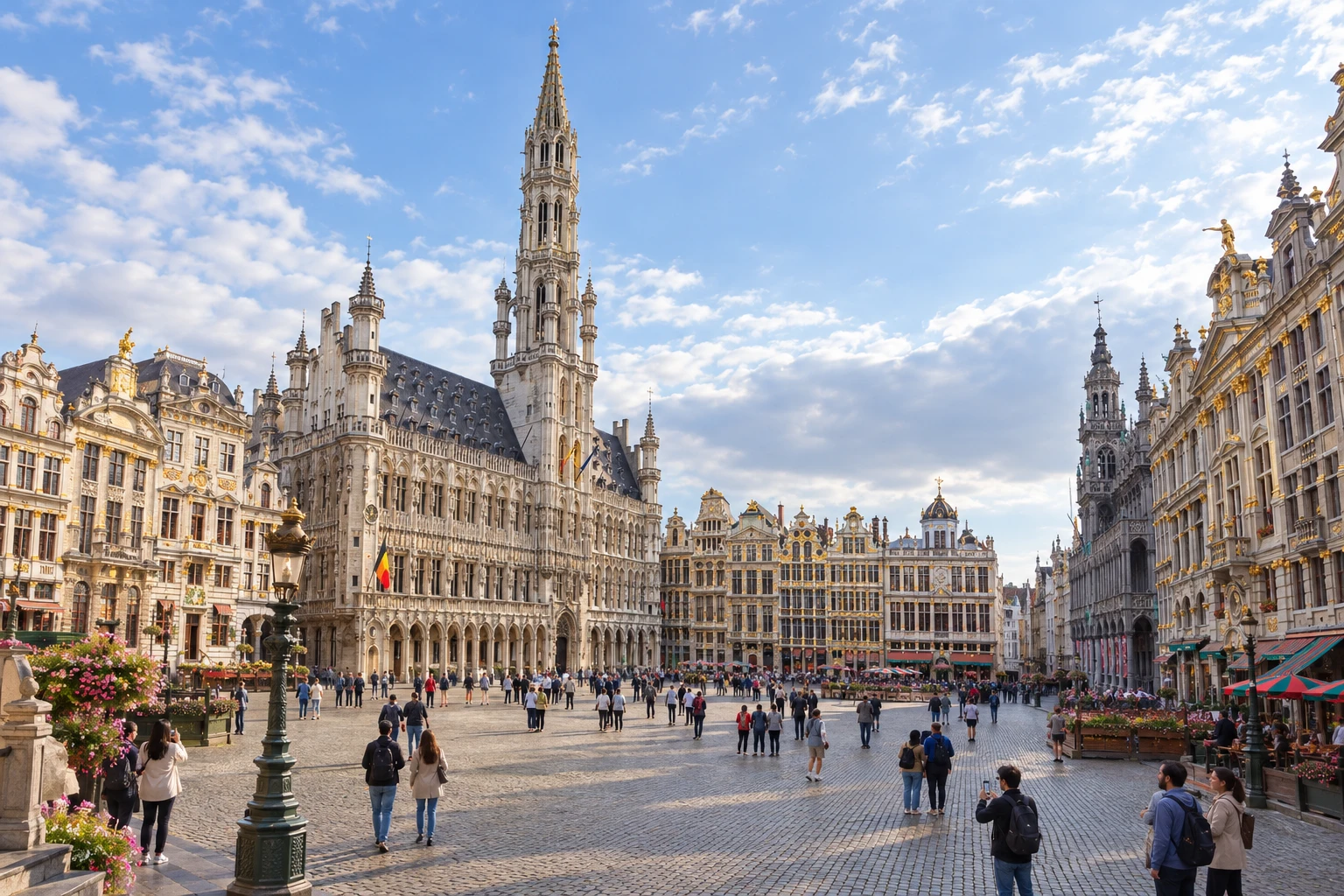
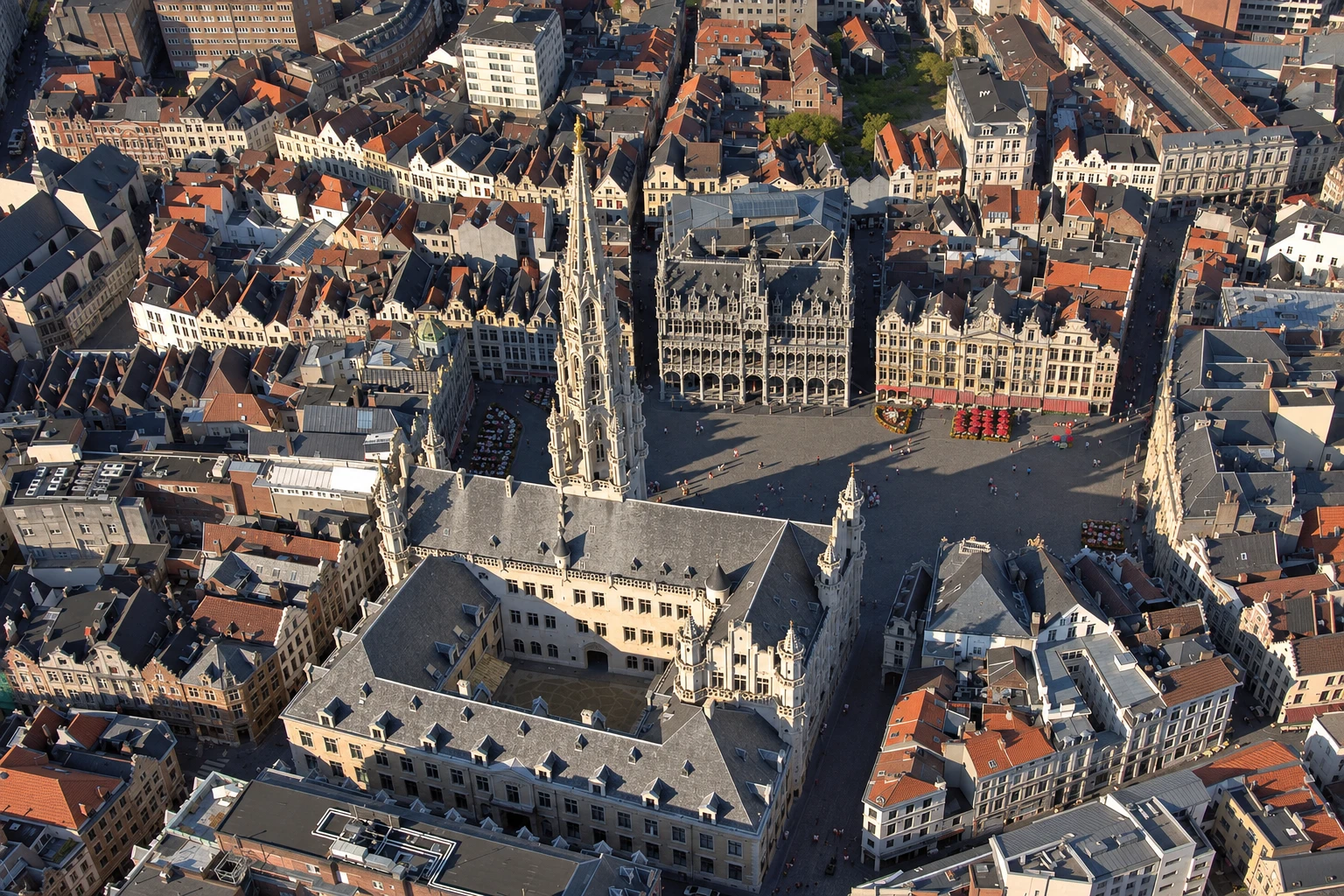
Bruxelas's central square, a UNESCO World Heritage site, with the Gothic town hall, the Maison du Roi and the gilded façades of the guild houses.
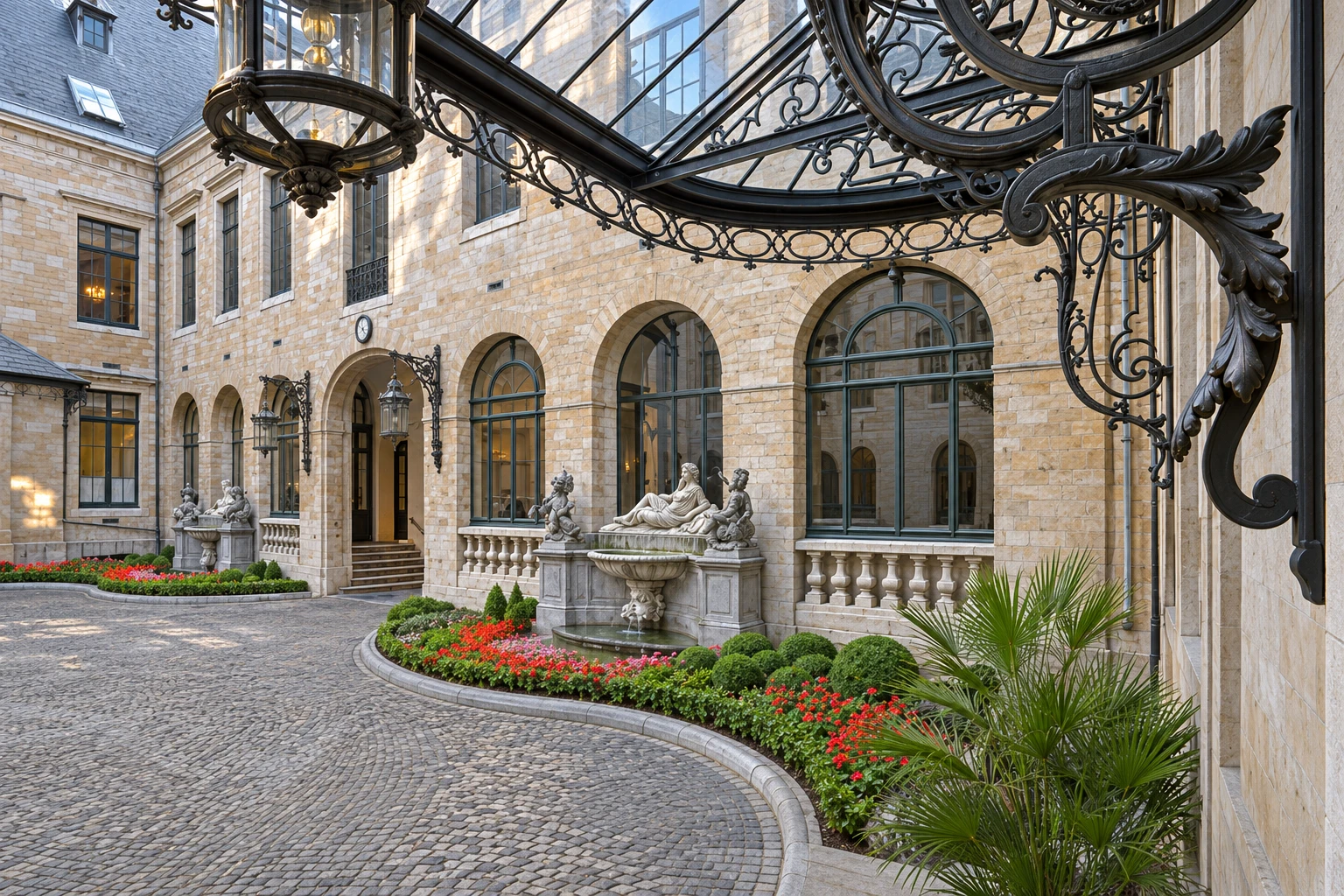
Illustrative images. The pictures in this guide are illustrations based on the real place, not photographs, and may differ from it.

A look at the place
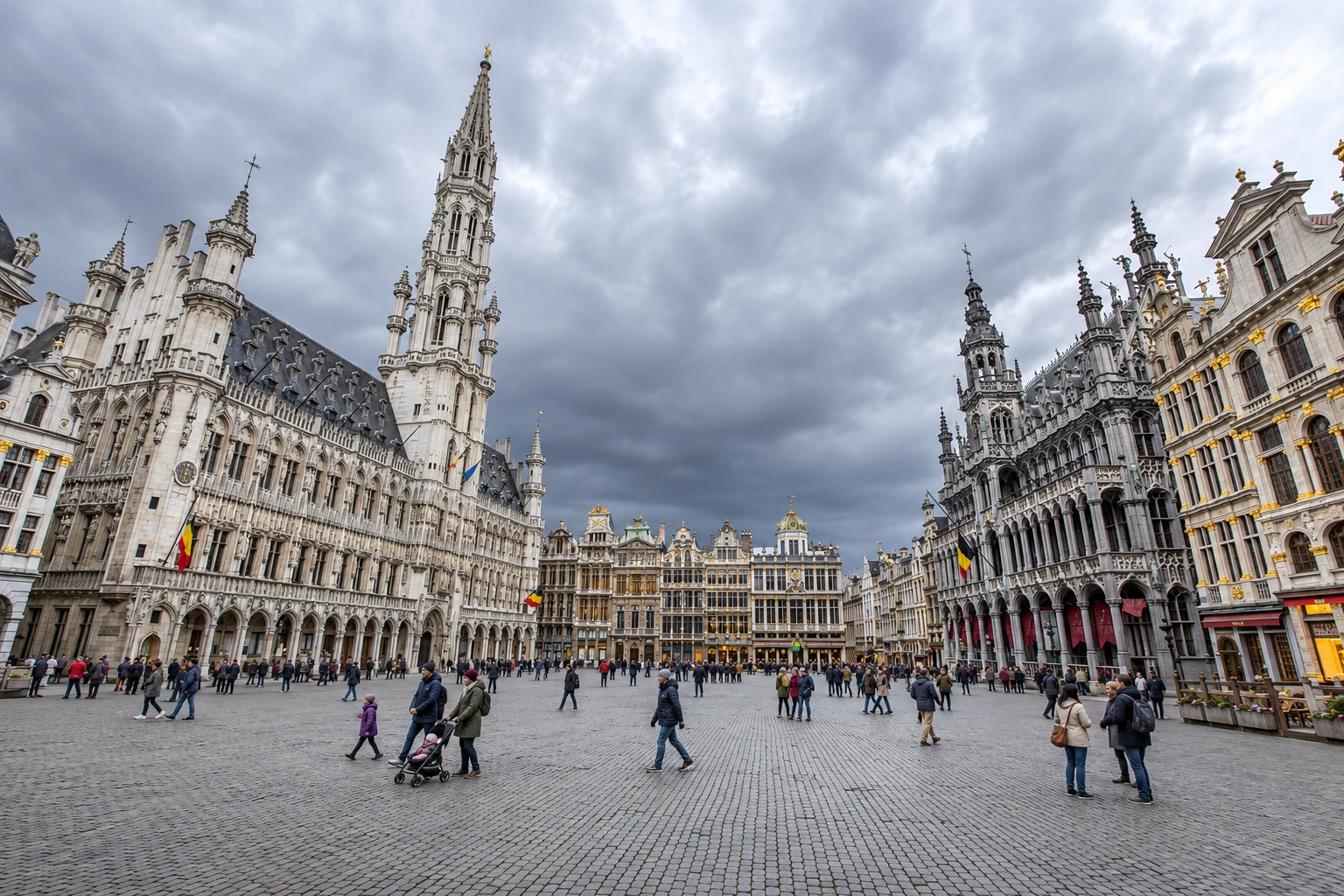
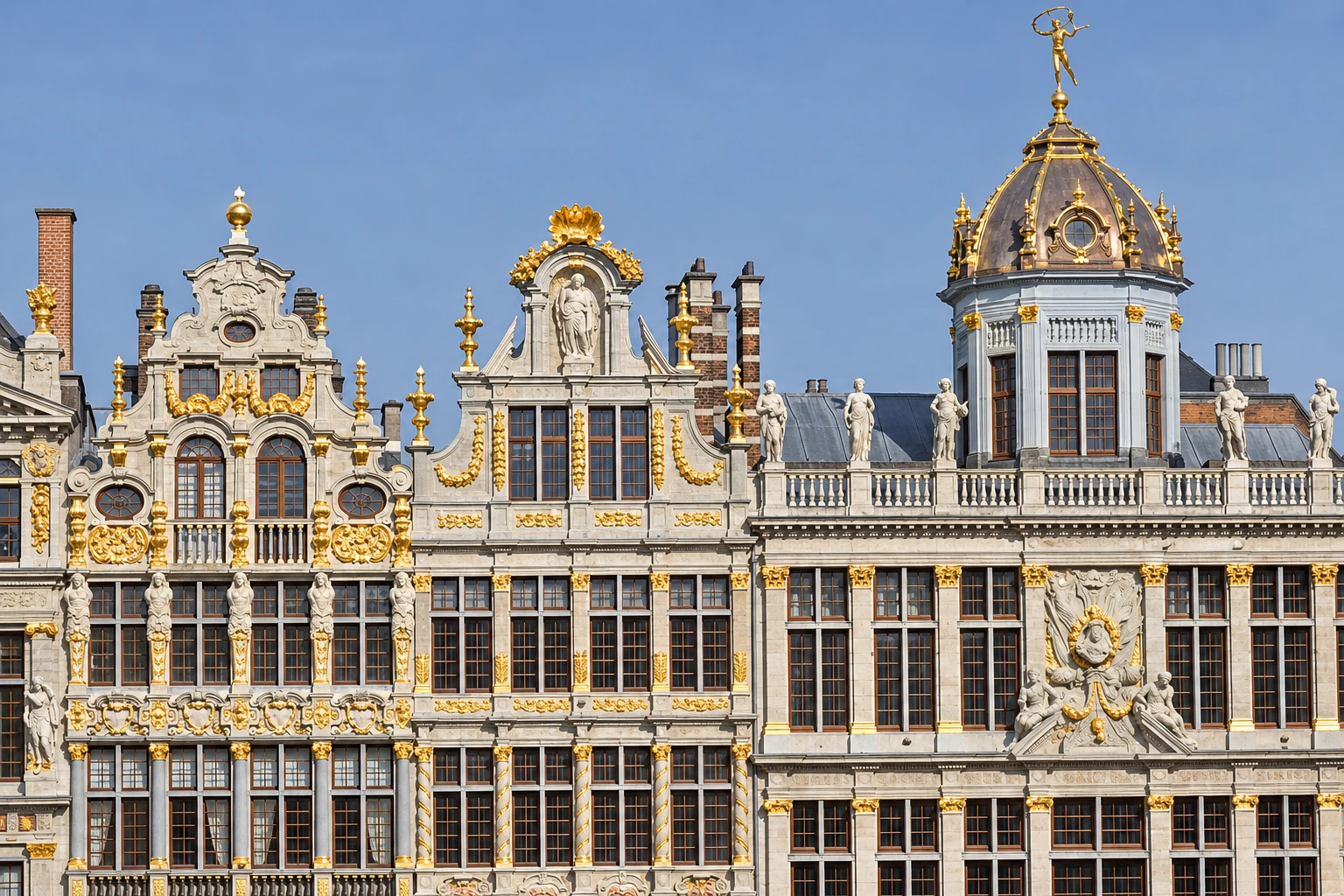
Grand-Place in pictures
These pictures are illustrations based on the real place, not photographs. They may differ from the place.
Click the picture to enlarge it.
Discover
About Grand-Place
The Grand-Place, called Grote Markt in Flemish, has been Bruxelas's historic centre since the Middle Ages, when the city's market operated there. The square was inscribed as a UNESCO World Heritage Site in 1998.
The highest side is taken by the Hôtel de Ville, the town hall in 15th-century Brabantine Gothic. The tower is about 96 metres high and is topped by a gilded statue of Saint Michael, the city's patron. Opposite stands the Maison du Roi, called Broodhuis in Flemish, rebuilt in a neo-Gothic style at the end of the 19th century and housing the Museu da Cidade de Bruxelas, where the original Manneken Pis statue is kept.
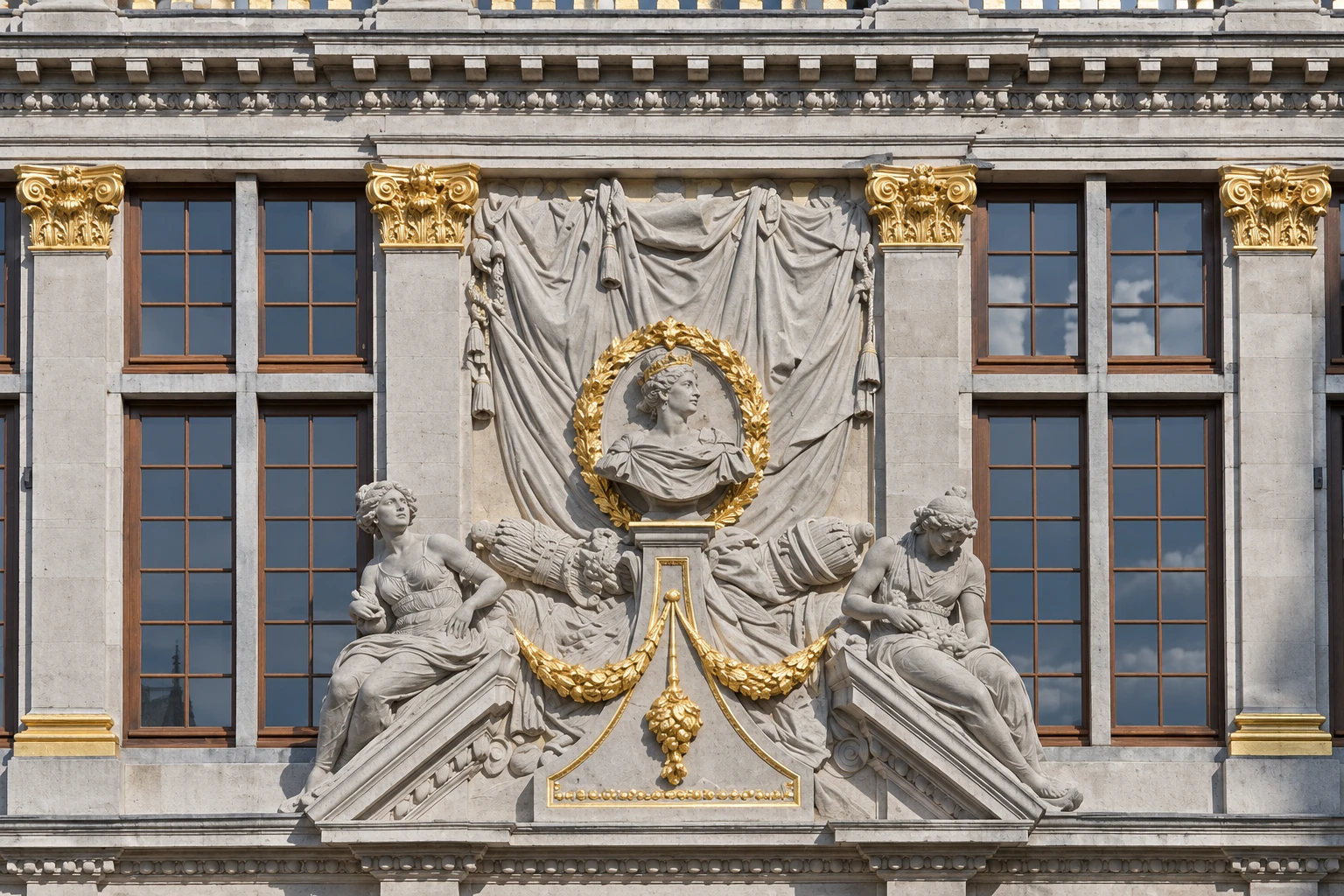
In 1695 the troops of Louis XIV bombarded Bruxelas and destroyed much of the square. The guilds rebuilt their headquarters in about four years, with baroque façades full of sculptures and gilded details. Each house has its own name, such as Le Roy d'Espagne, Le Cygne and La Louve.
Every two years, in August, the square usually hosts the Flower Carpet, assembled with begonias for a few days around the Feast of the Assumption. At night the illumination of the façades brings life to the cafés with tables on the pavement.
Before you go
Practical information
Cidade Turismo reviews its information regularly, but something may have changed. Check with the place before planning your trip.
How much time to set aside
Half an hour to go around and look at the façades. One to two hours including the Museu da Cidade in the Maison du Roi.
Best time
Early in the morning the square is empty and good for photographing the façades. In the late afternoon and at night the lighting changes the view and cafés fill up. In even-numbered years in August, check the dates for the Flower Carpet.
How to get there
It lies about 400 metres from Bruxelles-Central station, some five minutes on foot walking down the alleys. The nearest metro/premetro station is Bourse. The whole surrounding area is pedestrianised.
Tip
Go into the Maison du Roi to see the original Manneken Pis and the city's history. To get a view over the square, try the upper floors of the cafés in the guild houses. Combine the visit with the Galeries Royales Saint-Hubert, two blocks away.
Your questions
Frequently asked questions about Grand-Place
Are Grand-Place and Grote Markt the same place?
Yes. Grand-Place is the French name and Grote Markt is the Flemish name. Both appear on signs because Brussels is bilingual.
When does the Flower Carpet take place?
It usually takes place every two years in August, for several days around the Feast of the Assumption. Check the dates before you go.
Can you enter the Hôtel de Ville?
The town hall interior is typically open for guided visits on specific days. Check the schedule before you go.