Leuven

Flemish Brabant Capital

Leuven

In the destination Leuven.

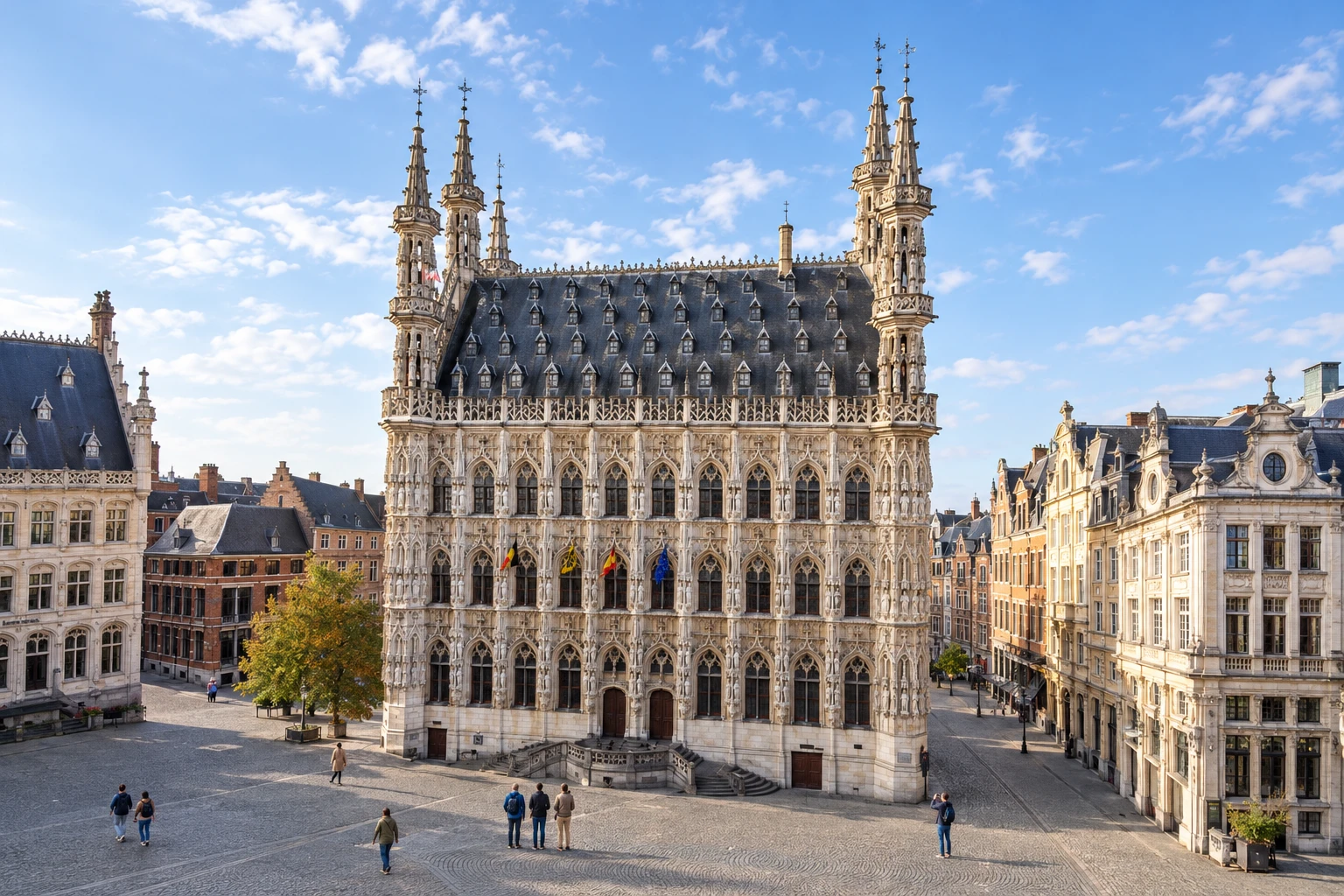
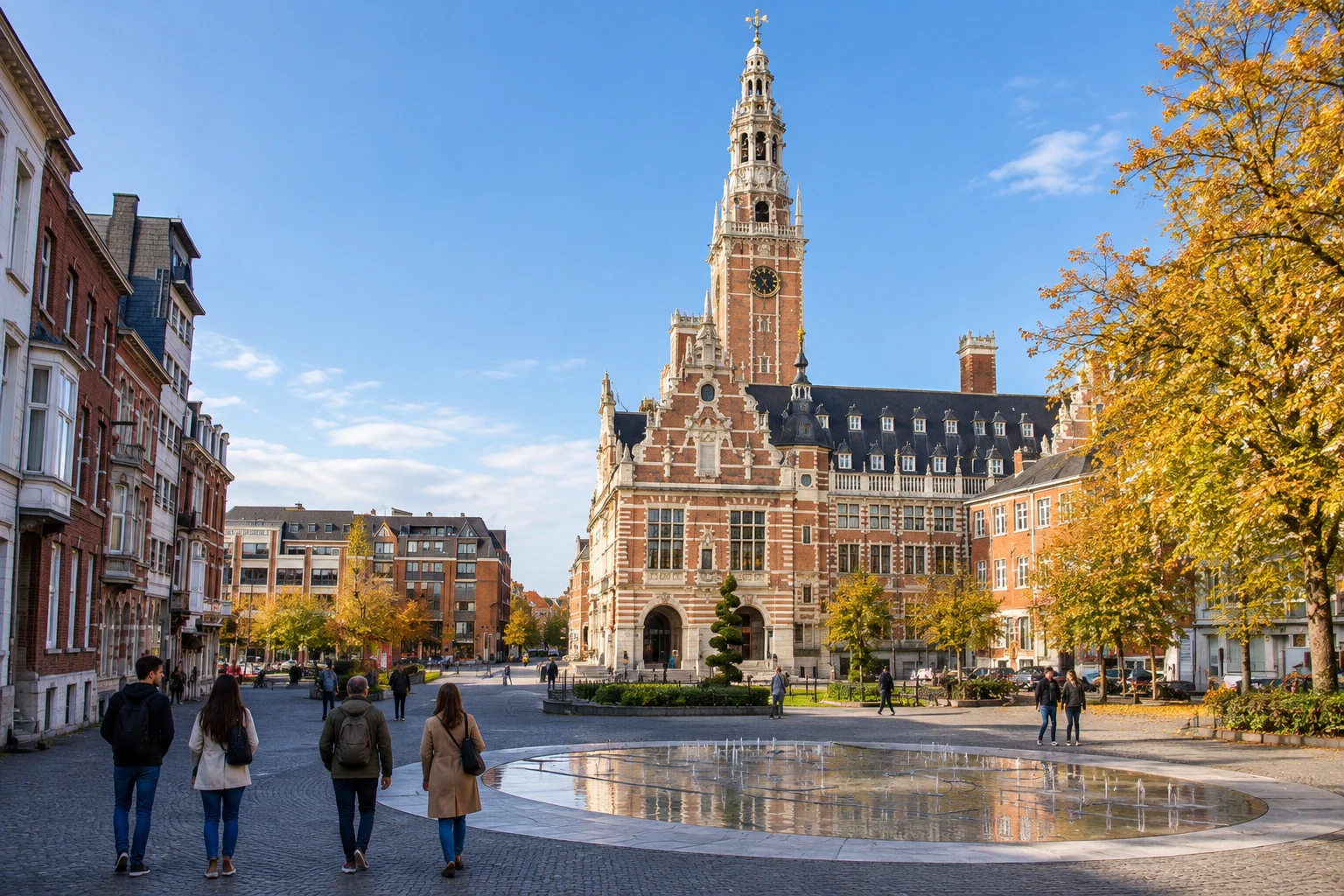
In the photo: Stadhuis and Grote Markt, Lovaina

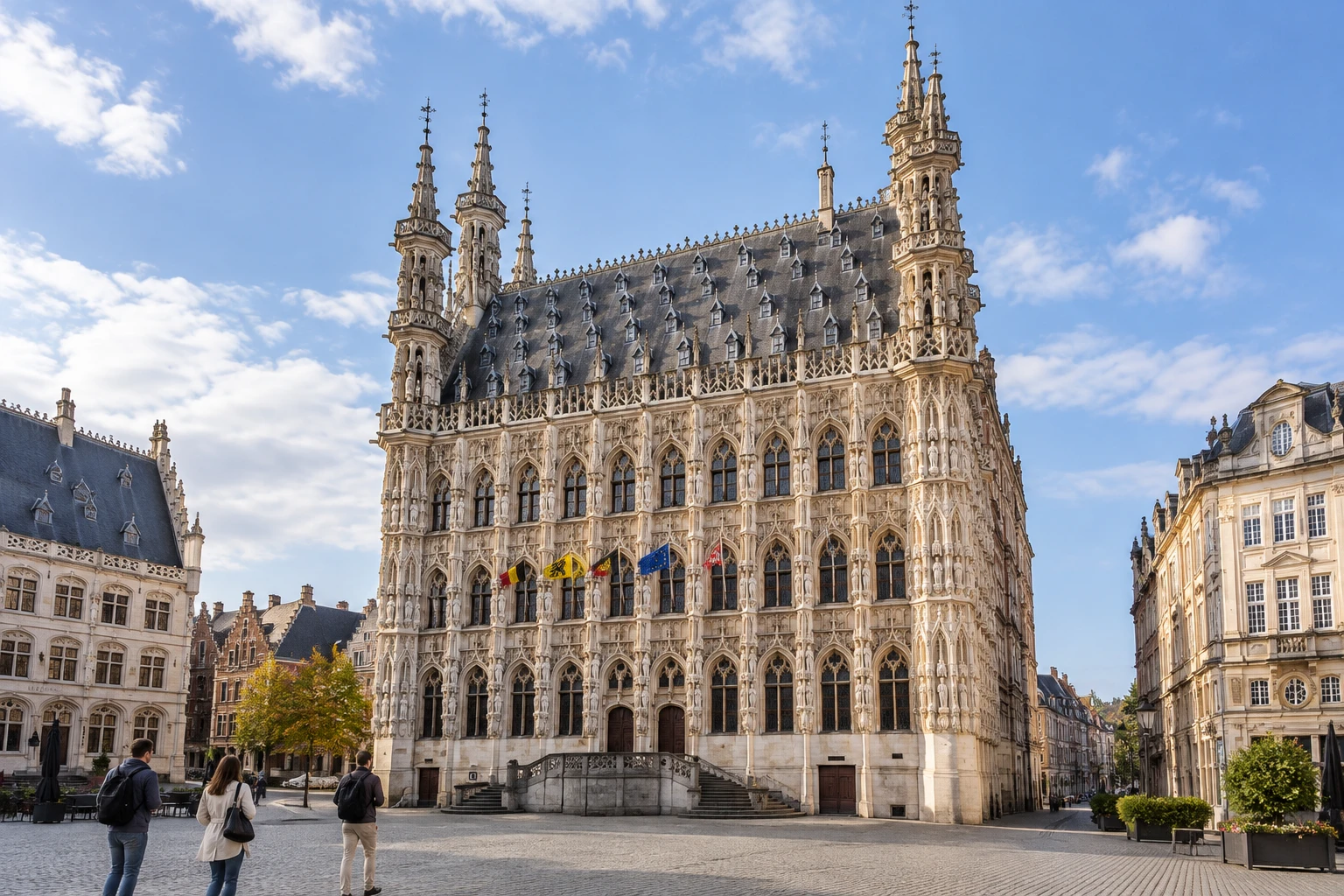
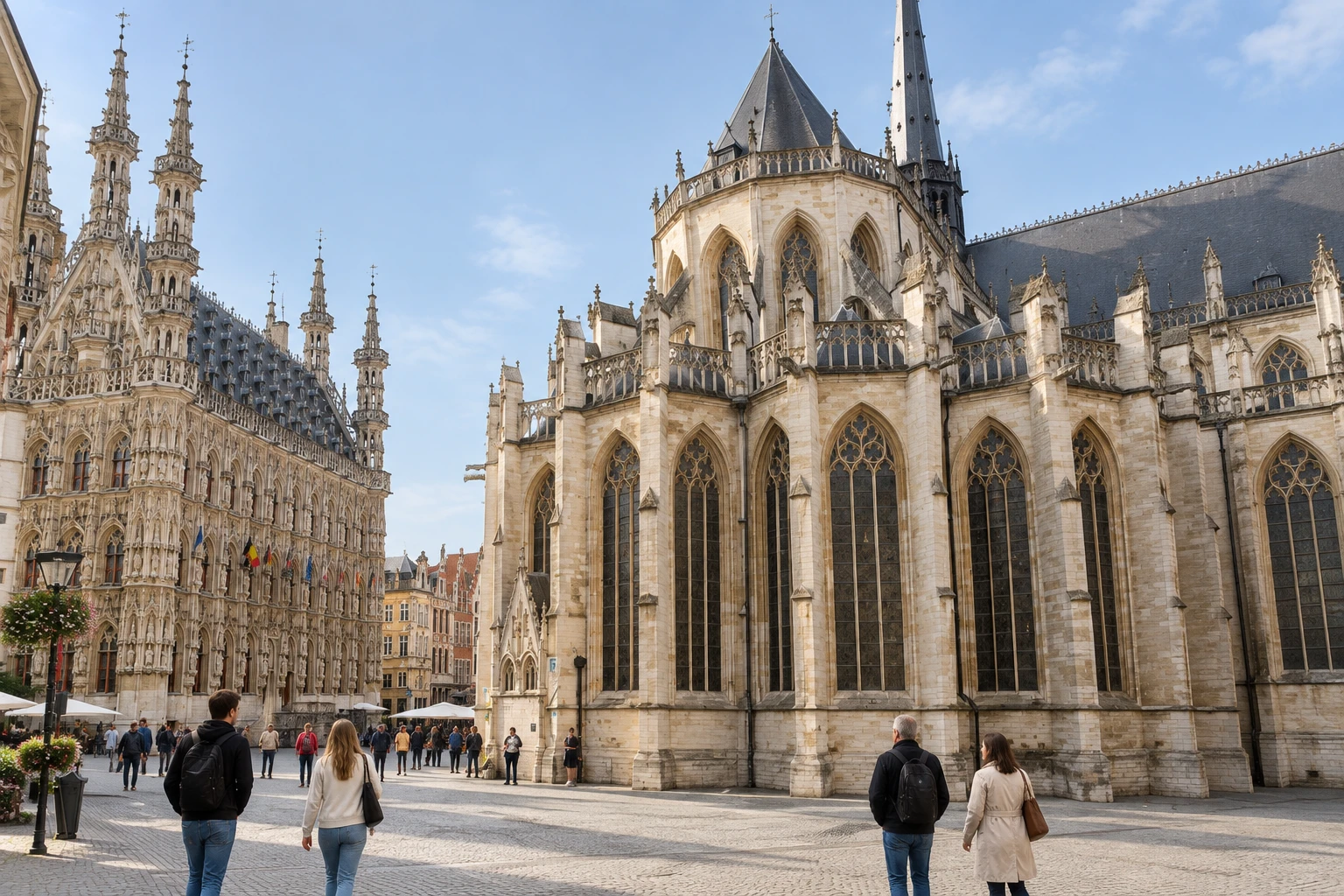
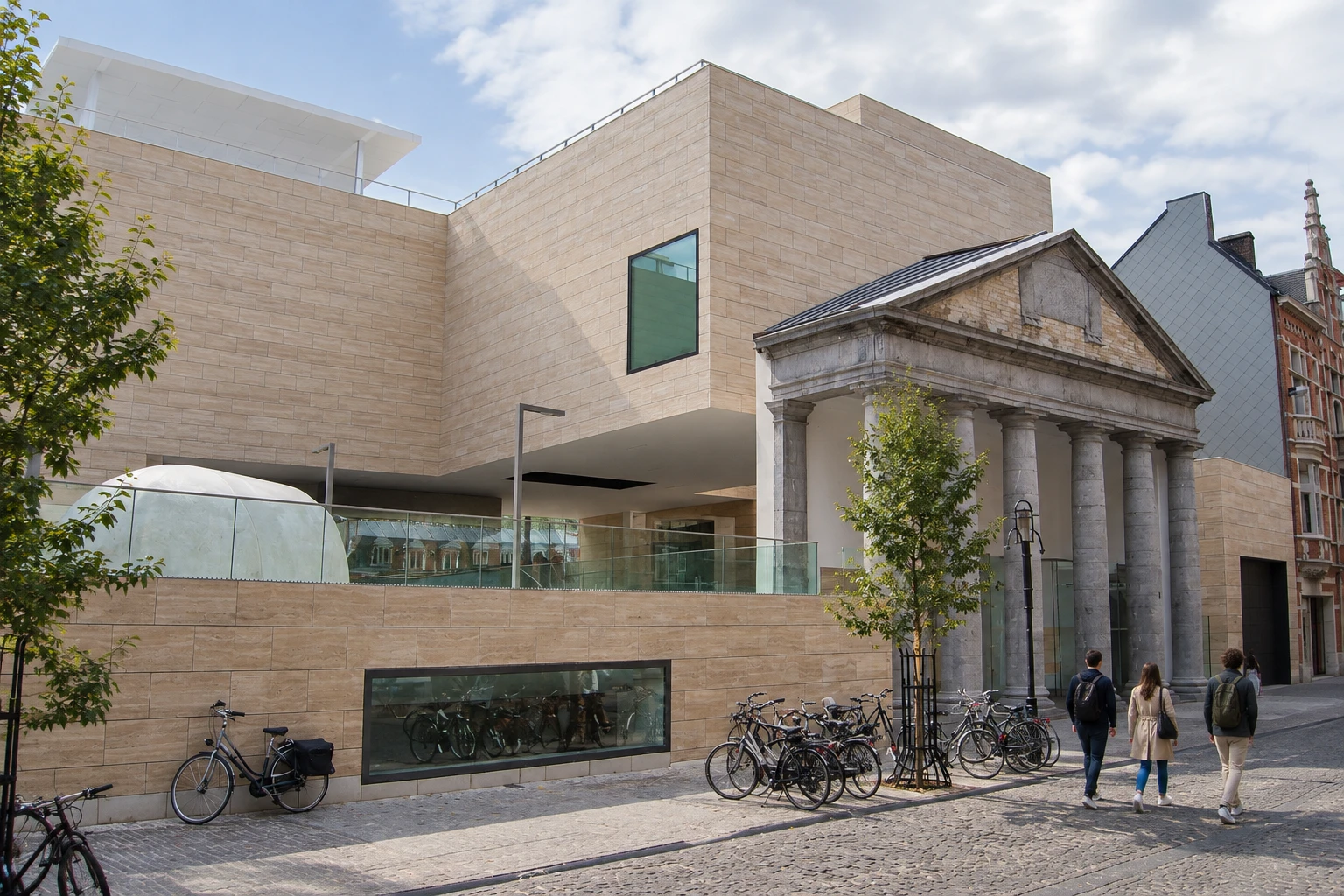
Illustrative images. The pictures in this guide are illustrations based on the real place, not photographs, and may differ from it.

Get it on Google Play

The city

What to expect from Leuven.

Lovaina is the capital of Brabante Flamengo and the seat of KU Leuven, a university founded in 1425. Flemish is spoken, the Dutch used in Bélgica, and English is common among students and traders. The centre is walkable: the Grote Markt with the Stadhuis and the Sint-Pieterskerk, the M Leuven, the Universiteitsbibliotheek with its tower, the Groot Begijnhof and the Oude Markt. In Heverlee, to the south, is the Abdij van Park.

Leuven is the capital of Flemish Brabant in Flanders, about 25 km east of Brussels. It’s a Flemish-speaking city shaped above all by its university. Founded in 1425, KU Leuven occupies old colleges, libraries, an entire beguinage and a castle. Students set the pace during the academic year, from late September through June. In July and August, the streets quiet down and events move into the squares.

A ring road encloses the compact, walkable historic center. The streets around the Grote Markt are pedestrian-only. From the train station, follow Bondgenotenlaan for just over a kilometer to reach the square. Here you’ll find St. Peter’s Church, a late Gothic building with paintings by Dirk Bouts still in the places they were made for, and the Stadhuis, the 15th-century town hall. A few steps away, bar terraces fill the Oude Markt. To the east, the university library and its carillon tower overlook Ladeuzeplein.

Each side of downtown has a different character. To the south, Naamsestraat runs past the colleges and ends near the Great Beguinage, a 13th-century UNESCO World Heritage Site crossed by the Dijle River. To the north, the Small Beguinage and St. Gertrude’s Abbey give way to Vaartkom, the old canal harbor, where former factories and breweries have become homes, restaurants and waterfront parks. The summit of Keizersberg overlooks the whole city. To the west is the Kruidtuin, the botanical garden founded by the university in 1738.

Three areas outside the ring road but still within city limits are worth a bike ride, bus trip or longer walk. In Heverlee to the south, ponds and meadows surround Park Abbey, a Norbertine abbey founded in 1129. Arenberg Castle stands on the science campus. Behind the station, Kessel-Lo has the Provinciedomein family recreation park and Vlierbeek Abbey. Farther south, the Heverleebos woods begin.

Beer is part of local history. Stella Artois is brewed here and offers guided brewery tours, while smaller neighborhood and abbey breweries tell other parts of the story. Take your time and enjoy a taste of local culture.

The climate is temperate and damp, with rain throughout the year. In winter, December through February, highs average around 7 °C and it gets dark by midafternoon. It’s a season for museums, the church and the Christmas market. Spring, from March through May, brings longer days and flowers in the parks. Summer, from June through August, has average highs of 22 to 24 °C and late sunsets. Fall, September through November, brings students back and autumn color to Arenberg Park.

One day covers downtown. With two days, add M Leuven, the library tower and the northern neighborhoods. Spend a third day exploring Heverlee by bike.

Share: WhatsApp

Where to stay

30 places to stay in Leuven.

Where to eat

30 places to eat in Leuven.

Map of Leuven

The city's hotels and restaurants on the map.

The local experience

Things to do in Leuven

Leuven · Belgium · Monument

Leuven Town Hall

Leuven’s town hall on the Grote Markt is a Brabantine late-Gothic building, erected between 1439 and 1469. The façade has 236 niches with statues, and the interior can be seen on a guided tour.

Explore Leuven Town Hall

Leuven · Belgium · Church

St. Peter's Church

15th-century Gothic church on the Grote Markt, with artworks in their original locations, such as The Last Supper by Dieric Bouts, painted between 1464 and 1468, and the Sedes Sapientiae, a symbol of KU Leuven.

Explore St. Peter's Church

Leuven · Belgium · Museum

M Leuven

Leuven art museum, with around 46,000 works, from Brabantine Gothic sculpture to 19th-century paintings and contemporary art, housed in a building that combines a historic house with architecture by Stéphane Beel.

Explore M Leuven

Leuven · Belgium · Monument

Leuven University Library

Central library of KU Leuven, on the Ladeuzeplein, built between 1921 and 1928 with American funding after the old one was set on fire in 1914. It has a monumental reading room and a tower with a carillon of 63 bells.

Explore Leuven University Library

See 5 more places in Leuven

To choose before you go

Tours in Leuven

Where each tour starts, how long it takes, how it is done, what is included and the price range.

Grote Markt, St. Peter’s Church and the Oude Markt in the heart of Leuven

From Grote Markt Self-guided walk About 2 hours Morning Easy (nearly level cobblestone streets)

The Grote Markt began around 1450 as a new square filled with artisans. St. Peter’s Church and the Gothic Town Hall went up side by side around the same time. The Town Hall took thirty years and three master builders to complete. The visit here is to the church. Fifteenth-century St. Peter’s is an example of late Gothic architecture, and the church and belfry are a UNESCO World Heritage Site. From Dirk Boutslaan you can clearly see the unfinished towers, the result of unstable ground. Inside, works of art still occupy the places for which they were made, including Dirk Bouts’s paintings, Jan Borman’s Triumphal Cross, the tomb of Duke Henry I and the chapel of Fiere Margriet. A tablet with images and explanations guides you through. There’s also a printed guide and a self-paced family trail. On Fridays around noon, the city carillonneur plays the church bells, and you can hear the concert from the square. Leave through the side and walk less than 300 meters to the Oude Markt, where bars stand shoulder to shoulder and their terraces fill the square. Locals call it the longest bar in Europe. The square is almost empty in the morning. Come late afternoon or on an evening during the academic year to see it fill up.

Stops: Grote Markt, Sint-Pieterskerk, Town Hall, Oude Markt.

Includes: The church and squares are free. The tablet tour of the church's artworks may cost extra. Check current prices. Pay for your own drinks at the bars.

Tip: Visit the church at opening time and avoid services. Friday is a good choice for the carillon and market on Ladeuzeplein, a few minutes away.

Best time: Year-round. From May to September, the outdoor tables on the Oude Markt stay busy until late.

ILUVLeuven Walk: a 45-minute guided tour of the historic center

From Visit Leuven tourist office on Jozef Vounckplein Guided walk About 45 minutes Afternoon Easy

If you’d like to hear the city’s history from someone who lives here, a guided walk runs every day. The small-group ILUVLeuven Walk leaves from the tourist office and finishes on the Grote Markt. The guide starts with the square and the sculpted facade of the Gothic Town Hall. Around the corner are the University Hall, the former cloth market that became the university headquarters, and adjoining Hogeschoolplein, two stops that tell the story of nearly 600 years of university life. On the Oude Markt, the subject turns to beer. The walk ends outside St. Peter’s Church, leaving you free to visit the interior afterward. The tours run in Flemish and English on different days of the week, always in the early afternoon. The walk is also the starting point for the city’s combined ILUVLeuven Ticket. It includes three experiences: the guided walk, a visit to the university library and tower, and your choice of M Leuven or Park Abbey. When buying, select the date, time and language for the walk. The vouchers for the other two visits are valid for up to three days afterward.

Stops: Grote Markt, Universiteitshal, Hogeschoolplein, Oude Markt, Sint-Pieterskerk.

Includes: The guided walk costs extra and is free for children under 12. The ILUVLeuven Ticket costs less than buying the three tickets separately. Check current prices.

Tip: Check which days the walk is offered in English and buy online or at the tourist office. With the combined ticket, plan around M Leuven's Wednesday closure and Park Abbey's Monday closure.

Best time: Daily, year-round.

Ladeuzeplein: the university library, the tower, and M Leuven

From Ladeuzeplein On foot 3 to 4 hours Morning or afternoon Moderate, with stairs up the tower

Ladeuzeplein and neighboring Herbert Hooverplein form the largest open space downtown. On one side stands the university library, built in Neo-Renaissance style between 1921 and 1928 with American funding after the original library was destroyed in World War I. Individual visitors follow an audio guide available in six languages, including Spanish and English. The route passes the grand reading room and climbs the 80-meter tower, with photographs and stories about the building on every floor and views of downtown and the surrounding countryside at the top. On weekdays, students and researchers use the reading room, and visitors see it from the central corridor. Guided visits run Friday, Saturday and Sunday. On two days of the week, the carillonneur leads a visit ending with a concert you hear from the tower balcony. A few blocks away is M Leuven, the city art museum. Architect Stéphane Beel’s complex brings contemporary architecture together with historic buildings. The collection focuses on art made in Leuven and Brabant from the Middle Ages through the 19th century, with work by Constantin Meunier, Jef Lambeaux and Georges Minne, alongside temporary exhibitions. Leave time for the courtyard garden and rooftop terrace. For a break, enter Sint-Donatuspark from Hooverplein. This English-style garden preserves remnants of the old city wall and a sandstone tower.

Stops: University Library, Ladeuzeplein, Herbert Hooverplein, M Leuven, Sint-Donatuspark.

Includes: The library and tower have a separate ticket from M Leuven. One museum ticket covers the collection and exhibitions. Both sites are included in the ILUVLeuven Ticket. The park is free. Check current prices.

Tip: M Leuven closes Wednesdays. Visits with a carillon concert require reservations. On Friday mornings the square hosts a market selling food, flowers, and fabrics.

Best time: Year-round. The tower view extends farthest on clear days. The square hosts the Christmas market in December.

Naamsestraat: the University Hall, the colleges and Lemaître’s Big Bang

From Rector De Somerplein Self-guided walk About 2 hours Morning or afternoon Easy

Naamsestraat runs south from the Grote Markt through six centuries of university history. The first large building is University Hall. Weavers once sold cloth here, and after the university’s founding in 1425 the city gave it part of the market for classes. The fire of August 25, 1914, left little beyond the facade and destroyed about 300,000 books and manuscripts. The building is still the university headquarters and the place where new students enroll. One section is open to everyone, with the university shop, a café and worktables. Farther along are the colleges, most now used by university departments and seen from outside. Heilige Geestcollege, founded in 1442, was the first college. Atrechtcollege was a chancellor’s house, remodeled in 1508 to accommodate poor students. On the Gothic brick facade of Hogenheuvelcollege, the Roman numeral LX plays on the builder’s surname, van ’t Sestich. Between them stands St. Michael’s Church, built between 1650 and 1666. Its altar-like facade, with columns and friezes, was the only part to survive the destruction of 1944. In the courtyard of Premonstreitcollege stands Georges Lemaître, the professor who presented what became known as the Big Bang theory in Leuven in 1931. The city commemorates it with Oeratoom (Primeval Atom), 80 medallions set into downtown paving along a 2 km walk that begins on Rector De Somerplein.

Stops: Universiteitshal, Heilige Geestcollege, Sint-Michielskerk, Atrechtcollege, Hogenheuvelcollege, Premonstreitcollege.

Includes: Free self-guided walk. You can download the medallion map and the university walking app at no charge. Guided visits inside University Hall and some colleges run on set dates and cost extra.

Tip: The shop and café at University Hall open on weekdays. St. Michael’s Church and the other smaller churches usually open to visitors only from April through September. Continue on to the Great Beguinage, farther in the same direction.

Best time: Year-round. During the academic year, from late September through June, the street fills with students.

Along the Dijle River: the Great Beguinage, Dijlepark and Dijleterrassen

From Groot Begijnhof Self-guided walk About 1 hour 30 minutes Morning or afternoon Easy (uneven stone paving)

The Dijle runs through Leuven almost hidden between the houses. This walk connects three places where the river comes into view. First is the Great Beguinage on the south side of downtown. Founded in the 13th century, it housed around 360 beguines at its 17th-century peak. These women lived in a religious community without taking nuns’ vows. Lanes, courtyards, gardens and dozens of sandstone houses and convents surround the 14th-century Gothic Church of St. John the Baptist, where restoration uncovered wall paintings from the 14th, 15th and 17th centuries. The university owns the complex and houses students, visiting professors and staff here. UNESCO listed it in 1998 along with twelve other Flemish beguinages. Carillon concerts take place on the first and third Wednesdays of each month. A few steps away is Dijlepark, with an entrance on Schapenstraat beside the statue of the Dijle duck. It’s a small park with a delicate bridge and a bandstand, a good spot for a snack in the shade. Back downtown, the Dijleterrassen are wooden steps at the water’s edge between Dirk Boutslaan and Jaartallenpad, where locals sit at the end of the day.

Stops: Great Beguinage, Sint-Jan-de-Doperkerk, Dijlepark, Dijleterrassen.

Includes: Admission is free throughout, including the beguinage, park and riverside terraces.

Tip: People live in the beguinage. Keep your voice down and stay on the streets. The paving can be difficult for wheelchairs and strollers. The church usually opens from April through September. Rain makes the wood of the Dijleterrassen slippery, and the park closes in high winds.

Best time: April through October, when the gardens are green. On one Saturday evening in December, candles light the beguinage.

Leuven street art, with 16 murals in 6 km

From Herbert Hooverplein On foot with the brochure or app About 2 hours Morning or afternoon Easy (6 km on level ground)

Leuven’s official street art walk takes you beyond the familiar shopping streets. The 6 km route starts on Herbert Hooverplein and visits 16 works around downtown, through residential neighborhoods, quiet streets, small squares with playgrounds and viewpoints. Look for Leon Keer’s portrait of Dieric Bouts, which places the 15th-century painter on a city wall, Frames of Mind by Artoon, On the Hunt for Nectar by TuzQ, the collaborative Wijngaardpoort and Verwarr(m)ing by Bisser. Works come and go, so check the latest edition of the route booklet. The route has no signs. Follow the directions in the booklet, sold at the tourist office and available to download, or use the Street Art Cities app, which maps the works and names the artists. For more, try one of the variations. Two walks combine murals and churches, one heading from downtown toward the Great Beguinage, the other linking the Kruidtuin botanical garden and St. Gertrude’s Abbey. Two shorter routes, taking 45 minutes and an hour and a half, explore Kessel-Lo behind the station. You can also cycle them.

Stops: Herbert Hooverplein, Kruidtuin, Kessel-Lo.

Includes: Free, self-guided walk. The tourist office sells a printed booklet. The digital version and app are free.

Tip: Download the brochure or app before setting out. Stop at the Kruidtuin for a break. The botanical garden is free and has greenhouses for shelter from rain. Dogs aren't admitted.

Best time: April to October, with long days and drier weather.

See 5 more tours

North of downtown: the Small Beguinage, Sluispark, Vaartkom and the Keizersberg lookout

From Mechelsestraat Self-guided walk About 3 hours Afternoon Easy (short climb to Keizersberg)

The center changes character as you head up Mechelsestraat past food shops and other stores. First mentioned in 1272, the Small Beguinage consists of one street and two dead-end lanes with about thirty traditional Flemish houses, restored and sold as private homes. It stands in the shadow of St. Gertrude’s Abbey Church, built for the Augustinians between the 13th and 15th centuries and known for its Gothic choir stalls. The abbey buildings, dating from the 14th to 17th centuries, became homes. One houses a scouting museum open on Sunday afternoons from May through October. Farther on, the canal district begins. At Sluispark, a new park, the Dijle flows in the open again. Broad steps lead down to the river and there’s a water play area. Next door, the former Stella Artois brewery has become De Hoorn, a space for creative businesses, with a café and restaurant whose terrace faces the park. Vaartkom is the basin of the old harbor. The once rundown industrial and brewing district now has a promenade with waterside benches, shops and restaurants. Look for Stéphane Beel’s Balk van Beel housing complex and artworks mounted high on the facades. It’s 1.1 km from the station. Finish by heading up Mechelsestraat to Keizersberg. The 19th-century Benedictine abbey, built by monks from Maredsous, has a long, castle-like wall. Its garden is a public park overlooking the city.

Stops: Small Beguinage, Sint-Geertrui-abdij, Sluispark, Vaartkom, De Hoorn, Abdij Keizersberg.

Includes: Self-guided outing with free access to the beguinages, parks and Vaartkom promenade. The houses in the Small Beguinage are private homes.

Tip: Save Keizersberg for late afternoon. The park closes earlier from October through March and later from April through September. St. Gertrude’s Church is usually open to visitors only from April through September.

Best time: April through September, when the days are long and the Vaartkom terraces are open.

Beer in Leuven: the Stella Artois tour and neighborhood breweries

From Leuven Station (Martelarenplein) On foot or by bike 3 to 4 hours Afternoon Easy, with 1.3 km of walking

Stella Artois is brewed in Leuven, and its brewery, part of AB InBev, offers guided tours Friday through Sunday. The guide follows the process from malted grain and hops through the fermentation tanks, kettles and working bottling line. The tour lasts about two hours, runs in Flemish or English and ends with a glass of beer for adults. You must book a tour to enter the brewery. Smaller breweries also operate in town. In Kessel-Lo, 1.7 km from downtown, De Coureur is a neighborhood brewery tucked into a residential street, with a tasting room and weekend tours. At Park Abbey in Heverlee, Braxatorium Parcensis once again brews on the ground floor of the guesthouse, on the site of the abbey’s old brewery, using the canons’ recipes and ingredients from the area. Several routes link the sights. The Leuven Beer Adventure walk takes in downtown streets, well-known beer bars and places beyond the ring road, with a downloadable booklet. By bike, the 15 km Leuven Beer City route leaves from Martelarenplein outside the station and passes three local breweries. It has no signs, so follow the GPS file. On Fridays and Saturdays, a beer specialist also leads a walk with five regional beers to taste at different bars.

Stops: Brouwerij Stella Artois, Brouwerij De Coureur, Braxatorium Parcensis, Oude Markt.

Includes: The Stella Artois tour requires a separate advance online ticket and is free for children under 12. Guided tasting walks and brewery drinks also cost extra. Check current prices.

Tip: Stella Artois tours often fill up. Book ahead and wear comfortable shoes. Wheelchair users should email the brewery in advance. Taste small servings, alternate with water, and avoid cycling or driving after drinking.

Best time: Year-round. Stella Artois brewery tours run Friday through Sunday.

Park Abbey, the four-pond loop, PARCUM Museum and the mill

From Central Leuven On foot, by bike or by bus to Heverlee About 3 hours Morning or afternoon Easy (paved paths with benches)

Park Abbey stands in Heverlee, within the municipality, 2.4 km from downtown. Its name recalls a hunting park in the Molenbeek Valley southeast of the city. Godfrey the Bearded, Count of Leuven, enclosed the park with a palisade and moat and donated the land to the Norbertines in 1129. The abbey grew into one of the leading religious houses in the Southern Netherlands and is considered the best-preserved abbey in Belgium. The grounds cover 42 hectares, much of them protected as a nature reserve, and are open daily. The full loop past four ponds and through the meadows is about 2 km on paved paths with benches. Another walk, about 2.5 km long, takes in ten different views of the abbey, each paired with a poem. Buy the booklet at reception or download the route. A Museum PARCUM ticket lets you explore the restored historic rooms, including the cloister, refectory and library, with their stucco ceilings and exhibitions. On higher ground, the Church of St. John the Evangelist preserves traces of the 13th-century Romanesque church beneath white stucco and Baroque decoration. A stone path leads through the cemetery to the church. On the first Sunday of each month, the watermill runs and the miller sells flour made from local grain. The Peace Carillon gives a concert on Wednesdays. The De Wikke farm shop sells organic produce.

Stops: Park Abbey, Museum PARCUM, Sint-Jan-Evangelistkerk, Heverlee.

Includes: The grounds, lakes, and church are free to visit. Museum PARCUM charges admission and is an alternative to M Leuven on the ILUVLeuven Ticket. Check current prices.

Tip: The museum closes on Mondays. Visitors with limited mobility can drive to the church, which has an entrance ramp. If cycling, combine the visit with nearby Arenberg Castle, also in Heverlee.

Best time: April to October, when the meadows are green. The mill operates on the first Sunday of the month.

Cycling the Best of Leuven Route via Arenberg, the Dwaaltuin and the campus

From Sint-Pieterskerk (junction 10 on the cycling network) By bike 2 to 3 hours Morning or afternoon Easy (15.5 km)

Students get around by bike, and a short visitor route lets you experience Leuven the same way. The 15.5 km Best of Leuven Route follows numbered junctions on the cycle network. Start at junction 10 beside St. Peter’s Church, ride through the provincial park in Kessel-Lo and the Arenberg campus in Heverlee, then return downtown via the Oude Markt for a drink if you like. The principal stop is Arenberg Castle. The lords of Heverlee built the first castle here in the 14th century. The Renaissance building dates to the early 16th century and was extensively remodeled in the 19th. In 1916, the Duke of Arenberg donated the estate to the university. The castle is now part of the science and technology campus. The park is always open, with lawns for picnics. Interior visits are limited to scheduled heritage tours. Inside the park, the Dwaaltuin is a garden maze designed by the artist duo Gijs Van Vaerenbergh for the university’s 600th anniversary. Climbing plants grow over curved steel grids in this open maze. The work changes with the seasons and gradually becomes as much garden as architecture. For a longer ride, the 31.6 km Meerdaal Route crosses the Heverleebos and Meerdaalwoud forests. The 34 km Big Bang Route links the statue of Lemaître in Leuven with its counterpart in Louvain-la-Neuve.

Stops: Sint-Pieterskerk, Arenberg Castle, Dwaaltuin, Provinciedomein Kessel-Lo, Oude Markt.

Includes: Self-guided route with no ticket. The castle park is free. Rent bikes separately at the Fietspunten at the station and on Rector De Somerplein. Pick up a route brochure at the tourist office or download the GPS track.

Tip: Write down the numbered junctions before you start. The station Fietspunt opens on weekdays and also on Saturdays from April to mid-October. The Rector De Somerplein branch opens daily, has few bikes and requires reservations. The castle park closes in stormy weather.

Best time: April to October. In October, Arenberg Park has fall colors.

Kessel-Lo: Park Belle-Vue, the Provinciedomein, and Vlierbeek Abbey

From Leuven station, on the Kessel-Lo side On foot or by bike About 3 hours Afternoon Easy

Kessel-Lo, on the far side of Leuven’s railway tracks, gives a sense of everyday life away from the downtown squares. Right behind the station, between the railway and Martelarenlaan, Park Belle-Vue forms a long strip of lawns, trees, play equipment and two neighborhood squares. Murals decorate the walls here, and both Kessel-Lo street art routes pass through. Families head for Provinciedomein Kessel-Lo, a provincial recreation, sports and education park. It has playgrounds, pedal boats, rowboats and mini golf, sports courts, skateboarding and skating facilities and running routes. Children can also explore a traffic park, a bee house and a center devoted to water. Farther on is Vlierbeek Abbey, whose eventful history began in 1125. Its monumental Neoclassical sandstone church, restored inside and out, serves as the neighborhood parish church. The old guest quarters have become homes. A cemetery stands alongside the abbey. Kessel-Lo has a neighborhood market on Wednesday afternoons on Becker-Remyplein.

Stops: Park Belle-Vue, Provinciedomein Kessel-Lo, Abdij van Vlierbeek, Kessel-Lo.

Includes: The parks and abbey grounds are free. Pedal boats, other boats, and miniature golf cost extra. Provinciedomein charges for parking from April to September. Check current prices.

Tip: Distances are short by bike. The Provinciedomein stays open later from late March to late October and closes during storms and strong winds.

Best time: April to September, when the boats and pedal boats usually operate and the park stays open later.

Day by day

1, 2 and 3-day itinerary in Leuven

Suggestions to plan the trip. Change the order of the days according to the weather and tour availability.

1 day · One day in Leuven: from Bouts’s church to the beguinage

For Day-trippers arriving by train from Brussels or the airport · Based in Downtown Leuven
  1. Day 1 · Grote Markt, the library, Naamsestraat and Oude Markt

    From the station, walk along Bondgenotenlaan to the Grote Markt. Start at St. Peter’s Church for the paintings by Dirk Bouts, then take a turn around the square. Continue to Ladeuzeplein and climb the university library tower with the audio guide. Seeing the city from above early on helps you get your bearings. Have lunch nearby or on Tiensestraat. In the afternoon, walk down Naamsestraat. Go inside University Hall, see the colleges and the facade of St. Michael’s Church, then continue to the Great Beguinage. Take your time in the lanes and on the bridges over the Dijle before resting in Dijlepark. Return downtown via the Dijleterrassen and finish on the Oude Markt with a local beer on a terrace before catching your train. If you prefer a guide, adjust your late-morning plans to join the ILUVLeuven Walk from the tourist office in the early afternoon. Save M Leuven, Vaartkom and Heverlee for another day.

2 days · Two days in Leuven: the university, art and the canal district
For Overnight visitors who want time for downtown, the museum and the north side of the city · Based in Downtown Leuven
  1. Day 1 · St. Peter’s Church, Naamsestraat and the Great Beguinage

    Spend the morning on the Grote Markt and follow the full art trail inside St. Peter’s Church. On a Friday, stay for the noon carillon concert on the square and visit the Ladeuzeplein market. After lunch, join the guided ILUVLeuven Walk or explore Naamsestraat on your own, from University Hall to the colleges, looking for the Oeratoom medallions in the pavement. Spend the late afternoon at the Great Beguinage, Dijlepark and the Dijleterrassen. Have an early dinner and visit the Oude Markt in the evening, when the square is at its liveliest.

  2. Day 2 · The library, M Leuven, Vaartkom and Keizersberg

    Begin at the university library and tower on Ladeuzeplein, then walk a few blocks to M Leuven and finish your museum visit on its rooftop terrace. The museum closes on Wednesdays, so switch your days around if needed. In the afternoon, follow Mechelsestraat to the Small Beguinage and St. Gertrude’s Abbey. Continue through Sluispark to the Vaartkom promenade. From Friday through Sunday, you can fit in the guided Stella Artois brewery tour if you’ve booked ahead. End the day in the Keizersberg garden overlooking the city.

3 days · Three days in Leuven: downtown, the canal and Heverlee by bike
For Travelers who also want to explore the abbeys, castle and parks outside the ring road · Based in Downtown Leuven
  1. Day 1 · Downtown on foot

    Start with the Grote Markt and St. Peter’s Church. In the afternoon, take the ILUVLeuven Walk or explore Naamsestraat on your own, including University Hall, the colleges and the statue of Lemaître at Premonstreitcollege. Finish at the Great Beguinage and Dijlepark, then have dinner near the Oude Markt.

  2. Day 2 · The museum, tower and north side of town

    Spend the morning at the university library, including its tower, and at M Leuven. After lunch, follow the street art trail from Herbert Hooverplein or head straight north to the Small Beguinage, Sluispark and Vaartkom. Visit the Keizersberg lookout in late afternoon. For a Friday, Saturday or Sunday visit, reserve the Stella Artois brewery tour.

  3. Day 3 · Heverlee and Kessel-Lo by bike

    Rent a bike at one of the Fietspunten and follow the Best of Leuven Route. Stop at Arenberg Castle to walk through the park and the Dwaaltuin maze. Detour to Park Abbey. Circle the four ponds, visit Museum PARCUM, which closes on Mondays, and walk up to the church. On the first Sunday of the month, the watermill will be running. On the way back, the route passes the provincial park in Kessel-Lo, a good stop with children. Vlierbeek Abbey is a little farther on. Confident cyclists can spend the afternoon riding the Meerdaal Route through Heverleebos instead. Without a bike, walk or take a bus to Park Abbey and save Kessel-Lo for the end of the day.

Best time to go

When to go: Leuven month by month

The seasons shown are the most usual ones; nature doesn't always follow the calendar.

January Some rain

Winter · End of Wintertijd Leuven and the lights in the Kruidtuin

Midwinter brings average highs near 7 °C, lows near 1 °C, rain on about 13 days and possible frost. It gets dark in midafternoon. The city’s winter program and the light trail in the botanical garden continue into the first part of the month. Enjoy St. Peter’s Church, M Leuven and the library with fewer people. Smaller churches remain closed until spring, and parks close earlier.

February Some rain

Cold, damp weather · Artefact festival

Winter continues, with average highs near 8 °C, lows near 1 °C and rain on about 12 days. The days lengthen gradually. The Artefact festival combines art, science and technology in exhibitions and performances. Students are in town and the Oude Markt stays lively at night. Bring a heavy coat and waterproof shoes.

March Some rain

Late winter · Leuven Jazz · Docville documentary film festival

Spring arrives late in the month, with average highs near 12 °C, lows near 3 °C and rain on about 11 days. Leuven Jazz brings concerts to venues across town, and Docville screens documentaries. The Kruidtuin begins to bloom. Bring a warm layer, especially for the top of the library tower.

April Low rain

Driest month · Summer hours at churches and parks · Afrika Filmfestival

The driest month brings average highs near 16 °C, lows near 5 °C and cold nights. From April, smaller churches reopen, Keizersberg and Sint-Donatus parks stay open later, and the station Fietspunt resumes Saturday rentals. Late in the month, the Voices of Passion festival features Renaissance polyphony. It’s a good month for Park Abbey.

May Some rain

Spring · CIRKL circus festival

Spring is well established, with average highs near 20 °C, lows near 9 °C and rain on about 10 days. Long days draw people to the terraces of the Oude Markt and Vaartkom. CIRKL brings contemporary circus to town. It’s a good time to cycle the Best of Leuven Route and visit Arenberg Castle Park. Belgian public holidays make May weekends busy.

June Some rain

Early summer · End of the academic year

Highs average near 22 °C and lows near 12 °C, with rain on about 10 days, sometimes in showers. These are the longest days of the year. Exams bring students into libraries and cafés during the day. Visit the ponds at Park Abbey or spend the late afternoon on Keizersberg. Bring a light layer for the evening.

July Some rain

Summer · Het Groot Verlof · Rock Werchter in nearby Rotselaar

The warmest month brings average highs near 24 °C and lows near 14 °C, sometimes topping 30 °C during heat waves. Rain falls on about 10 days. Students leave for vacation, and Het Groot Verlof brings outdoor concerts, movies and a food fair to the squares. Early in the month, Rock Werchter in Rotselaar fills Leuven station with festivalgoers catching shuttle buses.

August High rain

Rainy summer · Het Groot Verlof

Summer continues, with average highs near 24 °C and lows near 14 °C. It’s one of the wetter months, with heavy showers that pass quickly. Summer events continue in the squares. The city is quieter while students are away, and the provincial park in Kessel-Lo has some of its busiest days. Pack a compact umbrella even when the sun is out.

September Some rain

Back to school · September funfair

Highs average near 21 °C and lows near 11 °C, with rain on about 10 days. The September funfair takes over Ladeuzeplein and the Friday market moves during the fair. The academic year begins late in the month, bringing thousands of students back to Naamsestraat and the Oude Markt. The visiting season at smaller churches ends in late September. It’s a good month for cycling.

October Some rain

Fall · Changing leaves in Arenberg Park

Fall brings average highs near 16 °C, lows near 8 °C and rain on about 11 days. Leaves change color in Arenberg Castle Park and the Heverleebos woods. Parks begin closing earlier, and Saturday rentals at the station Fietspunt end in midmonth. Daylight saving time ends in late October, bringing much earlier sunsets.

November Some rain

Short days · Playground festival · Short film festival

Highs average near 10 °C and lows near 4 °C, with often-gray skies and rain on about 12 days. Darkness arrives in the late afternoon. Playground, a live arts festival, and the short film festival late in the month fill venues around town. Spend time in museums, churches and beer bars. Unpaved woodland trails get muddy.

December High rain

Wintertijd Leuven · Christmas market · Candlelit beguinage

Winter begins with the shortest days of the year. Highs average near 7 °C and lows near 2 °C. This is the wettest month, with rain on about 14 days. More than 120 Christmas market stalls fill Ladeuzeplein and Hooverplein, the botanical garden has a light trail, and on one Saturday the carillon plays as candles illuminate the Great Beguinage. Check museum hours over the holidays.

Plan the journey

How to get there: Leuven

By air

Leuven has no airport. The nearest is Brussels Airport (BRU) in Zaventem, between Brussels and Leuven, with a train station beneath the terminal. Direct trains reach Leuven station in about 15 minutes and run roughly every half hour. Trips starting or ending at the airport carry a surcharge, generally already included in the ticket.

Brussels South Charleroi Airport (CRL) mainly handles low-cost flights within Europe and is much farther away. The route goes through Brussels.

Travelers from other continents usually fly into Brussels or another major airport nearby, such as Paris, Amsterdam or Frankfurt, and continue by train. From Brazil, the route usually involves a connection in a European city. Check the route and connections before buying tickets.

By train

The train is the easiest way to arrive. SNCB/NMBS services leave Brussels-Midi (Brussel-Zuid), Brussels-Central and Brussels-North several times an hour and take about 25 minutes. The line continues to Liège, and trains between Brussels and Hasselt also stop in Leuven.

International high-speed trains from Paris, London, Amsterdam and Germany arrive at Brussels-Midi or Liège. From either station, transfer to a domestic train to Leuven.

Leuven station is on Martelarenplein at the eastern edge of downtown. The Grote Markt is just over a kilometer away on foot via Bondgenotenlaan or the parallel pedestrian shopping street, Diestsestraat. City buses, taxis and bike rentals are outside the station.

Check the railway operator’s journey planner for the day’s times, especially during track work.

By bus

International coaches stop in Leuven. Direct routes serve the Dutch cities of Eindhoven, Nijmegen and Maastricht, as well as London and several German cities, including Cologne, Bonn, Frankfurt and Munich. Trips take longer than by train. Buy a ticket online with a reserved seat.

Within Belgium, the train is the more practical choice from Brussels or the airport. De Lijn regional buses serve the neighborhoods and nearby towns, with their main stop at the train station.

Check departure times and boarding points with the operator before traveling.

By car

Leuven is about 25 km east of Brussels on the E40, which passes south of the city and continues to Liège. Without traffic, the trip takes about 30 minutes. The E314 branches off toward Hasselt and Germany to the east.

The historic core is closed to cars. The rest of downtown is divided into five sectors. Within each, a circuit leads from the ring road to a parking garage and back to the ring without crossing the city. The city recommends parking along the ring road, where rates are lower.

Parking Vaartkom beside the old port has a free shuttle downtown on Fridays, Saturdays and Sunday shopping days. Accessible parking spaces are available at several locations, and Kessel-Lo has a motorhome area.

Check current parking rates before you go.

Getting around the city

You can reach most places on foot. From the station, the Oude Markt is 1.2 km and Vaartkom is 1.1 km away. The Great and Small Beguinages are on opposite sides of downtown, each around a 15-minute walk from the Grote Markt.

City buses leave from the station for Heverlee, Kessel-Lo and the surrounding area. Rector De Somerplein is the downtown stop, and Heilig Hart serves the Great Beguinage. Tap a debit or credit card on the bus to pay. Accompanied children under six ride free.

Cycling is the most common way for residents to get around. The two Fietspunten, at the station and Rector De Somerplein, rent bikes by the day. The station branch also has e-bikes and tandems. Blue-bike offers standard and electric shared bikes unlocked through its app. Covered bike parking is available beneath Rector De Somerplein.

There’s a taxi stand at the station. Families with young children can reserve a loaner stroller at the downtown Buggypunten.

Heverlee, Kessel-Lo and neighboring towns

Heverlee and Kessel-Lo are both part of Leuven. Park Abbey is 2.4 km from downtown, about half an hour on foot or a short bike or bus ride. Arenberg Castle is also in Heverlee. The provincial park and Vlierbeek Abbey are in Kessel-Lo, beyond the station. The Heverleebos woods begin to the south, along the way out on Naamsesteenweg.

Brussels is about 25 minutes away by train, so you can stay in Leuven and visit the capital, or the other way around. Hasselt lies farther east on the same line from Brussels.

Rotselaar, about 10 km away by car, hosts Rock Werchter and is home to the Ter Heide estate and lake. Festival shuttles run from Leuven station to the event. At other times, take a bus, cycle or take the train to Wezemaal station.

Louvain-la-Neuve is the French-speaking university town that grew out of the university’s division. It’s in Wallonia, separate from Leuven. A 34 km cycle route links the two.


Your questions

Frequently asked questions about Leuven

How long does the train from Bruxelas to Lovaina take?

About 20 to 25 minutes, with trains departing from Bruxelles-Central, Bruxelles-Midi and Bruxelles-Nord several times an hour.

How to get from the Bruxelas airport to Lovaina?

There is a direct train from the underground station at the terminal to Lovaina station, taking about 15 minutes, roughly every half hour.

Can you do everything on foot in Lovaina?

In the centre, yes: from the station to the Grote Markt is about one kilometre, and the beguinage is about a 15-minute walk from the square. Only the Abdij van Park in Heverlee requires a longer walk or a bike.

Is there a combined ticket in Lovaina?

Yes. The tourist office sells a ticket that bundles several city attractions, with an option between M Leuven and the Abdij van Park. Confirm what's included before buying.

What is Lovaina's connection to the Stella Artois beer?

Stella Artois is produced in Lovaina, and the city is the global headquarters of AB InBev, the brand's owner. The brewery offers guided tours on some days of the week, by reservation.

How many days should I spend in Leuven?

One day gives you time for the city center, including St. Peter’s Church, the university library, Naamsestraat, the Great Beguinage and the Oude Markt. With two days, add M Leuven, the Small Beguinage, Vaartkom and the Keizersberg viewpoint. On a third day, cycle to Park Abbey and Arenberg Castle in Heverlee. Staying overnight lets you see the Oude Markt in full swing and the squares empty the next morning.

Where can I see Dirk Bouts’s paintings in Leuven?

At St. Peter’s Church on the Grote Markt. The paintings, including the Last Supper triptych, are still in the church that commissioned them in the 15th century. Admission is free, and a tablet or printed guide explains each work. A few blocks away, M Leuven provides context with art from Brabant from the same period. The city also honors the painter with a mural on its street art trail.

Is it worth climbing the university library tower?

Yes, if you’re comfortable with stairs. The tower is 80 meters tall. You climb floor by floor, with photographs and stories about the building on each level and views over downtown and the surrounding area at the top. Individual admission includes an audio guide in six languages. The tower has stairs only, while the rest of the building is wheelchair accessible. Two days a week you can book a visit with a carillon concert.

What is the best day of the week to visit Leuven?

Friday offers the most variety. There’s a morning market on Ladeuzeplein, a carillon concert on the Grote Markt around noon, a guided library visit and, in the evening, a Stella Artois brewery tour and beer-tasting walk. M Leuven closes on Wednesdays, and Museum PARCUM at Park Abbey closes on Mondays. Check opening days before you go.

What can I do in Leuven on a rainy day?

There’s enough to fill a day indoors. Visit St. Peter’s Church for the Bouts paintings, M Leuven, the reading room and exhibitions in the university library, and the café and shop in the University Hall. The Kruidtuin greenhouses also offer shelter. The Stella Artois brewery tour, available Friday through Sunday, is mostly indoors. At Park Abbey, Museum PARCUM takes you through the cloister, refectory and library.

How can I rent a bike in Leuven?

There are two Fietspunten bike rental centers. The one at the station rents standard bikes, e-bikes and tandems on weekdays, plus Saturdays from April to mid-October. The one on Rector De Somerplein downtown opens daily, has a small fleet and requires reservations. Another option is Blue-bike, a bike-share service with app access and pickups and returns at several locations. Bike rental costs extra. Check current rates.

Where should I park in Leuven?

Park outside the historic core, which is closed to traffic. The city recommends the lots along the ring road, which cost less than downtown garages. Parking Vaartkom, at the old port, has a shuttle downtown on Fridays, Saturdays and Sunday shopping days. Ladeuzeplein and Heilig Hart are the closest garages to the Grote Markt. Check current rates before you go.

Is Leuven a good place to visit with children?

Yes. St. Peter’s Church has a family trail, Sluispark has a water play area, and the provincial park in Kessel-Lo has playgrounds, pedal boats, rowboats, mini golf and a children’s traffic park. Younger children enjoy the Dwaaltuin maze in Arenberg Park and the ponds at Park Abbey. Downtown, you can reserve a loaner stroller at a Buggypunt. The uneven paving in the Great Beguinage can be tricky with a stroller.

When is Leuven’s Christmas market?

It takes place in December, usually during the first three weeks, on Ladeuzeplein and Herbert Hooverplein. It has more than 120 stalls and admission is free. The market is part of Wintertijd Leuven, a winter program that includes a light trail through the botanical garden and a night when candles illuminate the Great Beguinage. Dates change each year, so check before you go.

What is Leuven’s connection to the Big Bang theory?

In Leuven in 1931, Georges Lemaître, a priest and university professor, presented his primeval atom hypothesis, which gave rise to the Big Bang theory. The city commemorates it with Oeratoom, a work of 80 medallions set into the pavement along a 2 km downtown walk starting at Rector De Somerplein. A statue of the scientist stands in the Premonstreitcollege courtyard on Naamsestraat, the starting point for a 34 km bike route to Louvain-la-Neuve.

Can I visit smaller breweries in Leuven besides Stella Artois?

Yes. In Kessel-Lo, 1.7 km from downtown, De Coureur is a neighborhood brewery with a tasting room and weekend tours. At Park Abbey, Braxatorium Parcensis brews abbey beer and offers visits on request. Nearby breweries in Winksele and Holsbeek are linked by bike routes of 15, 31 or 40 km. Drink in moderation and avoid cycling or driving afterward.

When are the students in Leuven?

The academic year runs from late September through June. During those months, Naamsestraat, the libraries and the Oude Markt fill up, and evenings are livelier. Exams take place in June, shifting activity to cafés and study rooms. Students leave in July and August, when the city quiets down and summer events move into the squares.

Where should I stay in Leuven?

Downtown is compact, and anywhere inside the ring road puts everything within walking distance. The station area is convenient if you’re arriving by train from the airport or taking day trips to Brussels. Around the Grote Markt and Ladeuzeplein, you’re near the church, museum and library. Streets right beside the Oude Markt get late-night bar noise during the academic year. Heverlee is greener and quieter, a short bus or bike ride away.

Traveler, share your experiences through photos Up to 5 photos of each place you visited.

Routes in Belgium

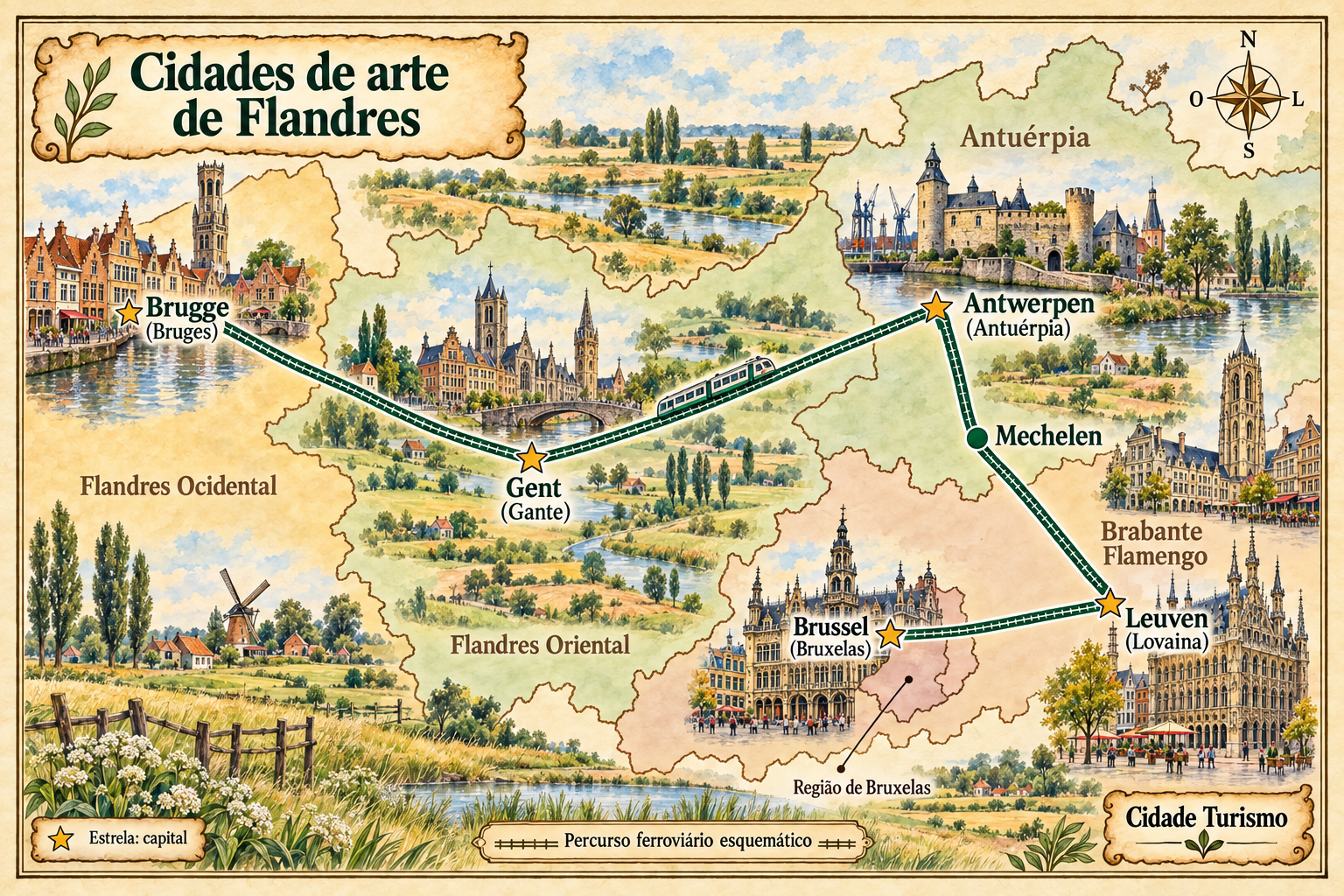
Leuven is part of the Flemish art cities

Six historic cities linked by train: Brussels, Leuven, Mechelen, Antwerp, Ghent and Bruges, with Flemish painting, cathedrals and medieval centres less than an hour apart.

Illustrative map, not to scale. Tap a city to open its page.
Illustrated map of Flemish art cities
Explore the Flemish art cities
See the destination Leuven Find another city