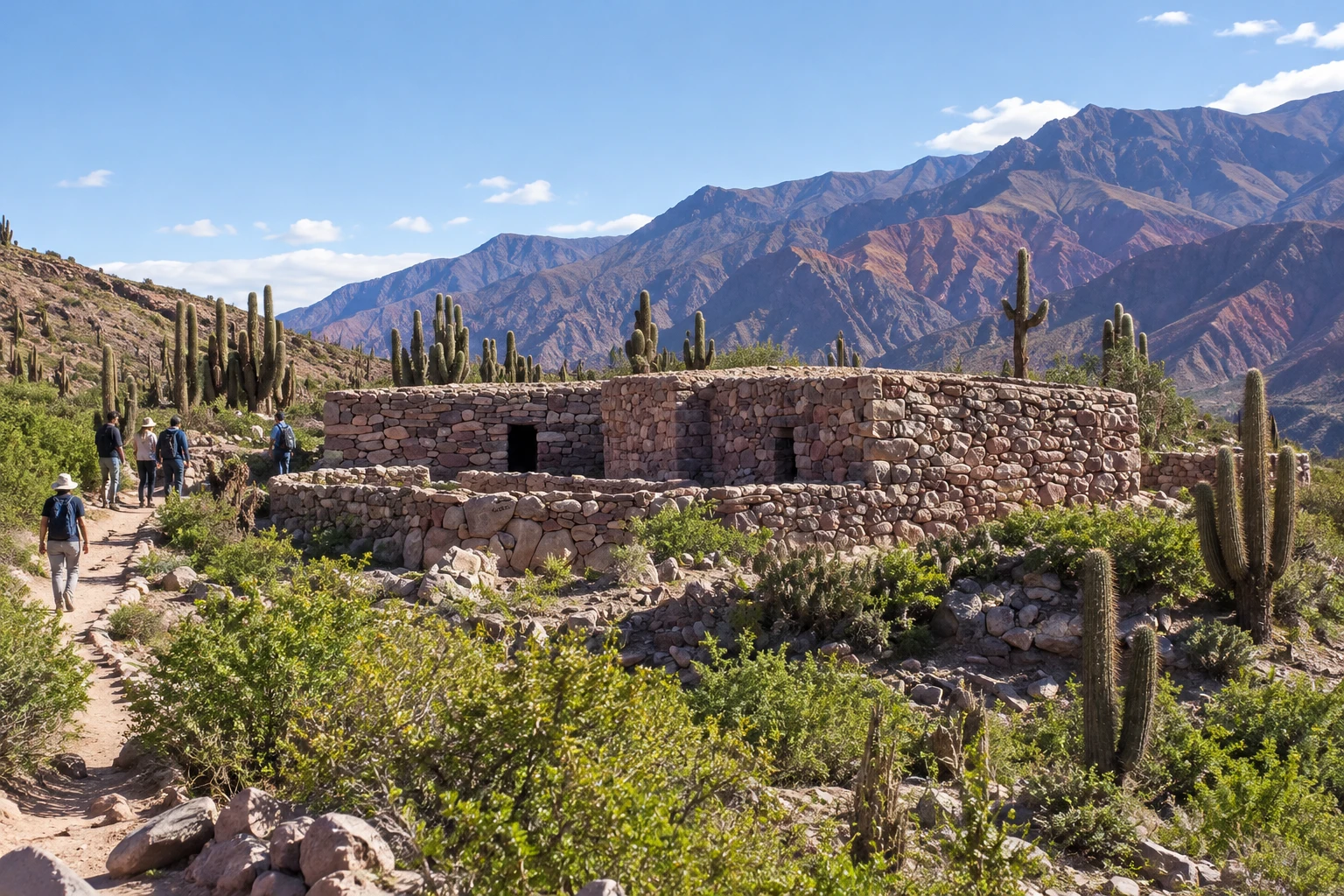
Tilcara · Argentina · Archaeological site
Pucará de Tilcara
Traces and reconstructed sectors of a pre‑Hispanic settlement on an elevation near Tilcara.

 Search
 Brazil
 AntarcticaArgentina
 Bolivia
 Chile
 Colombia
 Ecuador
 Falkland Islands (Malvinas)
 French Guiana
 Guyana
 Paraguay
 Peru
 Suriname
 Uruguay
 Venezuela
 Austria
 Belgium
 Croatia
 Denmark
 Finland
 France
 Germany
 Greece
 Hungary
 Iceland
 Ireland
 Italy
 Luxembourg
 Norway
 Poland
 Portugal
 Slovakia
 Slovenia
 Spain
 Sweden
 Switzerland
 the Czech Republic
 the Netherlands
 the United Kingdom
 Turkey
 Bermuda
 Canada
 Greenland
 Mexico
 Saint Pierre and Miquelon
 the United States
 the Dominican Republic
 JapanTurkey
 Egypt
 South Africa
 Australia
 Fiji
 New Zealand
 Papua New Guinea
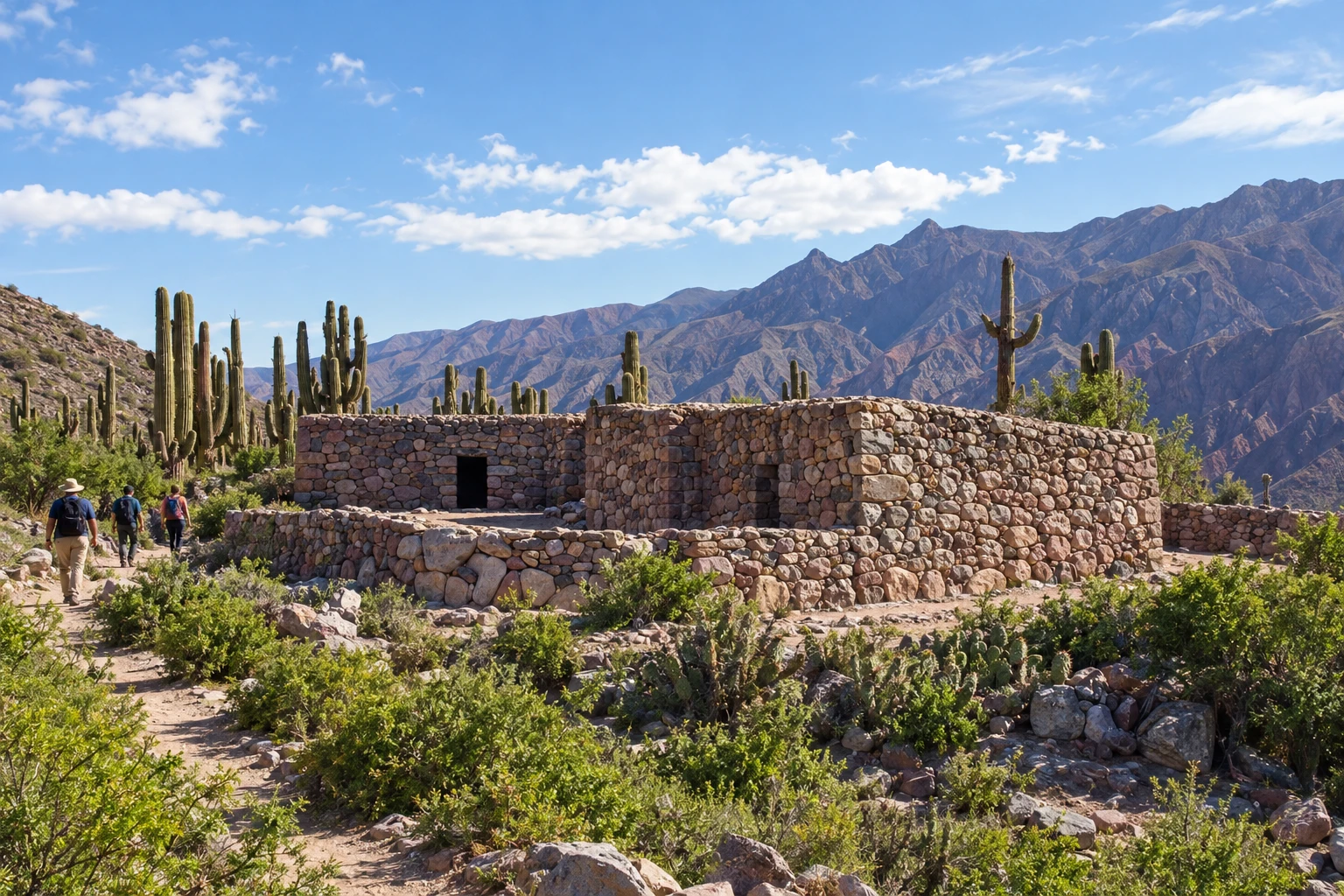
In the photo: Pucará de Tilcara
Illustrative images. The pictures in this guide are illustrations based on the real place, not photographs, and may differ from it.

The city
Tilcara combines archaeology and cultural life in the center of the Quebrada. The Pucará and the Jardín Botánico de Altura lie to the south of the village. The Eduardo Casanova and Terry museums and the church make up the main route. The Garganta del Diablo is a mountain walking outing that requires its own time.
There's no accommodation in the guide yet in Tilcara.
Do you run a hotel, guesthouse or vacation rental here? List itThere are no restaurants in the guide yet in Tilcara.
Know a good one? Recommend it to usThe city's hotels and restaurants on the map.
how to get there · how many days · itinerary · questions
Routes in Argentina
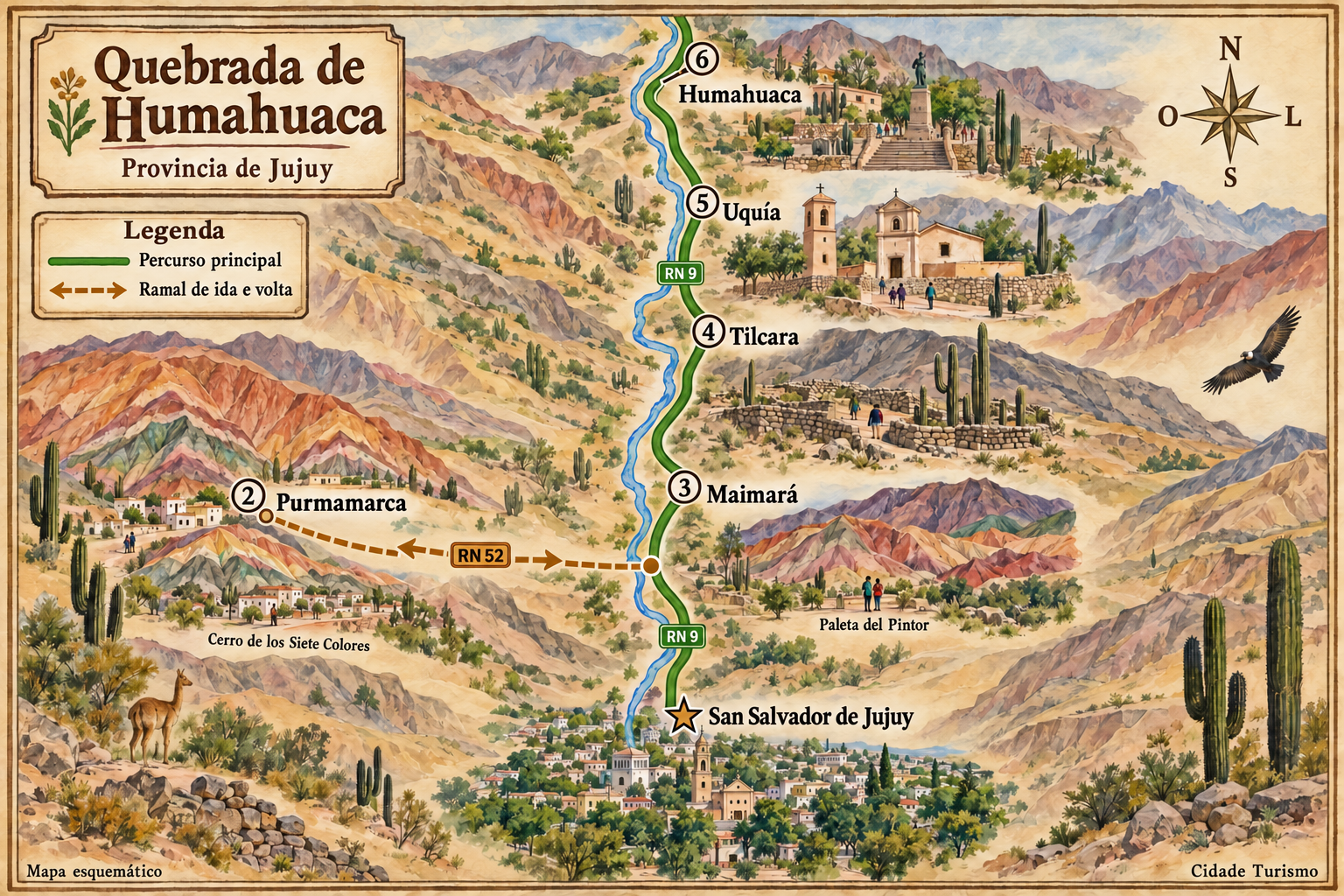
From San Salvador de Jujuy to Humahuaca via RN9, with the Purmamarca branch and stops at Maimará, Tilcara and Uquía.
The local experience
Traces and reconstructed sectors of a pre‑Hispanic settlement on an elevation near Tilcara.
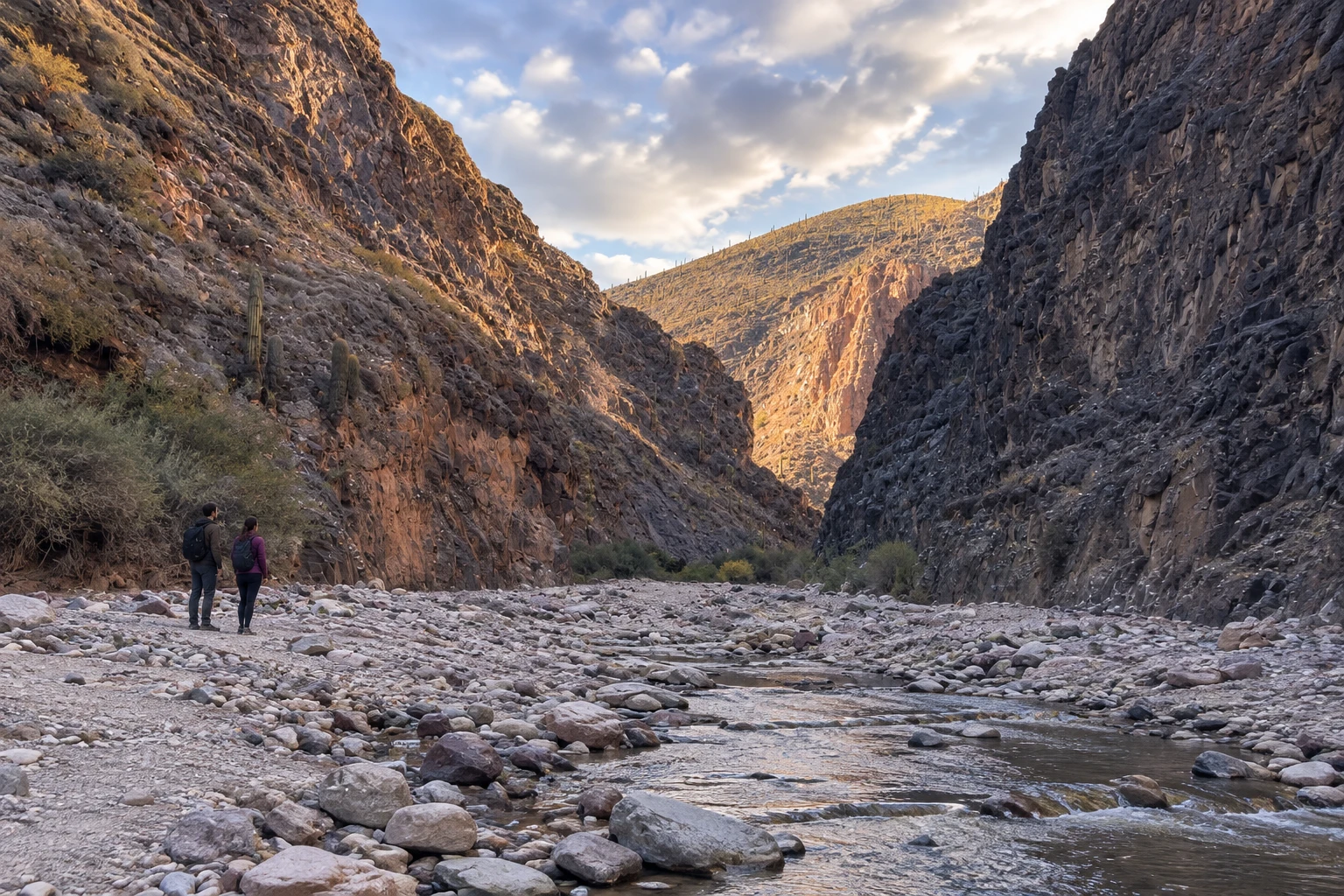
Canyon of the Huasamayo River, on the outskirts of Tilcara, with a mountain trail and a visiting section beside the water.
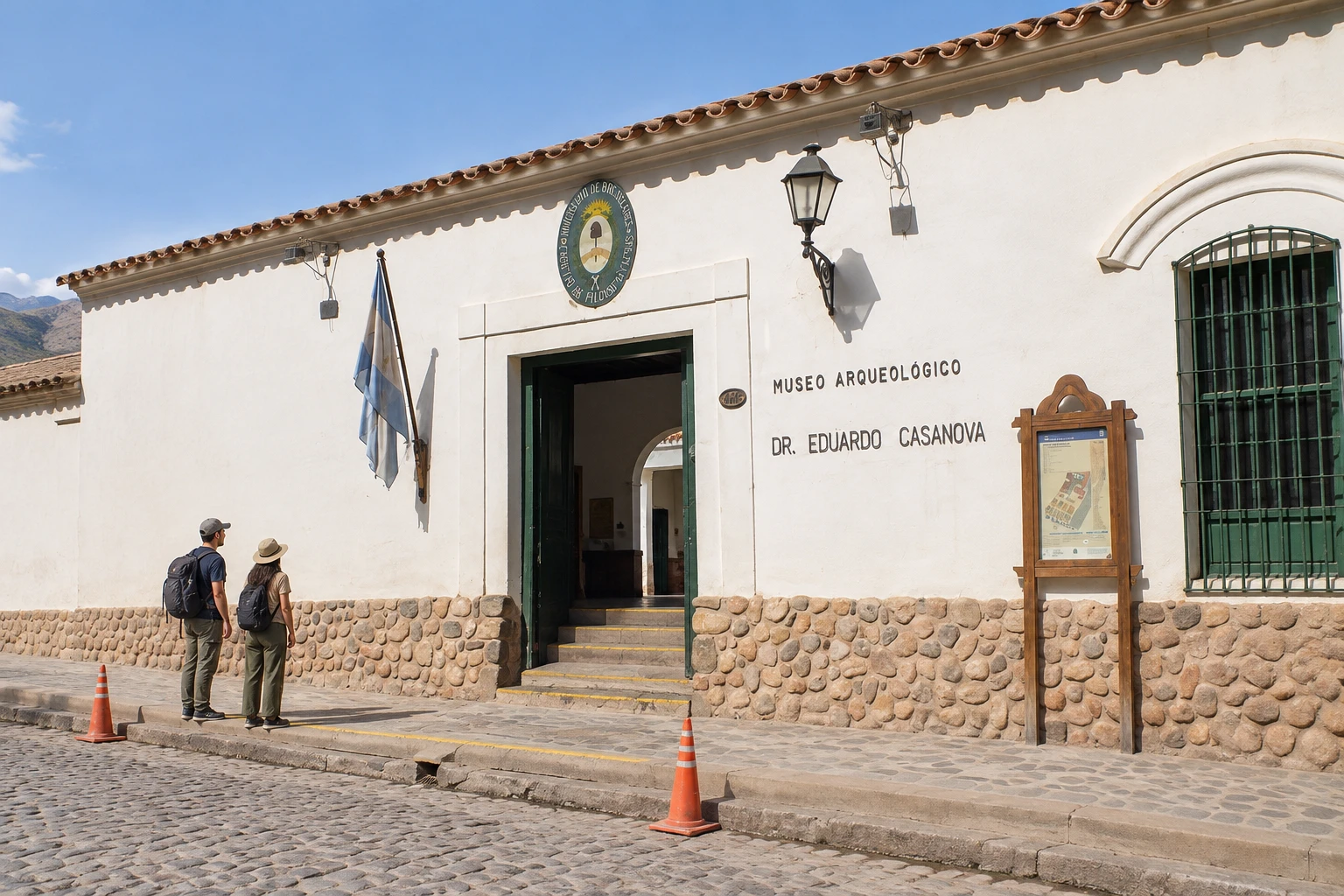
University museum in Tilcara, with an archaeological collection that helps interpret the occupation of the Quebrada.
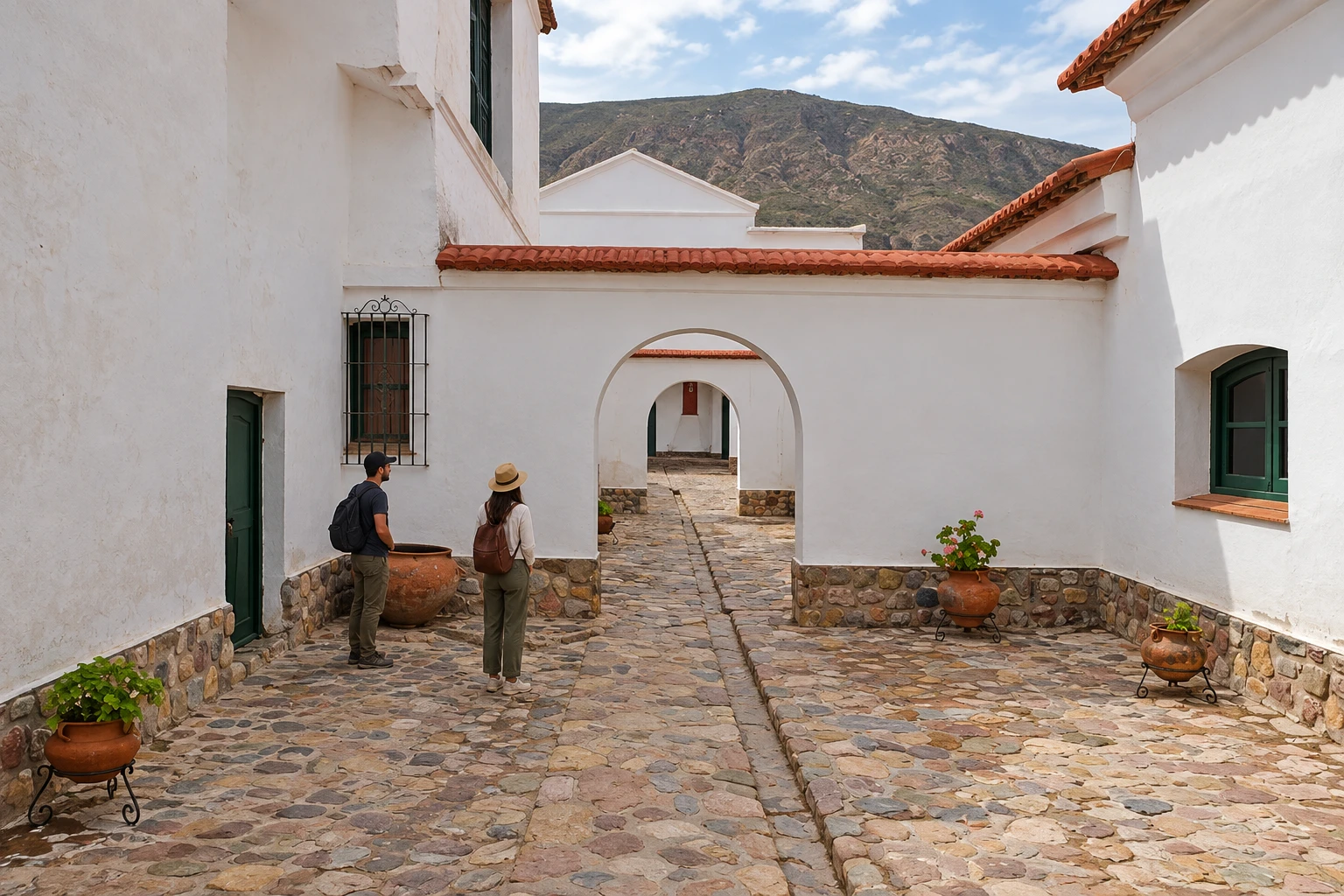
House and studio of José Antonio Terry in Tilcara, with paintings and spaces that preserve the artist's memory.
Before you go
Tilcara – Argentina Destination Jujuy and the Quebrada de Humahuaca about 84 km from San Salvador de Jujuy
Approximate distances. Check flights and bus, train or boat schedules before you travel.
From JUJ airport, follow the road by transfer or via San Salvador de Jujuy. Tilcara is about 84 km north of the capital along Ruta Nacional 9. The bus terminal is close to the center and serves the Quebrada routes; check before you go.
Two days allow you to alternate the Pucará, the garden and the museums. Add more time if you plan to do the entire walk to the Garganta del Diablo, rather than squeezing it between indoor visits.
From April to November the weather is usually less rainy. Between June and August nights require warm clothing. From December to March rain can alter dirt routes; check the chosen path.
The seasons shown are the most usual ones; nature doesn't always follow the calendar.
The museums and the church can be visited on foot. The Pucará is nearby but involves an approach and a climb. For the Garganta del Diablo, choose between the trail or a transfer to the access point, with additional walking.
Suggested itinerary
Built with the places on this page. No rush: it's paced so you have time to see them.
Head south of the center to the archaeological site. Walk along the authorized paths and set aside a separate break for the botanical garden beds.
Visit the Museo Arqueológico Dr. Eduardo Casanova to relate the collection to the occupation of the Quebrada. Take a break before moving on to the next rooms.
Visit the Casa de Terry according to the access offered. Observe the central church without interrupting religious activities.
Choose a meal in the center. Leave the trip to the Garganta del Diablo for another time dedicated to walking and organize the return.
Check before you go. Opening hours and days change, and places may close for renovations, holidays or events. This itinerary is a suggestion from Cidade Turismo, not a commitment: plan yours by checking directly with each place you intend to visit.
Before you go
The botanical garden, the Eduardo Casanova and Terry museums, the church and the Garganta del Diablo have different routes.
No. It is a mountain outing with a walking section, even when there is a transfer to the entrance.
They are in the center of Tilcara and can be visited during a walk between the central squares and streets.
Two days help separate archaeology, museums and outings. To walk the entire Garganta del Diablo without hurry, add extra time to the itinerary.