Alfajor cordobés
Alfajor from the province of Córdoba, with a soft dough made with honey, filled with fruit jam such as quince or pear, or with dulce de leche, and covered by a thin layer of white icing, without chocolate.

Antarctica
Province · Córdoba
Córdoba combines Jesuit heritage, cuarteto music and mountain valleys, with historic towns, rivers and mountain trails.
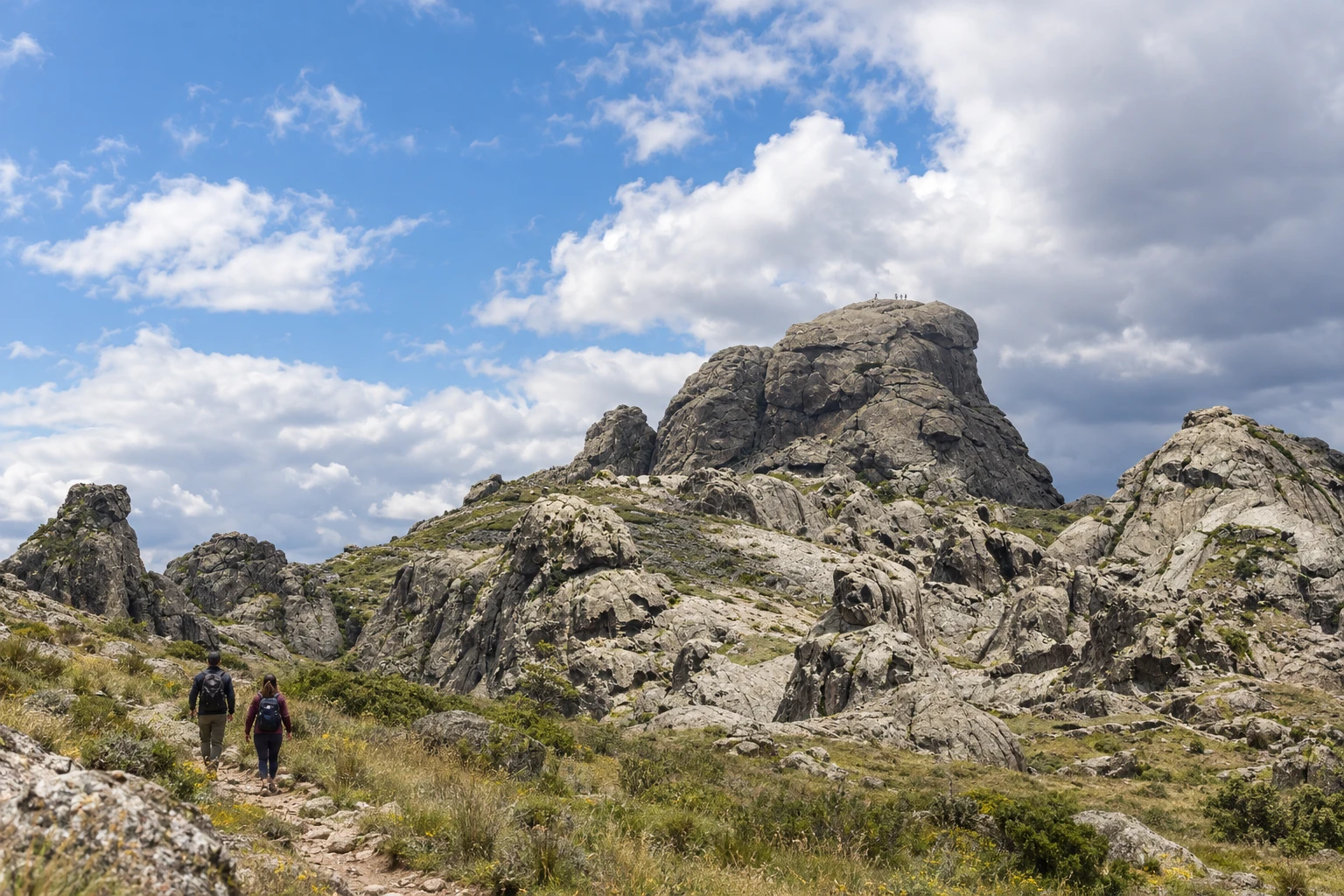
In the photo: Macizo Los Gigantes, Sierras Grandes, Córdoba
Illustrative images. The pictures in this guide are illustrations based on the real place, not photographs, and may differ from it.
Province
Córdoba is located in central Argentina. The agricultural plains to the east give way to the Sierras Chicas and the Sierras Grandes to the west, with valleys, reservoirs and villages linked by mountain roads. The provincial capital and the mountain valleys allow combining cultural visits with outdoor excursions.
In the city of Córdoba, the Manzana Jesuítica brings together buildings linked to the history of the university and the Jesuit presence. The cathedral and the Cabildo are in the center; the Güemes neighborhood adds markets, galleries and dining spaces. Cuarteto, the musical genre associated with the province, is part of urban cultural life.
Punilla, Calamuchita and Traslasierra have different landscapes and bases. Villa Carlos Paz lies around the San Roque lake; Villa General Belgrano and La Cumbrecita are tied to the history of Central European communities. In the Sierras Grandes, Los Gigantes features granite formations and trails, and the Camino de las Altas Cumbres crosses high-altitude plains.
Cordoba empanadas, locro and asado appear in the criollo cuisine; salamis from Colonia Caroya and alfajores add other flavors. The Cosquín and Jesús María festivals bring travelers closer to music and rural traditions. For a first trip, choose one valley in addition to the capital: trying to cross all the sierras in a few days leaves little time for outings.
Flavors of Argentina
March to May and September to November usually favor hikes with less heat in the low areas. Between December and February, rivers and mountain bathing spots receive more visitors, but it is also the season of rains and storms. June to August usually brings cold nights and frosts; in the high parts, snow can occur episodically. The Cosquín National Folklore Festival usually takes place between January and February, and Jesús María holds its festival in January.
The air gateway is the Aeropuerto Internacional Ingeniero Aeronáutico Ambrosio Taravella, in the city of Córdoba. In some seasons there are direct flights from Brazil; for the rest of the year, the connection is via Buenos Aires. Confirm before buying. RN 9 links the provincial capital to the Buenos Aires axis, and RN 20 continues to Villa Carlos Paz. RP 34 crosses the Altas Cumbres toward Traslasierra; RP 5 runs through the Calamuchita valley. Allow time for curves and stops on the mountainous stretches.
Beyond the guide
Your questions
Allow five to seven days for the capital and one of the mountain valleys. Two urban days and three or four in Calamuchita, Punilla or Traslasierra make an itinerary with fewer base changes.
In the capital, many outings can be done on foot or using urban transport. Buses connect the main towns, but a car or an organized excursion makes it easier to reach trails, reservoirs and small places off the regular routes.
Calamuchita brings together towns like Villa General Belgrano and La Cumbrecita, east of the Sierras Grandes. Traslasierra lies on the other side of the mountain range; crossing the Altas Cumbres is part of the trip, not a short urban connection.
July is usually cold, especially at night and in the high areas. Snow in the sierras is episodic and does not constitute a regular ski season; plan your itinerary around heritage, towns and mountain landscapes.