Illustrative images. The pictures in this guide are illustrations based on the real place, not photographs, and may differ from it.
The city
What to expect from Canaima.
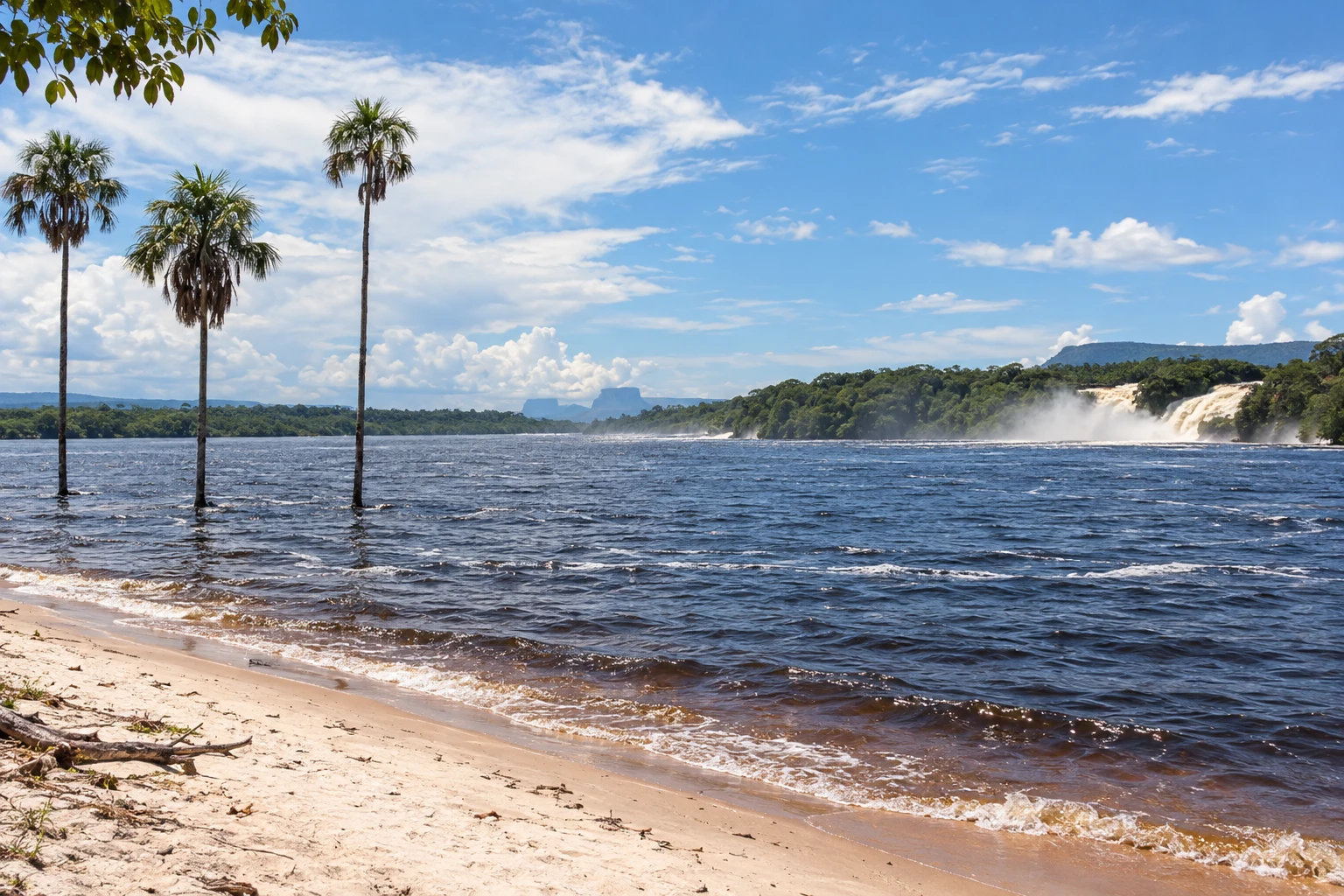
Pemón village on the shore of Laguna de Canaima, in Parque Nacional Canaima, the starting point for Salto Ángel. The airstrip is next to the houses, and the lagoon, a few minutes on foot, receives the waterfalls of the Carrao River, with tepuis in the background. There is no road: everything arrives by small plane, and excursions are by boat and on foot, with pemón guides.
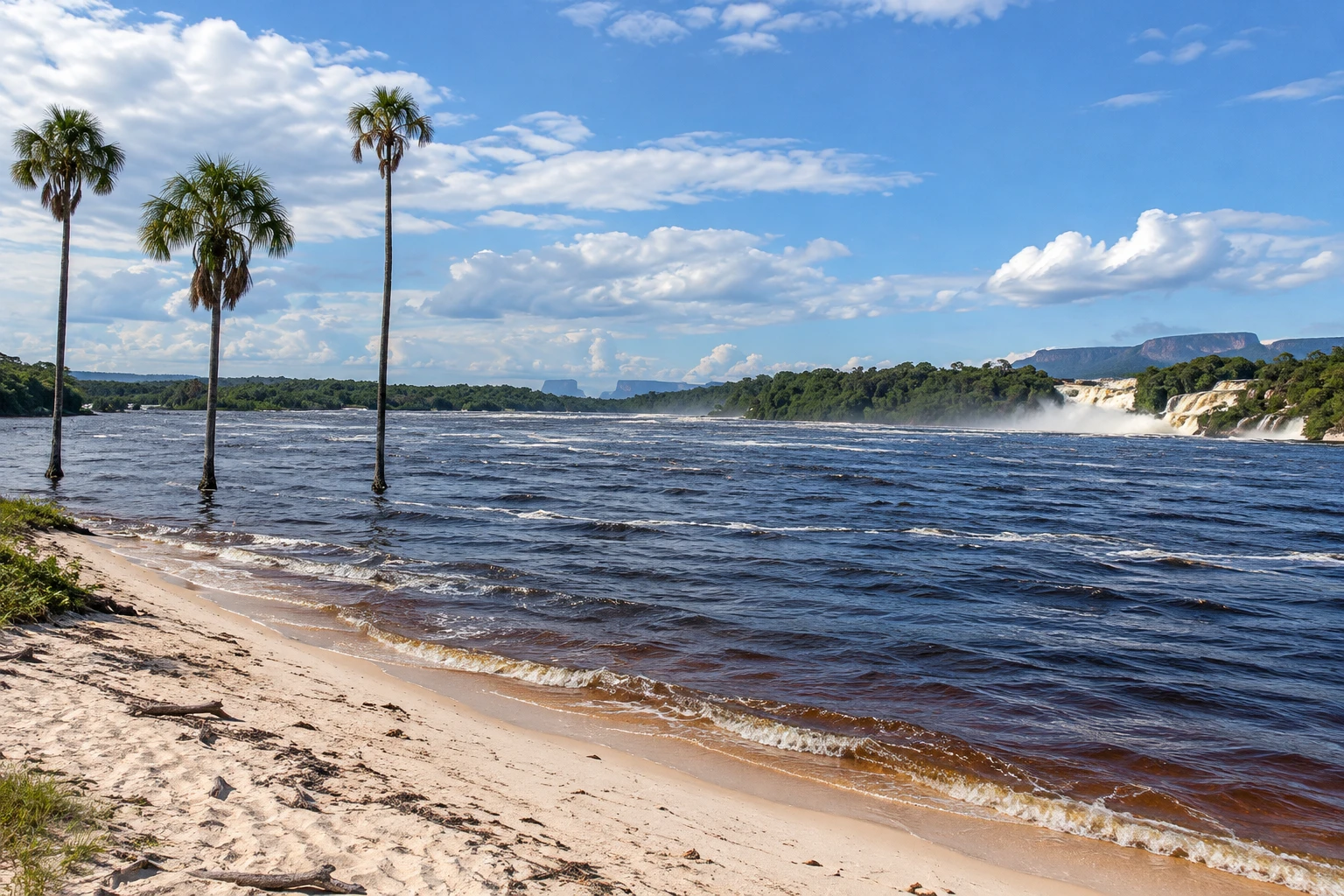
The tea-colored lagoon in front of the village, where the Carrao River falls in a sequence of wide waterfalls, such as the saltos Hacha, Golondrina, Ucaima and Wadaima, with a pink-sanded beach, palm trees and the tepuis in the background.
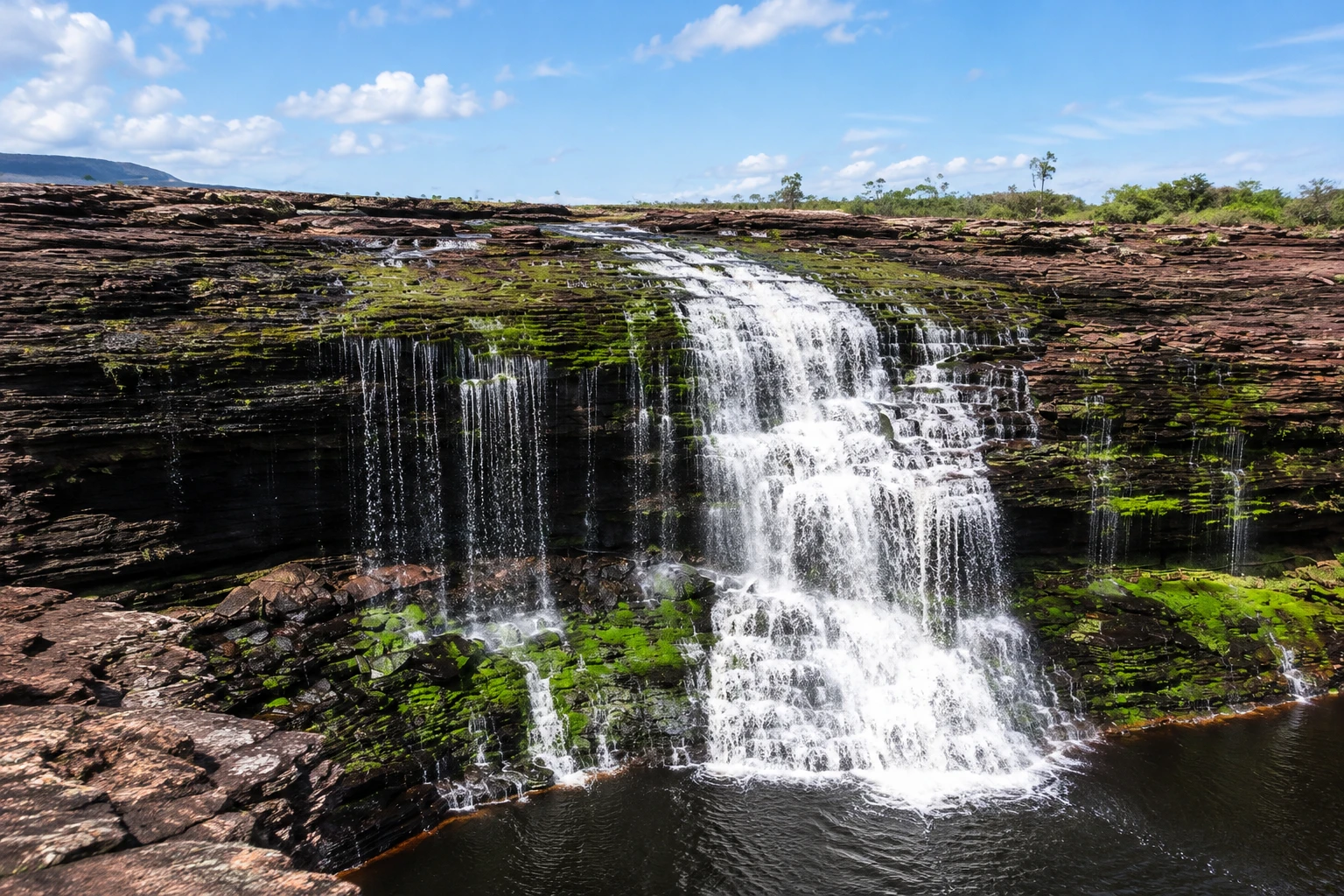
The waterfall of the Carrao River, on the island opposite the village of Canaima, behind which a trail carved into the rock passes: the visitor goes through the curtain of water from one side to the other.
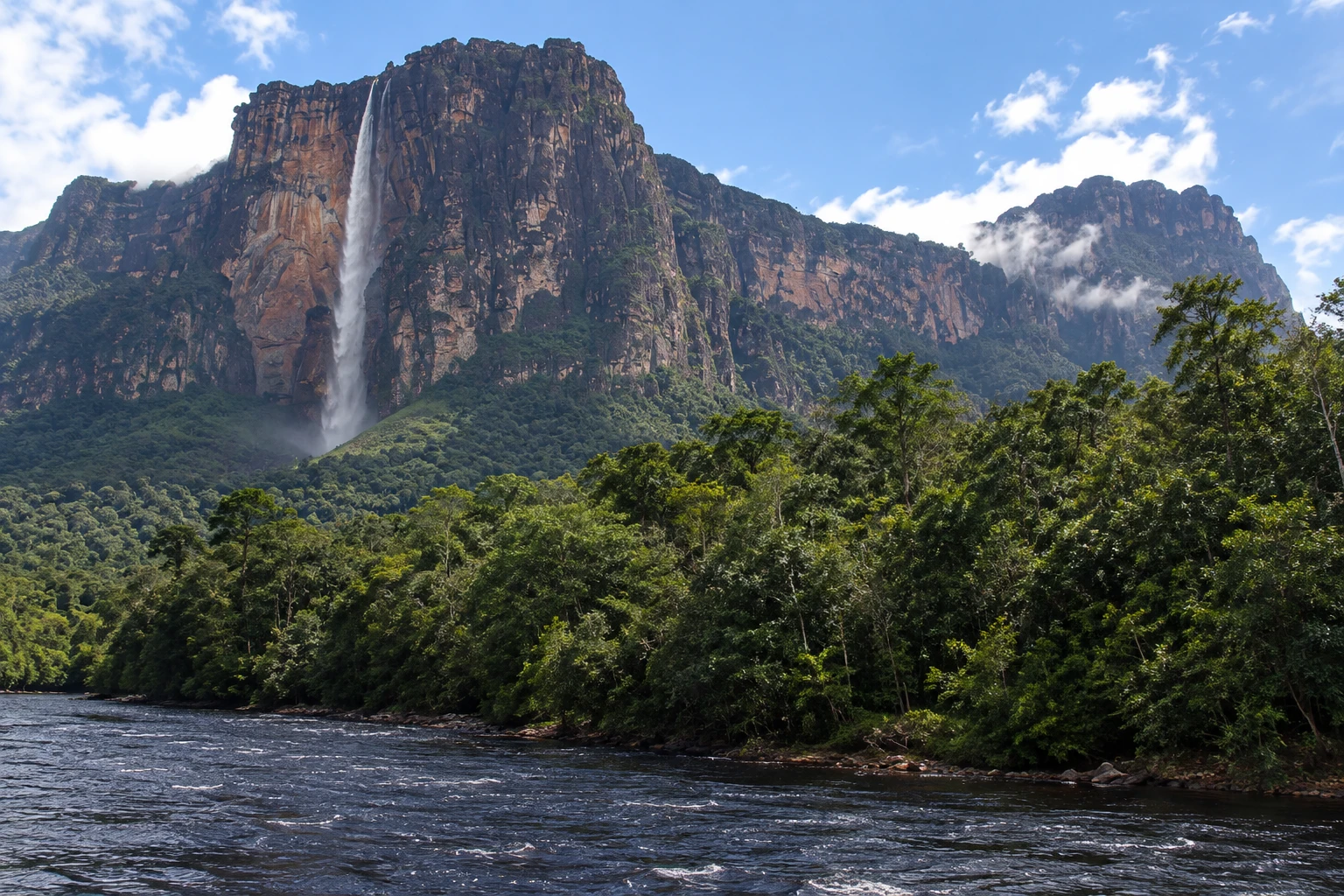
The highest waterfall in the world, with 979 meters total height and 807 meters of free fall, on the cliff of Auyantepui. It is reached by motor canoe along the Carrao and Churún rivers during the high-water season, or by plane overflight.
Approximate distances. Check flights and bus, train or boat schedules before you travel.
The connection with Brazil can be a direct flight or a connection, depending on the season and airline. Check before buying. To reach Canaima you can only fly by small plane, with flights departing from Caracas, Puerto Ordaz or Ciudad Bolívar and landing on the airstrip next to the village. Flights are usually sold together with accommodation and tour packages; confirm departure dates in advance.
How many days
Three days and two nights in the high-water season: one day for the lagoon and Salto El Sapo, another to travel up the river to Salto Ángel, with an overnight in a hammock at the camp, and the morning return. In the dry season, two days for the lagoon, Salto El Sapo and the Auyantepui overflight.
When to go
From June to November the rivers are usually full, with voluminous waterfalls and boats reaching Salto Ángel. From December to April, in the dry season, the sky is often clearer and the lagoon calmer, but the river drops and visits to the fall are by plane. It's hot year-round, with strong, quick rains during the high-water months.
The seasons shown are the most usual ones; nature doesn't always follow the calendar.
Do you need a car?
No. There is no road to the village, and the few vehicles operate only between the airstrip and the lodgings. Tours are by boat and on foot, always with a guide.
Suggested itinerary
An order that works
Built with the places on this page. No rush: it's paced so you have time to see them.
One day in Canaima
manhã
Arrival and lagoon beach
Arrive on the morning flight and walk from the airstrip to the beach of Laguna de Canaima, with pinkish sand and views of the Hacha, Golondrina, Ucaima and Wadaima falls and the tepuis in the background.
tarde
Boat and Salto El Sapo
Cross the lagoon by boat with the guide, pass near the waterfalls and walk across the island to Salto El Sapo to go along the trail behind the water curtain. Bring swimwear and a dry bag for your phone.
fim de tarde
Sunset over the tepuis
Return to the village beach to see the low light on the tepui cliffs and on the lagoon’s waterfalls.
noite
Night in the village
Have dinner at the lodging, where meals are usually included, and arrange with the guide the departure for the next day.
3 days in Canaima
Day 1
manhã
Arrival and lagoon
Morning flight, settling in and first walk along the lagoon beach, with views of the waterfalls.
tarde
Salto El Sapo
Boat across the lagoon and trail across the island to Salto El Sapo, including the passage behind the waterfall.
Day 2
manhã
Ascent along the Carrao River
Leave early by motor canoe along the Carrao River and then via the Churún, in the Auyantepui canyon. It's about four to five hours on the river, depending on the water level.
tarde
Hike to Mirador Laime
From the camp opposite the waterfall, walk about an hour through the forest to Mirador Laime, with the entire Salto Ángel ahead. On the way back, bathe in the river pool.
noite
Night in a hammock
Sleep in a hammock at the camp, with the sound of the river and, if the sky clears, the waterfall lit by the moon.
Day 3
manhã
Descent and return
See the waterfall at dawn, when it is usually cloudless; descend the river back to the village and catch the afternoon flight.
Check before you go. Opening hours and days change, and places may close for renovations, holidays or events. This itinerary is a suggestion from Cidade Turismo, not a commitment: plan yours by checking directly with each place you intend to visit.
Before you go
Frequently asked questions
Where are the lodgings in Canaima?
In the village itself, on the lagoon shore or a few minutes from it. They are simple camps and guesthouses, with rooms or hammocks and meals included, almost always sold together with the tours.
What to bring to Canaima?
Swimwear, lightweight quick-dry clothing, a rain jacket, shoes that can get wet, insect repellent, sunscreen, a flashlight, and a dry bag for your phone and documents. At the Salto Ángel camp, a light jacket for the night.
Why is the lagoon water dark?
Because of the tannins from savanna and forest plants, which dye the Carrao River a tea color. Near the waterfalls the water becomes clearer and, at the beach, takes on a reddish tone.
Who are the Pemón?
The indigenous people of the Gran Sabana and Canaima region. The village is a Pemón community, and the guides and boat pilots on the tours are usually from the community.
Can you swim in the lagoon?
At the village beach, yes, in the areas indicated by the guides and away from the falls. Near the waterfalls the current is strong; follow the guide's instructions.


 Brazil
 Antarctica
 Argentina
 Bolivia
 Chile
 Colombia
 Ecuador
 Falkland Islands (Malvinas)
 French Guiana
 Guyana
 Paraguay
 Peru
 Suriname
 Uruguay
 Austria
 Belgium
 Croatia
 Denmark
 Finland
 France
 Germany
 Greece
 Hungary
 Iceland
 Ireland
 Italy
 Luxembourg
 Norway
 Poland
 Portugal
 Slovakia
 Slovenia
 Spain
 Sweden
 Switzerland
 the Czech Republic
 the Netherlands
 the United Kingdom
 Turkey
 Bermuda
 Canada
 Greenland
 Mexico
 Saint Pierre and Miquelon
 the United States
 the Dominican Republic
 Japan
 Egypt
 South Africa
 Australia
 Fiji
 New Zealand
 Papua New Guinea