Punta Ballena and Arboretum Lussich
From Punta del Este By car or taxi about 3 hours morning easy
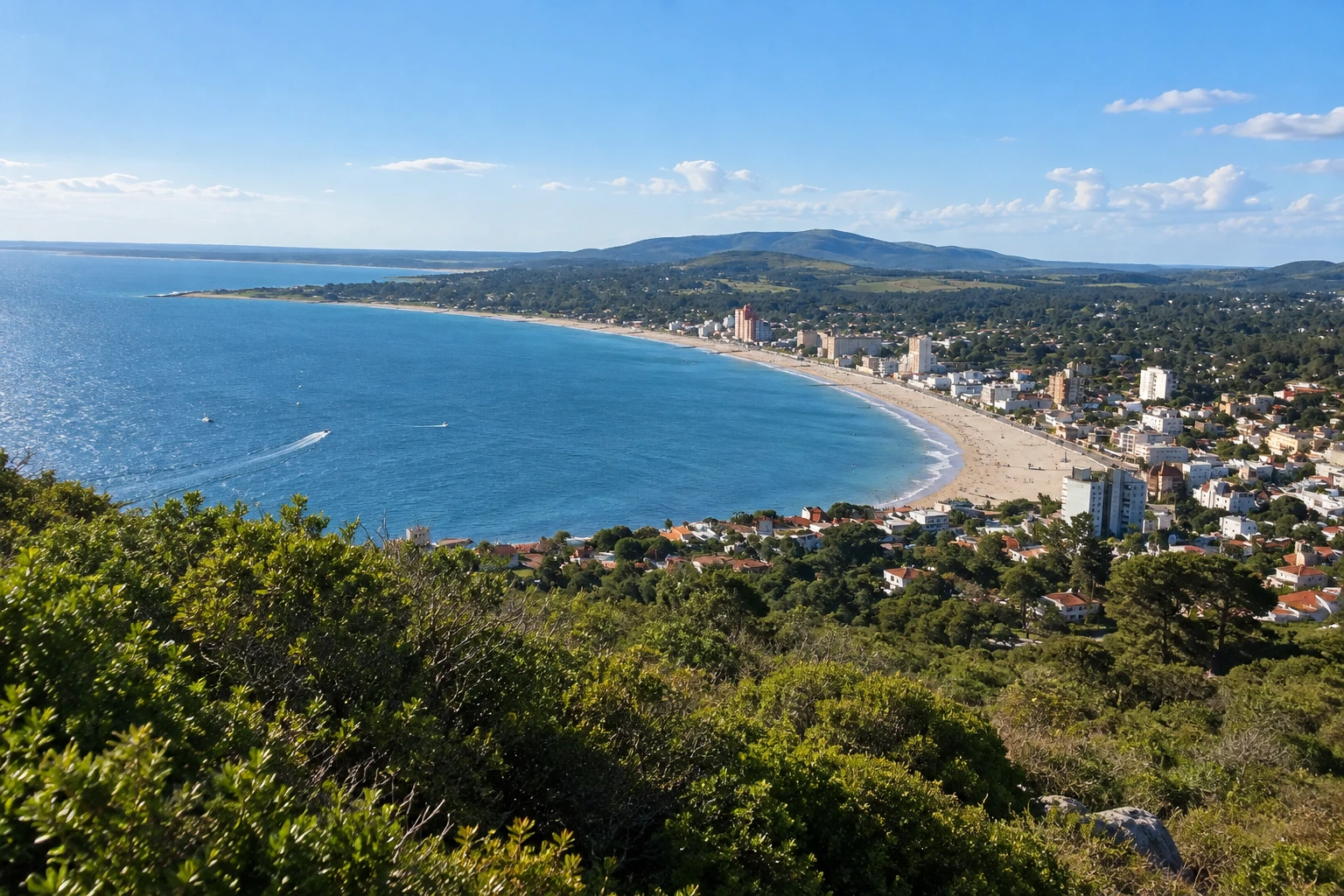
Punta Ballena is the rocky point between Punta del Este and Piriápolis, overlooking the Bay of Maldonado on one side and the coast to the west on the other. Just above it lies the Arboretum Lussich, about 15 km from Punta del Este, near Route 38. The park began in the late 19th century when Antonio Lussich bought the land and started planting trees on a dune area. It covers 192 hectares with more than 400 exotic species and around 60 native to Uruguay. It belongs to the Intendencia de Maldonado and is open to visitors, with paths through the wood and viewpoints over the sea.
Stops: Punta Ballena, Arboretum Lussich.
Includes: Walk through the woods and lookouts of Punta Ballena.
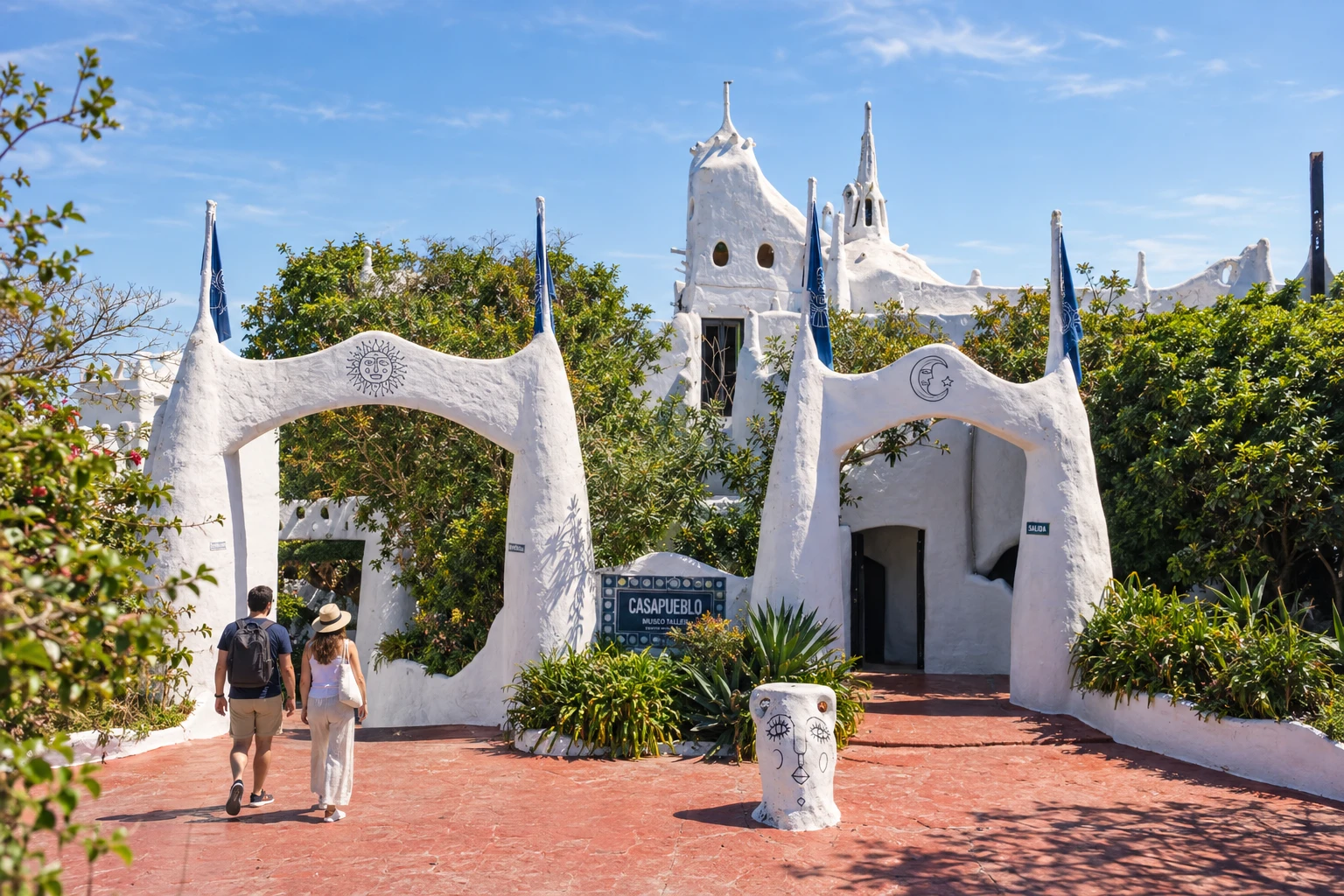
Tip: Combine with Casapueblo in the late afternoon: they are in the same area. Bring insect repellent on hot days.
Best time: Spring (October and November) and autumn (March and April), with mild temperatures for walking.
La Barra and the Puente Leonel Viera
From Punta del Este By car, taxi or bus along the Playa Brava promenade about 3 hours afternoon easy
Following Playa Brava eastward, the road crosses the Arroyo Maldonado via the Puente Leonel Viera, the wavy bridge that is one of Punta del Este’s postcards. It was built between 1963 and 1965 with three concrete spans, and vehicles rise and fall over the waves as they cross. On the other side is La Barra, a resort with tree-lined streets, shops, art galleries and restaurants, and open-sea beaches. In season La Barra concentrates the region’s nightlife.
Stops: Playa Brava, Puente Leonel Viera, La Barra.
Includes: Bridge crossing, walk through La Barra and beaches.
Tip: To photograph the bridge, stop at the arroyo banks, off the roadway. In season traffic over the bridge becomes slow in the late afternoon.
Best time: From December to February, when La Barra is in full season.
MACA and the sculpture park
From Punta del Este By car or taxi via Ruta 104 about 3 hours morning easy
The Museo de Arte Contemporáneo Atchugarry, MACA, is located at km 4.5 on Ruta 104 in Manantiales, between the coast and the countryside. The building was designed by Uruguayan architect Carlos Ott and houses exhibition galleries, a cinema, and spaces for concerts and workshops, with temporary contemporary art shows. Surrounding it is the sculpture park, covering about 40 hectares with more than seventy outdoor works by Uruguayan and international artists, including Pablo Atchugarry himself. The park is explored on foot, across lawns and lakes.
Stops: Museo de Arte Contemporáneo Atchugarry, Manantiales.
Includes: Visit to the museum galleries and the outdoor sculpture park.
Tip: Wear comfortable shoes for the park and check the current exhibitions before you go. Pairs well with La Barra the same day.
Best time: All year; spring and autumn are pleasant for walking in the park.
José Ignacio: village, lighthouse and lagoon
From Punta del Este By car via Route 10 or by regular bus about 6 hours full day easy
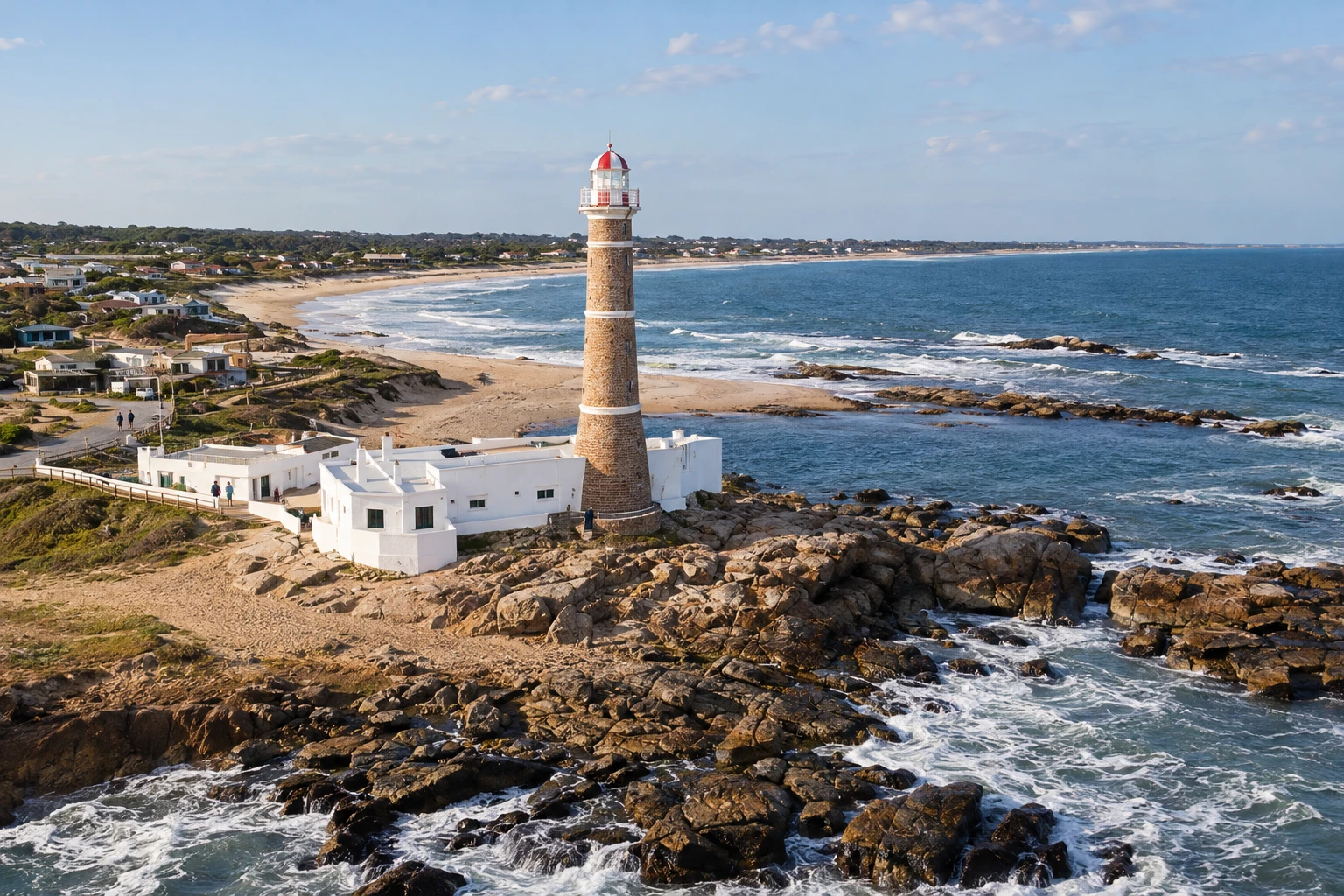
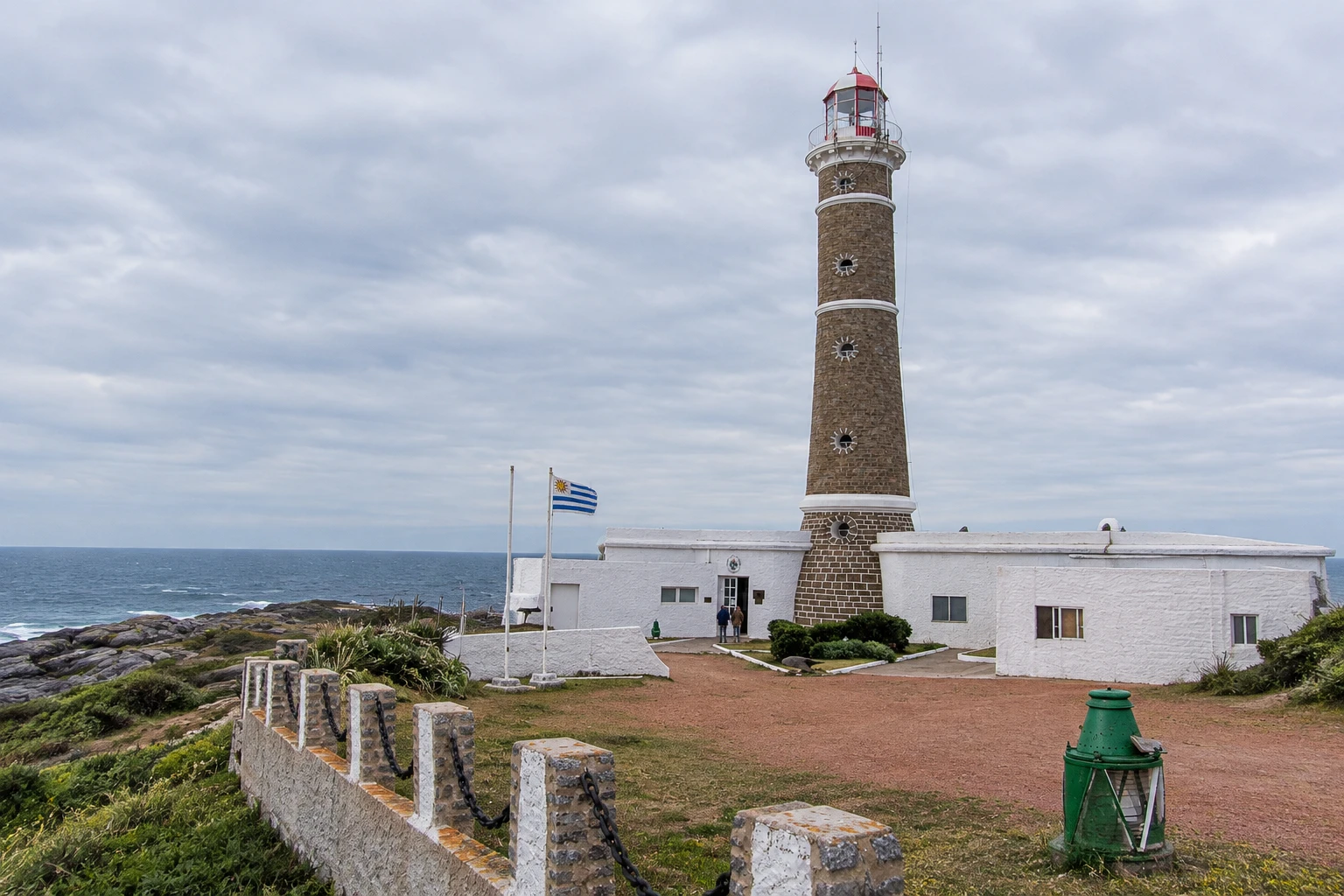
José Ignacio is a fishing village at the tip of a small peninsula, east of Punta del Este, with low houses, dirt roads and seaside restaurants. In the center stands the José Ignacio Lighthouse, from 1877, 25 meters tall. On both sides of the tip are beaches: Playa Mansa, more sheltered, and Playa Brava, facing the open sea. Before reaching the village, the road passes by Laguna José Ignacio, separated from the ocean by a sandbar. The lagoon is an important bird area, with flamingos outside the breeding season, and it often gathers kitesurfers on windy days.
Stops: José Ignacio, José Ignacio Lighthouse, Laguna José Ignacio.
Includes: Walk through the village, view of the lighthouse, beaches and lagoon shore.
Tip: Stay for the sunset at Playa Mansa in José Ignacio. In season book restaurants in advance. Check whether the lighthouse tower is open to visitors.
Best time: From December to February for beach; March and April with fewer crowds.
Laguna Garzón and the circular bridge
From José Ignacio By car via Route 10 about 2 hours afternoon easy
Following Ruta 10 after José Ignacio, the road reaches Laguna Garzón, on the border between the departments of Maldonado and Rocha. The crossing is made via the Puente Laguna Garzón, designed by architect Rafael Viñoly: instead of a straight span, the bridge forms a circle over the water, with a one-way lane and pedestrian sidewalks on both sides. The idea is that cars slow down and the driver looks at the landscape. The lagoon is part of the National System of Protected Areas and is a refuge for water and shore birds. On windy days there are kitesurfers in the permitted zones.
Stops: Laguna Garzón, Puente Laguna Garzón, José Ignacio.
Includes: Crossing the bridge by car and walking along the pedestrian sidewalks.
Tip: Park at the indicated access points, outside vegetation and nesting areas. Bring binoculars for birdwatching.
Best time: All year; late afternoon for the light over the lagoon.
Piriápolis: rambla and Cerro San Antonio
From Punta del Este By car via the Interbalnearia and Route 37, or by bus about 5 hours whole day easy
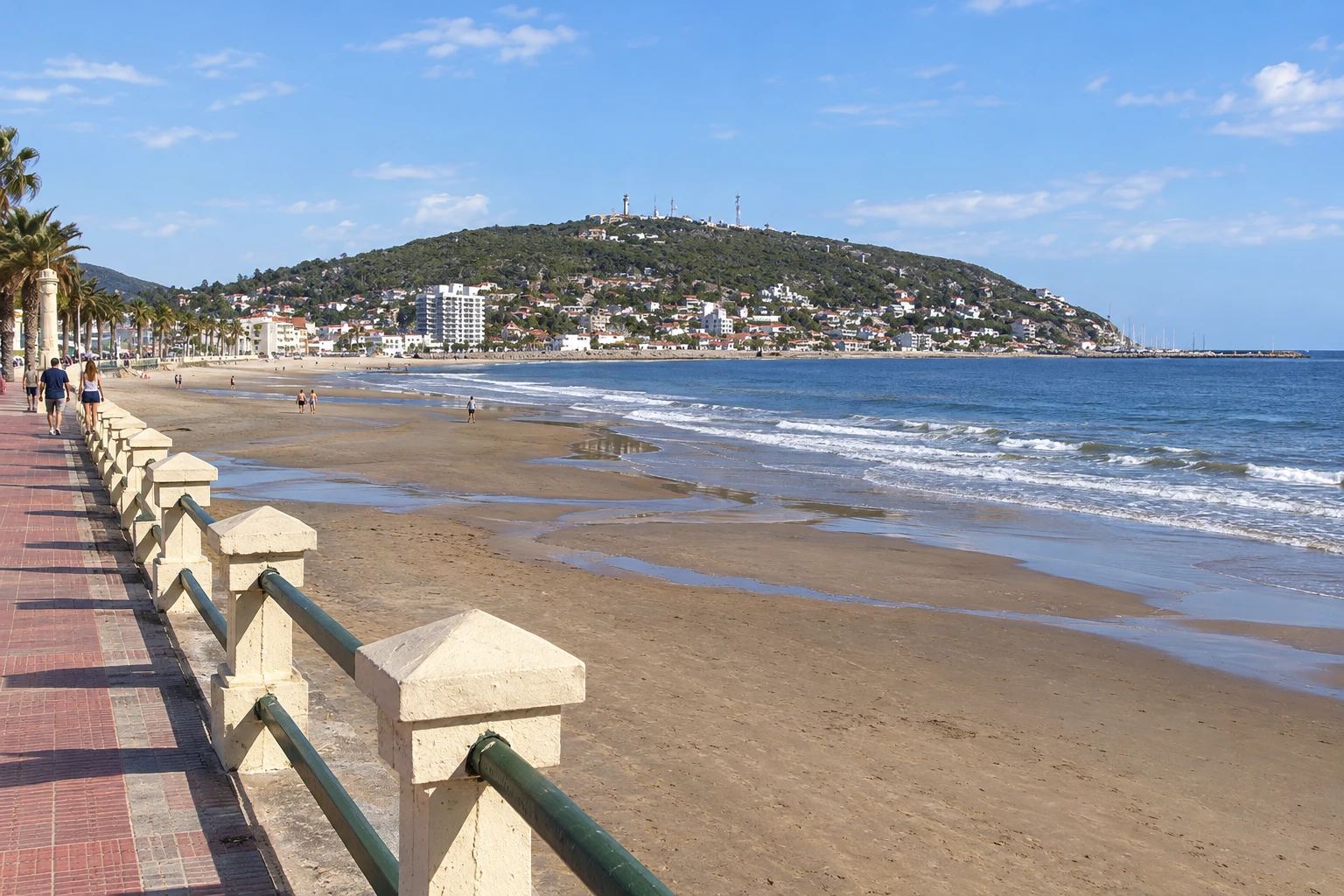
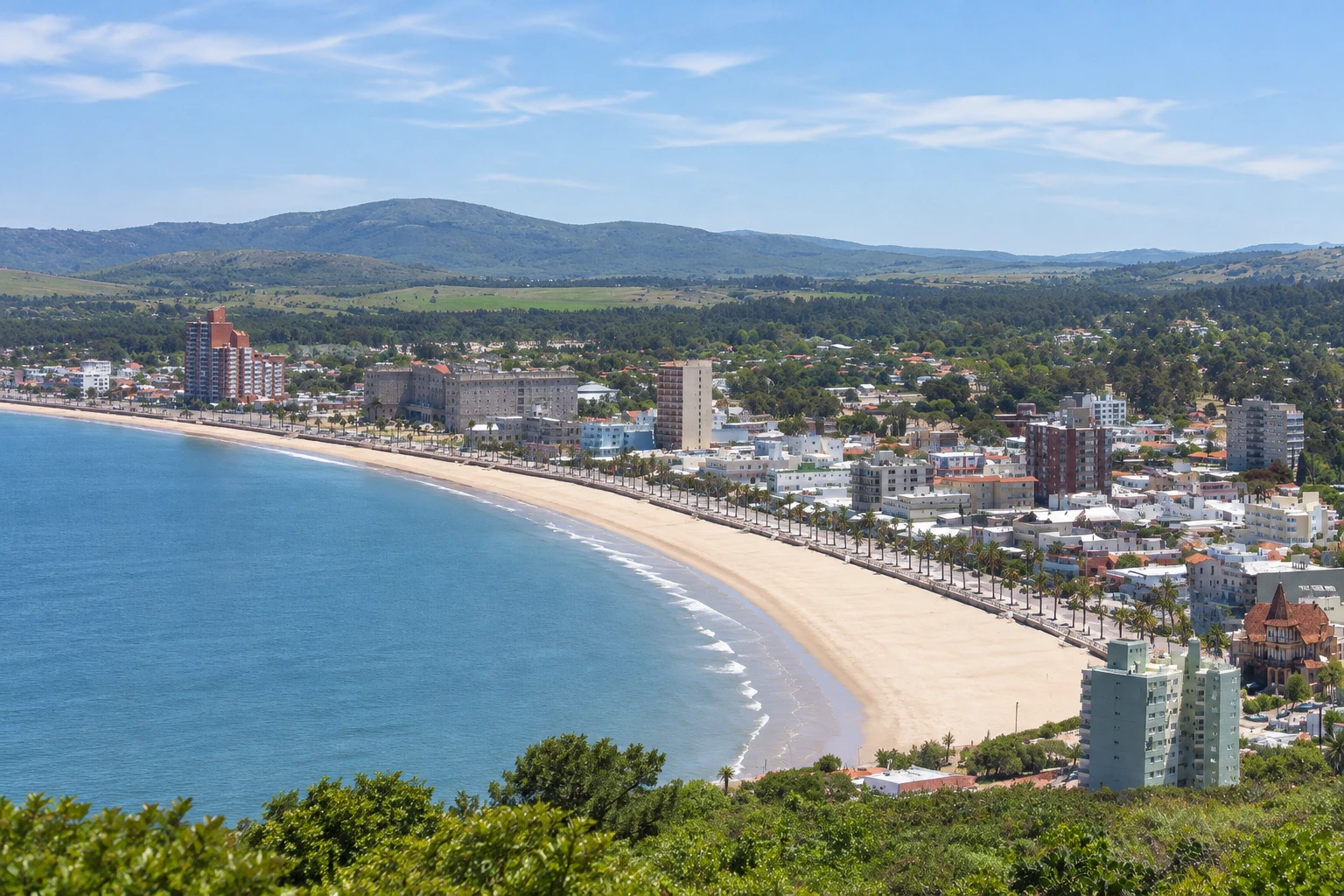
Piriápolis was conceived at the end of the 19th century by entrepreneur Francisco Piria as a seaside resort, and it still retains that vacation-town feel. The spine is the Rambla de los Argentinos, the seaside avenue where the Argentino Hotel, opened in 1930, is located. At the tip of the bay, Cerro San Antonio rises about 130 meters: at the top there is a chapel dedicated to Santo Antônio and a lookout over the town, the beaches, and the harbor. You can drive up or take the aerosilla, the chairlift. On the opposite side, the slope of Cerro del Toro holds the Fuente del Toro, one of the fountains Piria scattered around the town.
Stops: Rambla de los Argentinos, Cerro San Antonio, Cerro del Toro.
Includes: Walk along the rambla, climb Cerro San Antonio and visit the Fuente del Toro.
Tip: The chairlift is paid separately and depends on the wind; check if it’s operating. Combine it with Cerro Pan de Azúcar and Castillo de Piria on the same day.
Best time: Year-round; December to February for beach season.
Cerro Pan de Azúcar, native fauna and Castillo de Piria
From Piriápolis By car via Route 37 about 4 hours morning moderate
A few kilometers from the beaches of Piriápolis, next to Route 37, there are three nearby stops. The Estación de Cría de Fauna Autóctona, managed by the Intendencia de Maldonado, covers 86 hectares of native forest on the slope of Cerro Pan de Azúcar and houses about 250 animals from 53 Uruguayan species. From there a trail leads up the hill, one of the highest in Uruguay, with a 35-meter concrete cross at the top; an internal staircase reaches the arm of the cross, from where you can see the region. Nearby is the Castillo de Piria, the residence of Francisco Piria, completed in 1897 and turned into a municipal museum, with guided visits to the upper floor.
Stops: Cerro Pan de Azúcar, Estación de Cría de Fauna Autóctona, Castillo de Piria.
Includes: Visit to the wildlife station, hike up the hill via the trail and visit to the castle.
Tip: The ascent is steep in some sections: wear sneakers, bring water and start early. On very hot days the trail may be closed.
Best time: Spring and autumn, with mild temperatures suitable for the ascent.
Whale watching on the Maldonado coast
From Punta del Este or Piriápolis From land, at coastal viewpoints, or by boat with an operator about 2 hours morning easy
The southern right whale approaches the coast of Uruguay to breed, and the season usually runs from July to October. In Maldonado, onshore observation points include Playa Mansa in Punta del Este, the José Ignacio Lighthouse, Cerro San Antonio in Piriápolis, as well as Punta Colorada, Punta Negra and Punta del Chileno. Private companies also run boat trips from the ports of Punta del Este and Piriápolis. The easiest sign to recognize is the V-shaped blow; to see it the sea needs to be calm. Watching requires patience, because the whale can stay submerged for many minutes, and no trip can guarantee an encounter.
Stops: Playa Mansa, José Ignacio Lighthouse, Cerro San Antonio, Port of Punta del Este.
Includes: Viewing from coastal viewpoints; boat departures are paid separately.
Tip: Bring binoculars, warm clothing and something hot to drink. Follow local notices about where whales have been seen in the last days.
Best time: The season usually runs from July to October.
Museo Ralli
From Punta del Este By car or taxi to the Beverly Hills neighborhood about 2 hours afternoon easy
The Museo Ralli is located in the Beverly Hills neighborhood of Punta del Este, surrounded by a tree-lined park. It belongs to a nonprofit foundation and occupies a building of more than 6,000 square meters, with exhibition rooms and inner courtyards featuring bronze and marble sculptures. The collection is contemporary Latin American art, with works by artists such as Fernando Botero, and also includes pieces by Salvador Dalí and the bronze sculptures of children playing by John Robinson. It’s a good option for a cloudy or windy day.
Stops: Museo Ralli, Punta del Este.
Includes: Visit to the galleries and sculpture courtyards.
Tip: The museum is not open year-round: check the months and days of operation before you go.
Best time: During the summer season; check the opening months.
Visit to Bodega Garzón
From José Ignacio or Punta del Este By car or arranged transfer about 3 hours afternoon easy
Bodega Garzón is located inland in Maldonado, near the village of Garzón, among hills covered with vineyards. The winery welcomes visitors in reservation-based programs: there are guided tours of the facilities and vineyard with tasting in the tasting room, picnic in the vineyard, walks through the landscape, and cooking classes with the restaurant team. The visit explains how a maritime-climate winery operates, from the vineyard to the cellar. If you are driving you should not drink; in that case choose a transfer or leave the tasting to a passenger.
Stops: Bodega Garzón, Garzón.
Includes: Program chosen at booking (paid separately; check the current rate table).
Tip: Book in advance, especially in high season. Combine it with José Ignacio and Laguna Garzón on the same day.
Best time: Year-round, with reservation.


 Brazil
 Antarctica
 Argentina
 Bolivia
 Chile
 Colombia
 Ecuador
 Falkland Islands (Malvinas)
 French Guiana
 Guyana
 Paraguay
 Peru
 Suriname
 Venezuela
 Austria
 Belgium
 Croatia
 Denmark
 Finland
 France
 Germany
 Greece
 Hungary
 Iceland
 Ireland
 Italy
 Luxembourg
 Norway
 Poland
 Portugal
 Slovakia
 Slovenia
 Spain
 Sweden
 Switzerland
 the Czech Republic
 the Netherlands
 the United Kingdom
 Turkey
 Bermuda
 Canada
 Greenland
 Mexico
 Saint Pierre and Miquelon
 the United States
 the Dominican Republic
 Japan
 Egypt
 South Africa
 Australia
 Fiji
 New Zealand
 Papua New Guinea