Pamukkale · Turkey · Natural formation
Pamukkale Travertines
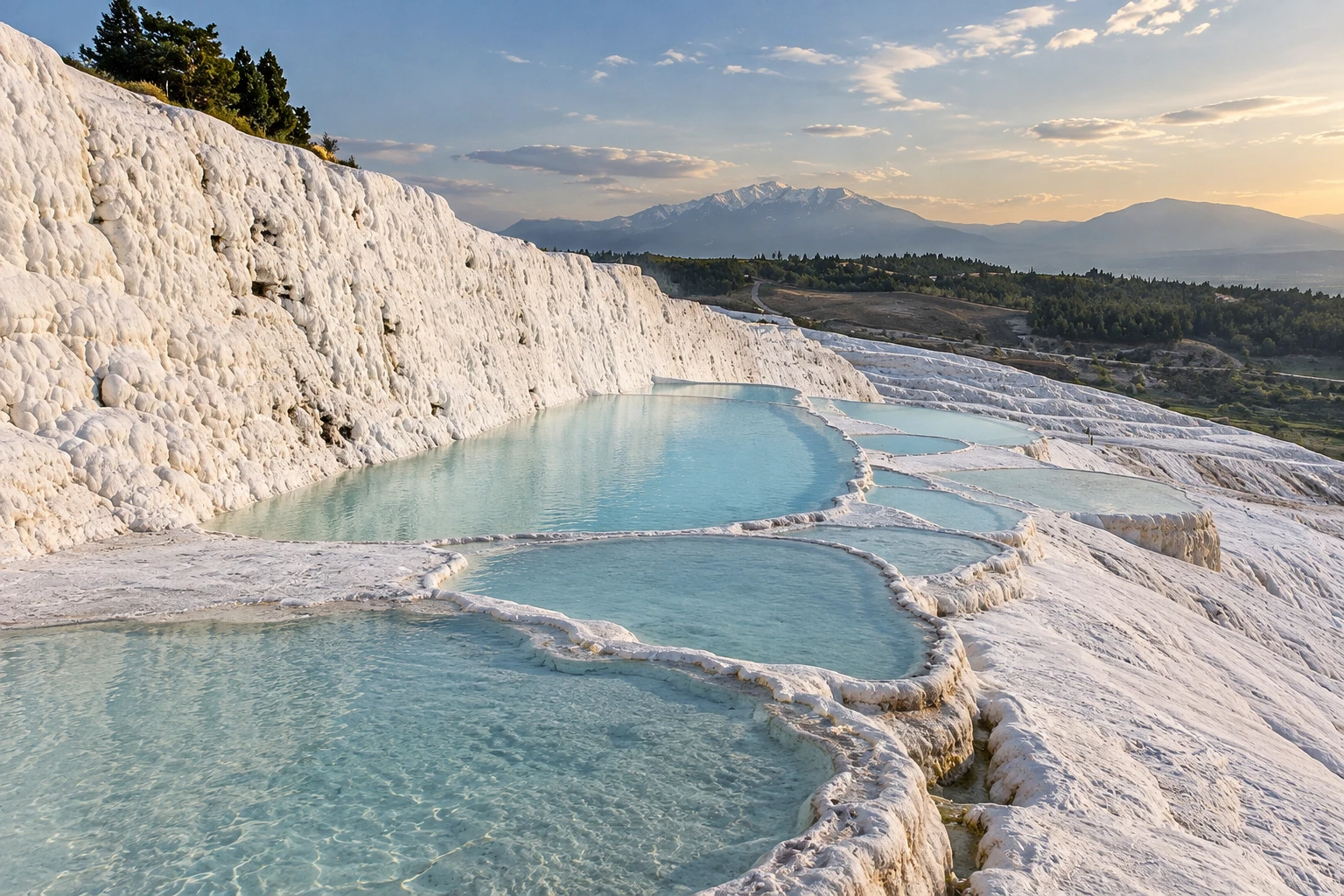
White travertine terraces formed by mineral water, with circulation restricted to authorized sections.

 Search
 Brazil
 Antarctica
 Argentina
 Bolivia
 Chile
 Colombia
 Ecuador
 Falkland Islands (Malvinas)
 French Guiana
 Guyana
 Paraguay
 Peru
 Suriname
 Uruguay
 Venezuela
 Austria
 Belgium
 Croatia
 Denmark
 Finland
 France
 Germany
 Greece
 Hungary
 Iceland
 Ireland
 Italy
 Luxembourg
 Norway
 Poland
 Portugal
 Slovakia
 Slovenia
 Spain
 Sweden
 Switzerland
 the Czech Republic
 the Netherlands
 the United KingdomTurkey
 Bermuda
 Canada
 Greenland
 Mexico
 Saint Pierre and Miquelon
 the United States
 the Dominican Republic
 JapanTurkey
 Egypt
 South Africa
 Australia
 Fiji
 New Zealand
 Papua New Guinea
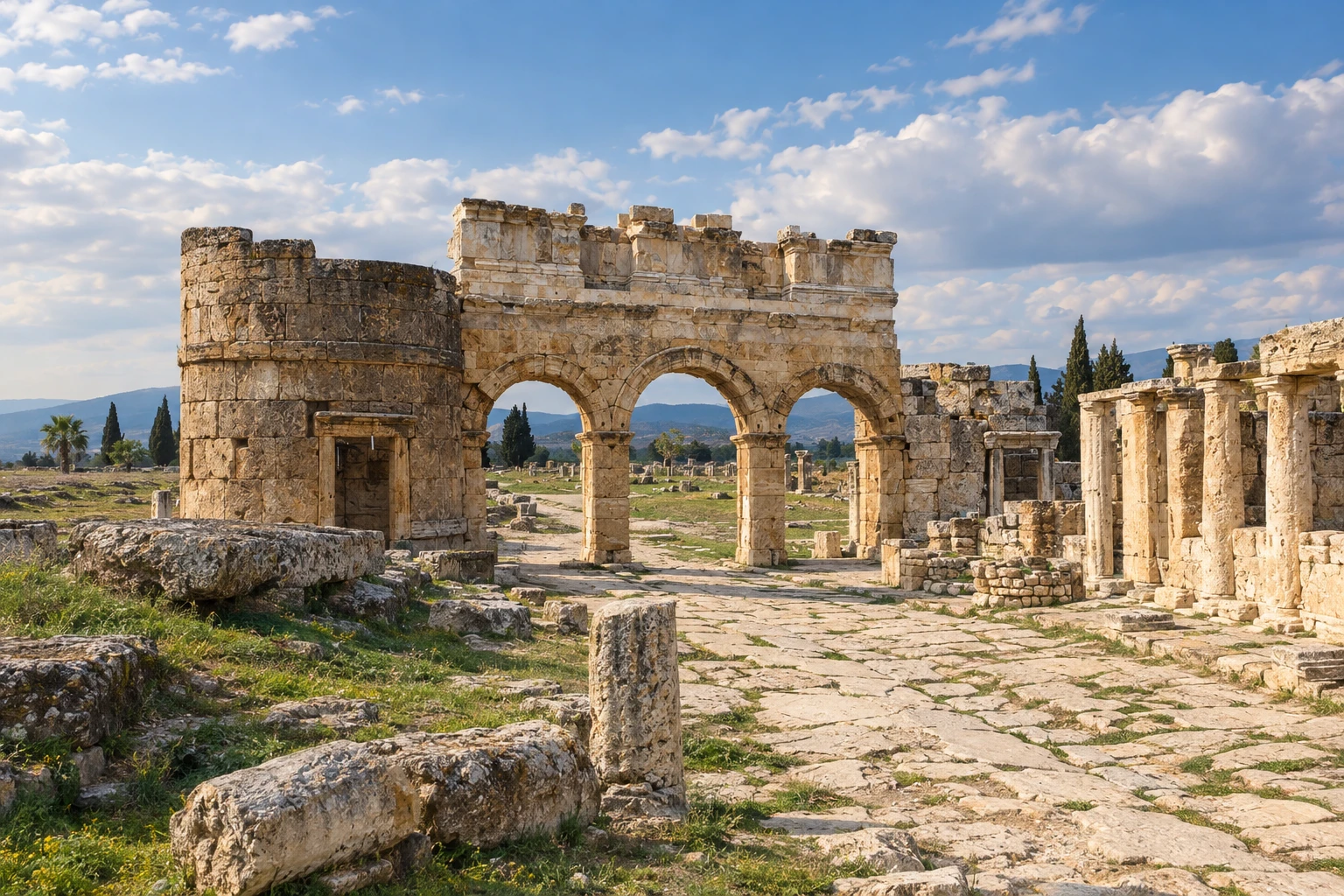
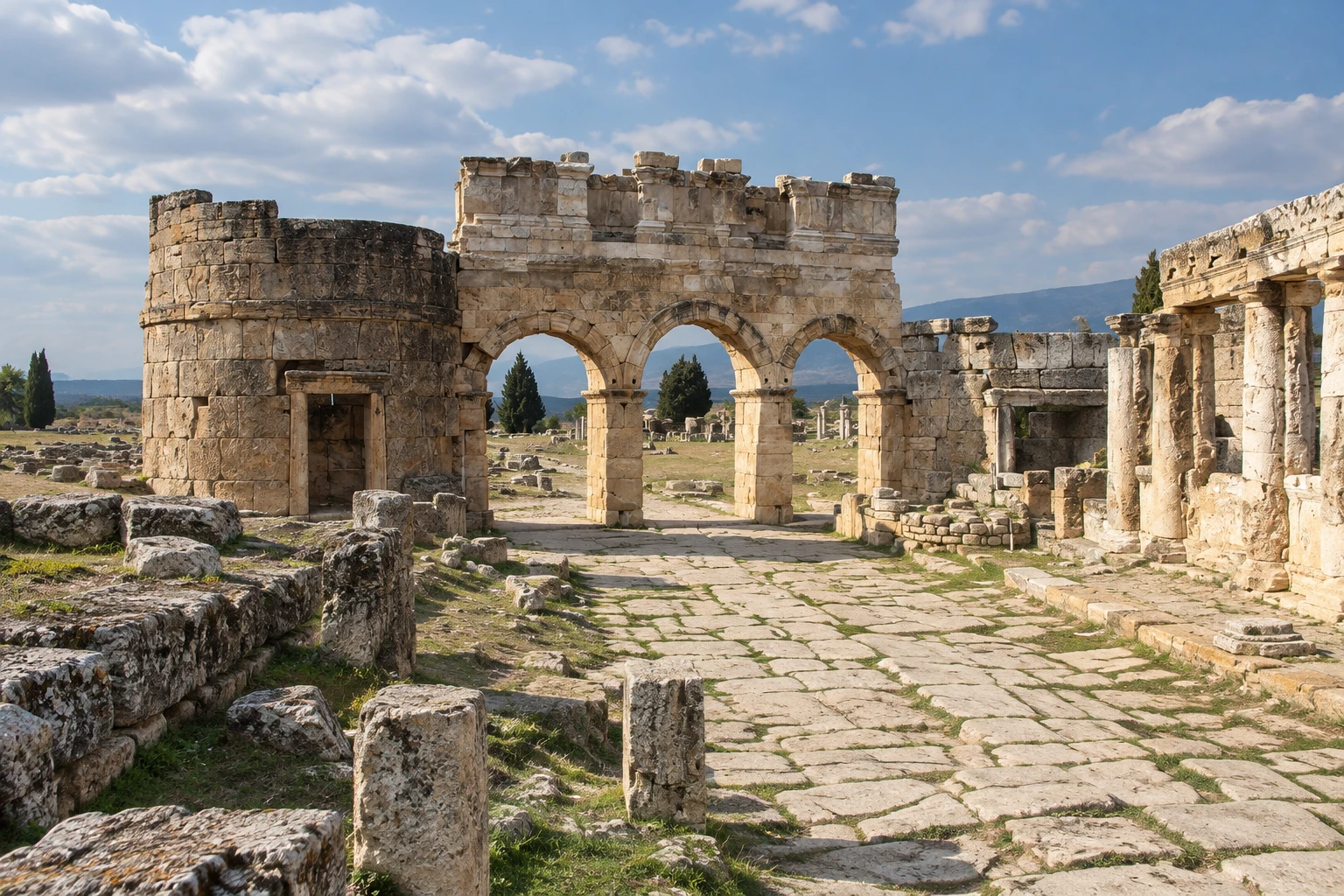
In the photo: Porta de Frontino in Hierapolis, Pamukkale
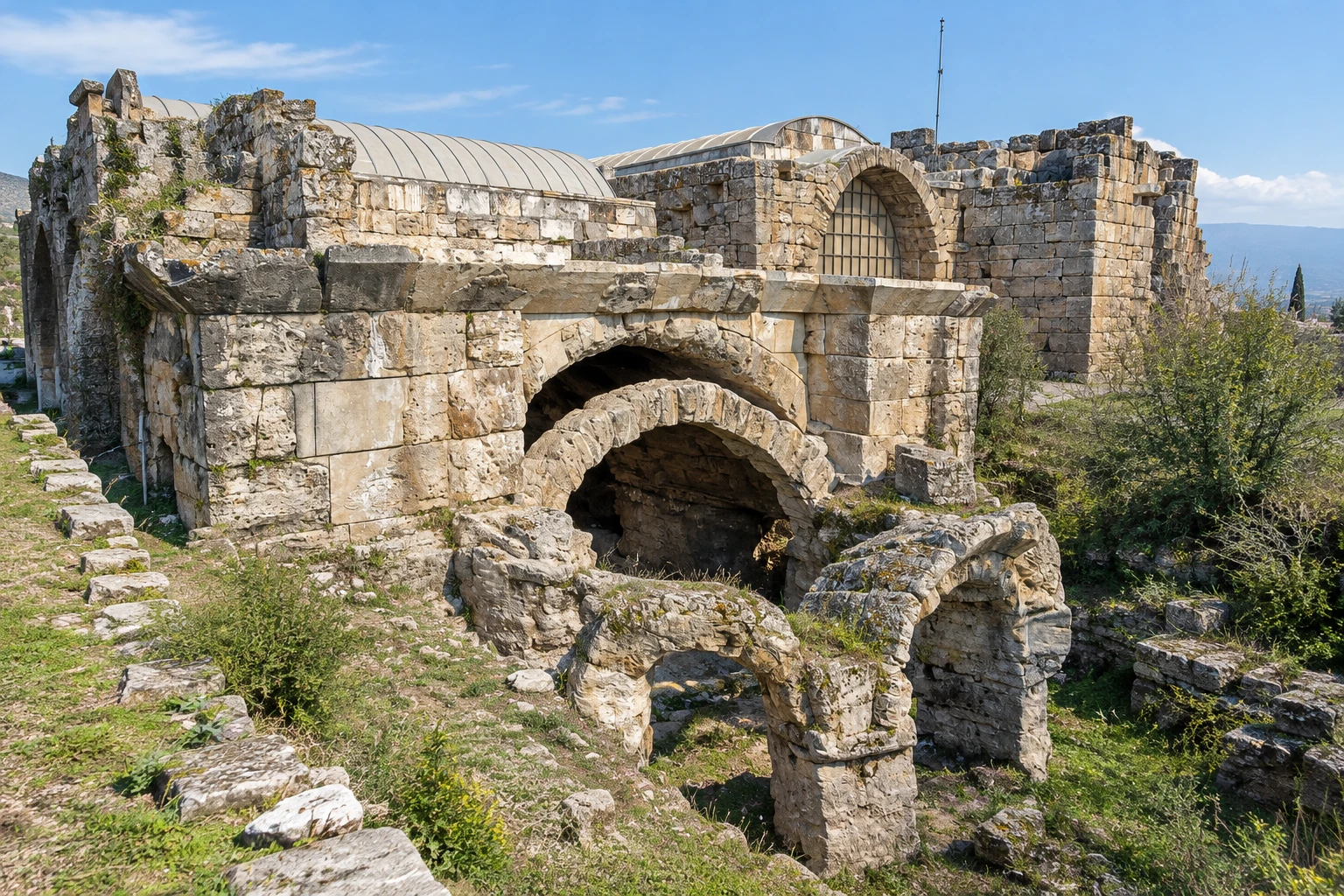
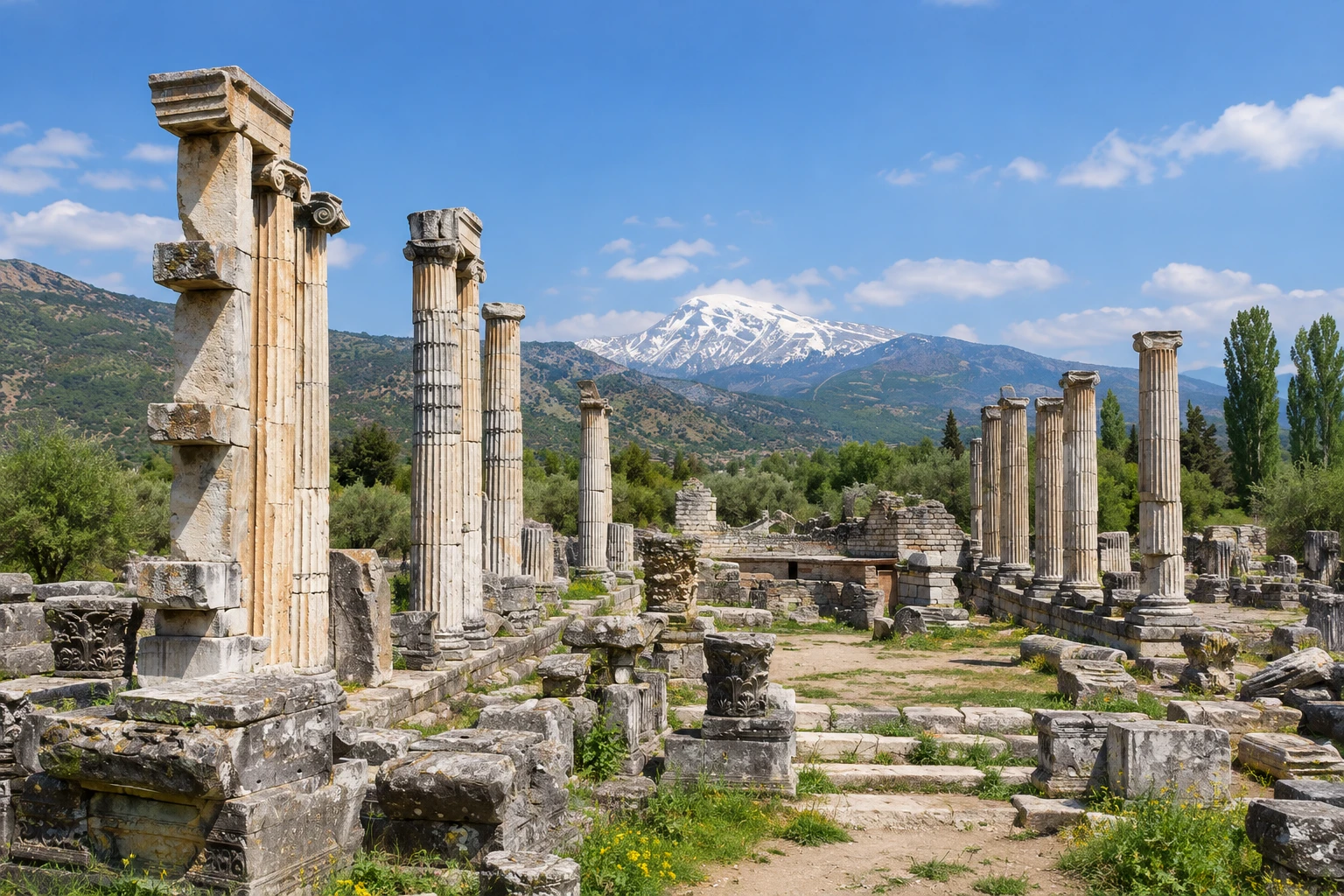
Illustrative images. The pictures in this guide are illustrations based on the real place, not photographs, and may differ from it.

The city
Pamukkale is the settlement at the foot of the white travertine slopes and the archaeological plateau of Hierapolis. The terraces and the ancient city require different routes, even within the same visitor complex. The Hierapolis and Aphrodisias museums extend the itinerary for those who stay more than one night in the area.
There's no accommodation in the guide yet in Pamukkale.
Do you run a hotel, guesthouse or vacation rental here? List itThere are no restaurants in the guide yet in Pamukkale.
Know a good one? Recommend it to usThe city's hotels and restaurants on the map.
how to get there · how many days · itinerary · questions
The local experience
White travertine terraces formed by mineral water, with circulation restricted to authorized sections.
The ancient thermal city above the travertines preserves a theater, streets, a necropolis and other Roman remains.
Sculptures, sarcophagi and regional objects exhibited in former bath structures of Hierapolis.
City dedicated to Aphrodite, with a stadium, monumental remains and a museum linked to the local tradition of marble sculpture.
Before you go
Pamukkale – Turkey Destination Pamukkale about 16 km from Denizli
Approximate distances. Check flights and bus, train or boat schedules before you travel.
From Denizli, use local transport or a taxi to Pamukkale. Arrivals by plane use Denizli Çardak airport, with onward ground travel to arrange. Those arriving by bus should check the drop-off point and the final connection to the village.
Two nights allow one day at the complex and an additional outing; add time if you want to visit Aphrodisias and Laodicea at a relaxed pace.
April to June and September to October usually have more moderate heat. July and August can be very hot on the exposed plateau; winter is colder and has short days.
The seasons shown are the most usual ones; nature doesn't always follow the calendar.
It is not necessary for the main walk, done on foot through the authorized sectors. For Aphrodisias and other excursions, a car or hired transport simplifies the itinerary.
Suggested itinerary
Built with the places on this page. No rush: it's paced so you have time to see them.
Walk through Hierapolis and choose the archaeological sectors before heading to the terraces.
Split your visit between the museum and the circulation strip of the travertines, without expecting pools to be full across the entire slope.
Check before you go. Opening hours and days change, and places may close for renovations, holidays or events. This itinerary is a suggestion from Cidade Turismo, not a commitment: plan yours by checking directly with each place you intend to visit.
Before you go
One night makes it easier to visit the complex with less haste; two allow an additional outing.
Conservation defines permitted passage sectors, which must be respected.
No. It requires a road trip and a substantial period for the visit.
Hierapolis and its museum add a substantial archaeological component to the itinerary.