Paramaribo · Suriname · Fortress
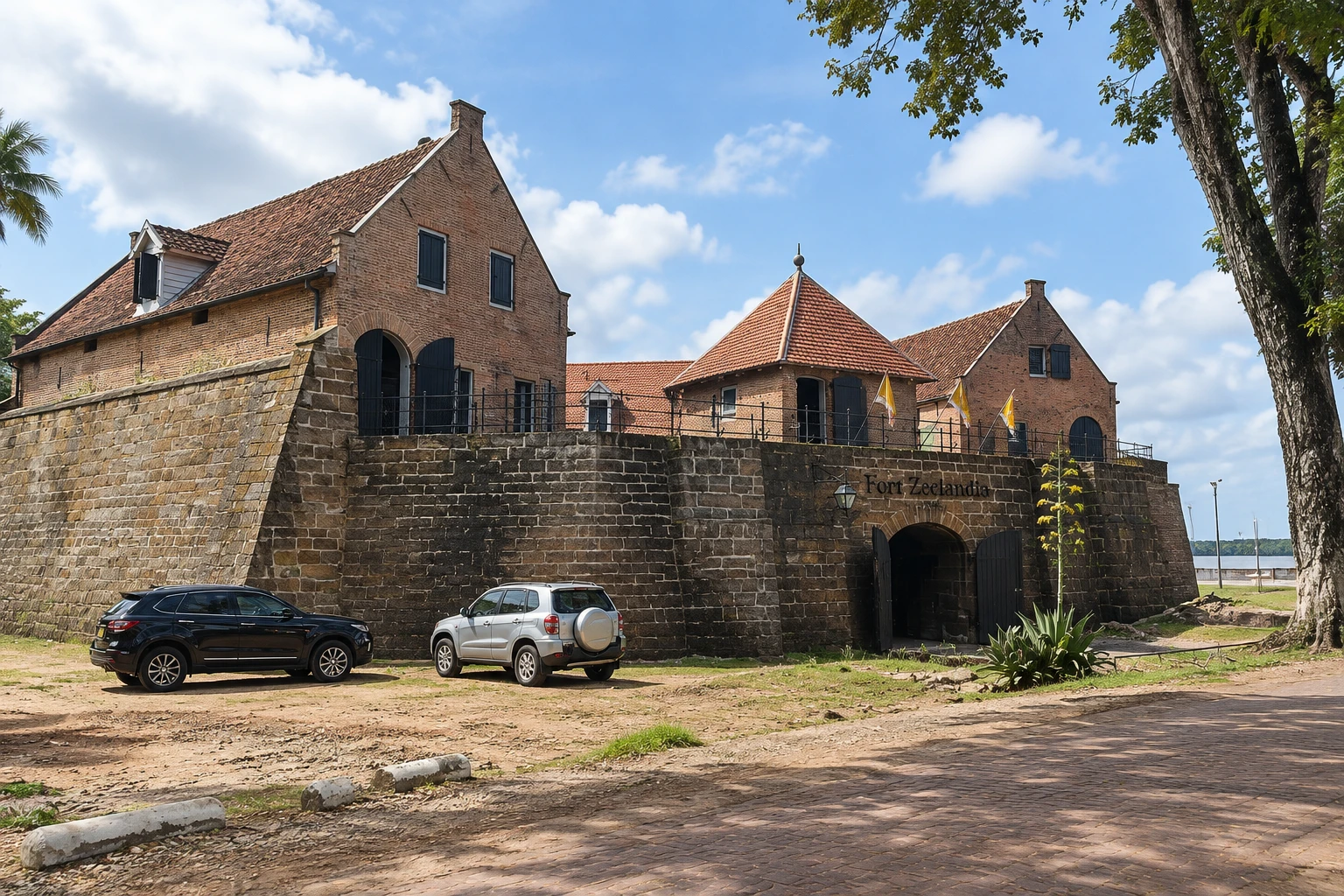
Fort Zeelandia
A star-shaped fort on the banks of the Suriname River, built of wood by the French, rebuilt by the English and taken by the Dutch in 1667. It houses the Museu do Suriname.

 Search
 Brazil
 Antarctica
 Argentina
 Bolivia
 Chile
 Colombia
 Ecuador
 Falkland Islands (Malvinas)
 French Guiana
 Guyana
 Paraguay
 PeruSuriname
 Uruguay
 Venezuela
 Austria
 Belgium
 Croatia
 Denmark
 Finland
 France
 Germany
 Greece
 Hungary
 Iceland
 Ireland
 Italy
 Luxembourg
 Norway
 Poland
 Portugal
 Slovakia
 Slovenia
 Spain
 Sweden
 Switzerland
 the Czech Republic
 the Netherlands
 the United Kingdom
 Turkey
 Bermuda
 Canada
 Greenland
 Mexico
 Saint Pierre and Miquelon
 the United States
 the Dominican Republic
 JapanTurkey
 Egypt
 South Africa
 Australia
 Fiji
 New Zealand
 Papua New Guinea
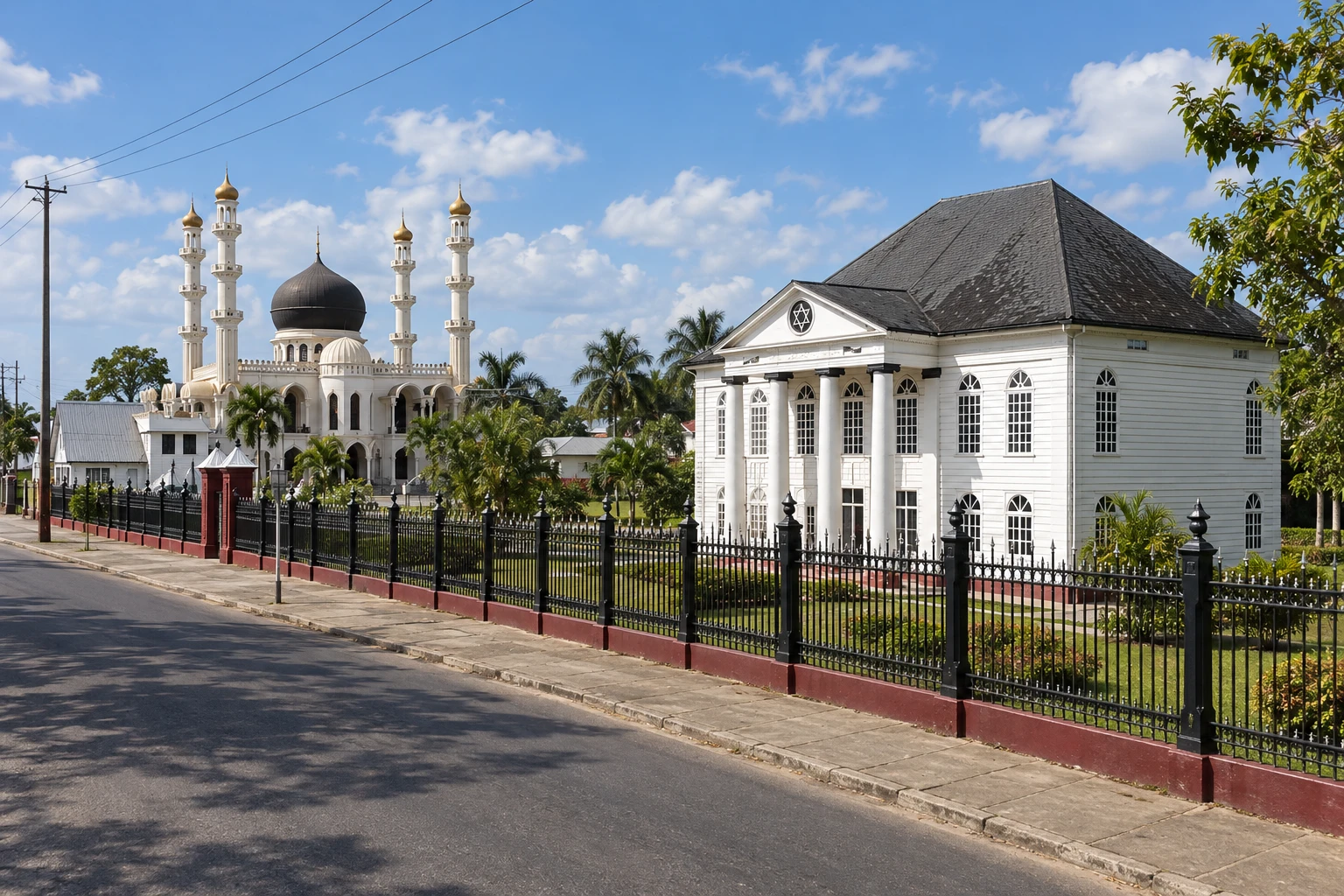
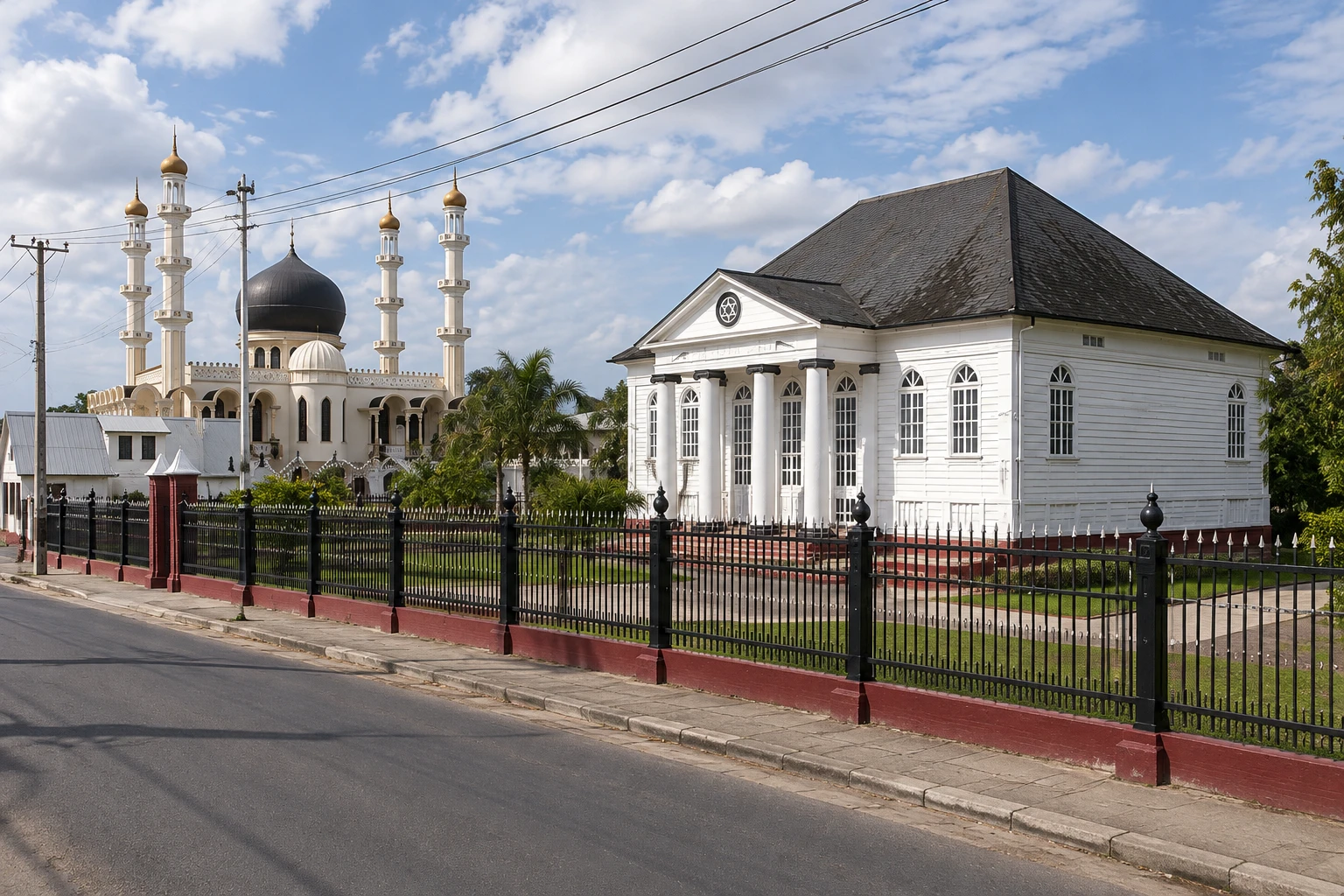
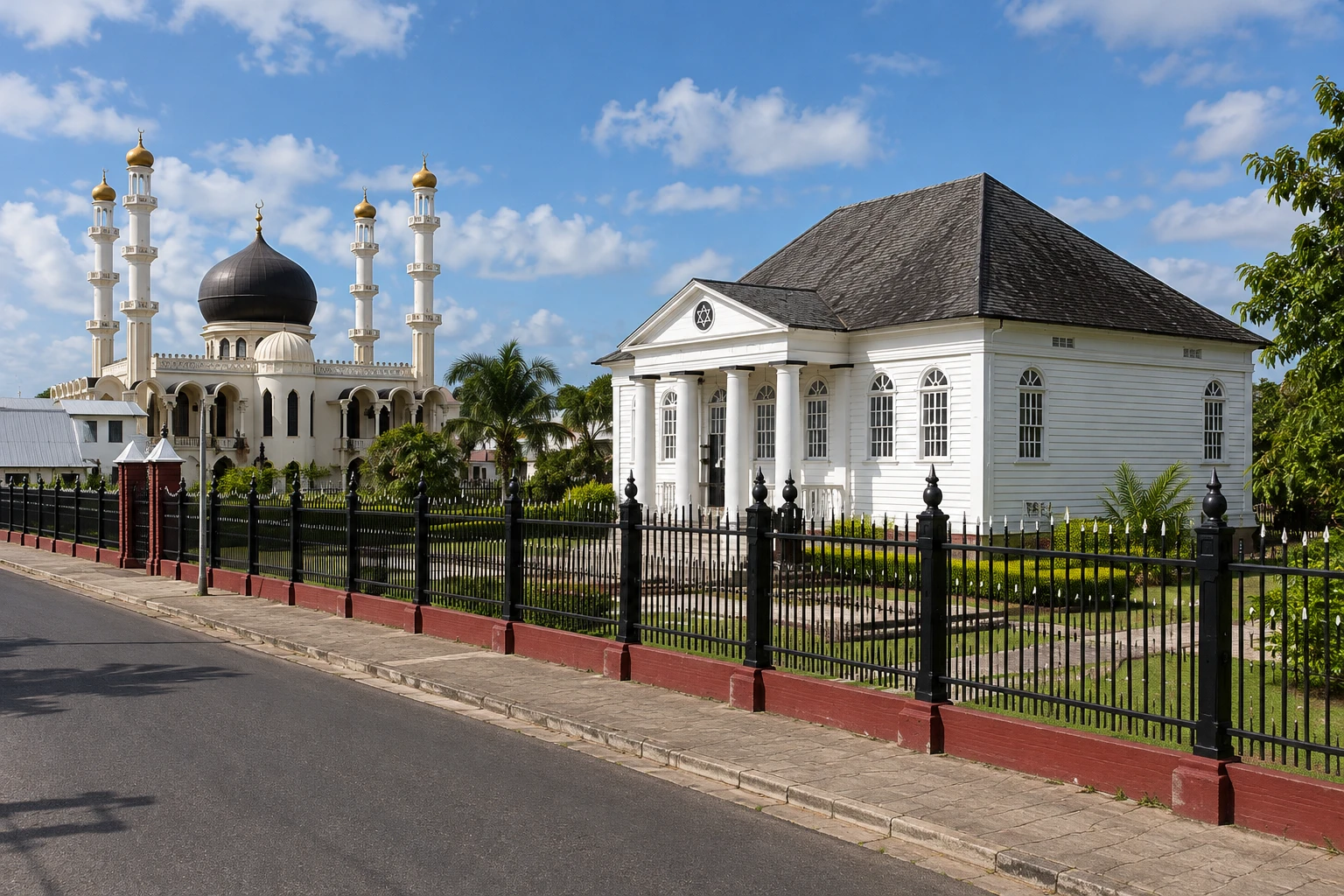
In the photo: Mesquita Keizerstraat and Sinagoga Neveh Shalom
Illustrative images. The pictures in this guide are illustrations based on the real place, not photographs, and may differ from it.

The city
Paramaribo is the capital of Suriname, on the banks of the Suriname River. The historic centre, a UNESCO World Heritage Site, has white wooden Dutch-period houses, Forte Zeelandia, the Palmentuin, the wooden cathedral and the mosque and synagogue side by side on Keizerstraat. Across the river are the plantations and the fort of Commewijne. The cuisine blends Indian, Javanese, Chinese and Creole influences.
There's no accommodation in the guide yet in Paramaribo.
Tem hotel, pousada ou casa de temporada aqui? Cadastre a suaThere are no restaurants in the guide yet in Paramaribo.
Know a good one? Recommend it to usHotéis e restaurantes da cidade no mapa.
how to get there · how many days · itinerary · questions
The local experience
A star-shaped fort on the banks of the Suriname River, built of wood by the French, rebuilt by the English and taken by the Dutch in 1667. It houses the Museu do Suriname.
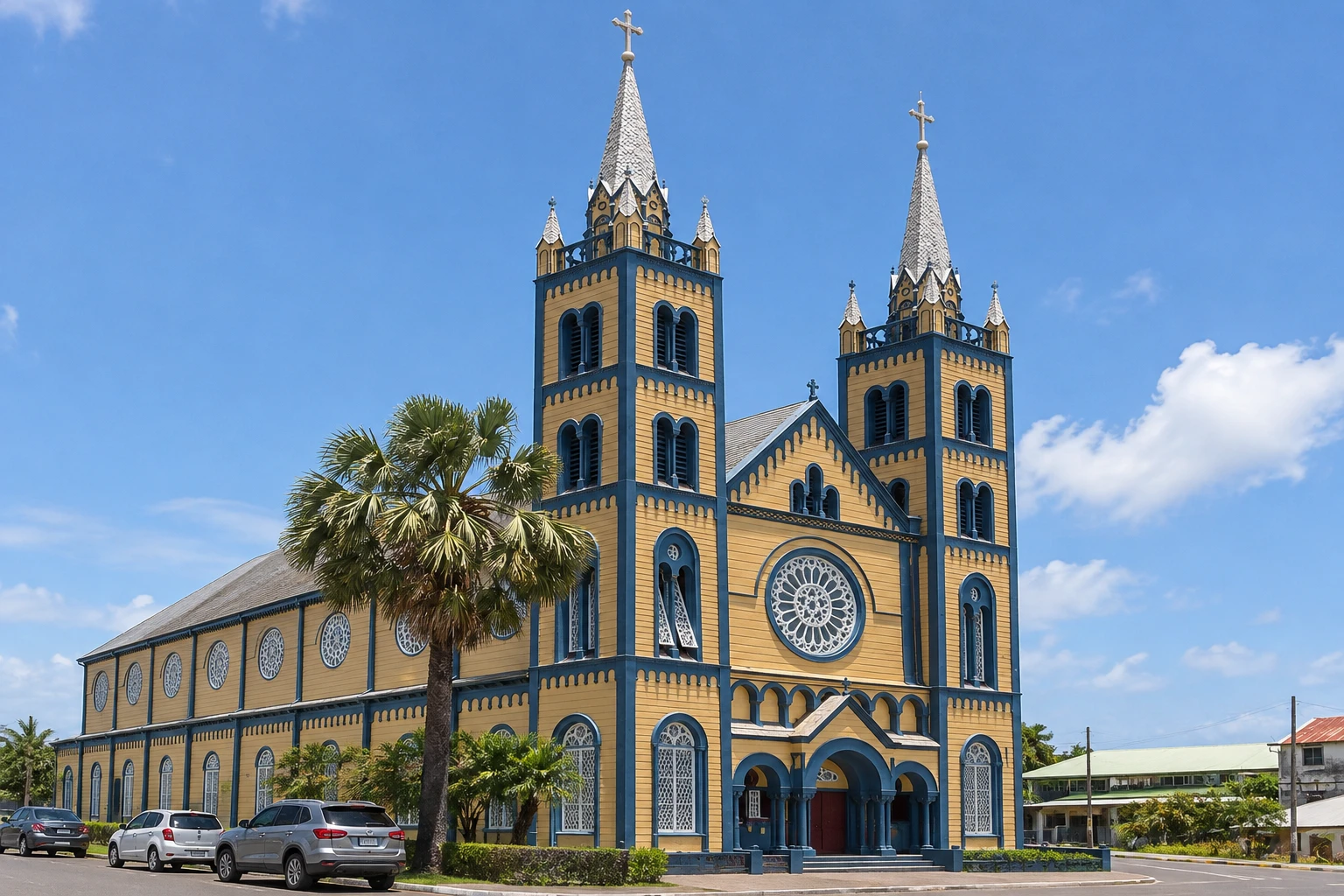
Wooden Catholic cathedral on Gravenstraat, with two towers and 44 metres in height to the cross, built between 1883 and 1901. The interior is entirely Surinamese cedar without paint.
The mosque on Keizerstraat, with a dome and two minarets, is wall‑adjacent to the Sinagoga Neve Shalom. The two side by side have become a symbol of Paramaribo's religious coexistence.
Neoclassical synagogue built between 1835 and 1842 on Keizerstraat, neighboring the Mesquita da Keizerstraat. It houses a small museum about the history of Jews in Suriname.
Before you go
Paramaribo – Suriname Capital
Approximate distances. Check flights and bus, train or boat schedules before you travel.
Connections with Brazil may be by direct flight or with a connection, depending on season and airline. Confirm before booking. Johan Adolf Pengel International Airport is in Zanderij, about 45 km south of the centre; the journey is made by taxi or transfer. Zorg en Hoop Airport, within the city, serves domestic flights to the interior. By land, from Amapá the route goes through French Guiana to the Maroni River crossing at Albina.
Two days for the historic centre, Forte Zeelandia, Keizerstraat, the cathedral and the Central Market. A third day for Commewijne, with Forte Nieuw Amsterdam, Mariënburg, Peperpot and the dolphin-spotting boat trip. Brownsberg requires an extra day, preferably with an overnight stay.
The heat is constant, around 30 °C during the day. From September to November is usually the driest period. The heaviest rains usually fall from April to July, and there is another rainy phase between December and January. Showers are heavy and pass quickly.
The seasons shown are the most usual ones; nature doesn't always follow the calendar.
For the centre, no: everything is within walking distance. For Commewijne, the usual options are taxi, bicycle, boat or organized tour. For Brownsberg, a traction vehicle or an organized trip. In Suriname you drive on the left.
Suggested itinerary
Built with the places on this page. No rush: it's paced so you have time to see them.
Start at Forte Zeelandia and the Suriname Museum, head to Independence Square and rest in the shade of the palms at the Palmentuin.
Visit the wooden cathedral on Gravenstraat and walk to Keizerstraat to see the mosque and the synagogue side by side.
Go down to the Waterkant and walk along the riverfront to the Mercado Central, with the wooden houses on one side and the boats on the other.
Have roti, bami, or pom at a downtown restaurant or at the Javanese restaurants in Blauwgrond.
Day 1
Start early at the Mercado Central and follow the Waterkant to Forte Zeelandia.
Palmentuin, the praça da Independência and the wooden cathedral.
Mosque and Sinagoga Neve Shalom, with the small synagogue museum.
Dinner in the Kleine Waterstraat area, with bars and restaurants.
Day 2
Cross the river early for the trails and the birds of Peperpot.
Follow Commewijne to the old Mariënburg mill and Fort Nieuw Amsterdam.
Boat trip at the confluence of the rivers, where the gray dolphins (botos) often appear, returning to the Waterkant.
Farewell dinner in Paramaribo or an overnight stay at a plantation guesthouse in Commewijne.
Check before you go. Opening hours and days change, and places may close for renovations, holidays or events. This itinerary is a suggestion from Cidade Turismo, not a commitment: plan yours by checking directly with each place you intend to visit.
Before you go
Johan Adolf Pengel Airport is in Zanderij, about 45 km away. You can take a taxi or a shuttle arranged with your hotel; agree the fare beforehand.
Roti with curry, of Indian heritage; bami and nasi, of Javanese and Chinese heritage; saoto, a Javanese soup; and pom, a Creole roast of taioba root with chicken.
Yes. The historic center is flat and compact, and the fort, Palmentuin, the cathedral, Keizerstraat and the Waterkant are just a few minutes from each other.
Via the Jules Wijdenbosch bridge by car, taxi or bicycle, or by boat from the Waterkant to Meerzorg.
The country's currency is the Surinamese dollar. Hotels and tours sometimes accept other currencies; check beforehand and bring some local cash for the market.