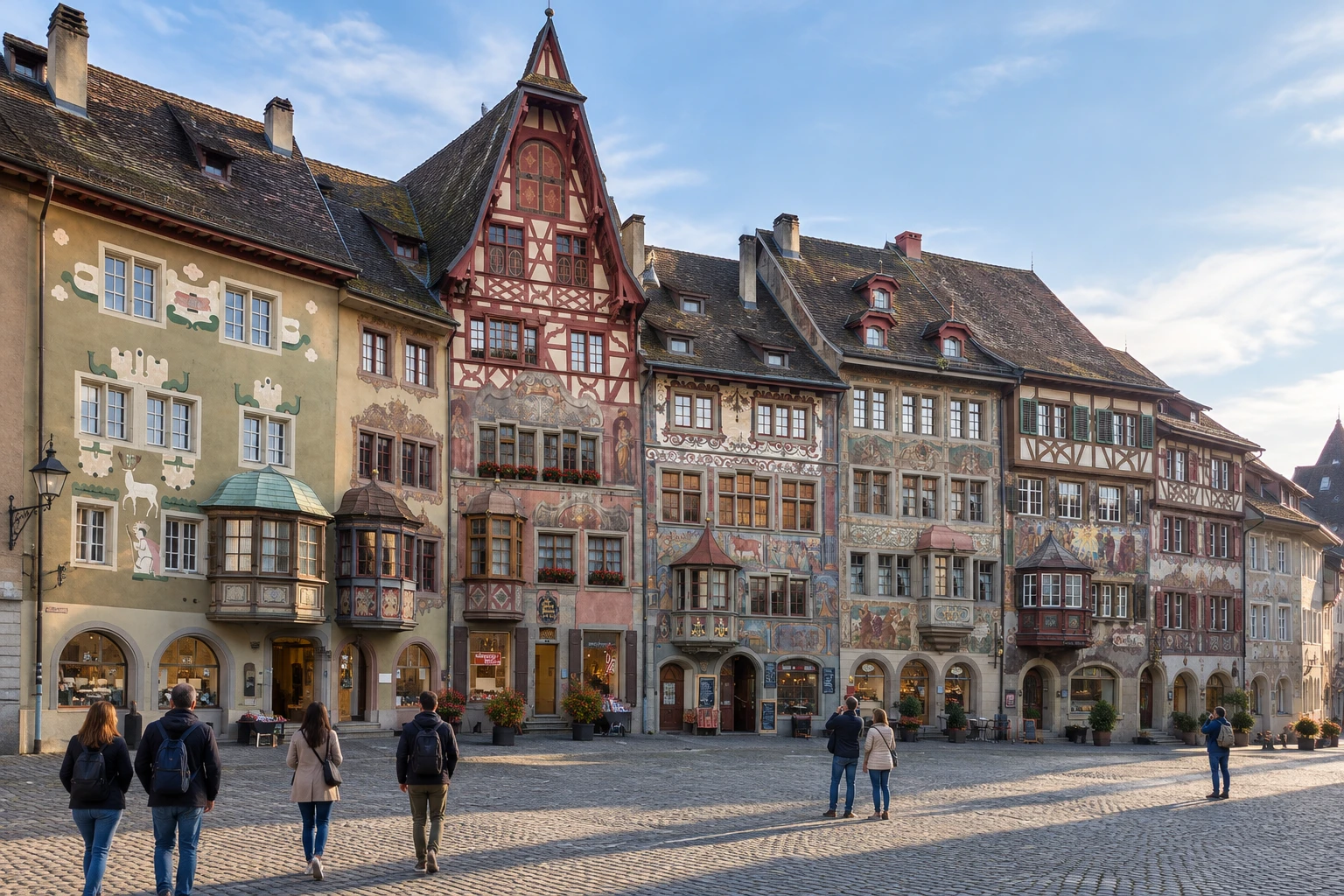
20 places to visit and 17 tours, chosen by the Cidade Turismo guide.
Updated
Illustrative images. The pictures in this guide are illustrations based on the real place, not photographs, and may differ from it.
To start
The 10 main places Zurich
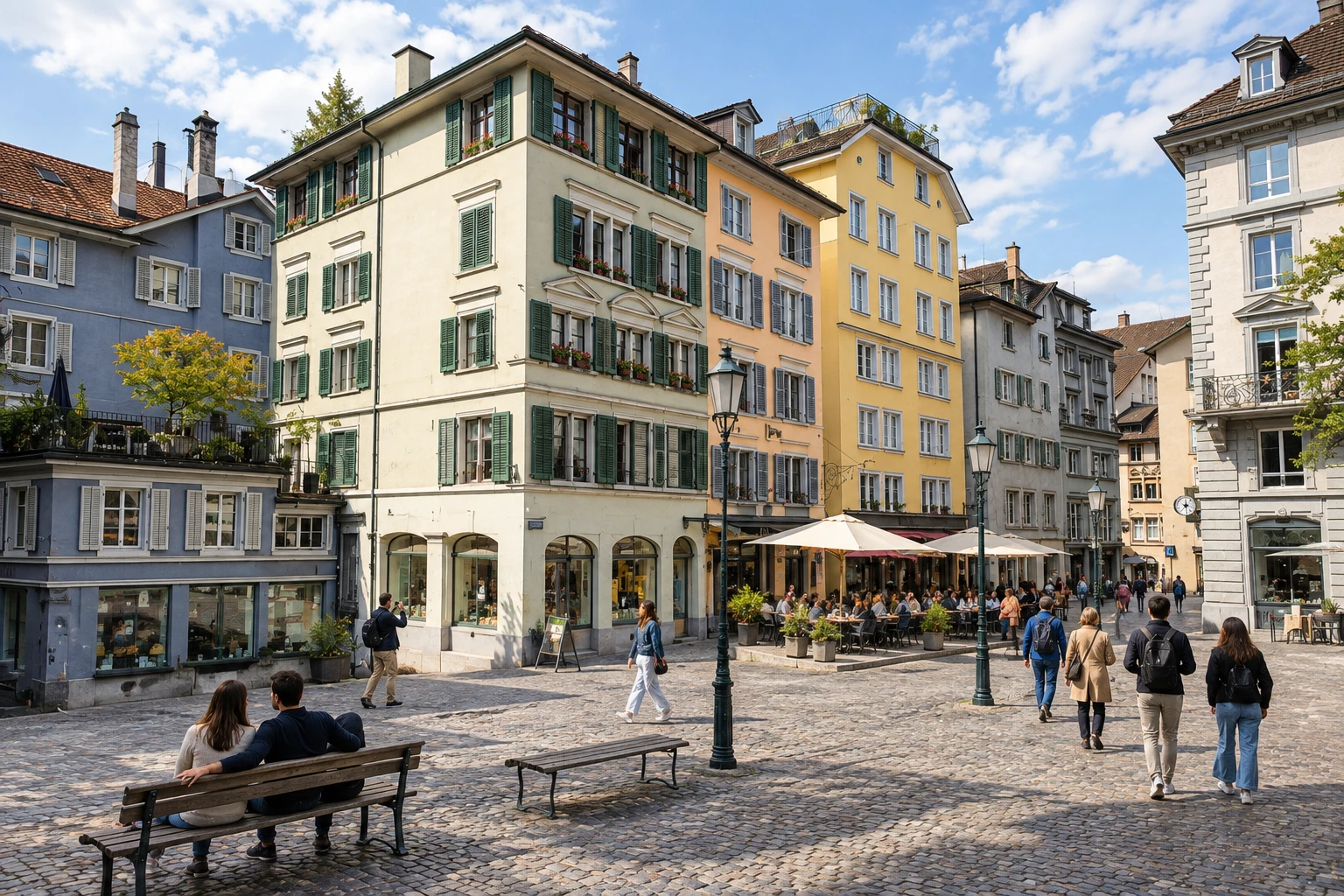
Niederdorf · ZurichThe part of the old town on the right bank of the Limmat, with the car-free Niederdorfstrasse, guild houses on the Limmatquai, the Rathaus and the Cabaret Voltaire, where the Da...
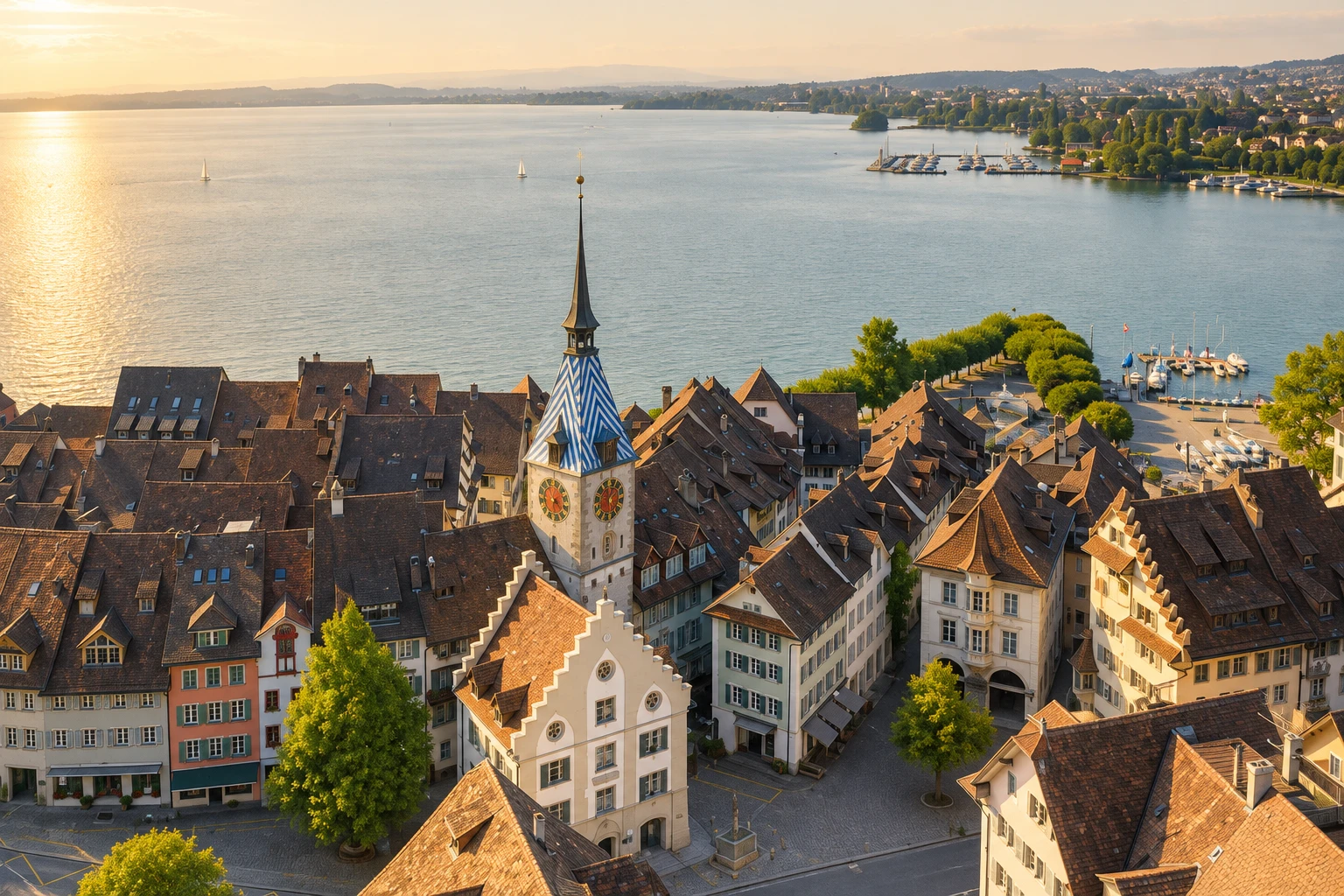
Zytturm (Zug Clock Tower) · ZugThe historic center’s clock tower in Zug, 41.5 m tall with a blue-and-white roof, the city’s colors.
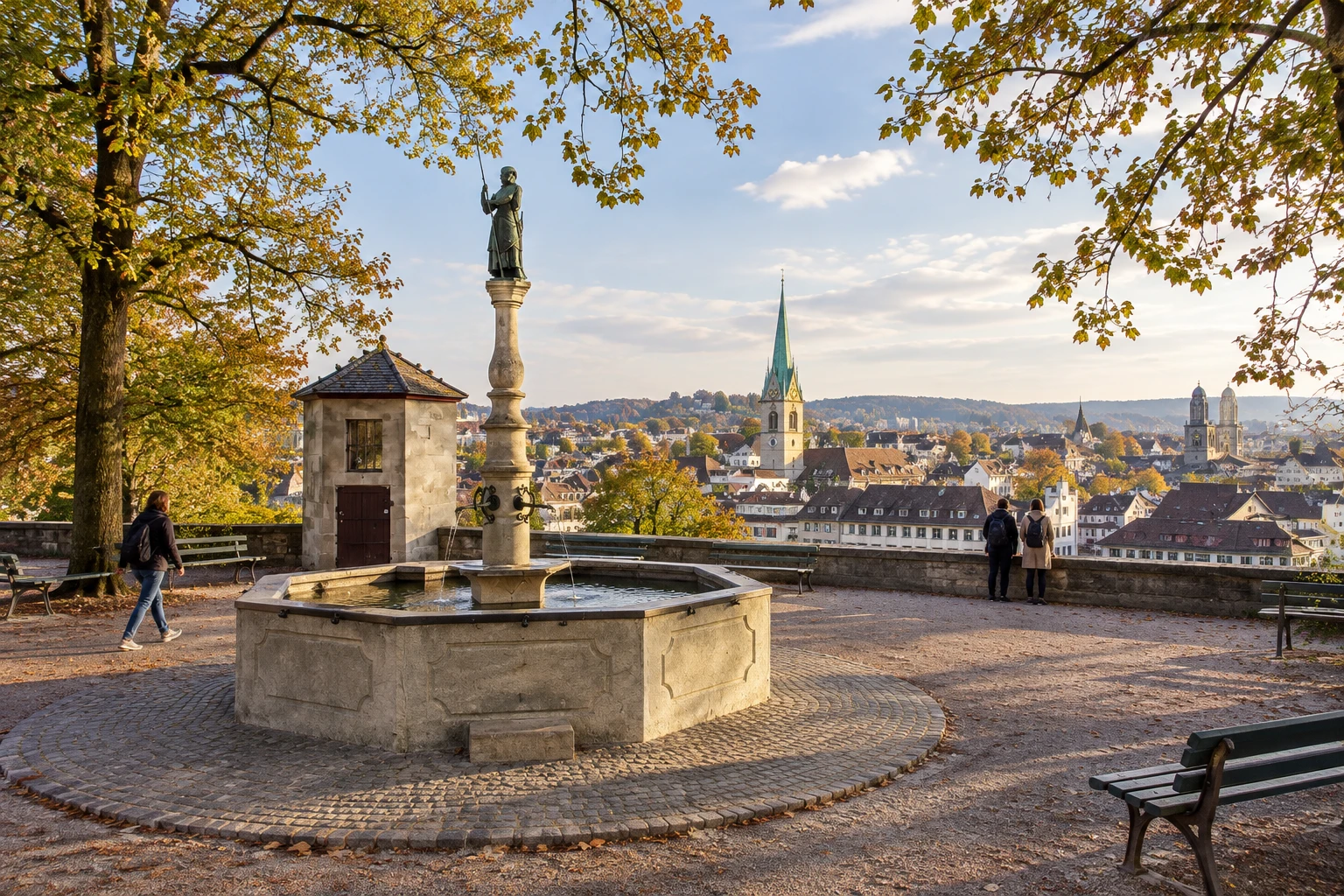
Lindenhof · ZurichTree-lined square atop a hill in the old town, where a Roman fort and a Carolingian palace once stood, with views over the Limmat, the Niederdorf and the ETH.
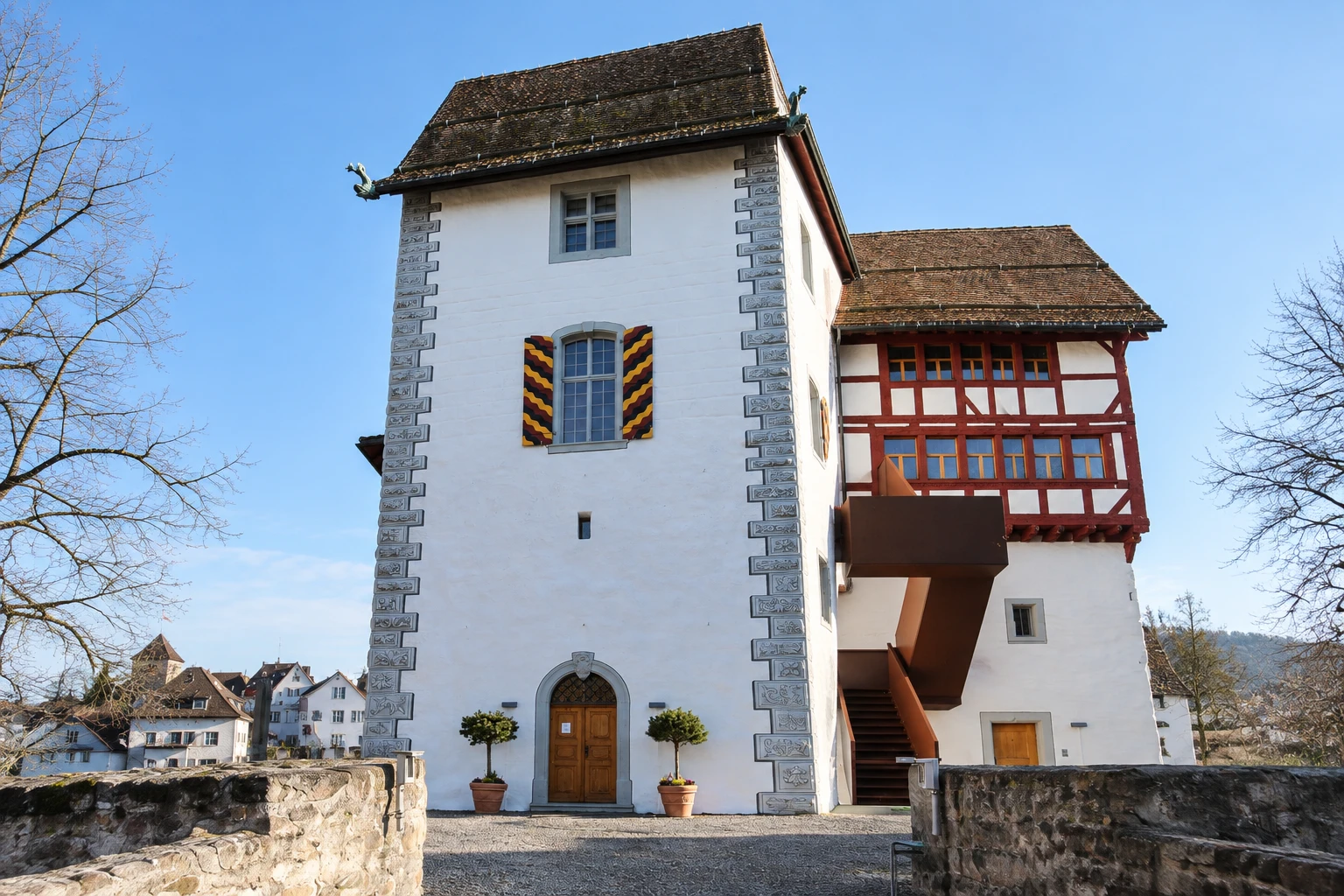
Museum Burg Zug · ZugMedieval castle on the edge of Zug’s old town, with a stone tower and half-timbered wings, housing the city and cantonal cultural history museum.
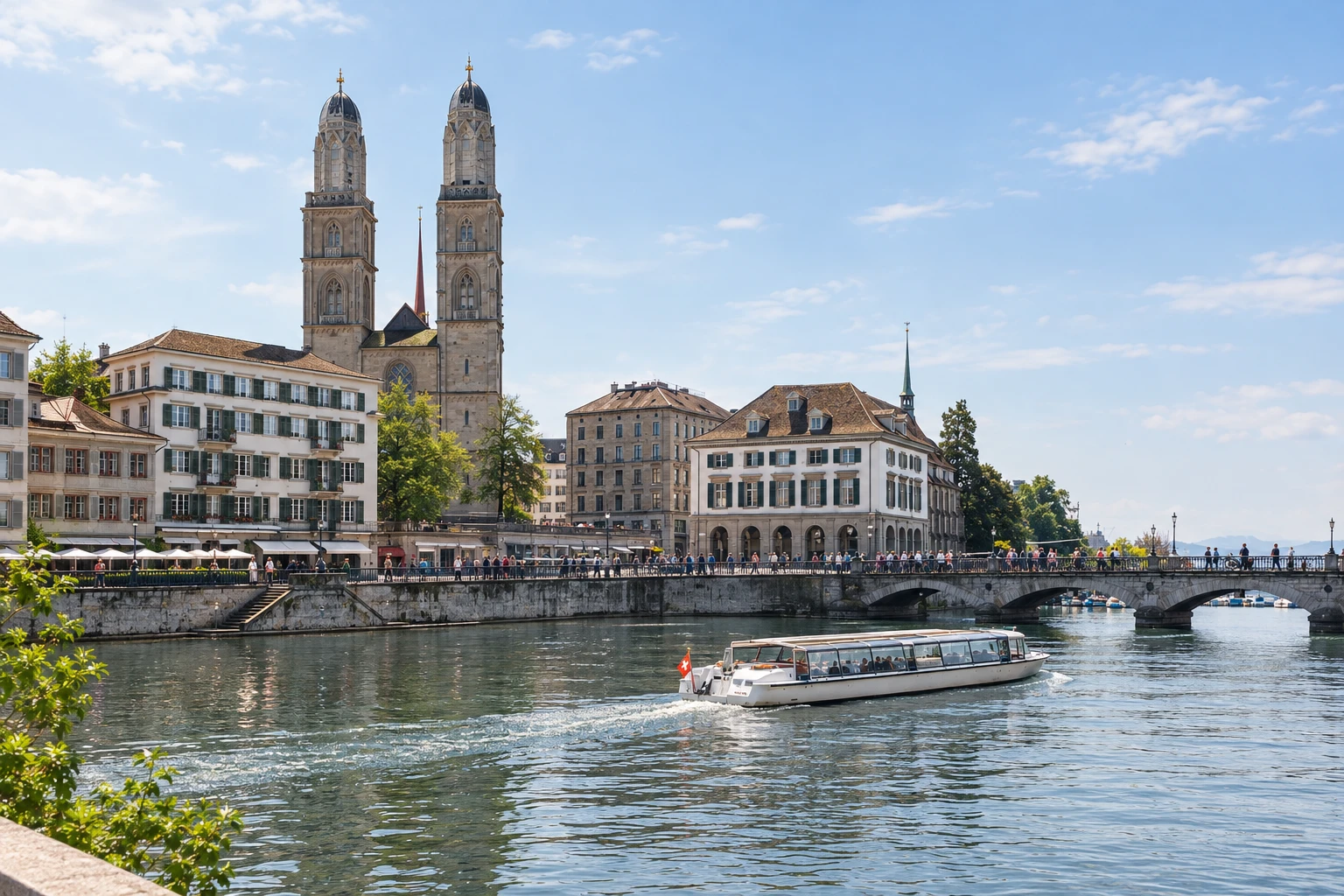
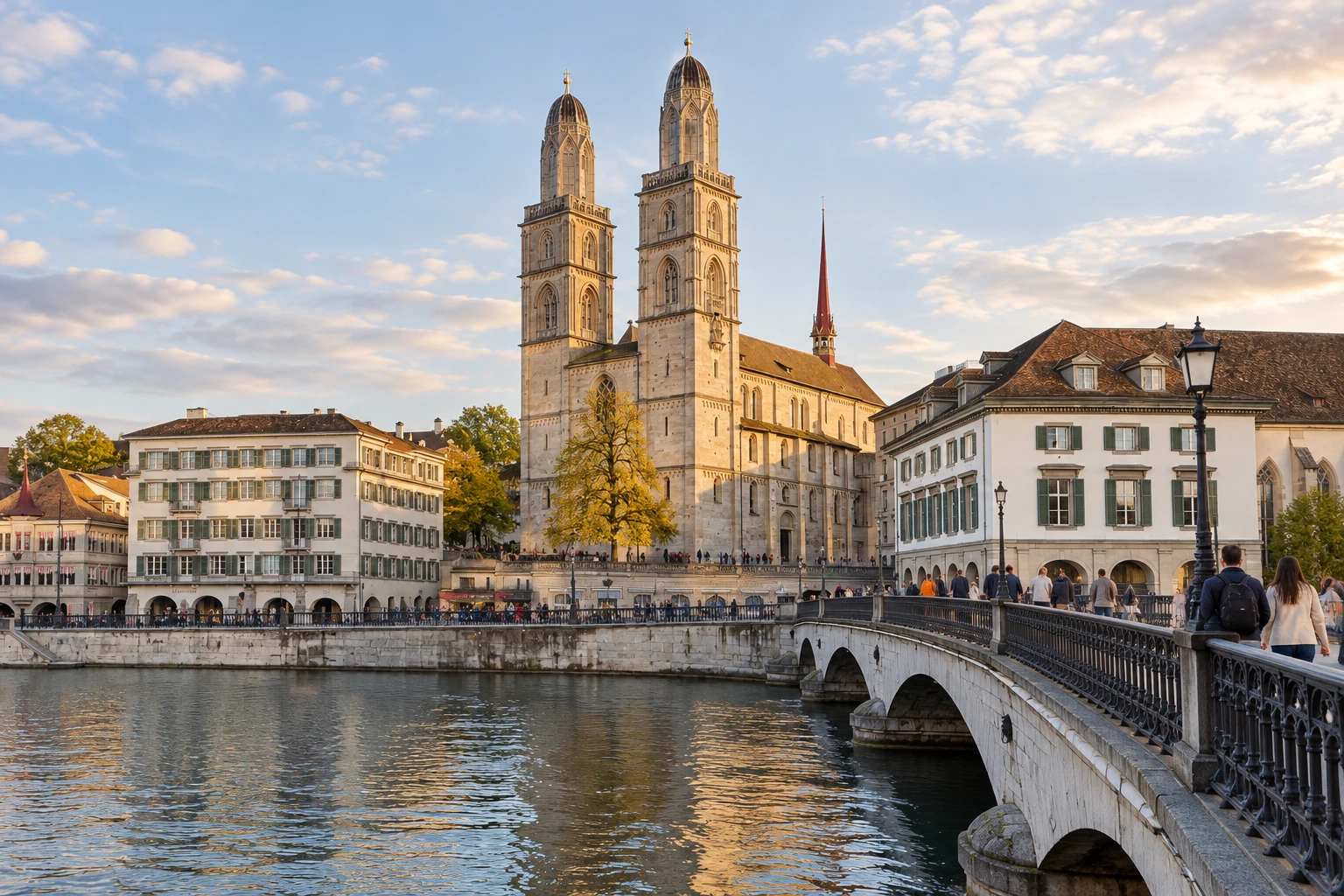
Grossmünster · ZurichThe Romanesque twin-tower church that is a symbol of Zurique, from where Huldrych Zwingli led the Reformation.
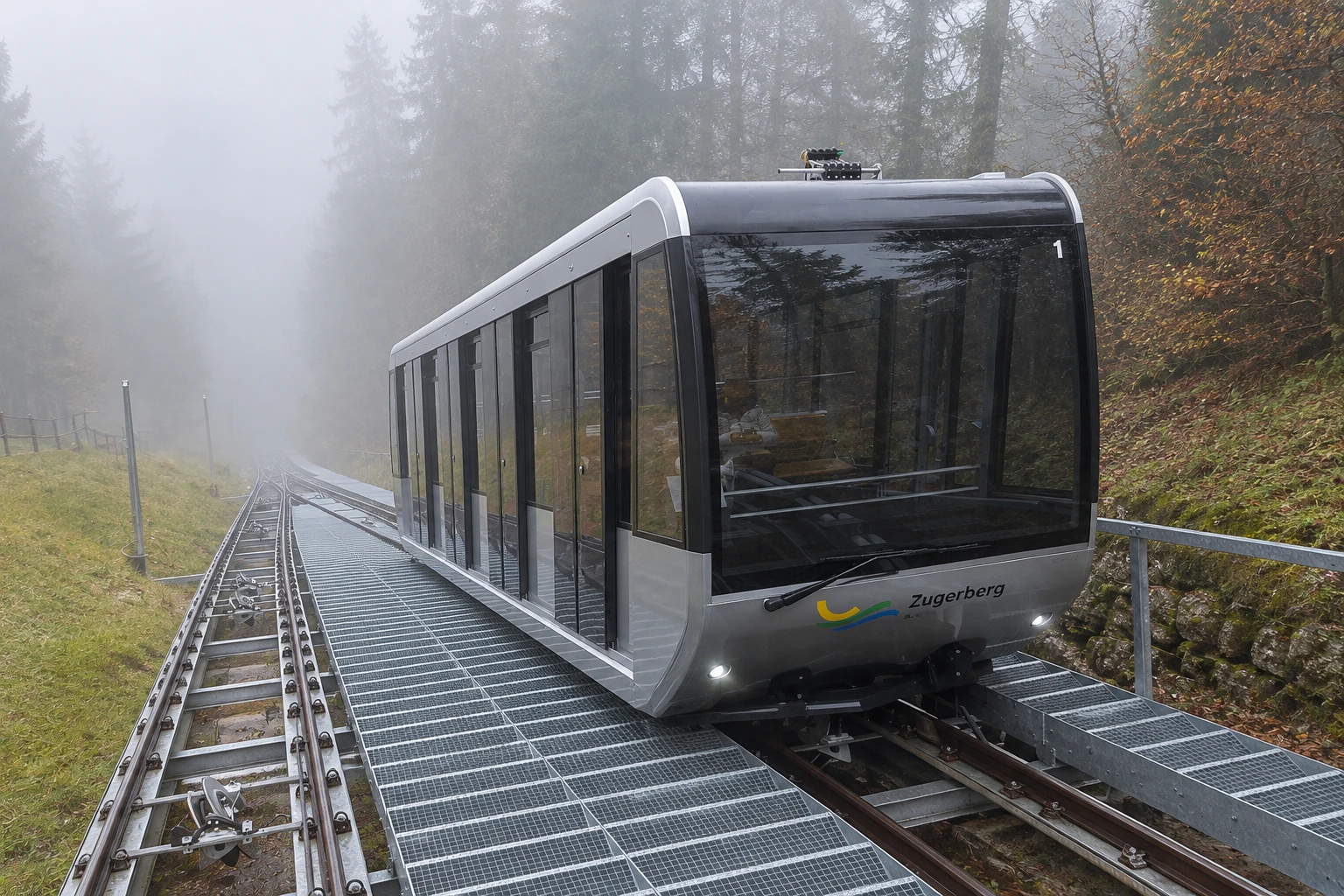
Mount Zug · ZugMountain rising just above Zug, reached by funicular, with meadows, trails and views over Lake Zug, the town and the Alps.
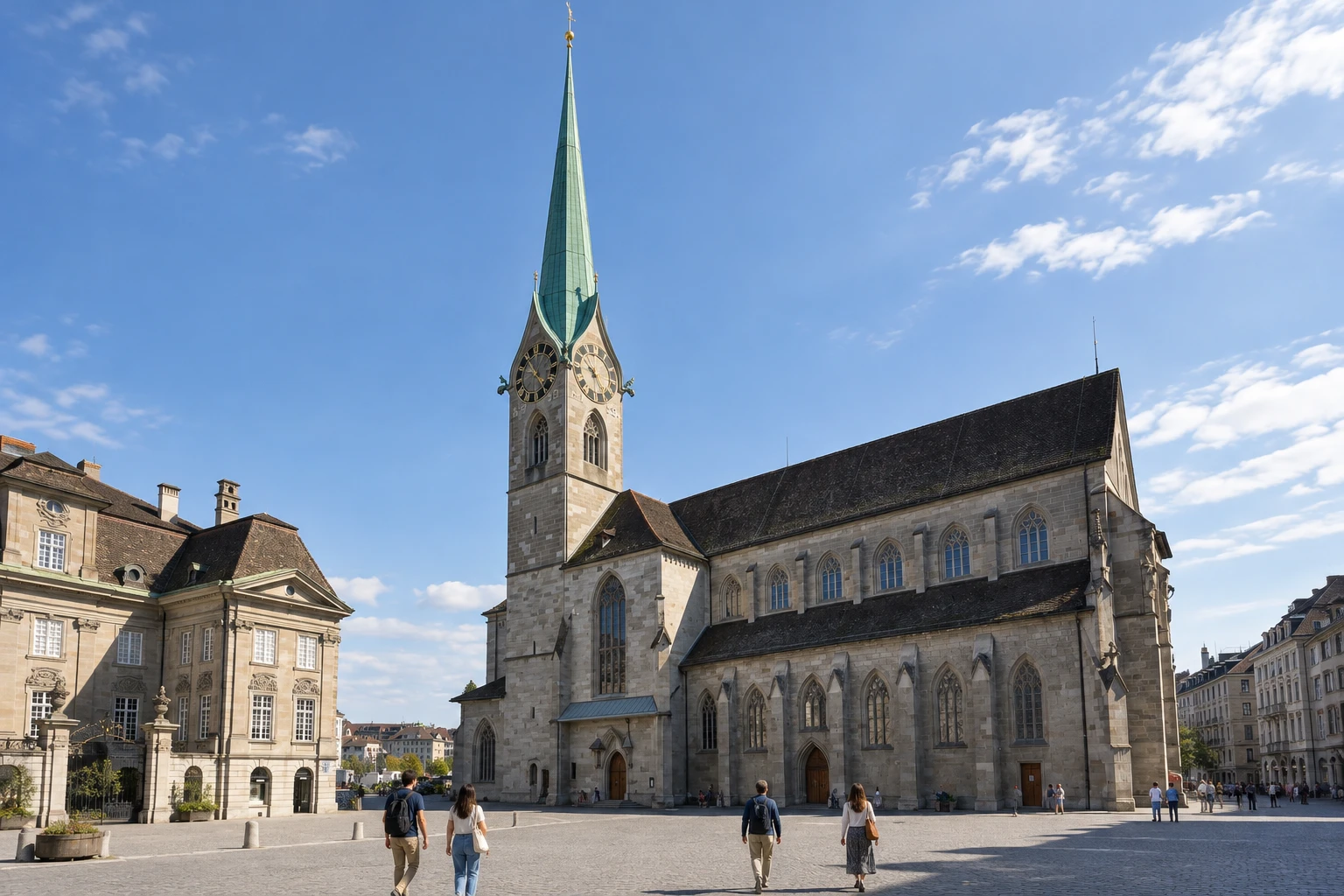
Fraumünster · ZurichChurch founded in 853 as an abbey for noble women, known for the five choir windows designed by Marc Chagall in 1970 and for the window by Augusto Giacometti.
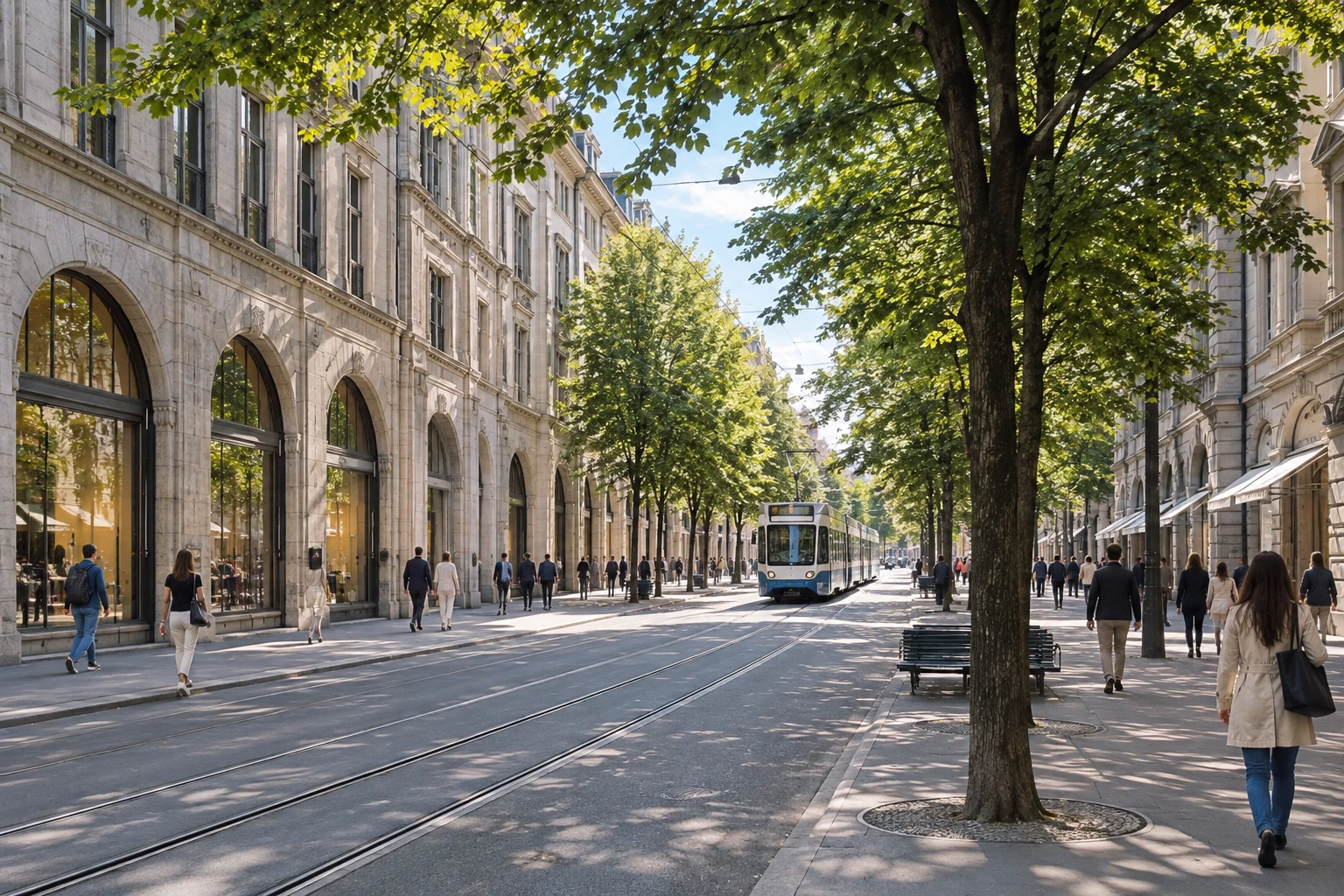
Bahnhofstrasse · ZurichThe pedestrian and tram street that connects the central station to the lake over 1.4 km, with department stores, jewellers, watchshops and Paradeplatz, the square of banks and...
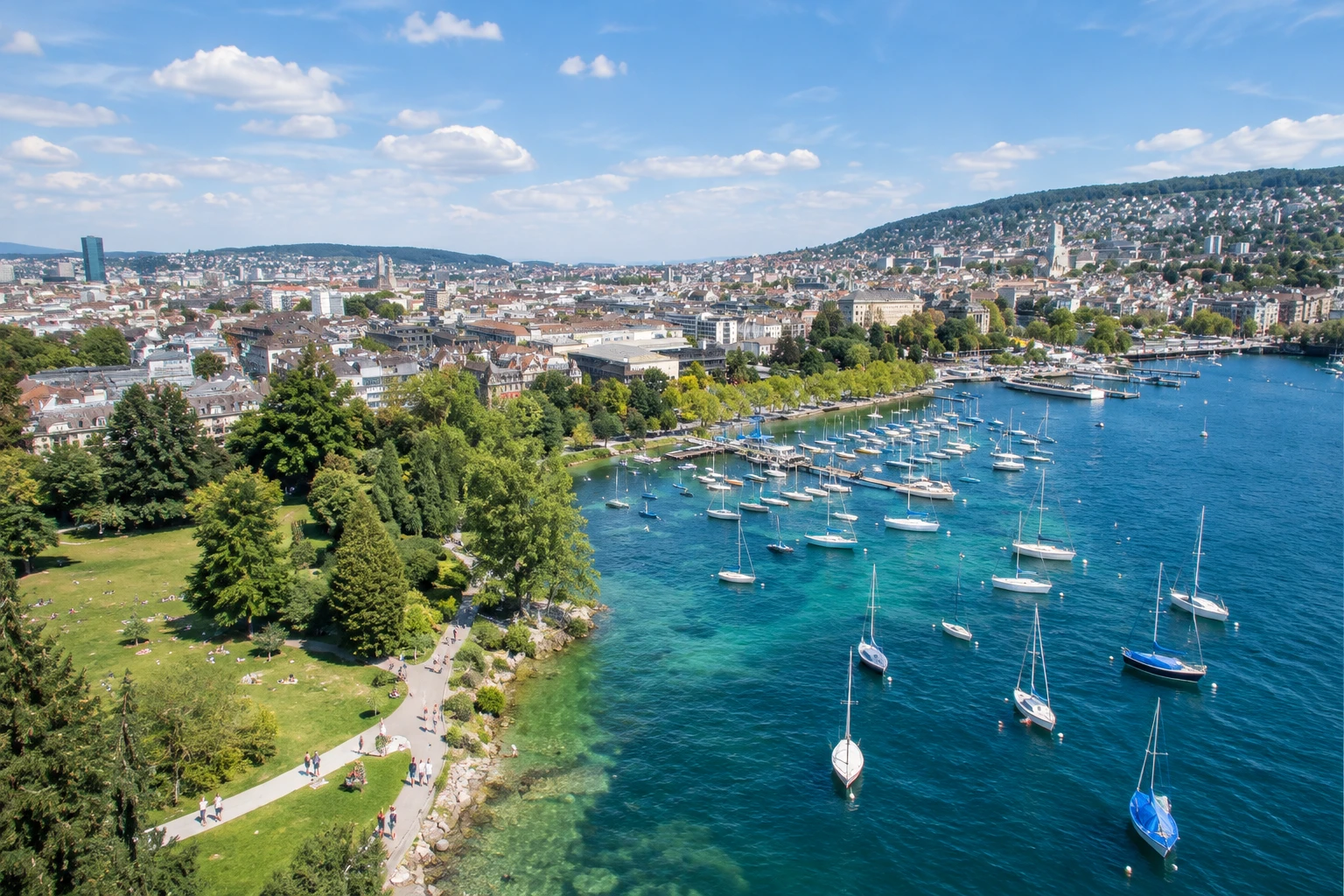
Lake Zurich · ZurichThe lake at the southern tip of the city, with waterfront promenades, public pools in summer and ZSG boats that leave Bürkliplatz for one-hour cruises up to the crossing to Rapp...
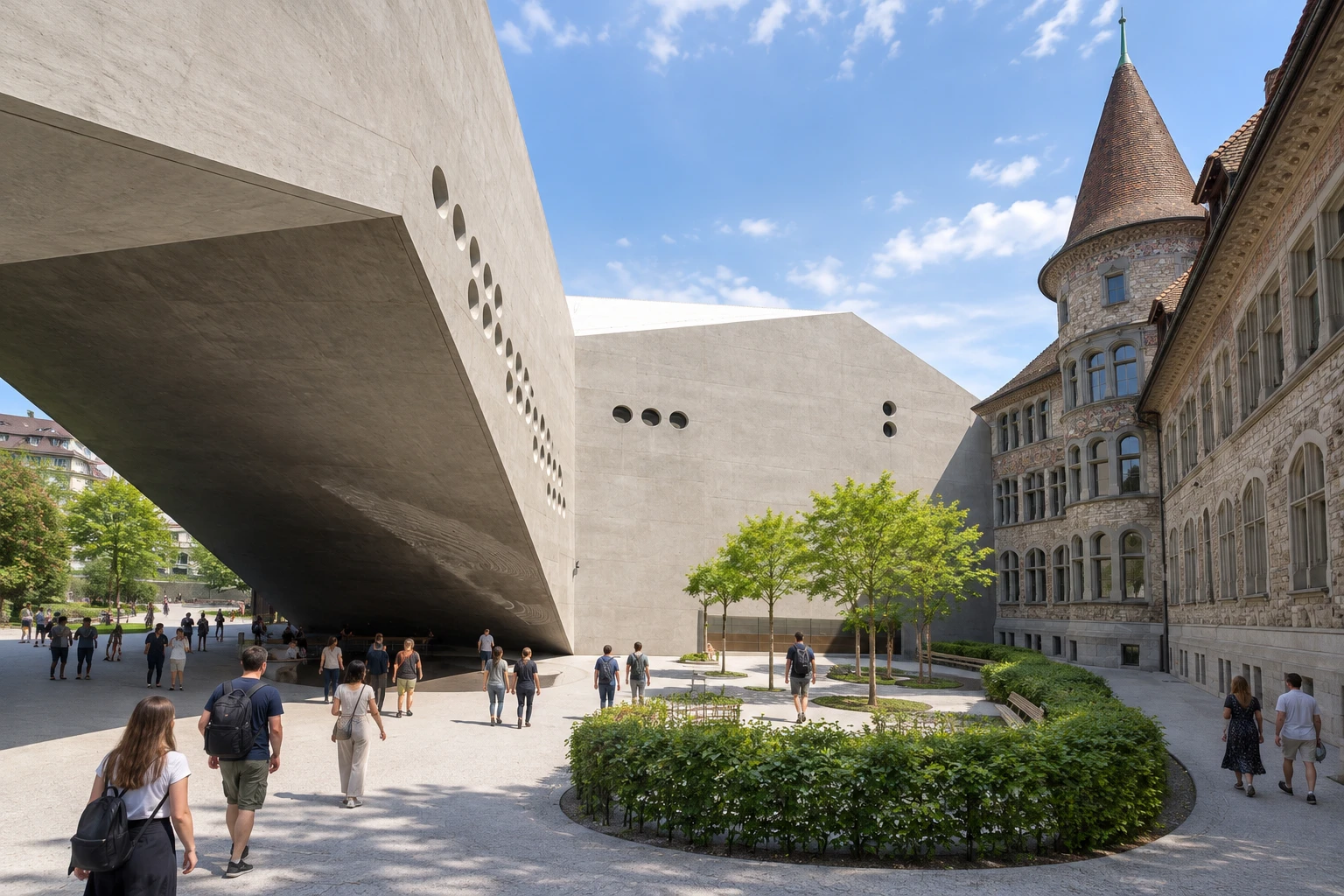
Swiss National Museum · ZurichThe Museu Nacional Suíço, housed in a 1898 castle-like building next to the central station, presenting the history of Suíça from prehistory to the present and a modern wing fro...
The part of the old town on the right bank of the Limmat, with the car-free Niederdorfstrasse, guild houses on the Limmatquai, the Rathaus and the Cabaret Voltaire, where the Dada movement was born.
The historic center’s clock tower in Zug, 41.5 m tall with a blue-and-white roof, the city’s colors. It was part of the medieval wall and has an astronomical clock that shows the week, moon phases, the month and the leap year.
Tree-lined square atop a hill in the old town, where a Roman fort and a Carolingian palace once stood, with views over the Limmat, the Niederdorf and the ETH. Next to it are the church St. Peter and Augustinergasse.
The Romanesque twin-tower church that is a symbol of Zurique, from where Huldrych Zwingli led the Reformation. It has stained glass by Augusto Giacometti and Sigmar Polke, a crypt and the Karlsturm tower, which is climbed by 187 steps.
Church founded in 853 as an abbey for noble women, known for the five choir windows designed by Marc Chagall in 1970 and for the window by Augusto Giacometti. The crypt tells more than 1,200 years of history.
The pedestrian and tram street that connects the central station to the lake over 1.4 km, with department stores, jewellers, watchshops and Paradeplatz, the square of banks and the confectionery Sprüngli.
The lake at the southern tip of the city, with waterfront promenades, public pools in summer and ZSG boats that leave Bürkliplatz for one-hour cruises up to the crossing to Rapperswil.
The Museu Nacional Suíço, housed in a 1898 castle-like building next to the central station, presenting the history of Suíça from prehistory to the present and a modern wing from 2016.
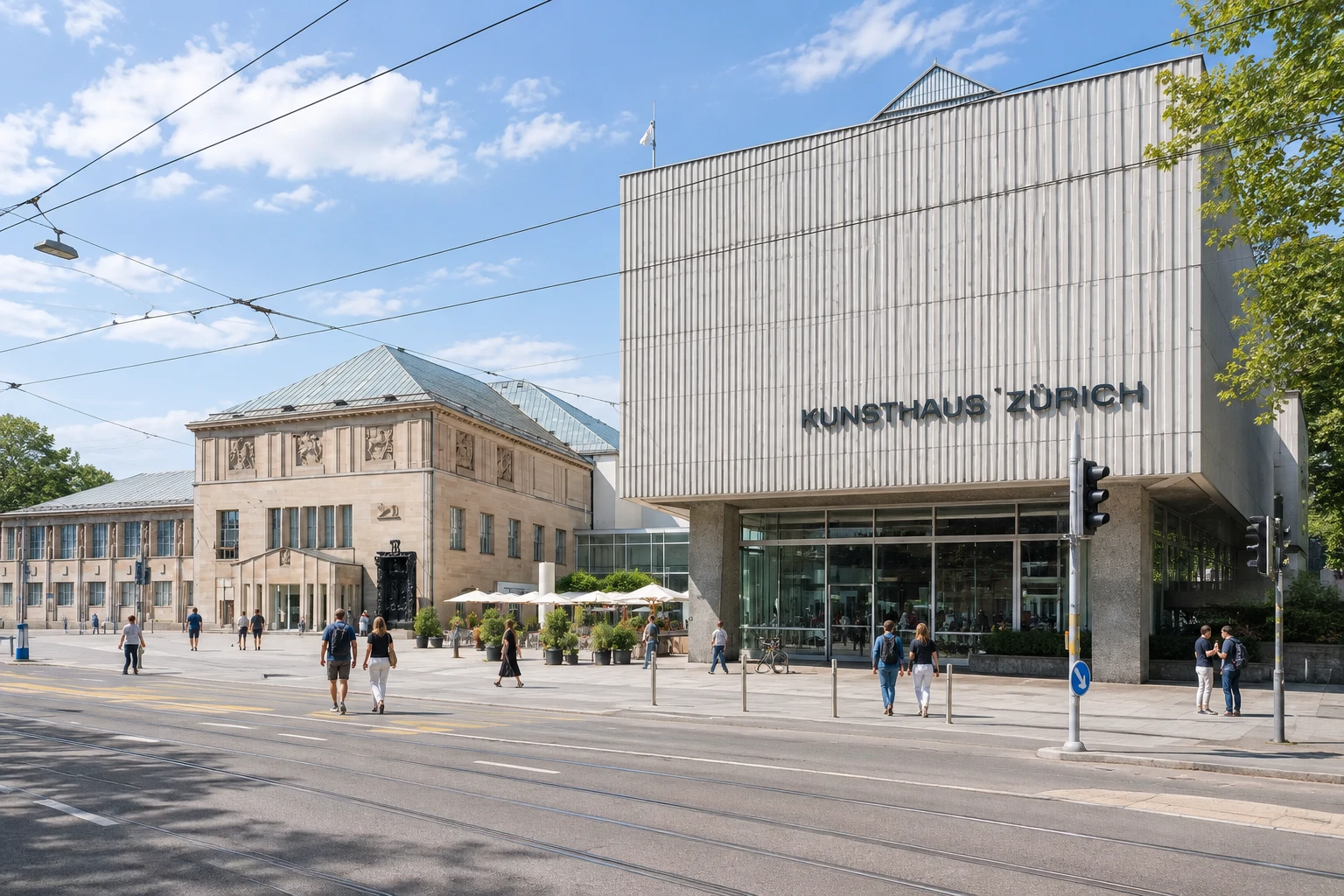
Art museum at Heimplatz, with works by Alberto Giacometti, Edvard Munch, Monet, Picasso, Van Gogh and the Swiss Ferdinand Hodler and Füssli, in two buildings linked by a tunnel: Karl Moser’s from 1910 and David Chipperfield’s from 2021.
The FIFA football museum, opened in 2016 in Enge, with over a thousand objects from all men’s and women’s World Cups, the original World Cup trophy and interactive attractions across three floors.
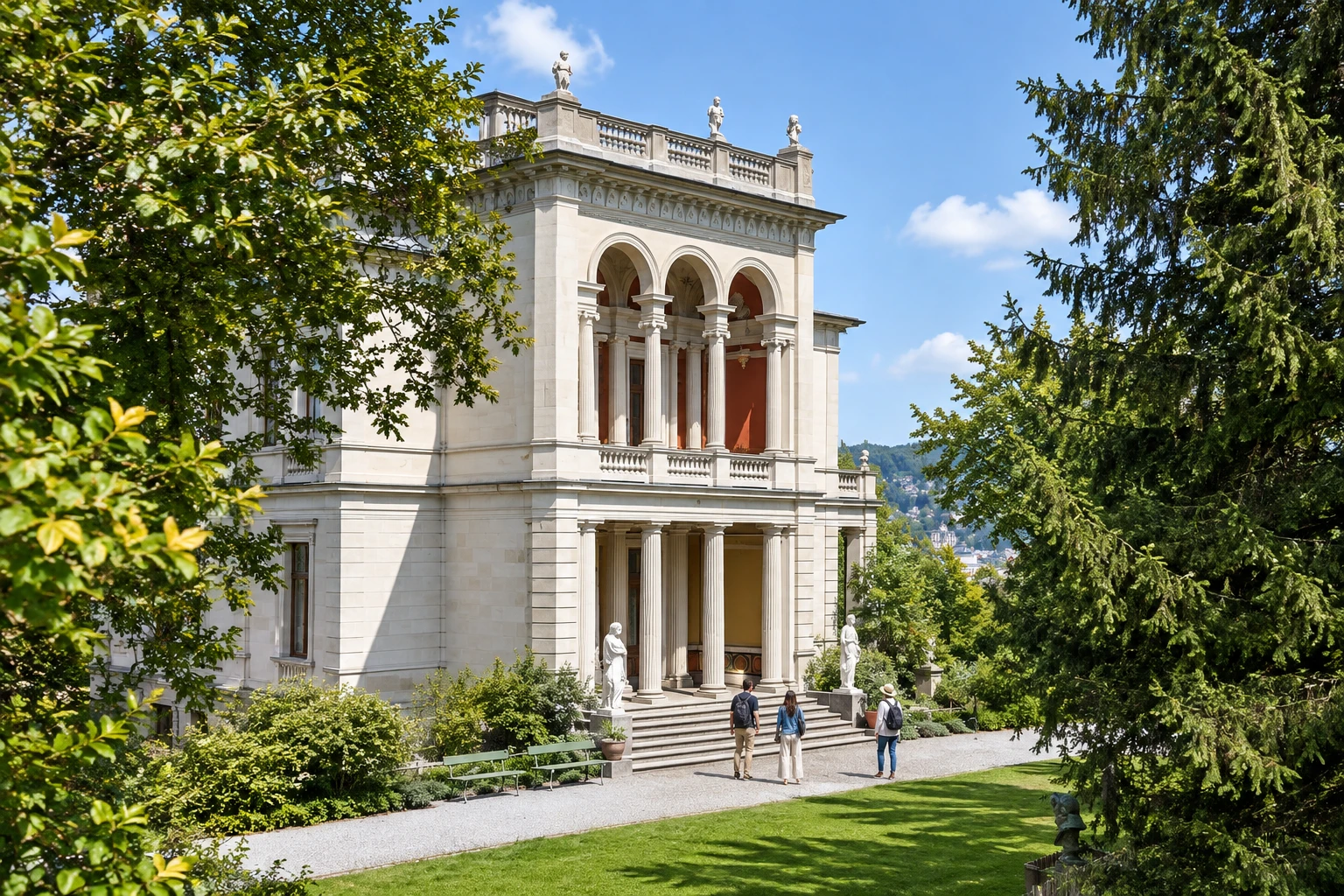
Museum of art from Asia, Africa, the Americas and Oceania, housed in the Villa Wesendonck and an underground pavilion within the Rieterpark, a park of old trees with views of the Glarus Alps on clear days.
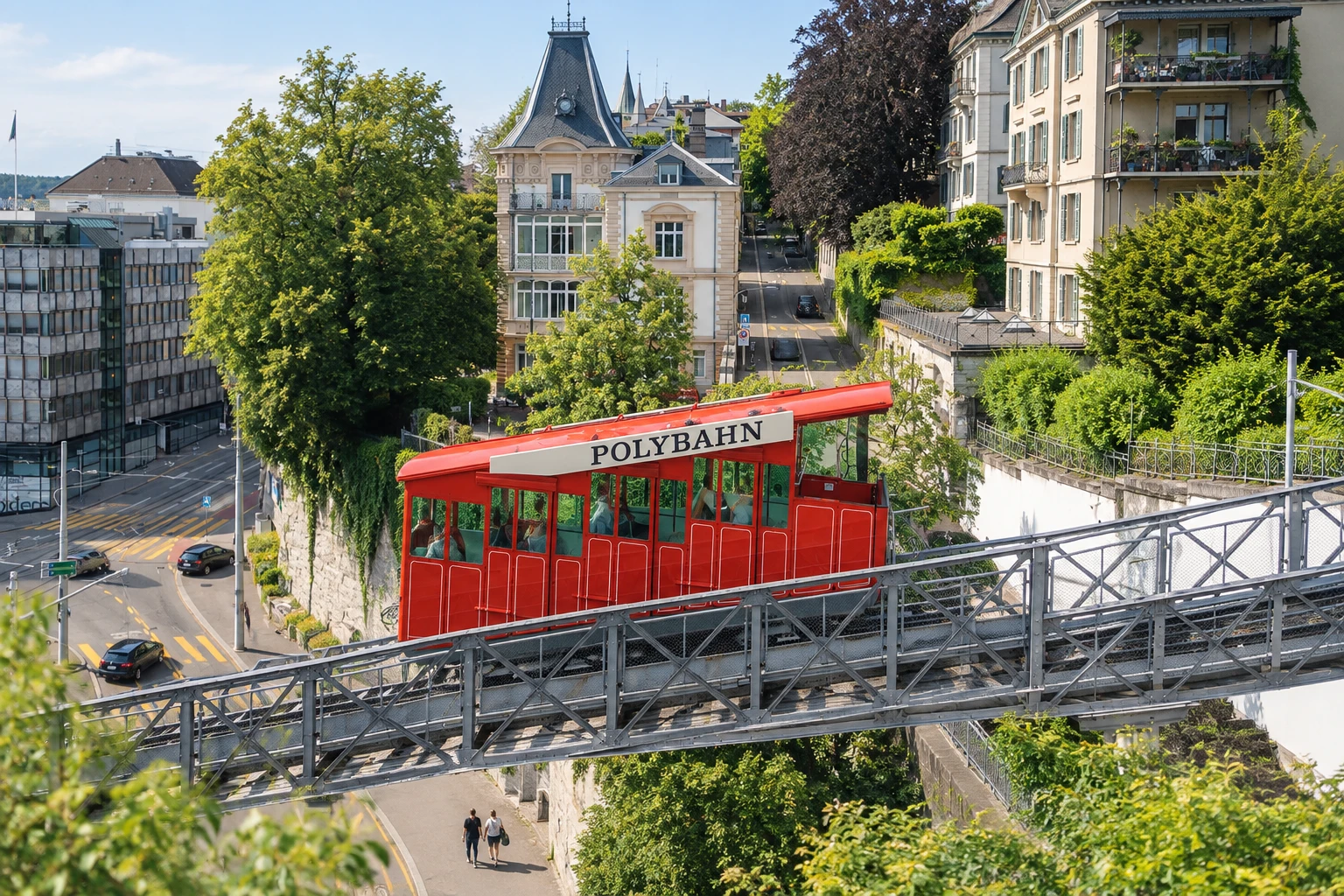
A red funicular from 1889 that climbs in about 100 seconds from Central up to the Polyterrasse, the terrace in front of ETH’s main building, with views over the old town roofs, the Limmat and the lake.
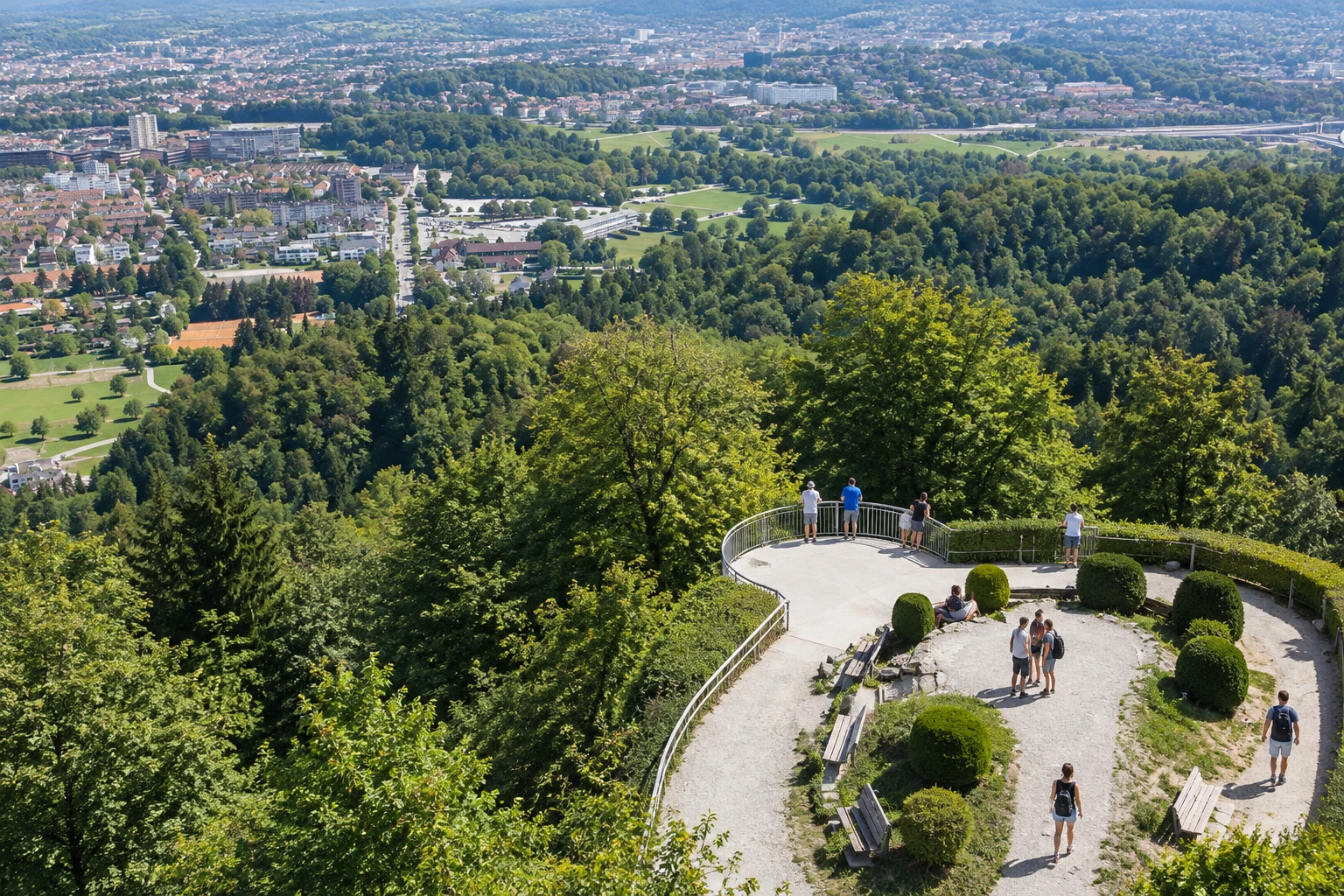
The city’s mountain, at 870 meters altitude, about 20 minutes by train from Zürich HB, with a lookout tower over the city, the lake and the Alps, and the Planetenweg trail to the Felsenegg.
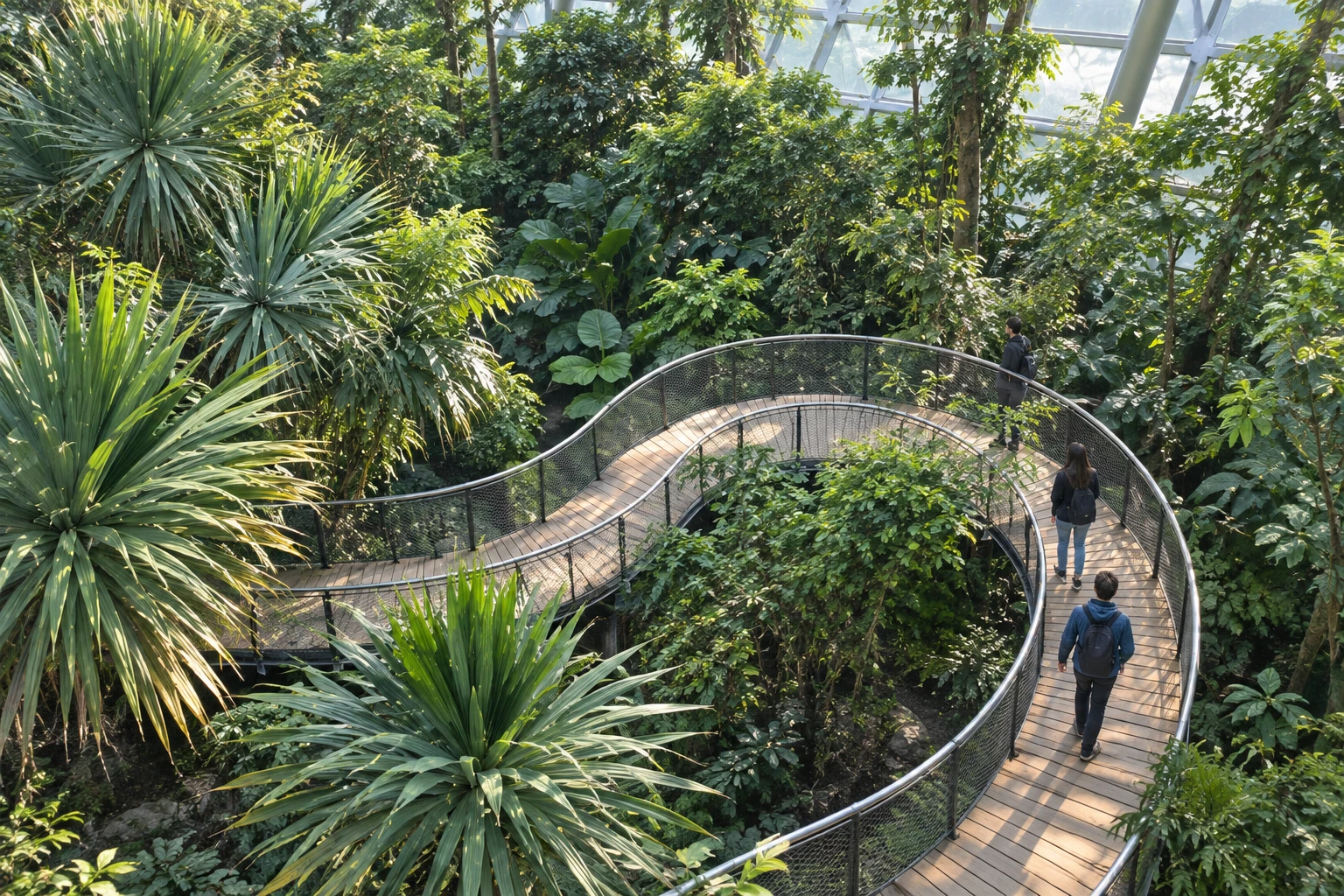
A 27-hectare zoo on the Zürichberg, opened in 1929, featuring the Madagascar rainforest in a greenhouse (Masoala), the Lewa savanna with rhinos and giraffes, and an Asian elephant park.
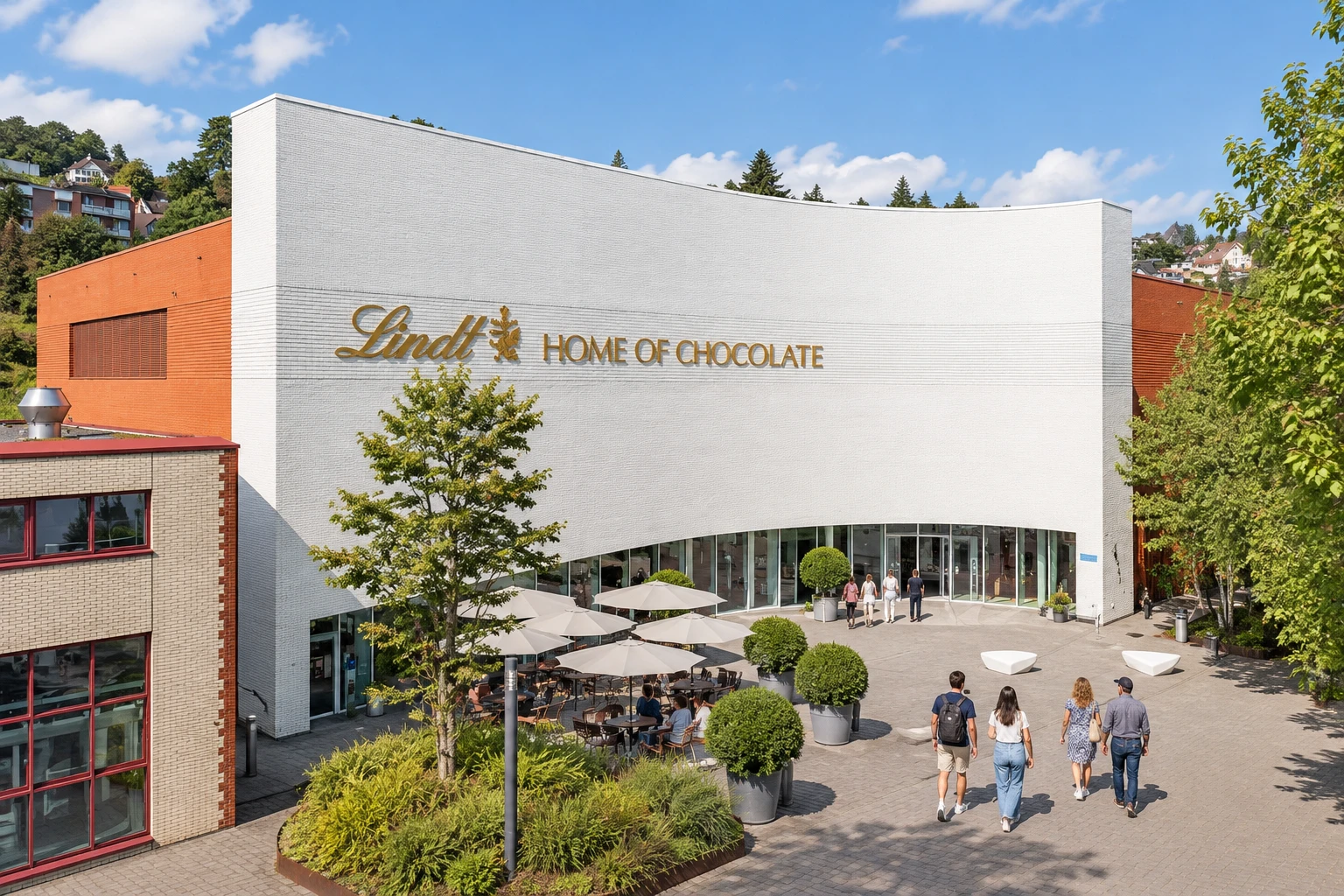
Lindt & Sprüngli chocolate museum in Kilchberg, on the lakeside, about 20 minutes from Zurique, with a chocolate fountain over 9 metres high, tastings, a pilot factory, courses, a café and a shop.
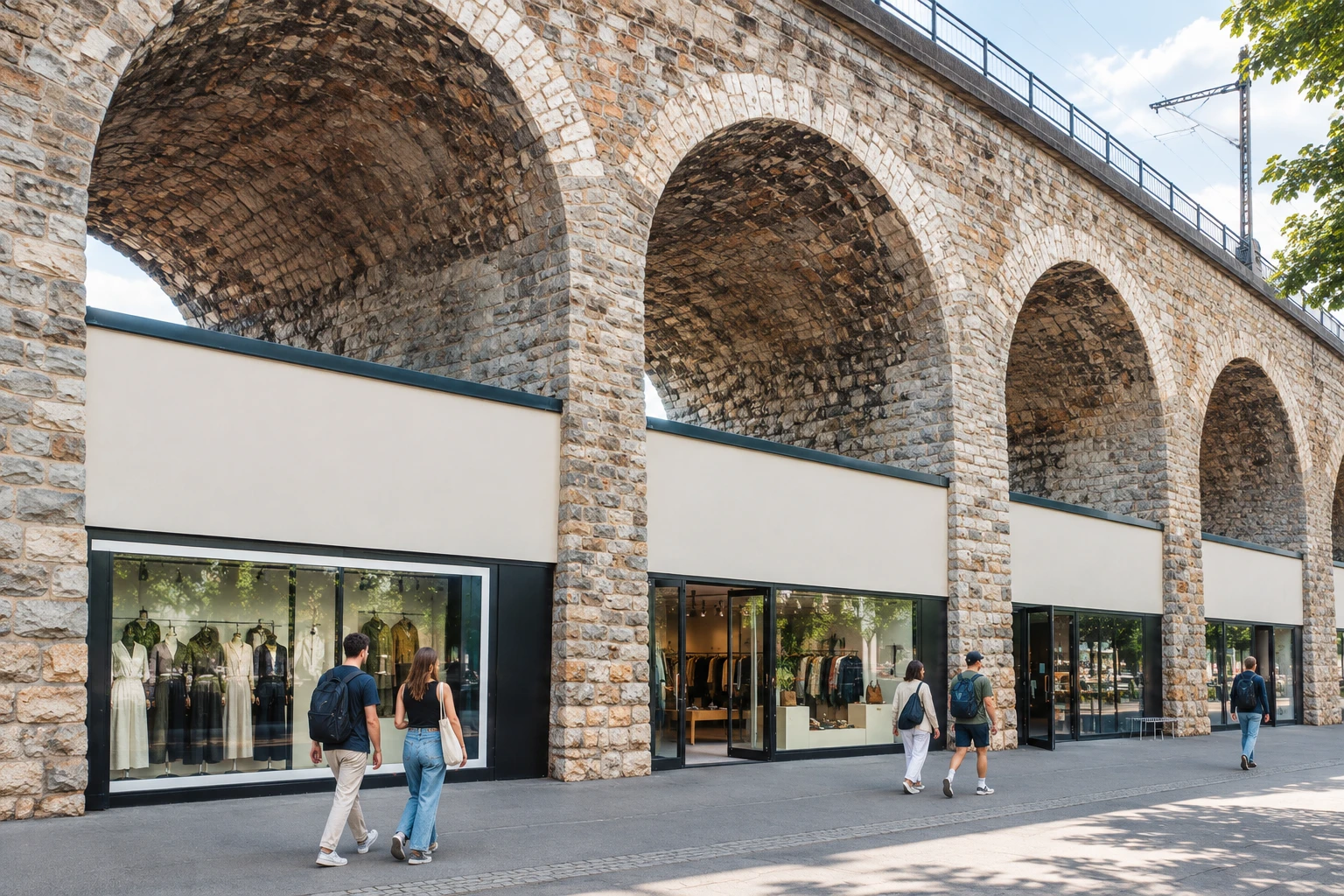
Former industrial neighbourhood turned into an area of art, design and nightlife, with shops and a market under the arches of the Im Viadukt viaduct, Freitag's container tower, the Prime Tower and the Löwenbräukunst art centre.
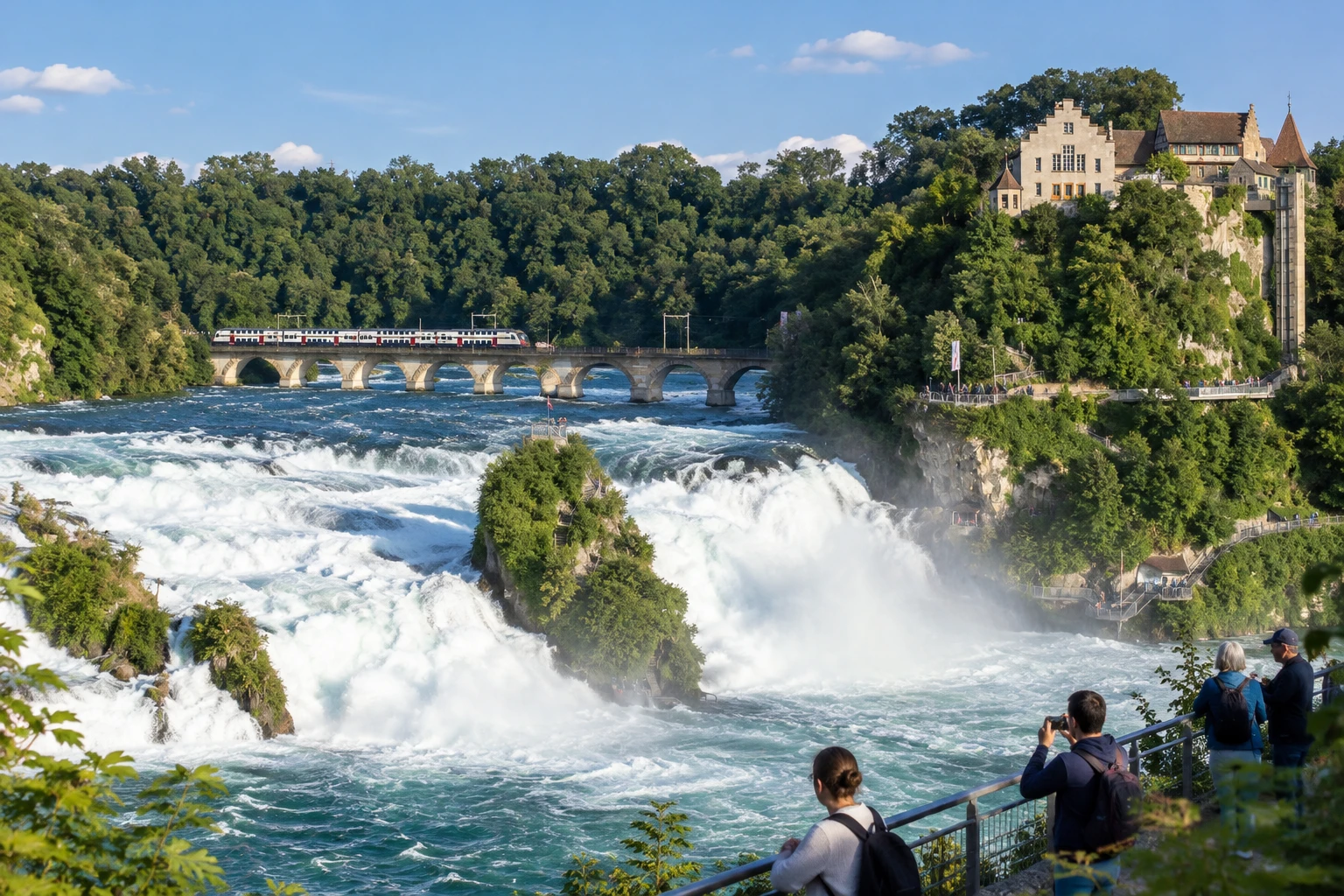
The Rhine Falls, in Neuhausen am Rheinfall, about an hour by train from Zurique: 150 metres wide and 23 metres high, with viewpoints at Schloss Laufen and boats to the rock in the middle of the falls.
Medieval town on the banks of the Rhine, where it flows out of Lake Constance, with the Rathausplatz surrounded by half-timbered houses and painted façades, the museum of the former monastery of São Jorge and Hohenklingen castle above.
The guide's itineraries cover 3, 5 and 7 days: in 3 days, old town, lake and Rheinfall; in 5 days, the city, Luzern and the lake; in 7 days, the city and train day trips.
What to do Zurich in one day?
Arrival, old town and Bahnhofstrasse. The overnight flight from São Paulo arrives in the morning at Zurich Airport. From the airport station (Zürich Flughafen), the train takes about 10 to 13 minutes to Zürich HB. Drop your bags and take a light day to cope with jet lag: walk through the old town, including the Lindenhof, St. Peter and the Niederdorf, and visit the Fraumünster with its Chagall stained-glass windows. In the late afternoon, walk down Bahnhofstrasse to the lakeshore and go to bed early.
When is the best time to go to Zurich?
It generally rains less from January to March and in November. The rainiest months are usually from May to August. The guide covers each month, with the weather and what changes on the tours.


 Brazil
 Antarctica
 Argentina
 Bolivia
 Chile
 Colombia
 Ecuador
 Falkland Islands (Malvinas)
 French Guiana
 Guyana
 Paraguay
 Peru
 Suriname
 Uruguay
 Venezuela
 Austria
 Belgium
 Croatia
 Denmark
 Finland
 France
 Germany
 Greece
 Hungary
 Iceland
 Ireland
 Italy
 Luxembourg
 Norway
 Poland
 Portugal
 Slovakia
 Slovenia
 Spain
 Sweden
 the Czech Republic
 the Netherlands
 the United Kingdom
 Turkey
 Bermuda
 Canada
 Greenland
 Mexico
 Saint Pierre and Miquelon
 the United States
 the Dominican Republic
 Japan
 Egypt
 South Africa
 Australia
 Fiji
 New Zealand
 Papua New Guinea