Malmö and Lund

Skåne

Malmö and Lund

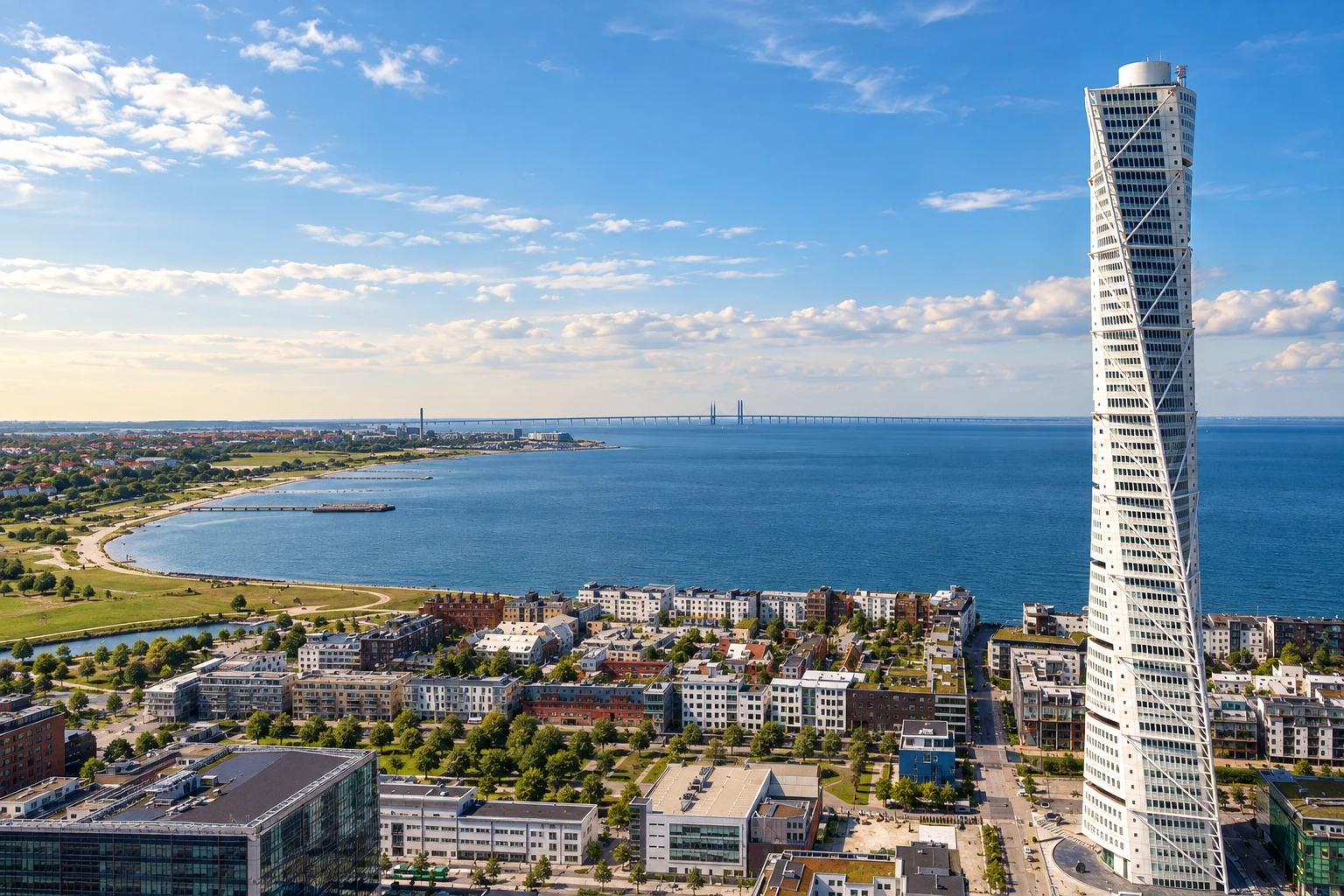
The south of Sweden opposite Copenhague: Malmö, with the Renaissance castle, the old squares, the Turning Torso and the Øresund bridge on the horizon, and Lund, a university town with a Romanesque cathedral.

Götaland

In the photo: Turning Torso, Västra Hamnen

Illustrative images. The pictures in this guide are illustrations based on the real place, not photographs, and may differ from it.

Get it on Google Play

Get to know the place

A region to enjoy
at your own pace.

Malmö is the third largest city in Sweden and is located in Escânia, Skåne em sueco, the southernmost province of the country, facing Copenhague. The two cities have been connected since 2000 by the Øresund bridge, 8 km long, which continues in a tunnel to the Danish coast; the train crosses it in about 35 minutes. Until 1658 Escânia was Danish, and much of the old architecture dates from that period.

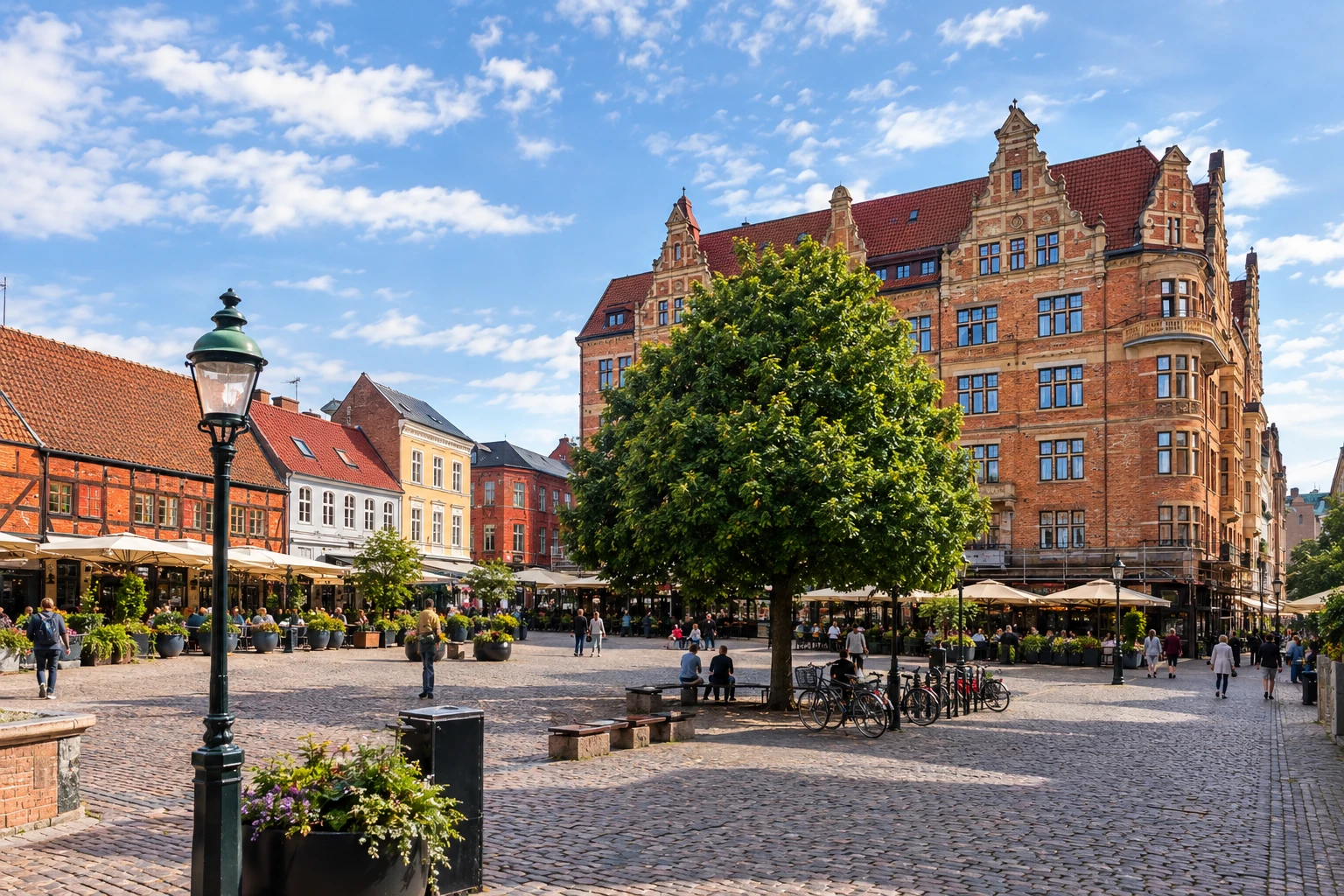
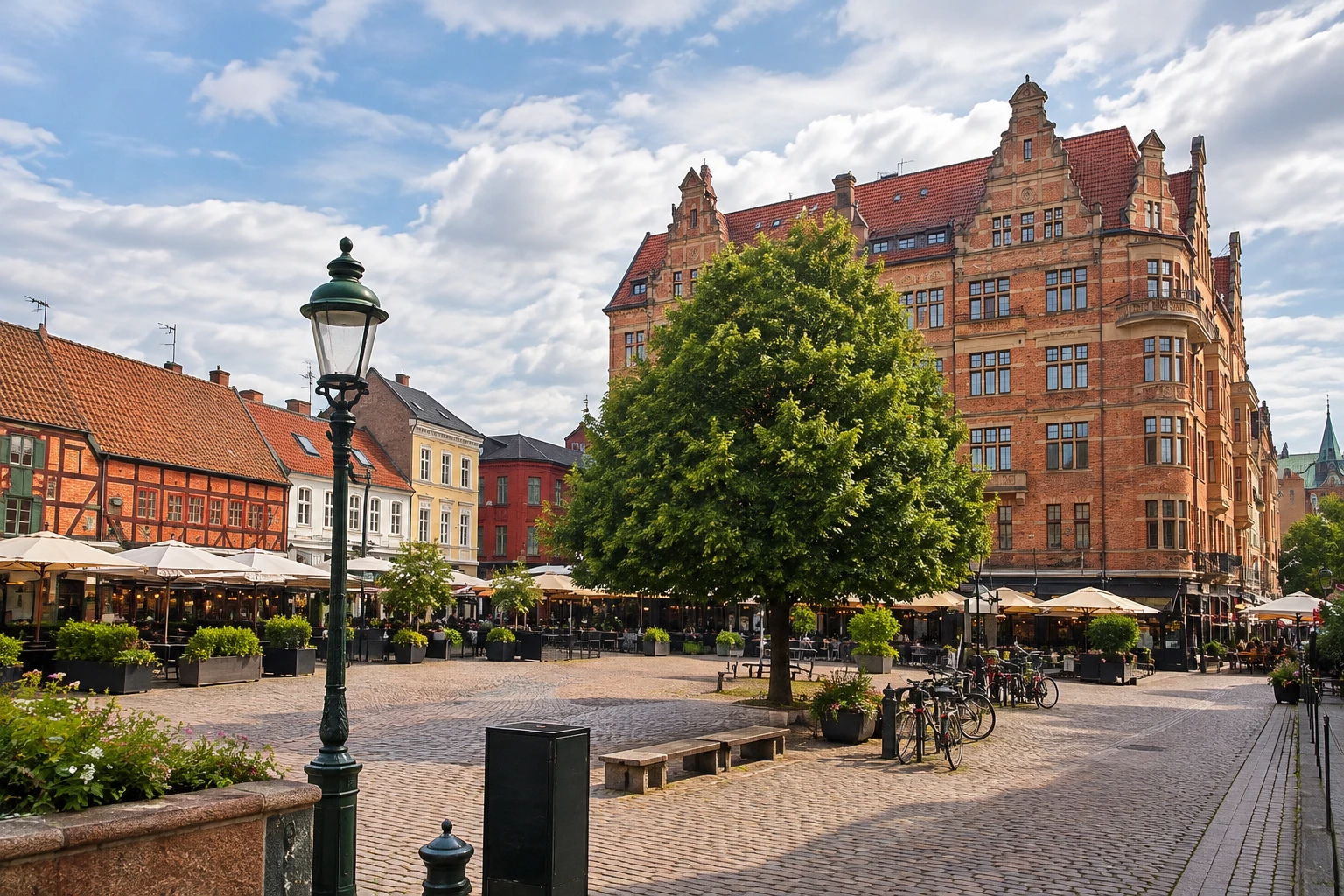
Malmö’s centre has two neighbouring squares: Stortorget, the large one, from the 16th century, with the town hall and the statue of King Carlos X Gustavo, and Lilla torg, the small one, surrounded by half-timbered houses that became restaurants and bars. To the west, the castle Malmöhus, a Renaissance brick fortress with a moat, houses the city’s museums. Further on, the old shipyard became Västra Hamnen, a new waterside neighbourhood, marked by the Turning Torso, a 190-metre tower that twists on itself, designed by Santiago Calatrava. On Ribersborg beach, the 1898 bathhouse, on stilts in the sea, has saunas with views of the bridge. Malmö is also a city of many origins, which shows in the food and the markets.

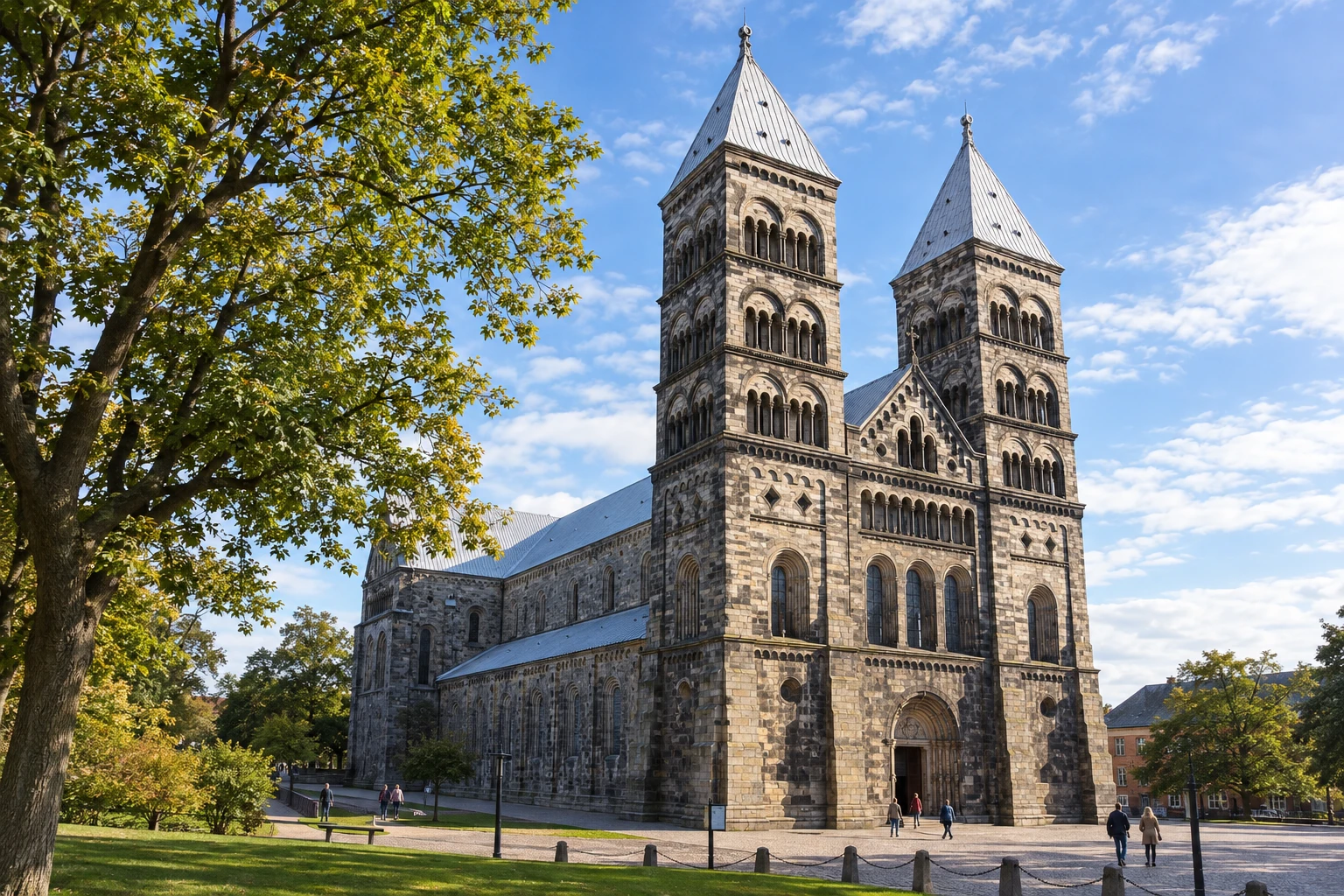
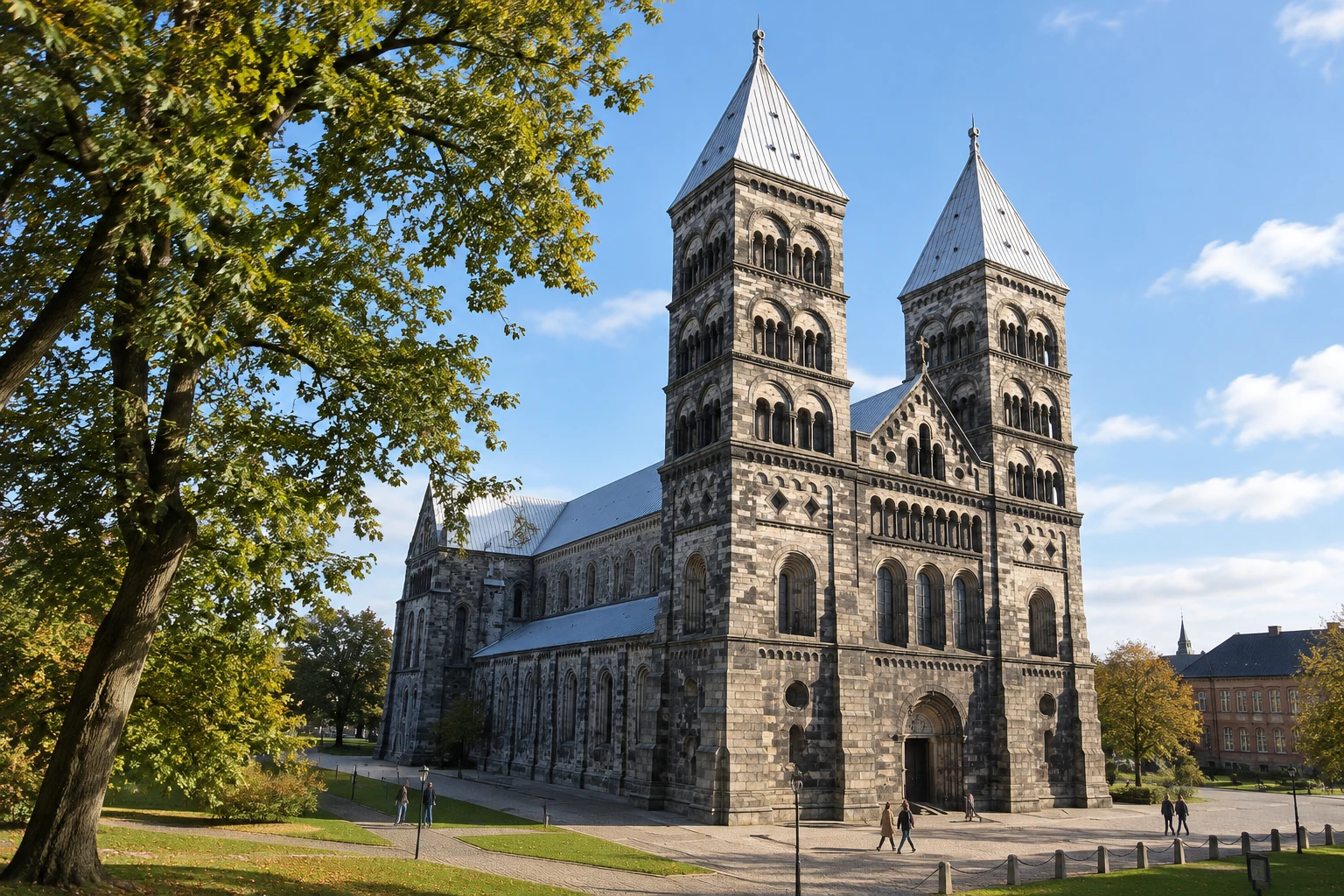
Lund is 20 km away, a 10-minute train ride. It is one of Sweden’s oldest cities, founded around 990, and the seat of the Universidade de Lund, from 1666. The Romanesque cathedral, consecrated in 1145, has a 15th‑century astronomical clock that rings at set times and a crypt with stone columns. Around it are the park Lundagård, the university buildings, the open‑air museum Kulturen and cobbled streets with low, colourful houses.

For Brazilians, the most practical route is usually to fly to Copenhague, whose airport is a 20‑minute train ride from Malmö. It’s easy to combine the trip with Denmark. Escânia has yellow fields of colza in late spring, castles and its own cuisine, with eel, goose and the fried egg with potato and bacon.

This destination brings together 2 cities: Malmö, Lund.

Share: WhatsApp
Traveler, share your experiences through photos Up to 5 photos of each place you visited.

One destination, many paths

The cities on this trip

Start with one city or combine several in your itinerary.

Where Malmö and Lund is The star marks the capital, Malmö.
MalmöLund

Outlines: Statistics Sweden (SCB), CC0. Adapted by Cidade Turismo.

How to get there: Malmö and Lund

Aeroporto de Copenhague-Kastrup (CPH), in Kastrup, Dinamarca · 30 km to Malmö

Aeroporto de Malmö (Sturup) (MMX), in Svedala · 30 km to Malmö

Flights from Brazil usually involve a connection through another city. Check before booking. Copenhague Airport, in Denmark, is about a 20‑minute train ride from Malmö Central Station across the Øresund bridge. Malmö Airport, at Sturup, handles domestic flights. By train, Estocolmo is about 4h30 and Gotemburgo about 2h30.

Suggested arrival point: Malmö

The local experience

Things to do in Malmö and Lund

Lund · Skåne · Church

Lund Cathedral

The Romanesque cathedral of Lund, consecrated in 1145, with two stone towers, a 15th-century astronomical clock that chimes at set times, and a columned crypt where the legend of the giant Finn is said to dwell.

Explore Lund Cathedral

Lund · Skåne · Museum

Kulturen

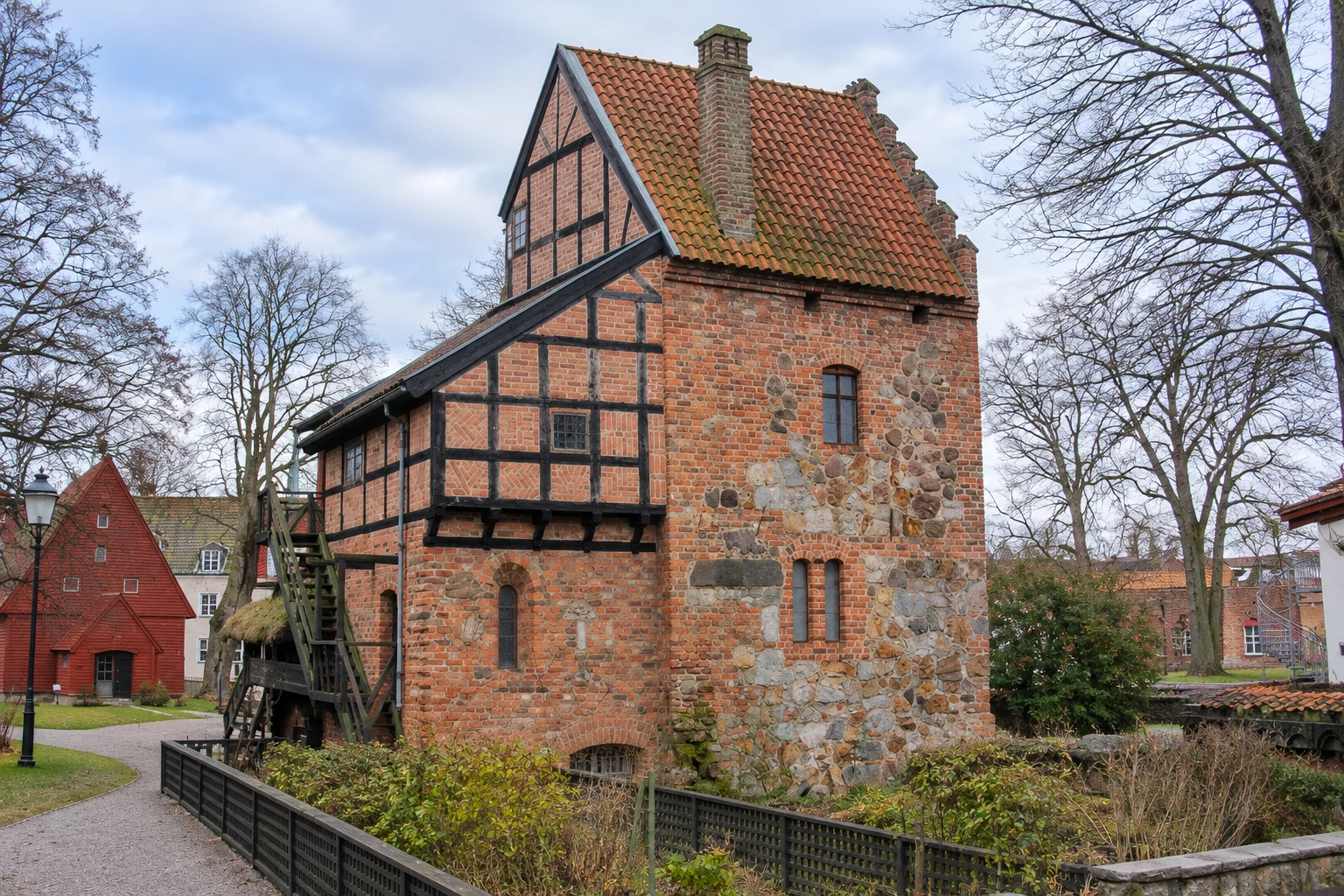
Open-air museum in central Lund, opened in 1882, with more than 30 historic houses from Escânia and other regions, from a farmhouse to a wooden church, and collections of silver, ceramics and glass.

Explore Kulturen

Malmö · Skåne · Castle

Malmö Castle

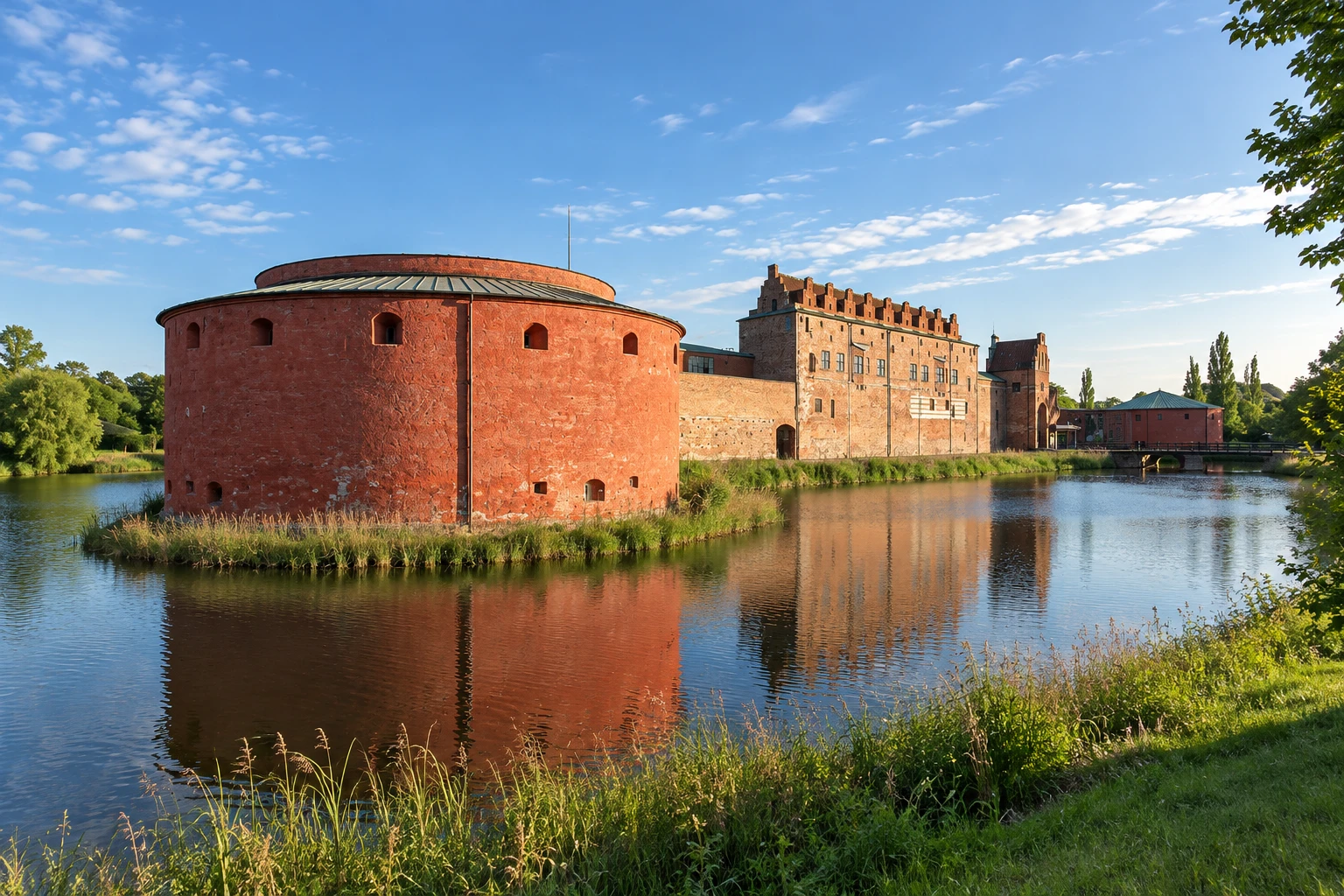
Renaissance brick fortress, surrounded by a moat, built by the Danish king Christian III in the 1530s, which today houses Malmö's museums: history, art, natural sciences and an aquarium.

Explore Malmö Castle

See 5 more places in Malmö and Lund

To choose before you go

Tours in Malmö and Lund

Where each tour starts, how long it takes, how it is done, what is included and the price range.

Malmö city centre

From Malmö and Lund On foot and local transport Allow half a day to a day Depends on the activity

Start at the two squares of the old town and walk to the castle. The group of museums takes more time than a stroll through the gardens. Choose a portion of the exhibitions so you don't rush the visit.

Stops: Stortorget, Lilla torg, Malmöhus slott.

Cathedral and Kulturen in Lund

From Malmö and Lund On foot and local transport Allow half a day to a day Depends on the activity

Lund can be visited from Malmö by regional train. The cathedral, the university park and the open-air museum are close to each other. The houses at Kulturen let you observe domestic interiors and construction techniques.

Stops: Lunds domkyrka, Kulturen, Lundagård.

Day by day

1, 2 and 3-day itinerary in Malmö and Lund

Suggestions to plan the trip. Change the order of the days according to the weather and tour availability.

1 day · 1 day in Malmö and Lund

For First visit, with time for travel · Based in Malmö and Lund
  1. Day 1 · Squares and castle in Malmö

    Walk through Stortorget and Lilla torg. Continue to the Malmöhus complex and its museums, choosing the exhibitions according to your interest.

2 days · 2 days in Malmö and Lund
For First visit, with time for travel · Based in Malmö and Lund
  1. Day 1 · Squares and castle in Malmö

    Walk through Stortorget and Lilla torg. Continue to the Malmöhus complex and its museums, choosing the exhibitions according to your interest.

  2. Day 2 · Historic Lund

    Take the train to Lund. Visit the cathedral and Kulturen and walk through Lundagård. The sites are concentrated in the center; set aside part of the day for the historic buildings of Kulturen.

3 days · 3 days in Malmö and Lund
For First visit, with time for travel between places · Based in Malmö and Lund
  1. Day 1 · Squares and castle in Malmö

    Walk through Stortorget and Lilla torg. Continue to the Malmöhus complex and its museums, choosing the exhibitions according to your interest.

  2. Day 2 · Historic Lund

    Take the train to Lund. Visit the cathedral and Kulturen and walk through Lundagård. The sites are concentrated in the center; set aside part of the day for the historic buildings of Kulturen.

  3. Day 3 · Malmö coastline

    Walk Västra Hamnen to see the Turning Torso from the outside and the waterfront. Continue to Ribersborg if you want to extend the seaside walk.

Best time to go

When to go: Malmö and Lund month by month

From May to September the days are usually long and mild, with swimming at Ribersborg in summer and fields of colza in bloom in May. Winter in the south is generally less cold than in the rest of the country, but it is wet, windy and dark. Seasons are opposite to those in Brazil.

The seasons shown are the most usual ones; nature doesn't always follow the calendar.

January

January · cold winter

Winter is usually cold with short days; rain and snow may alternate. To plan your day, prioritize Malmö’s squares and castle and adjust outdoor activities to the daylight hours. The seasons are reversed compared with Brazil.

February

February · cold winter

February usually remains cold, with daylight slowly increasing. To plan your day, prioritize Malmö’s squares and castle and adjust outdoor activities to the daylight hours.

March

March · season transition

Early spring is usually chilly with variable weather. To plan your day, prioritize historic Lund and adjust outdoor activities to the daylight hours.

April

April · season transition

April usually brings longer days, but mornings are often still cold. To plan your day, prioritize historic Lund and adjust outdoor activities to the daylight hours.

May

May · season transition

May usually brings milder temperatures and plenty of daylight. To plan your day, prioritize Malmö’s coast and adjust outdoor activities to the daylight hours.

June

June · mild summer

June is usually mild, with very long days and short nights. To plan your day, prioritize Malmö’s coast and adjust outdoor activities to the daylight hours.

July

July · mild summer

July is often among the mildest months; it also tends to rain. To plan your day, prioritize Malmö’s squares and castle and adjust outdoor activities to the daylight hours.

August

August · mild summer

August usually keeps mild temperatures, with nights gradually getting longer. To plan your day, prioritize Malmö’s squares and castle and adjust outdoor activities to the daylight hours.

September

September · season transition

September usually brings falling temperatures and fewer daylight hours. To plan your day, prioritize historic Lund and adjust outdoor activities to the daylight hours.

October

October · seasonal transition

October is usually cold and wet, with autumn advancing. To plan your day, prioritize Historic Lund and adjust outdoor activities to daylight hours.

November

November · seasonal transition

November usually has short days, cold weather and possible snow. To plan your day, prioritize the Malmö coastline and adjust outdoor activities to daylight hours.

December

December · cold winter

December is usually cold, with limited daylight and precipitation as rain or snow. To plan your day, prioritize Malmö’s coast and adjust outdoor activities to the daylight hours.

Plan the journey

How to get there: Malmö and Lund

From Brazil and arrival at your destination

Connections with Brazil are usually via a stopover in another city. Check before you buy. Copenhagen Airport, in Denmark, has train connections to Malmö via the Öresund Bridge. Malmö also receives trains from other Swedish cities; Malmö Airport has road access.

Local transfers

Regional trains link Malmö and Lund. In both cities, combine walking around the center with buses to reach more distant neighborhoods.

Before you go

Practical information

A little planning leaves more time to enjoy the journey.

When to go

From May to September the days are usually long and mild, with swimming at Ribersborg in summer and fields of colza in bloom in May. Winter in the south is generally less cold than in the rest of the country, but it is wet, windy and dark. Seasons are opposite to those in Brazil.

The seasons shown are the most usual ones; nature doesn't always follow the calendar.

How many days to stay

Two days are enough for Malmö, to see the squares, the castle, Västra Hamnen and Ribersborg, and half a day for Lund. With three days you can also fit a day in Copenhague on the other side of the bridge.

Which city to stay in

In Malmö, the centre between the central station, Stortorget and Lilla torg keeps everything within walking distance and close to the train to Copenhague Airport and to Lund. Västra Hamnen has modern hotels by the sea and the Turning Torso. Möllevången is the multicultural neighbourhood, with a street market and simple restaurants. In Lund, hotels are in the centre, near the station and the cathedral.

Respect the place

Take your trash with you, follow the signs and support local businesses. In natural areas, follow the visiting guidelines.

Beyond the guide

Your questions

Frequently asked questions about Malmö and Lund

How to get to Malmö coming from Brazil?

The most common route is to fly to Copenhague, Denmark, and take the train that crosses the Øresund bridge to Malmö in about 20 minutes. Check before you book.

Do I need a car in Malmö and Lund?

No. Both cities are walkable and served by buses and bicycles, and the train links Malmö to Lund in about 10 minutes. A car is useful for castles and the inland beaches of Escânia.

Can you go to Copenhague as a round trip (day trip)?

Yes. The train crosses the bridge and reaches central Copenhague in about 35 minutes. Bring your passport: there may be document checks at the border.

Is Lund worth a full day?

Half a day is enough for the cathedral, Lundagård and Kulturen. A full day lets you see the Jardim Botânico and stroll at leisure through the old streets.

What is the best time to go?

From May to September. In May the fields of colza are usually yellow; in July and August you can swim at Ribersborg.

Explore other destinations Search by state and city