Ouro Preto
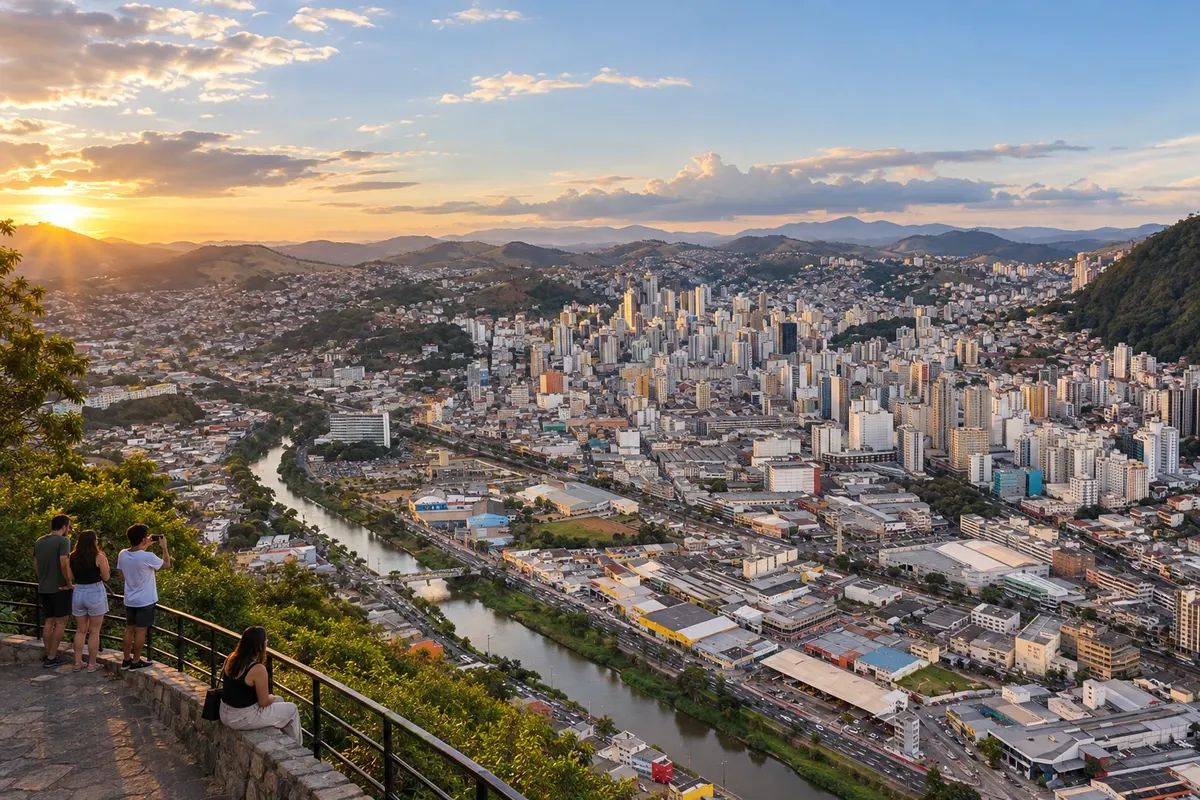
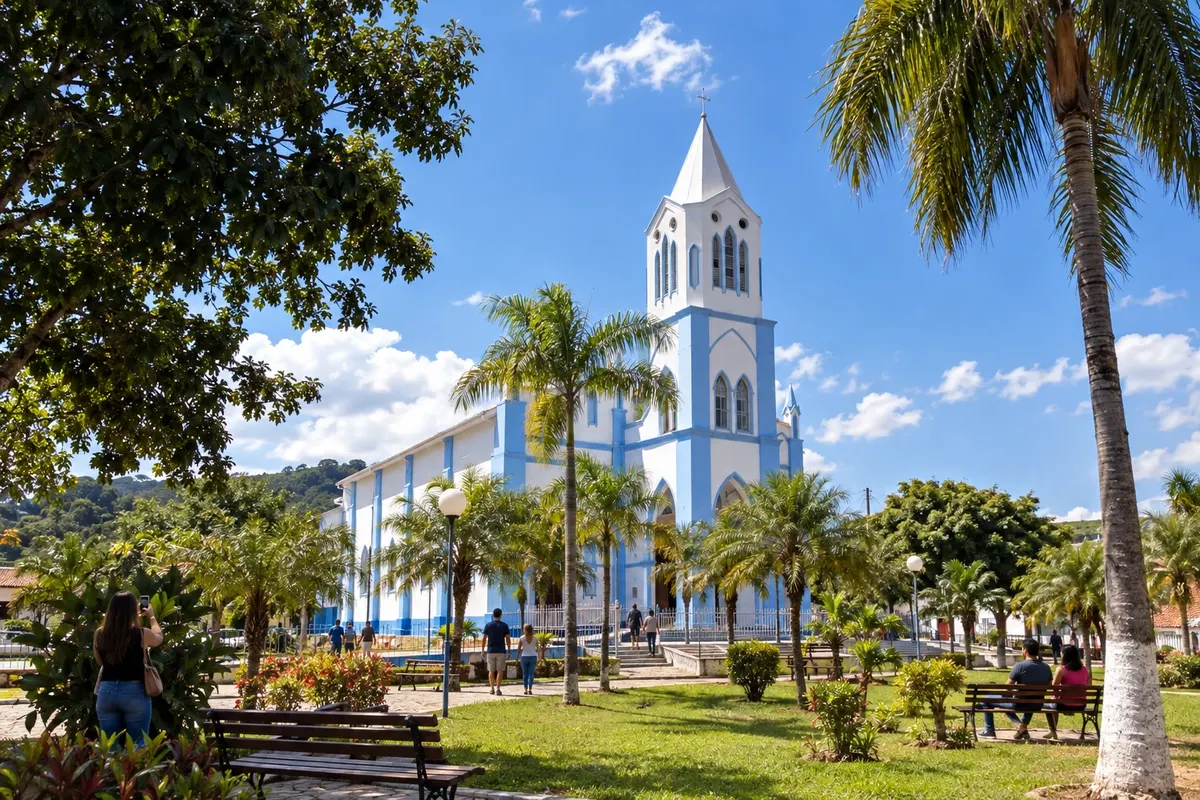
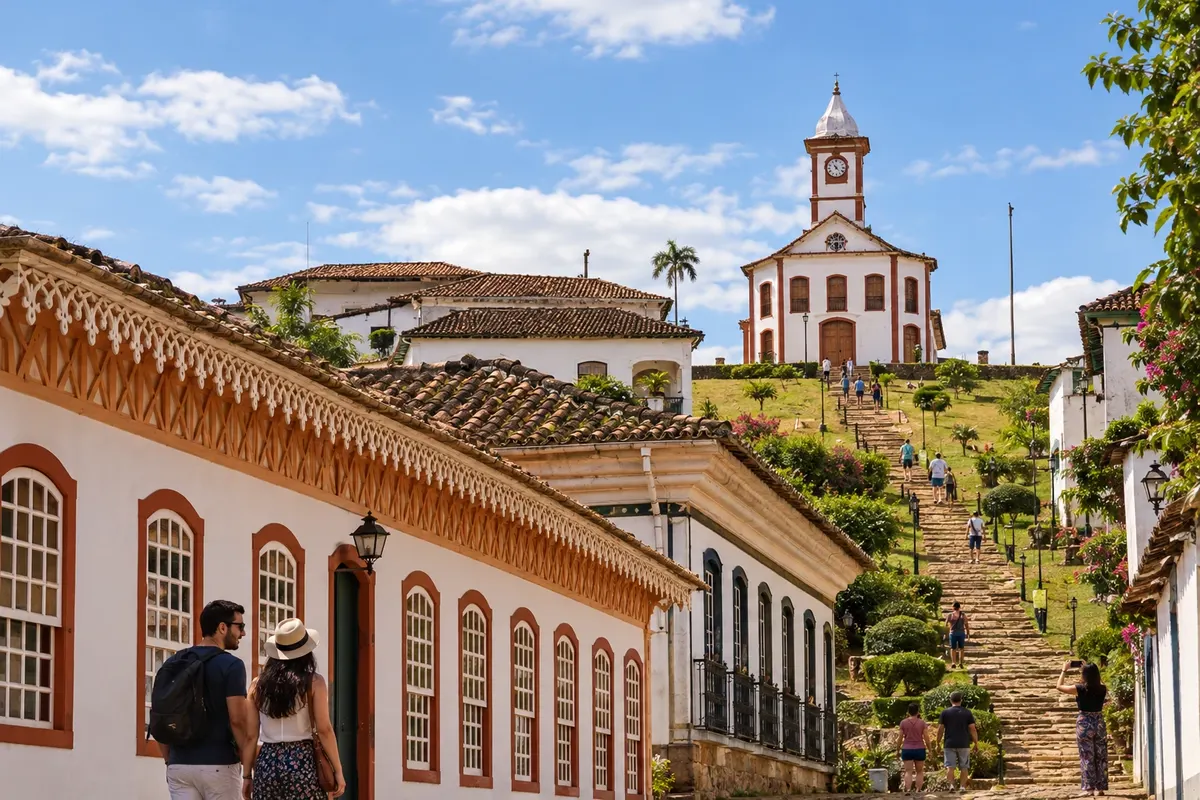
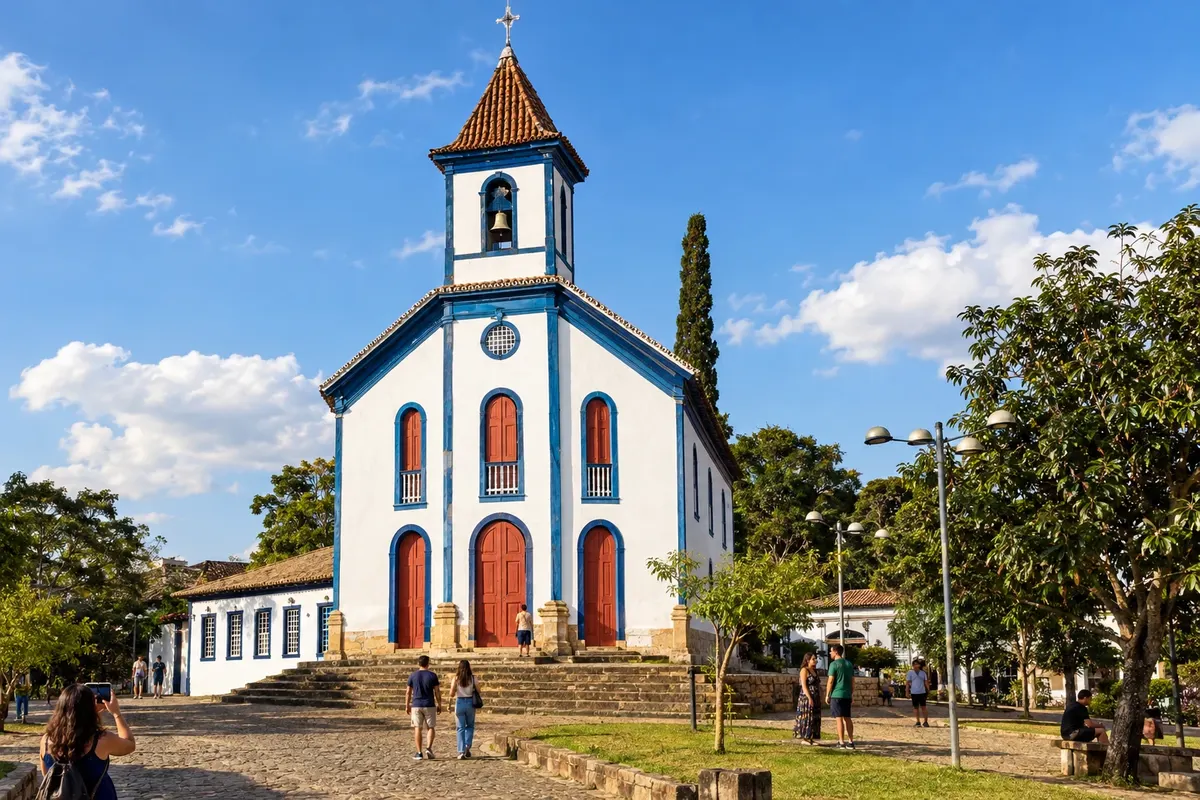
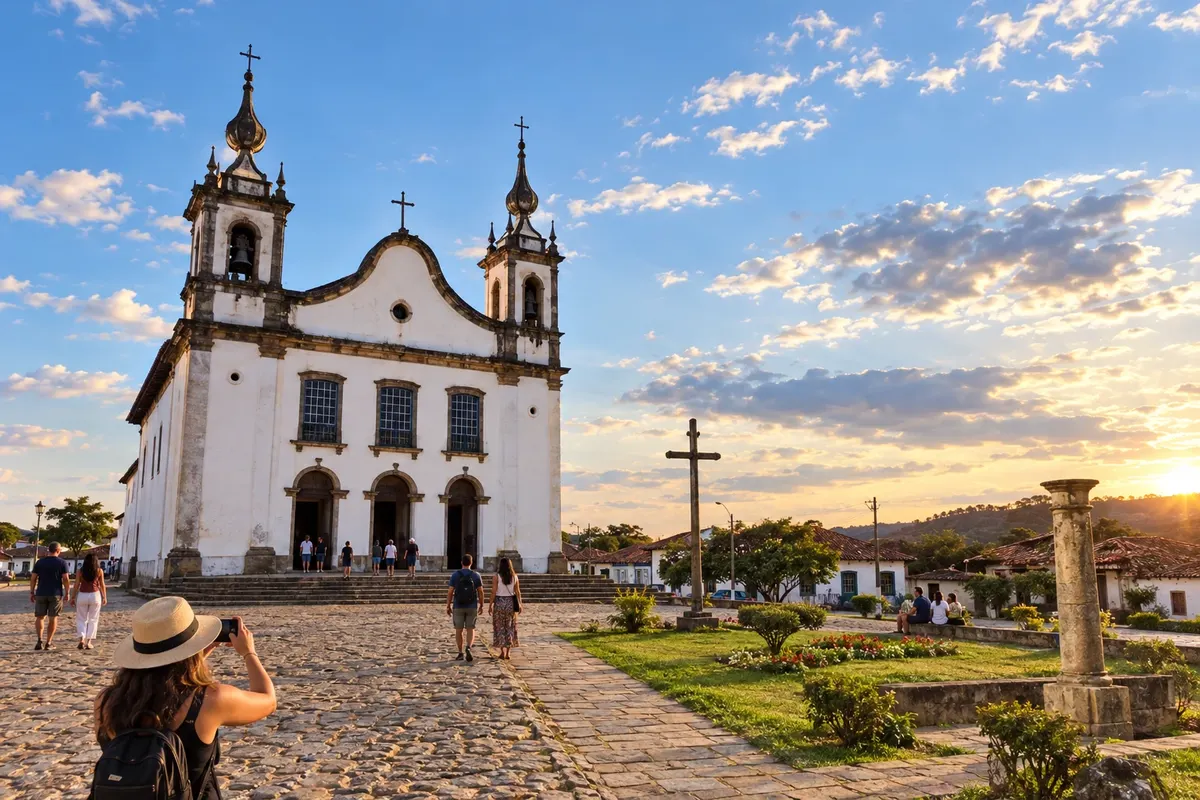
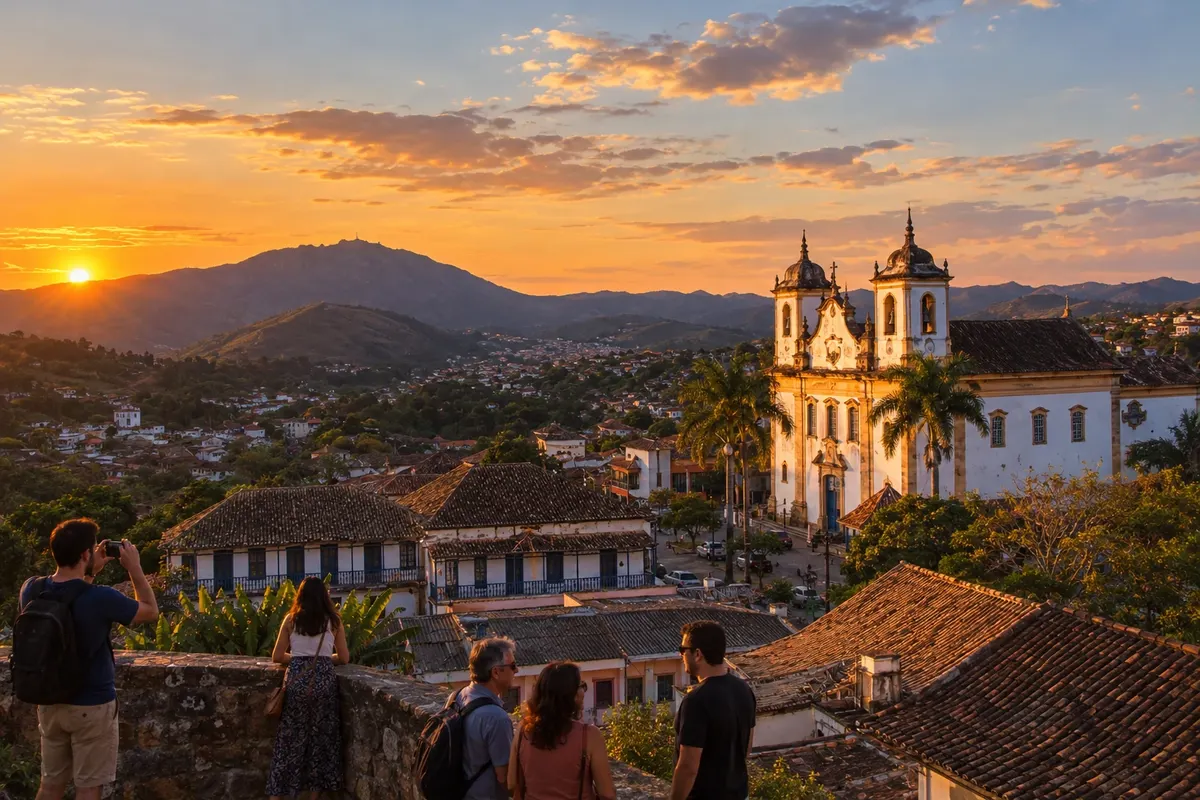
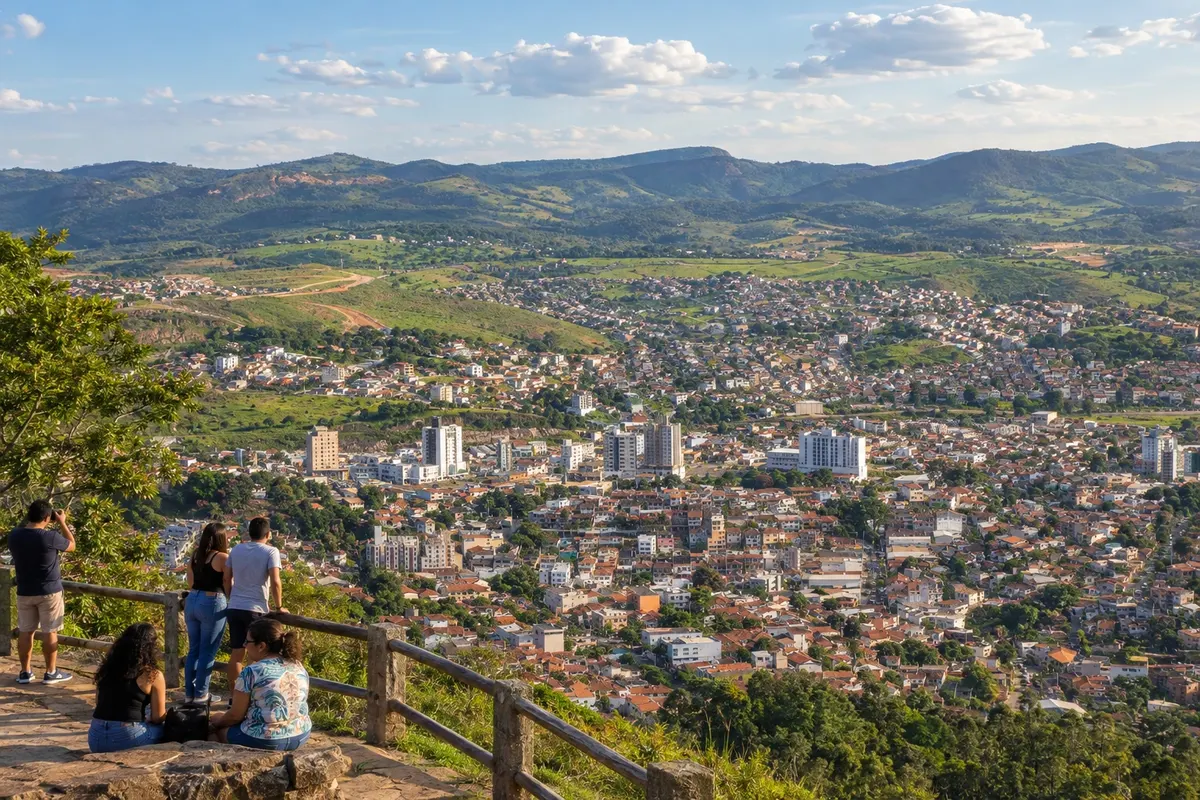
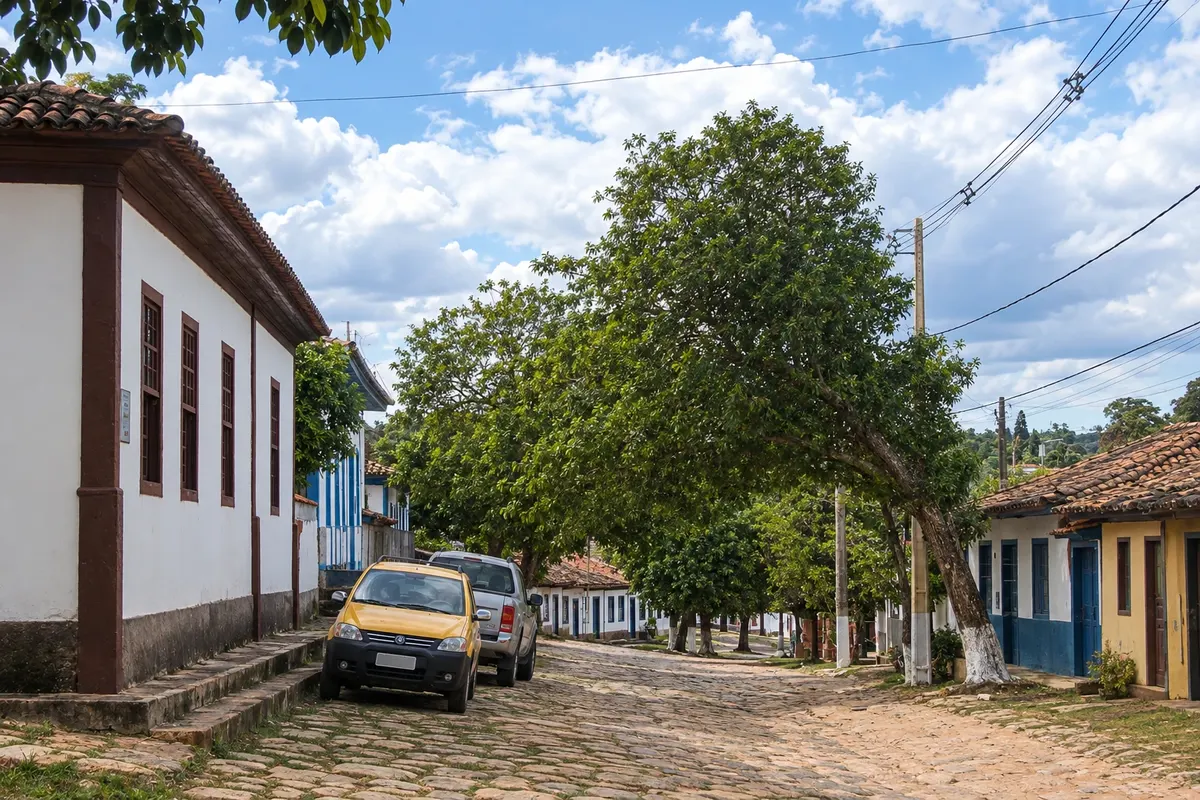
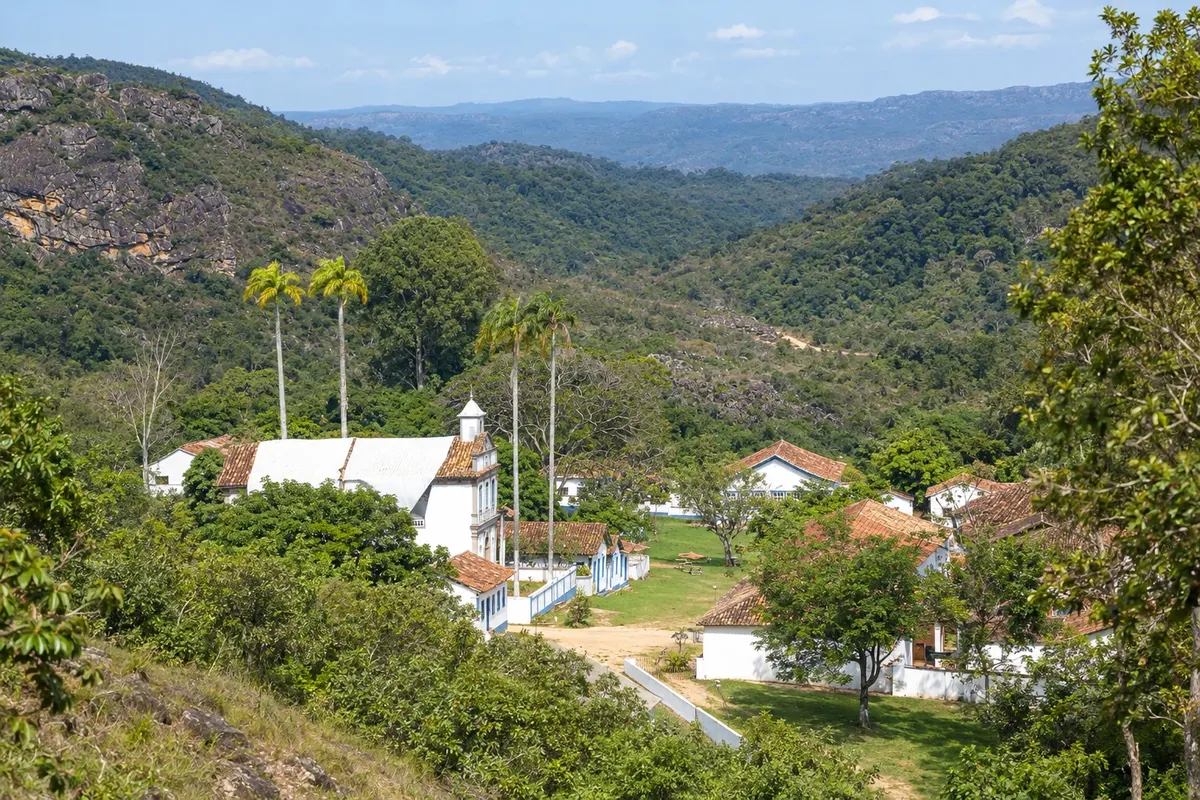
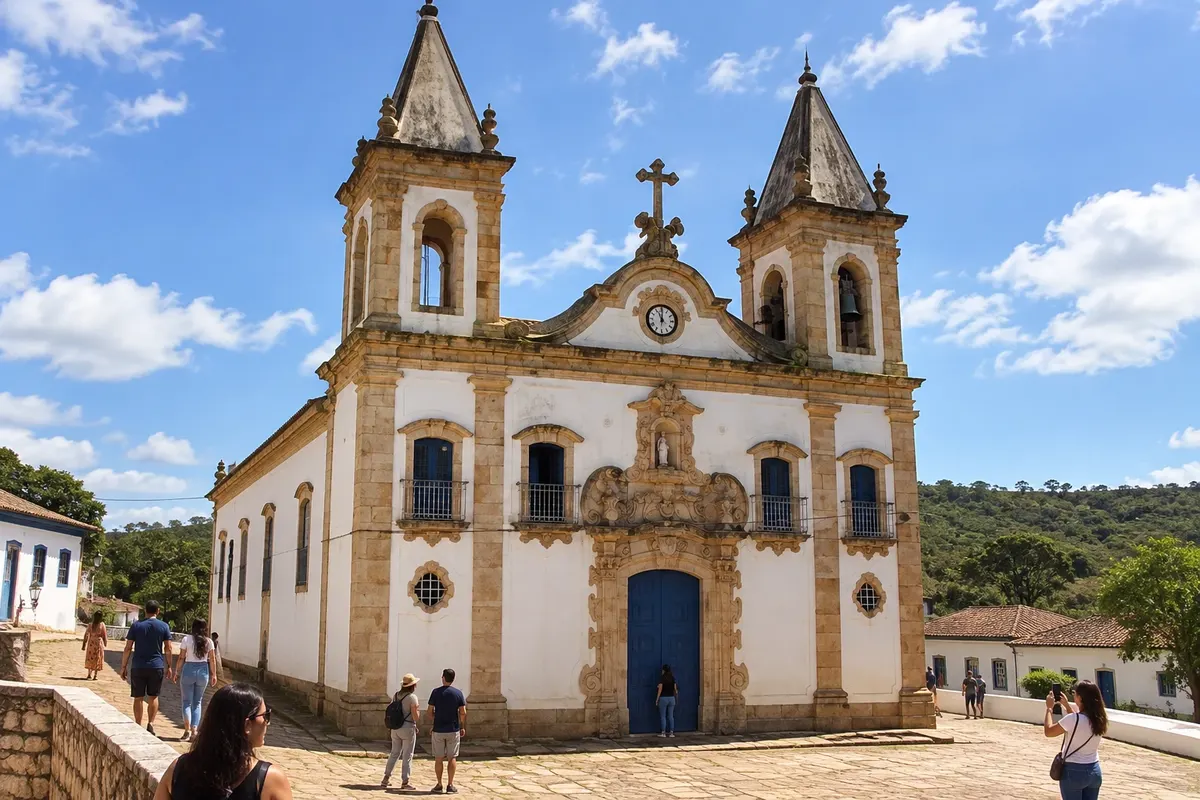
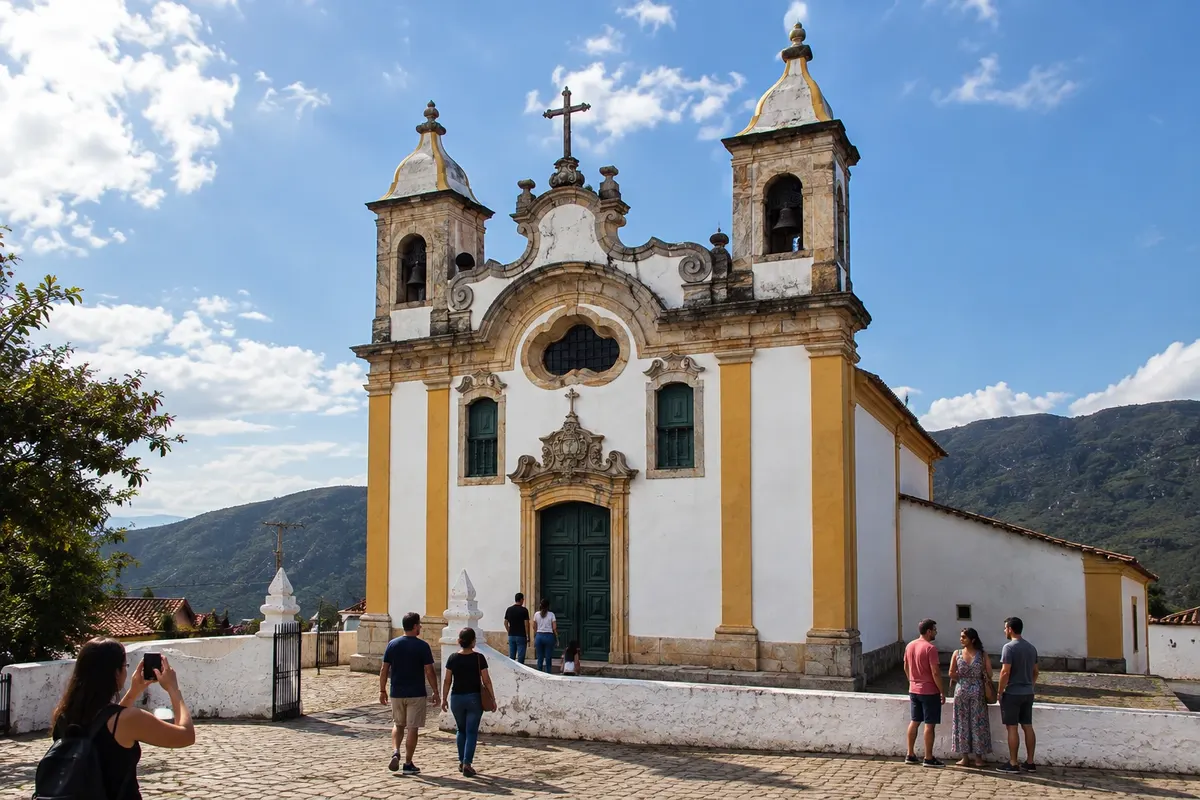
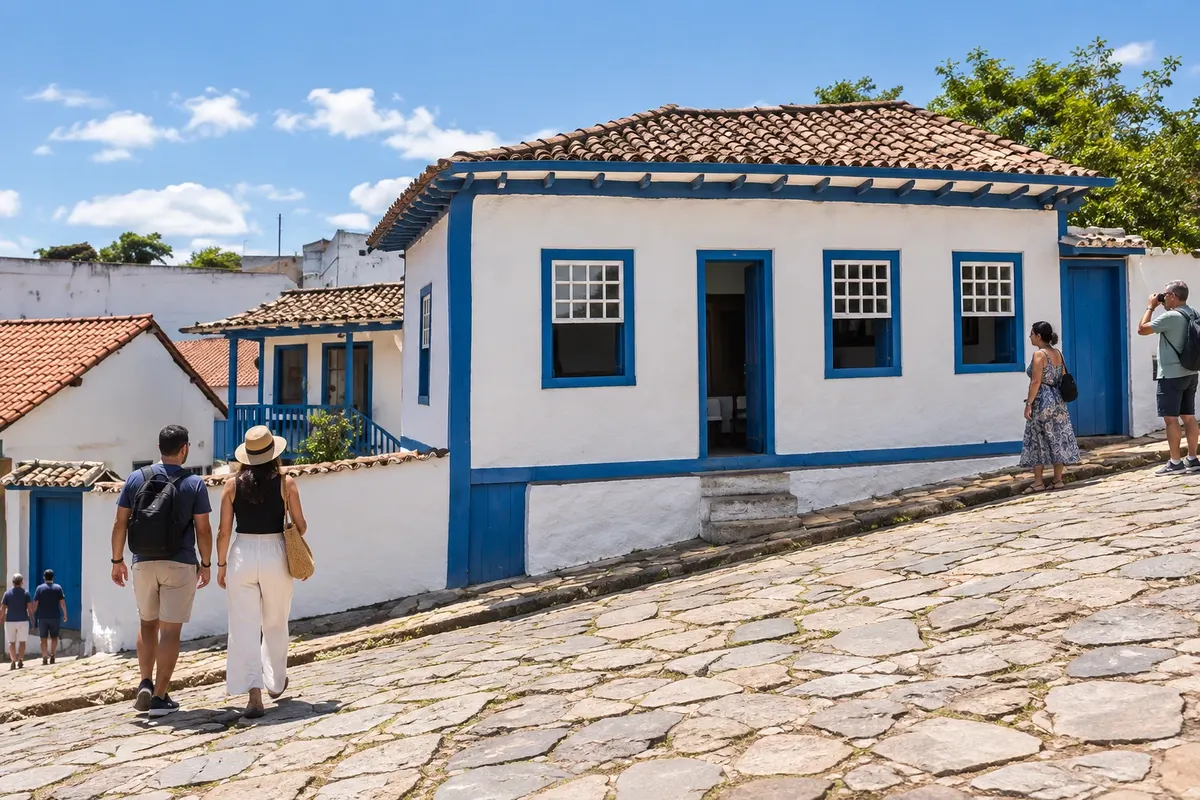
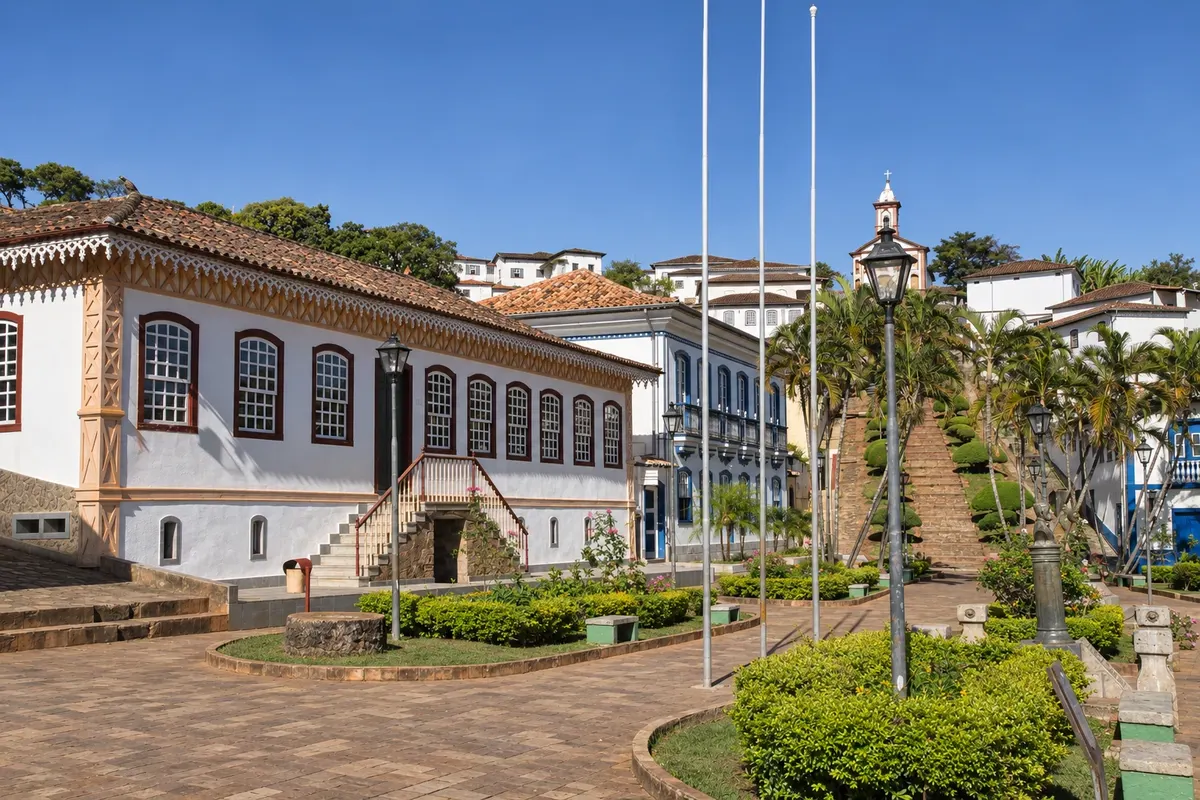
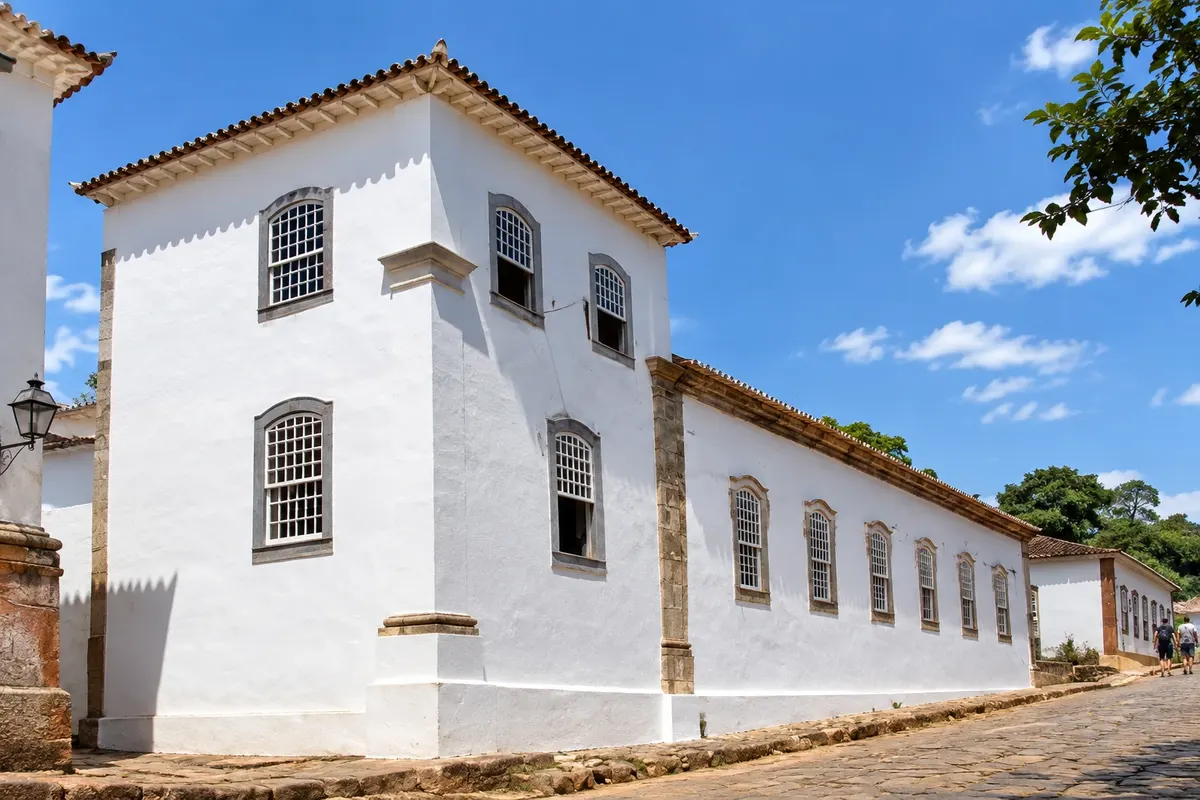
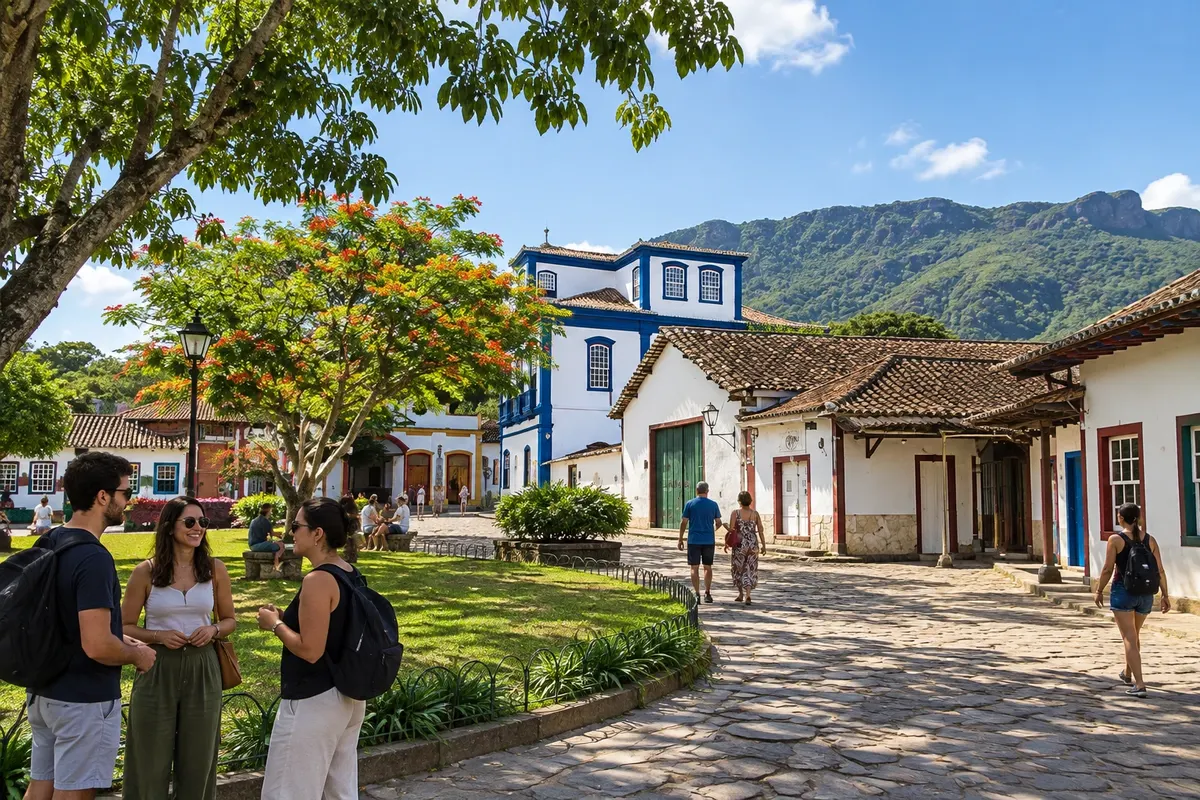
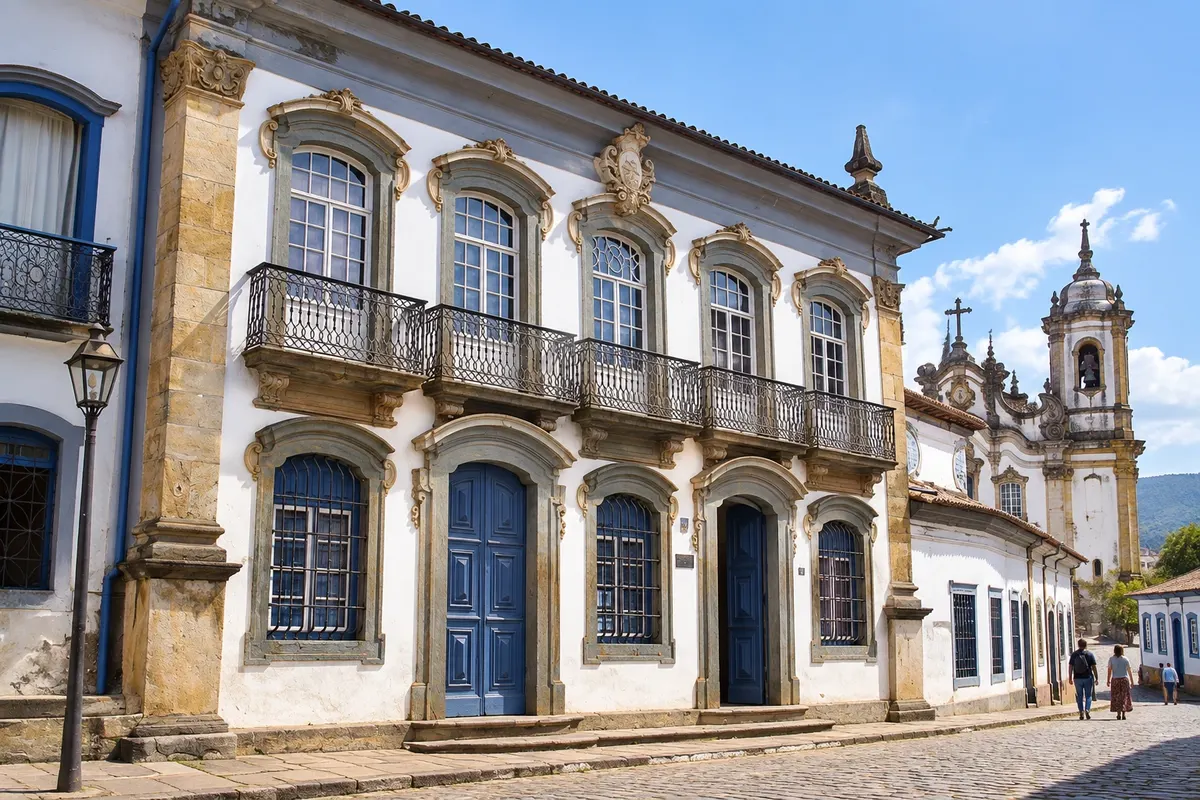
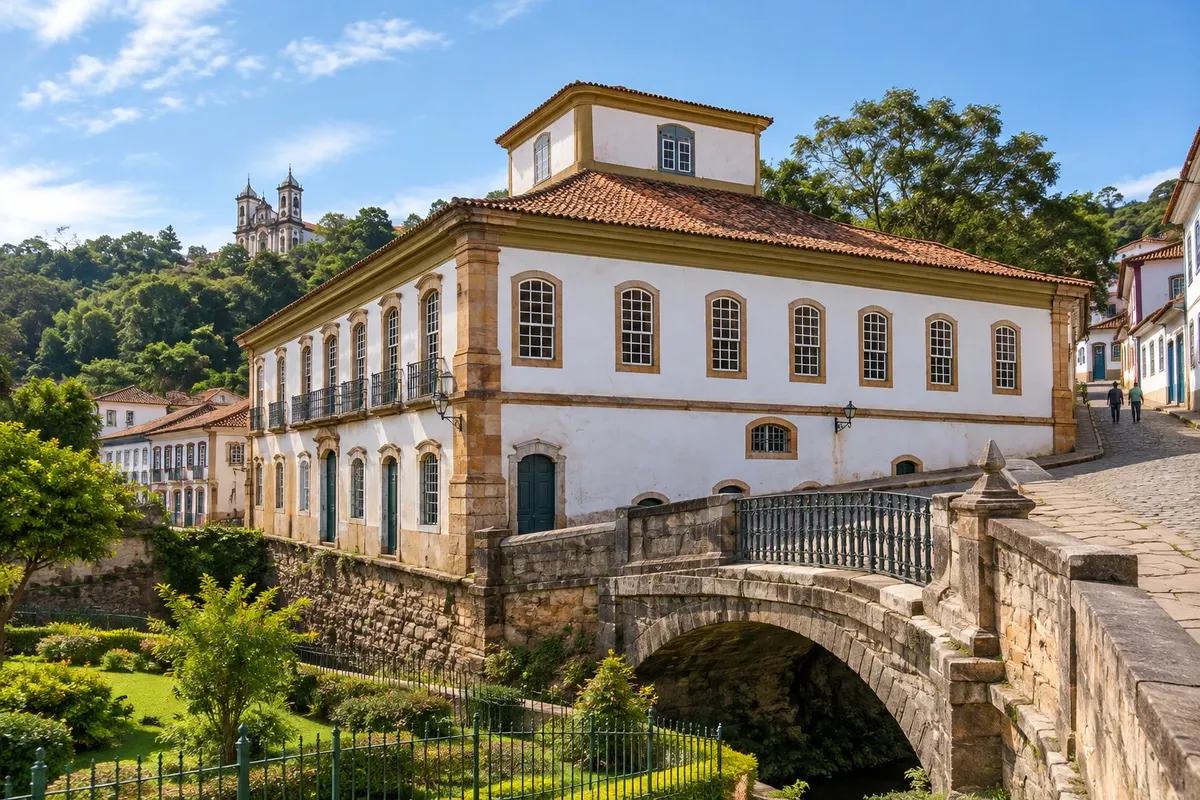
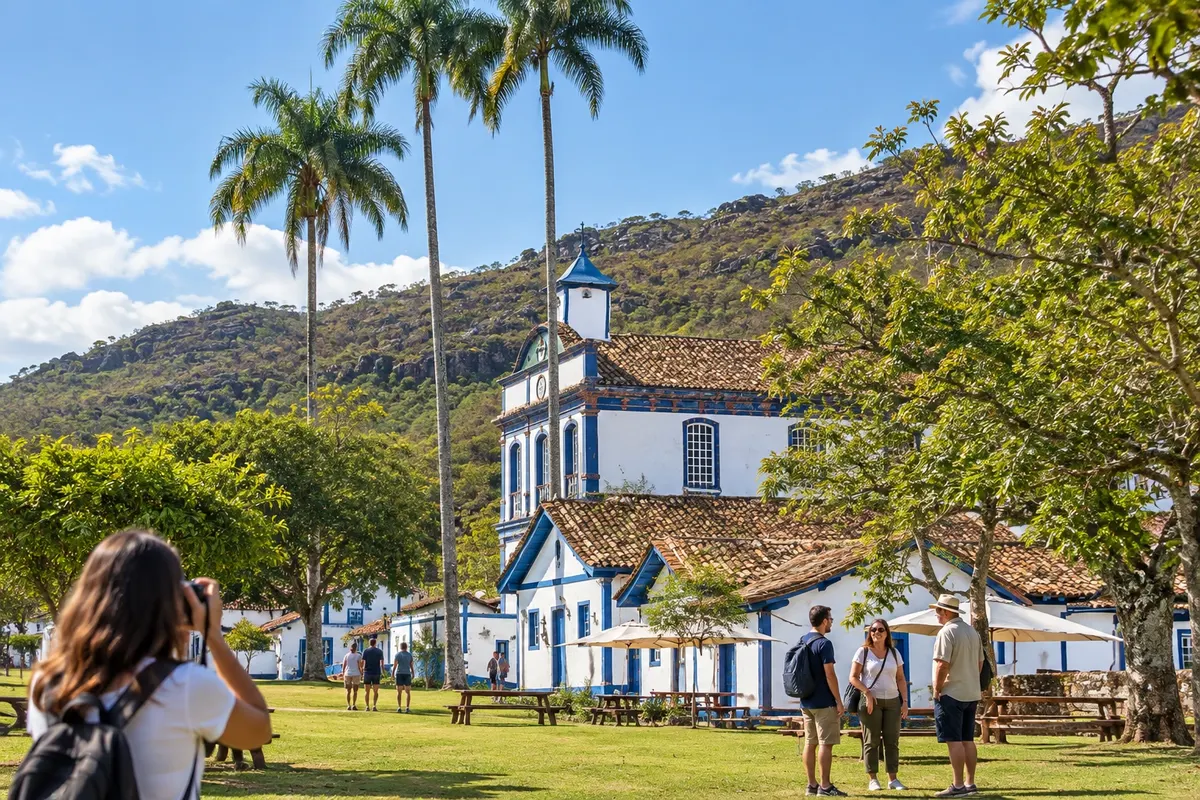
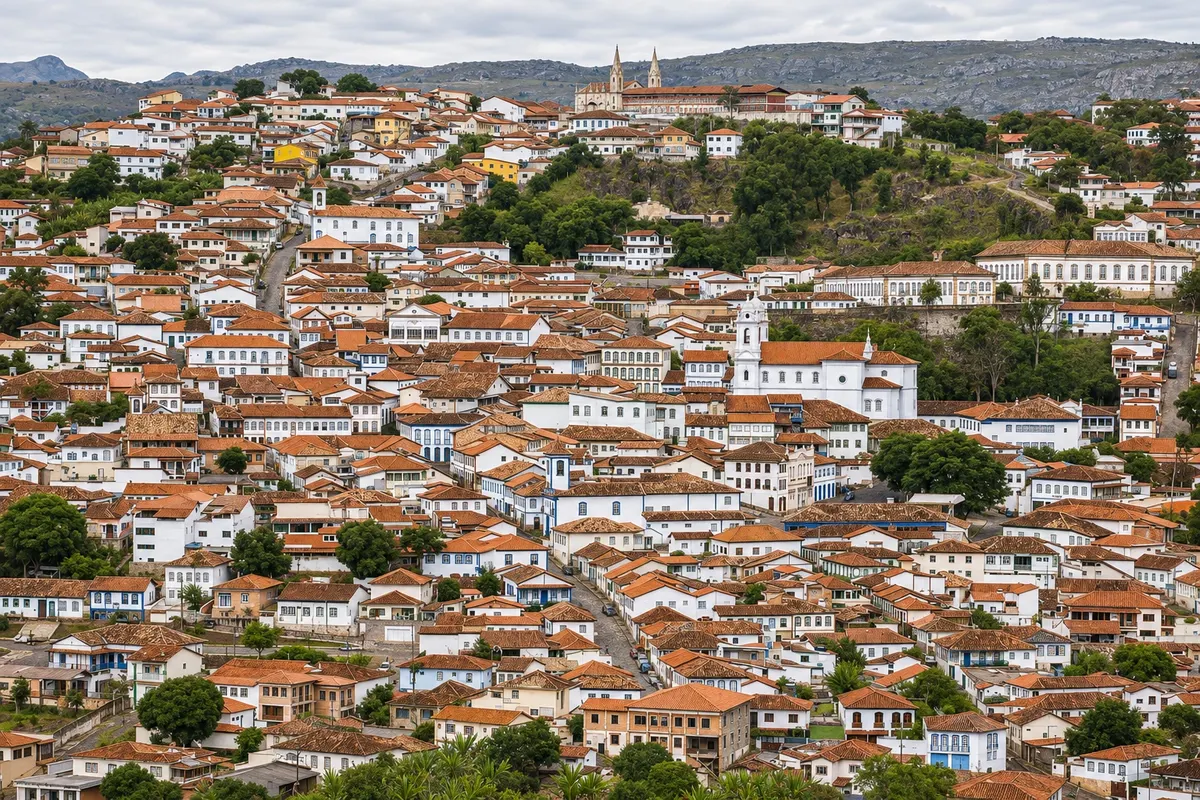
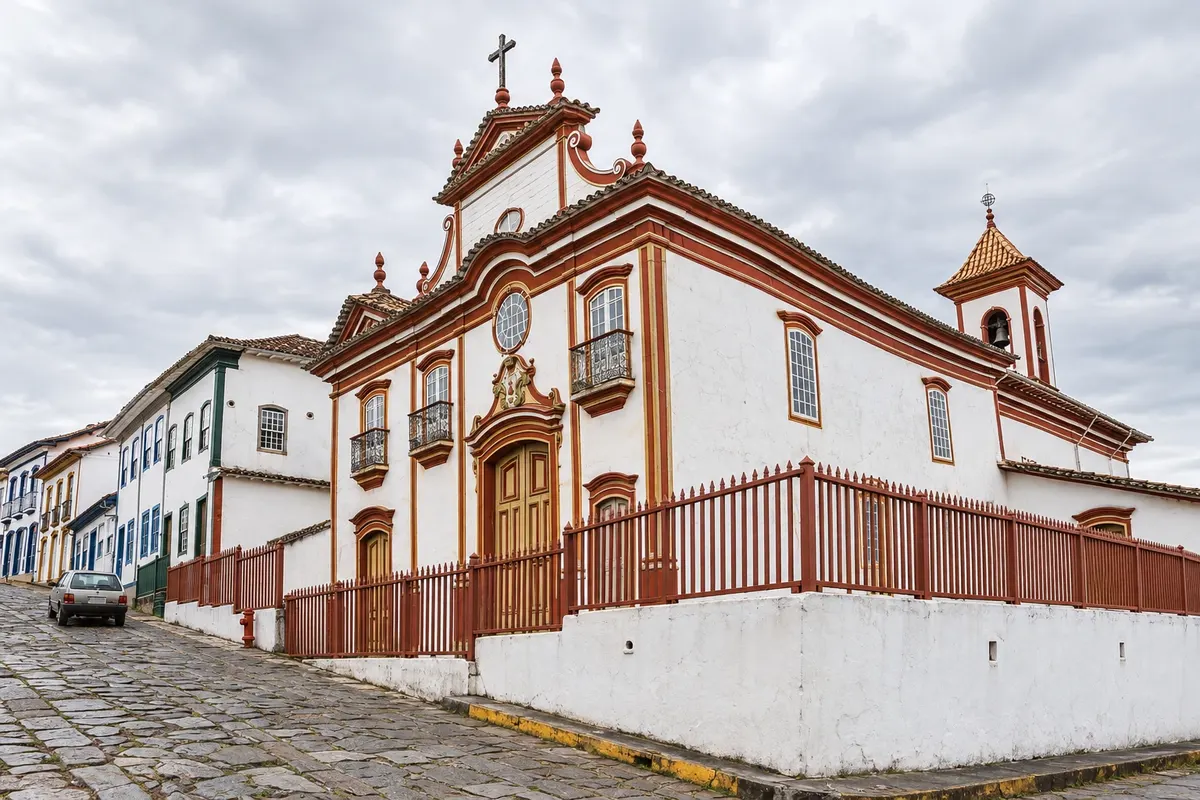
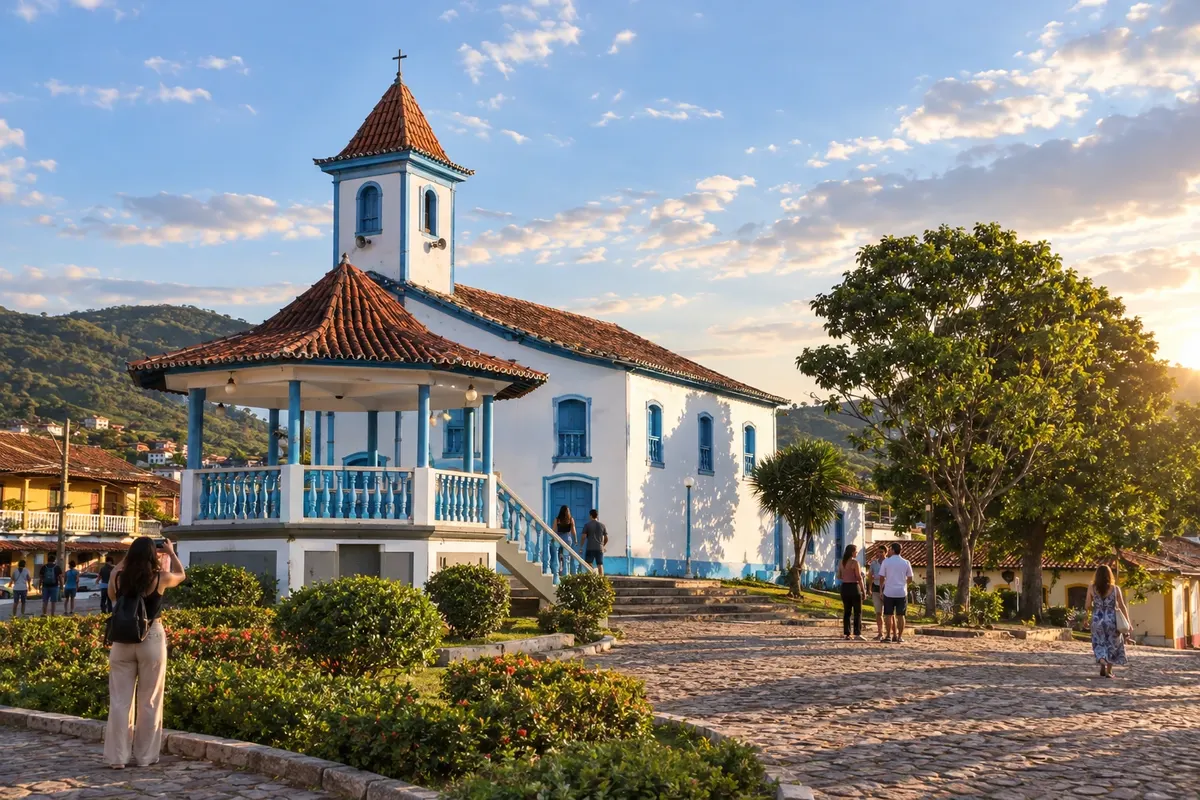
Ouro Preto spreads over hillsides shaped by the gold cycle and colonial architecture. Walking its steep streets lets you discover sacred art, museums and places that tell the history of Minas Gerais.
Antarktika
MG · Brazilija
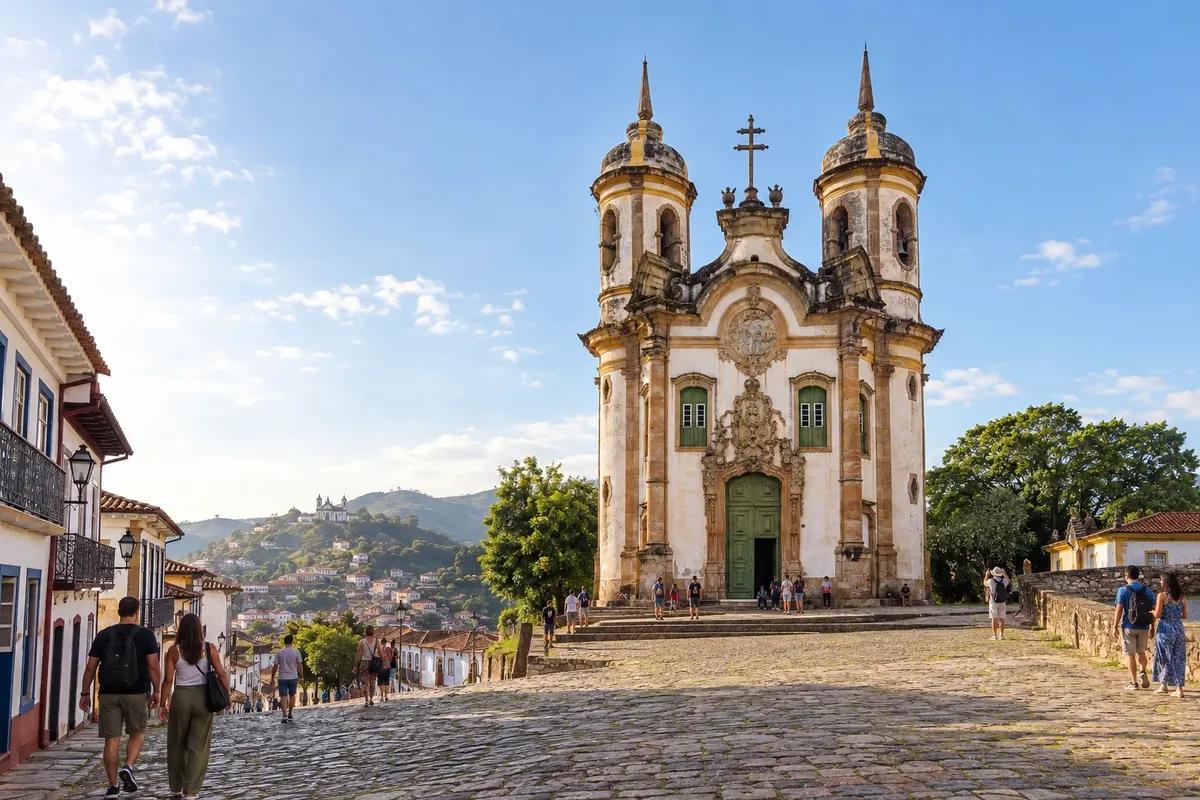
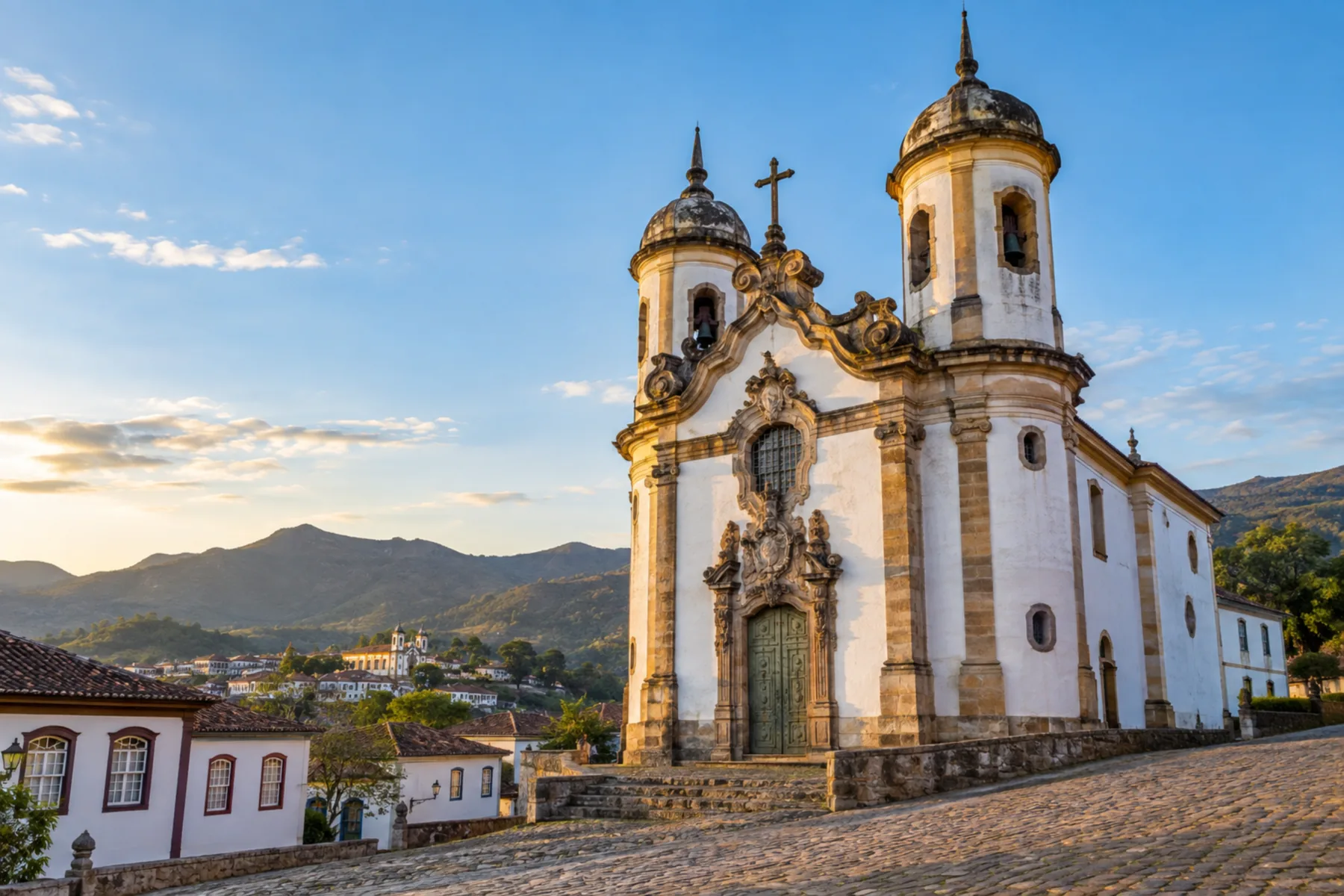
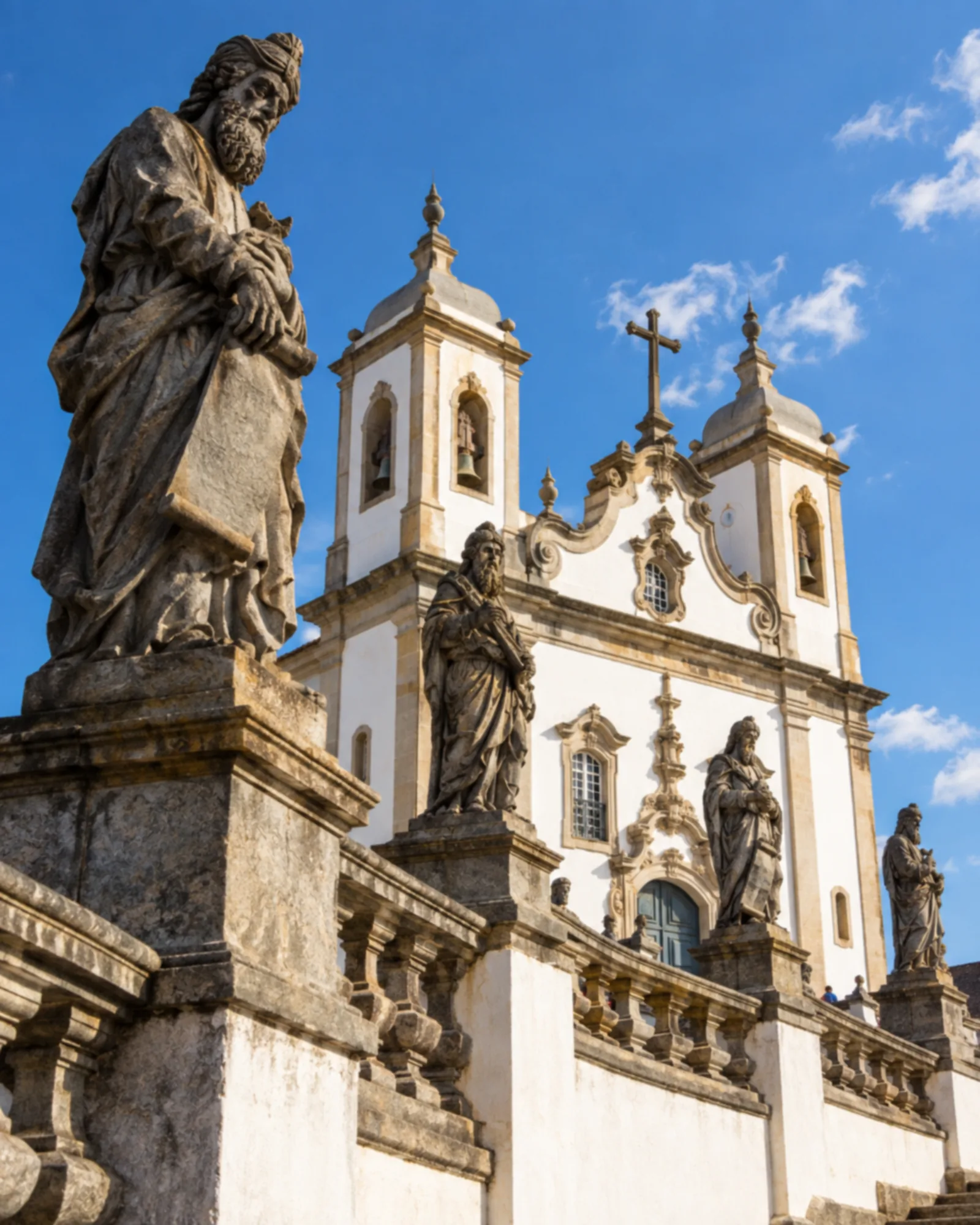
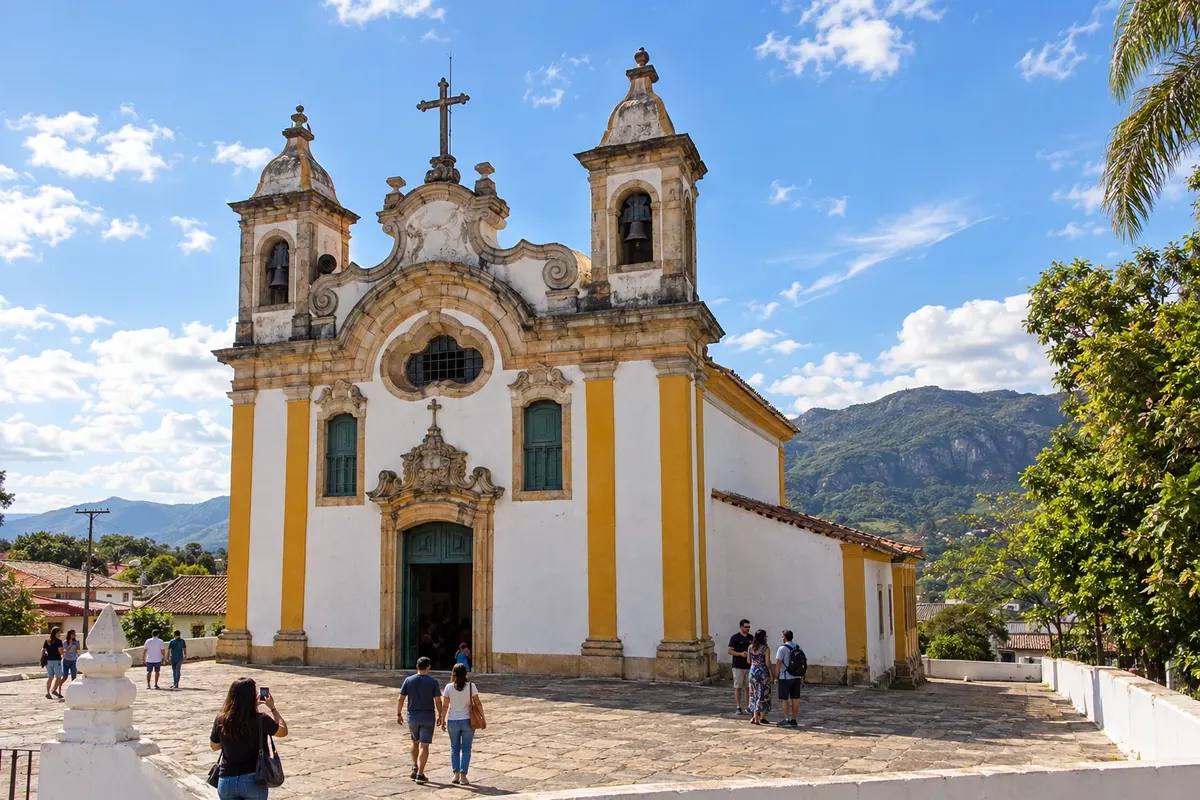
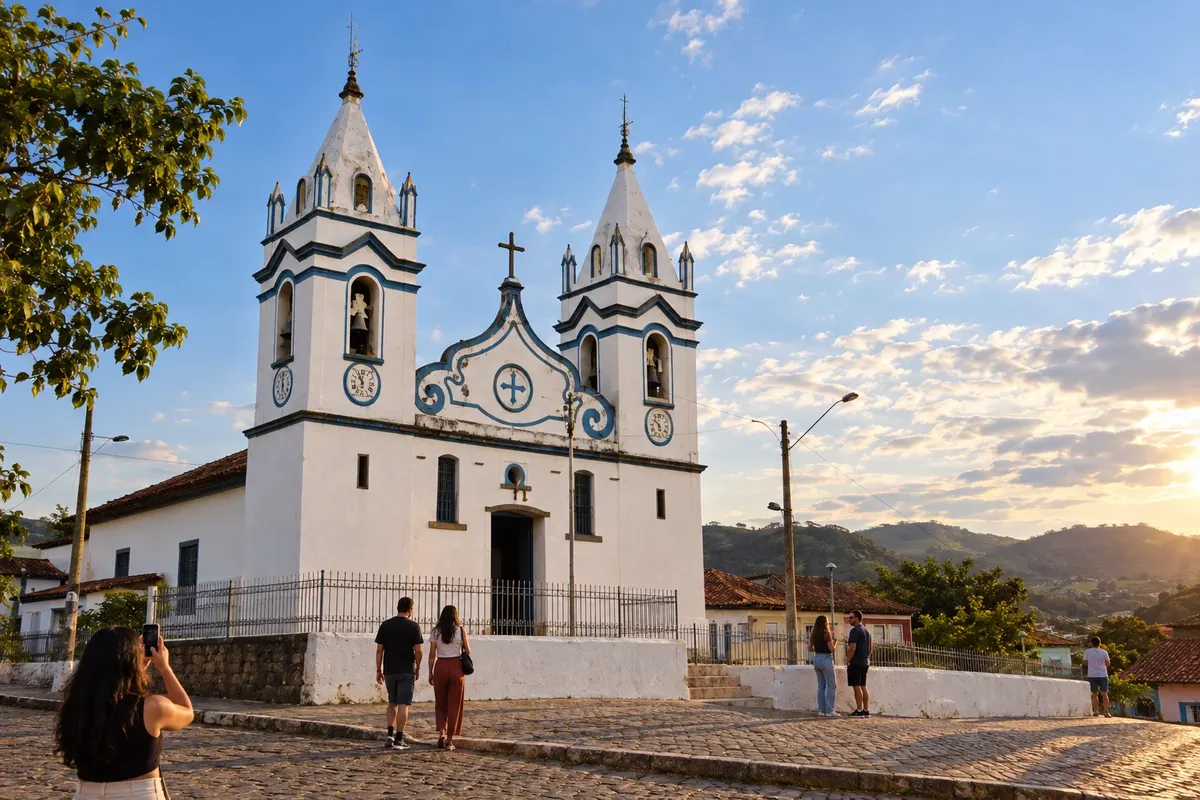
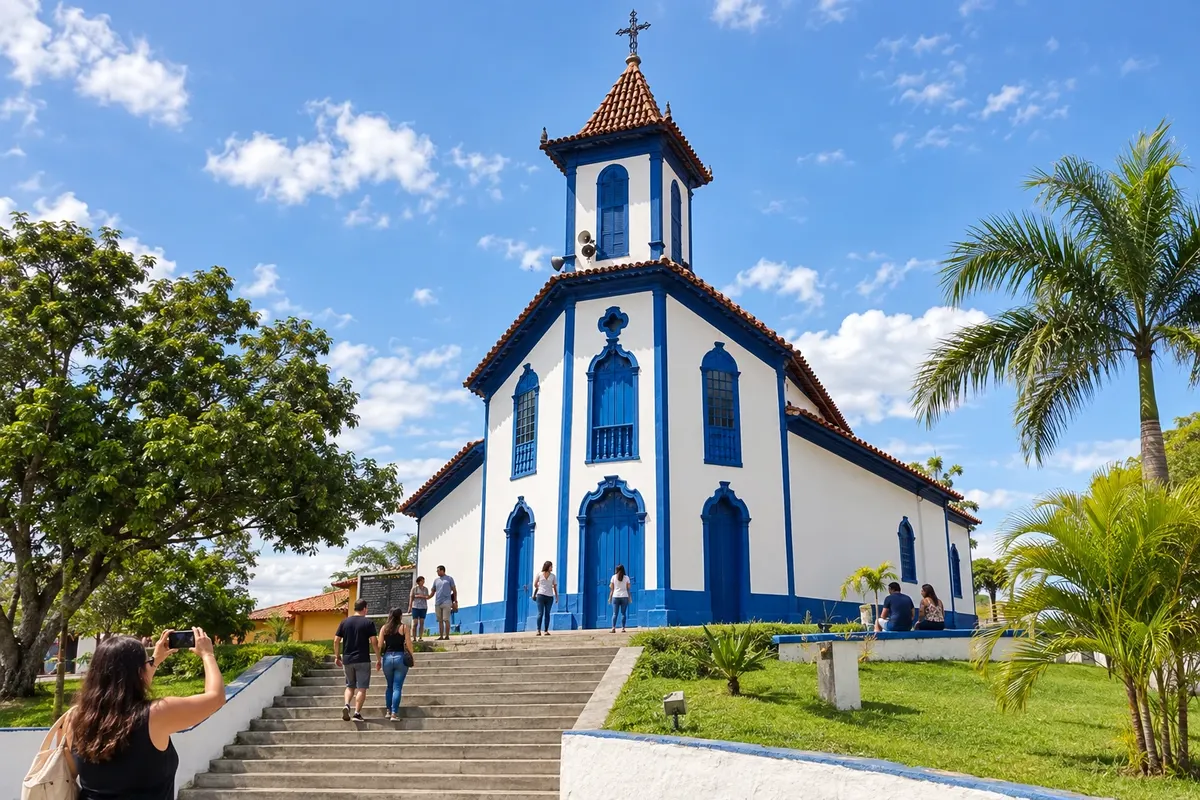
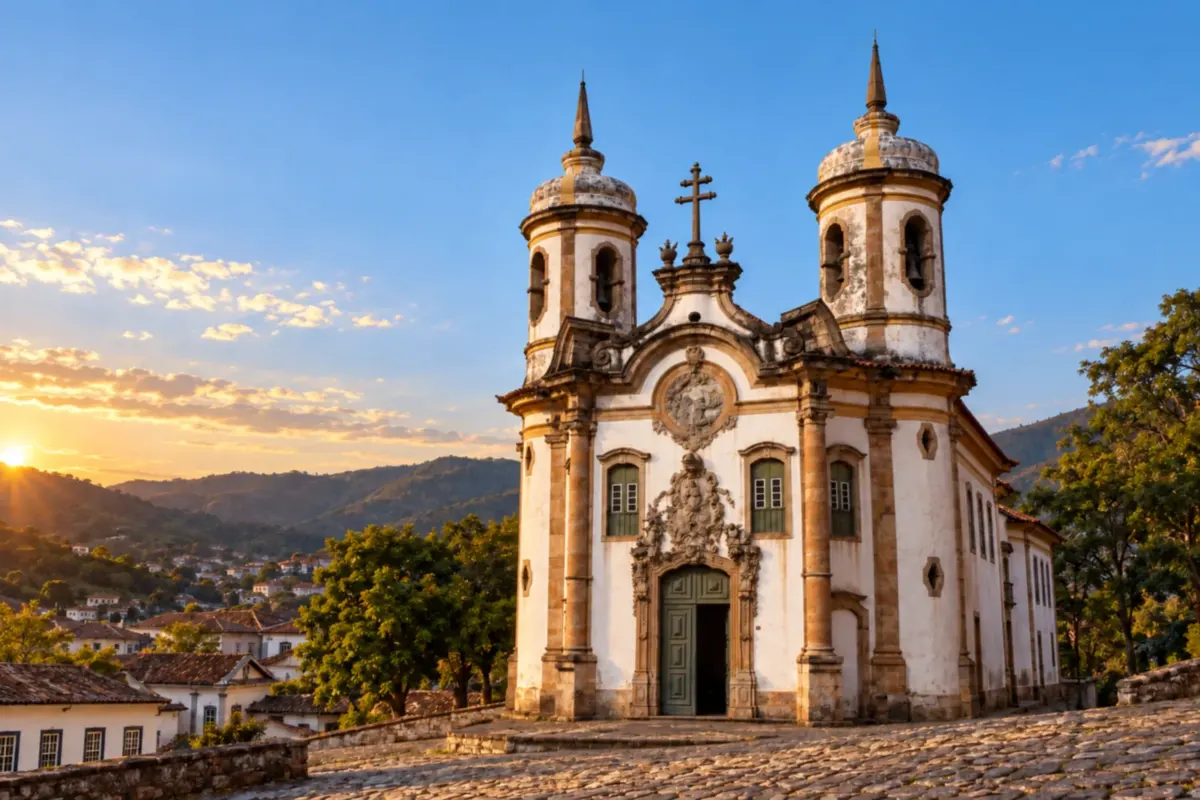
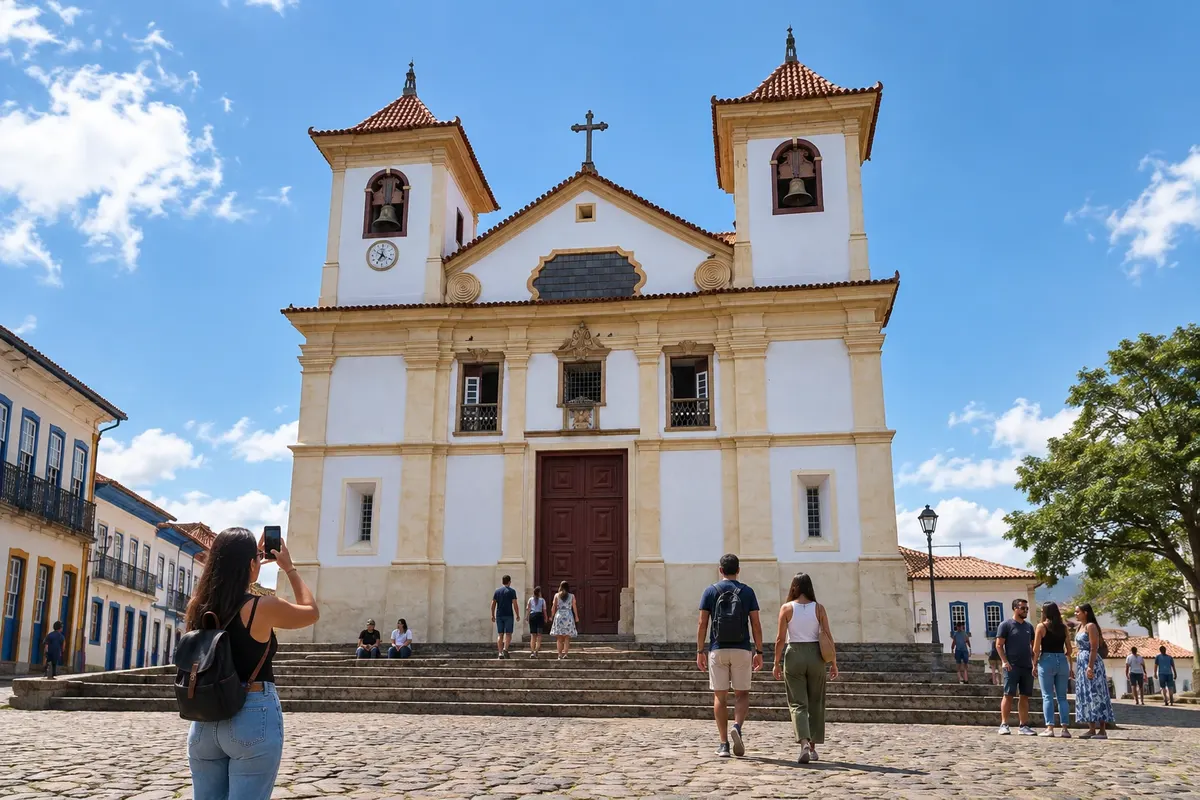
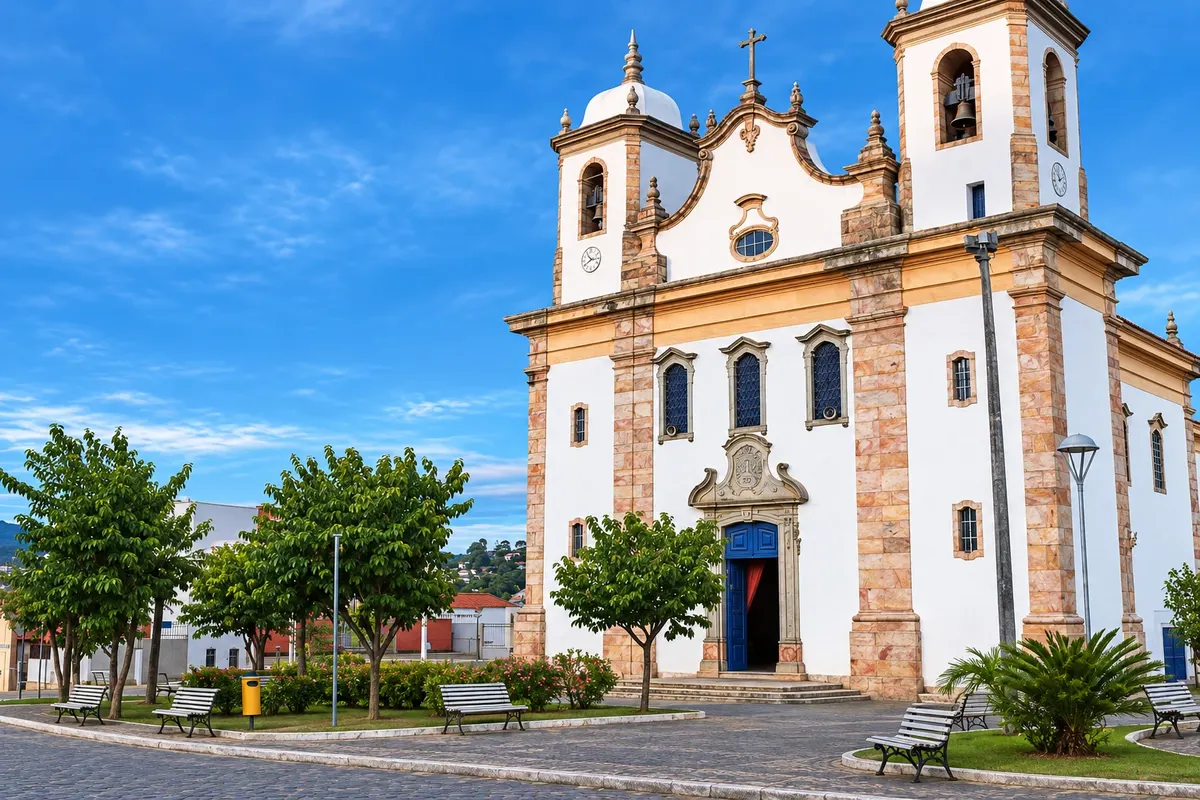
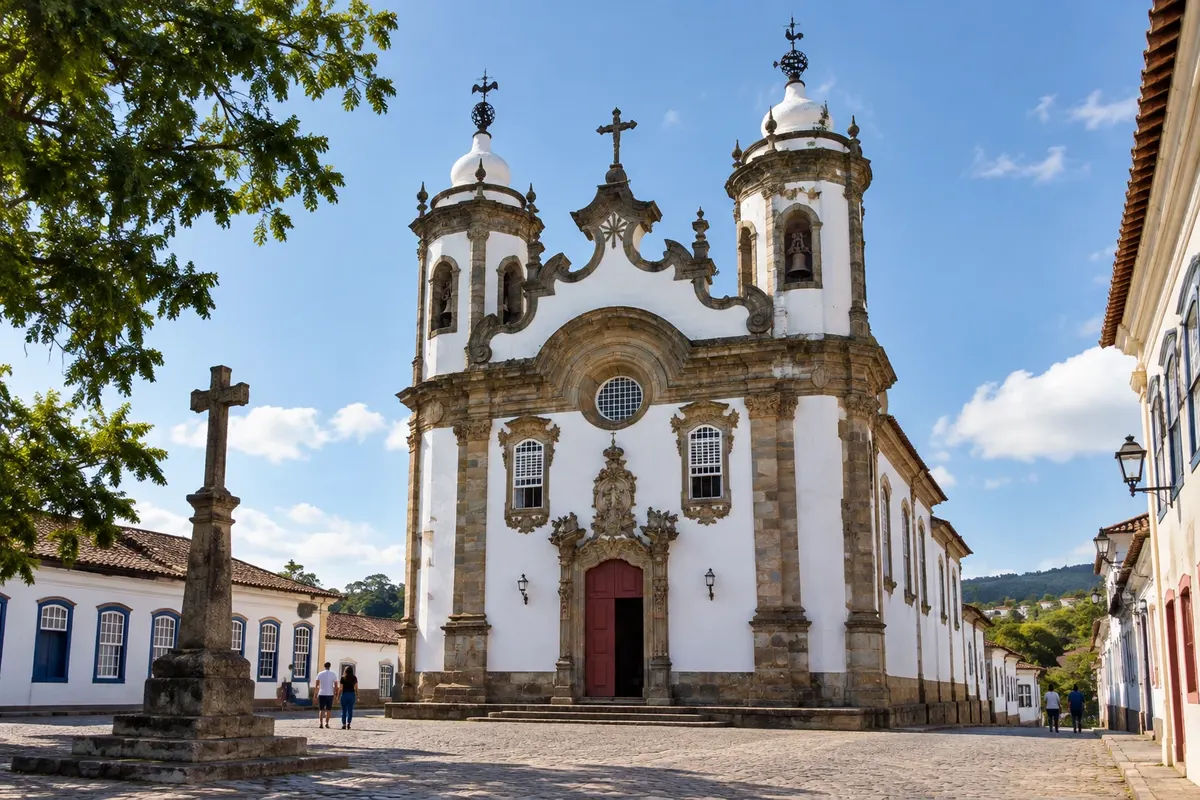
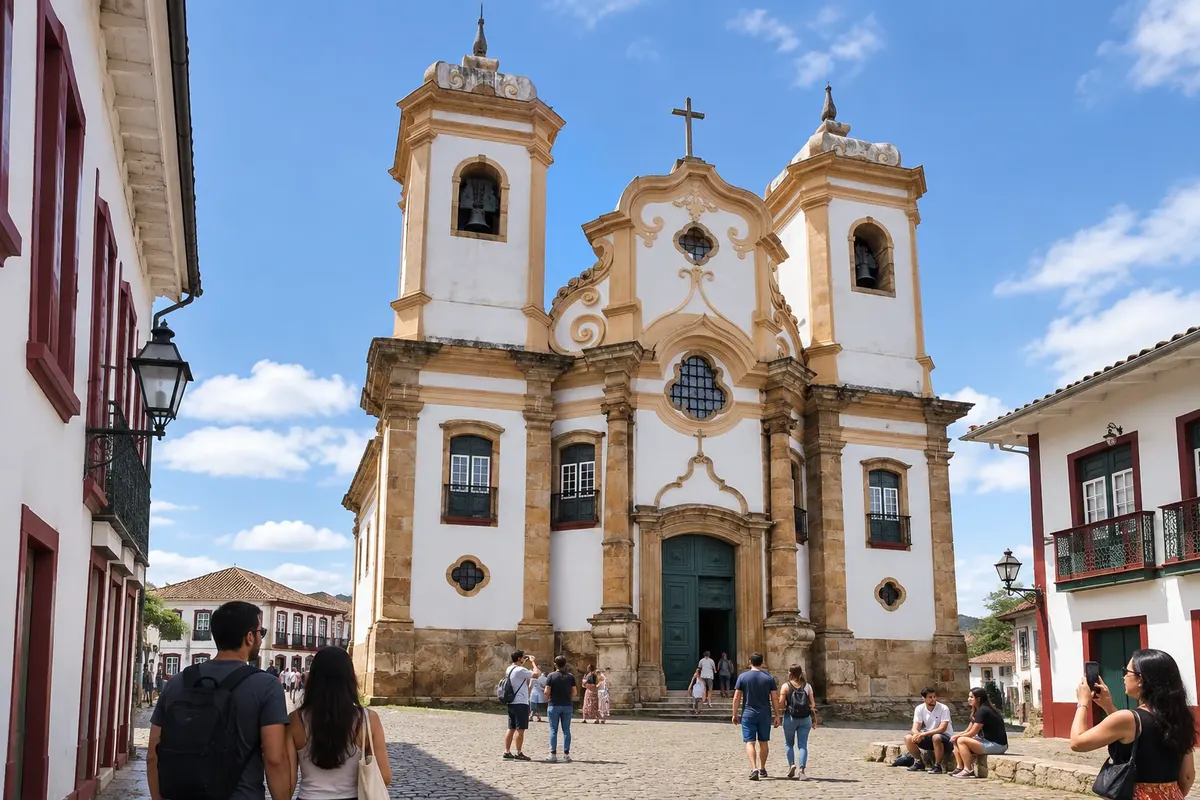
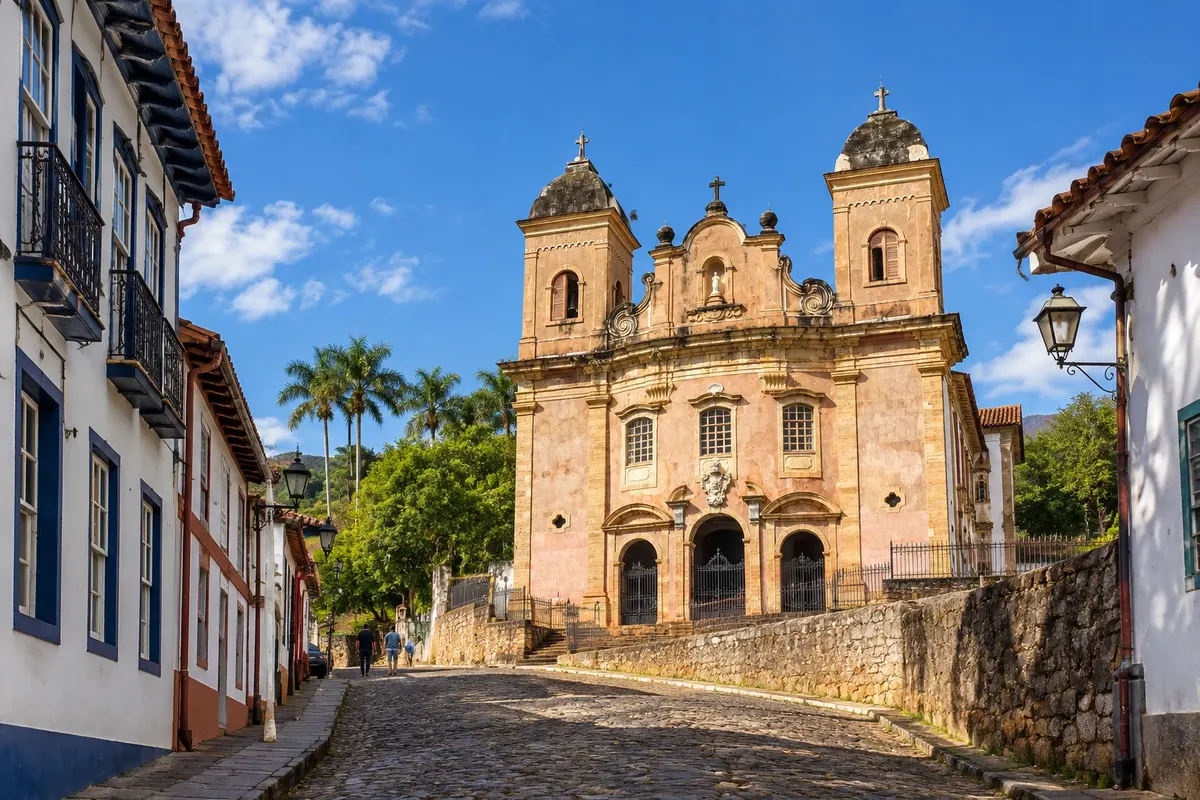
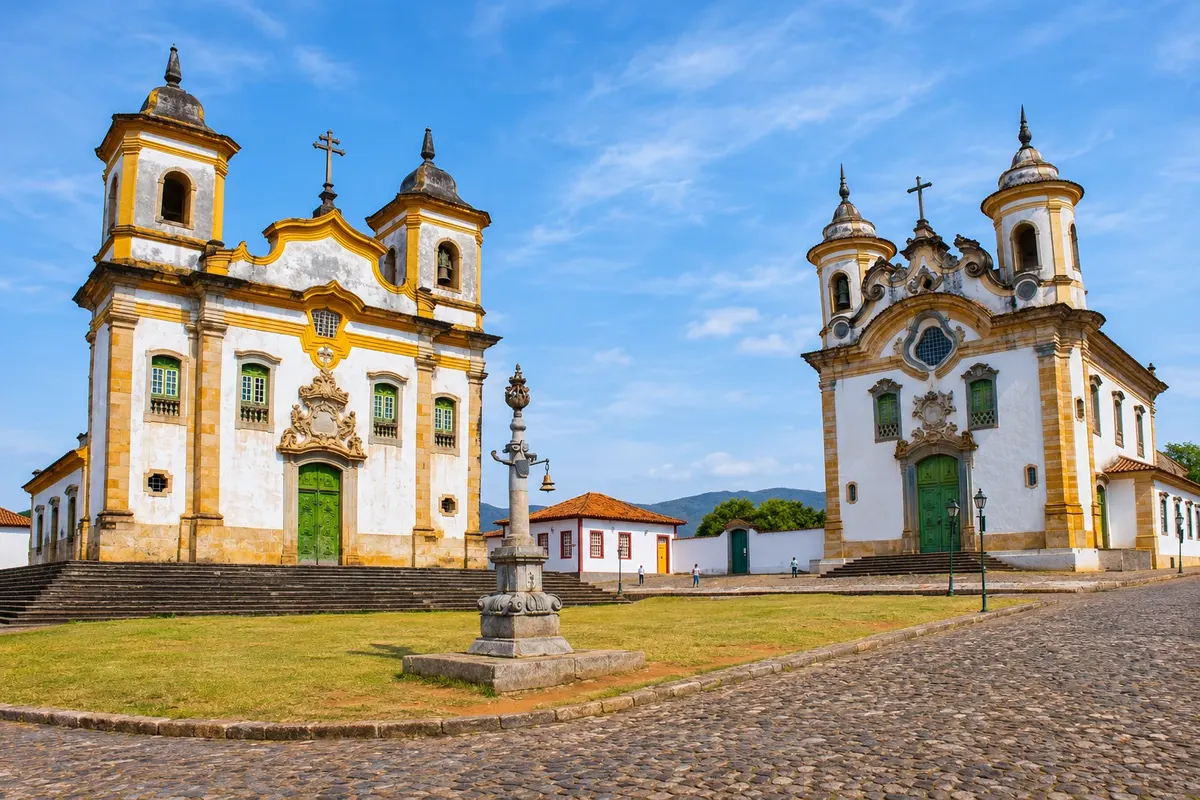
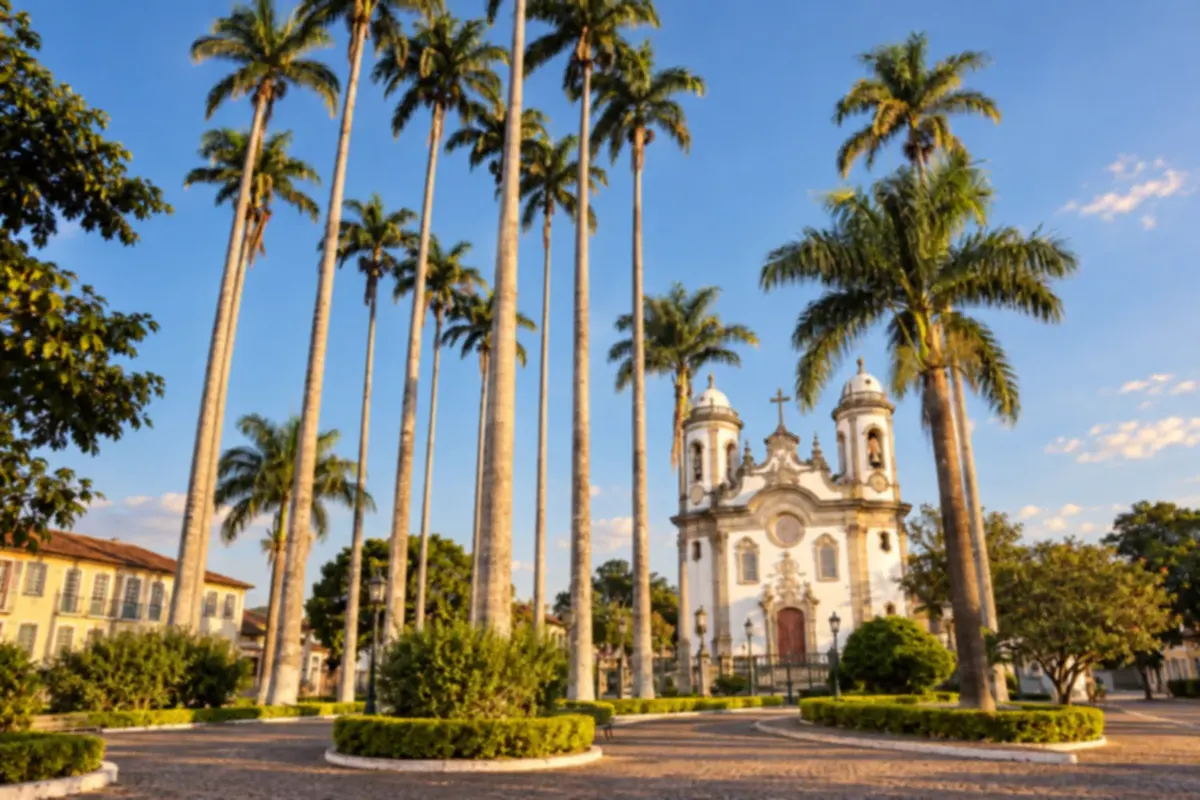
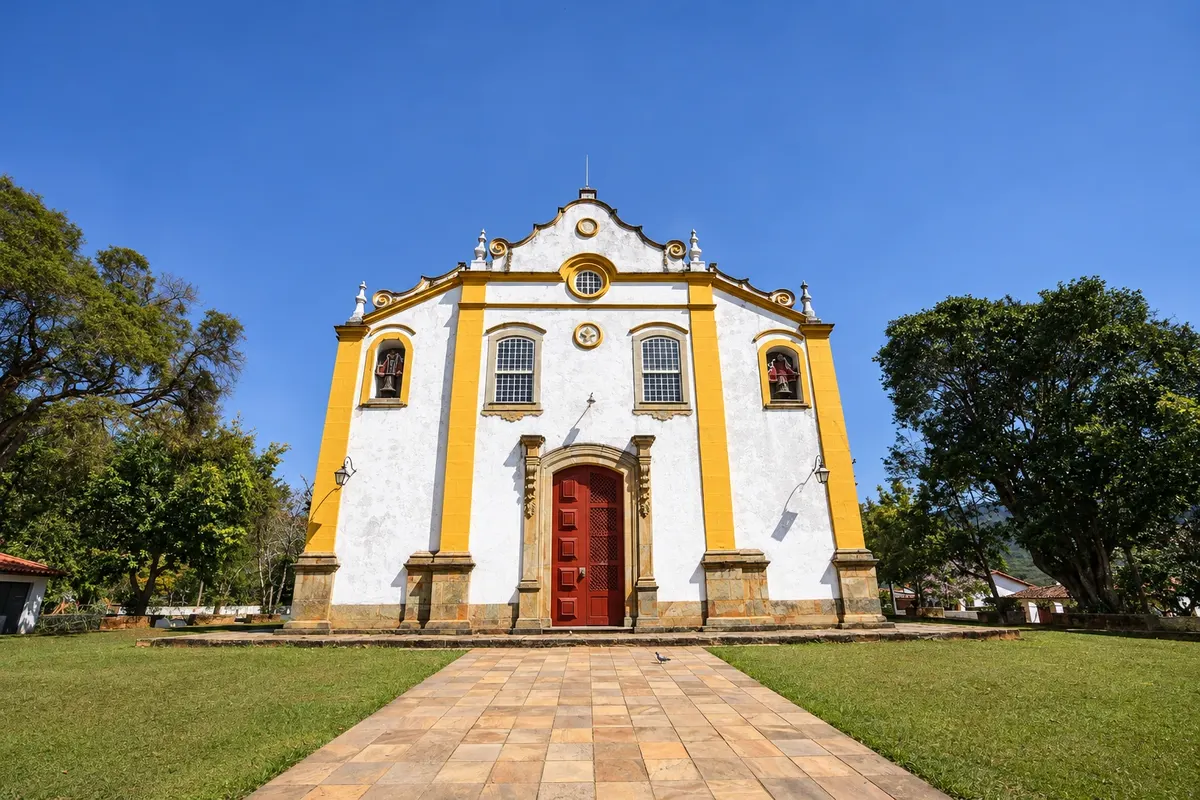
Na fotografiji: Igreja de São Francisco de Assis, Ouro Preto — Baroque gem by Aleijadinho
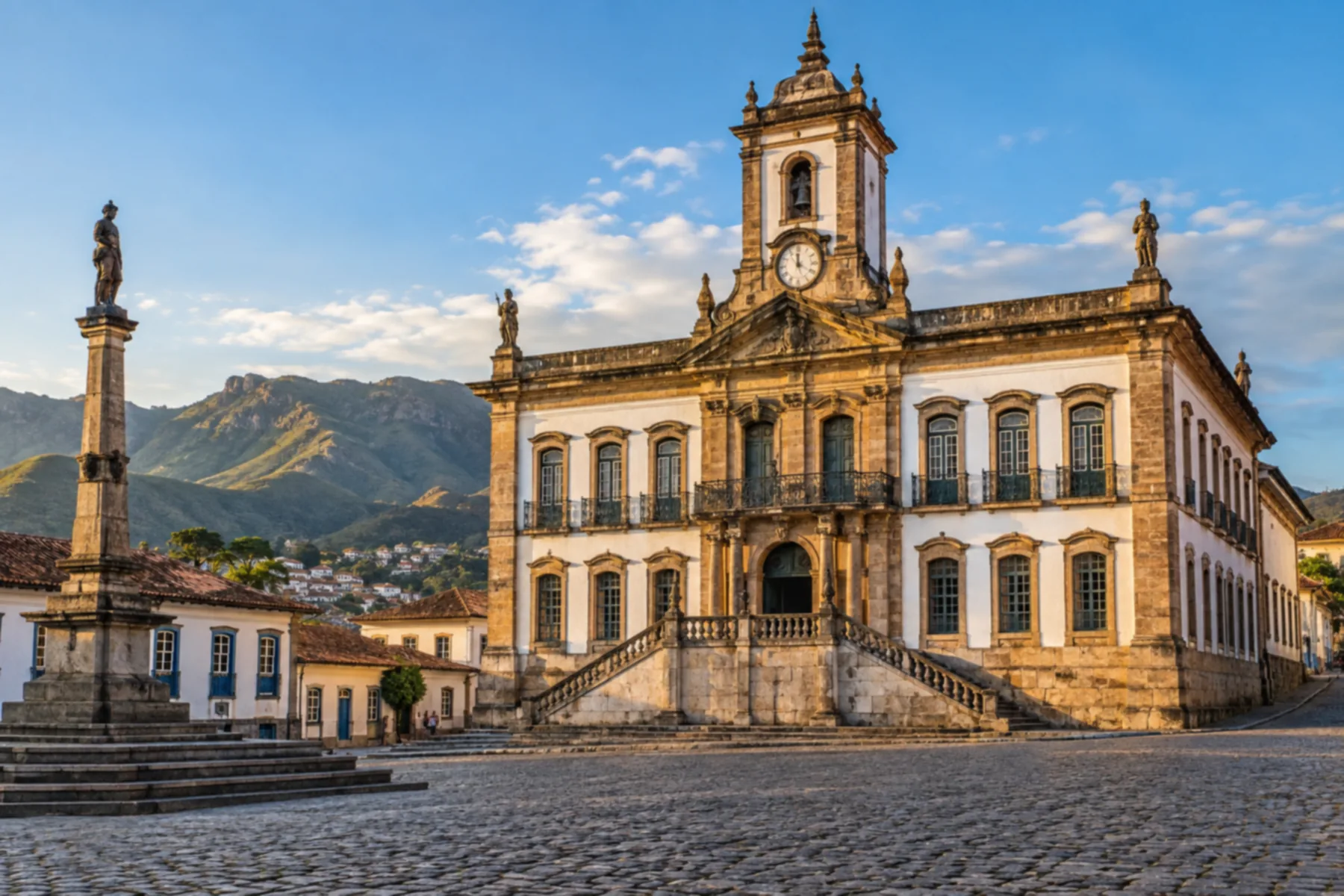
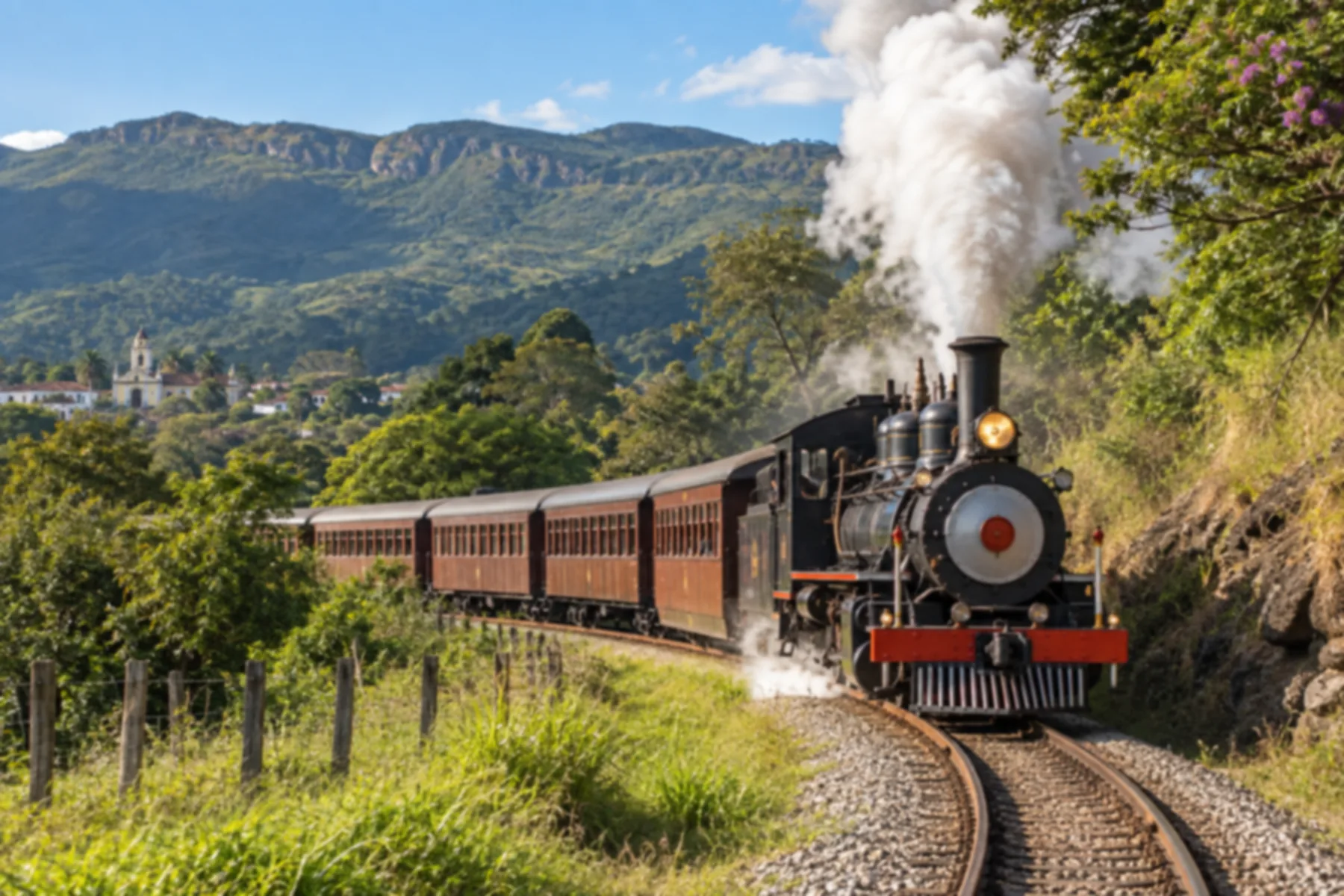
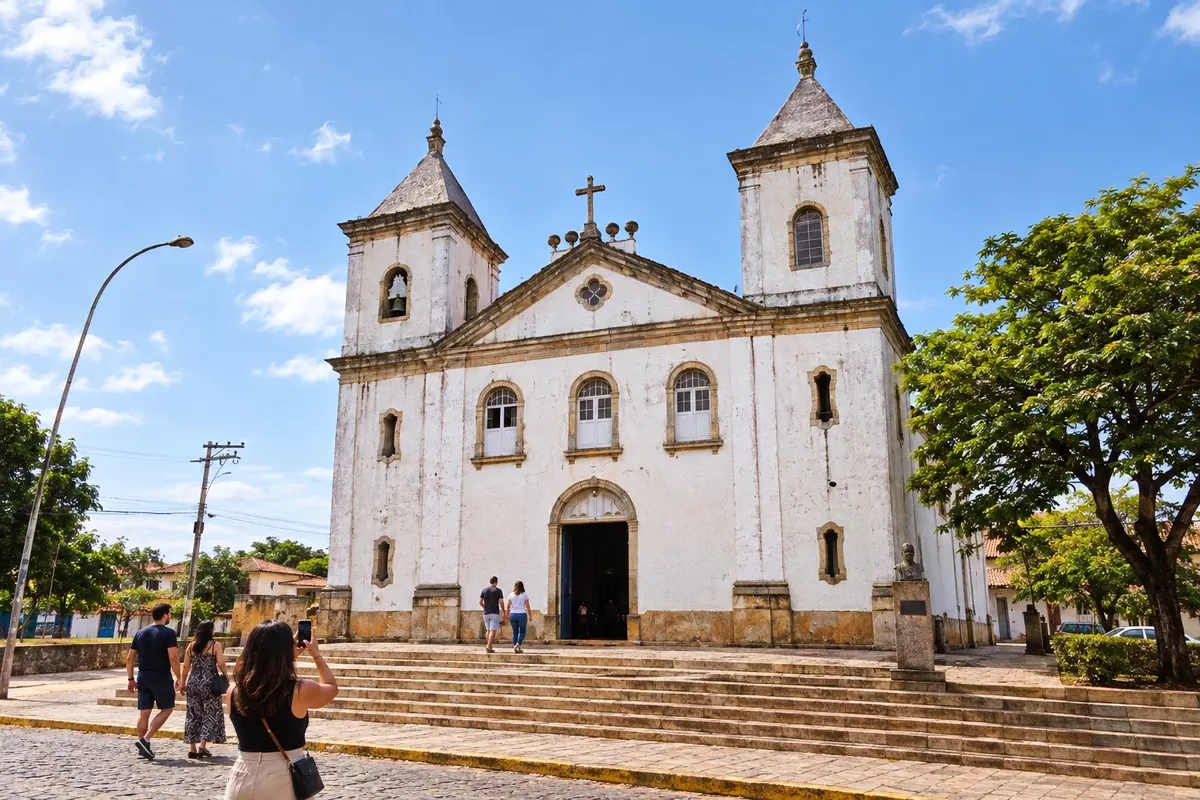
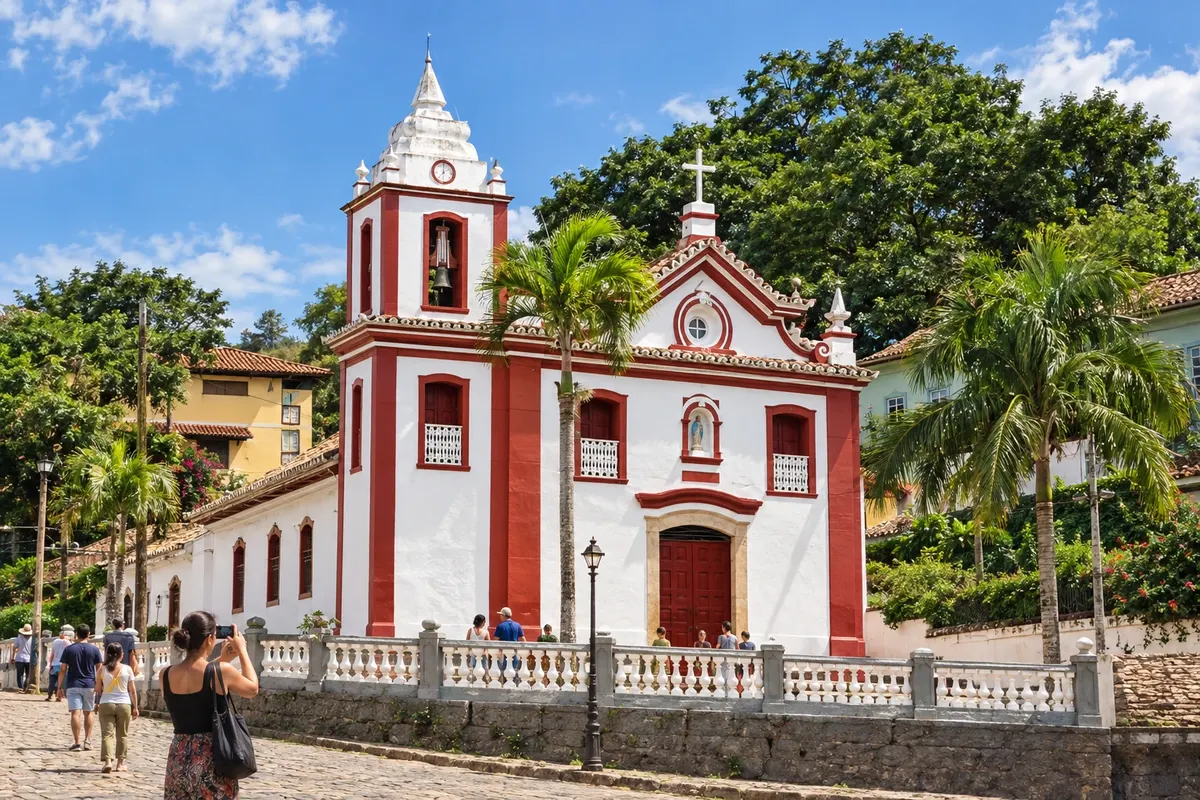
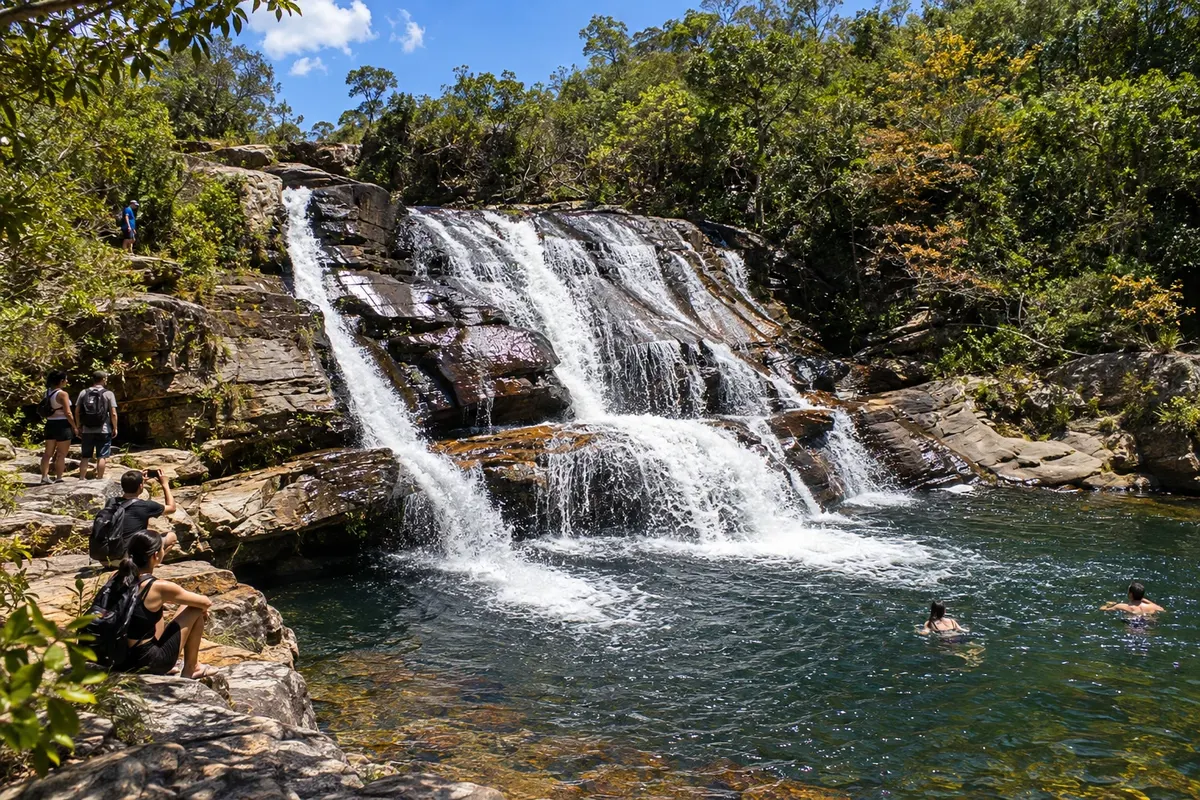
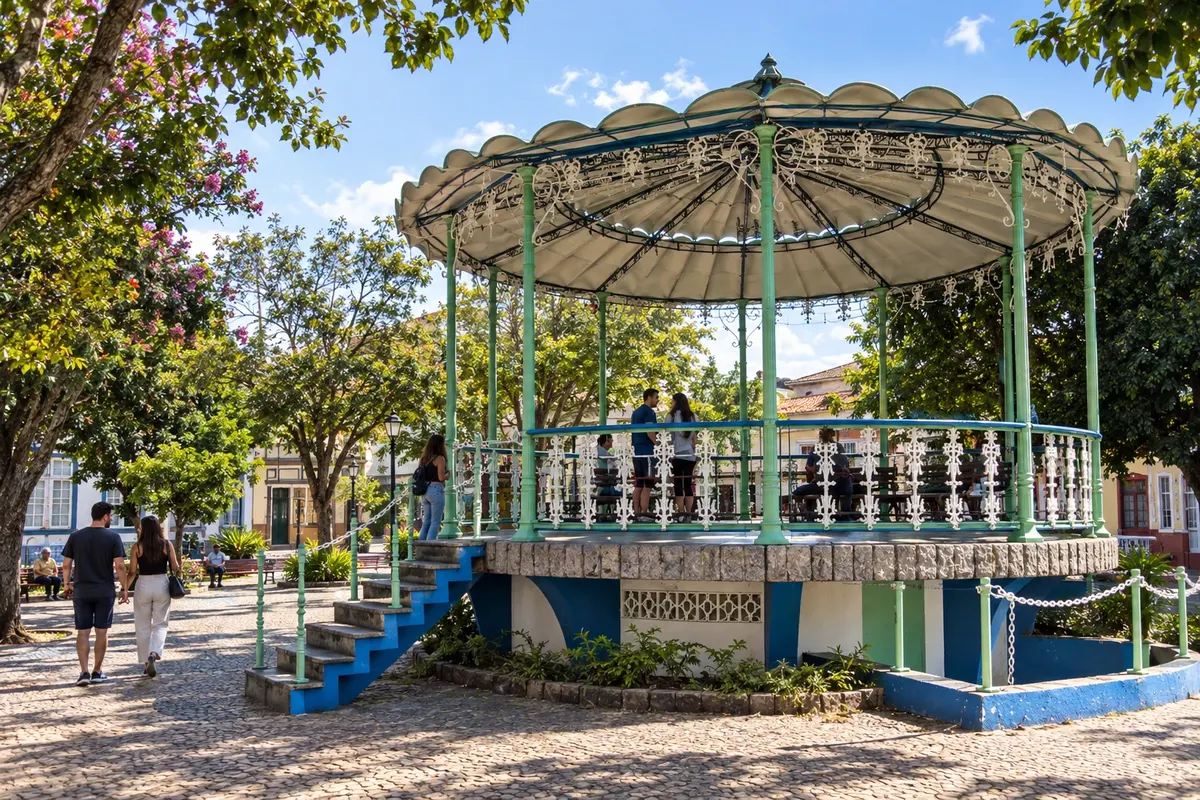
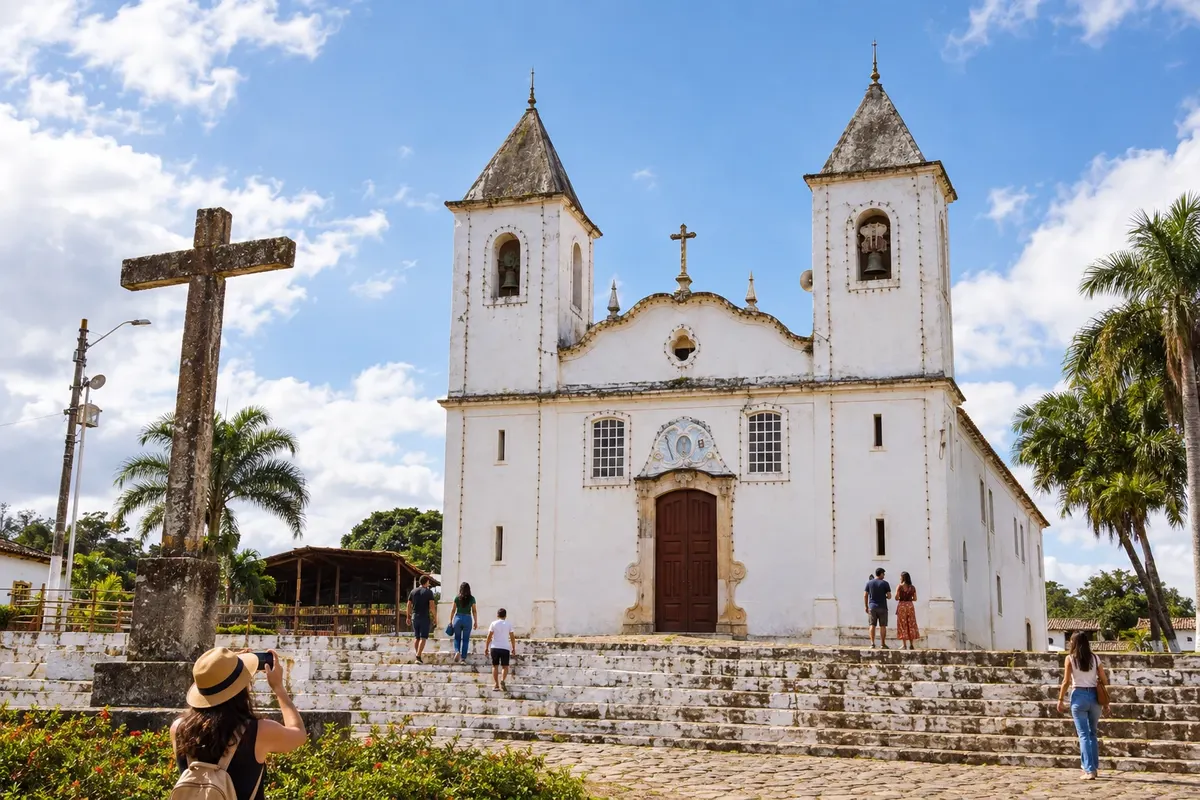
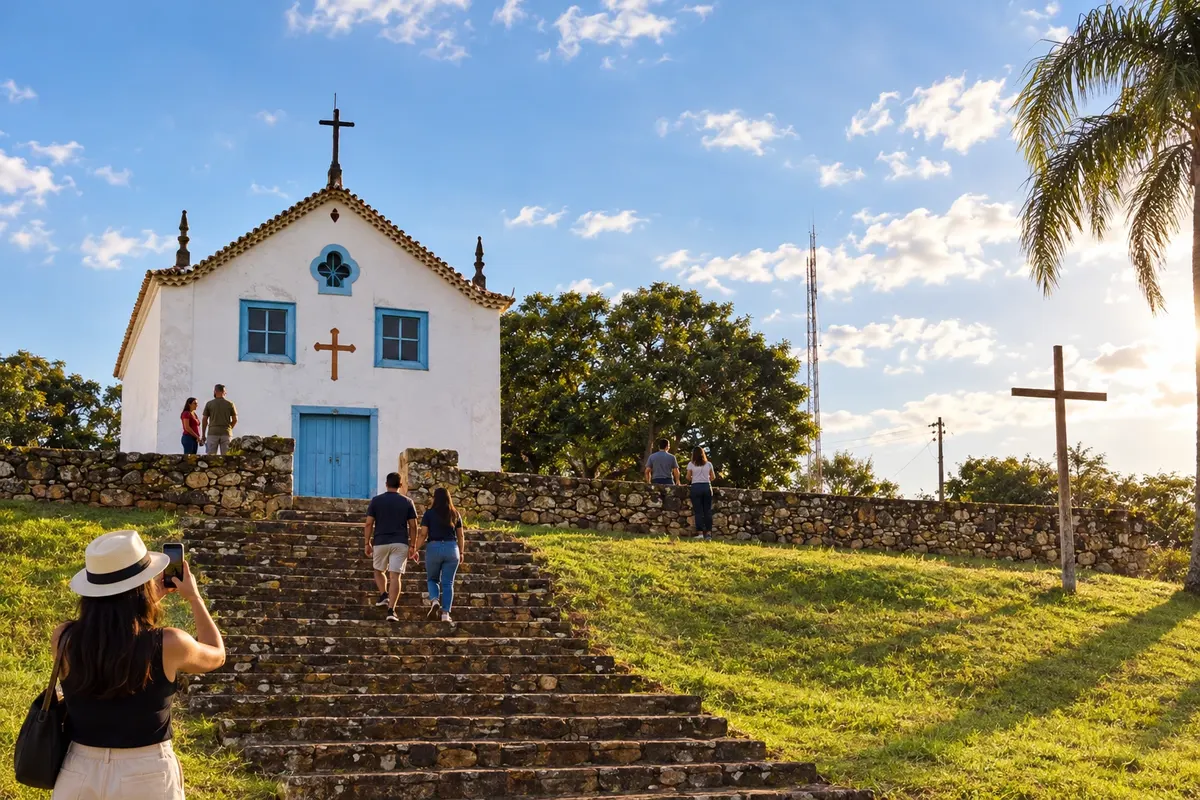
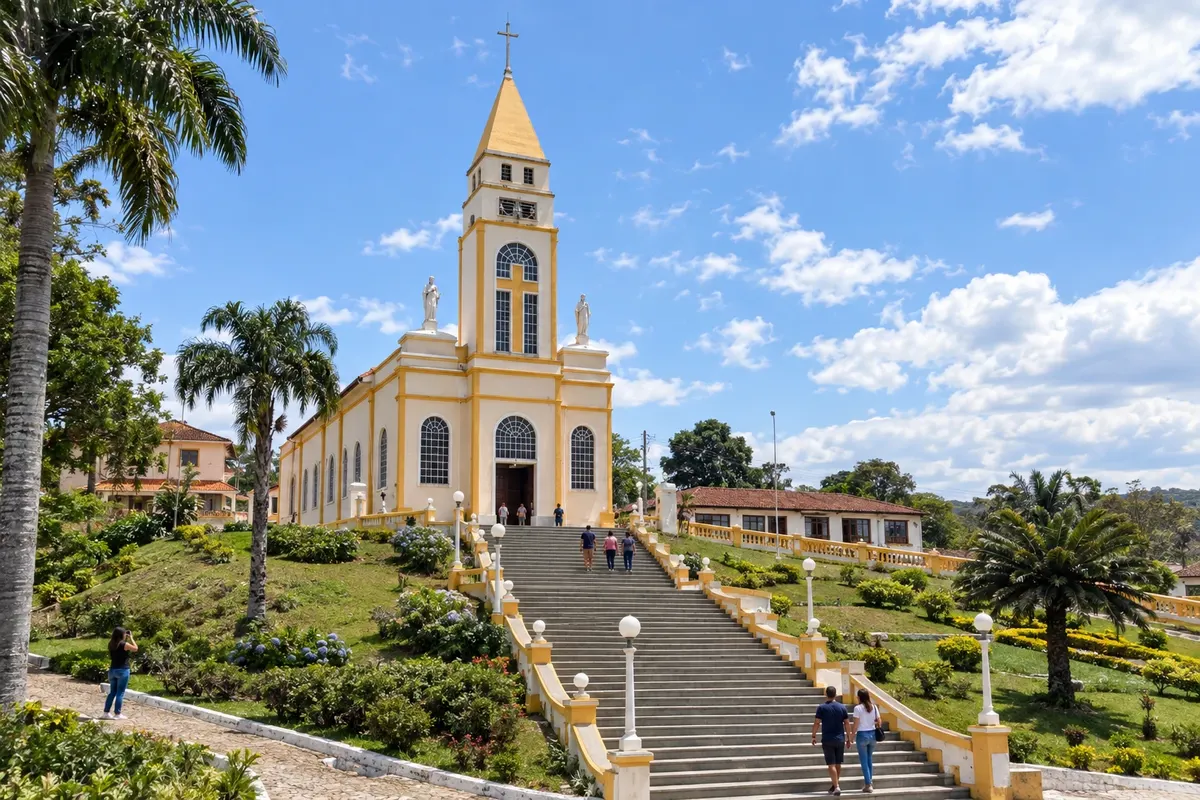
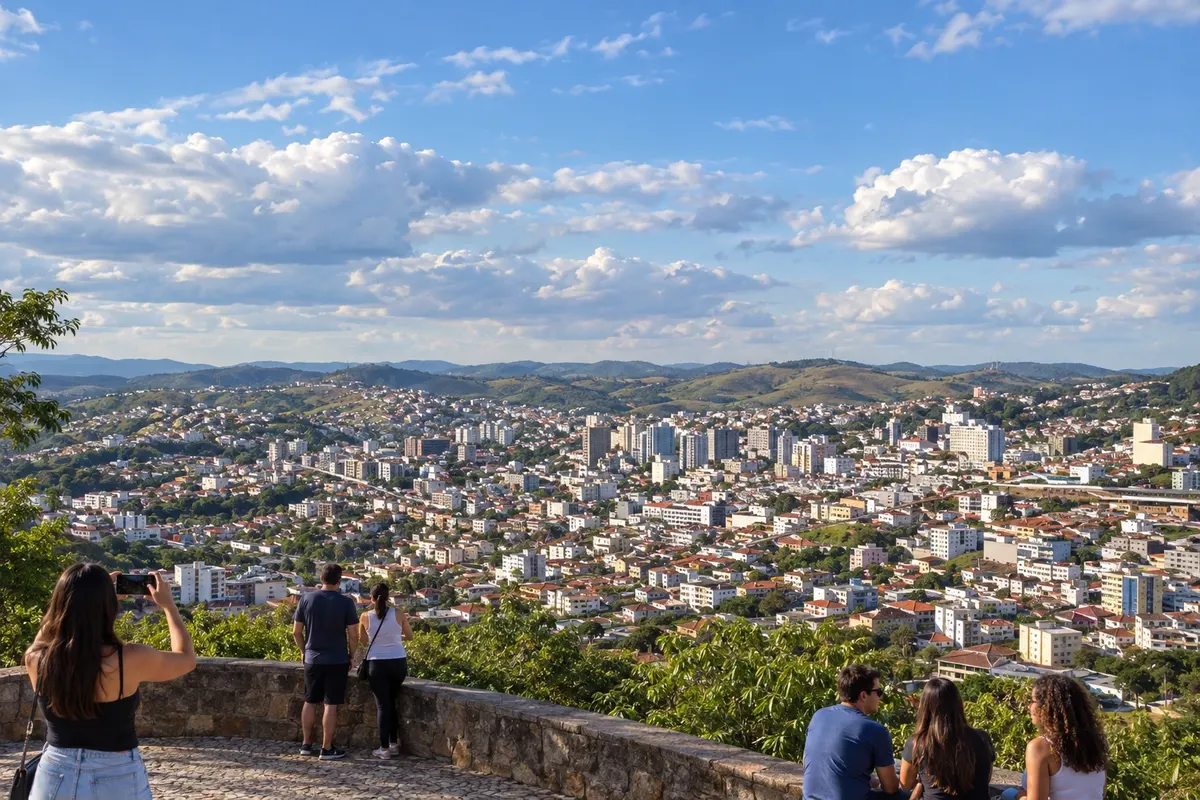
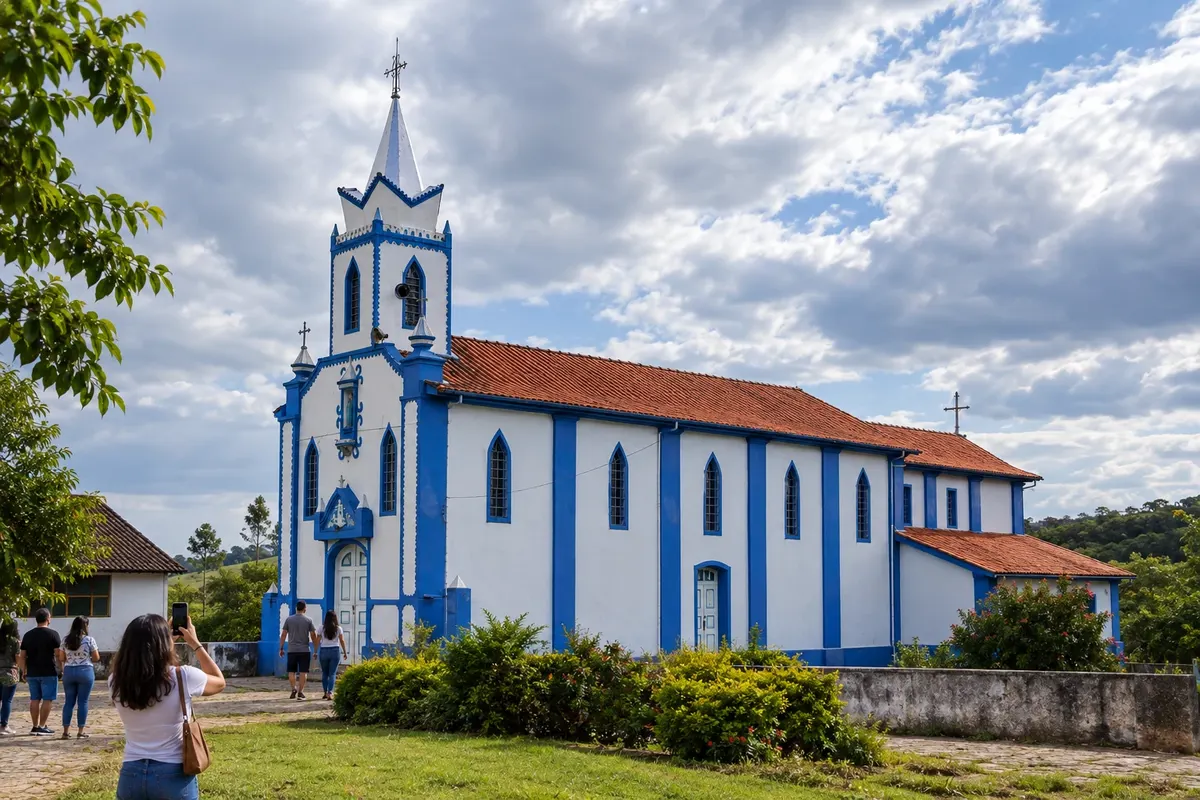
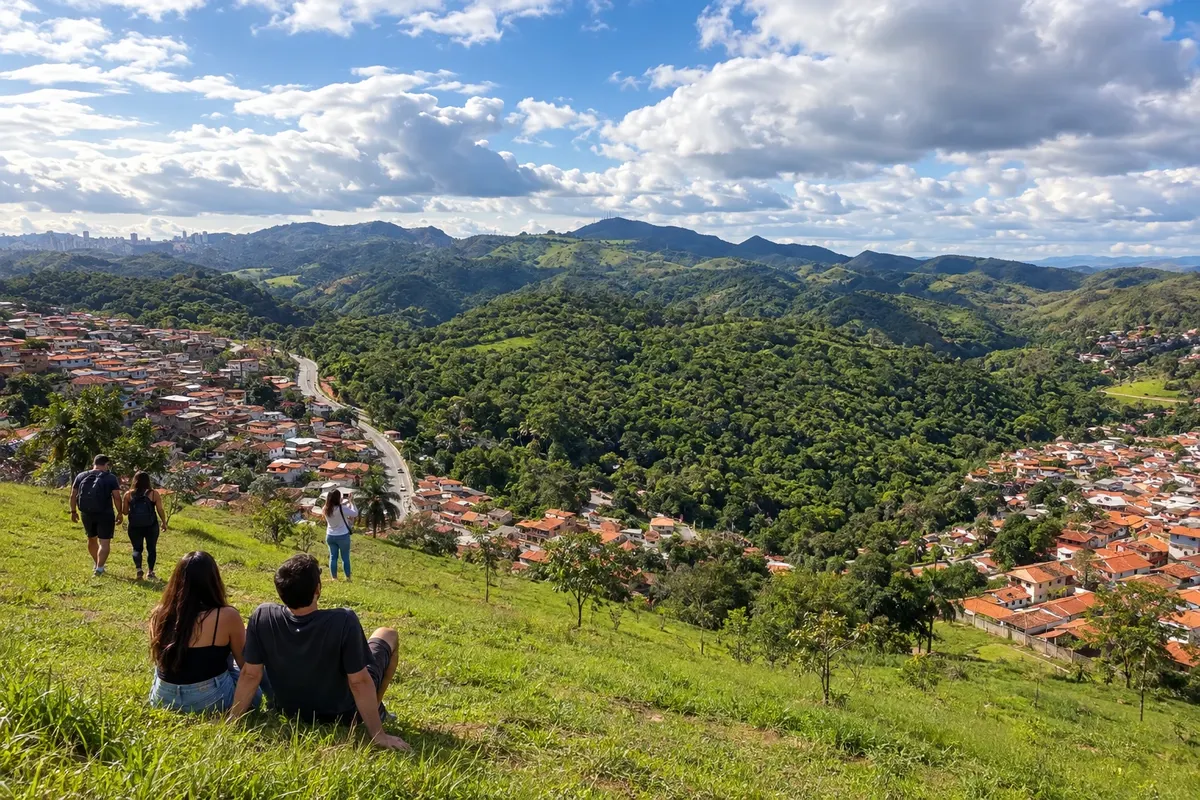
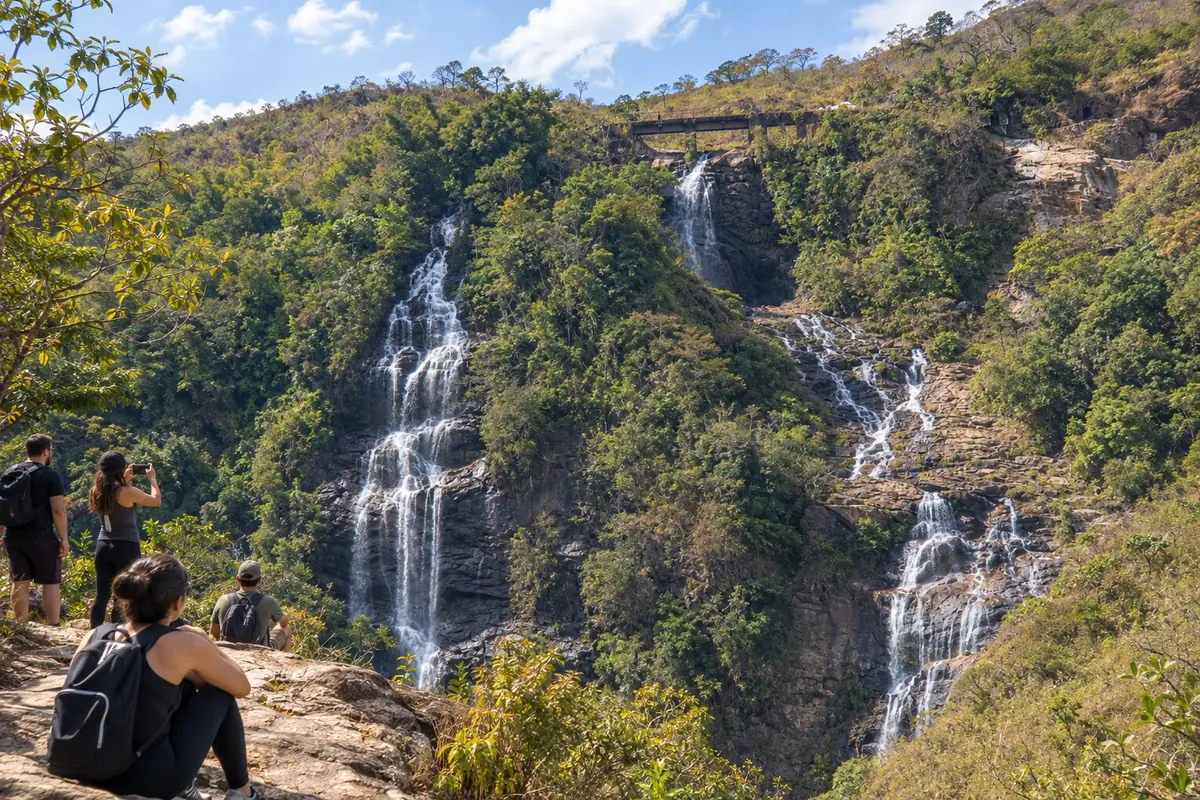
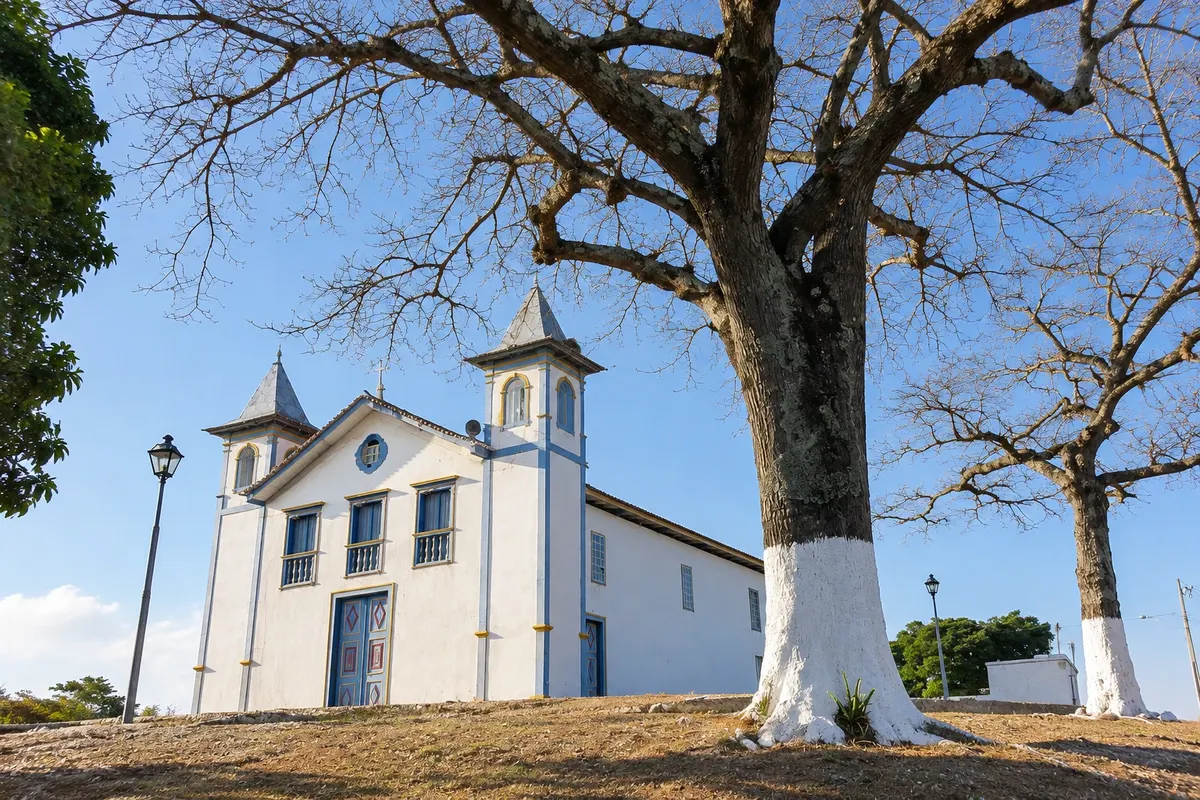
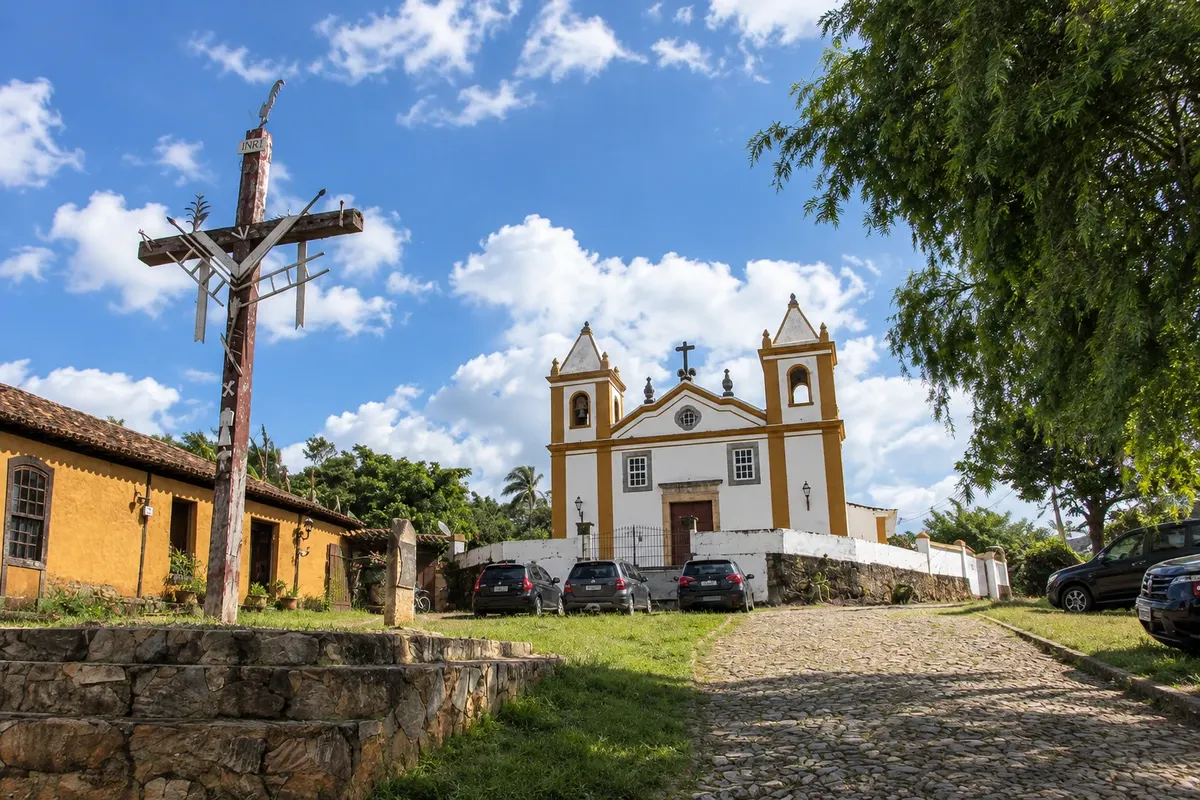
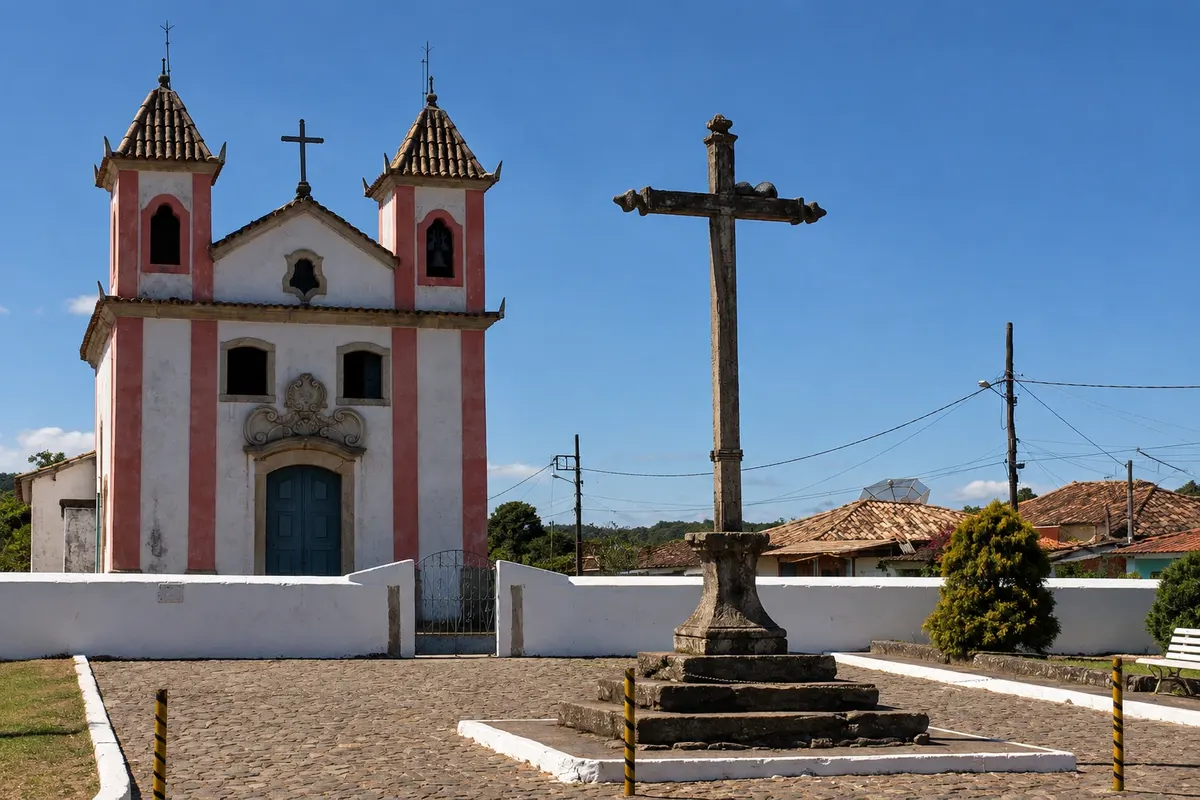
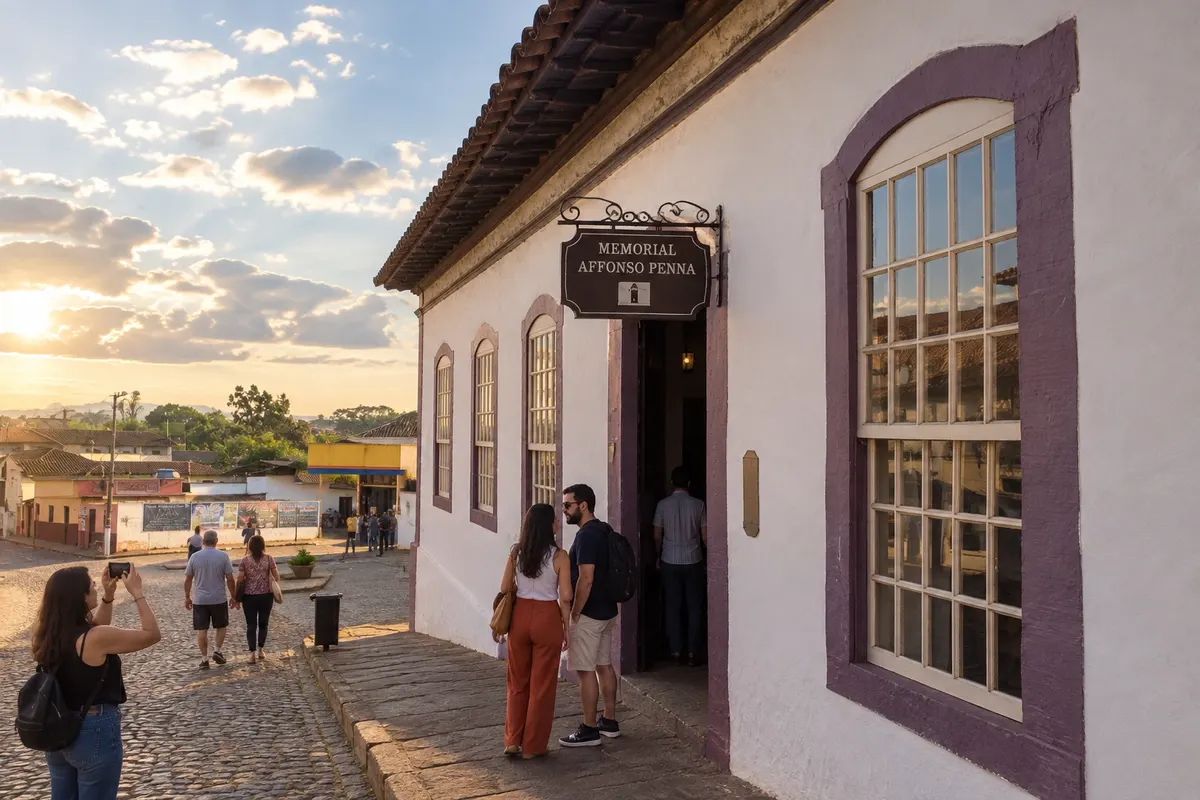
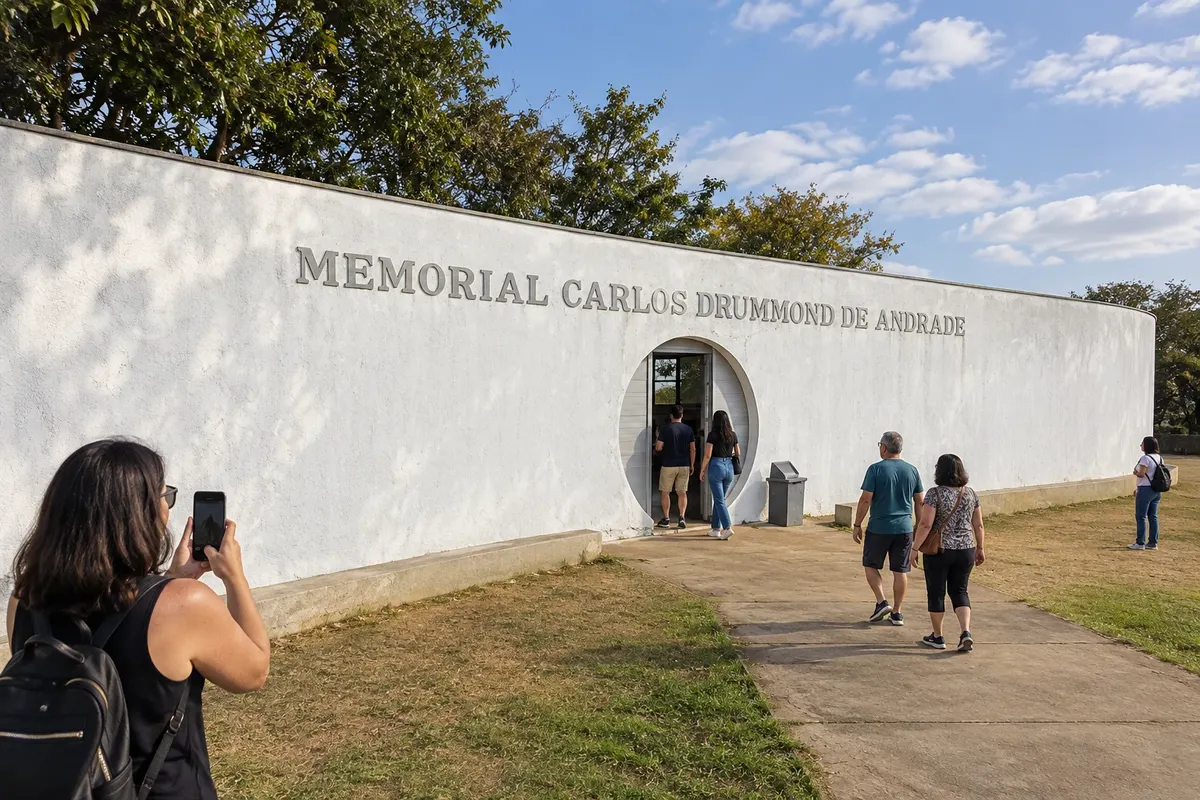
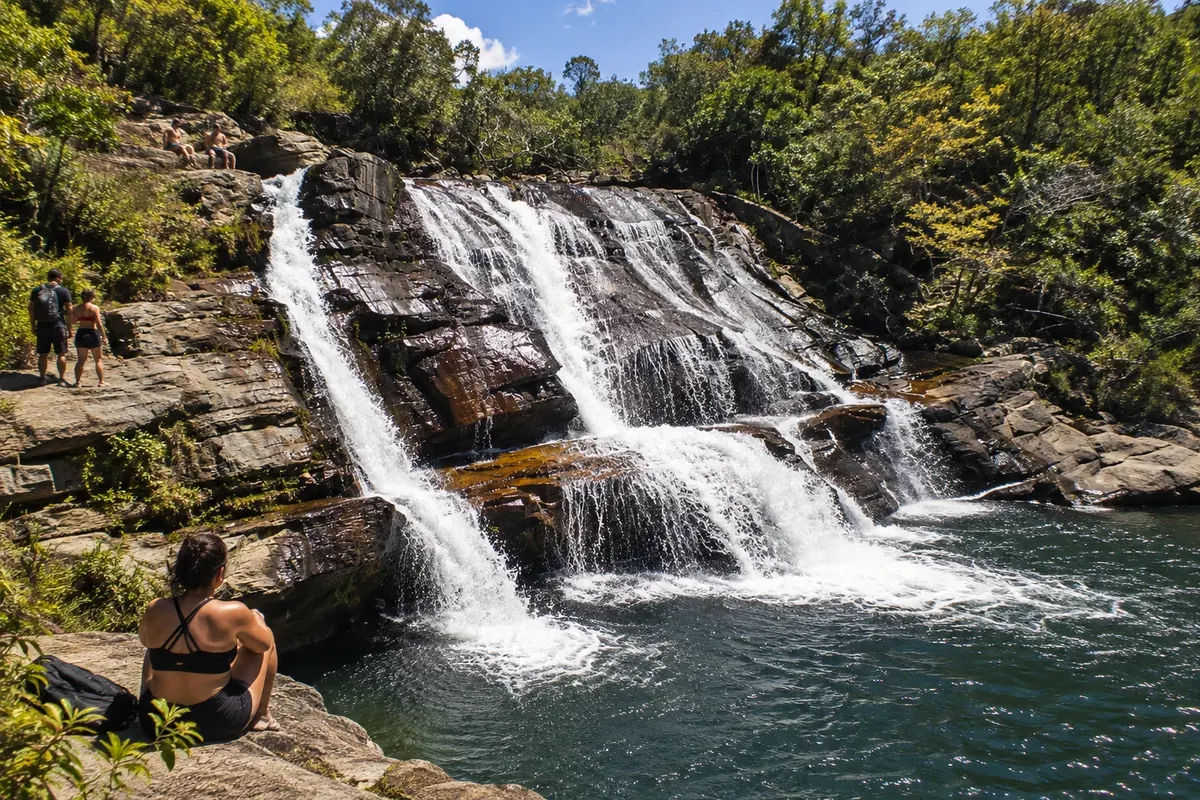
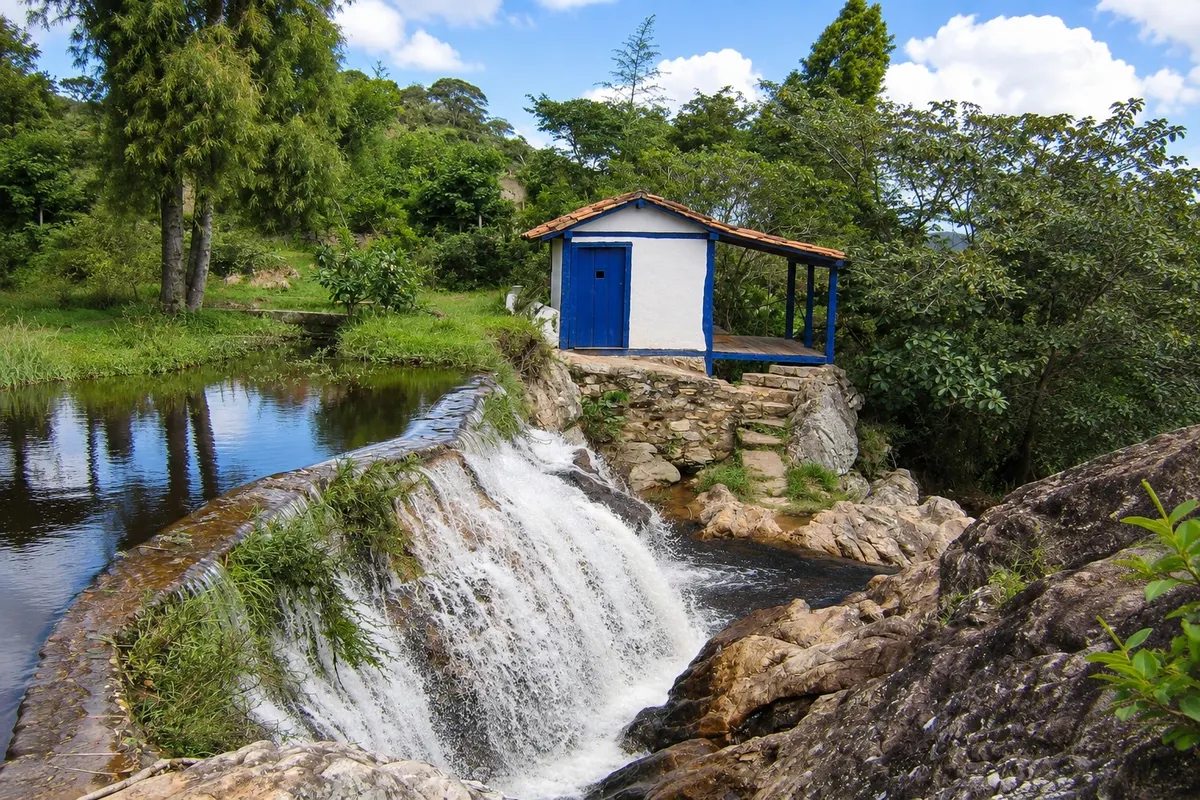
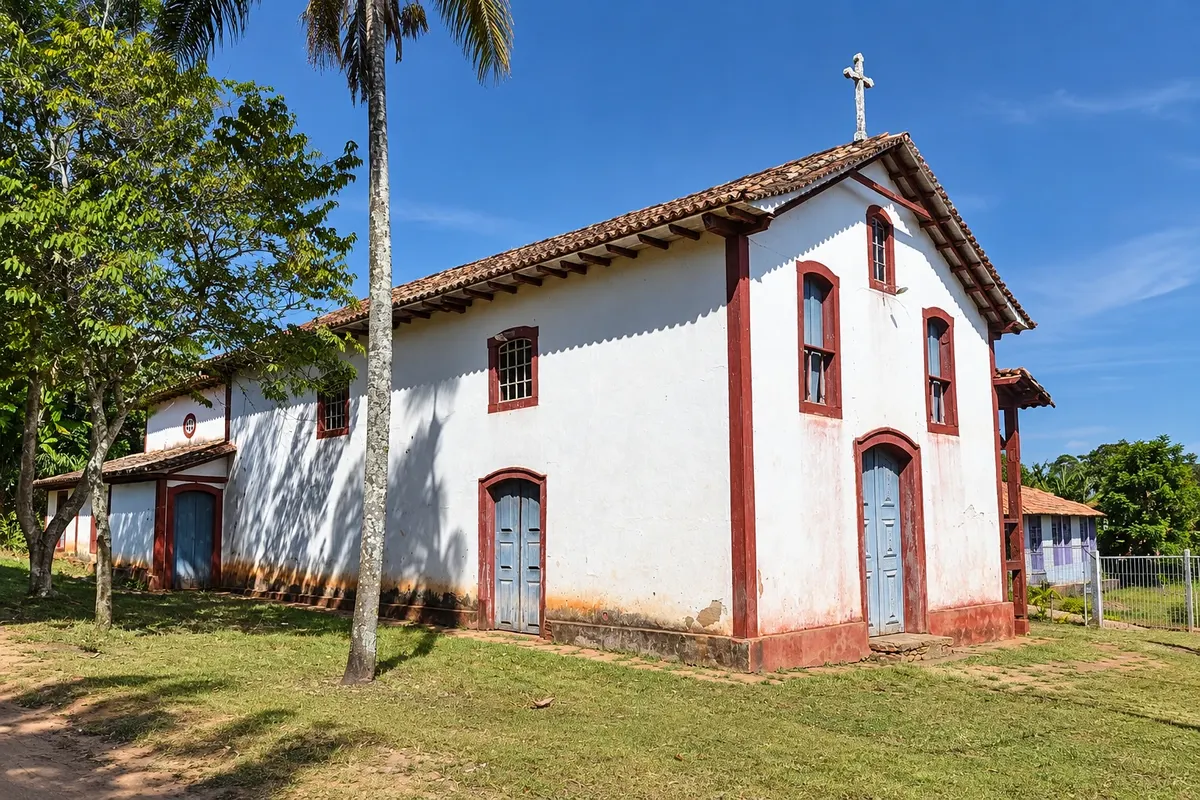
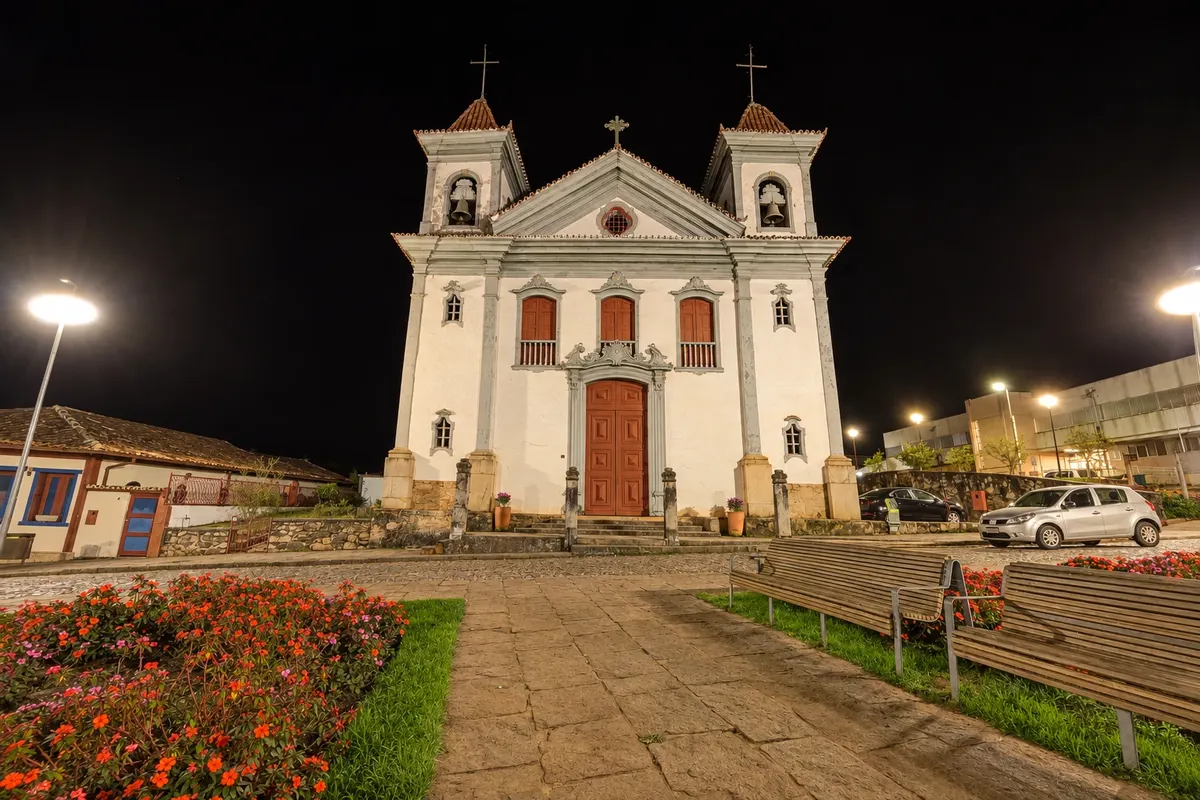
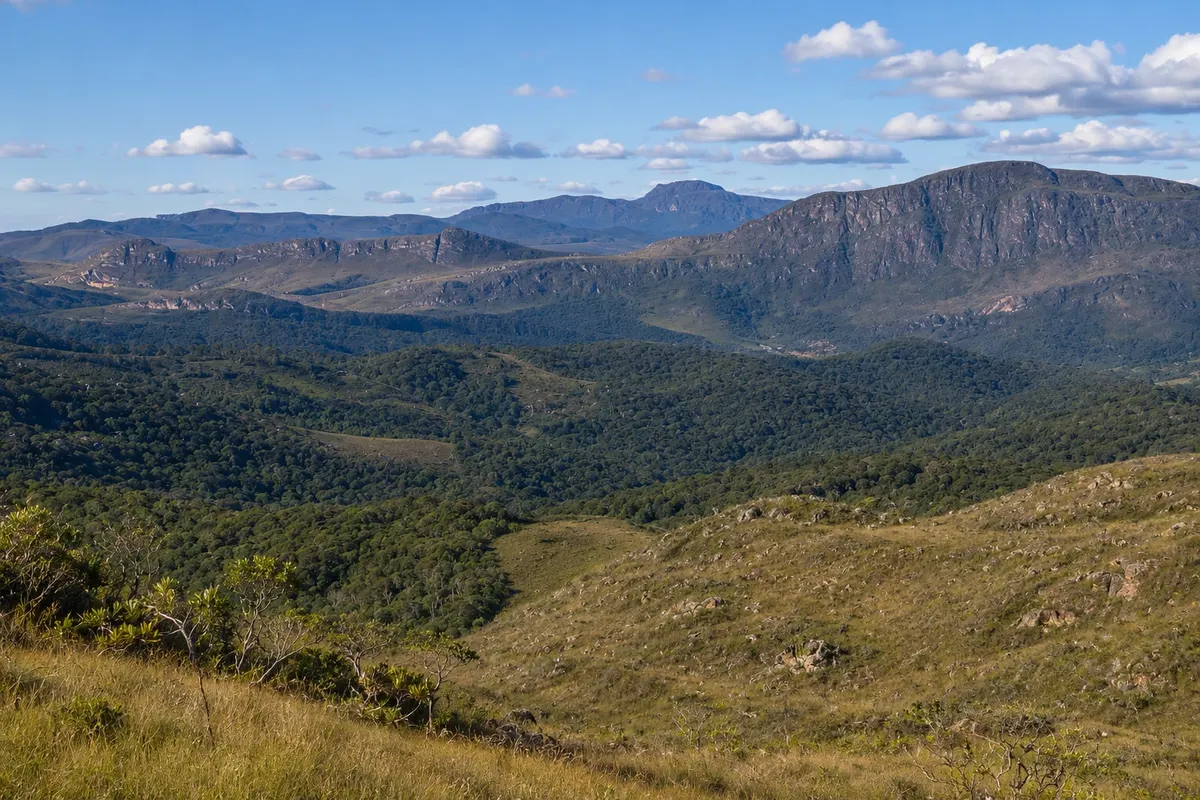
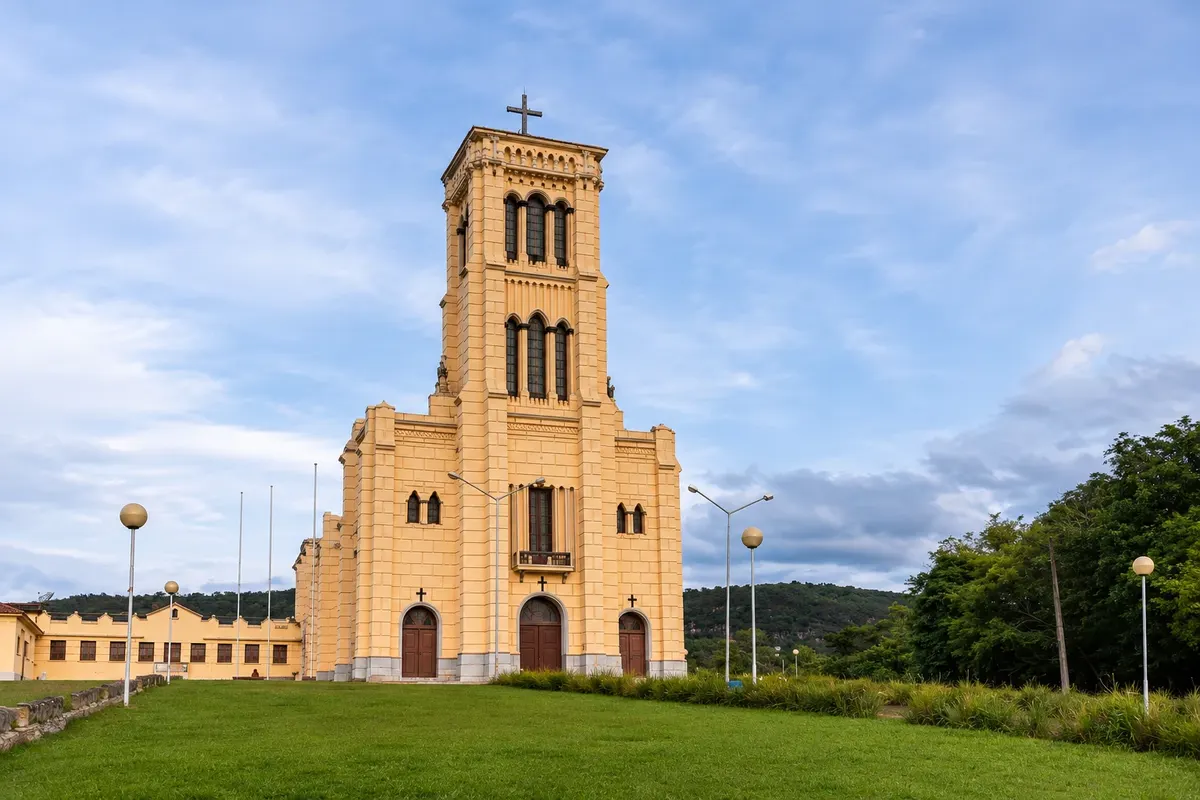
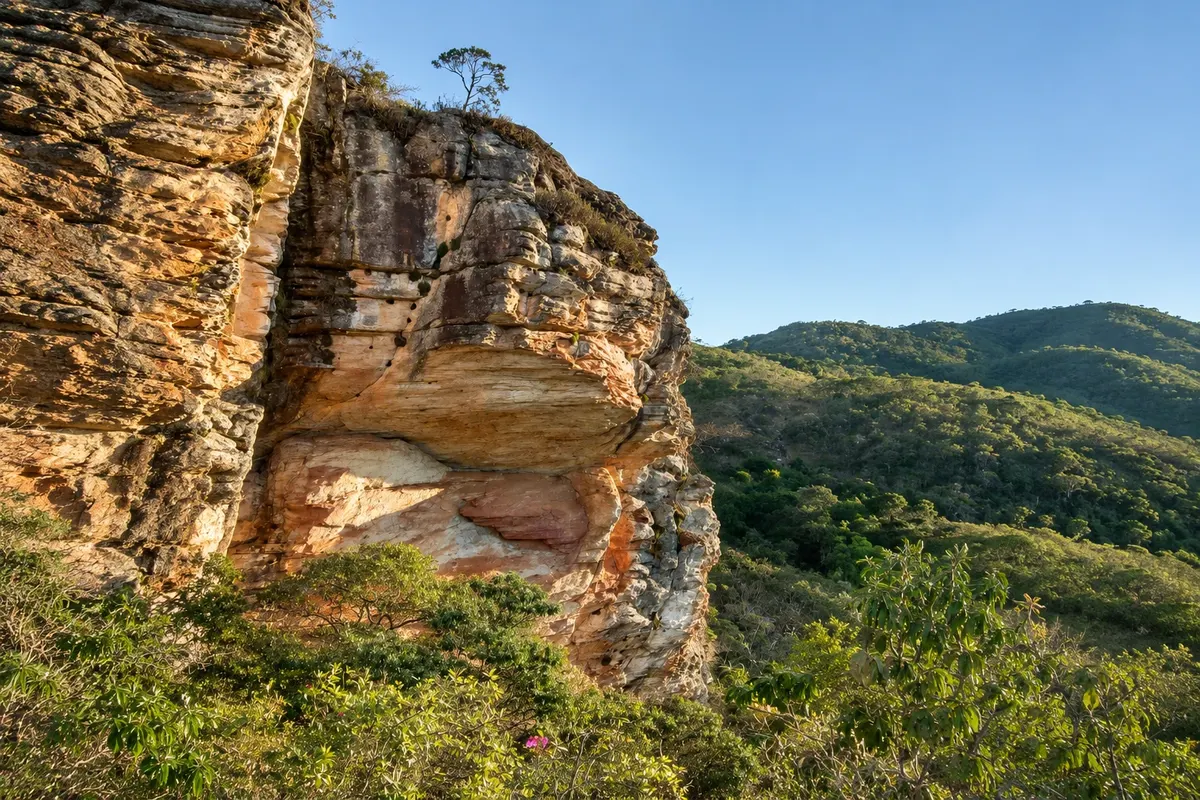
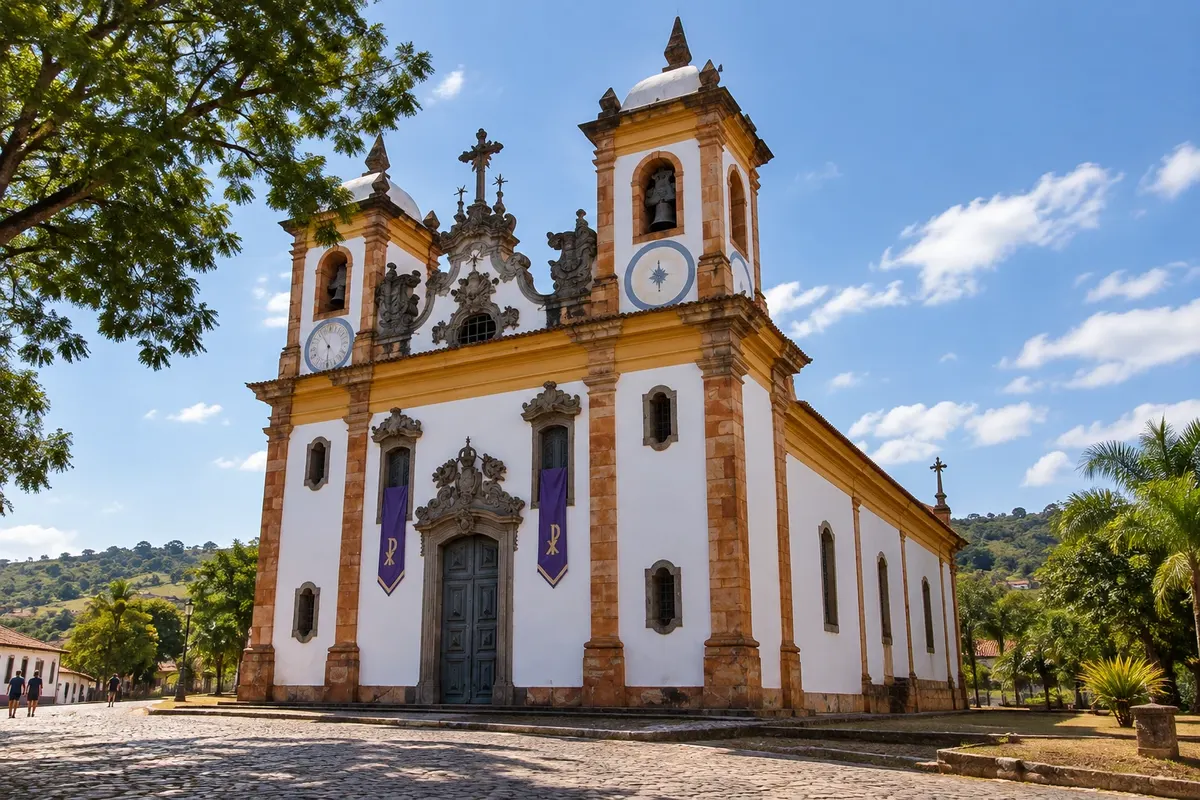
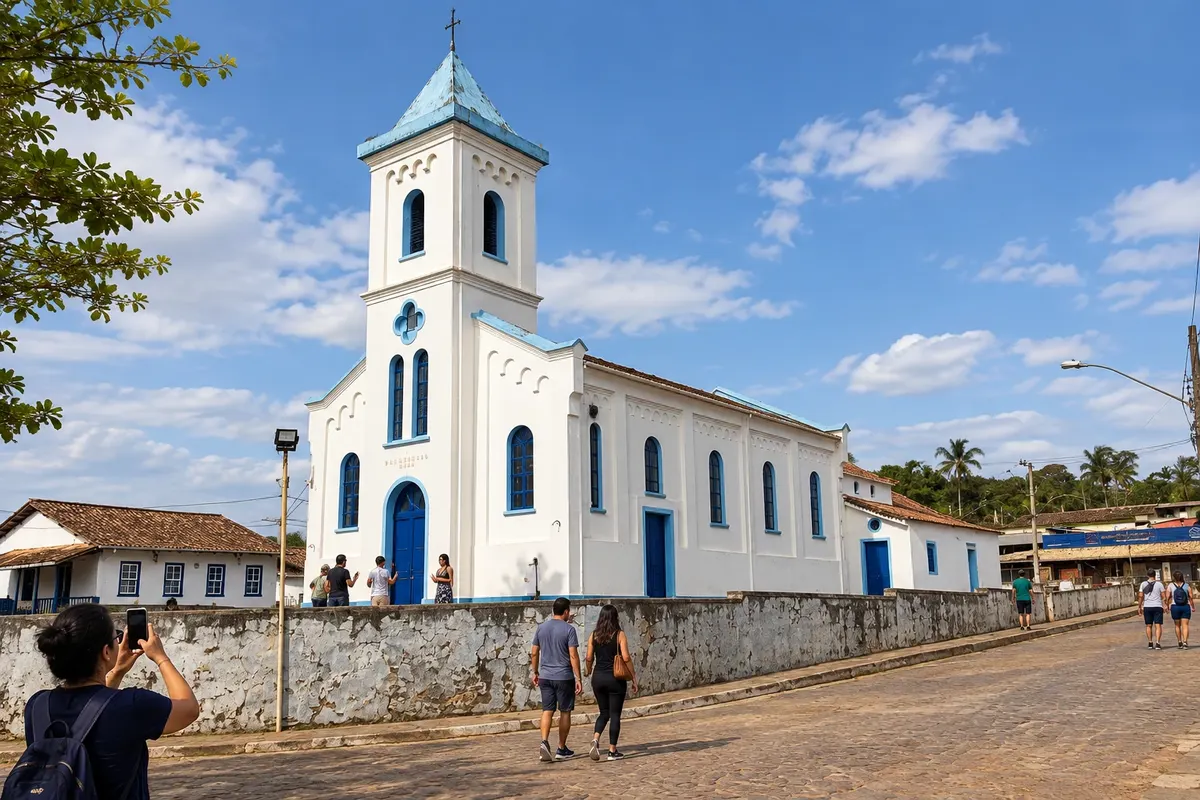
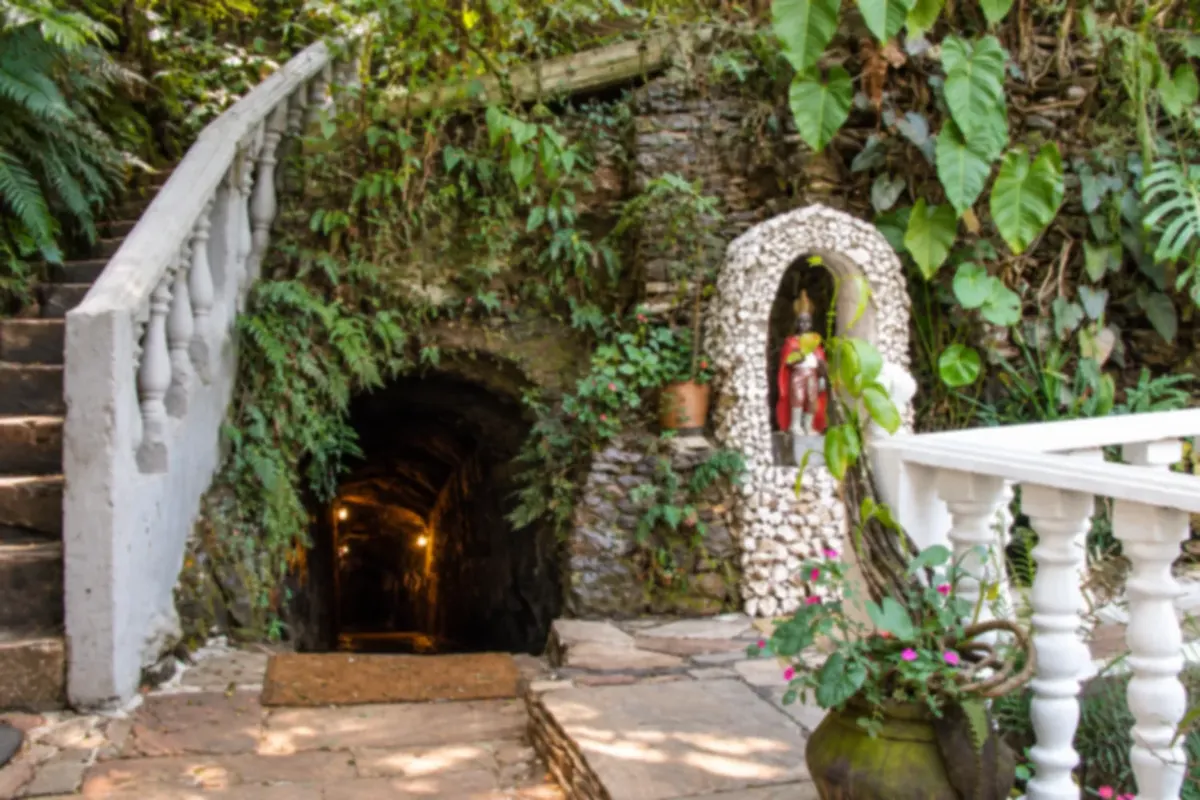
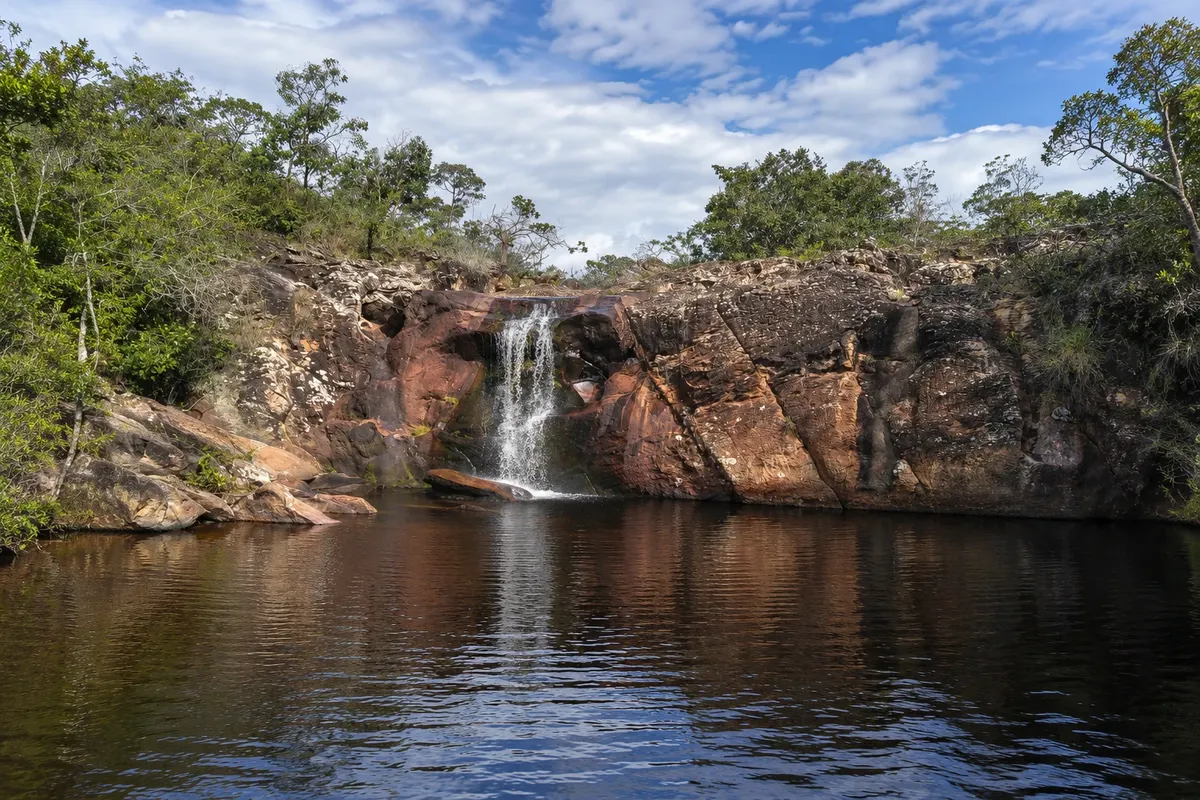
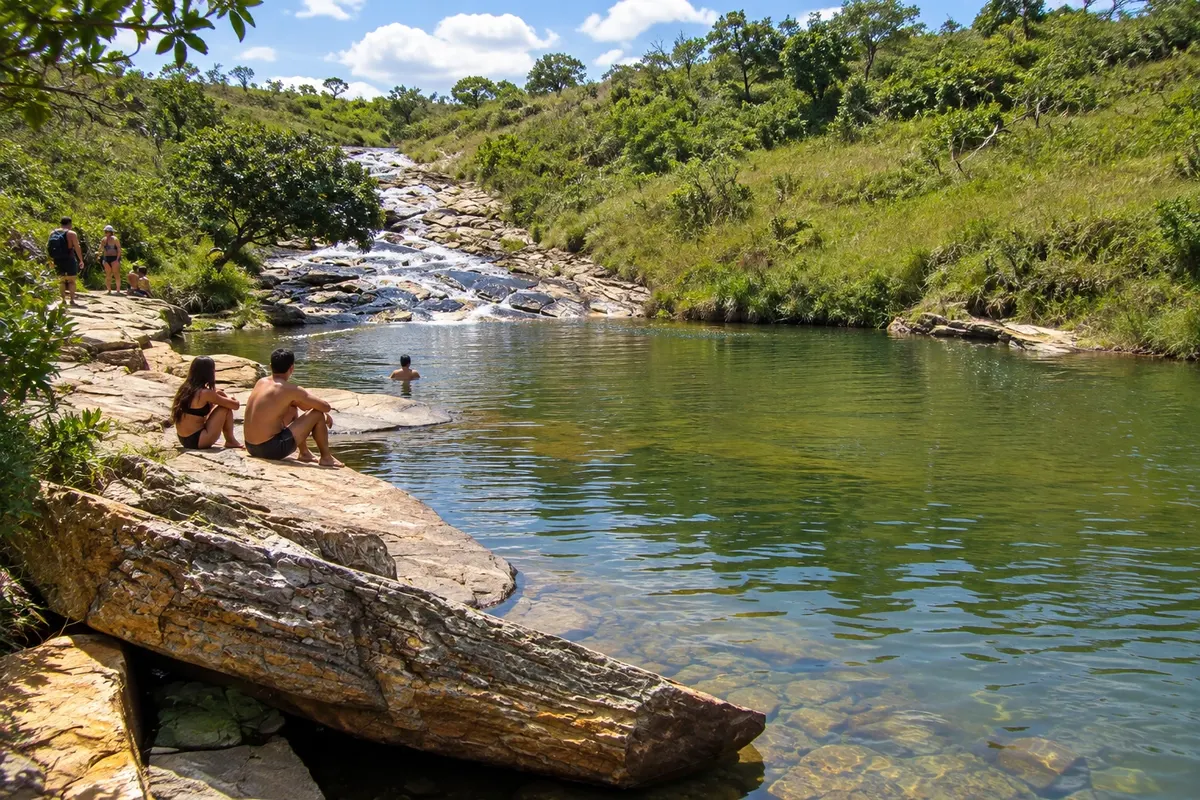
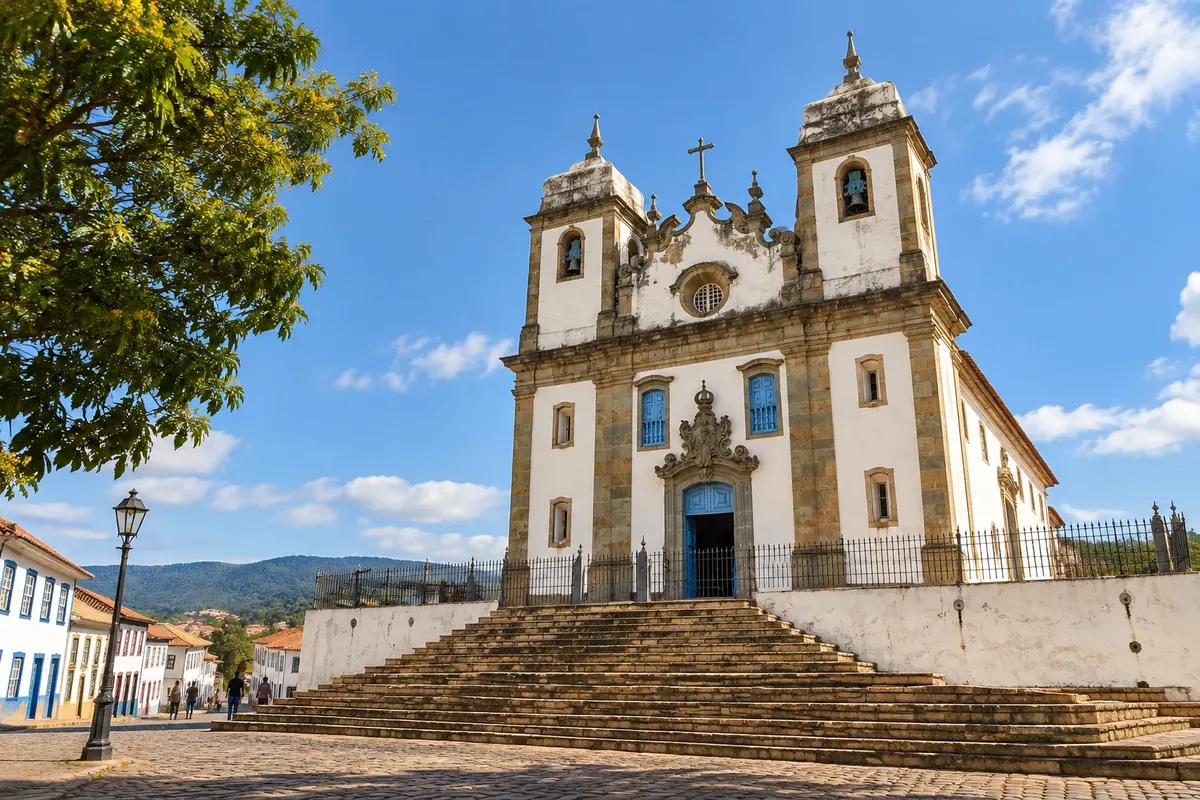
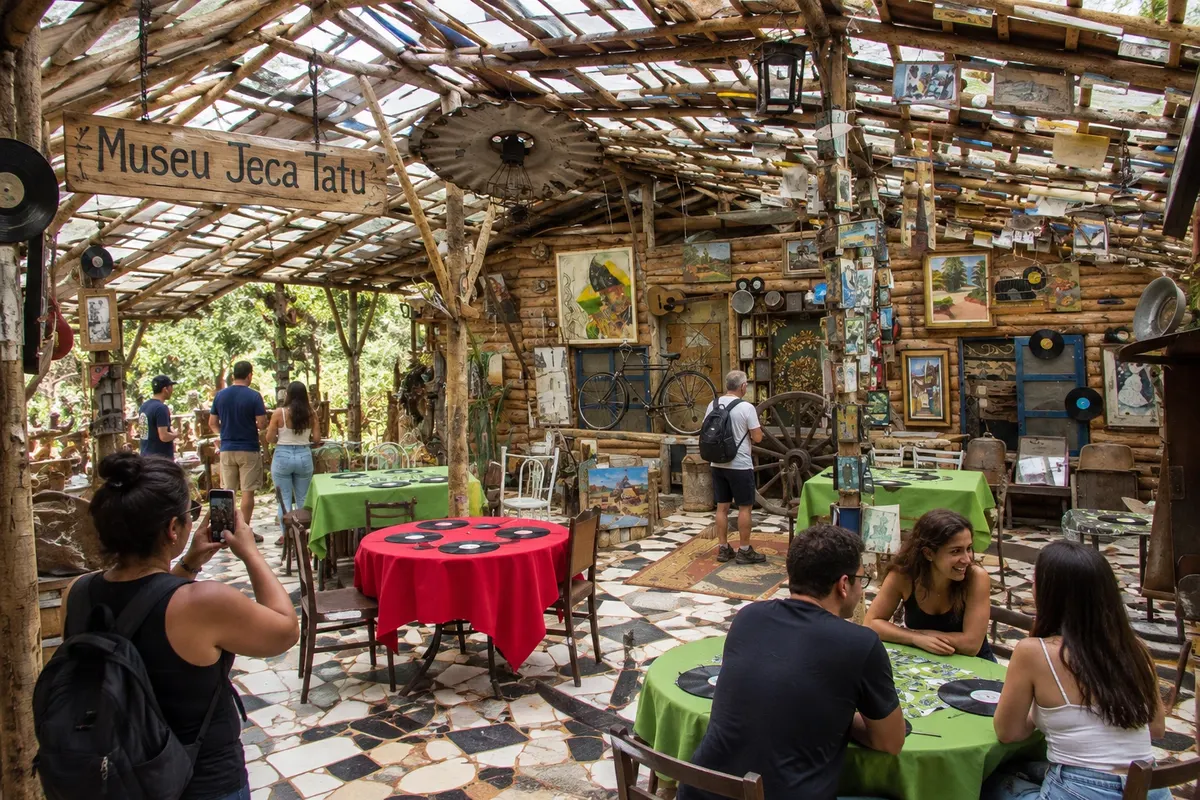
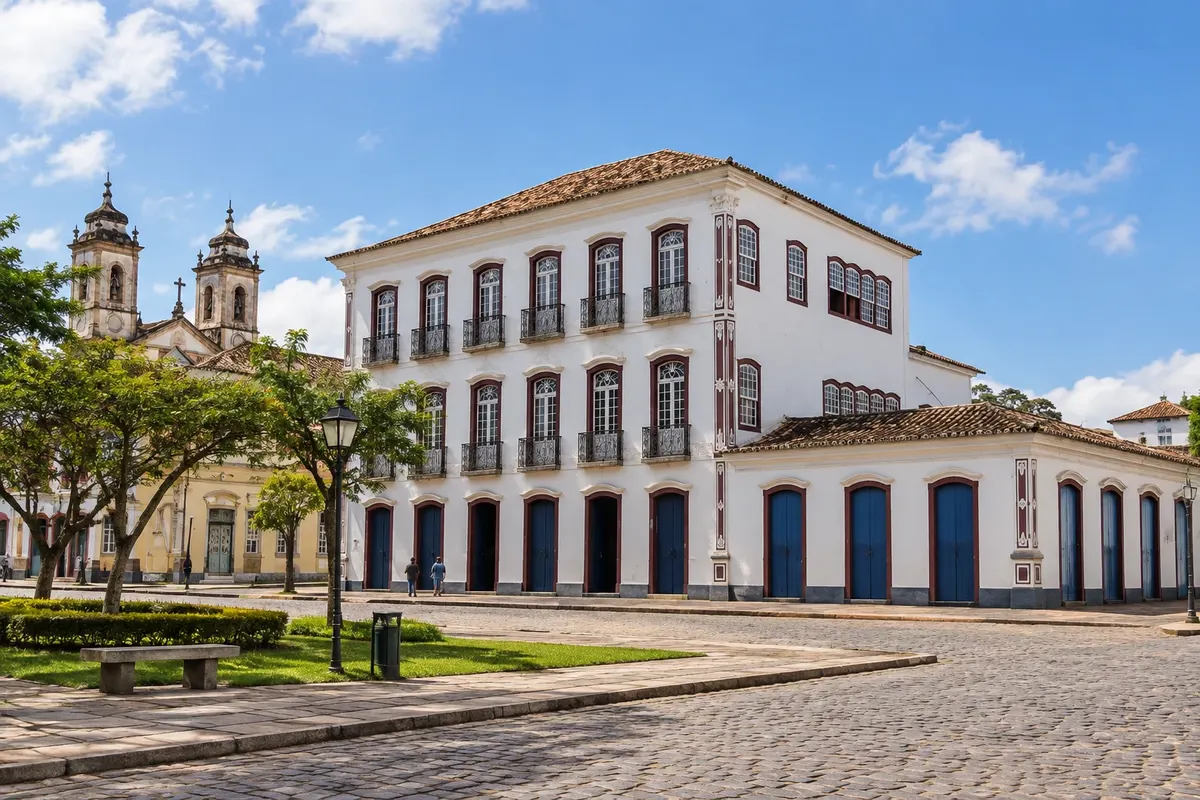
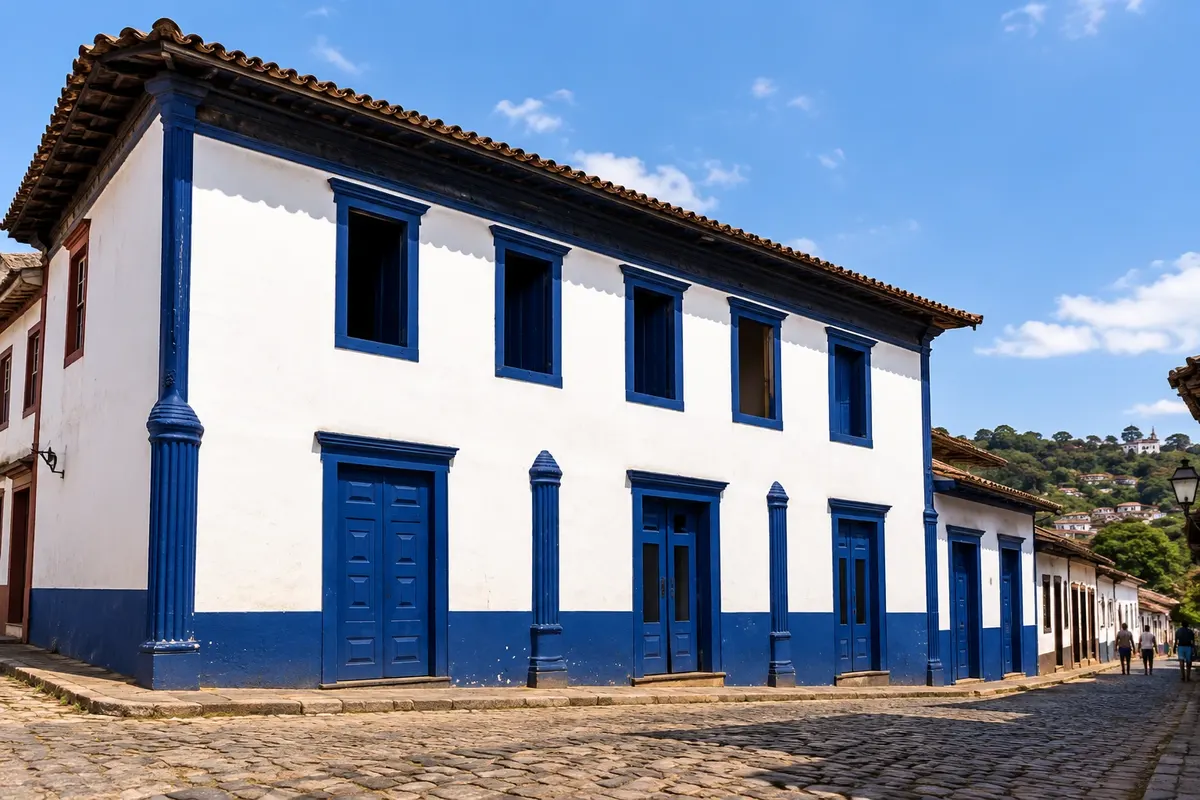
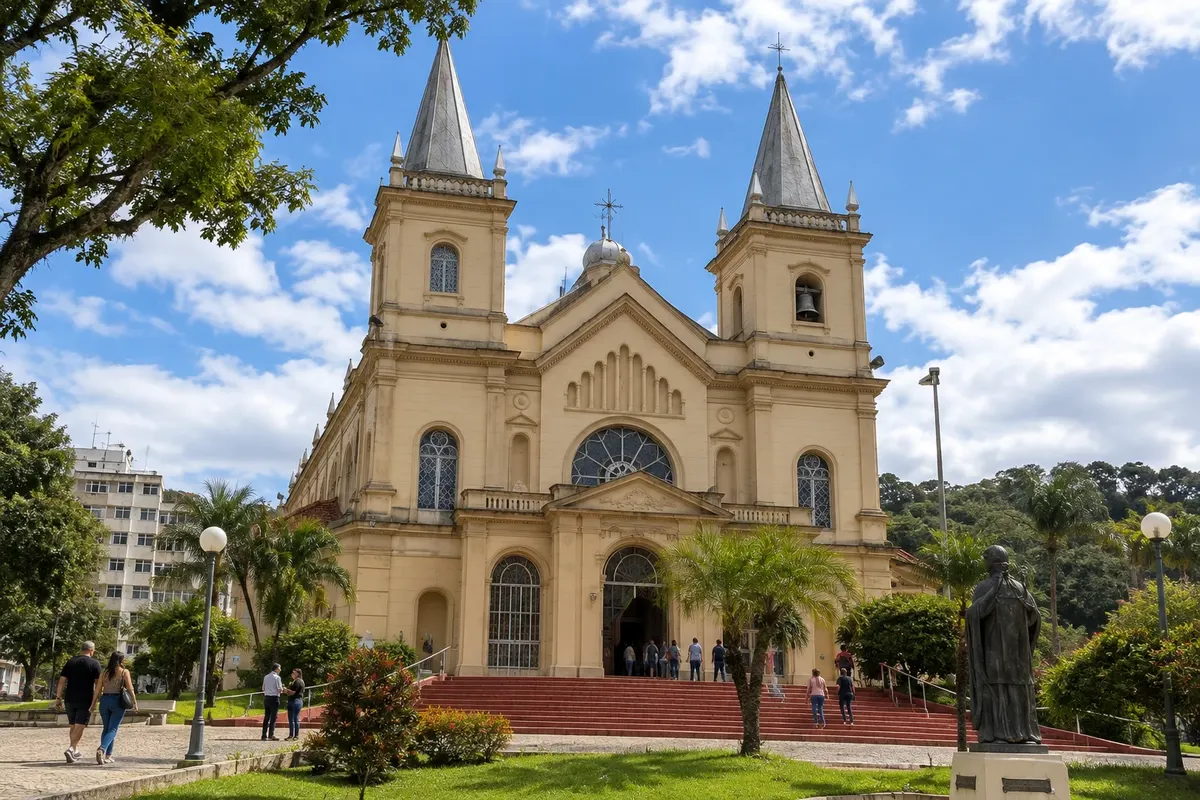
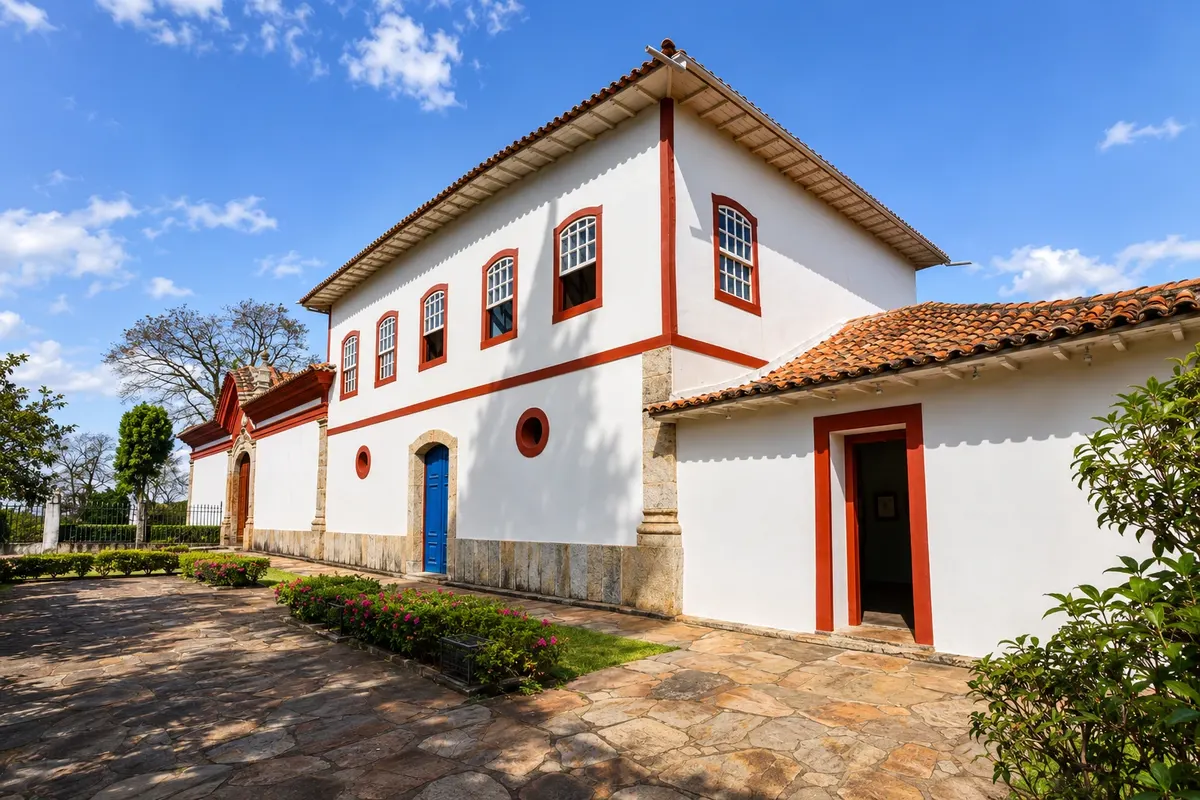
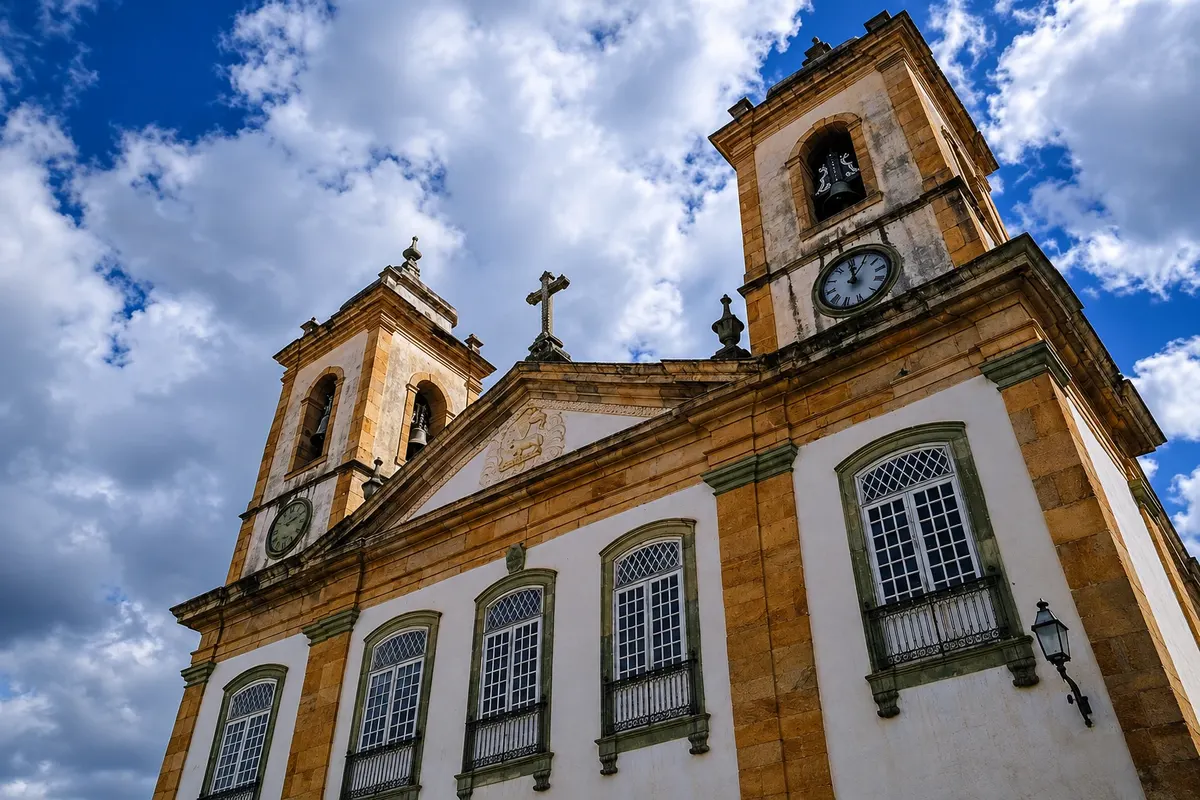
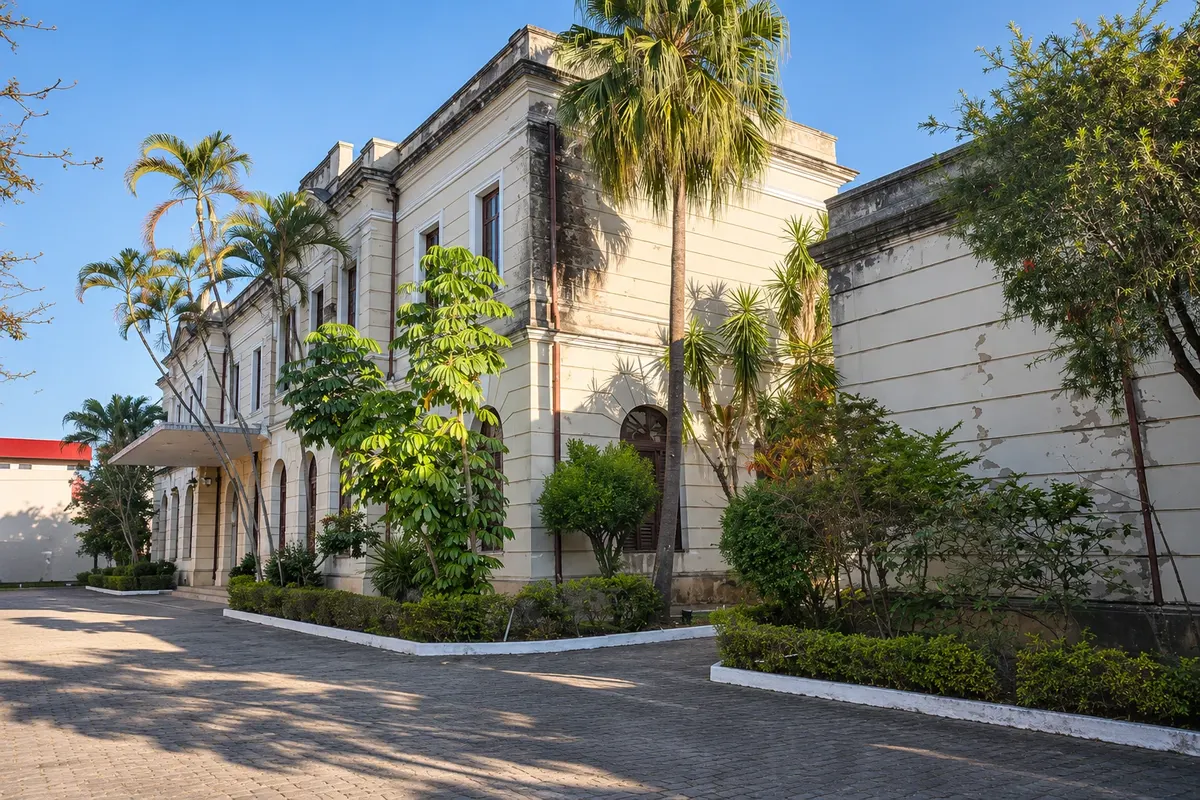
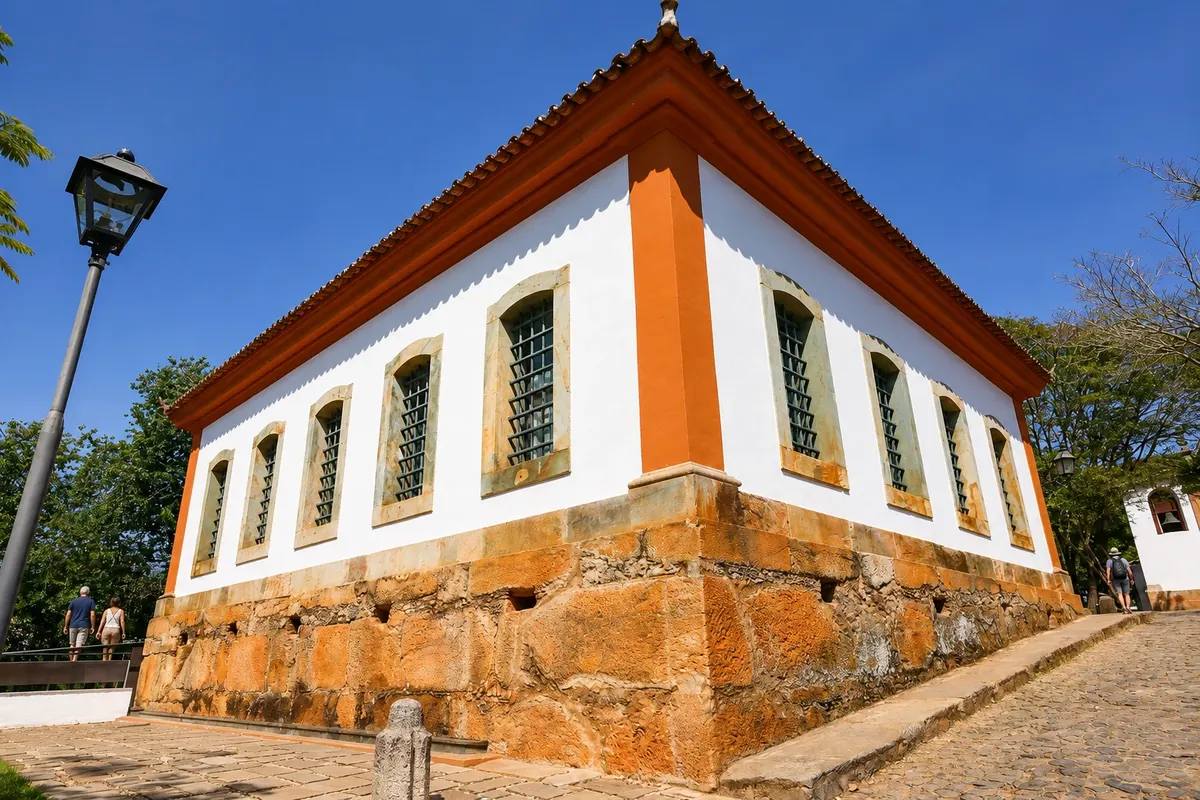
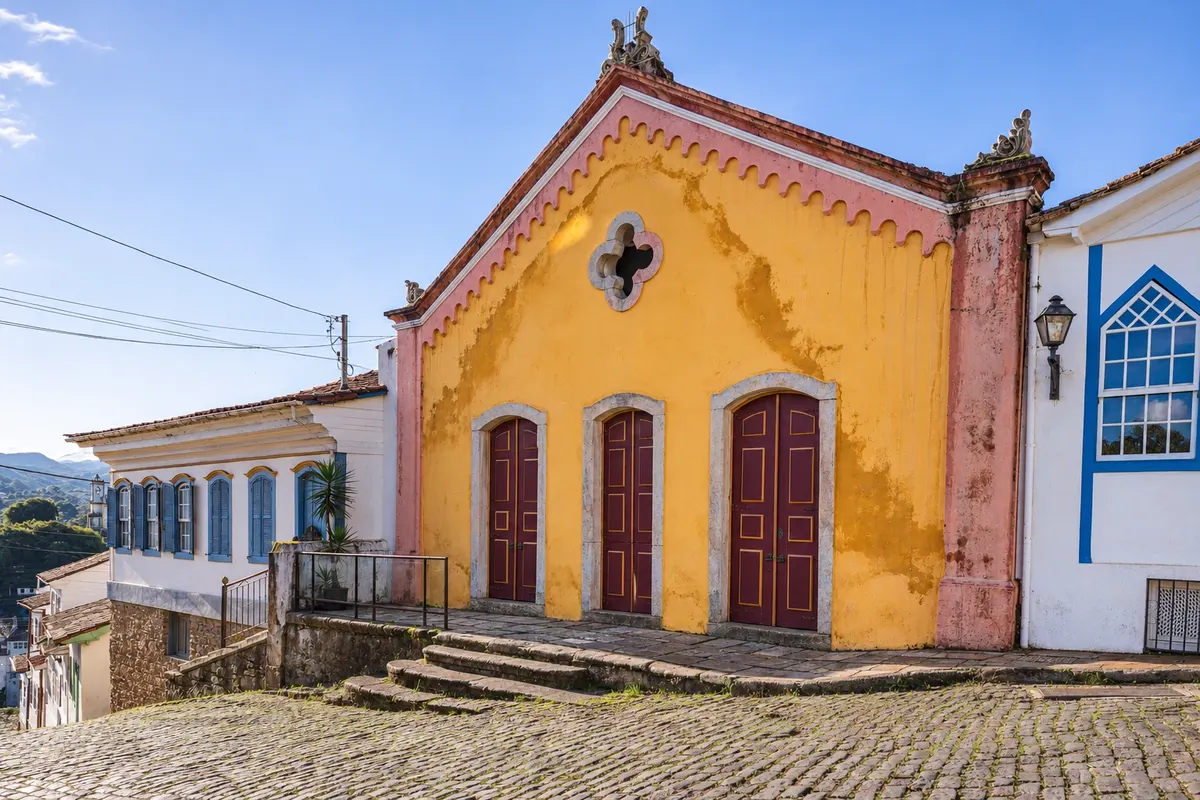
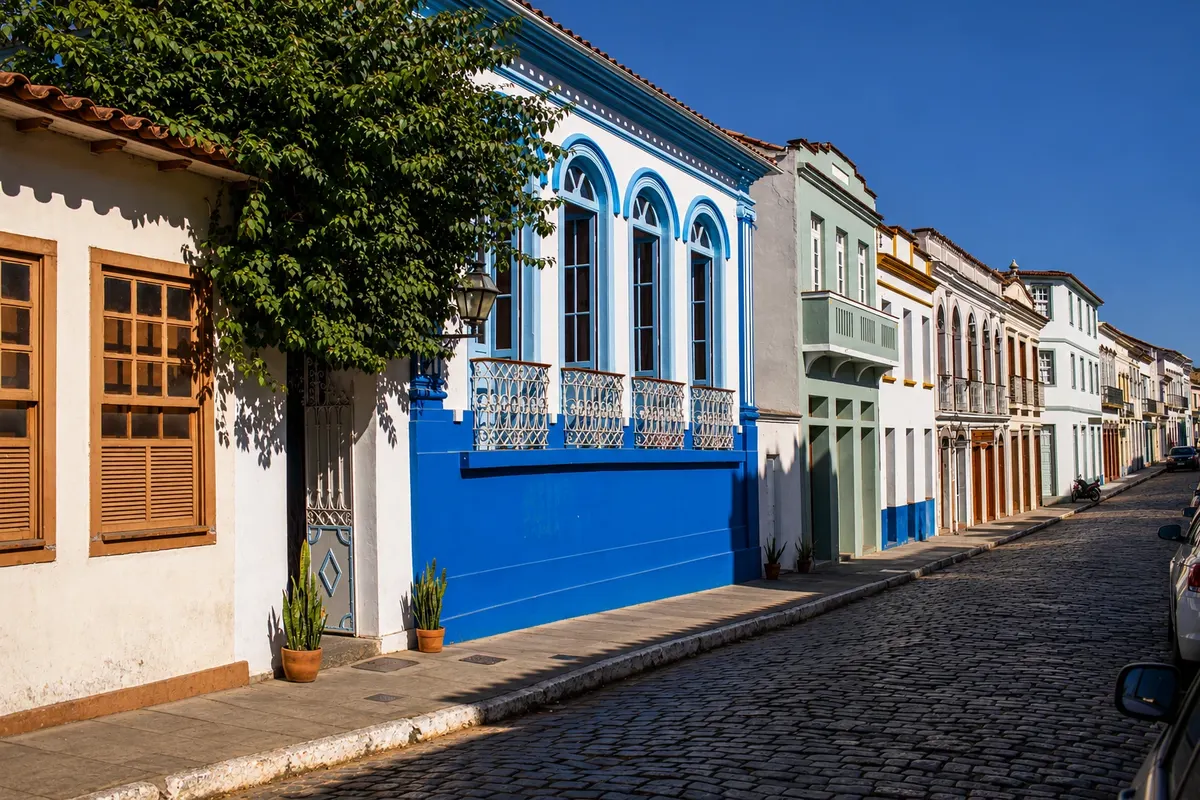
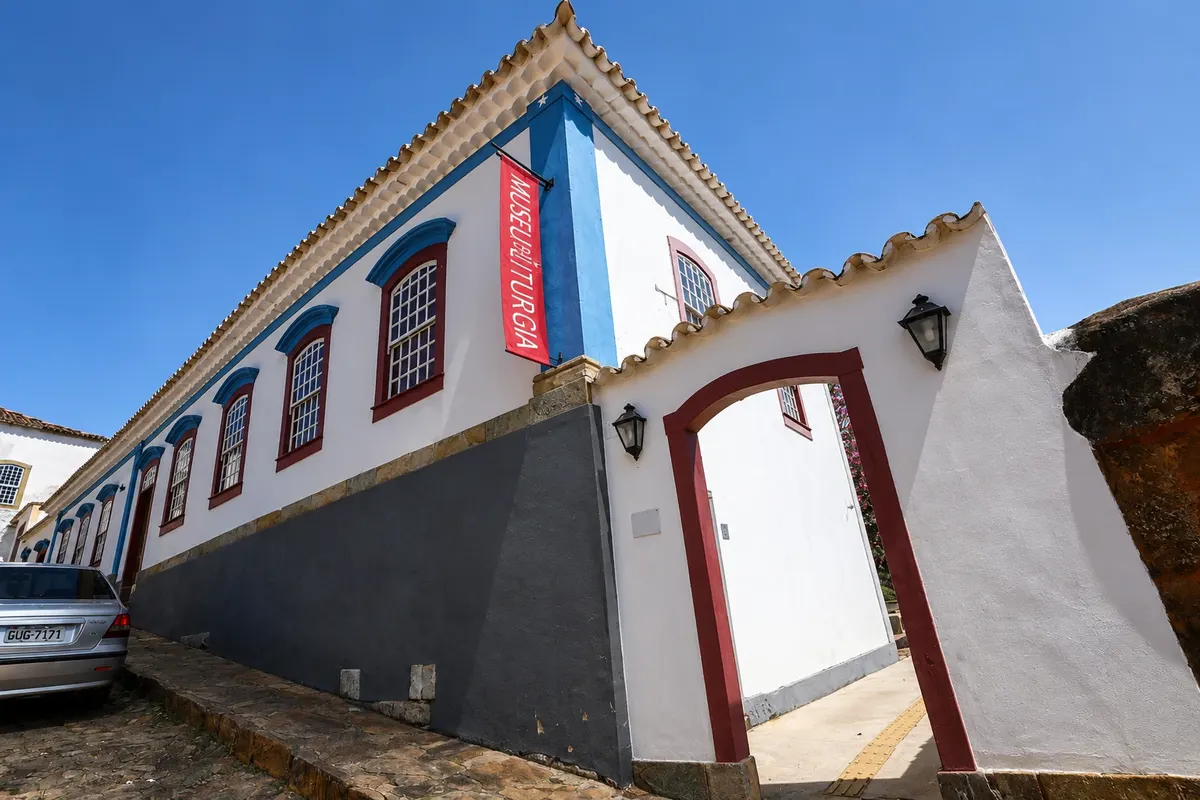
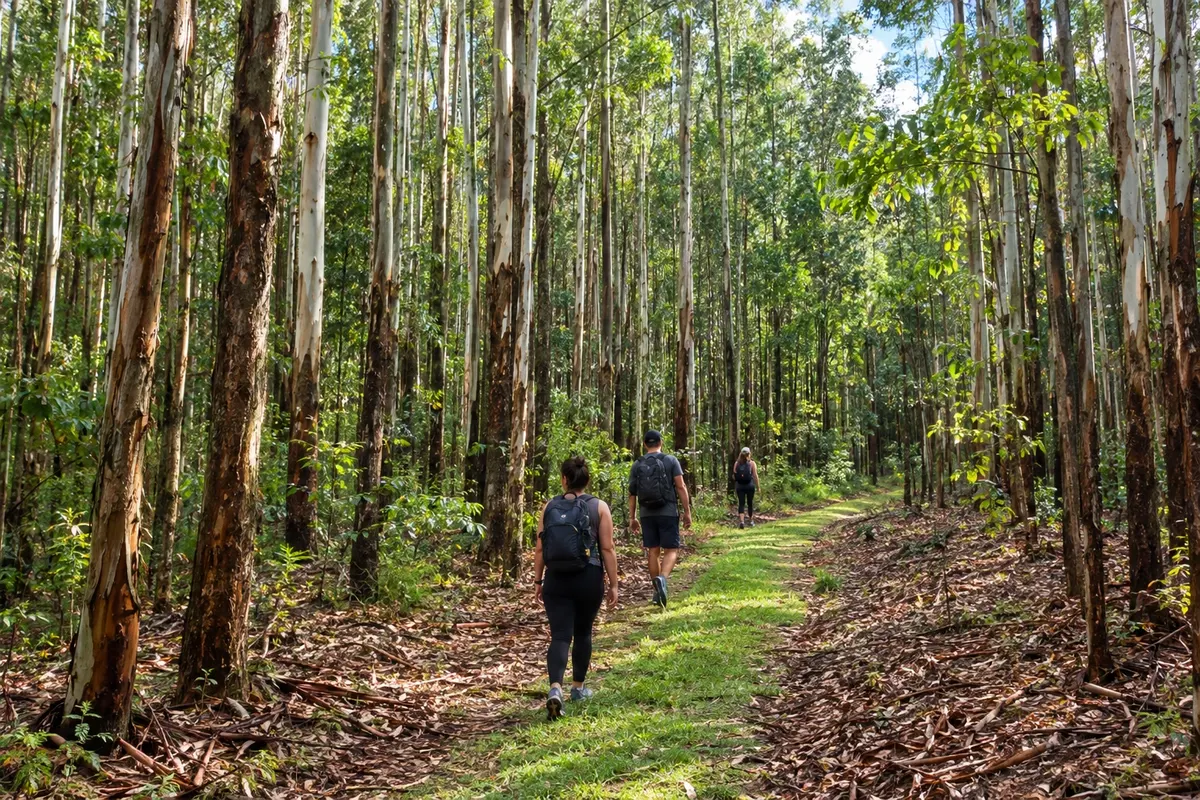
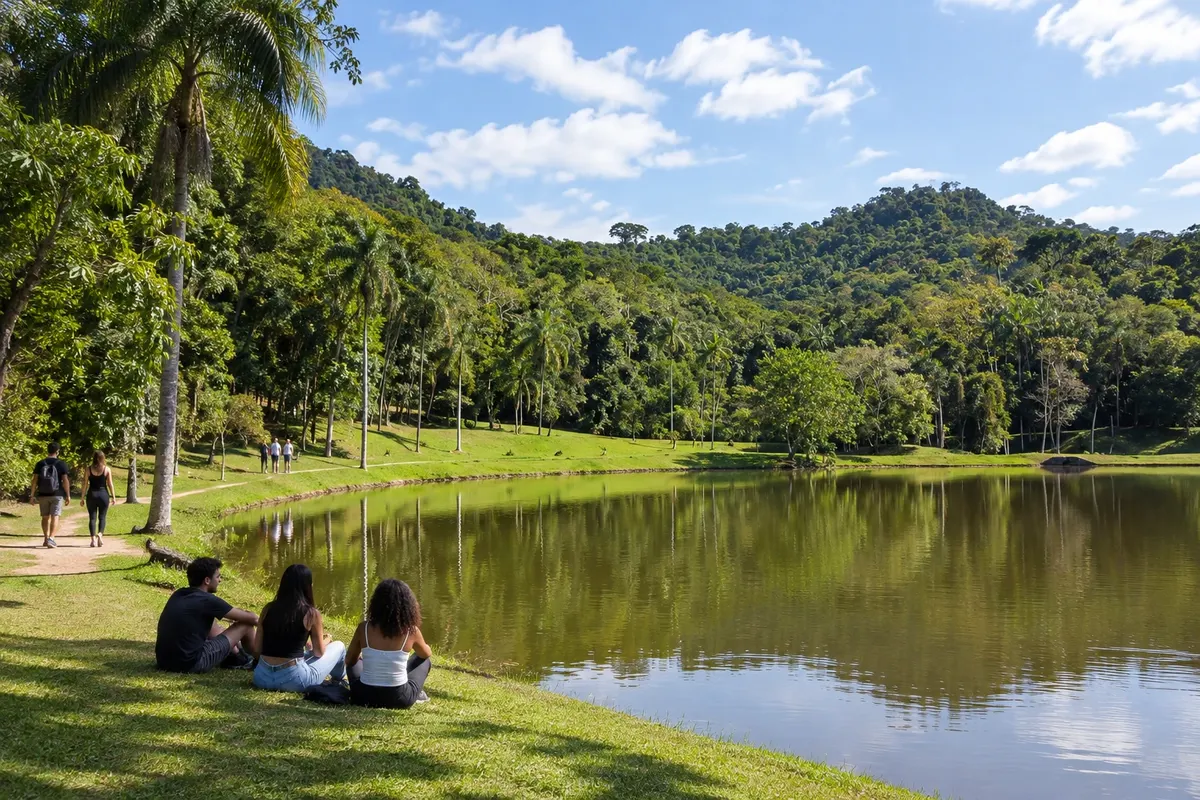
Illustrative images. The pictures in this guide are illustrations based on the real place, not photographs, and may differ from it.
Spoznajte kraj
This is the route of gold and the Baroque, a set of colonial towns with steep hillside streets, churches covered in gilded woodcarving and works by Aleijadinho that all of Brazil studies in school. You go down into an underground mine in the morning, have lunch cooked on a wood-burning stove and in the afternoon step into a church where every inch was carved by hand. It is a trip for those who enjoy history, soapstone handicrafts and small towns with old-time bars.
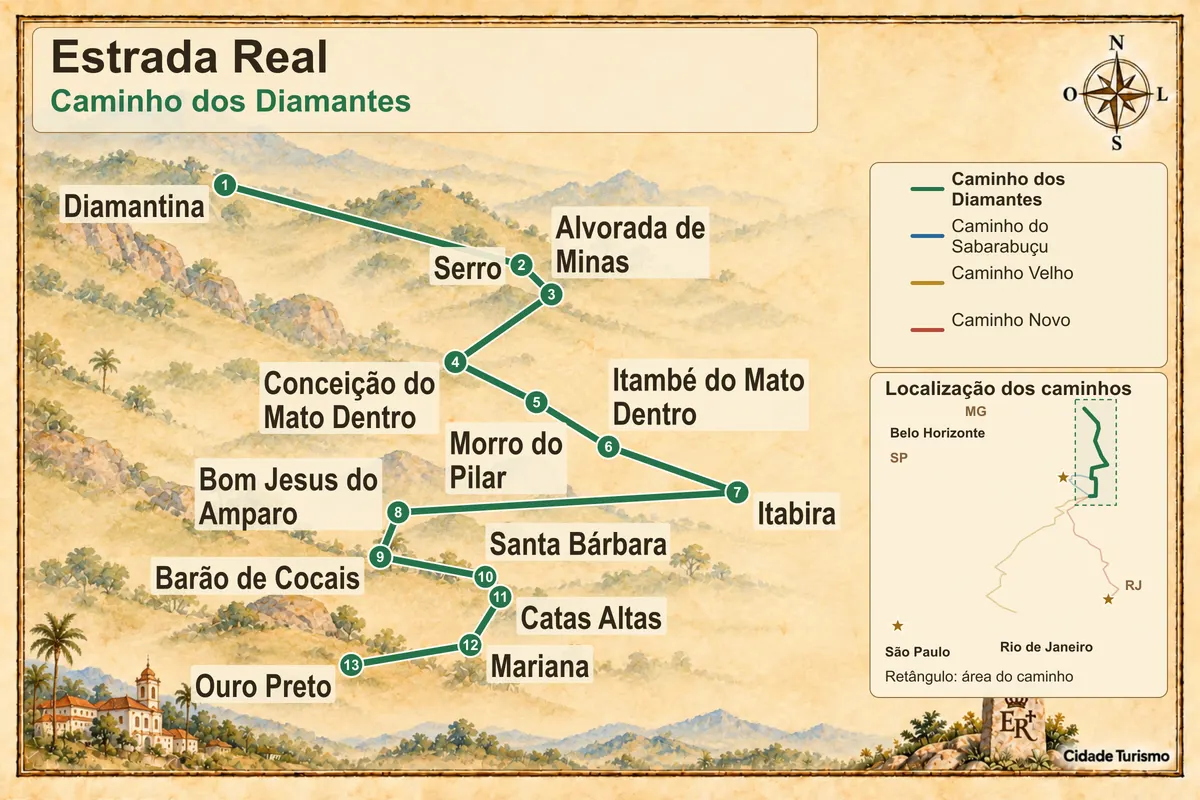
This destination brings together 46 cities: Ouro Preto, Mariana, Congonhas, Tiradentes, São João del-Rei, Sabará, Diamantina, São Brás do Suaçuí, Entre Rios de Minas, Casa Grande, Lagoa Dourada, Prados, Carrancas, Ouro Branco, Conselheiro Lafaiete, Queluzito, Carandaí, Ressaquinha, Barbacena, Antônio Carlos, Santos Dumont, Ewbank da Câmara, Matias Barbosa, Juiz de Fora, Simão Pereira, Serro, Alvorada de Minas, Conceição do Mato Dentro, Barão de Cocais, Santa Bárbara, Catas Altas, Caeté, Raposos, Morro do Pilar, Itambé do Mato Dentro, Itabira, Bom Jesus do Amparo, Nova Lima, Rio Acima, Itabirito, Nova Era, Lavras Novas, Bichinho, Milho Verde, São Gonçalo do Rio das Pedras, Biribiri.
Pogled na kraj
These pictures are illustrations based on the real place, not photographs. They may differ from the place.
Kliknite fotografijo za povečavo.
Fotografije popotnikov
Ena destinacija, več poti
Začnite v enem mestu ali v načrt poti vključite več mest.
Zemljevid: @svg-maps/brazil, CC BY 4.0
✈ Aeroporto Internacional de Belo Horizonte-Confins (CNF), kraj: Confins· 140 km do cilja (Ouro Preto)
Confins International Airport, in Belo Horizonte, is the main gateway; from there, the BR-040 leads to Congonhas and São João del-Rei, and the BR-356 to Ouro Preto and Mariana.
Predlagana točka prihoda:Ouro Preto
Ouro Preto spreads over hillsides shaped by the gold cycle and colonial architecture. Walking its steep streets lets you discover sacred art, museums and places that tell the history of Minas Gerais.
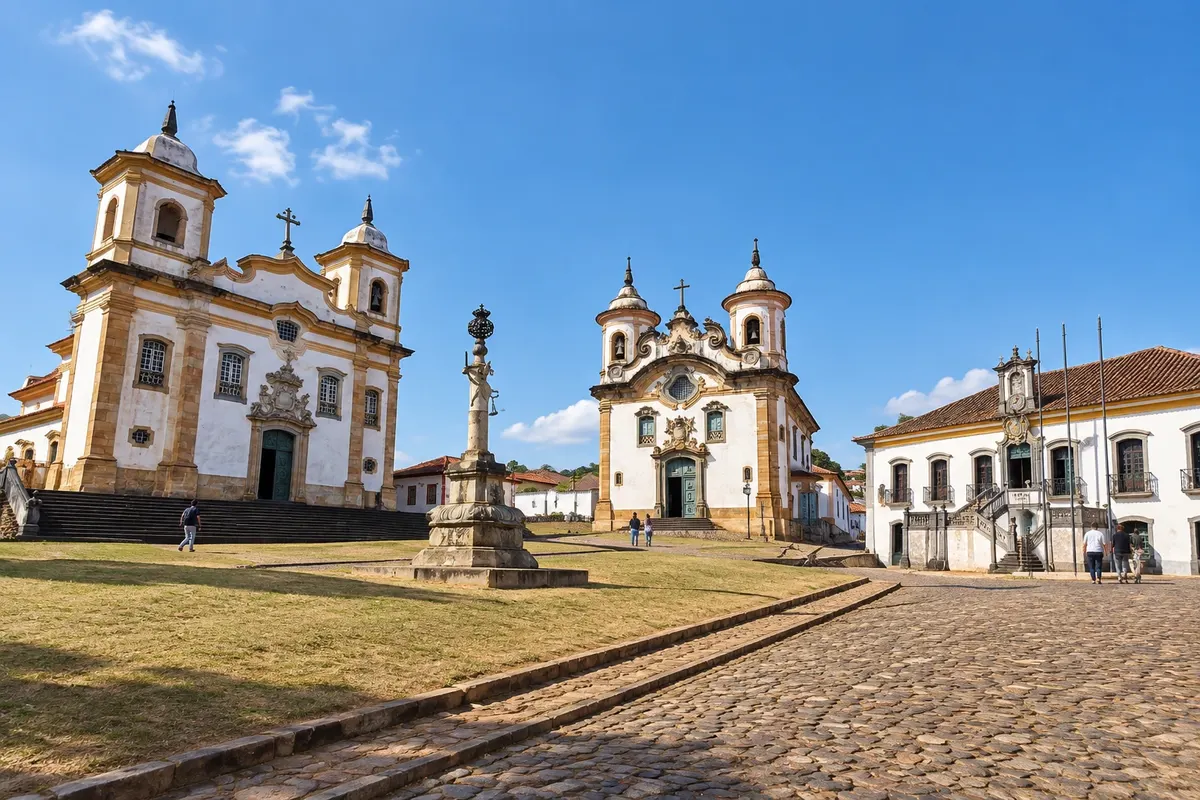
Mariana preserves a historic core linked to the beginning of mining in Minas Gerais. Its squares and religious buildings invite you to discover the art and the origins of the towns of Minas Gerais.
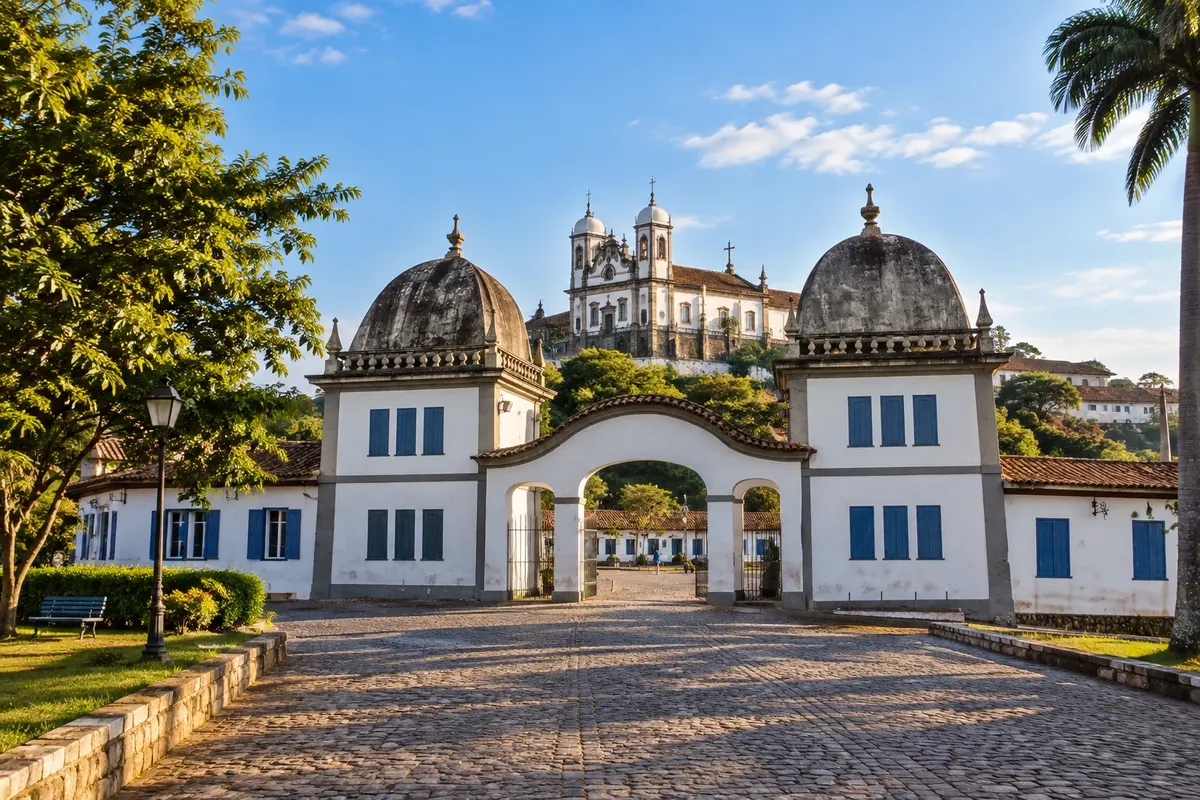
Congonhas has a historic landscape defined by the Santuário do Bom Jesus de Matosinhos (sanctuary). A visit brings you close to the art of Aleijadinho and the religious traditions of Minas Gerais.
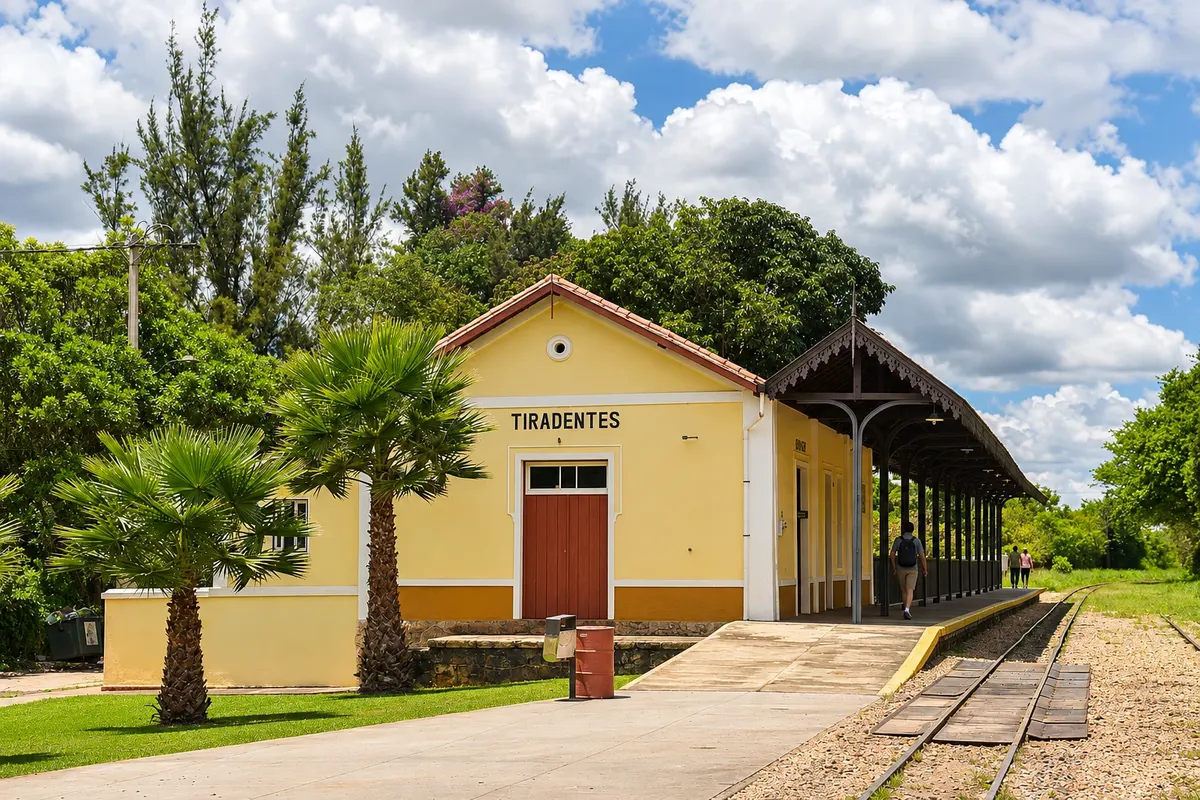
Tiradentes preserves a center of stone streets at the foot of the Serra de São José (mountain range). A stay combines walks among the old houses, handicrafts and Minas Gerais cooking.
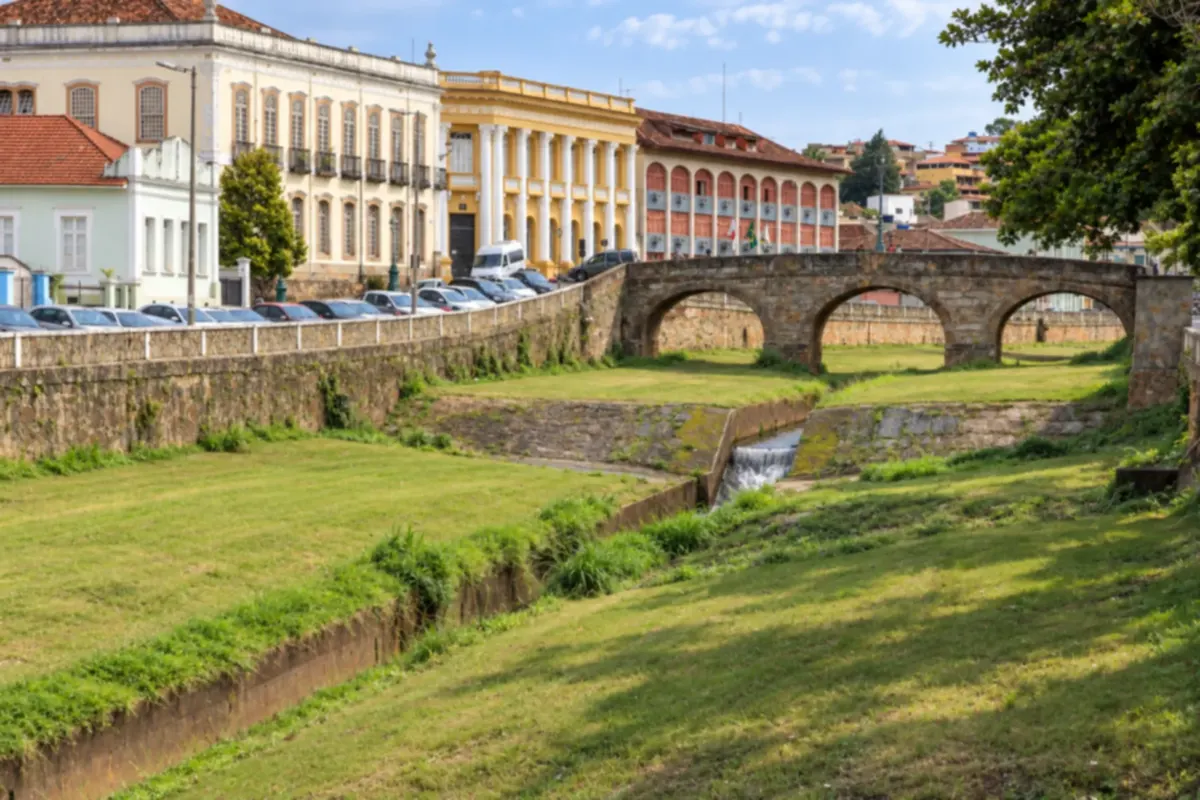
São João del-Rei combines colonial heritage with a lively town on the banks of the Córrego do Lenheiro (stream). Walks through the center reveal stone bridges and musical and religious traditions that are still alive.
Sabará has colonial heritage near Belo Horizonte and keeps the traditions of Minas Gerais cooking alive. Walks through the center reveal historic buildings and places linked to the town's art and cultural life.
Diamantina preserves streets and mansions linked to diamond mining in the Serra do Espinhaço (mountain range). Walking through the center and experiencing the local music culture help you discover the town beyond its facades.
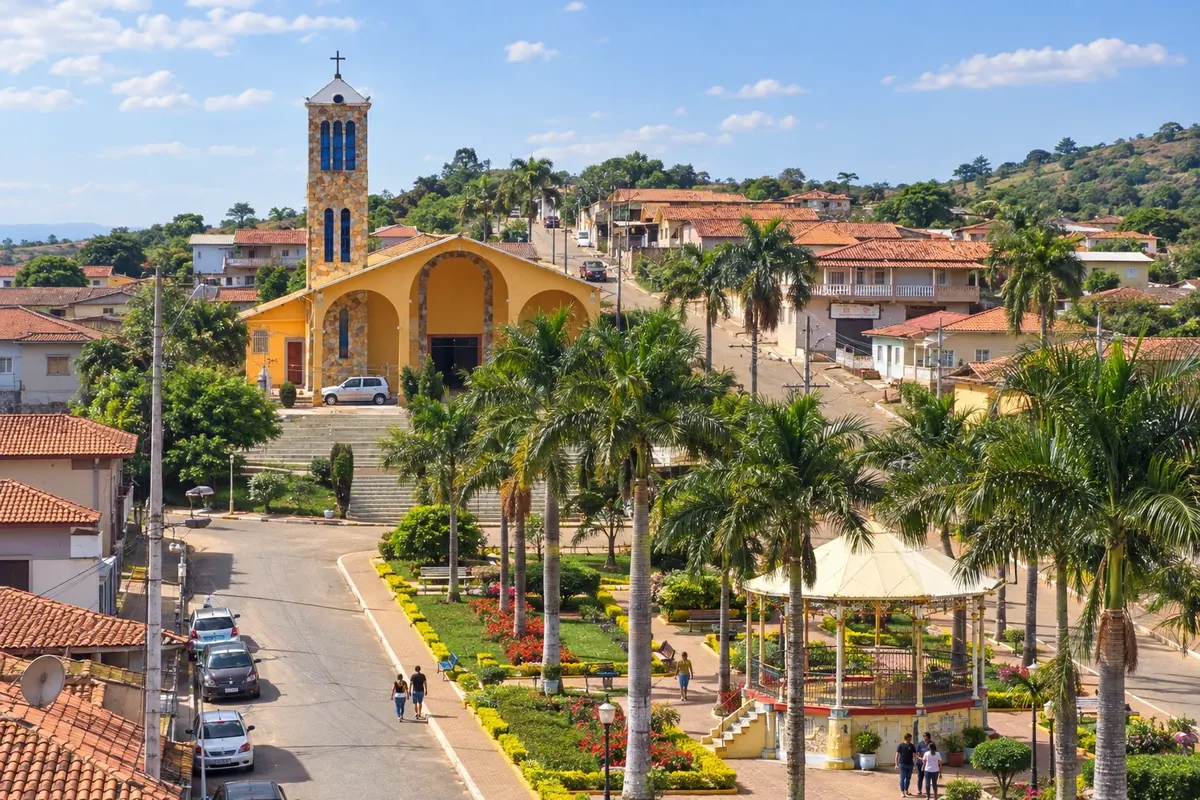
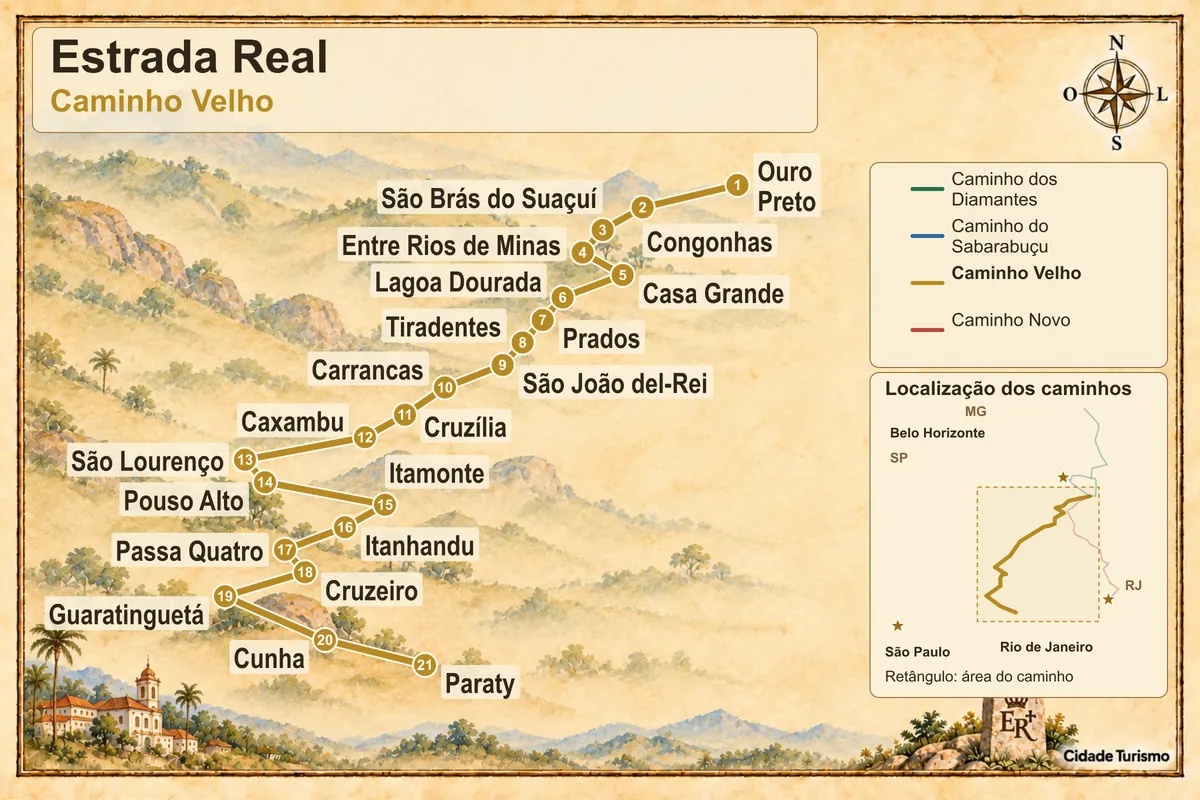
São Brás do Suaçuí has the Igreja Matriz as a landmark of a stage of the Caminho Velho heading toward Pequeri. The local musical tradition includes the União Musical Santa Cecília and the legacy of conductor Altamiro Firmino Tolentino. The Serra da Antena adds a landscape feature to the small urban core.
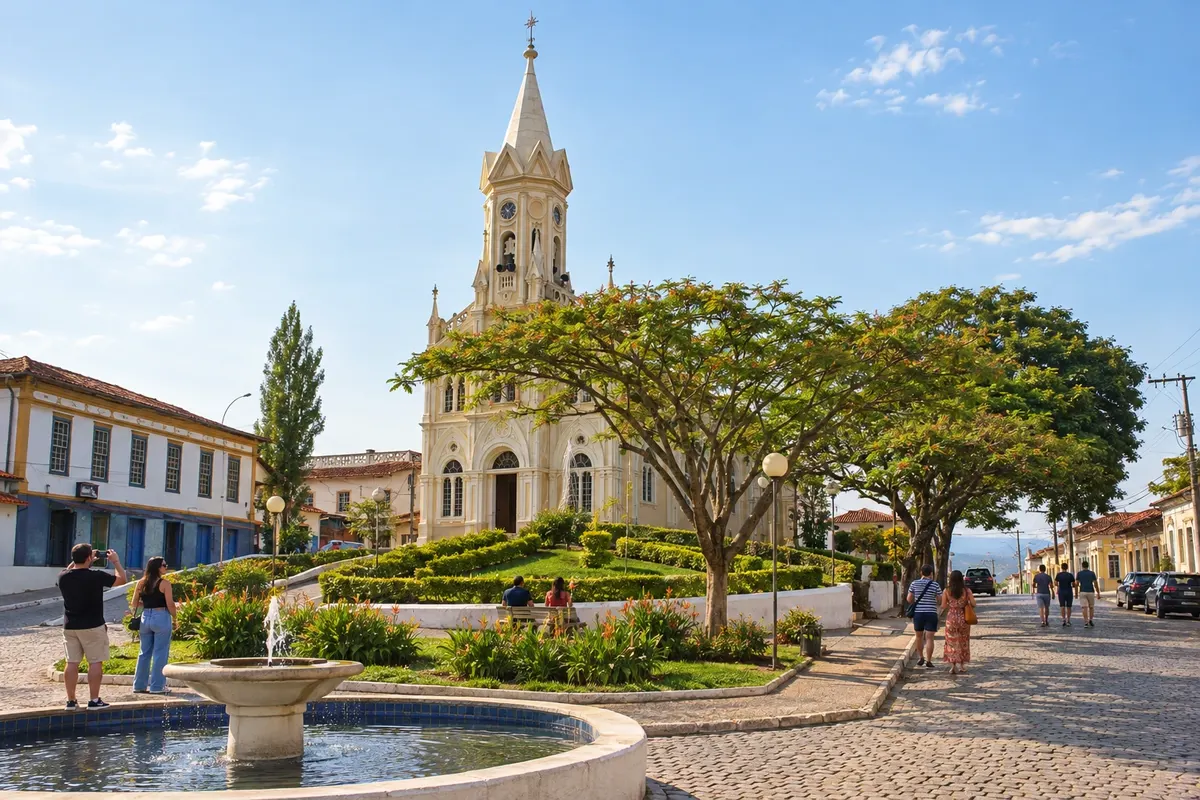
Entre Rios de Minas is linked to the breeding of Campolina horses and preserves the Matriz de Nossa Senhora das Brotas, of neo-Gothic influence. The Hospital Cassiano Campolina, with its neoclassical architecture and chapel, adds to the interest in the urban heritage. In the rural area, the Cachoeira dos Coqueiros is among the outing options.
Casa Grande brings together the landscape of the Serra do Pombal and the heritage of the town center around the Igreja de São Sebastião. The Casa de Cultura displays local crafts and municipal memory, while a mural recalls the building that gave the city its name. It is a stop to experience rural and cultural everyday life in the Minas Gerais countryside.
Lagoa Dourada is known for its rocamboles, a tradition passed down through generations. The Matriz de Santo Antônio and the Igreja do Senhor Bom Jesus preserve traces of the colonial past in the town center, along the Estrada Real. The local cuisine gives the stop its own reason to make a detour.
Prados preserves churches and manor houses in the historic center and maintains a musical tradition represented by the Lira Ceciliana. In the studios, wood, ceramics and leather take on artisanal forms. Bichinho, also known as Vitoriano Veloso, belongs to the municipality and expands this artistic production route along the Serra de São José.
Carrancas brings together the Complexo da Zilda, with waterfalls, pools and caves, and the Complexo da Ponte, which includes the Salomão and Moinho falls. The Igreja Matriz and Praça Manoel Moreira mark the town center among the rural excursions. On the Caminho Velho, the town is a base for exploring water and mountain landscapes, choosing access routes according to the intended experience.
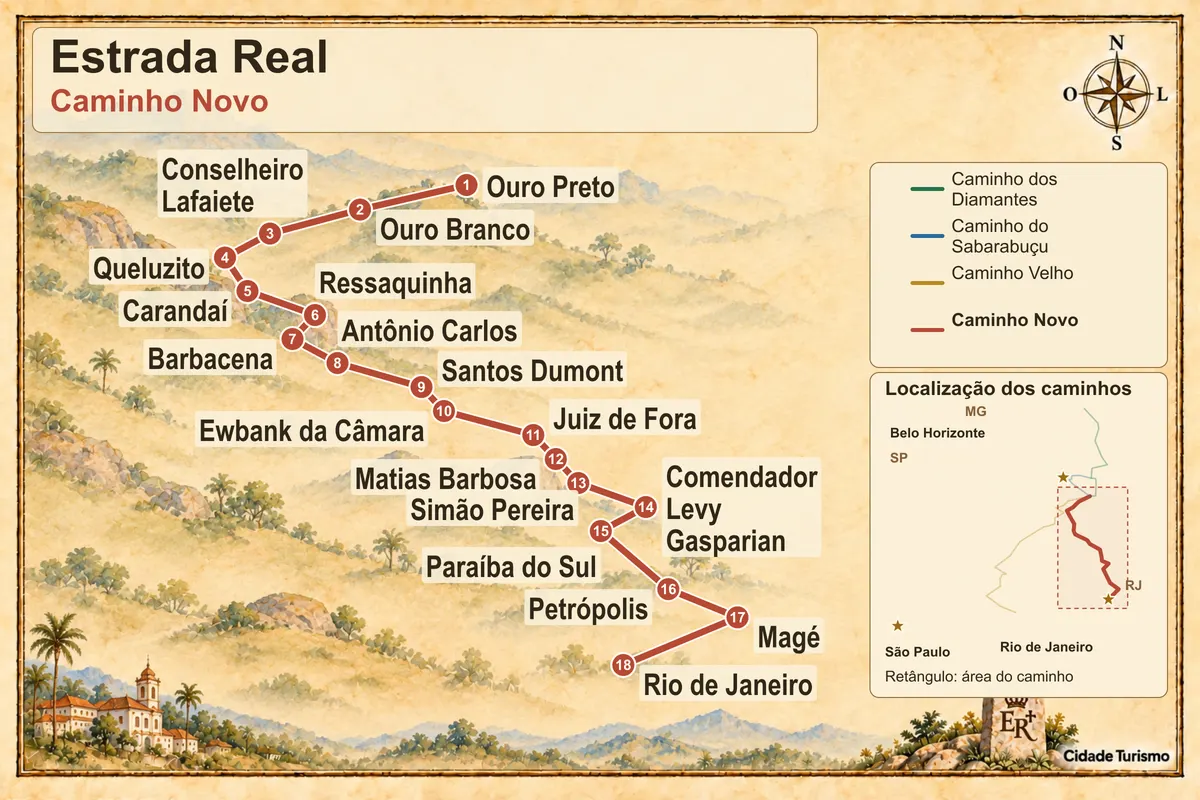
Ouro Branco brings together colonial heritage and the mountain landscape that marks the southern start of the Espinhaço. The Matriz de Santo Antônio preserves Baroque carving, while Itatiaia features another historic church in the municipality. The Parque Estadual Serra do Ouro Branco adds rupestrian fields and viewpoints to the Caminho Novo itinerary.
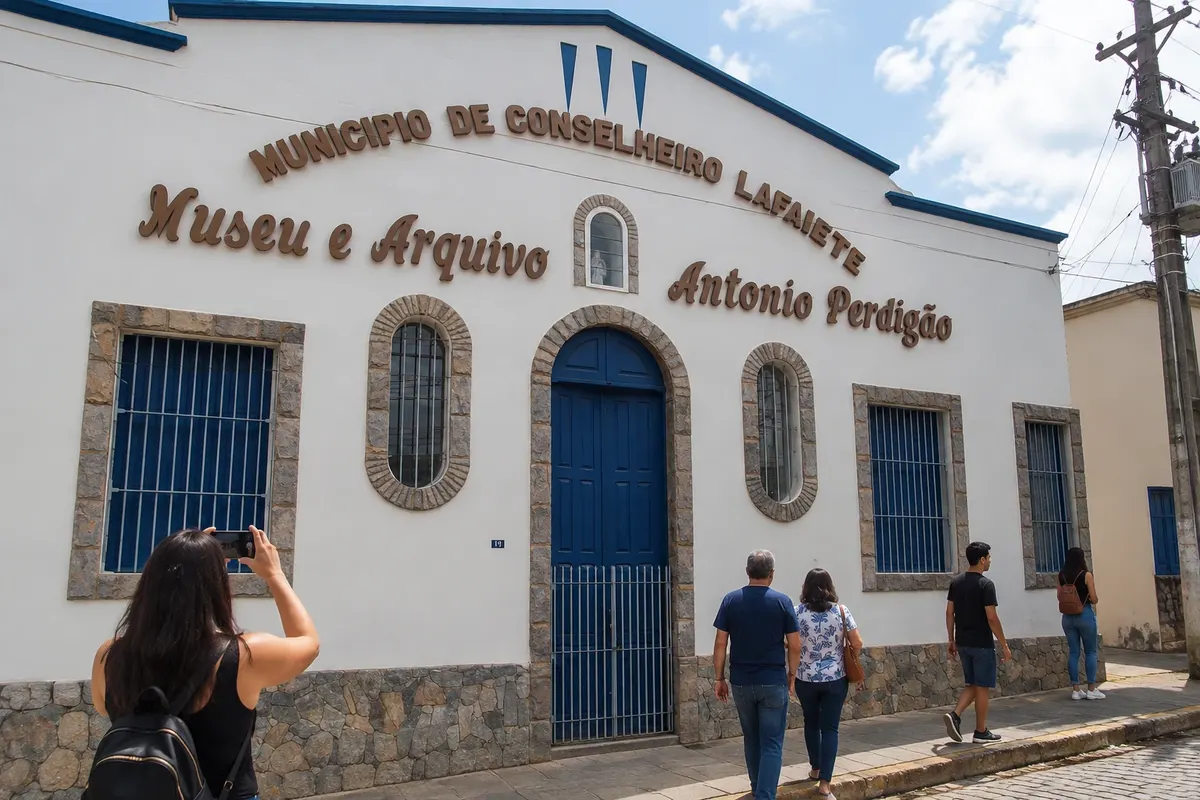
Conselheiro Lafaiete has a cultural route that brings together the Museu Antônio Perdigão and the Solar do Barão de Suaçuí. The Casa de Cultura Gabriela Mendonça and the Casa de Artesanato João Salgado add spaces for creation and memory to the city. This urban structure deserves a dedicated visit along the Caminho Novo axis.
Queluzito preserves the Matriz de Santo Amaro, a reference of Baroque architecture in a small Minas Gerais town. Outside the town center, the Cachoeira do Maciel and the landscapes around the locality of Castelo extend the itinerary. Religious festivals and the remnants of the Estrada Real provide historical context to the visit.
Carandaí preserves the Igreja de Nossa Senhora da Glória, known as the Igreja da Ressaca, and the memory of the old railway. The bandstand at Praça Barão de Santa Cecília and the band of the same name add cultural life to the town. The Cachoeira do Campestre is a rural option for those who extend their stop on the Caminho Novo.
Ressaquinha preserves its railway memory at the Estação Museu and has the Matriz de São José and its gardens as landmarks of the town. The chapels of Sant’Ana and Nossa Senhora Aparecida add religious heritage to the visit. The town is part of the historic axis of the Caminho Novo, with its own short-visit route.
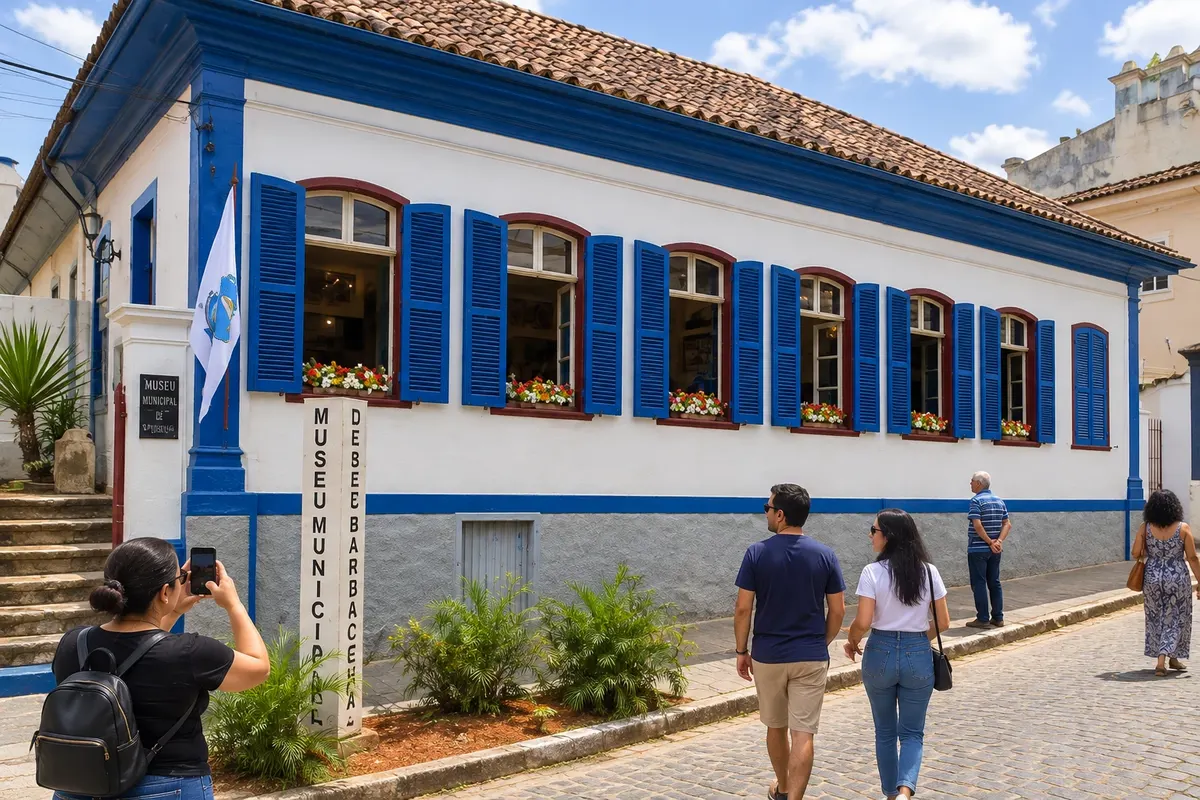
Barbacena combines rose production, commerce and cultural heritage in the Serra da Mantiqueira. The Matriz de Nossa Senhora da Piedade and the Museu da Loucura reveal different facets of the local history. Birthplace of the Ponto de Partida group, the city has its own cultural identity in addition to its place on the Caminho Novo.
Antônio Carlos links cheese production and the landscapes of the Mantiqueira to the history of the Fazenda da Borda do Campo. The Locomotiva 66 is another reference of the local heritage. The municipality was named after Antônio Carlos Ribeiro de Andrada and brings together rural traditions that give substance to the passage along the Caminho Novo.
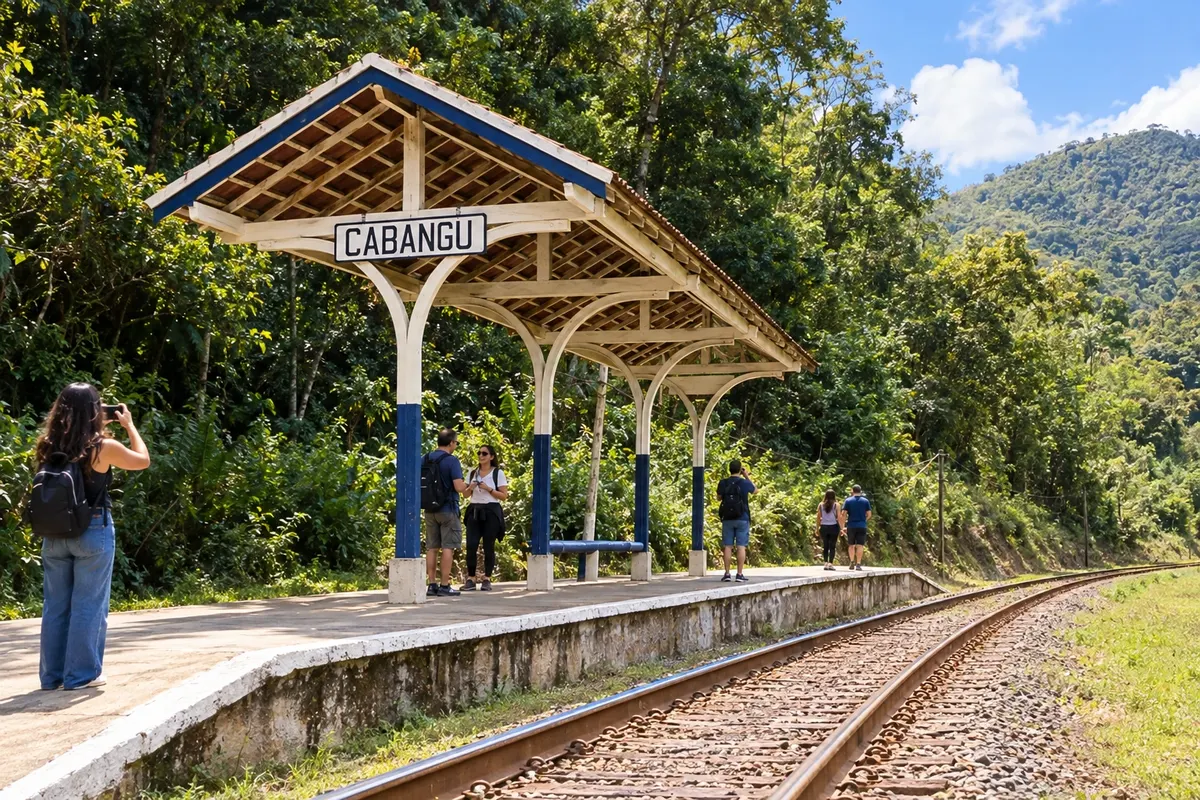
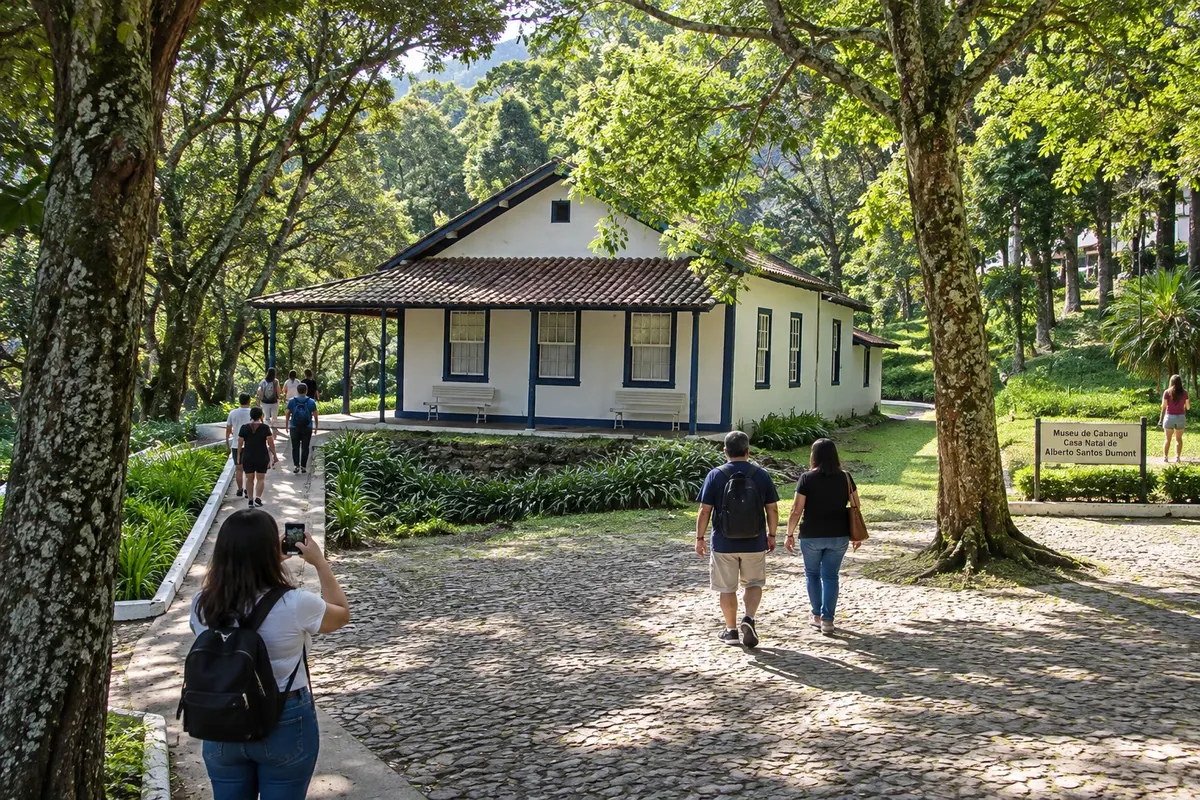
Santos Dumont is the birthplace of Alberto Santos Dumont, born on the Fazenda de Cabangu, today connected to the museum that preserves his memory. The locomotive Zezé Leone and the Memorial Ferroviário represent another axis of the town's history. Queijo do reino and doce de leite are also part of the identity of this Zona da Mata city.
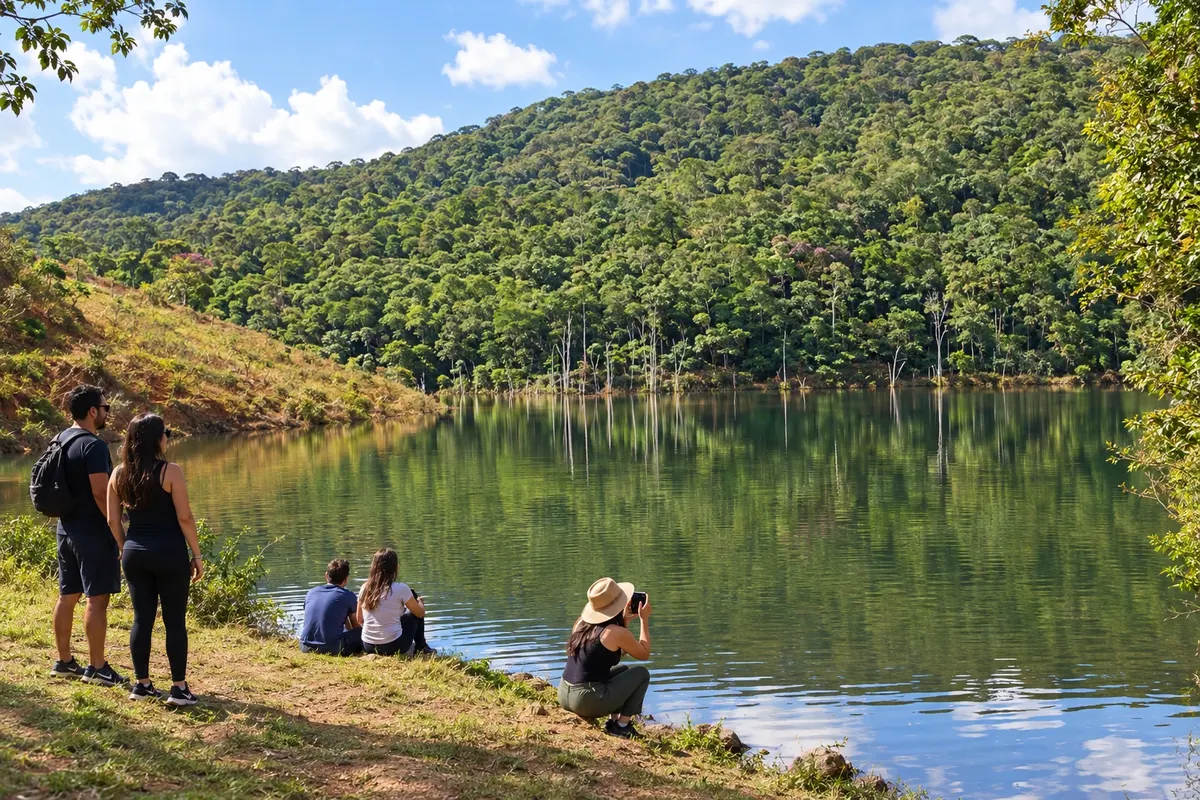
Ewbank da Câmara combines the landscape of the Represa de Chapéu d’Uvas with the memory of its railway station. The town is part of the Caminho Novo and is accessed via the BR-040 axis. The reservoir is part of the region's water supply system, so walks along the banks require attention to permitted areas.
Matias Barbosa grew up around a sesmaria and received immigrants linked to coffee farming. The Capela do Rosário, originally associated with the registro do Caminho Novo, preserves a link to that history. The Ponte do Arco and the Matriz de Nossa Senhora da Conceição add heritage to the city's route.
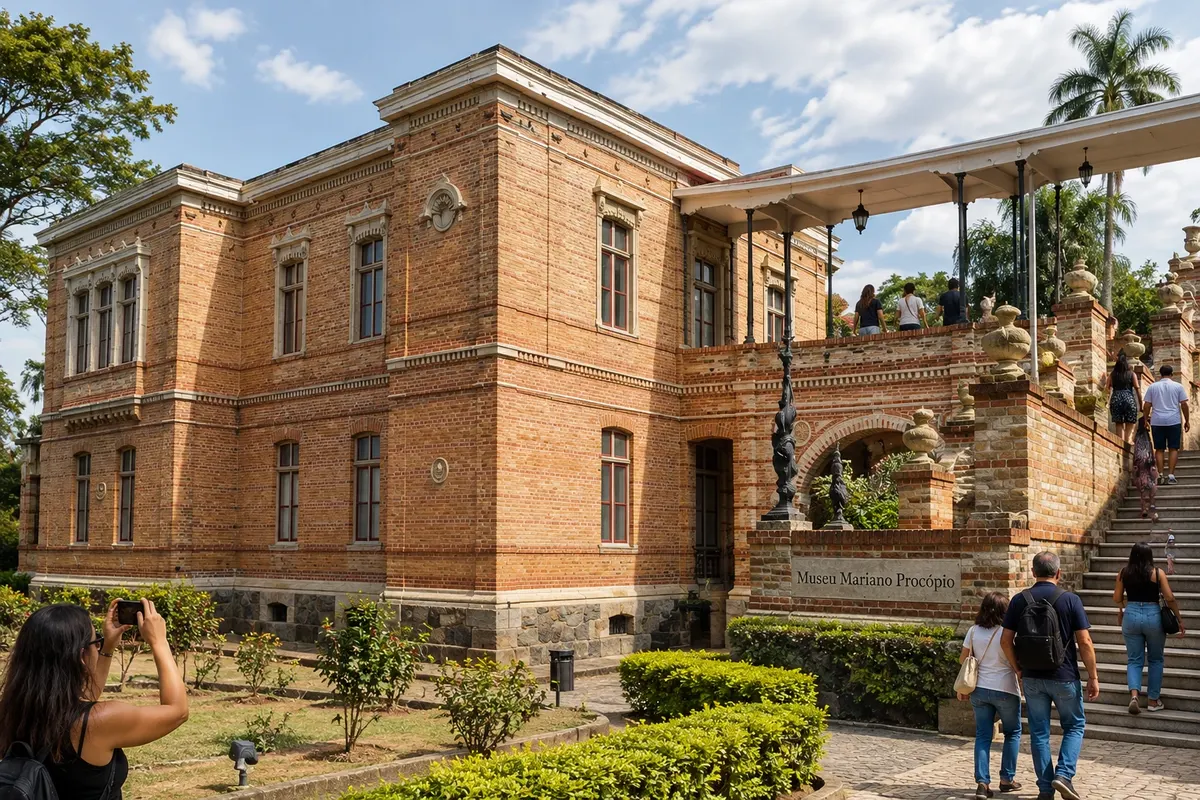
Juiz de Fora grew along the Caminho Novo and became an urban center in the Zona da Mata. The Museu Mariano Procópio brings together art and the memory of imperial Brazil, while its gardens add an outdoor stroll to the cultural itinerary. The old Estrada União e Indústria links the city's history to that of Petrópolis.
Simão Pereira's origins are tied to the opening of the Caminho Novo and to the history of Simão Pereira de Sá. The current town center developed in the former settlement of Rancharia, separate from the original core. The Casarão de Paraibuna and the Cemitério da Rocinha are among the municipality's heritage sites.
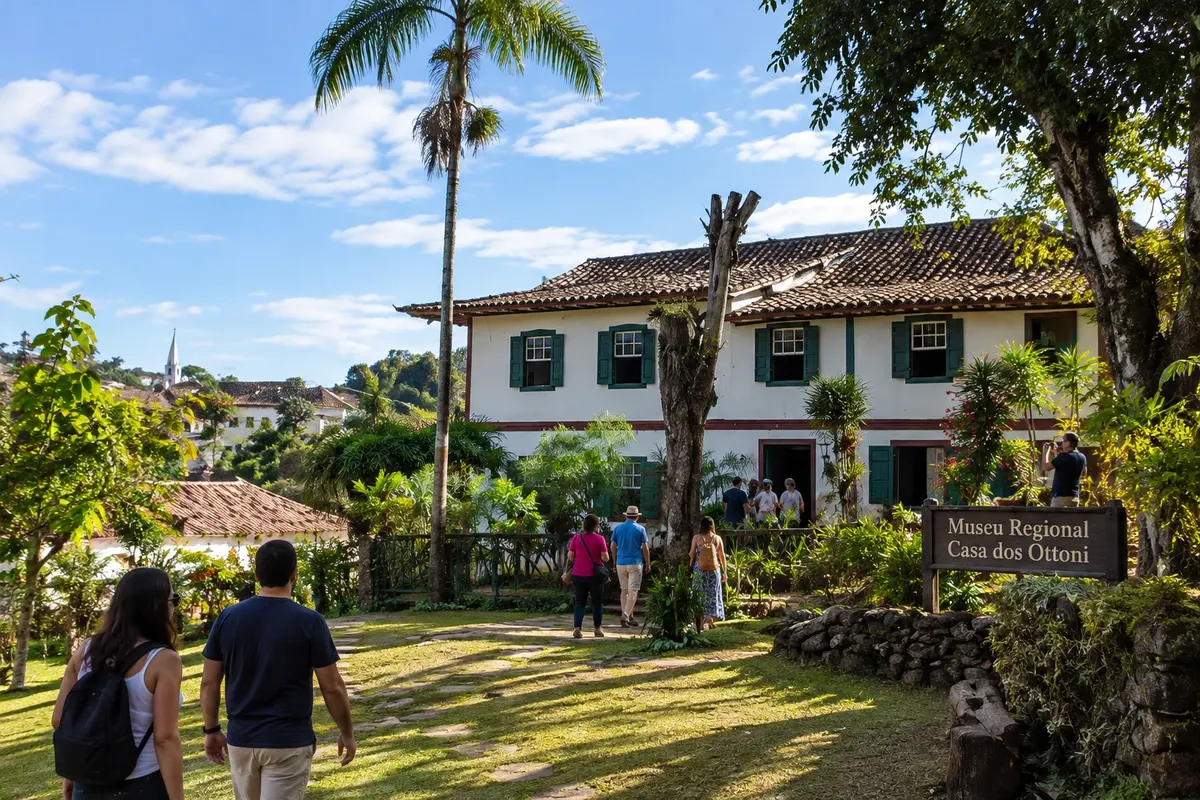
Serro preserves the layout and heritage of an 18th-century village, with churches such as Santa Rita and Rosário. Artisanal cheese is another hallmark of its identity. Milho Verde and São Gonçalo do Rio das Pedras belong to the municipality and extend the cultural and landscape route on the Caminho dos Diamantes.
Alvorada de Minas brings together mountainous landscapes of the Espinhaço and the Igreja de Nossa Senhora do Rosário. Waterfalls such as Cachoeira do Carumbé and Cachoeira do Landim broaden the appeal of rural outings. Between farms and waterways, a stop on the Caminho dos Diamantes lets you experience a less urban side of the region.
Conceição do Mato Dentro combines religious heritage and Espinhaço landscapes, with a highlight on the Cachoeira do Tabuleiro. The Santuário do Senhor Bom Jesus do Matosinhos hosts the traditional jubilee, while the pastel de angu marks the local cuisine. The town is a base for outings on the Caminho dos Diamantes.
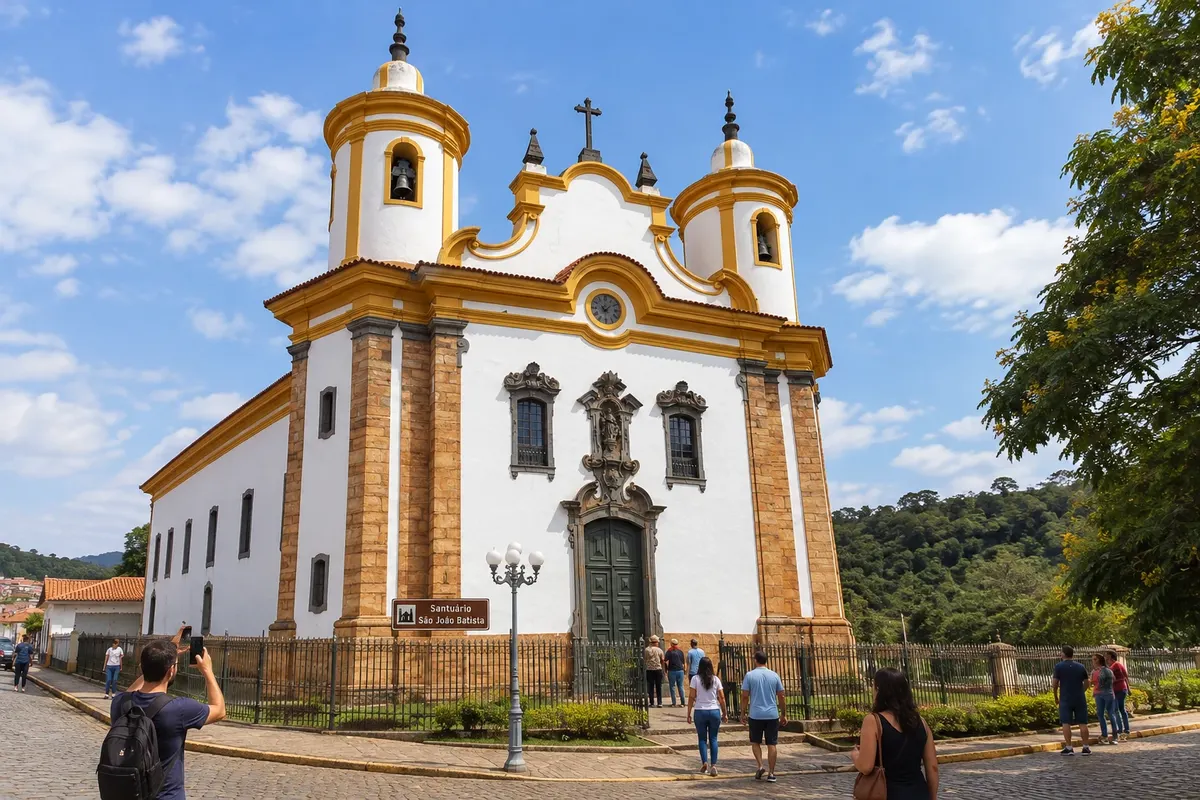
Barão de Cocais brings together religious heritage at the Santuário de São João Batista and landscapes of the Serra da Cambota. In the district of Cocais, the Igreja de Sant’Ana and the Pedra Pintada site add history to the itinerary. The town links outings from the municipal seat and its surroundings along the connections of the Estrada Real.
Santa Bárbara preserves a historic center with the Matriz de Santo Antônio and the Memorial Affonso Penna. The Casa do Mel highlights local production, while Brumal preserves another heritage ensemble of the municipality. The town is also a base for access to the Santuário do Caraça and is on the route of the Caminho dos Diamantes.
Catas Altas has the heritage of the Matriz and the Capela de Santa Quitéria overlooking the landscapes of the Caraça. The Bicame de Pedra and the locality of Morro D'Água Quente add other points to the municipality. On the Caminho dos Diamantes, the route combines the historic core with outings to the mountain range.
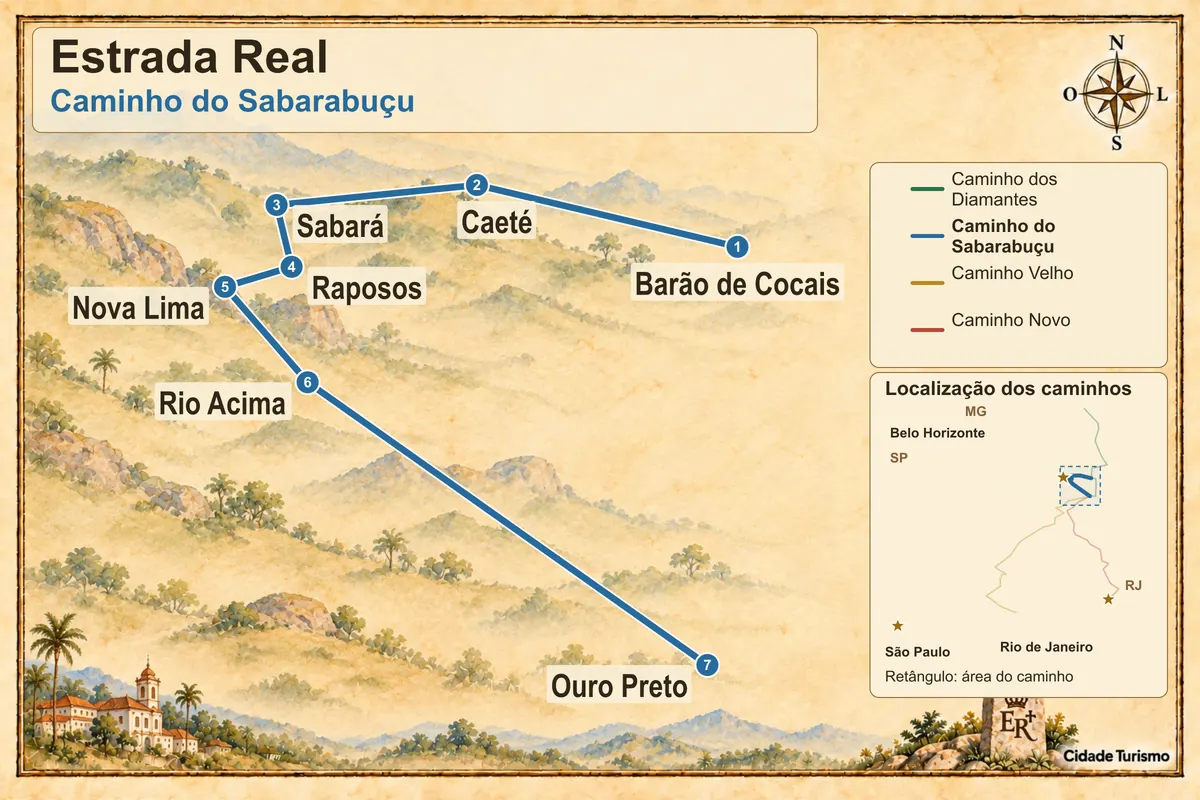
Caeté combines the Igreja de Nossa Senhora do Bom Sucesso and the Museu Casa João Pinheiro with the landscape of the Serra da Piedade. At the top, the sanctuary provides religious context to the visit; in Morro Vermelho, the cavalhada preserves a local tradition. These sites expand the stop on the Caminho do Sabarabuçu.
Raposos preserves the Matriz de Nossa Senhora da Conceição and the building of the former railway station. The Manancial do Ribeirão da Prata and the Cachoeira de Santo Antônio add water and forest landscapes to the municipality. The visit can alternate between urban heritage and a nature outing on the Caminho do Sabarabuçu.
Morro do Pilar includes the Igreja Nossa Senhora do Pilar, built on the heights of the town, and the ruins of the Real Fábrica de Ferro, which record its industrial history. On the Caminho dos Diamantes, the urban landscape gives way to the hills and the Andorinha and Naná waterfalls. Handicrafts made from indaiá straw are also part of the local identity.
Itambé do Mato Dentro has the Igreja Matriz Nossa Senhora das Oliveiras in the town seat and the village of Cabeça de Boi among its travel references. The cachoeiras do Funil, das Maçãs and do Encantado make up its nature tourism. In the Serra dos Milagres, rock walls, rock shelters and rock paintings add an archaeological dimension to the landscape of the Caminho dos Diamantes.
Itabira is the birthplace of Carlos Drummond de Andrade and a city shaped by mining. The Caminhos Drummondianos and the Casa de Drummond form the literary route in the municipal seat. In Ipoema, a district of the municipality, the Museu do Tropeiro adds another historical perspective to the journey along the Caminho dos Diamantes.
Bom Jesus do Amparo has the Igreja Matriz Bom Jesus do Amparo next to Praça Cardeal Motta and the Fazenda Rio São João among the landmarks of its history. The municipality is the birthplace of musician Mozart Bicalho and Cardinal Carlos Carmelo de Vasconcelos Motta. A visit on the Estrada Real can explore this heritage and the rural landscape, without reducing the town to a pass‑through between neighboring places.
Nova Lima has a history marked by gold mining and by English presence, visible in the heritage of the Casa Grande. The queca, a cake of English influence, is part of the local cuisine. São Sebastião das Águas Claras, known as Macacos, adds landscapes and outings to the municipality neighboring Belo Horizonte.
Rio Acima preserves the Matriz de Santo Antônio and the old railway station in a town shaped by mining history. The Cachoeira do Viana and the Área de Proteção Ambiental do Mingu add natural scenery to the municipality. On the Sabarabuçu route, the town center can be combined with a selected rural outing.
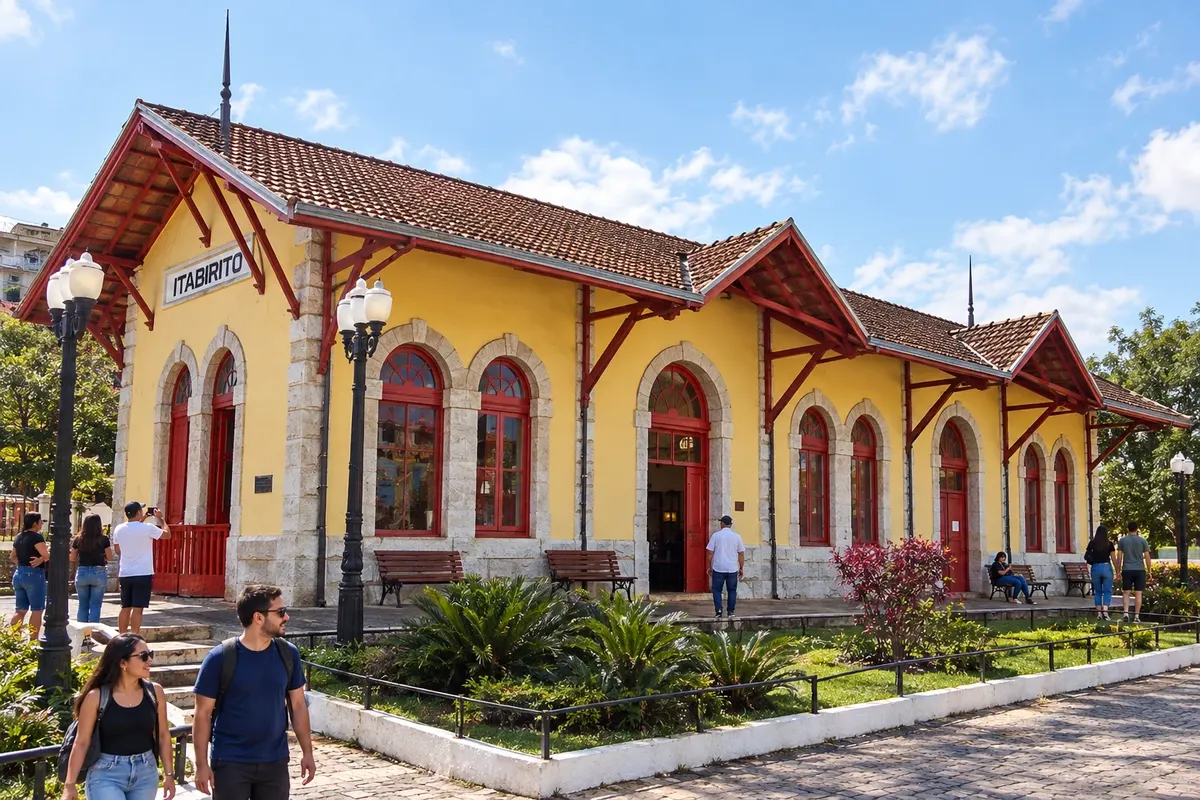
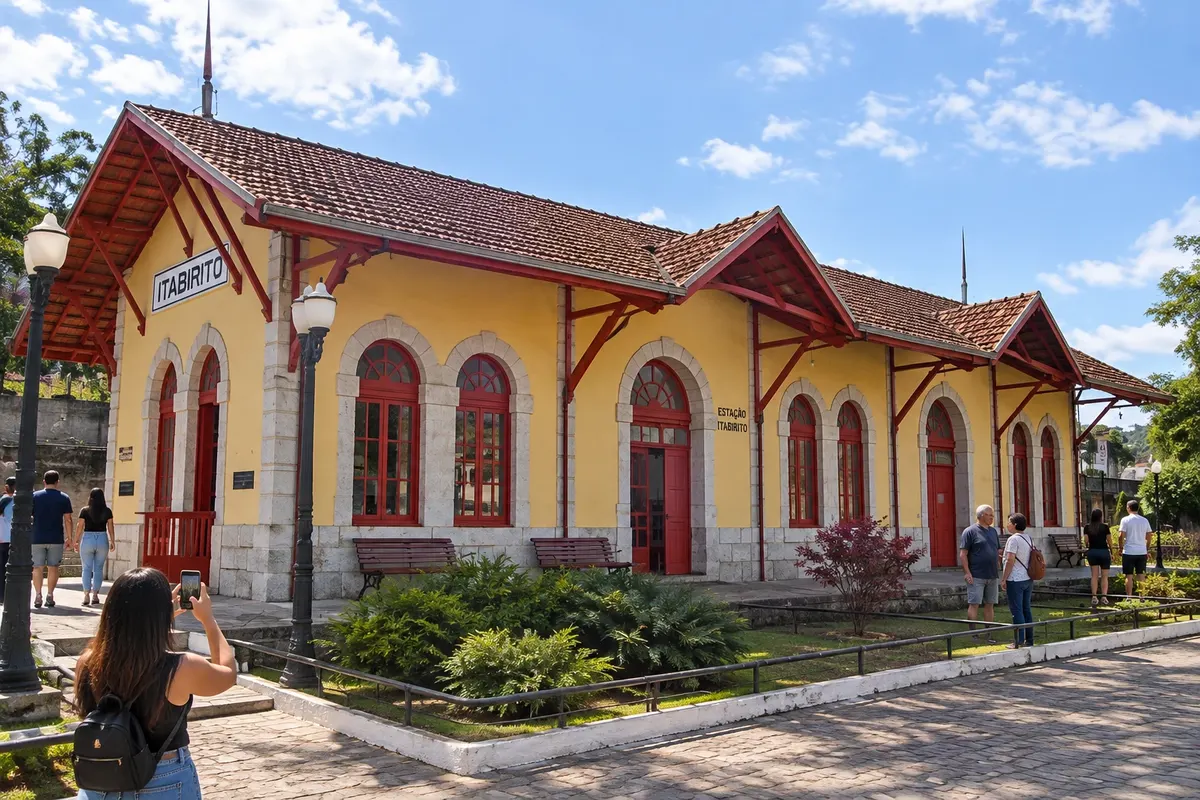
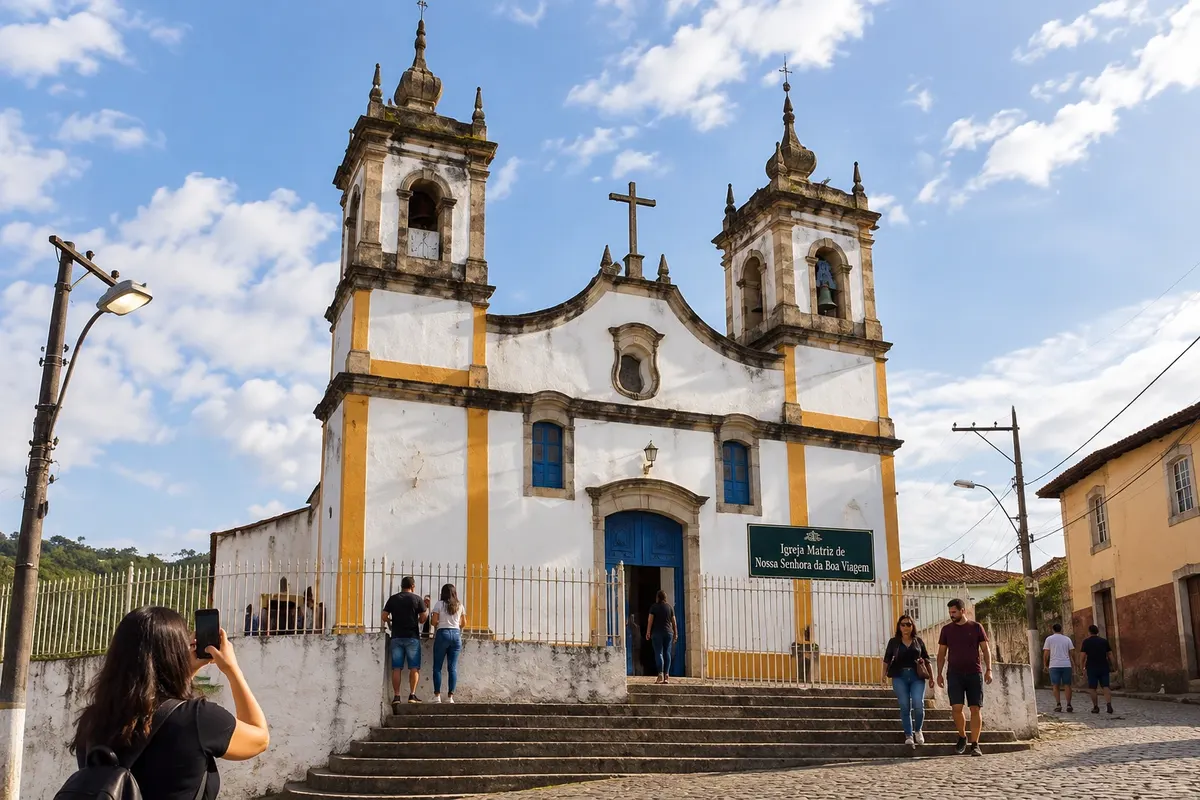
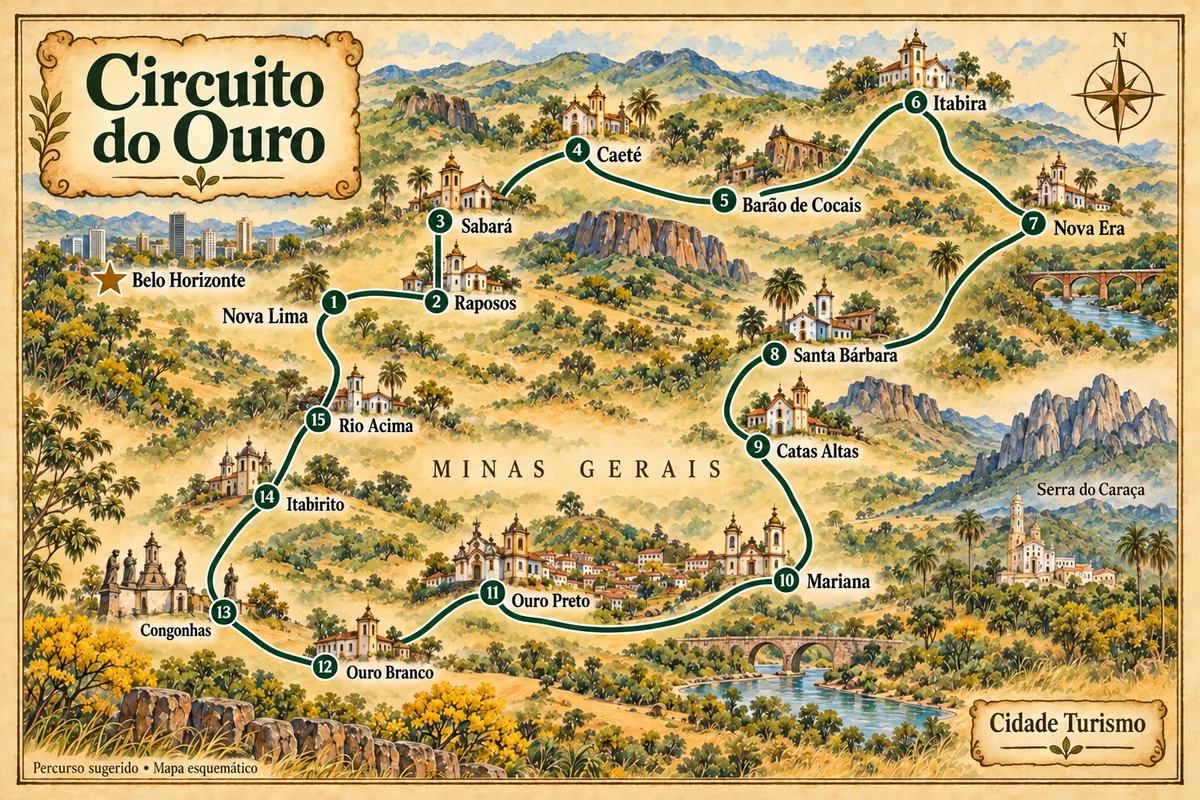
Itabirito grew up with gold mining and today brings together industry, services and historical heritage in the valley of the Rio Itabirito. The Matriz de Nossa Senhora da Boa Viagem and the Complexo Turístico da Estação tell different stages of that history. The pastel de angu marks the local cuisine, while São Gonçalo do Bação preserves a church and streets of early settlement. On the Circuito do Ouro, the city links the Congonhas sector to the route toward Rio Acima.
Nova Era developed from the former arraial of São José da Lagoa, beside the Rio Piracicaba. The 18th-century parish church, at the top of the hill, and the group of manor houses around the Praça da Matriz preserve the memory of that settlement. In this Circuito do Ouro, the municipality is part of the sector visited with Itabira, before returning to the roads that lead to Santa Bárbara.
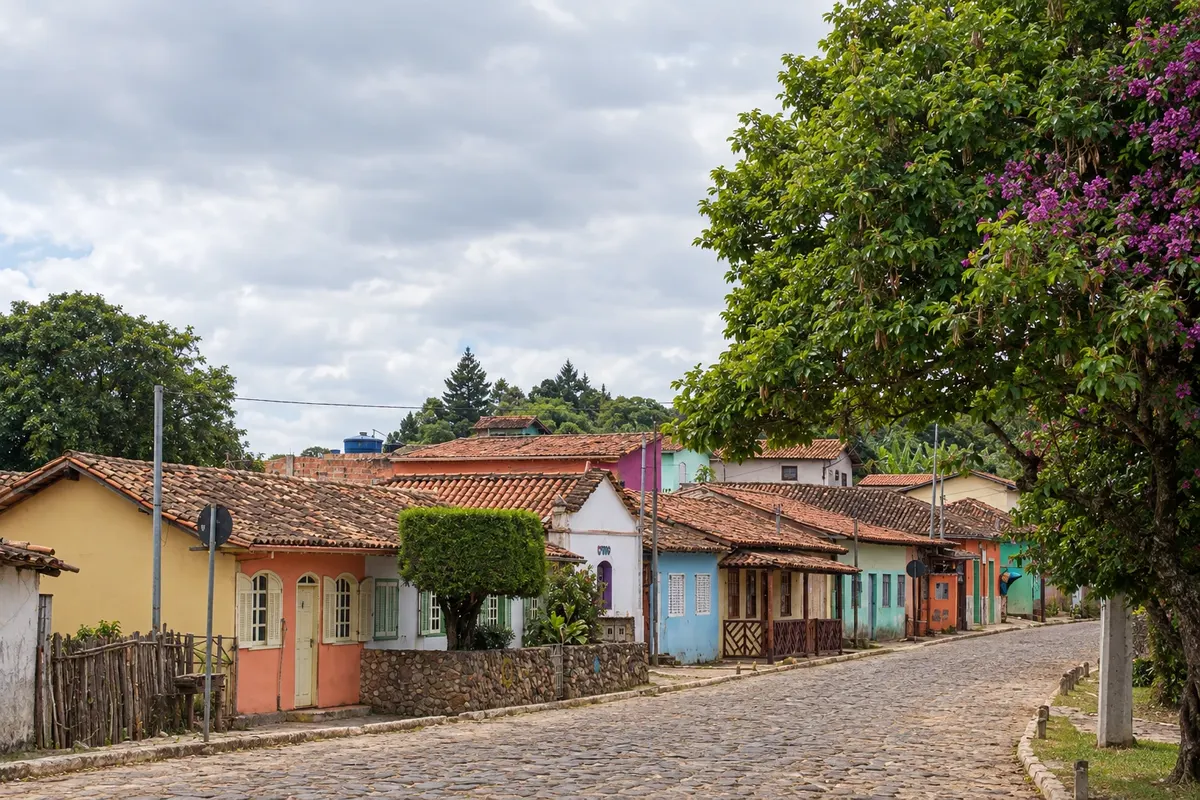
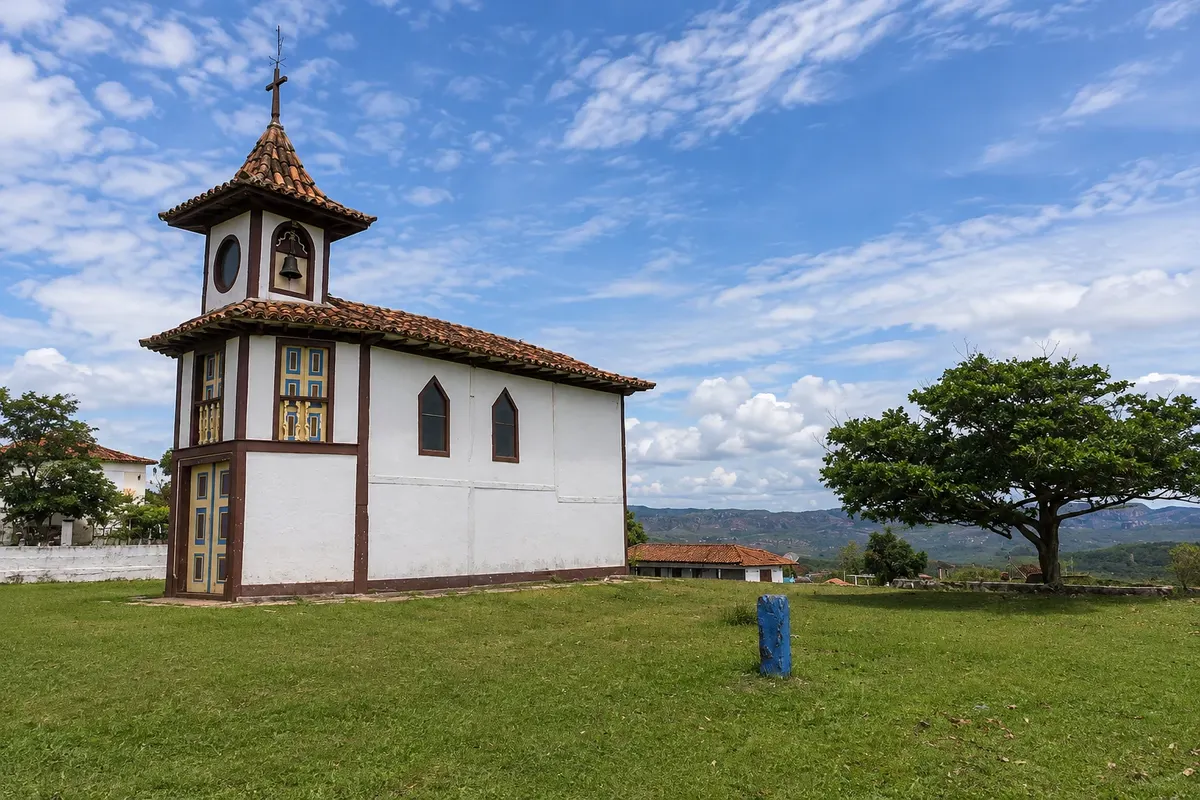
Lavras Novas is a district of Ouro Preto about 17 km from the municipal seat, up on the highlands, on the far side of Parque Estadual do Itacolomi. The village was founded with the gold rush in the early 18th century, remained isolated for a long time and only got electricity around 1970. Low, colorful houses cluster around the Igreja de Nossa Senhora dos Prazeres, from 1762, and the surroundings have waterfalls and viewpoints over the mountains.
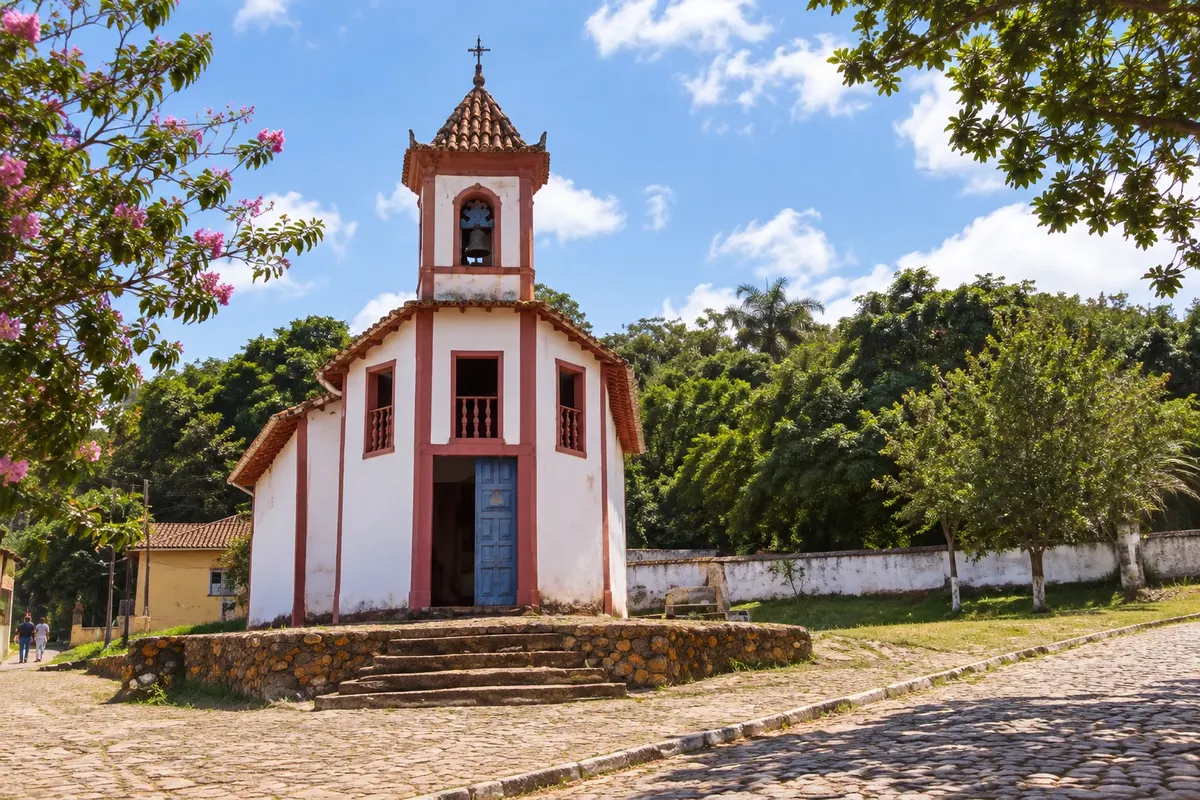
Bichinho is the name by which everyone knows Vitoriano Veloso, a district of Prados about 7 km from Tiradentes, at the foot of the Serra de São José. The village arose with the 18th-century gold mines and preserves the Church of Nossa Senhora da Penha de França, built between 1732 and 1771, with rococo paintings. It is known for studios and shops selling crafts in wood, iron, fabric and papier-mâché along the street that comes from Tiradentes.
Milho Verde is a district of Serro, between Serro and Diamantina, on the old Diamond Road of the Estrada Real. The village was founded at the beginning of the 18th century and is the birthplace of Chica da Silva, baptized in the chapel that gave rise to the Igreja Matriz de Nossa Senhora dos Prazeres. On top of a hill stands the Capela de Nossa Senhora do Rosário, made of wood and clay, and nearby waterfalls run into shallow pools among the fields of the Serra do Espinhaço.
São Gonçalo do Rio das Pedras is a district of Serro on the Caminho dos Diamantes of the Estrada Real, cut by the Rio das Pedras and surrounded by the Serra do Espinhaço. The village grew out of gold mining and became a trading point for tropeiros in the 19th century. The streets of colonial houses lead to the Igreja Matriz de São Gonçalo and the Igreja de Nossa Senhora do Rosário, and there are waterfalls and river pools in the surroundings.
Biribiri is an old workers' village of Diamantina, about 15 km from the town center, inside the Parque Estadual do Biribiri, in the Serra do Espinhaço. It was built for the workers of a textile factory that operated from 1876 to 1973, founded by Bishop Dom João Antônio dos Santos. Today the village has restored houses, the chapel, restaurants and a lawn by the river, and the surrounding park includes waterfalls such as Cachoeira da Sentinela and Cachoeira dos Cristais.
Praznovanja in dogodki
Datumi se vsako leto spreminjajo. Pred potovanjem preverite letošnji datum.
Doživite kraj
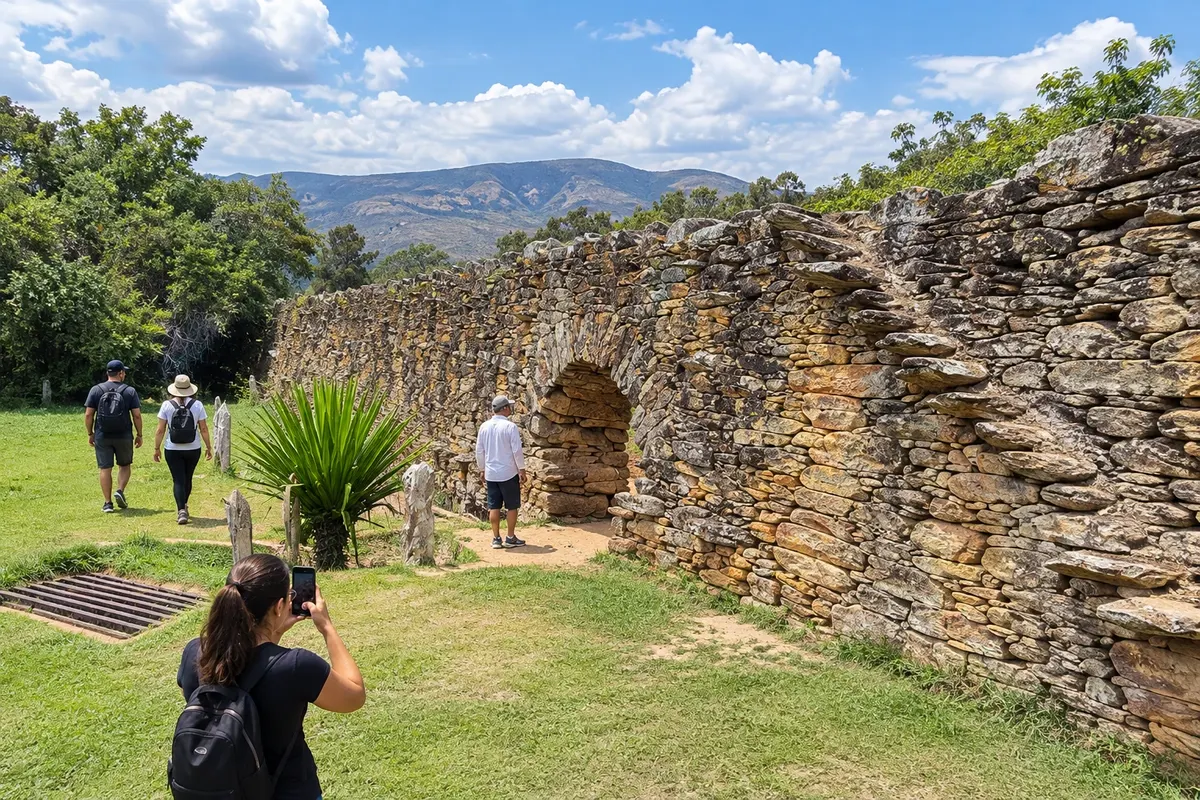
Remnant of a dry-stone aqueduct from 1792 in the rural area of Catas Altas. The wall and the central arch show the structure that carried water from the mountains to farms and mining activities.
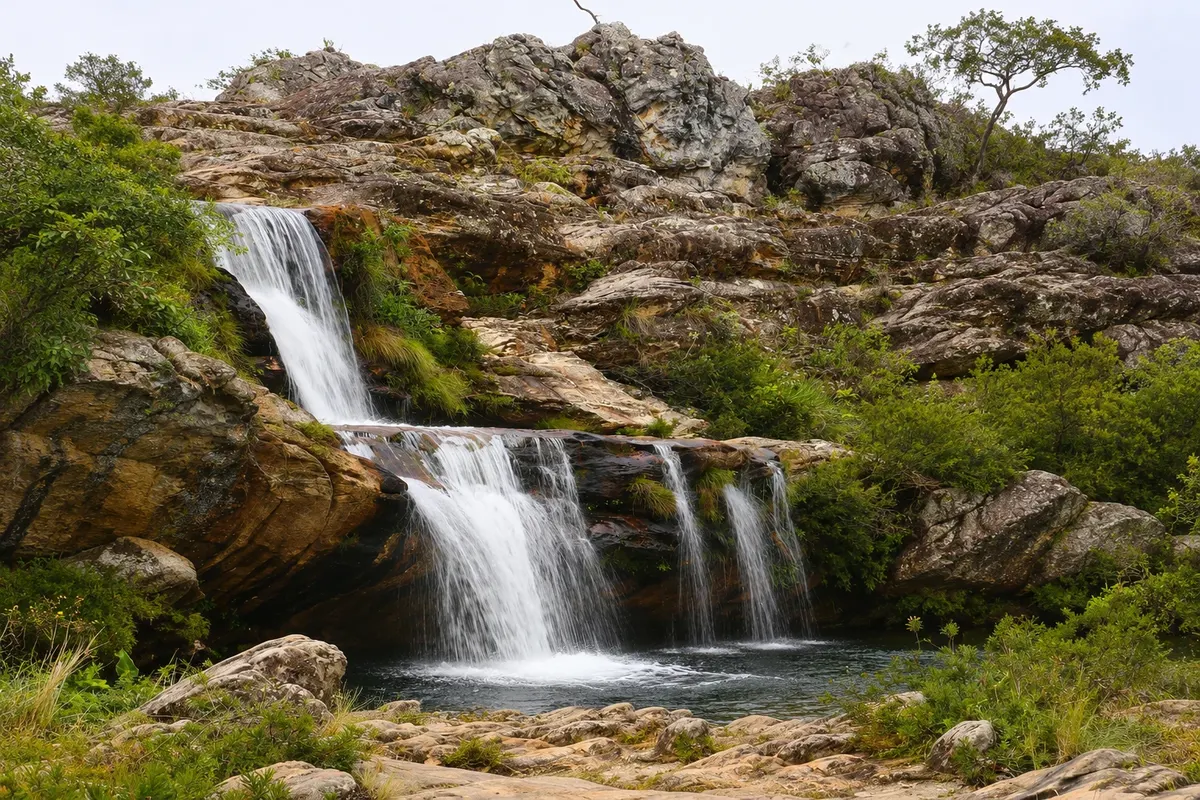
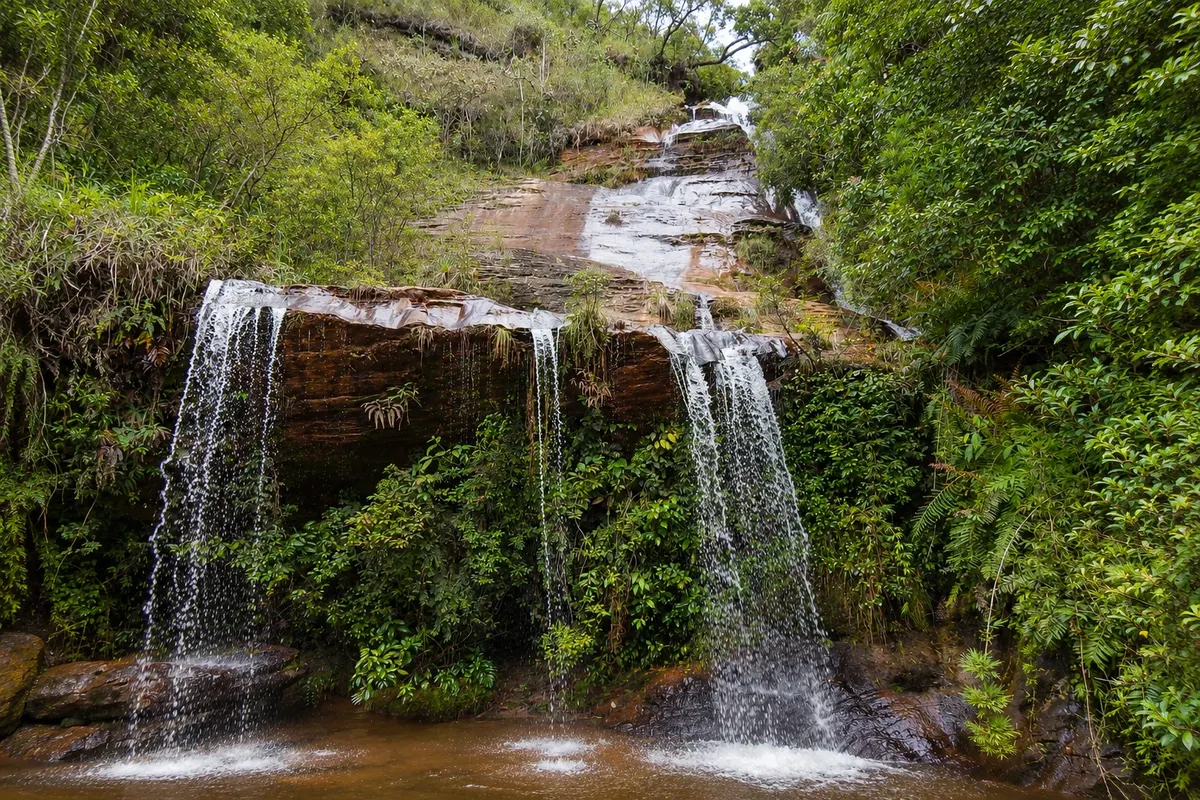
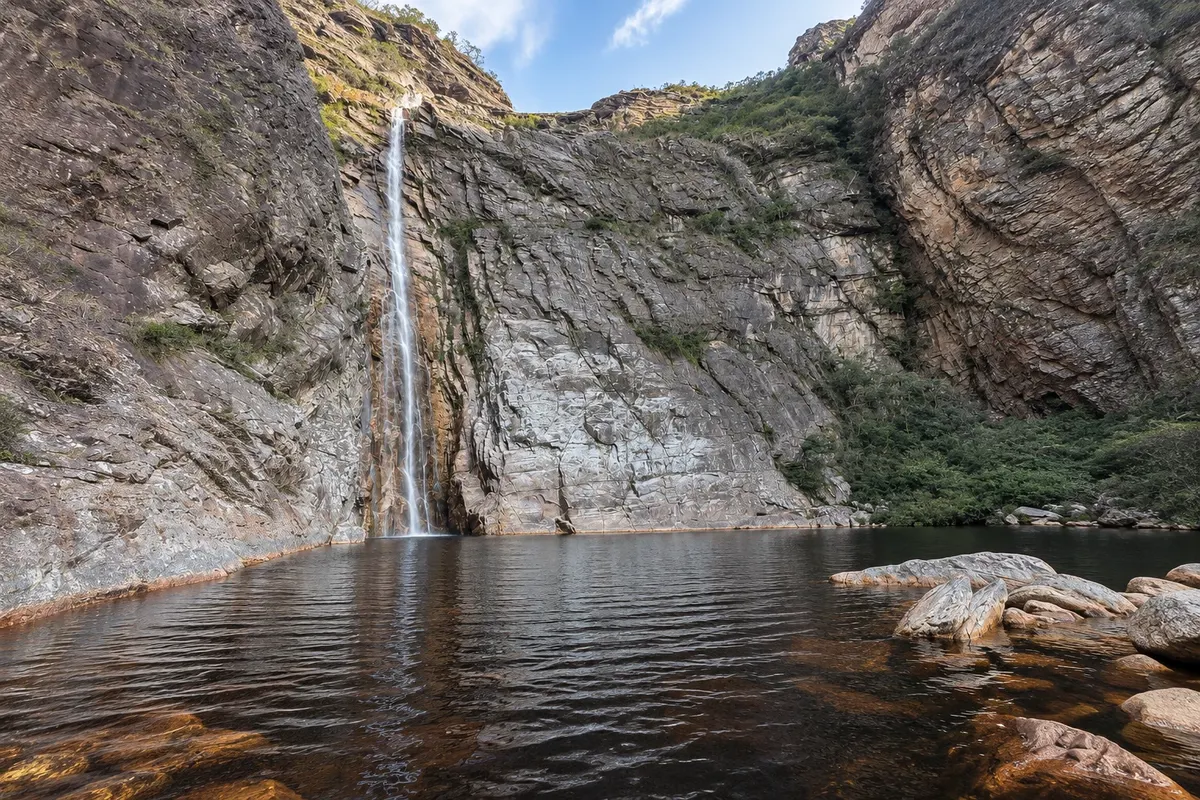
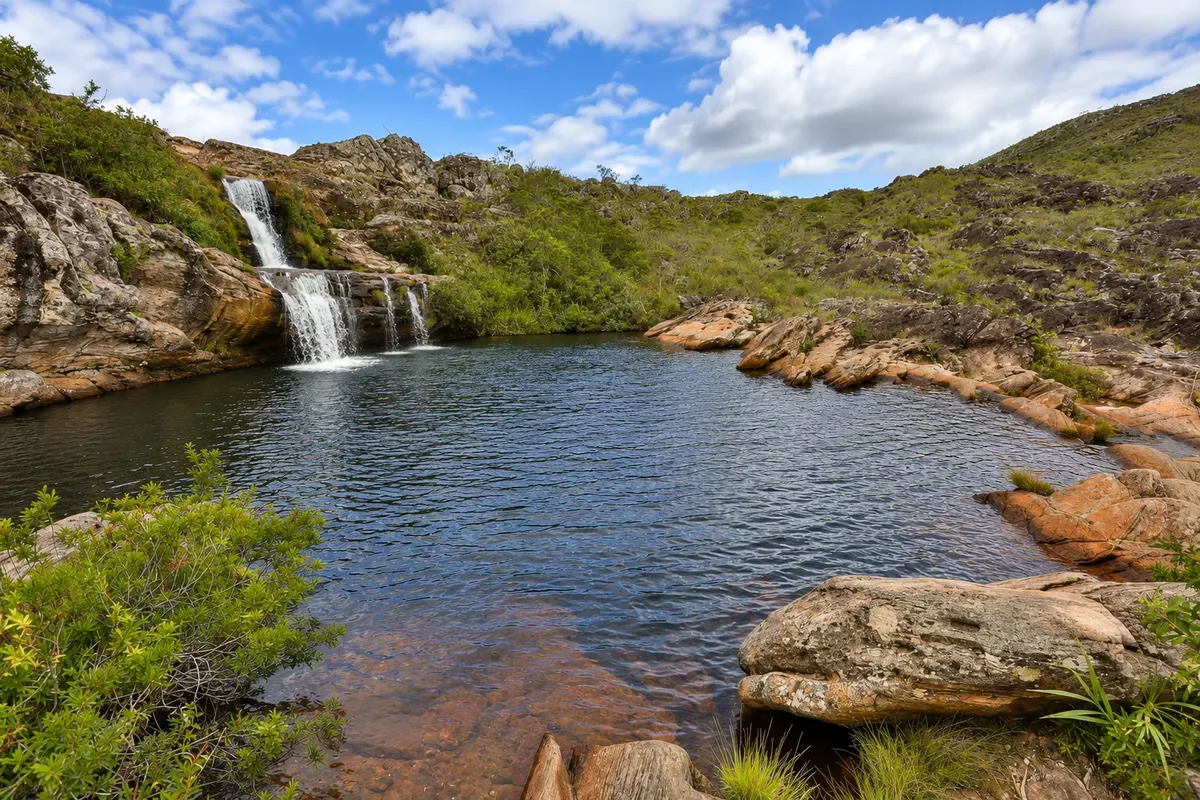
Cachoeira da Fumaça is a waterfall falling among rocks in Carrancas' rural landscape. The outing should focus on contemplation, respecting approach limits and local instructions.
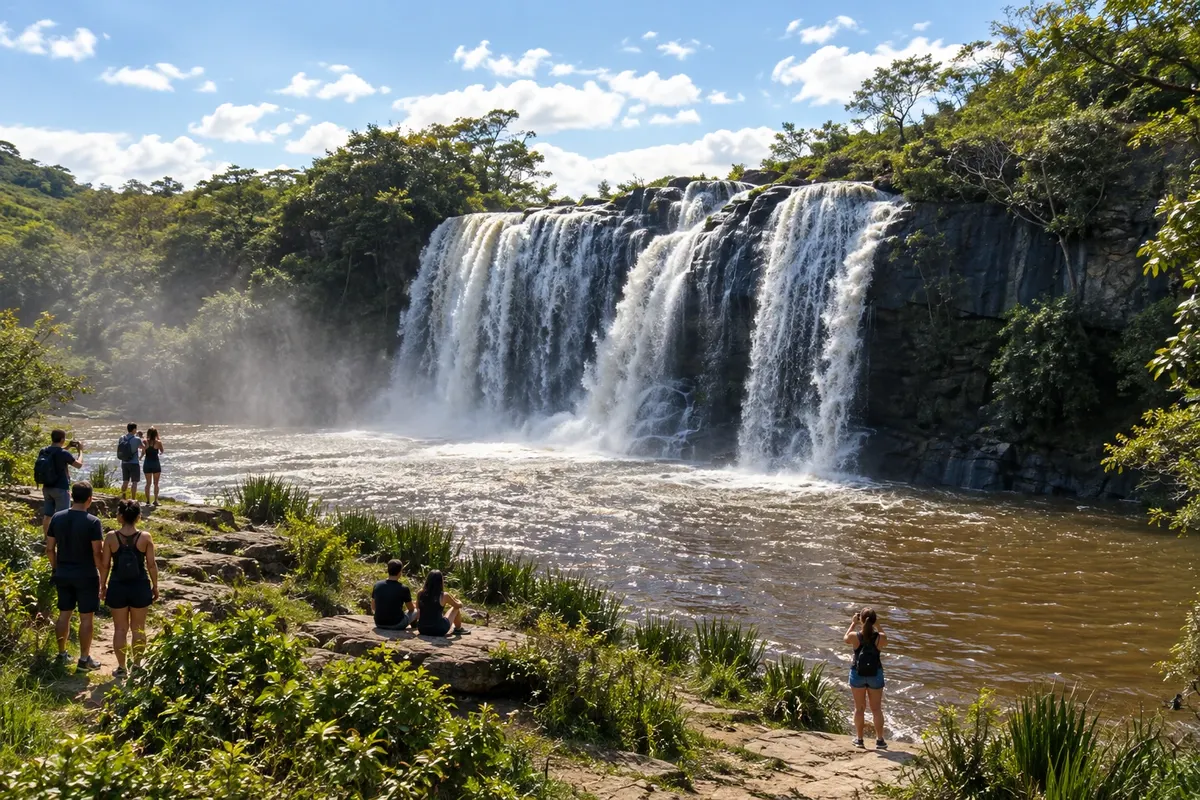
A set of three consecutive drops in the rural area of Itambé do Mato Dentro, about 7 km from the town center. The water formed pools and an opening in the rock wall that gave the waterfall its name.
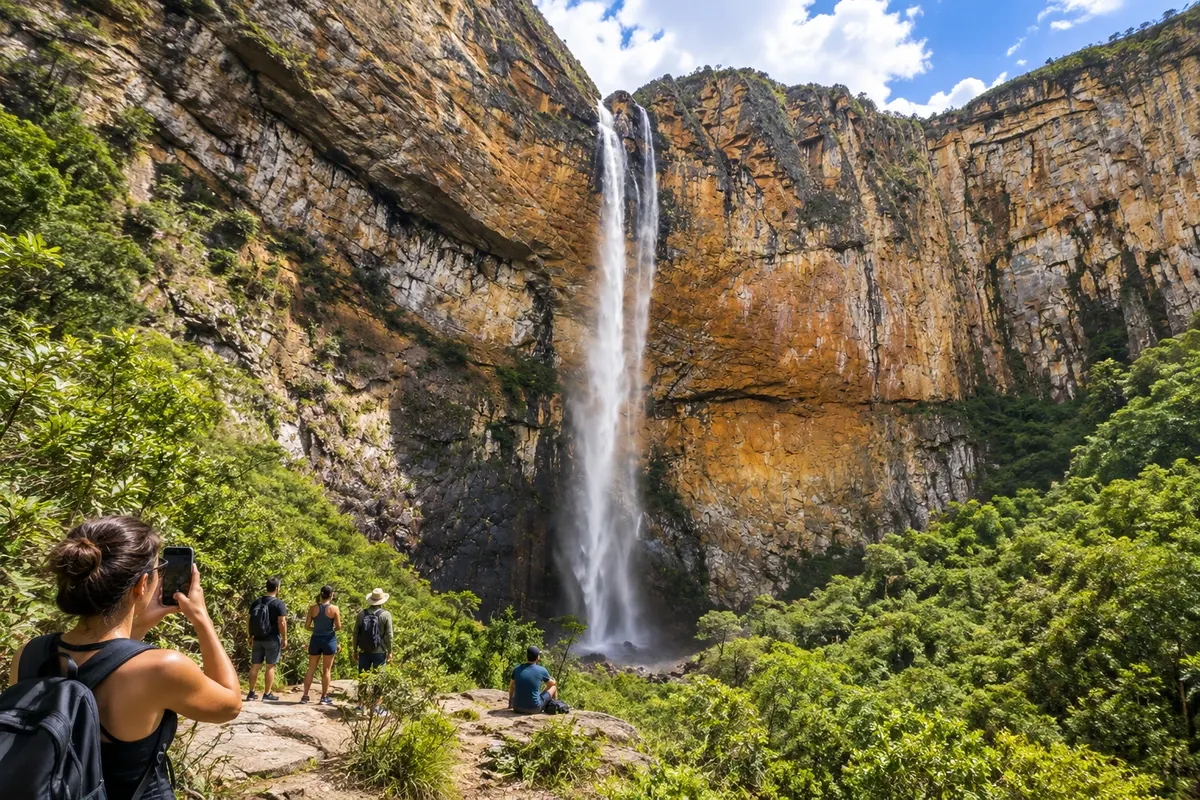
A 273-meter drop in the Parque Natural Municipal do Tabuleiro, in the district of the same name. The rocky cliff, the pool and the rupestrian fields make up a visit that requires choosing the route and checking the park's conditions.
Raziščite Cachoeira do Tabuleiro
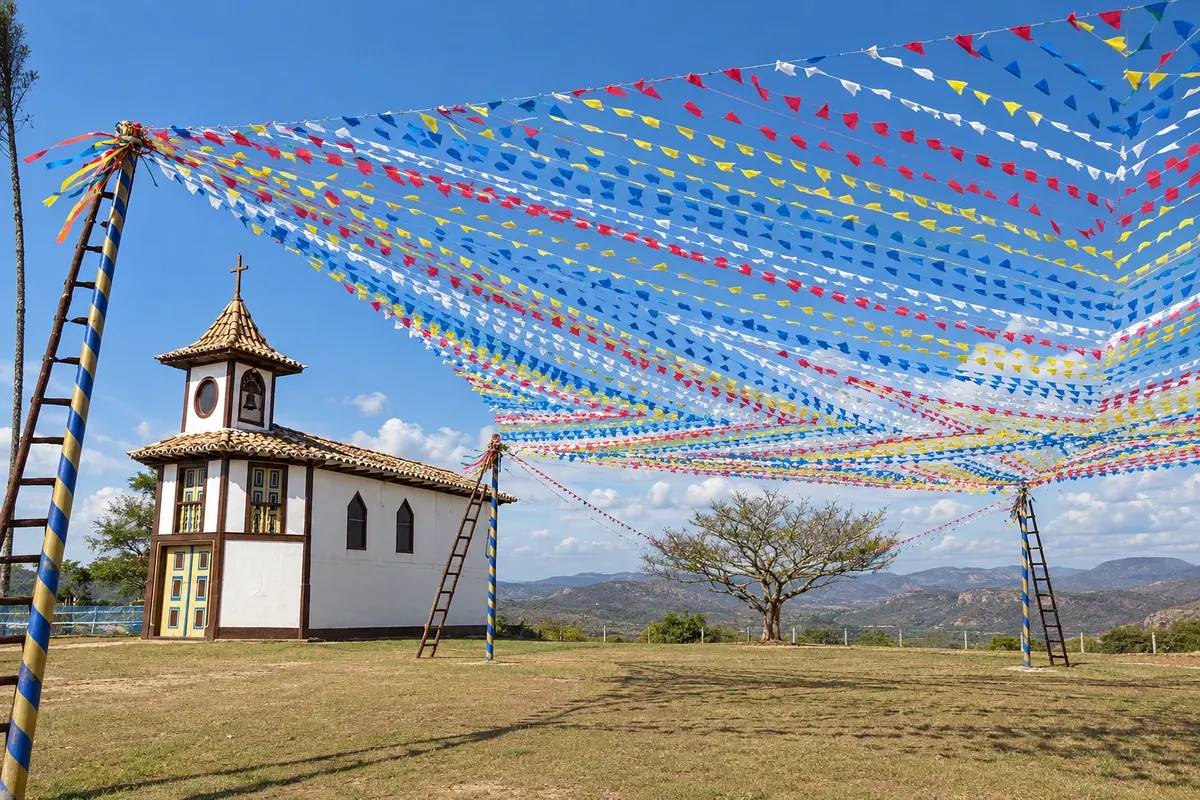
Small chapel of wood and clay on top of a hill in Milho Verde, next to the cemetery, with the Serra do Espinhaço around it. It appeared on the cover of the album Caçador de Mim by Milton Nascimento.
Raziščite Chapel of Our Lady of the Rosary
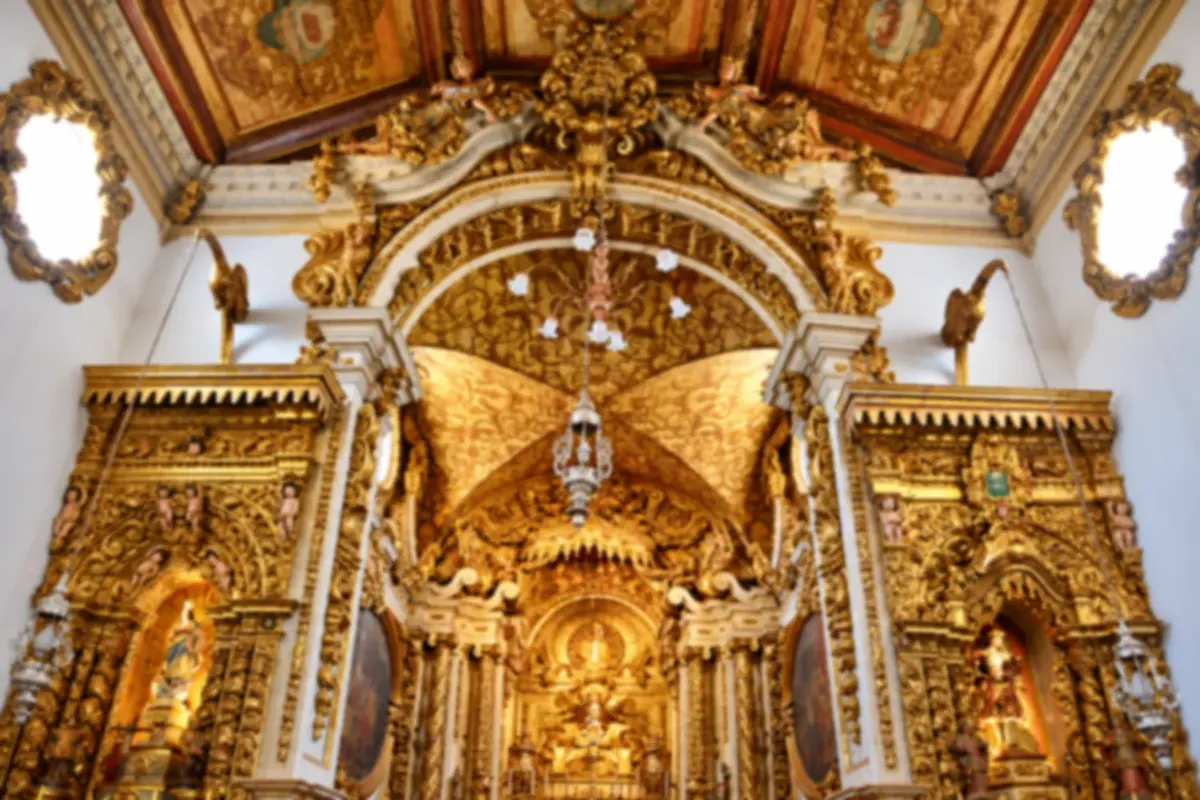
A small chapel from the early 18th century, considered one of the richest examples of the Minas Gerais Baroque. The interior has gilded woodcarving and paintings in red, blue and gold with Asian influence.
Raziščite Capela de Nossa Senhora do Ó
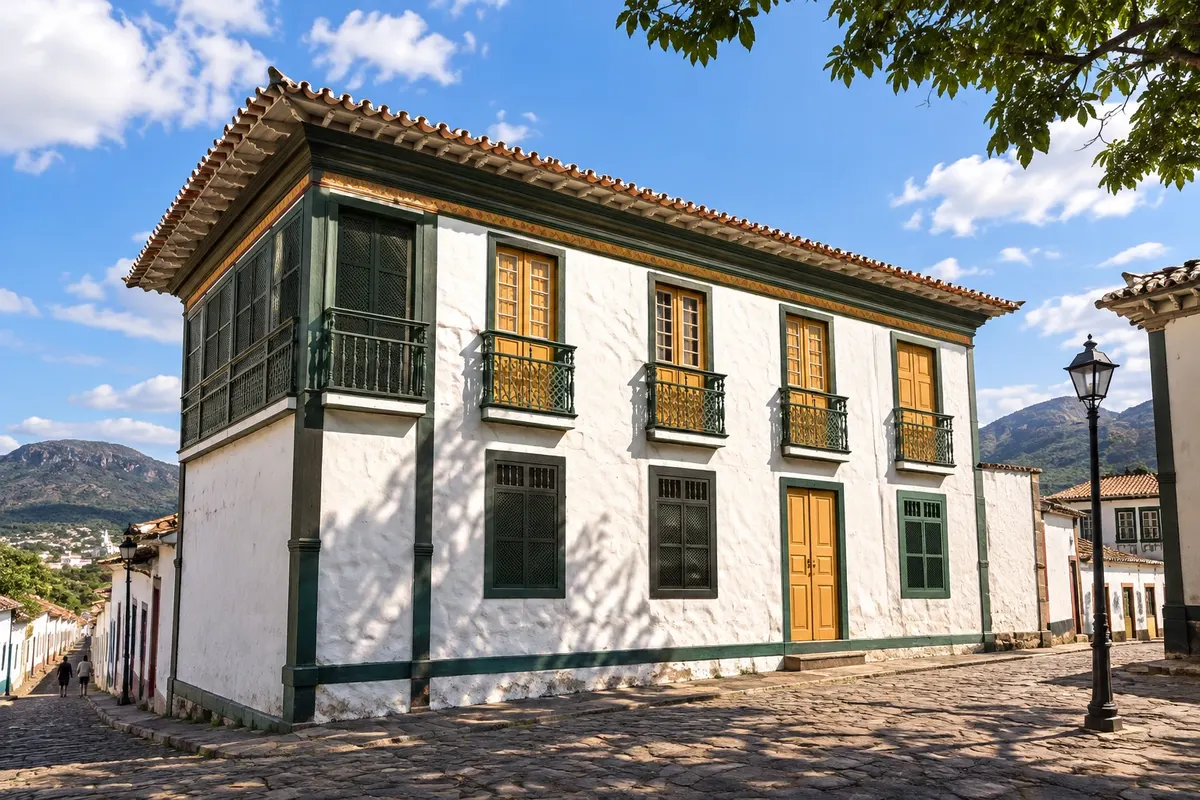
A wattle-and-daub townhouse with wooden balconies where Chica da Silva lived with the diamond contractor João Fernandes de Oliveira between 1763 and 1771. Listed as a heritage site in 1950, it temporarily houses the Museu do Diamante, whose main building is being restored.
Raziščite Casa de Chica da Silva
The former railway station of Itabirito houses a complex focused on culture and visitor services. The building's architecture records the arrival of the railway in the city.
Raziščite Complexo Turístico da Estação
Historic main church in the center of Prados, connected to the parish established in the early 18th century. The temple preserves gilded woodcarving (talha), sacred images and ceiling painting, forming an ensemble that traces the city's history.
Raziščite Igreja Matriz Nossa Senhora da Conceição
18th-century mother church in the center of Ouro Branco, protected as a national heritage site. The visit highlights the stone façade, the carving of the altars and the ceiling paintings associated with Mestre Ataíde.
Raziščite Church of St. Anthony (Mother Church) (Igreja Matriz de Santo Antônio)
Main church of the district of São Gonçalo do Rio das Pedras, in Serro, in the center of the village of colonial houses. Around it the settlement of miners and tropeiros on the Caminho dos Diamantes formed.
Raziščite Mother Church of Saint Gonçalo
Village church of Bichinho built between 1732 and 1771, listed by Iphan in 1949, with carved altars and rococo painting attributed to Manoel Victor de Jesus.
Raziščite Church of Our Lady of the Rock of France
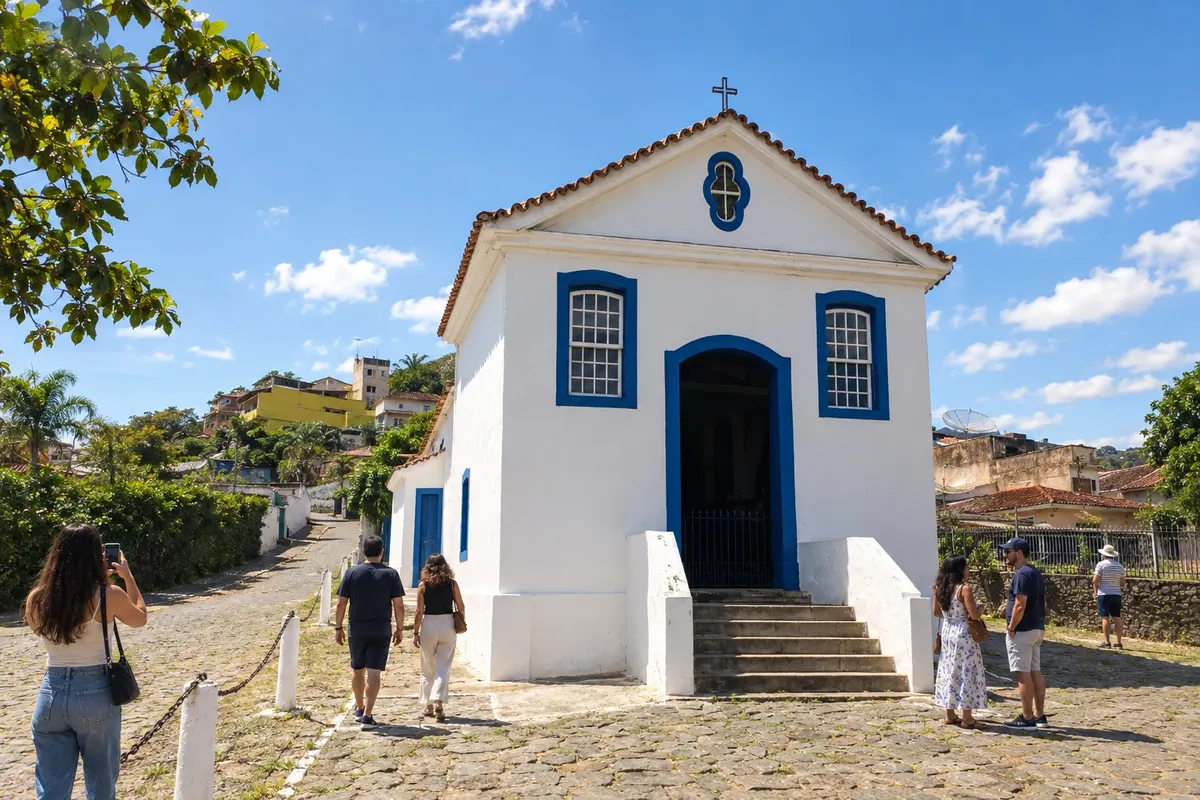
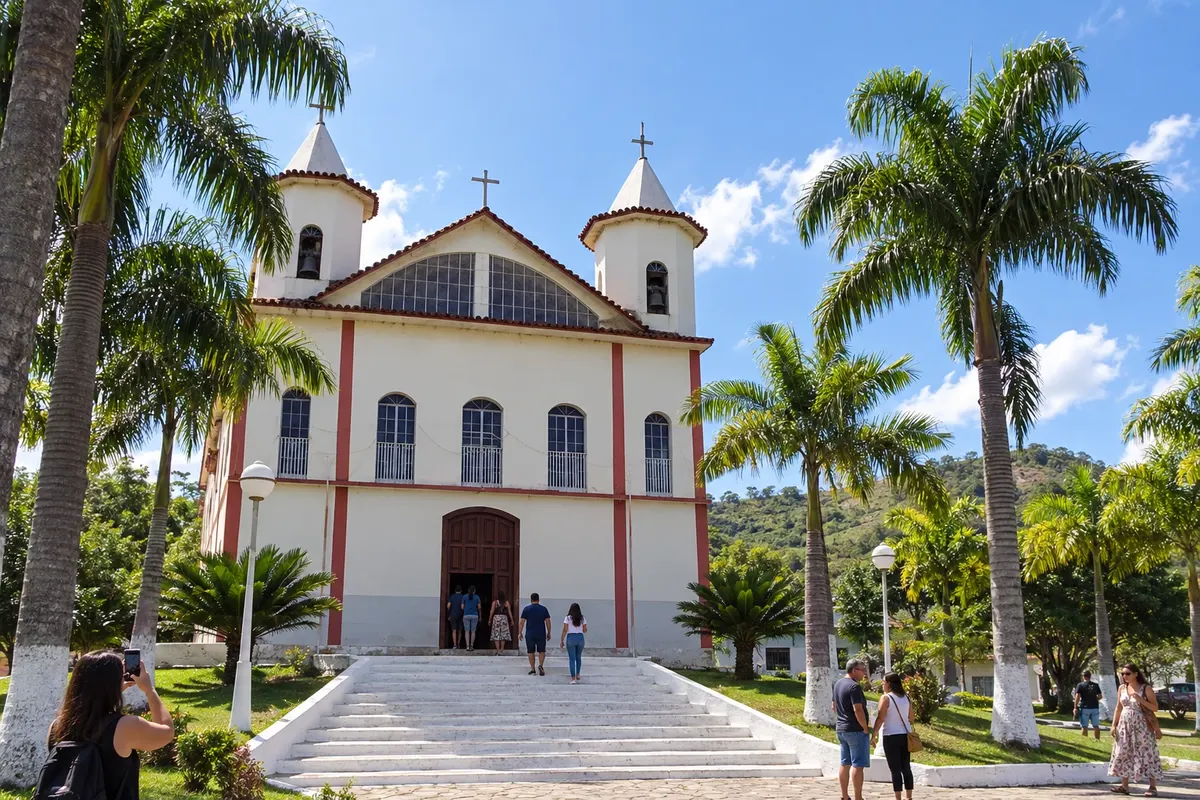
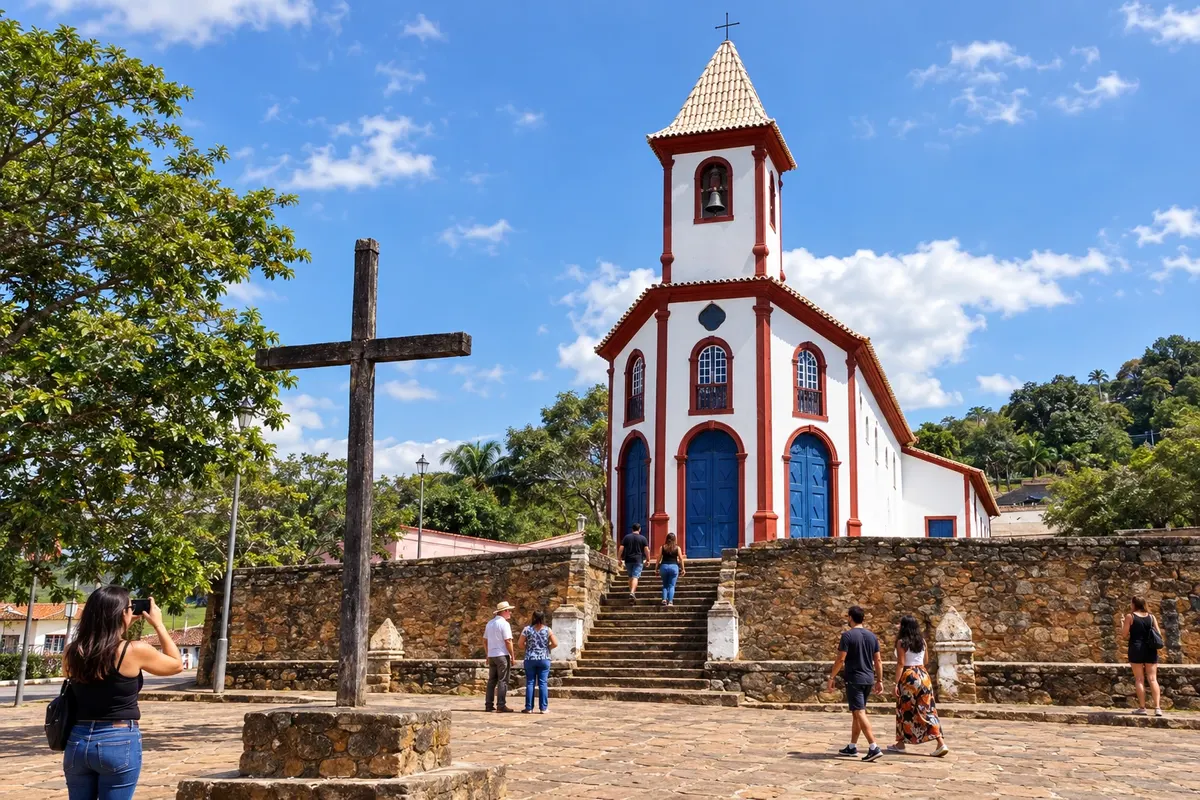
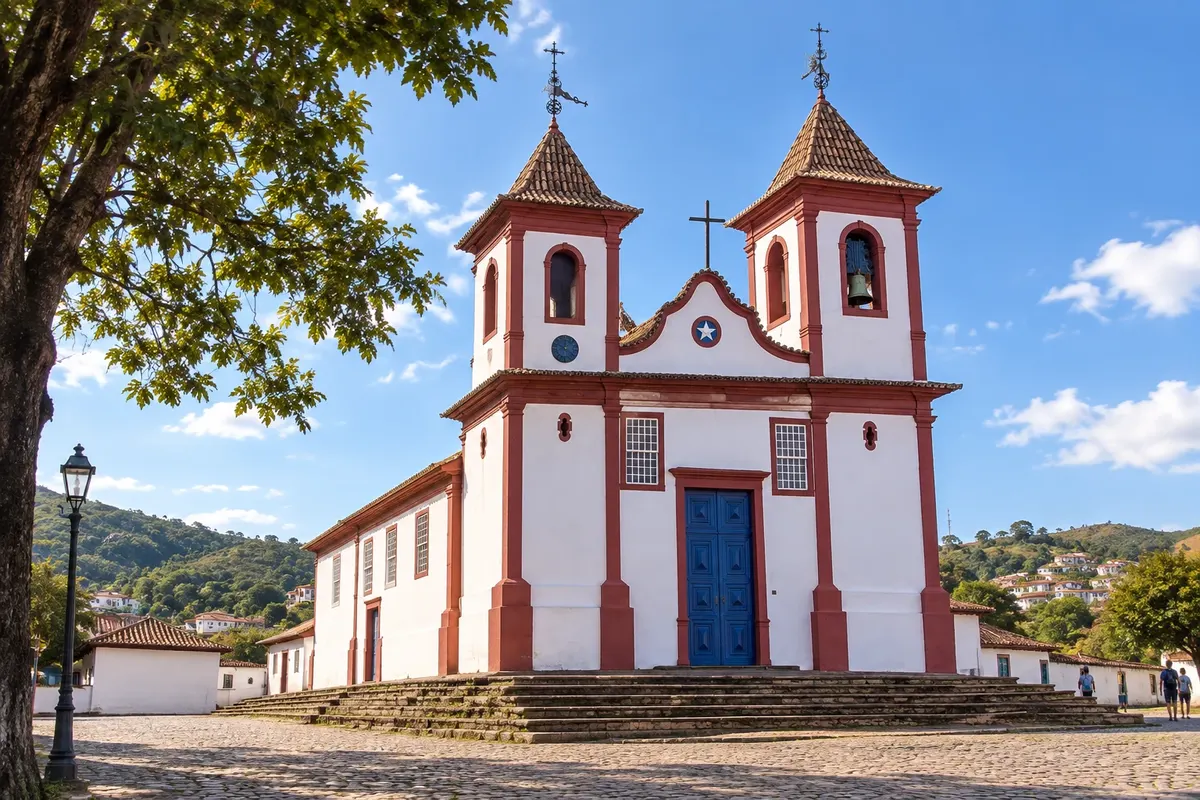
1762 chapel in the center of Lavras Novas, with three simple altars, a stone atrium and a carved stone cruzeiro in the square. The layout of the village formed around it.
Raziščite Church of Our Lady of Pleasures
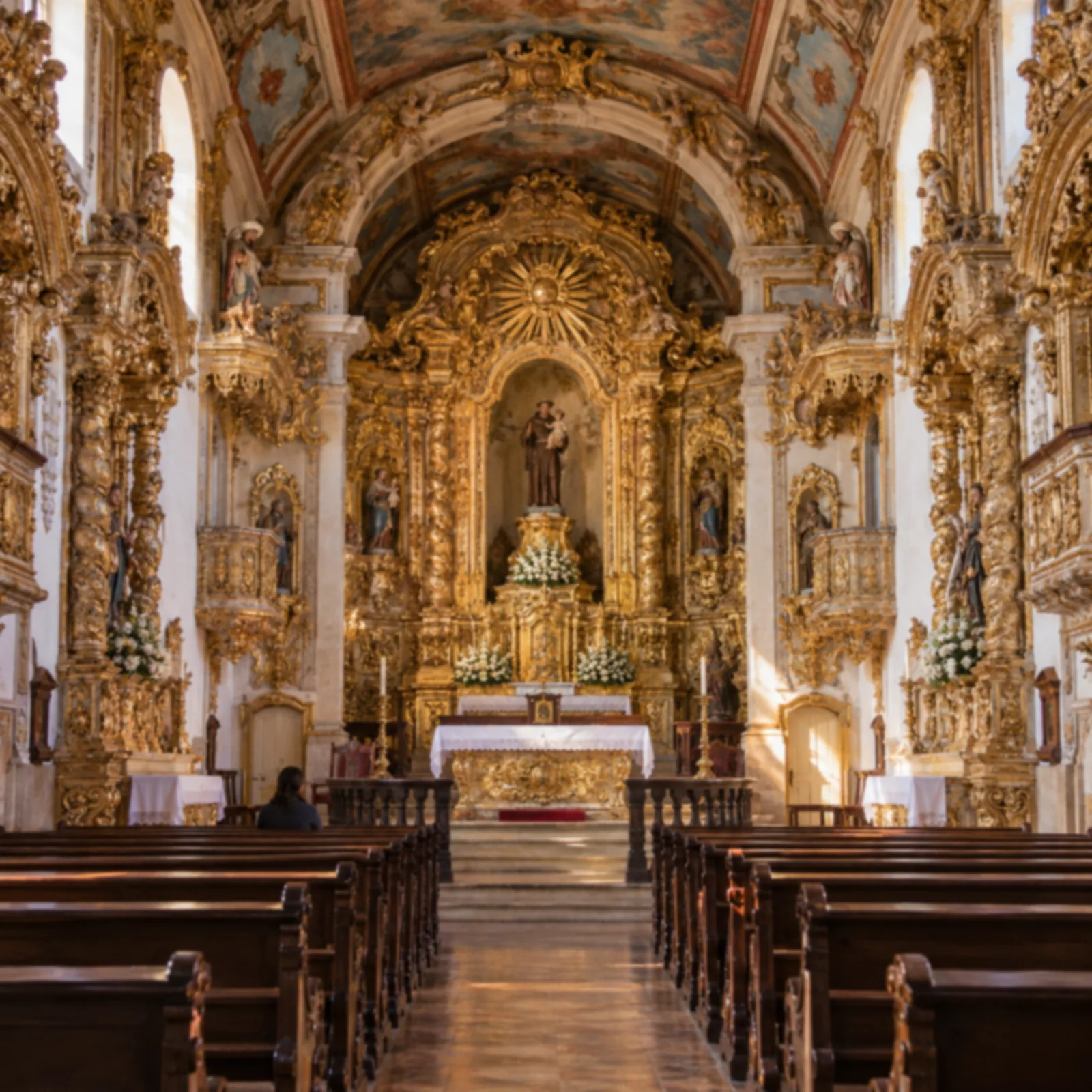
Considered Aleijadinho's masterpiece, it brings together the artist's architectural design, soapstone doorway and woodcarving with the ceiling painting by Mestre Ataíde. It is regarded as the high point of Brazilian Baroque.
Raziščite Igreja de São Francisco de Assis
Memorial in the house where Affonso Penna was born, in the historic center of Santa Bárbara. The rooms present his family and political life through documents, panels and objects; the garden houses the family's tomb.
Raziščite Memorial Affonso Penna
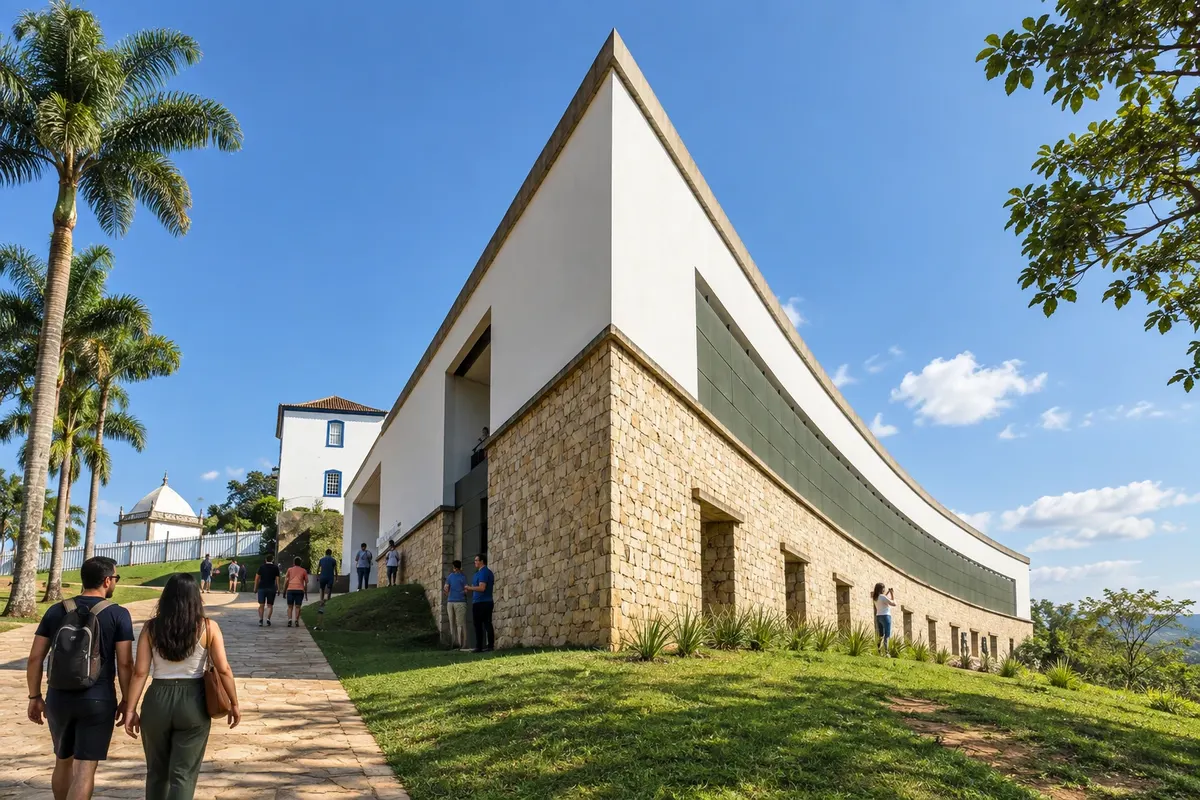
Memorial designed by Oscar Niemeyer and inaugurated in 1998 on the slope of Pico do Amor. It houses the poet's books, correspondence and personal documents, in a building with curved lines and a view of Itabira.
Raziščite Memorial Carlos Drummond de Andrade
Complex made up of historic buildings, art and history collections, and a tree-lined park in the Mariano Procópio neighborhood. The rooms and gardens present the museum's origins and aspects of 19th-century Brazil.
Raziščite Museu Mariano Procópio
A colonial manor house in the town center that brings together rooms about the history of Barbacena, from political life to railways, immigration and urban transformations. The historic residence itself is part of the experience.
Raziščite Museu Municipal de Barbacena
Museum housed in an 18th-century manor linked to the Ottoni family, in the bairro da Praia. The collection brings together sacred art, including imagens de roca used in processions, and allows visitors to learn about the domestic architecture of Serro.
Raziščite Museu Regional Casa dos Ottoni
Birthplace of Alberto Santos Dumont on a rural estate in the district of Mantiqueira. The museum houses letters, photographs and objects related to the family and to the history of aviation, accompanied by a wooded park.
Raziščite Museu de Cabangu – Casa Natal de Alberto Santos Dumont
Museum in the former public prison of Conselheiro Lafaiete, on Praça Tiradentes. The collection brings together historical documents, violas de Queluz, sacred pieces and objects linked to the life of the former city of Queluz.
Raziščite Museu e Arquivo Antônio Perdigão
State park of about 17 thousand hectares in the Serra do Espinhaço, north of Diamantina, with rocky campos, cerrado, waterfalls such as Cachoeira da Sentinela and Cachoeira dos Cristais, and the old workers' village of Biribiri.
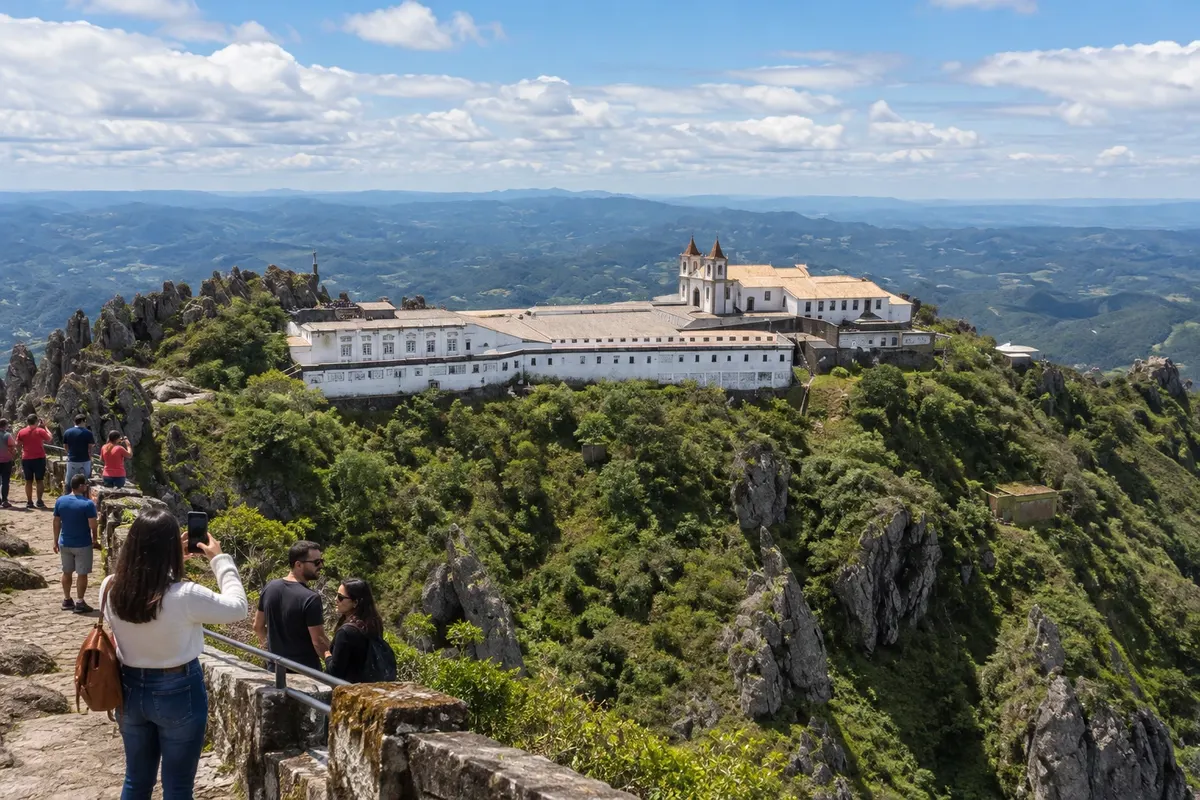
Religious complex atop the Serra da Piedade, with the historic hermitage and the Basílica das Romarias. The visit combines temples, rock formations, high‑altitude vegetation and views of the mountains surrounding Caeté.
Raziščite Santuário Basílica Nossa Senhora da Piedade
18th-century Baroque temple on Praça Monsenhor Gerardo. The façade has towers positioned diagonally and a soapstone image attributed to Aleijadinho; inside, the wood carving and the ceiling painting stand out.
Raziščite Santuário São João Batista
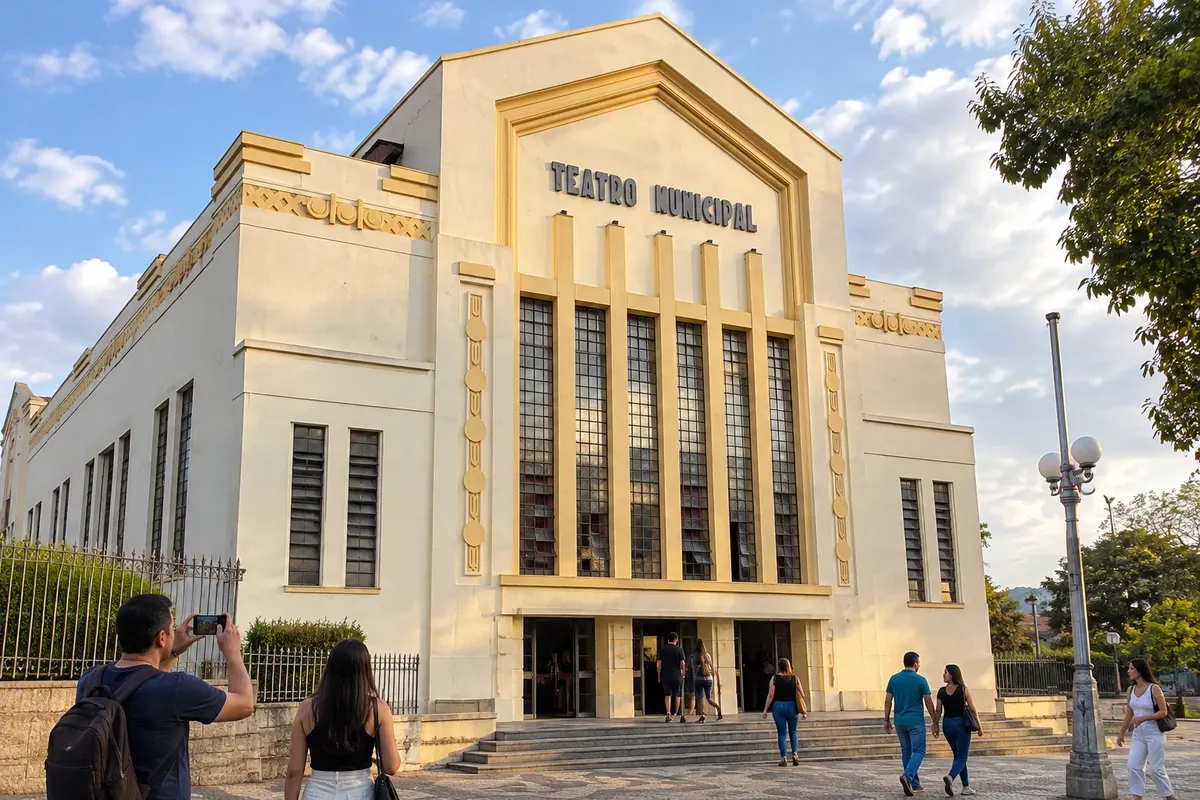
Theatre inaugurated in 1943 at Praça Bernardino de Lima, designed by Raffaello Berti and featuring Art Déco elements. The façade, the foyer and the auditorium are part of an active cultural space in central Nova Lima.
Raziščite Teatro Municipal Manoel Franzen de Lima
Sentinela Waterfall in Biribiri State Park, on the route between Diamantina and the village of Biribiri, with a pool at the base of the fall and, above, natural pools between stone slabs. The trail is short and starts from the parking area.
Cachoeira da Zilda is part of a rural complex in Carrancas with falls, pools, caves and a natural slide. Choose which spots to visit with guidance and plan your return to the town center.
The drop of the Rio das Pedras right in the village of São Gonçalo do Rio das Pedras, at the end of Rua da Cachoeira. Next to the small fall rises a rock wall about 85 meters high, used for rappelling, and there are century-old watermills.
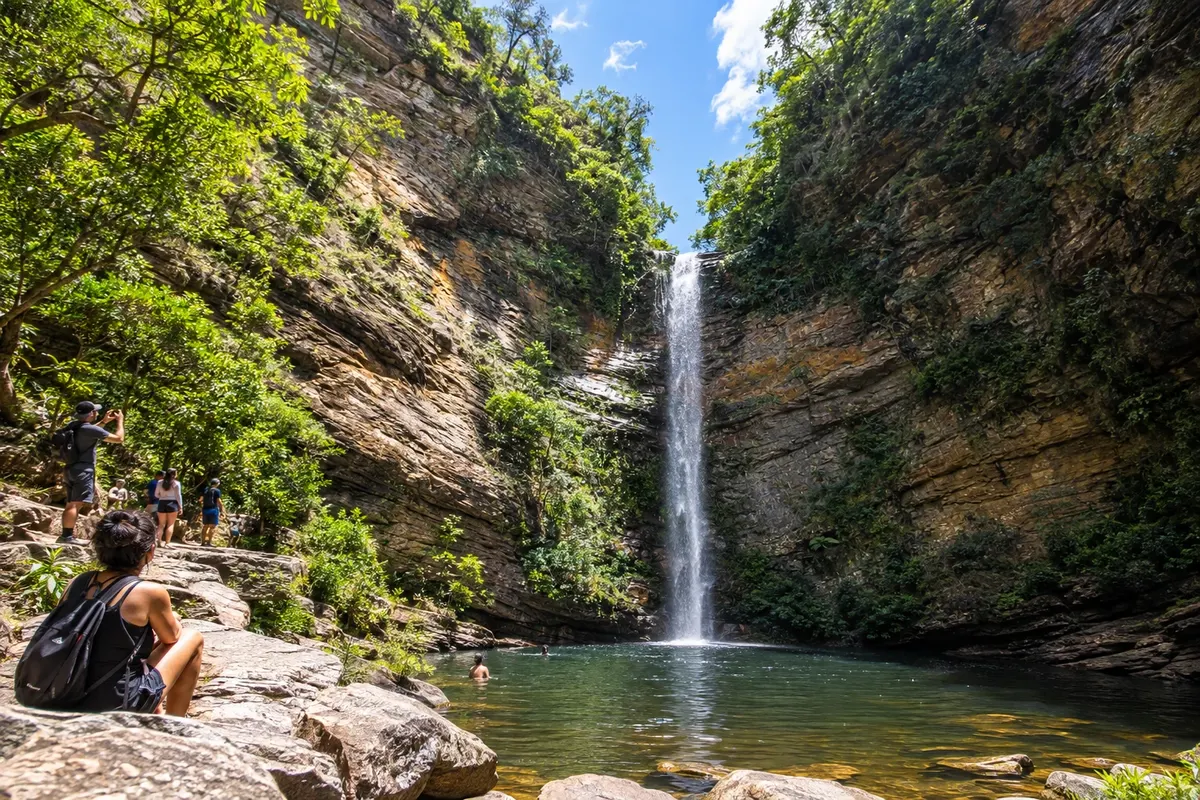
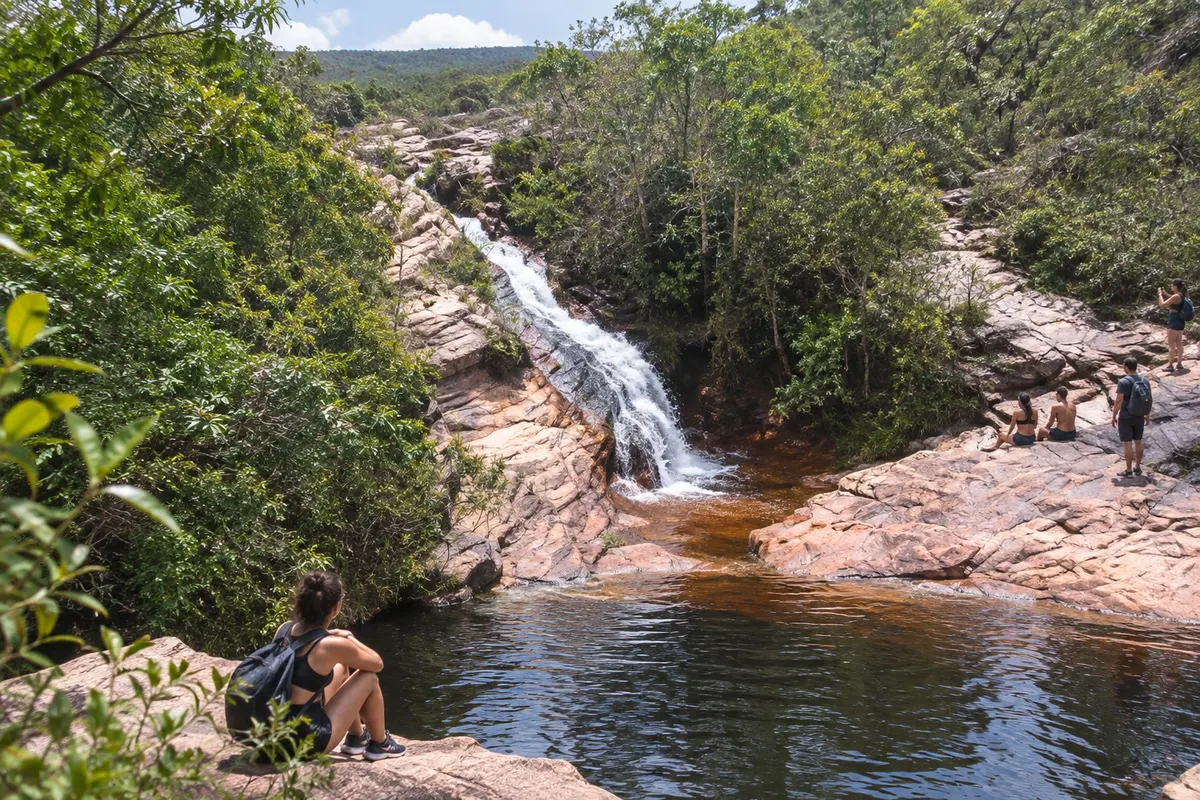
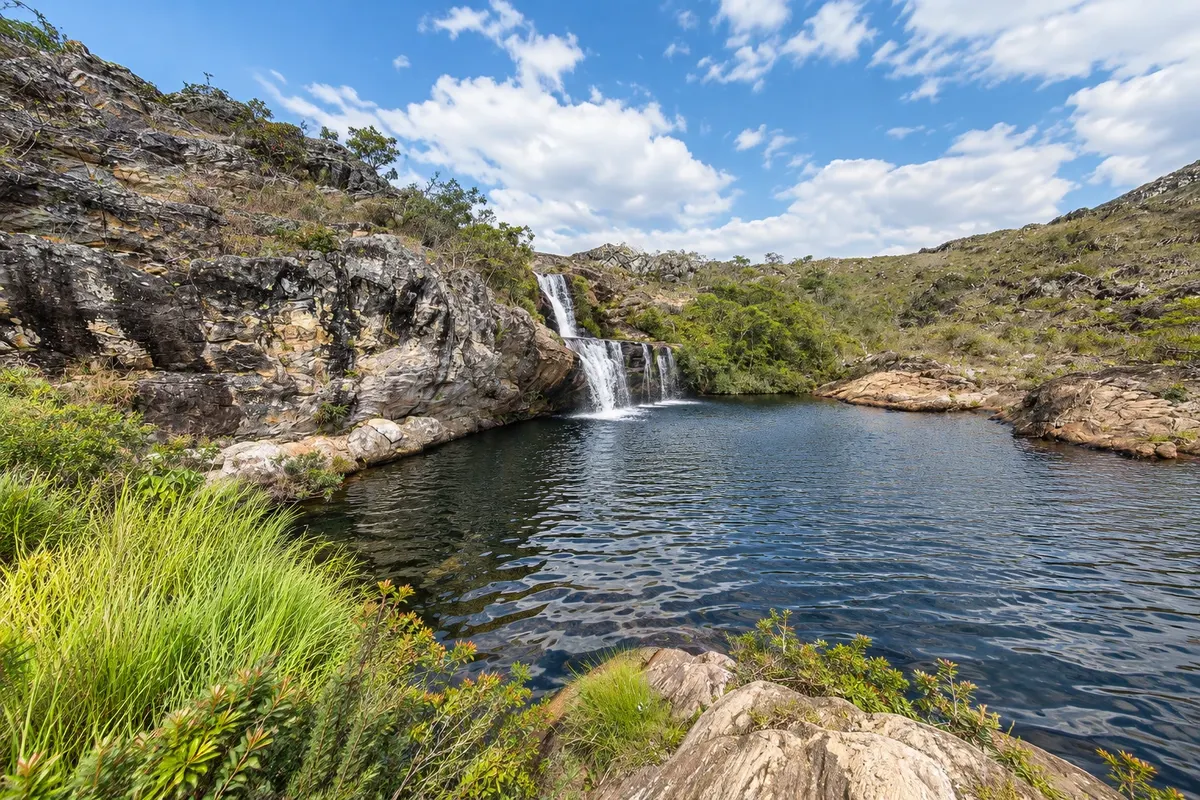
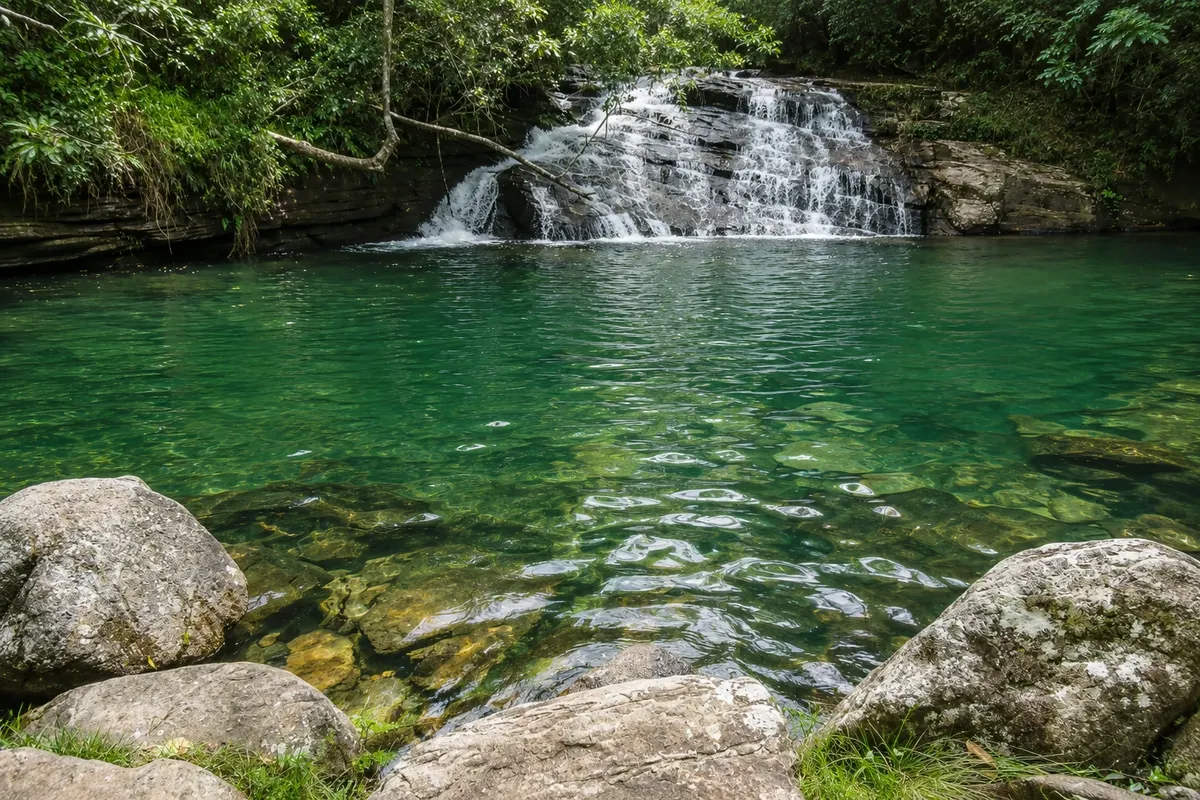
A sequence of three small drops on the same stream, with viewpoints along the trail and a shallow pool for bathing, about 4 km from the village of Lavras Novas, district of Ouro Preto.
Raziščite Three Drops Waterfall
An 18th-century wattle-and-daub house where the former president lived as a child and teenager. Turned into a museum, it displays personal belongings, photographs, a library and guitars used in serestas (serenades).
Raziščite Casa de Juscelino Kubitschek
The main church of the first bishopric seat in Minas, on Rua Direita, it houses an organ built by the German Arp Schnitger and sent by King João V in 1748. Restored in Spain, the instrument returned to concerts at the end of 2025.
Raziščite Catedral Basílica da Sé
Colonial ensemble of the former Vila do Príncipe, listed by Iphan in 1938 and cited as the first protected urban ensemble in Brazil. Stone slopes, manor houses and churches spread across the hills, with the Chapel of Santa Rita at the top.
Raziščite Historic Center of Serro
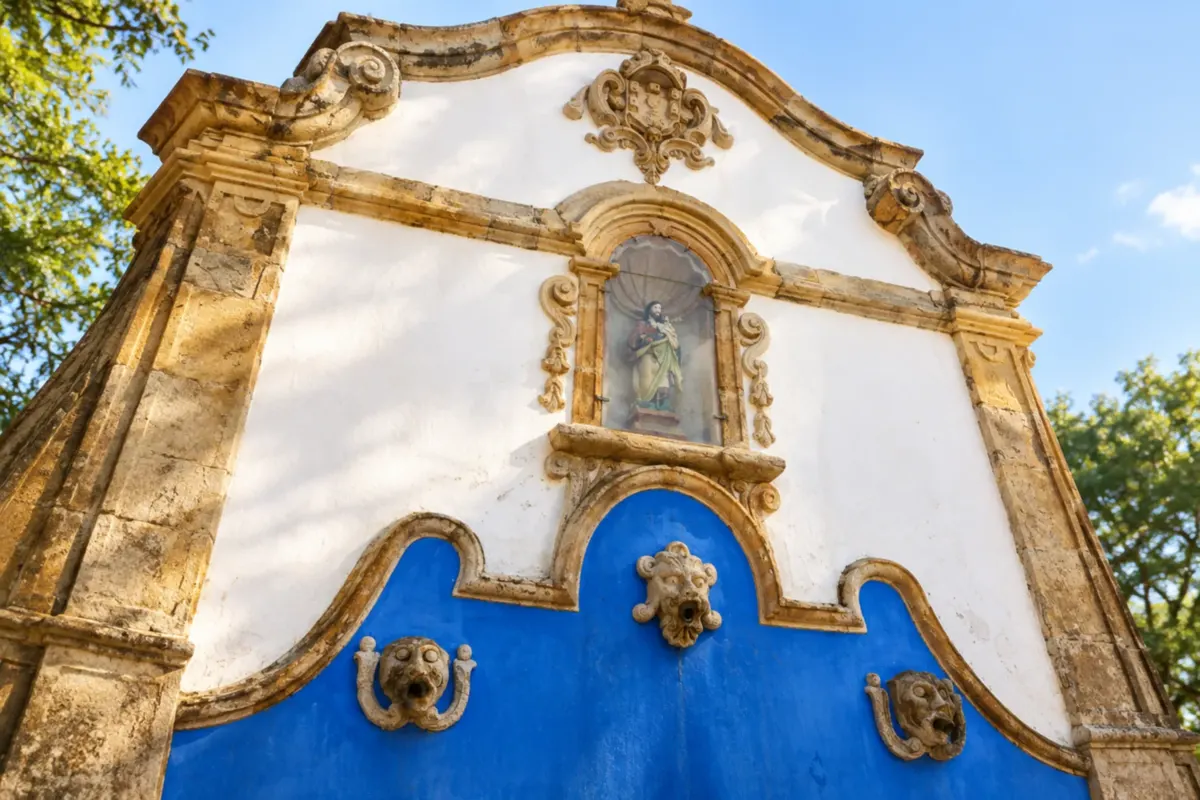
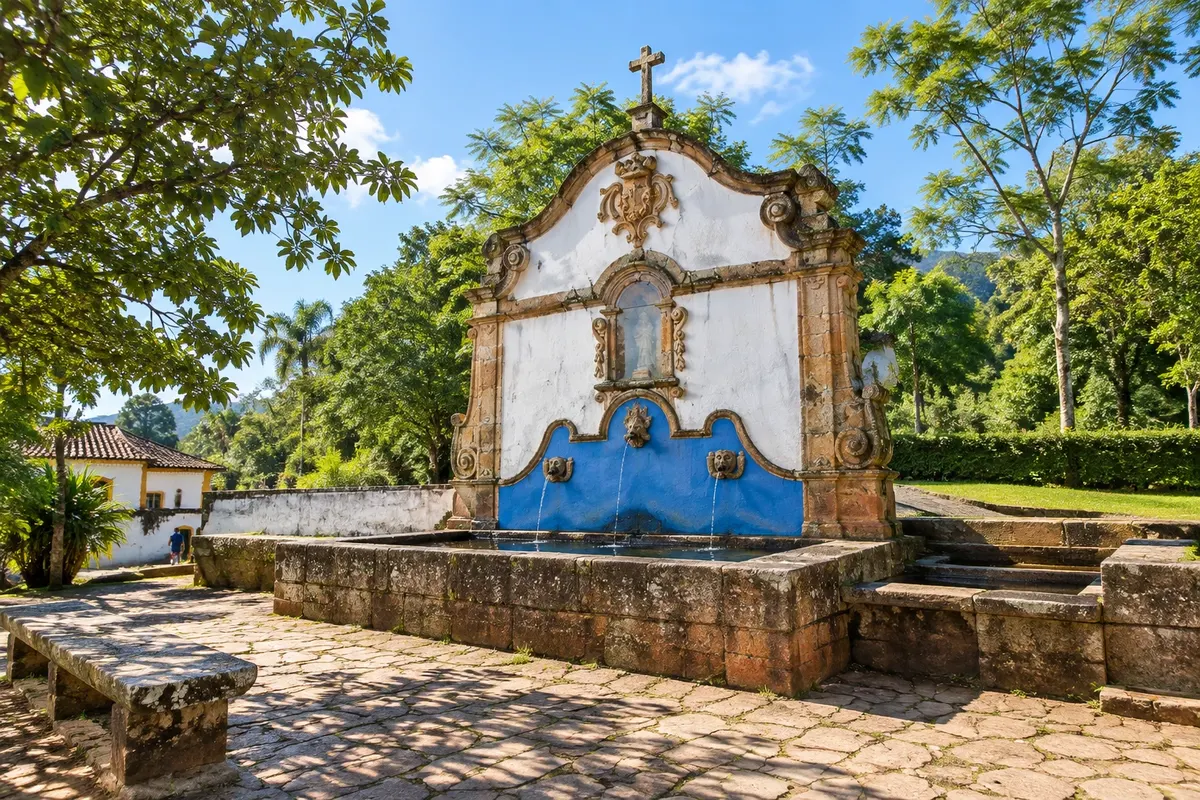
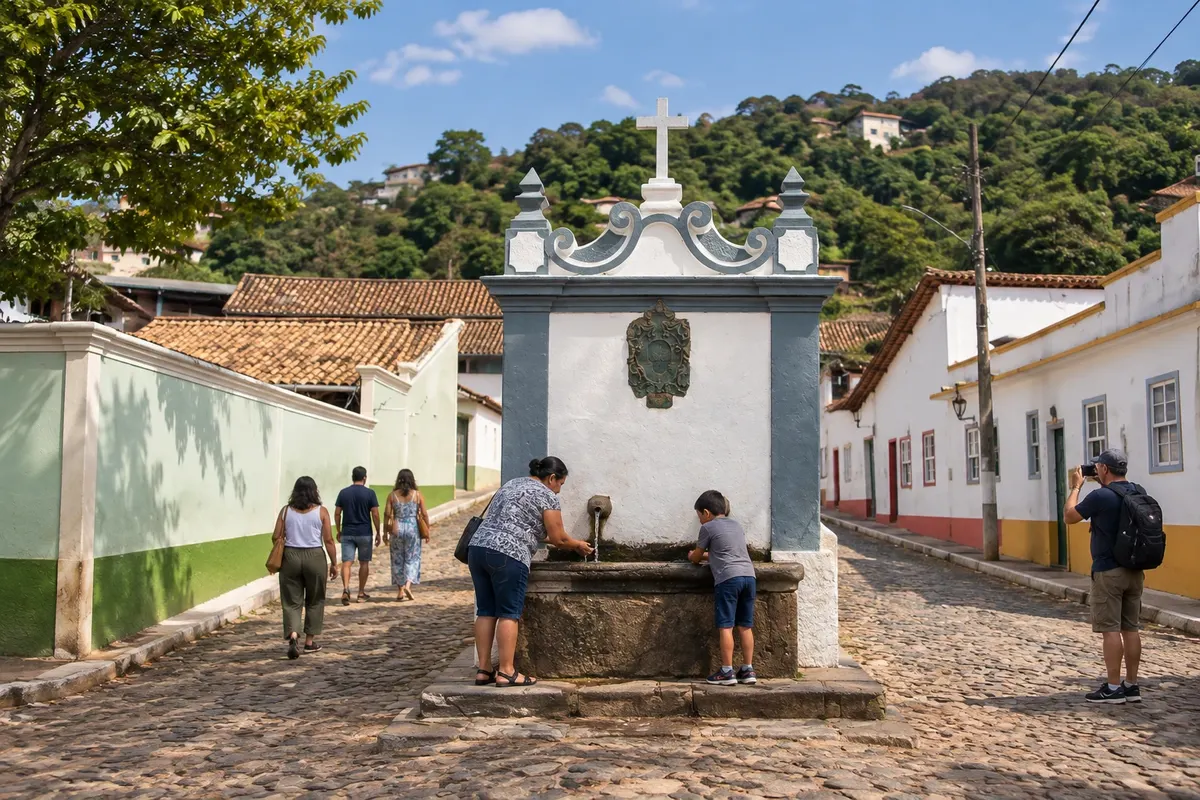
Built in 1749 at the initiative of the town council, it has three spouts with carved masks, a basin, a washing tank and a trough for animals. The Baroque facade bears the Portuguese coat of arms, and the complex has been protected by Iphan (Brazil's national heritage institute) since 1949.
Raziščite Chafariz de São José
Headquarters of the farm of Carlos Drummond de Andrade’s family, dismantled in 1973 to make way for a mining tailings structure and rebuilt in the Campestre neighborhood in Itabira as a cultural space of the Carlos Drummond de Andrade Cultural Foundation.
Parish church originating in the 18th century at Praça Dom Silvério, in Itabirito's historic center. The interior preserves carved woodwork and altars linked to colonial religious art.
Raziščite Igreja Matriz de Nossa Senhora da Boa Viagem
A three-nave main church from the early 18th century, considered one of the richest of its time in gilded woodcarving. The floor holds old tombstones and the ceiling has painted wooden coffers.
Raziščite Mother Church of Our Lady of the Conception
Parish church of Caeté built between 1752 and 1758, with a stone masonry façade, painted ceiling, and main altarpiece in the D. João V style. Listed by Iphan in 1938, it is considered the first stone masonry church in Minas Gerais.
Raziščite Mother Church of Our Lady of Good Success
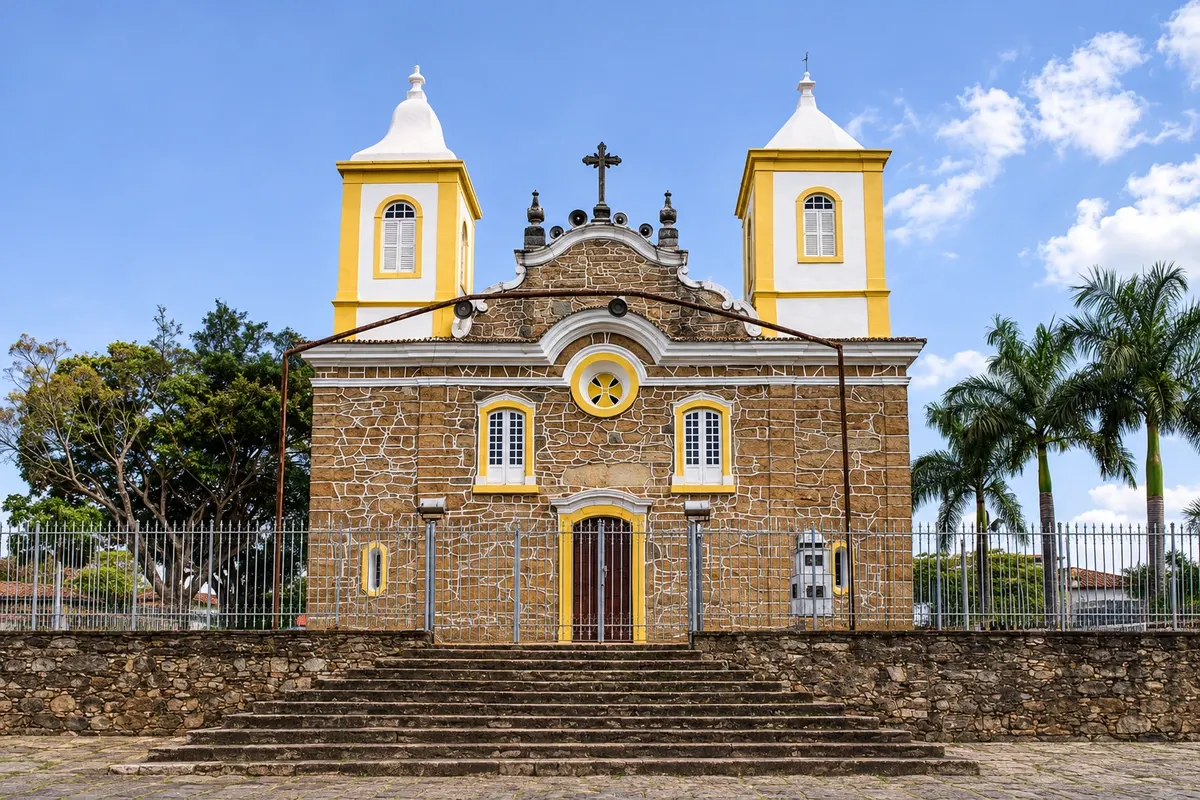
Matriz of Milho Verde, on elevated ground, with an almost intact interior: floor with graves, pulpits and baptismal font. Chica da Silva was baptized in the chapel that gave rise to it, around 1734. Listed as state heritage.
Raziščite Church of Our Lady of Pleasures (Mother Church)
Baroque mother church of Santa Bárbara, begun in 1713, in the town’s historic center. The ceilings of the chancel and the nave have paintings by Manoel da Costa Ataíde and his workshop, from the early 19th century, with the Assumption of the Virgin above the nave.
Raziščite Church of St. Anthony (Mother Church) (Igreja Matriz de Santo Antônio)
Lakes, trails and preserved woodland in the Mata do Krambeck, in the Santa Terezinha neighborhood. The garden brings together environmental education and visitor spaces amid the Mata Atlântica.
Raziščite Jardim Botânico da UFJF
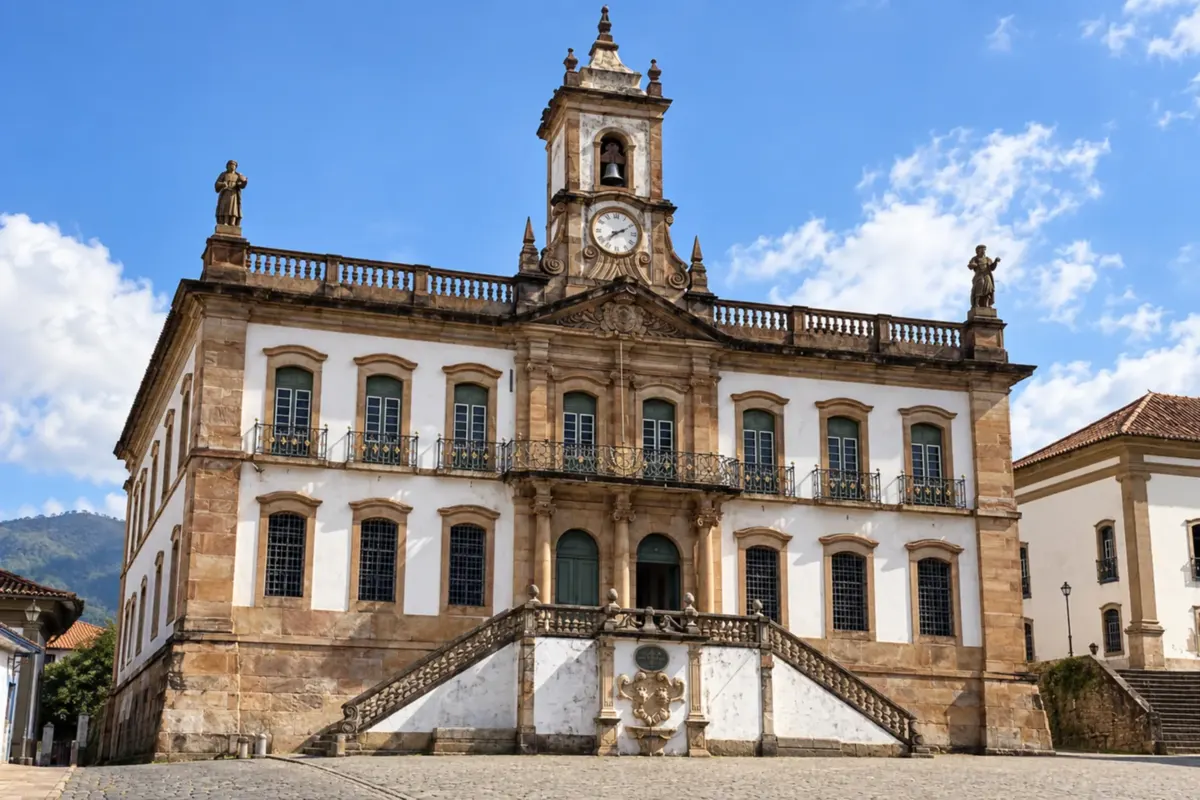
Housed in the old Casa de Câmara e Cadeia (town hall and jail), on Praça Tiradentes, it holds the collection linked to the Inconfidência Mineira (a 1789 independence plot) and items from colonial daily life. It also keeps the remains of the conspirators in the Panteão dos Inconfidentes.
Raziščite Museu da Inconfidência
Fhemig’s museum housed in the 1922 building of the former Hospital Colônia de Barbacena. Through objects, documents, photos and videos, it tells the history of psychiatry in Brazil, the mistreatment suffered by patients and the fight to end asylums.
Raziščite Museum of Madness of Barbacena
Opened in 2015 at the foot of the Santuário do Bom Jesus de Matosinhos, it is dedicated to the sanctuary complex and the work of Aleijadinho. It brings together original pieces, replicas, ex-votos (votive offerings) and information on soapstone and the pilgrimage.
State park created in 2009 in the mountain range that dominates the landscape of Ouro Branco, between Ouro Branco and Ouro Preto. It protects rocky grasslands and stretches of forest, with trails, natural pools and views over the town and the valley.
Raziščite Serra do Ouro Branco State Park
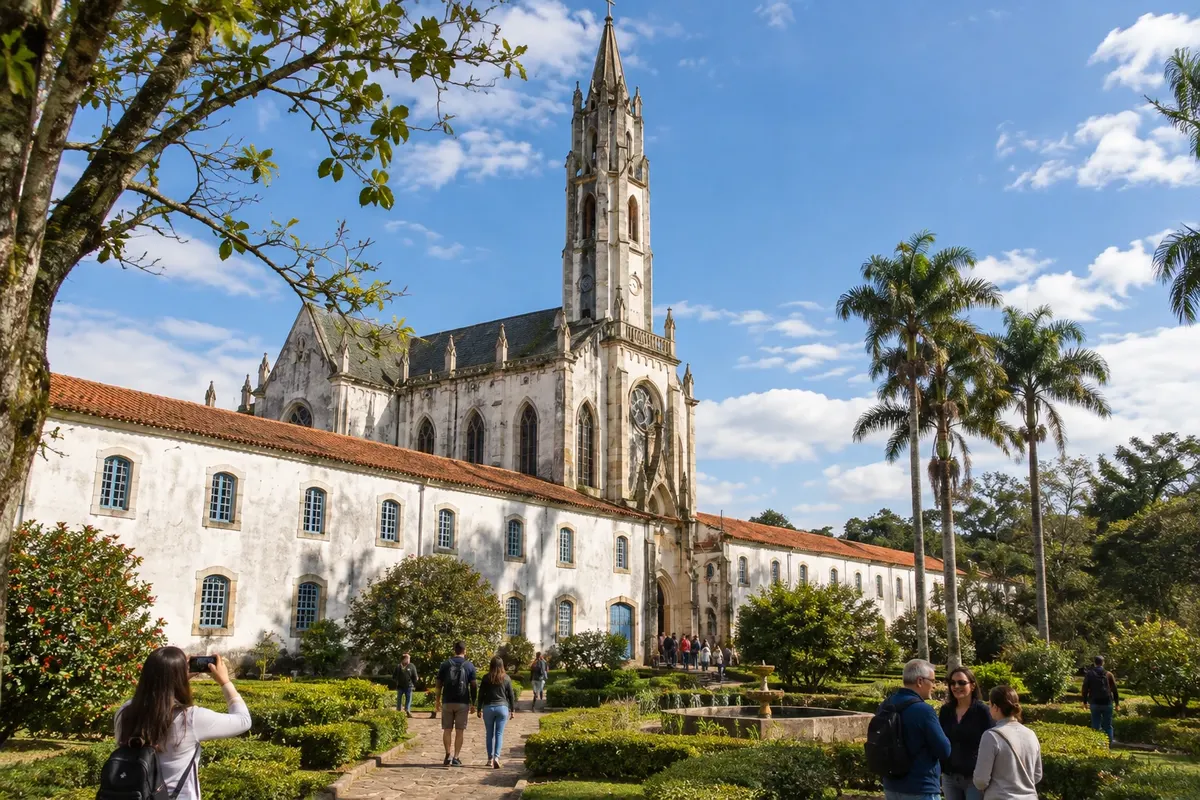
Historic complex surrounded by the Serra do Caraça, with a neo-Gothic church, museum and paths through the nature reserve. The visit brings together religious heritage, the memory of the former college and mountain landscapes.
Sanctuary of Conceição do Mato Dentro that hosts, every June, the Jubilee of Senhor Bom Jesus de Matosinhos, a pilgrimage held since 1787 and the city’s biggest festival. The image of Bom Jesus came from Portugal in the 18th century.
Raziščite Sanctuary of the Lord Good Jesus of Matosinhos
Group of quartzite shelters with rock paintings in the Serra da Conceição, near the village of Cocais. Researchers from UFMG recorded nearly 1,200 prehistoric figures there, almost all painted.
Raziščite Pedra Pintada Archaeological Site
A three-tiered high waterfall in the Serra do Espinhaço, between Conceição do Mato Dentro and Tabuleiro, with a swimming pool at the base of the rock face. The trail is signposted and easy, and the Peixe Tolo canyon is next to it.
Raziščite Rabo de Cavalo Waterfall
A sequence of drops that fall down a rock wall over 30 meters high in the district of Cocais, with natural showers and a large swimming pool at the base. Final access is by trail through the forest, near the Pedra Pintada Archaeological Site.
Series of rapids, two drops and several pools on the stream south of Milho Verde, a district of Serro, with a short access from the road. The name comes from an old mill by the water.
Cachoeira do Moinho is in the Complexo da Ponte, in Carrancas, set among a landscape of rocks, pools and vegetation. Access starts from the Carrancas–Itutinga road and requires guidance for the walk.
Waterfall of Biribiri State Park, near the village of Biribiri, with a large natural pool fed by a fall in the center, surrounded by rocks and rupestrian field of the Espinhaço Range.
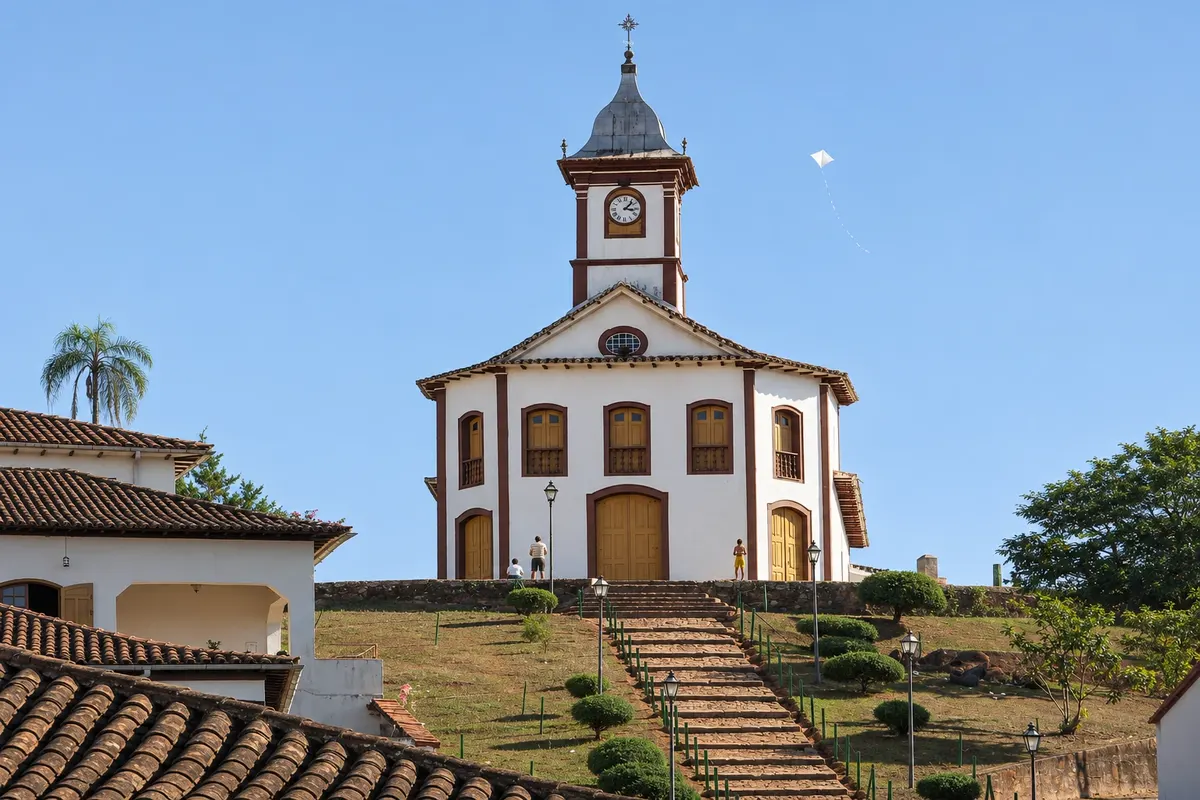
An 18th-century chapel atop a stone staircase of 57 steps, overlooking Serro’s historic center. It is the city’s most famous viewpoint over the colonial rooftops; inside, there is painting that imitates marble.
Raziščite Chapel of Saint Rita
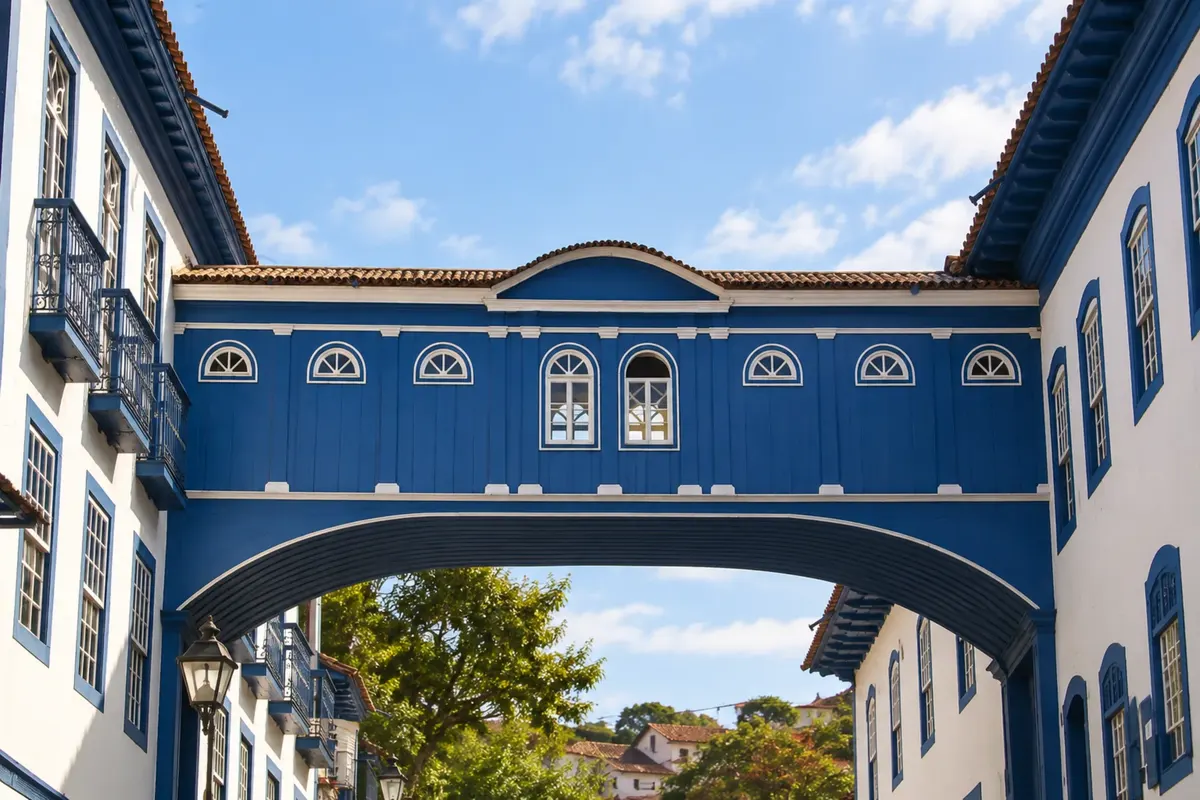
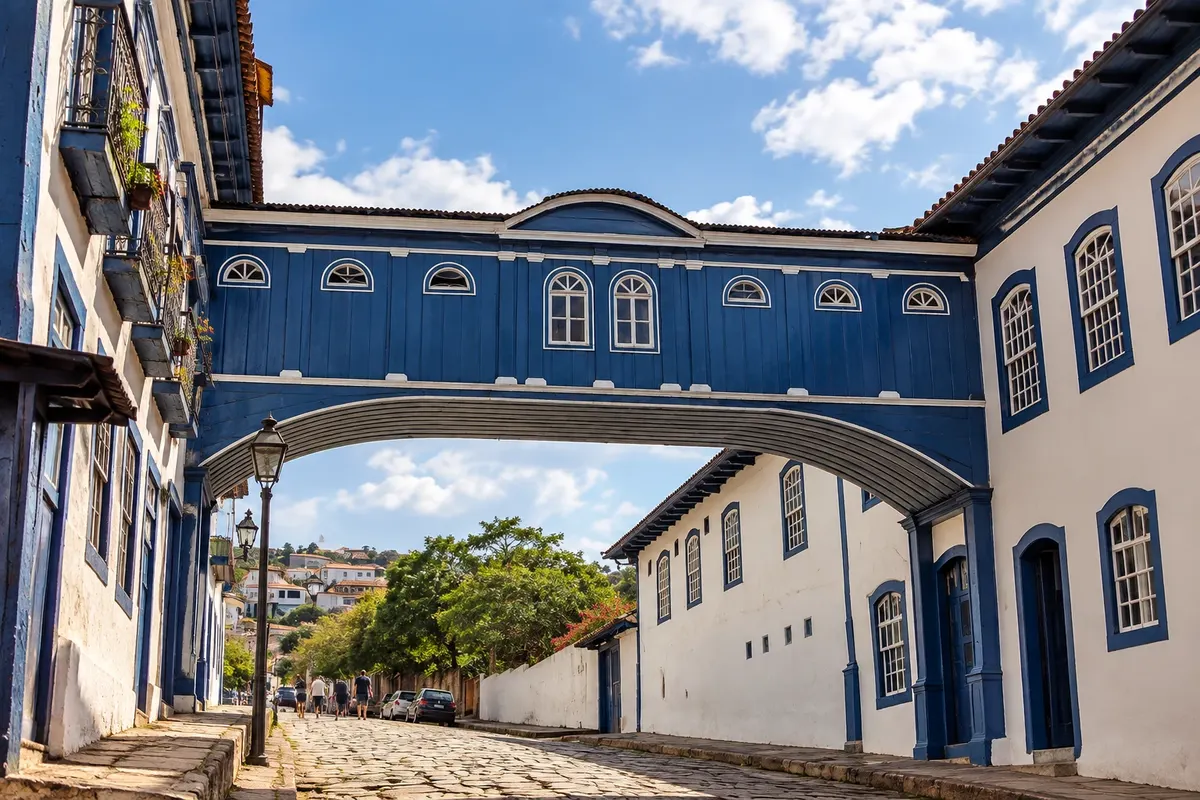
Two late-18th-century mansions joined by a covered walkway over the street, which served as a residence for intendants, a school and an orphanage. Restored, the complex belongs to UFMG (Federal University of Minas Gerais) and welcomes visitors.
Raziščite Casa da Glória e Passadiço
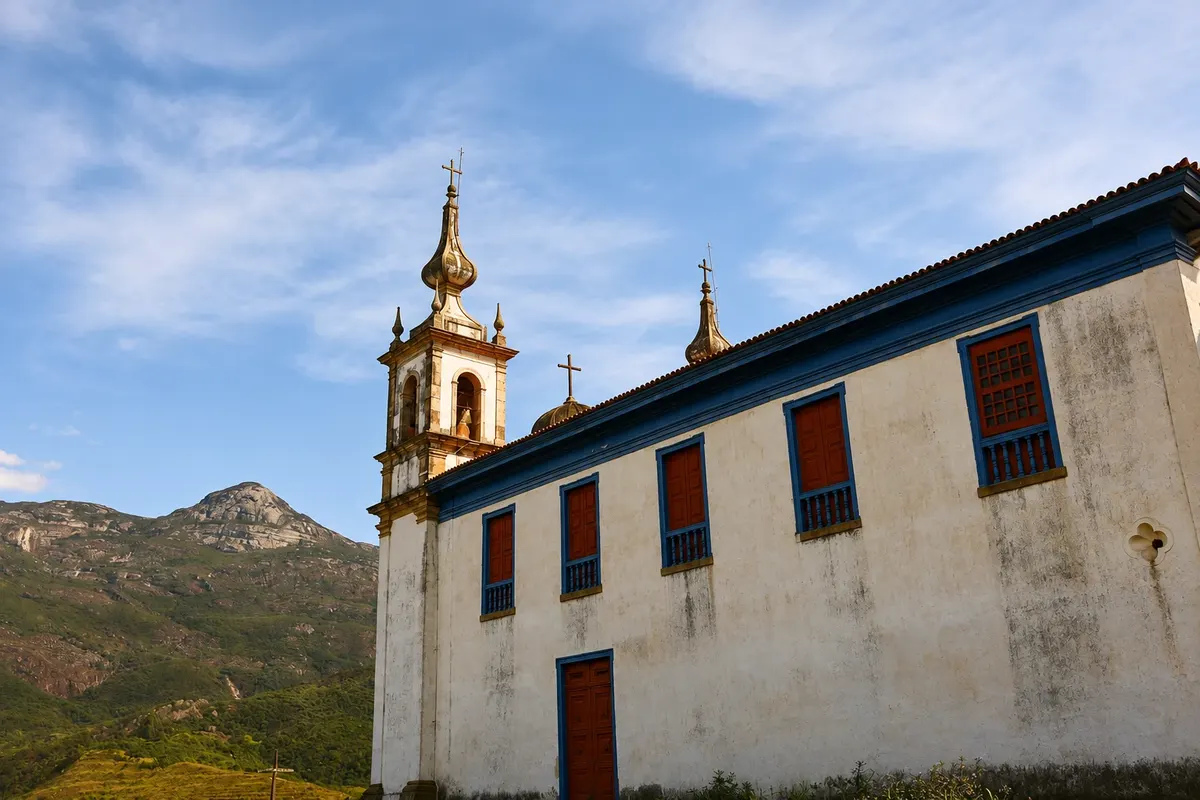
18th-century parish church on the large square of Catas Altas, with the Caraça Range in the background. Inside, side altarpieces from the first half of the 1700s and gilding in the chancel linked to the woodcarvers who worked in the settlement.
Raziščite Mother Church of Our Lady of the Conception
The church of the Third Order of Carmel, with a Rococo facade, a doorway decorated with sculptures and set-back octagonal towers. Inside there is woodcarving by Manuel Rodrigues Coelho and an unfinished statue of Christ without arms in the nave.
Raziščite Church of Our Lady of Mount Carmel
Begun in 1763, it received works by Aleijadinho between 1771 and 1774, such as the doorway, the pulpits and sculptures. Protected by Iphan (Brazil's national heritage institute), it is an example of the Minas Gerais Rococo.
Raziščite Church of Our Lady of Mount Carmel
Church that organizes the historic core of São Gonçalo do Bação. Its stone churchyard, central tower and surrounding streets reflect different phases in the district's development.
Raziščite Igreja de São Gonçalo do Bação
An old gold mine open to visitors, with narrow galleries dug by hand by enslaved workers in the 18th century. The visit tells the story of Chico Rei, the African who, according to tradition, bought his own freedom and that of his people.
Housed in the home that belonged to Father Carlos Correia de Toledo, a member of the Inconfidência (independence plot), it has operated since 1971 and is now part of UFMG's (Federal University of Minas Gerais) cultural campus in town. The painted ceilings and period furniture are among the highlights.
Raziščite Museu Casa Padre Toledo
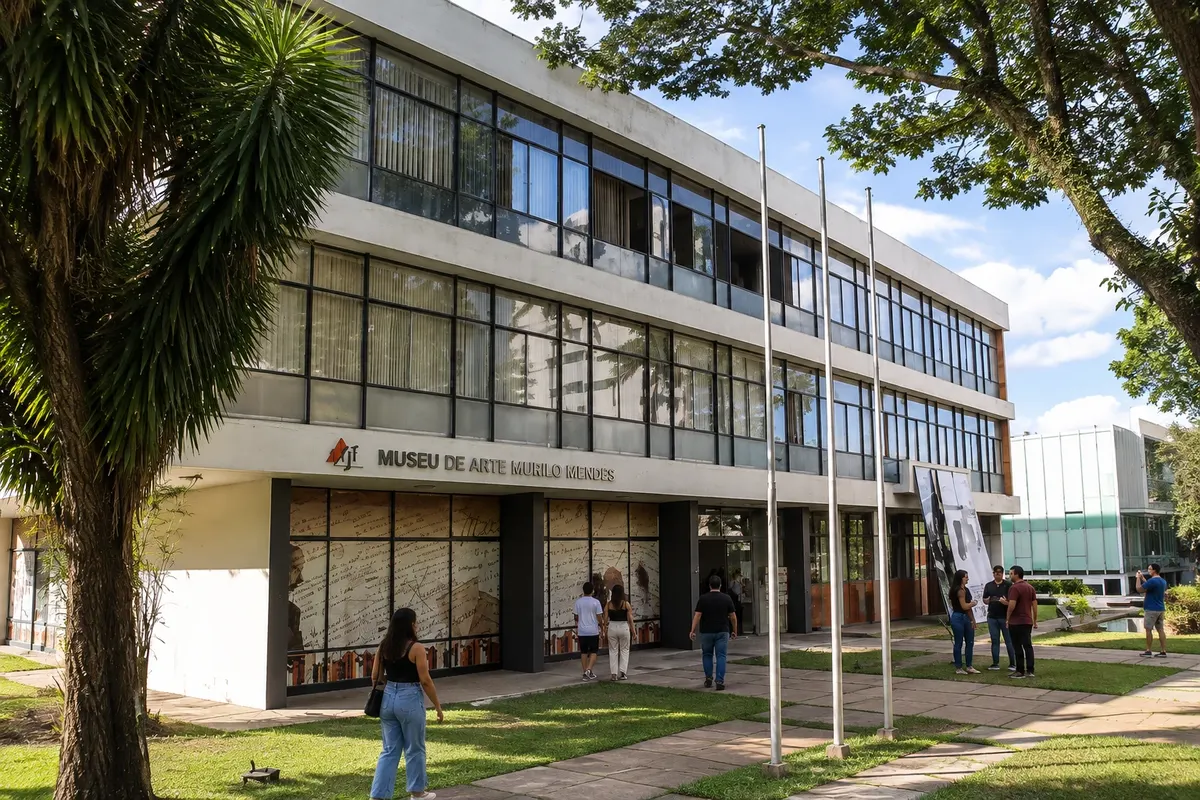
University museum that preserves the art collection and the library of the poet Murilo Mendes. Exhibitions bring literature and visual arts together in a building in the city center.
Raziščite Museu de Arte Murilo Mendes
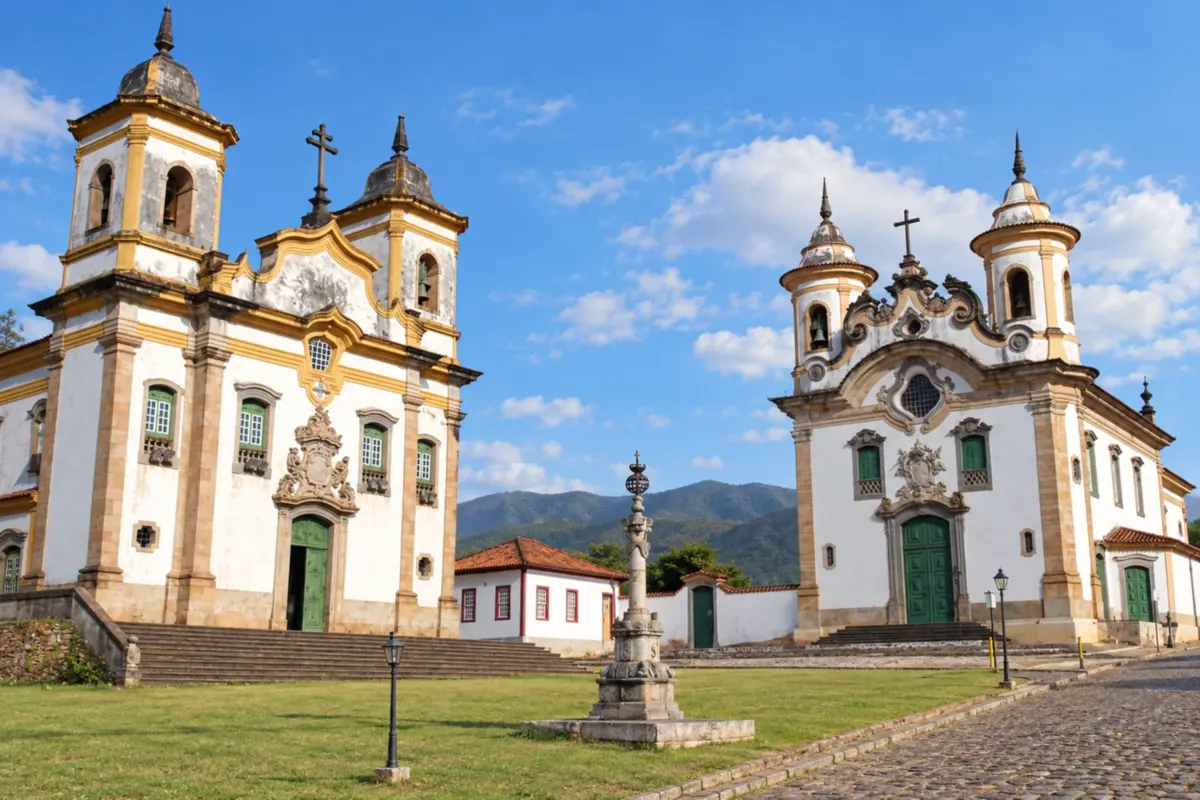
It brings together the churches of São Francisco de Assis and Nossa Senhora do Carmo, side by side, the old Casa de Câmara e Cadeia (town hall and jail) and the pillory. The two churches hold works attributed to Aleijadinho and form one of the best-known colonial ensembles in the state.
A circular building erected to house the pilgrims who came for the Jubileu do Bom Jesus (religious festival). Restored by the city in 1993, it became a cultural and events space with an inner courtyard.
The current building was begun around 1728 and the interior is entirely covered in gilded woodcarving; in 1733, the transfer of the Blessed Sacrament to the church prompted the Triunfo Eucarístico procession. A museum of sacred art operates in the basement.
Raziščite Basílica de Nossa Senhora do Pilar
Waterfall with a clear pool and easy access, almost next to the road, southeast of the village of Milho Verde, in the Serro district. It’s popular with families with children.
Tira Prosa is a reference waterfall and pool among Carrancas' nature outings. Plan the approach with local guidance and choose the visit according to access and water conditions.
Raziščite Cachoeira do Tira Prosa
Dating from 1734, it brings together different phases of the Baroque and has one of the largest naves in Minas Gerais, with richly decorated altars. The doorway is attributed to Aleijadinho.
Raziščite Mother Church of Our Lady of the Conception
A grassy, tree-lined central square surrounded by colonial mansions, the hub of life in the historic town. It is the starting point for horse-drawn carriage rides and hosts fairs and cultural events throughout the year.
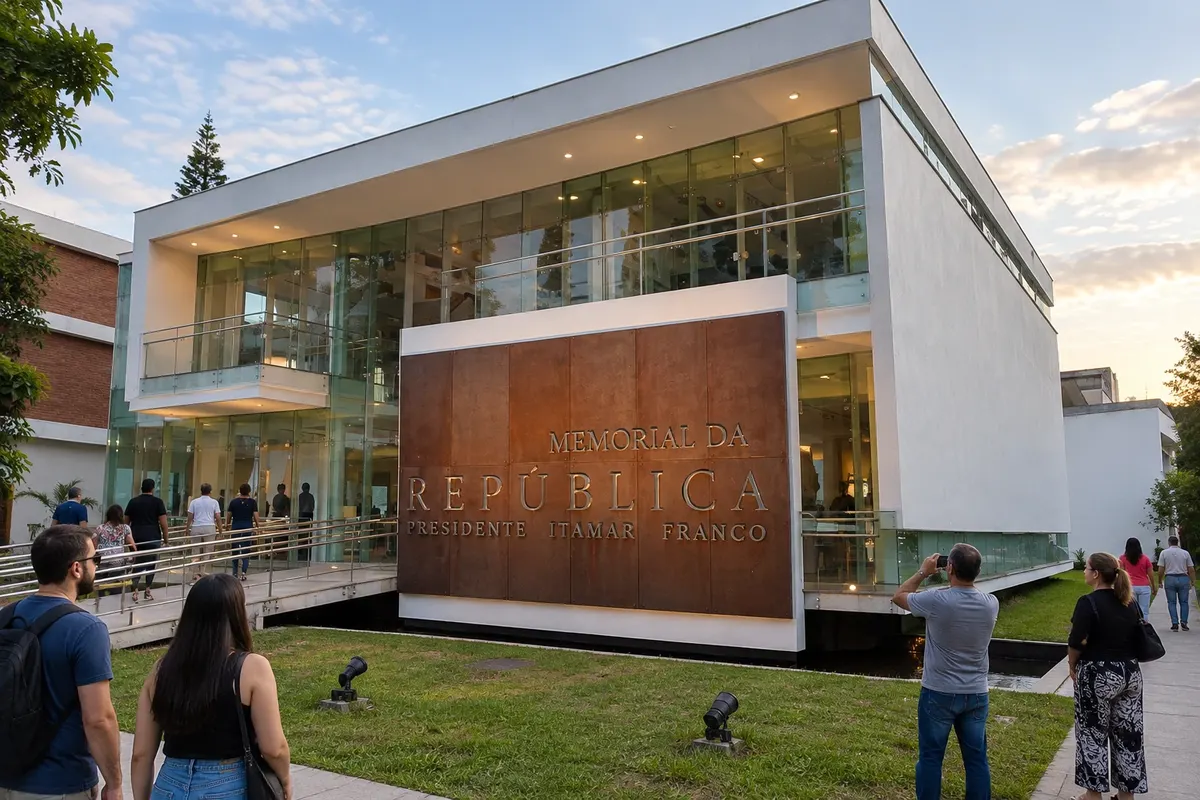
University memorial dedicated to the trajectory of Itamar Franco and to republican history. The collection brings together objects, documents and records of his political activity.
Raziščite Memorial da República Presidente Itamar Franco
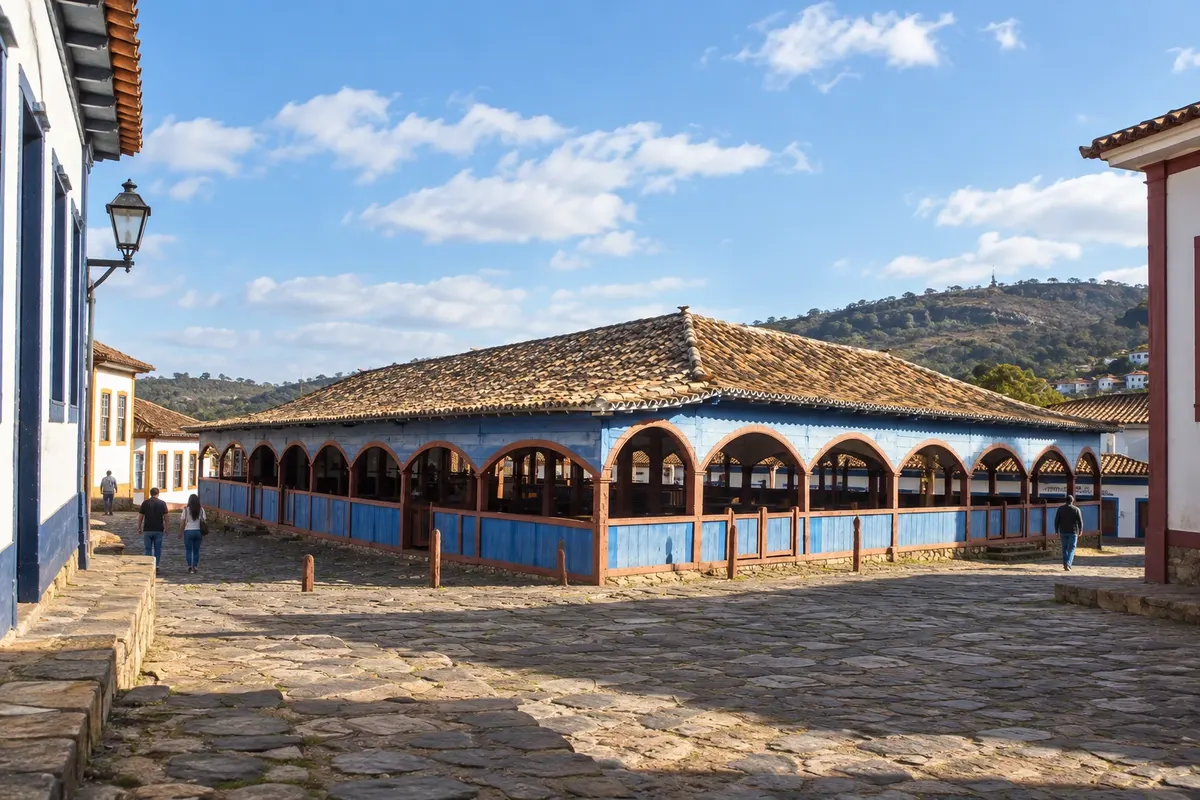
Built in 1834 as a resting place and trading post for tropeiros (mule drivers), it has a wooden structure with half-moon arches. On Praça Barão de Guaicuí, it hosts a handicraft fair, traditional food and music on weekends.
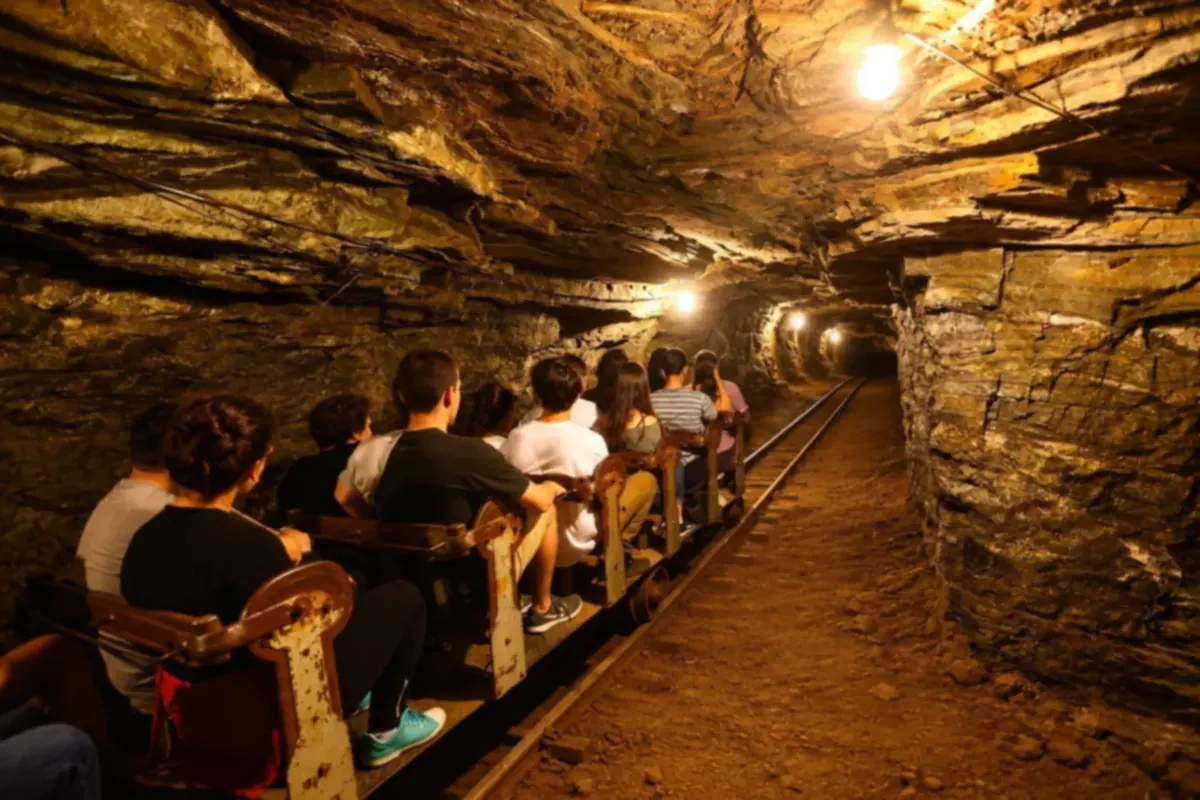
One of the largest gold mines open to visitors in the world, explored on a cart that runs down the tracks to an underground lake of clear water. The descent passes through galleries dug since the 18th century.
Founded in 1961 by Archbishop Oscar de Oliveira and opened the following year, it occupies a mansion in the historic center. The collection has about 2,000 pieces of sacred art, including statues, paintings, silverware and furniture.
Raziščite Museu Arquidiocesano de Arte Sacra
A private collection of old objects beside BR-356, between Itabirito and Ouro Preto. Records, instruments and everyday items share space in an informal display.
It occupies the townhouse of commander João Antônio da Silva Mourão, one of the most refined residences of the Second Reign (the reign of Emperor Pedro II), listed in 1946 and opened as a museum in 1963. The collection includes furniture, sacred art and 19th-century sculptures.
Raziščite Museu Regional de São João del-Rei
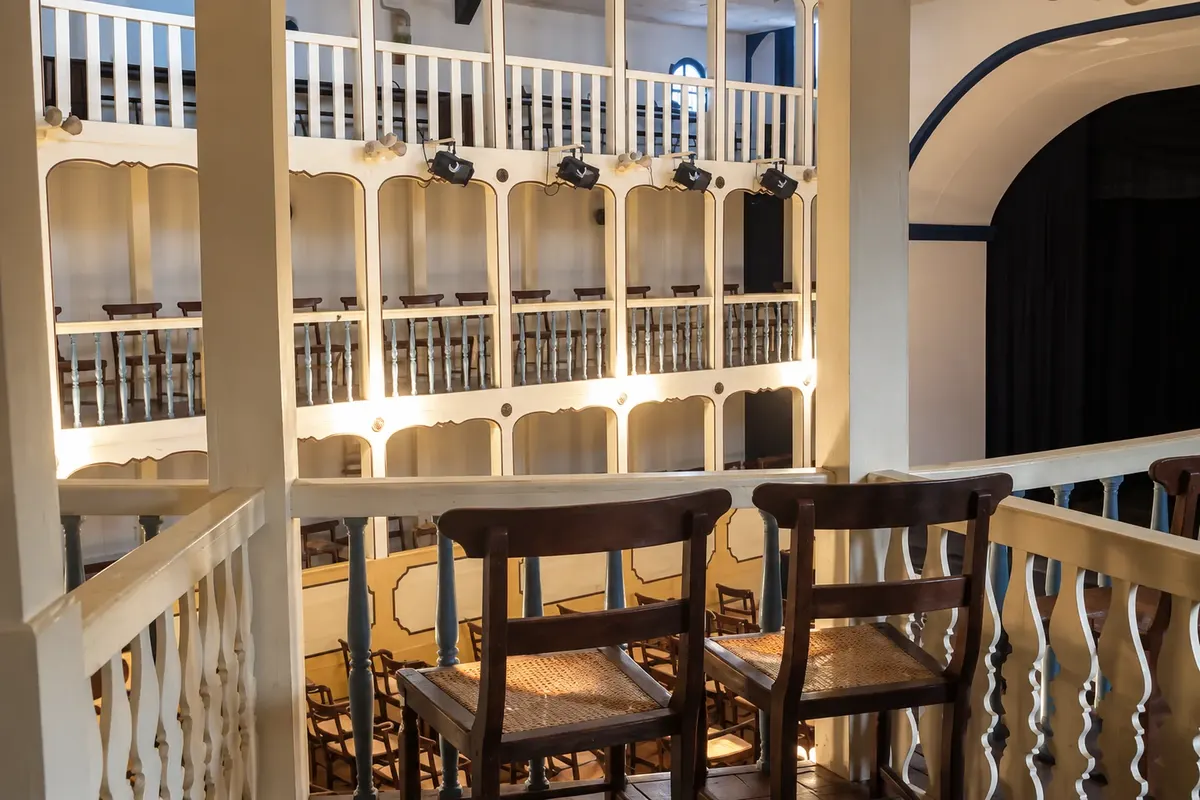
Opened in 1819, it is considered the second-oldest theater still operating in Brazil. The horseshoe-shaped auditorium with wooden boxes follows the Elizabethan model and still hosts cultural programs.
Raziščite Municipal Theatre (House of Opera)
Small drop into a large pool of green, transparent water at the end of the trail in the Vargem Grande complex, west of downtown Carrancas. Along the way there are other swimming pools, such as Beija-Flor and Três Irmãos.
A townhouse built between 1782 and 1784 by the contractor João Rodrigues de Macedo, later the Crown's tax collection office and gold foundry. Linked to the Inconfidência Mineira (a 1789 independence plot), it is where the poet Cláudio Manuel da Costa died, and today it is a museum.
Built in 1757, it has supplied the town with water for more than two centuries and is one of the landmarks of the historic center. The facade still shows traces of the Portuguese coat of arms, torn off after Independence.
Raziščite Chafariz do Kaquende
Built in the 18th century at the top of a hill, it has a layout with an elliptical nave, and part of its interior decoration was left unfinished. The churchyard serves as a lookout over the roofs and towers of the historic center.
Raziščite Igreja de São Pedro dos Clérigos
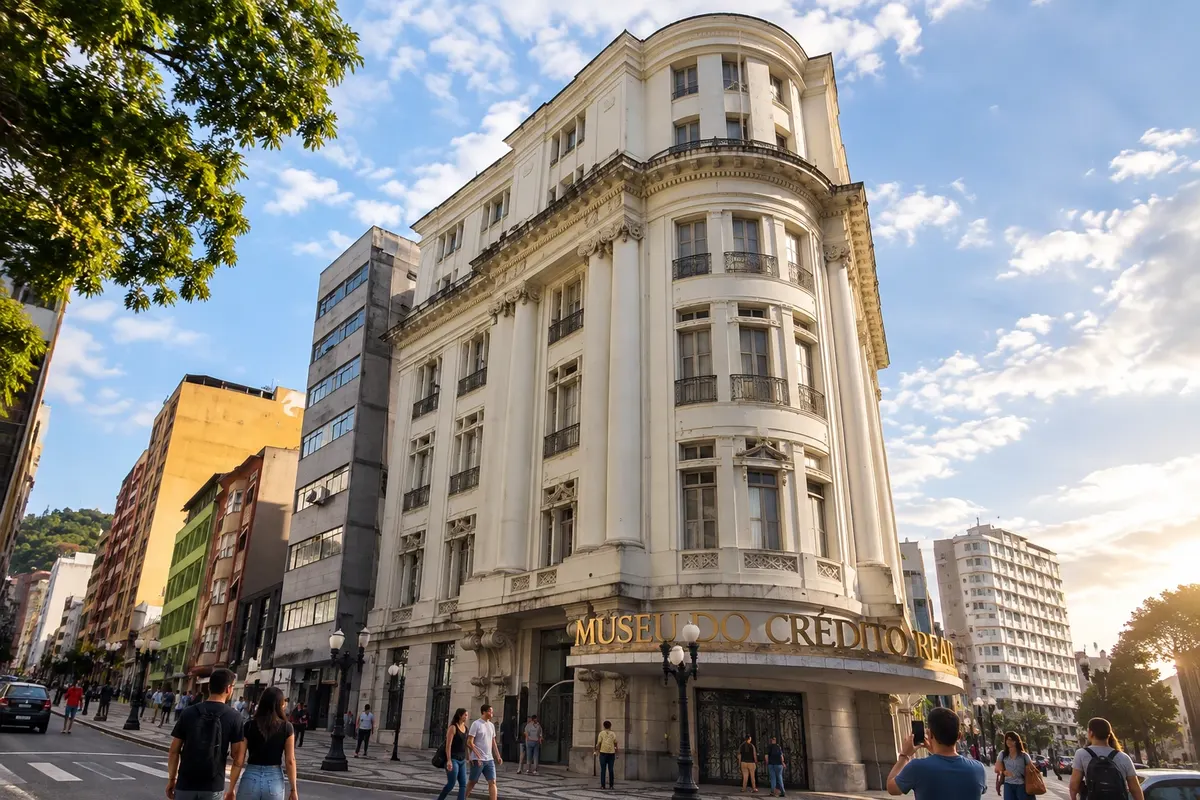
Collection about the history of banking in the former building of the Banco de Crédito Real. Coins, equipment and furniture help to understand financial life in earlier times.
Raziščite Museu do Crédito Real
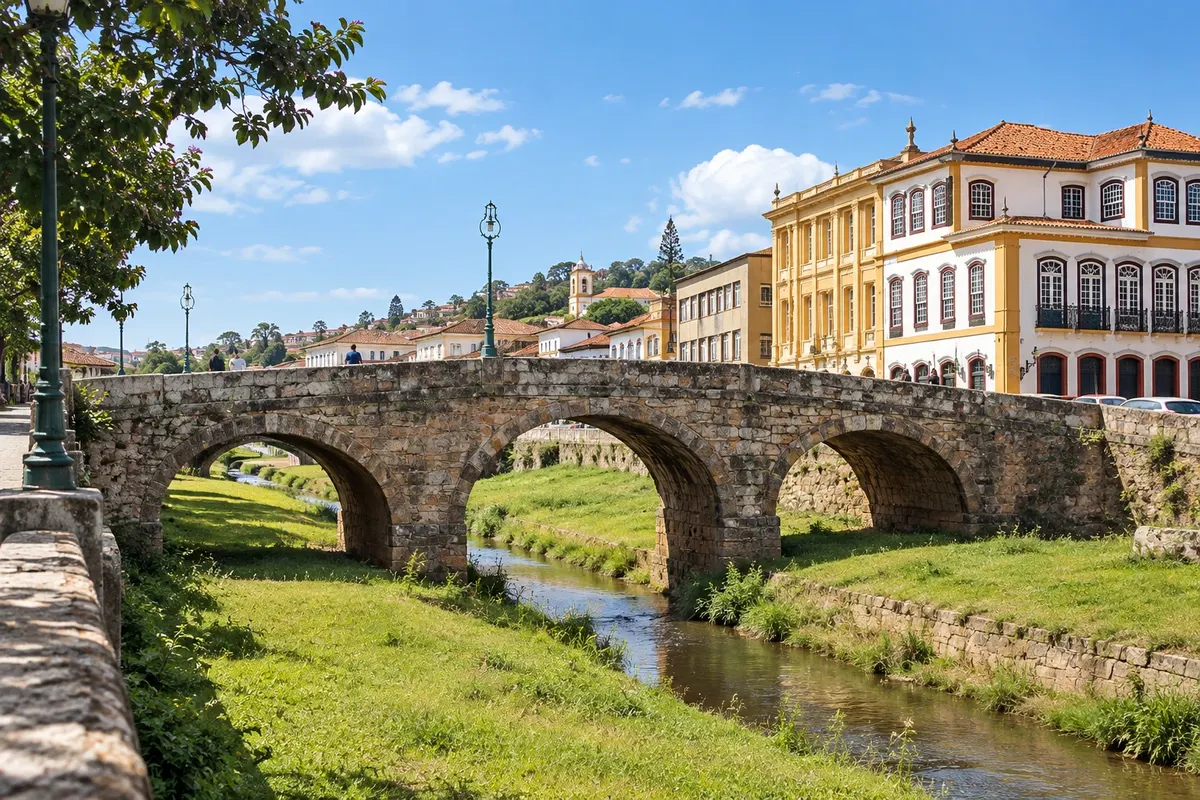
A Roman-style stone bridge completed in 1798, after the old wooden bridge collapsed during a procession. The name comes from the town hall and jail building that stood next to it.
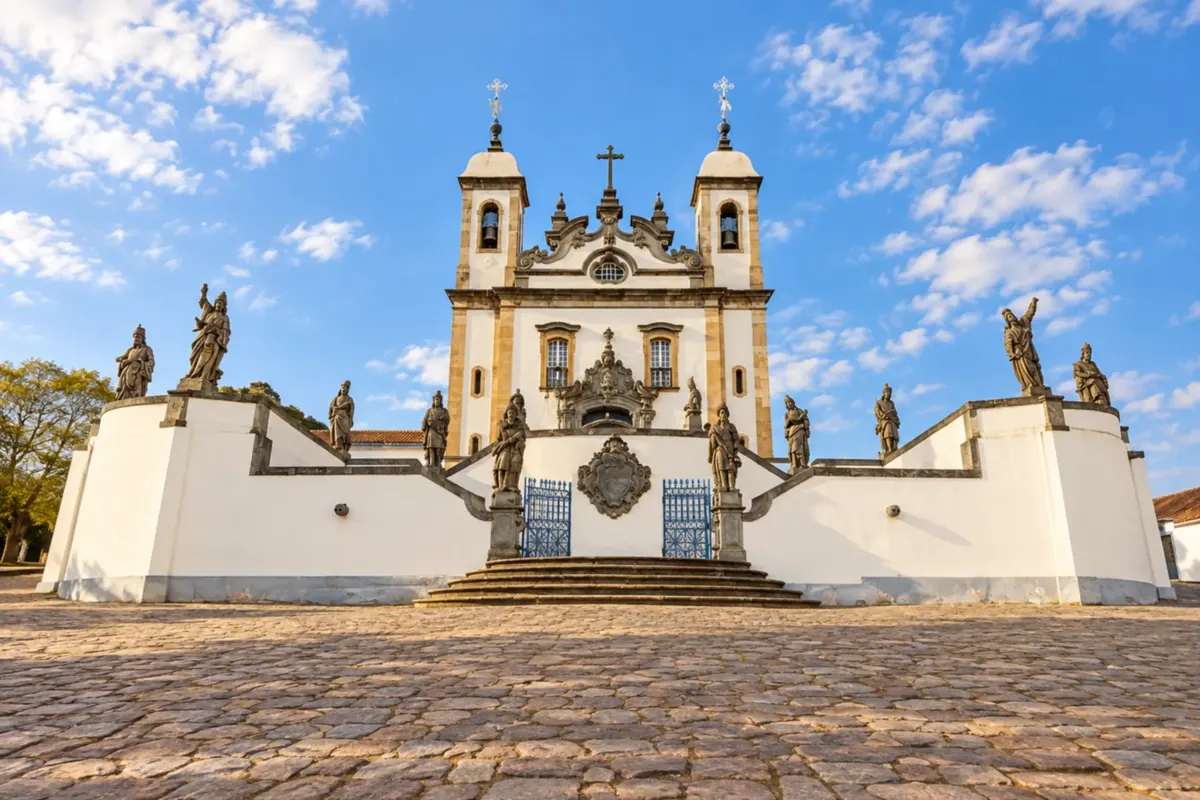
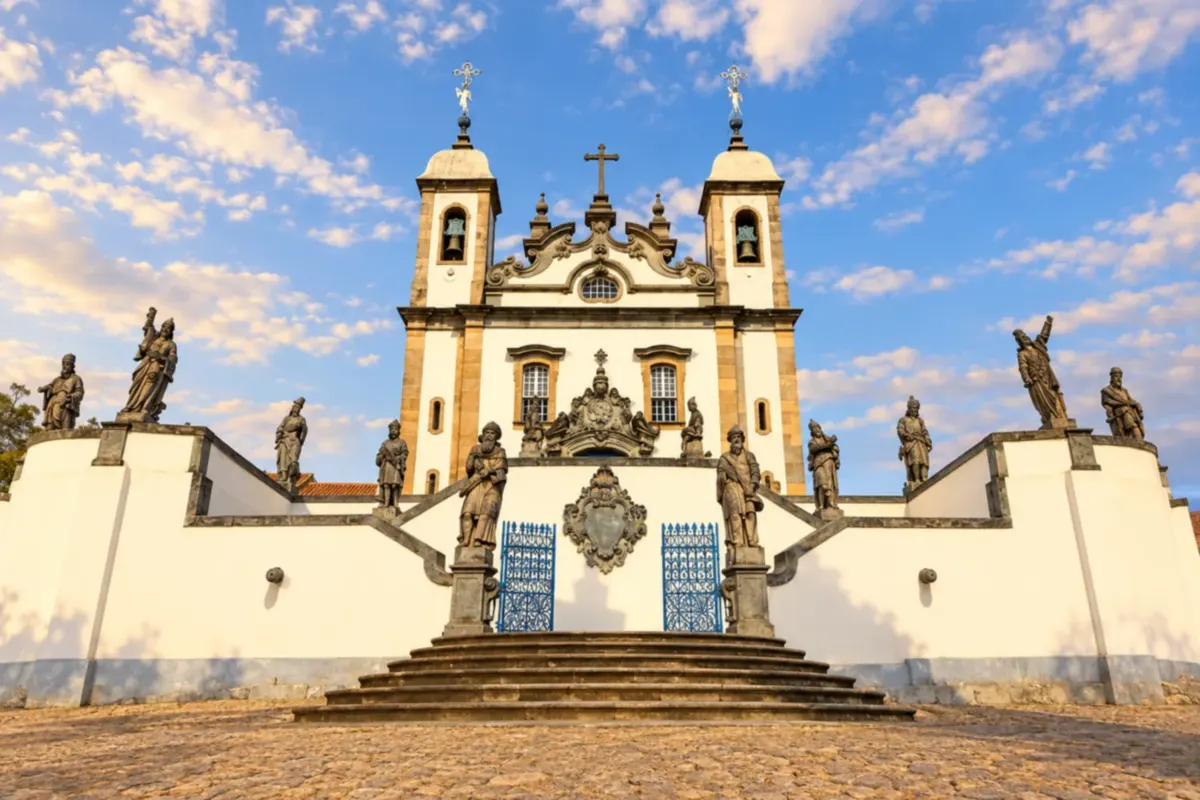
A UNESCO-recognized complex where Aleijadinho carved in soapstone the twelve figures of the prophets that guard the basilica's churchyard. In the chapels along the path are the Stations of the Passion, in polychrome cedar.
Raziščite Santuário do Bom Jesus de Matosinhos e os Doze Profetas
A quartzite ridge that frames the town and is protected as an environmental protection area and wildlife refuge. Its trails pass through forests, springs and viewpoints, including stretches of an old stone-paved road.
A workers' village built around a textile factory founded in 1876 and closed in 1973, about 14 km from the center. The complex, listed by Iepha (the Minas Gerais state heritage institute) in 1998, is next to the Parque Estadual do Biribiri, with waterfalls.
Central temple of Juiz de Fora, dedicated to Santo Antônio. The façade with two towers and the interior of sacred art distinguish the religious complex on Avenida Rio Branco.
Raziščite Catedral Metropolitana de Santo Antônio
Colonial ensemble of the former Arraial do Tejuco, the center of diamond mining in the 18th century, with stone slopes, houses with balconies and churches. Listed by Iphan in 1938, it has been a UNESCO World Heritage Site since 1999.
Raziščite Historic Centre of Diamantina
Colonial core of Mariana, the first town, city and capital of Minas Gerais, with streets laid out in the 18th century, baroque churches, manor houses and squares. The ensemble is protected by Iphan.
Raziščite Historic Centre of Mariana
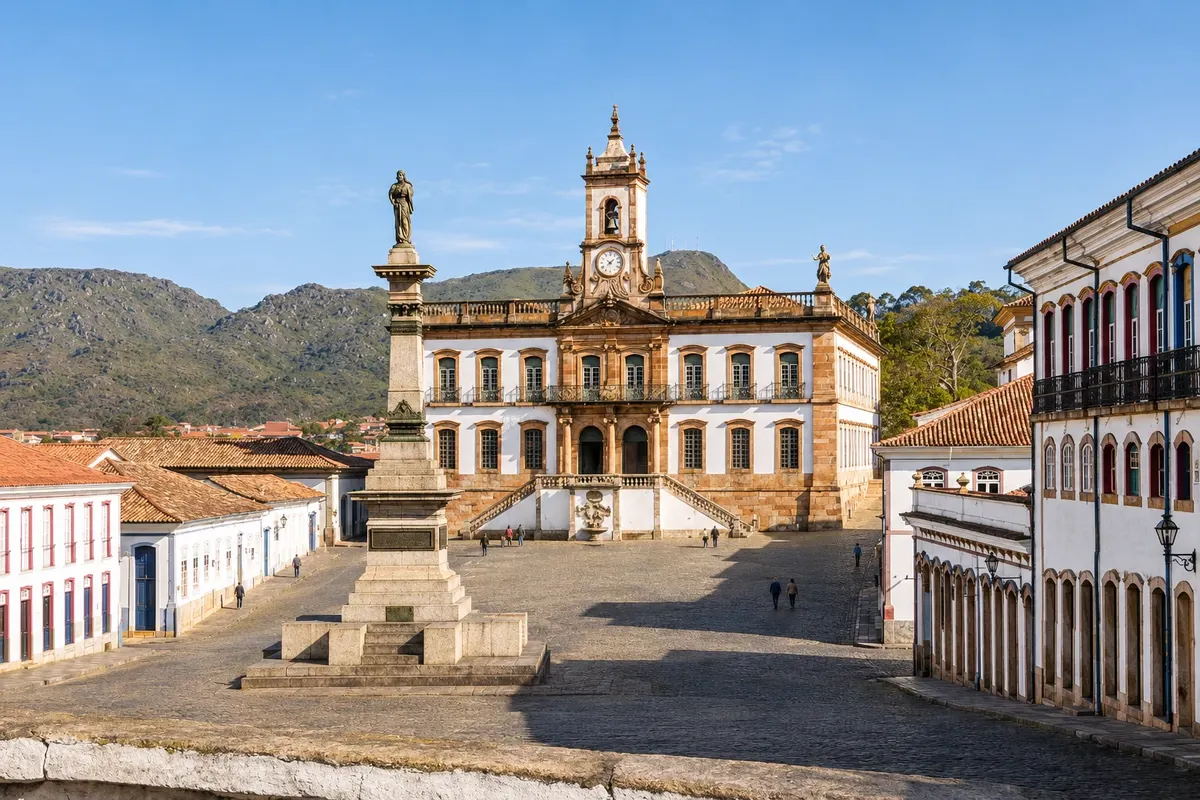
Colonial ensemble of the former Vila Rica, the first Brazilian city inscribed on the UNESCO World Heritage List, in 1980. Hills, baroque churches, fountains and manor houses are arranged around Praça Tiradentes.
Raziščite Historic Center of Ouro Preto and Praça Tiradentes
The Carrancas Mother Church began in 1720, on Praça Manoel Moreira, with walls of stone blocks and two towers that differ from each other. Inside, there is gilded woodwork and a ceiling painting in the chancel attributed to Joaquim José da Natividade.
Raziščite Mother Church of Our Lady of the Conception
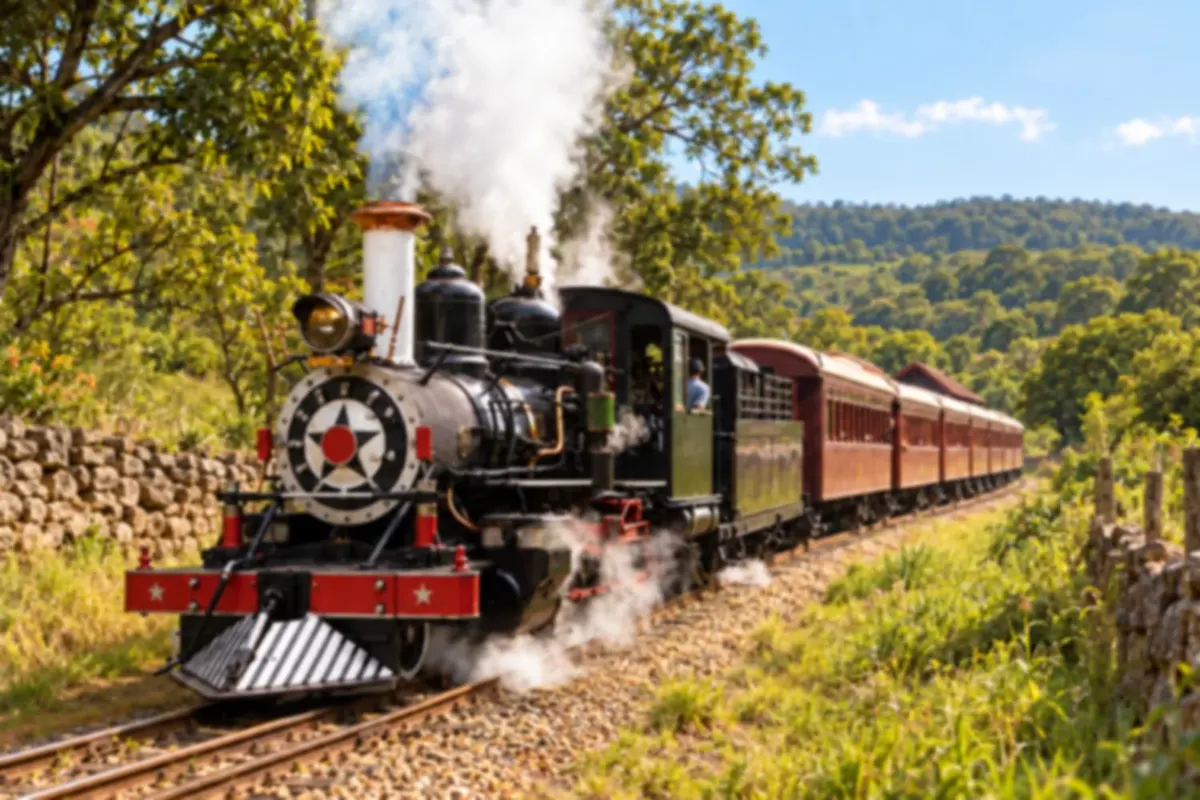
A 19th-century steam locomotive that still runs the narrow-gauge route between the two towns, along the Rio das Mortes (river). The train leaves from a historic station that serves as a railway museum.
Raziščite Trem Maria Fumaça São João del-Rei–Tiradentes
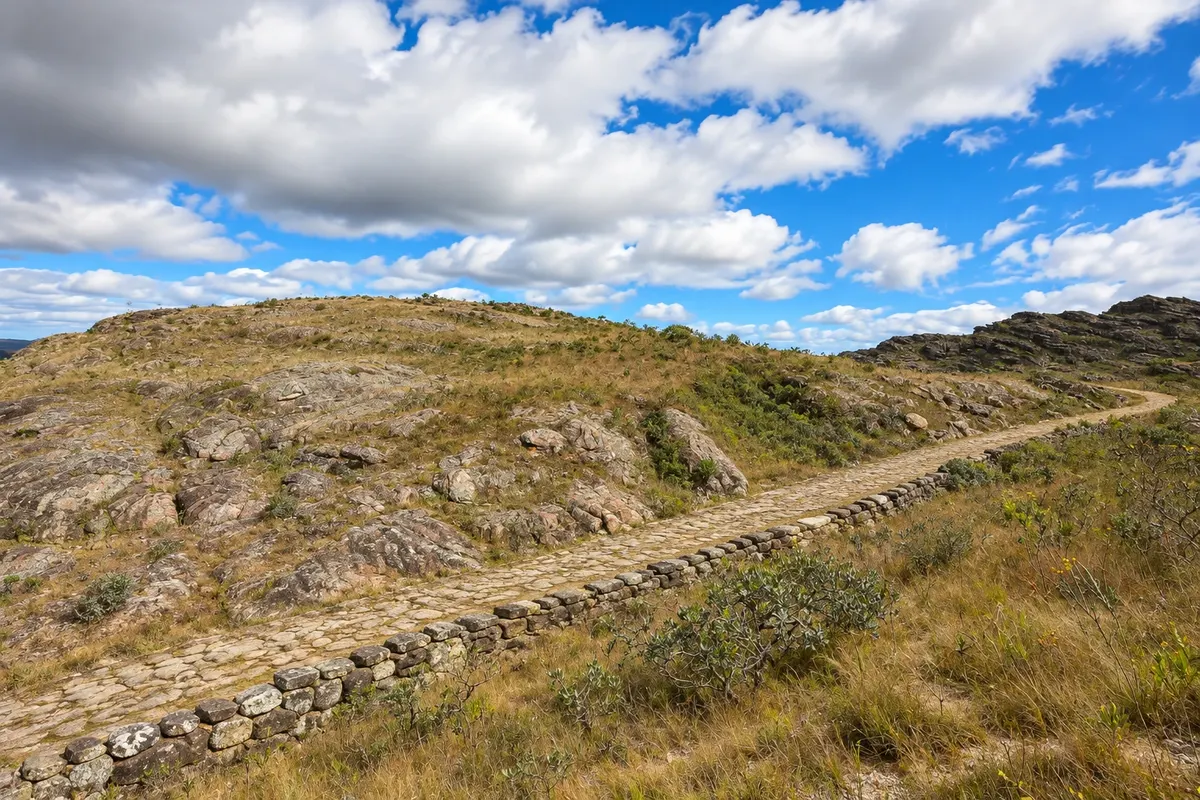
18th-century stone paving built by enslaved people that climbs the Serra dos Cristais on the north exit of Diamantina and continues for about 20 km to Mendanha. The first section, with retaining walls and a view of the town, is walked on foot.
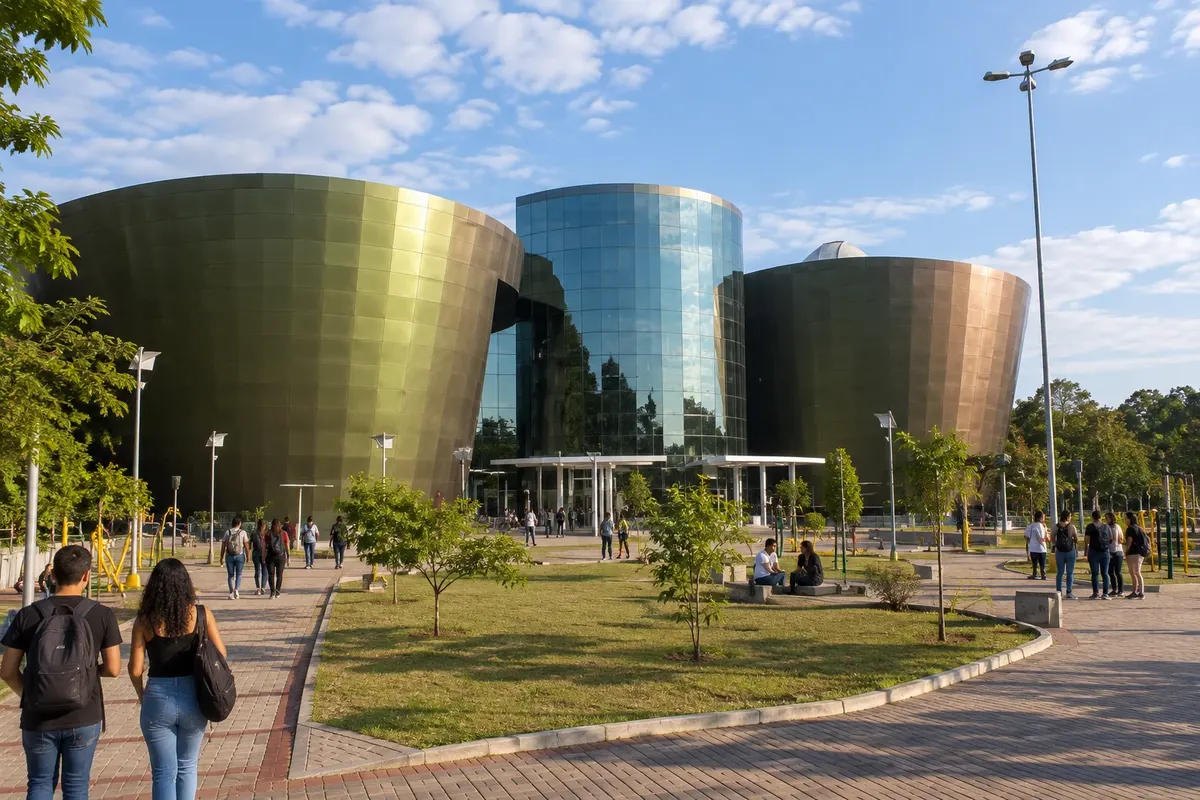
Scientific exhibitions, planetarium and observatory gathered on the UFJF campus. The space welcomes the public and groups for science outreach activities.
Raziščite Centro de Ciências da UFJF
An 18th-century main church with an interior of entirely gilded woodcarving and one of the doorways attributed to Aleijadinho, as well as an old Portuguese organ. It stands at the top of the main street, with a staircase and a sundial in front.
Raziščite Church of St. Anthony (Mother Church) (Igreja Matriz de Santo Antônio)
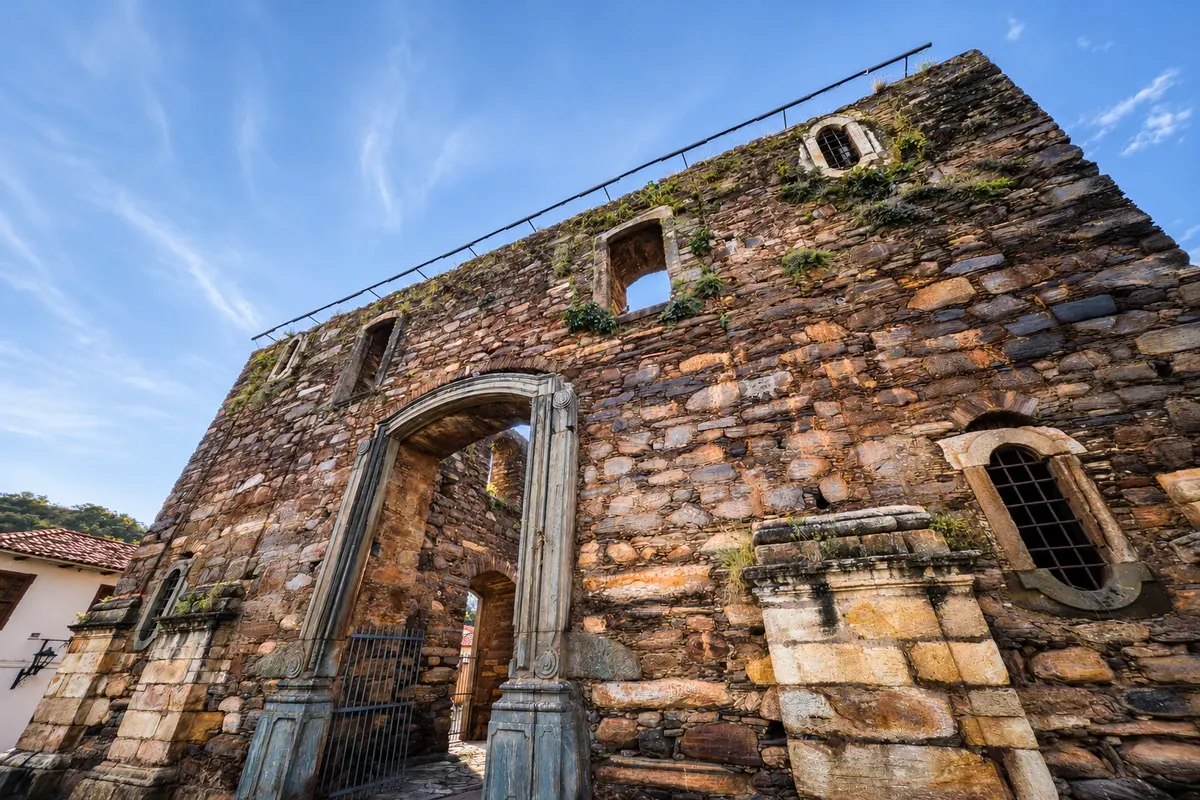
Stone church begun in 1767 by the Black Brotherhood of the Rosary of Sabará and never finished. Inside the roofless stone walls sits the small rammed-earth chapel from 1713, which would have been demolished when the work was completed. Listed by Iphan.
Raziščite Church of Our Lady of the Rosary of the Blacks
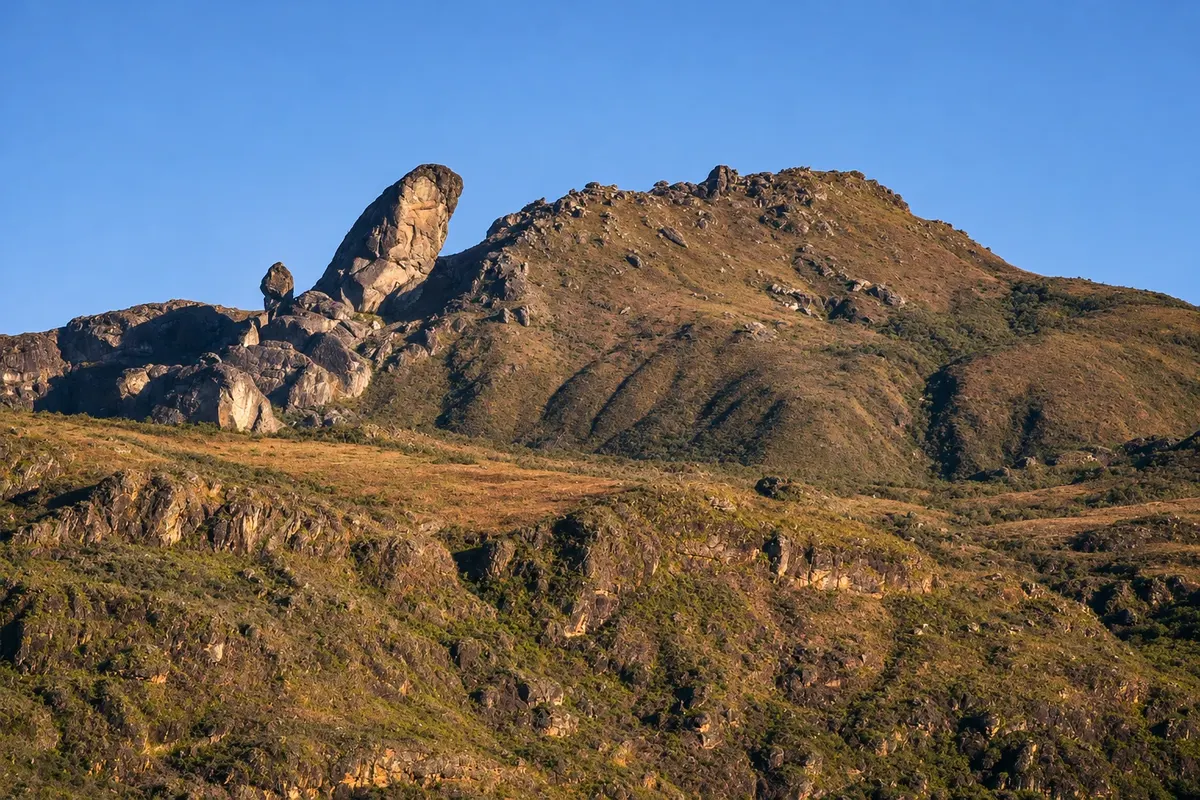
State park between Ouro Preto and Mariana, featuring Pico do Itacolomi at 1,772 meters, trails through grasslands and forest, and the old São José do Manso Farm, with the Casa Bandeirista and the Tea Museum.
Raziščite Itacolomi State Park
The Church of the Third Order of Carmo, from the second half of the 18th century, on Rua do Carmo in downtown Diamantina. Its bell tower is at the rear, it has painted ceilings by José Soares de Araújo, and a pipe organ built between 1782 and 1787.
Raziščite Church of Our Lady of Mount Carmel
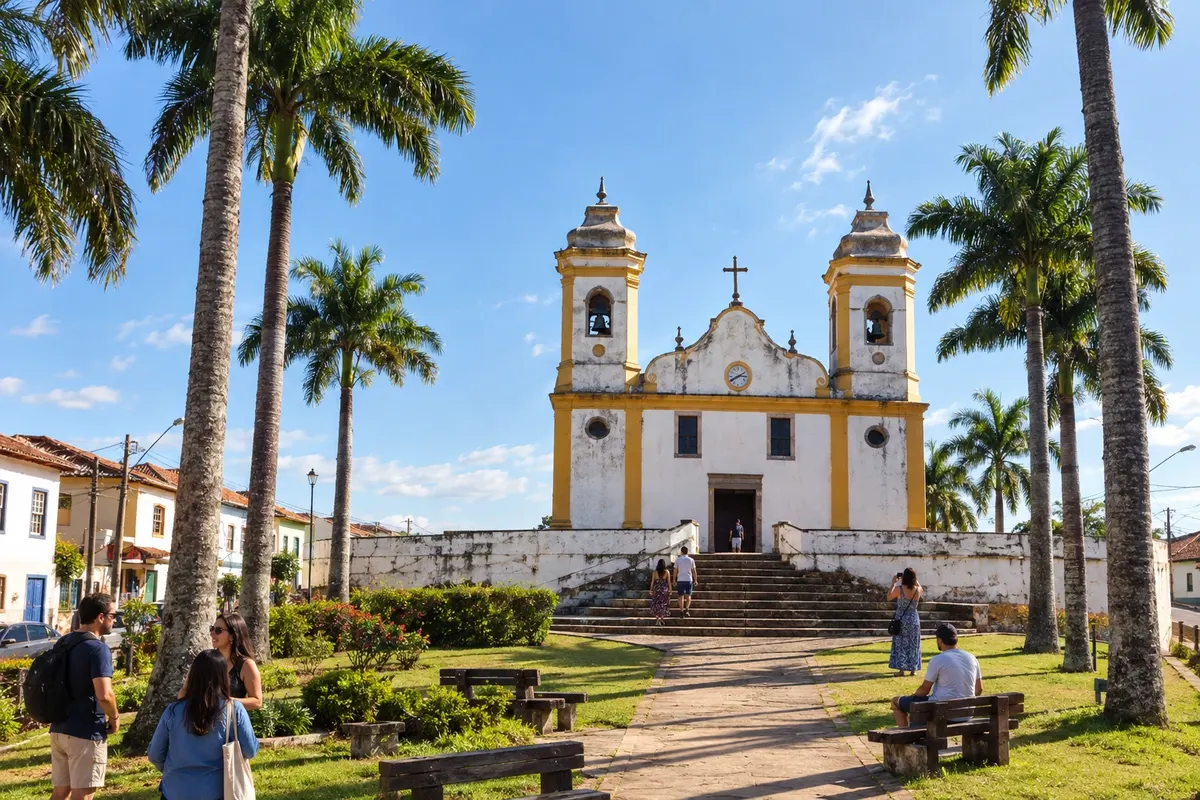
A Baroque church with a curved facade designed by Aleijadinho, surrounded by a churchyard of royal palms and by the cemetery where Tancredo Neves is buried. It is the town's postcard image.
Raziščite Igreja de São Francisco de Assis
Museum with a collection of domestic and travel devotional shrines and images, most from Minas Gerais, housed in an 18th-century townhouse on the forecourt of the Church of Carmo, in Ouro Preto.
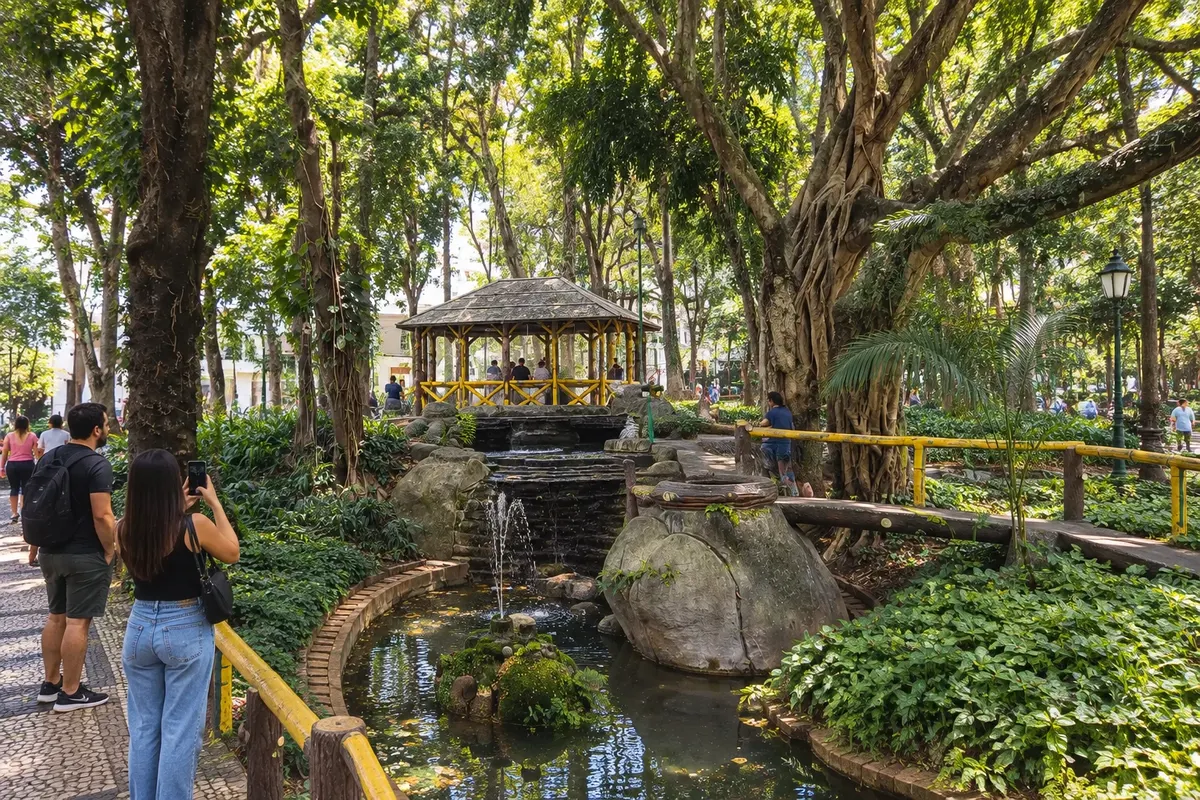
Historic tree-lined square between Rua Halfeld and Avenida Rio Branco. Paths, bridges and kiosks make up a garden integrated into the daily life of the Centro.
A church with a Baroque-Rococo façade high in the Santíssima neighborhood, a few minutes’ walk from the Matriz de Santo Antônio. The interior is unadorned, with an image of the Eternal Father on the altar and a miracles room containing ex-votos.
Raziščite Sanctuary of the Holy Trinity
Old parish church of São João del-Rei, built beginning in 1721 in the historic center, with an interior of gilded woodcarving in the Minas Gerais Baroque style. It is the cathedral of the diocese and received the title of basilica from Pope Benedict XVI.
Raziščite Cathedral Basilica of Our Lady of the Pillar
Railway memory museum of Juiz de Fora, installed in the complex of the former stations of the Estrada de Ferro Leopoldina and the Central do Brasil, on Avenida Brasil, next to the tracks. The complex and the collection are protected by Iepha.
Raziščite Juiz de Fora Railway Museum
Museum dedicated solely to Saint Anne, with about 300 images of the saint made in Brazil between the 17th and 19th centuries. It occupies the building of the old public jail in the historic center, with original bars and a preserved dungeon.
Theater inaugurated in 1770 in the former Vila Rica, considered one of the oldest still in operation in the Americas. The colonial building, protected by Iphan, still hosts performances and guided visits.
Raziščite Municipal Theatre (House of Opera)
Ensemble listed by Iphan in 1938, crossed by the Lenheiro Brook and connected by colonial stone bridges. It brings together Baroque churches, colonial townhouses and eclectic 19th-century mansions, with about 700 protected properties.
Raziščite Historic Center of São João del-Rei
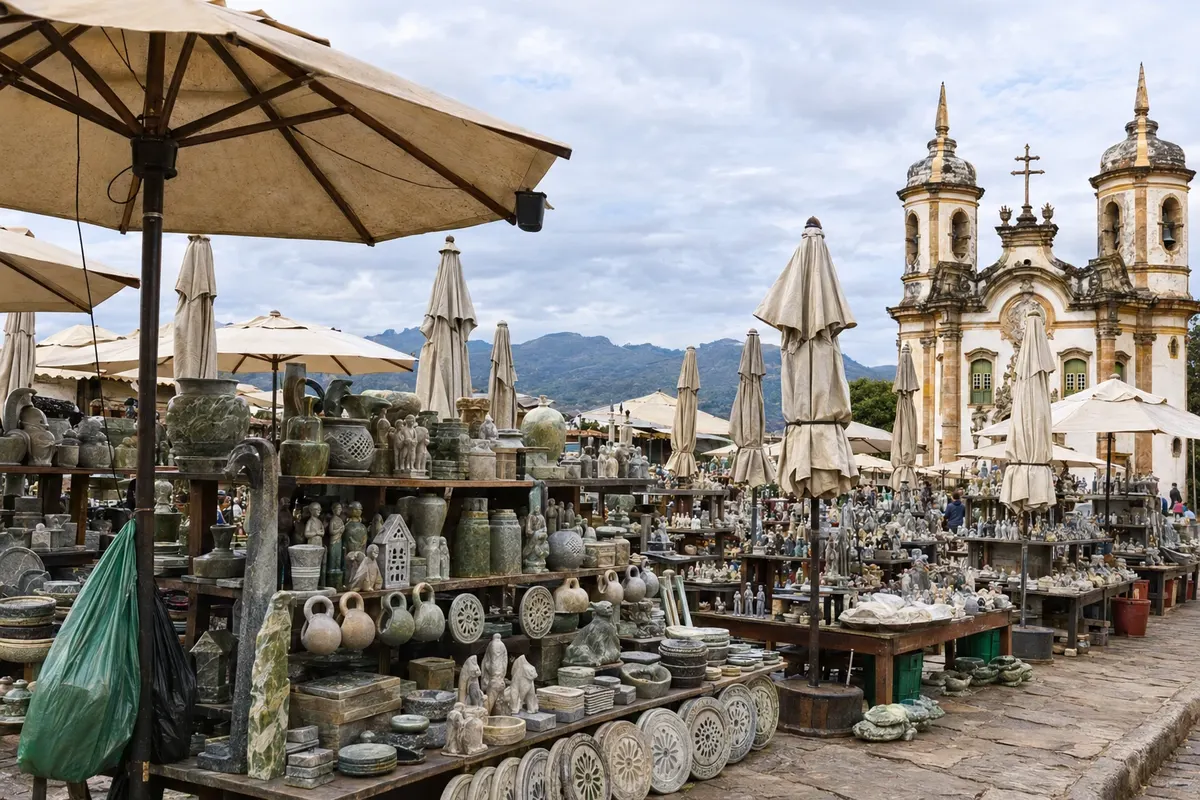
Permanent soapstone craft fair at Largo de Coimbra, in front of the Church of São Francisco de Assis, in downtown Ouro Preto. The stalls are run by the region’s own artisans.
Raziščite Largo de Coimbra soapstone fair
Museum of objects used in Catholic celebrations, with more than 400 pieces from Tiradentes’ churches, from the 18th to the 20th century, restored. It is housed in a manor next to the Matriz de Santo Antônio.
Station of the former Estrada de Ferro Oeste de Minas, terminus of the steam train that has connected São João del-Rei to Tiradentes since 1881. Beside it is the manual turntable where the locomotive is turned for the return trip.
Raziščite Tiradentes Railway Station
Religious art museum in the historic center of São João del-Rei, in the manor house that once was the town’s public jail. It gathers statues, paintings, vestments and items from the city’s churches, including a head of Christ attributed to Aleijadinho.
Raziščite Museum of Sacred Art of São João del-Rei
Kaj izbrati pred odhodom
Izhodišče, trajanje, potek, vključene storitve in okvirna cena vsakega izleta.
The circuit is done on foot, along the stone slopes of the historic center, with Praça Tiradentes as the starting point. The visit usually begins at the Museu da Inconfidência, on the square itself, which brings together documents and objects from the 18th and 19th centuries and the pantheon of the inconfidentes. From there it proceeds to Largo de Coimbra, to the Igreja de São Francisco de Assis, with the façade designed by Aleijadinho and the paintings by Mestre Ataíde. Another stop is the Matriz de Nossa Senhora do Pilar, whose Museu de Arte Sacra operates in the crypt. The route is completed by the Igreja de Nossa Senhora do Carmo, the Igreja de Nossa Senhora do Rosário dos Pretos and the Museu do Aleijadinho, linked to the Igreja de Nossa Senhora da Conceição de Antônio Dias. There are local guides for those who want historical context. Each church has its own opening hours and some do not open on Mondays.
Kraji na poti: Praça Tiradentes, Museu da Inconfidência, Igreja de São Francisco de Assis, Matriz de Nossa Senhora do Pilar, Museu de Arte Sacra do Pilar, Igreja de Nossa Senhora do Carmo, Igreja de Nossa Senhora do Rosário dos Pretos, Museu do Aleijadinho, Igreja de Nossa Senhora da Conceição de Antônio Dias.
Vključuje: The Museu da Inconfidência is open with no admission charge. The churches have separate paid admission, with half-price tickets for students and seniors; the same ticket is valid for the Museu do Aleijadinho and for the churches of Conceição de Antônio Dias, Mercês and São Francisco. Guide and lunch are at the visitor's expense. Check the current price table for each site.
Nasvet: Wear closed, comfortable shoes: the paving is uneven and the slopes are steep. Check the opening times of each church, which vary by day and by service, and bring cash for the smaller ticket offices. During Holy Week the town is very busy, so book transfers and guides in advance.
Najboljši čas za obisk: From April to September, in the dry season; Holy Week has its own program and is very busy.
Agencije, ki ponujajo izlet: Guimarães Tour, Caminho Novo Eco Turismo.
Mariana's historic center is flatter than Ouro Preto's, and the tour is done on foot. The walk usually starts on Rua Direita, where there are old two-storey townhouses and the tourist service, and reaches Praça da Sé. There stands the Catedral Basílica Nossa Senhora da Assunção, which houses an organ built in the first decade of the 18th century, in Hamburgo, by Arp Schnitger, and noted as the only example of that manufacture outside Europe. Nearby is Praça Minas Gerais, which brings together the Casa de Câmara e Cadeia, the churches of São Francisco de Assis and Nossa Senhora do Carmo, and the pelourinho. The Igreja de São Pedro dos Clérigos is included in the route, usually seen from the outside. Local guides can combine the circuit with the Mina da Passagem.
Kraji na poti: Rua Direita, Praça da Sé, Catedral Basílica Nossa Senhora da Assunção, Praça Minas Gerais, Casa de Câmara e Cadeia, Igreja de São Francisco de Assis, Igreja de Nossa Senhora do Carmo, Pelourinho, Igreja de São Pedro dos Clérigos.
Vključuje: The walk through the square and the streets is free. Entrance to the Cathedral is charged separately; cash or Pix are generally accepted — check the current price table. Guide and lunch are at the visitor's expense.
Nasvet: Those staying in Ouro Preto can make a day trip via the short road that connects the two towns. Check the visiting hours of the Cathedral, which change with masses and celebrations. You can fit Mina da Passagem into the same day.
Najboljši čas za obisk: From April to September, with more settled/drier weather for walking.
Agencije, ki ponujajo izlet: Guimarães Tour, Caminho Novo Eco Turismo.
The complex sits atop a hill, on the Praça da Basílica, and is a UNESCO World Heritage Site. The tour begins with the six chapels of the Passos da Paixão, which house 66 life-size cedar sculptures made by Aleijadinho and his team and painted by Manoel da Costa Ataíde and Francisco Xavier Carneiro. Next you go up to the basilica forecourt, where the Doze Profetas carved in pedra-sabão (soapstone) are located; they were sculpted between 1800 and 1805 and are arranged along the stairway and walls. Each figure has its own gesture and expression. The visit ends in the basilica, with a Jesuit-style façade and an interior showing several phases of the Baroque. A guided tour helps identify the prophets and understand the scenes in the chapels.
Kraji na poti: Santuário do Senhor Bom Jesus de Matosinhos, Adro dos Doze Profetas, Capelas dos Passos da Paixão, Basílica de Bom Jesus de Matosinhos.
Vključuje: Access to the adro with the Profetas does not require a guide. Guided tours, chapel or church fees, if any, and meals are paid separately; check the current rate table.
Nasvet: Arrive at a quieter time to photograph the Profetas. In September the Jubileu pilgrimage takes place, when the site receives many worshippers and there are stalls around. Congonhas is on BR-040, on the road between Belo Horizonte and São João del-Rei, and pairs well with a day trip.
Najboljši čas za obisk: From April to September; outside the Jubilee period in September, visitor numbers are lower.
The steam train runs 12 km along the banks of the Serra de São José, on a line inaugurated in 1881 by Dom Pedro II. The trip can start at either end, at São João del-Rei Station (Rua Hermílio Alves) or at Tiradentes Station. In São João del-Rei it's worth arriving early to see the Museu Ferroviário and the Rotunda, a circular building with a manually operated turntable in the center; guided visits to the Rotunda take place on days when the train runs. In Tiradentes the locomotive is uncoupled and turned to face the return, another scene passengers often watch. The train operates on days set in VLI's monthly schedule, with extra runs on holidays.
Kraji na poti: Estação de São João del-Rei, Museu Ferroviário, Rotunda, Serra de São José, Estação de Tiradentes.
Vključuje: The fare is paid per leg, with half-price tickets for children aged 6 to 12, students, seniors and other eligible groups. Children up to 5 years old on laps travel free. Museum and Rotunda have separate admission; check the current rates.
Nasvet: Buy at the kiosks at the stations or on the official sales website; sales close 30 minutes before departure. On the trip from São João del-Rei to Tiradentes, those who sit on the left side usually have the best view of the mountain range, and in the opposite direction the right side. On holidays and school breaks demand is higher, so buy in advance.
Najboljši čas za obisk: Year-round, with extra trips at Easter week, during the July holidays and on long holiday weekends.
Agencije, ki ponujajo izlet: Agência de Turismo Estrada Real.
R$ 86 · per person, full fare per leg· uradna cenaLocal agencies organize guided walks through the center of Tiradentes, meeting at Largo das Forras, the main square. The typical route, about 2 hours, goes by Igreja de São João Evangelista, Igreja de Nossa Senhora do Rosário, Igreja Matriz de Santo Antônio, Casa do Padre Toledo, Antiga Cadeia, Rua Direita, Rua da Câmara and Chafariz de São José. The guide tells the village's history, from the Emboabas period and the Caminho Real to the gold cycle and the Inconfidência Mineira. Some agencies also offer a nighttime walking tour on specific days, with a minimum group size. Cobblestone streets and gentle slopes make the route easy for families.
Kraji na poti: Largo das Forras, Igreja de São João Evangelista, Igreja de Nossa Senhora do Rosário, Igreja Matriz de Santo Antônio, Casa do Padre Toledo, Antiga Cadeia, Rua Direita, Rua da Câmara, Chafariz de São José.
Vključuje: The guide is included in the tour price. Admissions to churches and museums are usually paid separately, with half-price tickets in some cases. Compare the offers from each agency and check the current pricing table.
Nasvet: Book in advance, especially on public holidays and during winter festivals. Wear closed shoes, as the paving is stone. Depending on the day, it is possible to combine the tour with the Maria Fumaça.
Najboljši čas za obisk: From April to September; in winter there are gastronomic and cultural festivals.
Agencije, ki ponujajo izlet: Agência de Turismo Estrada Real.
The center of São João del-Rei is visited on foot. The Igreja de São Francisco de Assis, on Praça Frei Orlando, was designed by Aleijadinho and executed by Francisco de Lima Cerqueira; the façade is carved in soapstone, and the square has imperial palm trees. The Catedral Basílica de Nossa Senhora do Pilar sits on Rua Monsenhor Gustavo, and the Igreja do Carmo is near the market. Some churches charge an admission fee; others do not. The route can end at the Estação Ferroviária, with the Museu Ferroviário, for those taking the Maria Fumaça. Agencies from Tiradentes offer city tours in the town that include a tin factory and a chocolate factory.
Kraji na poti: Igreja de São Francisco de Assis, Catedral Basílica de Nossa Senhora do Pilar, Igreja de Nossa Senhora do Carmo, Estação Ferroviária de São João del-Rei, Museu Ferroviário.
Vključuje: The churches charge a separate admission fee, with half-price tickets in some cases. Guide, lunch and transport are the visitor's responsibility; check each church's current pricing table.
Nasvet: Times vary by day and by mass, and some churches are undergoing renovations, so check opening times before you go. Bring cash or Pix for the ticket offices. Visitors doing a day trip from Tiradentes can combine the tour with the train.
Najboljši čas za obisk: From April to September; Holy Week is the busiest time.
Agencije, ki ponujajo izlet: Agência de Turismo Estrada Real.
The Mina da Passagem is located in the district of Passagem de Mariana, on the road that connects Ouro Preto to Mariana, about 11 km from downtown Ouro Preto. Visits are always guided. Access is by a small rail car (trolley), pulled by a steel cable along 315 meters, down to about 120 meters deep. Inside, the group walks through galleries and halls and sees underground clear-water lakes, formed when water filled part of the mine after operations ceased. The guide explains how gold was extracted. For individual visits no reservation is required; only groups of 20 or more paying guests need to schedule.
Kraji na poti: Mina da Passagem, Underground lakes.
Vključuje: The guide is included in the individual ticket, sold only at the box office on the day of the visit. There is a half-price ticket for those who qualify under the law, and sometimes promotional prices by season. In previous inquiries the box office accepted cash only; confirm the form of payment and the current price list.
Nasvet: Avoid weekends and holidays to avoid lines. Bring a light jacket, as the mine is cooler, and closed-toe shoes. It's possible to combine this with the center of Mariana on the same day.
Najboljši čas za obisk: All year round, since it is an underground visit; from April to September the weather is drier for the visit.
R$ 290 · per person, individual adult ticket· uradna cenaMina Du Veloso is in the São Cristóvão neighborhood, about 1.8 km from Praça Tiradentes. It is a hand-excavated gold mine from the 18th and 19th centuries, with galleries that show marks of the work of enslaved African miners. The guide explains mining techniques, the geology and the society of the former Vila Rica, and offers reflections on labor, race and identity. Before entering, the group is given a cap and a helmet. In some sections the ceiling is low. Inside there are chambers with wells of crystal-clear water, which are not potable because of the minerals. Mina Du Veloso also offers trails in the Serra do Veloso, such as Da Mina ao Curral de Pedras and Alto do Xéu.
Kraji na poti: Mina Du Veloso, Serra do Veloso.
Vključuje: Guide and protective equipment included. There is a reduced-price ticket for students and seniors. The mountain trails are sold separately. Check the current rate table with the mine.
Nasvet: Bring proof of eligibility for the reduced ticket and confirm the accepted payment methods. Combine this with the churches itinerary, since the mine is in the same municipality. Those who prefer a larger, deeper mine can go to Mina da Passagem.
Najboljši čas za obisk: All year round, since it's a covered/indoor visit.
The park has a gate at km 98 of BR-356, just before the historic center of Ouro Preto. From the gate, a dirt road leads to the Centro de Visitantes, where the hiking trail begins. Nearby is the Casa Bandeirista, built between 1706 and 1708. From the Centro de Visitantes to Pico do Itacolomi (1,772 m) it's about 7 km of ascent: the first kilometers go through forest, and then the path climbs to the peak, a landmark for travelers on the Estrada Real. The park has six open trails, from 450 m to 12 km, self-guided and signposted, such as the Trilha da Capela (1.4 km), which leads to the Lagoa da Capela, where swimming and a zipline are available. There is no restaurant in the park.
Kraji na poti: Parque Estadual do Itacolomi, Centro de Visitantes, Casa Bandeirista, Pico do Itacolomi, Lagoa da Capela.
Vključuje: Park entrance fee is paid at the gate, with half-price tickets for students and those 60+ and exemptions for residents of surrounding municipalities. Park guides can be booked in advance and are paid separately. Food and transport are the visitor's responsibility; check the current rate table.
Nasvet: Bring water, food, sunscreen and warm clothing for the summit. Check the opening days. The distance between the park entrance and the start of the trail is covered by car; arrange the return if you will take a taxi. Start early.
Najboljši čas za obisk: From April to September, in the dry season.
R$ 28,75 · per person, full park entrance fee· uradna cenaDiamantina, a World Heritage Site since 1999, can be explored on a walk through the center, with steep slopes. A common route includes Casa de Chica da Silva, an 18th-century manor where the formerly enslaved woman who partnered with diamond contractor João Fernandes de Oliveira lived; the visit is open and free on weekdays. Nearby are Igreja de Nossa Senhora do Carmo and, on another street, the Teatro Santa Izabel, from 1841, adjacent to Igreja de Nossa Senhora do Rosário dos Pretos. At the end of the day, the Cruzeiro da Serra viewpoint shows the city from above, near the start of the Caminho dos Escravos. Mercado Velho is also a landmark.
Kraji na poti: Casa de Chica da Silva, Igreja de Nossa Senhora do Carmo, Teatro Santa Izabel, Igreja de Nossa Senhora do Rosário dos Pretos, Cruzeiro da Serra, Mercado Velho.
Vključuje: Casa de Chica da Silva has no entrance fee, according to local sources. Churches and museums may have their own admission fees, and guide and lunch are paid separately. Check the current price list.
Nasvet: Wear shoes with firm soles for the stones. Check the opening days of Casa de Chica da Silva, which some sources say is closed on weekends. The town centre pairs well with outings to nearby sites such as Biribiri and the Caminho dos Escravos.
Najboljši čas za obisk: From April to September, in the dry season.
Agencije, ki ponujajo izlet: Minhas Gerais Turismo e Eventos.
The Santuário do Caraça lies between Catas Altas and Santa Bárbara, accessible from BR-262 and MG-436 between Barão de Cocais and Santa Bárbara. The complex covers more than 11,000 hectares and includes an RPPN. The architectural ensemble includes the neo-Gothic church, the building of the former college (now a museum and library), and ruins. The visit can be short—a few hours—to see just the ensemble, or last a full day with trails and waterfalls. Some trails have monitors/guides, especially for the peaks, and require prior booking. There is a snack bar and a restaurant.
Kraji na poti: Santuário do Caraça, Igreja neogótica de Nossa Senhora Mãe dos Homens, Museu do antigo Colégio do Caraça, Ruínas do antigo colégio, Mirante do Caraça.
Vključuje: The admission fee is paid at the entrance, with reduced (half-price) admission for seniors. The museum of the former college has a separate ticket and requires booking. Guides for trails and meals are paid separately; check the current rate table.
Nasvet: Arrive early if you plan to do waterfalls and long hikes. There is no regular transport from the bus station in Barão de Cocais or Santa Bárbara to the sanctuary, so arrange transfer before you arrive. Check whether you need to book the visit. Bring hiking shoes and water.
Najboljši čas za obisk: From April to September, in the dry season.
R$ 35 do R$ 45 · per person, visitation fee (Monday to Friday / weekends and holidays)· uradna cenaThe Caminho dos Escravos is an old route between the Arraial do Tijuco, today Diamantina, and the Vila de Mendanha. It was paved with enslaved labor by order of Intendente Câmara in the early 19th century to facilitate the outflow of diamonds and supplies transported by tropeiros. The full section connects Diamantina to Mendanha and is about 20 km long, with stretches of stone paving, known as pé de moleque, and cerrado vegetation. Many travelers do only part of the route, with waterfalls along the way. It is recommended to go with a guide, either individually or in a group, offered by local operators. The municipal government has begun the heritage-listing process for the route.
Kraji na poti: Caminho dos Escravos, Mercado Velho, Mendanha, Cachoeira dos Cristais, Vila do Biribiri.
Vključuje: The guide is paid separately. Some sections pass through areas of the Parque Estadual do Biribiri, and the village fee, if any, is charged separately. Check the current table with the agency you choose.
Nasvet: Bring water, snacks, a hat and hiking shoes, as there is little shade in some parts. Choose the section according to your energy level and arrange the pickup point. The dry season is firmer for walking.
Najboljši čas za obisk: From April to September, in the dry season.
Agencije, ki ponujajo izlet: Minhas Gerais Turismo e Eventos.
The park is about 20 minutes from downtown Diamantina via well-signposted dirt roads. The tour usually includes Cachoeira da Sentinela, with a cascade and pool, and Cachoeira dos Cristais, with a wide pool and a drop in the center—good for swimming. There are also pools marked along the way, such as Água Limpa. At the end you visit Vila do Biribiri, a former workers' community of a textile factory, founded in 1876 and listed by IEPHA. Today the village has a café, a restaurant and a pousada. Some agencies include rock paintings.
Kraji na poti: Parque Estadual do Biribiri, Cachoeira da Sentinela, Cachoeira dos Cristais, Vila do Biribiri.
Vključuje: The park entrance has been open without charge. The village visitation fee is paid separately. Transport, guide and meals vary by agency; check the current rates.
Nasvet: The waterfalls have more water in the rainy season; during the dry season they lose force. Bring swimwear, a towel and water. You can go by private car, taxi or with a tour agency, which usually provides a guide.
Najboljši čas za obisk: In the rainy season the falls are fuller; from April to September access and the trails are firmer.
The Cachoeira do Tabuleiro is in the Parque Natural Municipal do Tabuleiro, in the Serra do Espinhaço, about 19 km from the seat of Conceição do Mato Dentro. The waterfall's free-fall drop is 273 meters. The park offers three trails: the viewpoint trail, short and uphill; the pool trail, about 3 km (1h30 to 2h), with a final section inside the river and smooth rocks; and the upper trail, about 8 km, which takes a day, with natural pools for bathing and another viewpoint. The pool is about 18 meters deep. The park limits the number of visitors per day and only allows entry in favorable weather.
Kraji na poti: Parque Natural Municipal do Tabuleiro, Mirante da Cachoeira do Tabuleiro, Poço da Cachoeira do Tabuleiro, Parte alta da Cachoeira do Tabuleiro.
Vključuje: The park admission fee is paid at the entrance. Guide, transport and meals are the visitor's responsibility; the park does not have a snack bar. Check the current rate table.
Nasvet: Arrive early: the high-area trail requires entry in the morning, and the trail to the pool until early afternoon. Bring snacks, water and good-grip footwear. Check beforehand whether the park is open, as it closes in case of heavy rain.
Najboljši čas za obisk: From April to September, with firmer trails; the park closes in bad weather.
Agencije, ki ponujajo izlet: Minhas Gerais Turismo e Eventos.
R$ 10 · per person, park admission fee· uradna cenaCarrancas concentrates waterfalls on rural properties, and tours usually combine two or three complexes per day. The Complexo da Zilda is about 12 km from town and includes waterfalls, pools, a natural slide, a cave and the Cachoeira dos Índios, with rock paintings; the trail to Cachoeira da Zilda crosses forest and water, of medium difficulty. Cachoeira da Fumaça, about 15 meters high, is visited for viewing. Cachoeira da Esmeralda, in the Complexo Vargem Grande, is about 9 km from town, with an easy trail of around 30 minutes to a large pool for bathing. Some agencies offer jeep, quad and canyoning at the Racha da Zilda.
Kraji na poti: Complexo da Zilda, Cachoeira da Zilda, Cachoeira dos Índios, Escorregador da Zilda, Cachoeira dos Anjos, Cachoeira da Fumaça, Cachoeira da Esmeralda, Complexo Vargem Grande.
Vključuje: Entrance fees are charged per attraction, with different rates at each property. Guide, transport and lunch are paid separately. Check the current price table with each attraction or agency.
Nasvet: Bring swimwear, footwear that can get wet and a snack. For the Racha da Zilda and other more complex trails, hire a guide. Carrancas is off the main route, so plan the day in advance.
Najboljši čas za obisk: From April to September, with firmer access; in the waters, rivers rise and can hinder crossings.
Serro is the gateway to the Rota do Queijo, bringing together producers from a region with a provenance seal. Some farms and cheeseries open for visits, including Ventura, Córrego do Taboão, Dona Iaiá, Bom Sucesso and Maria Nunes. The visit can show stages of artisanal cheesemaking, from milking to maturation, and ends with a tasting; at Queijaria Ventura there is a pairing with wine produced in Diamantina. In Serro's historic center, the Salão do Queijo, which houses the Centro de Atendimento ao Turista, sells cheeses and recommends guides. The staircase of the Igreja de Santa Rita has 57 wide steps and is a postcard landmark of the town. The town is about 60 km from Diamantina.
Kraji na poti: Serro, Escadaria da Igreja de Santa Rita, Salão do Queijo, Queijaria Ventura, Fazenda Dona Iaiá, Fazenda Bom Sucesso, Fazenda Córrego do Taboão, Fazenda Maria Nunes.
Vključuje: Visits and tastings are usually paid separately and generally require booking. Transport and lunch vary according to the itinerary; check the current table with each producer or agency.
Nasvet: Confirm in advance which farms are open to visitors and bring a cooler bag to carry cheeses. The tour pairs well with a trip to Diamantina or to Conceição do Mato Dentro.
Najboljši čas za obisk: All year; from April to September rural roads are firmer.
Agencije, ki ponujajo izlet: Minhas Gerais Turismo e Eventos.
Sabará lies next to Belo Horizonte and brings together churches and buildings from the gold-cycle period. The Igreja de Nossa Senhora do Ó, dating from 1719, is small and features decoration with oriental motifs. The Matriz de Nossa Senhora da Conceição was built in taipa de pilão e pau a pique and is located on Praça Getúlio Vargas. The Igreja de Nossa Senhora do Carmo contains work by Aleijadinho. The façade of the Igreja de Nossa Senhora do Rosário was built by enslaved people and has unplastered stone walls. The Museu do Ouro operates in the former Casa da Intendência e Fundição and tells the history of mining. The Teatro Municipal, known as Casa da Ópera, and the Chafariz do Kaquende complete the itinerary.
Kraji na poti: Igreja de Nossa Senhora do Ó, Matriz de Nossa Senhora da Conceição, Igreja de Nossa Senhora do Carmo, Igreja de Nossa Senhora do Rosário, Museu do Ouro, Teatro Municipal de Sabará, Chafariz do Kaquende.
Vključuje: Some churches and the Museu do Ouro charge a separate admission; others have free entry. Guide and lunch are at the visitor's expense. Check the current price list.
Nasvet: Check opening days: some churches are closed on Mondays. Bring cash for the smaller ticket offices. Because it's close to Belo Horizonte, the trip works as a day trip.
Najboljši čas za obisk: From April to September; Sabará has gastronomic festivals at specific times of year.

Po dnevih
Predlogi za načrtovanje poti. Vrstni red dni prilagodite vremenu in razpoložljivosti izletov.
Arrive early in Ouro Preto and spend the morning in the historic center: Praça Tiradentes, stone slopes and churches. Each church has its own visiting days and hours, and some charge an entrance fee. Check the current schedule. In the afternoon, take the guided tour of Mina Du Veloso, a gold mine that is explored on foot. Wear closed-toe shoes and bring a light jacket, as it is cooler inside.
Drive to Mariana, about 20 minutes from Ouro Preto. In the morning, walk through the historic center from Praça Minas Gerais to Catedral da Sé. In the afternoon, visit Mina da Passagem, on the route between the two towns. The tour descends into old galleries, and the ticket is paid separately. Return to Ouro Preto to sleep and have a meal of mineiro cuisine in the town center.
Leave Ouro Preto in the morning heading to Congonhas, about 60 km away. Visit the Santuário do Bom Jesus de Matosinhos, with the Doze Profetas carved in soapstone by Aleijadinho and the chapels of the Passos. Set aside the whole morning for the complex. After lunch, continue to Belo Horizonte via the BR-040, or to Confins airport, allowing extra time for traffic.
Arrive in Ouro Preto in the morning and start in the historic center on foot: Praça Tiradentes, museums and churches with gilded woodwork. Each church has its own visiting days and hours, and some charge an entrance fee. Check the current schedule. In the afternoon, take the guided tour of Mina Du Veloso. End the day at a restaurant serving regional Minas Gerais dishes cooked on a wood-burning stove.
In Mariana, about 20 minutes from Ouro Preto, walk around Praça Minas Gerais and go into the Catedral da Sé. Have lunch in the town center. In the afternoon, go down into Mina da Passagem on the way back to Ouro Preto. The tour uses old galleries, and the entrance fee is paid separately. Stay overnight in Ouro Preto.
Leave early from Ouro Preto for Congonhas, about 60 km away. Visit the Santuário do Bom Jesus de Matosinhos and Aleijadinho's Doze Profetas, carved in soapstone. Have lunch in town. In the afternoon, drive roughly 110 km to São João del-Rei and Tiradentes. Arrive in Tiradentes with time for a stroll along Rua Direita at dusk.
Dedicate the day to the historic center of Tiradentes, which is explored on foot. Go from Igreja Matriz de Santo Antônio through the surrounding streets and squares, with stops at museums and studios. Entrance fees for churches and museums are charged separately. Leave the afternoon for an unhurried lunch and for craft shops.
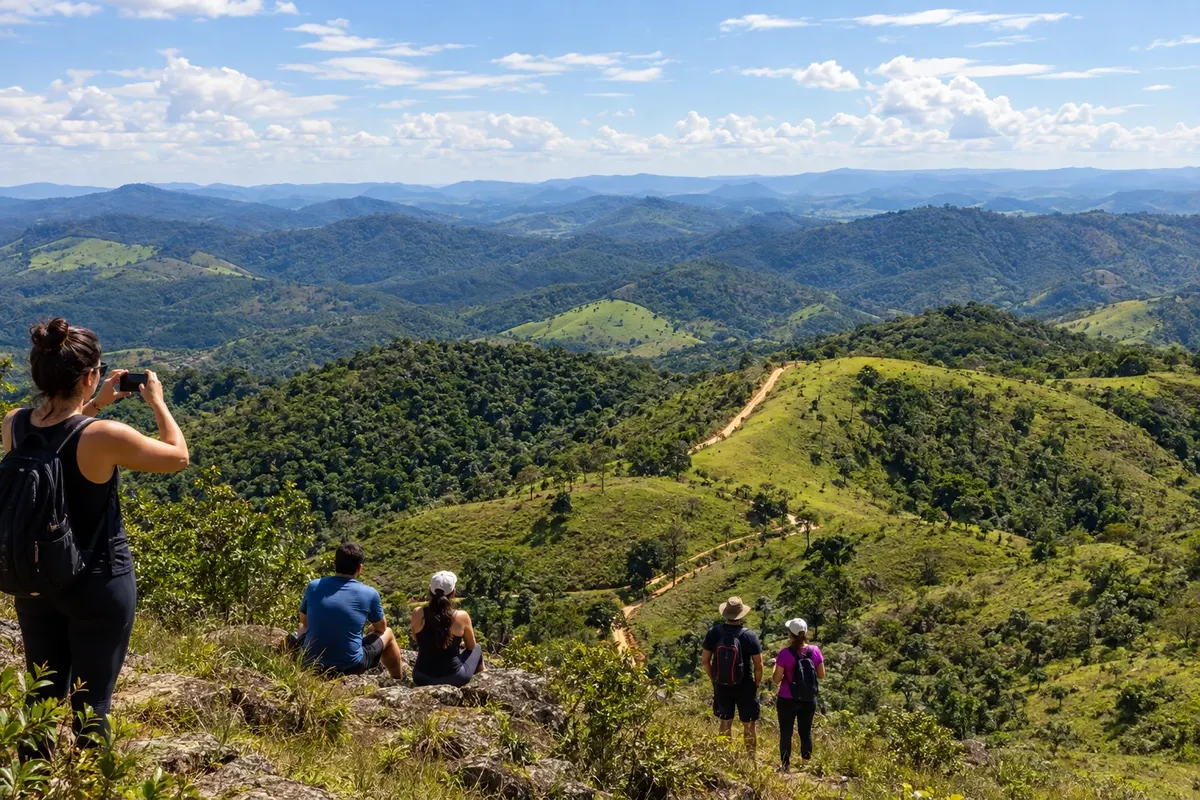
Take the Maria Fumaça ride between Tiradentes and São João del-Rei, a stretch of about 12 km. The train runs on specific days of the week, so check days and availability before traveling. In São João del-Rei, visit the churches and the historic center. Then drive to Belo Horizonte, about 190 km from Tiradentes. If the flight is the same day, allow extra time.
Leaving from Confins airport, stop in Sabará in the Belo Horizonte region. Visit the churches and the Museu do Ouro. Tickets are paid separately, and some churches have specific visiting days. Have lunch there. In the afternoon, continue to Ouro Preto and take a short walk around Praça Tiradentes at dusk.
Set aside the day for the historic center and the churches of Ouro Preto. Start at Praça Tiradentes and climb the hills toward the gilded wood-carved churches, with stops at museums. Each church has its own visiting days and times, and some charge admission. Check the current timetable. Wear shoes with a firm sole: the paving stones are slippery when wet.
In the morning, do the hike to Pico do Itacolomi in Parque Estadual do Itacolomi. Bring water, a snack, a hat and a rain poncho, and check the park's access rules. In the afternoon, rest and take the guided tour of Mina Du Veloso in Ouro Preto. Those who prefer a lighter day can swap the hike for museums and cafés in town.
Go to Mariana, about 20 minutes from Ouro Preto. Walk from Praça Minas Gerais to the Catedral da Sé and along the streets of the center. In the afternoon, go into Mina da Passagem on the way back. The tour descends into old galleries, and the entrance fee is paid separately. Return to Ouro Preto for the last night in town.
Leave Ouro Preto in the morning and go to Congonhas, about 60 km away. Visit the Santuário do Bom Jesus de Matosinhos and Aleijadinho's Doze Profetas, in soapstone. After lunch, continue about 110 km to Tiradentes. Upon arrival, stroll along Rua Direita and have a relaxed dinner.
In the morning, take the walking city tour of Tiradentes' historic center: Igreja Matriz de Santo Antônio, mansions, squares and museums. In the afternoon, board the Maria Fumaça bound for São João del-Rei, a stretch of about 12 km. The train runs on specific days of the week. Check days and availability beforehand. If you wish, return by train or by car.
Spend the morning visiting the churches and the historic center of São João del-Rei, with streets of old mansions and the Igreja de São Francisco de Assis. Tickets are paid separately, and the churches have their own visiting days. Have lunch in town and then head to Belo Horizonte, about 190 km away. If you have a return flight the same day, allow some buffer time in your schedule.
Najboljši čas za obisk
From April to September, in the dry season, with highlights such as Holy Week in Ouro Preto and Tiradentes' food and culture festivals in winter.
The seasons shown are the most usual ones; nature doesn't always follow the calendar.
Afternoon rain · Film Festival in Tiradentes
Month of heavy rain, generally in the afternoon. In Ouro Preto, averages are around 18 °C low and 25 °C high. Rain and wet cobblestones make the hills and the Itacolomi trail difficult; favor museums and mines in the afternoons. There is increased activity due to school holidays, and the Maria Fumaça often runs extra departures. At the end of the month, Tiradentes hosts the Film Festival, with screenings in the squares.
Movable Carnival · Showers
Mild highland warmth, with lows near 18 °C and highs near 26 °C in Ouro Preto, and frequent rain. Carnival falls between February and March, depending on the year, and brings many people to Ouro Preto, with blocos and student republic parties. Book accommodation, transfers and tours in advance. Outside Carnival, visitor levels are lower. Bring a raincoat.
End of the rains · Possible Holy Week
Rains are still heavy but start to ease at the end of the month. In Ouro Preto, averages range between 17 °C and 25 °C. Holy Week falls in March or April depending on the year, and it fills the towns, with processions in Ouro Preto, Mariana and São João del-Rei. In Tiradentes there is a jazz program at this time. Book everything in advance, including the train ride.
Holy Week · Inconfidência holiday
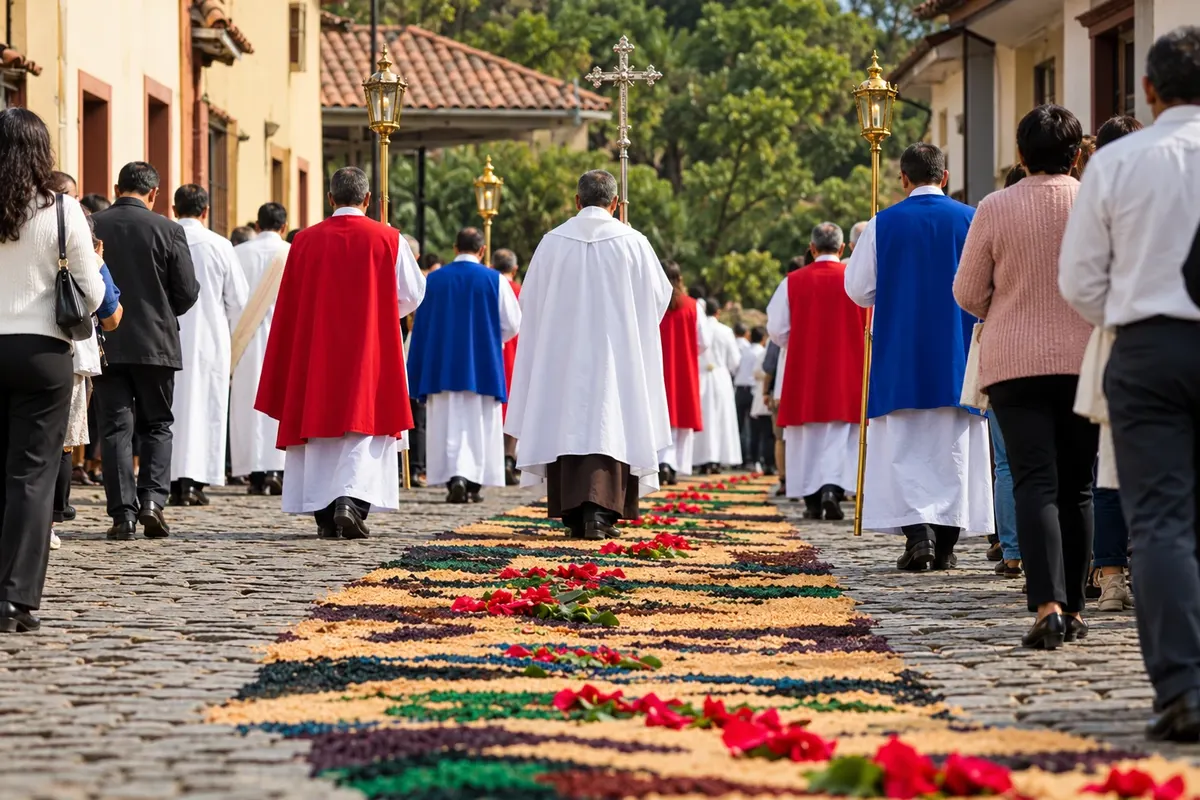
Rain lessens and days become steadier, with lows around 16 °C and highs around 24 °C in Ouro Preto. If Holy Week falls in April, the towns fill up and processions occupy the central streets. The April 21 holiday, related to the Inconfidência, also attracts visitors to Ouro Preto and Tiradentes. Book in advance and check ceremony times.
Start of the dry season · Stable days
The dry season begins. There is little rain and temperatures drop: lows around 13 °C and highs around 22 °C in Ouro Preto. It's a good time for trails, such as Pico do Itacolomi, and for regional waterfalls. Nights start to require warm clothing. Activity is moderate, with peaks on weekends and holidays.
Dry with cold mornings · Corpus Christi
Dry month, with lows around 12 °C and highs around 21 °C in Ouro Preto. Mornings and nights call for a jacket. Walking tours, trails and the Maria Fumaça operate well. The Corpus Christi holiday usually fills the towns, with sawdust carpets on the streets of Ouro Preto. In Tiradentes there is a wine and jazz festival during this period. Book in advance.
Coldest and driest month · School holidays
It’s the coldest month and one of the driest: lows around 11 °C and highs around 21 °C in Ouro Preto. Early mornings and nights are cold, so bring a jacket. With school holidays, towns get crowded and tours fill up, especially on weekends. Book accommodation, mine visits, the train and restaurants in advance. In Diamantina, the Vesperata usually takes place in the dry season; check the calendar.
Dry season · Tiradentes Gastronomy Festival
Still dry, with lows around 12 °C and highs around 22 °C in Ouro Preto. A good month for hiking and walking. The Festival Cultura e Gastronomia de Tiradentes takes place at this time, featuring chefs from Minas and beyond. Much of the program is free, and some dinners require separate tickets. The town fills up on the festival weekends.
Rains return · Jubilee in Congonhas
Rains return gradually, with heavier showers more frequent toward the end of the month. In Ouro Preto, temperatures average between 14 °C and 24 °C. From September 7 to 14, Congonhas hosts the Jubilee of Senhor Bom Jesus, with pilgrims and heavy traffic around the sanctuary. Visitors to the Profetas on those days should arrive early. The Independence Day holiday also brings activity to Tiradentes and São João del-Rei.
More frequent rain · Fewer visitors
The rainy season begins, with afternoon showers. In Ouro Preto, lows are around 15 °C and highs around 24 °C. Morning outings usually make the most of the weather. Trails require attention to the forecast. Visitor levels are lower, except for the October 12 holiday. Bring a raincoat and shoes with good soles for the stone hills.
Frequent rain · Low activity
Month of heavy rain, with lows around 16 °C and highs around 24 °C in Ouro Preto. Rain hampers trails and waterfalls, but museums, churches and mines remain options. Cities have fewer visitors, except during All Souls' Day and Proclamation of the Republic holidays. Check the forecast before going out and bring a raincoat and non-slip footwear.
Rainiest month · End of year
This is the month with the highest rainfall, with lows around 17 °C and highs around 25 °C in Ouro Preto. Even so, there are sunny days and the weather is mild. Trails and waterfalls become more difficult. Demand rises near Christmas and New Year's Eve, and the Maria Fumaça often runs extra departures at year-end. Book in advance.
Načrtujte pot
Ouro Preto, Mariana, Tiradentes and most towns on the route have no airports. The main gateway is Aeroporto Internacional Tancredo Neves, in Confins, which receives flights from all regions of Brazil. By road, it’s about 140 km from Confins to Ouro Preto and about 115 km from Pampulha. Confins is roughly 40 km from downtown Belo Horizonte.
Pampulha Airport (Carlos Drummond de Andrade) is about 8 km from the city centre. It handles regional flights and has previously hosted routes from the Voe Minas Gerais program, which included Diamantina. Check with the airline whether the route is currently operating.
For arrivals from Rio de Janeiro and São Paulo, there is the regional Zona da Mata airport near Juiz de Fora, with domestic flights by Gol, LATAM and Azul. São João del-Rei has its own airport. It went years without commercial flights, and a return of direct service to Confins on some days of the week was announced. Check current operations before booking.
From the airport there is no direct connection to Ouro Preto. The onward trip is by rental car, by bus from Belo Horizonte’s bus station or by private transfer. Book your transfer or car before arrival.
The most common base is Belo Horizonte’s bus station (Rodoviária), downtown. From Confins there are shuttle buses to that terminal. From there buses run to the historic towns.
Belo Horizonte to Ouro Preto: Pássaro Verde operates the direct connection, with several departures during the day. The trip takes 2 to 3 hours, depending on time and traffic.
Ouro Preto to Mariana: about 12 km, with regular bus service between the towns.
Belo Horizonte to São João del-Rei: Viação São Luiz (formerly Sandra) runs daily departures, about 3h15–3h30. From Rio de Janeiro, Paraibuna links Terminal Novo Rio to São João del-Rei in about 5h30. From São Paulo there are services with companies such as Util and Guanabara.
Tiradentes: the bus station mainly receives buses from São João del-Rei, so tickets are usually bought to that town. The connection takes 20–30 minutes and is operated by Presidente and Edilson. Presidente runs via the highway and is faster. Edilson uses the Estrada Velha.
Private transfer: receptive companies in Ouro Preto provide transfers from Confins and Belo Horizonte to the historic towns. Prices depend on the vehicle and number of passengers, so request a quote and book before traveling. Also check the current timetables of the carriers, as ticket prices vary by date and seat type.
Belo Horizonte to Ouro Preto: follow BR-040 toward Rio de Janeiro for about 20 km until the junction for Ouro Preto. There, join BR-356 (Rodovia dos Inconfidentes). The route is fully paved, roughly 100 km and 1h40–1h50 of driving. The initial stretch of BR-040 often has traffic in the metropolitan area.
Distances to Ouro Preto: Mariana, 12 km; Congonhas, 48 km; Conselheiro Lafaiete, 50 km; Tiradentes, 170 km; Rio de Janeiro, about 403 km; São Paulo, about 680 km; Vitória, about 440 km.
From Rio de Janeiro the route is mostly BR-040, passing Petrópolis, Juiz de Fora and Barbacena to Conselheiro Lafaiete. From there the Estrada Real, paved, continues via Ouro Branco to Ouro Preto. There are curves and wet pavement requires caution.
From São Paulo there are two options. One is BR-381 (Fernão Dias) to Belo Horizonte and then BR-356. The other is BR-381 to Lavras, BR-265 to Barbacena and BR-040 toward Belo Horizonte to Conselheiro Lafaiete.
Belo Horizonte to Tiradentes: about 190 km and 3 hours via BR-040, passing Conselheiro Lafaiete and Barbacena, then BR-265. São João del-Rei and Tiradentes are about 12 km apart via BR-265. The Estrada Velha, via Santa Cruz de Minas, is a slower alternative.
The routes described are paved and involve no ferries. For the other towns on the route, such as Diamantina, Serro and Conceição do Mato Dentro, check the itinerary before you set out. There are rental companies in Confins and Belo Horizonte.
In the historic centres, a car is unnecessary. In Ouro Preto, the main downtown attractions are close to each other and visited on foot. The streets are steep and cobbled, often slippery, so wear closed, slip‑resistant shoes. People with mobility difficulties will find obstacles on the hills.
Driving downtown is complicated. Streets are narrow, parking spaces are scarce, and parking is metered and paid. Several central areas prohibit parking. If you come by car, leave it parked and explore on foot.
Alternatives: Ouro Preto’s public transport connects the centre with neighbourhoods and districts. Taxis and ride‑hailing apps also operate in the town. Regular buses link Ouro Preto and Mariana. Between São João del-Rei and Tiradentes, the bus takes about 20 to 30 minutes.
When a car pays off: for attractions outside the centre, like the Mina da Passagem (about 8 km from Ouro Preto), and to combine several towns in one day, such as Congonhas, Mariana and Tiradentes. Those visiting only Ouro Preto and Mariana can go by bus or on a guided tour.
Check the current timetable and rates for public transport and parking, because fares change.
Both options are common in the historic towns.
Package or tour with transfer: receptive operators sell full‑day city tours, such as Ouro Preto and Mariana, departing from Belo Horizonte. The vehicle picks up visitors at the agreed point in the morning and usually includes a guide. There are also multi‑day itineraries that combine Ouro Preto, Mariana, Congonhas, São João del-Rei and Tiradentes, with transport between towns. The advantage is not having to rely on buses or parking. On the other hand, time at each church or museum is limited and the itinerary order may change. Before booking, ask what’s included. Entrance fees to churches, museums and mines are typically paid separately, and some attractions charge at the site.
On your own: rent a car, or take a bus to Ouro Preto or São João del-Rei and get around on foot and by local bus. This gives more flexibility and allows longer stays in each town. It requires planning connections, especially to and from Tiradentes.
In any case, book transfers, the car or tickets well in advance for long holidays and Holy Week. Check each operator’s current timetable.
Organizatorji izletov
Prikazane so le agencije z veljavnim vpisom v Cadastur, uradni register brazilskega ministrstva za turizem. Vrstni red ne izraža ocene. Primerjajte izlete in se dogovorite neposredno z agencijo.
Cidade Turismo reviews its information regularly, but something may have changed. Check with the place before planning your trip.
Receptive tour operator based in Belo Horizonte, active since 2002. Sells full‑day tours to Ouro Preto and Mariana departing from the capital, as well as city tours in Belo Horizonte and customised itineraries across Minas Gerais.
Izleti: Historic center and churches of Ouro Preto, Historic center of Mariana: Praça Minas Gerais and Catedral da Sé.
Vpis v Cadastur preverjen dne 10/2026
Ouro Preto agency that reports registration with Cadastur. Sells tours in Ouro Preto departing from the town, rides by jardineira or van, and the Ouro Preto and Mariana city tour departing from Belo Horizonte with hotel pickup. Also offers adventure tours in the region, transfers from Confins Airport and from Ouro Preto to Belo Horizonte.
Izleti: Historic center and churches of Ouro Preto, Historic center of Mariana: Praça Minas Gerais and Catedral da Sé.
Vpis v Cadastur preverjen dne 10/2026
Agency on Rua dos Inconfidentes, in Tiradentes. Sells the Maria Fumaça ride to São João del-Rei combined with a walking city tour of the town, including tastings and return by van, and the walking city tour of Tiradentes. Also offers bicycle and horseback rides and transfers to neighbouring towns. The website shows the Cadastur number.
Izleti: Maria Fumaça steam-train ride between São João del-Rei and Tiradentes, Walking city tour through the historic center of Tiradentes, Churches and historic center of São João del-Rei.
Vpis v Cadastur preverjen dne 10/2026
Receptive agency based in Beco da Pena, in Diamantina. Sells a cultural city tour of Diamantina, the Rota do Queijo da Região do Serro (including a visit to Parque Estadual do Tabuleiro and cheese farms, departing from Belo Horizonte or Confins) and the Caminho dos Escravos trail. The city hall lists it among local operators. The website shows the Cadastur number.
Izleti: Historic center of Diamantina and Casa de Chica da Silva, Caminho dos Escravos, in Diamantina, Tabuleiro Waterfall, in Conceição do Mato Dentro, Cheese Route of the Serro Region.
Vpis v Cadastur preverjen dne 10/2026
Izhodišče za raziskovanje
Pred odhodom
Z nekaj načrtovanja boste imeli več časa za uživanje na poti.
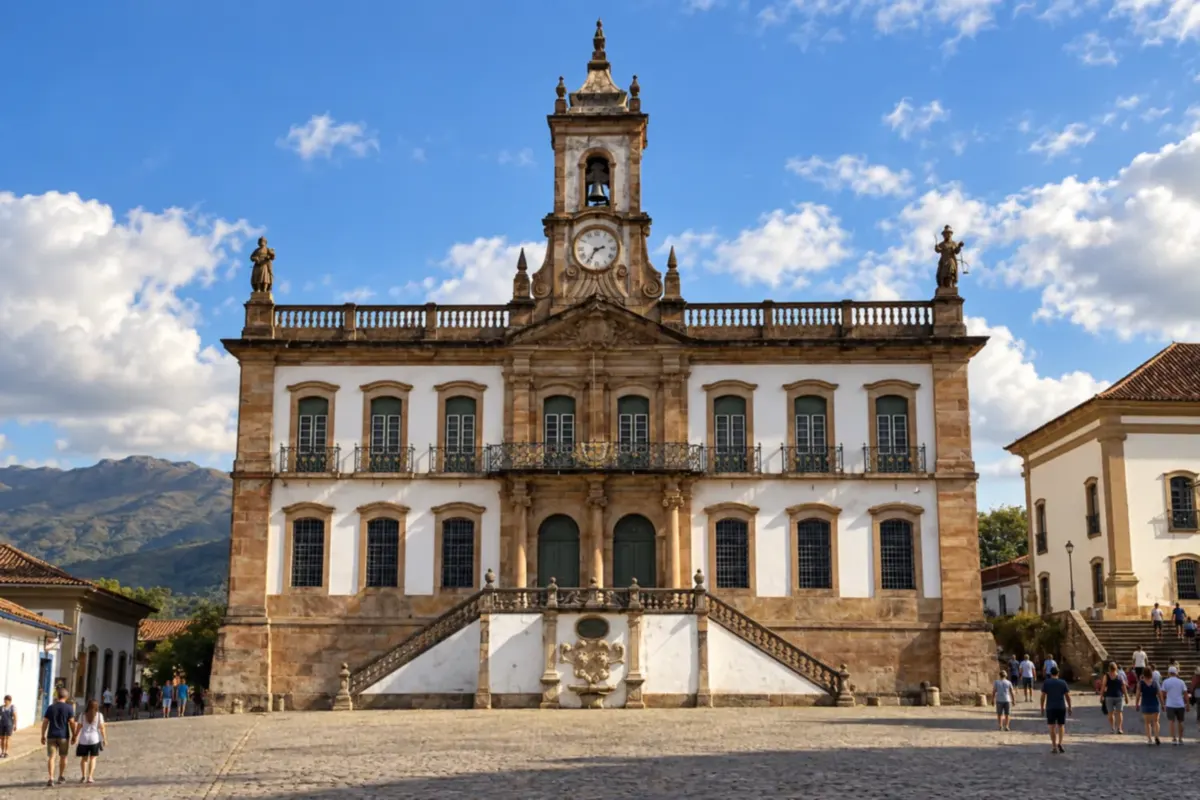
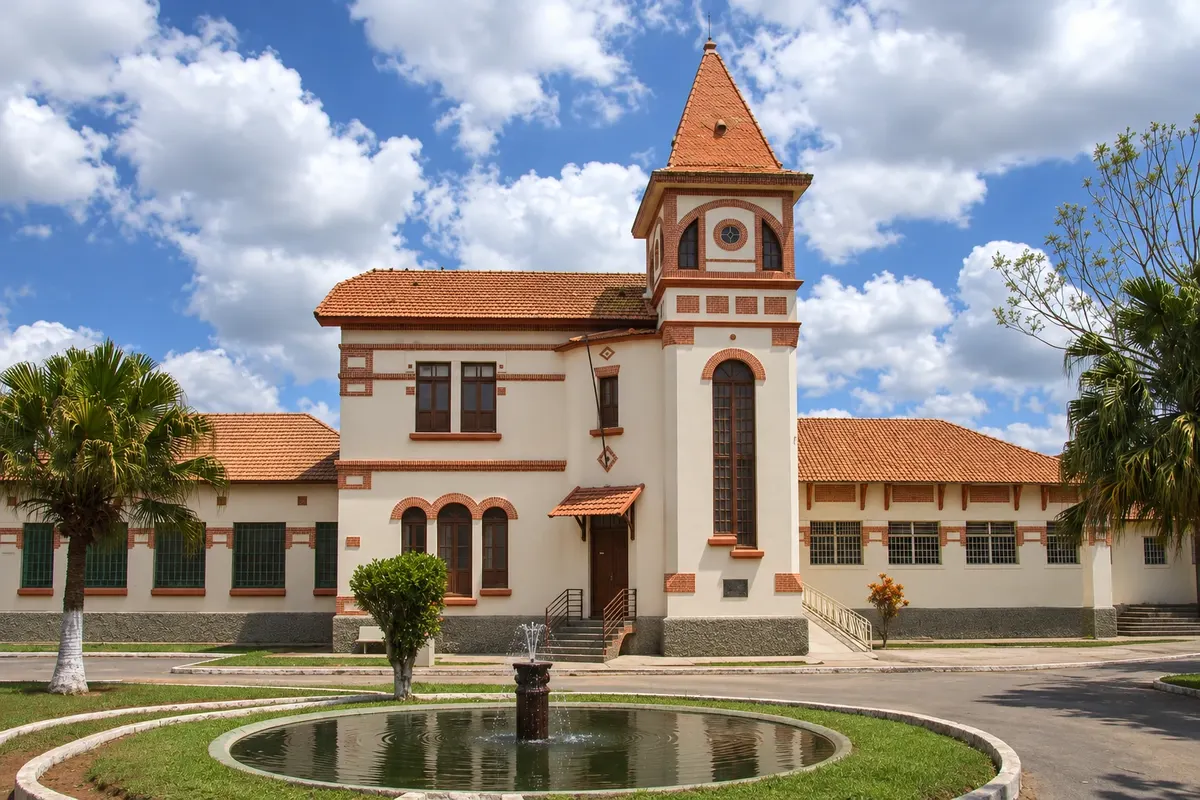
From April to September, in the dry season, with highlights such as Holy Week in Ouro Preto and Tiradentes' food and culture festivals in winter.
The seasons shown are the most usual ones; nature doesn't always follow the calendar.
Odnesite svoje odpadke, upoštevajte oznake in podprite lokalne ponudnike. V naravi upoštevajte navodila za obiskovalce.
Odgovori na vaša vprašanja
For the essentials, two days are enough: churches and the historic center on one day, mines and a day trip to Mariana on the other. With three days you can put together a full itinerary, including Mariana and a nearby village such as Lavras Novas. Those who want to delve into the history and explore the surroundings can stay four to five days. With only one day, focus on the Igreja de São Francisco de Assis, Praça Tiradentes and the Matriz de Nossa Senhora do Pilar. The steep hills make the pace slower than the map suggests.
From Belo Horizonte to Ouro Preto it's about 100 km, roughly 1h45 by car. From Ouro Preto to Mariana it's just over 11 km, about 20 minutes. From Belo Horizonte to São João del-Rei it's approximately 185 km, around 3 hours by car. Between São João del-Rei and Tiradentes it's about 15 km. Times vary with traffic and road conditions. So allow extra time if you have a scheduled appointment, such as a train excursion.
There is no regular line to Tiradentes: the city's bus station only receives buses coming from São João del-Rei and charter tourist buses. Therefore buy a ticket to São João del-Rei. Belo Horizonte's bus station has daily departures to there, and the trip takes about 3h30 to 4 hours. From São João del-Rei to Tiradentes it's about 15 km, which you can do by frequent intercity bus, taxi or ride-hailing car. Check companies and current schedules before traveling.
Most churches in Ouro Preto charge admission, paid separately, and the price varies from church to church. Check each one's current price list. In most of them it is prohibited to photograph the interior. Churches do not follow a regular opening schedule, and some may be closed for restoration. Therefore don't plan your day relying on a specific church without checking first. If you want a guide, hire a licensed professional, who charges separately. The same applies to the churches in Tiradentes: visits are paid and, in almost all, the interior cannot be photographed.
Yes — the two towns are just over 11 km apart, about 20 minutes by car. A common way to plan is to spend a full day on Ouro Preto's churches and historic center and reserve the second day for the mines and a day trip to Mariana. In Mariana the historic center is easily explored on foot but also has hills. If you have only one day for both towns, choose a few churches in each so you don't have to rush.
Yes. The distance is about 100 km, roughly 1h45 by car, and there are daily buses and rideshares. With only one day, the compact itinerary includes the Igreja de São Francisco de Assis, Praça Tiradentes and the Matriz de Nossa Senhora do Pilar, with a lunch of typical Minas food and a walk through the hills. You can't include everything: museums, mines and Mariana are for another visit or for those who stay overnight. Book your return with extra time, because the route is a mountain road.
Children aged 0 to 5 travel free, provided they sit on a caregiver's lap and have ID (birth certificate or identity document). There are half-price fares for children 6 to 12, students, seniors aged 60 and over, and people with disabilities or reduced mobility, among other groups covered by the rules. Bring photo ID, a valid student card, and for children the birth certificate. Check the current fare table, which also shows the round-trip rules.
No. The train does not run every day of the week, and the schedule changes with holidays, school vacations and events. At certain times there are extra trips, so check the current calendar before planning. The stretch between the two towns is short and takes about 45 minutes. During holidays and the winter season demand is high, and it's recommended to buy tickets in advance to avoid lines at the ticket office. On operating days, São João del-Rei station also has a small memory/exhibition space with a guided visit, charged separately.
Accessibility is limited. Ouro Preto has steep hills, cobblestone streets and irregular, narrow or missing sidewalks in places. This makes touring difficult for older people, those with reduced mobility and wheelchair users. Tiradentes is considered even less adapted. With planning you can see part of the town: wheelchair users often travel by car between churches and viewpoints and rely on a companion, since the paving is problematic. Some attractions have adaptations, but check with each site beforehand. Wear closed, comfortable shoes and take it slow.
The carpets are made with sawdust and flowers on the streets of the historic center, along which the procession passes. Preparation starts on Wednesday night, with residents and visitors working together, and continues until Thursday morning, when the procession with the Blessed Sacrament takes place. Corpus Christi always falls on a Thursday. The procession departs from the Basílica de Nossa Senhora do Pilar and proceeds to the Santuário de Nossa Senhora da Conceição. The city also makes carpets during Holy Week, along a different route. The date is a municipal holiday in Ouro Preto and draws many people. Check the parish and city hall program for the year and plan your trip in advance.
You can see the basics of both towns in one day. There are day tours departing from Belo Horizonte that combine the two, and the towns are about 15 km apart. In São João del-Rei the visit usually starts with the baroque churches in the center, such as São Francisco de Assis, and in Tiradentes it continues after lunch. If you want to include the Maria Fumaça ride, the Museu Ferroviário, or visit museums and churches at a relaxed pace you need more than one day, because the train runs on specific days and times. Since churches charge separate admission, allow time for lines.
Brazilske poti
From Ouro Preto to Paraty, the oldest route of the Estrada Real passes through historic towns, mineral-water spa towns, and the Mantiqueira mountain range.
Brazilske poti
Between the mines and Guanabara Bay, the Caminho Novo connects Ouro Preto to Porto Estrela and is historically completed in Rio de Janeiro.
Brazilske poti
From Diamantina to Ouro Preto, the route follows Espinhaço landscapes, historic districts, and the legacy of mining.
Brazilske poti
From Cocais to Glaura, the Sabarabuçu route brings together mountain ranges, the Rio das Velhas, and the heritage of Caeté and Sabará.
Brazilske poti
Fifteen municipalities of Minas Gerais in a route through gold heritage, mountain ranges, railway memory and Minas cuisine.
Več kot vodnik