From Largo das Forras to the Matriz via Rua Direita
Odhod: Largo das Forras on foot, on your own about 2 hours, excluding interior visits morning or afternoon easy, with a short climb at the end
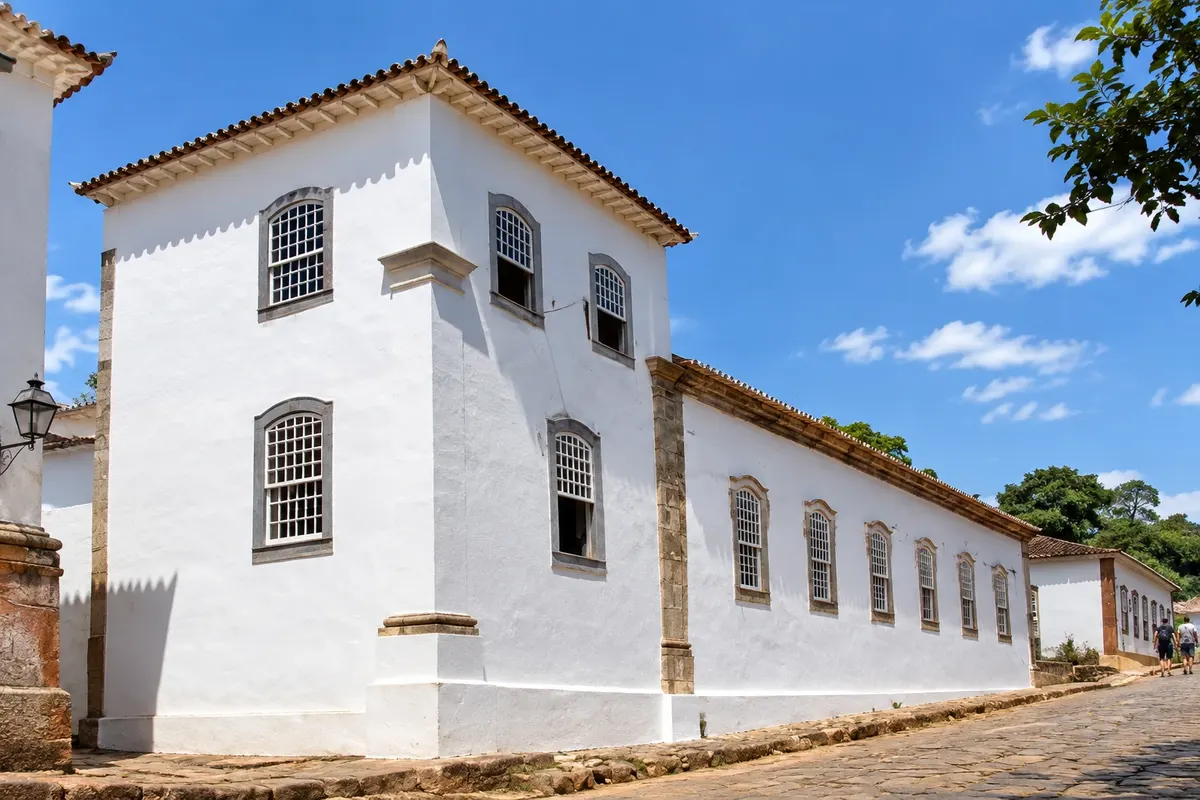
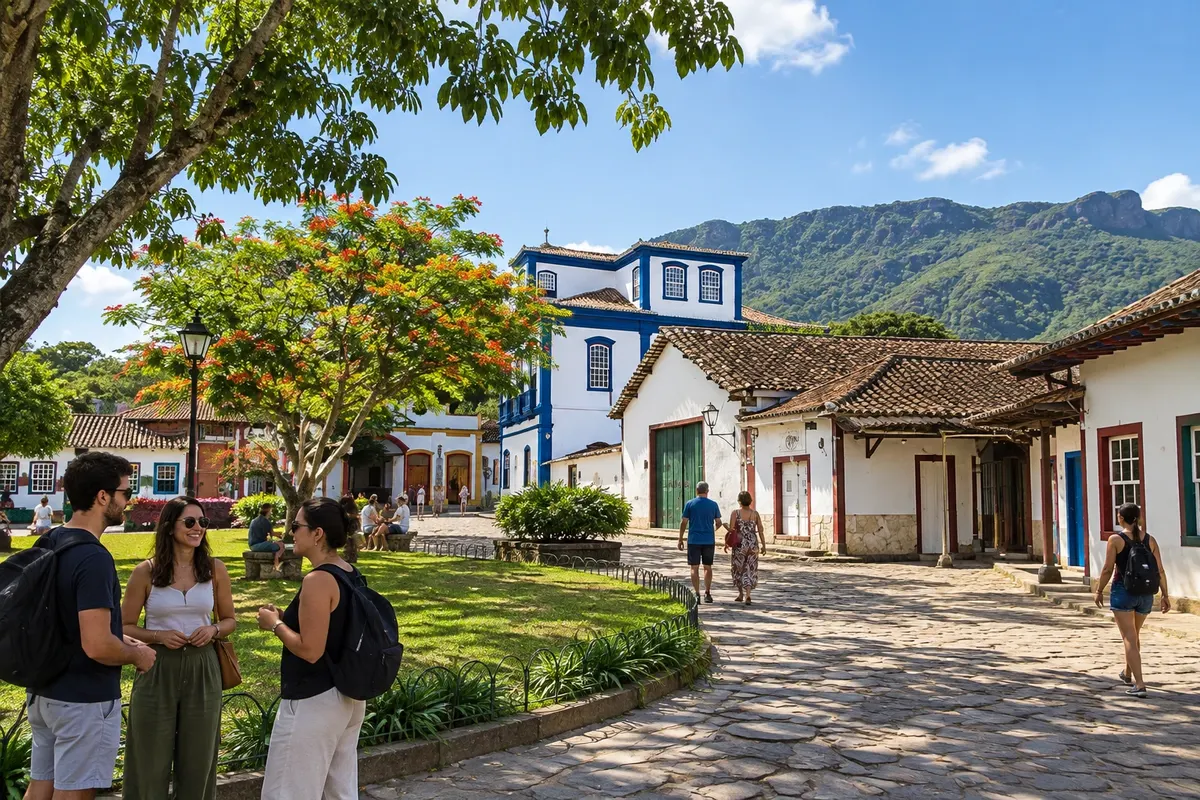
This is the walk that introduces the town. Arriving visitors cross the stone bridge over the Ribeiro de Santo Antônio and enter Largo das Forras. The bridge and square recall, in their names, the freed women who lived there during the colonial period. The grassy square was designed by landscape architect Roberto Burle Marx and features a monument from 1892, erected on the centenary of Tiradentes’ death. Around it are the small Capela do Bom Jesus da Pobreza, with a voluted pediment, and the municipal townhouse, the only three-story building in the historic center.
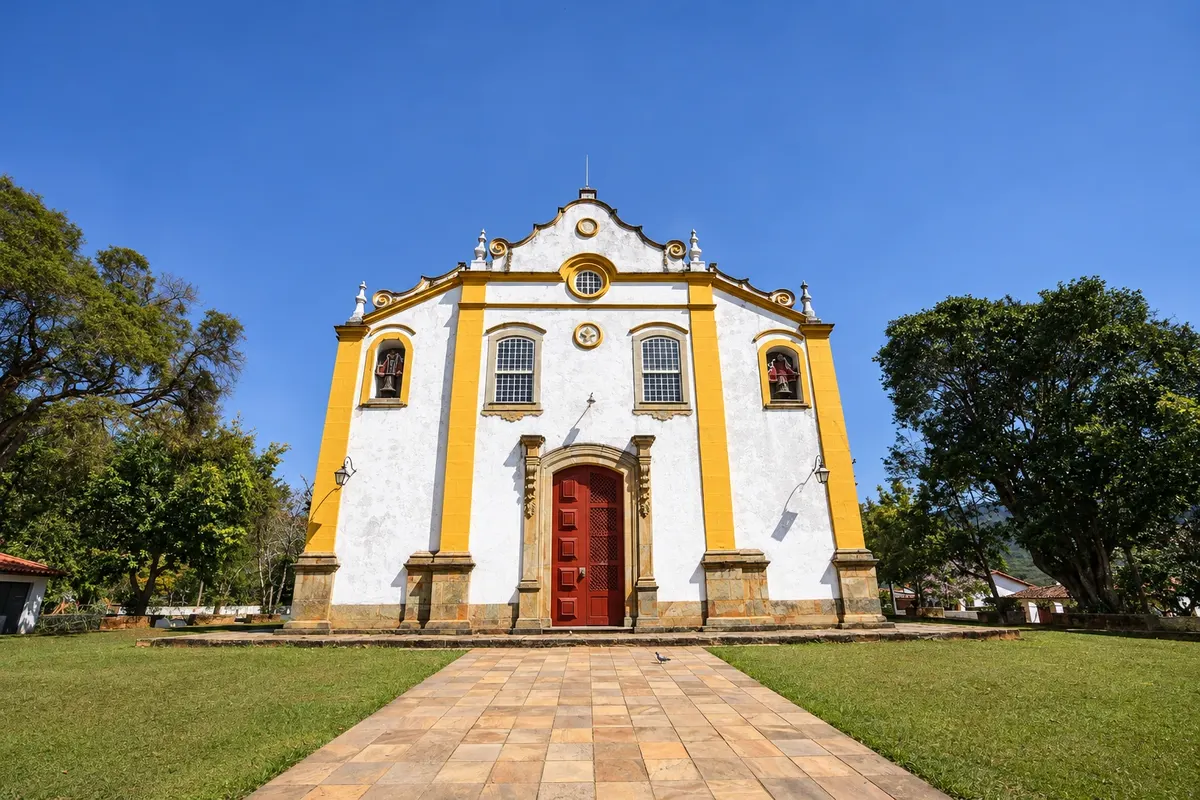
Rua Direita runs out from the square. On both sides are eighteenth-century townhouses, some still with rótula windows—the wooden lattices that let you see without being seen. At number 168 is the Yves Alves Cultural Center, with exhibitions and performances. Further along, facing the street, stands the Church of Our Lady of the Rosary, considered the oldest in the town: the first chapel was built by the Brotherhood of Black Men, probably in 1708. The nave’s ceiling, painted by Manoel Victor de Jesus, shows the fifteen mysteries of the Rosary. Opposite, via Rua da Cadeia, you enter the Museum of Sant'Ana.
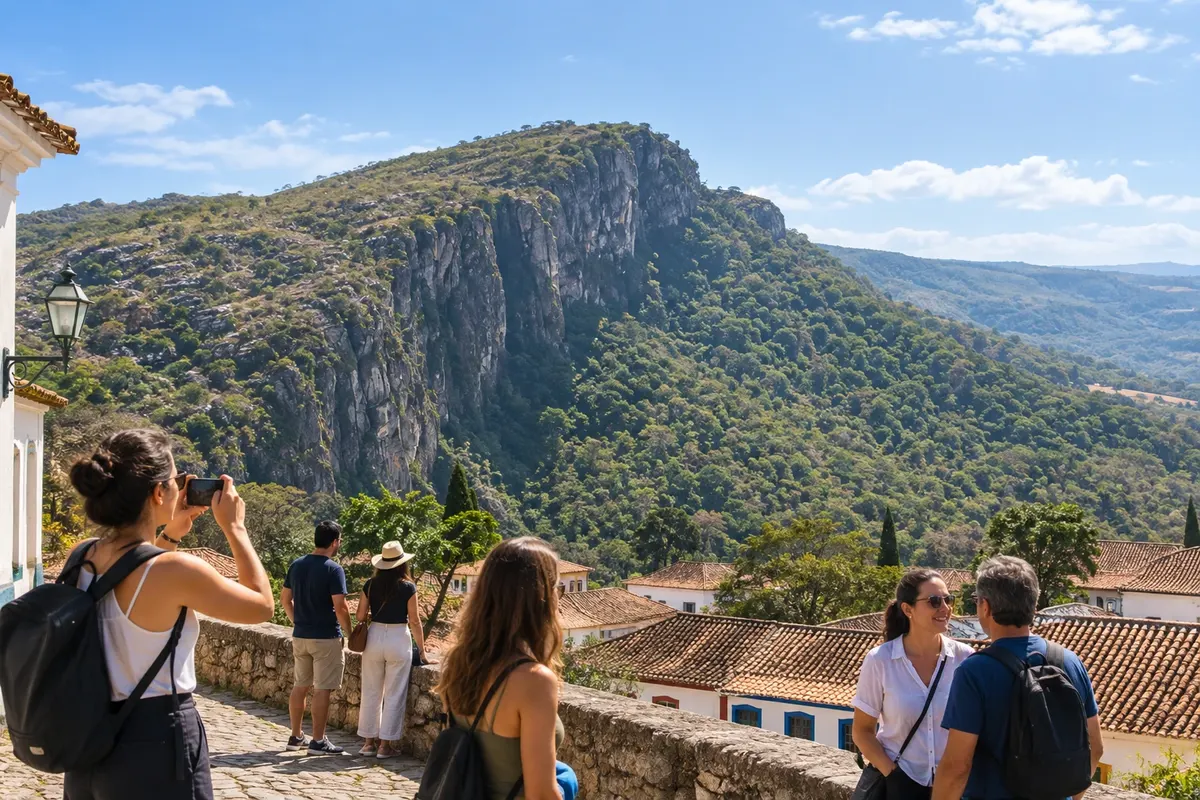
Rua Direita ends at Quatro Cantos, the intersection with Rua da Câmara. On the corner is the Sobrado Ramalho, considered the oldest house in the town, home to an orchestra and band founded in 1860. Going up Rua da Câmara you pass the former Town Hall, with a balcony and coat of arms on the façade, and reach the churchyard of the Mother Church of Santo Antônio. Look back: the cobbled street, the roofs and the Serra de São José in the distance form Tiradentes’ most famous view.
Kraji na poti: Ponte das Forras, Largo das Forras, Capela do Bom Jesus da Pobreza, Rua Direita, Yves Alves Cultural Center, Church of Our Lady of the Rosary, Quatro Cantos, Sobrado Ramalho, Rua da Câmara, Town Hall, Mother Church of Santo Antônio.
Vključuje: Self‑guided walk. The Igreja do Rosário and the Matriz charge admission, and there is a combined ticket for both: check the current rates. The Yves Alves Cultural Center has free entry.
Nasvet: Do the route early in the morning or late afternoon, when there are fewer people and the light hits the hills. On busy days the main streets are closed to cars. If you prefer to hear the history, you can hire the walking city tour offered by agencies, departing from Largo das Forras.
Najboljši čas za obisk: All year. From April to October it rains little and the cobblestone streets stay dry.
Matriz de Santo Antônio: the daytime visit and the organ concert
Odhod: Matriz courtyard, at the top of Rua da Câmara on foot about 1 hour during the day; 1 to 2 hours at night morning, afternoon or evening easy
The Matriz de Santo Antônio occupies the highest point of the historic center and is one of the richest Baroque churches in Minas Gerais. It was built in the early 18th century, when the gold from the mountains supported the village. Around 1810 the façade was redone from a design commissioned to Aleijadinho: the volute pediment and the soapstone carved doorway are his. It is the only church in the town with work by the sculptor.
On the outside, the building is sober. Inside, gilded carving covers altars, arches and walls. The chancel has paintings on the ceiling and sides. The choir, decorated in the Rococo style, extends the balustrade to the side and houses the 18th-century organ, brought from Portugal and still operational.
In the courtyard is the stone sundial, which became one of the city’s symbols and is copied in soapstone by local craftsmen. From there you can see the manor houses on Rua da Câmara, with the Serra de São José in the background. At the back of the church, a paved path leads to the Matriz Well, which supplied water to the village before the fountain was built.
The church receives daytime visitors at times that vary according to weekday and religious celebrations. On weekend nights, generally on Fridays and many Saturdays, there is a separate program: first a narrated route, with light and sound, that tells the story of the Matriz and the town; then the concert on the historic organ. It does not take place on wedding days.
Kraji na poti: Matriz de Santo Antônio, Sundial, Matriz Well.
Vključuje: Entrance to the church is paid at the door. The narrated route with the organ concert has a separate ticket, sold separately, with a discount for advance purchase: check the current price list.
Nasvet: Photography inside is not allowed. For the concert, confirm the performance the day before and arrive early to see the narrated route from the beginning. The daytime visit and the concert show the church in different ways: if you can, do both.
Najboljši čas za obisk: All year. During holiday months there is often also a light projection on the façade.
Padre Toledo Street and São José Fountain
Odhod: Parish Church of Saint Anthony on foot 2 to 3 hours morning or afternoon easy
From the Mother Church, Padre Toledo Street continues almost flat through one of the calmest stretches of the center. At its end is the Padre Toledo House Museum, the former residence of vicar Carlos Correia de Toledo e Melo, one of the Inconfidentes. The house has a single floor and a small tower. What stands out are the ceilings: of the thirteen rooms, nine have painted rococo-style ceilings, which was rare in residences. In the Hall of the Five Senses, mythological couples represent the human senses. The museum belongs to the Federal University of Minas Gerais and displays furniture, paintings, and objects of devotion.
On the same street is the Chapel of Saint John the Evangelist, built from 1760. The façade is wide and without towers, and the bell is placed in one of the windows. In the chancel Manoel Dias de Oliveira, one of the best-known composers of colonial Minas music, was buried. Nearby, Largo do Sol contains the House of Commander Assis, today a school, and a monument to Tiradentes from 1962.
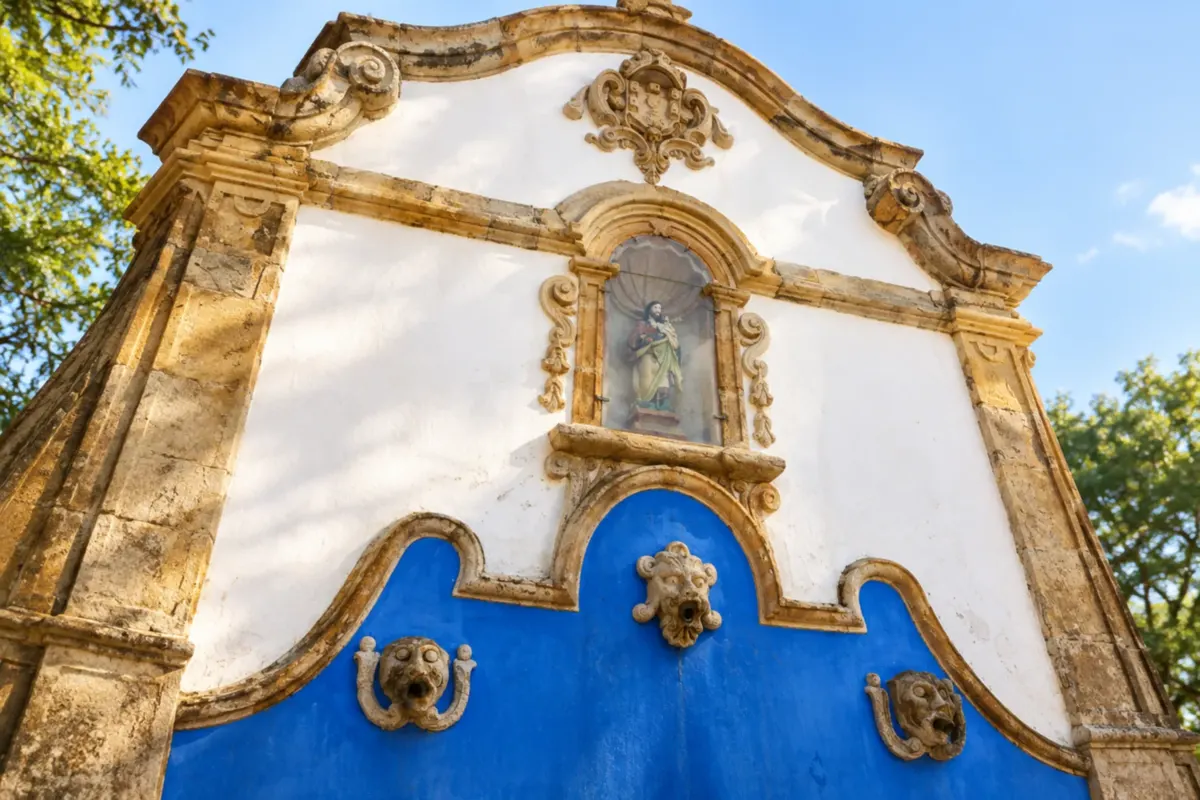
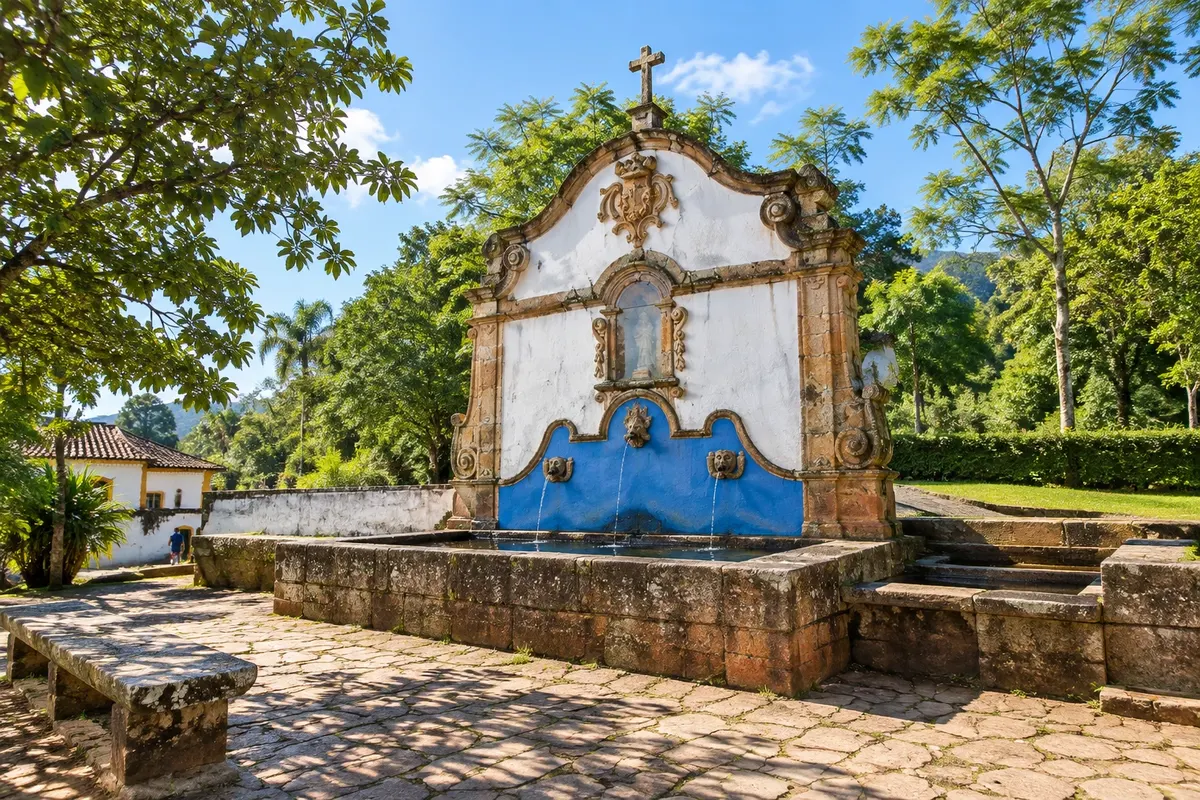
Going down Rua do Chafariz you reach the São José Fountain, built by the municipal council in 1749 to supply water to the town. Three stone gargoyles pour water into a single tank; above is a niche with the image of Saint Joseph of Boots and the Portuguese coat of arms. Next to it are the washhouse and the animals’ trough. The water still comes from the hills through a stone aqueduct.
Next to the fountain begins the Mãe d'Água Grove, at the foot of the São José Range, where the spring is located. A short path follows the old aqueduct through a stretch of Atlantic Forest. It is the simplest way to step into the hills without doing a trail.
Kraji na poti: Padre Toledo Street, Padre Toledo House Museum, Chapel of Saint John the Evangelist, Largo do Sol, Rua do Chafariz, São José Fountain, Mãe d'Água Grove.
Vključuje: Self-guided walk. The Padre Toledo House Museum charges admission: check the current rates. There is no charge at the fountain.
Nasvet: The museum and the woodland are not open every day: confirm before you go. In the museum, look at the ceiling in each room and, if there is a guide, request an accompanied visit. The street paving makes access difficult for wheelchairs.
Najboljši čas za obisk: All year. In the woodland, the path becomes slippery after heavy rain, from November to March.
Sant'Ana Museum and Museum of Liturgy
Odhod: Rua da Cadeia, next to Rua Direita on foot about 1 hour at each museum morning or afternoon easy
The two religious art museums of Tiradentes are small, well curated, and just a few minutes from each other. They are of interest even to non-devout visitors because of the quality of the pieces and the buildings.
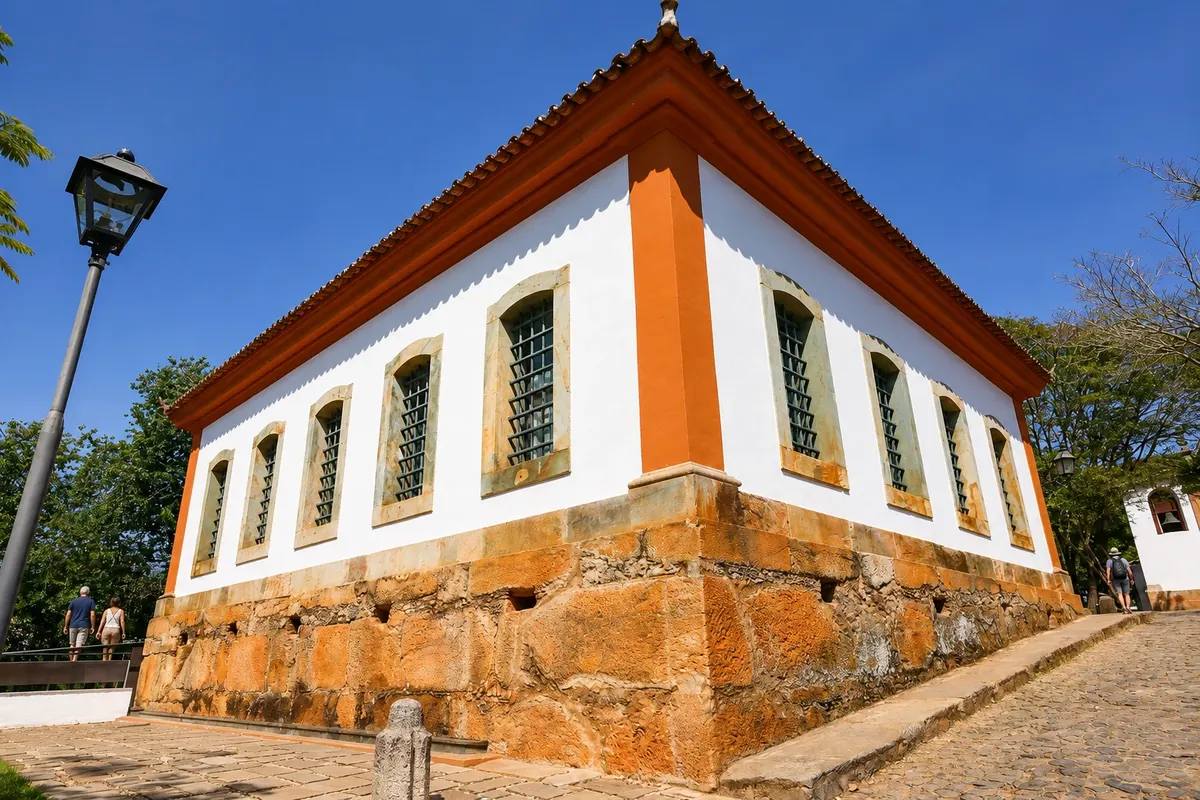
The Sant'Ana Museum occupies the former Public Jail, at the corner of Rua Direita and Rua da Cadeia. It opened in 2014 and houses 290 images of Sant'Ana, mother of Mary and grandmother of Jesus, regarded as protector of homes, families and miners. The pieces are Brazilian from the 17th to the 19th centuries, both scholarly and folk, most by unknown authors, in various materials. The collection was assembled over four decades by Angela Gutierrez and donated to the public. The rooms have themes, such as the Holy Mothers, Sant'Ana Guide, who leads her daughter by the hand, and the master carvers and folk image-makers. Some images fit in the palm of your hand; others are altar-sized.
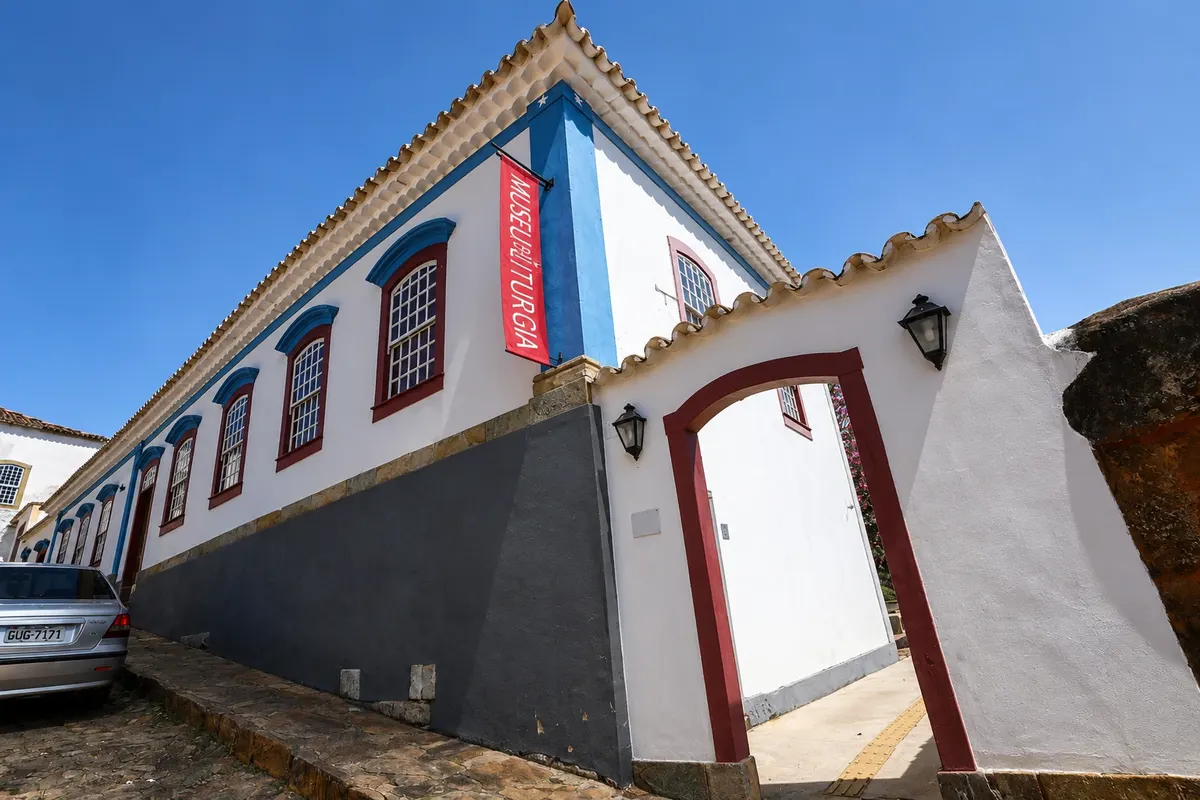
The Museum of Liturgy is on Rua Jogo de Bola, one of the city's oldest streets. It is presented as the only museum in Latin America dedicated to the subject. It gathers more than 420 restored pieces from the 18th to the 20th centuries: ex-votos, missals, vestments, metal and wooden objects, many of them kept for decades in region sacristies. The presentation is modern, with videos and terminals that explain what each object was used for and how the festivals and processions were held.
To complete the visit, the Yves Alves Cultural Center, in a manor on Rua Direita, has no permanent collection: it hosts temporary exhibitions, cinema, theater and music. It's worth checking the week's schedule.
Kraji na poti: Sant'Ana Museum, Former Public Jail, Museum of Liturgy, Rua Jogo de Bola, Yves Alves Cultural Center.
Vključuje: Each museum has its own ticket, with half-price admission for some categories: check the current table. At the Yves Alves Cultural Center there is no entrance fee.
Nasvet: The Museu de Sant'Ana closes on Tuesdays and sells tickets until half an hour before closing. The Museum of Liturgy is open only part of the week, generally from Thursday to Sunday. Leave both for a rainy afternoon or the hottest hours of sun.
Najboljši čas za obisk: All year; it’s the program for rainy afternoons from November to March.
Holy Trinity Sanctuary and Saint Francis of Paula: the high parts of town
Odhod: Parish Church of Saint Anthony on foot, uphill, or by carriage and taxi 2 to 3 hours afternoon moderate, due to the hills
Outside the busiest core, three churches show a quieter Tiradentes, among residential streets.
The Sanctuary of the Holy Trinity sits above the Parish Church. You pass the churchyard, the town falls silent and the slope rises between houses and backyards up to the neighborhood named after the church. The current chapel dates from 1810 and replaced an earlier one from 1776; the design was commissioned to Manoel Victor de Jesus, a painter who worked on several of the town’s churches. In 1923 the place became a pilgrimage center. On the main altar is the image of the Eternal Father, carried in procession at the Holy Trinity Jubilee, one of Tiradentes’ biggest festivals, between May and June. The interior is simple and filled with paintings; there is a room of miracles with pilgrims’ thank-you notes, and a fountain outside.
The Chapel of Saint Francis of Paula stands atop a hill. It is 18th century and almost always closed, but the climb is worth it for the view: from the top, in front of the chapel, you can see the Parish Church surrounded by houses and the quartzite face of the Serra de São José behind it. It’s a place where many people wait for the end of the afternoon.
On the way back, stop by Largo das Mercês. The Chapel of Our Lady of Mercês, from the late 18th century, has a simple façade and an interior with paintings attributed to the same Manoel Victor de Jesus. It is also usually closed outside mass times. Next to it is a cemetery still in use.
Along the route you’ll see the small colorful chapels of the Stations of the Cross, scattered through the streets. They are closed for most of the year and only open during Holy Week, when processions stop in front of each one.
Kraji na poti: Sanctuary of the Holy Trinity, Chapel of Saint Francis of Paula, Chapel of Our Lady of Mercês, Stations of the Cross.
Vključuje: Self-guided visit; there is no charge to climb to the viewpoints. Carriage or taxi, if used, are extra.
Nasvet: To see São Francisco de Paula or Mercês inside, try the mass times at the weekend. Climb to São Francisco de Paula with water and leave it for the end of the day, when the sun is lower.
Najboljši čas za obisk: From April to October, with clear skies. Between May and June, the Jubilee fills the Holy Trinity neighborhood.
Steam train from Tiradentes to São João del-Rei
Odhod: Tiradentes Station, Praça da Estação steam train about 40 minutes each way morning or afternoon easy
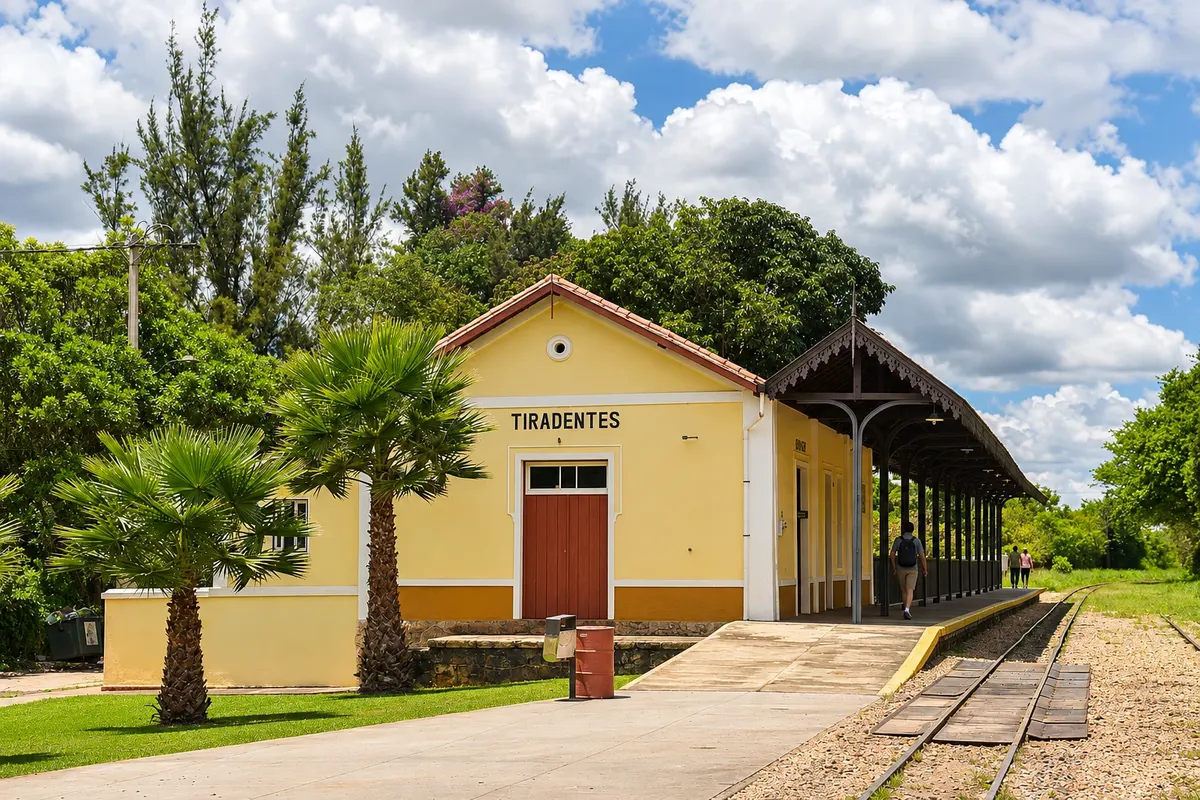
Tiradentes station is slightly away from the historic center and is one terminus of the oldest tourist train still operating in Brazil. The line was opened by Dom Pedro II on August 28, 1881, and was part of the Estrada de Ferro Oeste de Minas. The tracks have a 76-centimeter gauge, much narrower than standard railways, and the locomotives are steam.
The route is just under 13 km. The train follows the Rio das Mortes, with the Serra de São José in the background, and passes pastures and old farms. The cars are divided into three classes. Seating is unreserved: seats are taken on a first-come, first-served basis.
In Tiradentes, when the train arrives from São João del-Rei, the locomotive is uncoupled and turned by hand on a turntable, a scene that draws people to the platform. At the other terminus, near São João del-Rei station, are the Railway Museum and the Roundhouse, a circular building where tracks converge on a manual turntable at the center.
Tickets are sold per leg, and each direction is purchased separately. You can take the train and return by taxi or bus after exploring the center of São João del-Rei, which is a walk from the station; or take only the return train to arrive in Tiradentes by rail.
The train runs on Fridays, Saturdays and Sundays, with extra departures on public holidays and during vacation periods. There are fewer departures on Sundays. Ticket offices at both stations open on operation days, and tickets are also sold online. Children up to 5 years old travel free if they do not occupy a seat.
Kraji na poti: Tiradentes Railway Station, Rio das Mortes, Serra de São José, São João del-Rei Station, Railway Museum, Roundabout.
Vključuje: One-way train ride from Tiradentes to São João del-Rei. The return trip requires a separate ticket. Half-price tickets are available for students, people aged 60 or over, and people with disabilities.
Nasvet: Buy in advance for public holidays, the July school vacation and festival weekends. Arrive early at the platform to choose your seat: when leaving Tiradentes, the right-hand side usually has the best views. The station is a little far from the historic center: with small children or luggage, take a taxi or a carriage.
Najboljši čas za obisk: All year. From April to October the weather is more stable; during school vacations and public holidays there are more departures.
R$ 80 do R$ 110 · per person, per leg, full fare (3rd to 1st class)· uradna cena


 Antarktika
 Argentina
 Bolivija
 Čile
 Kolumbija
 Ekvator
 Gvajana
 Francoska Gvajana
 Falklandski otoki (Malvini)
 Paragvaj
 Peru
 Surinam
 Urugvaj
 Venezuela
 Nemčija
 Avstrija
 Belgija
 Hrvaška
 Danska
 Slovaška
 Slovenija
 Španija
 Finska
 Francija
 Grčija
 Nizozemska
 Madžarska
 Irska
 Islandija
 Italija
 Luksemburg
 Norveška
 Poljska
 Portugalska
 Združeno kraljestvo
 Češka
 Švedska
 Švica
 Turčija
 Bermudi
 Kanada
 Združene države Amerike
 Grenlandija
 Mehika
 Sveta Peter in Mihael
 Dominikanska republika
 Japonska
 Južnoafriška republika
 Egipt
 Avstralija
 Fidži
 Nova Zelandija
 Papua Nova Gvineja