Ouro Preto

Minas Gerais · Brazilija

Ouro Preto

Destinacija: Historic Towns of Minas Gerais (Estrada Real).

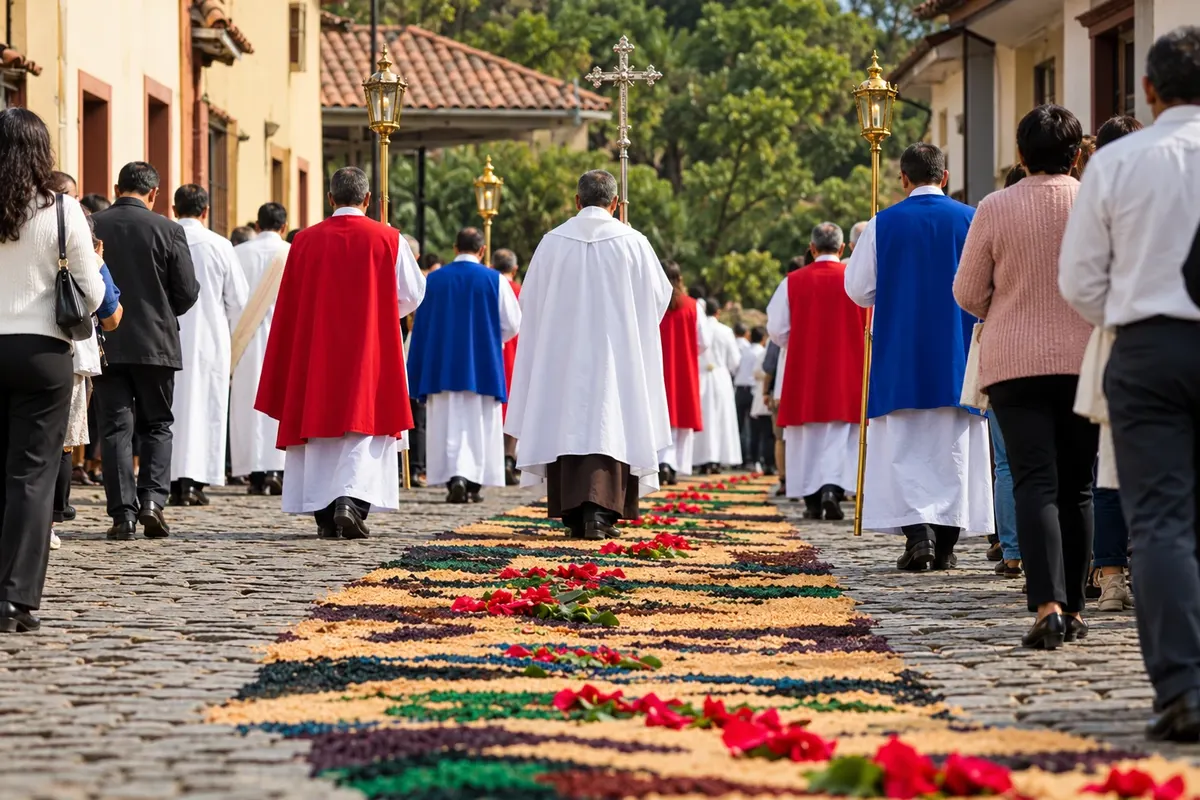
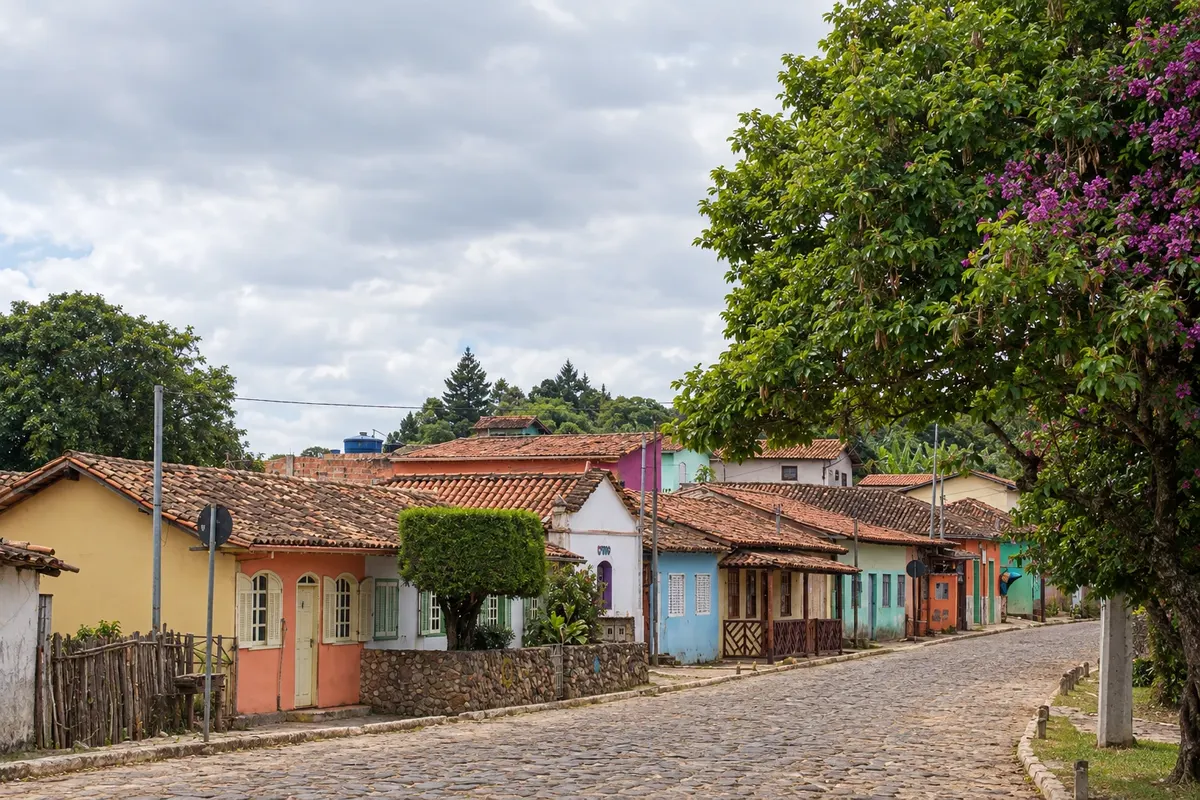
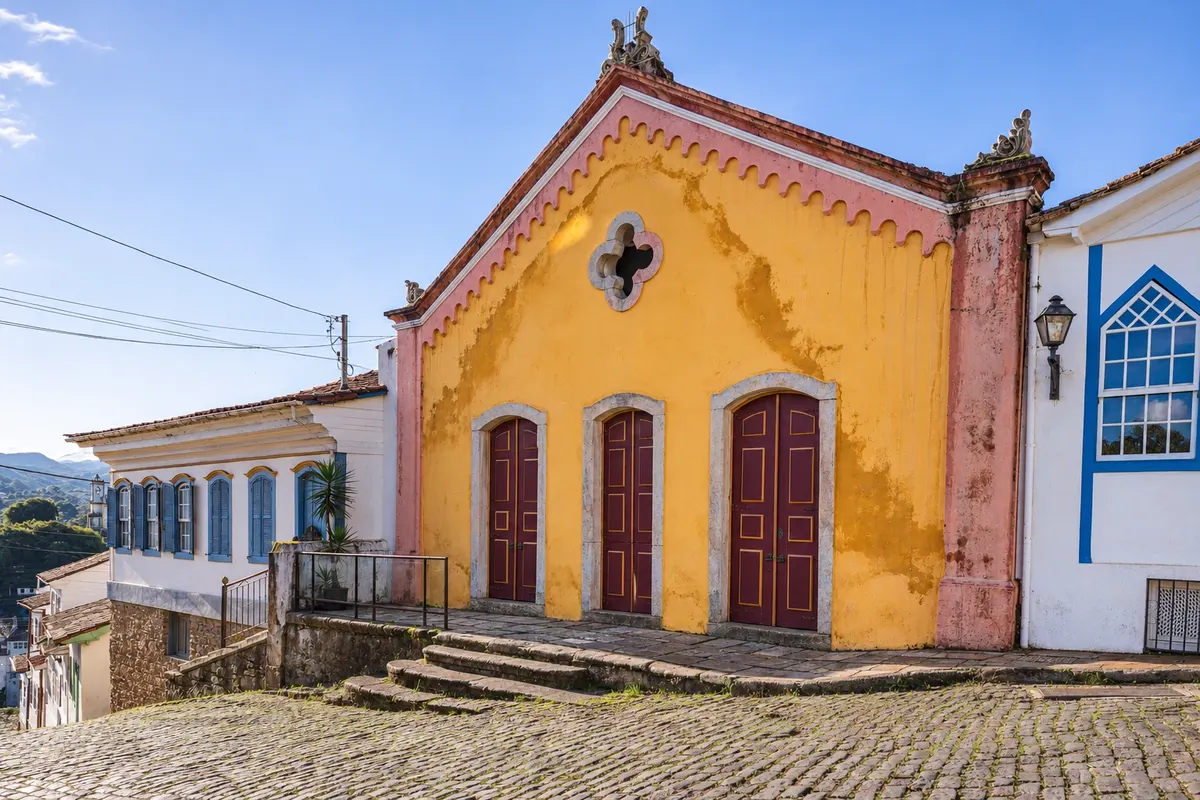
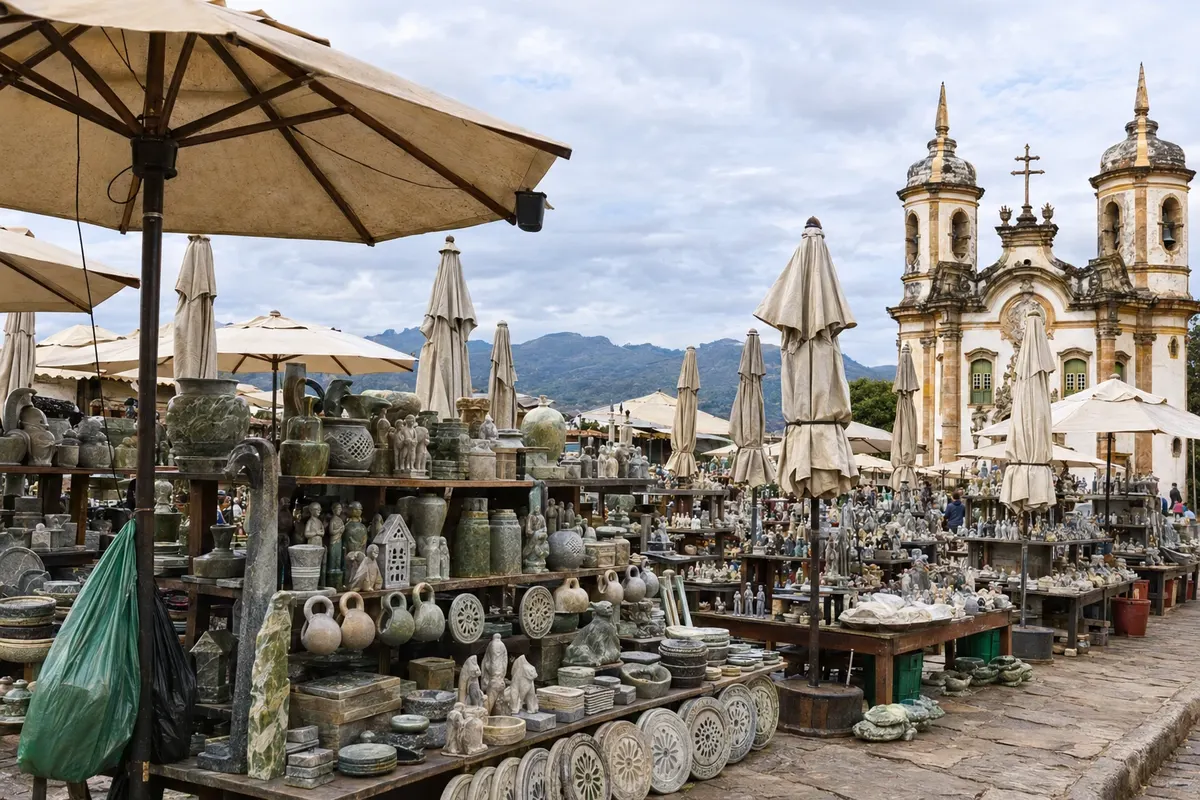
Illustrative images. The pictures in this guide are illustrations based on the real place, not photographs, and may differ from it.

Na voljo v trgovini Google Play Pošljite svoje fotografije

Mesto

Kaj lahko pričakujete – Ouro Preto.

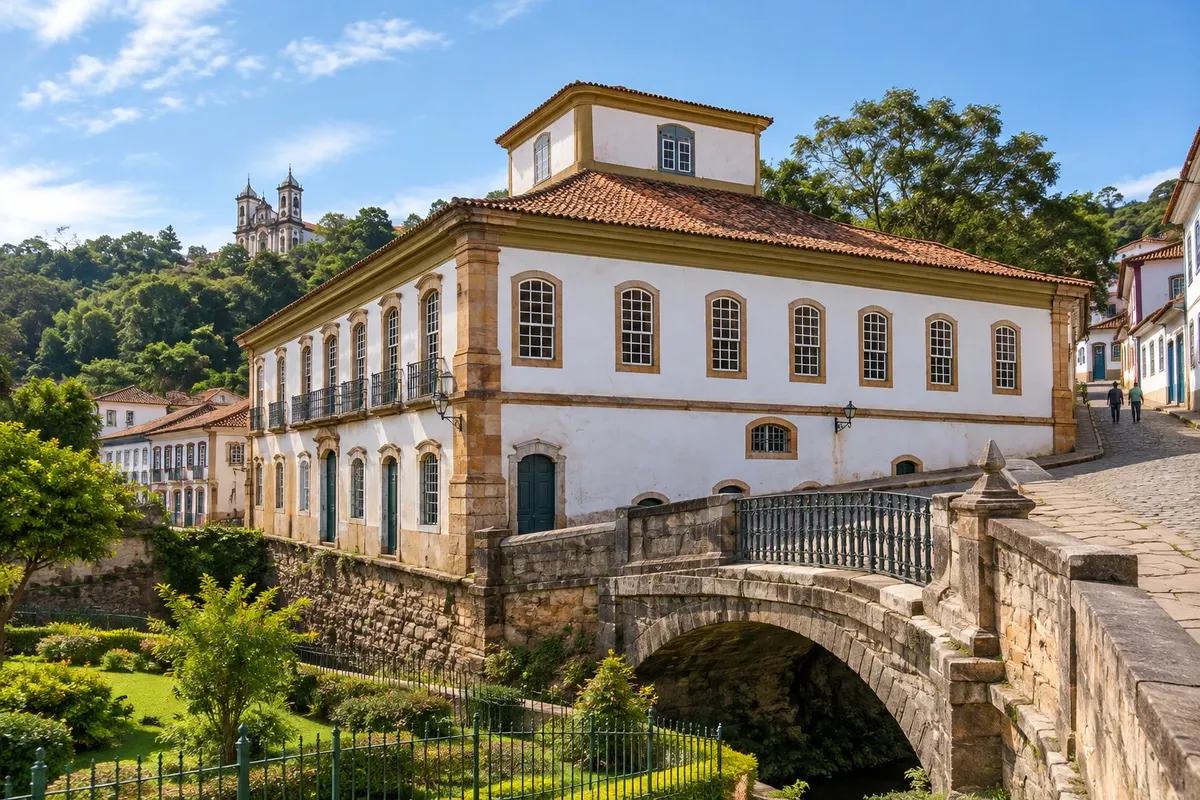
Ouro Preto spreads over hillsides shaped by the gold cycle and colonial architecture. Walking its steep streets lets you discover sacred art, museums and places that tell the history of Minas Gerais.

Ouro Preto lies in the Espinhaço Range, in central Minas Gerais, about 100 km from Belo Horizonte. It was born from the gold rush: in 1698 the bandeira of Antônio Dias camped within sight of Pico do Itacolomi, and within a few years the mountain settlements formed Vila Rica, the center of 18th-century mining in Brazil. The current name dates from 1823 and comes from the dark gold covered by iron oxide found in the region. The city was declared a National Monument in 1933 and a UNESCO World Heritage Site in 1980.

The historic center occupies steep slopes and is best explored on foot, slowly. Praça Tiradentes sits at the top and divides the town in two. On one side the hills descend toward Antônio Dias: Largo de Coimbra, the Church of São Francisco de Assis designed by Aleijadinho, the Mercês and Perdões churches and the Sanctuary of Our Lady of the Conception; higher up, at Alto da Cruz, the Church of Santa Efigênia. On the other side the slopes descend toward Pilar and Rosário: Rua São José, the Casa dos Contos, the Basilica of Our Lady of Pilar and the Church of Our Lady of the Rosary. Around the square are the Museum of the Inconfidência, the Church of Carmo, the Museum of Oratory and the Casa da Ópera.

Beneath the houses the mountain is cut by galleries. Eight colonial-era gold mines welcome visitors, almost all in Antônio Dias and Alto da Cruz, with short guided tours. On the city’s edge are two parks: the Municipal Natural Park of the Swallows, with the waterfall where the Rio das Velhas begins, and the Itacolomi State Park, with the 1,772-meter peak that guided travelers. Within the center itself, Horto dos Contos has a 2.5 km trail between the bus station, Casa dos Contos and Pilar.

The municipality is extensive and has twelve districts. Cachoeira do Campo, 22 km away on the road to Belo Horizonte, offers craft shops and an early 18th-century mother church. Santo Antônio do Leite, 28 km away, is known for silver jewelry. São Bartolomeu, about 18 km away, preserves 18th-century houses and a tradition of fruit sweets. Lavras Novas, about 17 km away, is a mountain village with pousadas and waterfalls. Mariana, about 12 km away, is a neighboring municipality often visited on the same itinerary.

The climate is highland. From November to March it rains a lot, usually in afternoon showers, and the stone pavement becomes slippery. From May to August the weather is dry, days are stable and nights require a jacket, with lows near 11 °C in July. Visitor numbers rise at Carnival, Holy Week, Corpus Christi and in July, the month of the Winter Festival and the city’s anniversary.

For a first visit, São Francisco de Assis, Pilar, the Museum of the Inconfidência, a mine and a viewpoint fit into a full day. With two or three days you can add smaller museums, Santa Efigênia, one of the parks and a district. Two practical warnings: most churches close on Mondays, some museums close on Tuesdays, and each site has its own ticket office; and footwear must be closed and have a firm sole.

Delite: WhatsApp

Kje prenočiti

Ouro Preto – število nastanitev: 87.

Kje jesti

Ouro Preto – število lokalov: 15.

Ouro Preto – nazivi in posebnosti

World Heritage Site (UNESCO)
Intangible heritage (IPHAN)
National park

Brazilske poti

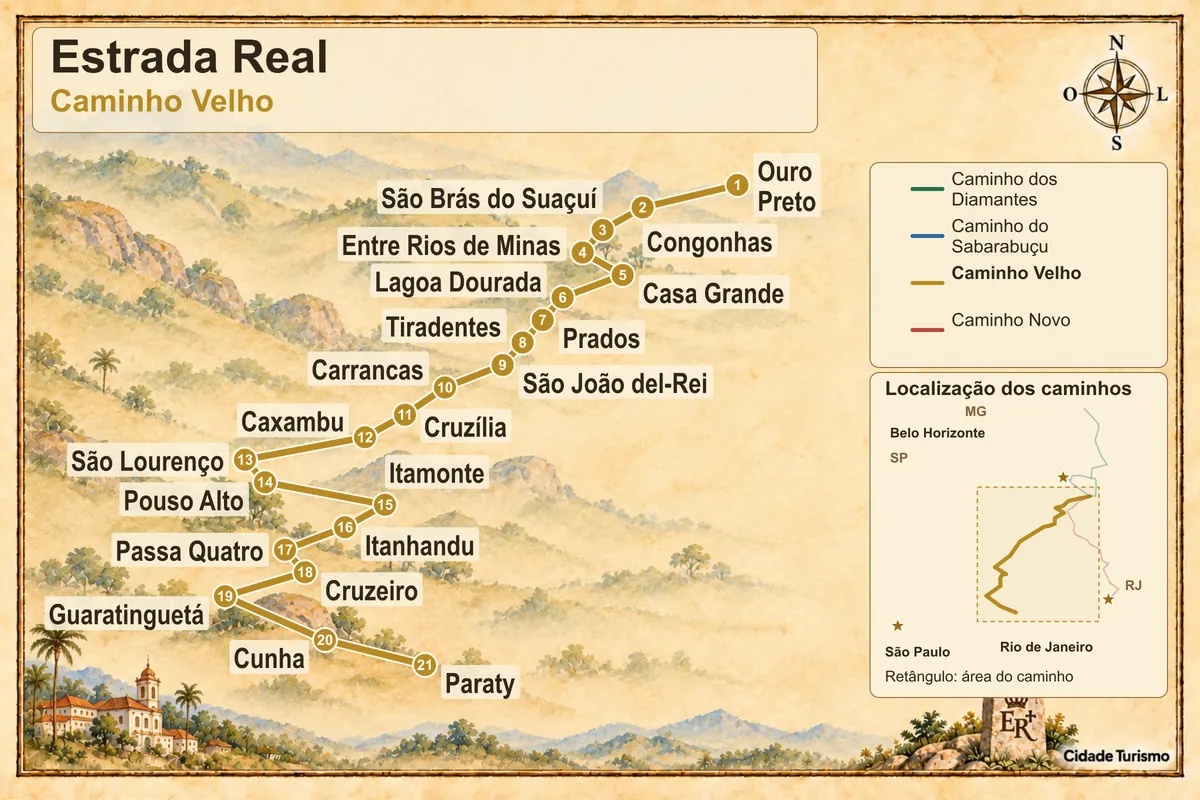
Ouro Preto – del poti z imenom Estrada Real – Old Route

From Ouro Preto to Paraty, the oldest route of the Estrada Real passes through historic towns, mineral-water spa towns, and the Mantiqueira mountain range.

Zemljevid je ilustrativen in ni v merilu. Dotaknite se mesta, da odprete njegovo stran.
Estrada Real – Old Route – ilustrirani zemljevid
Več o poti – Estrada Real – Old Route

Brazilske poti

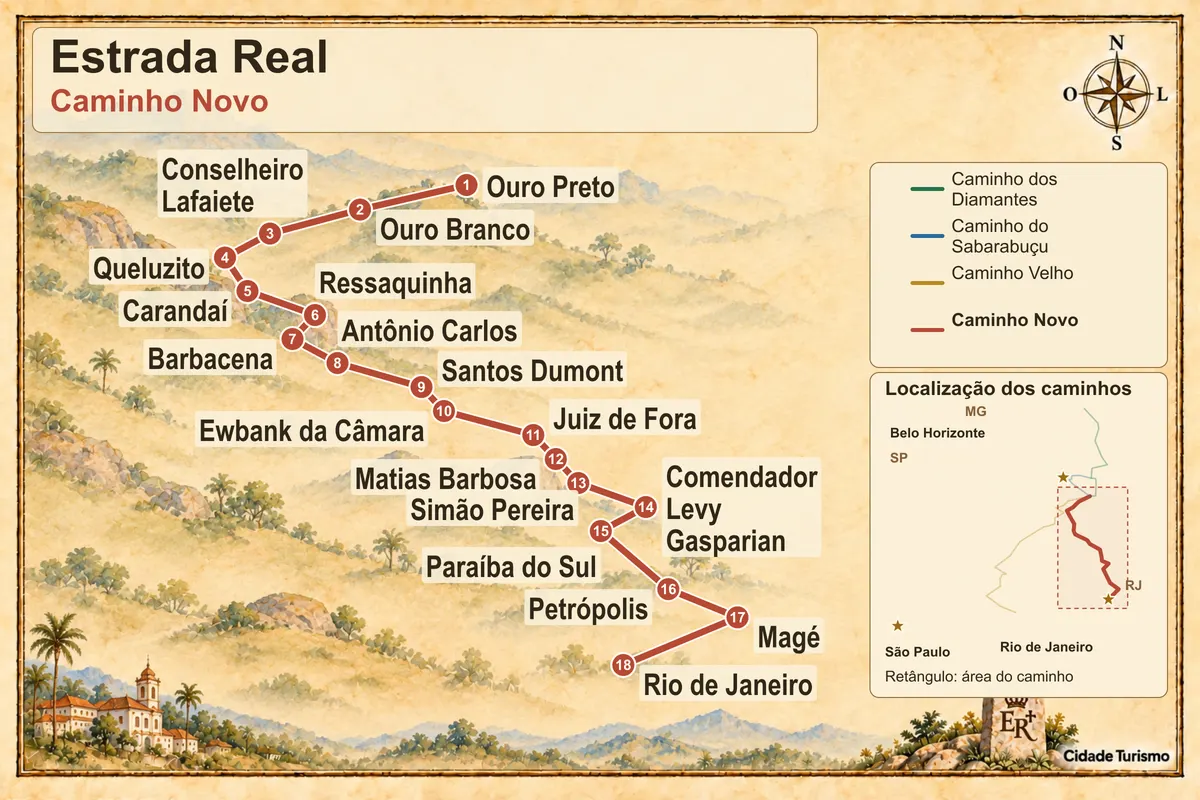
Ouro Preto – del poti z imenom Estrada Real – Caminho Novo (New Route)

Between the mines and Guanabara Bay, the Caminho Novo connects Ouro Preto to Porto Estrela and is historically completed in Rio de Janeiro.

Zemljevid je ilustrativen in ni v merilu. Dotaknite se mesta, da odprete njegovo stran.
Estrada Real – Caminho Novo (New Route) – ilustrirani zemljevid
Več o poti – Estrada Real – Caminho Novo (New Route)

Brazilske poti

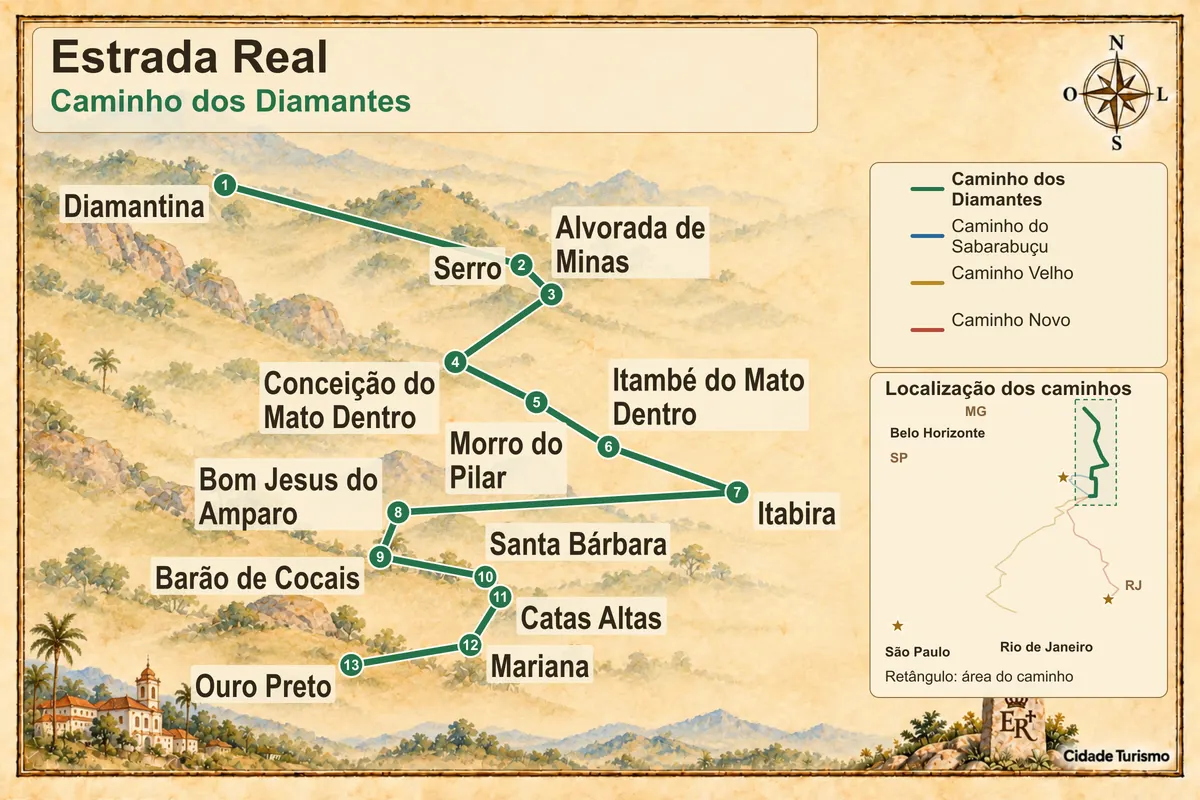
Ouro Preto – del poti z imenom Estrada Real – Path of the Diamonds

From Diamantina to Ouro Preto, the route follows Espinhaço landscapes, historic districts, and the legacy of mining.

Zemljevid je ilustrativen in ni v merilu. Dotaknite se mesta, da odprete njegovo stran.
Estrada Real – Path of the Diamonds – ilustrirani zemljevid
Več o poti – Estrada Real – Path of the Diamonds

Brazilske poti

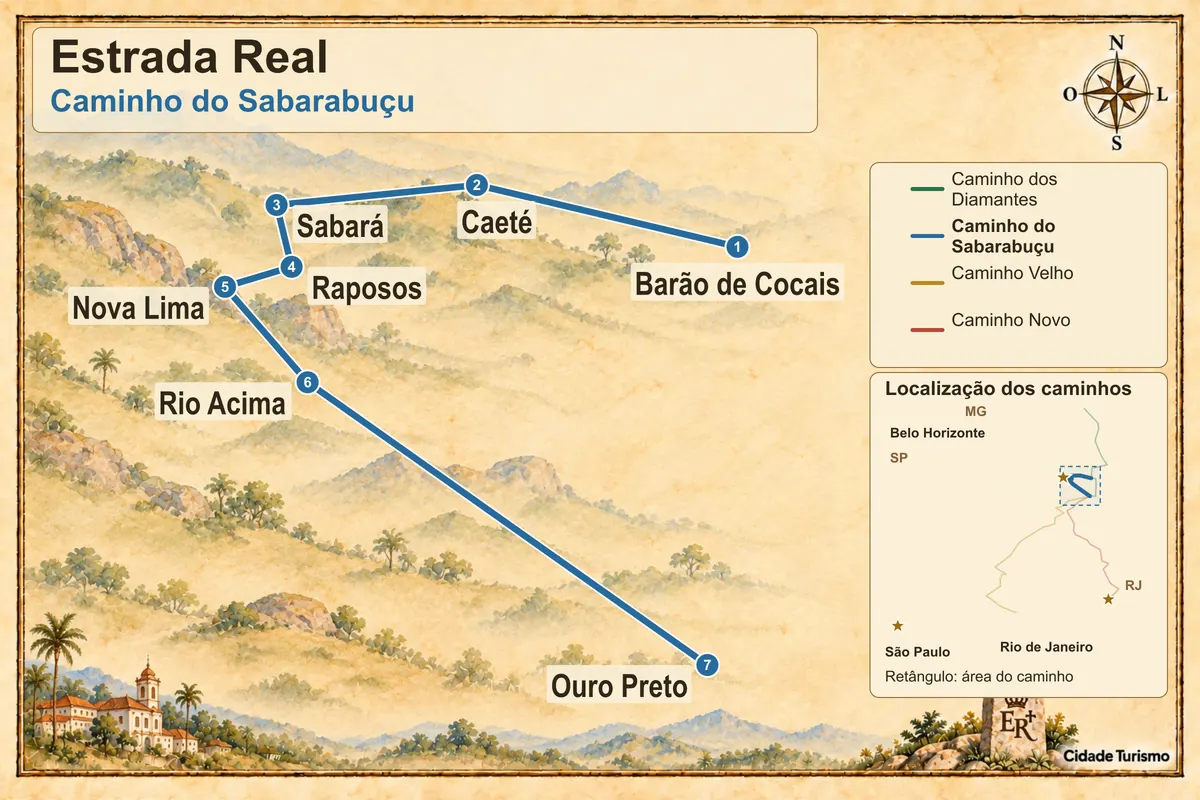
Ouro Preto – del poti z imenom Estrada Real – Sabarabuçu Route

From Cocais to Glaura, the Sabarabuçu route brings together mountain ranges, the Rio das Velhas, and the heritage of Caeté and Sabará.

Zemljevid je ilustrativen in ni v merilu. Dotaknite se mesta, da odprete njegovo stran.
Estrada Real – Sabarabuçu Route – ilustrirani zemljevid
Več o poti – Estrada Real – Sabarabuçu Route

Brazilske poti

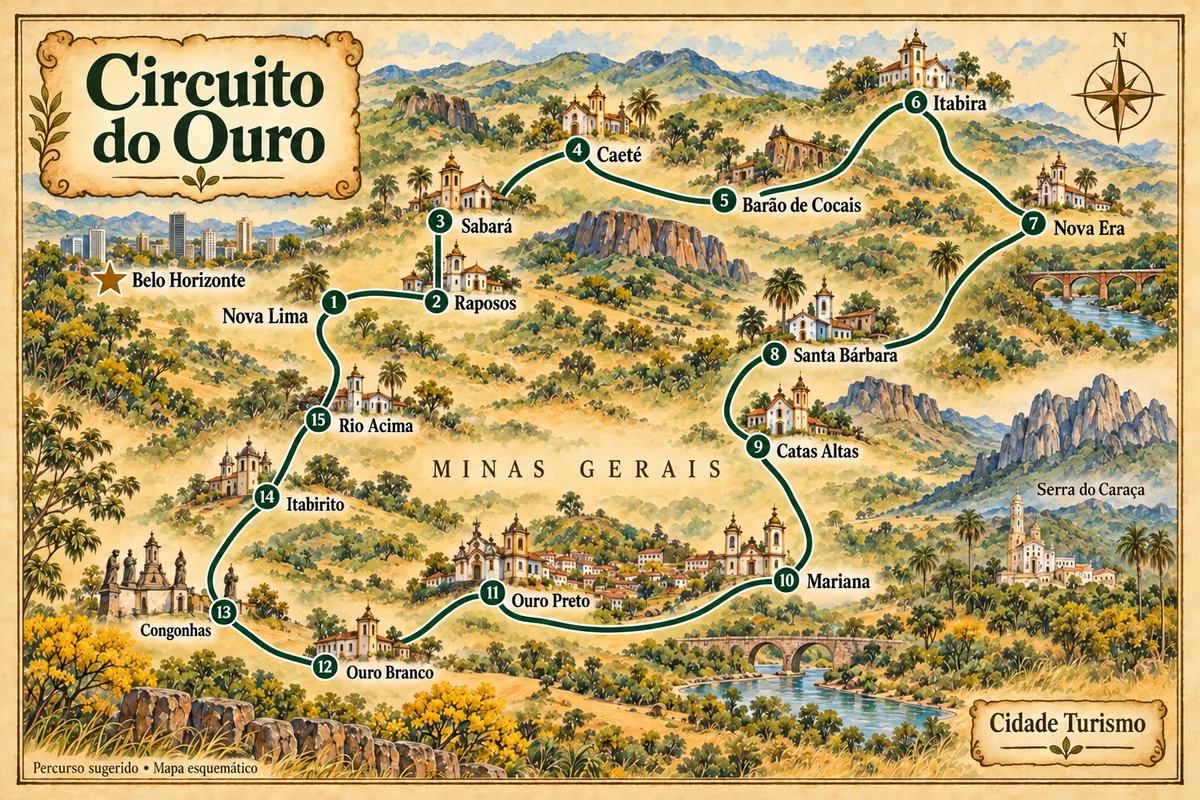
Ouro Preto – del poti z imenom Gold Circuit

Fifteen municipalities of Minas Gerais in a route through gold heritage, mountain ranges, railway memory and Minas cuisine.

Zemljevid je ilustrativen in ni v merilu. Dotaknite se mesta, da odprete njegovo stran.
Gold Circuit – ilustrirani zemljevid
Več o poti – Gold Circuit

Praznovanja in dogodki

Praznovanja – vOuro Preto

Datumi se vsako leto spreminjajo. Pred potovanjem preverite letošnji datum.

Koledar praznovanj – in Brazilija

V istem mestu

Okrožja –Ouro Preto

Doživite kraj

Ouro Preto: kaj si ogledati

museum

Museu da Inconfidência

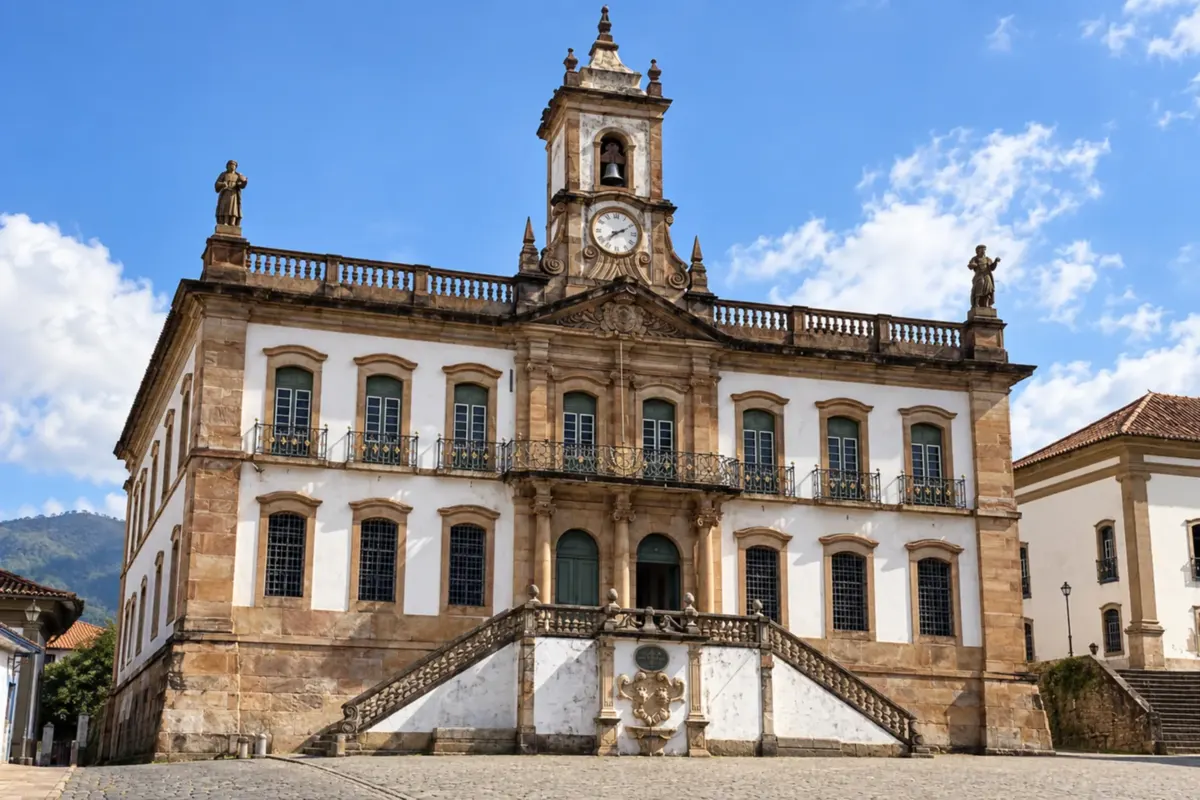
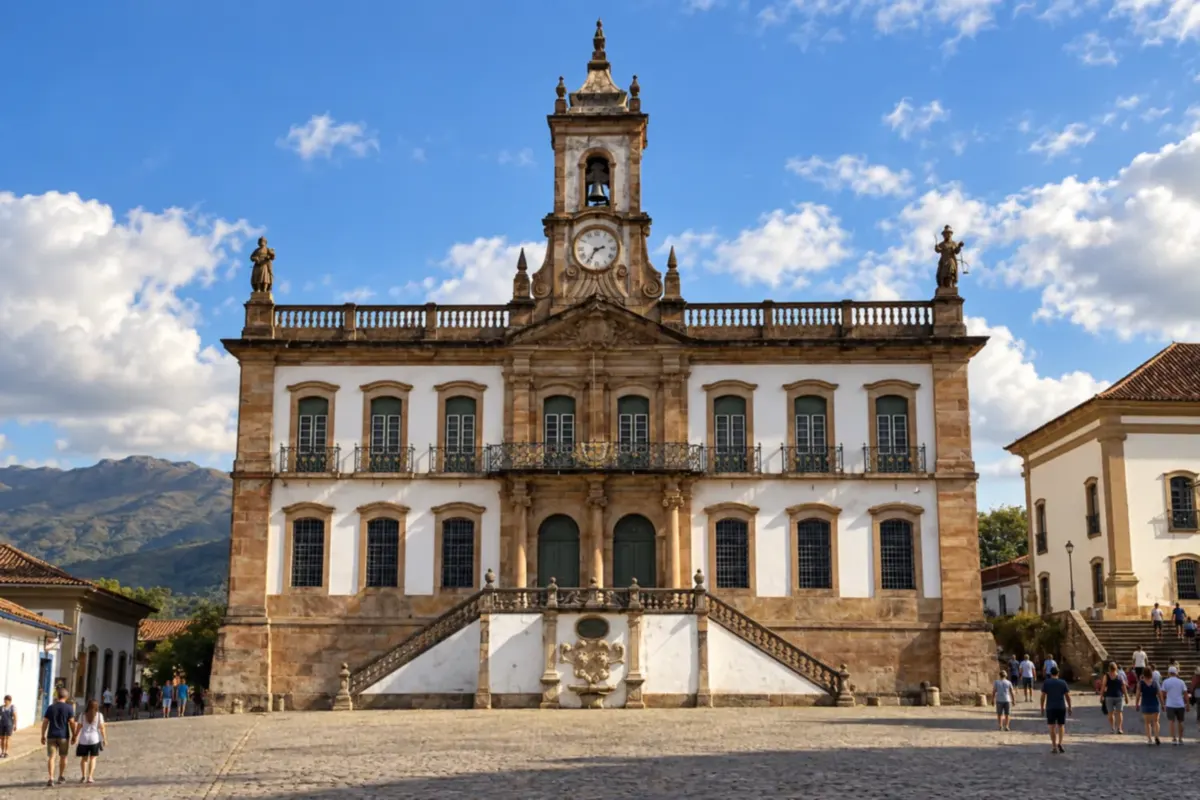
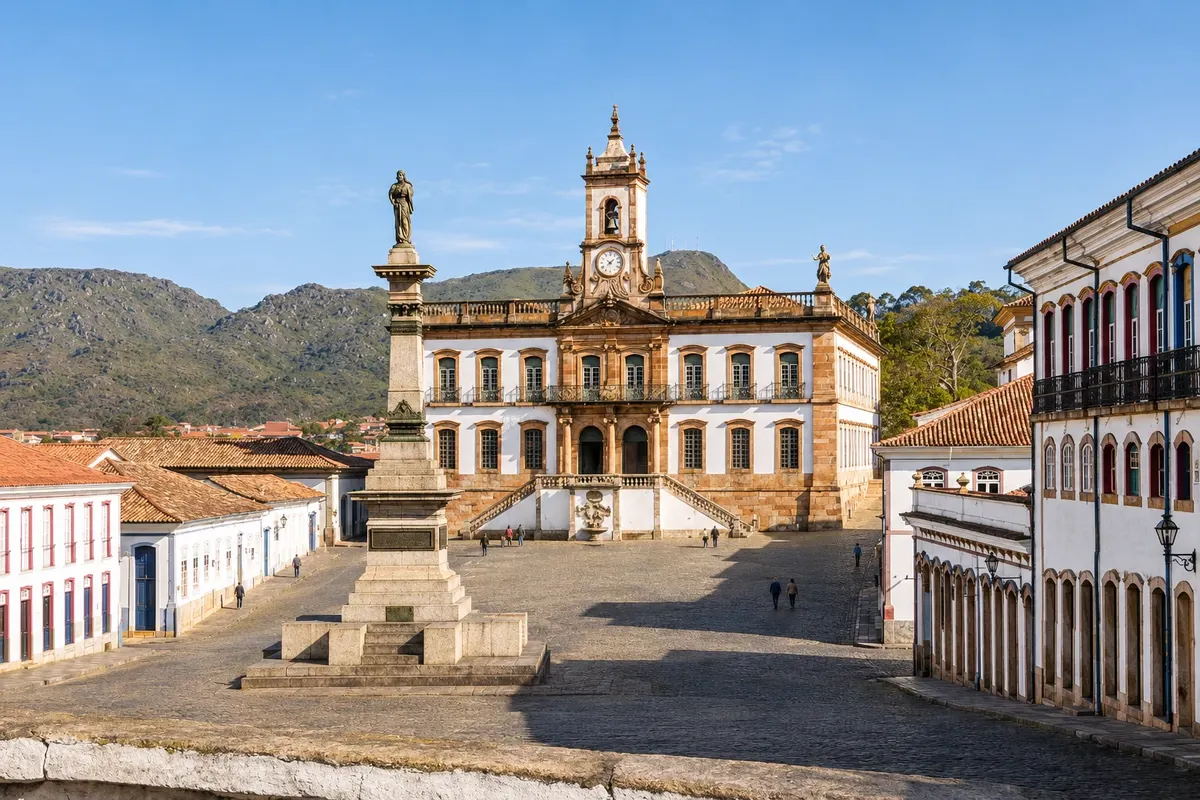
Housed in the old Casa de Câmara e Cadeia (town hall and jail), on Praça Tiradentes, it holds the collection linked to the Inconfidência Mineira (a 1789 independence plot) and items from colonial daily life. It also keeps the remains of the conspirators in the Panteão dos Inconfidentes.

Raziščite Museu da Inconfidência

historic mine

Mina do Chico Rei

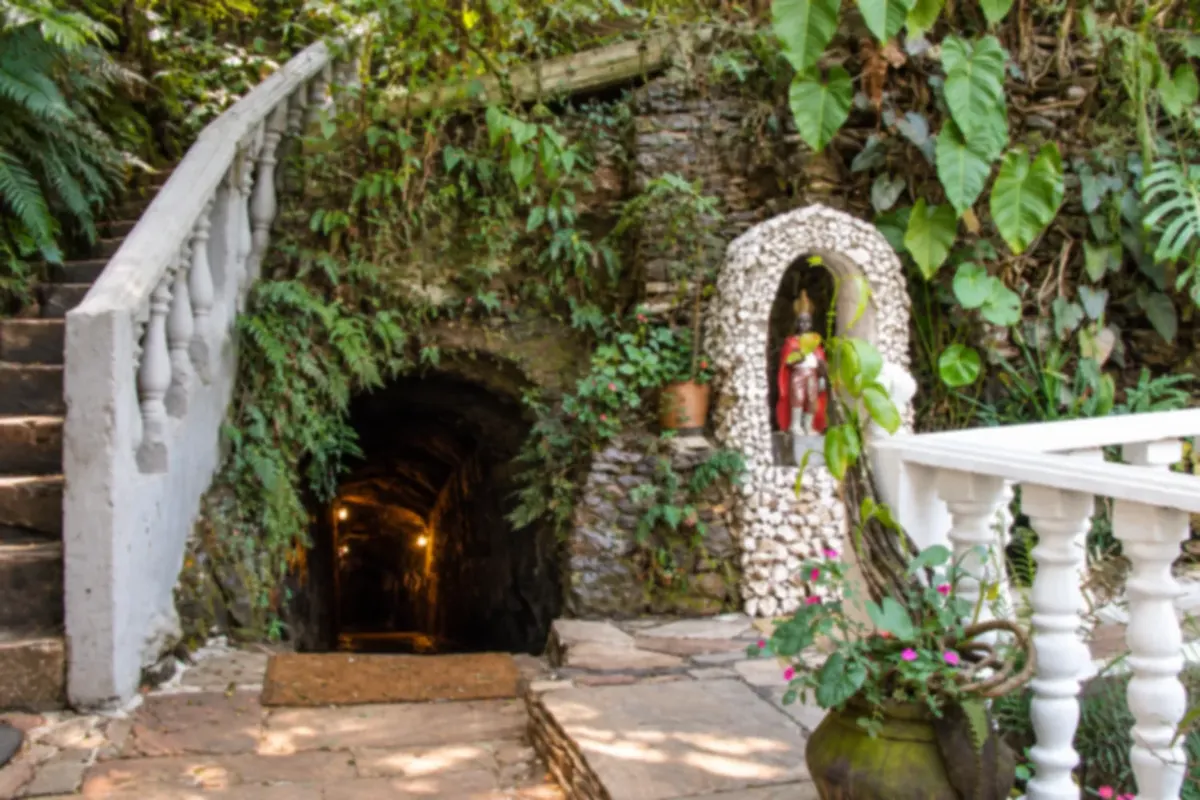
An old gold mine open to visitors, with narrow galleries dug by hand by enslaved workers in the 18th century. The visit tells the story of Chico Rei, the African who, according to tradition, bought his own freedom and that of his people.

Raziščite Mina do Chico Rei

See 6 more places in Ouro Preto
museum

Casa dos Contos

A townhouse built between 1782 and 1784 by the contractor João Rodrigues de Macedo, later the Crown's tax collection office and gold foundry. Linked to the Inconfidência Mineira (a 1789 independence plot), it is where the poet Cláudio Manuel da Costa died, and today it is a museum.

Raziščite Casa dos Contos

state park

Itacolomi State Park

State park between Ouro Preto and Mariana, featuring Pico do Itacolomi at 1,772 meters, trails through grasslands and forest, and the old São José do Manso Farm, with the Casa Bandeirista and the Tea Museum.

Raziščite Itacolomi State Park

museum

Oratory Museum

Museum with a collection of domestic and travel devotional shrines and images, most from Minas Gerais, housed in an 18th-century townhouse on the forecourt of the Church of Carmo, in Ouro Preto.

Raziščite Oratory Museum

Kaj izbrati pred odhodom

Izleti – Ouro Preto

Izhodišče, trajanje, potek, vključene storitve in okvirna cena vsakega izleta.

Praça Tiradentes: Museu da Inconfidência, Carmo and Casa da Ópera

Odhod: Praça Tiradentes, historic center on foot 3 to 4 hours morning or afternoon easy, with short hills

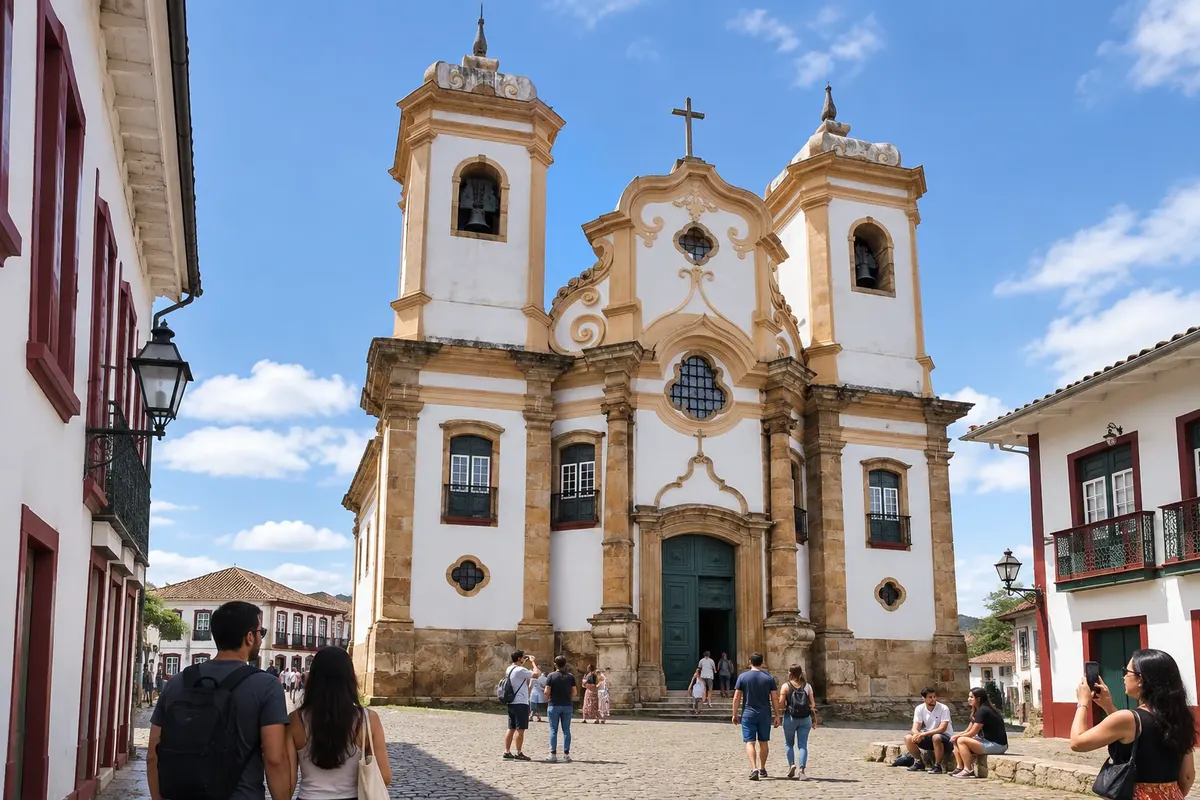
Praça Tiradentes occupies the former Morro de Santa Quitéria, which separated the settlements of Ouro Preto and Antônio Dias. It is the simplest starting point: from there the steep streets descend to both sides of the town. The building that closes the square is the Museu da Inconfidência. It was built between 1785 and 1855 to serve as the Town Hall and Jail and has functioned as a museum since 1944. In the Pantheon of the Inconfidentes are the remains of participants in the Inconfidência Mineira who died in exile in Africa and were brought back in the 1930s. The rooms on the two floors show life in Vila Rica in the 18th and 19th centuries: mining, transport, construction, painting, sculpture and religious art. Next to the square is the Church of Our Lady of Carmel, which replaced the old chapel of Santa Quitéria. The original design is by Manuel Francisco Lisboa, father of Aleijadinho, and both the son and the painter Manoel da Costa Ataíde worked on it. The chancel has Portuguese tile panels with Carmelite themes, a unique case among the churches of Minas Gerais. Beside it, the order’s cemetery contains 19th-century tombs. On the Carmo forecourt, an 18th-century mansion houses the Museu do Oratório, with 162 oratories and 300 images from the 17th to the 20th centuries, of varied types, sizes and materials. It is a short visit that shows how devotion entered homes, journeys and streets. The Casa da Ópera, opened in 1770, is claimed to be the oldest functioning theater in the Americas. The hall seats 300 across three levels, with stalls, friezes, boxes and gallery, and wooden spiral staircases. It receives visitors during the day and maintains a schedule of performances.

Kraji na poti: Tiradentes Square, Museum of Inconfidência, Church of Our Lady of Mount Carmel, Museum of the Oratory, Municipal Theater Casa da Ópera.

Vključuje: Self-guided walk. The Museu da Inconfidência does not charge admission. The Igreja do Carmo, Museu do Oratório and Casa da Ópera have separate entrance fees: check each venue’s current rates.

Nasvet: The Museu da Inconfidência is closed on Mondays and the Museu do Oratório on Tuesdays. Confirm the Museu da Inconfidência’s opening hours before you go, because it may restrict visits during certain periods. Check the Casa da Ópera schedule: attending a concert there is another way to experience the hall.

Najboljši čas za obisk: All year. It’s a good option for rainy afternoons, from November to March.

Largo de Coimbra to Antônio Dias: Saint Francis of Assisi and Aleijadinho Museum

Odhod: Largo de Coimbra, below Praça Tiradentes on foot, downhill going and uphill returning 2 to 3 hours morning or afternoon moderate, due to the hills

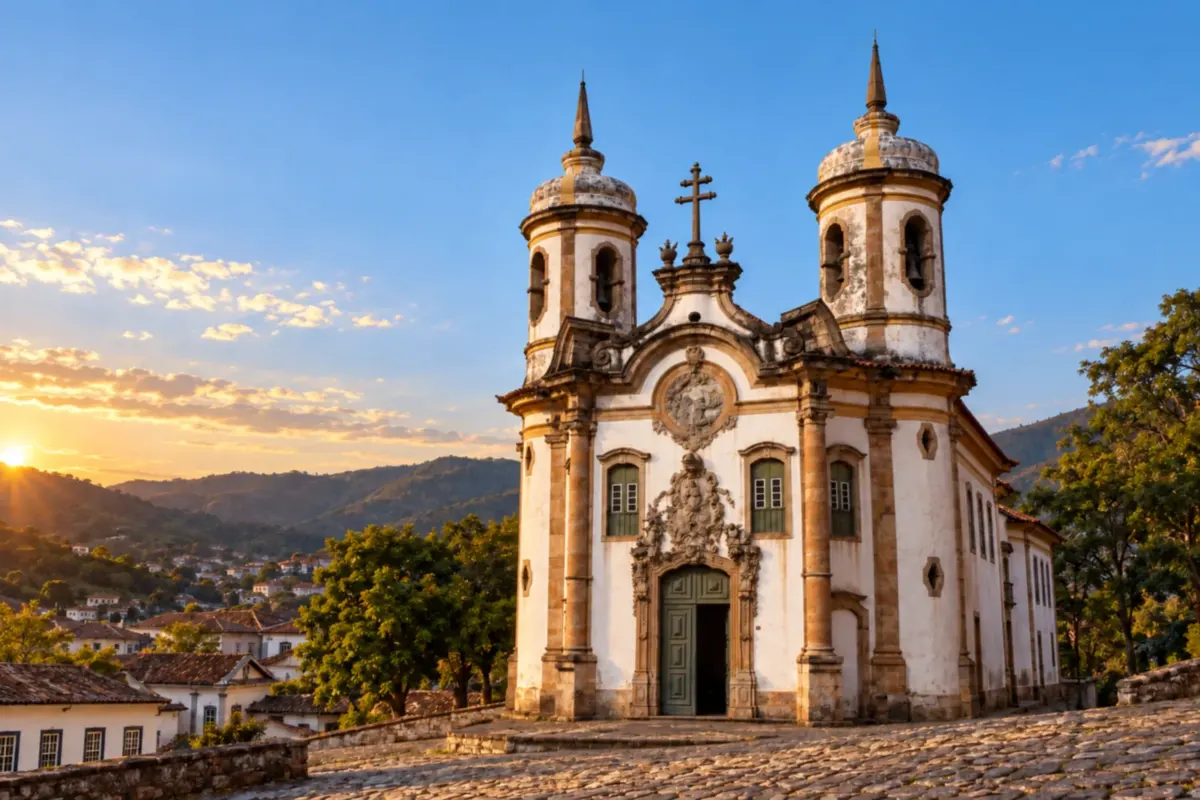
This is the stretch that concentrates the work of Antônio Francisco Lisboa, Aleijadinho, in the town where he was born. The Church of Saint Francis of Assisi was built by the Third Order of Penitence, founded in Vila Rica in 1746. The design is by Aleijadinho and construction began in 1765. The curved and counter-curved walls in the nave and on the façade were new in colonial architecture. The portal is carved in soapstone and the nave ceiling was painted by Mestre Ataíde. In front, at Largo de Coimbra, the market that locals call the soapstone craft fair runs every day. There are more than 50 stalls selling soapstone pieces, jewelry, stones, and embroidery. Going down, you reach the Church of Our Lady of Mercês and Perdões, the Lower Mercês. The chancel, built from 1775, was designed by Aleijadinho, who is also the author of the images of Saint Peter Nolasco and Saint Raymond Nonnatus. From the nearby lookout you can see the Antônio Dias neighborhood, the Church of Saint Iphigenia on the hill, and the Itacolomi Peak. Further down is the Sanctuary of Our Lady of the Conception, the main church of Antônio Dias, begun in 1727 with a design attributed to Manuel Francisco Lisboa. Aleijadinho was buried there in 1814. The Aleijadinho Museum, created in 1968 by the parish, does not occupy a single building. The about 250 pieces of sacred art are distributed in four places: the sacristy and the crypt of the Conception, the Church of Saint Francis of Assisi, and Mercês e Perdões. Among the sculptor’s works are the ceremonial lion supports—wooden stands used in solemn ceremonies—and an image of Saint Francis of Paola.

Kraji na poti: Largo de Coimbra, Largo de Coimbra Craft Fair, Church of Saint Francis of Assisi, Church of Our Lady of Mercês and Perdões, Lower Mercês Lookout, Sanctuary of Our Lady of the Conception, Aleijadinho Museum.

Vključuje: A single ticket gives access to the Church of Saint Francis of Assisi and to Mercês e Perdões. Check the ticket office for the current price list and which spaces of the Aleijadinho Museum are open that day.

Nasvet: The churches on this stretch are closed on Mondays, and some close for a lunch break. Go in the morning, before tour groups arrive. In most churches it is not allowed to photograph the interior. The return to Praça Tiradentes is uphill: if you prefer, you can call a taxi on Antônio Dias.

Najboljši čas za obisk: All year. From May to August, the dry weather makes the slopes firmer.

Pilar and Rosário: Casa dos Contos, Horto dos Contos and Basilica of Pilar

Odhod: Rua São José, below Tiradentes Square on foot 3 to 4 hours morning and early afternoon moderate, due to the hills

The other side of town, that of the former parish of Pilar, starts at Rua São José. There is Casa dos Contos, built between 1782 and 1784 as the house and office of tax collector João Rodrigues de Macedo. In 1789 it served as a barracks and prison for the inconfidentes, including the poet Cláudio Manuel da Costa. Later it housed the captaincy’s accounting office, hence the name, and the foundry. The visit shows the manor, the furniture and an exhibition of coins and documents. Behind it opens the Horto dos Contos Park, created in 1799 as Vila Rica’s Botanical Garden, the second botanical garden in Brazil. It has 32 hectares of forest in the middle of the historic centre, with 2.5 km of trail and three entrances: via Casa dos Contos, via Pilar and via the bus station. It serves to descend to Pilar through the woods. The Basilica of Our Lady of Pilar has an interior entirely covered in gilt woodwork. The current work began around 1728, and the return of the Blessed Sacrament to the temple in 1733 was celebrated with the Eucaristic Triumph procession. The decoration took more than twenty years: woodwork, painting and panels covered with gold leaf. The same ticket grants access to the Museum of Sacred Art, in the crypt, with about 400 pieces from the 17th to the 19th centuries: images, resplendences, documents and vestments. From Pilar, follow Rua Getúlio Vargas, opened in the 18th century for that procession’s route. Along the way there is a viewpoint facing the basilica and the hills that rise to Itacolomi. Ahead, in the Rosário neighbourhood, is the Church of Our Lady of Rosário, with a plan formed by two ellipses, a curved façade and cylindrical towers—a rare shape in Brazil.

Kraji na poti: Rua São José, Casa dos Contos Museum, Horto dos Contos Park, Basilica of Our Lady of Pilar, Ouro Preto Museum of Sacred Art, Rua Getúlio Vargas Viewpoint, Church of Our Lady of Rosário.

Vključuje: Self-guided walking. Casa dos Contos and Horto dos Contos have no entrance fee. The Basilica of Pilar charges admission, which also covers the Museum of Sacred Art: check the current rates.

Nasvet: The Casa dos Contos and the Basilica of Pilar are closed on Mondays. The Church of Rosário usually opens for visits only in the afternoon: leave it for last. The basilica interrupts visits around lunchtime; check before descending.

Najboljši čas za obisk: All year. After heavy rain the Horto trail becomes slippery: descend by the street.

Alto da Cruz and Padre Faria: Santa Efigênia and the hill’s mines

Odhod: Antônio Dias Bridge on foot, with a steep climb, or by taxi to the upper area about 3 hours afternoon moderate to strenuous, due to the hill

Above Antônio Dias, Alto da Cruz preserves the memory of Vila Rica’s Black population. The Church of Santa Efigênia was built by the Brotherhood of Our Lady of the Rosary of the Blacks in a work that seems to have started in 1733 and continued until 1785; that is why the temple bears both names. Oral tradition says it was built with gold taken from the Encardideira mine by Chico Rei and his people. In the façade, a niche houses an image of Our Lady of the Rosary. Inside there are four side altars, two of them in the Dom João V style, rich in detail. Few people notice the viewpoint next to the church. From there you can see, from above, Conceição, Mercês and Perdões, São Francisco de Assis, São Francisco de Paula and the Museum of Inconfidência. On the same hill are three mines open to visitors. The Jeje Mine is 160 meters long, and archaeological evidence indicates it was opened between 1711 and 1713. The visit presents enslaved Africans as skilled in mining and other trades. The May 13 Mine, about 180 meters long, shows the folds of the Serra de Ouro Preto rocks and iron tools of the era; the entrance, made of canga, the region’s iron ore rock, overlooks Santa Efigênia and Itacolomi Peak. The Santa Rita Mine, next to the Padre Faria archaeological site, is among the oldest and has about 115 meters prepared for the guided tour, in a labyrinth of bifurcations. The climb from Antônio Dias Bridge is long and steep. Those who want to spare their legs take a taxi up and walk down, stopping at the mines.

Kraji na poti: Mother Church of Santa Efigênia, Santa Efigênia Viewpoint, Jeje Mine, May 13 Mine, Santa Rita Mine.

Vključuje: Guided paid tours at each mine; prices are arranged directly with each one. Check at the church whether there is an admission fee on the day.

Nasvet: The Church of Santa Efigênia is closed on Mondays. Mina Santa Rita receives visitors only by prior arrangement. Inside the mines temperatures are lower and the floor is uneven: wear closed shoes and bring a light jacket.

Najboljši čas za obisk: All year round. For the viewpoint, choose clear-sky days, which are more common from May to August.

Gold mines of Antônio Dias and São Cristóvão

Odhod: Dom Silvério Street, Antônio Dias on foot between the Antônio Dias mines; taxi to São Cristóvão 30 to 40 minutes in each mine morning or afternoon easy; there are sections with low ceilings

Ouro Preto has eight colonial-period mines prepared for visits, all guided. Five are located outside Alto da Cruz, and the choice depends on what you want to see. Chico Rei Mine is the best known. It is at the back of a house on Dom Silvério Street. Oral tradition says it belonged to Galanga, Chico Rei, an African who was enslaved and reportedly bought his freedom and the mine. There are 175 galleries on three levels, with 325 meters lit for the regular visit; there is also a long route, two to four hours, through galleries that are off the basic circuit. On the same street, the Palácio Velho Mines have 108 meters underground and 80 meters of galleries. Bijoca Mine, also in Antônio Dias, was rediscovered in the backyard of a house bought in 1962 by a resident who gave the place its name. It has high corridors of about 2 meters, well lit, 200 meters of route on three levels and a collection of objects found in the galleries. It is an option for those who fear tight spaces. The Grande Mina Central is 350 meters from Praça Tiradentes and is the most extensive in the city, with more than 600 meters of galleries open to visitors. Mineral outcrops of iron appear on the walls. Mina Du Veloso is in another neighborhood, São Cristóvão, about 1.8 km from the square. There are over 400 meters of galleries that connect halls supported by rock pillars. It also functions as a cultural center, and the visit highlights the technical knowledge of African miners. In all of them, the guide explains how the gold was followed inside the rock and shows the marks of the tools.

Kraji na poti: Chico Rei Mine, Palácio Velho Mines, Bijoca Mine, Grande Mina Central, Mina Du Veloso.

Vključuje: Guided visit. Each mine has its own admission fee, paid at the entrance; prices are provided by each site.

Nasvet: One or two mines are enough for most visitors. For a quick visit, the Grande Mina Central is near the square; for more historical context, Chico Rei or Du Veloso. Avoid guided-tour times in mid-morning, and bring a light jacket.

Najboljši čas za obisk: All year. Because they are covered, they are a perfect option for rainy afternoons.

Ouro Preto viewpoints: from Morro São Sebastião to Mercês de Cima

Odhod: Praça Tiradentes on foot and by taxi or car to the higher points 2 to 3 hours late afternoon easy by car; strenuous on foot

Ouro Preto is best understood from above, when the church towers line up on the hills. There are viewpoints at several spots, almost all open and free of charge. The closest is Mercês de Cima viewpoint, in front of the Church of Nossa Senhora das Mercês e Misericórdia, a few meters from Praça Tiradentes, on the route for those arriving by bus station. It often gathers people at late afternoon: the sun sets toward the side of the Church of São Francisco de Paula, which sits isolated on a hill. This church, the most recent religious construction in the city, has on its altar an image of the patron made by Aleijadinho and, outside, another open view of the center. The most complete view is from the Morro São Sebastião Viewpoint, up on the ridge, above the School of Mines. From there you can identify Conceição, Mercês and Perdões, São Francisco de Assis, Carmo, the Museum of the Inconfidência and, in the distance, Pico do Itacolomi. Pedestrian access is via Henri Gorceix Street, a long slope; by car or taxi it takes a few minutes. On the road to Mariana, along Conselheiro Quintiliano Street, the wall of Mirante das Lajes frames Antônio Dias and Praça Tiradentes between the hills. On the opposite side, the viewpoint at UFOP’s Morro do Cruzeiro campus provides a 180-degree view of the historic center, with Pilar seen from behind. If you do not want to climb, there are viewpoints inside the center: the one on Getúlio Vargas Street, facing Pilar, and Mercês de Baixo viewpoint, facing Antônio Dias.

Kraji na poti: Mercês de Cima Viewpoint, Church of Nossa Senhora das Mercês e Misericórdia, Church of São Francisco de Paula, Morro São Sebastião Viewpoint, Mirante das Lajes, UFOP Viewpoint.

Vključuje: Self-guided visit; there is no fee to enter the viewpoints. Taxi, if used, is extra.

Nasvet: Combine Morro São Sebastião with Parque das Andorinhas, which is on the same route. The Church of São Francisco de Paula usually opens only in the morning. In winter, bring a jacket: it can be windy at the top and it cools quickly when the sun goes down.

Najboljši čas za obisk: From May to August, when the sky is usually clear. In summer, afternoon fog and rain can close the view.


Prikaži dodatne izlete (4)

Andorinhas Park: the waterfall where the Rio das Velhas is born

Odhod: Praça Tiradentes car or taxi (6 km) or on foot (3.6 km) half a day morning easy in the park; steep ascent on foot

The Municipal Natural Park of Andorinhas sits atop the Serra de Ouro Preto, behind the historic centre. Created in 1968, it protects 557 hectares of Atlantic Forest and Cerrado, with rock cliffs, waterfalls, natural pools and viewpoints. The main attraction is the Andorinhas Waterfall, considered the source of the Rio das Velhas, the largest tributary of the São Francisco River. The drop, about 10 meters, falls into a rock formation that resembles a grotto. The name comes from the collared swifts that shelter there in spring and summer. From the main gate to the waterfall it is 550 meters, roughly a 10-minute walk along an easy rocky trail. The park has other smaller falls, pools, Pedra do Jacaré and walls used for sport climbing. There are barbecue areas and courts near the entrance. There are two entrances. By car or taxi, leave Praça Tiradentes via Rua Conselheiro Quintiliano toward Mariana and drive up to the main gate on Morro São João; it’s 6 km, with the final stretch on a dirt road. On foot, climb Rua Henri Gorceix beside the School of Mines up to Morro São Sebastião, on a long slope, and from there the path to the waterfall is easy; the total route is 3.6 km. The second gate at São Sebastião only receives pedestrians and cyclists. No visit reservation is required.

Kraji na poti: Municipal Natural Park of Andorinhas, Andorinhas Waterfall, Pedra do Jacaré, Morro São Sebastião Viewpoint.

Vključuje: No park entrance fee. Transportation and snacks are the visitor’s responsibility.

Nasvet: Go in the morning and bring water and a snack. On the ascent by foot, stop at the Mirante do Morro São Sebastião. On days of heavy rain or closed weather in the serra, leave the waterfall for another day.

Najboljši čas za obisk: From May to September for walking in dry weather; from November to March the waterfall usually has more water, always in the morning.

Itacolomi State Park: Casa Bandeirista, Tea Museum and the peak

Odhod: Park gate on BR-356, Bauxita neighborhood car or taxi to the park; trails on foot half day; full day with the climb to the peak morning easy; moderate to difficult on the peak

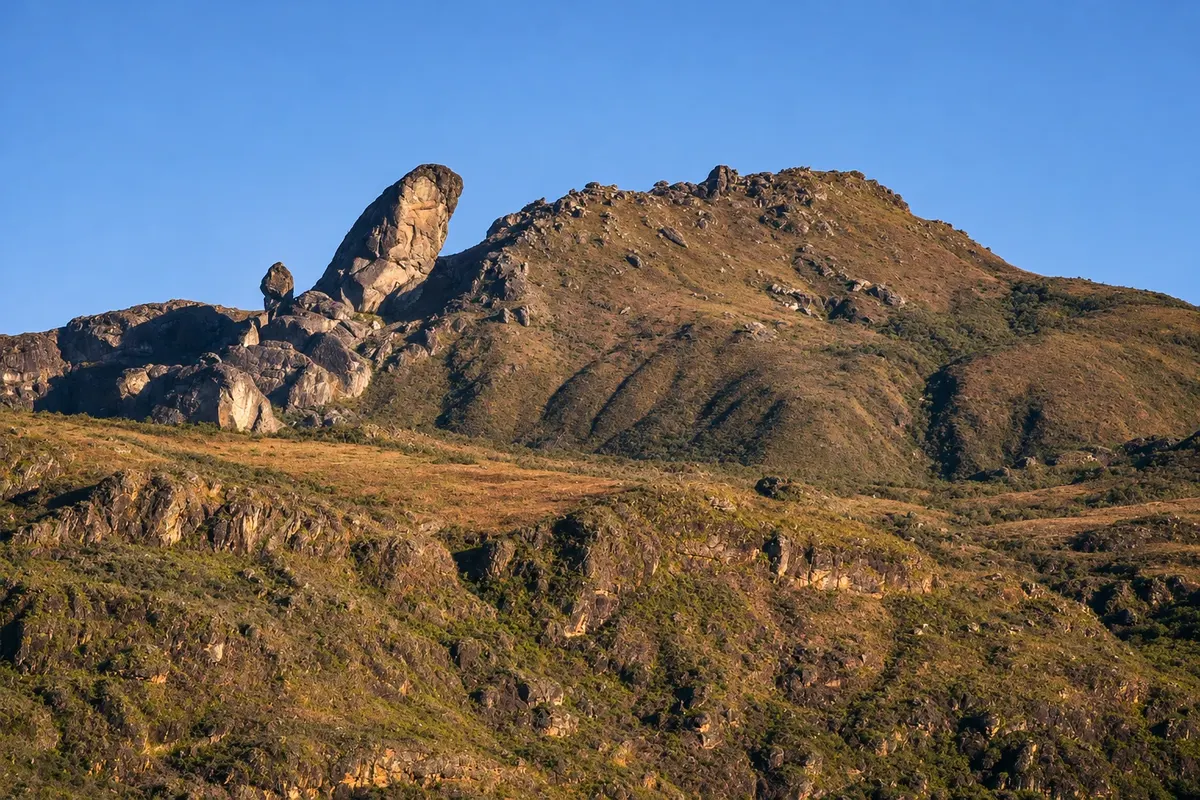
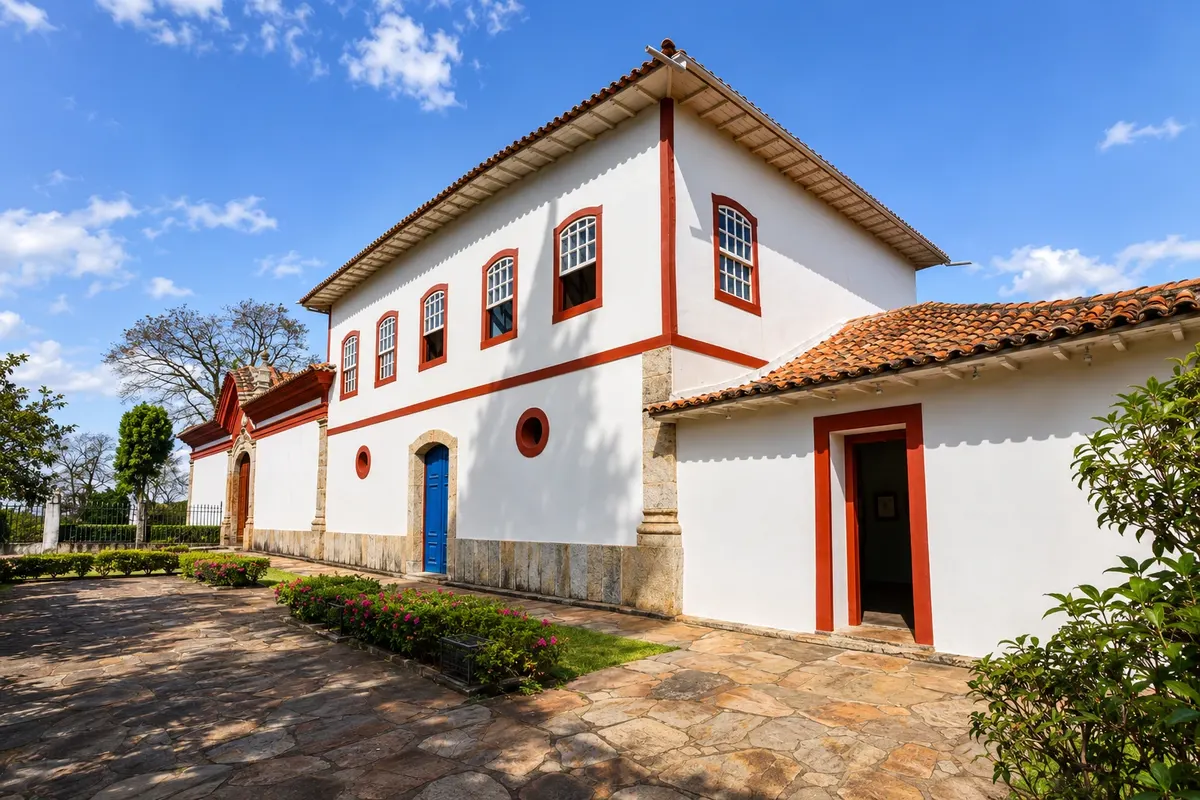
Itacolomi Peak, at 1,772 meters, can be seen from almost the entire historic center: it is the large rock with a smaller rock beside it. The name comes from Tupi and is often translated as 'stone child.' In the gold rush era, it served as a landmark for the bandeirantes. The park that protects it was created in 1967 and has its gate on BR-356, the Rodovia dos Inconfidentes, at the junction opposite the Santa Casa de Ouro Preto. From the gate to the Visitors Center it is another 5 km on a dirt road. There are two possible visits. The short one is in the historical area: Fazenda São José do Manso, built between 1706 and 1708, is one of the rare examples of paulista architecture in Minas Gerais and was used to collect the royal fifth and monitor access to the mines. There are the Visitors Center, with an exhibition about the region's nature and culture, and the Casa Bandeirista. Nearby are the Tea Museum, a reminder of the local tea production in the first half of the 20th century, and the Chapel of São José, with a Stations of the Cross made from materials gathered in the forest. The long visit is the climb to the peak, on a trail of moderate to difficult level, which goes from forest to high-altitude fields. From the top, on clear days, you can see Ouro Preto, Mariana and the surrounding valleys. The park recommends starting the hike in the morning to return in daylight. The open trails are self-guided; those who prefer may hire a guide accredited by the park. The park is open Tuesday to Sunday and on holidays, with a daily visitor limit. Tickets are sold online and at the ticket office, according to the day's availability. Lavras Novas is on the other side of the park, by another road.

Kraji na poti: Itacolomi State Park, Fazenda São José do Manso, Casa Bandeirista, Tea Museum, Chapel of São José, Itacolomi Peak.

Vključuje: Park entrance. There is half-price admission for students and people aged 60 or over; children up to 5 years old are free. Parking and a guide, if hired, are paid separately.

Nasvet: Bring water, food, sunscreen and a warm layer, and do not count on a restaurant inside the park. Buy the ticket in advance on holidays. For the peak, start early and turn back if the weather closes in: fog rises quickly at the summit.

Najboljši čas za obisk: From May to September, in the dry season. From November to March, only on clear mornings.

R$ 28,75 · per person, full park entrance· uradna cena

Districts along BR‑356: Cachoeira do Campo, Santo Antônio do Leite, Amarantina and Glaura

Odhod: Ouro Preto city center car; there are buses from the town center to each district a full day, or half a day for one or two districts morning and afternoon easy

Those arriving from Belo Horizonte via BR‑356 pass Cachoeira do Campo without realizing they are already in Ouro Preto. The district is 22 km from the town center and was founded at the end of the 17th century. It was the scene of one of the battles of the War of the Emboabas, between Paulistas and Portuguese, in 1708–1709. Along the road there are craft shops and Praça do Artesão, near the bus station, with reclaimed‑wood furniture, embroidery and decorative items. It’s worth leaving the highway and entering the old town: the Matriz de Nossa Senhora de Nazaré, from the first half of the 18th century, is one of Minas’s oldest churches, with a stone cross in front of the door. Santo Antônio do Leite, 28 km from the town center, is a quiet village with inns and farms. It became known for handcrafted silver jewelry with stones, sold in studios. The Church of Santo Antônio in the central square has a ceiling painted by Honório Esteves, an artist born there. Amarantina, about 30 km away, preserves the Casa de Pedra, a bandeirante construction from the late 17th century. Restored, it functions as a community center and a place to exhibit and sell embroidery, crochet and fabric items. In September the Festa de São Gonçalo features the Cavalhadas, an equestrian reenactment of the battle between Moors and Christians, recorded as intangible heritage of the municipality. Glaura, still called Casa Branca by locals, is about 31 km away. The streets formed around the Matriz de Santo Antônio, built between 1758 and 1764, which preserves in its nave the altars from the previous chapel. It’s a place of inns and farms, sought for rest.

Kraji na poti: Cachoeira do Campo, Matriz de Nossa Senhora de Nazaré Church, Praça do Artesão, Santo Antônio do Leite, Church of Santo Antônio (Santo Antônio do Leite), Amarantina, Casa de Pedra of Amarantina, Glaura, Matriz de Santo Antônio (Casa Branca).

Vključuje: Self‑guided. Purchases and meals not included.

Nasvet: By bus, choose just one district: the lines depart from the town center and schedules are widely spaced. By car, you can see Cachoeira do Campo on arrival or departure from Ouro Preto without detouring from the route. Check whether the churches will be open; in the villages many only open for Masses and festivals.

Najboljši čas za obisk: All year. In November Cachoeira do Campo holds the Jabuticaba Festival; in September Amarantina hosts the Cavalhadas.

São Bartolomeu: heritage houses, fruit sweets and the Rio das Velhas

Odhod: Ouro Preto city center car; there is a bus line from the town half a day to a full day morning and afternoon easy

São Bartolomeu is one of the oldest villages in Minas Gerais. It was founded by bandeirantes in the last years of the 17th century in the search for gold, and is about 18 km from the center of Ouro Preto, on the banks of the Rio das Velhas and surrounded by the protected Uaimii forest. The main street preserves 18th-century houses. Some houses have public oratories built into the façade, small niches facing the street. In the center is the Mother Church of São Bartolomeu, with three windows, small-tiled towers and wooden quoins—features typical of the earliest churches in Minas. The altars are in the so-called Portuguese National Style. The village also has the Chapel of Nossa Senhora das Mercês and a fountain. The place is known as the land of sweets. The artisanal production of fruit sweets, passed down through generations, is registered as intangible heritage of Ouro Preto. The most sought-after is goiabada cascão, sold in the village itself. The calendar has two festivals. In April, the Goiaba Cultural Festival brings tastings, workshops and music. In August, the Feast of São Bartolomeu and of the Holy Spirit, also registered as municipal heritage, chooses a King and Queen who parade through the streets; the Folia do Divino begins visiting houses eighty days earlier. There are two routes from the town: the direct one, about 18 km, and the one that goes via Cachoeira do Campo, about 36 km. The village is small: a walk along the street, the church, the riverbank and buying sweets occupy half a day.

Kraji na poti: São Bartolomeu, Mother Church of São Bartolomeu, Chapel of Nossa Senhora das Mercês, Fountain of São Bartolomeu, Rio das Velhas.

Vključuje: Self-guided option. Sweets and meals paid separately.

Nasvet: Ask at your accommodation or the information post about the condition of the direct route before setting out, especially from November to March. Bring cash to buy sweets. If you go by bus, check the return schedule.

Najboljši čas za obisk: From April to September, with less rain. April has the Goiaba Cultural Festival and August, the patron saint festival.

Odgovori na vaša vprašanja

Frequently asked questions about Ouro Preto

What is the best time to visit Ouro Preto?

From May to August there is little rain, the sky is usually clear and the hills are dry; on the other hand, nights are cold, with lows near 11 °C in July. This is the recommended time for viewpoints and trails. From November to March it rains a lot, almost always in the afternoon: you can still visit, leaving churches, museums and mines for after lunch. April and September are transition months, with fewer people except on holidays.

What is open in Ouro Preto on Monday?

Not much among the churches: São Francisco de Assis, Pilar, Conceição and Santa Efigênia are closed that day, as are the Museu da Inconfidência and the Casa dos Contos. Mines often open, as do the Museu do Oratório, Museu Boulieu, Parque das Andorinhas and the viewpoints. The Largo de Coimbra fair operates every day. Check before you go, because schedules can change.

Which gold mine should you visit in Ouro Preto?

It depends on what you are looking for. Mina do Chico Rei, in Antônio Dias, is the best known and has a long route for those who want more than the basics. Grande Mina Central is the most extensive and is 350 meters from Praça Tiradentes. Mina Du Veloso, in São Cristóvão, and Mina do Jeje, in Alto da Cruz, showcase the technical knowledge of African miners. Mina do Bijoca has higher, well-lit corridors. All visits are guided and short.

Can you see Ouro Preto without a car?

Yes, and in the historic center a car hinders more than it helps. Churches, museums and most mines are visited on foot, with taxis for long climbs like Alto da Cruz and Morro São Sebastião. There are buses to Mariana and to the districts. A car helps for Itacolomi State Park, São Bartolomeu and to visit several districts in one day.

Where is better to stay: the historic center or the districts?

In the historic center, near Praça Tiradentes, Rua São José or Antônio Dias, if you want to do everything on foot and go out at night. Ask if the accommodation has a garage and how many steps or hills there are up to the door. In the districts, such as Lavras Novas, Santo Antônio do Leite, Cachoeira do Campo and Glaura, there are inns and farmhouse hotels with green areas, for those with a car who want peace; they are 17 to 31 km from the center.

Is it cold in Ouro Preto?

Yes, by Brazilian standards. The city sits above 1,000 meters of altitude. From May to August nights and mornings are cold, with lows around 11 °C to 13 °C, and wind at the viewpoints increases the chill. In summer temperatures range from 18 °C to 26 °C, but rain cools the afternoons. Bring a jacket at any time of year.

What to do in Ouro Preto when it rains?

Almost the entire classic itinerary is covered: the churches, Museu da Inconfidência, Museu do Oratório, Casa dos Contos, Casa Guignard, Museu Boulieu, Casa da Ópera and the gold mines. Skip viewpoints, Parque das Andorinhas and Itacolomi. Move slowly: the stone paving becomes slippery when wet, especially on descents.

Is Lavras Novas part of Ouro Preto?

Yes. Lavras Novas is a district of Ouro Preto, about 17 km from the municipal seat, high on the ridge on the other side of Itacolomi State Park. Access is via the road linking Ouro Preto to Ouro Branco, and there is a bus line from the city with few departures. The village has inns, restaurants and waterfalls nearby, and many people prefer to sleep there and go down to Ouro Preto for the day.

How do you get from Ouro Preto to Mariana?

Mariana is about 12 km away. By car or taxi it takes around 20 minutes via the road that leaves Ouro Preto on Rua Conselheiro Quintiliano. There are frequent local buses between the two towns. On the way is Mina da Passagem, already in Mariana municipality. You can go and return on the same day.

Where can you see Ouro Preto from above?

The Morro São Sebastião viewpoint offers the most complete view of the historic center, with Pico do Itacolomi in the background. The Mirante das Mercês de Cima is a few meters from Praça Tiradentes and is popular at late afternoon. There is also the Mirante das Lajes, on the road to Mariana, the university campus viewpoint on Morro do Cruzeiro, and the viewpoint next to the Church of Santa Efigênia.

Is there a waterfall near Ouro Preto’s center?

Yes. Cachoeira das Andorinhas is in the Parque Natural Municipal das Andorinhas, 6 km by car from Praça Tiradentes or 3.6 km on foot, and the walk from the park entrance to the fall takes about 10 minutes. On the road to Ouro Branco, near the entrance to Lavras Novas, Cachoeira da Ponte da Rancharia has a shallow pool and a short access. The larger waterfalls are in the surroundings of Lavras Novas.

How do you get from Ouro Preto to Tiradentes?

The two towns are about 170 km apart, in different regions of Minas Gerais. By car, the route goes through Ouro Branco and Conselheiro Lafaiete and follows BR-040 and BR-265; many people stop in Congonhas to see Aleijadinho’s Prophets. Agencies sell multi-day itineraries with transport between them. It’s not a trip to do round-trip in the same day.

Delite svoja popotniška doživetja s fotografijami Pošljite fotografije vsakega kraja, ki ste ga obiskali. Največje število fotografij na kraj: 5.
Ogled destinacije Historic Towns of Minas Gerais (Estrada Real) Poiščite drugo mesto

Več kot vodnik