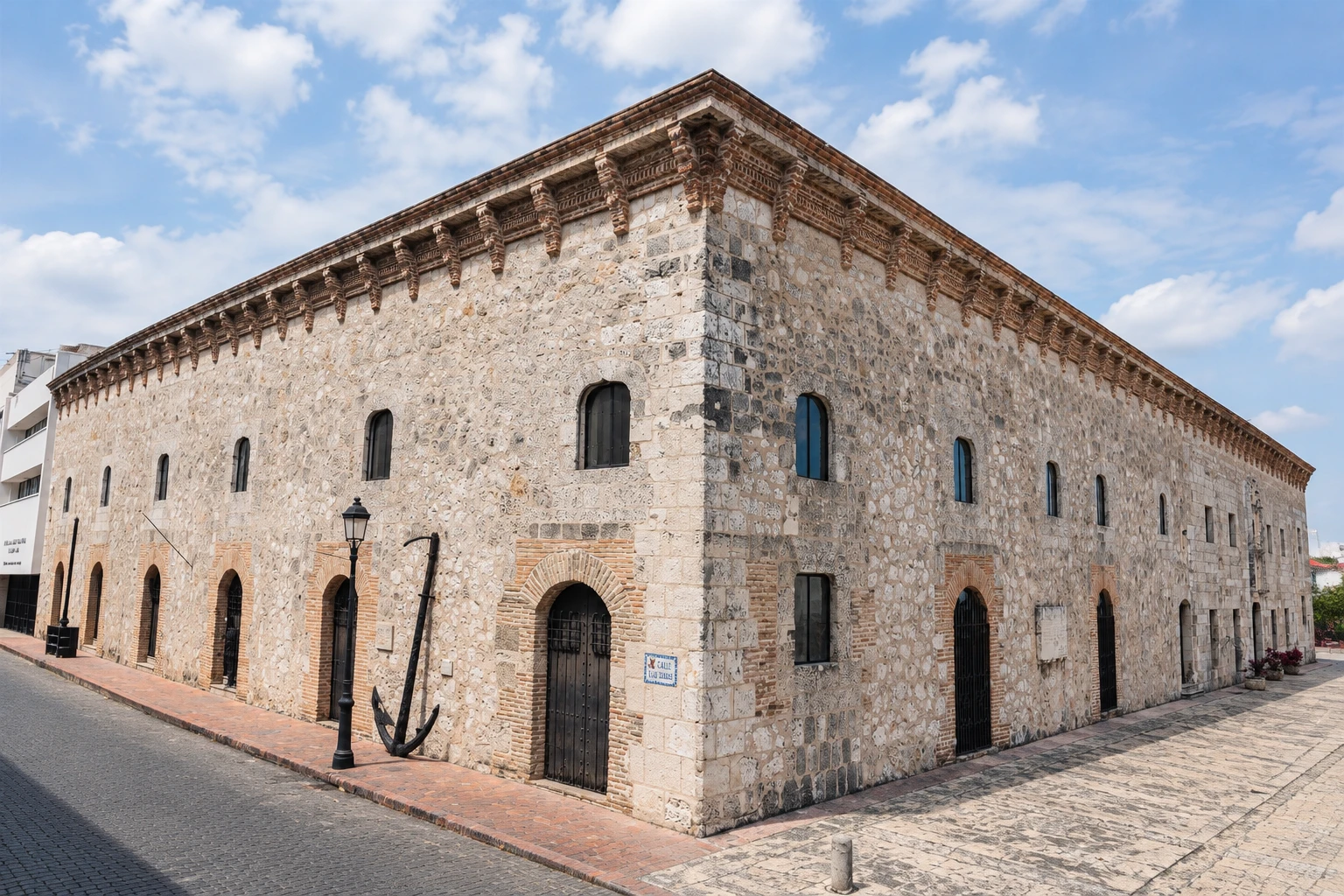
Illustrative images. The pictures in this guide are illustrations based on the real place, not photographs, and may differ from it.
The city
What to expect from Santo Domingo.
Capital of the Dominican Republic, Santo Domingo has in the Ciudad Colonial, a UNESCO World Heritage site, the first European constructions in the Americas: the Catedral Primada, the Alcázar de Colón, Fortaleza Ozama and the Museo de las Casas Reales, all a few blocks from each other. On the other side of the Ozama River are the Faro a Colón and the underground lagoons of Los Tres Ojos.
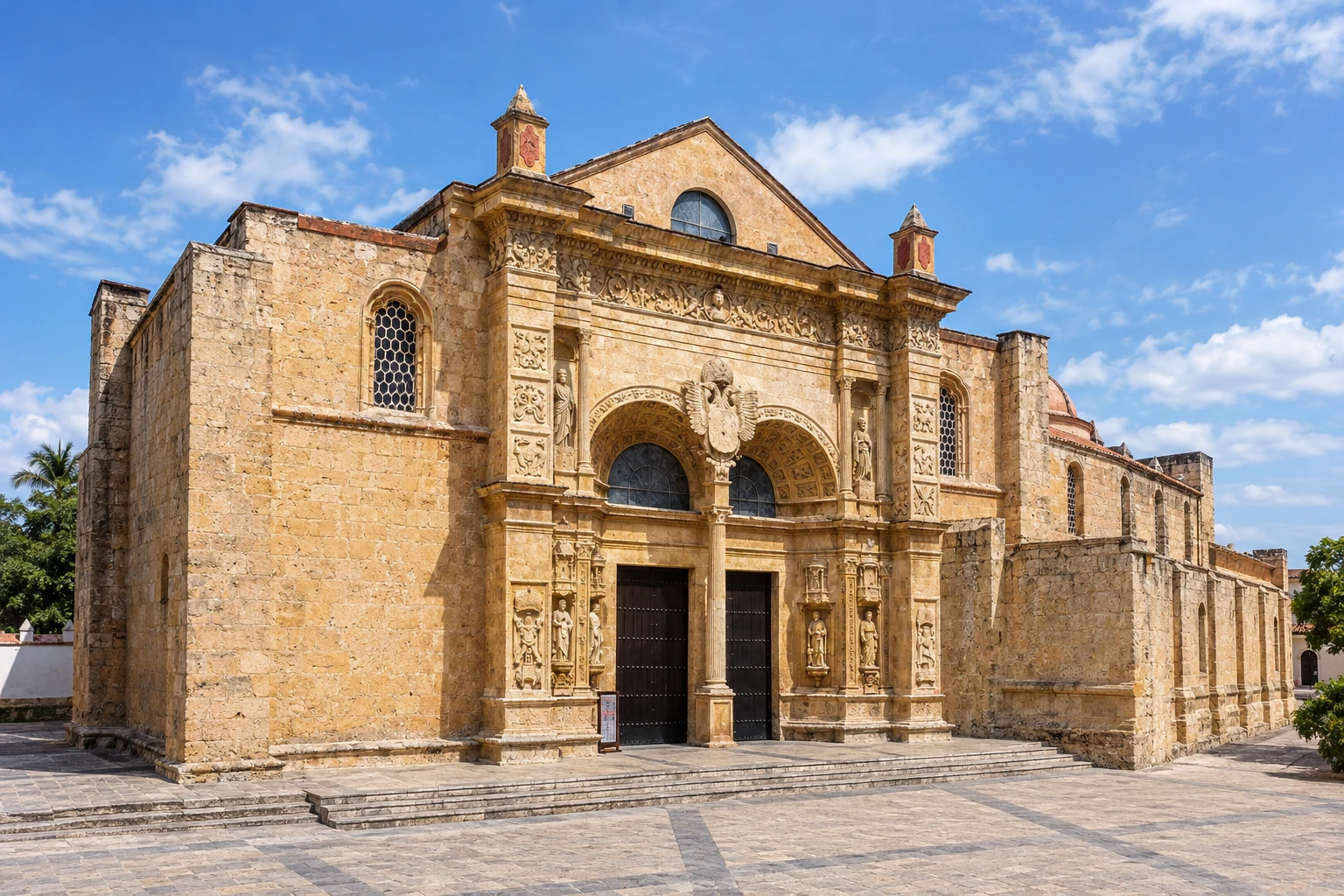
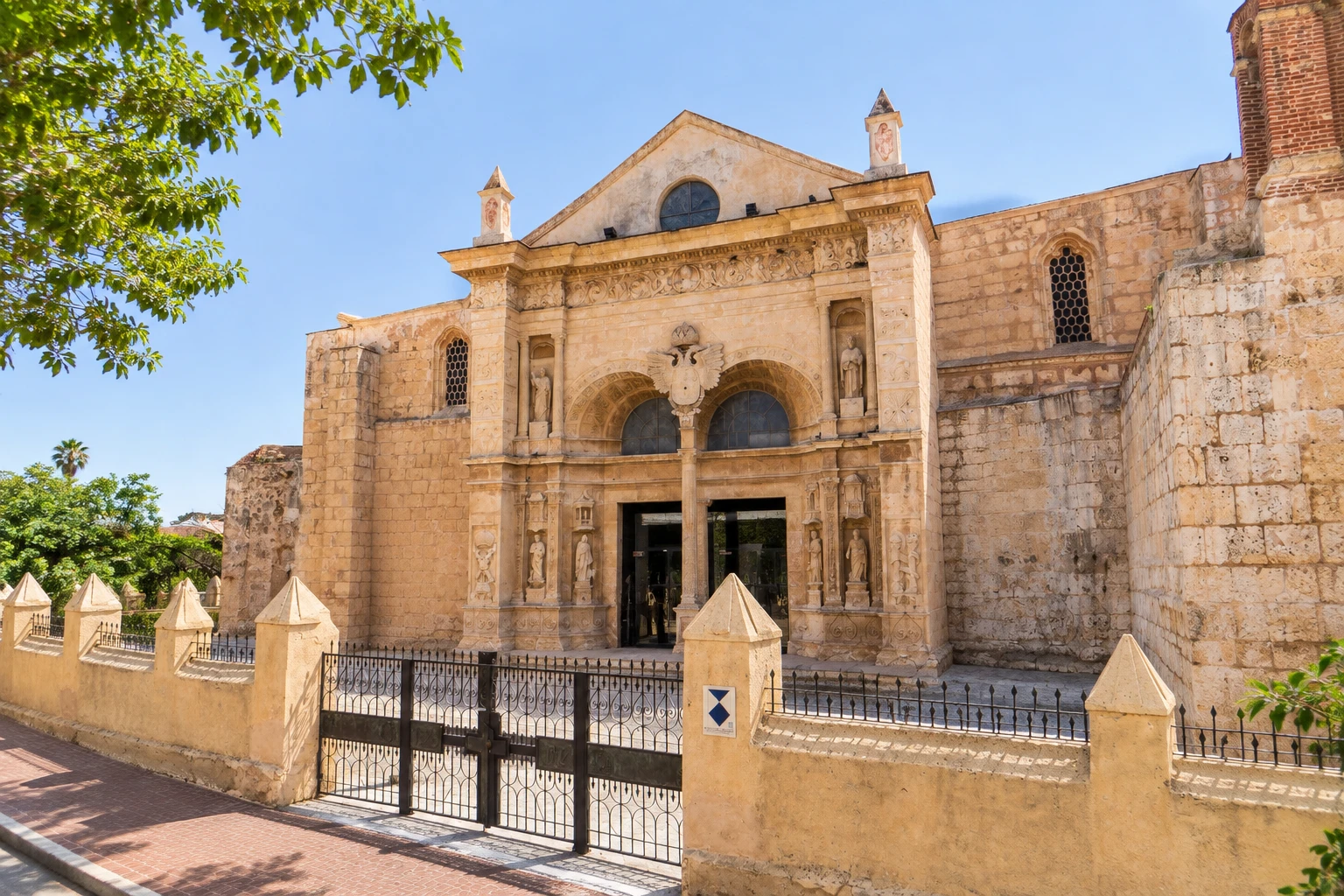
The first cathedral of the Americas, built of golden coral stone, constructed in the first half of the 16th century in front of Parque Colón, in the heart of the Ciudad Colonial.
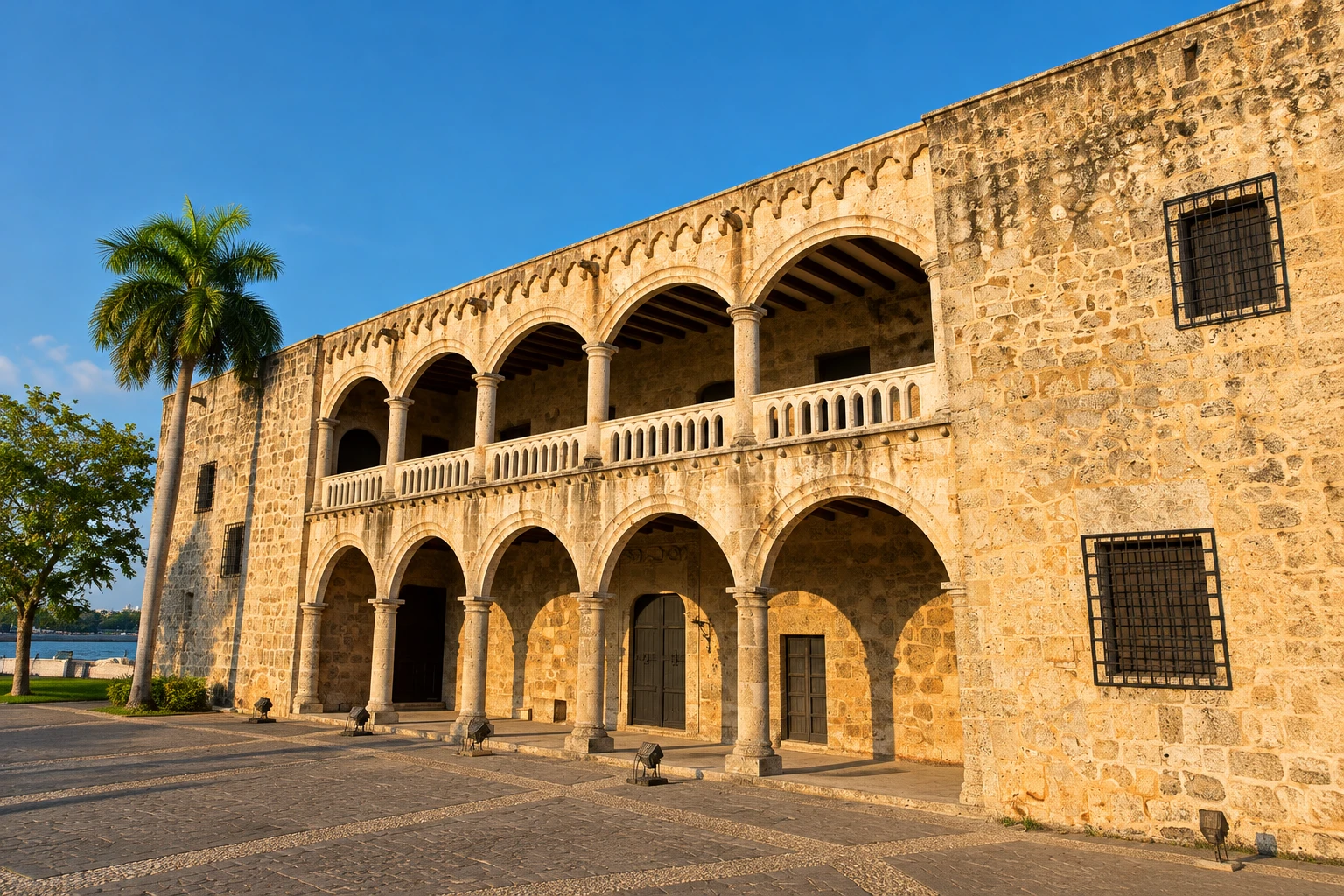
The palace of Diego Colón, son of Christopher Columbus, built between 1510 and 1514 on the banks of the Ozama River, with period furniture and tapestries: the most visited museum in the country.
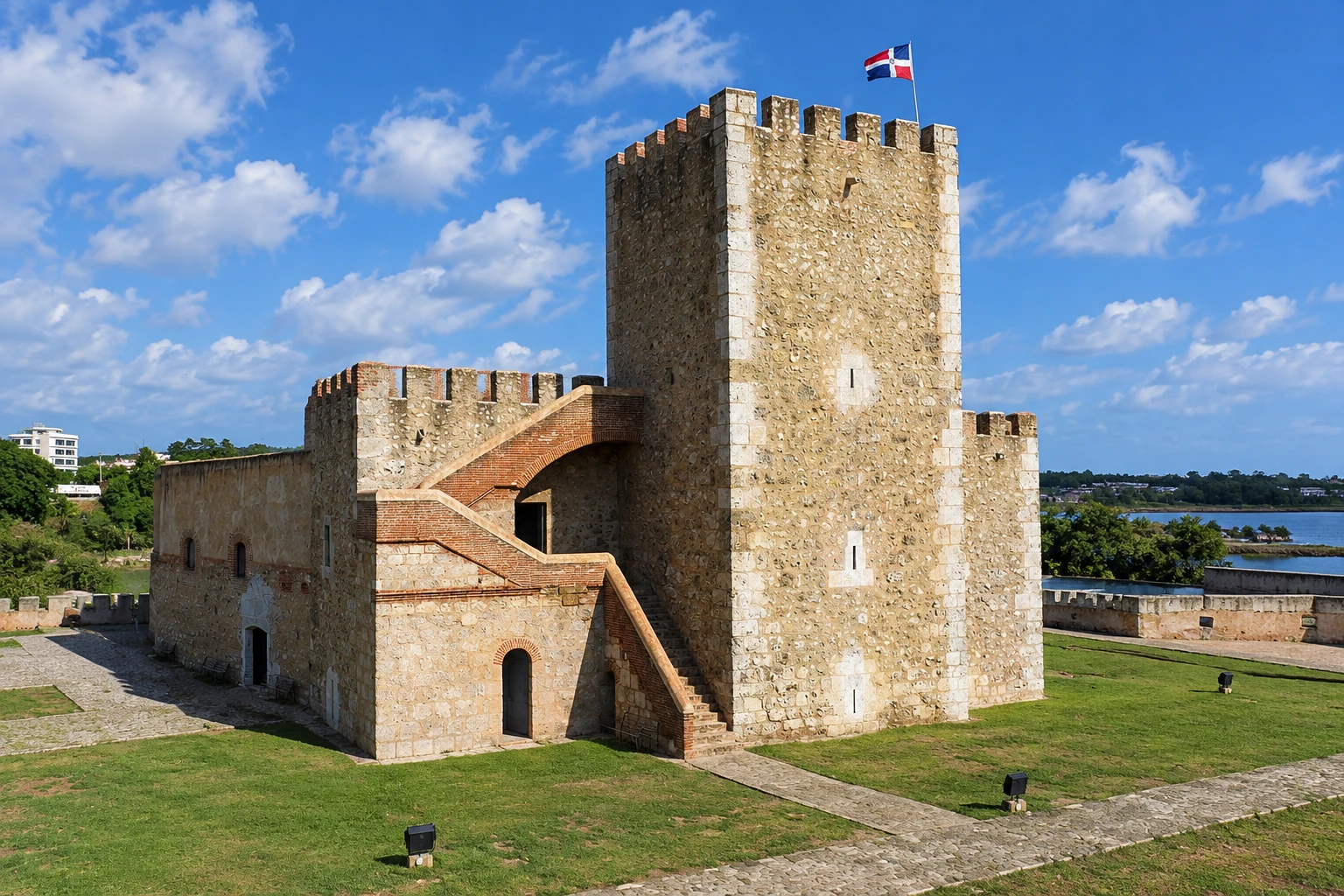
The oldest fortress in the Americas, built from 1502 to 1508, at the mouth of the Ozama River, with the Torre del Homenaje from which you can see the city and the port.
The buildings of the Spanish colonial government, from 1511, housing the Real Audiencia, arms, maps, navigation and the colony's daily life, at the end of Calle Las Damas.
Santo Domingo – the Dominican RepublicDestination Santo DomingoCapital
How to get there
Aeropuerto Internacional de Las Américas (SDQ)Punta Caucedo · 25 km
Terminal Caribe ToursAvenida 27 de Febrero · 6 km
Approximate distances. Check flights and bus, train or boat schedules before you travel.
The connection with Brazil can be direct or with a connection, depending on the season and the airline. Confirm before buying. Las Américas Airport (SDQ) is about 25 km from the Ciudad Colonial, with taxi, transfer and ride‑hailing apps. From Punta Cana, buses and cars make the trip via the highway in about two and a half hours.
How many days
Two days: one full day for the Ciudad Colonial, with the cathedral, the Alcázar, the fortress and the museums; another for Los Tres Ojos, the Faro a Colón and the Malecón. With three days, add an afternoon at the beach in Boca Chica.
When to go
From December to April it rains less and walks through the historic center are more pleasant. Carnival fills the Malecón in February. From June to November, the hurricane season, rains come in downpours, stronger from August to October; museums remain open.
The seasons shown are the most usual ones; nature doesn't always follow the calendar.
Do you need a car?
No. The Ciudad Colonial is small and flat, made for walking. For Los Tres Ojos, the Faro a Colón and the modern neighborhoods, use a taxi or ride‑hailing app; the metro serves other parts of the city. Traffic is slow at peak times and parking in the historic center is difficult.
Suggested itinerary
An order that works
Built with the places on this page. No rush: it's paced so you have time to see them.
One day in Santo Domingo
manhã
Parque Colón and Catedral Primada
Start at Parque Colón, with the statue of Columbus, and enter the Catedral Primada, the first in the Americas. Then follow El Conde street, the pedestrian street that cuts through the Ciudad Colonial.
tarde
Calle Las Damas and Fortaleza Ozama
Walk down Calle Las Damas, the first street laid out by the Spanish, to Fortaleza Ozama, and climb the Torre del Homenaje to see the river. On the way is the Panteón de la Patria.
fim de tarde
Casas Reales and Alcázar de Colón
At the end of Calle Las Damas visit the Museo de las Casas Reales and cross to Plaza de España, where the Alcázar de Colón is located, the house of Diego Colón.
noite
Plaza de España at night
The square in front of the Alcázar is lit up and the restaurants with outdoor tables fill up. Return via Parque Colón, which has music and activity late into the evening.
2 days in Santo Domingo
Day 1
manhã
Catedral and El Conde
Catedral Primada, Parque Colón and El Conde street.
tarde
Las Damas and Ozama
Calle Las Damas, Panteón de la Patria and Fortaleza Ozama.
fim de tarde
Casas Reales and Alcázar
The two museums at the northern tip of the Ciudad Colonial.
noite
Plaza de España
Dinner facing the Alcázar.
Day 2
manhã
Los Tres Ojos
Cross the Ozama River by taxi to Parque Mirador del Este and descend to the lagoons of Los Tres Ojos early, before the tour groups arrive.
tarde
Faro a Colón
Head to the Faro a Colón, the large cross‑shaped monument where Columbus's mausoleum is located, with the museum on its sides.
fim de tarde
Malecón
Return along George Washington Avenue, the Malecón, to see the Caribbean Sea hitting the rocks at the end of the day.
noite
Modern neighborhoods
Dine in Piantini or Naco, where the city's newest restaurants are located.
Check before you go. Opening hours and days change, and places may close for renovations, holidays or events. This itinerary is a suggestion from Cidade Turismo, not a commitment: plan yours by checking directly with each place you intend to visit.
Before you go
Frequently asked questions
How to get from Las Américas airport to the Ciudad Colonial?
By taxi, transfer or ride‑hailing app, in about 30 to 45 minutes via the Las Américas highway, depending on traffic. There is no metro or train to the airport. Agree the taxi fare before getting into the car.
What to see in the Ciudad Colonial in one day?
The Catedral Primada, Calle Las Damas, Fortaleza Ozama, Museo de las Casas Reales and Alcázar de Colón, in that order, can be done on foot in one day. Between them, El Conde street and the plazas have cafés and shade.
Where is Christopher Columbus's tomb in Santo Domingo?
At the Faro a Colón, on the other side of the Ozama River. The monument was built to receive the remains that were in the Catedral Primada; Seville, in Spain, also claims to hold the navigator's remains.
Does Santo Domingo have a metro?
It has two lines, which connect the center to the northern and western neighborhoods, plus a cable car. They do not pass through the Ciudad Colonial or the airport, and tourists tend to use taxis and ride‑hailing apps more.
Is it worth staying overnight in the Ciudad Colonial?
Yes, for those who want to walk to the museums in the morning and dine in the squares at night. Guesthouses are in old manor houses. Those who prefer a large modern hotel stay in Piantini or on the Malecón and take a taxi to the center.


 Brazil
 Antarctica
 Argentina
 Bolivia
 Chile
 Colombia
 Ecuador
 Falkland Islands (Malvinas)
 French Guiana
 Guyana
 Paraguay
 Peru
 Suriname
 Uruguay
 Venezuela
 Austria
 Belgium
 Croatia
 Denmark
 Finland
 France
 Germany
 Greece
 Hungary
 Iceland
 Ireland
 Italy
 Luxembourg
 Norway
 Poland
 Portugal
 Slovakia
 Slovenia
 Spain
 Sweden
 Switzerland
 the Czech Republic
 the Netherlands
 the United Kingdom
 Turkey
 Bermuda
 Canada
 Greenland
 Mexico
 Saint Pierre and Miquelon
 the United States
 Japan
 Egypt
 South Africa
 Australia
 Fiji
 New Zealand
 Papua New Guinea