Belfast and the Giant's Causeway

Northern Ireland

Belfast and the Giant's Causeway

The capital where the Titanic was built, with the Titanic Belfast museum, and the Antrim coast: the columns of the Calçada dos Gigantes, Dunluce and the Carrick-a-Rede rope bridge.

Northern Ireland

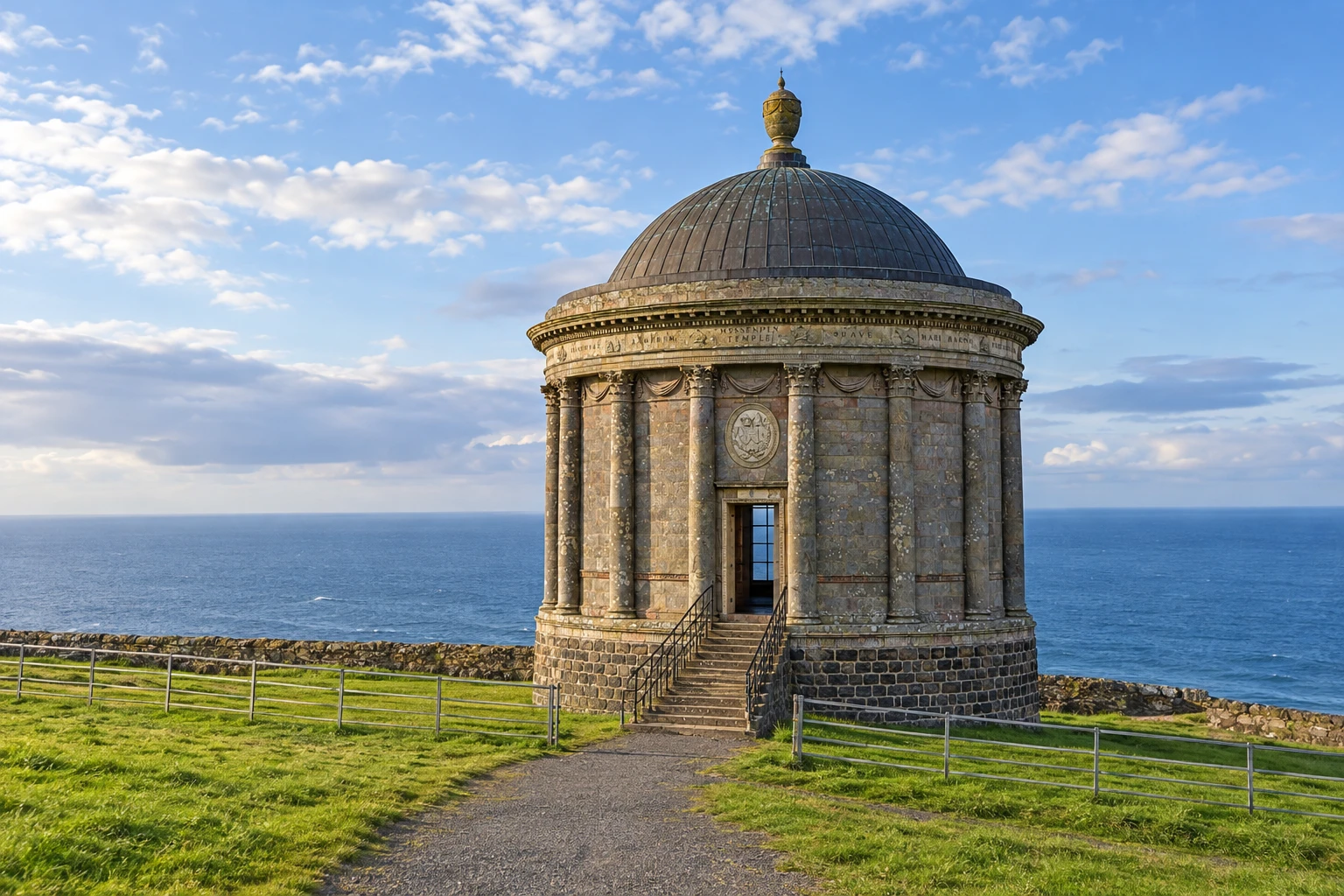
In the photo: Mussenden Temple

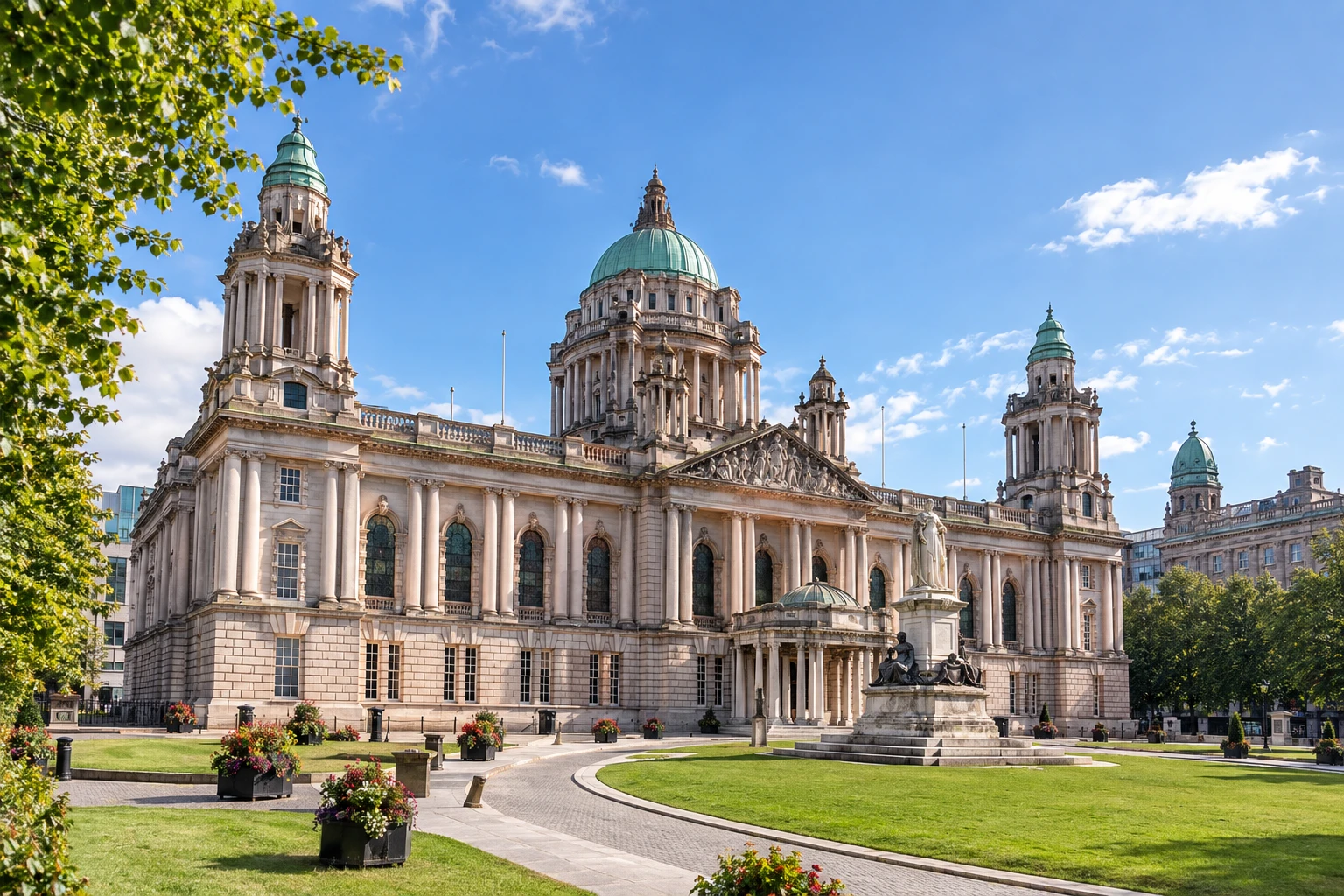
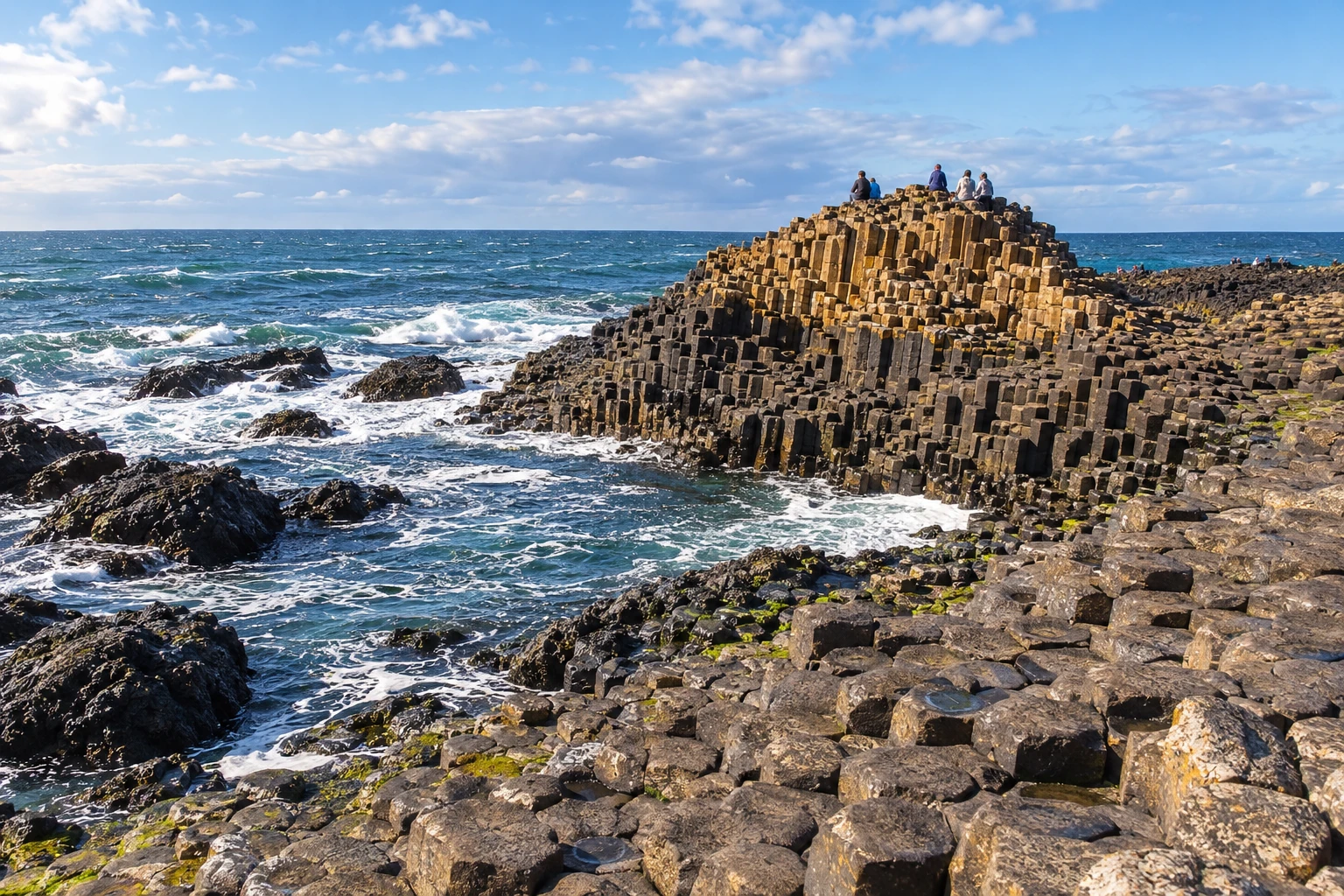
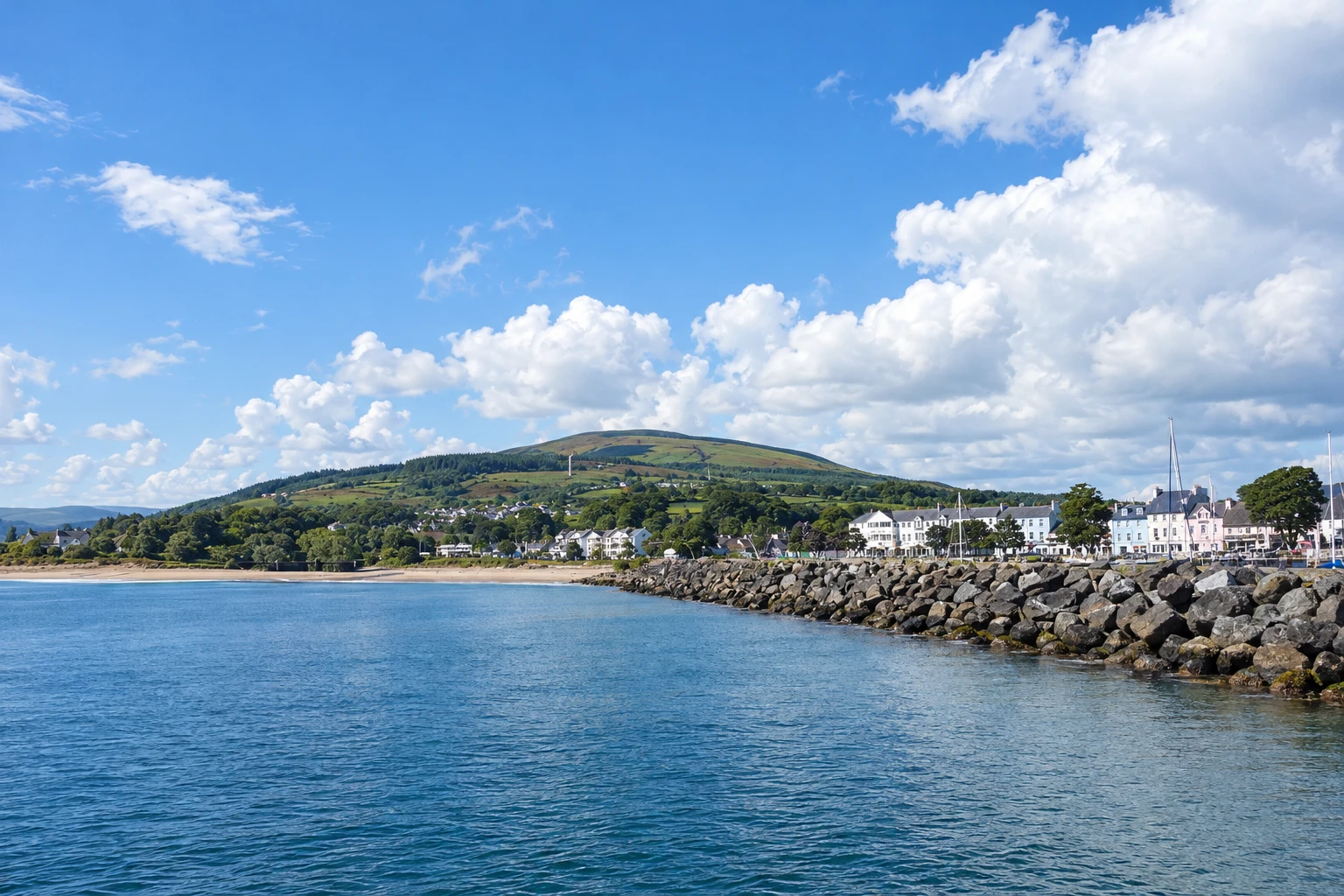
Illustrative images. The pictures in this guide are illustrations based on the real place, not photographs, and may differ from it.

Get it on Google Play

Get to know the place

A region to enjoy
at your own pace.

Irlanda do Norte occupies the northeast of the island of Ireland and is one of the four nations of the United Kingdom. Belfast, the capital, lies at the head of the Belfast Lough, an inlet of the mar da Irlanda, surrounded by hills. The city grew in the 19th century with linen, ropemaking and shipbuilding: it was in the shipyard Harland & Wolff that the Titanic and the Olympic were built, and the two large yellow shipyard cranes, Sansão e Golias, still mark the landscape.

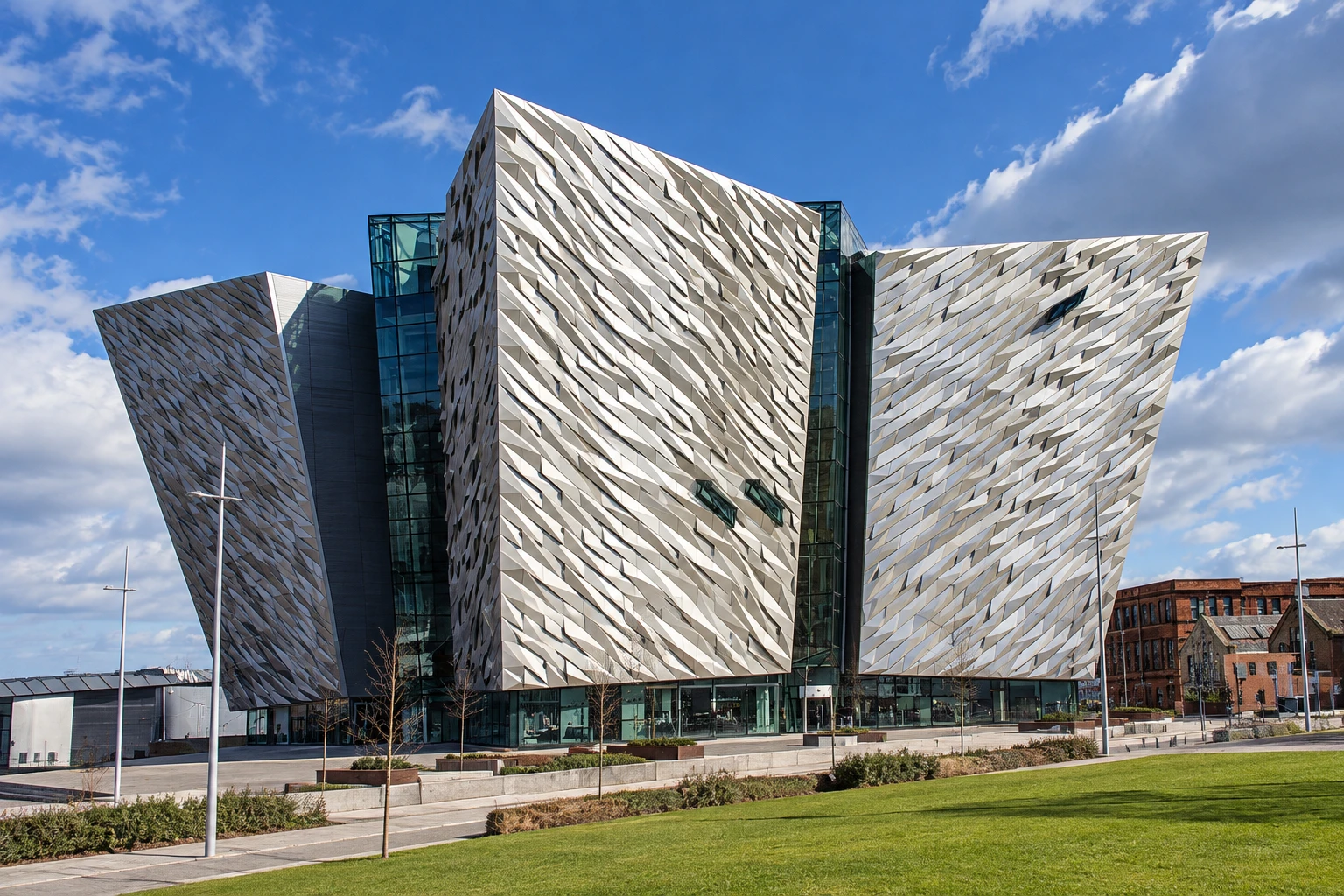
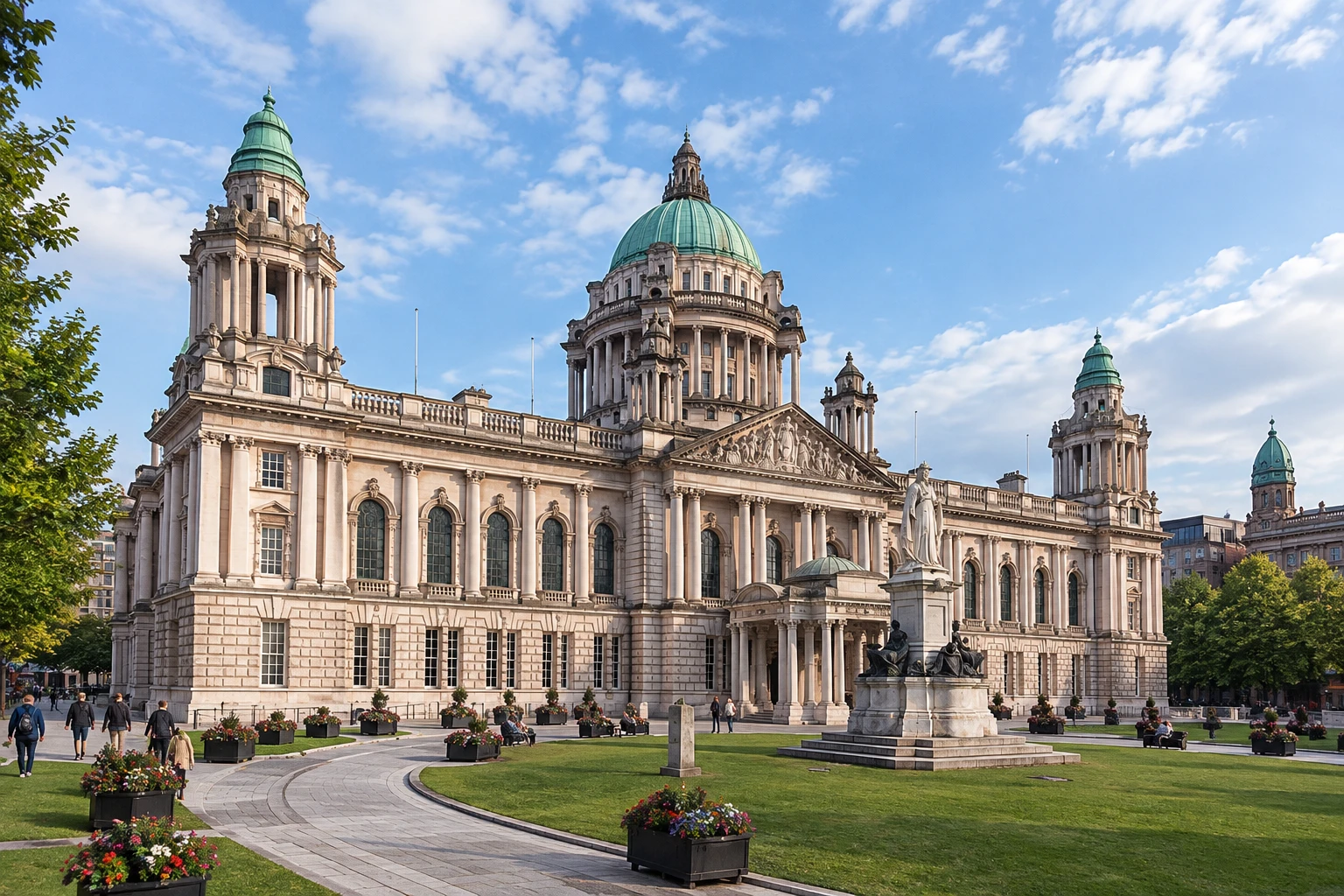
On the old shipyard, the Titanic Quarter brings together Titanic Belfast, a museum about the ship in a building that resembles four bows, the dock where it was built and the SS Nomadic, the last ship of the White Star company still in existence. In the centre are the Victorian City Hall, the St George market, old pubs such as the Crown, and the university quarter, with the Ulster Museum and the Jardim Botânico. The murals in the west-side neighbourhoods and the separation barriers, called peace walls, tell the story of the period of conflict known as the Troubles, ended with the 1998 peace agreement; guided tours of these neighbourhoods are conducted with respect for the communities.

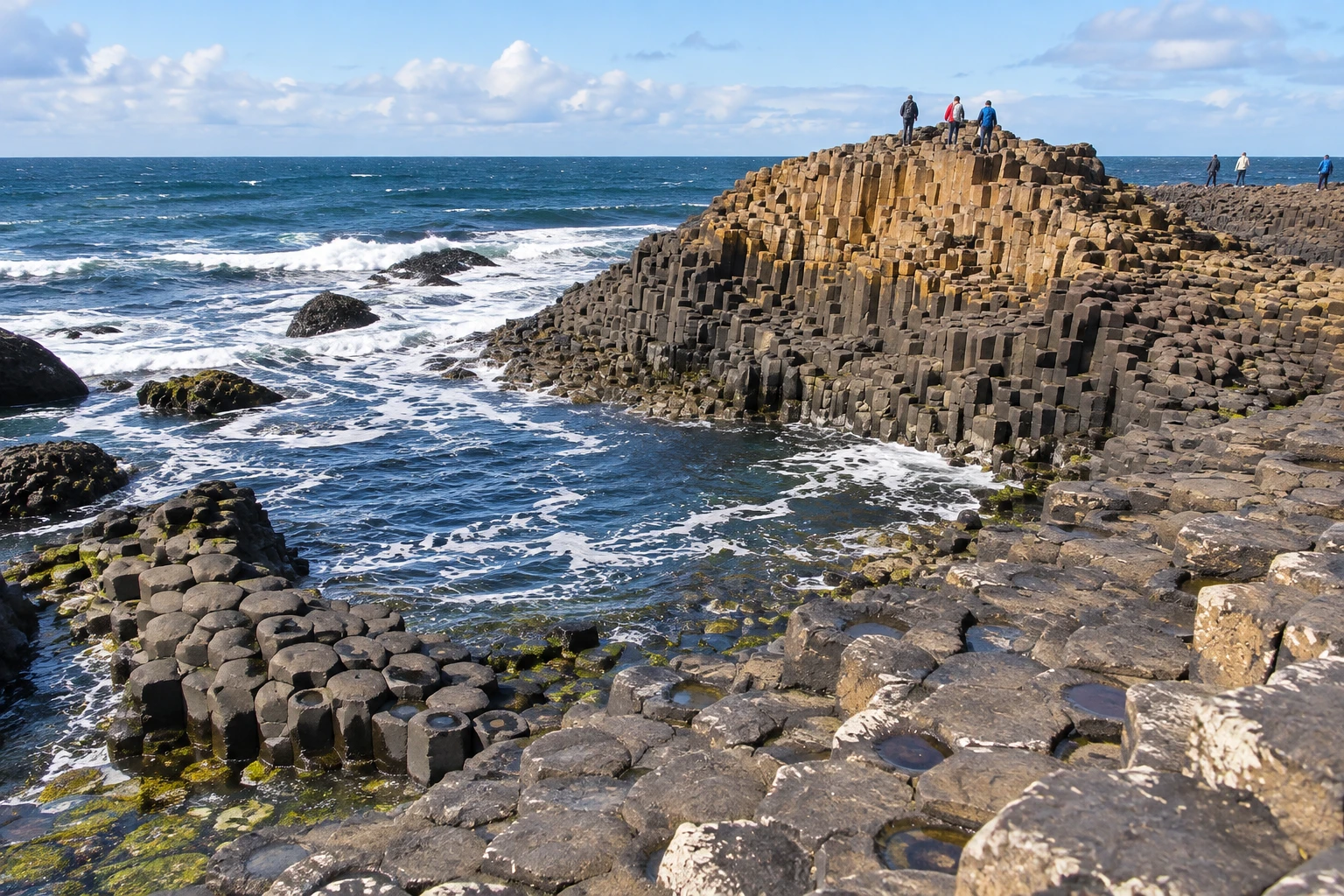
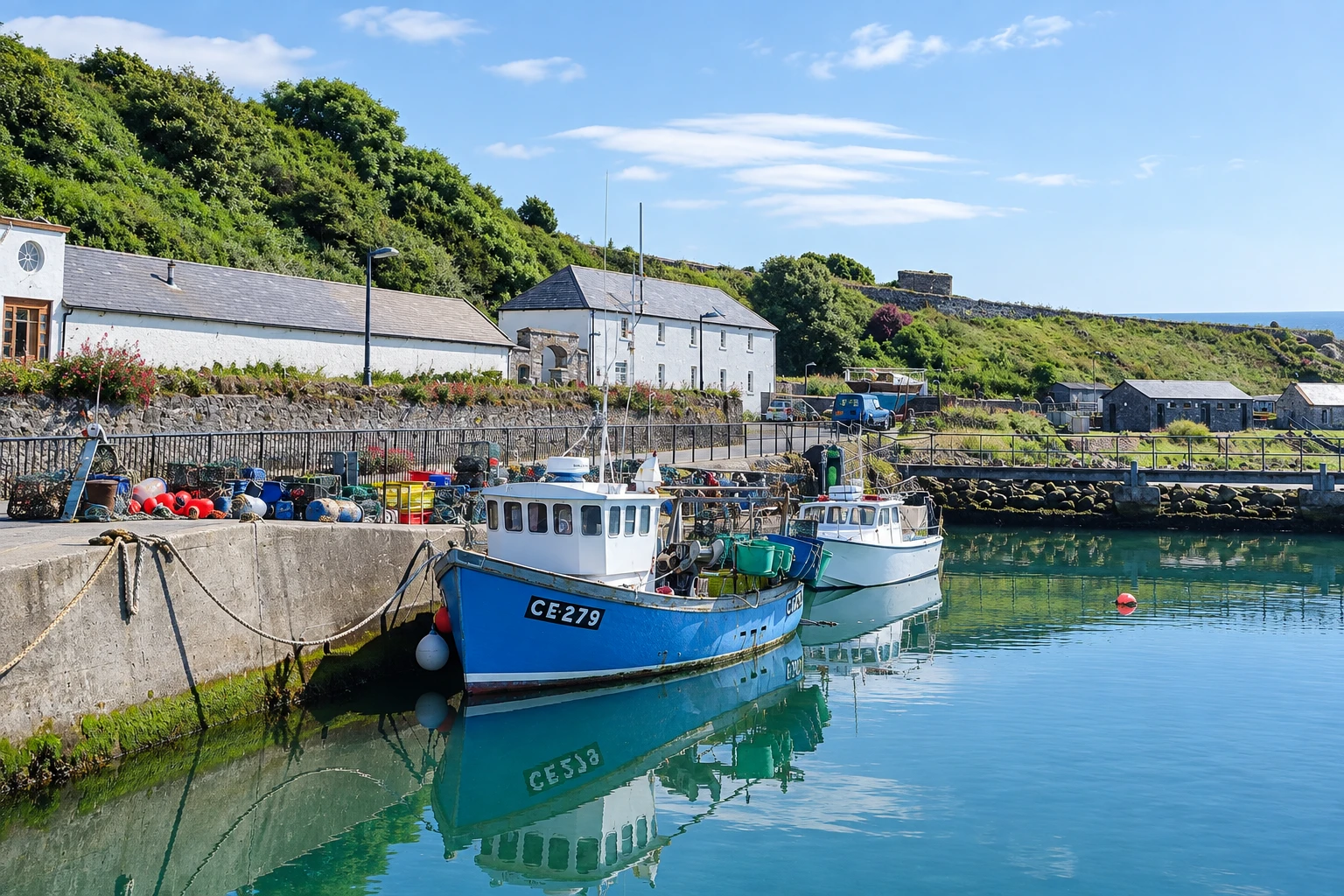
The Antrim coast, to the north, is one of the most beautiful coastal drives in Europe. Near the village of Bushmills are the Calçada dos Gigantes, with about 40,000 basalt columns, a UNESCO World Heritage Site; the Bushmills distillery; the ruins of Dunluce Castle on the cliff edge; the Carrick-a-Rede rope bridge; and the beech avenue Dark Hedges, which appears in Game of Thrones, a series filmed largely in the region.

For Brazilians, the currency is the pound sterling, and the border with the República da Irlanda is open, with no fixed control; Dublin is about 2h15 by train or bus. The coast is done by car, driving on the left, or with day tours leaving from Belfast.

This destination brings together 3 cities: Belfast, Bushmills, Ballycastle.

Share: WhatsApp
Traveler, share your experiences through photos Up to 5 photos of each place you visited.

One destination, many paths

The cities on this trip

Start with one city or combine several in your itinerary.

Where Belfast and the Giant's Causeway is The star marks the capital, Belfast.
BelfastBushmillsBallycastle

Outlines: Office for National Statistics, Open Government Licence v3.0; contém dados OS © Crown copyright 2026. Adapted by Cidade Turismo.

How to get there: Belfast and the Giant's Causeway

George Best Belfast City Airport (BHD), in Sydenham · 5 km to Belfast

Belfast International Airport (BFS), in Aldergrove · 25 km to Belfast

Connections with Brazil usually involve a stopover in another city. Check before booking. Belfast has two airports: the International, about 25 km away, and George Best City, 5 km from the centre, with flights from London and other cities. From Dublin, the Enterprise train reaches Belfast Grand Central in about 2h15. Ferries link Belfast to Scotland and England.

Suggested arrival point: Belfast

The local experience

Things to do in Belfast and the Giant's Causeway

Bushmills · Northern Ireland · Nature

Giant's Causeway

The roughly 40,000 basalt columns, almost all hexagonal, formed by lava about 60 million years ago on the coast of Antrim, 3 km from Bushmills, with the legend of the giant Finn McCool. A UNESCO World Heritage Site and part of the National Trust.

Explore Giant's Causeway

Ballycastle · Northern Ireland · Island

Rathlin Island

Inhabited island about 10 km off the coast of Ballycastle, with cliffs where thousands of seabirds breed. At the West Light, a centre run by the RSPB allows close views of the colonies.

Explore Rathlin Island

Belfast · Northern Ireland · Museum

Titanic Belfast

The museum about the Titanic at the old shipyard where it was built, in a 2012 building shaped like four prows, with nine galleries, the dry dock and the ship SS Nomadic alongside.

Explore Titanic Belfast

Belfast · Northern Ireland · Historic building

Belfast City Hall

Belfast City Hall, in Edwardian Baroque style, opened in 1906 on Donegall Square, with a green copper dome, marble halls, stained glass and a Titanic memorial in the gardens. Guided tours are free of charge; check ahead.

Explore Belfast City Hall

See 12 more places in Belfast and the Giant's Causeway

Before you go

Practical information

A little planning leaves more time to enjoy the journey.

When to go

From May to September the days are long, with daylight until near 11 pm in June, and the rope bridge and coastal attractions operate extended hours; July and August are the busiest months. In winter it's cold, very windy on the coast and it gets dark early. It rains at any time of year; bring a waterproof jacket.

The seasons shown are the most usual ones; nature doesn't always follow the calendar.

How many days to stay

Two days in Belfast, covering the Titanic Quarter, the centre, the Ulster Museum and a mural tour, and one or two days on the Antrim coast, with the Calçada dos Gigantes, Dunluce, Carrick-a-Rede and the distillery. Four days in total cover the essentials.

Which city to stay in

In Belfast, the centre, near the City Hall and the Cathedral Quarter, puts everything within walking distance; the university quarter to the south has guesthouses in Victorian houses and restaurants, and the Titanic Quarter has new hotels. On the coast, Bushmills, Portrush and Portstewart have hotels and guesthouses near the Calçada dos Gigantes.

Respect the place

Take your trash with you, follow the signs and support local businesses. In natural areas, follow the visiting guidelines.

Beyond the guide

Your questions

Frequently asked questions about Belfast and the Giant's Causeway

Do you need a passport to go from Dublin to Belfast?

There is no fixed control on the border between Ireland and Irlanda do Norte, but carry your passport, because they are different countries with their own entry rules. The United Kingdom has its own rules, including prior electronic authorization for many visitors. Check before you travel.

What is the currency of Irlanda do Norte?

The pound sterling, as in the rest of the United Kingdom. In the República da Irlanda, the currency is the euro.

Can you visit the Calçada dos Gigantes in a day from Belfast?

Yes, by car, about 1h15 via the fastest road or 2h30 along the coast, or with a day tour that usually includes Carrick-a-Rede, Dunluce and the Dark Hedges.

Do I need a car in Irlanda do Norte?

Not in Belfast. For the coast of Antrim, a car helps, but there are regional buses and many tours. You drive on the left.

Is it safe to visit the murals in Belfast?

Yes. Guided tours by taxi or on foot of the mural neighbourhoods are common and are conducted with respect for the local communities.

Cross-border routes

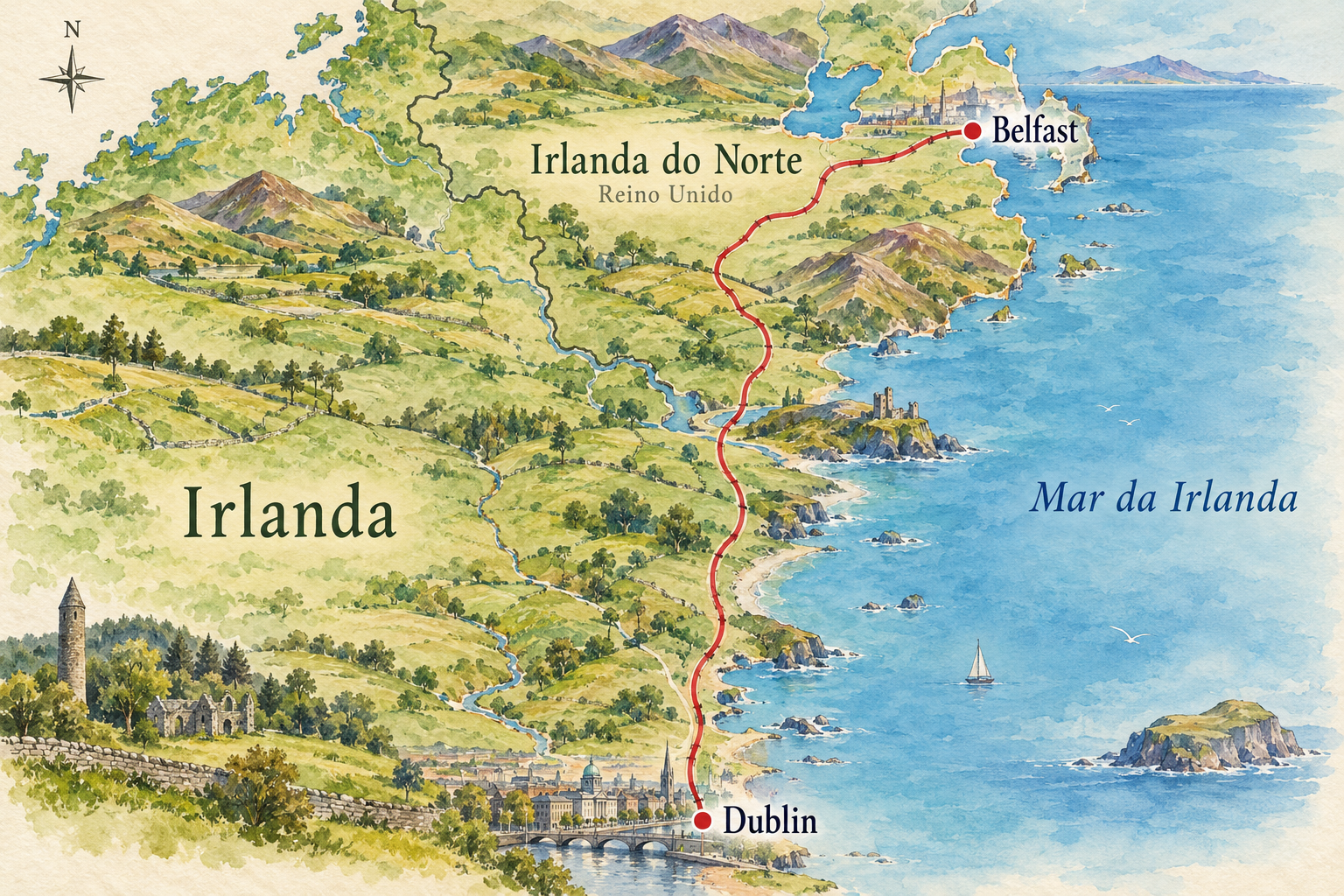
Belfast and the Giant's Causeway is on the Dublin–Belfast by train

Two capitals on the island of Ireland in about two hours by train, along the Irish Sea coast, with no border control on the way.

Illustrative map, not to scale. Tap a city to open its page.
Illustrated map of Dublin–Belfast by train
Explore other destinations Search by state and city