

 Brazil
 Antarctica
 Argentina
 Bolivia
 Chile
 Colombia
 Ecuador
 Falkland Islands (Malvinas)
 French Guiana
 Guyana
 Paraguay
 Peru
 Suriname
 Uruguay
 Venezuela
 Austria
 Belgium
 Croatia
 Denmark
 Finland
 France
 Germany
 Greece
 Hungary
 Iceland
 Ireland
 Italy
 Luxembourg
 Norway
 Poland
 Slovakia
 Slovenia
 Spain
 Sweden
 Switzerland
 the Czech Republic
 the Netherlands
 the United Kingdom
 Turkey
 Bermuda
 Canada
 Greenland
 Mexico
 Saint Pierre and Miquelon
 the United States
 the Dominican Republic
 Japan
 Egypt
 South Africa
 Australia
 Fiji
 New Zealand
 Papua New Guinea
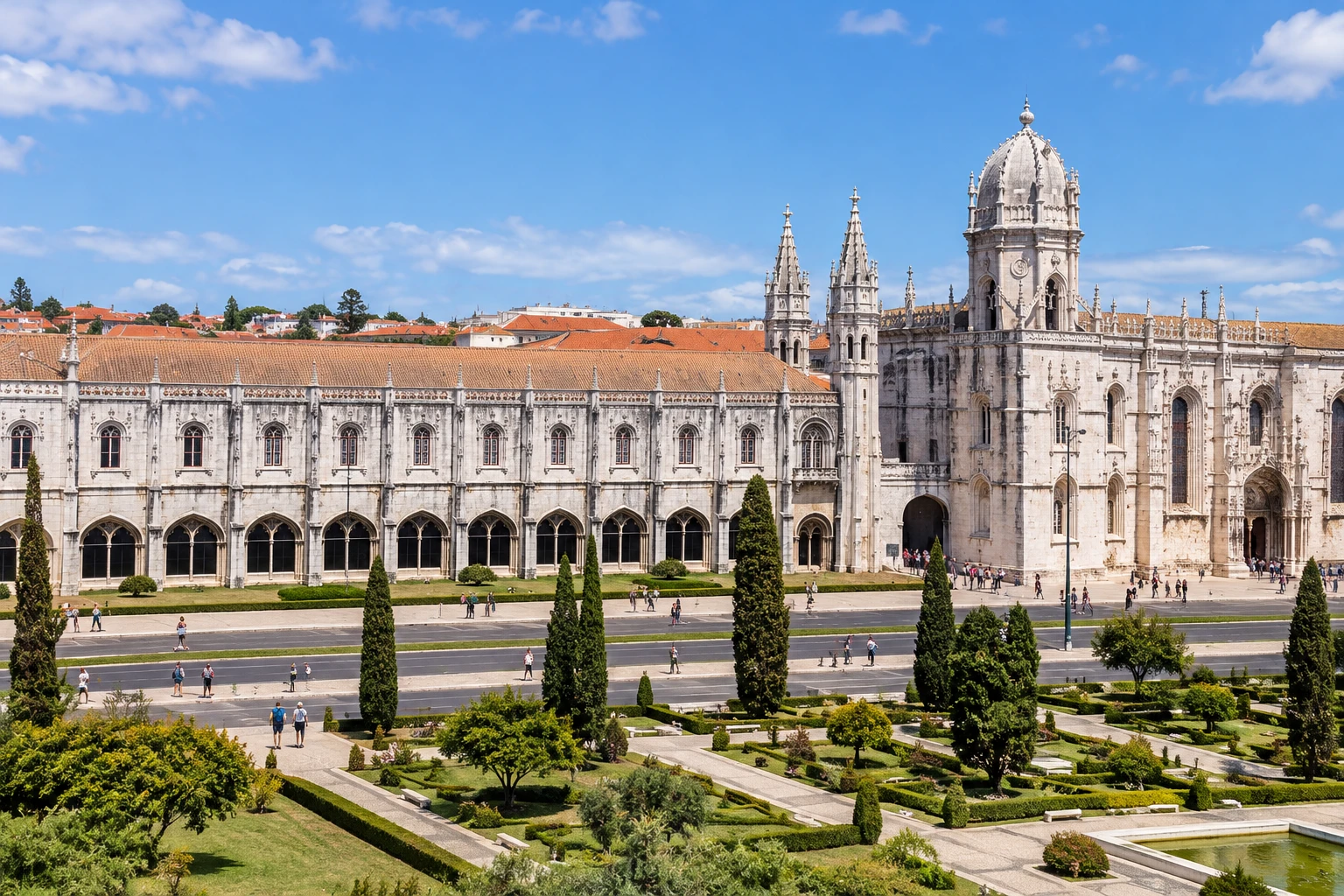
Monastery · Lisbon, Portugal
Jerónimos Monastery
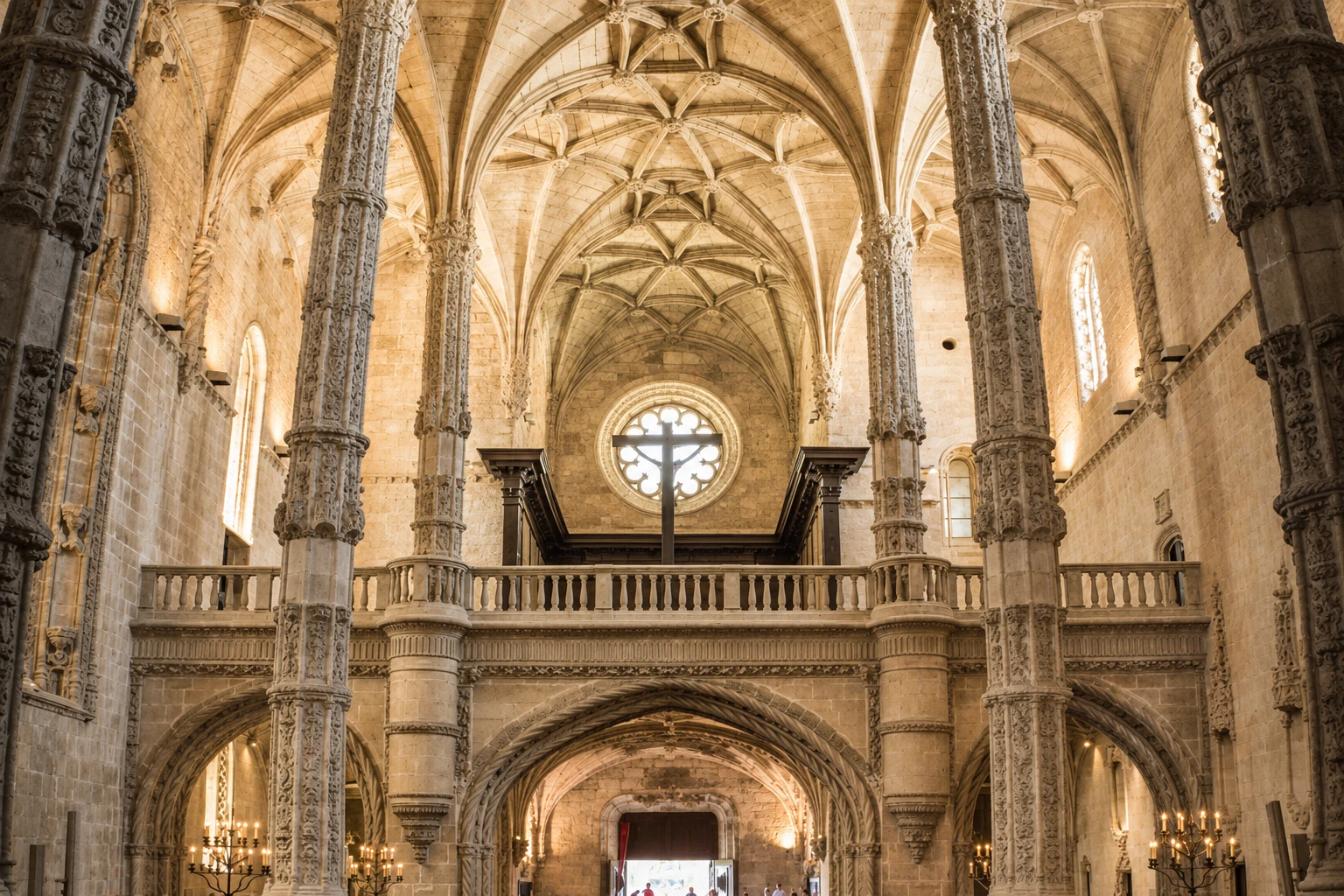
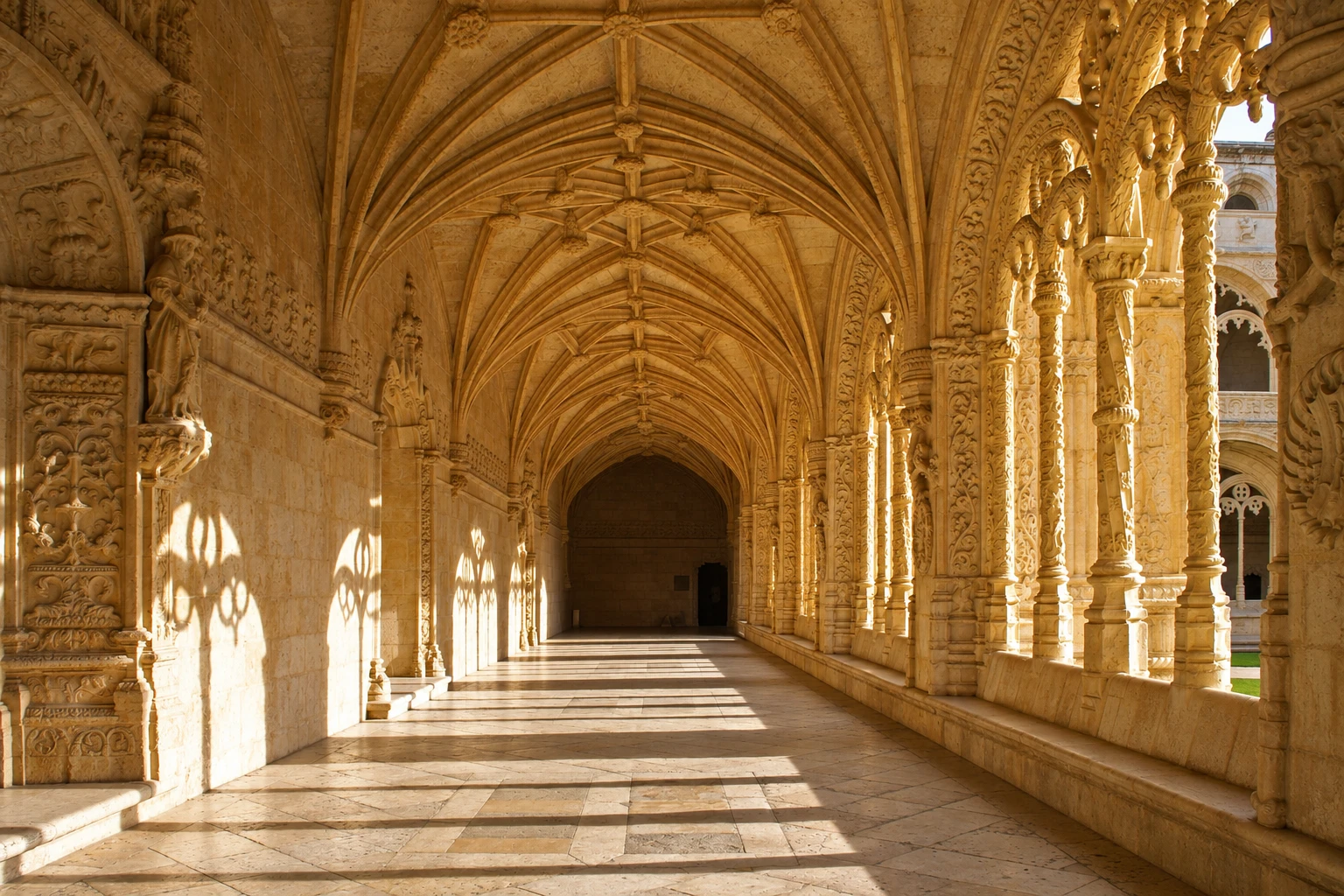
Manueline monastery commissioned by D. Manuel I from 1501, featuring the church of Santa Maria de Belém and the intricately carved cloister. It houses the tombs of Vasco da Gama and Luís de Camões and has been a World Heritage site since 1983.
Illustrative images. The pictures in this guide are illustrations based on the real place, not photographs, and may differ from it.

A look at the place
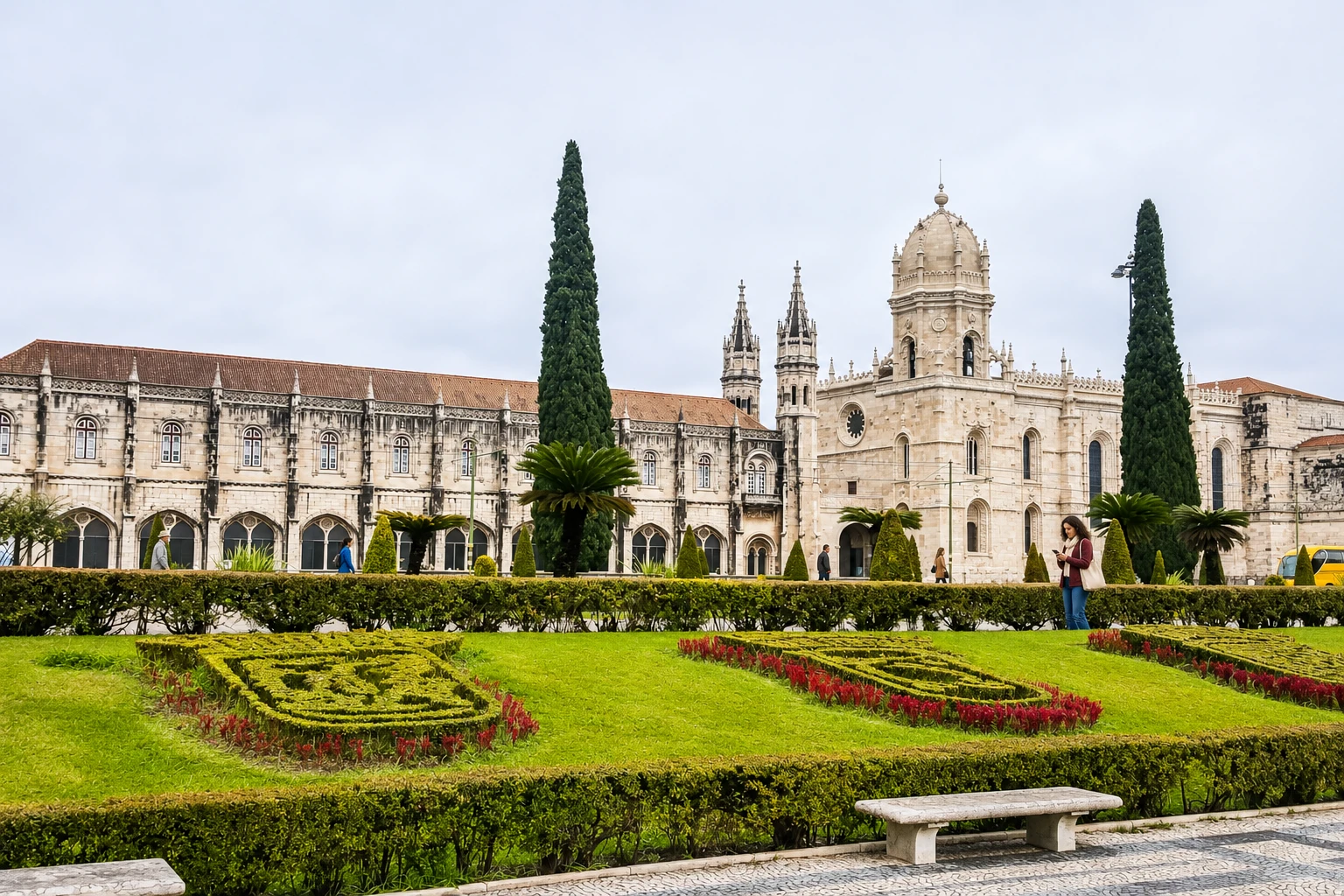
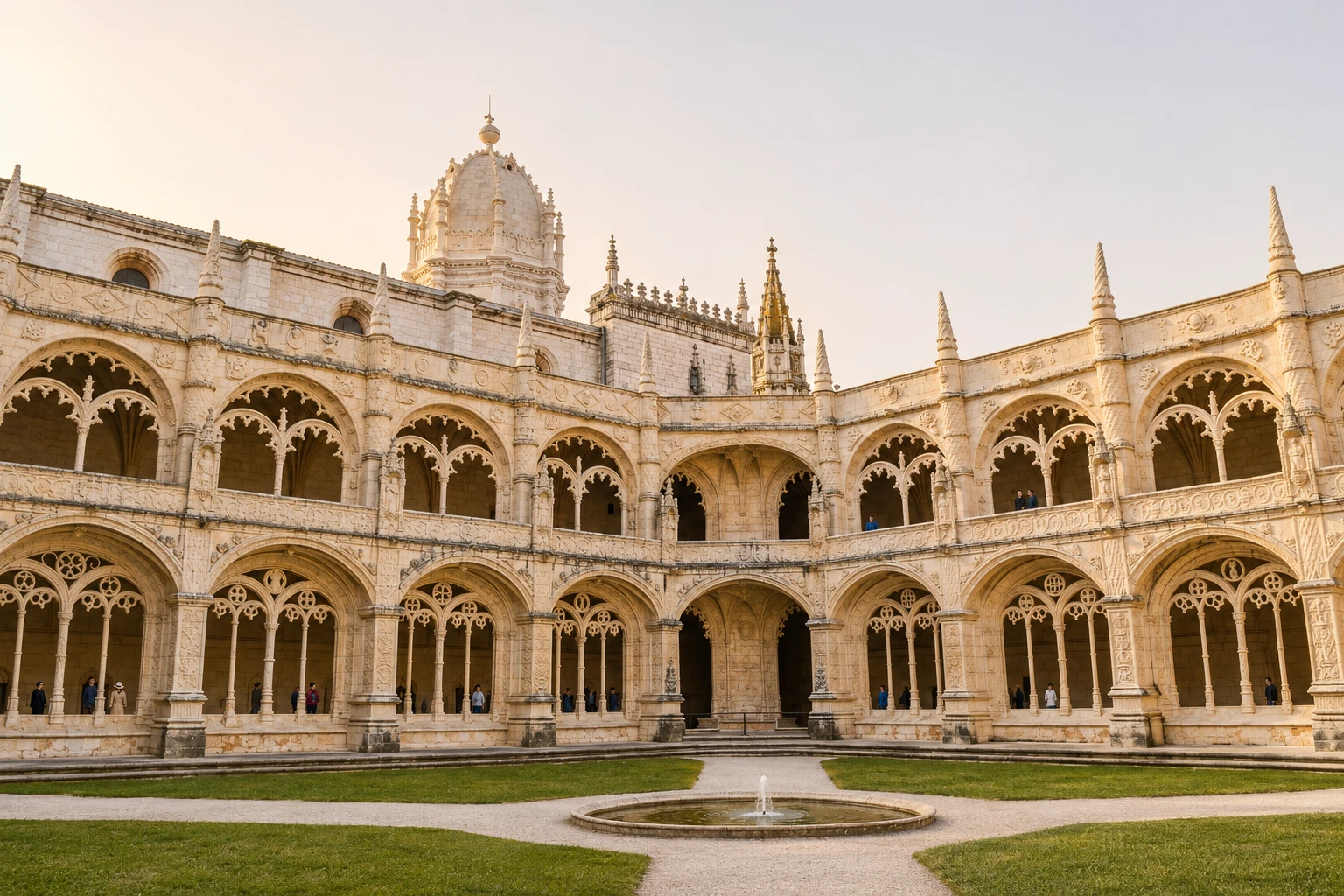
Jerónimos Monastery in pictures
These pictures are illustrations based on the real place, not photographs. They may differ from the place.
Click the picture to enlarge it.
Discover
About Jerónimos Monastery
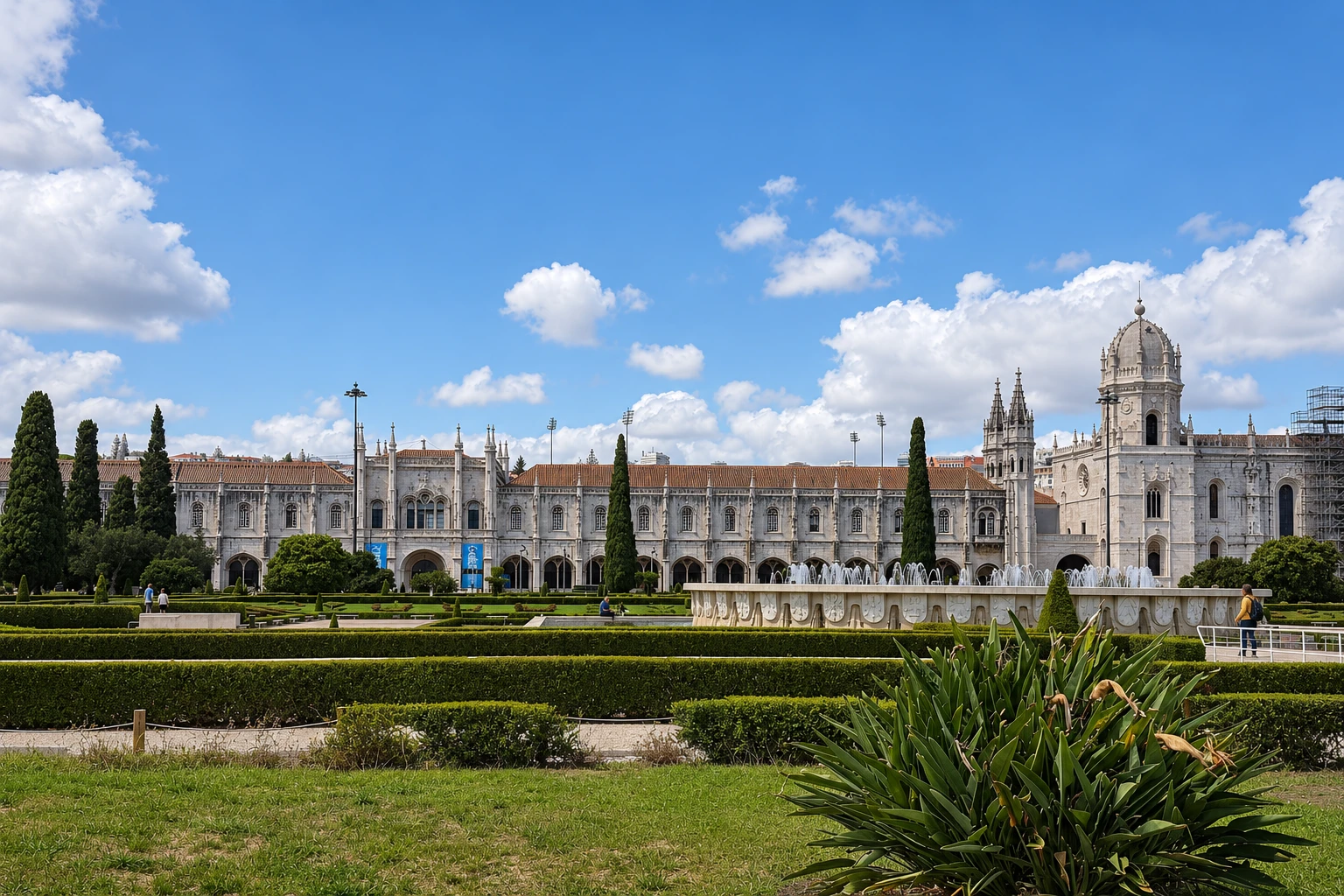
The Monastery of Santa Maria de Belém, known as the Jerónimos Monastery, was commissioned by D. Manuel I in the early 16th century on the site of a chapel where navigators prayed before departing. It was given to the monks of the Order of Saint Jerome, hence the name. Construction lasted about one hundred years, with particular work by the master João de Castilho.
It is considered the high point of Manueline architecture. The south portal, facing the river, is the most ornate, and the church has thin columns that open like palm trees into the vault. At the entrance to the nave are the tombs of Vasco da Gama and the poet Luís de Camões.
The church has a separate entrance from the cloister and the refectory. The two-story cloister has arches and columns carved with marine motifs and symbols of the kingdom, and is the most photographed part of the monastery.
The monastery has been a National Monument since 1907 and, together with the Belém Tower, a World Heritage site since 1983. Next to it, on the same façade, is the Navy Museum. A few steps away, the Pastéis de Belém bakery has sold since 1837 the sweet that originated the pastel de nata, made with a recipe linked to the former monks.
Before you go
Practical information
Cidade Turismo reviews its information regularly, but something may have changed. Check with the place before planning your trip.
How much time to set aside
From one hour to an hour and a half for the church and cloister.
Best time
Early at opening or late in the afternoon, when the lines usually shrink. Weekends and the European summer (June to August) are the busiest periods. The monastery is closed on some days of the week: check before you go.
How to get there
It is on Praça do Império in Belém, about 7 km from the city center. Take tram 15 or the Cascais line train to Belém station, about a 10-minute walk.
Tip
The entrance to the church has its own line and is usually faster; the paid ticket is for the cloister. Buy in advance if possible. The line at Pastéis de Belém moves quickly, and there are dining rooms to eat on site.
Your questions
Frequently asked questions about Jerónimos Monastery
What is there to see at the Mosteiro dos Jerónimos?
The church of Santa Maria de Belém, with the tombs of Vasco da Gama and Camões, and the two-story Manueline cloister.
Does the Igreja dos Jerónimos charge admission?
The church has a separate access; paid tickets grant access to the cloister. Check the rules before you go.
Who is buried in the Jerónimos?
Among others, the navigator Vasco da Gama and the poet Luís de Camões, author of "Os Lusíadas".
Where to eat the pastel de Belém?
At the Pastéis de Belém bakery on Rua de Belém, a few steps from the monastery; it has been selling the pastry since 1837.