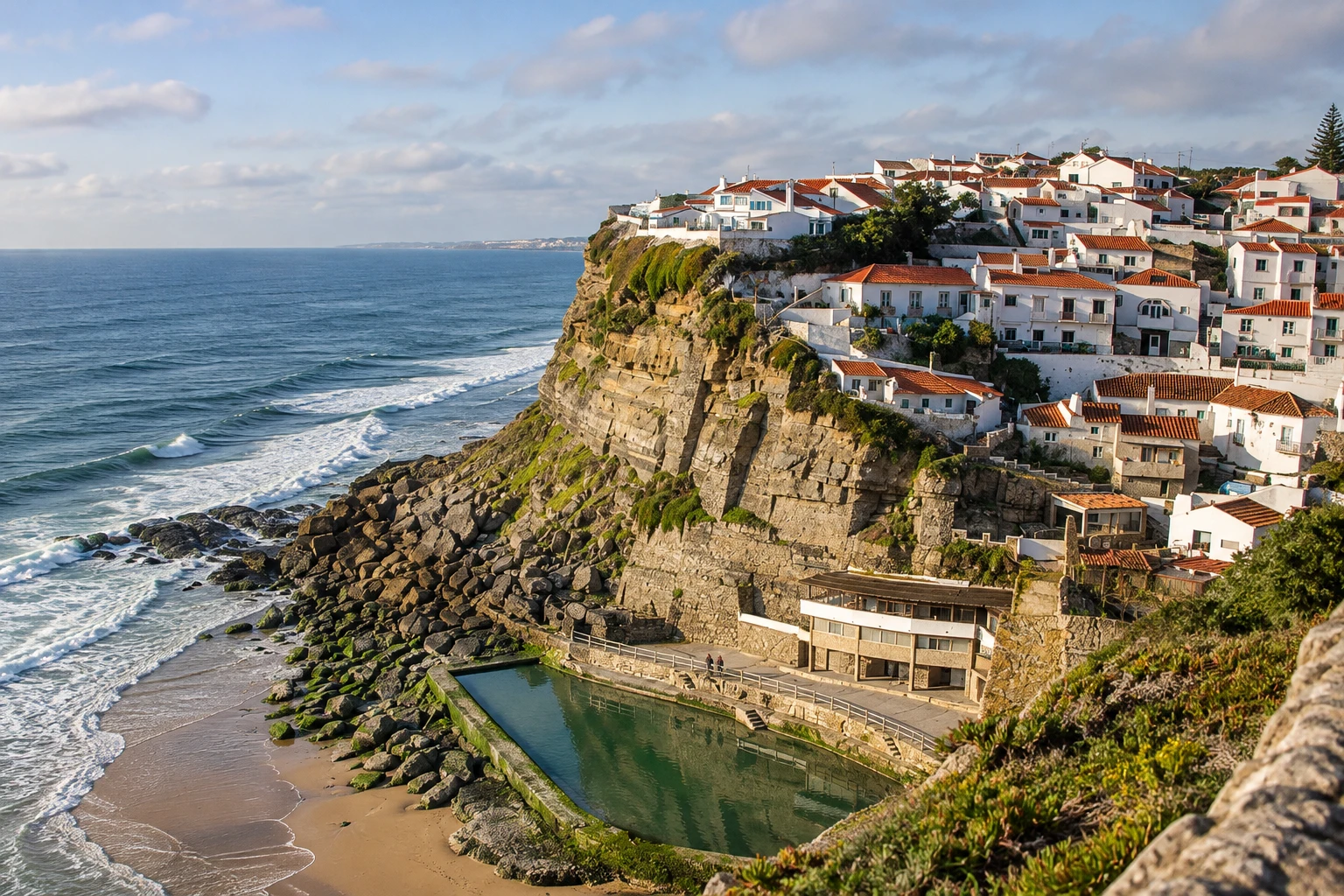
16 places to visit and 16 tours, chosen by the Cidade Turismo guide.
Updated
Illustrative images. The pictures in this guide are illustrations based on the real place, not photographs, and may differ from it.
To start
The 10 main places Sintra and Cascais
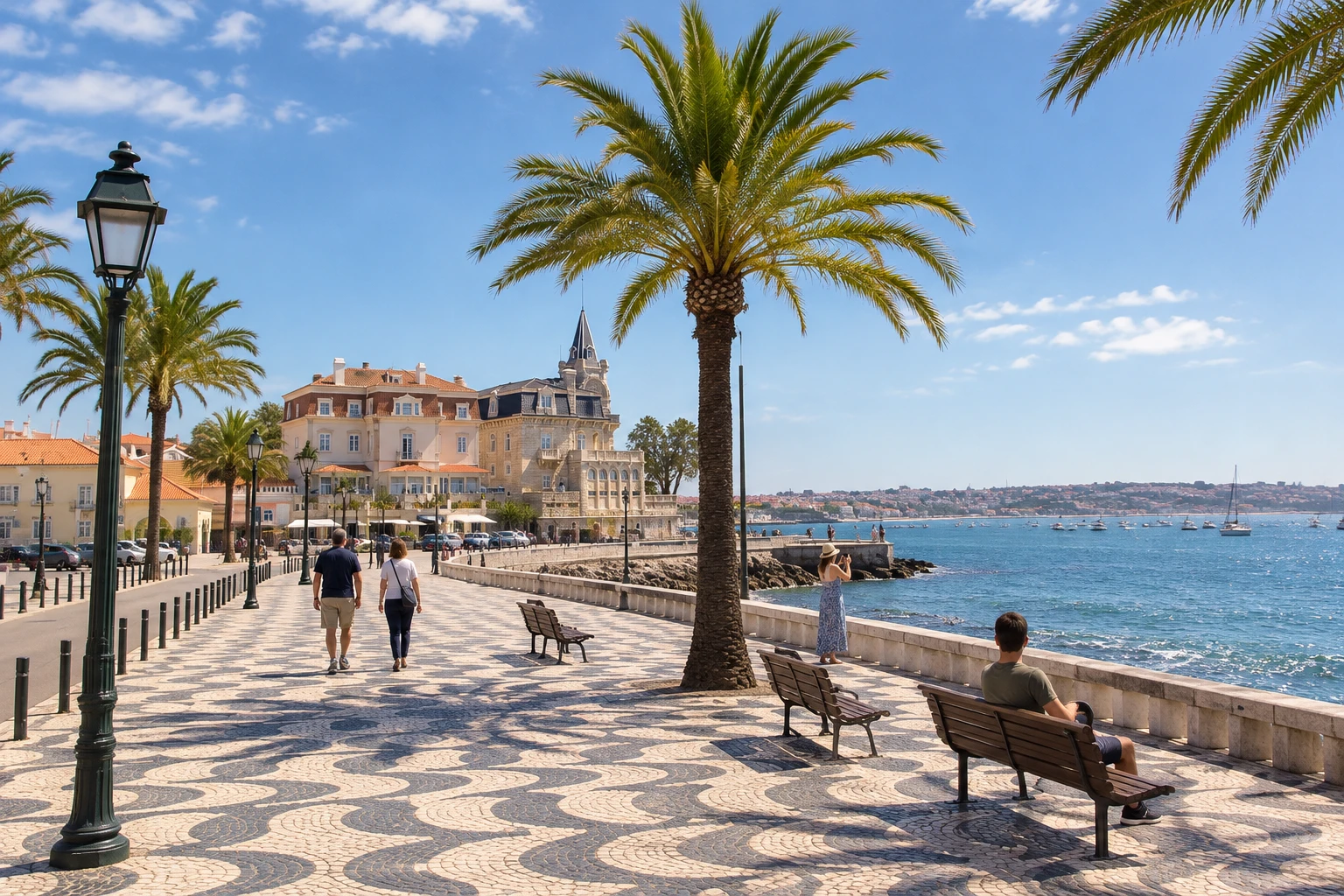
Cascais Bay and Historic Center · CascaisThe bay where fishing boats share space with the village's beaches, surrounded by the center's stone streets, the Câmara Municipal with tiled panels, and Praia da Rainha.
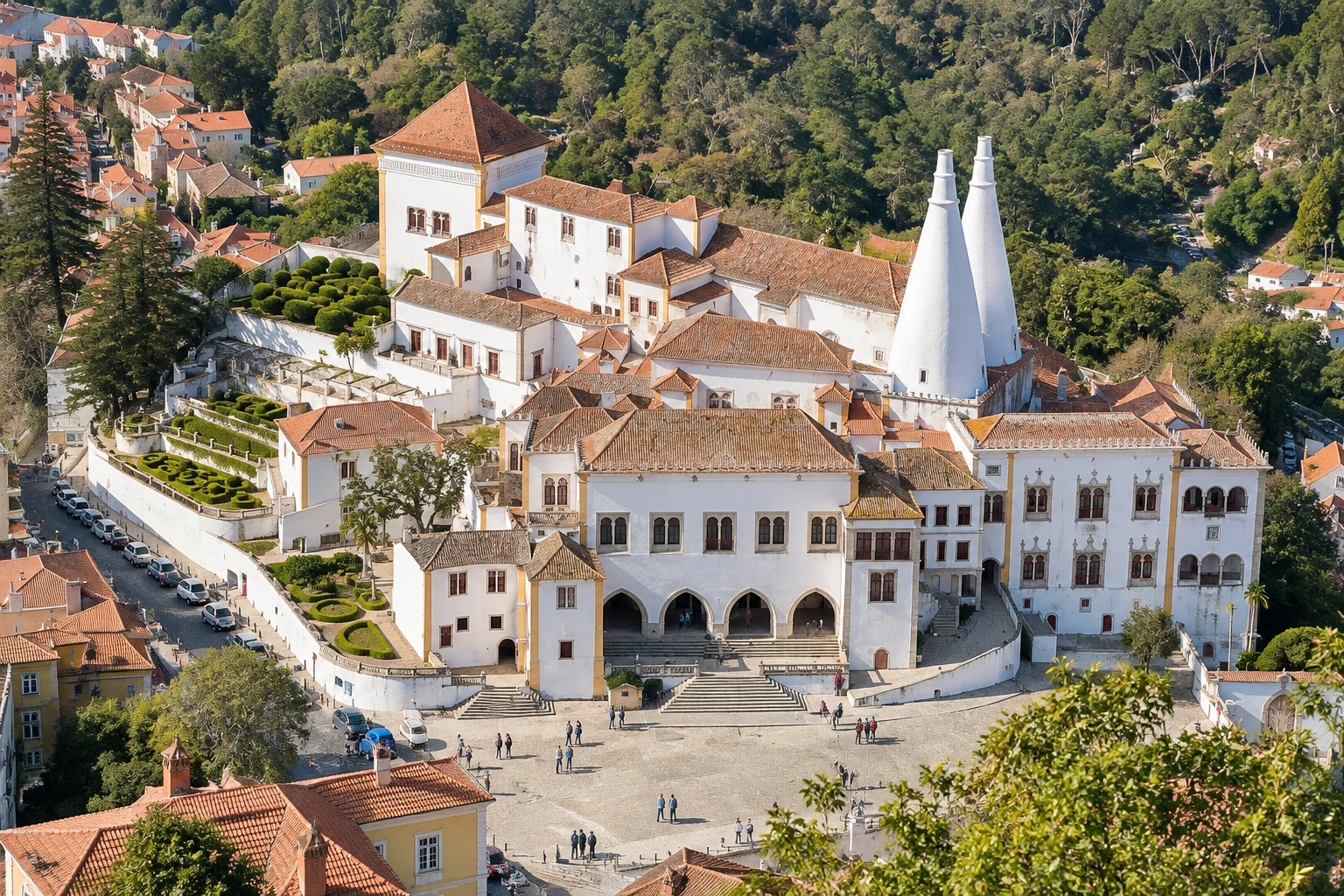
Sintra National Palace · SintraRoyal palace of medieval origin in the center of the village, with two large white conical chimneys.
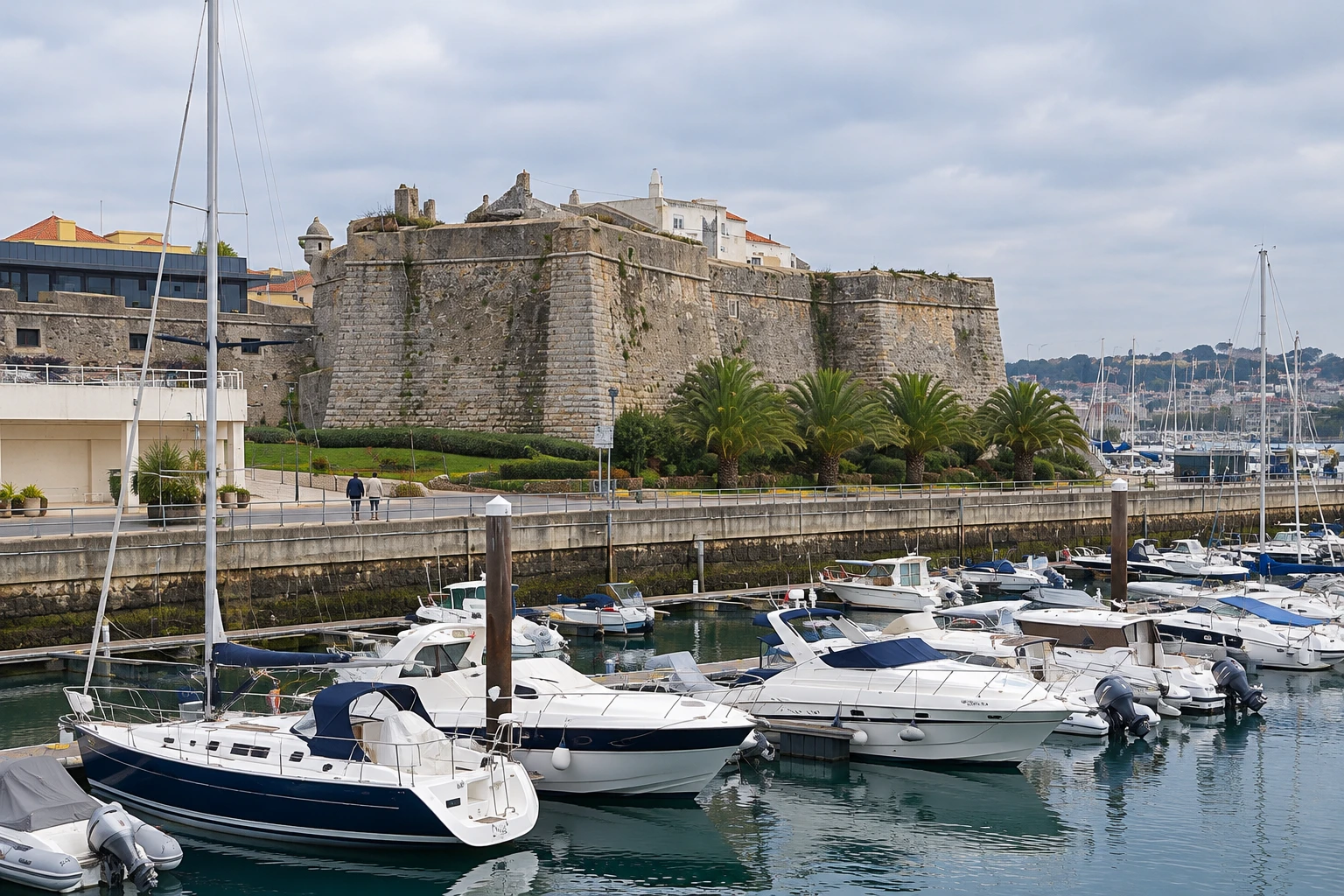
Cascais Citadel · CascaisA group of fortifications from the 16th and 17th centuries on the edge of the bay, which was the royal family's summer residence and today houses a pousada, art galleries and st...
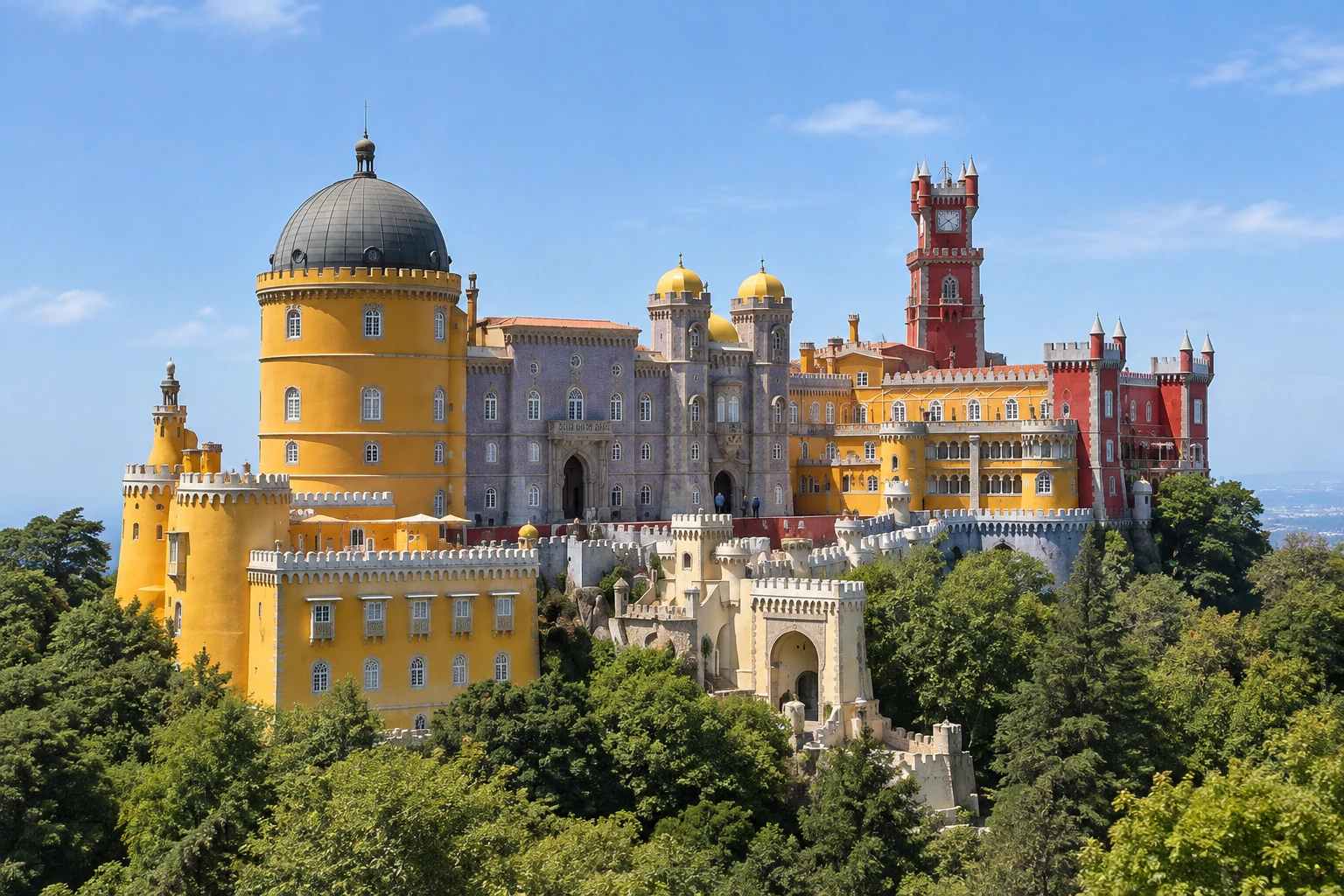
Pena National Palace · Sintra19th-century romantic palace high on the sierra, painted yellow and red, built by King D.
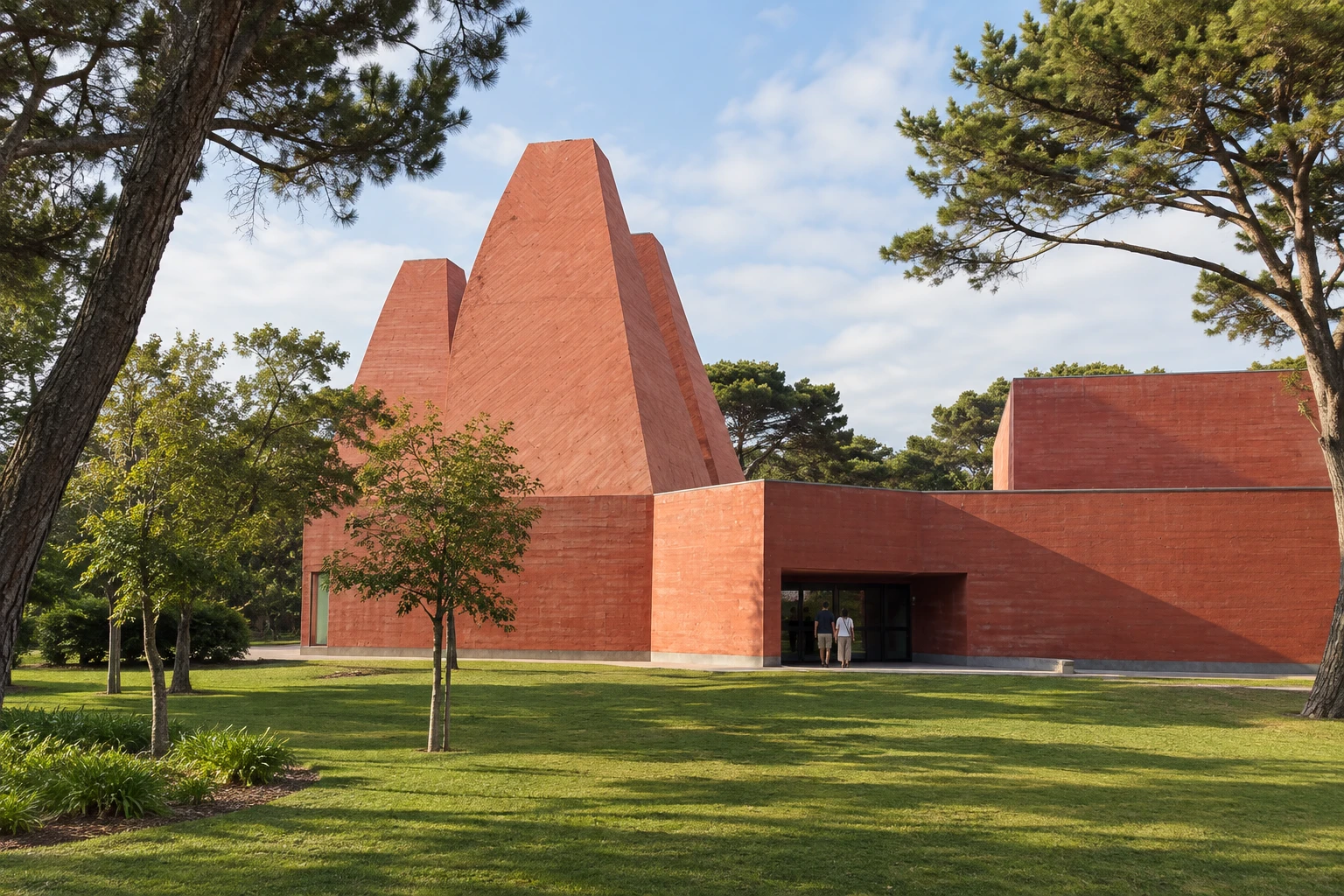
Casa das Histórias Paula Rego · CascaisMuseum dedicated to the painter Paula Rego, in a 2009 building with two red pyramidal towers designed by Eduardo Souto de Moura, winner of the Pritzker Prize.
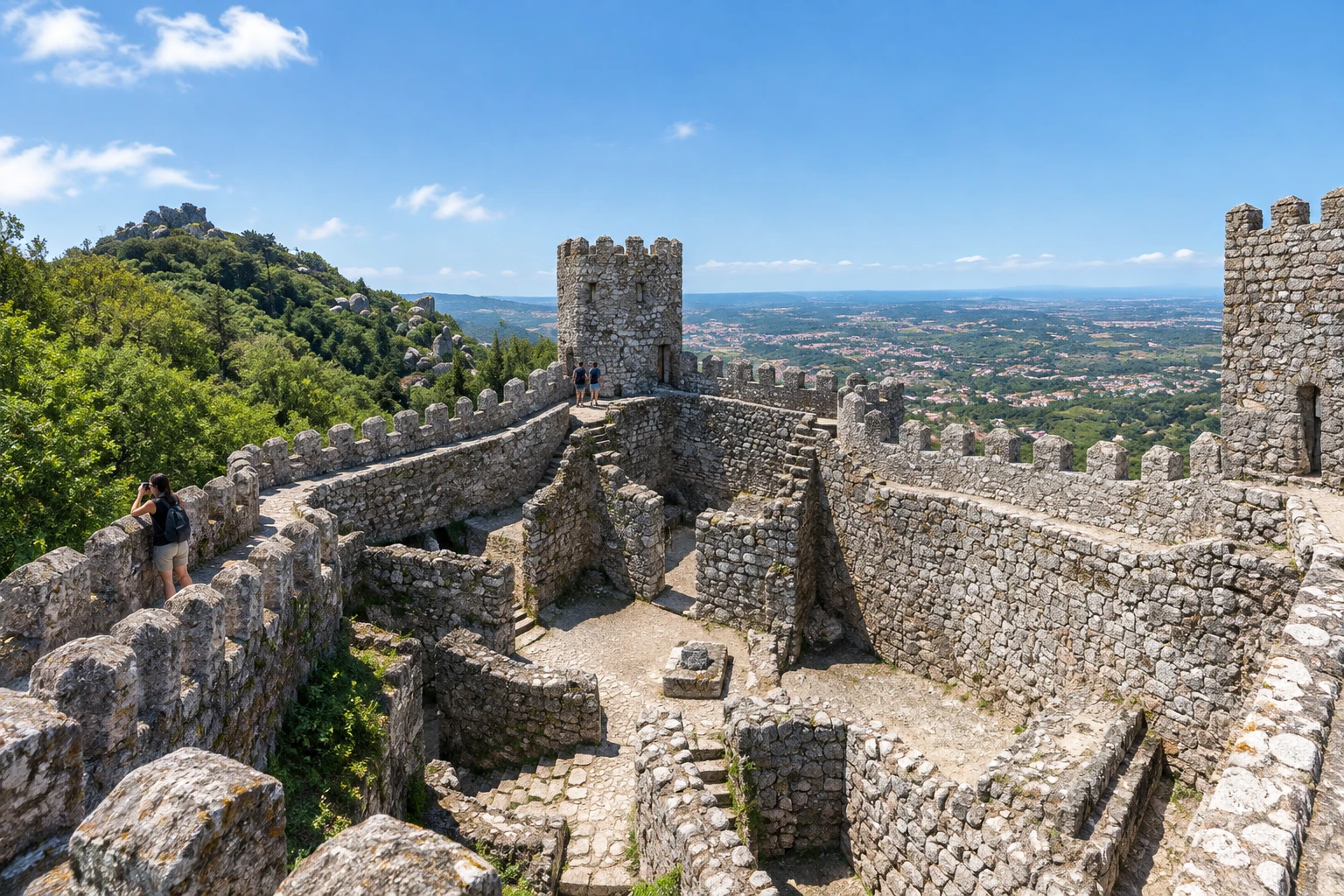
Moorish Castle · SintraWalls of a castle built by the Muslims between the 9th and 10th centuries, winding along the ridge of the hills with views over the village, the Pena and the sea.
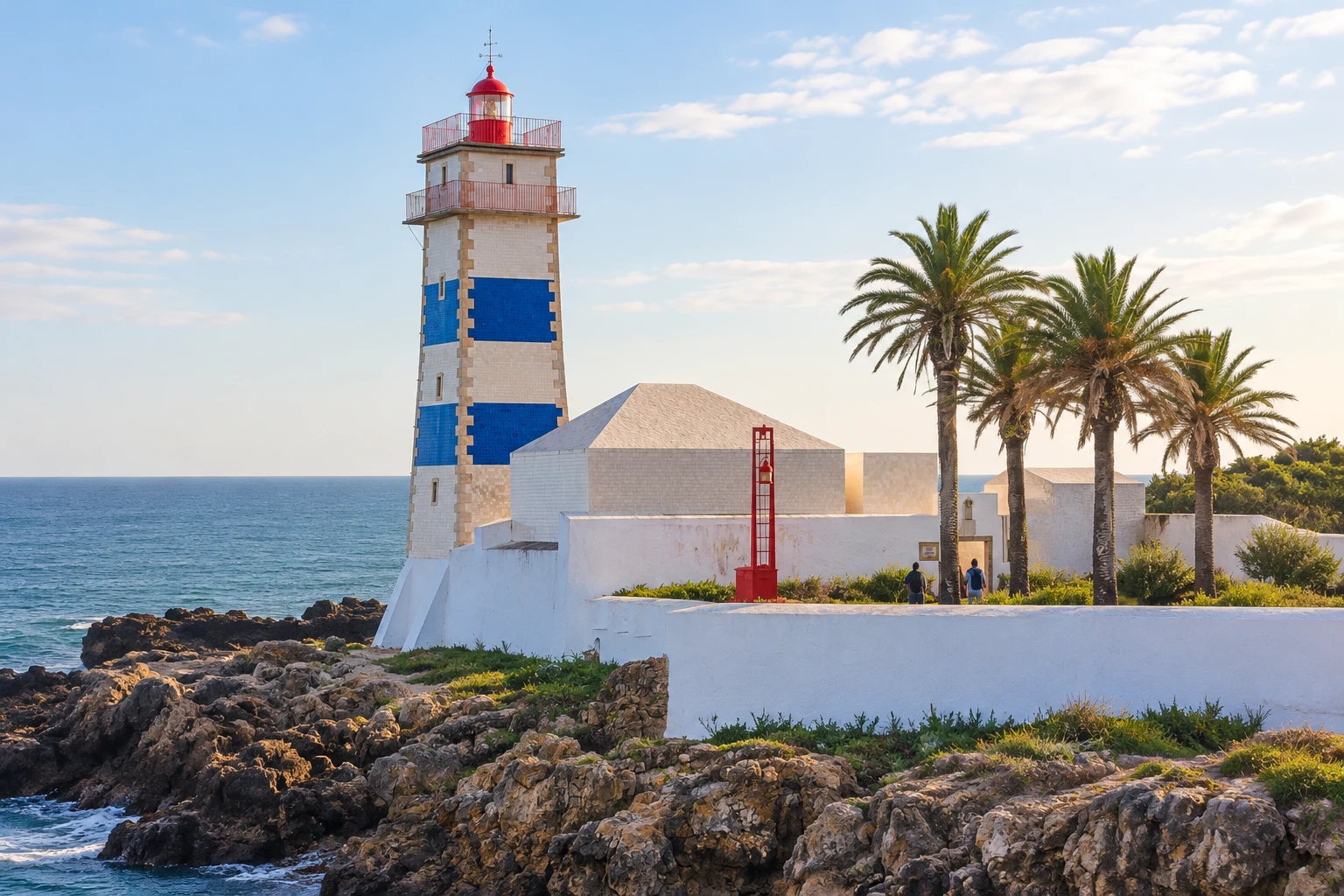
Santa Marta Lighthouse Museum · CascaisThe Farol de Santa Marta, built in 1868 on the Santa Marta cove, with blue and white stripes, converted into a museum of Portuguese lighthouses.
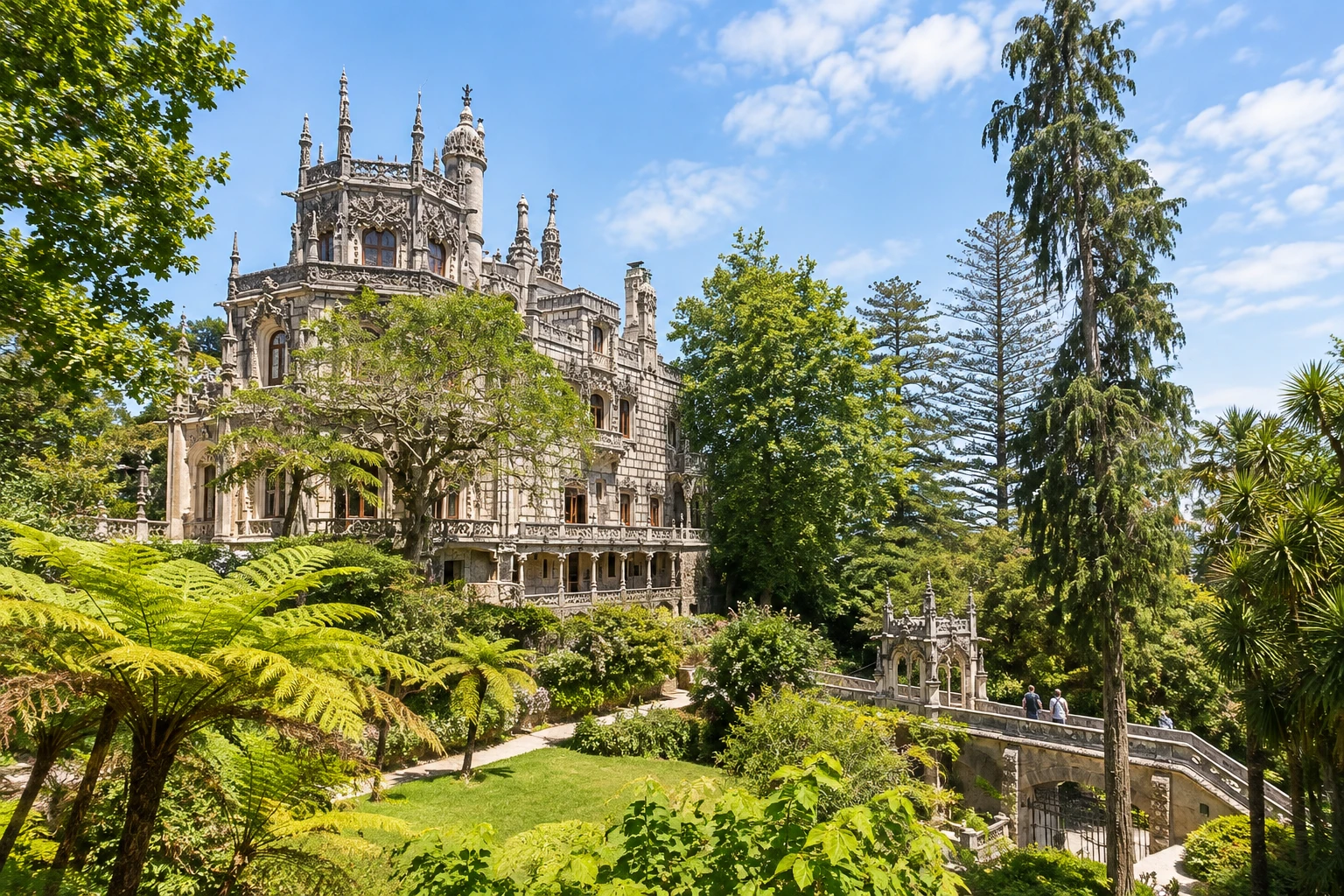
Quinta da Regaleira · SintraEarly 20th-century palace and garden, created by the millionaire Carvalho Monteiro and the architect Luigi Manini, with grottoes, lakes and the Poço Iniciático, a spiral stairca...
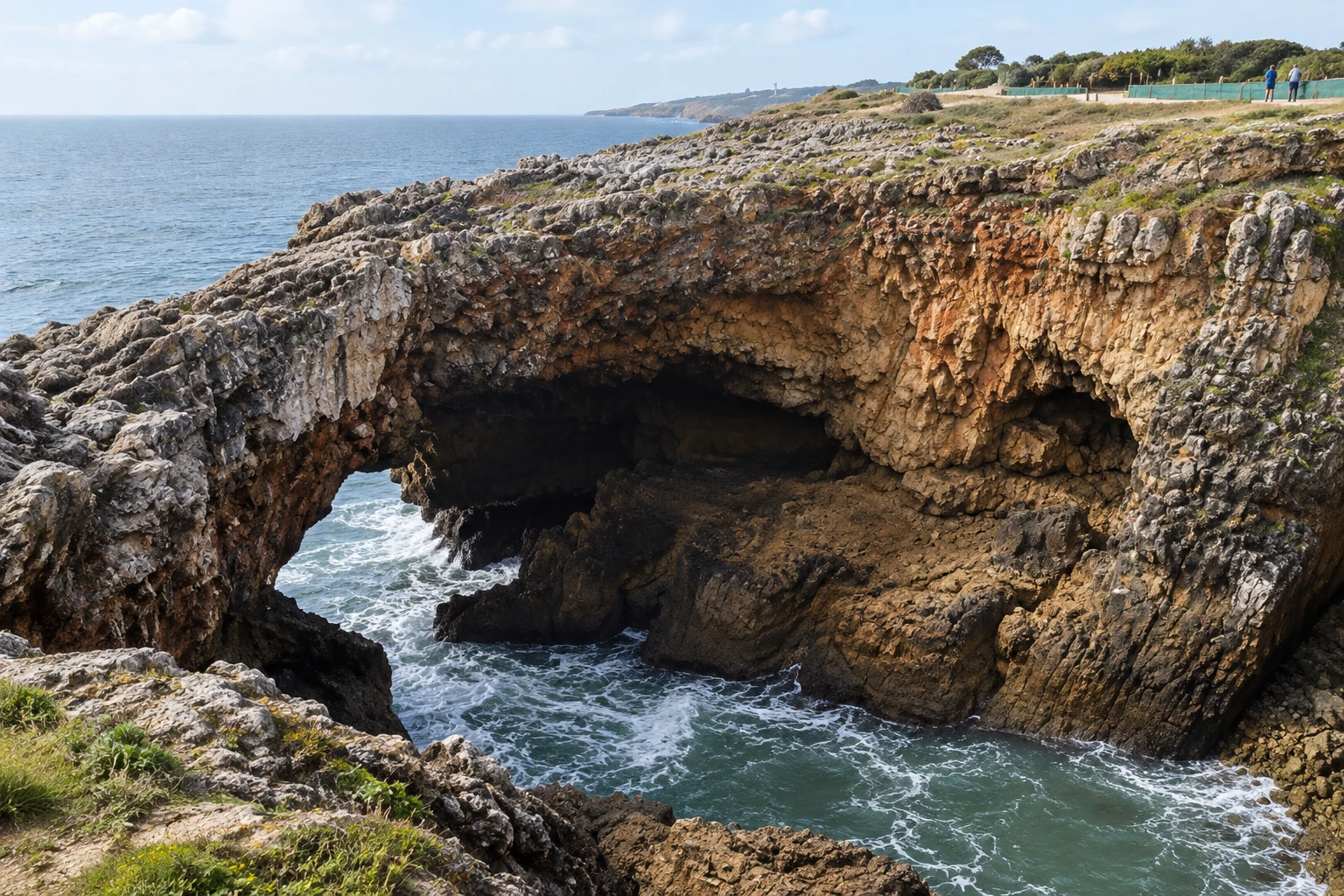
Boca do Inferno · CascaisAn opening in the cliff west of Cascais, where the sea enters a collapsed cave and, with strong waves, sprays water between the rocks.
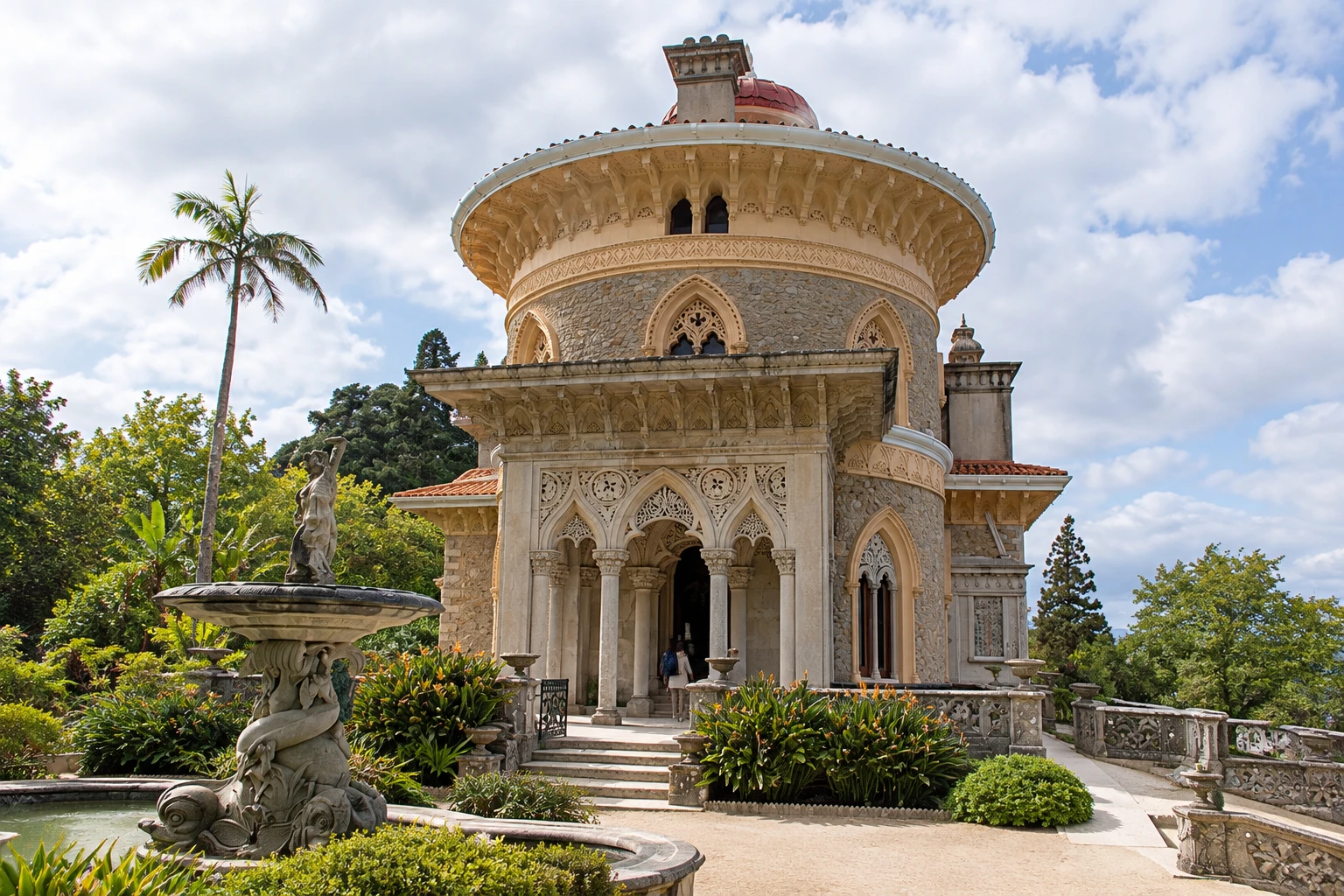
Monserrate Palace and Gardens · SintraA 19th-century palace of Oriental inspiration, built by the Englishman Francis Cook, surrounded by a garden with plants from several continents, lakes and the ruins of a chapel.
The bay where fishing boats share space with the village's beaches, surrounded by the center's stone streets, the Câmara Municipal with tiled panels, and Praia da Rainha.
Royal palace of medieval origin in the center of the village, with two large white conical chimneys. It was used by the royal family from the 15th to the 19th century and houses rooms with Mudéjar tiles and painted ceilings.
A group of fortifications from the 16th and 17th centuries on the edge of the bay, which was the royal family's summer residence and today houses a pousada, art galleries and studios.
19th-century romantic palace high on the sierra, painted yellow and red, built by King D. Fernando II over an old convent. Around it, the Parque da Pena has lakes, trails and viewpoints.
Museum dedicated to the painter Paula Rego, in a 2009 building with two red pyramidal towers designed by Eduardo Souto de Moura, winner of the Pritzker Prize.
Walls of a castle built by the Muslims between the 9th and 10th centuries, winding along the ridge of the hills with views over the village, the Pena and the sea.
The Farol de Santa Marta, built in 1868 on the Santa Marta cove, with blue and white stripes, converted into a museum of Portuguese lighthouses. Beside it is the Museu Condes de Castro Guimarães.
Early 20th-century palace and garden, created by the millionaire Carvalho Monteiro and the architect Luigi Manini, with grottoes, lakes and the Poço Iniciático, a spiral staircase that descends about 27 meters.
An opening in the cliff west of Cascais, where the sea enters a collapsed cave and, with strong waves, sprays water between the rocks. There are viewpoints and a coastal walkway.
A 19th-century palace of Oriental inspiration, built by the Englishman Francis Cook, surrounded by a garden with plants from several continents, lakes and the ruins of a chapel.
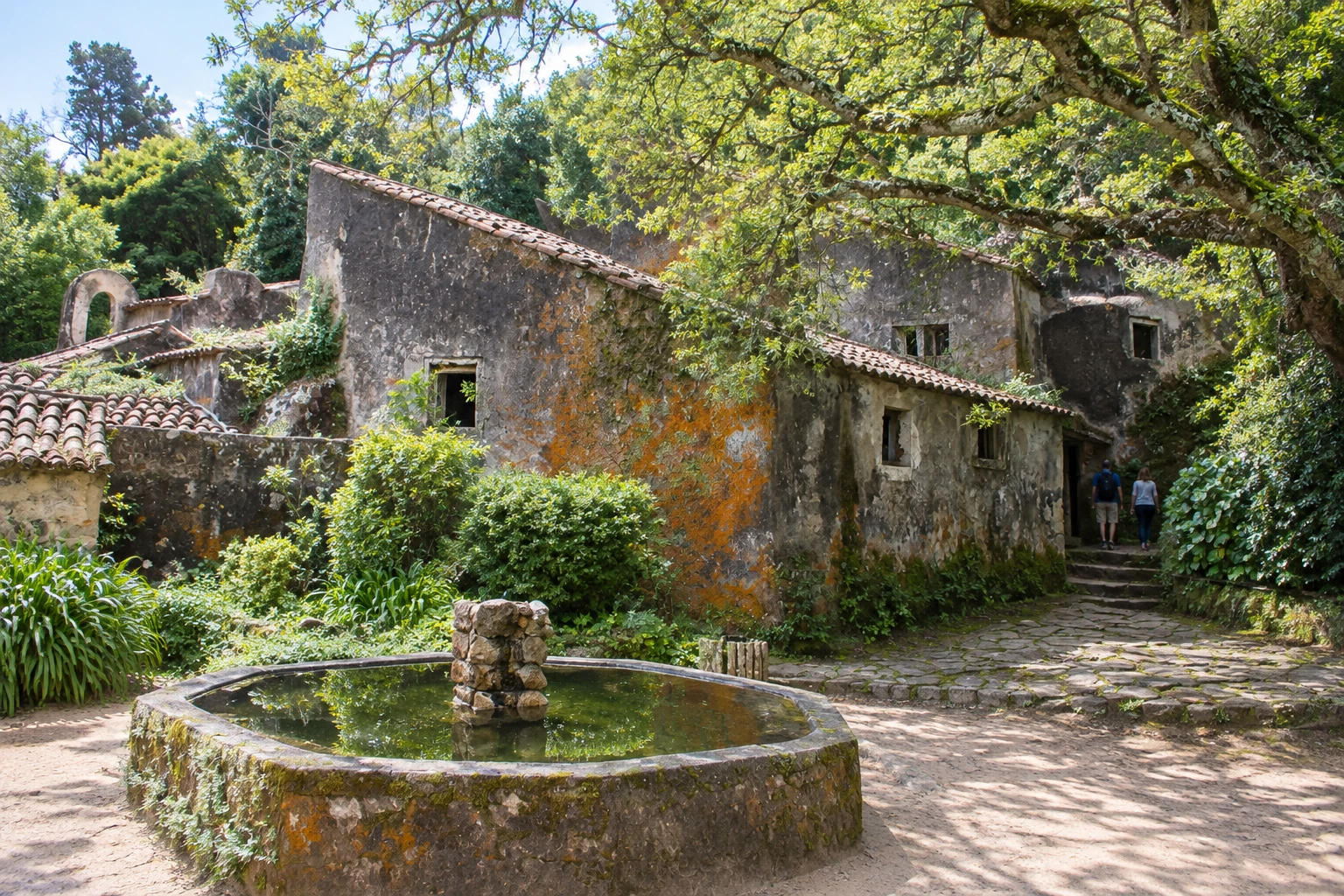
Small Franciscan convent from 1560 hidden in the mountain woodland, with tiny cork-lined cells and paths among rocks, showing the austere life of the friars.
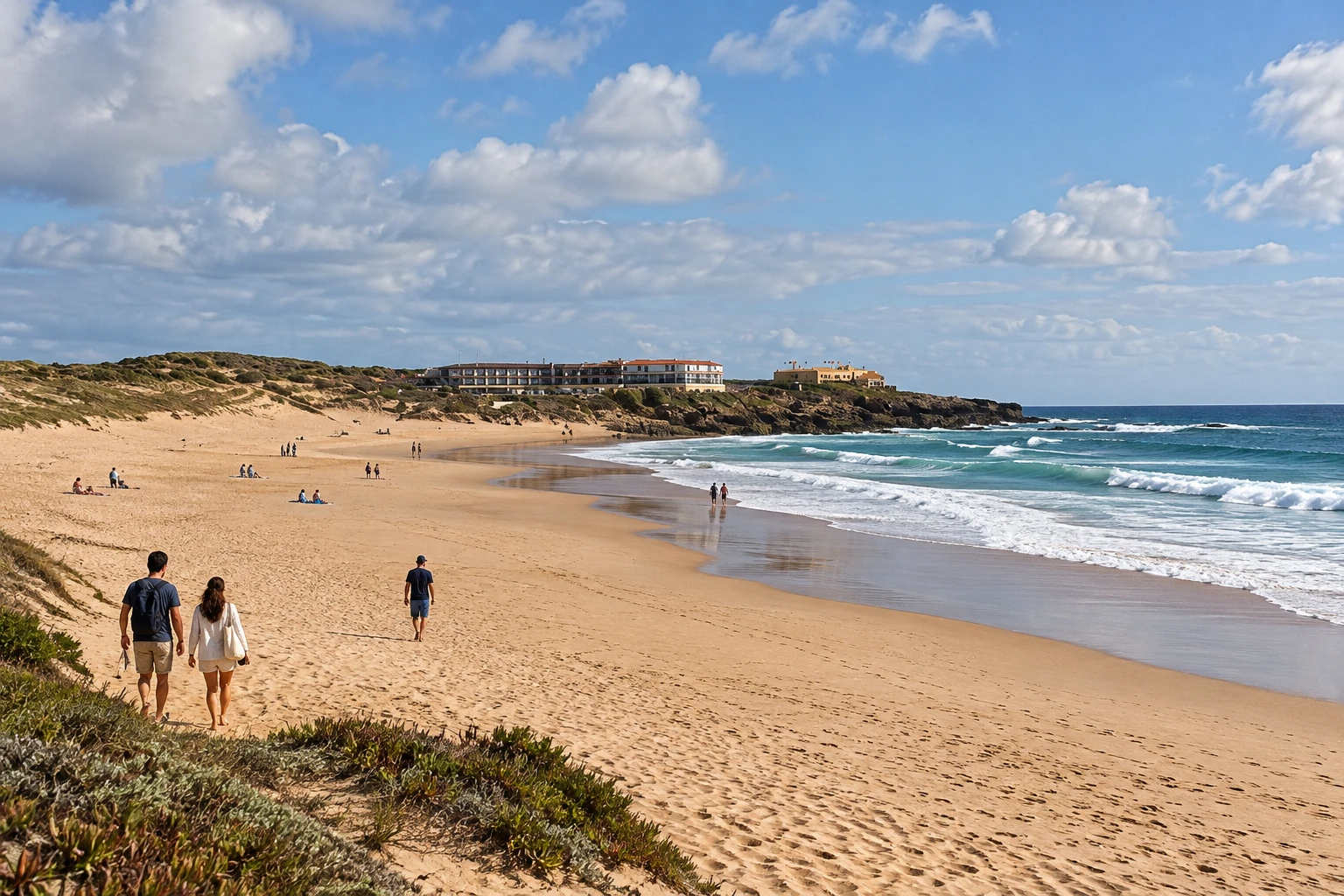
A wide sandy beach with dunes on the Atlantic coast west of Cascais, with the Serra de Sintra in the background. The steady wind and waves make it one of the region's main spots for surfing, windsurfing and kitesurfing.
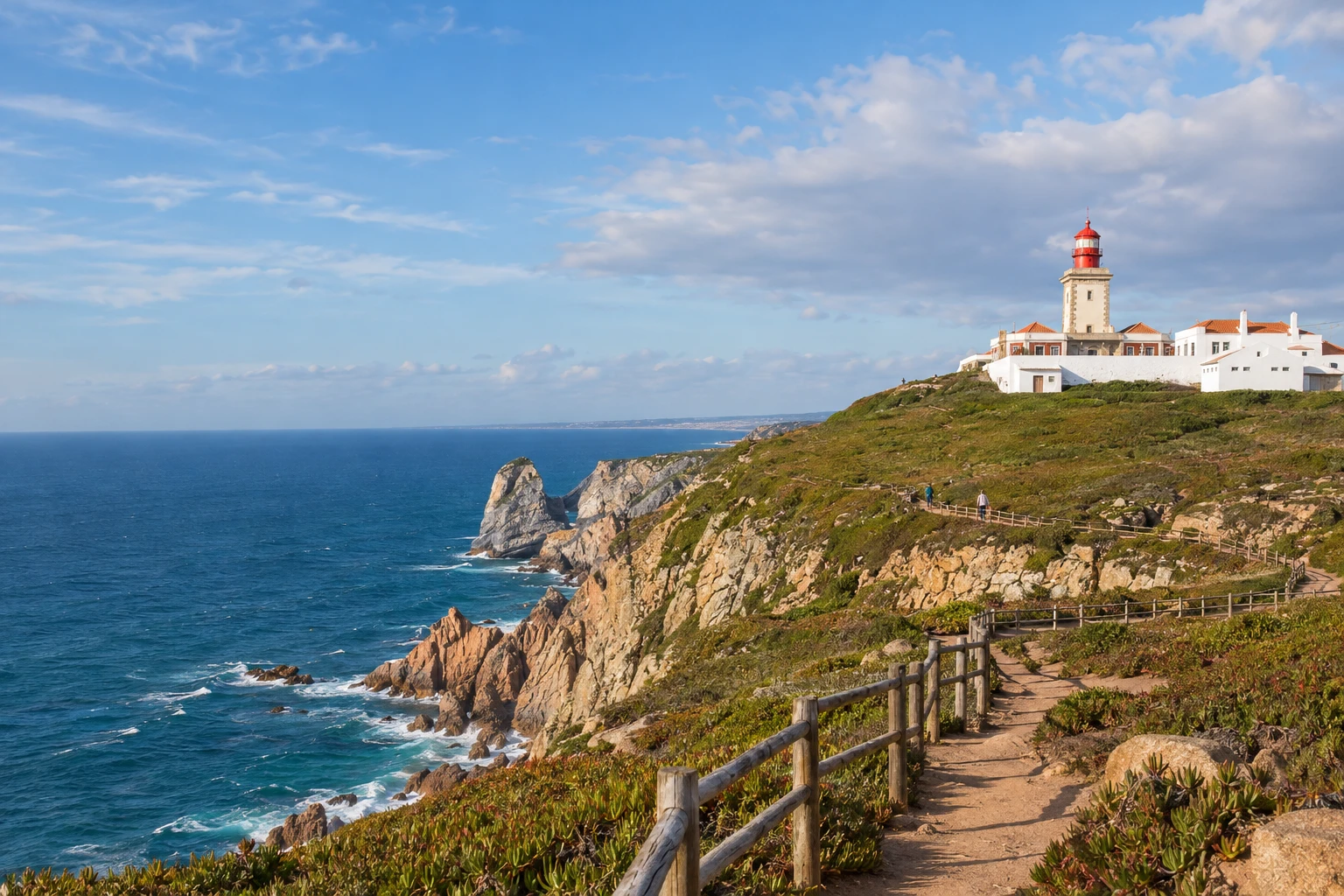
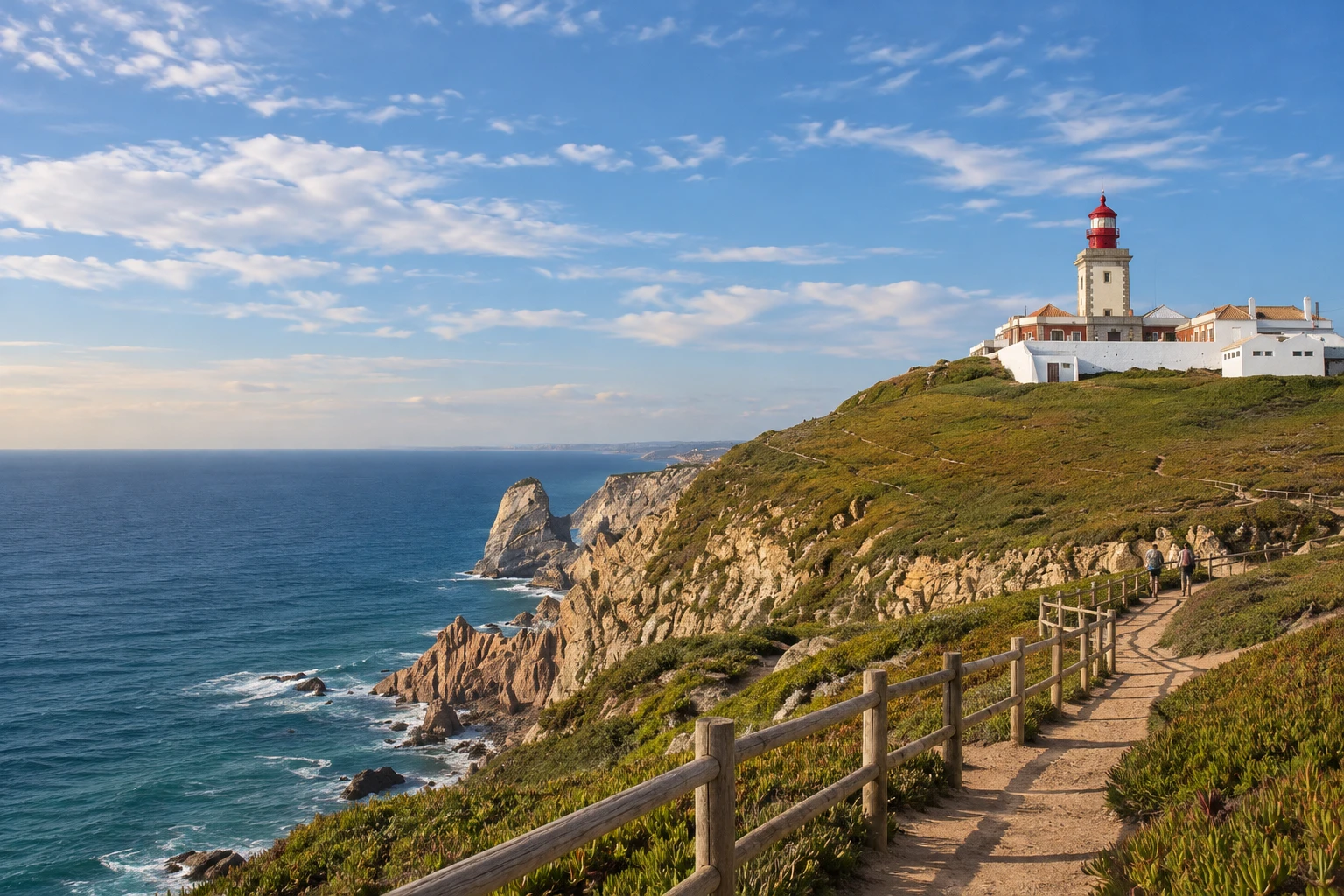
The westernmost point of continental Europe, with cliffs about 140 meters above the Atlantic, an 18th-century lighthouse and a monument with a verse by Camões.
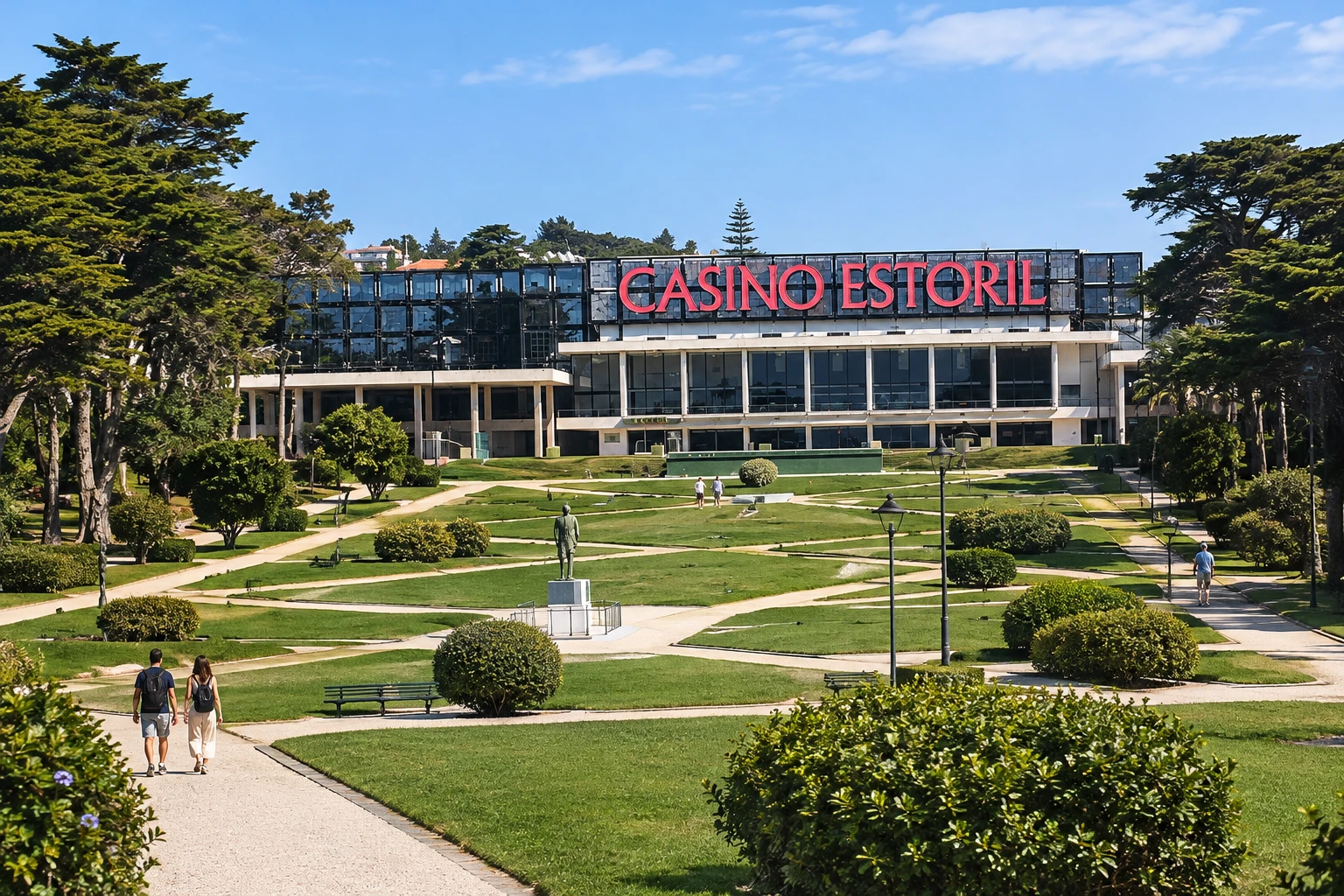
Seaside resort neighbouring Cascais, connected by the seafront promenade, with the Praia do Tamariz, gardens and the Casino Estoril, which inspired Ian Fleming to write the first James Bond novel.
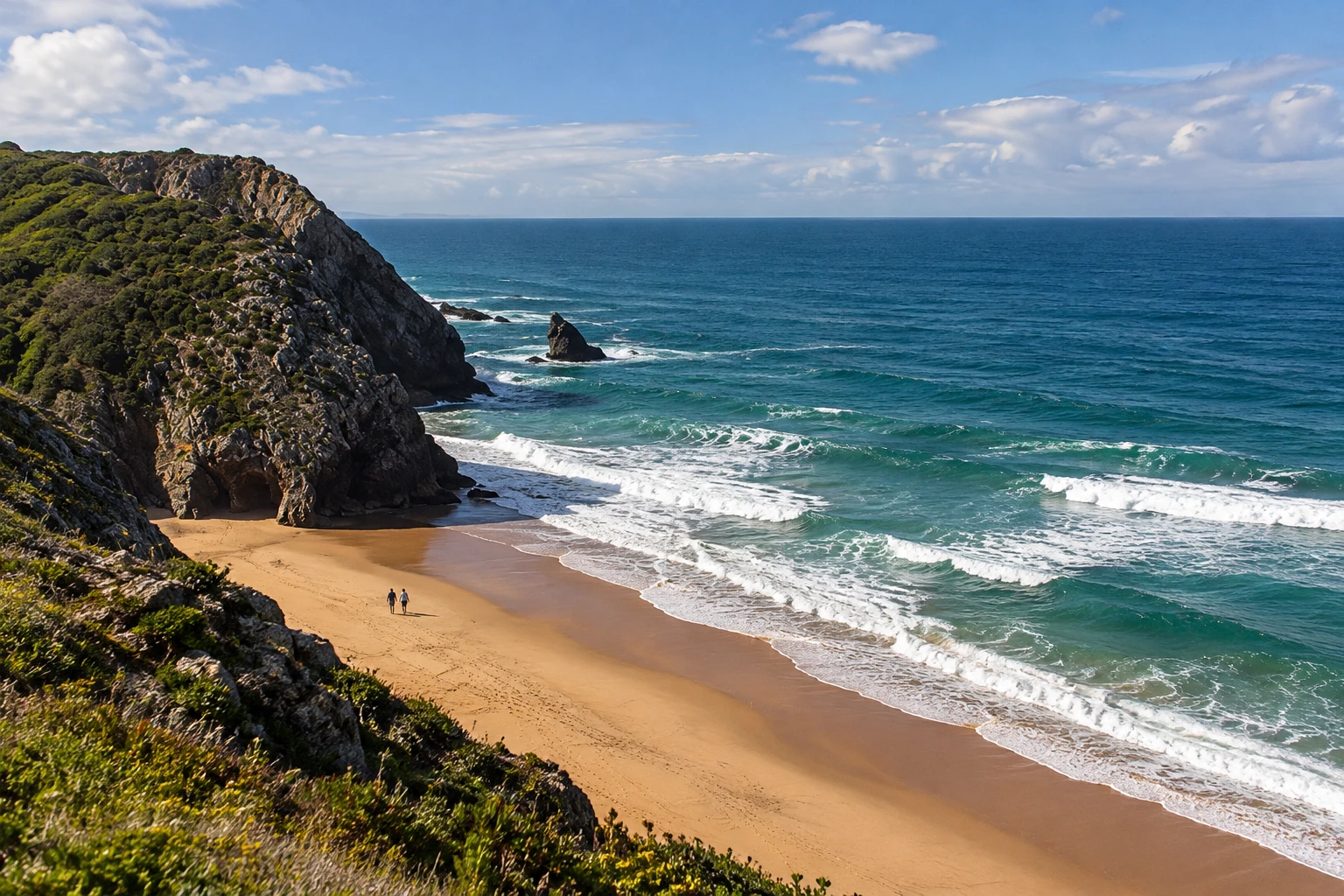
Sandy beach between high cliffs on the Sintra coast, with arches and caves carved by the sea, near Almoçageme. It is one of the best-known beaches on the mountain coastline.
How many days should you set aside to see Sintra and Cascais?
The guide's itineraries cover 2, 3 and 5 days: in 2 days, palaces of the hills; Cascais and Sintra in 3 days, arriving from Brazil; Sintra, Cascais and the coast in 5 days.
What to do Sintra and Cascais in one day?
Palácio da Pena and Castelo dos Mouros. Take one of the earliest trains from Rossio to Sintra (about 40 to 45 minutes) and, at the station, the 434 bus to the entrance of Parque da Pena. Visit the Palácio da Pena at your reserved time and then walk through Parque da Pena to Alto de Santa Catarina or Cruz Alta. In the afternoon, do the Castelo dos Mouros next door and descend by bus or on foot to Sintra’s historic center. Try the queijadas and travesseiros at a pastry shop before catching the train back.
When is the best time to go to Sintra and Cascais?
It generally rains less from June to September. The rainiest months are usually from October to February. The guide covers each month, with the weather and what changes on the tours.


 Brazil
 Antarctica
 Argentina
 Bolivia
 Chile
 Colombia
 Ecuador
 Falkland Islands (Malvinas)
 French Guiana
 Guyana
 Paraguay
 Peru
 Suriname
 Uruguay
 Venezuela
 Austria
 Belgium
 Croatia
 Denmark
 Finland
 France
 Germany
 Greece
 Hungary
 Iceland
 Ireland
 Italy
 Luxembourg
 Norway
 Poland
 Slovakia
 Slovenia
 Spain
 Sweden
 Switzerland
 the Czech Republic
 the Netherlands
 the United Kingdom
 Turkey
 Bermuda
 Canada
 Greenland
 Mexico
 Saint Pierre and Miquelon
 the United States
 the Dominican Republic
 Japan
 Egypt
 South Africa
 Australia
 Fiji
 New Zealand
 Papua New Guinea