14 places to visit, chosen by the Cidade Turismo guide.
Illustrative images. The pictures in this guide are illustrations based on the real place, not photographs, and may differ from it.
To start
The 10 main places Évora and the Alentejo
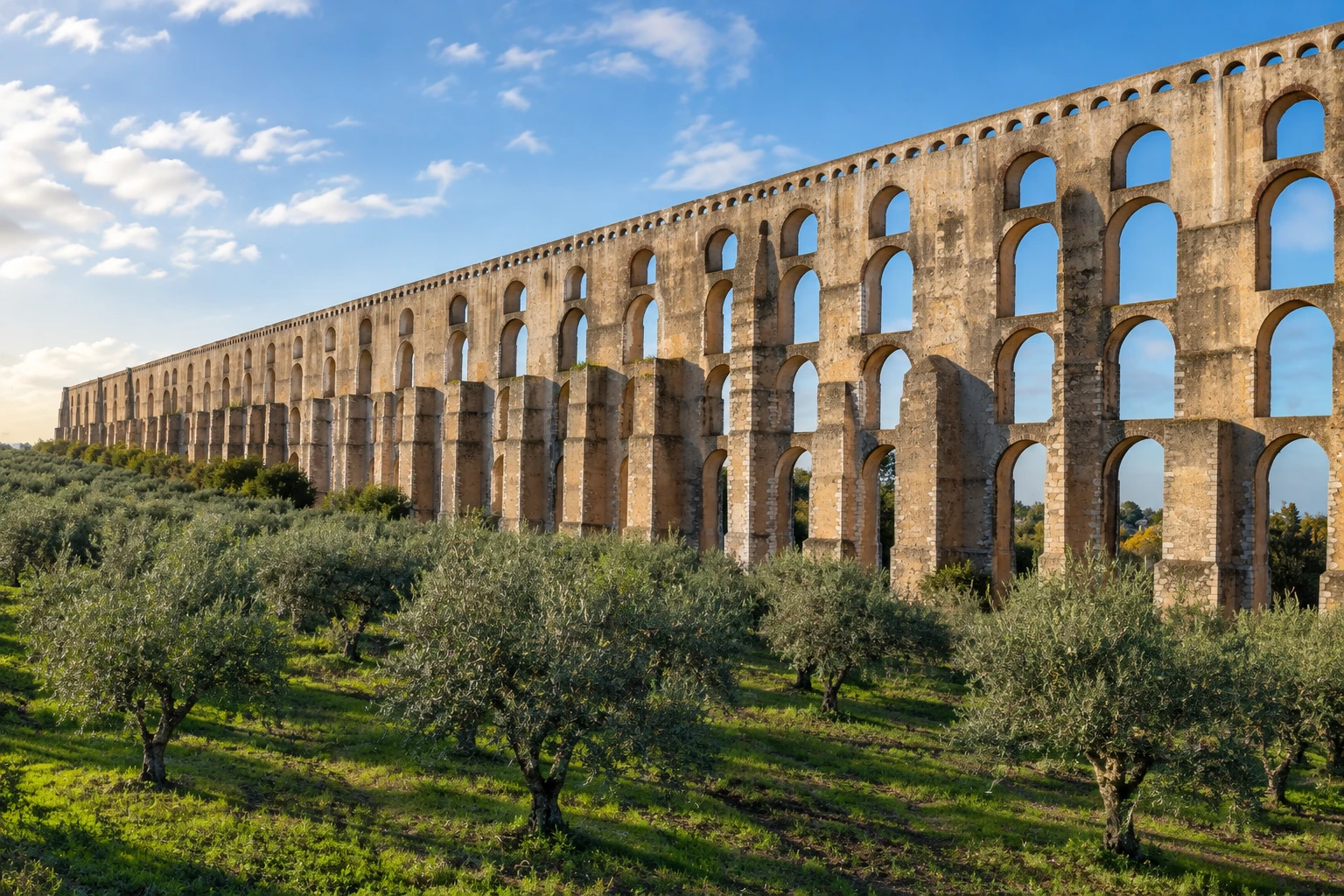
Amoreira Aqueduct · ElvasStone aqueduct of about 8.5 km that carries water from the Amoreira to the center of Elvas, with arcades up to 31 meters high where it reaches the town.
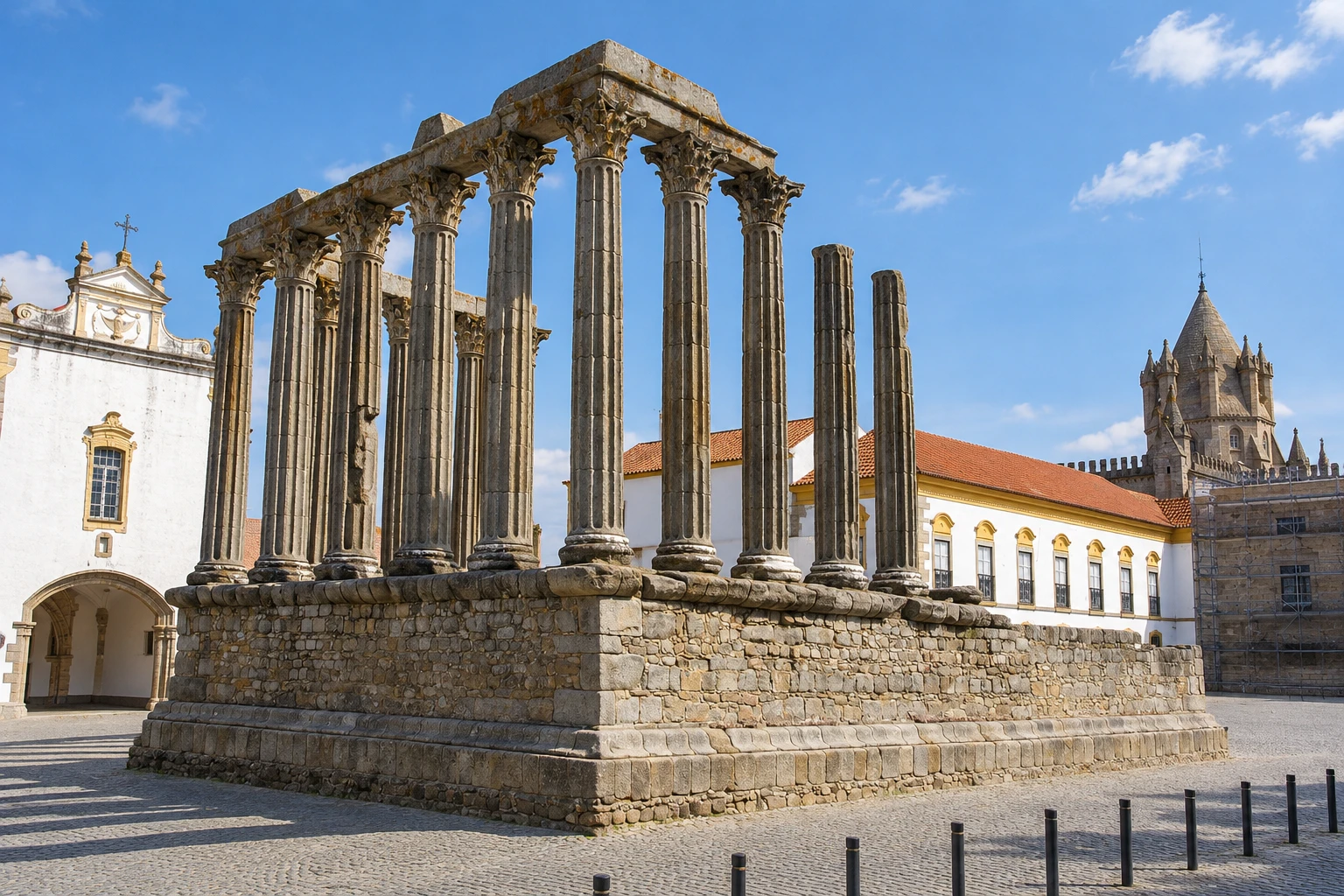
Roman Temple of Évora · Évora1st-century Roman temple, with Corinthian granite columns and marble capitals, at the highest point of the city.
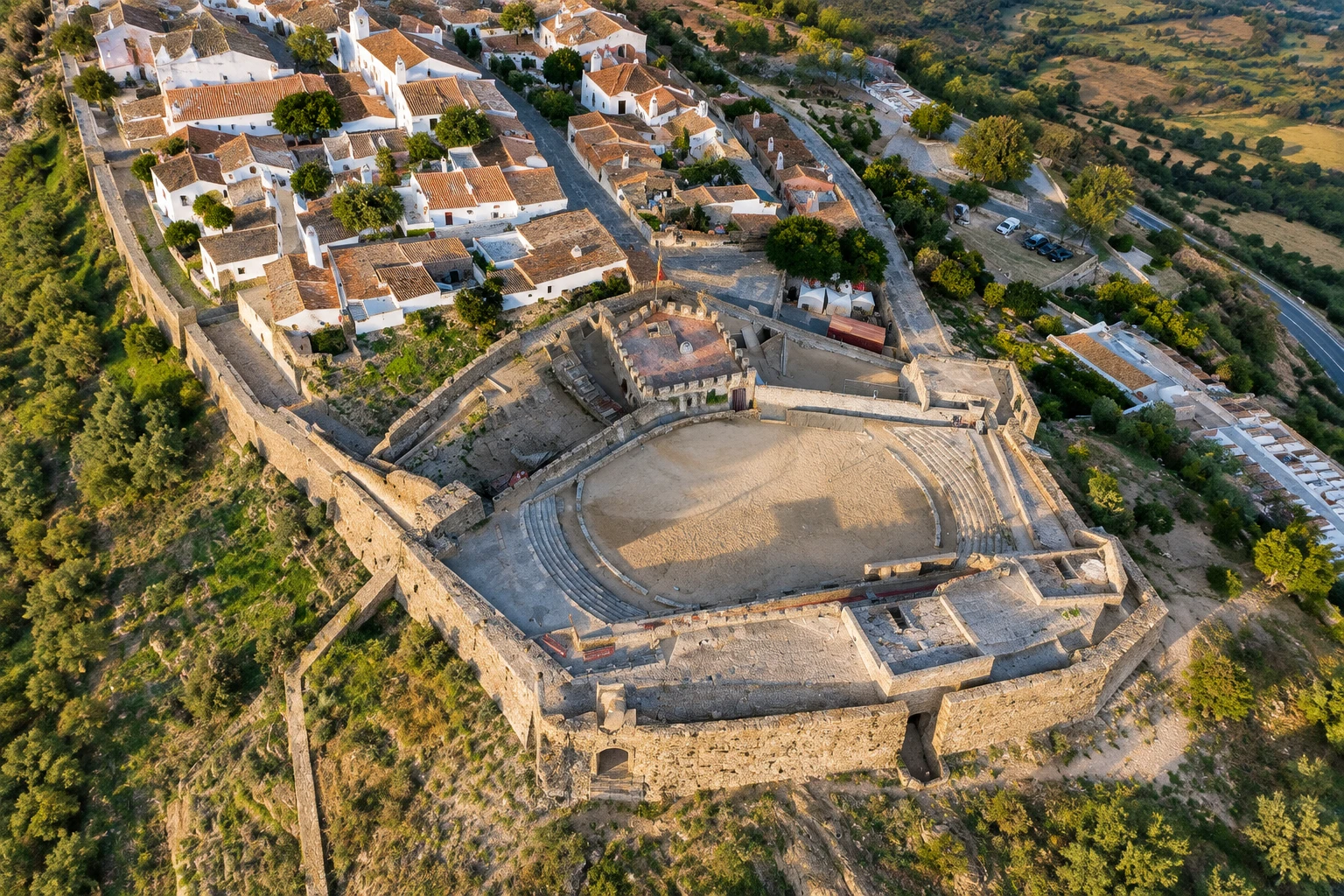
Monsaraz Village and Castle · MonsarazWalled medieval village on top of a hill, with schist-paved streets and white houses, and a 13th-century castle that houses a bullring within the walls.
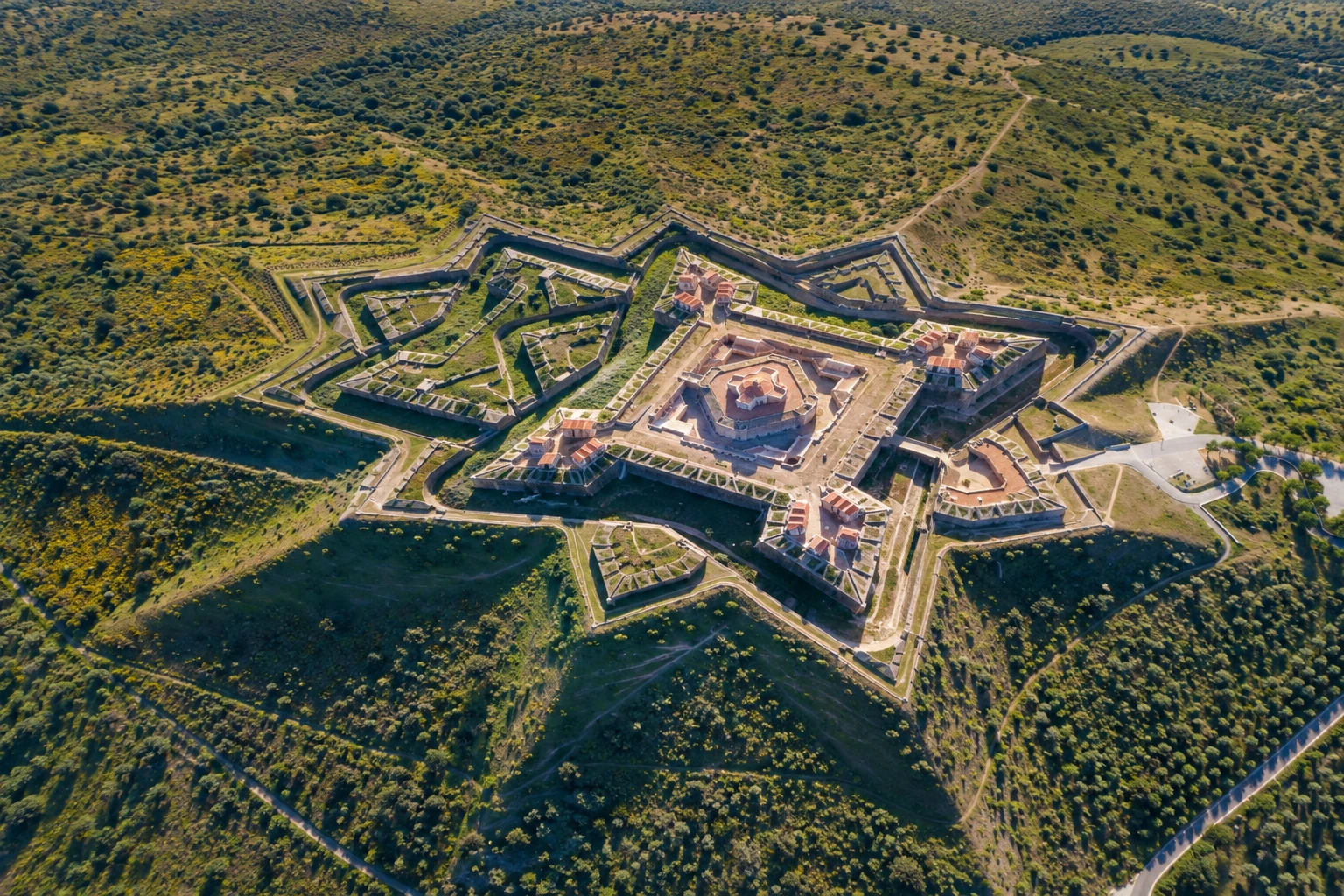
Fort of Nossa Senhora da Graça · Elvas18th-century fort on the summit of Monte da Graça, north of Elvas, with star-shaped ramparts, a moat, galleries and the Casa do Governador at its center.
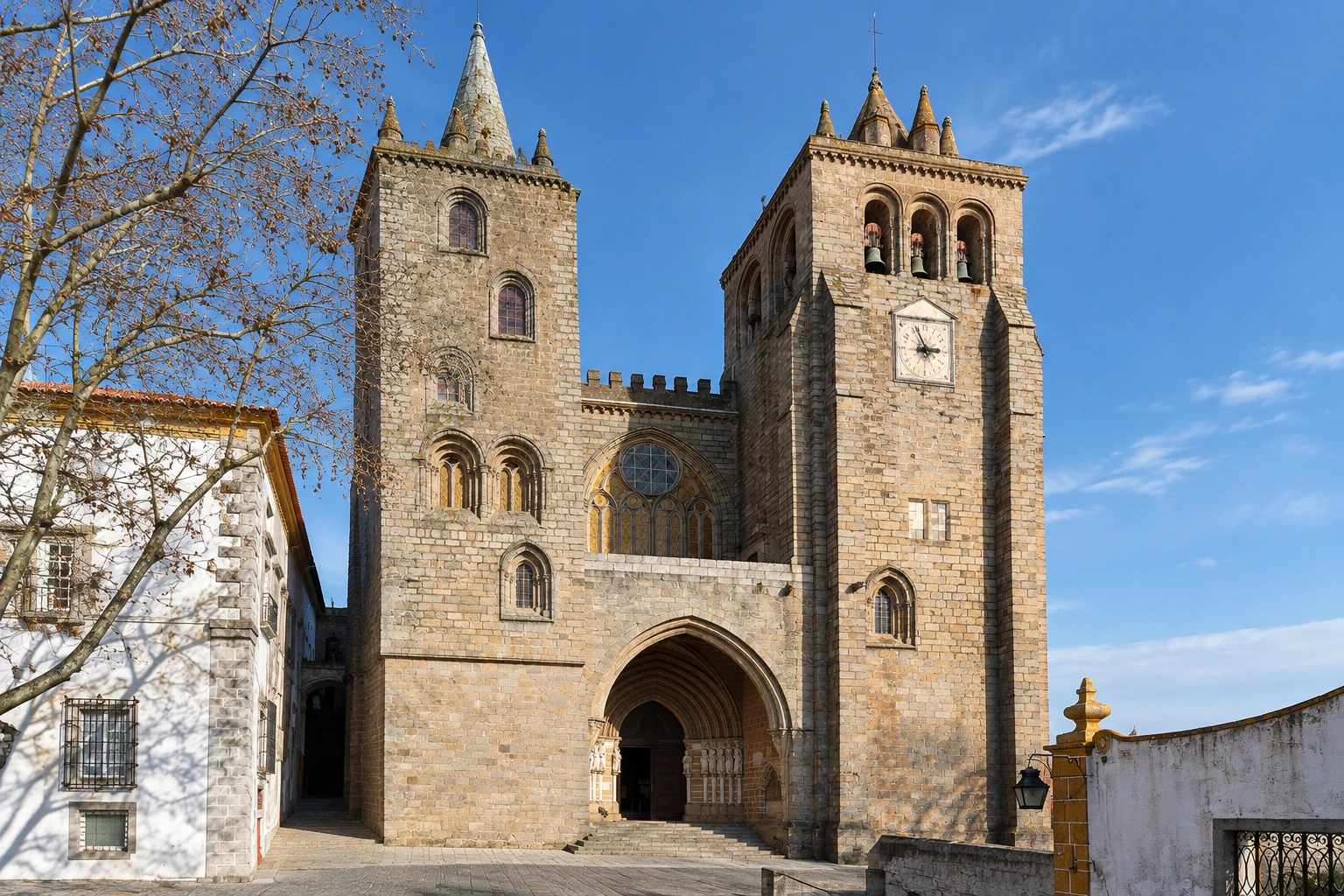
Évora Cathedral · ÉvoraGothic cathedral of the 12th and 13th centuries, the largest medieval cathedral in Portugal, with a cloister, a museum of sacred art and a rooftop terrace overlooking the city a...
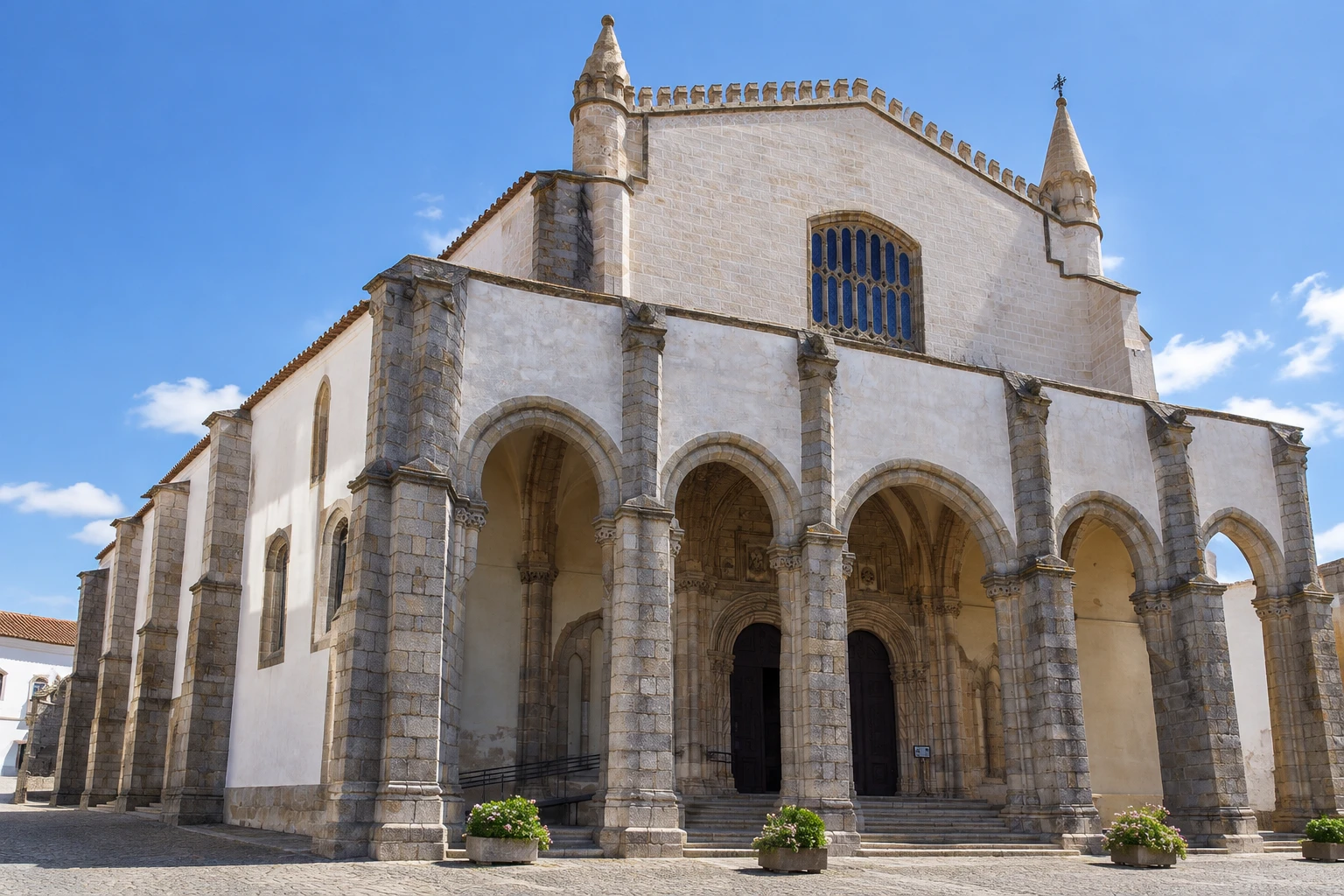
Chapel of Bones · Évora17th-century chapel in the Igreja de São Francisco whose walls and columns are covered with human bones and skulls, with the inscription: Nós ossos que aqui estamos pelos vossos...
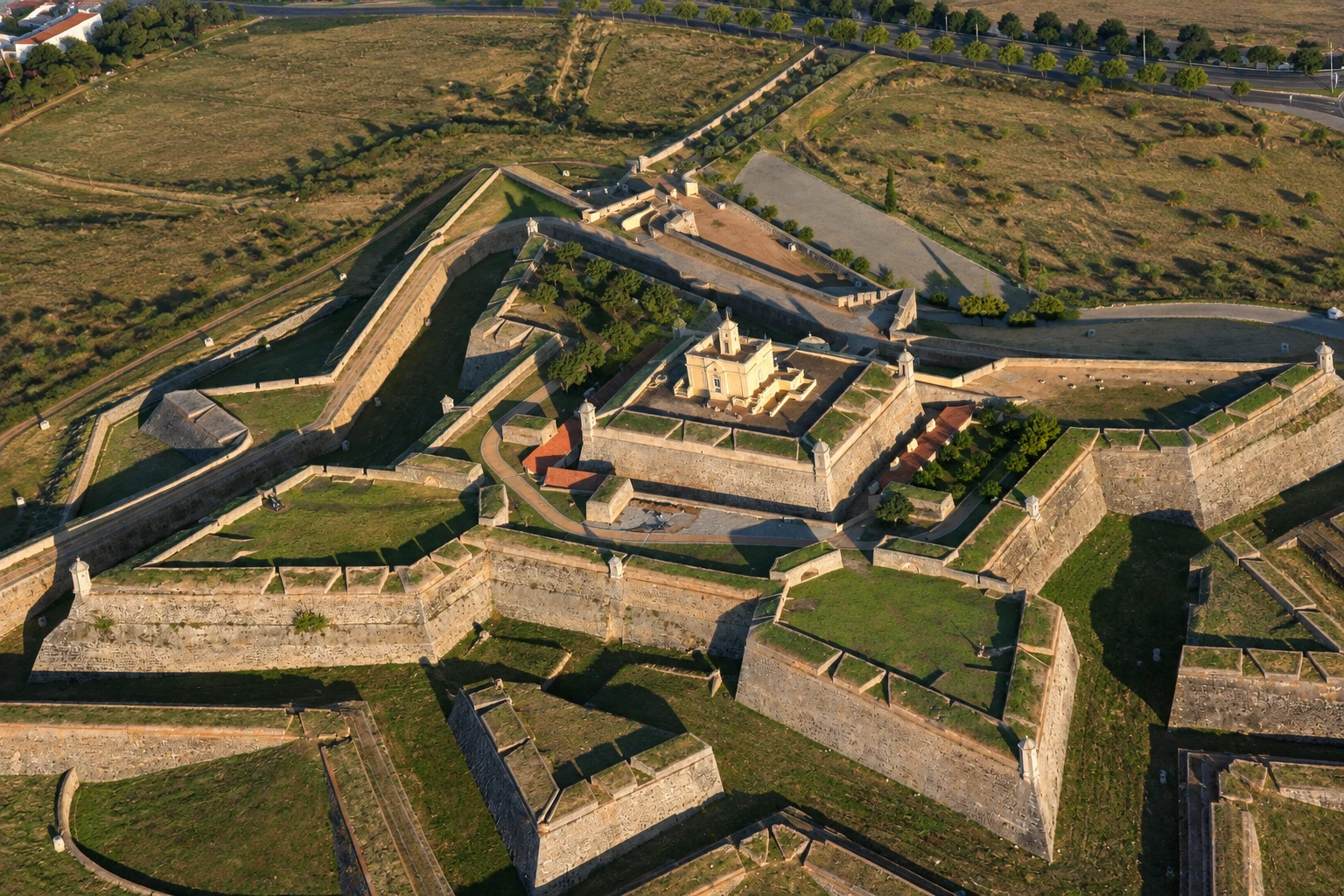
Fort of Santa Luzia · Elvas17th-century star-shaped fort south of Elvas’s walls that withstood the Spanish siege of 1658.
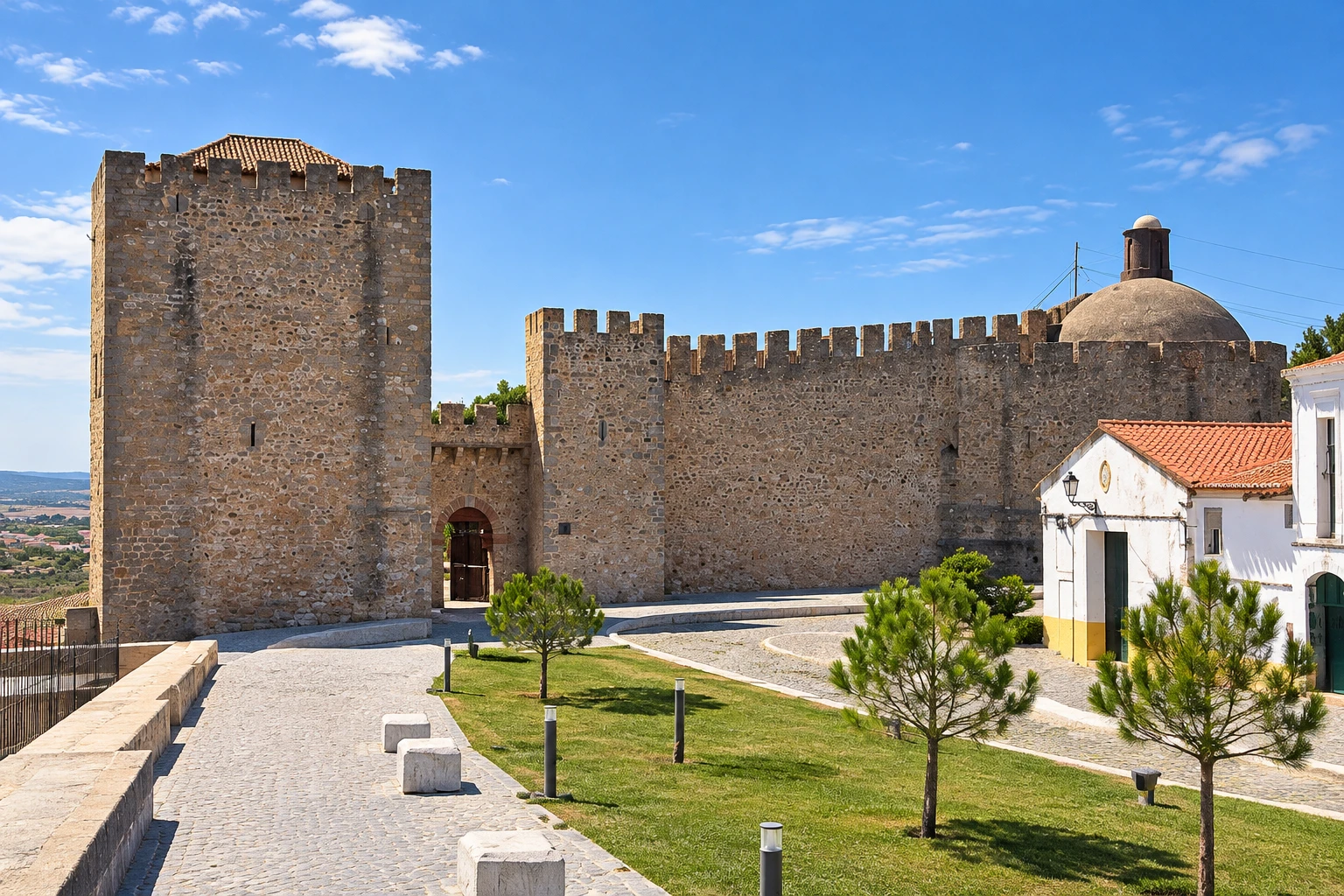
Elvas Castle · ElvasMedieval castle at the highest point of the old town, built over an Arabic fortress and renovated in subsequent centuries.
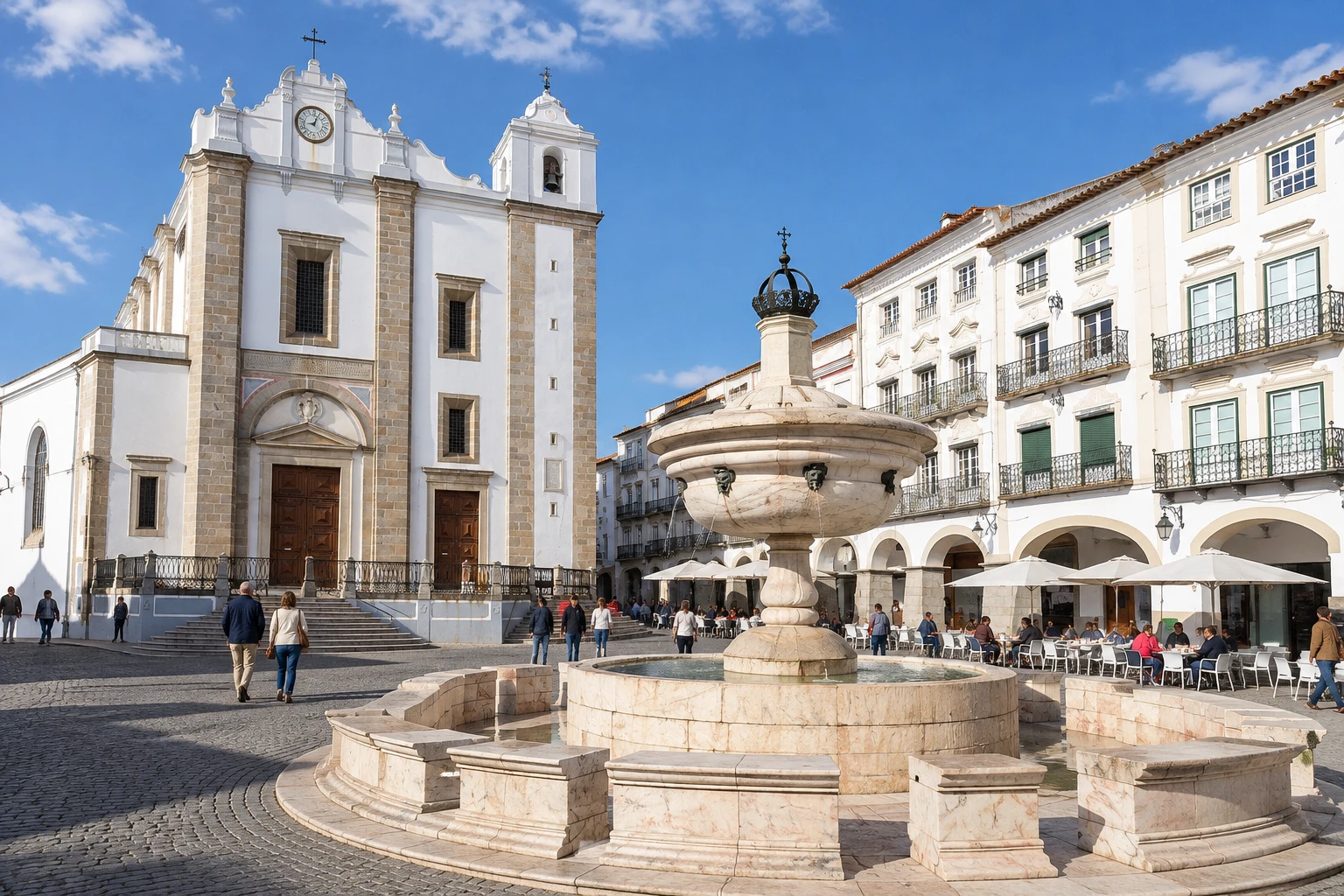
Giraldo Square · ÉvoraÉvora's central square, with arcades, the 1571 marble fountain and the Igreja de Santo Antão, a meeting point in the city and the starting point for the central streets.
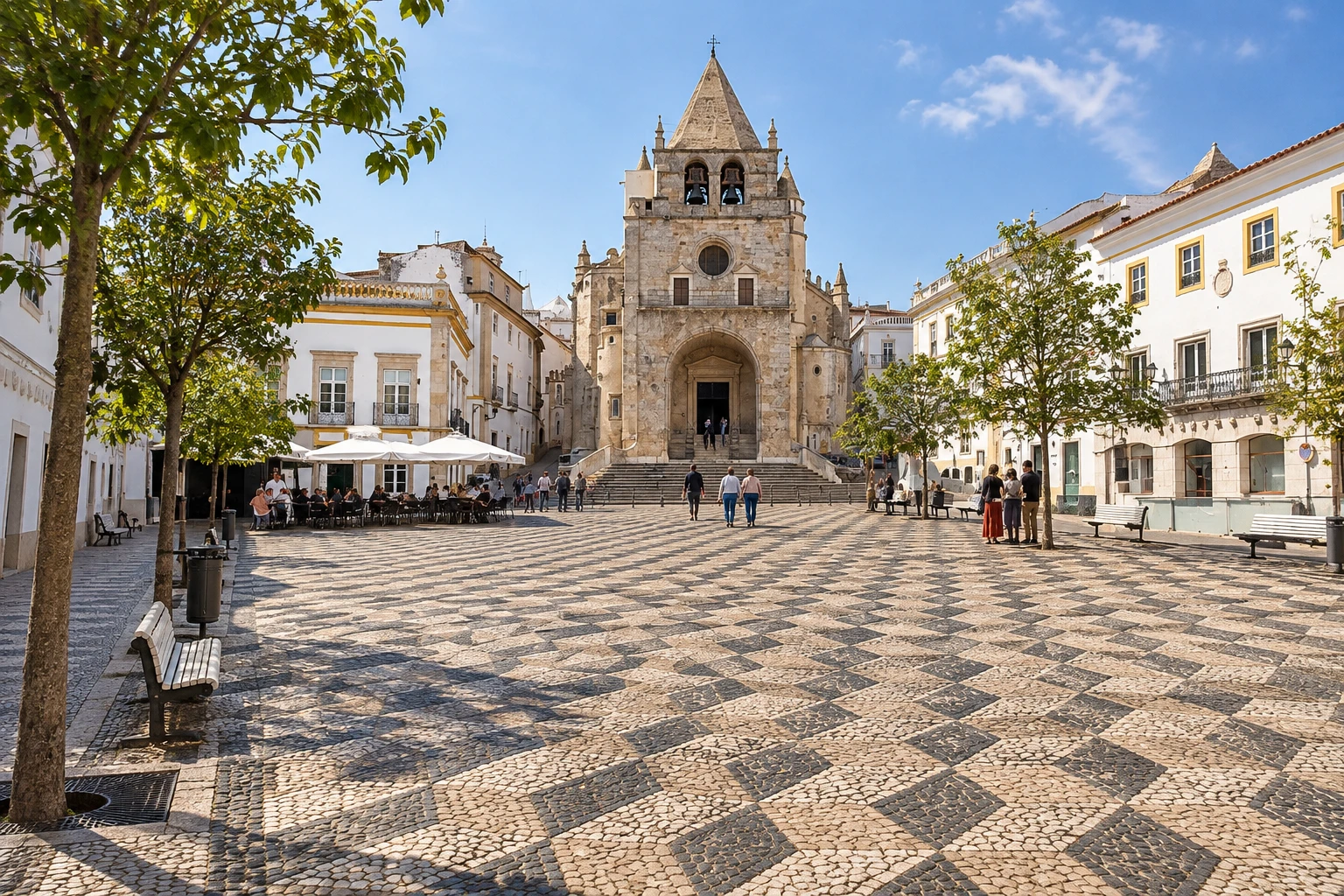
Praça da República and the former Elvas Cathedral · ElvasElvas’s main square, with geometric-patterned paving, the former cathedral (Igreja de Nossa Senhora da Assunção) from the 16th century, and the old paço do concelho.
Stone aqueduct of about 8.5 km that carries water from the Amoreira to the center of Elvas, with arcades up to 31 meters high where it reaches the town. Built between the 16th and 17th centuries, it is part of the World Heritage ensemble.
1st-century Roman temple, with Corinthian granite columns and marble capitals, at the highest point of the city. It is one of the best-preserved Roman monuments on the Iberian Peninsula.
Walled medieval village on top of a hill, with schist-paved streets and white houses, and a 13th-century castle that houses a bullring within the walls. The view reaches the Grande Lago Alqueva and Spain.
18th-century fort on the summit of Monte da Graça, north of Elvas, with star-shaped ramparts, a moat, galleries and the Casa do Governador at its center. From the top you can see Elvas, the aqueduct and the plain stretching to Spain.
Gothic cathedral of the 12th and 13th centuries, the largest medieval cathedral in Portugal, with a cloister, a museum of sacred art and a rooftop terrace overlooking the city and the plain.
17th-century chapel in the Igreja de São Francisco whose walls and columns are covered with human bones and skulls, with the inscription: Nós ossos que aqui estamos pelos vossos esperamos.
17th-century star-shaped fort south of Elvas’s walls that withstood the Spanish siege of 1658. It houses a section of the military museum, with rooms on the history of the city's fortifications.
Medieval castle at the highest point of the old town, built over an Arabic fortress and renovated in subsequent centuries. From the walls the view reaches the city, the forts and the Guadiana plain.
Évora's central square, with arcades, the 1571 marble fountain and the Igreja de Santo Antão, a meeting point in the city and the starting point for the central streets.
Elvas’s main square, with geometric-patterned paving, the former cathedral (Igreja de Nossa Senhora da Assunção) from the 16th century, and the old paço do concelho. It is the starting point for the historic center.
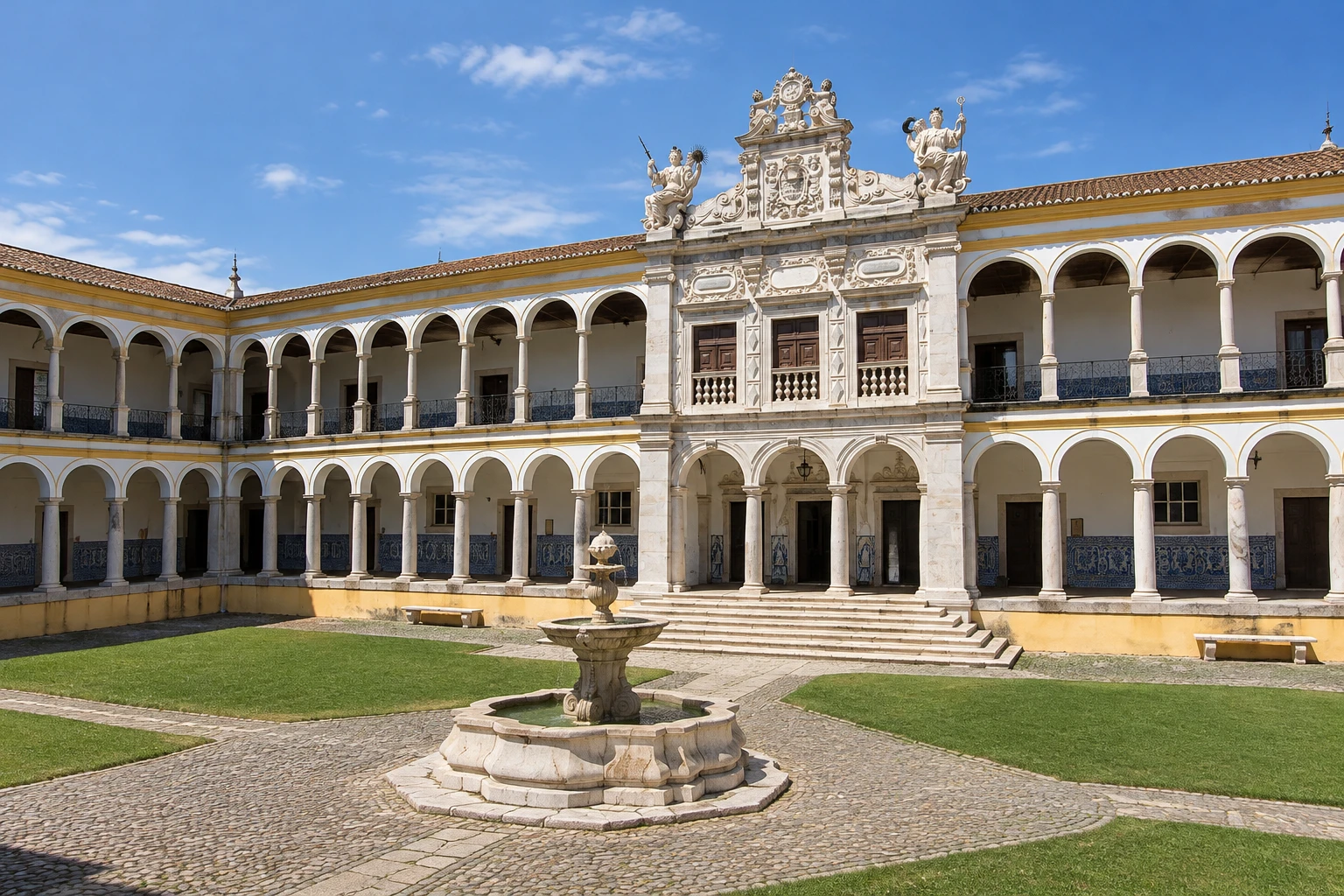
Former Jesuit college founded in 1559, with a Renaissance cloister and classrooms lined with 18th-century tiles. It still operates as a university and can be visited.
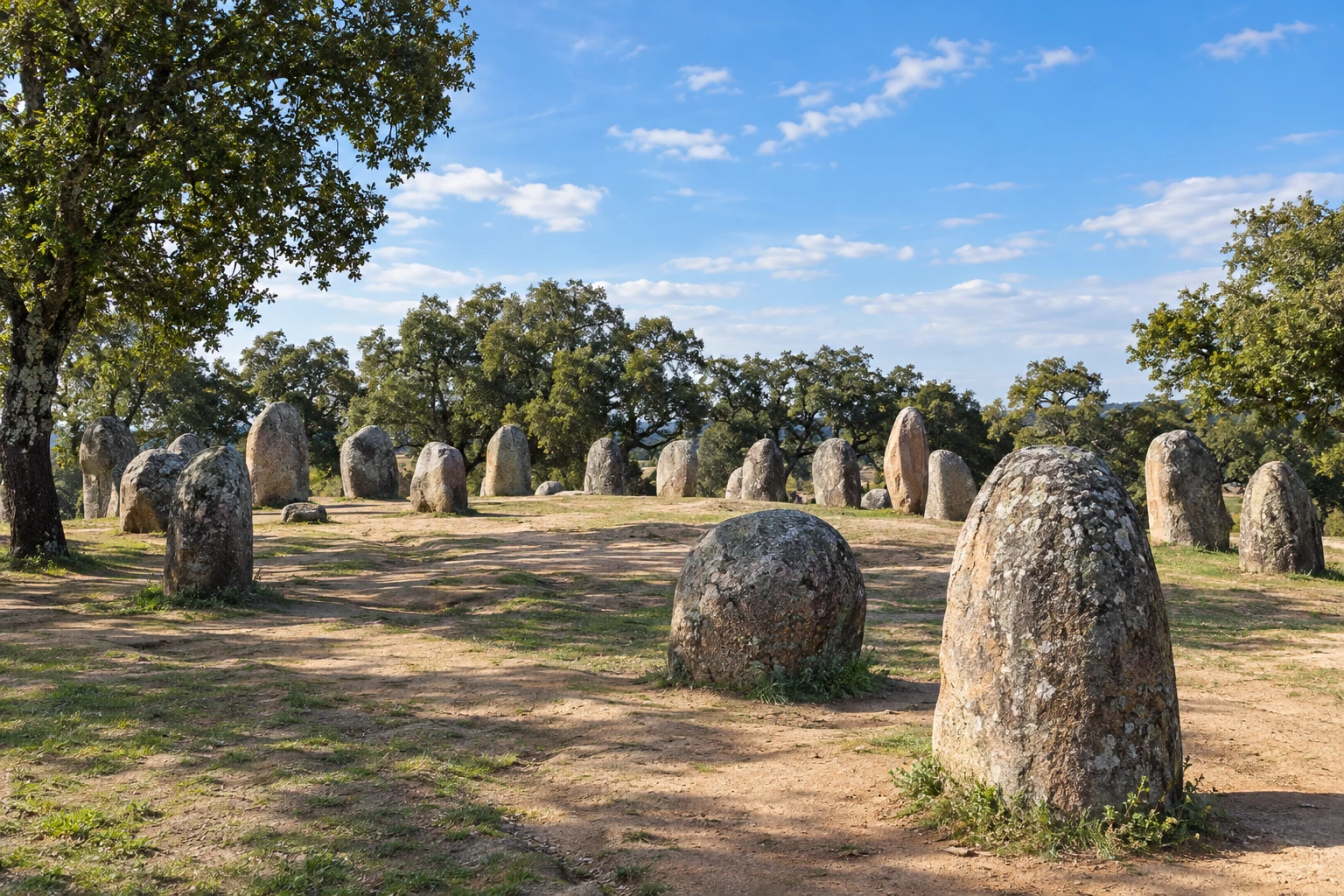
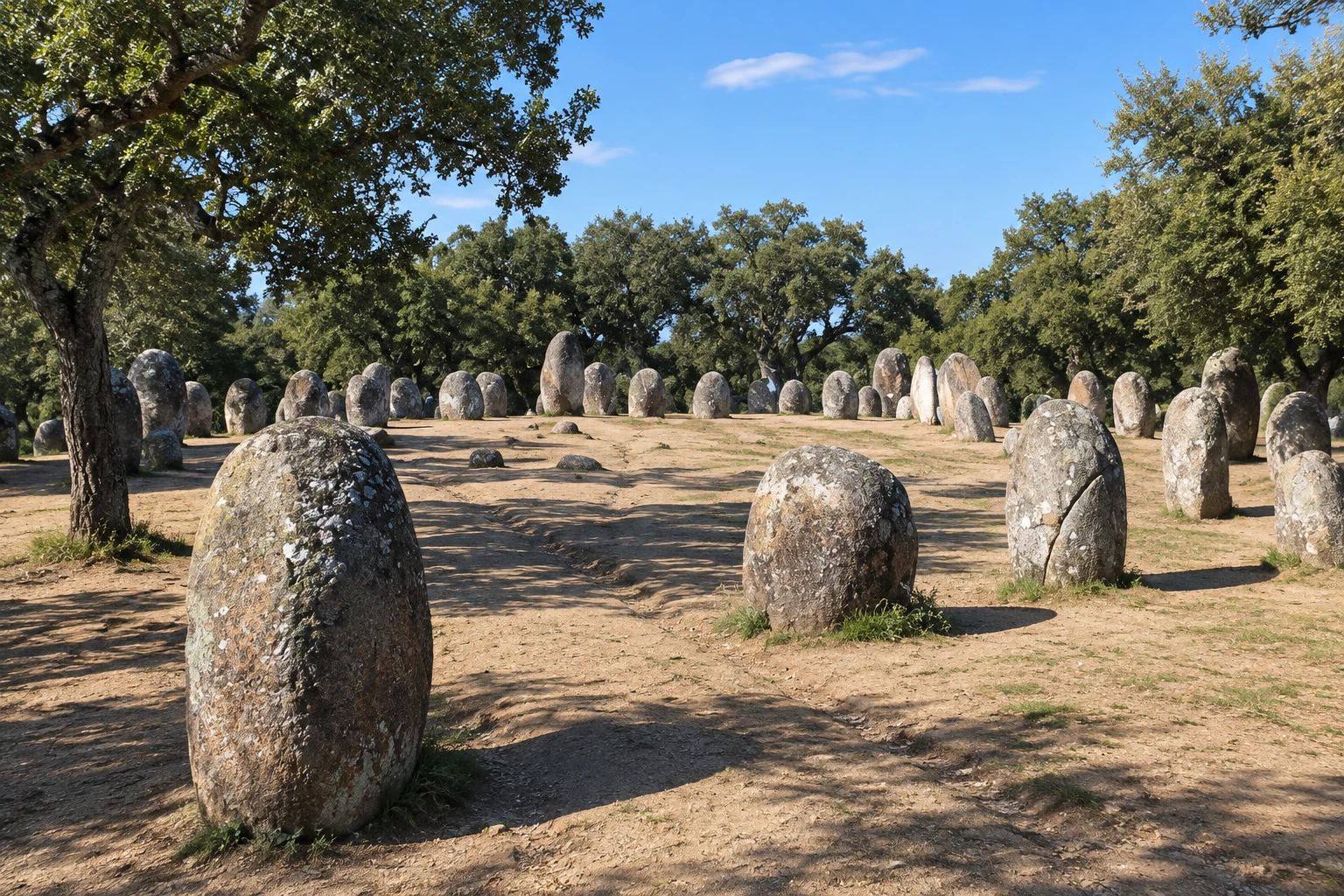
A group of about 95 granite menhirs erected thousands of years ago on a hillside among cork oaks, about 15 km from Évora. It is one of the largest megalithic enclosures on the Iberian Peninsula.
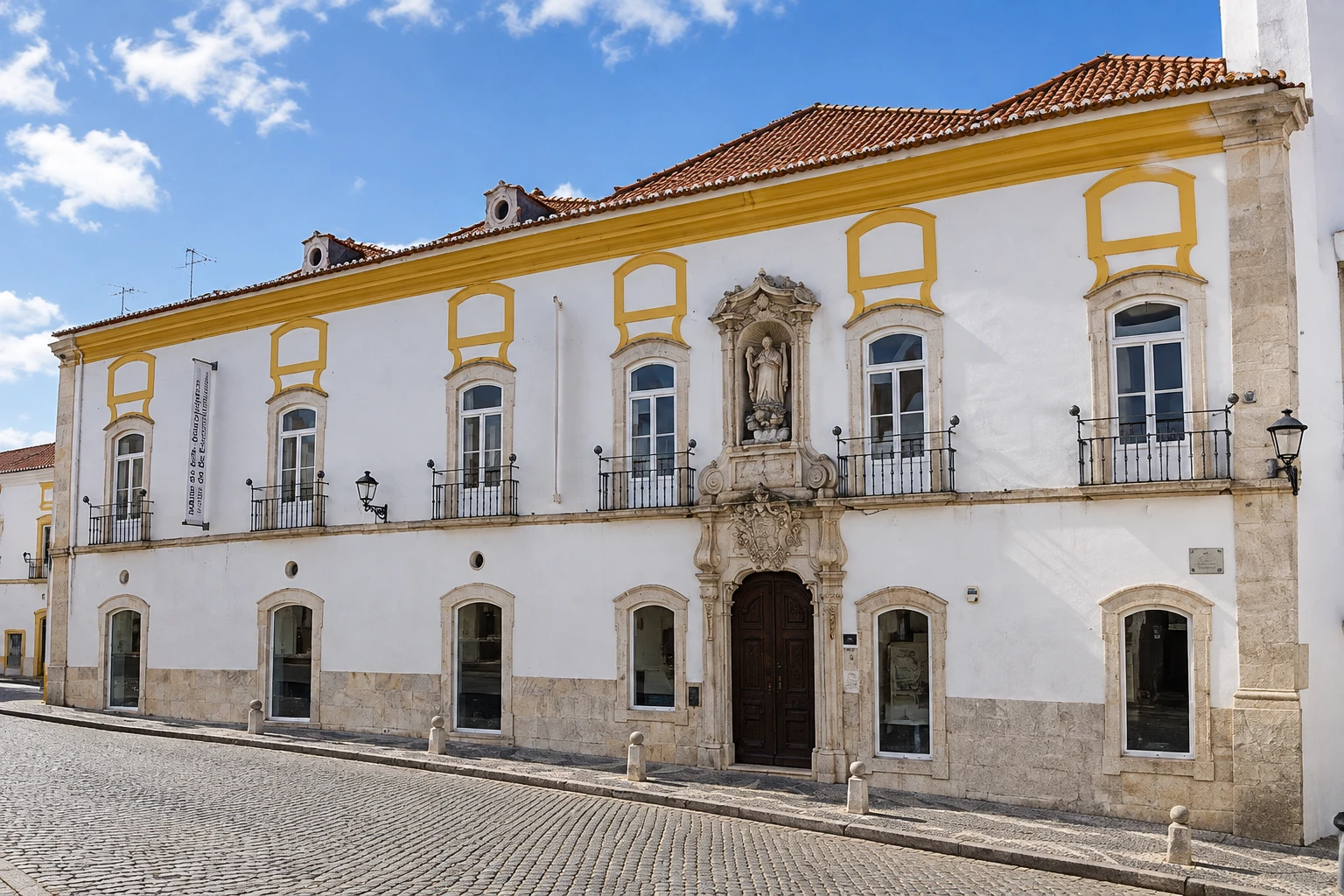
Museum of contemporary Portuguese art installed in a former hospital in central Elvas, with the collection of collector António Cachola, featuring Portuguese artists from recent decades.
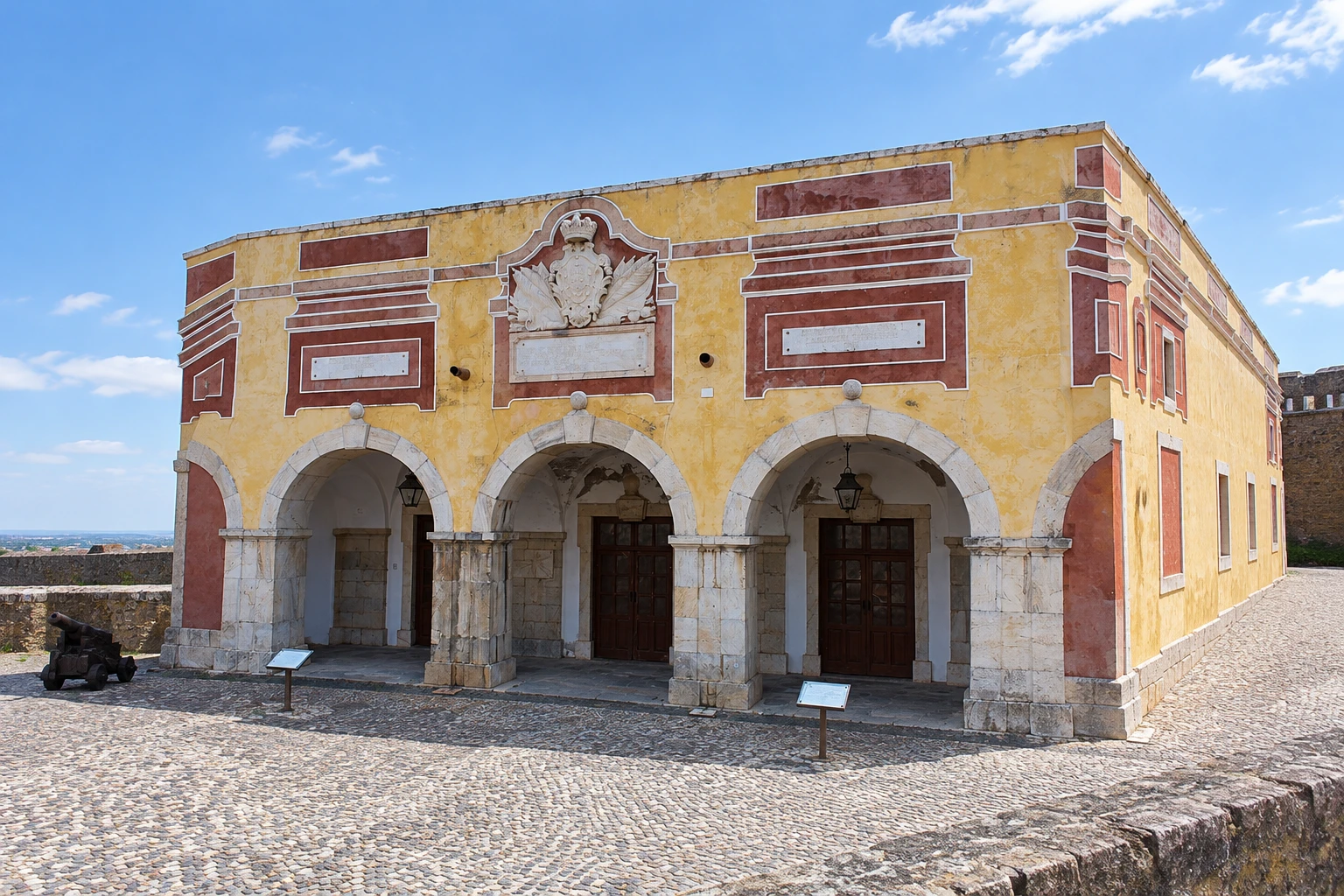
Museu do Exército installed in a former military complex within the walls of Elvas, with collections of weaponry, uniforms, vehicles and horse-drawn carriages used by the Portuguese Army.


 Brazil
 Antarctica
 Argentina
 Bolivia
 Chile
 Colombia
 Ecuador
 Falkland Islands (Malvinas)
 French Guiana
 Guyana
 Paraguay
 Peru
 Suriname
 Uruguay
 Venezuela
 Albania
 Austria
 Belgium
 Croatia
 Denmark
 Finland
 France
 Germany
 Greece
 Hungary
 Iceland
 Ireland
 Italy
 Luxembourg
 Norway
 Poland
 Slovakia
 Slovenia
 Spain
 Sweden
 Switzerland
 the Czech Republic
 the Netherlands
 the United Kingdom
 Turkey
 Bermuda
 Canada
 Greenland
 Mexico
 Saint Pierre and Miquelon
 the United States
 the Dominican Republic
 Japan
 Egypt
 South Africa
 Australia
 Fiji
 New Zealand
 Papua New Guinea