Lagos · Faro · Historic centre
Lagos Old Town
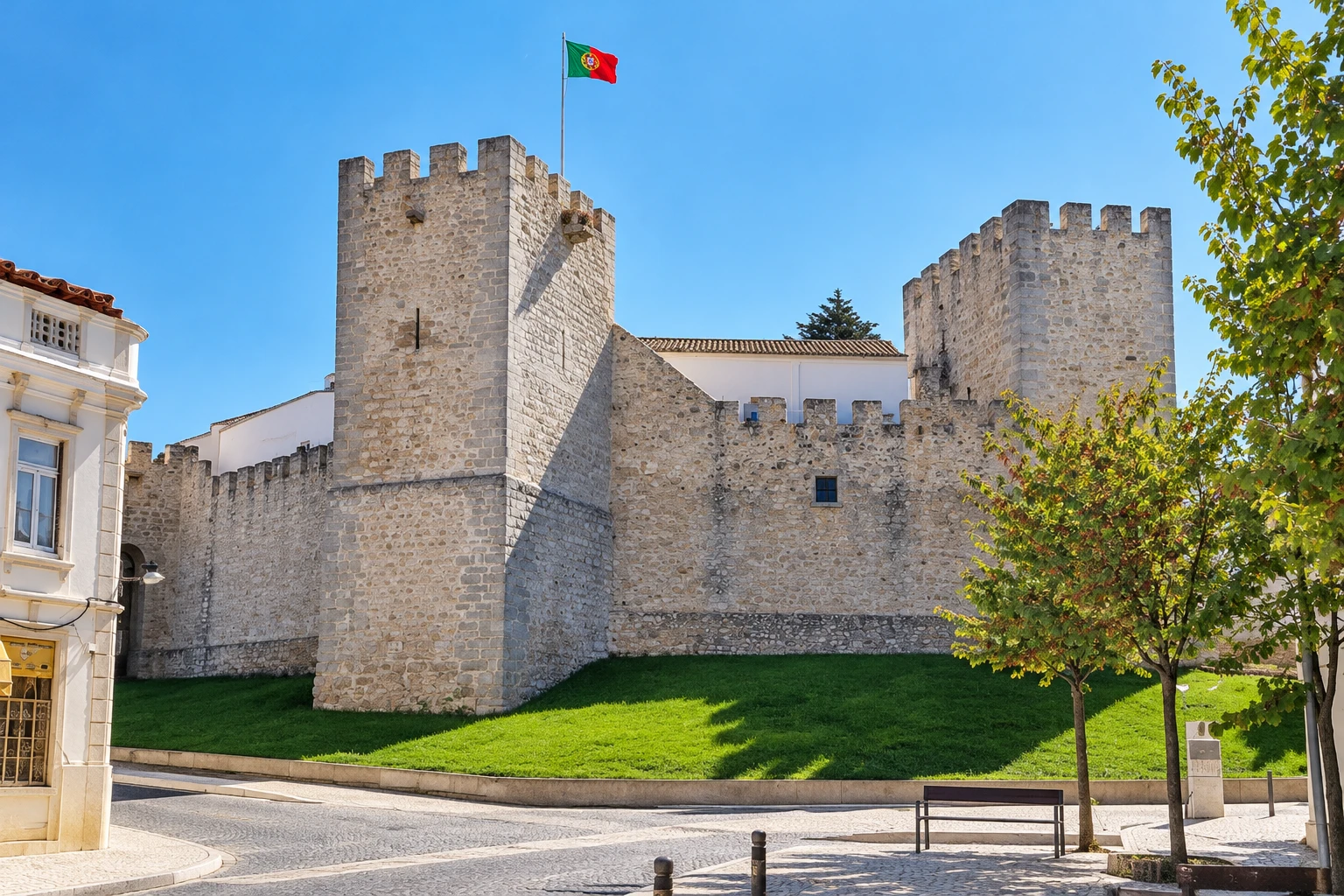
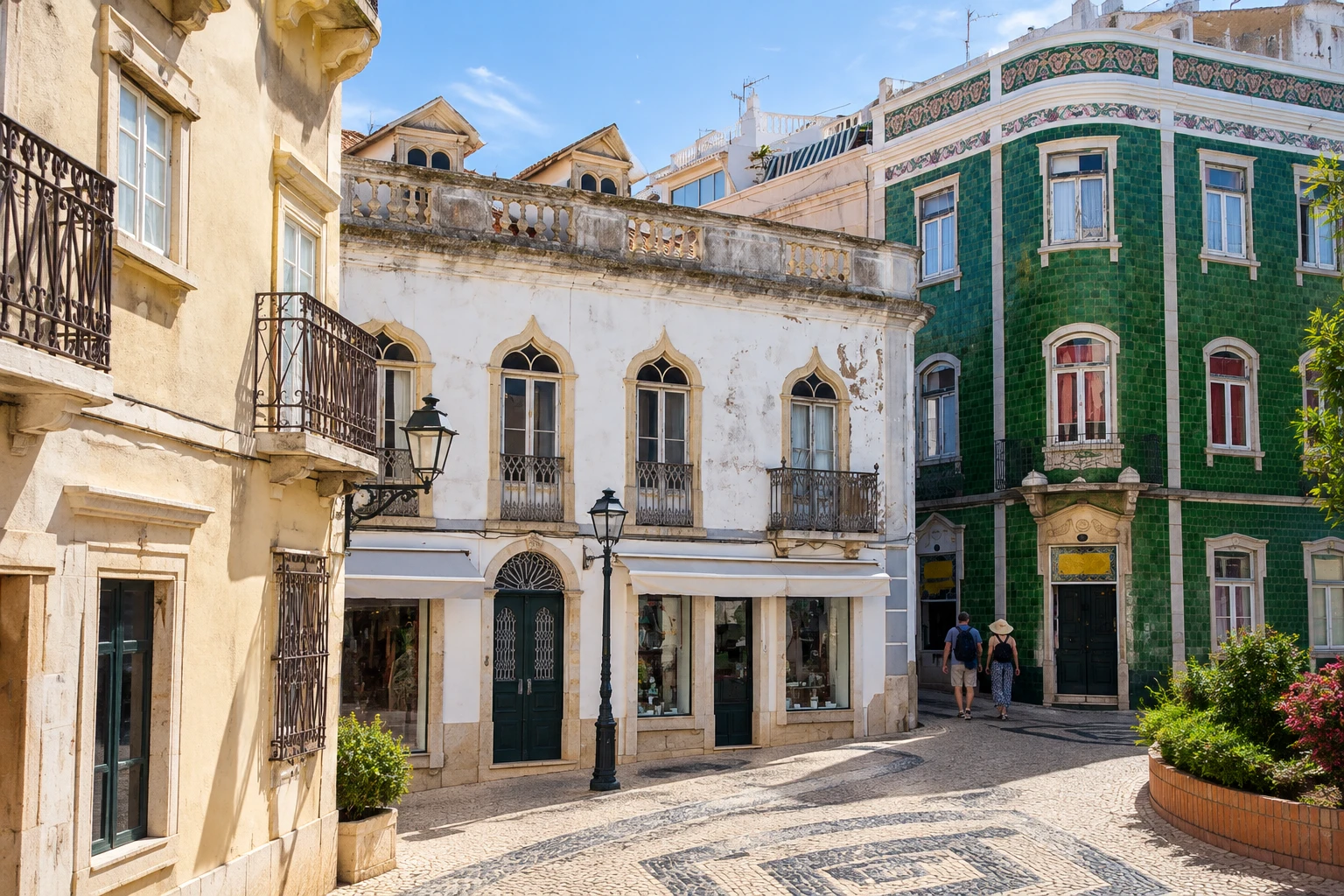
Walled old town of Lagos, with the Praça do Infante, the statue of Infante D. Henrique, the Mercado de Escravos, the Forte da Ponta da Bandeira and stone streets full of restaurants.

 Search
 Brazil
 Antarctica
 Argentina
 Bolivia
 Chile
 Colombia
 Ecuador
 Falkland Islands (Malvinas)
 French Guiana
 Guyana
 Paraguay
 Peru
 Suriname
 Uruguay
 Venezuela
 Austria
 Belgium
 Croatia
 Denmark
 Finland
 France
 Germany
 Greece
 Hungary
 Iceland
 Ireland
 Italy
 Luxembourg
 Norway
 PolandPortugal
 Slovakia
 Slovenia
 Spain
 Sweden
 Switzerland
 the Czech Republic
 the Netherlands
 the United Kingdom
 Turkey
 Bermuda
 Canada
 Greenland
 Mexico
 Saint Pierre and Miquelon
 the United States
 the Dominican Republic
 JapanTurkey
 Egypt
 South Africa
 Australia
 Fiji
 New Zealand
 Papua New Guinea
Faro
25 places to visit and 17 tours, chosen by the Cidade Turismo guide.
Updated
Illustrative images. The pictures in this guide are illustrations based on the real place, not photographs, and may differ from it.
To start
One by one
Walled old town of Lagos, with the Praça do Infante, the statue of Infante D. Henrique, the Mercado de Escravos, the Forte da Ponta da Bandeira and stone streets full of restaurants.
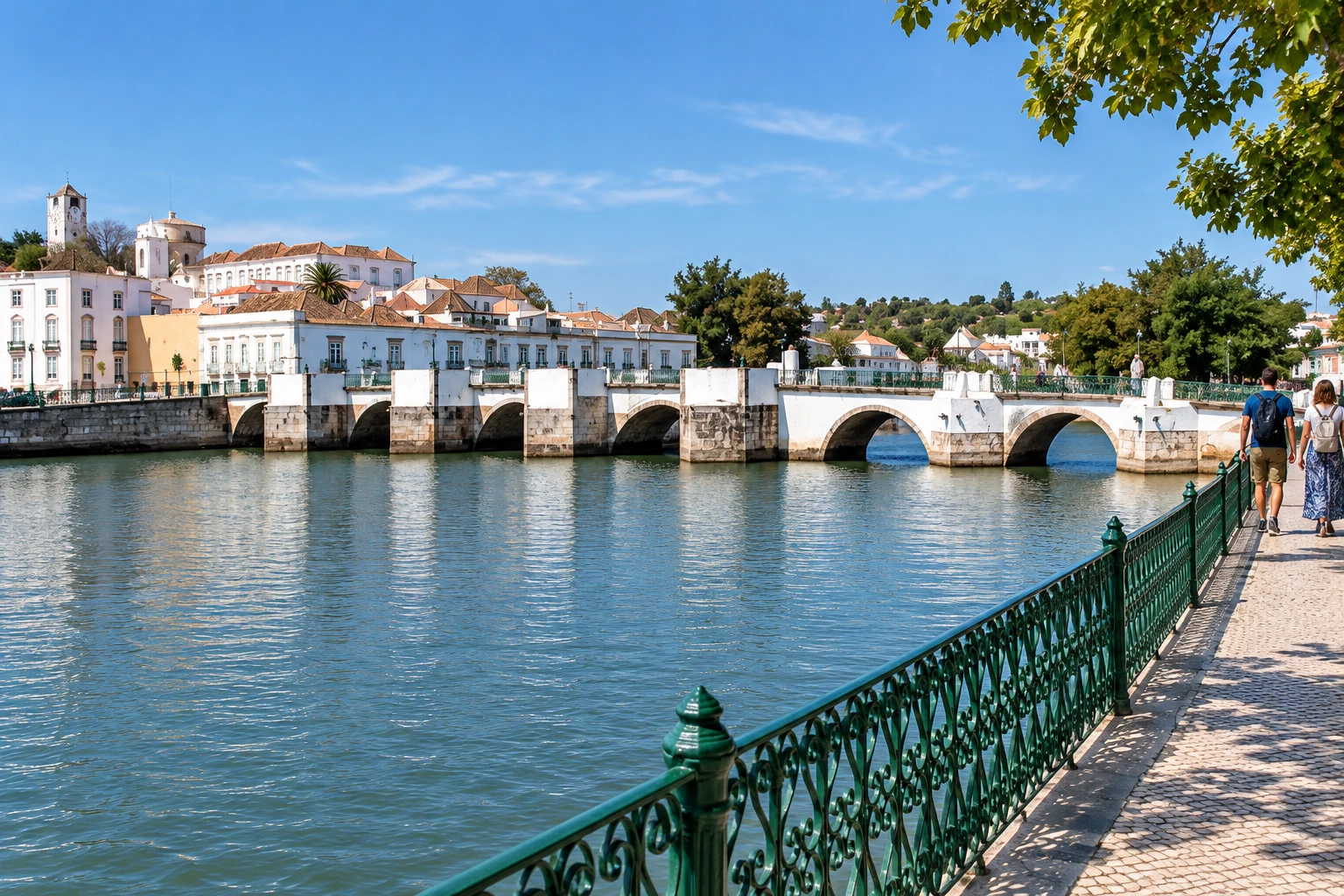
White houses line both banks of the Rio Gilão, linked by the old seven-arched bridge, with the Praça da República, churches, the old market and the town's characteristic four-sloped roofs.
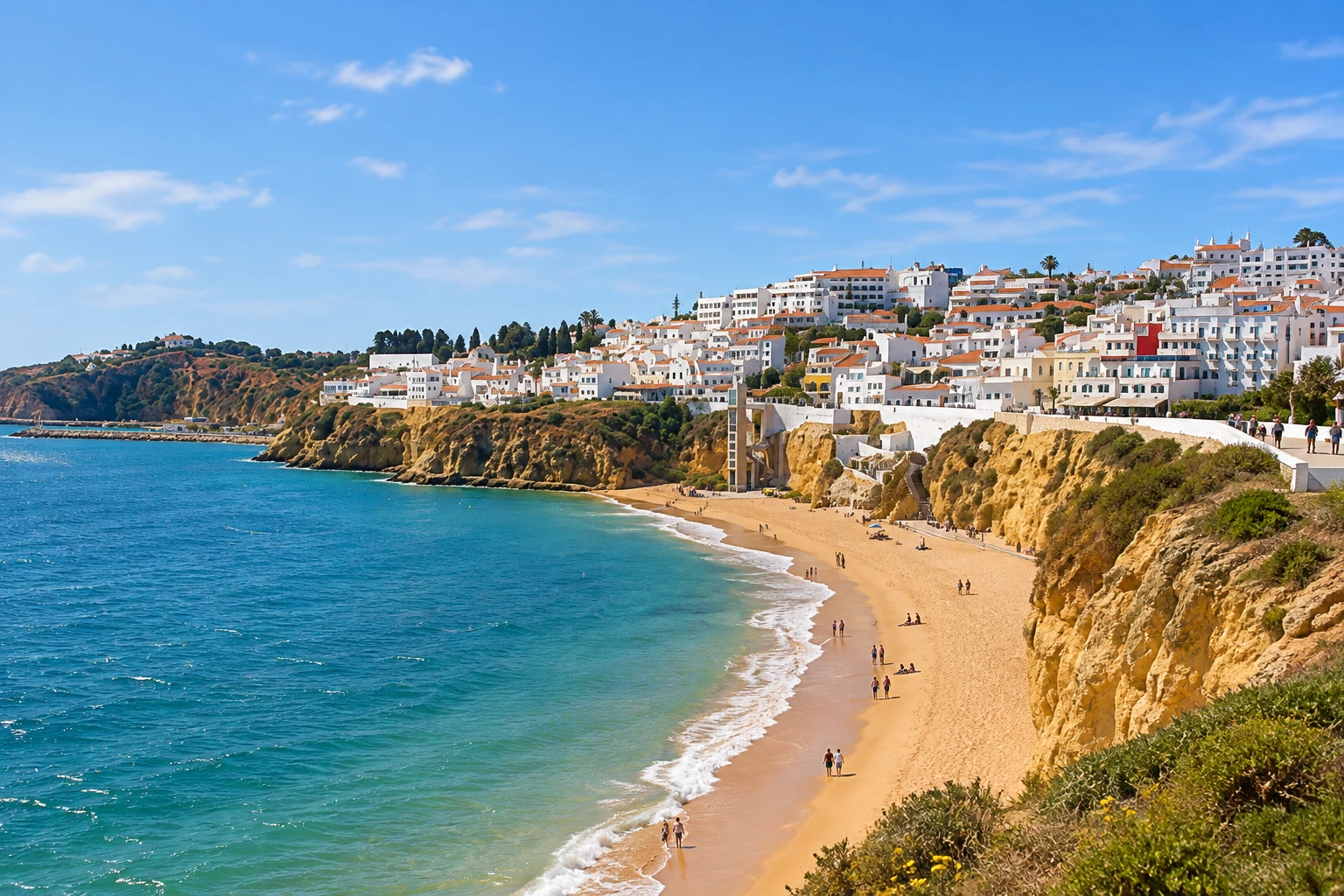
Old quarter of white houses and narrow streets on the cliff, which descends to Praia dos Pescadores, where fishing boats still sit on the sand. A tunnel links the town to the beach.
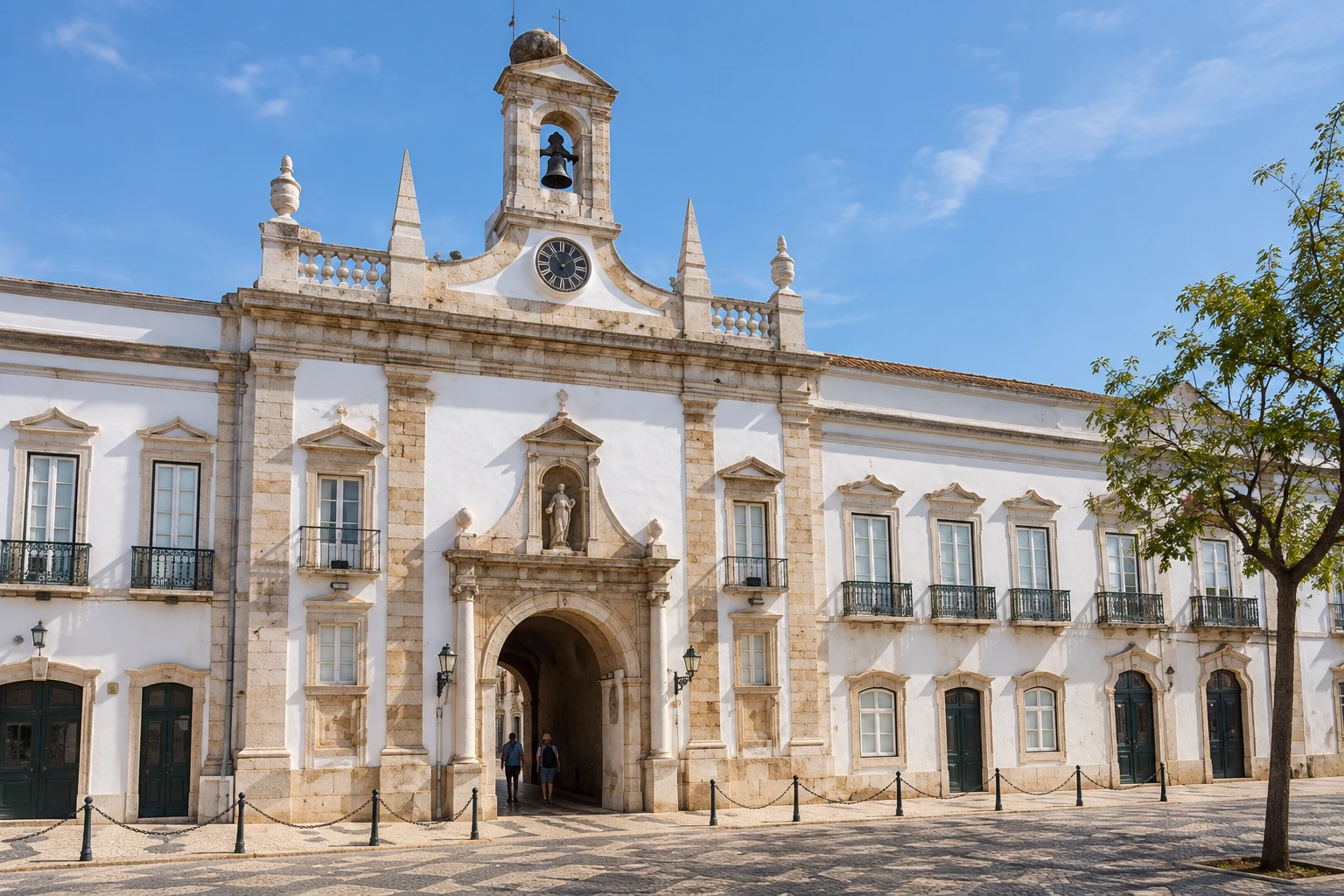
The old core of Faro, enclosed by walls of Roman and Muslim origin, with cobbled streets, Largo da Sé and the Câmara Municipal. The main entrance is the Arco da Vila, from the 19th century, with stork nests on top.
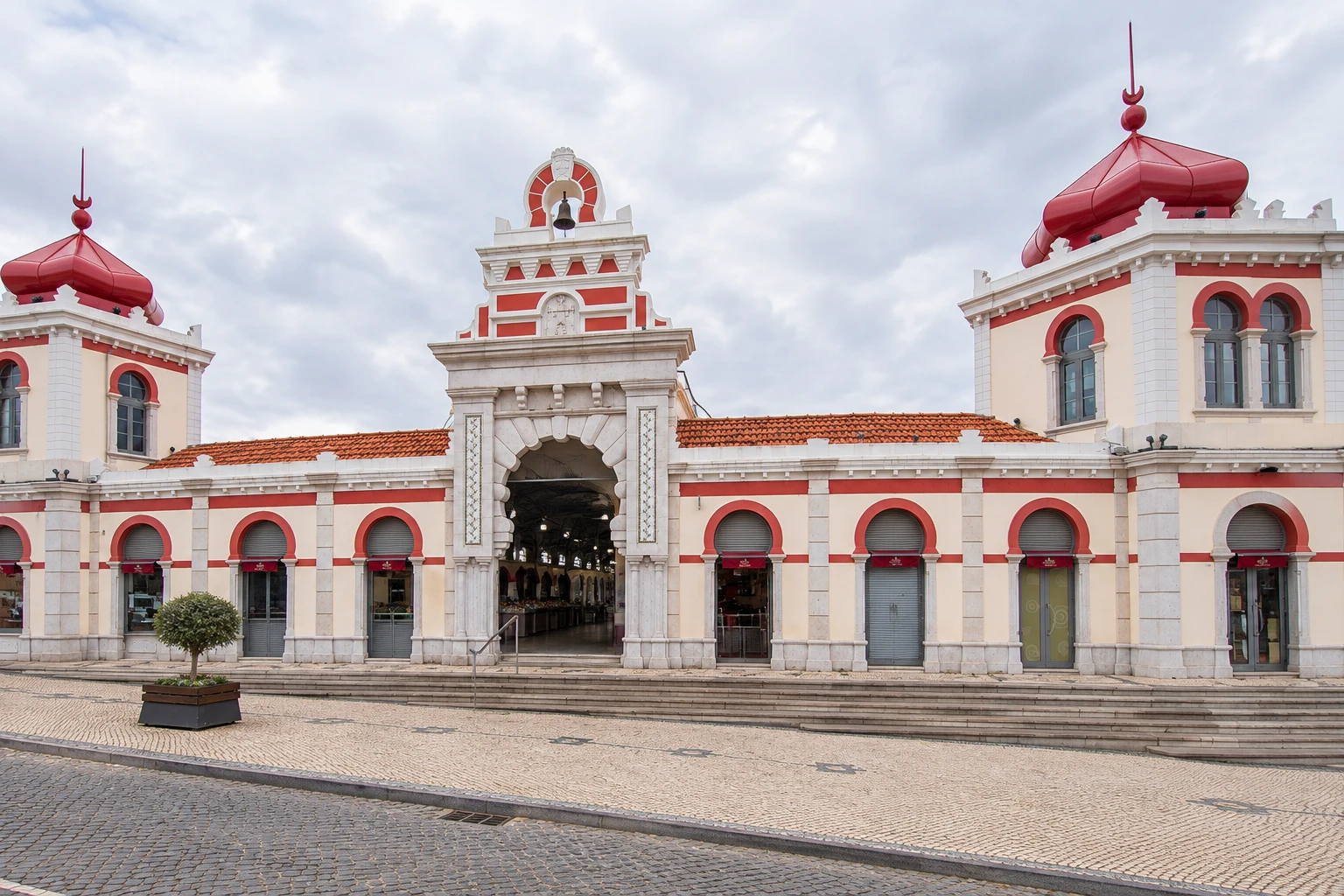
Market opened in 1908 in the center of Loulé, in a neo-Arab revivalist style, with four domed red towers and horseshoe arches. Inside, stalls sell fresh fish, fruit and vegetables.
Remains of the castle of Islamic origin, rebuilt after the Portuguese conquest of 1249, with three towers and a section of wall that can be walked. In the former Alcaidaria is the Municipal Museum, with archaeology and a traditional Algarvian kitchen.
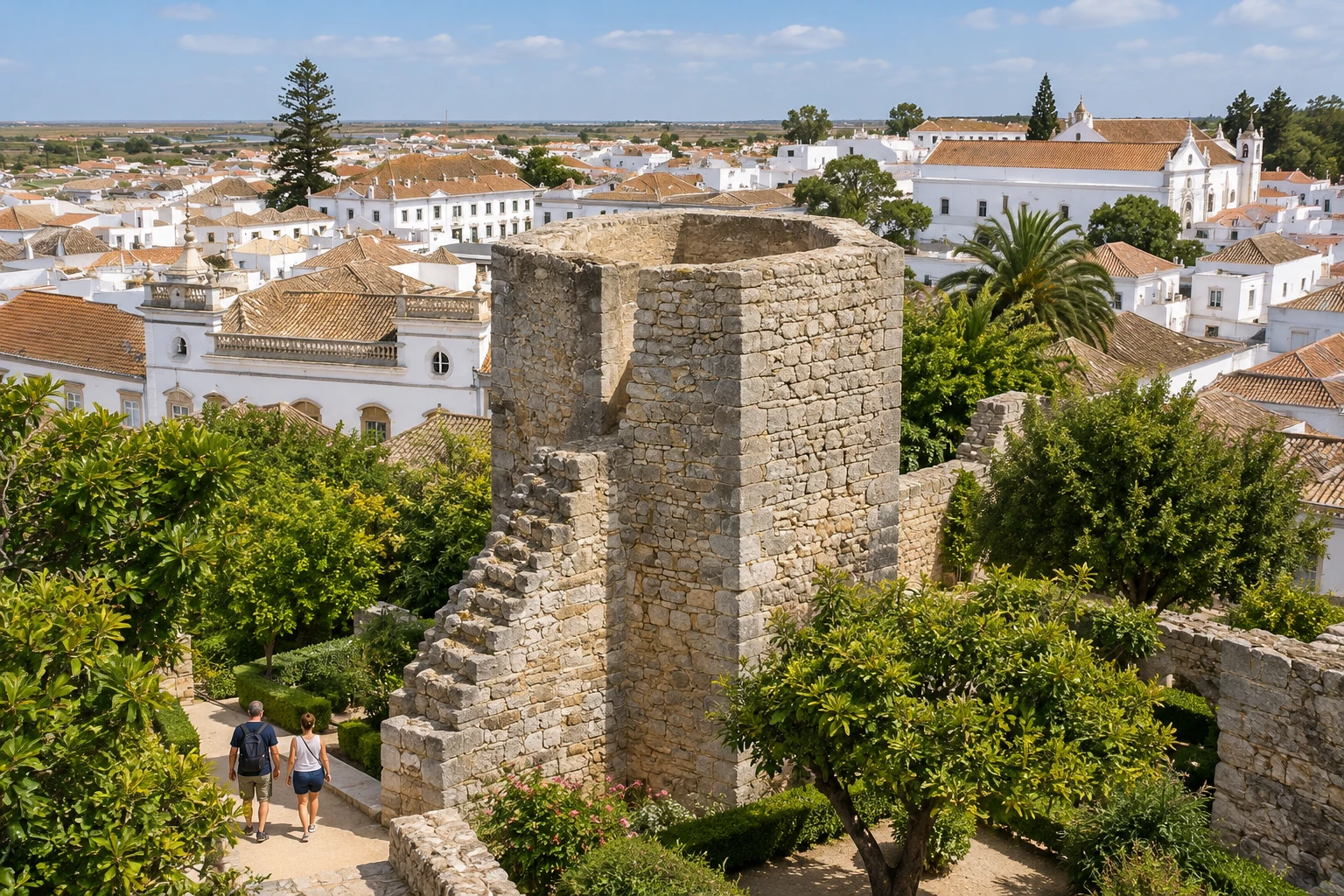
Remains of the medieval castle at Tavira's highest point, with a garden inside the walls and views over the roofs and the Ria Formosa. Beside it, the Igreja de Santa Maria do Castelo houses the tomb of D. Paio Peres Correia.
Early 18th-century church with a simple façade and an interior covered in gilded woodwork, tiles and paintings. Next door is the Museu Municipal Dr. José Formosinho.
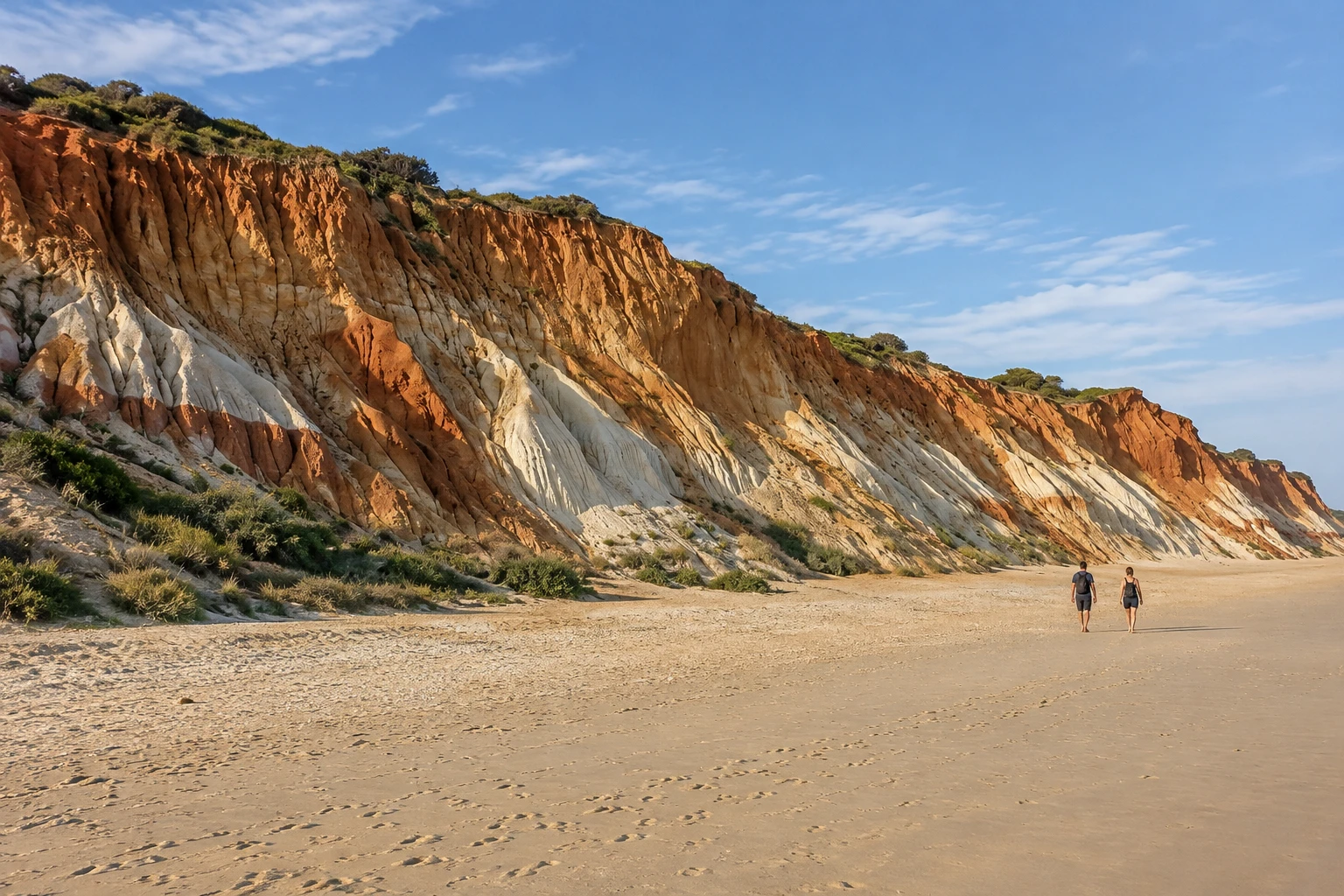
Beach about 6 km east of Albufeira, with sand and clay cliffs in shades of red, orange and white, topped by pine trees at the top.
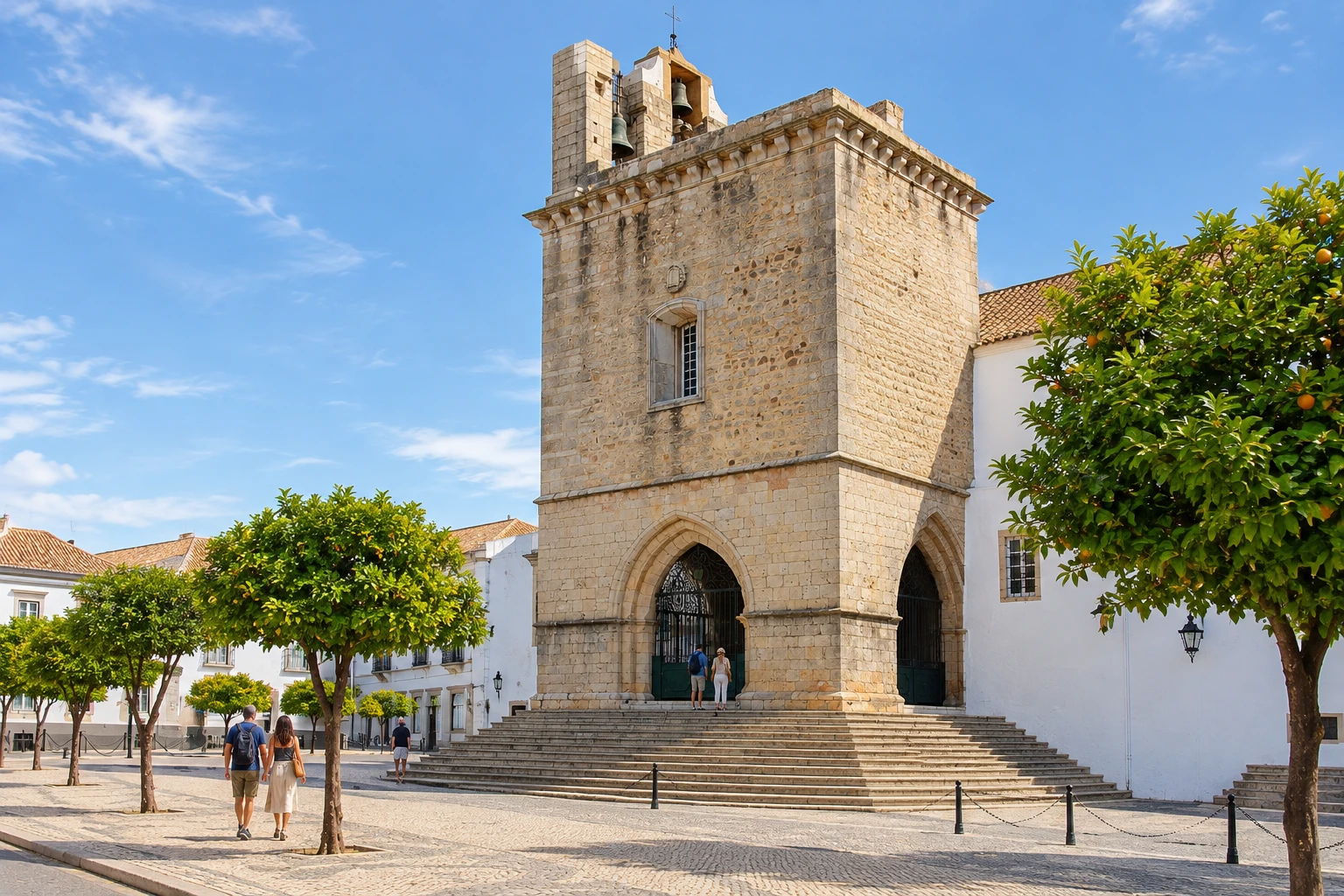
Cathedral built after the Christian conquest of 1249, on the site of the former mosque, mixing Gothic, Renaissance and Baroque styles. The entrance tower-portal is a remaining Gothic feature.
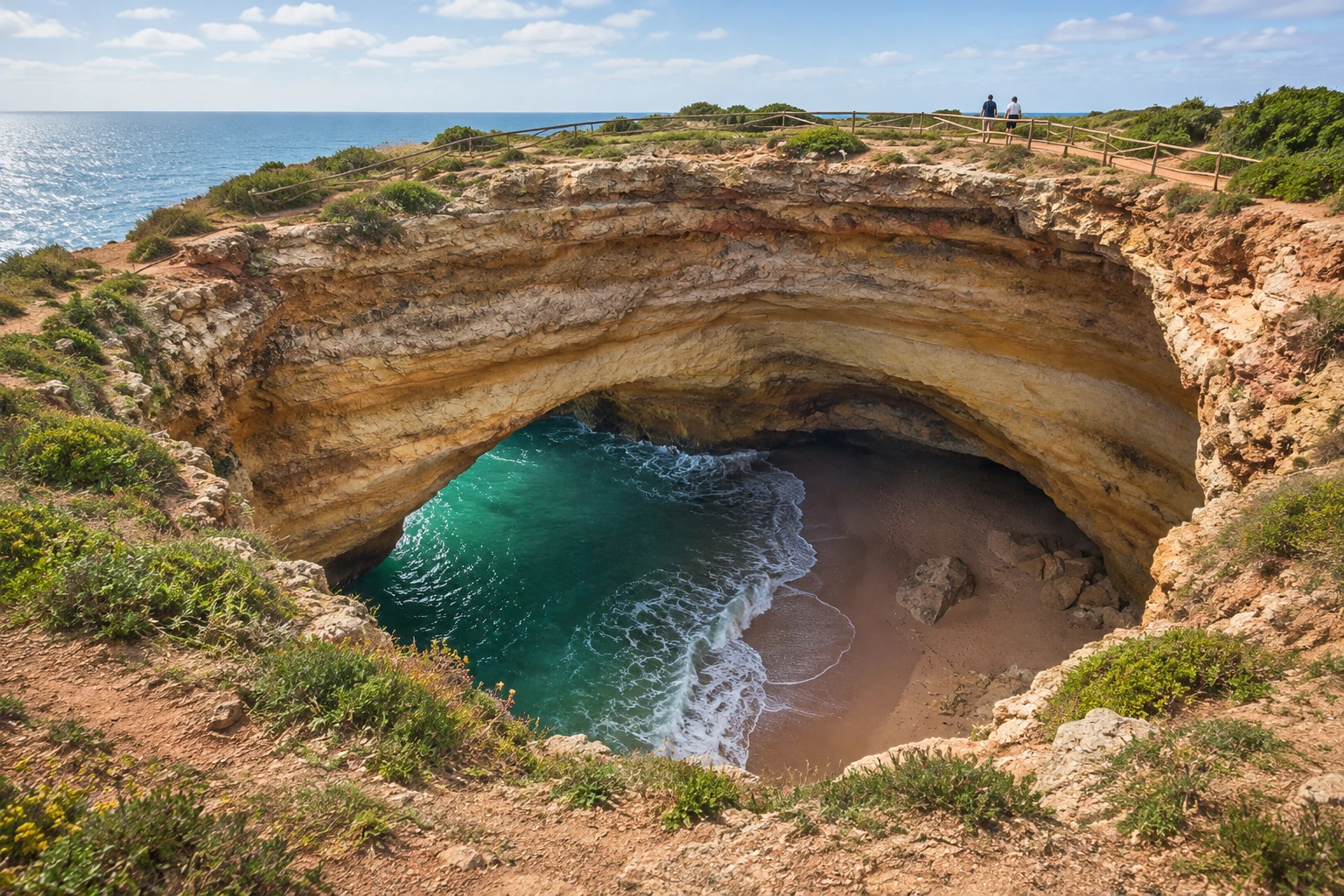
Sea cave on the coast of Lagoa, with an opening in the roof through which light falls onto a small internal beach. Visited by boat or guided kayak; landing and access by swimming are prohibited.
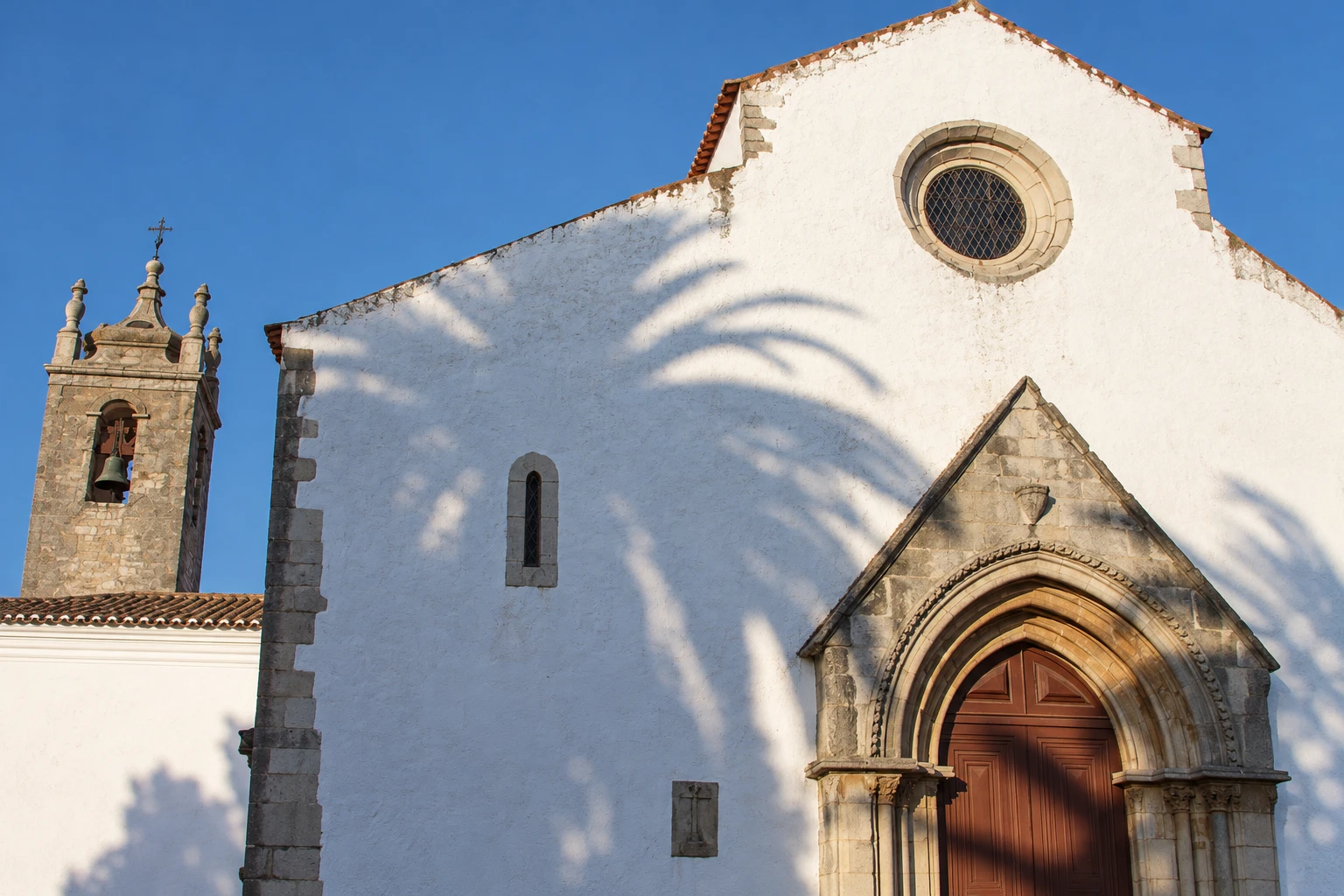
Main church of Loulé, built in the second half of the 13th century on the site of the former mosque, in Gothic style with Manueline chapels from the 16th century. A National Monument since 1924, it stands opposite the Jardim dos Amuados.
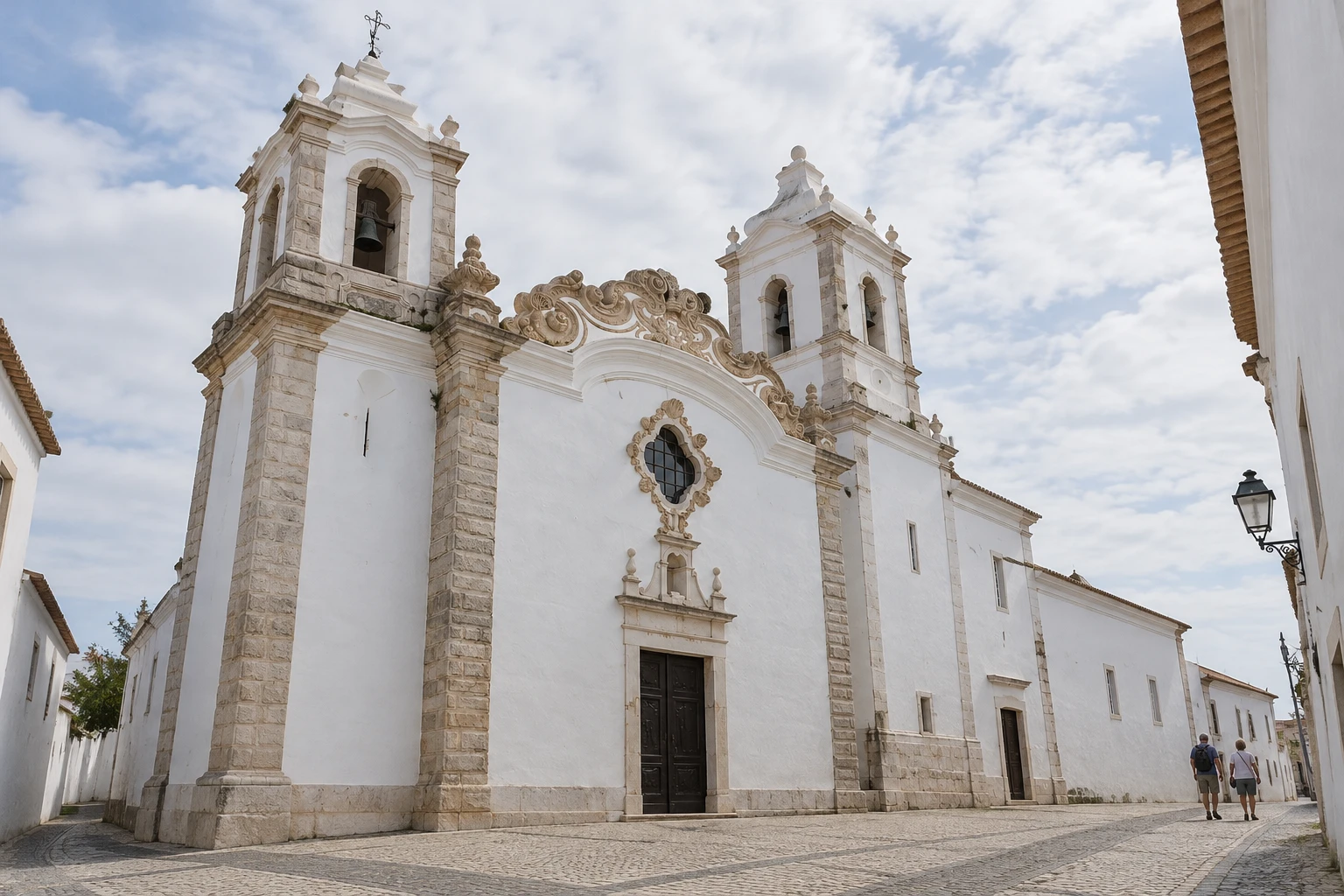
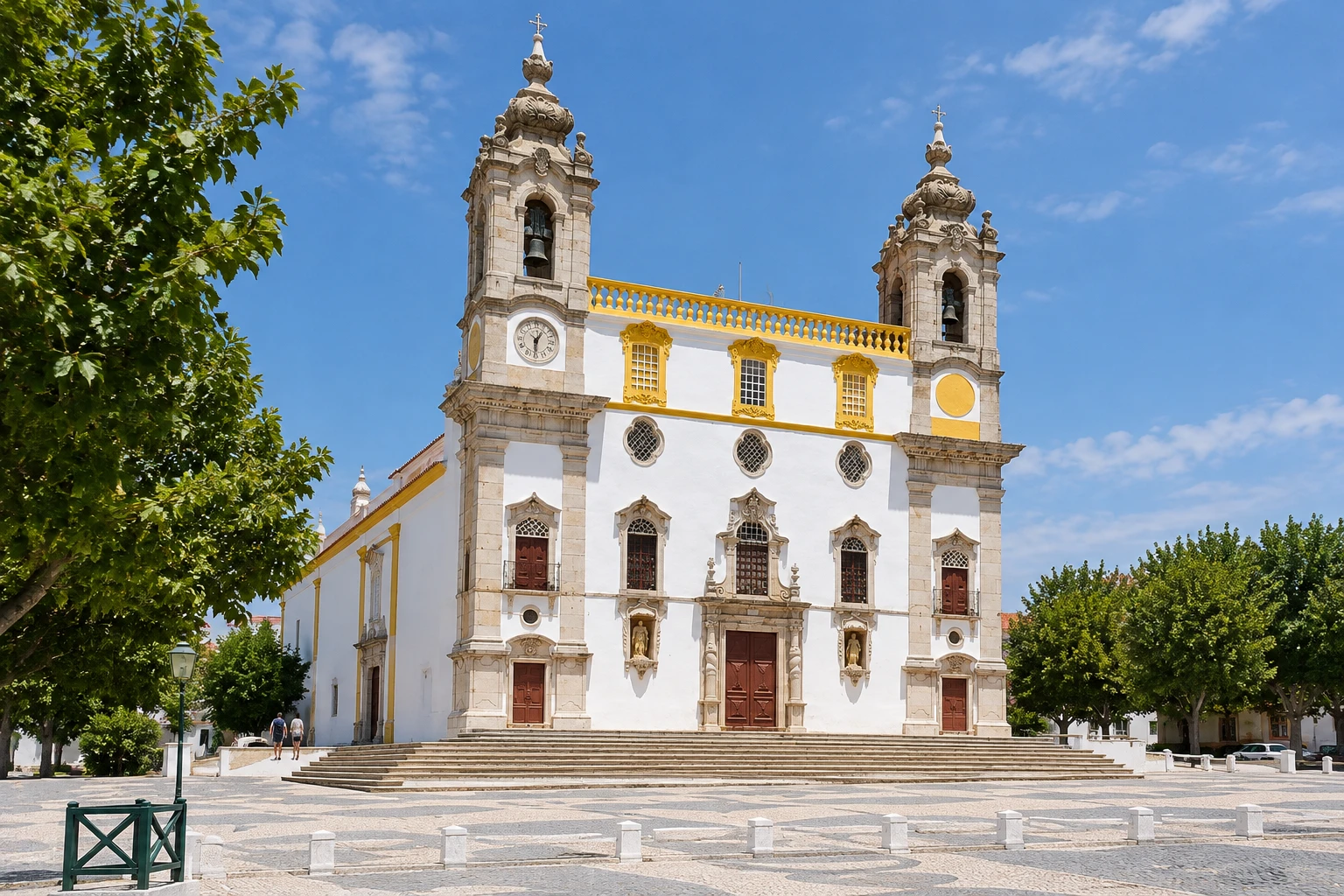
Baroque 18th-century church, with a two-tower façade and gilded woodwork inside. At the back is the Capela dos Ossos, from 1816, with walls covered in bones and skulls of Carmelite friars.
Sandy island of the Ria Formosa opposite Tavira, with about 11 km of Atlantic-facing beach. It is reached by boat from the town or from Quatro Águas.
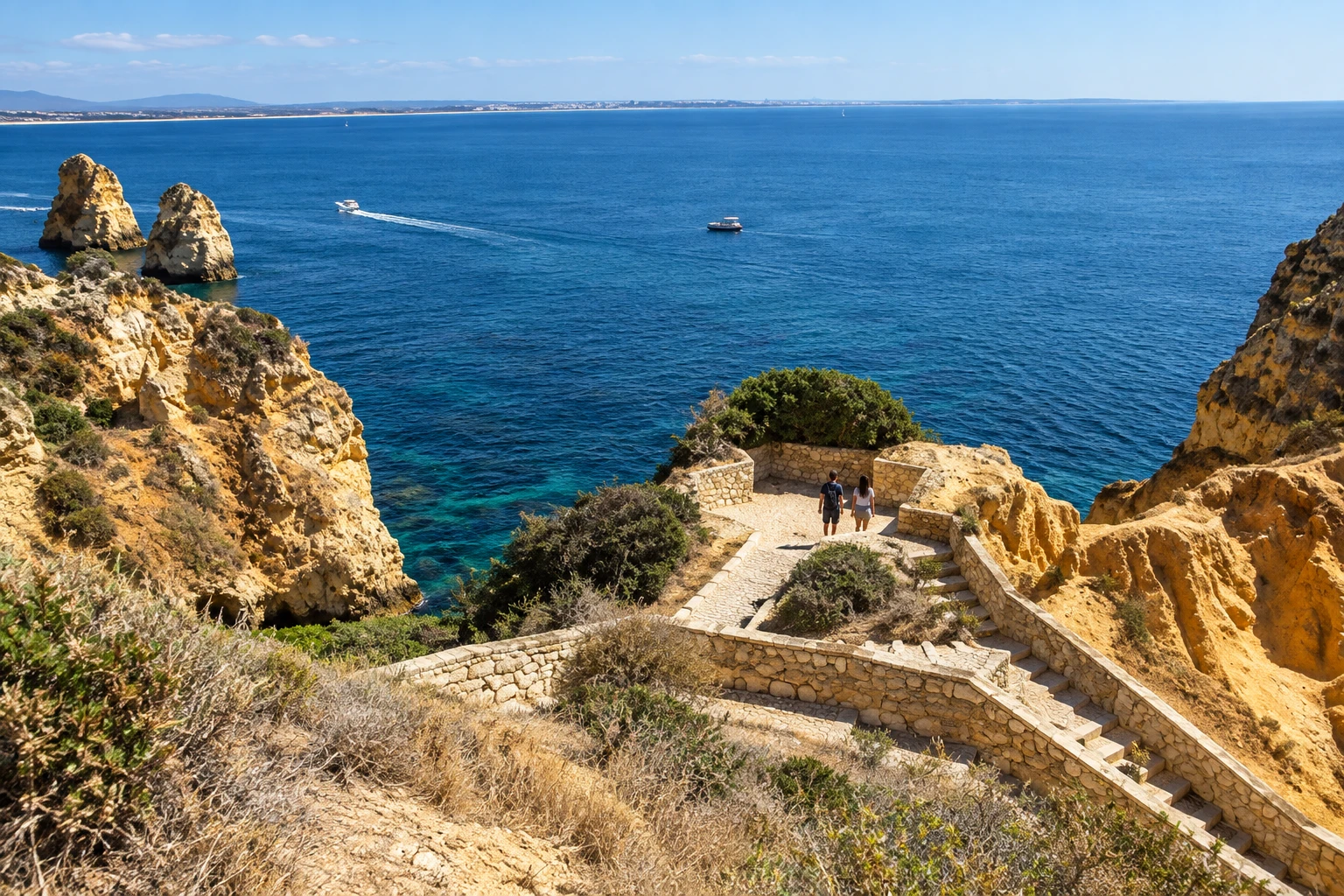
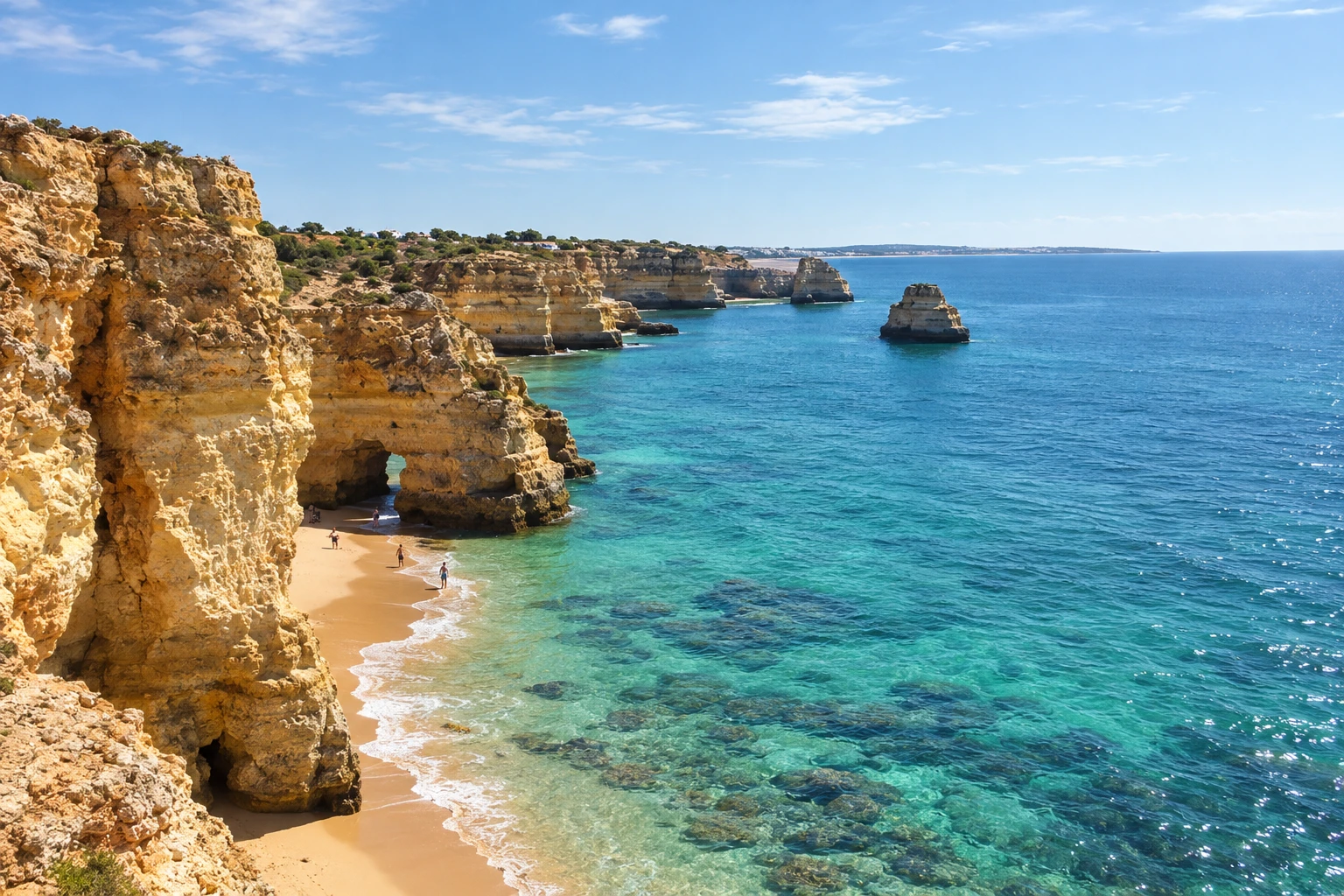
Promontory of golden cliffs south of Lagos, with arches, rock columns and caves, a lighthouse and a stairway that descends to sea level. Boat and kayak tours go into the grottos.
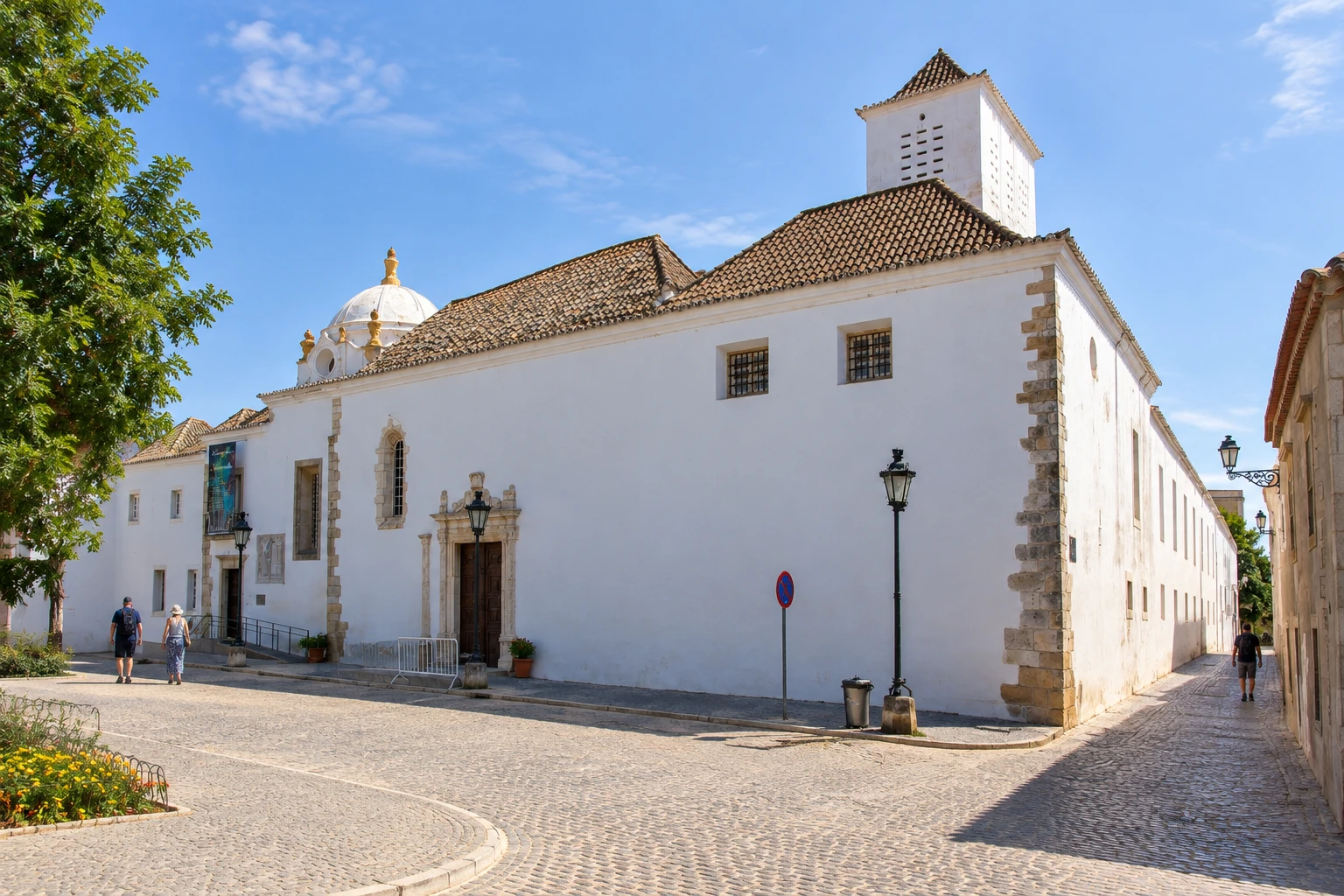
Museum housed in the Convento de Nossa Senhora da Assunção, from the 16th century, with a Renaissance cloister and a large Roman mosaic of the god Oceanus found in Faro.
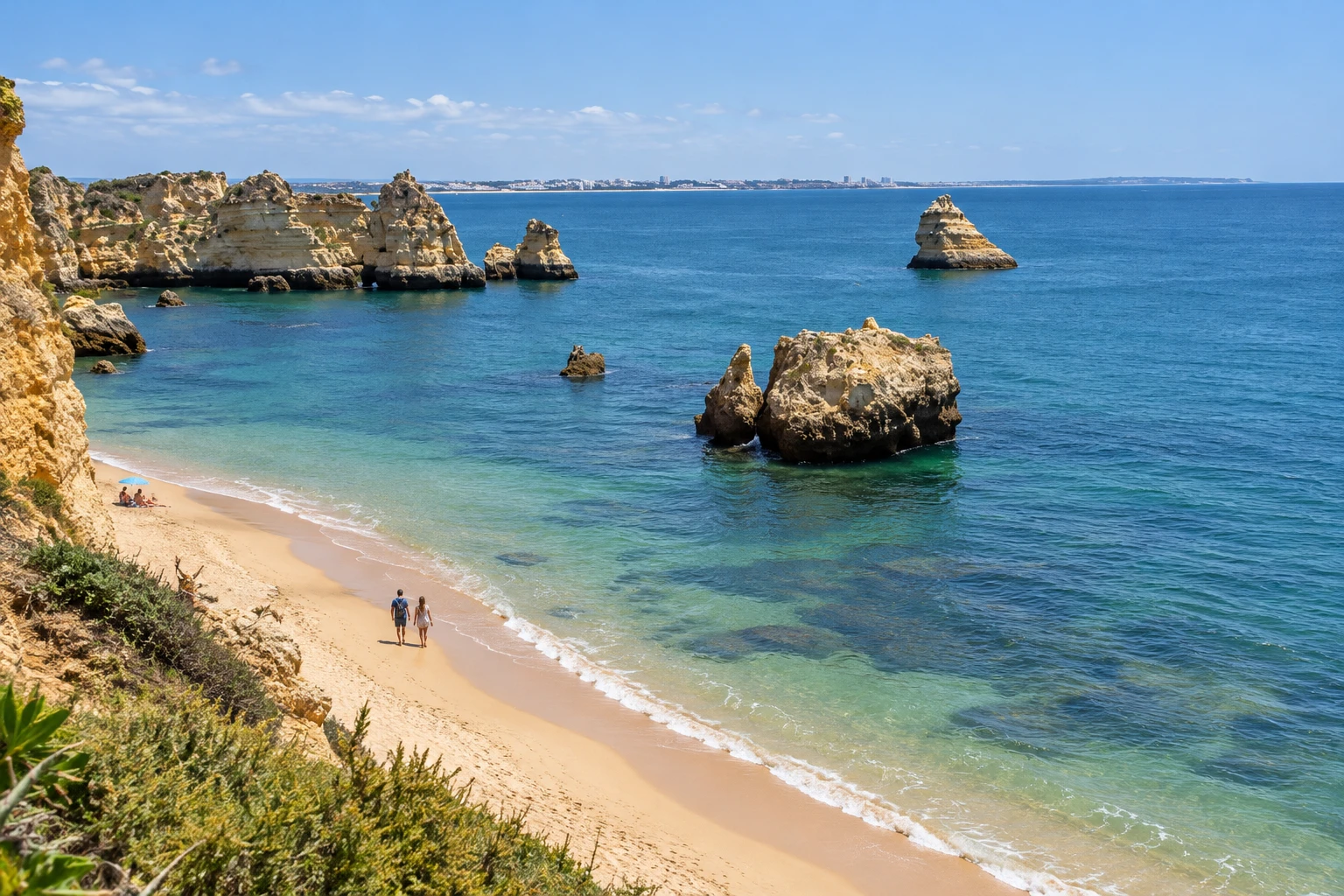
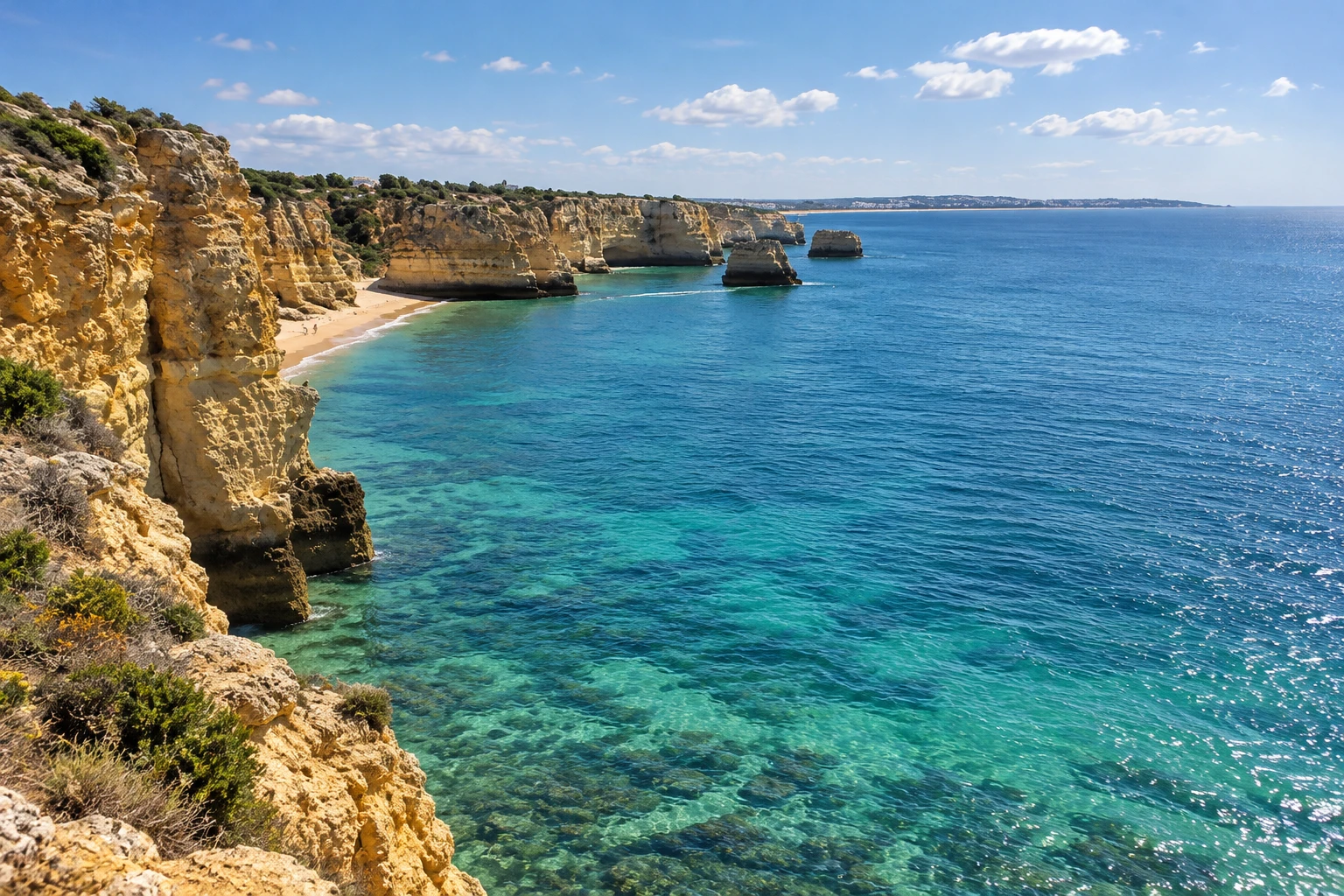
Small sandy beach between cliffs and isolated rocks, a few minutes from Lagos centre, with water in shades of green and blue on calm days.
Beach among golden cliffs and rock arches in the municipality of Lagoa, the starting point of the Sete Vales Suspensos trail, which follows the coast to Praia de Vale Centeanes.
Beach on the Ilha de Tavira where an old tuna-fishing rig once stood. Hundreds of rusted anchors lined up on the dunes form the so-called anchor cemetery.
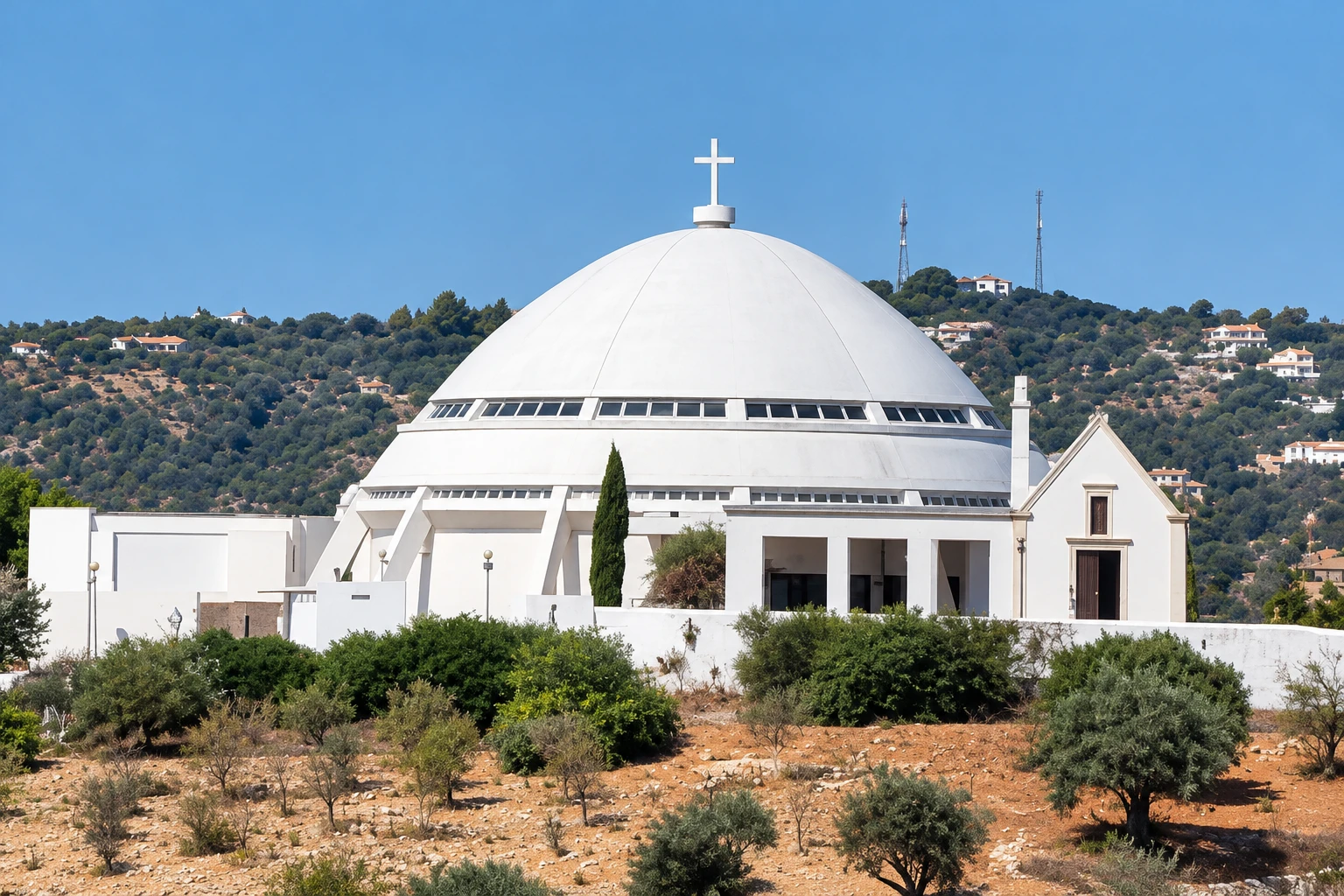
Sanctuary on top of Monte da Piedade, about 2 km from Loulé’s centre, with a 16th-century hermitage and a modern church. It is the centre of devotion to the Mãe Soberana, the city’s patron, and has views over Loulé and the coast.
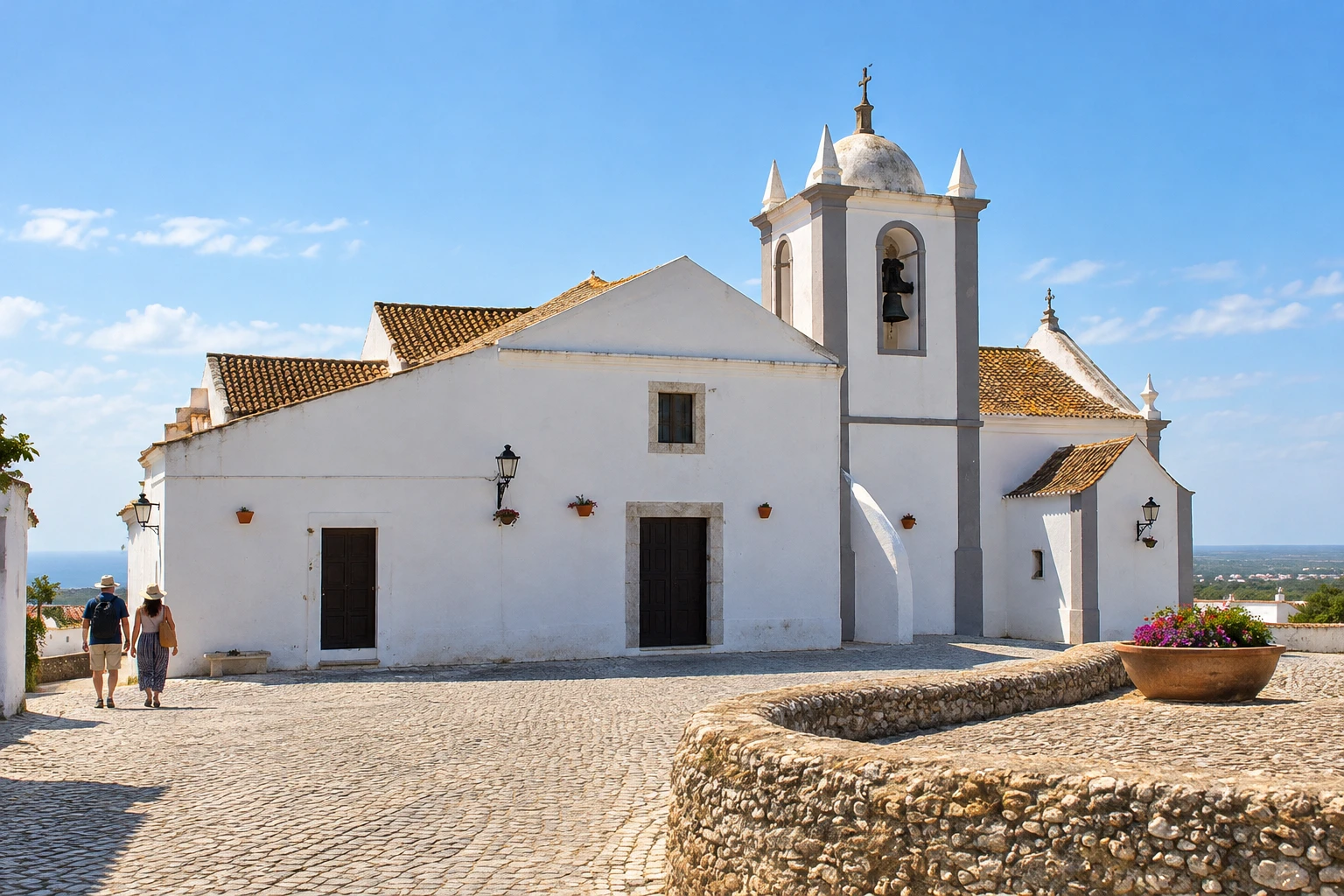
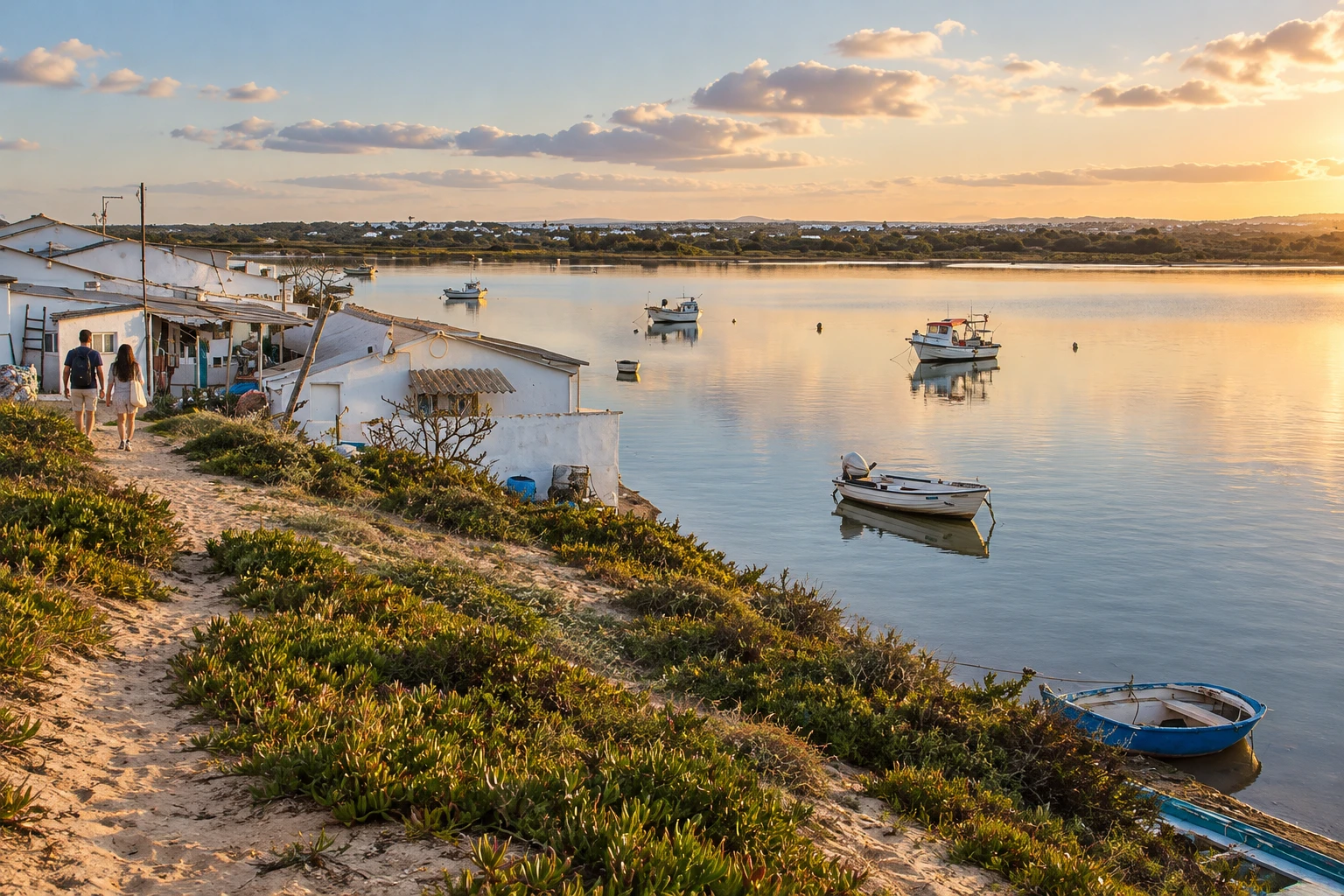
Small white village atop a cliff overlooking the Ria Formosa, with a church, a fortress and views of the lagoon and the islands. It is about 13 km from Tavira.
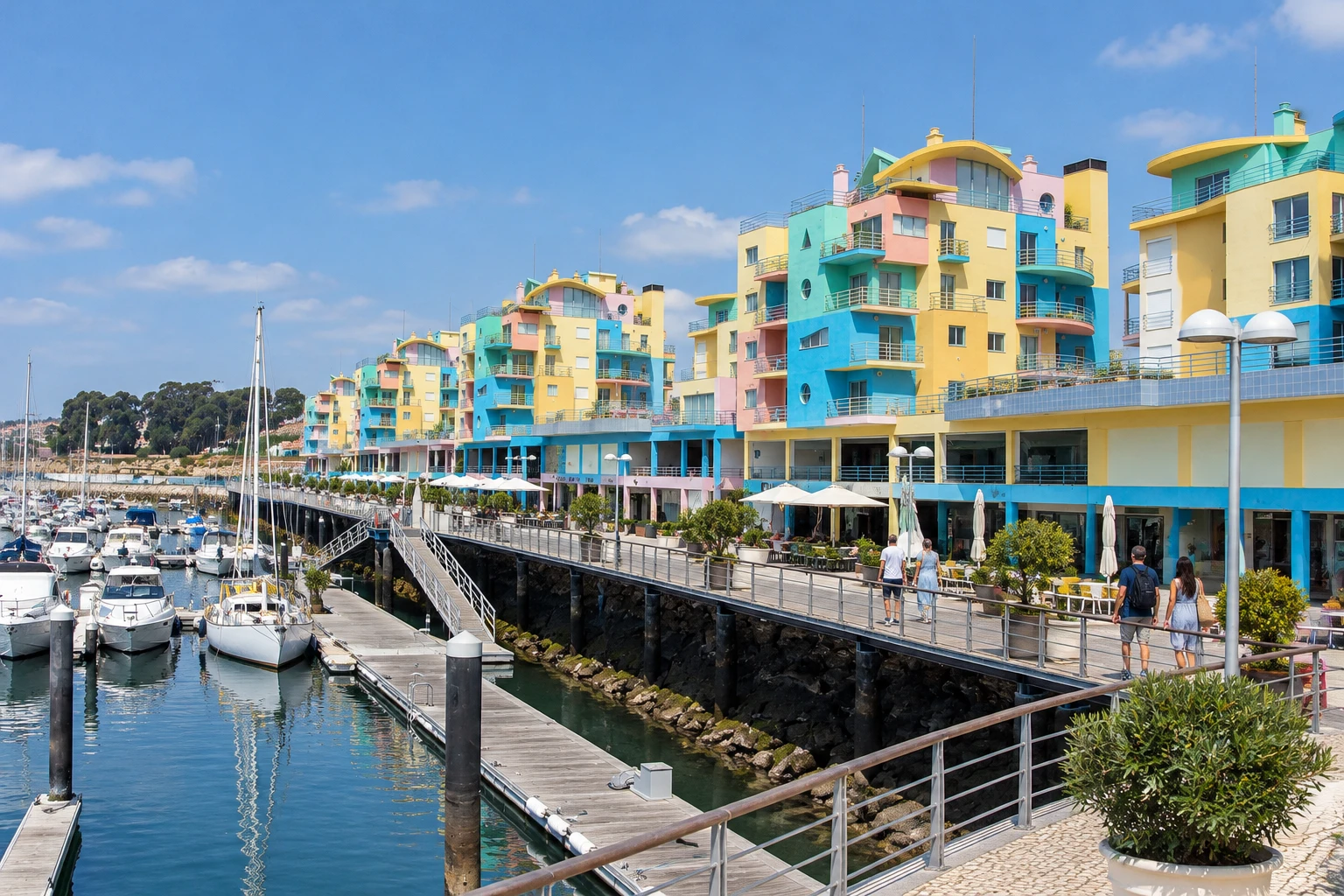
Marina west of Albufeira centre, surrounded by buildings painted in bright colors, with restaurants and departures for boat trips along the coast.
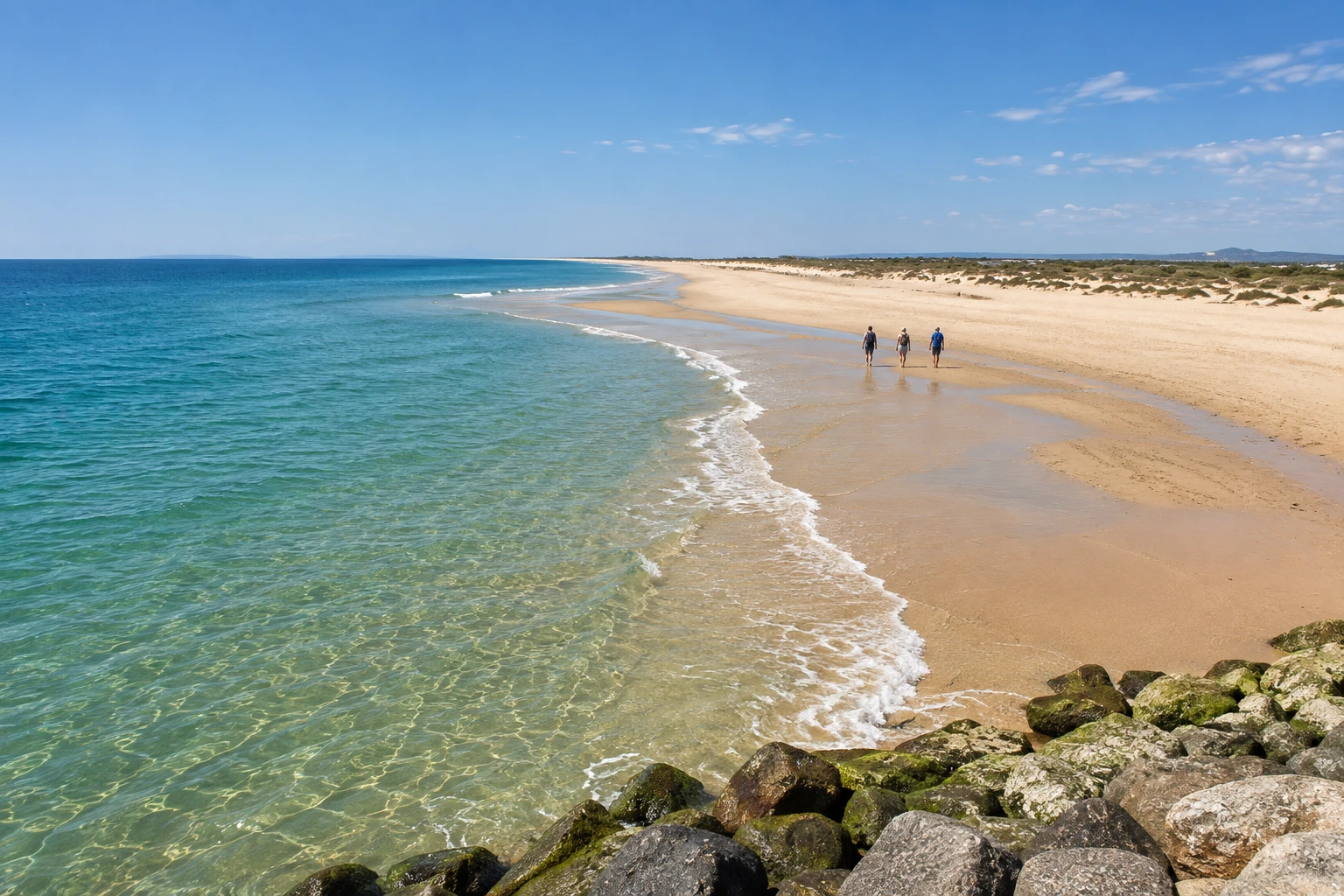
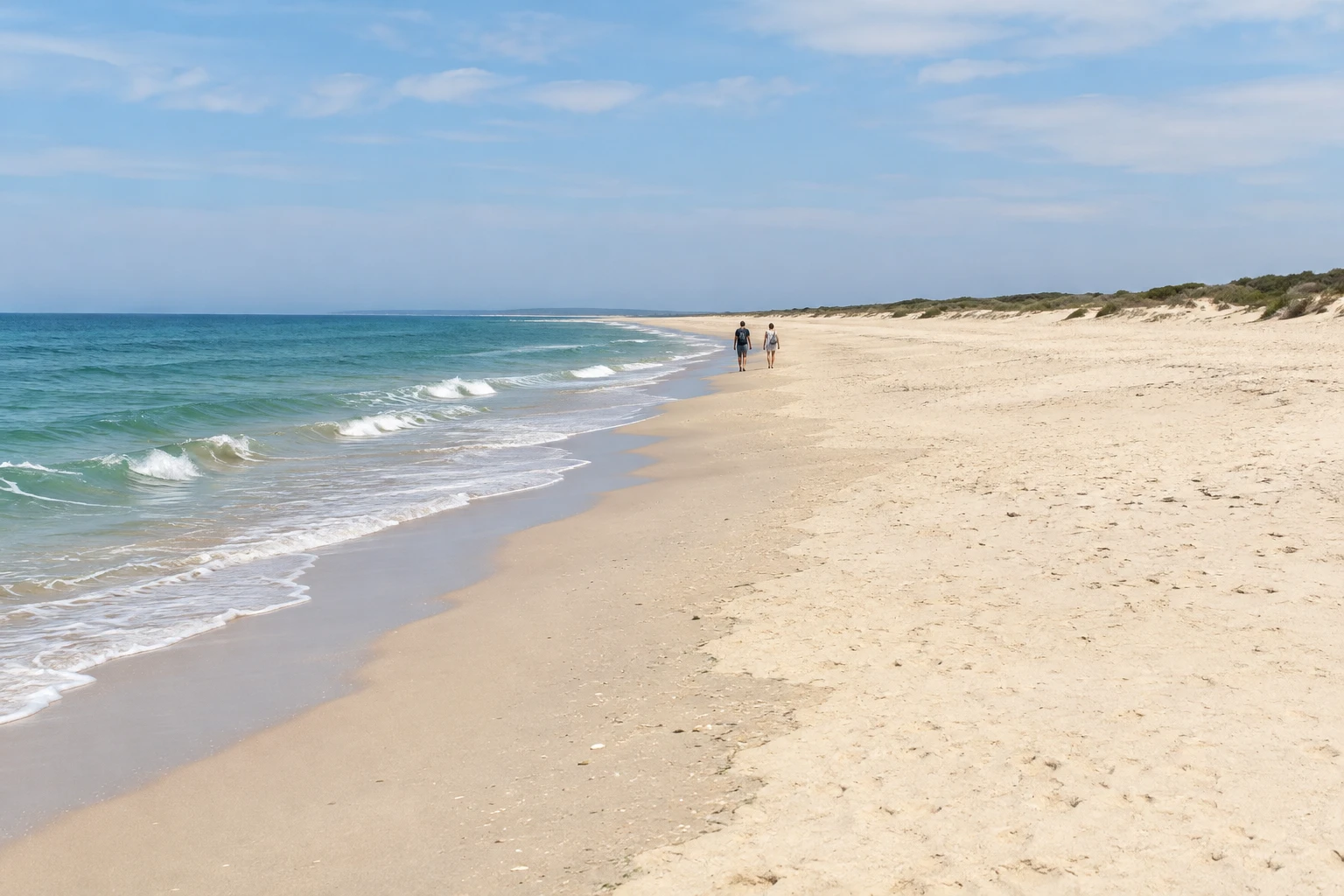
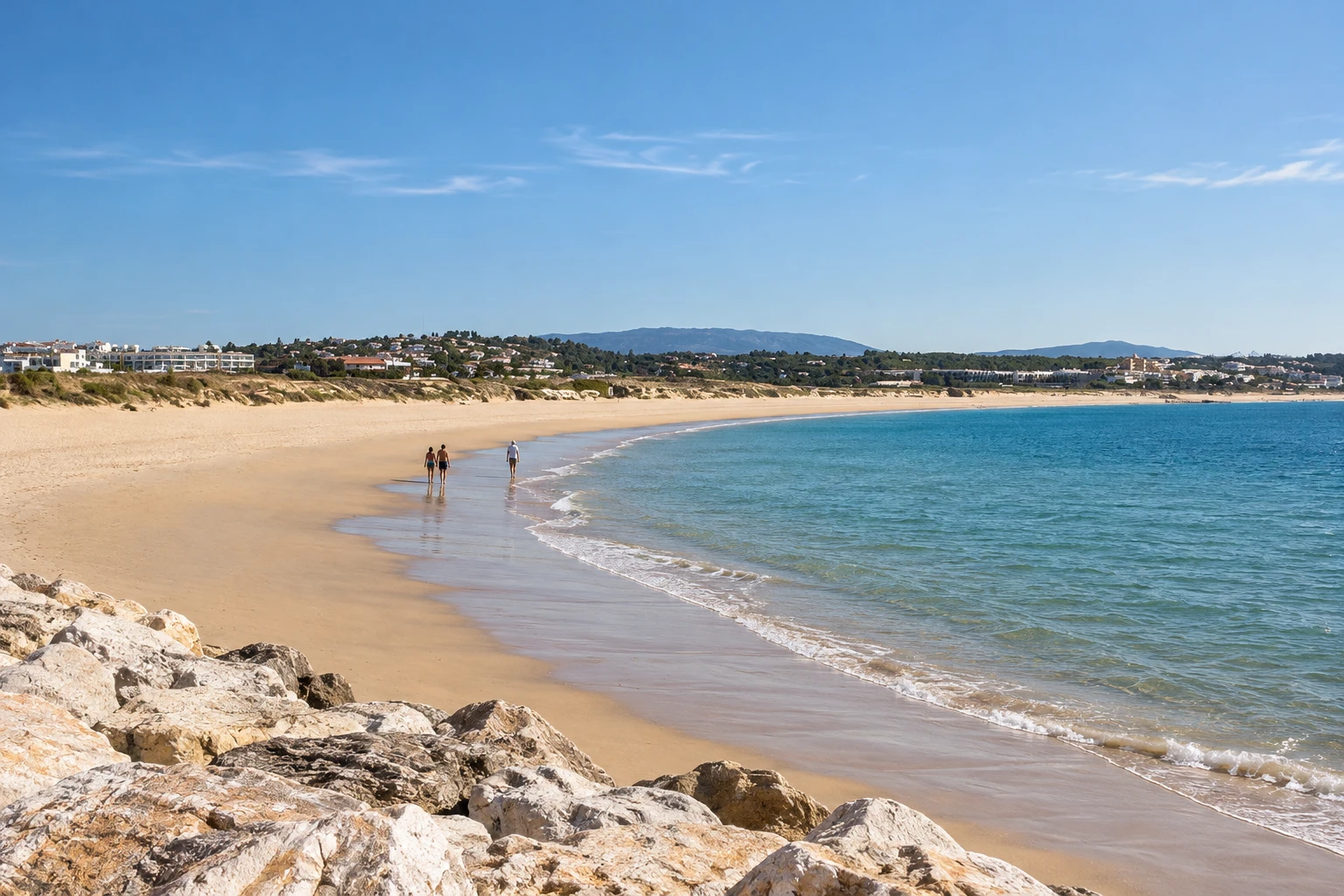
Extensive, flat beach east of Lagos, with about 4 km of sand, good for walking and for those who prefer a beach without stairs.
Coastal lagoon protected by sand islands along about 60 km of the eastern Algarve coast, with channels, marshes and island beaches. Boat trips leave Faro for islands such as Deserta and Culatra.
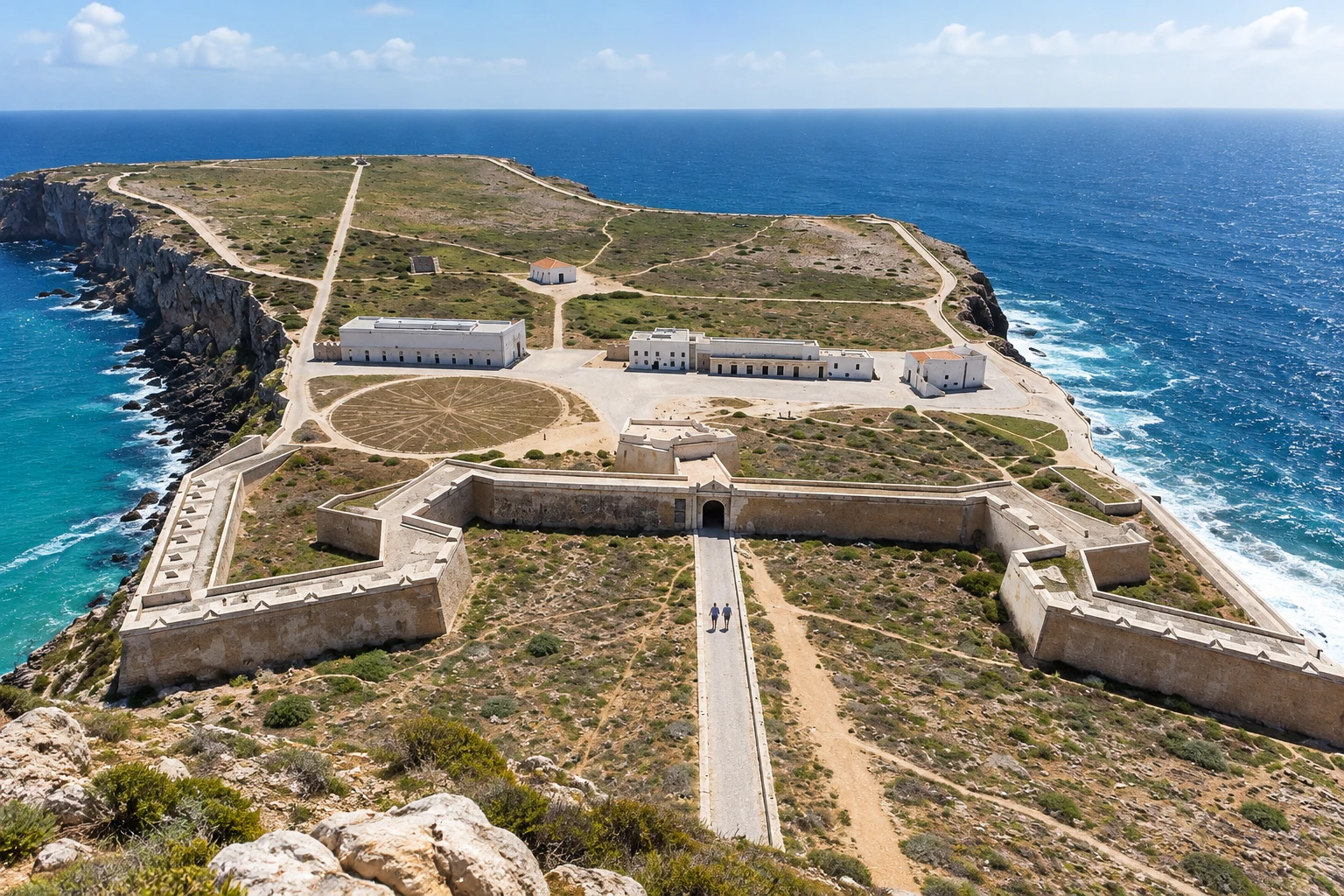
Fortress on a promontory of cliffs about 33 km from Lagos, linked to the memory of Infante D. Henrique, with a large stone compass rose on the ground and trails along the seafront.
To choose before you go
The details of each tour (where it leaves from, what it includes, the best time) are in the complete guide.
Get your questions answered
The guide's itineraries cover 3, 5 and 7 days: in 3 days, Lagos, Benagil caves and Sagres; in 5 days, west coast cliffs and Ria Formosa; in 7 days, from Cacela Velha to Cape St. Vincent.
Arrival and Lagos historic center. Flights from Brazil usually arrive in Lisbon in the morning. Trains (comboios) to the Algarve depart from Oriente station; to reach Lagos change at Tunes, and the journey takes about 4 hours. In the late afternoon, take a walk through Lagos’s historic center, from Avenida dos Descobrimentos to the Forte da Ponta da Bandeira. Have an early dinner and rest after the flight.
It generally rains less from May to September. The rainiest months are usually from November to December. The guide covers each month, with the weather and what changes on the tours.
To plan