Rjukan
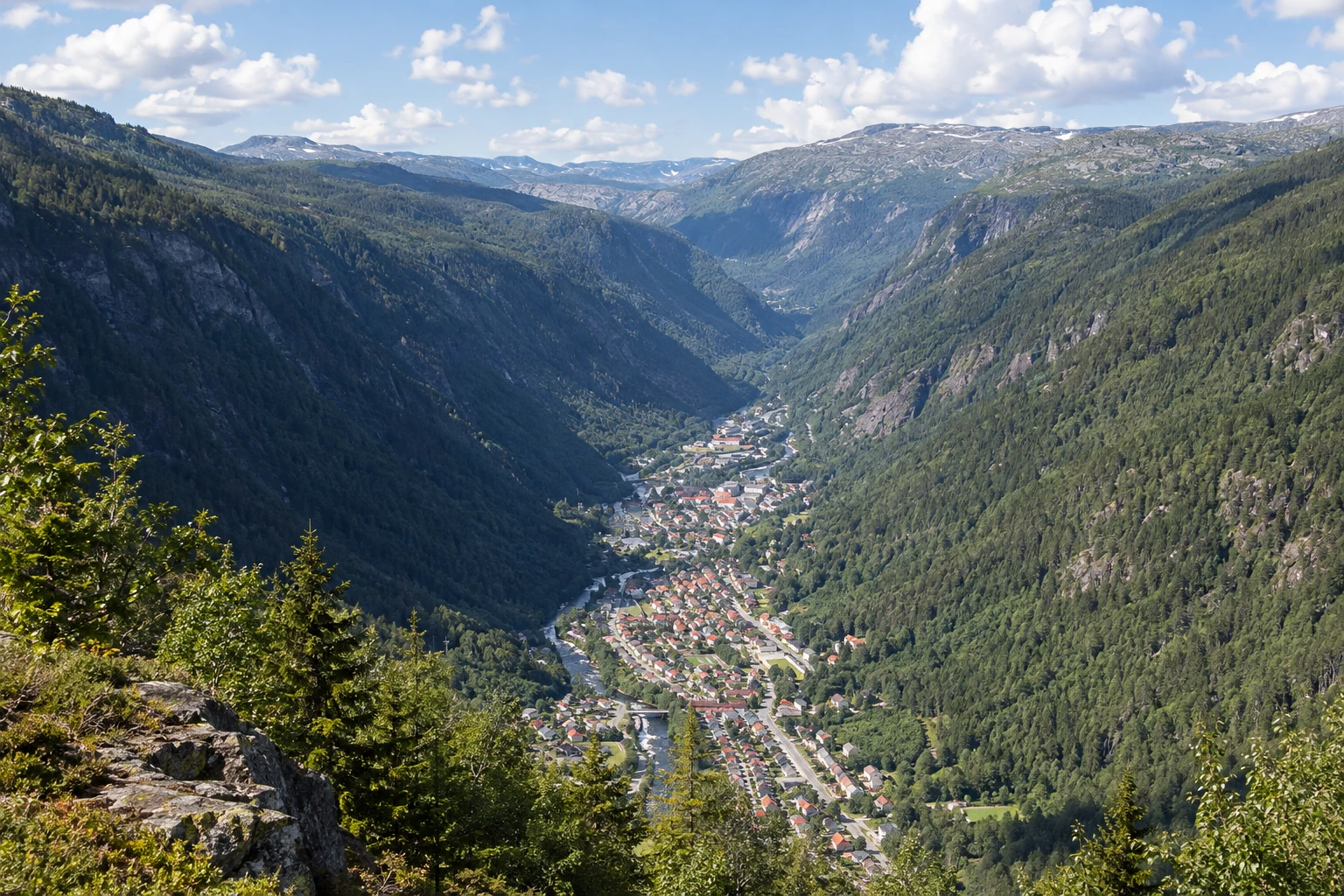
Rjukan occupies a valley in Telemark tied to the history of hydroelectric power and industry. Vemork presents that story in a former power plant, and Gaustatoppen offers a mountain activity with its own access outside the town center.
Antarctica
Telemark
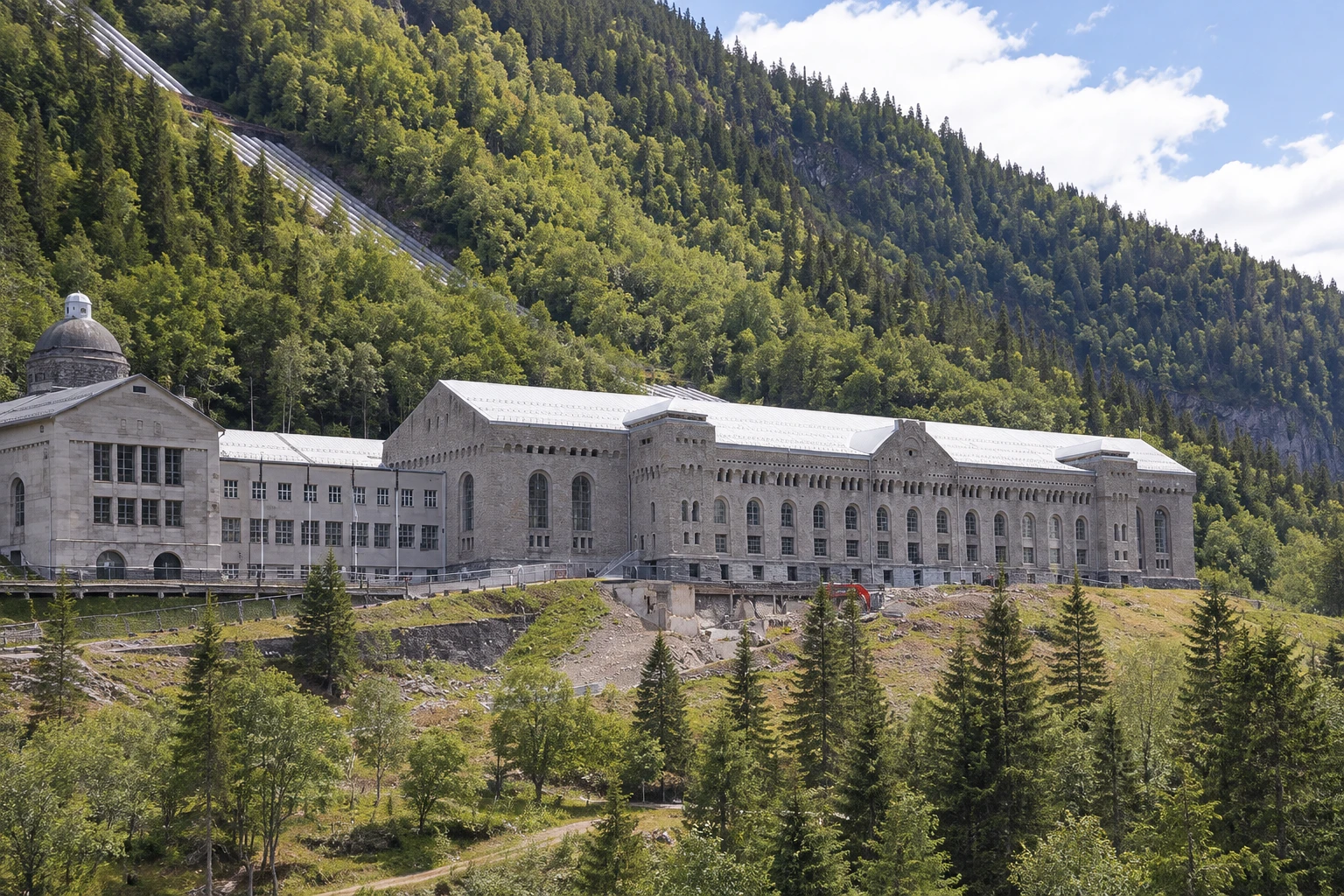
Industrial Heritage of Telemark, the former Vemork power plant, the mountain Gaustatoppen and the wooden roofs of Heddal church.
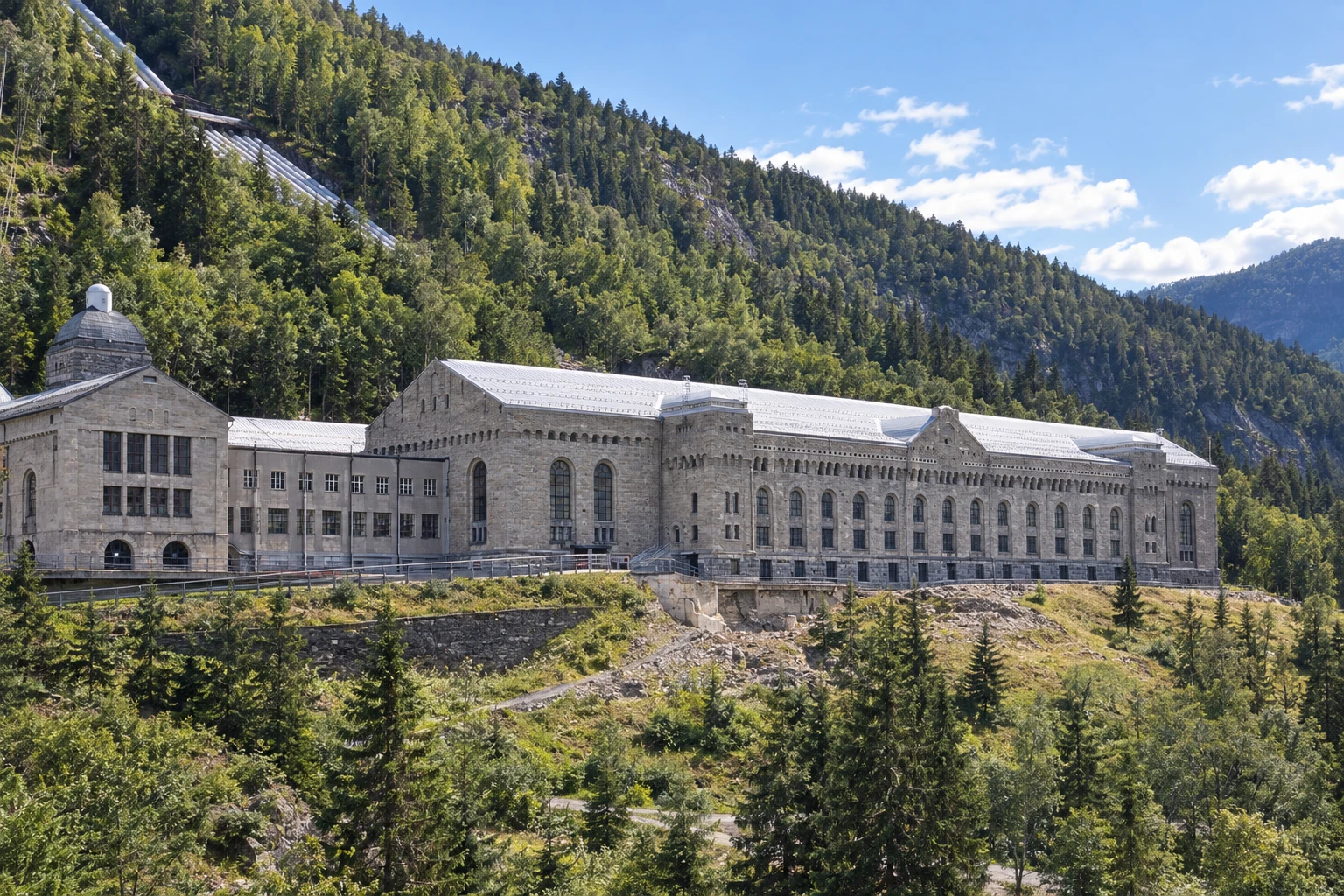
In the photo: Vemork
Illustrative images. The pictures in this guide are illustrations based on the real place, not photographs, and may differ from it.
Get to know the place
Rjukan and Notodden showcase parts of Norway’s industrial history across two valleys in Telemark. Water power and goods transport helped shape the towns and are part of the ensemble recognized as World Heritage.
In Rjukan, Vemork lets you explore a former hydroelectric plant converted into a museum. Gaustatoppen adds a mountain activity that requires its own day and preparation. In the Notodden area, Heddal preserves a wooden church with overlapping roofs and towers.
The two towns do not form a single visitor hub. Divide the route by base and add driving time between activities. Summer generally favors outdoor routes, while winter tends to be cold with short days, with seasons reversed compared to Brazil.
This destination brings together 2 cities: Rjukan, Notodden.
One destination, many paths
Start with one city or combine several in your itinerary.
Outlines: © Kartverket (CC BY 4.0), 2024 boundaries; coastline via geoBoundaries. Adapted by Cidade Turismo.
Connections from Brazil are usually via a stopover in another city. Confirm before booking. Oslo has bus connections to the towns in Telemark. The E134 serves Notodden, and regional roads continue to Rjukan.
Suggested arrival point: Rjukan

Rjukan occupies a valley in Telemark tied to the history of hydroelectric power and industry. Vemork presents that story in a former power plant, and Gaustatoppen offers a mountain activity with its own access outside the town center.

Notodden sits by lake Heddalsvatnet, in the industrial heritage region shared with Rjukan. Heddal’s wooden church, west of the centre, is a sight in itself, with towers and overlapping roofs.
The local experience
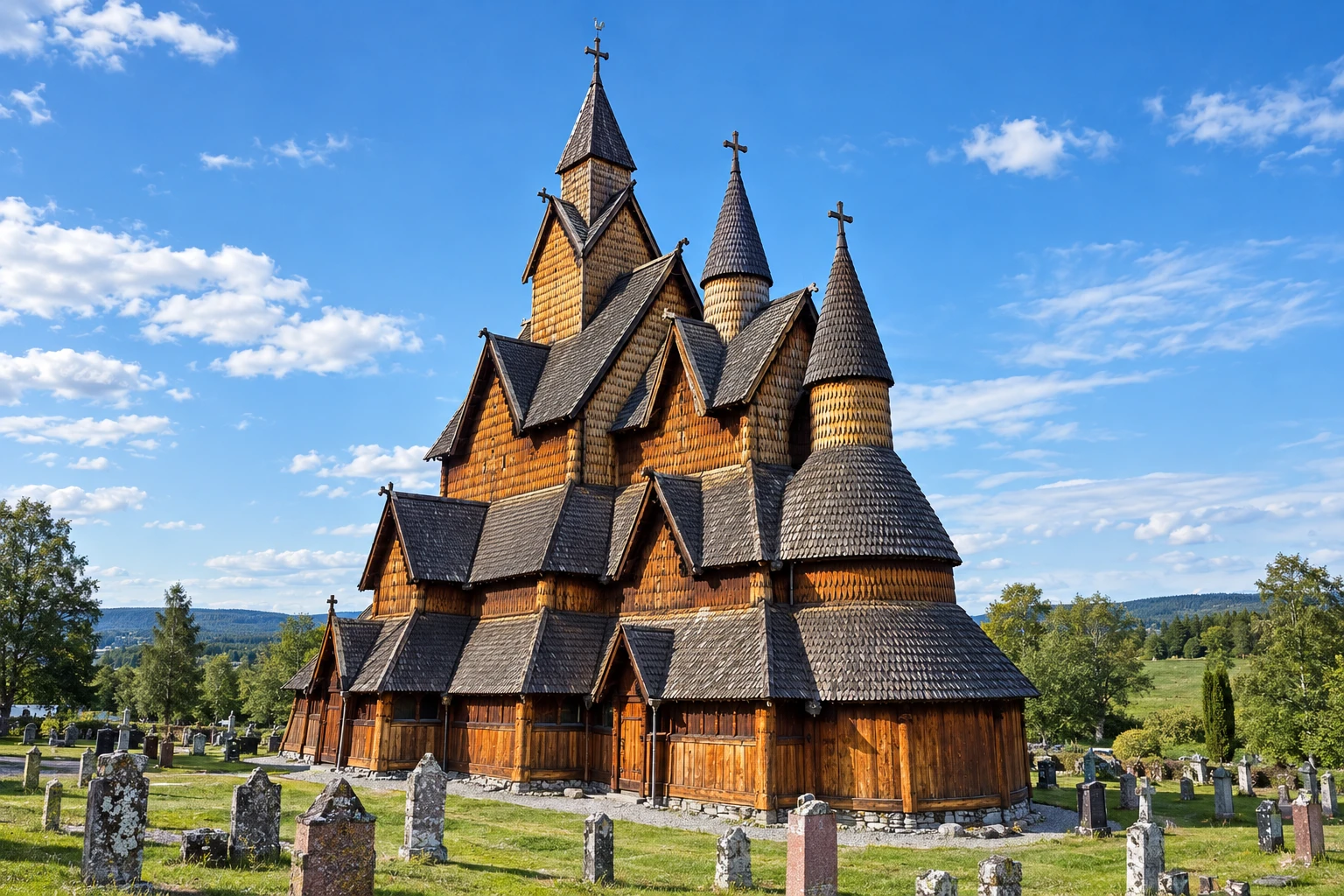
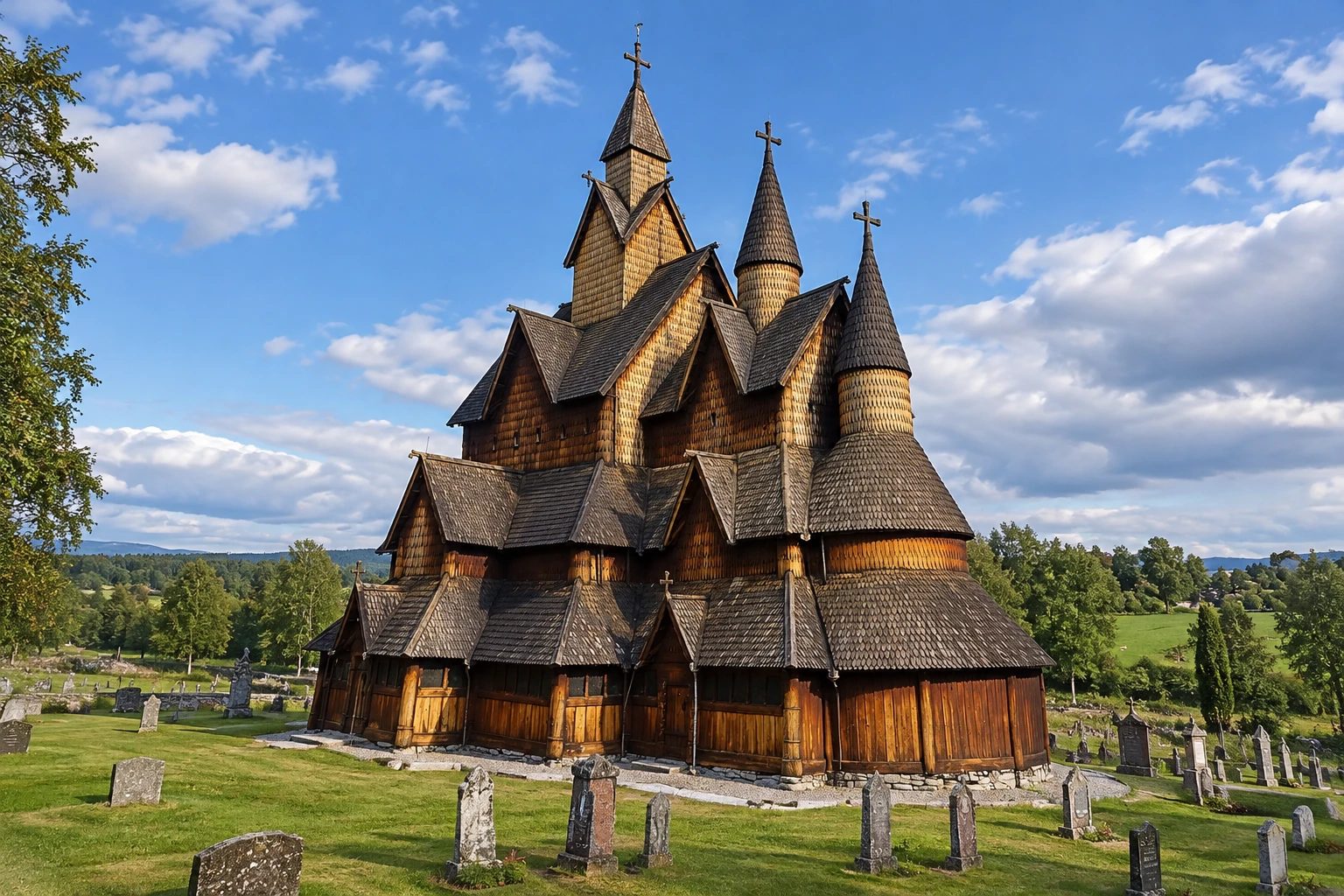
Heddal stavkyrkje is a wooden church west of Notodden centre. The ensemble of overlapping roofs, towers and external galleries allows observation of a construction style that marked medieval religious architecture in Norway.
The Vemork museum occupies the former hydroelectric power station above the Rjukan valley. The building and its installations present the relationship between water power, industrialization, and workers’ lives, part of the industrial heritage ensemble of Rjukan and Notodden.
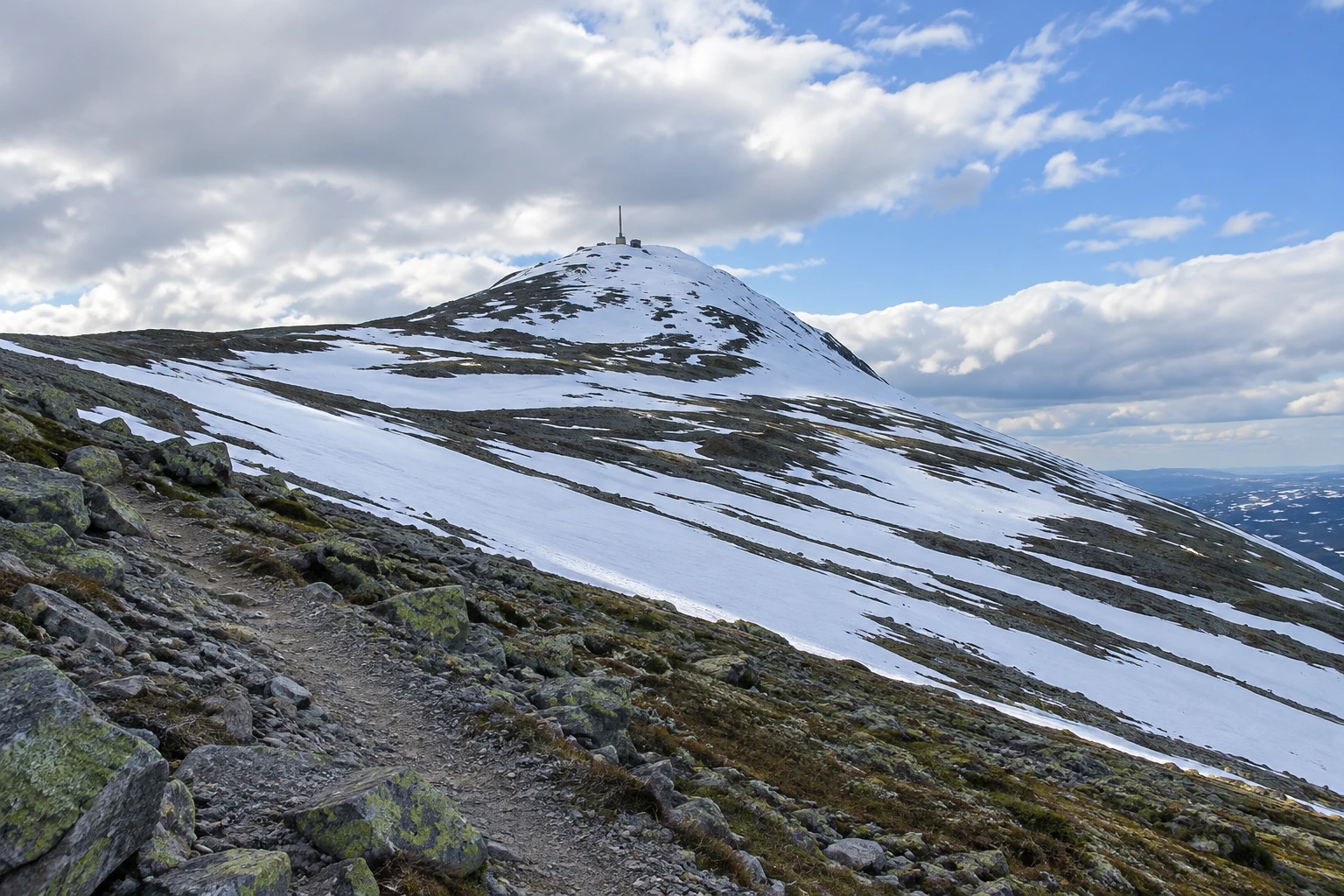
Gaustatoppen is a mountain in Telemark that towers above Rjukan. Its rocky profile can be seen from the area and is also the objective of a high-altitude hike, with route and starting point defined before setting out.
To choose before you go
Where each tour starts, how long it takes, how it is done, what is included and the price range.
The Vemork museum occupies the former hydroelectric power plant above the Rjukan valley. The building and its installations present the connection between water power, industrialization and the lives of workers, as part of the industrial heritage of Rjukan and Notodden. The route lets you observe the space of a large technical installation and follow exhibitions about its history. The complex is outside Rjukan’s center and has its own visitor access and admission. The visit should not be treated as a quick drive-by in front of the façade.
Stops: Norsk Industriarbeidermuseum – Vemork.
Includes: Arrange site access and transfers separately. Guided activities and admissions have their own conditions.
Tip: Choose the museum route and allow time to understand the power plant and its exhibitions.
Best time: The program can be part of an itinerary throughout the year, depending on its operating schedule
Gaustatoppen is a mountain in Telemark that towers above Rjukan. Its rocky profile can be seen from the region and it is also the objective of a high-altitude hike, with route and starting point defined before setting out. The walking route from Stavsro climbs over rocky terrain and requires an appropriate amount of time. The extent of the view often varies with cloud cover. There is also access via internal mountain transport operating as a separate service; its operation and reach should be checked when planning your visit.
Stops: Gaustatoppen.
Includes: Arrange access to the site and travel separately. Guided activities and admissions have their own terms.
Tip: Decide beforehand whether you will hike or use internal transport and confirm the season’s conditions.
Best time: Hikes are most commonly done from June to September; prepare in advance.
Heddal stavkyrkje is a wooden church west of Notodden’s center. The ensemble of overlapping roofs, towers and exterior galleries allows you to see a building method that shaped medieval religious architecture in Norway. The church remains an active place of worship and is open to visitors according to its schedule. Inside, wooden elements, paintings and furnishings help you identify the different phases of the building’s use. Outside, allow time to walk around the sides and understand how the volumes overlap.
Stops: Heddal stavkyrkje.
Includes: Arrange access to the site and travel separately. Guided activities and admissions have their own terms.
Tip: Note the different sides of the building and confirm tourist access so it does not coincide with celebrations.
Best time: Interior visits are usually more extensive between May and September
Day by day
Suggestions to plan the trip. Change the order of the days according to the weather and tour availability.
In Rjukan, devote part of the day to the Vemork museum and traveling through the valley. The former hydroelectric power station provides the context to understand the town’s industrial origins.
Plan Gaustatoppen as the main activity of the day. Choose hiking or internal transport, prepare beforehand and check access at the travel station; add the road transfer time to the time on the mountain.
Head to Notodden and visit Heddal stavkyrkje west of the town centre. It’s a cultural day from a different base, with driving time between the towns; access to the church interior follows its own schedule.
Best time to go
From June to September, days usually favor walks and travel between valleys. In winter, from December to February, it’s typically cold and days are short. The seasons are reversed compared with Brazil.
The seasons shown are the most usual ones; nature doesn't always follow the calendar.
Winter · plan your transfers
The monthly average at the reference station is usually around -4.5 °C. The cold is often persistent and the days are usually short. Prioritize outings with confirmed access for the period. The seasons are reversed compared with Brazil.

Winter · plan your transfers
The monthly average at the reference station is usually around -3.5 °C. The cold is often persistent and the days are usually short. Prioritize outings with confirmed access for the period. The seasons are reversed compared with Brazil.

Spring · plan your transfers
The monthly average at the reference station is usually around 0.5 °C. Daylight tends to increase through the season, while snow usually remains on the mountains. High-altitude routes follow their own schedule. The seasons are reversed compared with Brazil.
Spring · plan your transfers
The monthly average at the reference station is usually around 5.6 °C. Daylight tends to increase through the season, while snow usually remains on the mountains. High-altitude routes follow their own schedule. The seasons are reversed compared with Brazil.
Spring · long days
The monthly average at the reference station is usually around 10.8 °C. Daylight tends to increase through the season, while snow usually remains on the mountains. High-altitude routes follow their own schedule. The seasons are reversed compared with Brazil.
Summer · long days
The monthly average at the reference station is usually around 14.6 °C. The weather is usually mild and the days are typically very long. There is higher demand for outdoor activities; arrange reservations in advance. The seasons are reversed compared with Brazil.
Summer · long days
The monthly average at the reference station is usually around 17.1 °C. The weather is usually mild and the days are typically very long. There is higher demand for outdoor activities; arrange reservations in advance. The seasons are reversed compared with Brazil.
Summer · long days
The monthly average at the reference station is usually around 15.5 °C. The weather is usually mild and the days are typically very long. There is higher demand for outdoor activities; arrange reservations in advance. The seasons are reversed compared with Brazil.
Autumn · plan your transfers
The monthly average at the reference station is usually around 11.2 °C. Temperatures and day length tend to fall. Long hikes and mountain transfers require planning before you set out. The seasons are reversed compared with Brazil.
Autumn · plan your transfers
The monthly average at the reference station is usually around 4.9 °C. Temperatures and day length tend to fall. Long hikes and mountain transfers require planning before setting out. The seasons are reversed compared with Brazil.
Autumn · plan your transfers
The monthly average at the reference station is usually around 0.6 °C. Temperatures and day length tend to fall. Long hikes and mountain transfers require planning before setting out. The seasons are reversed compared with Brazil.
Winter · plan your transfers
The monthly average at the reference station is usually around -4.2 °C. The cold is often persistent and the days are usually short. Prioritize outings with confirmed access for the period. The seasons are reversed compared with Brazil.

Plan the journey
Connections from Brazil typically involve a stopover in another city. Confirm before you buy. Brazilian citizens enter with a valid passport, as with the rest of the Schengen area. Requirements can change: confirm before you travel.
Connections from Brazil typically involve a stopover in another city. Confirm before you buy. From Oslo, take a bus with a regional connection to Rjukan. By car, the region’s roads link the town to Notodden and to the mountain access points.
Check train, bus, and ferry connections to Rjukan for your travel date. Verify each leg and the return connection before combining different services. On boat routes, confirm the pier and direction of travel.
A car makes access to Vemork and the mountain trailheads easier. Without one, confirm buses and seasonal services for each outing.
The currency is the Norwegian krone. The language is Norwegian; English is widely spoken. The time difference is four hours ahead of Brasília, or five during European daylight saving time. Divide excursions by duration and confirm seasonal access before booking transport.
Before you go
A little planning leaves more time to enjoy the journey.
From June to September, days usually favor walks and travel between valleys. In winter, from December to February, it’s typically cold and days are short. The seasons are reversed compared with Brazil.
The seasons shown are the most usual ones; nature doesn't always follow the calendar.
Three days to cover Vemork, Gaustatoppen and Heddal, separating the mountain day from cultural visits.
Rjukan is convenient for the Vemork museum and the mountain valley. Notodden is another base to visit Heddal and split the driving; choose nights according to the route sequence.
Take your trash with you, follow the signs and support local businesses. In natural areas, follow the visiting guidelines.
Beyond the guide
Your questions
Oslo has bus connections to the towns in Telemark. The E134 serves Notodden, and regional roads continue to Rjukan.
Three days to cover Vemork, Gaustatoppen and Heddal, separating the mountain day from cultural visits.
From June to September, days usually favor walks and travel between valleys. In winter, from December to February, it’s typically cold and days are short. The seasons are reversed compared with Brazil.
Rjukan is convenient for the Vemork museum and the mountain valley. Notodden is another base to visit Heddal and split the driving; choose nights according to the route sequence.