Henningsvær
From Svolvær It is about 25 km from Svolvær via the E10 and the Henningsvær road, roughly From 2 hours to half a day. during the day depending on the route chosen
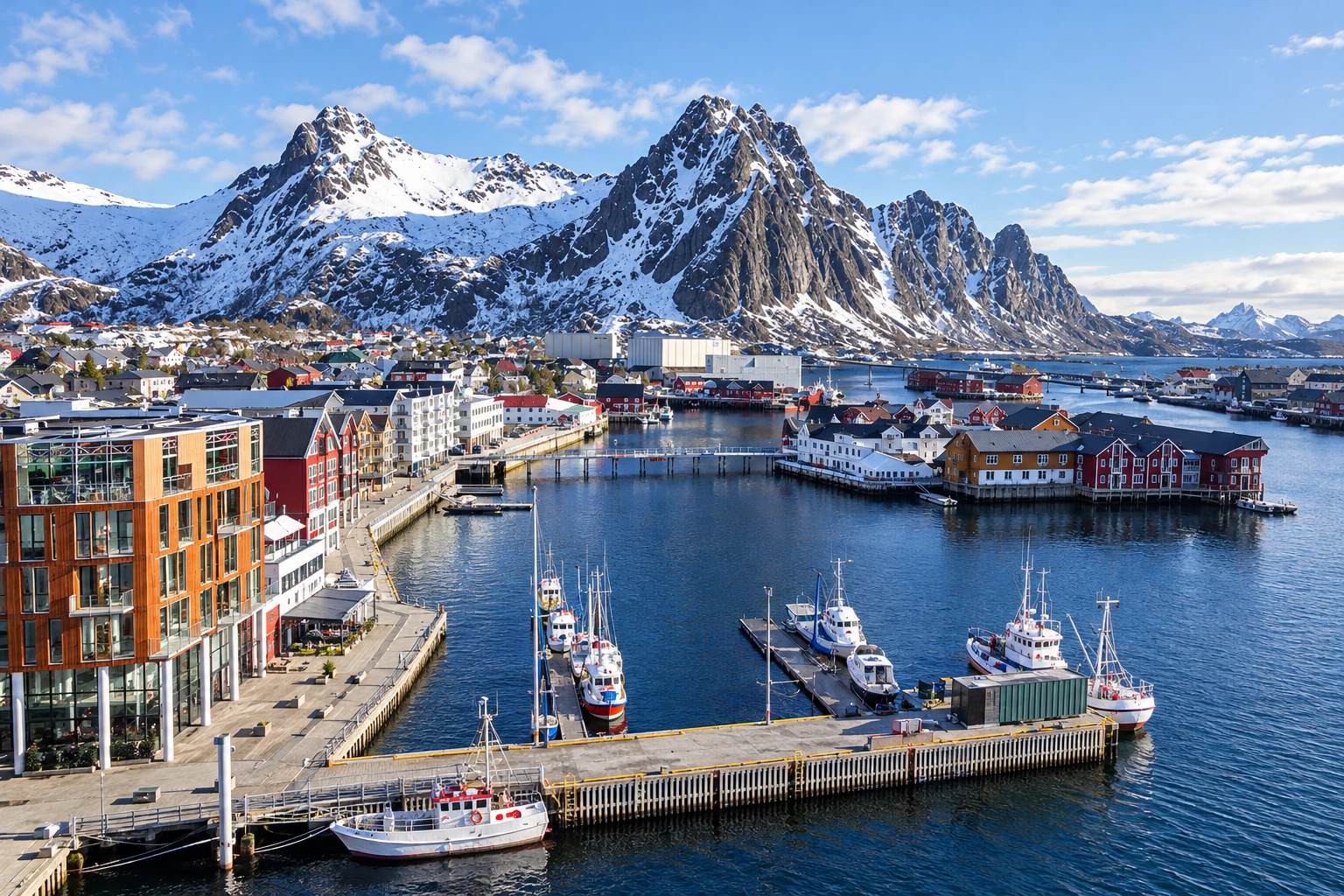
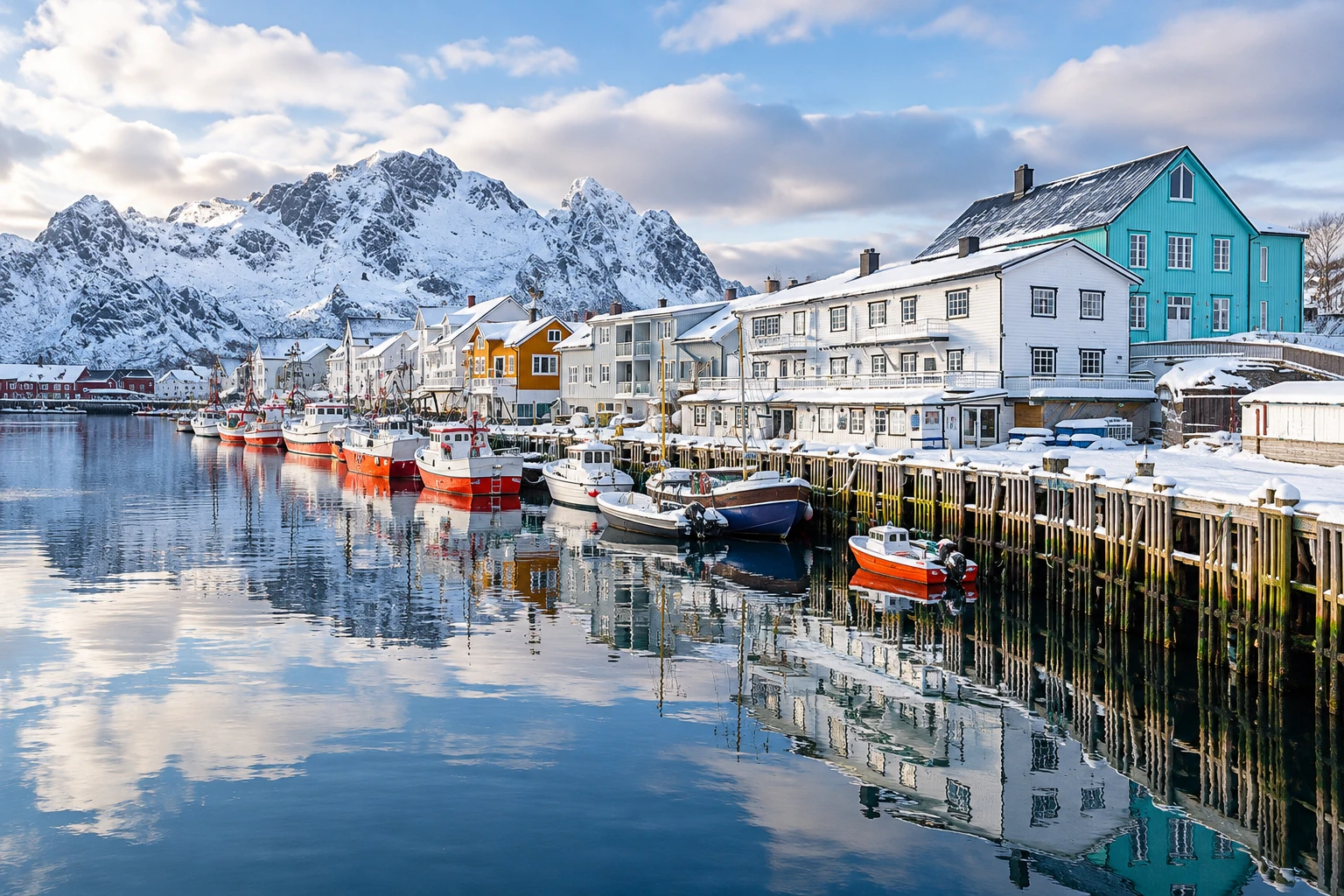
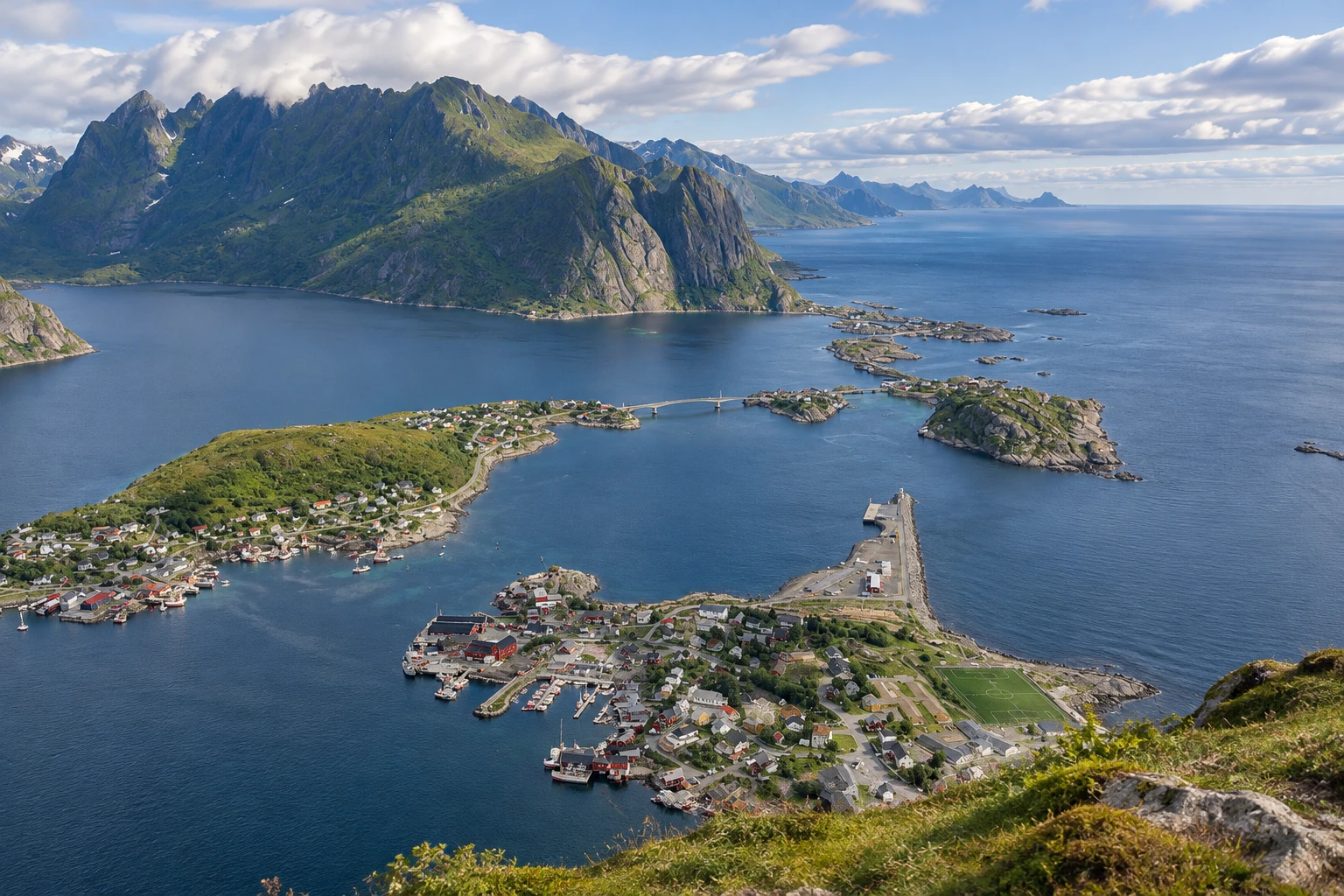
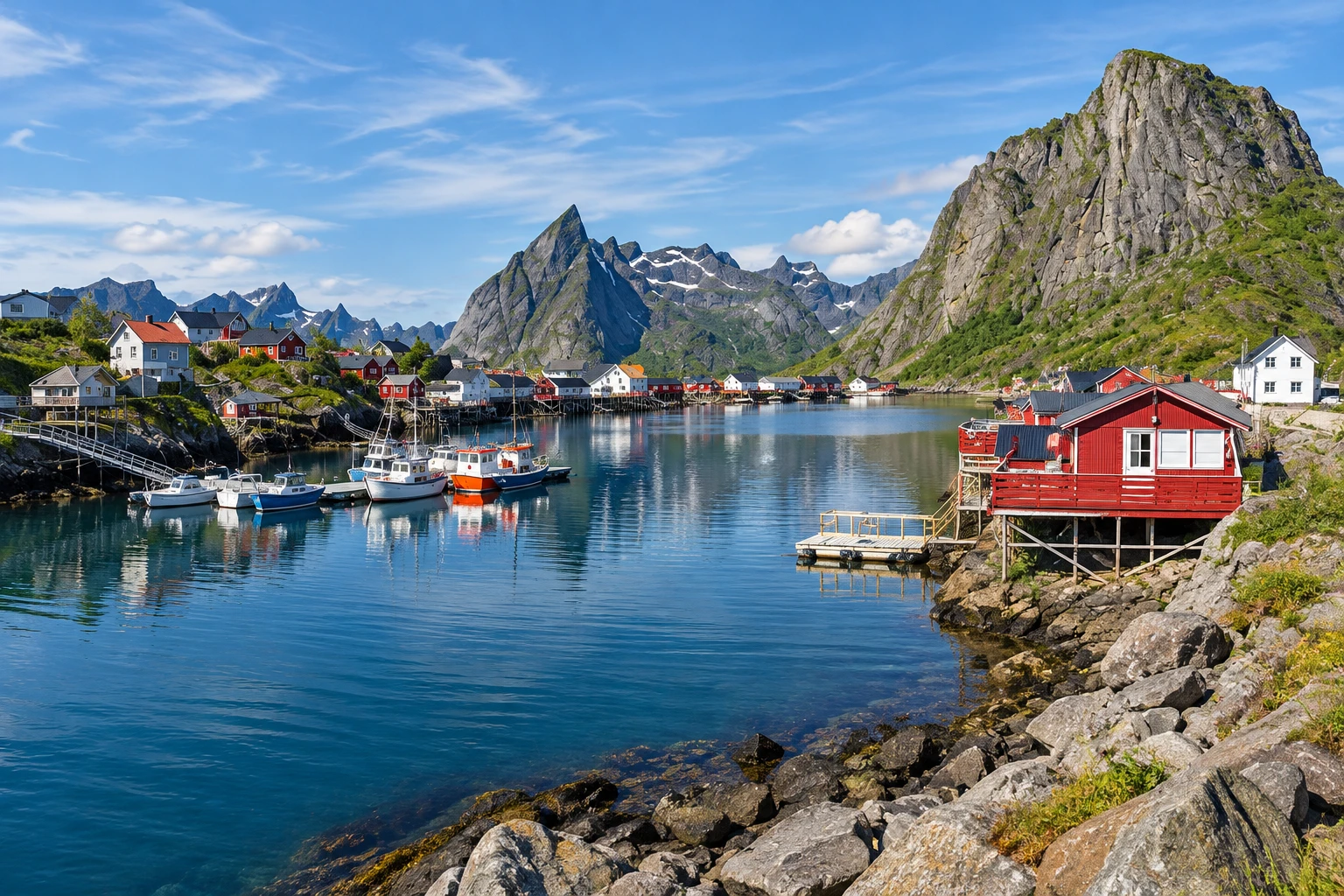
Henningsvær is a fishing village spread across a group of islets on the south side of the island of Austvågøy, linked to the E10 road by two narrow bridges. It is about 25 km from Svolvær and, for centuries, was one of Lofoten’s busiest ports during the cod season, from January to April.
The village center is built around the harbor, with colorful wooden houses, red rorbuer and drying racks where cod is air-dried from February to June. Many of the old fish-processing buildings have become galleries, cafés and shops; one of them, the KaviarFactory, houses a collection of contemporary art in a cannery.
Stops: Henningsvær.
Includes: Arrange access to the site and transfers separately. Guided activities and admissions have their own conditions.
Tip: Park at the entrance to the village and walk over the small islets. Climb the trail on the slope of Festvågtind to the viewpoint if you have an hour and a half.
Best time: From June to August, with long days and cafés open
Lofotr Vikingmuseum
From Svolvær It is in Borg, by the E10, about 70 km west of Svolvær and 15 km from Leknes About 2 to 3 hours. during the day depending on the route chosen
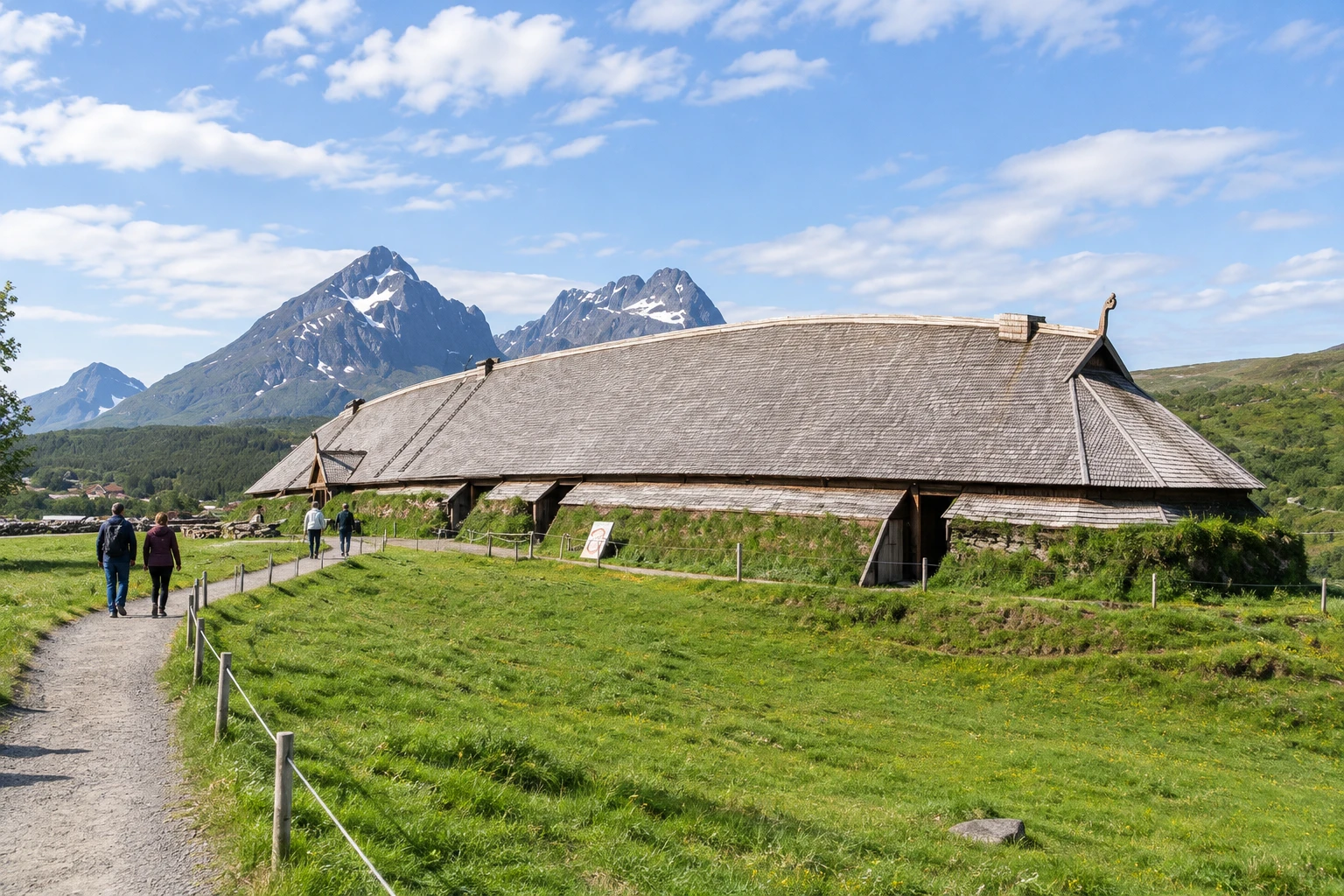
The Lofotr Vikingmuseum is in Borg, on the island of Vestvågøy, in the center of the archipelago. In 1983 a farmer found traces of a large building there, and excavations revealed the hall of a Viking chieftain about 83 meters long, one of the largest Viking-age houses found in Scandinavia. Glass and pottery from continental Europe were also uncovered, evidence of long-distance trade.
Beside the original site the museum reconstructed the house at full scale, timber-built with a turf roof and a curved ridge like an overturned ship’s hull. Inside is the banquet hall with a long hearth in the center, benches, furs and artifacts, and other parts of the house with storage and workshops. Guides in period clothing typically explain life at the site.
Stops: Lofotr Vikingmuseum.
Includes: Arrange site access and travel separately. Guided activities and tickets have their own terms.
Tip: Start at the visitor center and go down to the reconstructed house. If you go in summer, book the Viking feast in the evening.
Best time: From June to August, when the museum usually runs guided activities, rowing-boat trips and feasts
Vågan kirke
From Svolvær It is in Kabelvåg, by the E10, about 5 km from Svolvær From 30 minutes to 1 hour during the day depending on the chosen route
The Vågan church, in Kabelvåg, is called the Cathedral of Lofoten, although it is not a cathedral. It was built in 1898, in wood, in a neo-Gothic style, with a tall tower and a pale yellow façade, and has about 1,200 seats, a number far larger than the local population. The size is explained by fishing: during the cod season, thousands of fishermen arrived in Kabelvåg and the nearby villages.
Inside, the nave is broad and bright, with wooden galleries around, painted pews and an altar with a reredos. It is one of the largest wooden churches in northern Norway and continues to serve as a parish church, hosting masses and concerts.
Stops: Vågan kirke.
Includes: Arrange access to the site and transfers separately. Guided activities and admissions have their own conditions.
Tip: Combine it with the Lofotmuseet and the Lofotakvariet in Storvågan, 2 km away, and with a walk around Kabelvåg harbor.
Best time: From June to August, when the church usually opens for daytime visits
Reinebringen
From Reine The trailhead is next to the E10, near the tunnel entrance, about 1 km away 2 to 3 hours round trip, with time at the top. during the day depending on the chosen route
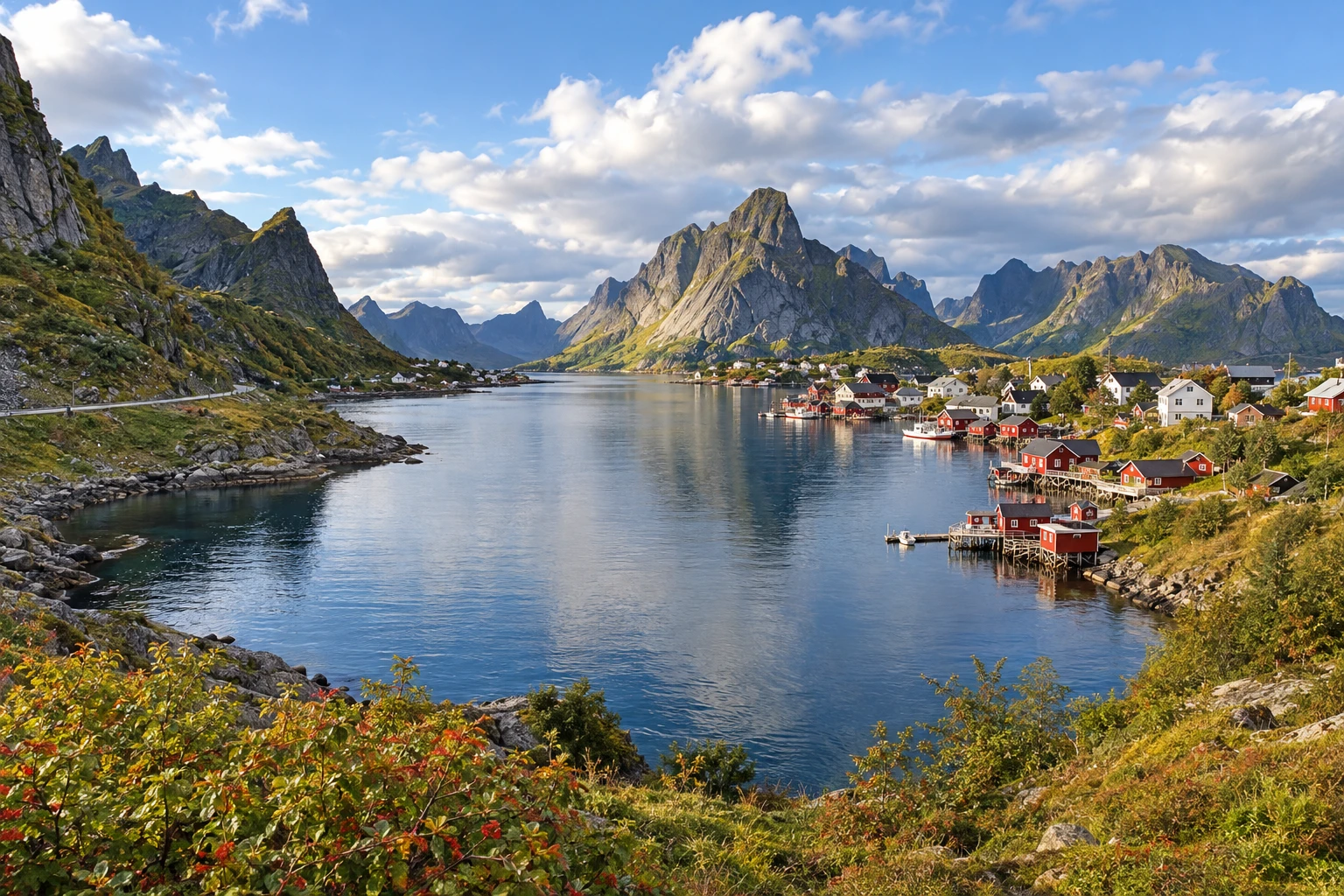
Reinebringen is the mountain rising behind the village of Reine, and the viewpoint at the top, at about 448 meters, has the best-known view of the Lofoten: Reine and its red rorbuer on islets, the Reinefjord, the E10 bridges and the surrounding jagged peaks, with the open sea on one side and bays on the other.
The trail starts next to the E10, near the Reine tunnel, and climbs a stone stairway of more than 1,500 steps, built by sherpa guides from Nepal to replace the old path, which suffered from erosion. The ascent is steep and continuous, and takes from 45 minutes to during the day, depending on fitness. At the top, a rocky ridge leads to several viewpoints.
Stops: Reinebringen.
Includes: Arrange access to the site and transfers separately. Guided activities and tickets have their own conditions.
Tip: Wear hiking shoes and bring a jacket and water: it’s windy up top. Climb at late afternoon to avoid midday crowds.
Best time: From June to September, when the staircase is usually free of snow
Hamnøy
From Reine It is on the E10, about 5 km from Reine and 15 km from Moskenes, where the ferry arrives From 30 minutes to 1 hour. during the day depending on the route chosen
Hamnøy is one of the oldest fishing villages in western Lofoten, on a small islet at the entrance to Reinefjord, about 5 km from Reine. the E10 road crosses it by bridges, and from the Hamnøy bridge you can see the scene featured in many photos of the archipelago: red rorbuer on the rocks at the water’s edge, with the Olstinden peak and the Reine mountains in the background.
The old rorbuer have been renovated and operate as accommodation, and there are cod racks on the rocks between February and June. The village is small, with a fish restaurant, a quay and few houses, and can be walked in half an hour.
Stops: Hamnøy.
Includes: Organize access to the site and transfers separately. Guided activities and admissions have their own terms.
Tip: Stop before the bridge and walk to its middle for the classic photo. Do not park on the bridge shoulders; use the village parking areas.
Best time: All year
Nusfjord
From Reine It is about 6 km from the E10, via the Nusfjord road, 25 km from Reine and 30 km About 1 to 2 hours. during the day depending on the route chosen
Nusfjord is a fishing village on the island of Flakstadøya, in a narrow bay between mountains, about 6 km from the E10. Occupied since the Middle Ages, it was selected in the 1970s as one of Europe’s pilot projects for architectural heritage preservation, and the buildings were kept as they were.
The village has red and yellow rorbuer on stilts, merchant houses, a 1907 warehouse that still operates as a shop with old counters and goods, the factory where cod liver oil was produced, the sawmill, the blacksmith and wooden quays. Signs explain what life was like during the fishing season.
Stops: Nusfjord.
Includes: Arrange access to the site and transfers separately. Guided activities and tickets have their own conditions.
Tip: Enter the old storehouse, which still sells goods, and climb the hillside viewpoint to see the cove from above.
Best time: From June to August, when the warehouse, the restaurant and the exhibitions usually operate


 Brazil
 Antarctica
 Argentina
 Bolivia
 Chile
 Colombia
 Ecuador
 Falkland Islands (Malvinas)
 French Guiana
 Guyana
 Paraguay
 Peru
 Suriname
 Uruguay
 Venezuela
 Austria
 Belgium
 Croatia
 Denmark
 Finland
 France
 Germany
 Greece
 Hungary
 Iceland
 Ireland
 Italy
 Luxembourg
 Poland
 Portugal
 Slovakia
 Slovenia
 Spain
 Sweden
 Switzerland
 the Czech Republic
 the Netherlands
 the United Kingdom
 Turkey
 Bermuda
 Canada
 Greenland
 Mexico
 Saint Pierre and Miquelon
 the United States
 the Dominican Republic
 Japan
 Egypt
 South Africa
 Australia
 Fiji
 New Zealand
 Papua New Guinea