Loen and the Jostedalsbreen Glacier

Vestland

Loen and the Jostedalsbreen Glacier

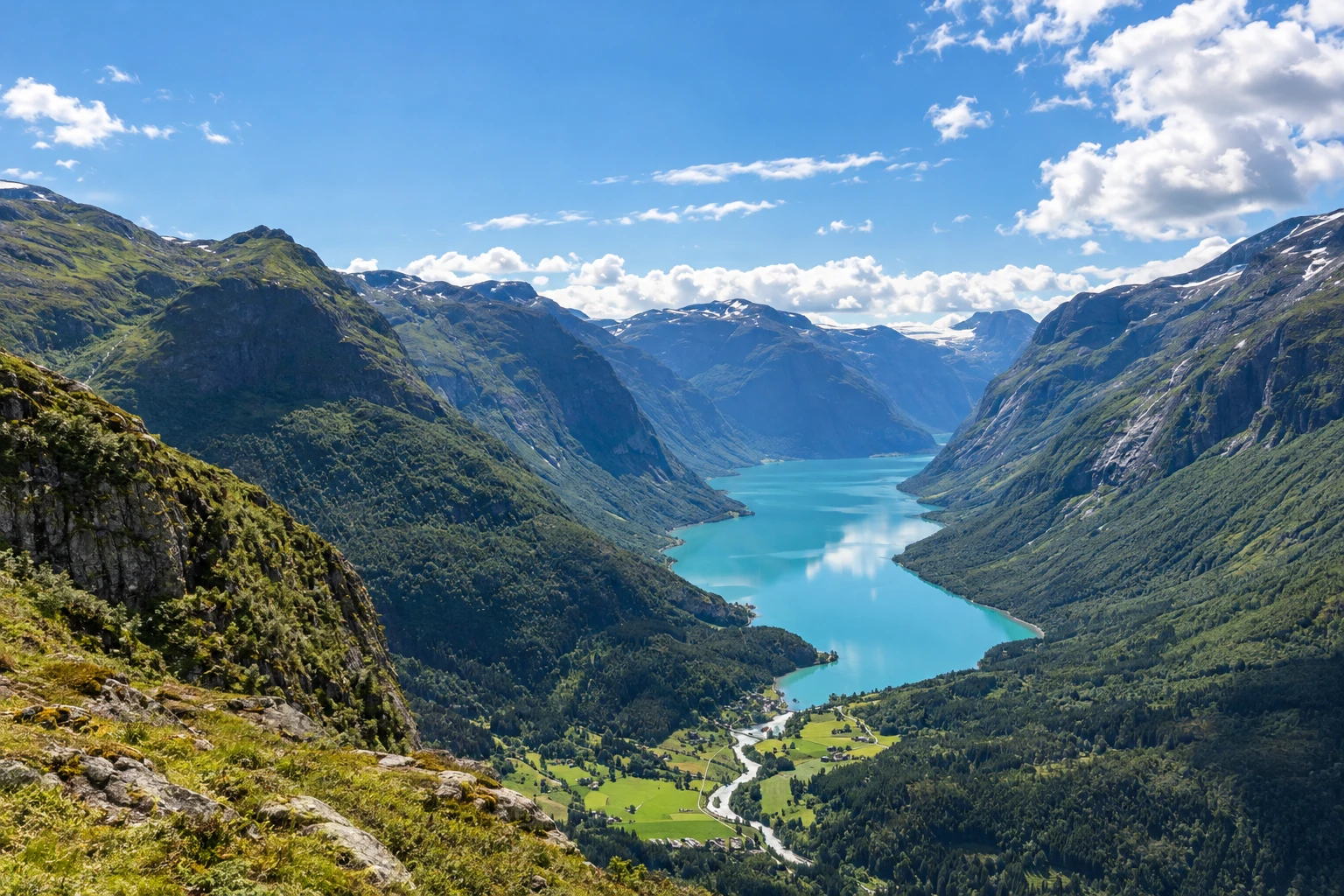
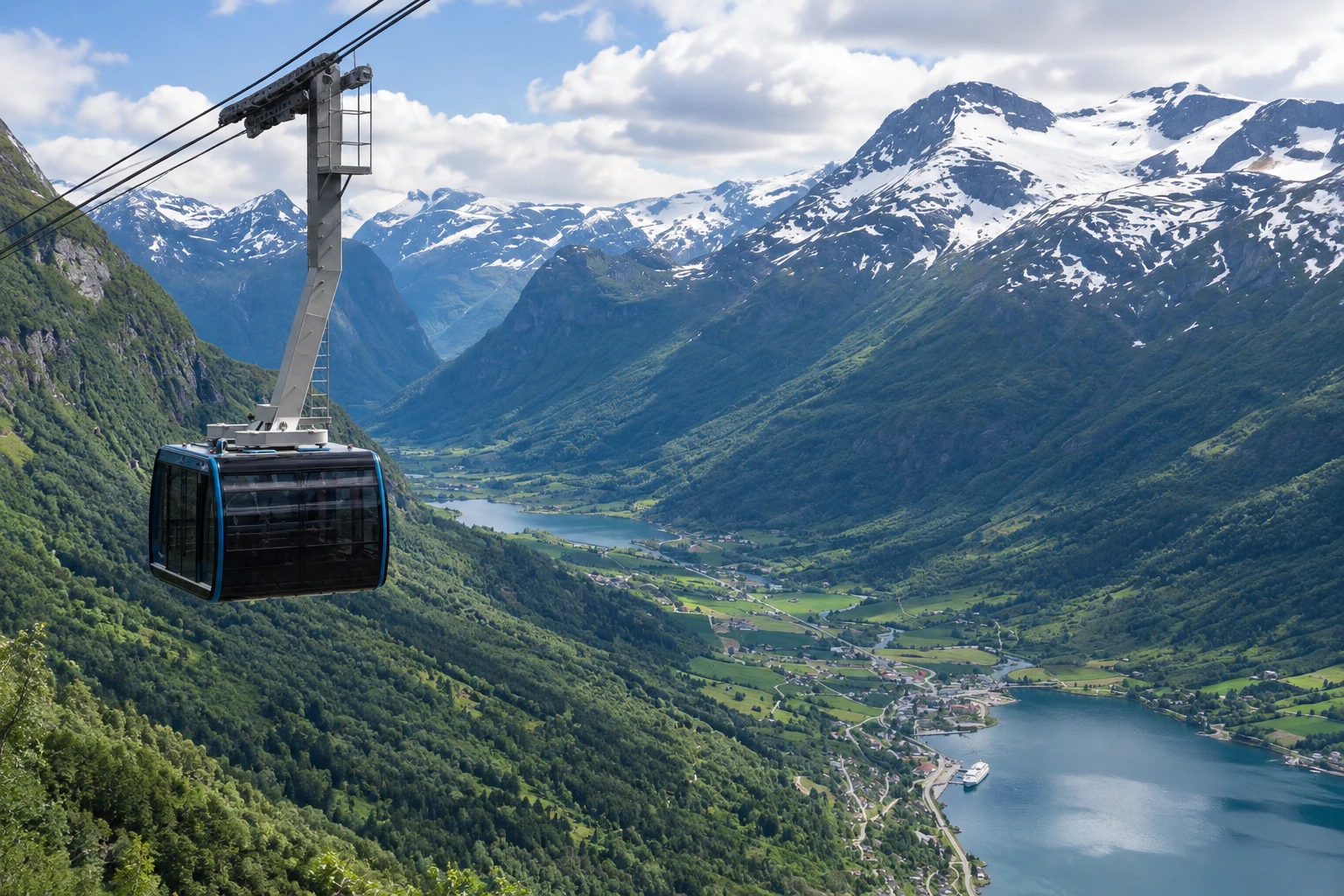
The valleys of Loen and Olden, in the Nordfjord, beneath the Jostedalsbreen glacier: the Loen Skylift cable car to Mount Hoven, the greenish lakes and the Briksdal and Kjenndal glacial tongues.

Westfjords

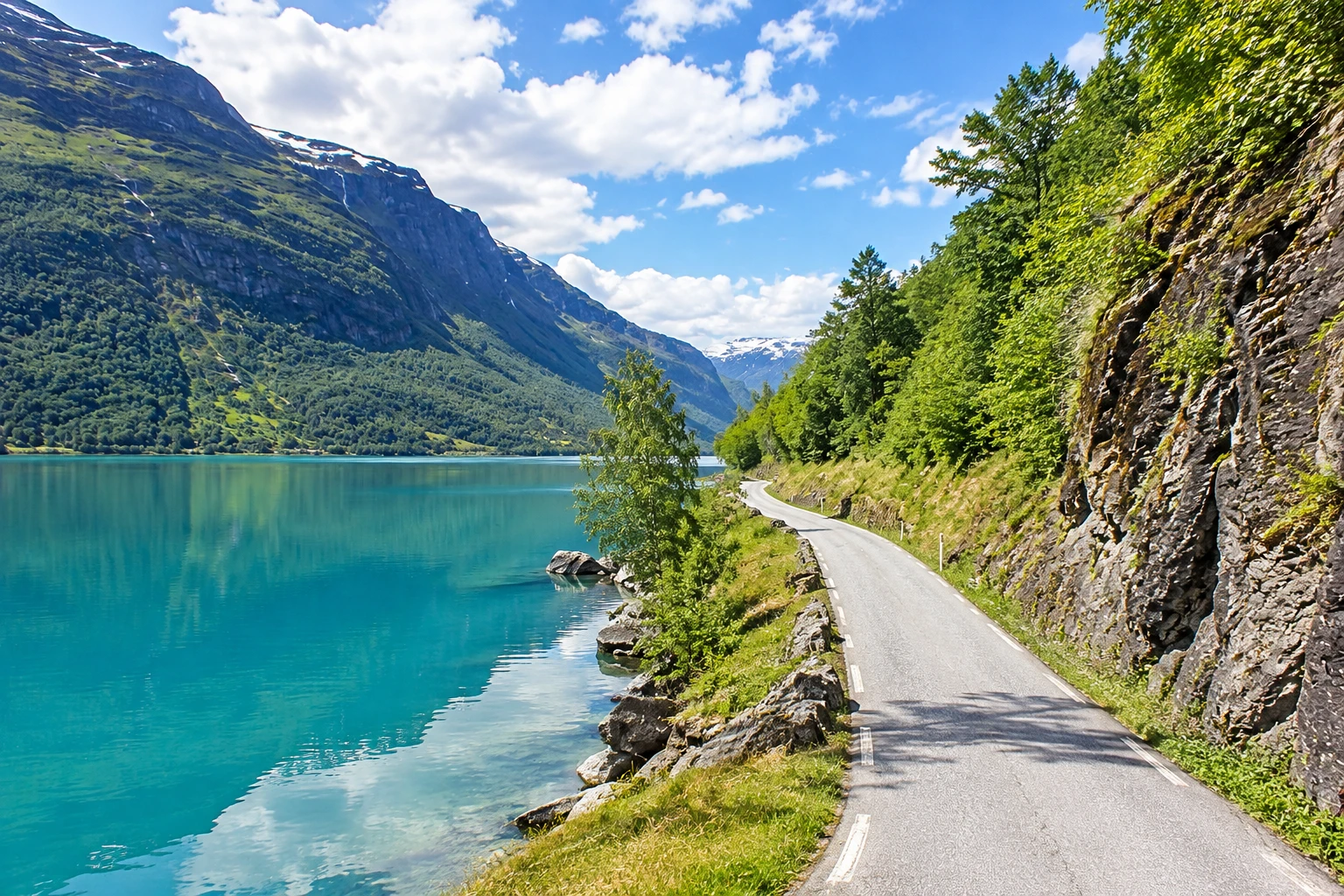
In the photo: Lovatnet

Illustrative images. The pictures in this guide are illustrations based on the real place, not photographs, and may differ from it.

Get it on Google Play

Get to know the place

A region to enjoy
at your own pace.

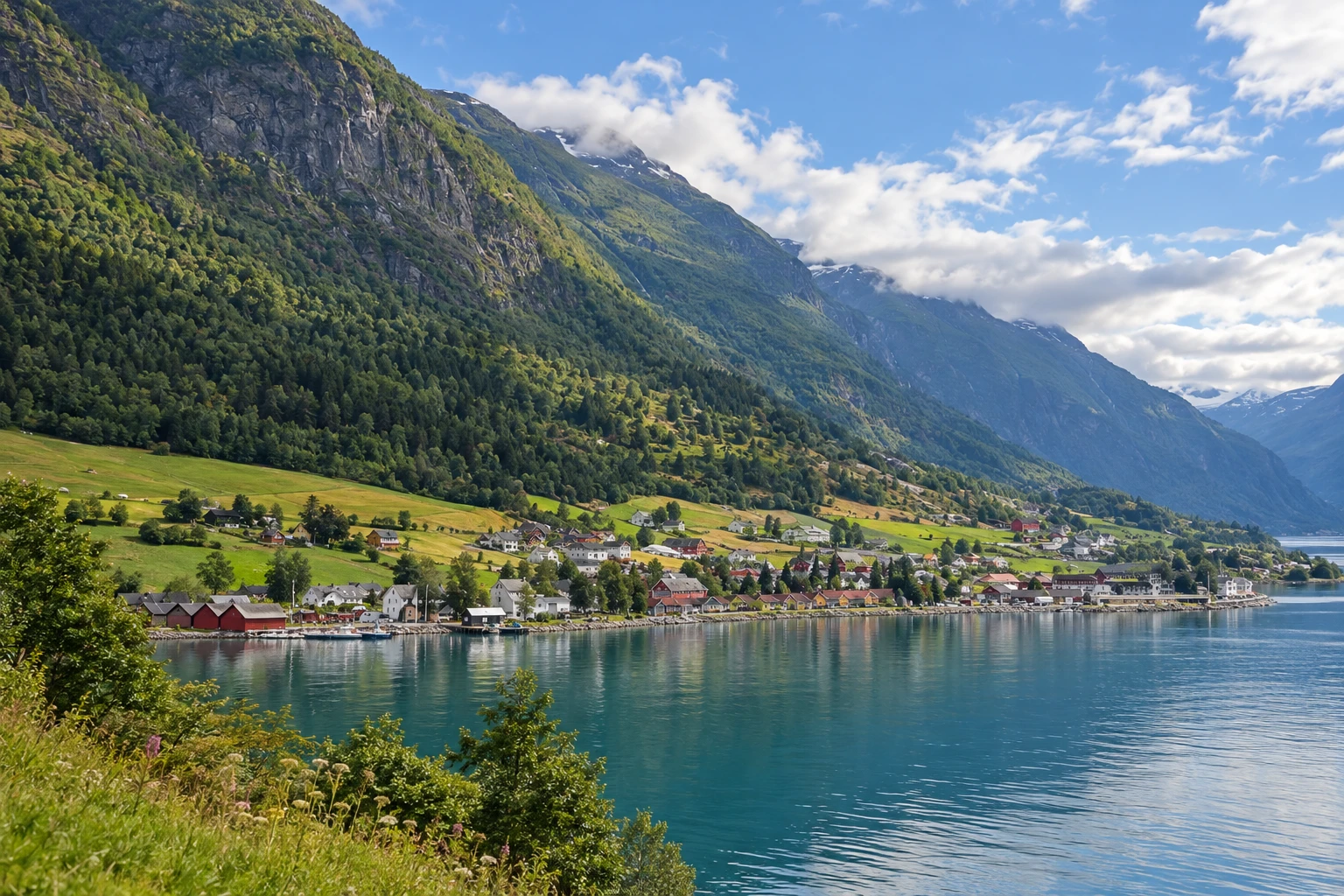
Loen and Olden are two villages at the end of the Innvikfjord, an inner arm of the Nordfjord, in northern Vestland, a few kilometres from each other. From each village a narrow valley climbs southward, with milky green lakes, farms and waterfalls, up to the tongues of the Jostedalsbreen glacier, the largest on the European mainland, which covers the plateau between the Nordfjord and the Sognefjord. The glacier area is a national park.

In Loen, the Loen Skylift cable car rises in a few minutes from the fjord shore to the top of Mount Hoven, at about 1,000 metres, with views over the Nordfjord, the valleys and the snow-covered mountains. The Loen valley, Lodalen, follows the lake Lovatnet up to the Kjenndalsbreen glacier, which descends from the plateau almost to the valley floor. To the east, in Oppstryn, the Jostedalsbreen National Park centre explains the glacier and the landscape.

In Olden, the Oldedalen valley runs along the lake Oldevatnet and ends at Briksdal, from where a trail leads to the front of the Briksdalsbreen glacier, one of the country’s most visited glacial tongues. The village has a cruise ship quay and an 18th-century wooden church.

For Brazilian travellers, the region lies between Bergen and Geiranger and is often included on a driving itinerary through the fjords in summer. The glaciers have retreated in recent decades: their size changes year to year, and it’s best to follow local guidance and guides. Winter tends to be dark and snowy in the mountains, with fewer services open.

This destination brings together 2 cities: Loen, Olden.

Share: WhatsApp
Traveler, share your experiences through photos Up to 5 photos of each place you visited.

One destination, many paths

The cities on this trip

Start with one city or combine several in your itinerary.

Where Loen and the Jostedalsbreen Glacier is The star marks the nearest capital, Molde.
MoldeLoenOlden

Outlines: © Kartverket (CC BY 4.0), 2024 boundaries; coastline via geoBoundaries. Adapted by Cidade Turismo.

How to get there: Loen and the Jostedalsbreen Glacier

Sandane lufthavn, Anda (SDN), in Sandane · 60 km to Loen

Connections from Brazil are usually via another city. Confirm before buying. The nearest airport is Sandane, with domestic flights, about an hour away; Ålesund is about three hours. From Bergen it’s roughly five and a half hours by car or bus; from Geiranger about 1h30. In summer, cruise ships call at Olden.

Suggested arrival point: Loen

The local experience

Things to do in Loen and the Jostedalsbreen Glacier

Olden · Vestland · Glacier

Briksdal Glacier

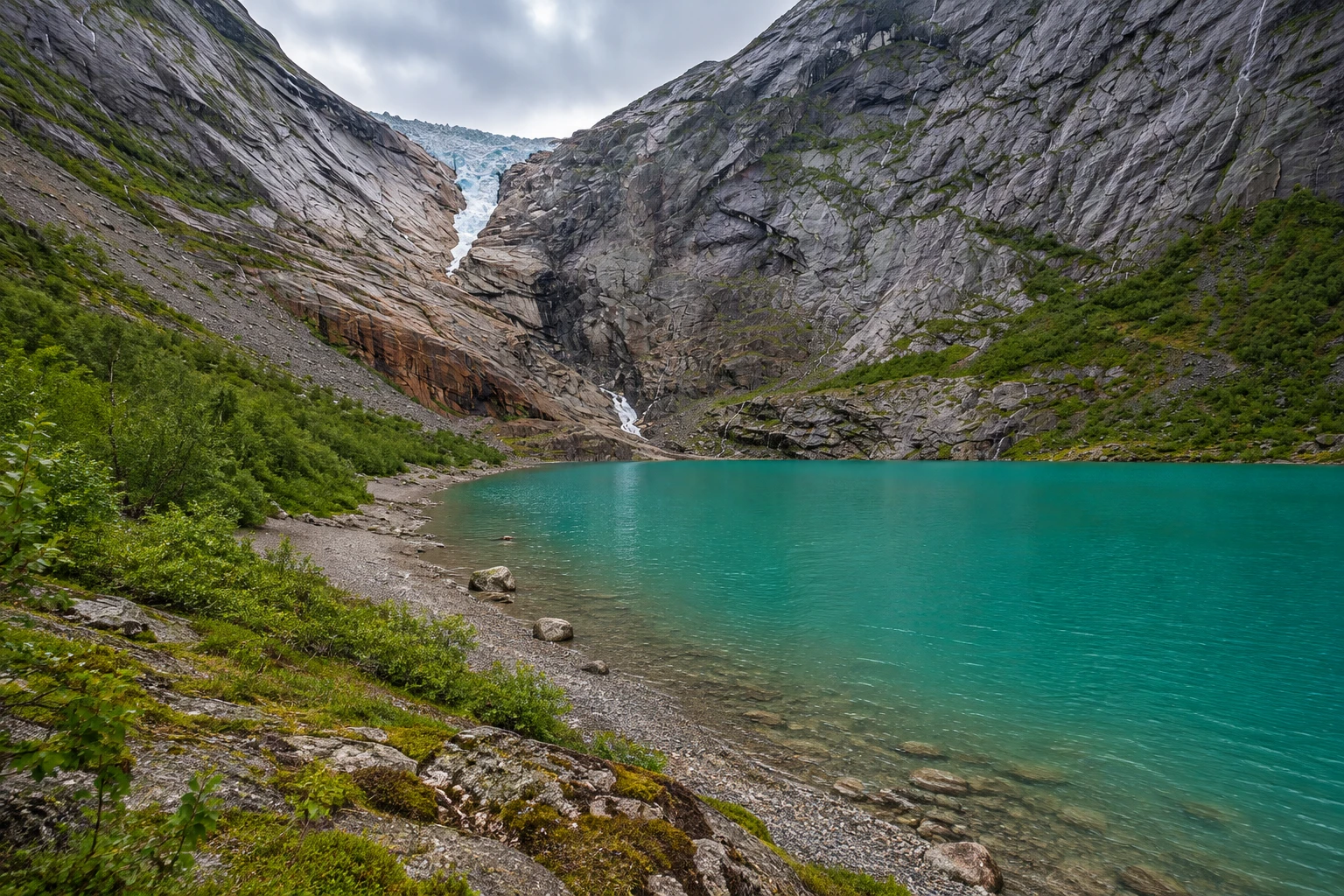
The tongue of the Jostedalsbreen glacier at the end of the Oldedalen valley, descending to a small glacial lake; about a 3 km trail from Briksdal, beside waterfalls, and tourist electric cars in summer.

Explore Briksdal Glacier

Loen · Vestland · Cable car and viewpoint

Loen Skylift

The cable car that rises from the shore of the Nordfjord in Loen to the top of Mount Hoven, at about 1,000 metres, in a few minutes: restaurant, viewpoints, trails and a via ferrata.

Explore Loen Skylift

Loen · Vestland · Lake

Lake Lovatnet

The lake of milky-green water in the Loen valley, about 11 km long between mountains and waterfalls, reached by road and, in summer, by boat all the way to the end of the valley beside the Kjenndalsbreen glacier.

Explore Lake Lovatnet

Olden · Vestland · Valley

Olden Valley

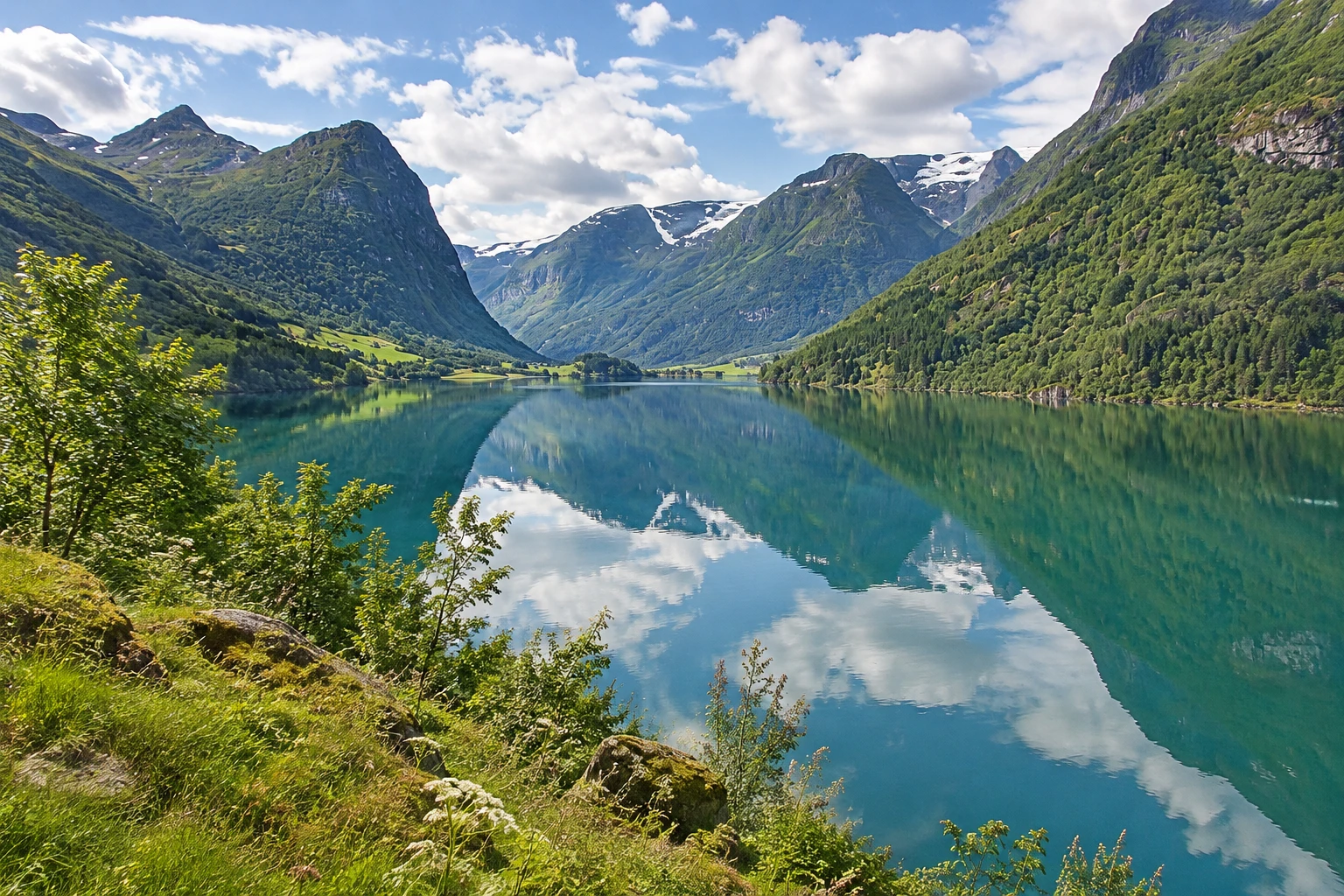
The valley that rises from Olden to Briksdal, with the green Lake Oldevatnet, old farms, waterfalls and the tongues of the Jostedalsbreen glacier appearing high on the mountains.

Explore Olden Valley

See 3 more places in Loen and the Jostedalsbreen Glacier

To choose before you go

Tours in Loen and the Jostedalsbreen Glacier

Where each tour starts, how long it takes, how it is done, what is included and the price range.

Loen Skylift

From Loen The lower station is on the fjord shore, in central Loen, a few minutes away From during the day to 2 hours on the plateau during the day depending on the chosen route

The Loen Skylift is a cable car that leaves from the fjord edge in Loen and climbs almost straight up the slope to the top of Mount Hoven, at about 1,011 meters. The ride takes only a few minutes, on a steep incline, and the cabin passes the rock face with the fjord growing ever more distant below. At the top, the Hoven building houses a restaurant, café and a panoramic terrace with views over the Nordfjord, the villages of Loen and Olden, the valleys rising toward the glaciers and, on clear days, the mountains of the Jostedalsbreen plateau. Platforms and paths lead to viewpoints around the summit.

Stops: Loen Skylift.

Includes: Arrange access to the site and transfers separately. Guided activities and admissions have their own conditions.

Tip: Bring a jacket: up high it is usually much colder than at the fjord. If you like walking, take the cable car up and do one of the plateau trails before descending.

Best time: On a clear day, at any time of year

Lovatnet

From Loen the road leaves the center of Loen and follows the Lodalen valley along the lake shore 2 to 4 hours to travel the valley to Kjenndalsbreen, with stops. during the day depending on the route chosen

Lovatnet is the lake of the Lodalen valley, which rises from Loen to the south toward the Jostedalsbreen glacier. It is about 11 km long and has a milky-green color due to rock flour carried in suspension by the glacier rivers. Around it, the mountains rise almost straight from the shore, with waterfalls and snow on the peaks well into summer. A narrow road runs along the east shore of the lake, passing farms, small stony beaches and stopping areas. At the valley bottom, after Bødal, the road continues through a toll section to Kjenndalen, where the Kjenndalsbreen glacier is located. Along the way, the side valley of Bødalen leads to another glacier tongue, Bødalsbreen, via a longer trail.

Stops: Lovatnet.

Includes: Arrange access to the site and transfers separately. Guided activities and admissions have their own conditions.

Tip: Drive slowly: the road is narrow and has pull-out areas. Stop at the stony beaches to see the color of the water up close.

Best time: From May to September, when the road to the valley bottom and the boat usually operate

Kjenndalsbreen

From Loen It is at the bottom of the Lodalen valley, about 20 km from Loen, via the road along the shore From 30 minutes to 1 hour on the valley floor during the day depending on the chosen route

Kjenndalsbreen is a branch of the Jostedalsbreen glacier that descends from the plateau in tiers of blue ice down to the bottom of Kjenndalen valley, at the end of lake Lovatnet, about 20 km from Loen. From the car park, near a small café, a short walk of about 15 to 20 minutes leads to a viewpoint in front of the glacier terminus. The scene features rock walls polished by the ice, meltwater waterfalls falling down both sides, and a grey-green river that flows from the glacier toward the lake. You can see the ice front up close, with crevasses and bluish blocks, and on warm days you can hear the ice cracking.

Stops: Kjenndalsbreen.

Includes: Arrange access to the site and transfers separately. Guided activities and admissions have their own conditions.

Tip: Combine it with Lovatnet on the same outing. Bring a jacket: near the ice it is colder. Follow the trail markings.

Best time: From May to September, when the road to Kjenndalen is usually open

Jostedalsbreen Nasjonalparksenter

From Loen It is in Oppstryn, by road 15, about 25 km from Loen and 15 km from Stryn, From 1 to during the day. during the day depending on the chosen route

The Jostedalsbreen Nasjonalparksenter is in Oppstryn, on the shore of lake Strynsvatnet, about 25 km from Loen, on the mountain road toward Geiranger and Lom. It is one of the visitor centres for Jostedalsbreen National Park, which protects the largest glacier on continental Europe and the surrounding valleys. The exhibits explain how glaciers form and move, how they carved the valleys and fjords of western Norway and how they are changing with the climate. There are models, rocks and ice samples, panels about the mountain’s animals and plants, and a section on life on valley farms, with winter isolation. A panoramic film shows the glacier from above through the seasons.

Stops: Jostedalsbreen Nasjonalparksenter.

Includes: Arrange access to the site and transfers separately. Guided activities and tickets have their own terms.

Tip: Stop here before going to the glaciers: the film and the models explain what you will see at Briksdal and Kjenndal.

Best time: From May to September, when the center is usually open

Briksdalsbreen

From Olden It is at the end of the Oldedalen valley, about 23 km from Olden, roughly 30 minutes 2 to 3 hours round trip from Briksdal. during the day depending on the chosen route

Briksdalsbreen is one of the tongues of the Jostedalsbreen glacier and one of the most visited in Norway. It descends from the plateau between rock walls to a small glacial lake at the end of the Oldedalen valley, about 23 km from Olden. The bluish ice, crevasses and the ice blocks that float in the lake can be seen from the shore. The trail starts in Briksdal, next to a mountain lodge with a café and parking, and is about 3 km each way, with a gentle climb that becomes steeper, taking roughly 45 minutes to 1 hour on the way up. The path runs beside the Kleivafossen waterfall, whose spray reaches the trail, and crosses bridges over the meltwater river. In summer, small electric tour cars, the troll cars, often take visitors for much of the route.

Stops: Briksdalsbreen.

Includes: Arrange access to the site and transfers separately. Guided activities and tickets have their own terms.

Tip: Bring a rain jacket: the Kleivafossen waterfall splashes people passing beside it. Do the hike on foot at least on the way down to view the waterfalls at leisure.

Best time: From May to September, when the trail is usually snow-free and the electric cars operate

Oldedalen

From Olden the road leaves the center of Olden and follows the valley to Briksdal, about 23 km 1 to 3 hours, with stops, in addition to the visit to Briksdal. during the day depending on the route chosen

Oldedalen is the valley that runs from Olden, at the head of the Nordfjord, and climbs about 20 km south to Briksdal and the Briksdalsbreen glacier. It is a narrow valley, with mountains over 1,500 meters on both sides and waterfalls descending the slopes, some coming directly from the glacier. Most of the valley is occupied by Lake Oldevatnet, with milky green water, about 10 km long, and by small historic farms along the shores, some with wooden houses and 19th-century barns. The road follows the lake, with stopping areas, stony beaches and bridges over the meltwater rivers.

Stops: Oldedalen.

Includes: Arrange access to the site and transfers separately. Guided activities and admissions have their own conditions.

Tip: Stop at the stony beaches of Oldevatnet to see the color of the water up close. If you have time, cycle a section of the valley with a bike rented in Olden.

Best time: From May to September, with farms and campsites open and waterfalls fullest in May and June


See 1 more tour

Olden gamle kyrkje

From Olden It is in the centre of Olden, a few minutes' walk from the quay and the main road About 20 to 30 minutes. during the day depending on the chosen route

Olden’s old church was built in 1759, in wood, in the centre of the village, near the mouth of the river that flows down from Oldedalen. It is a small single‑nave church with white exterior walls and a dark roof, and it replaced earlier churches on the same site with medieval origins. The interior retains period wooden benches with hinged doors, painted floral decoration and the 18th‑century pulpit and altar. Light enters through small windows, and the church has the feel of a modest village church typical of rural western Norway.

Stops: Olden gamle kyrkje.

Includes: Arrange access to the site and transfers separately. Guided activities and admissions have their own conditions.

Tip: Combine it with a walk around the village centre and the fjord shore before heading up the valley.

Best time: From June to August, when the church is usually open for visits

Day by day

1, 2 and 3-day itinerary in Loen and the Jostedalsbreen Glacier

Suggestions to plan the trip. Change the order of the days according to the weather and tour availability.

1 day · Loen and the Jostedalsbreen glacier in 1 day

For To plan visits by day, allowing time for transfers. · Based in Loen, Olden
  1. Day 1 · Loen Skylift / Lovatnet

    Take the Loen Skylift and view the Nordfjord from Hoven. Then walk a stretch along the shore of Lovatnet; the lake lies in another valley and requires driving to reach.

2 days · Loen and the Jostedalsbreen glacier in 2 days
For To organize visits by day, allowing time for travel. · Based in Loen, Olden
  1. Day 1 · Loen Skylift / Lovatnet

    Take the Loen Skylift and view the Nordfjord from Hoven. Then walk a stretch along the shore of Lovatnet; the lake lies in another valley and requires driving to reach.

  2. Day 2 · Briksdalsbreen / Oldedalen

    Leave Olden via Oldedalen and set aside most of the day for the walk at Briksdal. The ice is retreating over time; the visit follows the landscape and the designated viewing point.

3 days · Loen and the Jostedalsbreen glacier in 3 days
For To organize visits by day, allowing time for travel. · Based in Loen, Olden
  1. Day 1 · Loen Skylift / Lovatnet

    Take the Loen Skylift and view the Nordfjord from Hoven. Then walk a stretch along the shore of Lovatnet; the lake lies in another valley and requires driving to reach.

  2. Day 2 · Briksdalsbreen / Oldedalen

    Leave Olden via Oldedalen and set aside most of the day for the walk at Briksdal. The ice is retreating over time; the visit follows the landscape and the designated viewing point.

  3. Day 3 · Kjenndalsbreen / Jostedalsbreen Nasjonalparksenter

    Travel through the Kjenndalen valley to view the glacier from a distance and include the visitor center at Oppstryn. Plan the return via Loen and the leg to the museum before you set out.

Best time to go

When to go: Loen and the Jostedalsbreen Glacier month by month

From May to September the valleys and trails are usually free of snow, with boats, Briksdal’s electric cars and visitor centres operating; June and July have very long days. Waterfalls usually have more flow in May and June. In winter, the region is quiet, with short days and some services closed.

The seasons shown are the most usual ones; nature doesn't always follow the calendar.

January High rain

Winter · plan your travel

The monthly average at the reference station is usually around -0.6 °C. The normal precipitation for the month is about 190 mm, totaling rain and snow in water equivalent. Cold tends to be persistent and days are usually short. Prioritize tours with confirmed access for the period. The seasons are reversed compared with Brazil.

February High rain

Winter · plan your travel

The monthly average at the reference station is usually around -1.0 °C. The normal precipitation for the month is about 150 mm, totaling rain and snow in water equivalent. Cold tends to be persistent and days are usually short. Prioritize tours with confirmed access for the period. The seasons are reversed compared with Brazil.

March High rain

Spring · plan your travel

The monthly average at the reference station is usually around 0.7 °C. The normal precipitation for the month is about 165 mm, totaling rain and snow in water equivalent. Daylight tends to increase over the season, while snow usually remains on the mountains. High-altitude routes follow their own schedule. The seasons are reversed compared with Brazil.

April Some rain

Spring · plan your travel

The monthly average at the reference station is usually around 4.5 °C. The normal precipitation for the month is about 87 mm, totaling rain and snow in water equivalent. Daylight tends to increase over the season, while snow usually remains on the mountains. High-altitude routes follow their own schedule. The seasons are reversed compared with Brazil.

May Some rain

Spring · long days

The monthly average at the reference station is usually around 8.5 °C. The normal precipitation for the month is about 72 mm, totaling rain and snow in water equivalent. Daylight tends to increase over the season, while snow usually remains on the mountains. High-altitude routes follow their own schedule. The seasons are reversed compared with Brazil.

June Some rain

Summer · long days

The monthly average at the reference station is usually around 12.0 °C. The normal precipitation for the month is about 85 mm, totaling rain and snow in water equivalent. Weather is generally mild and days are usually very long. There is higher demand for outdoor activities; arrange bookings in advance. The seasons are reversed compared with Brazil.

July Some rain

Summer · long days

The monthly average at the reference station is usually around 14.7 °C. The normal precipitation for the month is about 95 mm, totaling rain and snow in water equivalent. Weather is generally mild and days are usually very long. There is higher demand for outdoor activities; arrange bookings in advance. The seasons are reversed compared with Brazil.

August Some rain

Summer · long days

The monthly average in the reference season is usually around 13.6 °C. Normal precipitation for the month is about 109 mm, combining rain and snow in water equivalent. The weather is usually mild and the days are typically very long. There is higher demand for outdoor tours; book reservations in advance. The seasons are reversed compared with Brazil.

September High rain

Autumn · plan your transfers

The monthly average in the reference season is usually around 10.1 °C. Normal precipitation for the month is about 151 mm, combining rain and snow in water equivalent. Temperatures and day length tend to fall. Long hikes and mountain transfers require planning before you set out. The seasons are reversed compared with Brazil.

October High rain

Autumn · plan your travel

The monthly average at the reference station is usually around 5.1 °C. The normal precipitation for the month is about 170 mm, totaling rain and snow in water equivalent. Temperatures and day length tend to fall. Long hikes and travel in the mountains require planning before you set out. The seasons are reversed compared with Brazil.

November High rain

Autumn · plan your travel

The monthly average at the reference station is usually around 2.0 °C. The normal precipitation for the month is about 181 mm, totaling rain and snow in water equivalent. Temperatures and day length tend to fall. Long hikes and travel in the mountains require planning before you set out. The seasons are reversed compared with Brazil.

December High rain

Winter · plan your travel

The monthly average at the reference station is usually around -0.9 °C. The normal precipitation for the month is about 206 mm, totaling rain and snow in water equivalent. Cold tends to be persistent and days are usually short. Prioritize tours with confirmed access for the period. The seasons are reversed compared with Brazil.

Plan the journey

How to get there: Loen and the Jostedalsbreen Glacier

From Brazil to Norway

Connections to Brazil are usually via a stopover in another city. Confirm before booking. Brazilian citizens enter with a valid passport, as in the rest of the Schengen area. Requirements can change: confirm before travelling.

Arrival and regional connections

Connections to Brazil are usually via a stopover in another city. Confirm before booking. Sandane airport is about an hour away; Ålesund’s is about three hours. From Bergen it’s roughly five and a half hours by car or bus; from Geiranger, approximately during the day. Buses link Loen with Stryn and Olden.

Public transport and bookings

Check train, bus and ferry connections to Loen for your travel date. Verify each leg and the return connection before combining different services. On ferry routes, confirm the pier and the direction of travel.

Car and local transfers

Tips for the Lodalen valley, Oppstryn and Olden. Without a car, the Skylift is located in the centre, and in summer there are usually buses and organised tours.

Planning for Brazilian travellers

The currency is the Norwegian krone. The language is Norwegian; English is widely spoken. The time zone is four hours ahead of Brasília, or five during European summer time. Split outings by duration and confirm seasonal access before booking transport.

Before you go

Practical information

A little planning leaves more time to enjoy the journey.

When to go

From May to September the valleys and trails are usually free of snow, with boats, Briksdal’s electric cars and visitor centres operating; June and July have very long days. Waterfalls usually have more flow in May and June. In winter, the region is quiet, with short days and some services closed.

The seasons shown are the most usual ones; nature doesn't always follow the calendar.

How many days to stay

Two days cover the Loen Skylift, Lovatnet with Kjenndalsbreen and Briksdal in Olden. With three days you can add the national park centre in Oppstryn, the Hoven via ferrata or a guided glacier walk.

Which city to stay in

Loen has hotels on the fjord shore and cabins in the valley near the Skylift. Olden has hotels and campsites by the quay and in the Oldedalen valley on the way to Briksdal. Stryn, 10 km away, is the larger village with a supermarket, restaurants and more options. In summer, valley campsites offer lakeside cabins.

Respect the place

Take your trash with you, follow the signs and support local businesses. In natural areas, follow the visiting guidelines.

Beyond the guide

Your questions

Frequently asked questions about Loen and the Jostedalsbreen Glacier

Do I need a car?

It helps a lot: the valleys, glaciers and the park centre are spread out. In summer there are buses and organized tours, especially on days when cruise ships dock in Olden.

Can you get close to the glaciers?

Yes. Trails lead close to the front of Briksdalsbreen and Kjenndalsbreen. The size of the glaciers changes; follow local instructions and guides.

Can you walk on the glacier?

Only with a guide and proper equipment, on organized tours in summer from the region.

How many days to stay?

Two days for the Skylift, Lovatnet and Briksdal; three for the national park and a guided hike.

Is Loen on the way between Bergen and Geiranger?

Yes. From Loen to Geiranger is about 1h30 by car, via the Strynefjellet mountain road.

Explore other destinations Search by state and city