

 Brazil
 Antarctica
 Argentina
 Bolivia
 Chile
 Colombia
 Ecuador
 Falkland Islands (Malvinas)
 French Guiana
 Guyana
 Paraguay
 Peru
 Suriname
 Uruguay
 Venezuela
 Austria
 Belgium
 Croatia
 Denmark
 Finland
 France
 Germany
 Greece
 Hungary
 Iceland
 Italy
 Luxembourg
 Norway
 Poland
 Portugal
 Slovakia
 Slovenia
 Spain
 Sweden
 Switzerland
 the Czech Republic
 the Netherlands
 Turkey
 Bermuda
 Canada
 Greenland
 Mexico
 Saint Pierre and Miquelon
 the United States
 the Dominican Republic
 Japan
 Egypt
 South Africa
 Australia
 Fiji
 New Zealand
 Papua New Guinea
Route · Ireland · the United Kingdom
Dublin–Belfast by train
Two capitals on the island of Ireland in about two hours by train, along the Irish Sea coast, with no border control on the way.
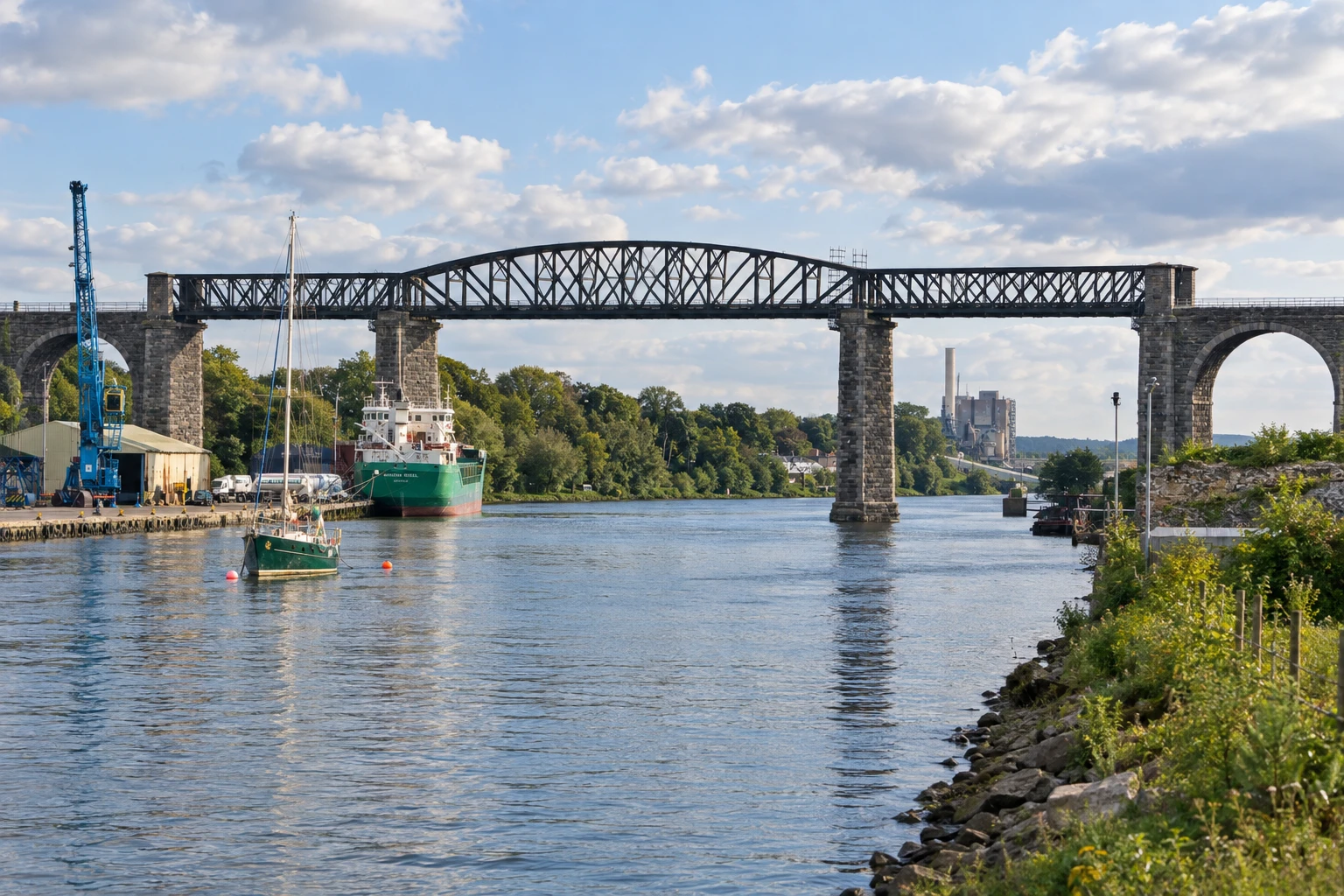
In the photo: Boyne Viaduct, Drogheda
The route
What the Dublin–Belfast by train is
The Enterprise links Dublin, the capital of Ireland, with Belfast, the capital of Northern Ireland, in about 2 hours. The train departs from Dublin Connolly station, in the city center, and arrives at Belfast Grand Central, near the city center. Along the way it usually stops at Drogheda, Dundalk, Newry and Portadown, and passes coastal sections north of Dublin.
The line is jointly operated by Irish Rail (Iarnród Éireann) and NI Railways (Translink). Halfway along the route the train crosses the border between Ireland and the United Kingdom, which is open: there is no stop or passport control. What changes are the currency (from the euro to the pound sterling), the road signs (from kilometres to miles) and the phone operator.
You can do it as a day trip, but the route works better with two or three nights in Belfast: the city has Titanic Belfast and the Victorian city center, and day tours to the Giant's Causeway on the north coast depart from there.
The map
Dublin–Belfast by train
The journey
City by city
Distances and times are approximate: check before you set off.
-
 1 ·
 Ireland · Dublin
Dublin
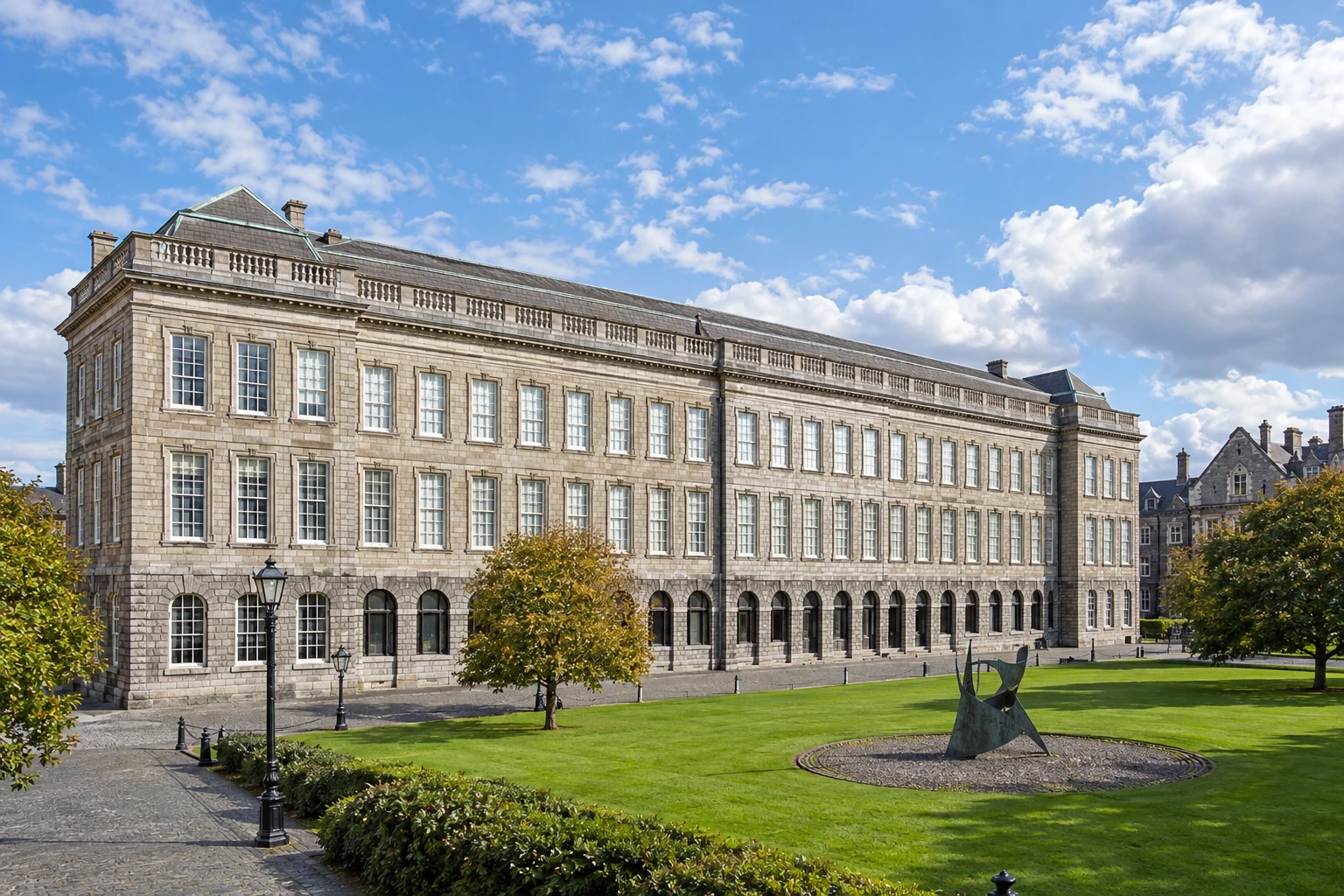
The route begins at Dublin Connolly, a central station north of the River Liffey, connected to the Luas tram and the coastal DART train. Dublin deserves at least two days: Trinity College and the Book of Kells, Temple Bar, St Patrick’s Cathedral and the Guinness Storehouse.
→ Belfast about 2h Enterprise from Dublin Connolly to Belfast Grand Central, generally stopping at Drogheda, Dundalk, Newry and Portadown, along the coast north of Dublin. The border is between Dundalk and Newry, with no stop.
-
 2 ·
 the United Kingdom · Northern Ireland
Belfast
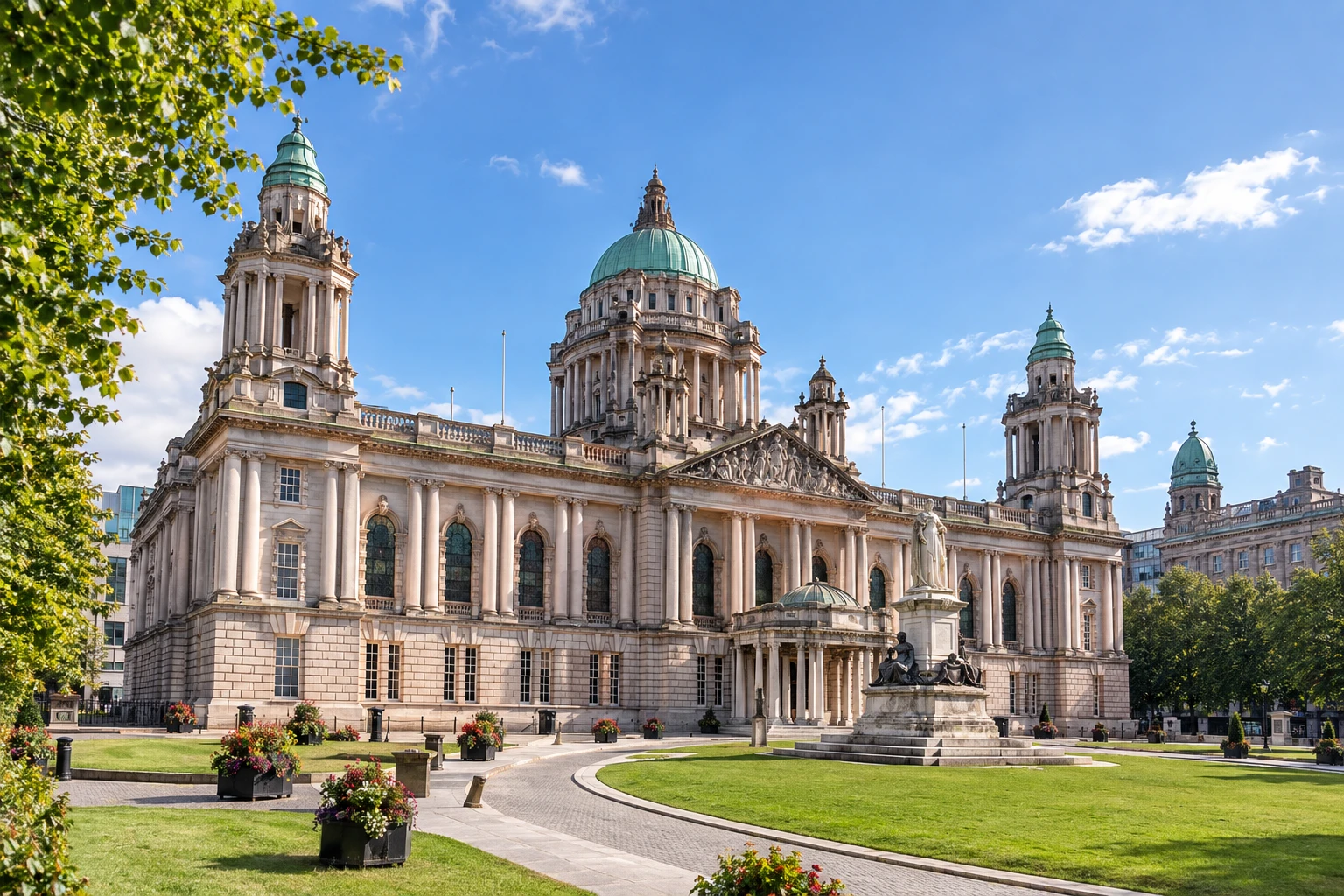
The train arrives at Belfast Grand Central, near the city center. Belfast has Titanic Belfast, located at the former shipyard where the ship was built, City Hall, the Cathedral Quarter and St George’s Market. Day trips to the Giant's Causeway on the Antrim coast depart from the city.
How many days
The train takes about 2 hours from Dublin to Belfast. To see both cities and the Giant's Causeway, allow 5 to 6 days; with 4 days, spend two nights in each city.
Best time to go
From May to September: long days (in summer it gets dark very late), mild temperatures and more scheduled tours to the north coast. Rain can come in any month and the weather often changes quickly. In March there is St. Patrick’s Day (March 17), with celebrations and crowded cities.
The seasons shown are the most usual ones; nature doesn't always follow the calendar.
How to travel it
By train, with tickets purchased on the Irish Rail website (departing from Dublin) or the Translink website (departing from Belfast). There is no check-in on the train: just arrive at the station, find the train on the departures board and board. Trains usually run hourly on weekdays, with fewer services on Sundays; check the timetable in advance.
Who it's for
For travelers to Ireland who also want to see Northern Ireland, for couples and families, and for those who want to reach the Giant's Causeway without driving on the left-hand side.
Your questions
Frequently asked questions about Dublin–Belfast by train
How long is the train from Dublin to Belfast?
About 2 hours, from Dublin Connolly to Belfast Grand Central, with four stops en route. Some services stop at more stations and take a little longer.
Is there passport control between Dublin and Belfast?
There is no fixed control: the border between Ireland and Northern Ireland is open, and the train passes without stopping. Still, carry your passport with you, as it is the Brazilian travel document and may be requested. The United Kingdom has its own entry rules, including prior electronic authorization for many visitors, also for those arriving via Ireland. Check before traveling.
What is the currency on each side?
In Ireland the currency is the euro; in Northern Ireland, which is part of the United Kingdom, it is the pound sterling. Some shops near the border accept both, but don’t rely on that. Cards are usually accepted at most businesses.
Do you need to reserve a seat?
A ticket bought online usually allows you to choose a seat, but reservation is not mandatory. Trains tend to be busy on Fridays, Sundays and holidays: book in advance and arrive early.
How do you get to the Giant's Causeway from Belfast?
The simplest way is a day tour from Belfast, which typically includes other points on the Antrim coast. You can also take a train to Coleraine or Portrush and continue by bus, or by car, in about an hour and a half. Check schedules and availability in advance.
Can you do a return trip from Dublin to Belfast in one day?
Yes, with about 4 hours of train travel in the day, but there is little time left. To see Belfast and the Giant's Causeway, ideally spend two or three nights in Belfast.