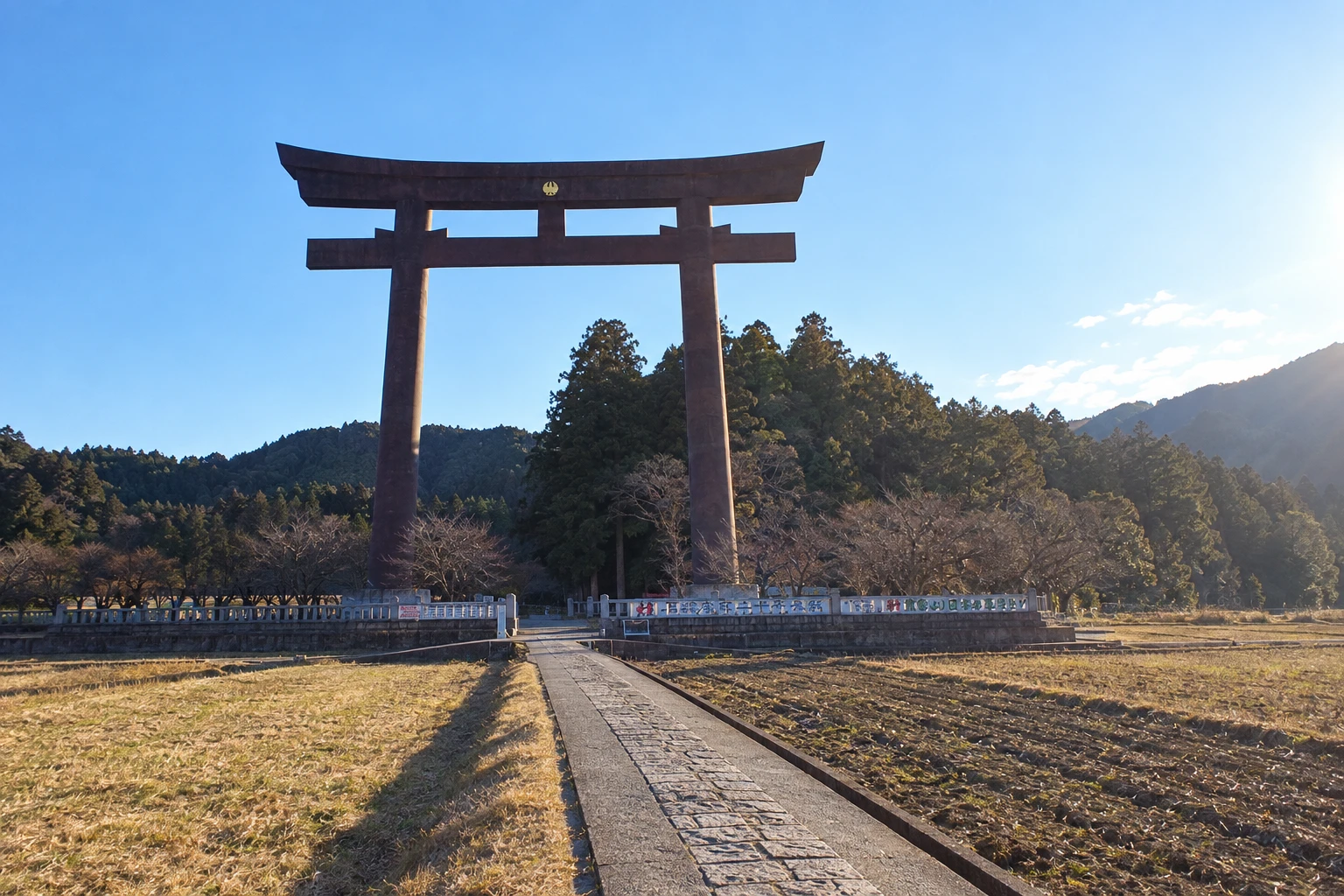
In the photo: The large torii of Oyunohara, in Tanabe.
Illustrative images. The pictures in this guide are illustrations based on the real place, not photographs, and may differ from it.
The city
What to expect from Tanabe.
Tanabe is the coastal city on the west side of the Kii Peninsula that serves as the gateway to the Kumano Kodo. The municipality stretches up to the Hongu mountains and includes Kumano Hongu Taisha, the main section of the Nakahechi trail starting at Takijiri-oji, and the hot spring villages of Yunomine and Kawayu. In the city center, near Kii-Tanabe Station, is the pilgrims’ information center.
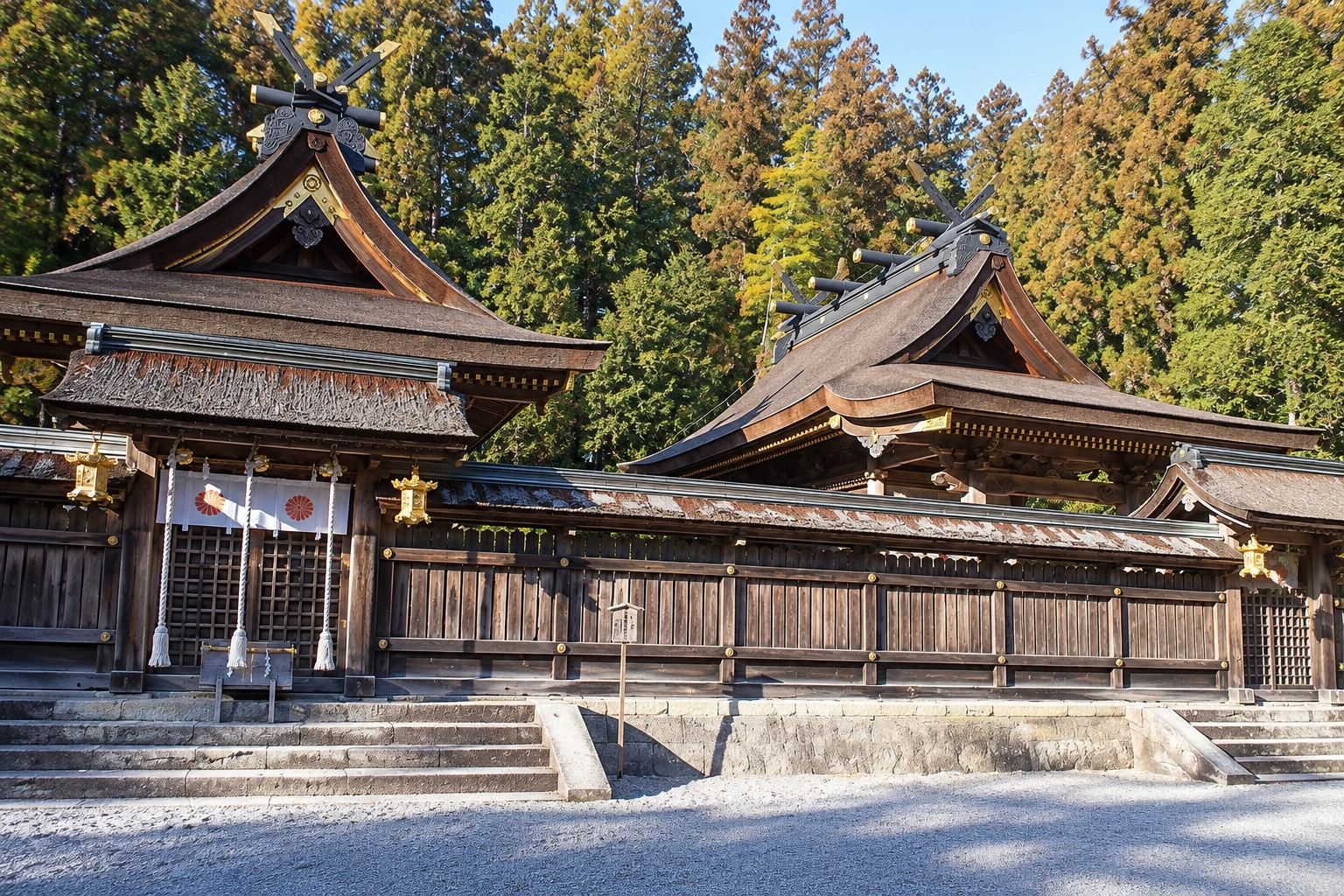
The main of the three grand Kumano shrines and the final destination of the Nakahechi, perched above a stone stairway among cedars. A few minutes away is Oyunohara, the shrine’s former site, with a torii gate about 34 meters tall.
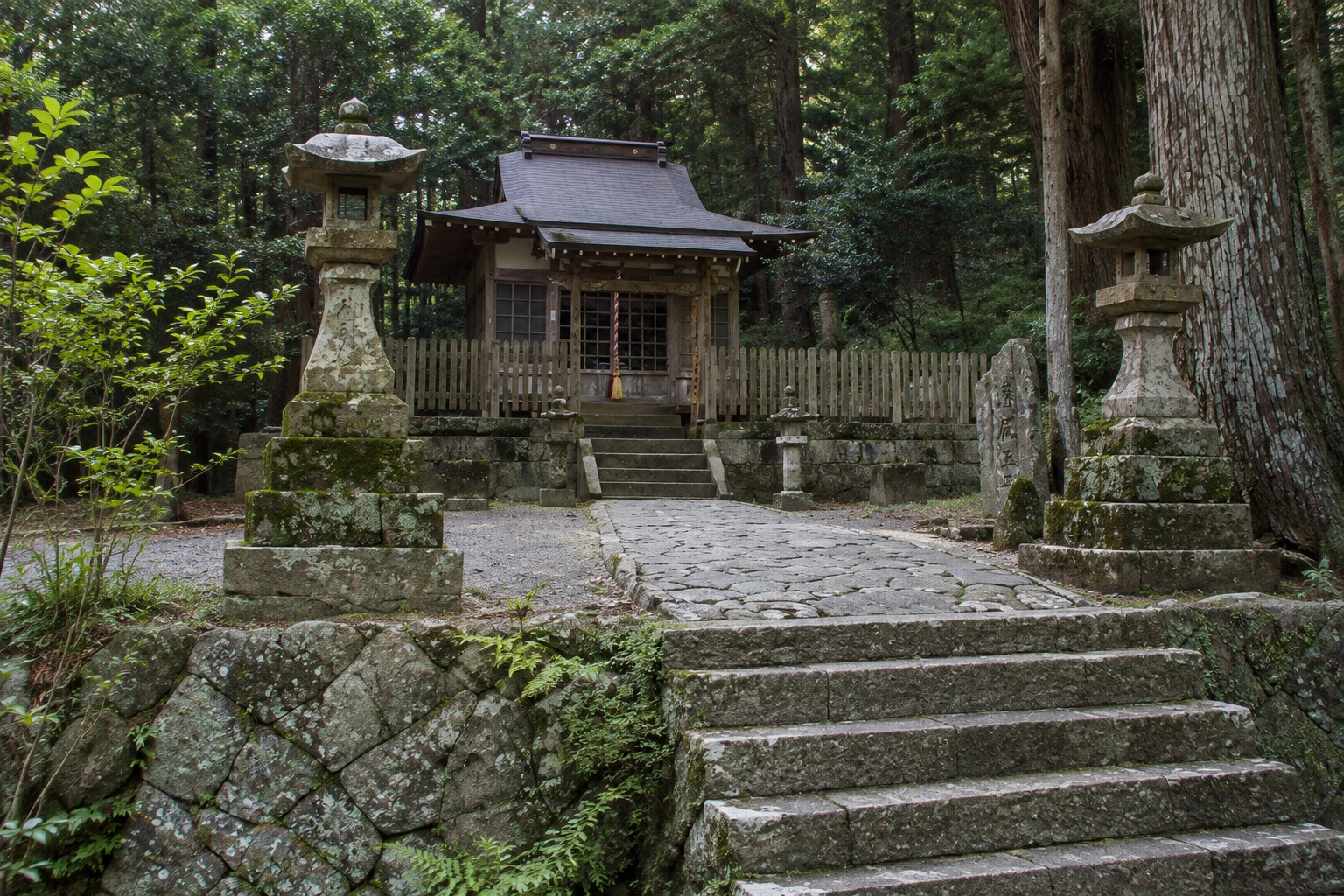
The ancient imperial route of the Kumano Kodo, about 38 km between Takijiri-oji and Kumano Hongu Taisha, through the forests of the Kii mountains, with small oji shrines, villages and inns along the way.
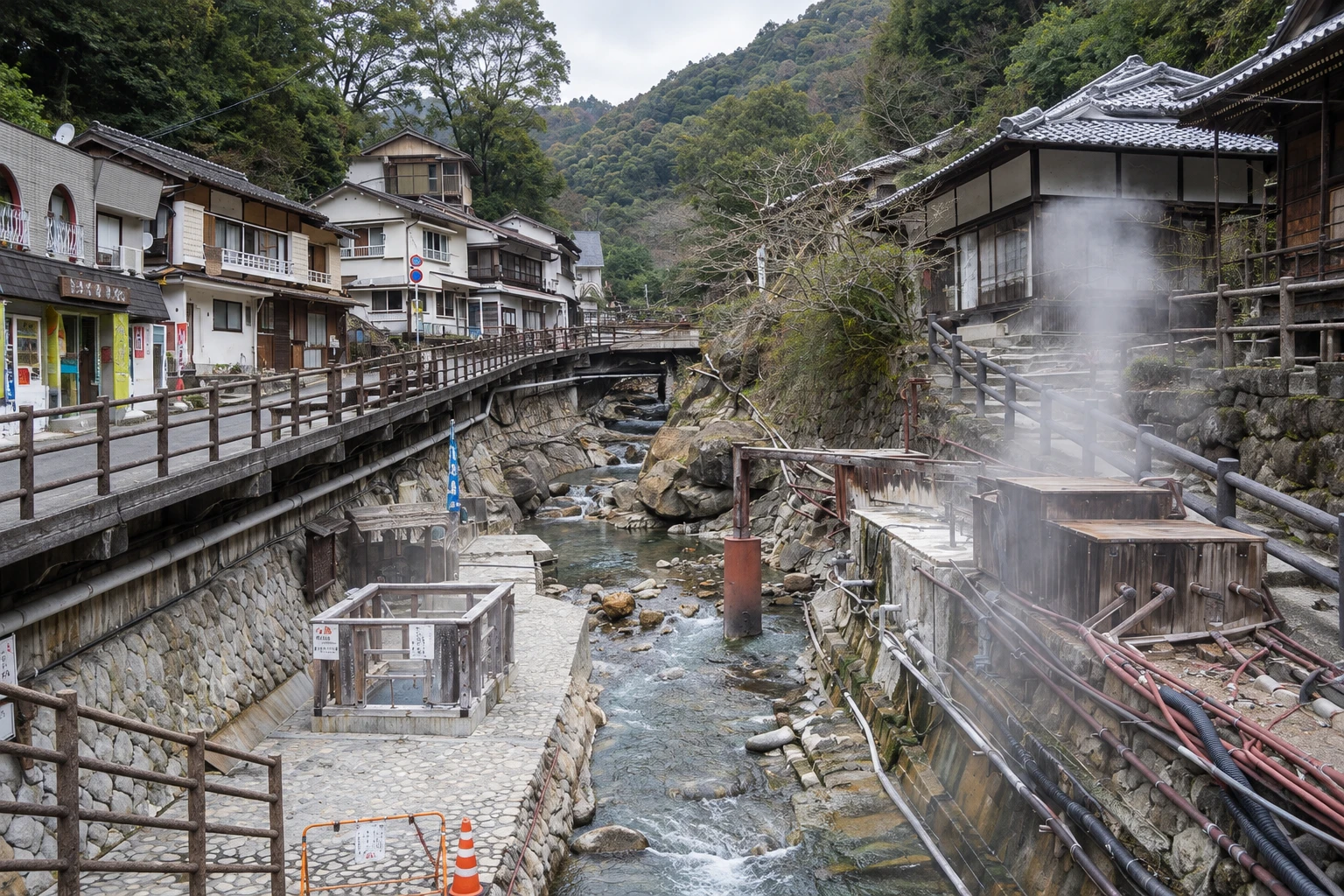
Hot spring village in a narrow valley near Hongu Taisha, used for centuries by pilgrims for purification. The Tsuboyu, a stone bath cabin by the stream, is the only hot spring listed as a World Heritage site.
Aeroporto de Nanki-Shirahama (SHM)Shirahama · 15 km
Estação de Kii-Tanabe1 km
Approximate distances. Check flights and bus, train or boat schedules before you travel.
From Osaka, the Kuroshio limited express reaches Kii-Tanabe Station in about 2h10. Nanki-Shirahama Airport (SHM), with flights from Tokyo, is about 15 km away. Buses connect the station to Takijiri-oji in about 40 minutes and to Hongu in about 2 hours.
How many days
Three days to walk the Nakahechi from Takijiri-oji to Hongu, with one night in Yunomine; one day by bus to Hongu Taisha, Oyunohara and the hot springs.
When to go
From March to May and from October to November, with pleasant temperatures for walking. June has rainy season; summer is hot and humid; typhoons are more frequent from August to October.
The seasons shown are the most usual ones; nature doesn't always follow the calendar.
Do you need a car?
No. Buses link the station to the trailheads and to Hongu, and many ryokan pick up guests at the stops. A car helps if you want to visit several shrines in a short time.
Suggested itinerary
An order that works
Built with the places on this page. No rush: it's paced so you have time to see them.
One day in Tanabe
manhã
Bus to Hongu and final walk
Take an early bus from Kii-Tanabe and get off at Hosshinmon-oji to walk the last section of the Nakahechi, about 7 km, to Hongu Taisha.
tarde
Hongu Taisha and Oyunohara
Climb the steps of Kumano Hongu Taisha and descend to the rice fields of Oyunohara, the shrine’s former site, with its large torii gate.
noite
Yunomine hot springs
Take a bus to Yunomine Onsen, bathe in Tsuboyu, the small bath cabin by the stream, and stay overnight in a ryokan in the village.
Check before you go. Opening hours and days change, and places may close for renovations, holidays or events. This itinerary is a suggestion from Cidade Turismo, not a commitment: plan yours by checking directly with each place you intend to visit.
Before you go
Frequently asked questions
Where does the Nakahechi start?
The traditional starting point is Takijiri-oji, about 40 minutes by bus from Kii-Tanabe Station. There is the Kumano Kodo information center there, with maps and stamps.
Does Tanabe have facilities for pilgrims?
Yes. The information center near the station helps with maps, buses, accommodation and luggage transfer, and there are pilgrim credentials with spaces for stamps.
What to eat in Tanabe?
Umeboshi plums, produced on a large scale in the region; coastal fish; and in the mountains, meharizushi, rice balls wrapped in pickled mustard leaf, convenient to take on the trail.
How to go from Tanabe to Hongu?
By bus from Kii-Tanabe Station, in about 2 hours, with stops at Takijiri-oji, Chikatsuyu and Hosshinmon-oji. There are few departures per day; check the timetable.


 Brazil
 Antarctica
 Argentina
 Bolivia
 Chile
 Colombia
 Ecuador
 Falkland Islands (Malvinas)
 French Guiana
 Guyana
 Paraguay
 Peru
 Suriname
 Uruguay
 Venezuela
 Austria
 Belgium
 Croatia
 Denmark
 Finland
 France
 Germany
 Greece
 Hungary
 Iceland
 Ireland
 Italy
 Luxembourg
 Norway
 Poland
 Portugal
 Slovakia
 Slovenia
 Spain
 Sweden
 Switzerland
 the Czech Republic
 the Netherlands
 the United Kingdom
 Turkey
 Bermuda
 Canada
 Greenland
 Mexico
 Saint Pierre and Miquelon
 the United States
 the Dominican Republic
 Egypt
 South Africa
 Australia
 Fiji
 New Zealand
 Papua New Guinea