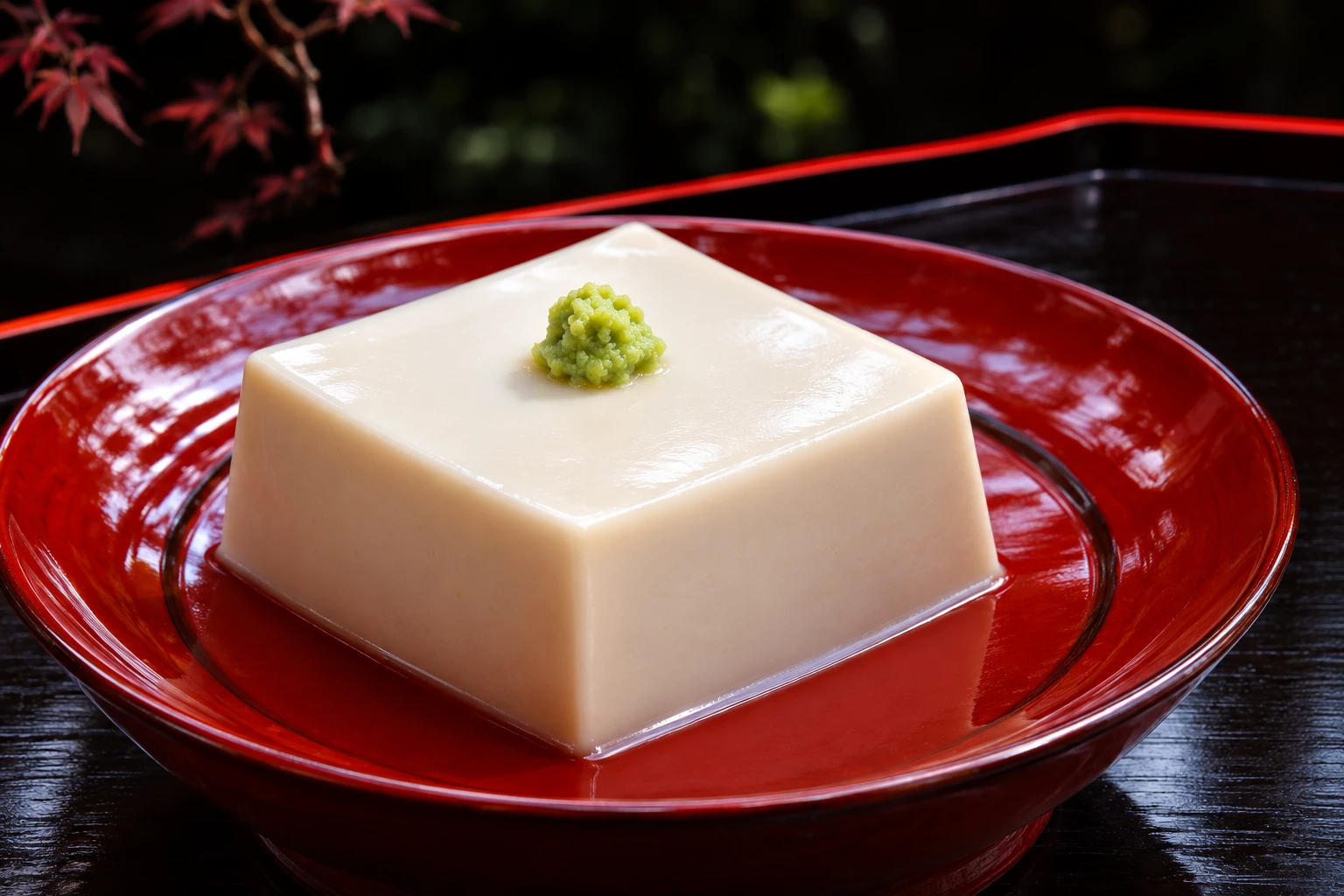
Goma-dofu
Firm sesame cream made from ground sesame, kuzu starch and water, served in cubes with wasabi and soy sauce. A dish from the vegetarian cuisine of the monks of Koyasan, the sacred mountain of Shingon Buddhism.
Antarctica
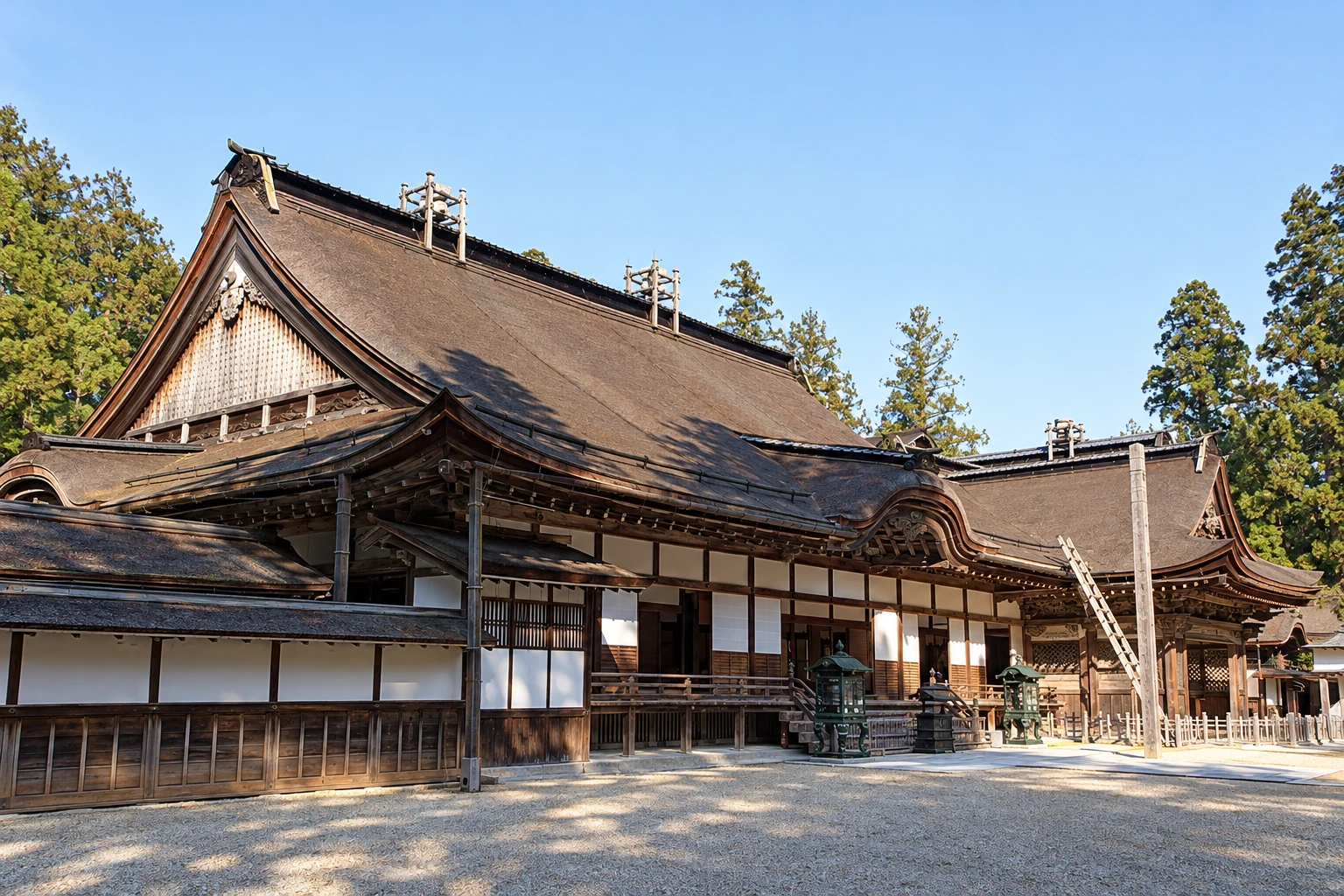
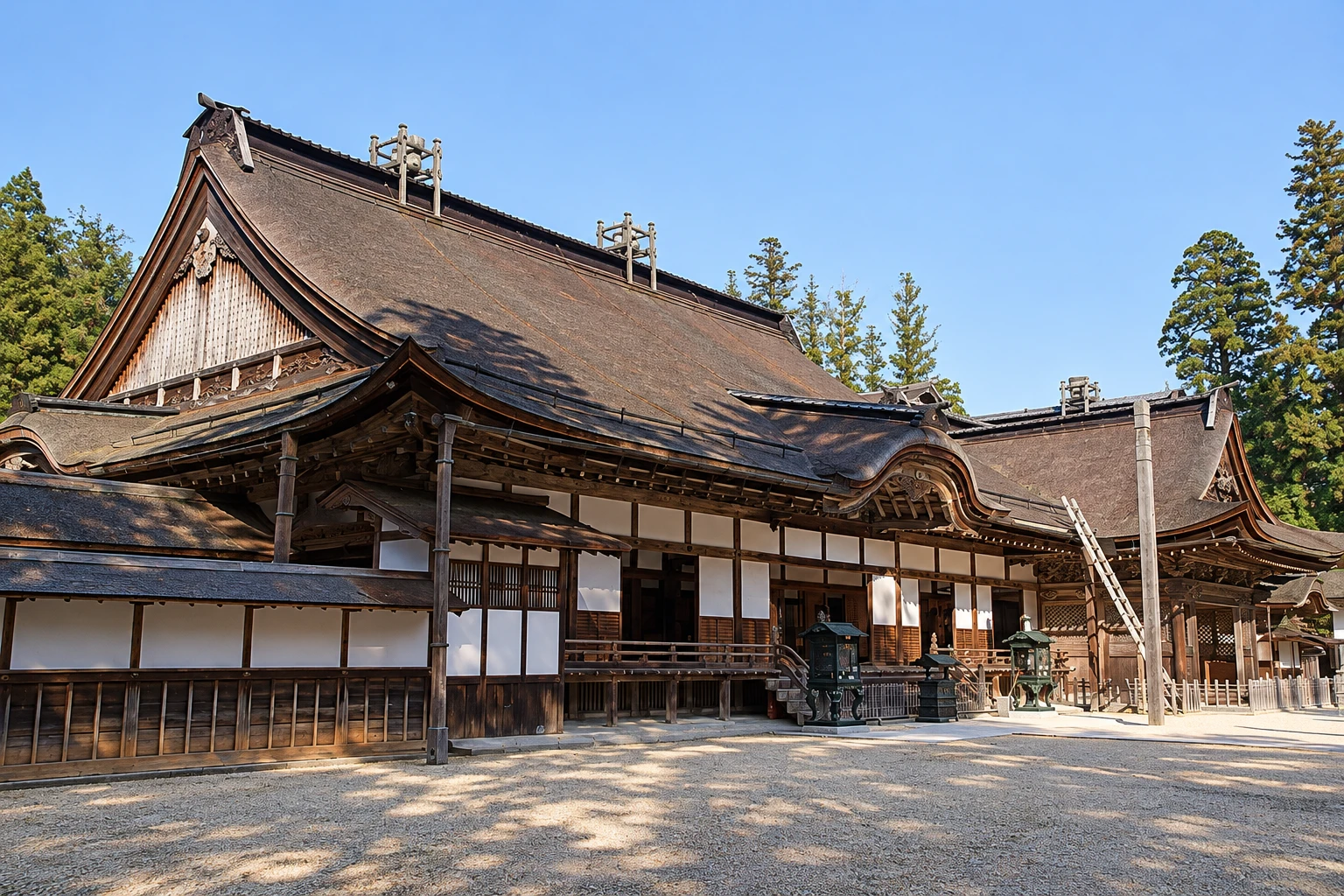
In the photo: Facade of Kongobu-ji temple, in Koya.
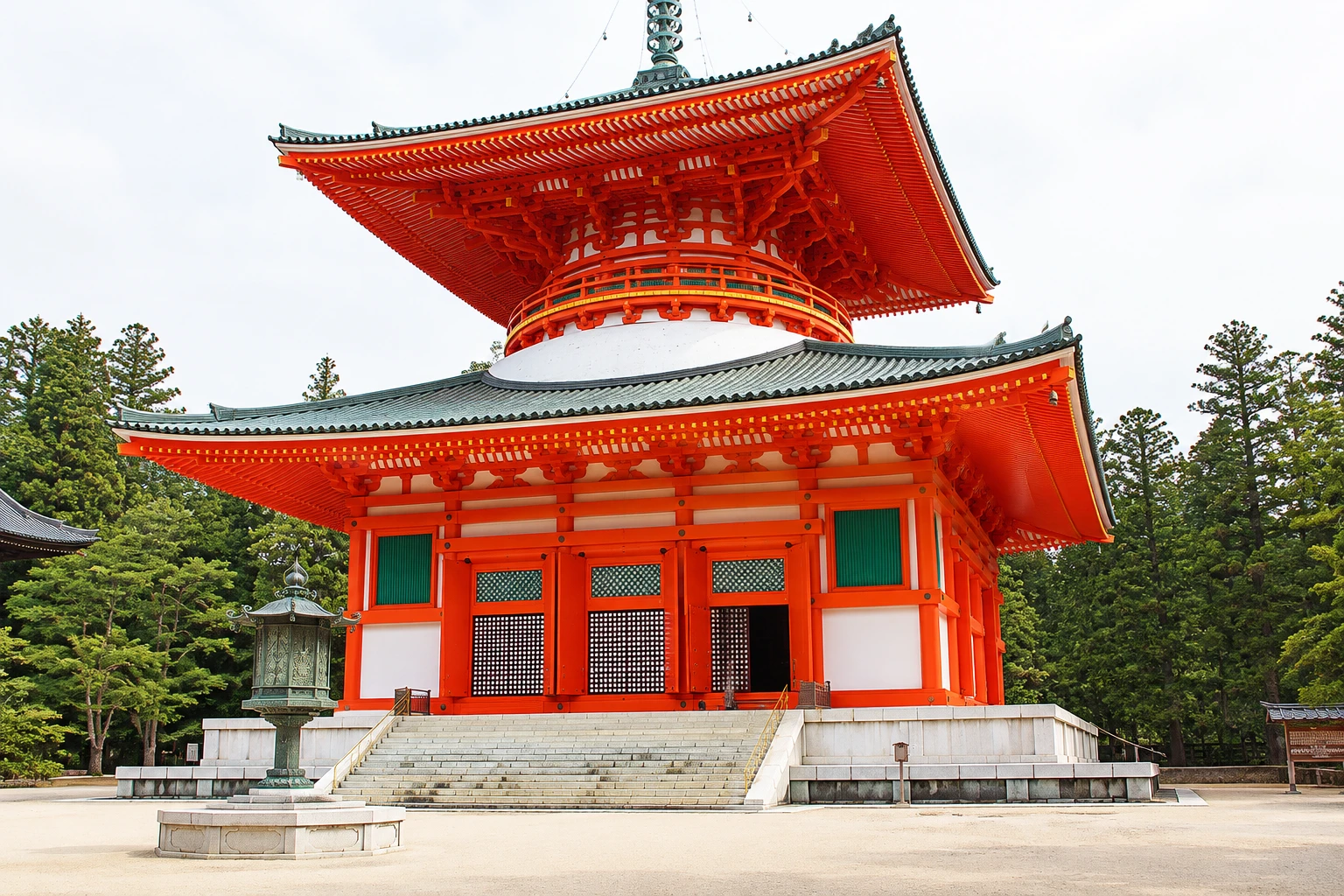
Illustrative images. The pictures in this guide are illustrations based on the real place, not photographs, and may differ from it.
The city
Koya is the small town atop Mount Koya, about 800 meters above sea level, that grew around the Shingon Buddhist temples founded by Kukai in 816. The Okunoin cemetery, the Danjo Garan complex, Kongobu-ji temple and the Daimon gate are part of the Kii Mountains World Heritage Site. Dozens of temples host guests, offering vegetarian meals and the morning ceremony.
There's no accommodation in the guide yet in Koya.
Tem hotel, pousada ou casa de temporada aqui? Cadastre a suaHotéis e restaurantes da cidade no mapa.
how to get there · how many days · itinerary · questions
Flavors of Japan
The local experience
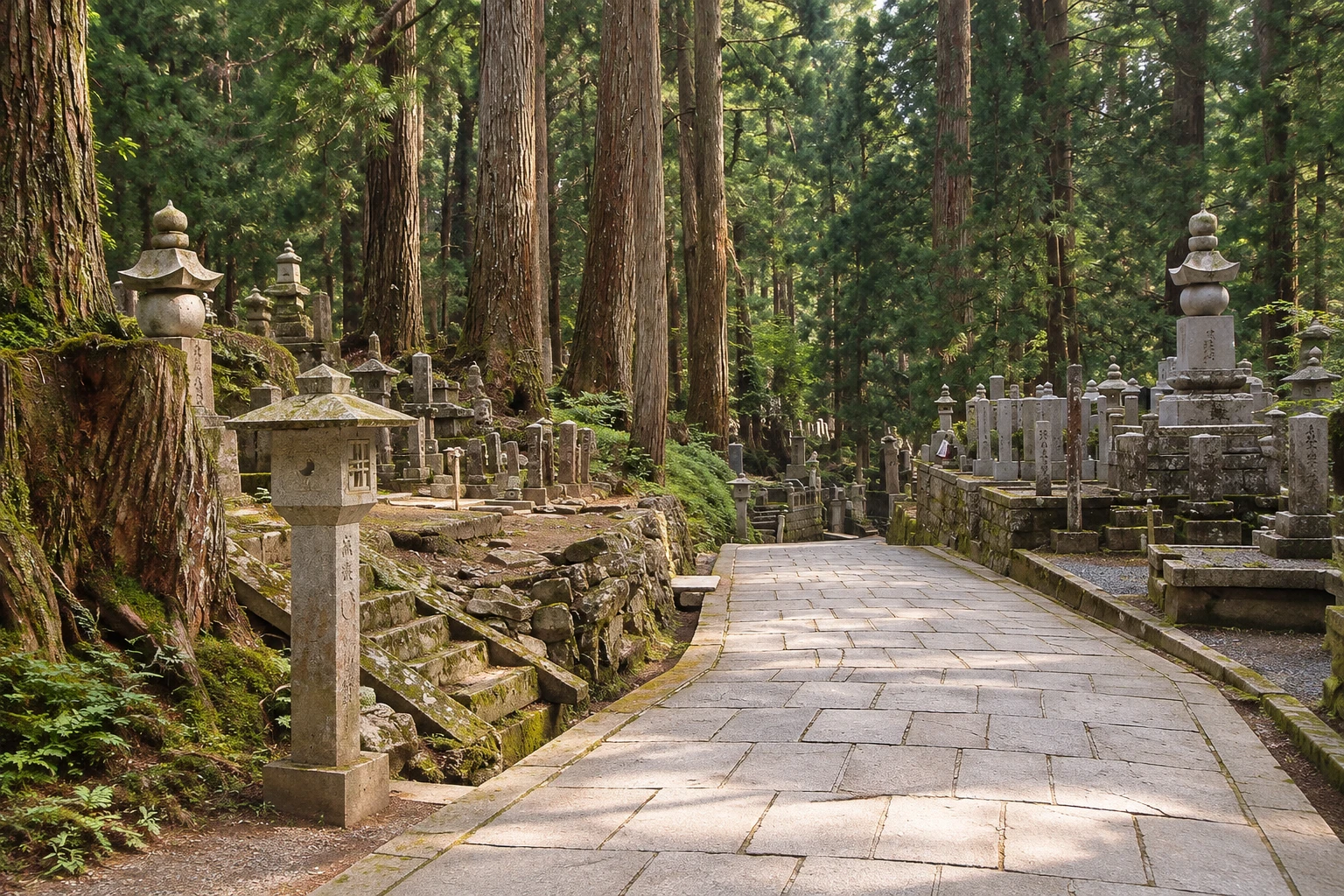
Cemetery and shrine where, according to Shingon belief, Kukai remains in eternal meditation. A path of about 2 km runs among centuries-old cedars and more than 200,000 graves and memorials to the lantern hall and the mausoleum.
Complex of halls and pagodas planned by Kukai in the center of Koyasan, with the large red pagoda Konpon Daito, nearly 50 meters high, and the Kondo hall. Next to it is the Reihokan museum, with treasures of Buddhist art.
Head temple of the Shingon school of Koyasan, with sliding-door rooms painted by the Kano school and the Banryutei, one of the largest rock gardens in Japan, representing two dragons among clouds.
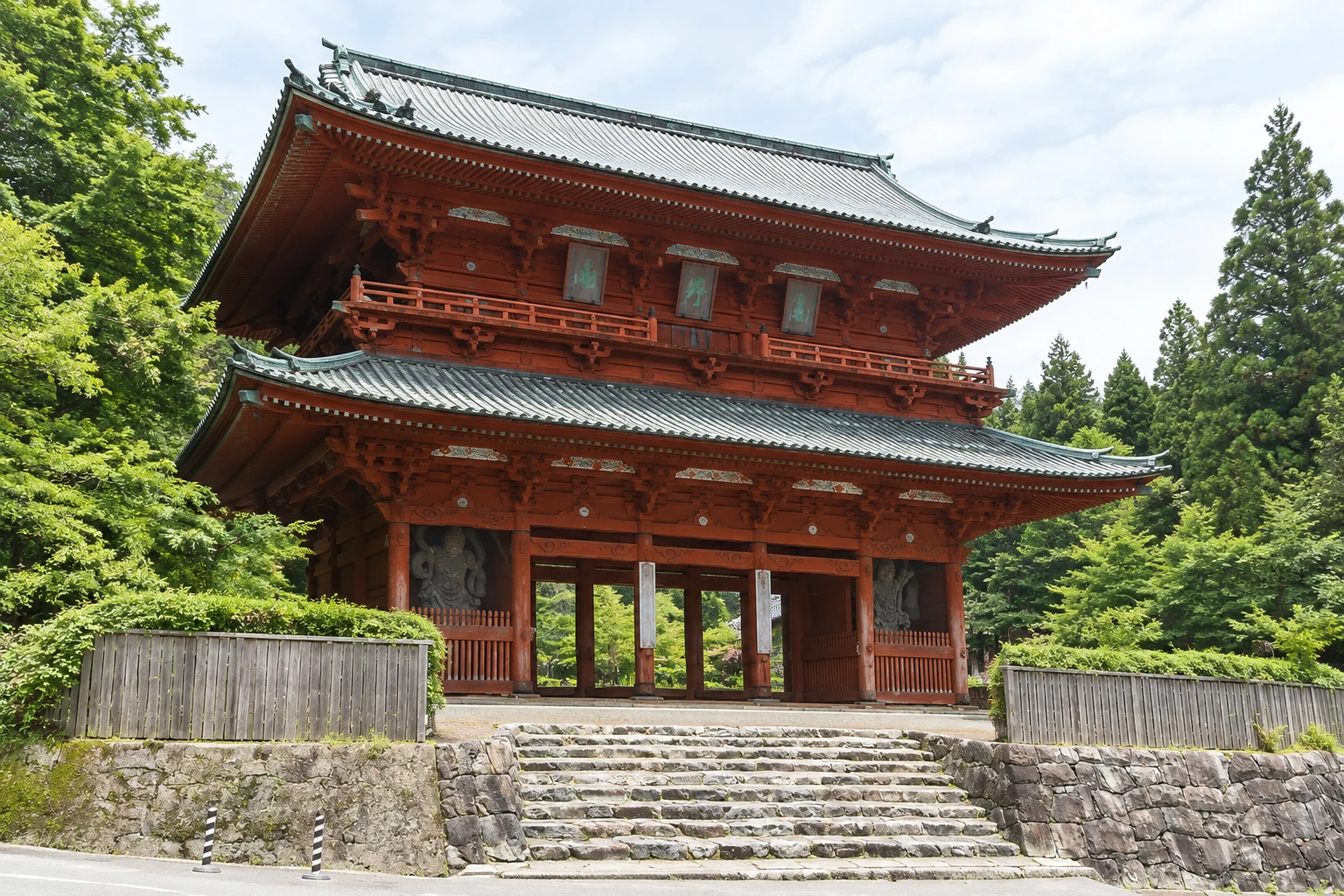
The large west entrance gate of Koyasan, from 1705, about 25 meters high with two statues of guardian kings. It stands on the slope crest with views over the Kii Peninsula mountains.
Before you go
Koya – Japan
Approximate distances. Check flights and bus, train or boat schedules before you travel.
From Osaka: Nankai Railway from Namba to Gokurakubashi in about 1h20 to 1h40, and the funicular to Koyasan Station; buses connect the station with the town center and Okunoin. By car, the road climbs the mountain from Hashimoto. Kansai Airport is about 2h30 by train.
One day and one night: Daimon, Danjo Garan and Kongobu-ji on the first day, Okunoin at dusk and the temple ceremony the next morning.
From April to November, with foliage in November. Winter is cold with snow. In August, the Okunoin lantern ceremony fills the path with candles at night.
The seasons shown are the most usual ones; nature doesn't always follow the calendar.
No. Buses run along the main street, from the funicular station to the Daimon and Okunoin, and the center is explored on foot.
Suggested itinerary
Built with the places on this page. No rush: it's paced so you have time to see them.
Start at the large Daimon gate at the western entrance and walk to Danjo Garan, with the red pagoda Konpon Daito and the Kondo hall.
Have a temple vegetarian lunch, visit Kongobu-ji and the Banryutei rock garden, and, if time allows, the Reihokan Museum next to the Garan.
Walk the roughly 2 km path among cedars and tombs to the lantern hall and Kukai’s mausoleum. Afterwards, have a vegetarian dinner at the temple where you’re staying.
Check before you go. Opening hours and days change, and places may close for renovations, holidays or events. This itinerary is a suggestion from Cidade Turismo, not a commitment: plan yours by checking directly with each place you intend to visit.
Before you go
More than a hundred, including smaller temples, halls and the head temple Kongobu-ji. Dozens of them receive overnight guests.
The vegetarian cuisine of Buddhist monks, without meat, fish, garlic or onion, prepared with tofu, mountain vegetables, sesame and koya-dofu, the dehydrated tofu typical of Koyasan.
By bus, which connects the funicular station to the town center, to Daimon and to Okunoin, and on foot between the temples in the center. One- and two-day passes cover the buses.
Yes, some temples and local guides offer night walks through the cemetery, explaining the graves and beliefs. Book at the information center.