

 Brazil
 Antarctica
 Argentina
 Bolivia
 Chile
 Colombia
 Ecuador
 Falkland Islands (Malvinas)
 French Guiana
 Guyana
 Paraguay
 Peru
 Suriname
 Uruguay
 Venezuela
 Albania
 Austria
 Belgium
 Croatia
 Denmark
 Finland
 France
 Germany
 Greece
 Hungary
 Iceland
 Ireland
 Italy
 Luxembourg
 Norway
 Poland
 Portugal
 Slovakia
 Slovenia
 Spain
 Sweden
 Switzerland
 the Czech Republic
 the Netherlands
 the United Kingdom
 Turkey
 Bermuda
 Canada
 Greenland
 Mexico
 Saint Pierre and Miquelon
 the United States
 the Dominican Republic
 Egypt
 South Africa
 Australia
 Fiji
 New Zealand
 Papua New Guinea
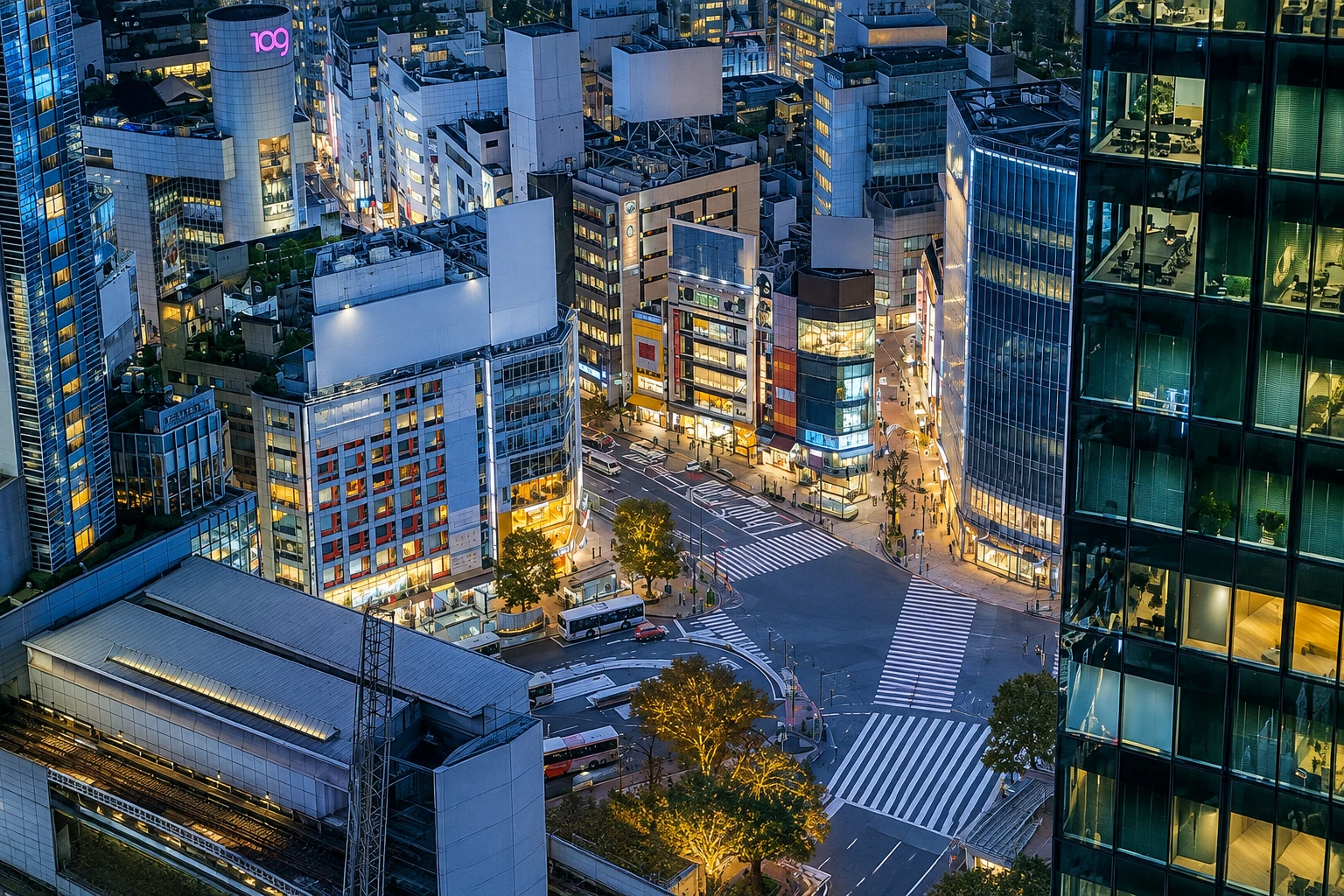
Neighborhood · Tokyo, Japan
Shibuya Crossing
The pedestrian crossing in front of Shibuya Station, crossed in all directions at each green signal, with the Hachiko dog statue and viewing points on surrounding buildings.
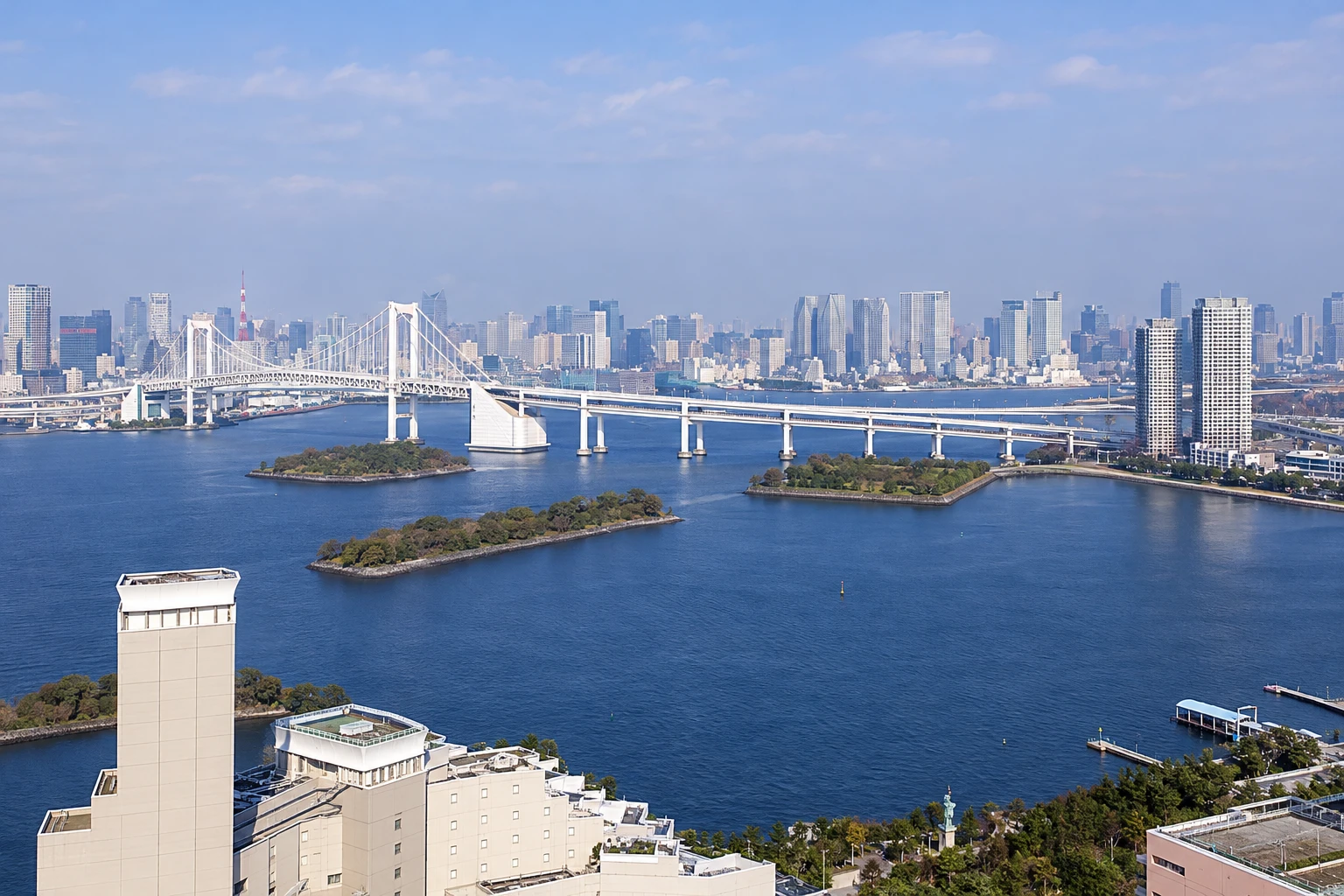
Illustrative images. The pictures in this guide are illustrations based on the real place, not photographs, and may differ from it.

A look at the place
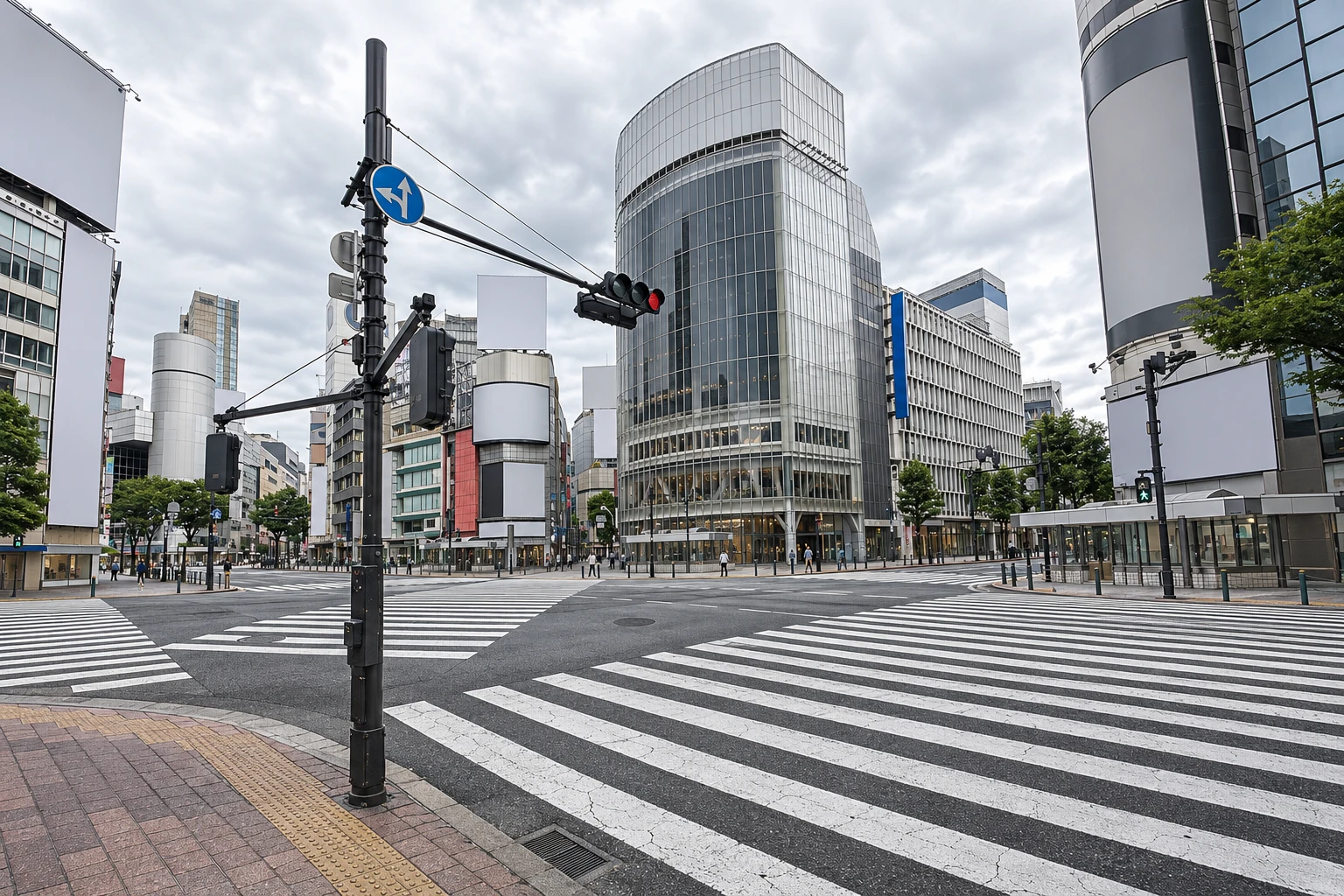
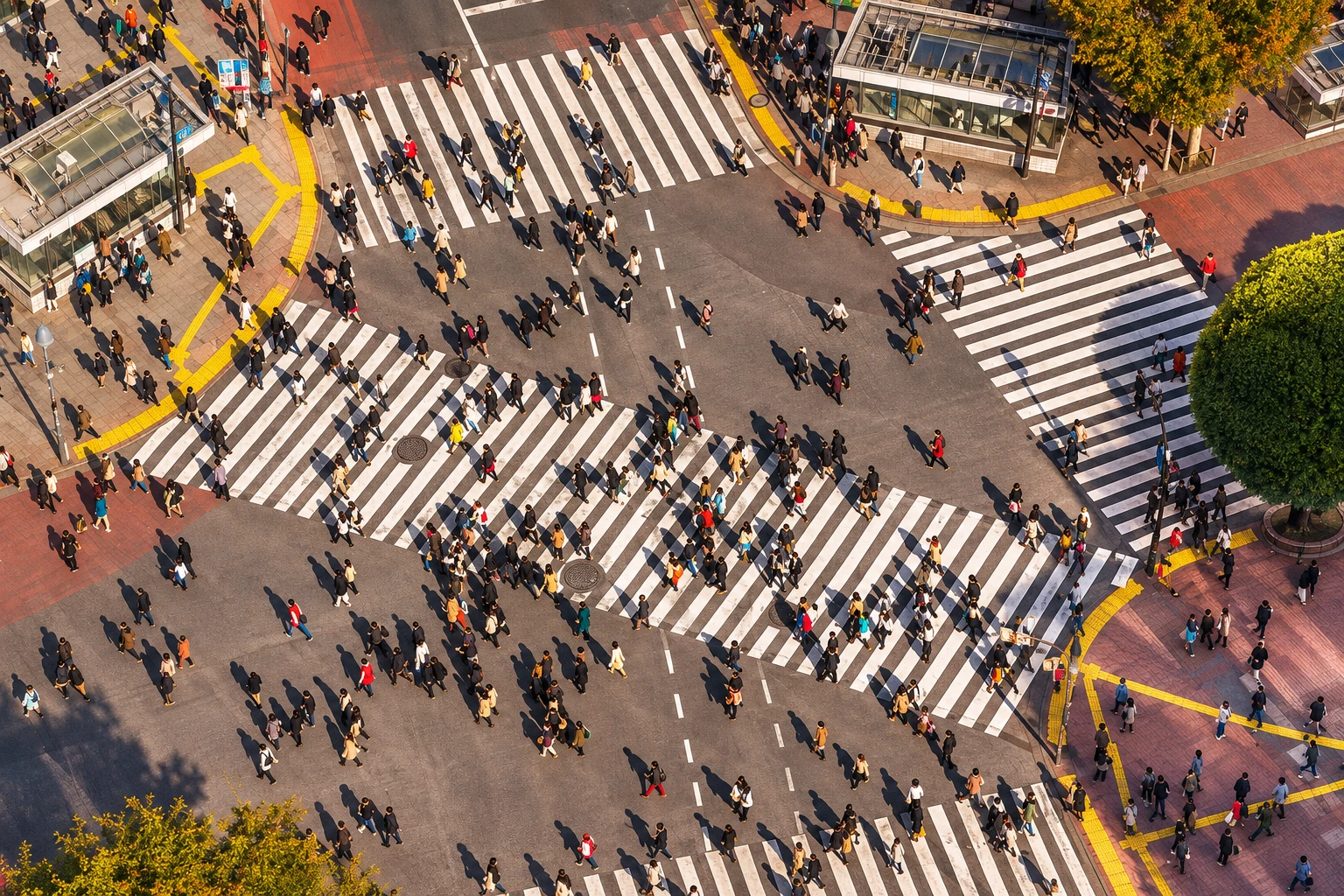
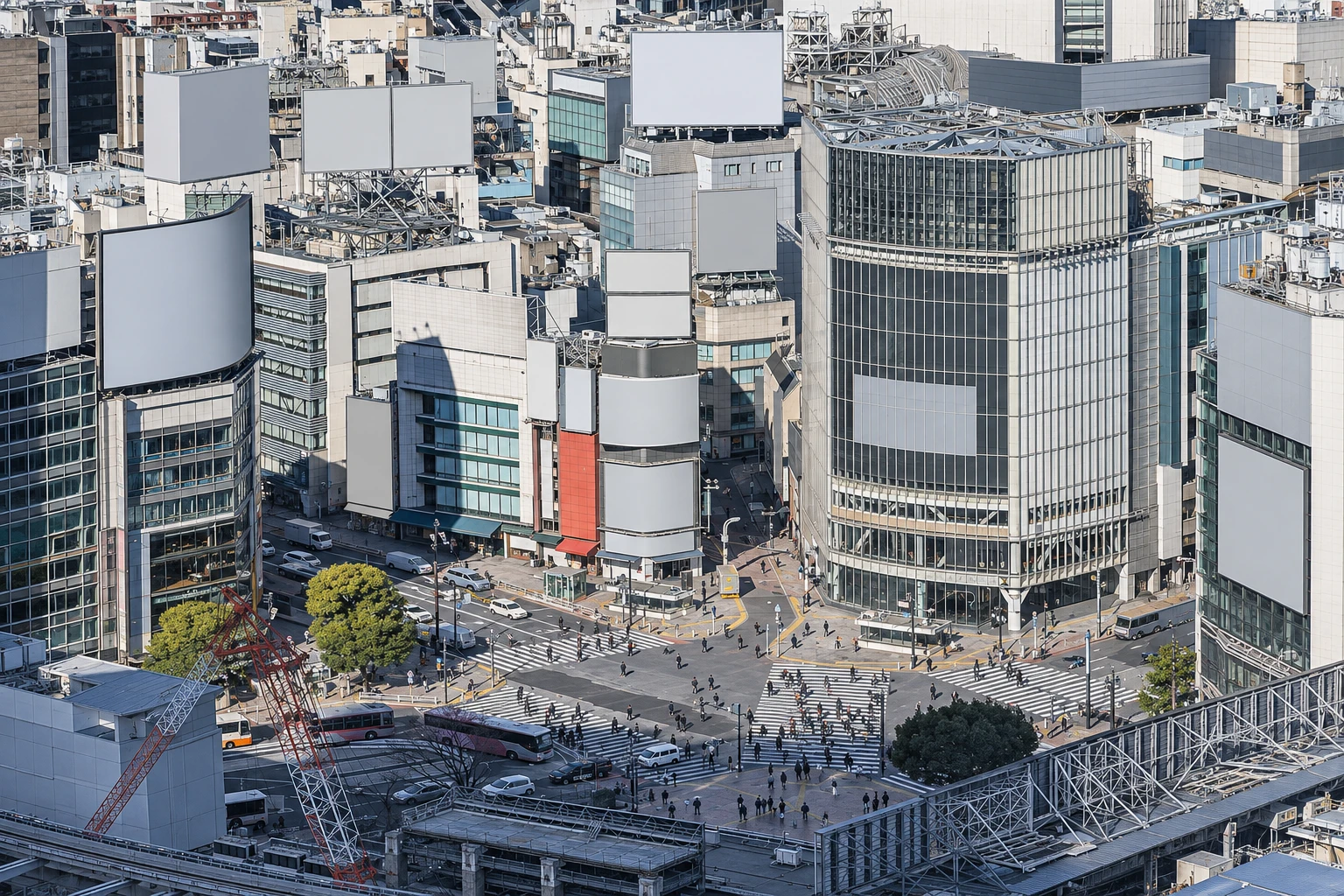
Shibuya Crossing in pictures
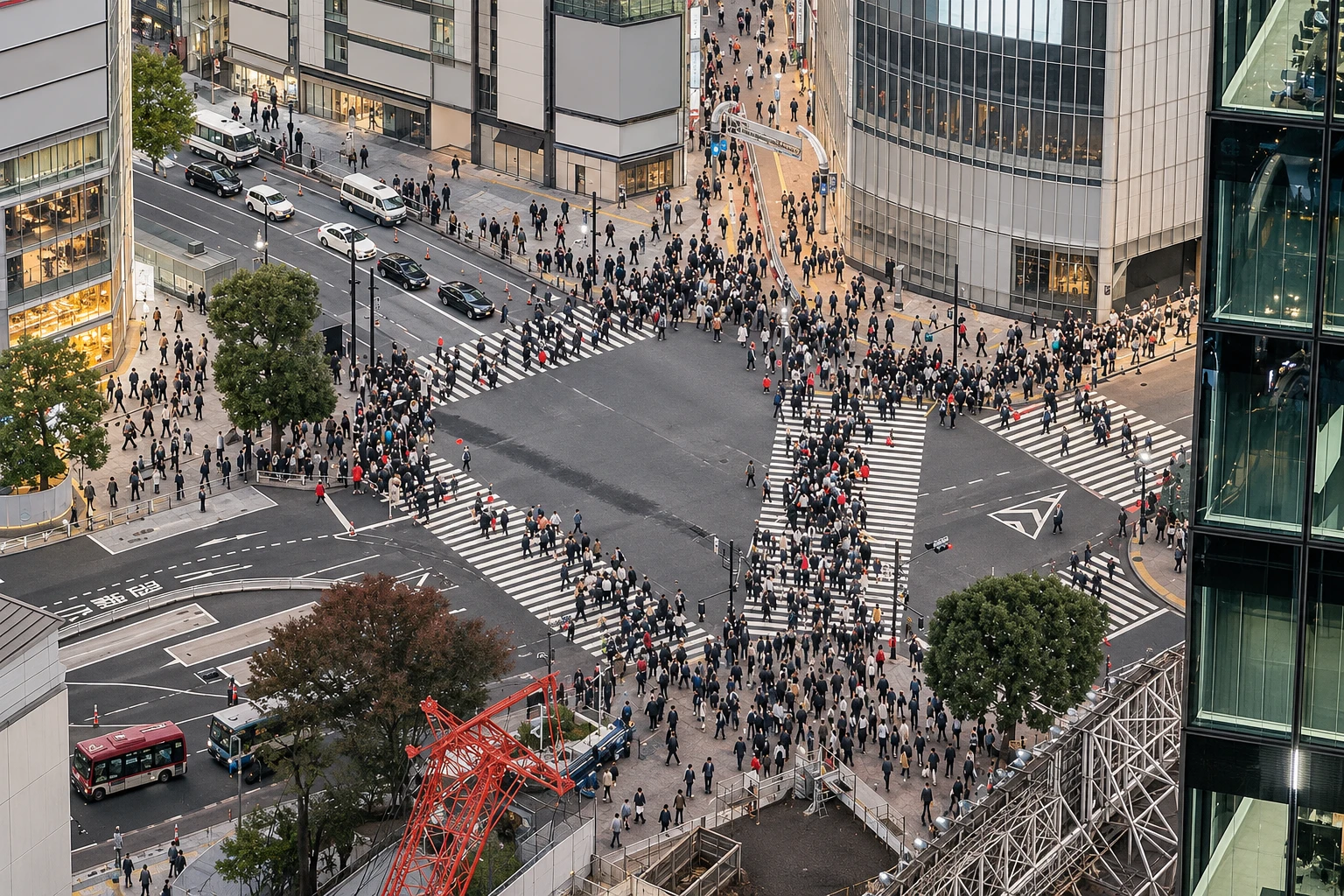
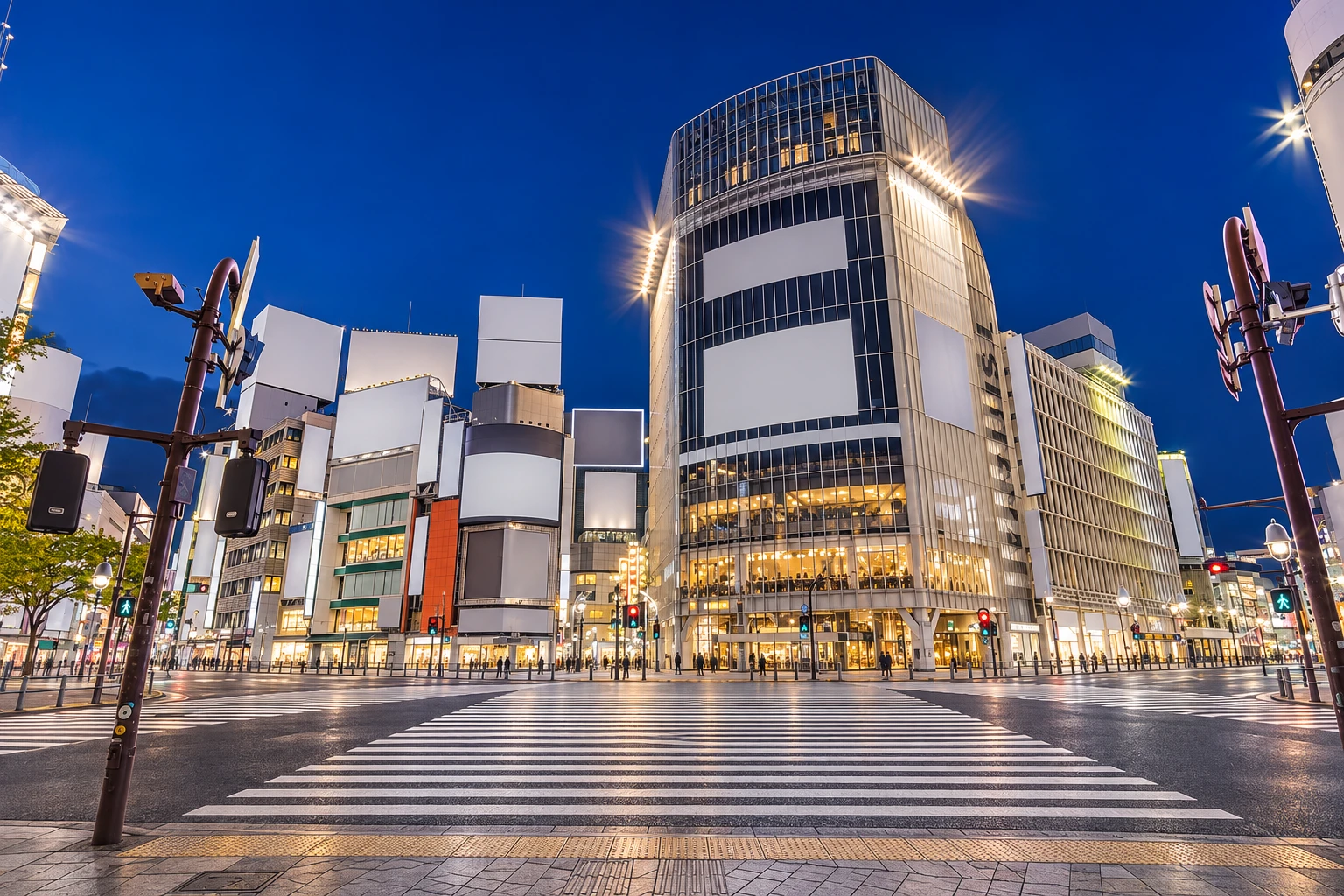
These pictures are illustrations based on the real place, not photographs. They may differ from the place.
Click the picture to enlarge it.
Discover
About Shibuya Crossing
The Shibuya Crossing (Shibuya Scramble Crossing) is in front of the Hachiko exit of Shibuya Station. When the light stops traffic, pedestrians cross at the same time in all directions, including diagonally, and the plaza fills with people for a few moments. The scene repeats throughout the day and has become one of Tokyo’s most iconic images.
Next to the exit is the statue of Hachiko, the akita dog who, in the 1920s and 1930s, waited for his owner at the station for years after his death. The statue is the city’s most famous meeting point and often has a line for photos.
To see the crossing from above there are several options. Shibuya Sky, the rooftop terrace atop Shibuya Scramble Square, has paid admission and timed reservations. Some shops and cafés in surrounding buildings also have windows facing the plaza, and the walkway that connects the station to the Mark City building offers a side view of the crossing.
Around the area are the shopping streets and restaurants of Center Gai, Miyashita Park, built over a parking lot and full of shops, and the slopes of Dogenzaka and Koen-dori. At night the billboards and signs light up and the activity continues. Harajuku and Meiji Shrine are one station to the north.
Before you go
Practical information
Cidade Turismo reviews its information regularly, but something may have changed. Check with the place before planning your trip.
How much time to set aside
30 minutes to 1 hour to cross, see from above and photograph; add another hour if you include Shibuya Sky.
Best time
The crossing is busy all day but gets more crowded in the late afternoon, on Friday and Saturday nights, and on holidays. At dusk the signs light up and the scene changes. Shibuya Sky requires a timed reservation and may close the terrace in heavy rain or strong wind: check before you go.
How to get there
Exit Shibuya Station via the Hachiko exit. The station is served by the JR Yamanote and Saikyo lines, three subway lines, and the Tokyu and Keio Inokashira railways.
Tip
Cross it at least once and then go up to see it from above: the two experiences complement each other. If you want to photograph, go to a high point and use the time of two or three signals. Avoid stopping in the middle of the crosswalk, which fills in seconds.
Your questions
Frequently asked questions about Shibuya Crossing
Where is the Shibuya crossing?
In front of the Hachiko exit of Shibuya Station, served by the JR Yamanote Line, several subway lines and the Tokyu and Keio railways.
Where can I see the Shibuya crossing from above?
At Shibuya Sky, the observation deck of the Shibuya Scramble Square building, entry is paid and reservations are required. There are also windows in shops and cafés in the surrounding buildings and on the pedestrian walkway between the station and Mark City.
What is the story of the Hachiko statue?
Hachiko was an Akita dog who waited for his owner, a university professor, at Shibuya Station. After the owner’s death in 1925, the dog kept going to the station for almost ten years. The statue became a meeting point.
What is the best time to see the Shibuya Crossing crowded?
Late afternoon and at night, especially on Fridays and Saturdays. At dusk the big screens and signs light up.
What else is there to do in Shibuya besides the crossing?
Stroll along Center Gai, visit Miyashita Park, go up to Shibuya Sky and continue on to Harajuku and the Meiji Shrine, one train stop away.