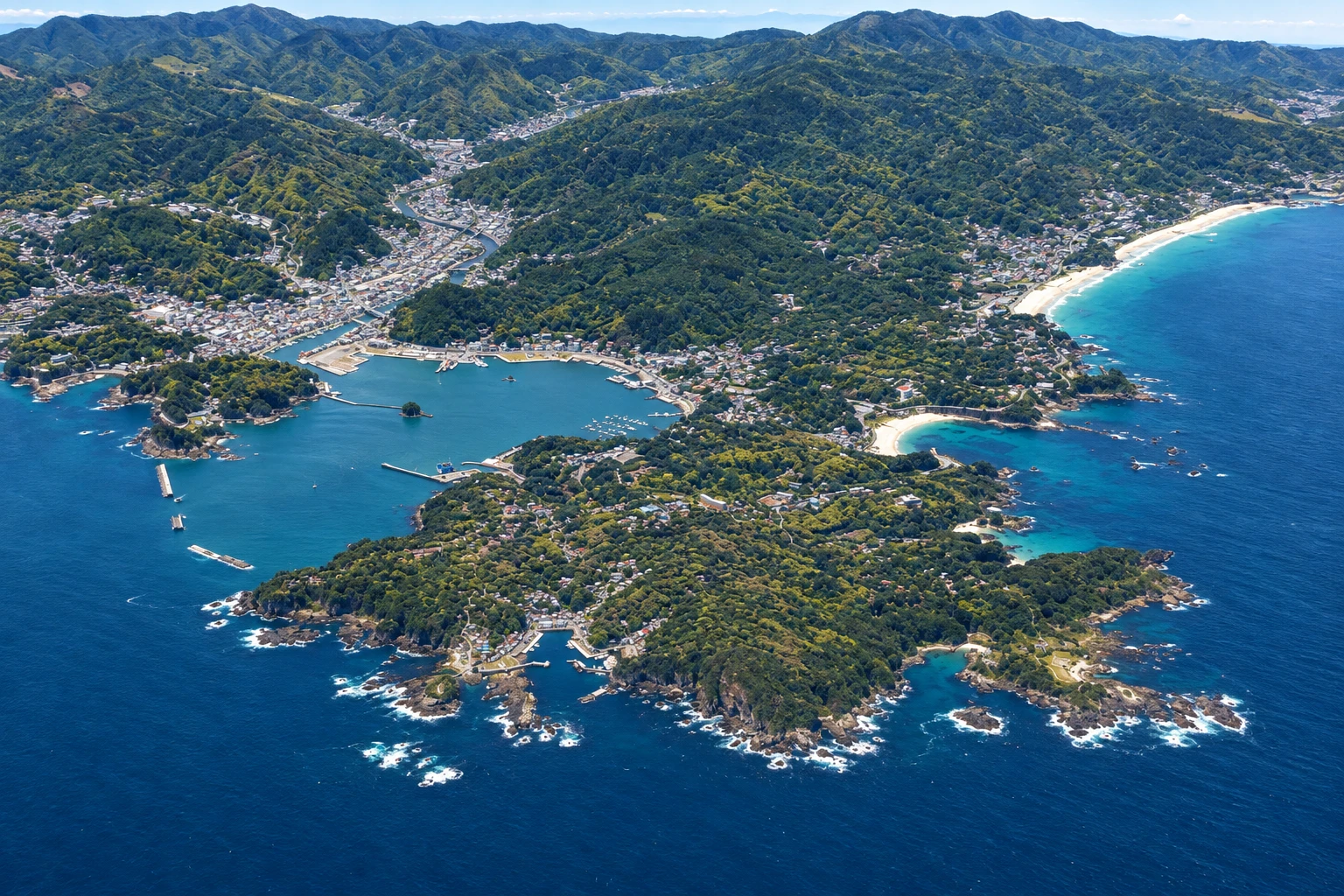
In the photo: Shimoda’s port and coves seen from above.
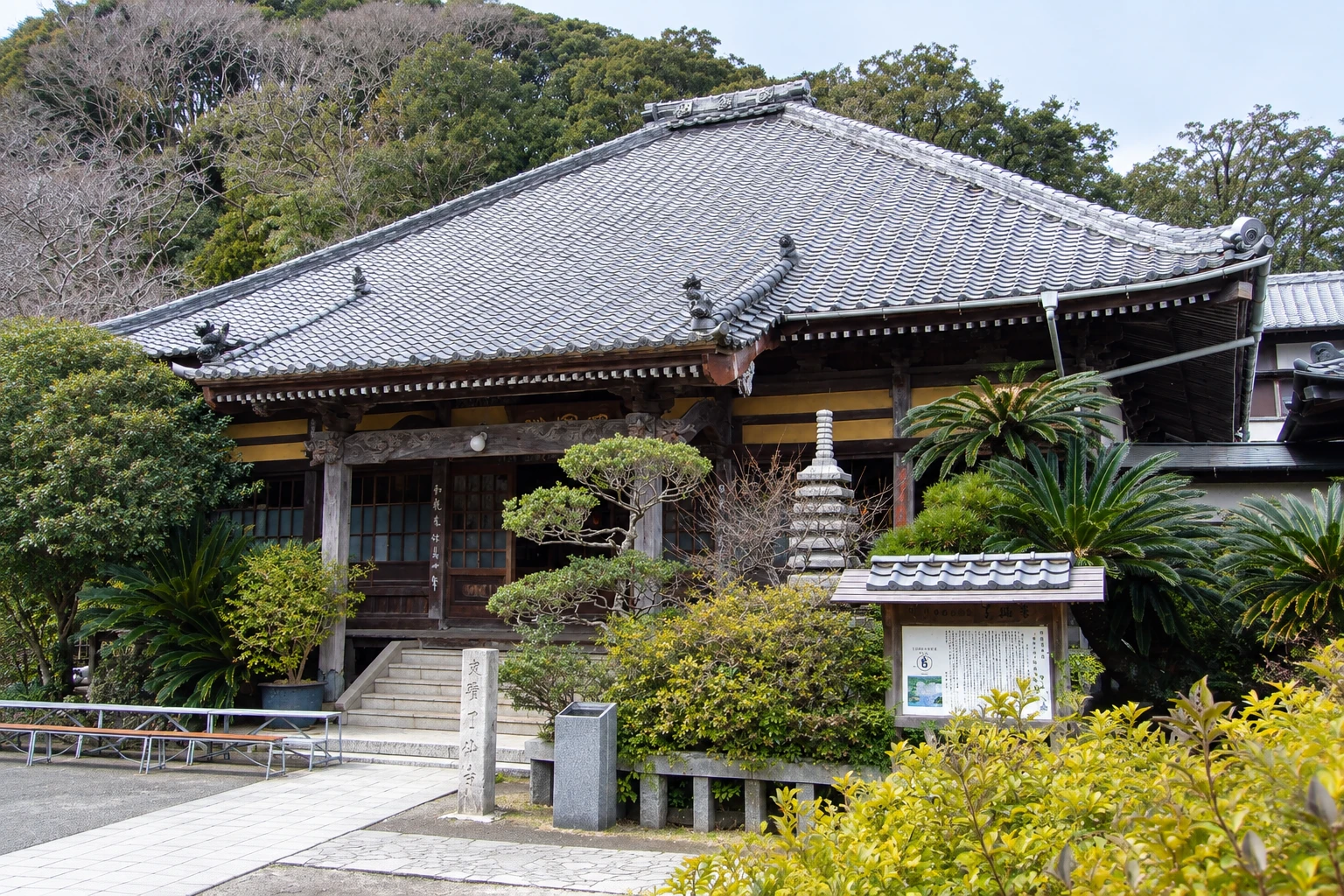
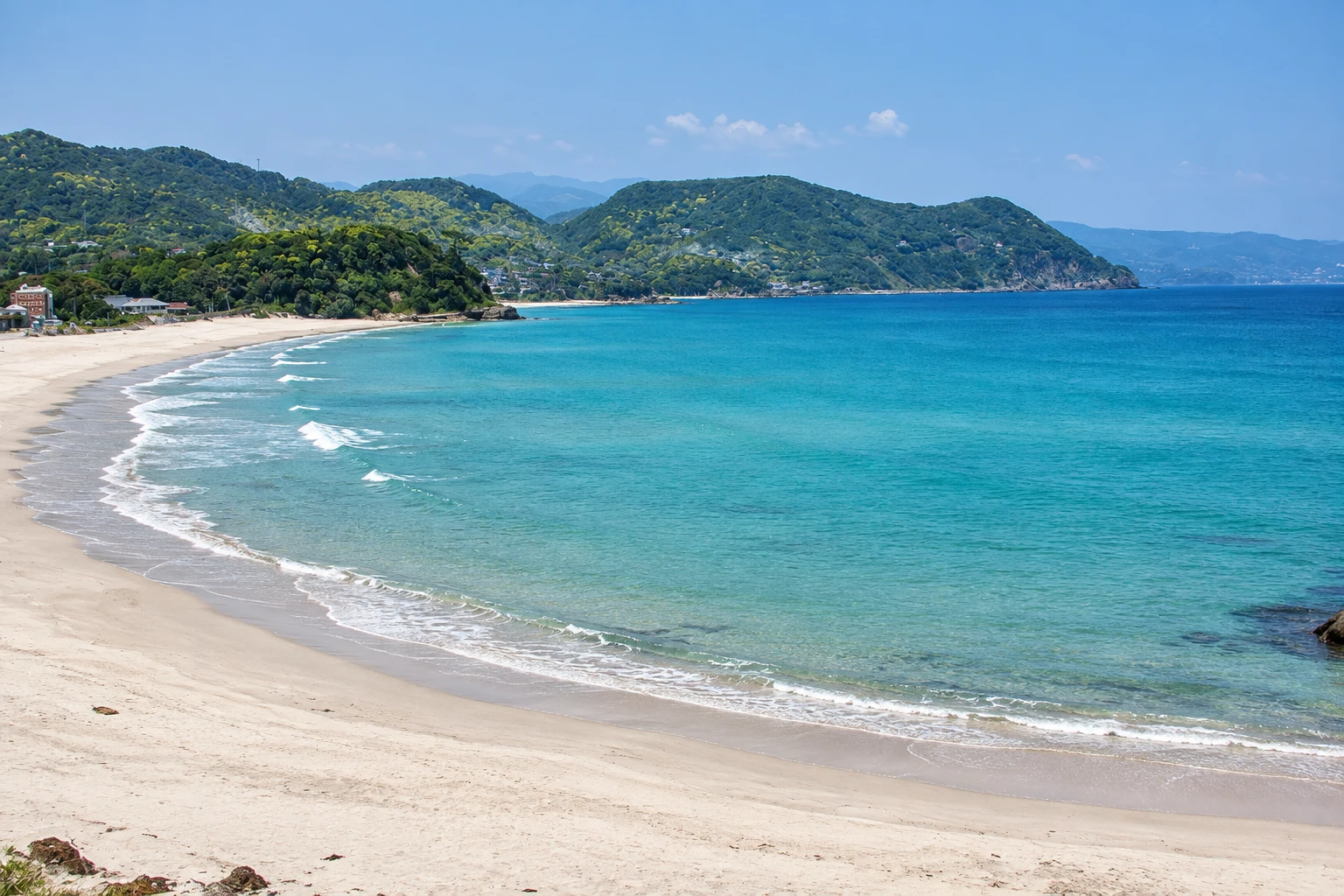
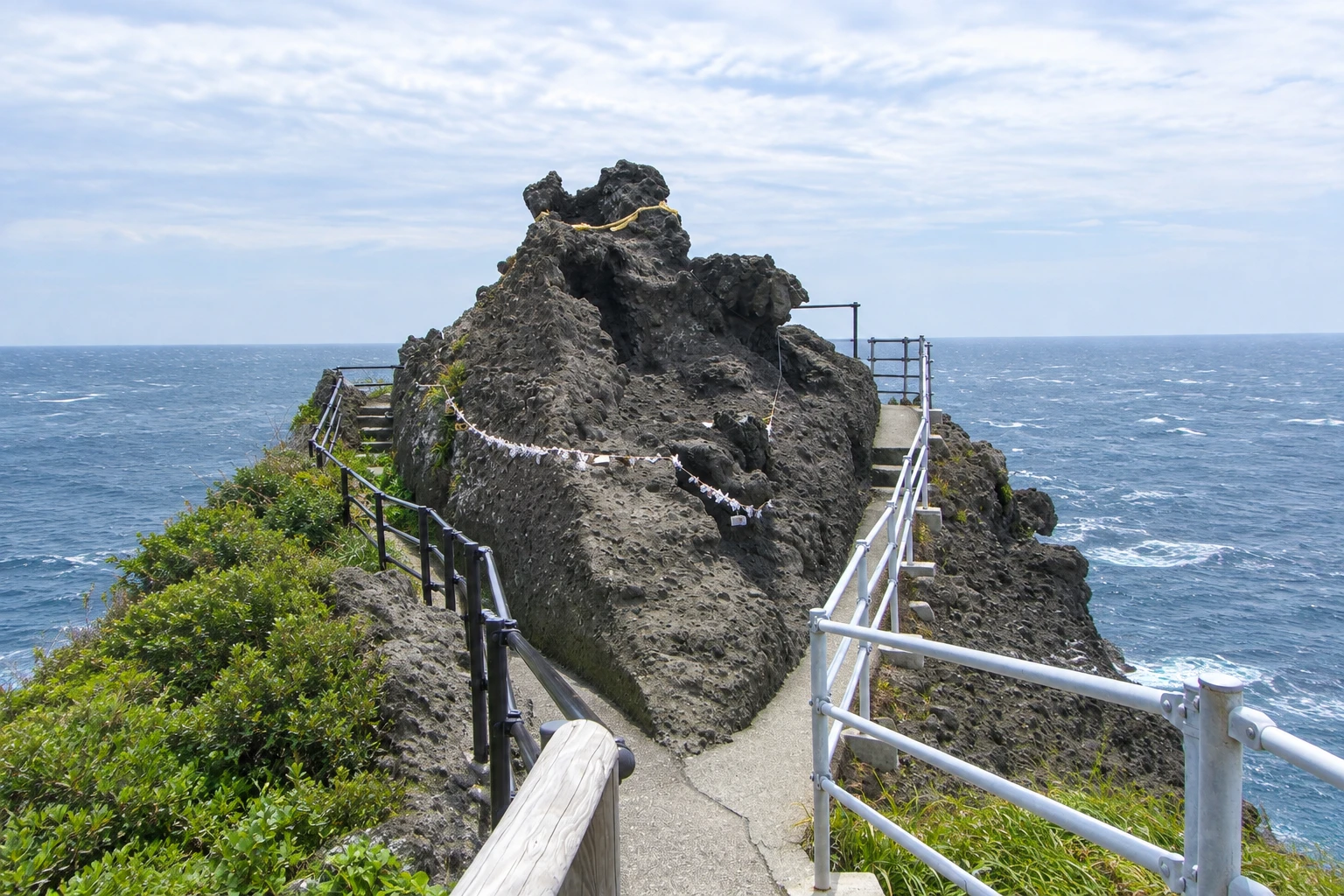
Illustrative images. The pictures in this guide are illustrations based on the real place, not photographs, and may differ from it.
The city
What to expect from Shimoda.
A port city on the southern Izu Peninsula, Shimoda was one of the first Japanese ports opened to foreign ships in 1854. It has Perry Street along a canal, the Ryosen-ji temple, clear-sand beaches like Shirahama and, farther south, Cape Irozaki at the tip of the peninsula.
A stone-paved street along a canal with willows and old namako-walled houses that leads to Ryosen-ji temple, where in 1854 the supplementary agreement to the first treaty between Japan and the United States was signed.
Southern tip of the Izu Peninsula, in Minamiizu, with cliffs above the ocean, a white lighthouse, a small shrine set into the rock and viewpoints over the Izu islands.
Approximate distances. Check flights and bus, train or boat schedules before you travel.
Izukyu-Shimoda is a little over 2 hours from Tokyo on the Odoriko and Saphir Odoriko limited expresses, and the Izukyu line runs from Ito along the east coast in about 1 hour. Buses connect Shimoda with Shuzenji and the west coast.
How many days
One day covers Perry Street, Ryosen-ji and a beach. With two days, add Cape Irozaki and Mount Nesugata, or a full day of beach in summer.
When to go
Beaches tend to be crowded in July and August. Spring and autumn have milder days and fewer people. In June, hydrangeas commonly bloom in Shimoda Park. During typhoon season, from August to October, the sea can be rough.
The seasons shown are the most usual ones; nature doesn't always follow the calendar.
Do you need a car?
No. Buses leave the station for Shirahama, Cape Irozaki and the west coast, and the historic center is walkable. A car helps if you want to visit several beaches in one day.
Suggested itinerary
An order that works
Built with the places on this page. No rush: it's paced so you have time to see them.
One day in Shimoda
manhã
Perry Street and Ryosen-ji
Walk along Perry Street by the canal and visit Ryosen-ji temple, where the supplementary agreement to the treaty with the United States was signed.
tarde
Shirahama Beach
Take the bus to Shirahama Beach, see the red torii of the shrine on the rocks and walk the sand.
fim de tarde
Shimoda Port
Return to the port to watch the late afternoon over the bay, from where sightseeing boats depart.
noite
Kinmedai
Have kinmedai simmered — the red fish that is a symbol of the town.
2 days in Shimoda
Day 2
manhã
Cape Irozaki
Take a bus to Cape Irozaki at the southern tip of the peninsula and walk to the lighthouse and the small shrine on the rock.
tarde
Mount Nesugata
Back in Shimoda, ride the ropeway up Mount Nesugata to see the port and the bay from above.
Check before you go. Opening hours and days change, and places may close for renovations, holidays or events. This itinerary is a suggestion from Cidade Turismo, not a commitment: plan yours by checking directly with each place you intend to visit.
Before you go
Frequently asked questions
Why is Shimoda important in Japanese history?
It was one of the two first ports opened to foreign ships in 1854 after Commodore Perry’s arrival, and it hosted the first United States consulate in Japan.
Which is Shimoda’s best-known beach?
Shirahama Beach, with clear sand, about 10 minutes by bus from the station, with the shrine’s torii on the rocks.
Can you get from Shimoda to Cape Irozaki by bus?
Yes. Buses leave Izukyu-Shimoda Station and take about 40 minutes to the cape at the southern tip of the peninsula.
What to eat in Shimoda?
Kinmedai — red fish simmered in sweet soy sauce — local seafood from the port and spiny lobster in season.


 Brazil
 Antarctica
 Argentina
 Bolivia
 Chile
 Colombia
 Ecuador
 Falkland Islands (Malvinas)
 French Guiana
 Guyana
 Paraguay
 Peru
 Suriname
 Uruguay
 Venezuela
 Austria
 Belgium
 Croatia
 Denmark
 Finland
 France
 Germany
 Greece
 Hungary
 Iceland
 Ireland
 Italy
 Luxembourg
 Norway
 Poland
 Portugal
 Slovakia
 Slovenia
 Spain
 Sweden
 Switzerland
 the Czech Republic
 the Netherlands
 the United Kingdom
 Turkey
 Bermuda
 Canada
 Greenland
 Mexico
 Saint Pierre and Miquelon
 the United States
 the Dominican Republic
 Egypt
 South Africa
 Australia
 Fiji
 New Zealand
 Papua New Guinea