

 Brazil
 Antarctica
 Argentina
 Bolivia
 Chile
 Colombia
 Ecuador
 Falkland Islands (Malvinas)
 French Guiana
 Guyana
 Paraguay
 Peru
 Suriname
 Uruguay
 Venezuela
 Albania
 Austria
 Belgium
 Croatia
 Denmark
 Finland
 France
 Germany
 Greece
 Hungary
 Iceland
 Ireland
 Italy
 Luxembourg
 Norway
 Poland
 Portugal
 Slovakia
 Slovenia
 Spain
 Sweden
 Switzerland
 the Czech Republic
 the Netherlands
 the United Kingdom
 Turkey
 Bermuda
 Canada
 Greenland
 Mexico
 Saint Pierre and Miquelon
 the United States
 the Dominican Republic
 Egypt
 South Africa
 Australia
 Fiji
 New Zealand
 Papua New Guinea
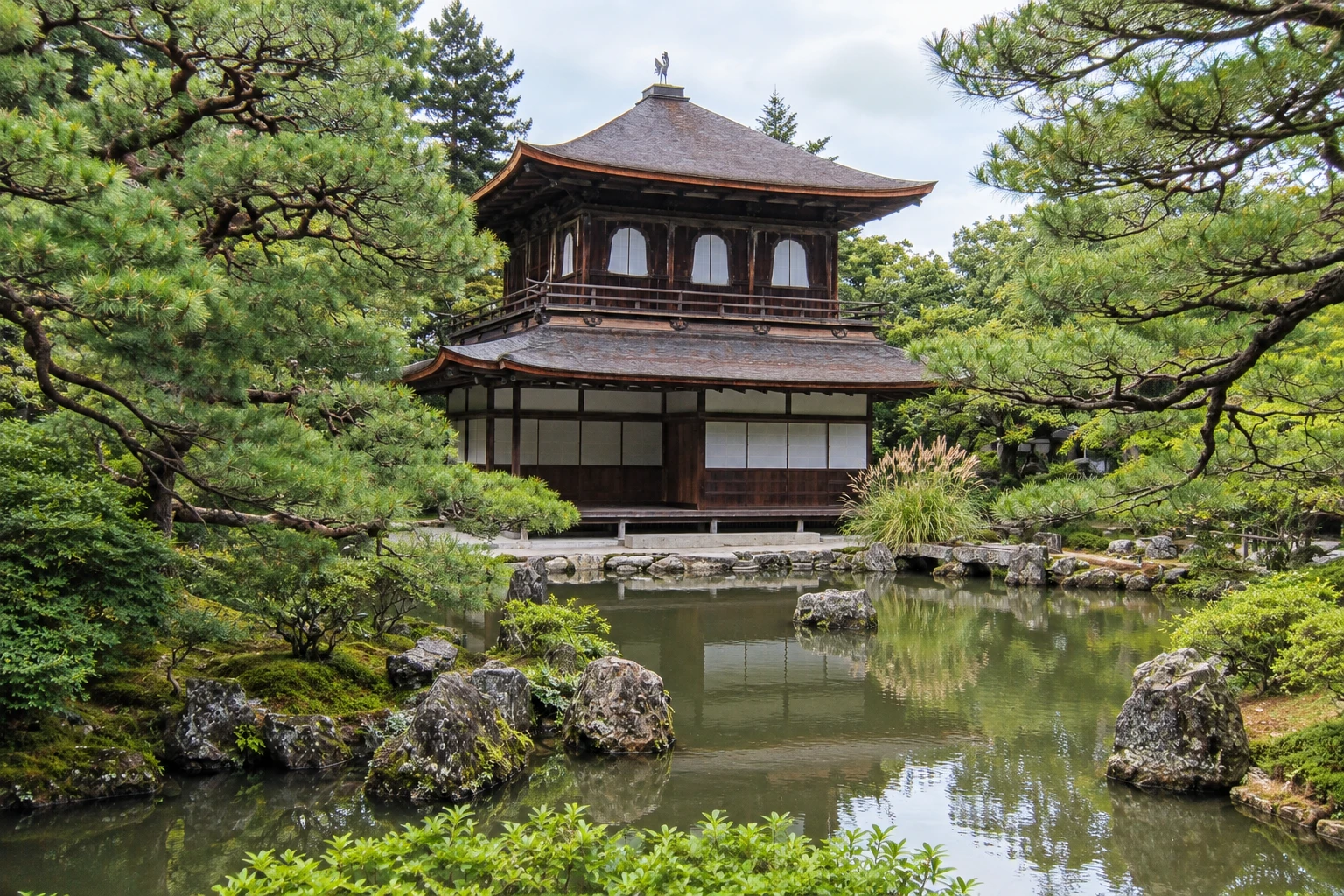
Temple · Kyoto, Japan
Ginkaku-ji (Silver Pavilion)
The Silver Pavilion, a zen temple at the foot of Kyoto’s eastern hills, with a sand garden, moss garden and the start of the Philosopher’s Path.
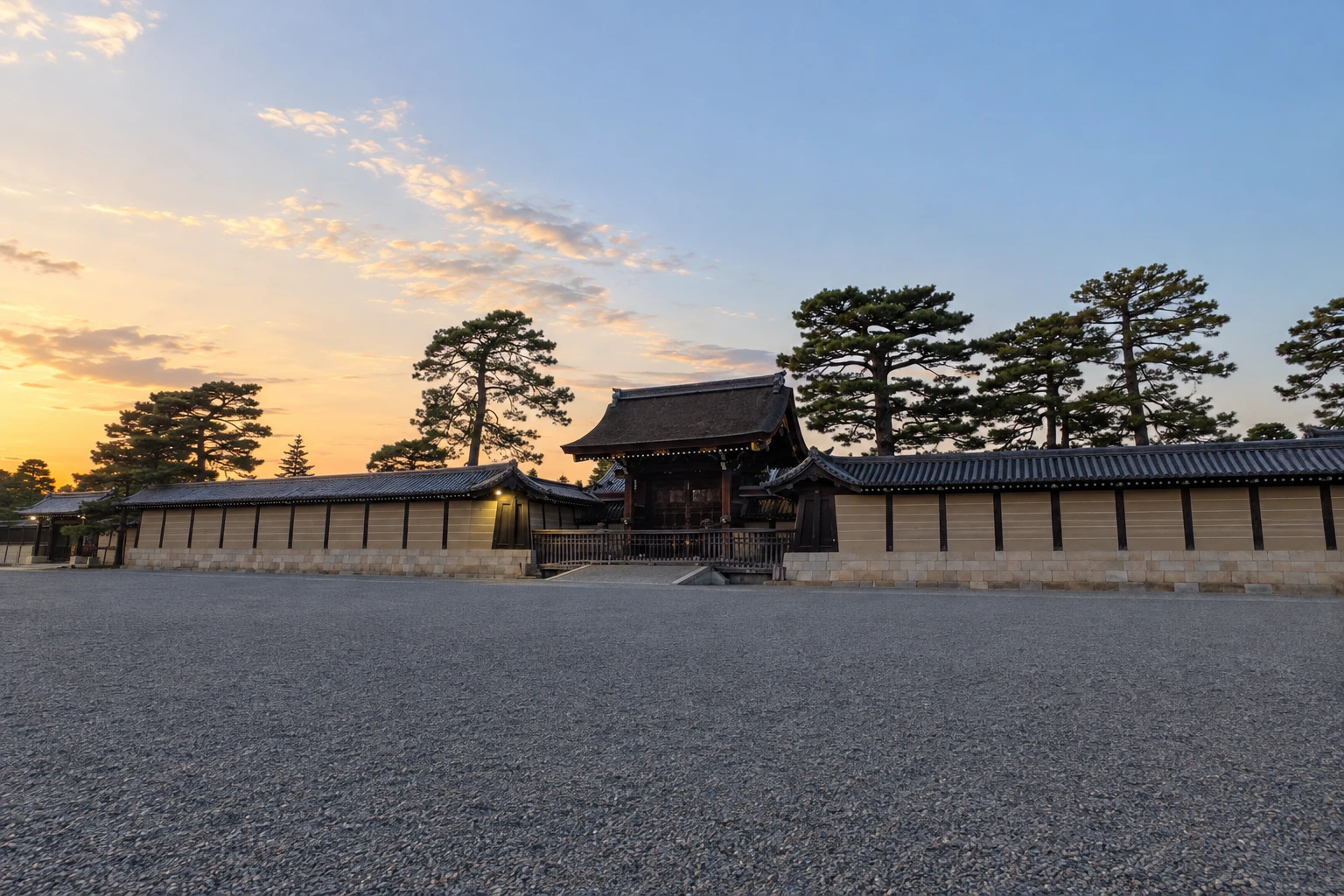
Illustrative images. The pictures in this guide are illustrations based on the real place, not photographs, and may differ from it.

A look at the place
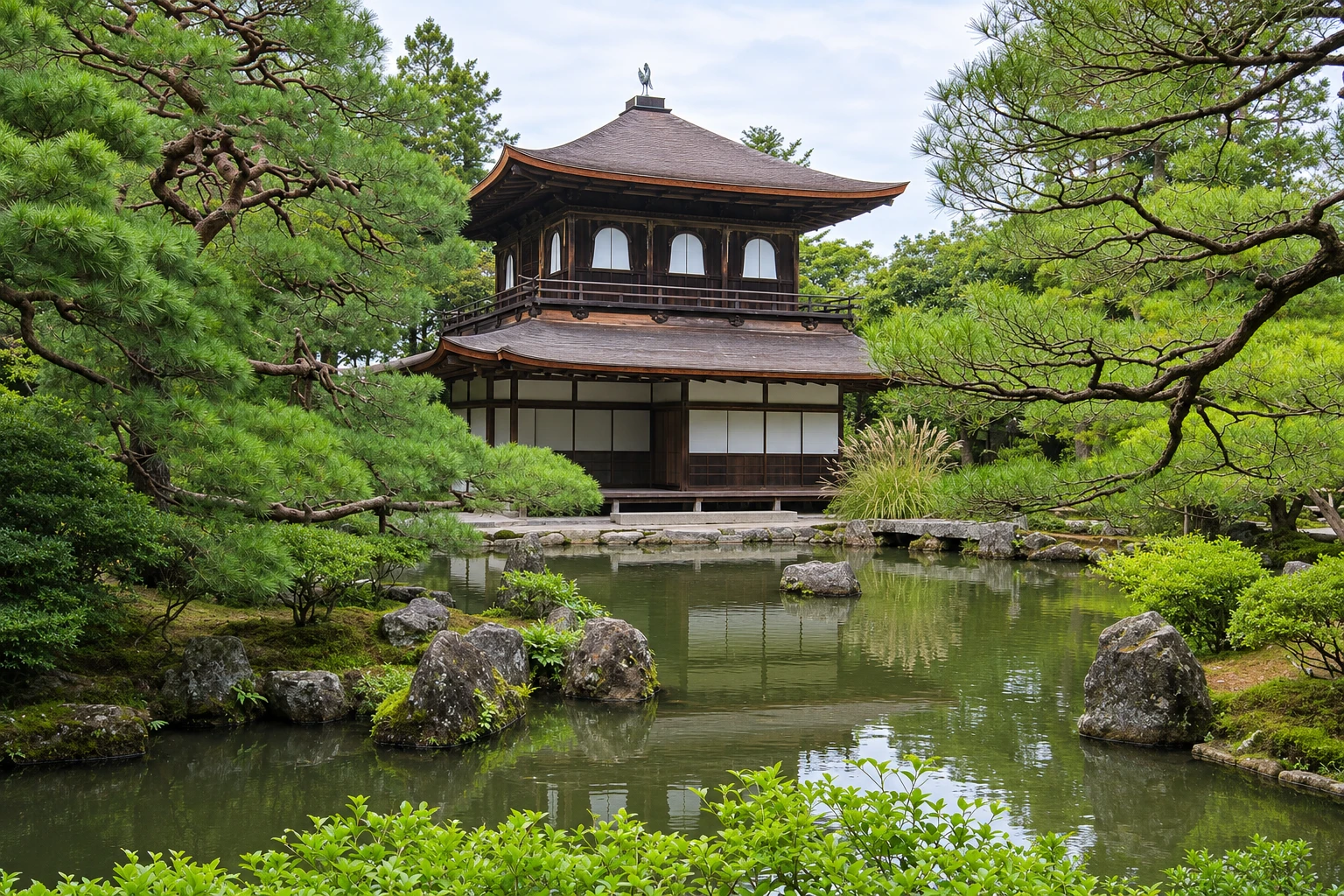
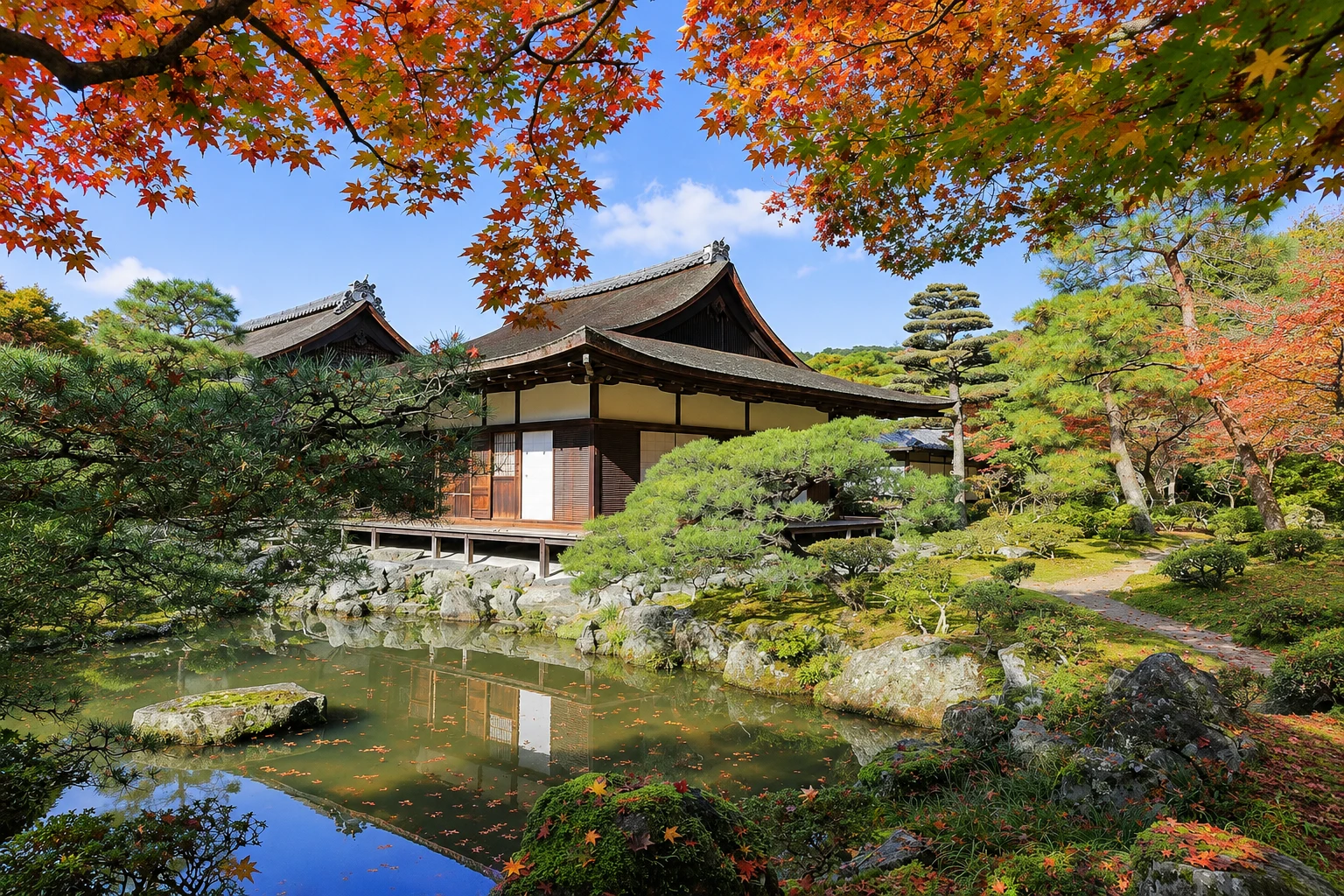
Ginkaku-ji (Silver Pavilion) in pictures
These pictures are illustrations based on the real place, not photographs. They may differ from the place.
Click the picture to enlarge it.
Discover
About Ginkaku-ji (Silver Pavilion)
Ginkaku-ji, the Silver Pavilion, is the popular name for Jisho-ji temple in northeast Kyoto. It was the residence of shogun Ashikaga Yoshimasa, grandson of the shogun who built Kinkaku-ji, constructed at the end of the 15th century and turned into a zen temple after his death. Despite its name, the pavilion was never covered in silver. It is part of the UNESCO World Heritage.
The main pavilion, the Kannon-den, has two dark wooden floors and is a symbol of the sober aesthetic of the period, associated with the tea ceremony, flower arrangement and Noh theater. Beside it is the Togu-do, which houses one of the oldest tea rooms in the country.
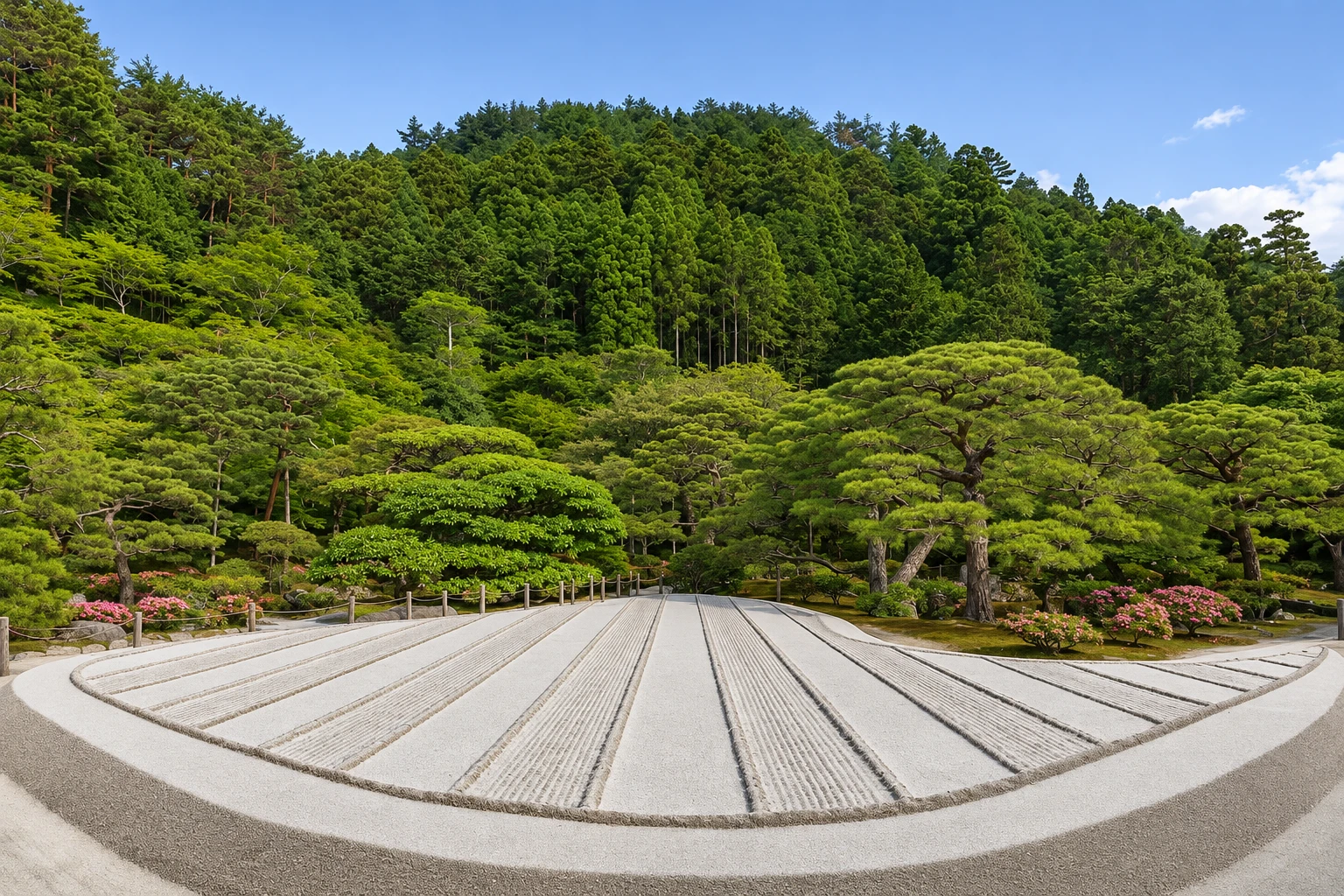
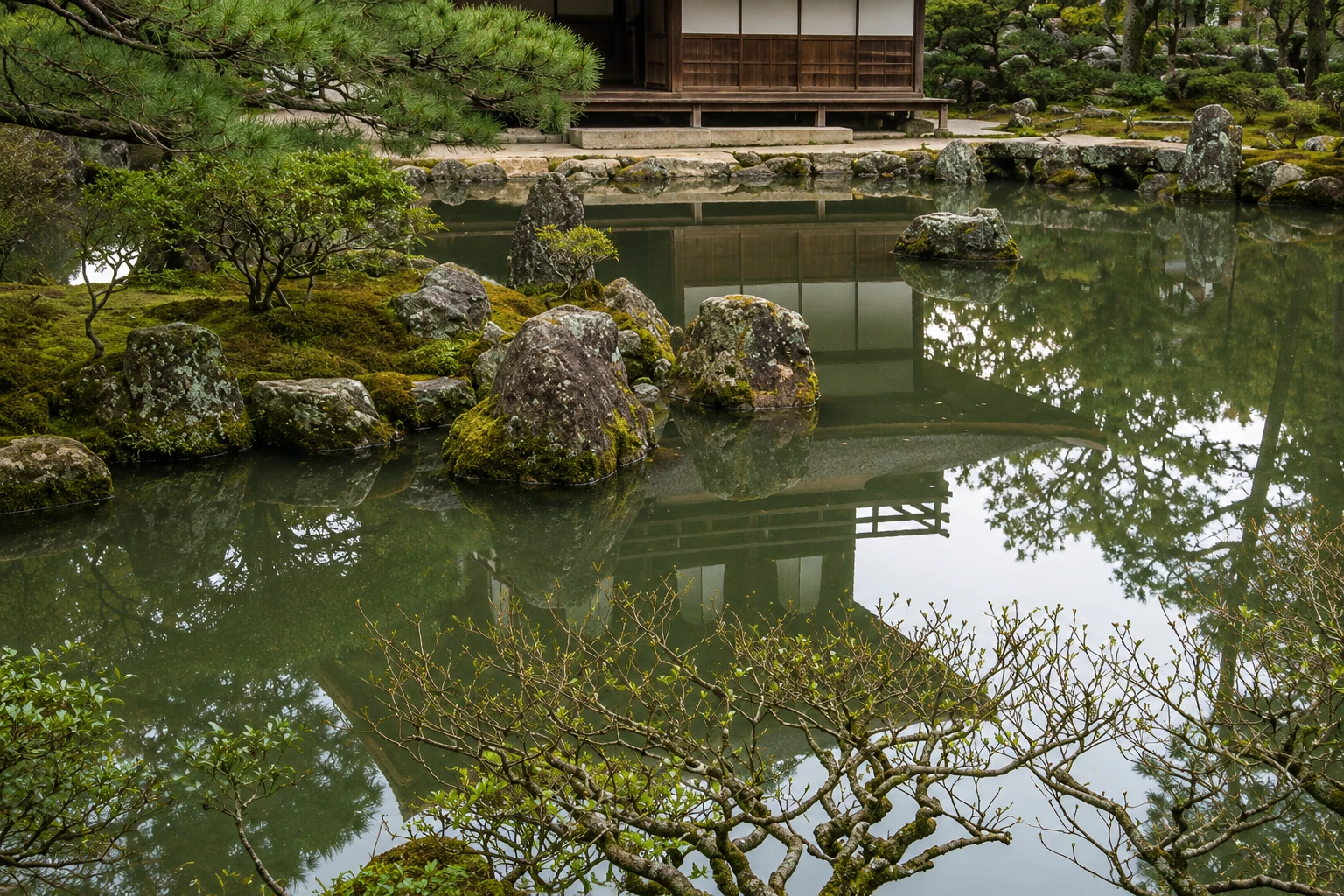
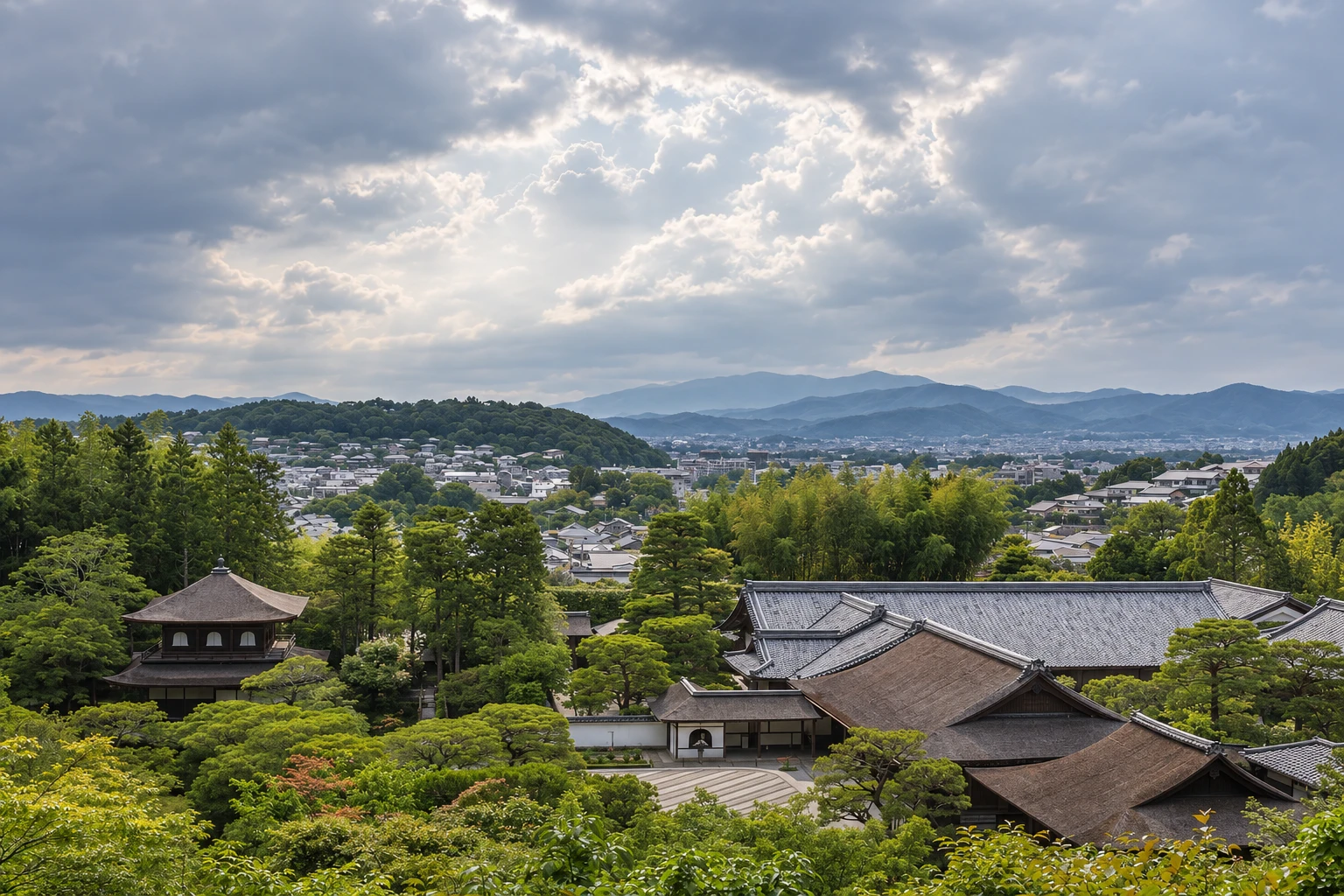
The garden is the core of the visit. First you see the Ginshadan, a surface of white sand raked into waves, and the Kogetsudai, a flattened-top sand cone. The path continues through a moss garden with a pond and stone bridges, and climbs the hillside to a viewpoint from which you can see the pavilion and the city.
From the temple entrance begins the Philosopher’s Path (Tetsugaku-no-michi), a roughly 2 km walkway along a canal lined with cherry trees that heads south toward the Nanzen-ji area. The name comes from philosopher Kitaro Nishida, who used to take walks here. Along the route are small temples, cafés and shops.
Before you go
Practical information
Cidade Turismo reviews its information regularly, but something may have changed. Check with the place before planning your trip.
How much time to set aside
About 1 hour for the temple; another 1 hour for the Philosopher’s Path to Nanzen-ji.
Best time
The cherry trees on the Philosopher’s Path usually bloom in early April; the maples in the garden change color in November. Early morning the garden is quieter. Opening hours change with the season: check before you go.
How to get there
From Kyoto Station, buses 5, 17 and 100 take about 40 minutes to the Ginkakuji-michi or Ginkakuji-mae stops, and from there the temple is a 5–10 minute walk.
Tip
Visit Ginkaku-ji first and walk down the Philosopher’s Path to Eikan-do and Nanzen-ji. That way the stroll ends near Keage subway station.
Official website
Your questions
Frequently asked questions about Ginkaku-ji (Silver Pavilion)
Is Ginkaku-ji covered in silver?
No. Despite the name Silver Pavilion, the building is dark wood and was never covered in silver. The nickname arose by comparison with the Golden Pavilion.
What is the Philosopher’s Path?
A roughly 2 km walkway along a canal, lined with cherry trees, that goes from Ginkaku-ji to the Nanzen-ji area, with small temples and cafés.
How do you get to Ginkaku-ji?
By city bus to Ginkakuji-michi or Ginkakuji-mae, about 40 minutes from Kyoto Station, and then a 5 to 10 minute walk.
How long does a visit to Ginkaku-ji take?
About 1 hour, including the climb to the garden viewpoint.
What is the difference between Ginkaku-ji and Kinkaku-ji?
Kinkaku-ji, from the late 14th century, is gilded and located in the northwest of the city. Ginkaku-ji, built almost a century later by the grandson of the same shogun, is dark wood, more subdued, and sits in the northeast, with sand and moss gardens.