Kurashiki · Japan · Historic center
Kurashiki Bikan Historical Quarter
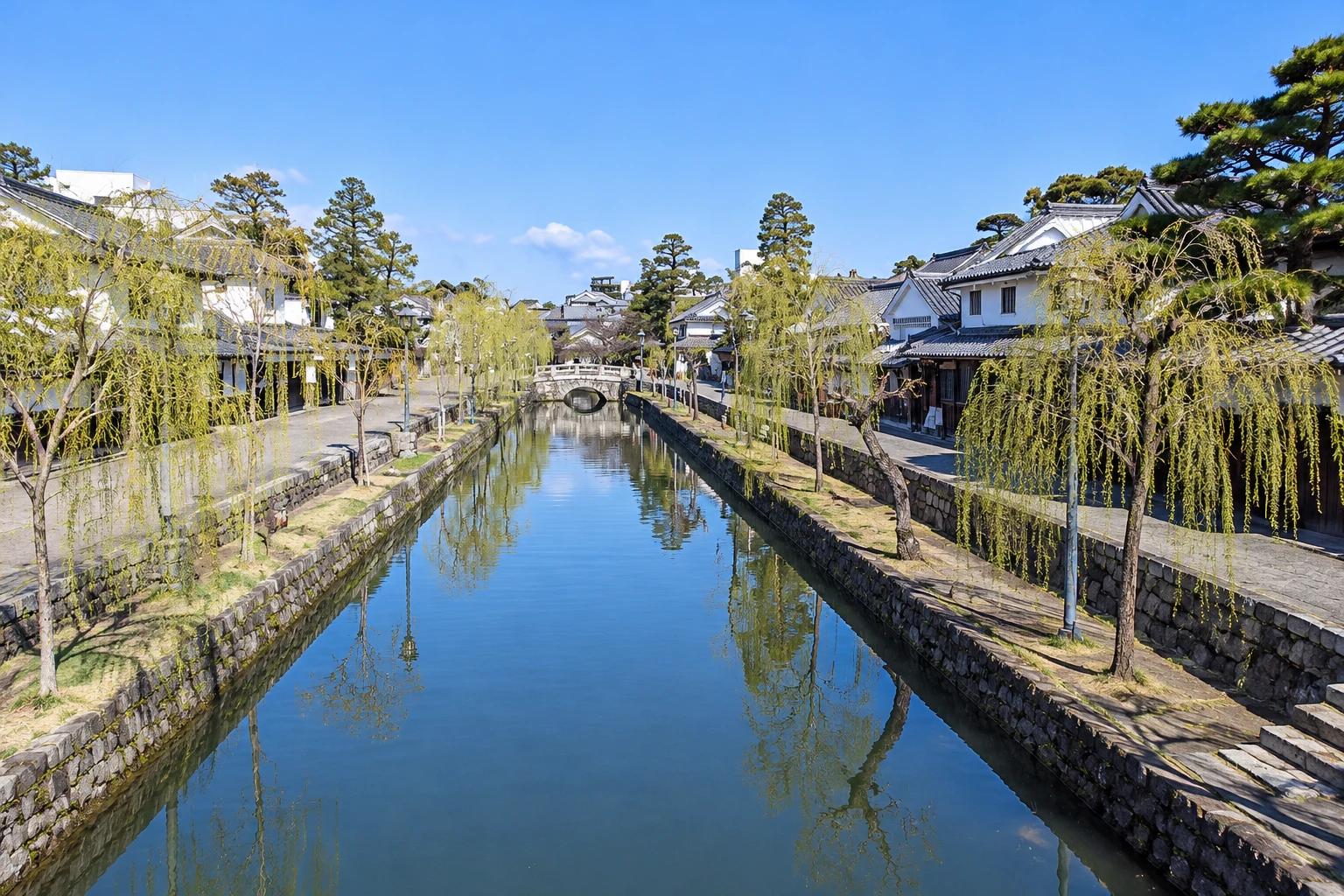
Kurashiki’s old town, with a canal lined with willow trees, white warehouses with black bands, merchant houses and craft shops, preserved from the Edo period.

 Search
 Brazil
 Antarctica
 Argentina
 Bolivia
 Chile
 Colombia
 Ecuador
 Falkland Islands (Malvinas)
 French Guiana
 Guyana
 Paraguay
 Peru
 Suriname
 Uruguay
 Venezuela
 Austria
 Belgium
 Croatia
 Denmark
 Finland
 France
 Germany
 Greece
 Hungary
 Iceland
 Ireland
 Italy
 Luxembourg
 Norway
 Poland
 Portugal
 Slovakia
 Slovenia
 Spain
 Sweden
 Switzerland
 the Czech Republic
 the Netherlands
 the United Kingdom
 Turkey
 Bermuda
 Canada
 Greenland
 Mexico
 Saint Pierre and Miquelon
 the United States
 the Dominican RepublicJapanTurkey
 Egypt
 South Africa
 Australia
 Fiji
 New Zealand
 Papua New Guinea
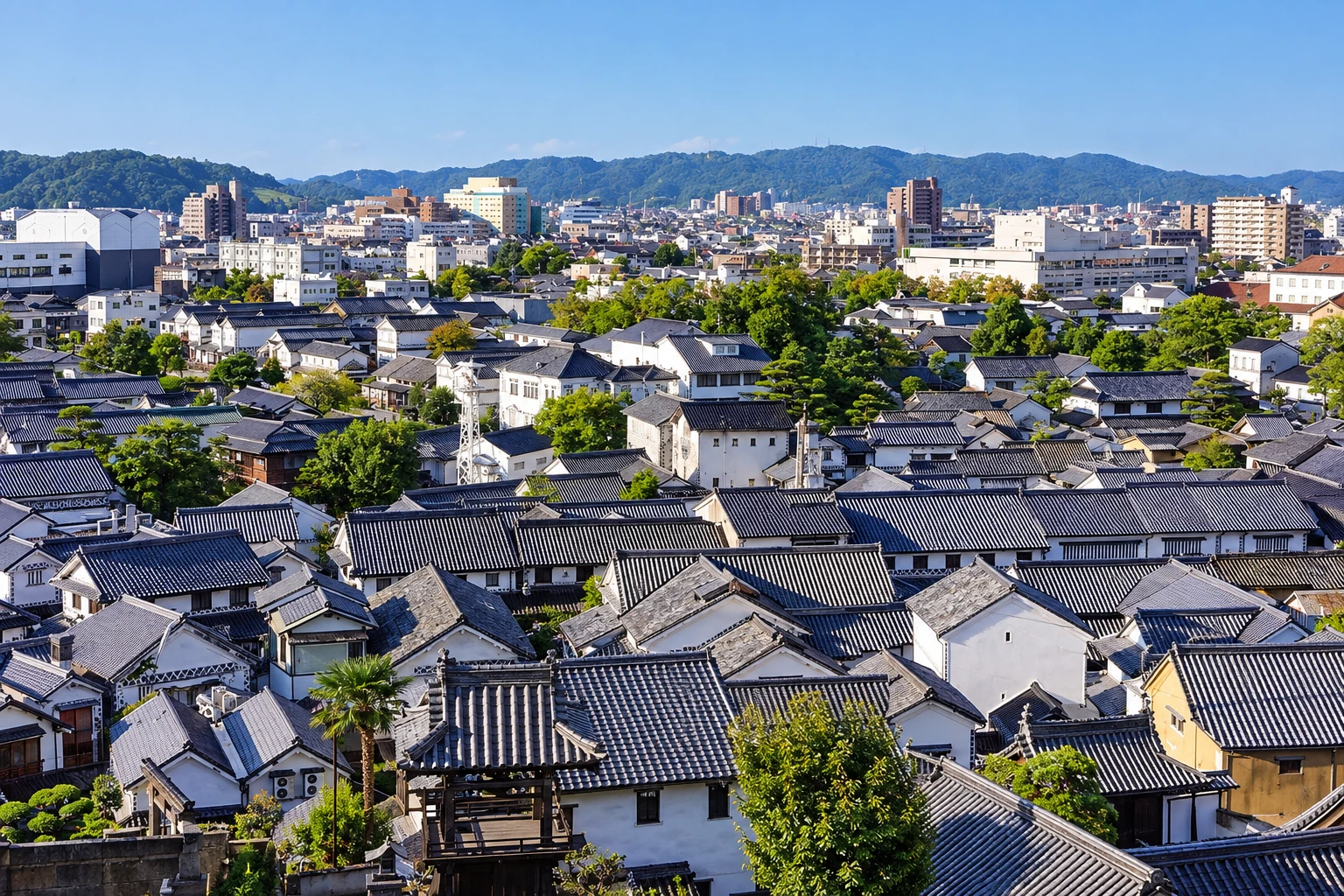
In the photo: Roofs of Kurashiki’s historic district
Illustrative images. The pictures in this guide are illustrations based on the real place, not photographs, and may differ from it.

The city
Kurashiki is a city west of Okayama, known for the Bikan district, with a canal lined by willows and white warehouses with black bands, from when it was a rice and cotton trading post. The Ohara Museum of Art, the brick mills of Ivy Square and streets of old shops are there. Kojima, in the southern part of the municipality, is known for jeans.
There's no accommodation in the guide yet in Kurashiki.
Tem hotel, pousada ou casa de temporada aqui? Cadastre a suaThere are no restaurants in the guide yet in Kurashiki.
Know a good one? Recommend it to usHotéis e restaurantes da cidade no mapa.
how to get there · how many days · itinerary · questions
The local experience
Kurashiki’s old town, with a canal lined with willow trees, white warehouses with black bands, merchant houses and craft shops, preserved from the Edo period.
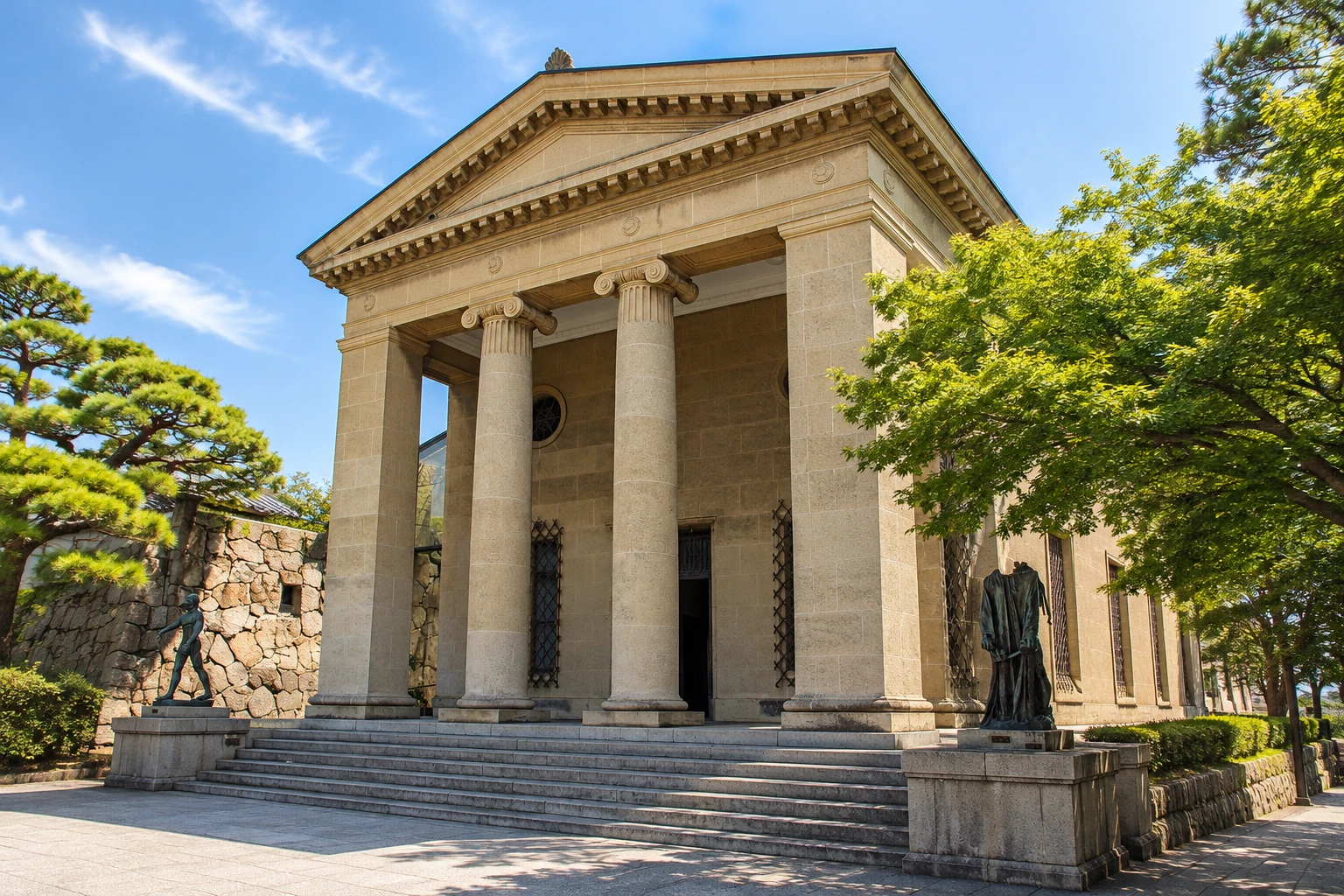
Japan’s first Western art museum, opened in 1930 on Kurashiki’s canal, with El Greco, Monet, Gauguin and Modigliani, plus annexes of Japanese art and crafts.
Before you go
Kurashiki – Japan Destination Okayama and Kurashiki about 18 km from Okayama
Approximate distances. Check flights and bus, train or boat schedules before you travel.
Local Sanyo Line trains link Okayama and Kurashiki in about 15 minutes. Visitors from Hiroshima can change from the shinkansen at Shin-Kurashiki and take a local train for about 10 minutes. The Bikan district is about a 15-minute walk from Kurashiki Station.
Half a day for the canal, the Ohara Museum and the surrounding streets. An overnight stay lets you see the district lit and empty and take an early walk before tour groups arrive.
The district is attractive year-round. The canal’s willows are greener from spring to summer; in autumn the days are mild. The rainy season runs from June to July. The museum and many shops close one day a week; check ahead.
The seasons shown are the most usual ones; nature doesn't always follow the calendar.
No. The Bikan district is pedestrian-only and can be explored on foot from the station. For Kojima and the Seto Ohashi Bridge, there are local trains.
Suggested itinerary
Built with the places on this page. No rush: it's paced so you have time to see them.
Walk from the station to the canal and stroll along the banks before the shops open, with willows and warehouses reflected in the water.
Visit the Ohara Museum of Art, with El Greco, Monet and Gauguin in the main building and ceramics and Japanese art in the annexes.
Pass the brick mills of Ivy Square, covered in ivy, and climb to Achi Shrine for views of the district’s roofs.
Return to the canal at night, when the lights come on and the district is almost empty, and dine in one of the old houses converted into a restaurant.
Check before you go. Opening hours and days change, and places may close for renovations, holidays or events. This itinerary is a suggestion from Cidade Turismo, not a commitment: plan yours by checking directly with each place you intend to visit.
Before you go
Yes, there are short rowboat rides on the canal during parts of the year, with tickets sold at the district’s tourist information center. Capacity is limited.
It’s the namako-kabe style, with black tiles fixed to the wall and raised white mortar joints, which protected warehouses from fire and damp.
No. It’s about 15 minutes by local train, with frequent departures. Many people visit both cities in the same day.
Kojima, in the south of Kurashiki, is a Japanese denim production center with a street of local-brand shops. It is about a 25-minute train ride from the center.