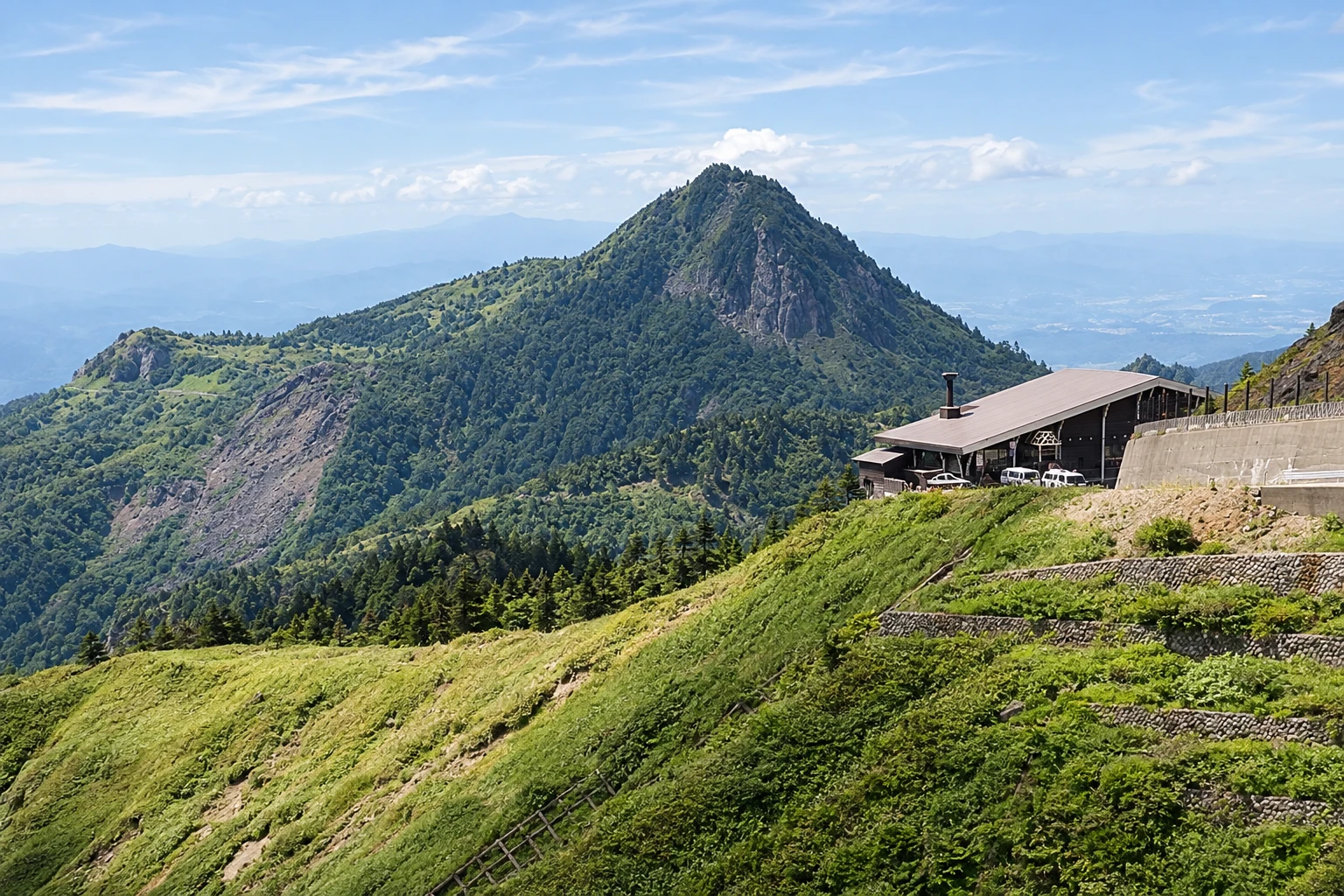
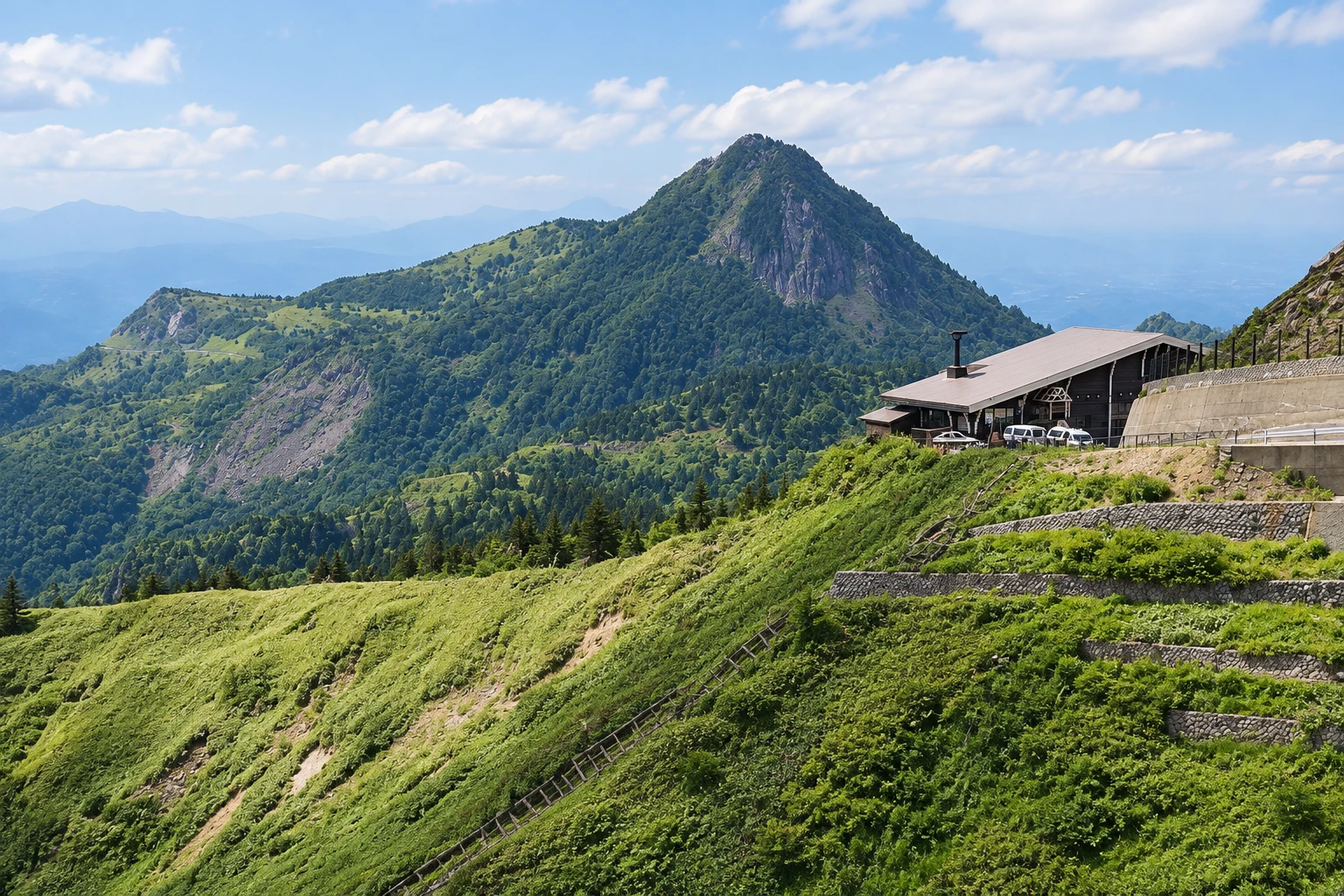
In the photo: Mountains of Shiga Kogen, in the Yamanouchi area.
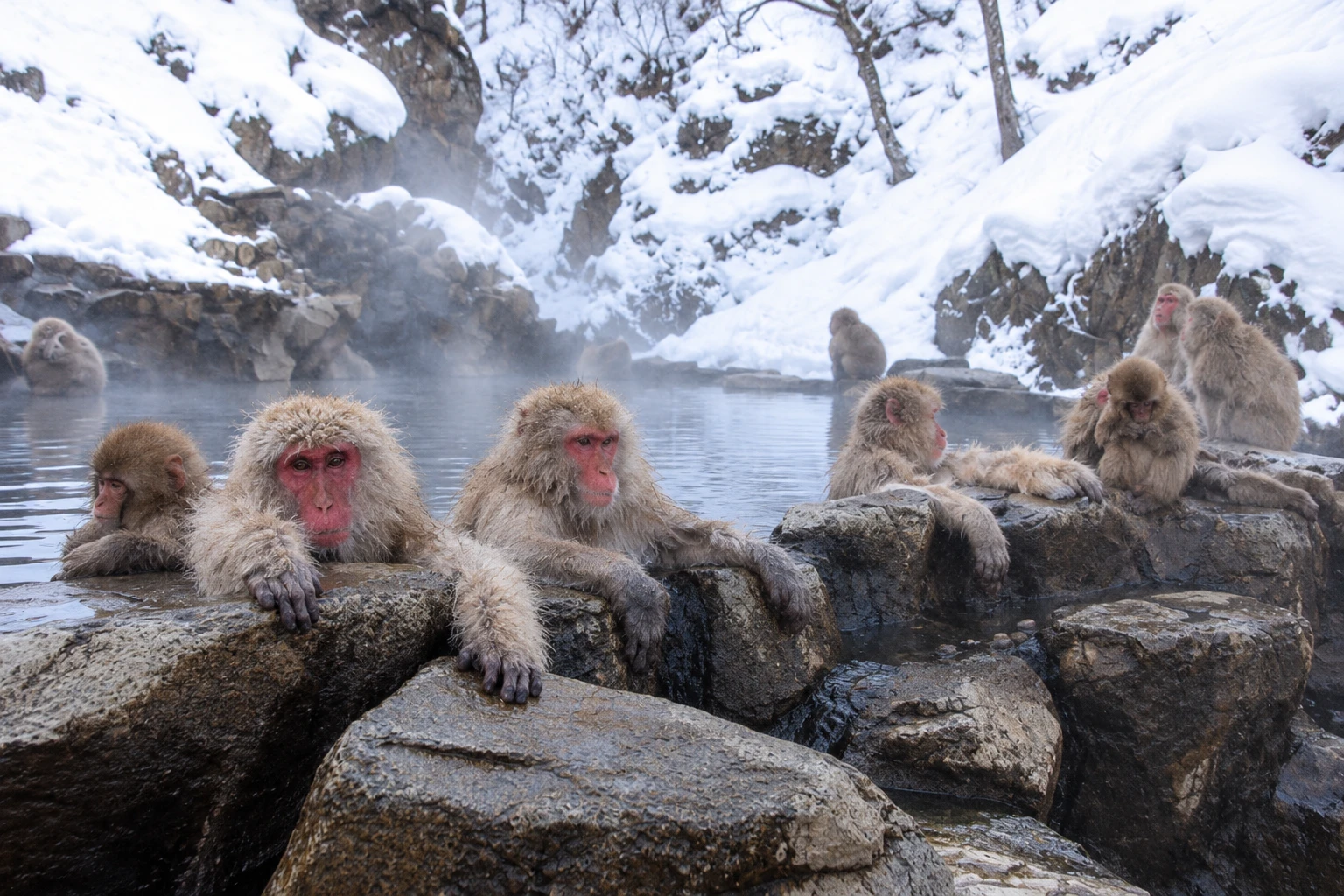
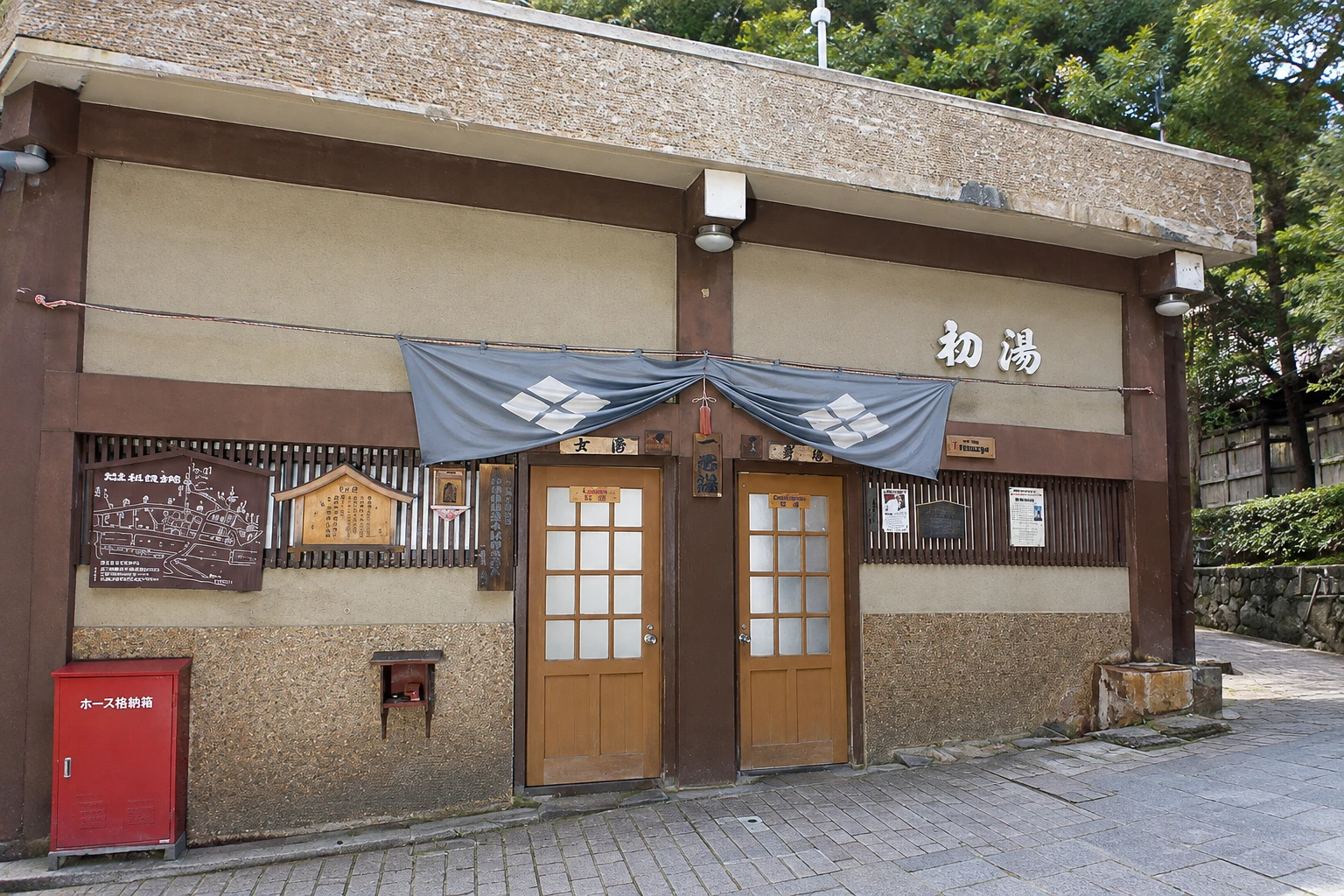
Illustrative images. The pictures in this guide are illustrations based on the real place, not photographs, and may differ from it.
The city
What to expect from Yamanouchi.
Yamanouchi is the town in the Yokoyu River valley, northeast of Nagano, that includes the Yudanaka and Shibu Onsen hot-spring areas, the Jigokudani monkey park, and the Shiga Kogen highlands. The Japanese macaques that often bathe in a hot spring in winter are the best-known attraction; Shibu Onsen, with nine public baths, is the village where most visitors stay overnight.
Park in the Yokoyu River valley, at about 850 meters altitude, where wild Japanese macaques come down from the forest and often bathe in a hot spring, especially in winter. It is reached by a trail of about 1.6 km.
A hot-spring village of more than 1,300 years in the Yokoyu River valley, with a narrow stone-paved street, multi-storey wooden inns and nine public baths, visited wearing a yukata.
A volcanic plateau over 1,500 meters in elevation, with one of the largest ski areas in Japan, dozens of interlinked runs and a venue for events at the 1998 Games. In summer, trails pass by high-altitude lakes and marshes.
Approximate distances. Check flights and bus, train or boat schedules before you travel.
From Nagano Station, the Nagano Dentetsu Railway reaches Yudanaka in about 45 minutes to 1 hour 10 minutes, and express buses run to the Jigokudani area and Shiga Kogen. From Yudanaka, local buses climb to Kanbayashi Onsen and Shiga Kogen.
How many days
One day and one night: the monkeys in the morning, the baths of Shibu Onsen in the afternoon and evening. In winter, add days to ski in Shiga Kogen.
When to go
December to March for snow and the monkeys in the hot spring, which tend to stay in the water longer on cold days. Spring brings newborns; in summer Shiga Kogen has trails among lakes; October brings foliage.
The seasons shown are the most usual ones; nature doesn't always follow the calendar.
Do you need a car?
No. Train, local buses and the forest trail lead to Jigokudani; Shibu Onsen is explored on foot. In winter, the mountain roads require experience driving in snow.
Suggested itinerary
An order that works
Built with the places on this page. No rush: it's paced so you have time to see them.
One day in Yamanouchi
manhã
Jigokudani monkeys
Take the bus to Kanbayashi Onsen and walk about 30 minutes along the forest trail to the Jigokudani park, arriving early when the monkeys are usually active.
tarde
Shibu Onsen
Walk down into Shibu Onsen, wander the narrow streets between the wooden inns and have lunch at a village restaurant.
noite
The nine baths
Staying at a Shibu inn, use the key to the nine public baths and visit them wearing a yukata, stamping the towel at each one.
Check before you go. Opening hours and days change, and places may close for renovations, holidays or events. This itinerary is a suggestion from Cidade Turismo, not a commitment: plan yours by checking directly with each place you intend to visit.
Before you go
Frequently asked questions
Shibu Onsen or Yudanaka: where to sleep?
Shibu Onsen has the old street and the nine baths, accessible to guests staying in the village. Yudanaka is next to the station and has more transport options. The two are about 10 minutes apart.
How do the nine baths of Shibu Onsen work?
They are small public baths, each with water that has different properties. Village guests receive a key to open them and can stamp a towel at each bath. Some accept outside visitors at limited times.
Where to ski near Jigokudani?
At Shiga Kogen, about 30 to 40 minutes by bus from Yudanaka, with dozens of connected runs. The season usually runs from December to April.
What to bring to Jigokudani in winter?
Waterproof boots with firm soles or shoe chains, layered clothing, gloves and a hat. The trail can have snow and ice.


 Brazil
 Antarctica
 Argentina
 Bolivia
 Chile
 Colombia
 Ecuador
 Falkland Islands (Malvinas)
 French Guiana
 Guyana
 Paraguay
 Peru
 Suriname
 Uruguay
 Venezuela
 Austria
 Belgium
 Croatia
 Denmark
 Finland
 France
 Germany
 Greece
 Hungary
 Iceland
 Ireland
 Italy
 Luxembourg
 Norway
 Poland
 Portugal
 Slovakia
 Slovenia
 Spain
 Sweden
 Switzerland
 the Czech Republic
 the Netherlands
 the United Kingdom
 Turkey
 Bermuda
 Canada
 Greenland
 Mexico
 Saint Pierre and Miquelon
 the United States
 the Dominican Republic
 Egypt
 South Africa
 Australia
 Fiji
 New Zealand
 Papua New Guinea