Ise udon
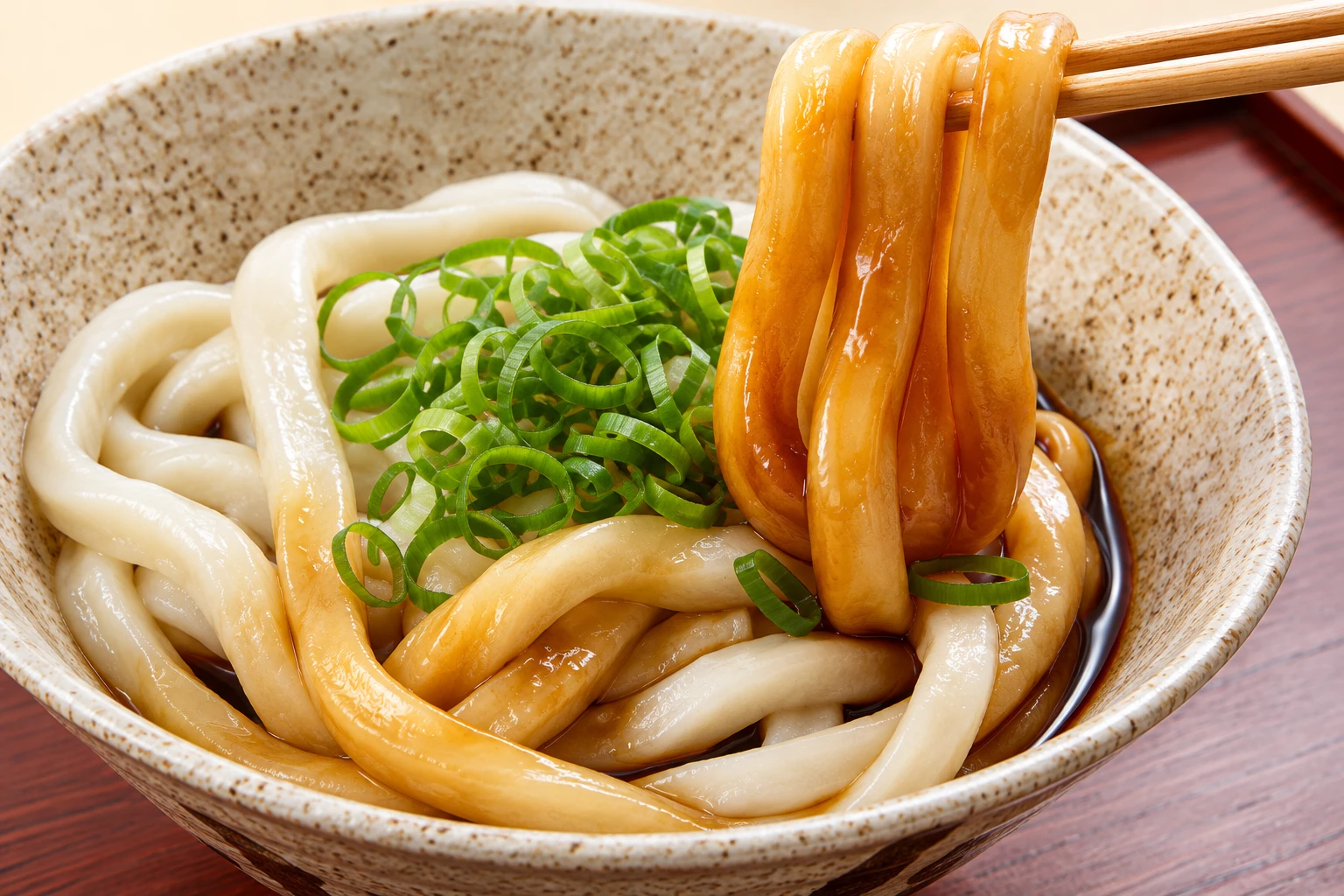
Very thick, soft udon served with almost no broth, topped with a dark, thick tamari–dashi sauce and scallions. A dish from the city of Ise, served for centuries to shrine pilgrims.
Antarctica
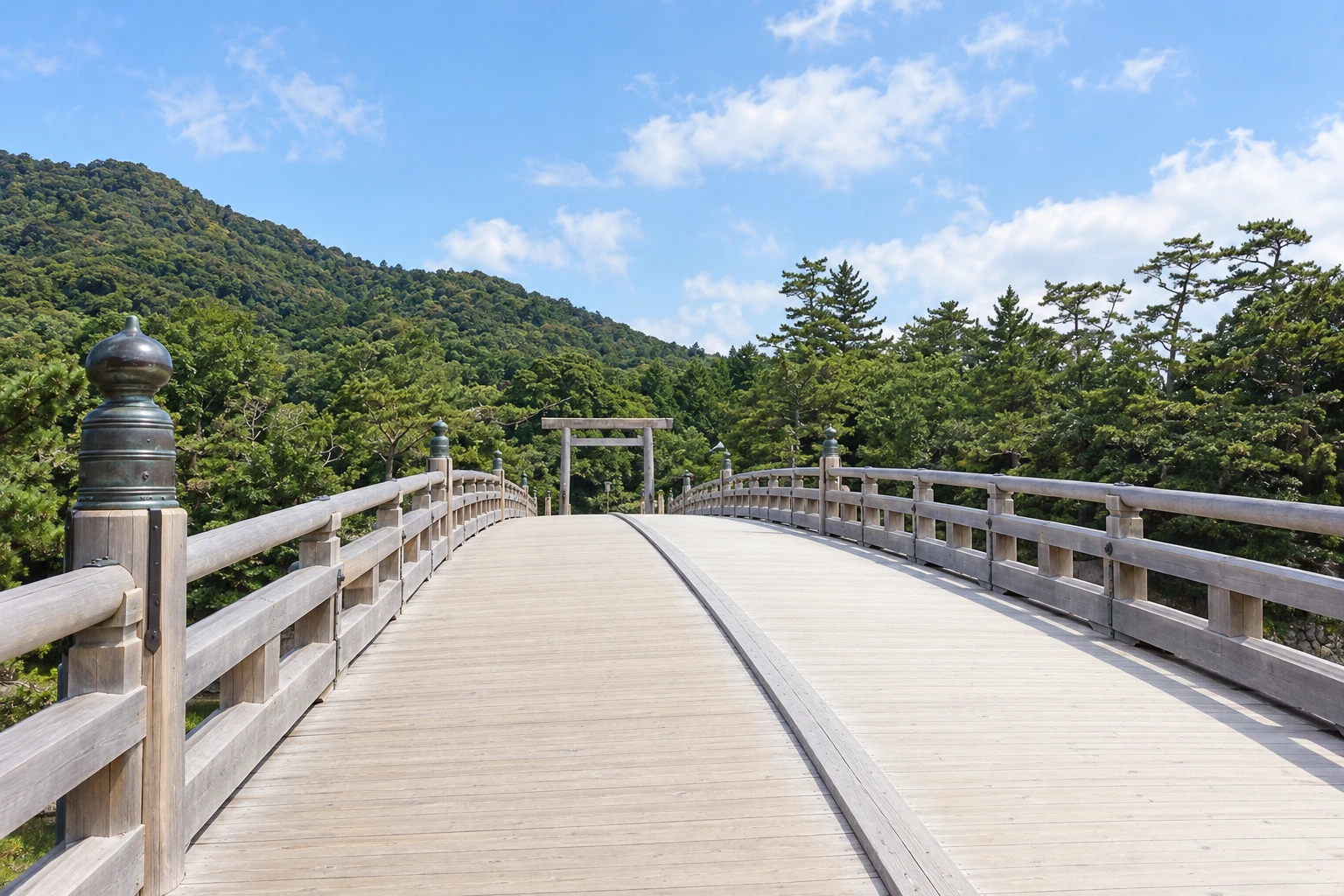
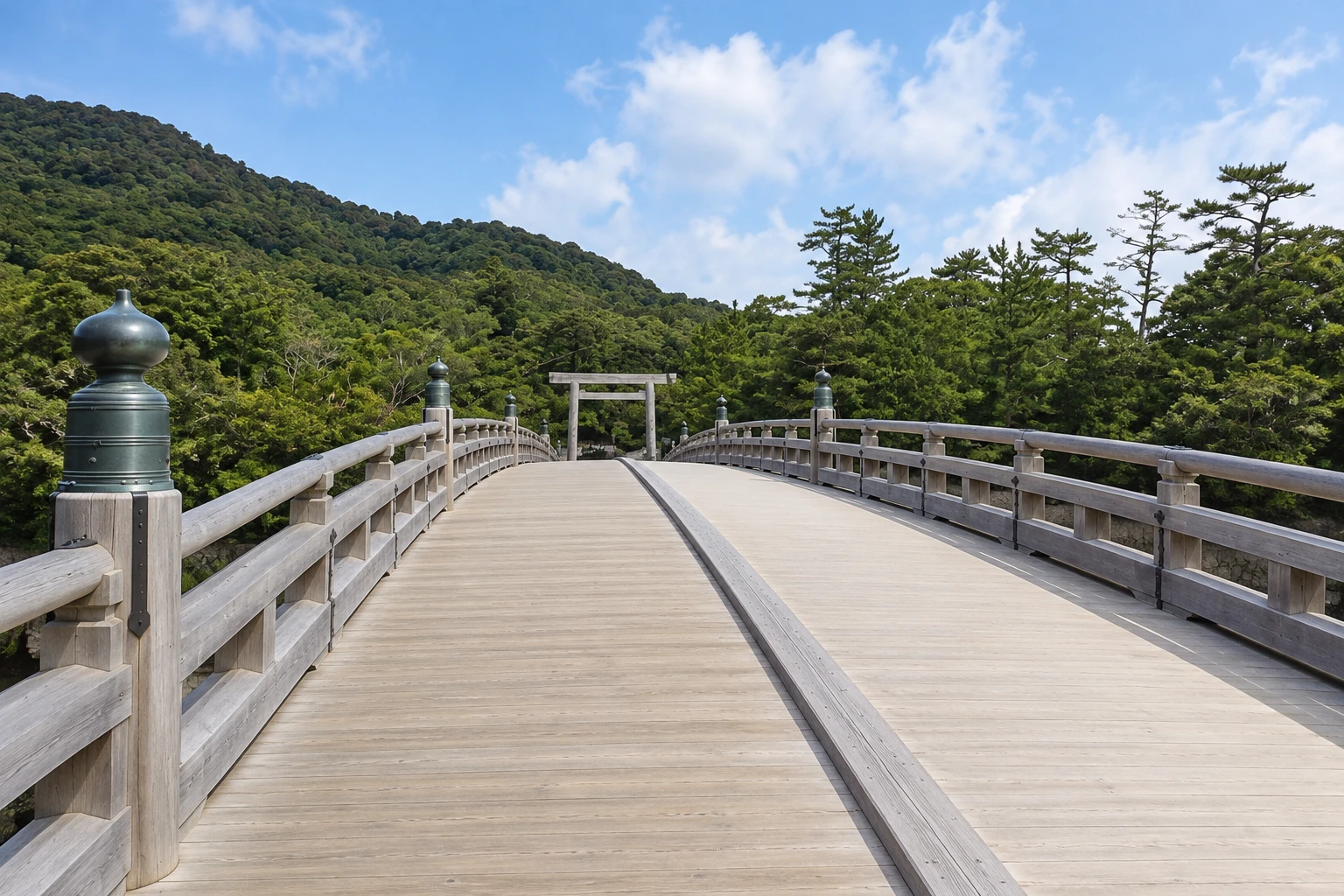
In the photo: Uji Bridge at the access to Ise’s Inner Shrine.
Illustrative images. The pictures in this guide are illustrations based on the real place, not photographs, and may differ from it.
The city
Ise is the city of Ise Jingu, the center of Shinto. The Outer Shrine, Geku, is next to Ise-shi Station; the Inner Shrine, Naiku, is about 6 km away, with the pilgrims’ streets of Oharai-machi in front of Uji Bridge. On the coast of Futami, also in the municipality, are the married rocks of Meoto Iwa.
There's no accommodation in the guide yet in Ise.
Tem hotel, pousada ou casa de temporada aqui? Cadastre a suaHotéis e restaurantes da cidade no mapa.
how to get there · how many days · itinerary · questions
Flavors of Japan
The local experience
The main shrine of Ise Jingu, dedicated to the sun goddess Amaterasu, set in a cedar forest beside the Isuzu River. You reach it via Uji Bridge; in front of it are the pilgrims’ streets Oharai-machi and Okage Yokocho.
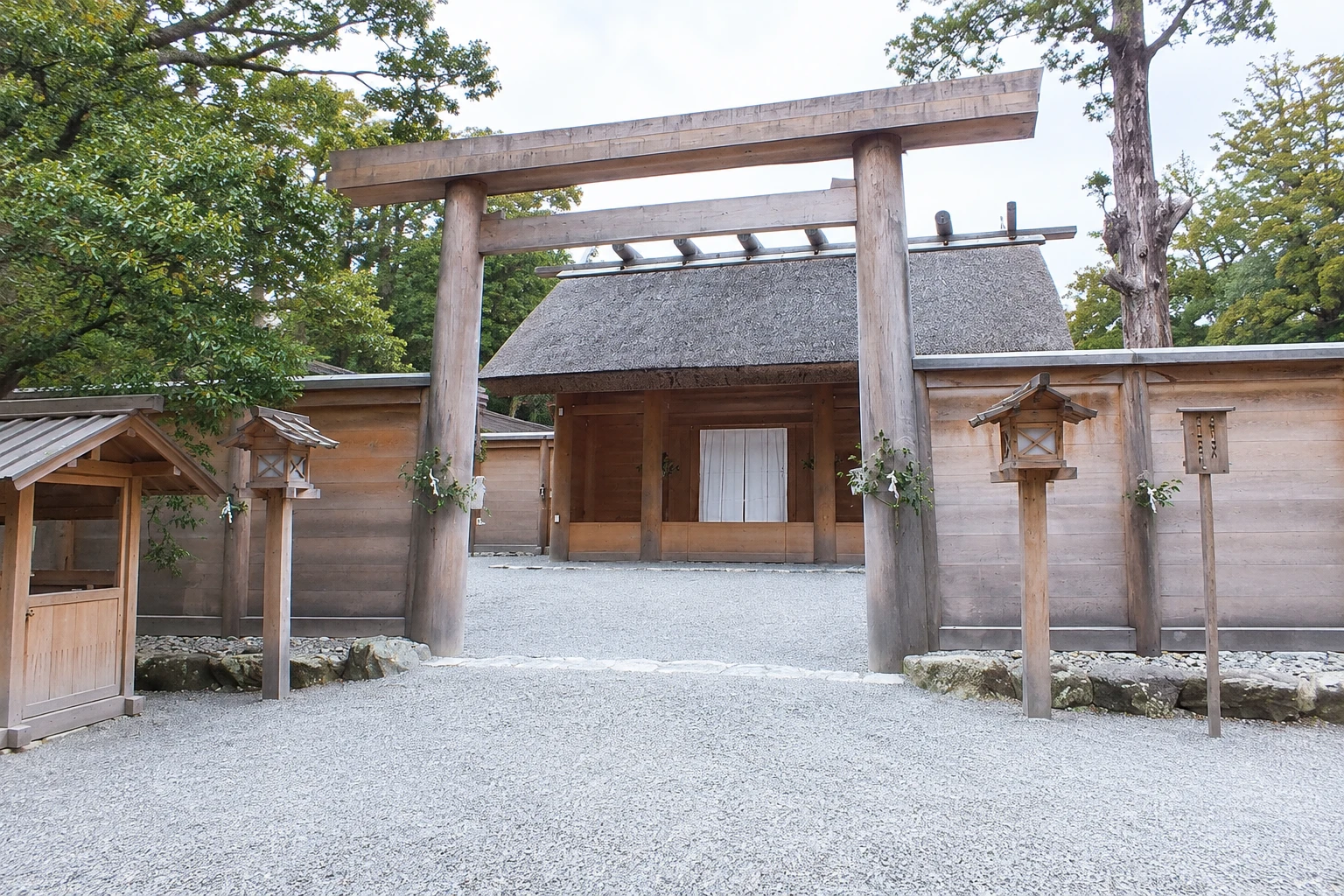
The Outer Shrine of Ise Jingu, dedicated to the goddess Toyouke, who provides the offerings to Amaterasu, set in a forest near Ise-shi station. Next door, the Sengukan museum explains the reconstruction ritual held every 20 years.
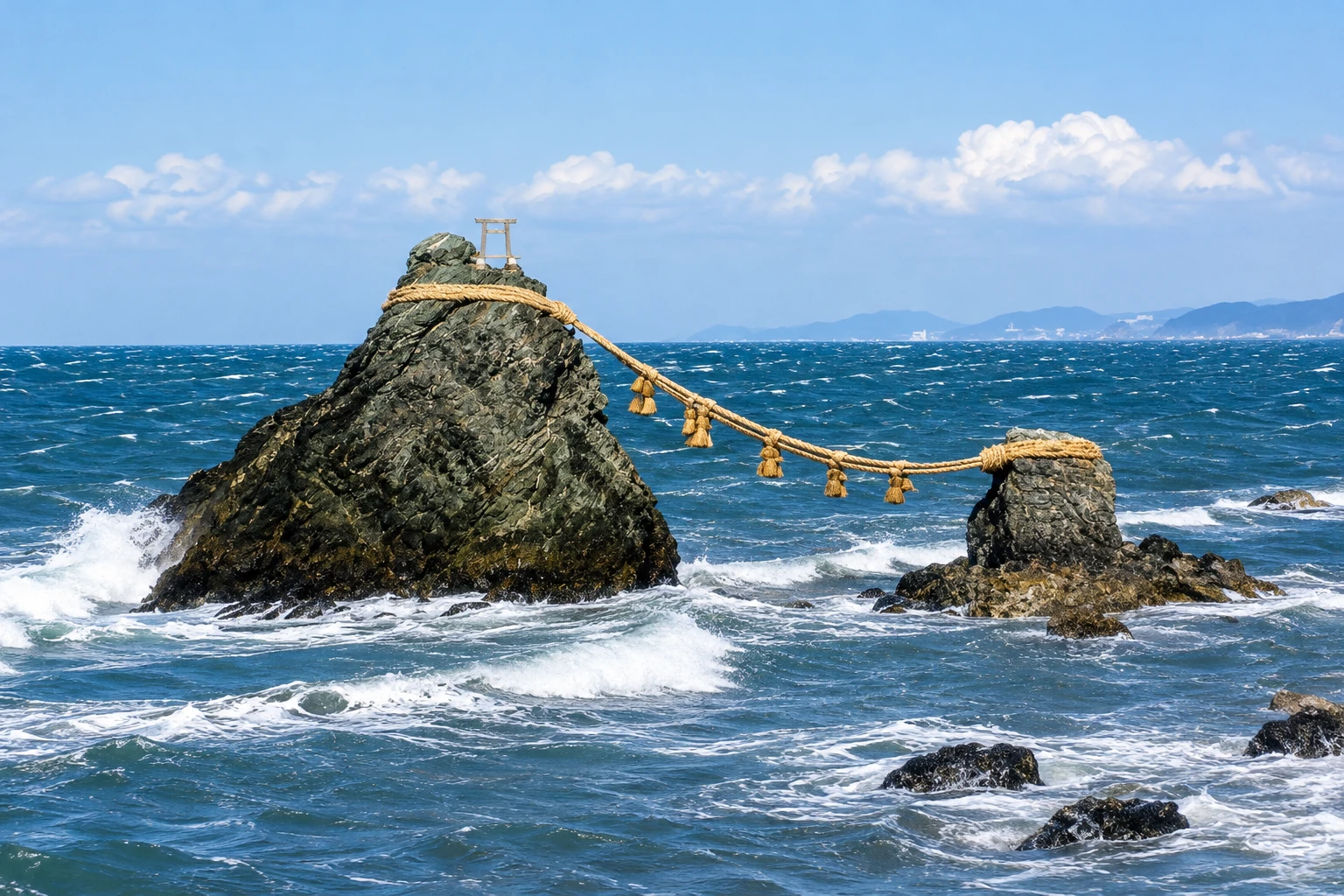
Two rocks in the sea at Futami, one large and one small, joined by a sacred rice-straw rope in front of Futami Okitama Shrine. Between May and July the sun often rises between them.
Before you go
Ise – Japan Destination Ise-Shima (Ise; Toba)
Approximate distances. Check flights and bus, train or boat schedules before you travel.
Kintetsu express trains reach Ise-shi from Nagoya in about 1h20 to 1h30 and from Osaka in about 1h45 to 2 hours; JR also connects Nagoya to Ise-shi. Chubu Centrair (NGO) is the airport near Nagoya.
One day for Geku, Naiku and Oharai-machi; an extra half day for Meoto Iwa and Futami.
All year, with mild weather in spring and autumn. At New Year and on holidays the shrines receive crowds. Summer is hot and humid.
The seasons shown are the most usual ones; nature doesn't always follow the calendar.
No. Geku is within walking distance of the station, frequent buses link Geku and Naiku, and a train serves Futami.
Suggested itinerary
Built with the places on this page. No rush: it's paced so you have time to see them.
Walk from Ise-shi Station to Geku, cross the bridges and the grove to the main shrine, and visit the Sengukan museum, which explains the reconstruction rite.
Take the bus to Naiku, cross Uji Bridge over the Isuzu River, purify your hands at the riverbank and walk among cedars to the main shrine.
Before shops close, stroll the pilgrims’ streets in front of Naiku, tasting Ise udon, tekone-zushi and the sweet akafuku.
Check before you go. Opening hours and days change, and places may close for renovations, holidays or events. This itinerary is a suggestion from Cidade Turismo, not a commitment: plan yours by checking directly with each place you intend to visit.
Before you go
Ise udon—thick, soft noodles with a dark sauce; tekone-zushi—sushi with marinated bonito; and akafuku—a rice cake covered with sweet red bean paste, a traditional pilgrims’ treat.
On the paths and in the groves, yes. Photography is prohibited on the steps and in front of the main shrines.
About 1 hour at Geku and 1h30 to 2 hours at Naiku, plus bus travel. With Oharai-machi, plan for a full day.
By JR Sangu Line to Futaminoura in about 10 minutes, then around a 15-minute walk, or by bus from Ise-shi Station.