Kamakura · Japan · Monument
Great Buddha of Kamakura
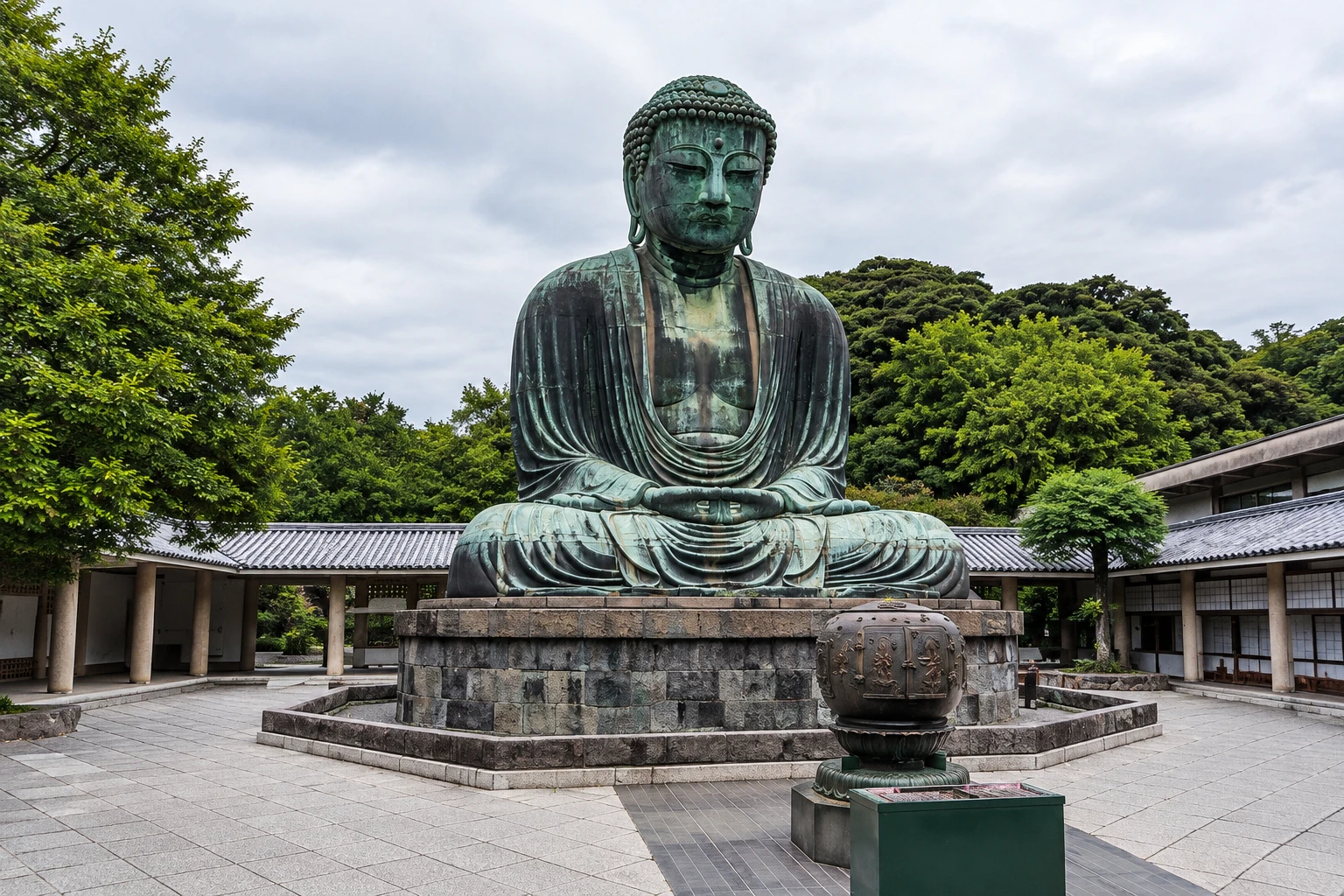
The bronze statue of Amida Buddha, about 11 meters tall, seated outdoors at Kotoku-in temple since the hall that once sheltered it was destroyed in the 15th century.

 Search
 Brazil
 Antarctica
 Argentina
 Bolivia
 Chile
 Colombia
 Ecuador
 Falkland Islands (Malvinas)
 French Guiana
 Guyana
 Paraguay
 Peru
 Suriname
 Uruguay
 Venezuela
 Austria
 Belgium
 Croatia
 Denmark
 Finland
 France
 Germany
 Greece
 Hungary
 Iceland
 Ireland
 Italy
 Luxembourg
 Norway
 Poland
 Portugal
 Slovakia
 Slovenia
 Spain
 Sweden
 Switzerland
 the Czech Republic
 the Netherlands
 the United Kingdom
 Turkey
 Bermuda
 Canada
 Greenland
 Mexico
 Saint Pierre and Miquelon
 the United States
 the Dominican RepublicJapanTurkey
 Egypt
 South Africa
 Australia
 Fiji
 New Zealand
 Papua New Guinea
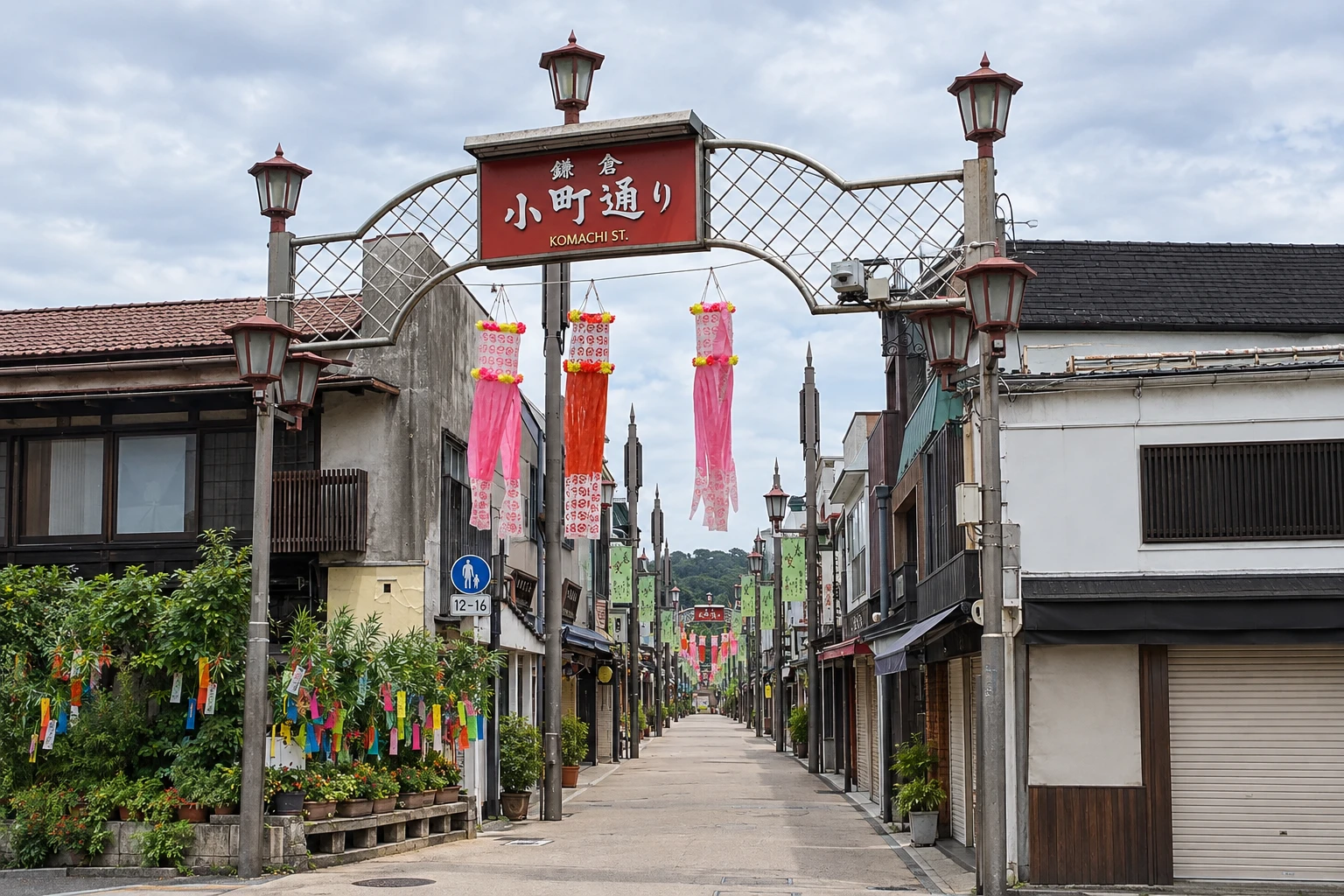
In the photo: Komachi-dori Street, in Kamakura.
Illustrative images. The pictures in this guide are illustrations based on the real place, not photographs, and may differ from it.

The city
Kamakura was the seat of the first samurai government from the late 12th century to the 14th century, and preserves dozens of temples and shrines among hills and the sea. The outdoor bronze Great Buddha stands in Hase, near Hase-dera temple; Tsurugaoka Hachimangu is the centre of the old town; the zen monasteries Engaku-ji and Kencho-ji are in Kita-Kamakura. The Enoden tram links the city to the beaches and to Enoshima island.
There's no accommodation in the guide yet in Kamakura.
Tem hotel, pousada ou casa de temporada aqui? Cadastre a suaThere are no restaurants in the guide yet in Kamakura.
Know a good one? Recommend it to usHotéis e restaurantes da cidade no mapa.
how to get there · how many days · itinerary · questions
The local experience
The bronze statue of Amida Buddha, about 11 meters tall, seated outdoors at Kotoku-in temple since the hall that once sheltered it was destroyed in the 15th century.
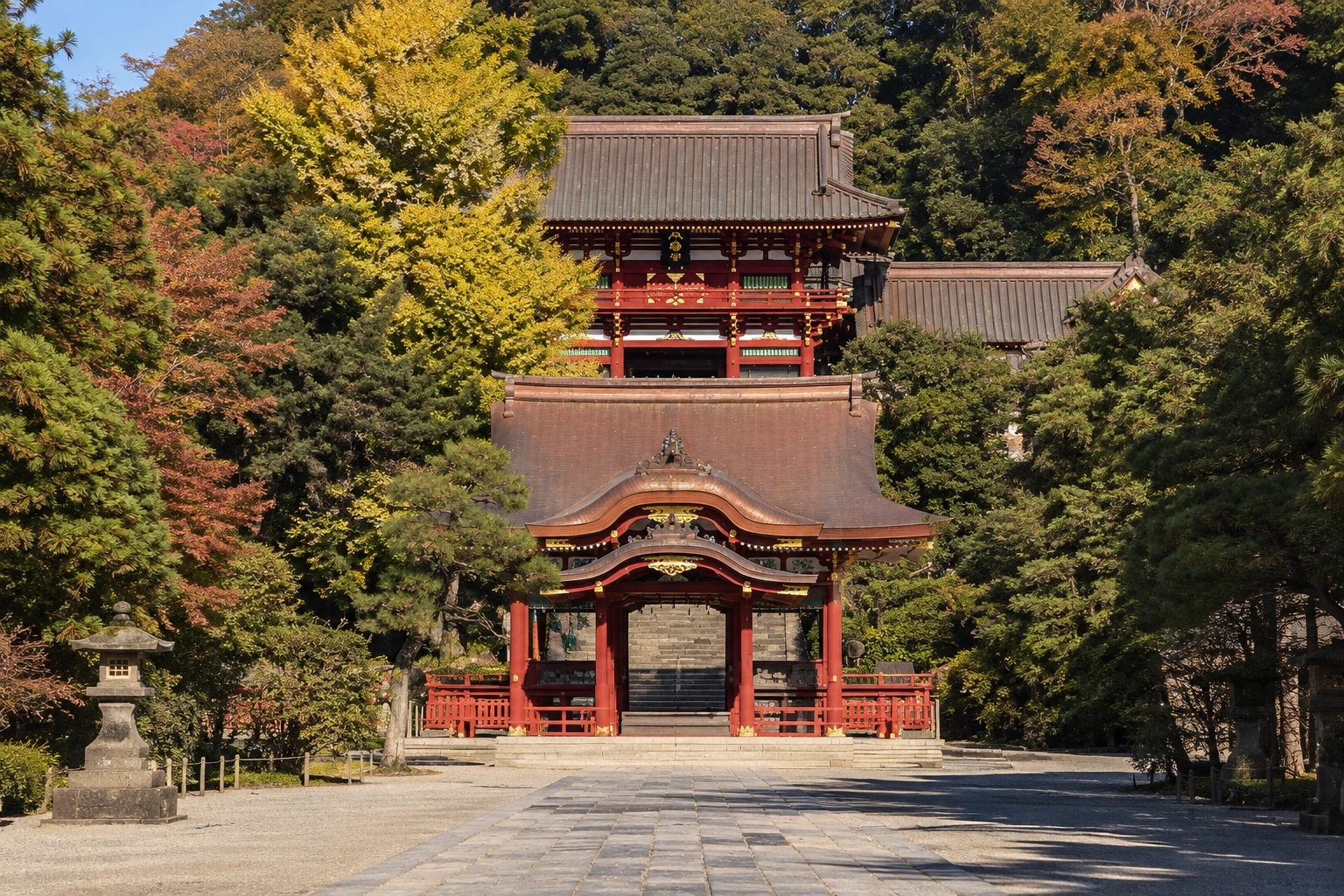
Kamakura’s central shrine, linked to the first shogun, at the top of a staircase at the end of Wakamiya-oji Avenue, with lotus ponds and the Komachi shopping street.
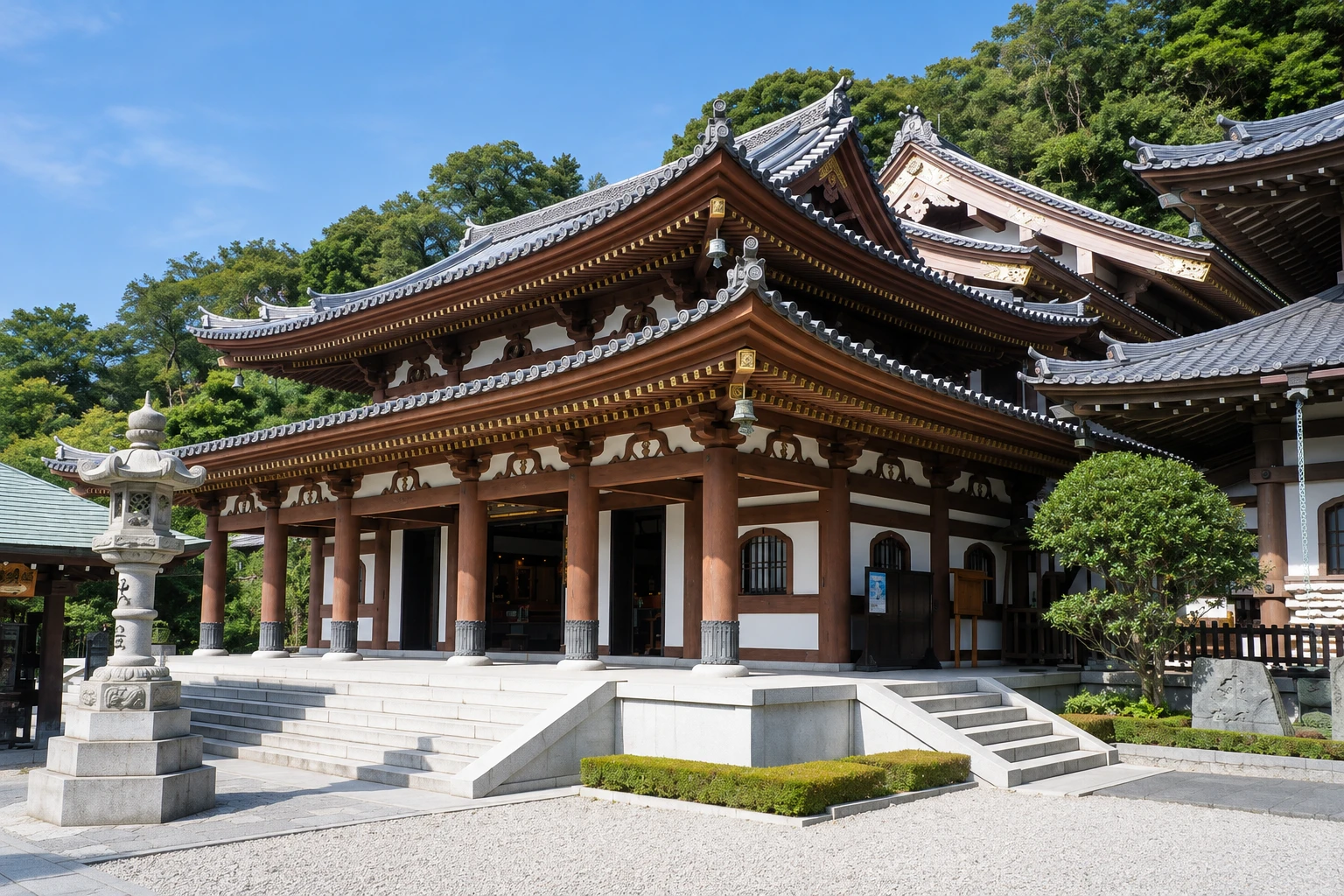
A temple on the Hase hillside with a wooden Kannon about 9 meters tall, the Benten cave, June hydrangeas and a view over Kamakura Bay.
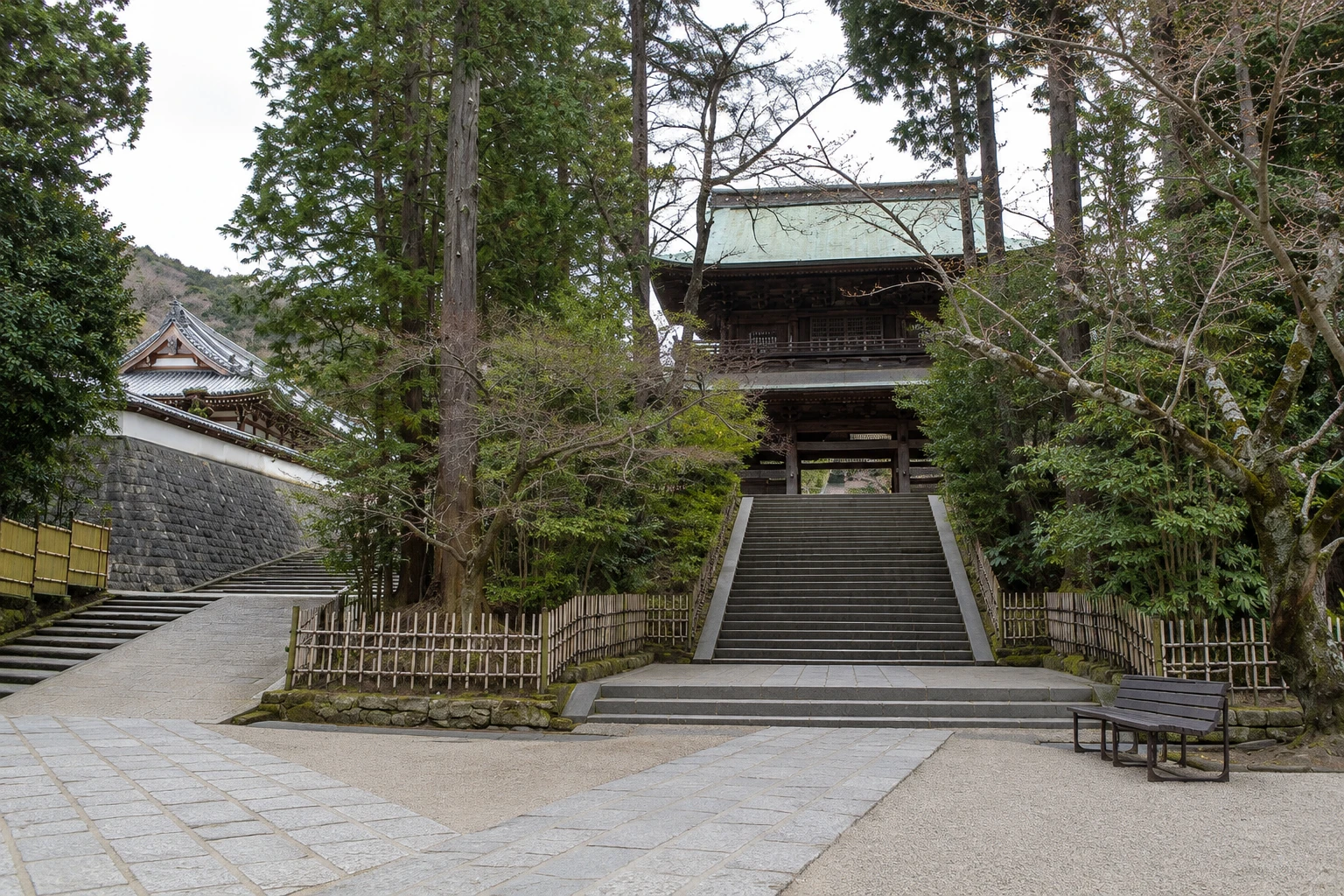
Major Zen monastery in Kita-Kamakura, founded in 1282, with a wooden gate, halls among cedars, the large bell and the Shariden reliquary, a National Treasure.
Before you go
Kamakura – Japan Destination Kamakura and Yokohama about 25 km from Yokohama
Approximate distances. Check flights and bus, train or boat schedules before you travel.
Kamakura Station, in the centre, is served by the JR Yokosuka Line from Tokyo Station and by the Shonan-Shinjuku Line from Shinjuku and Shibuya. The Odakyu Line from Shinjuku goes to Fujisawa and Enoshima, from where the Enoden tram continues to Kamakura.
One day for the Great Buddha, Hase-dera, Tsurugaoka Hachimangu and a zen temple in Kita-Kamakura. A day and a half to include Enoshima. Temples close in the late afternoon.
June, with the temples’ hydrangeas, and early April, with the cherry blossoms, are the busiest times. Late November and early December bring autumn foliage. Summer has the beach season; winter is mild and quieter.
The seasons shown are the most usual ones; nature doesn't always follow the calendar.
No. The JR train, the Enoden tram and buses connect the temples, and much of the centre is walkable. On weekends, the streets get congested.
Suggested itinerary
Built with the places on this page. No rush: it's paced so you have time to see them.
Get off at Kita-Kamakura, visit Engaku-ji and walk to Kencho-ji and Tsurugaoka Hachimangu.
Have lunch on Komachi-dori and take the Enoden tram to Hase for the Great Buddha and Hase-dera.
Day 1
Start with Engaku-ji and Kencho-ji and climb to the Hansobo shrine viewpoint.
Descend to Tsurugaoka Hachimangu and the National Treasure Museum and stroll along Komachi-dori.
Day 2
Take the Enoden to Hase, visit the Great Buddha and Hase-dera and walk to Yuigahama Beach.
Ride the Enoden to Enoshima, climb to the shrine and the lighthouse, and watch the sunset from the Chigogafuchi rocks.
Check before you go. Opening hours and days change, and places may close for renovations, holidays or events. This itinerary is a suggestion from Cidade Turismo, not a commitment: plan yours by checking directly with each place you intend to visit.
Before you go
Visit Engaku-ji and Kencho-ji in Kita-Kamakura, Tsurugaoka Hachimangu and, in the afternoon, the Great Buddha and Hase-dera in Hase.
A small railway line that links Kamakura to Fujisawa along the coast, passing through Hase and Enoshima, between houses and by the sea.
Yes. There are one-day passes that cover the Enoden tram, and Odakyu passes that include travel from Shinjuku and the Enoden. Check the current options.
Yes, especially in June with the hydrangeas, and in autumn. On weekdays and early in the morning, it’s less busy.
The Daibutsu trail, from Kita-Kamakura to the Great Buddha, and the Ten-en trail, which starts at Kencho-ji and crosses the hills. Wear sturdy footwear, as there are sections of stone and exposed roots.