

 Brazil
 Antarctica
 Argentina
 Bolivia
 Chile
 Colombia
 Ecuador
 Falkland Islands (Malvinas)
 French Guiana
 Guyana
 Paraguay
 Peru
 Suriname
 Uruguay
 Venezuela
 Albania
 Austria
 Belgium
 Croatia
 Denmark
 Finland
 France
 Germany
 Greece
 Hungary
 Iceland
 Ireland
 Italy
 Luxembourg
 Norway
 Poland
 Portugal
 Slovakia
 Slovenia
 Spain
 Sweden
 Switzerland
 the Czech Republic
 the Netherlands
 the United Kingdom
 Turkey
 Bermuda
 Canada
 Greenland
 Mexico
 Saint Pierre and Miquelon
 the United States
 the Dominican Republic
 Egypt
 South Africa
 Australia
 Fiji
 New Zealand
 Papua New Guinea
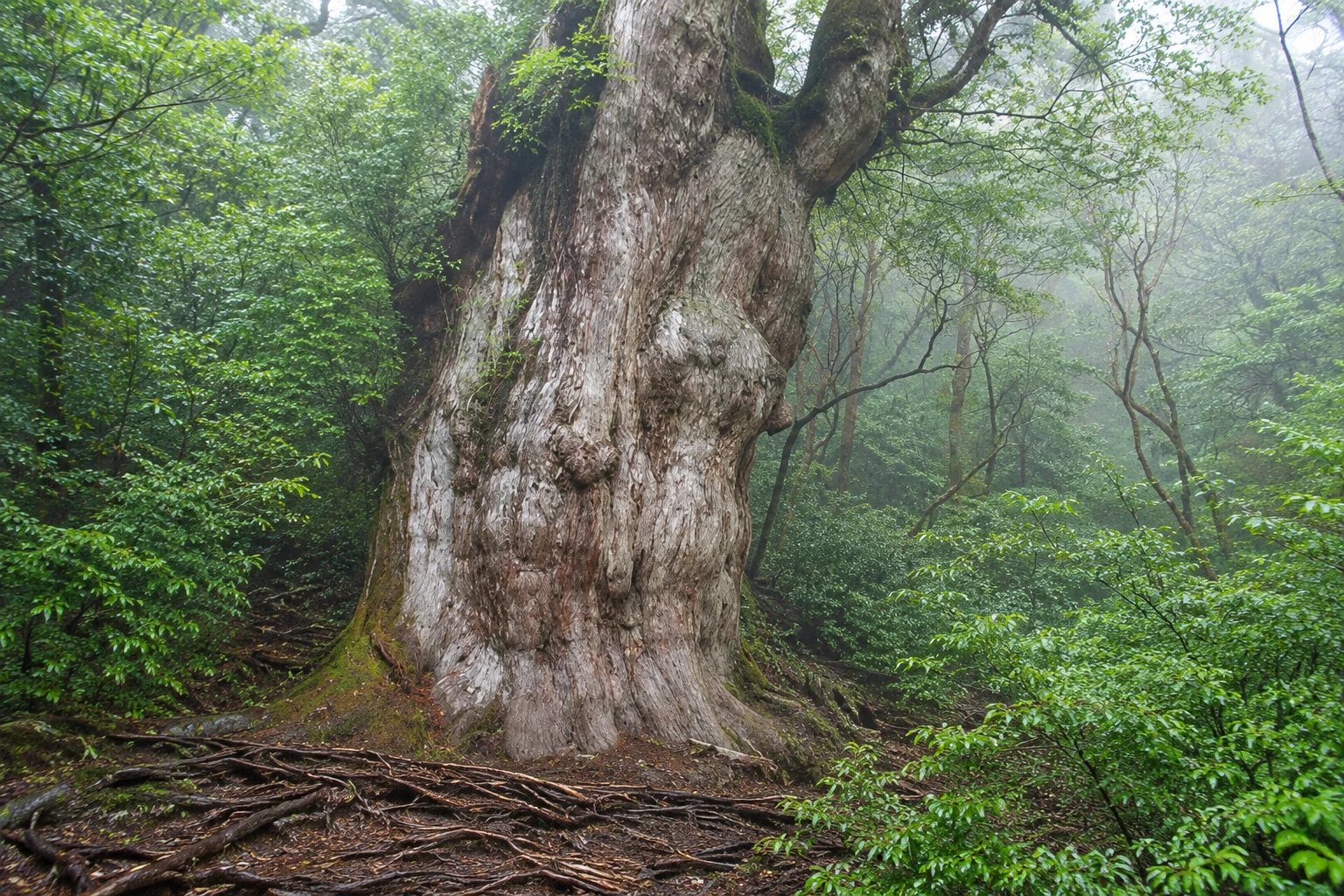
Monumental tree · Yakushima, Japan
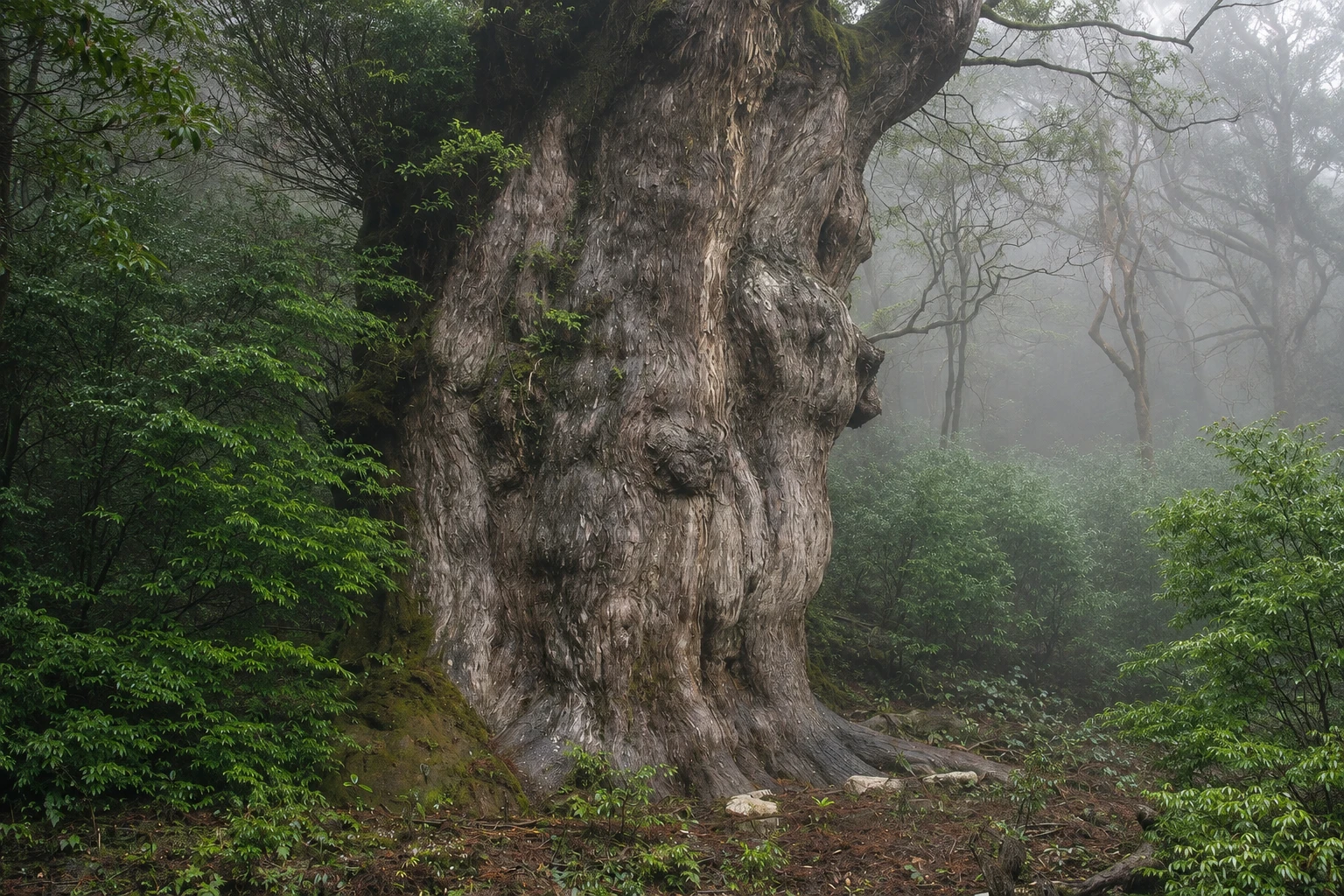
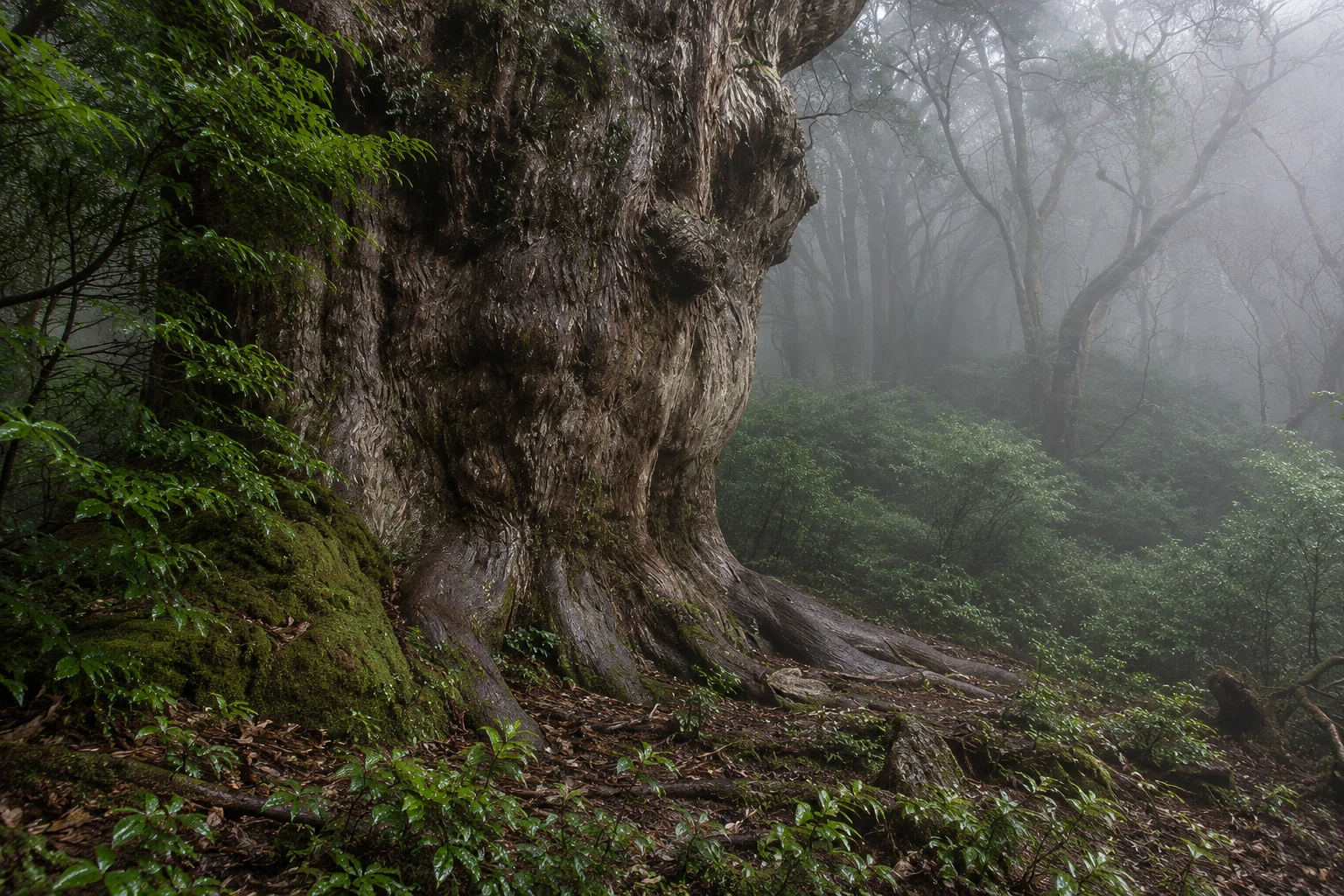
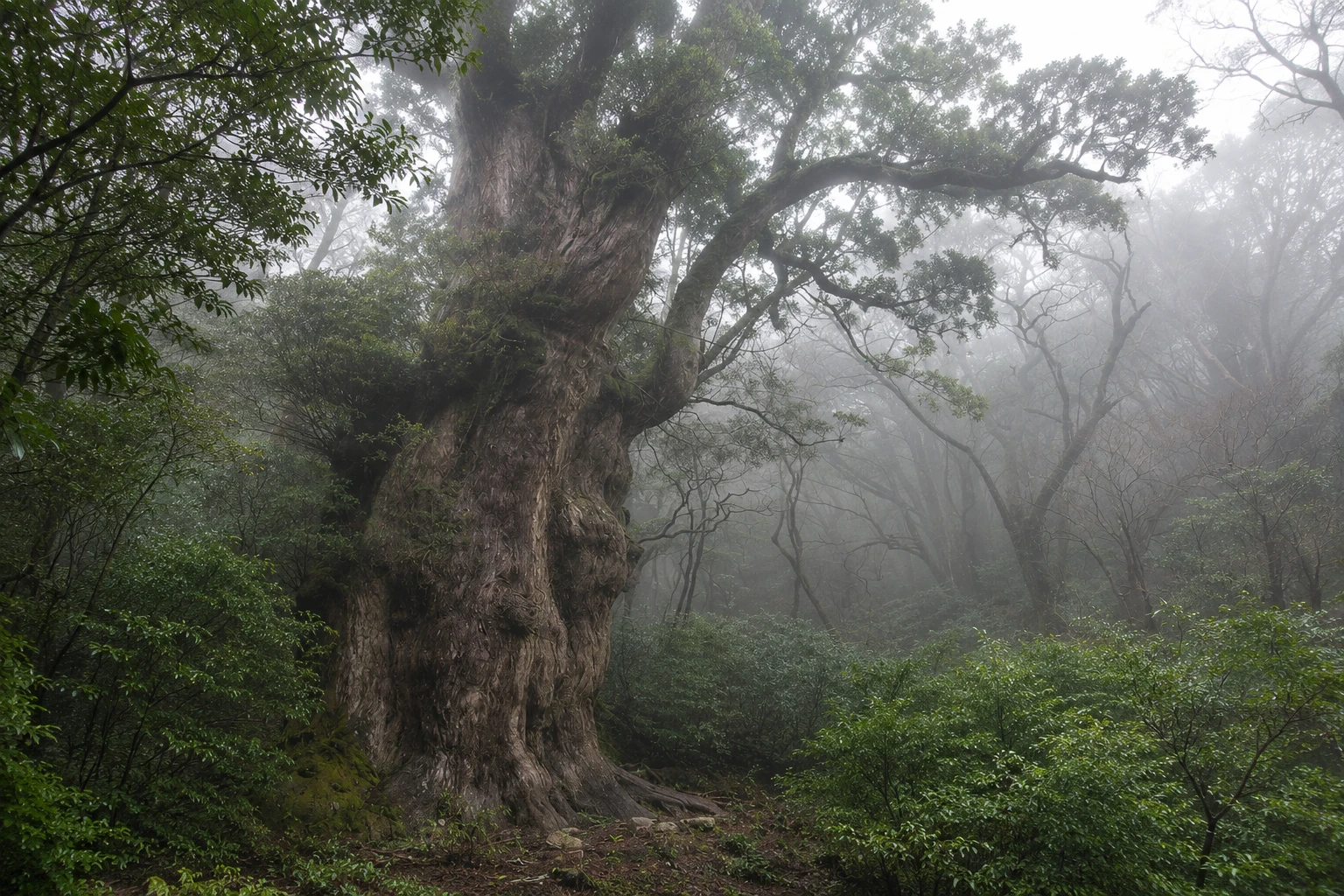
Jōmon Sugi
The largest cedar on Yakushima, about 25 meters tall and 16 meters in circumference, reached by a trail of about 22 km round trip from Arakawa.
Illustrative images. The pictures in this guide are illustrations based on the real place, not photographs, and may differ from it.

A look at the place
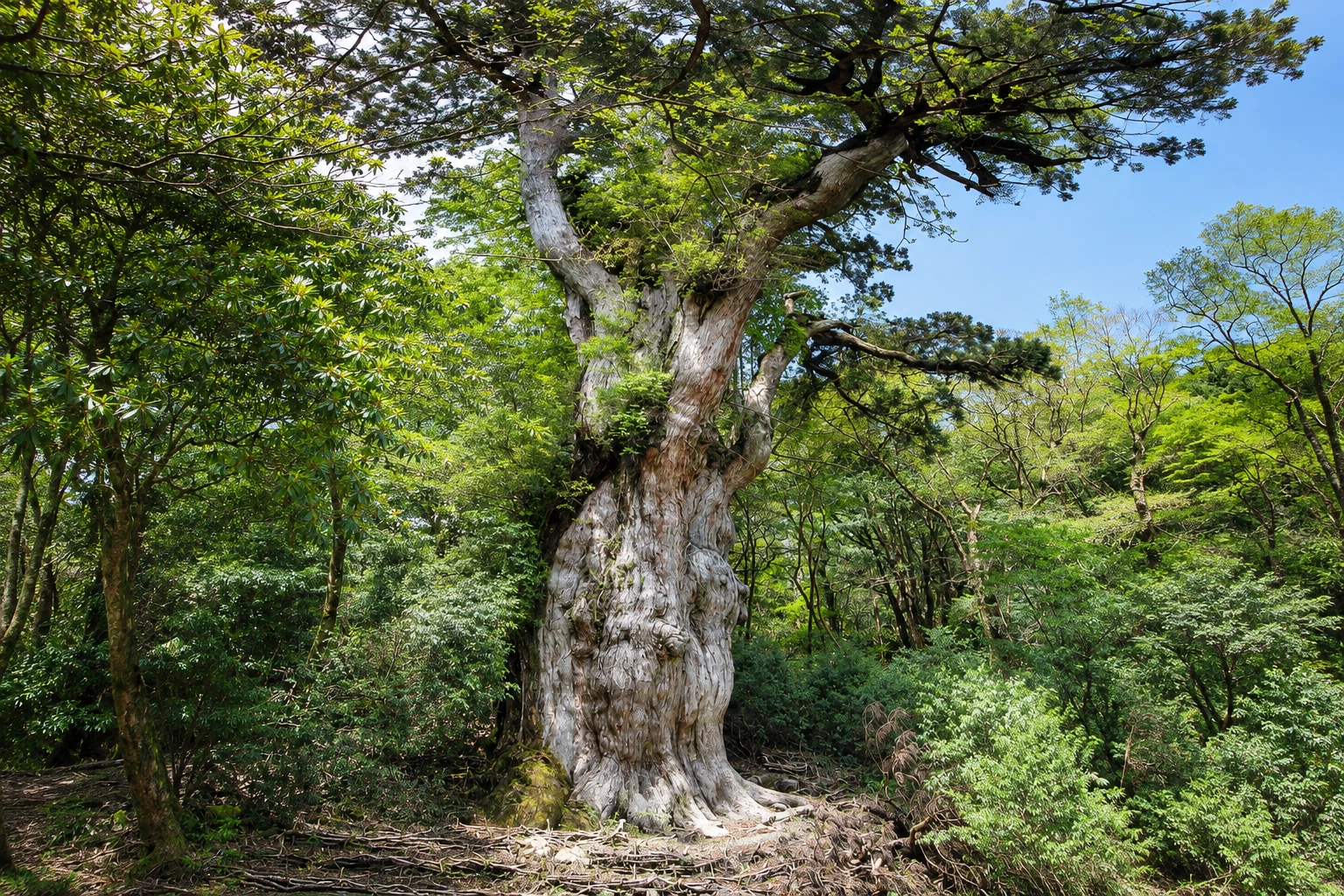
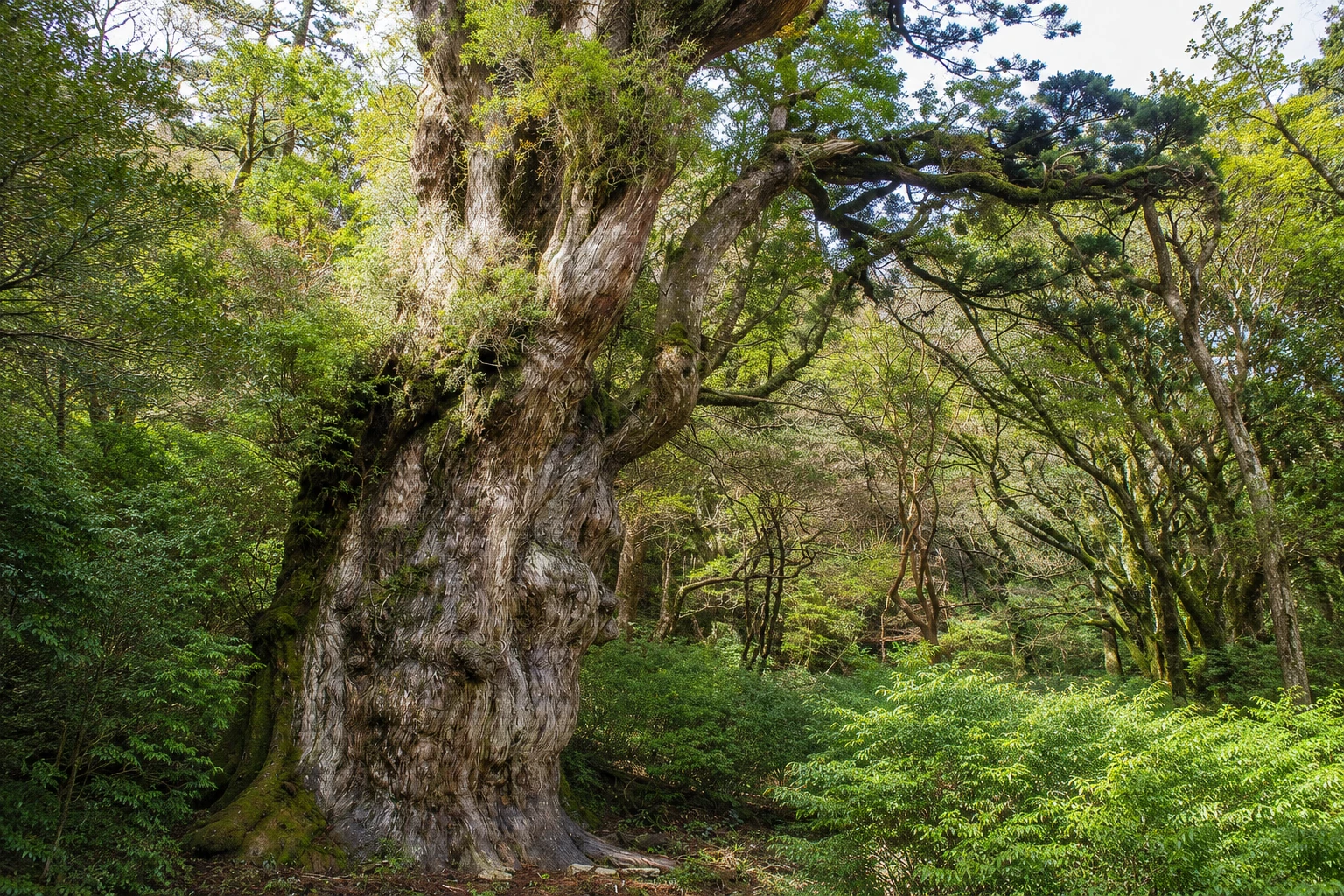
Jōmon Sugi in pictures
These pictures are illustrations based on the real place, not photographs. They may differ from the place.
Click the picture to enlarge it.
Discover
About Jōmon Sugi
Jomon Sugi is Yakushima’s best-known cedar and one of the symbols of Japan’s natural heritage. It sits at about 1,300 meters elevation inland on the island and is roughly 25 meters tall with a trunk circumference of 16 meters. Its age is debated: estimates range from around 2,000 to more than 7,000 years, and the name refers to Japan’s Jomon period of prehistory. It was rediscovered in 1966.
The most used trail starts at the Arakawa point and is about 22 km round trip. The first 8 km follow the tracks of an old forest railway on almost flat terrain, with bridges over the river and remnants of a logging village. The mountain section then begins, with steep climbs, wooden stairs and roots, up to Jomon Sugi.
Along the way is the Wilson stump, what remains of a giant cedar cut down at the end of the 16th century. Several people can fit inside the hollow stump, and from a specific viewpoint the top opening forms the shape of a heart. Higher up, Daiou Sugi and Meoto Sugi, two cedars joined by a branch, are well-known stops.
Jomon Sugi is viewed from a wooden platform that protects its roots; touching the tree is not allowed. The walk usually takes about 10 hours, starts at dawn and must finish in time for the last bus. There are mountain shelters and toilets at some points, and it rains frequently. Many people do the trail with a local guide.
Before you go
Practical information
Cidade Turismo reviews its information regularly, but something may have changed. Check with the place before planning your trip.
How much time to set aside
About 10 hours of walking round trip from Arakawa, plus the bus transfer.
Best time
From March to November, when the trail bus runs. April, May, October and November are usually more comfortable. The departure is at dawn to return in daylight. Heavy rain, typhoons or snow may close access; check before you go.
How to get there
From March to November, private cars are not allowed up to Arakawa: the trail bus departs from the Yakusugi Museum in Anbo and takes about 40 minutes. The ticket must be bought in advance at island sales points, not on the bus. From December to February the road may be open, but there is a risk of ice.
Tip
Buy the trail bus ticket the day before and stay overnight in Anbo. Bring packed food for the day, a headlamp, a rain jacket and waterproof footwear. Pace your hike so you return to Arakawa before the last bus.
Your questions
Frequently asked questions about Jōmon Sugi
How long does the Jomon Sugi trail take?
About 10 hours round-trip from Arakawa, roughly 22 km. The first section, along the old railway tracks, is flat; the second climbs the mountain.
Can I drive to the start of the Jomon Sugi trail?
From March to November, no: access to Arakawa is by the trail bus that departs from the Yakusugi Museum in Anbo. Tickets are sold in advance at locations around the island.
Can you touch the Jomon Sugi?
No. The tree is viewed from a wooden platform a few meters away that protects the roots and the soil.
Do I need a guide to go to Jomon Sugi?
Not mandatory, but common. A guide arranges early-morning transport, sets the pace, and explains the forest. Solo hikers should have experience with long walks.
Where is the stump shaped like a heart?
It’s Wilson’s stump, on the way to Jomon Sugi, about a 2-hour walk before the tree. From a specific viewpoint inside the hollow stump, the opening forms a heart.